TSA is testing facial recognition at U.S. airports. Here’s what that means for you

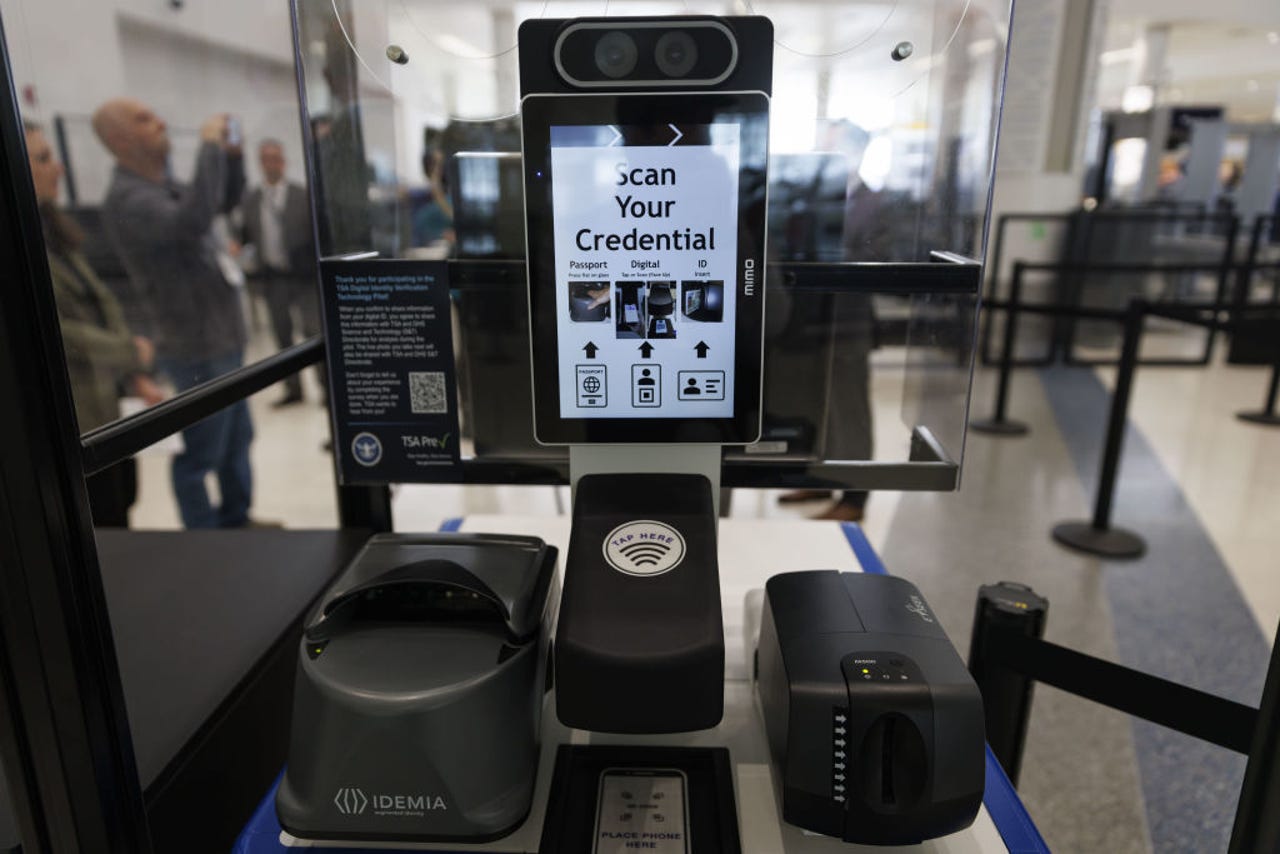
TSA check with request to "Scan Your Credential"

If you're traveling through an airport in Atlanta, Boston, Dallas, Detroit, Las Vegas, Los Angeles, Miami, Orlando, and a handful of other U.S. airports, you may notice a new biometric measure TSA is using to verify your identity.

TSA is testing facial recognition to see if the technology can enhance security and make TSA screening more efficient. After passengers insert their driver's license or passport into the TSA card reader, their faces will be processed by a camera that compares them to the picture on their identification.

Also: AI may compromise our personal information if companies aren't held responsible

According to the Associated Press, this facial recognition method ensures TSA can verify a person's identity and confirm their form of identification is valid. Once the process is complete, a TSA agent approves the screening, and the passenger is on their way.

The TSA says this facial recognition process is voluntary and that it works, but some U.S. lawmakers don't agree with implementing biometric surveillance in domestic airports. U.S. Senators Jeffrey Merkley, Edward Markey, Cory Booker, Elizabeth Warren, and Bernie Sanders penned an open letter to the TSA to express their concerns.

The TSA says passengers can refuse facial recognition at some U.S. airports, but the five senators are wary that passengers aren't aware they can and won't know how to, as the TSA has not made it clear. Senator Merkley says during his experience witnessing passengers use the facial recognition scanner, TSA agents were not informing passengers of their rights or option to proceed through security without facial recognition.

Also: ChatGPT and AI are wreaking havoc on cybersecurity in exciting and frightening ways

In their letter, the five senators also mentioned facial recognition's propensity to perpetuate racial bias. Facial recognition software is notorious for disproportionately misidentifying individuals with darker skin. This pitfall in the technology's capabilities can have severe consequences for millions of people, which concerns the five lawmakers.

These senators are also concerned about privacy concerns, as facial recognition lacks transparency, consent, and encryption, making Americans vulnerable to hackers and cybersecurity attacks.

Also: These experts are racing to protect AI from hackers. Time is running out

Moving forward, the lawmakers hope TSA will be more transparent about how they are using travelers' biometric data. They want to know if biometric data is shared with other government agencies, how TSA plans to keep that data safe, if travelers who refuse facial recognition will receive negative consequences or intimidation, and if the TSA will release data surrounding the accuracy and volume of its facial recognition program.

Artificial Intelligence

India’s Premier AI Conference, Cypher 2023, Returns with its 7th Edition

India's Premier AI Conference, Cypher 2023, Returns with its 7th Edition

After a successful run, Cypher23, India’s largest AI conference, returns with its 7th edition. Launched by Analytics India Magazine in 2015, the conference aimed to establish a cohesive AI community across various industries. Since its inception, Cypher has rapidly evolved into a melting pot of India’s most brilliant AI experts, providing a platform for them to convene and share their groundbreaking ideas.

Cypher 2023, presented by Fractal, is a three-day event that will showcase the latest AI advancements that will drive the next wave of technological disruption. As technology rapidly evolves and revolutionizes the world, Cypher has emerged as a leading platform for discussing some of the most significant breakthroughs in the industry. The conference aims to foster dialogue around the latest AI trends, highlighting the transformative impact of these technologies.

Where: Hilton Garden Inn, Bengaluru Embassy Manyata Business Park, Bengaluru, India

When: October 11-13, 2023 | Wednesday – Friday

Register Now

What to expect this year?

The upcoming Cypher conference will focus on the latest advancements in generative models, exploring topics such as GANs, VAEs, and autoregressive models. Experts will showcase how these models can be utilized in product development, design, simulation, and automation. The event will also feature discussions on how generative AI can address some of the biggest challenges in resource allocation optimization, sustainable development, and climate change.

Attendees will learn how to scale and implement generative AI solutions while overcoming real-world issues, including data quality, computational resources, and model interpretability.

Additionally, the conference will address the impact of AI and automation on the workforce, the gig economy, and reskilling initiatives.

Why you must attend Cypher 2023

Cypher 2023 is India’s biggest AI conference and a must-attend event for anyone interested in the field of AI.

1. Stay up-to-date with the latest advancements in AI: The conference will focus on generative models and explore topics such as GANs, VAEs, and autoregressive models. Attendees will get insights into how these models can be used in product development, design, simulation, and automation.

2. Network with industry experts and peers: With over 1,500 attendees and 100+ industry pioneers as speakers, Cypher23 is an excellent platform for networking. Attendees will have the opportunity to connect with peers, exchange ideas, and gain industry insights.

3. Attend a variety of sessions: The conference will have three tracks: thought leadership, knowledge sessions, and hands-on workshops. Attendees can choose from a variety of sessions based on their interests and learn about the latest trends and innovations in AI.

4. Explore the latest AI solutions and technology: The event will also feature exhibitions showcasing the latest AI solutions and technology. Attendees can interact with exhibitors and get a hands-on experience with the latest products and services.

5. Have fun: Besides the informative sessions, Cypher23 will also feature an after-party and cocktail dinner, an AI quiz, and AI awards. Attendees can enjoy and have fun while learning about the latest advancements in AI.

Attending Cypher 2023 is an excellent opportunity to stay updated with the latest AI trends, network with peers and industry experts, and have fun while doing it.

Sponsors and Speakers

Past sponsors of Cypher include leading technology and consulting firms such as Google Cloud, AWS, IBM, Deloitte, SAP, Cognizant, Ericsson, Tableau, and several others including the Aditya Birla Group, Wipro, Genpact, ZS Associates, The Weather Company, UnitedHealth Group, and MiQ.

Be a sponsor for Cypher 2023.

With over 40 sponsor organizations every year, Cypher has attracted industry leaders and experts as speakers from renowned companies including Amazon, Oracle, Infosys, L&T, Wells Fargo, Lowe’s, Ericsson, Genpact, AB InBev, Udacity, Hindustan Unilever, Swiggy, Dunzo, Indian School of Business, NMIMS University, Vodafone, PhonePe, Standard Chartered Bank, Bharti AXA, Axis Bank, HDFC Bank, Viacom18, Lifestyle Brands, TATA SIA Airlines and many more.

For more details on sponsorship, contact info@analyticsindiamag.com.

Speak at Cypher 2023.
To explore speaking opportunities with Cypher, write to info@analyticsindiamag.com.

Where: Hilton Garden Inn, Bengaluru Embassy Manyata Business Park, Bengaluru, India

When: October 11-13, 2023 | Wednesday – Friday

BUY YOUR PASSES NOW

EARLY BIRD PASSES TO EXPIRE ON 28 JULY, 2023.

Registration and tickets

The upcoming Cypher 2023 will be a three-day, in-person conference held at Hilton Garden Inn Bengaluru Embassy Manyata Business Park in Bengaluru, featuring an after-party and cocktail dinner on Friday, October 13, 2023.

Registration is now open, and the schedule and speakers for the event will be announced shortly, so stay tuned for further updates. Join this unique gathering of India’s AI and data science leaders, where the focus is on networking and providing AI professionals with opportunities to advance their careers at all levels.

Where: Hilton Garden Inn, Bengaluru Embassy Manyata Business Park, Bengaluru, India

When: October 11-13, 2023 | Wednesday – Friday

We look forward to having you with us for the event. Hurry up and book your seat now!

The post India’s Premier AI Conference, Cypher 2023, Returns with its 7th Edition appeared first on Analytics India Magazine.

Together raises $20M to build open source generative AI models

Together raises $20M to build open source generative AI models Kyle Wiggers 7 hours

Generative AI — AI that can write essays, create artwork and music, and more — continues to attract outsize investor attention. According to one source, generative AI startups raised $1.7 billion in Q1 2023, with an additional $10.68 billion worth of deals announced in the quarter but not yet completed.

There’s scores of competition, including incumbents like OpenAI and Anthropic. But despite that fact, VCs aren’t shying away from untested players and up-and-comers.

Case in point, Together, a startup developing open source generative AI, today announced that it raised $20 million — on the larger side for a seed round — led by Lux Capital with participation from Factory, SV Angel, First Round Capital, Long Journey Ventures, Robot Ventures, Definition Capital, Susa Ventures, Cadenza Ventures and SCB 10x. Several high-profile angel investors were also involved, including Scott Banister, one of the co-founders of PayPal, and Jeff Hammerbacher, a Cloudera founding employee.

“Together is spearheading AI’s ‘Linux moment’ by providing an open ecosystem across compute and best in class foundation models,” Lux Capital’s Brandon Reeves told TechCrunch via email. “Together team is committed to creating a vibrant open ecosystem that allows anyone from individuals to enterprises to participate.”

Together, launched in June 2022, is the brainchild of Vipul Ved Prakash, Ce Zhang, Chris Re and Percy Liang. Prakash previously founded social media search platform Topsy, which was acquired in 2013 by Apple, where he later became a senior director. Zhang is an associate professor of computer science at ETH Zurich, currently on sabbatical and leading research in “decentralized” AI. As for Re, he’s co-founded various startups including SambaNova, which builds hardware and integrated systems for AI. And Liang, a computer science professor at Stanford, directs the university’s Center for Research on Foundation Models (CRFM).

With Together, Prakash, Zhang, Re and Liang are seeking to create open source generative AI models and services that, in their words, “help organizations incorporate AI into their production applications.” To that end, Together is building a cloud platform for running, training and fine-tuning open source models that the co-founders claim will offer scalable compute at “dramatically lower” prices than the dominant vendors (e.g. Google Cloud, AWS, Azure, etc.)

“We believe that generative models are a consequential technology for society and open and decentralized alternatives to closed systems are going to be critical to enable the best outcomes for AI and society,” Prakash told TechCrunch in an email interview. “As enterprises define their generative AI strategies, they’re looking for privacy, transparency, customization and ease of deployment. Current cloud offerings, with closed-source models and data, do not meet their requirements.”

He has a point — insofar as incumbents are feeling the pressure, at least. An internal Google memo leaked earlier in the month implies that the search giant — and its rivals, for that matter — can’t compete against open source AI initiatives over the long run. Meanwhile, OpenAI reportedly is preparing to publicly debut its first open source text-generating AI model amid a proliferation of open source alternatives,

One of Together’s first projects, RedPajama, aims to foster a set of open source generative models including “chat” models along the lines of OpenAI’s ChatGPT. A collaborative work between Together and several groups, including the MILA Québec AI Institute, CRFM and ETH’s data science lab, DS3Lab, RedPajama began with the release of a data set that enables organizations to pre-train models that can be permissively licensed.

Together’s other efforts to date include GPT-JT, a fork of the open source text-generating model GPT-J-6B (released by the research group EleutherAI), and OpenChatKit, an attempt at a ChatGPT equivalent.

“Today, training, fine-tuning or productizing open source generative models is extremely challenging,” Prakash said. “Current solutions require that you have significant expertise in AI and are simultaneously able to manage the large-scale infrastructure needed. The Together platform takes care of both challenges out-of-the-box, with an easy-to-use and accessible solution.”

Just how seamless Together is remains to be seen, though — the platform has yet to launch in GA. And, one might argue, its efforts are a bit duplicative in the context of the broader AI landscape. The number of open source models both from community groups and large labs grows by the day, practically. And while not all are licensed for commercial use, several, like Databricks’ Dolly 2.0, are.

On the AI hardware infrastructure front, besides the big public cloud providers, startups like CoreWeave claim to offer powerful compute for below market rates. There’s even been attempts at building community-powered, free services for running AI text-generating models. (Together intends to follow in the footsteps of these community groups by building a platform, tentatively called the Together Decentralized Cloud, that’ll pool hardware resources including GPUs from volunteers around the internet.)

So what does Together bring to the table? Greater transparency, control and privacy, Prakash argues. It’s a sales pitch not dissimilar to the one made by startup Stability AI, which funnels compute and capital toward open source research while commercializing — and selling services on top of — the various finished products.

“Regulated enterprises will be big customers of open source, as open source models pre-trained on open data sets enable organizations to fully inspect, understand and customize the models to their own applications,” he said. “We believe that the challenges in AI can only be overcome by a global community working together. So we made it our mission to build and steward a self-sustaining, open ecosystem that produces the best AI systems for humanity.”

It’s a lofty goal, to be sure. And it’s early days for Together, which wouldn’t say whether it has any customers at present — much less revenue. But the company is forging ahead, planning to increase the size of its team from 24 employees to around 40 by the end of the year and spend the rest of the seed capital on R&D, infrastructure and product development.

“The Together solution, based on open source generative models, was built on understanding requirements from large organizations and addressing each of these needs, to provide enterprises with the core platform for their generative AI strategy,” Prakash said. “Together is seeing tremendous interest from enterprises looking for greater transparency, control, and privacy.”

The Intersection of AI Across 6 Major Industries: Exploring Latest AI Applications From Business Perspective

Featured Blog Image-The Intersection of AI Across 6 Major Industries: Exploring Latest AI Applications

The rise of AI is fueling the discovery of business use cases and AI applications across a range of major industries, such as healthcare, finance, technology, sales and marketing, and others. AI utilization has reached unprecedented levels, with substantial investment and research directed toward powering automation in real-world scenarios.

According to Statista, the current AI market value of approximately 100 billion U.S. dollars is projected to skyrocket to nearly two trillion U.S. dollars by 2030, indicating a twentyfold increase.

Let’s explore different AI applications across 6 major industries, along with some tips to get started with AI adoption in your organization.

What Can AI Do For Business?

AI enables machines to execute tasks that traditionally necessitate human attention but are repetitive. It can analyze and interpret information using vast amounts of data and algorithms, allowing for accurate predictions and informed decision-making.

AI tools brings several benefits to businesses, including;

  • Efficiency and productivity by letting humans focus on higher-value tasks.
  • High-velocity business decisions and operations, enabling shorter development cycles and faster ROI on development dollars.
  • Agile capabilities and business model expansion, such as identifying new revenue streams.
  • Reduced human error and improved quality, such as delivering error-free results in financial reconciliation.
  • Better monitoring capabilities to prevent costly and disruptive breakdowns.

AI Applications Across 6 Major Industries

Artificial intelligence improves operations, streamlines workflows, and enhances customer experiences across various industries. Let's explore some of them below.

1. AI Applications in Marketing

AI Applications in Marketing

Image by airdone from Adobe Stock

The global AI market in marketing is projected to reach $40.09 billion by 2025, with a compound annual growth rate of 29.7% from 2020 to 2025.

Companies use AI to improve their marketing tactics and increase client engagement, from tailored content and dynamic pricing to AI-led email delivery times and ad targeting.

Here are some AI applications in marketing:

Personalized Content

AI technology can evaluate data and forecast consumer preferences using machine learning algorithms, enabling businesses to customize their content to each customer's unique requirements and interests. For instance, BuzzFeed is a media firm that uses AI to tailor its content for its audience.

Conversational AI

Conversational AI refers to technologies like chatbots and virtual agents that enable users to communicate through natural language. These technologies utilize machine learning and natural language processing to simulate human-like interactions. Due to their ability to personalize, scale, and effectively communicate with users, conversational AI allows businesses to provide a seamless and dynamic consumer experience.

Ad Targeting

AI has significantly impacted ad targeting by analyzing enormous quantities of data to produce comprehensive client profiles, enabling marketers to target their adverts more precisely. As a result, marketers enjoy higher conversion rates, cheaper costs per acquisition, and a better return on investment.

2. AI Applications in Legal Services

AI Applications in Legal Services

Image by phonlamaiphoto from Adobe Stock

AI adoption is playing a crucial role in transforming the legal industry by automating routine tasks, reducing costs, and improving accuracy. Up to 60% of the responsibilities carried out by attorneys and paralegals could be automated, according to a report by Accenture.

Let's discover how AI is revolutionizing the legal industry.

Legal Research

AI offers sophisticated algorithms to aid legal practitioners in saving time and effort while conducting legal research. Lawyers can swiftly assess and analyze massive volumes of data using AI-powered legal research tools, which helps them make better choices.

For instance, ROSS Intelligence is an AI-powered platform that helps several law firms, like Dentons, automate their research procedures and boost productivity.

E-discovery

Finding, gathering, and producing electronically stored information (ESI) in response to a legal request is known as e-discovery. Compared to conventional manual approaches, e-discovery can be carried out more quickly, precisely, and inexpensively with AI. With Relativity AI-driven technologies, legal practitioners can streamline collection to production processes.

Judge Bots

One area where AI is gaining traction is in the development of judge bots, which are AI-powered systems that can help judges make more informed decisions based on legal precedent and data analysis. Judge bots can give judges a more thorough understanding of legal issues and aid in making more accurate and consistent judgments.

China employed the nation's first judge bots, named Xiozhi, capable of effectively handling certain civil cases through adjudication.

3. AI Applications in Sales

AI Applications in Sales

Image by Stanisic Vladimir from Adobe Stock

The sales sector is witnessing a significant transition as AI enables them to make data-driven choices and boost performance across lead generation and customer engagement. According to a report by McKinsey, sales teams that use AI for lead generation and opportunity identification can increase their productivity by up to 50%.

Here are a few applications of AI in sales.

Conversation Intelligence

Conversation Intelligence (CI) uses AI to record and analyze speech and extract data-driven insights from the conversations between sales agents and customers. Businesses can use conversation intelligence to gather insightful information about customer behavior and preferences. This allows them to customize their sales strategy to fulfill client expectations.

By providing insights into human communication patterns and identifying common pain points, CI informs the design and development of conversational AI systems to meet customer needs better.

AI Avatar

AI avatars are one of the newest AI technologies causing a stir in the market. These are virtual assistants that offer individualized customer care and sales assistance using machine learning algorithms and natural language processing. With the help of AI avatars, sales teams can automate repetitive operations to free up time for business-critical activities. For instance, Synthesia.io is an AI video creation platform that lets you create AI avatars for professional videos.

Lead Generation

Another area in which AI has made strides is lead generation. By using machine learning algorithms and predictive analytics, businesses can effectively identify and prioritize high-quality leads based on their likelihood of conversion.

Automated lead scoring procedures can free up valuable time for sales staff, allowing them to focus on building meaningful relationships with potential clients. This way, businesses can optimize their sales efforts and improve their chances of closing deals while streamlining their lead management process.

For example, Leadzen.ai is an AI-powered lead generation tool that provides real-time updates to businesses in the prospecting process.

4. AI Applications in Technology

AI Applications in Technology

Image by Blue Planet Studio from Adobe Stock

IDC predicted that by 2024, the world would spend $110 billion on artificial intelligence, with the technology sector accounting for most of the expenditure.

Some latest applications of AI in the technology sector include the following:

Machine Learning Software Development

ML software development refers to developing intelligent systems that can learn from data and improve over time. This involves automating ML operations (MLOps), backend development, data engineering, and ML model deployment.

Natural Language Processing

Natural Language Processing (NLP) empowers machines to go beyond mere reading and delve into the realms of comprehension and interpretation of human language. By harnessing the power of NLP, machines gain the capacity to extract meaning from written or spoken text and undertake various tasks such as speech recognition, sentiment analysis, and automatic text summarization.

In NLP, GPT development refers to developing text generation models based on GPT-3 and GPT-4. It includes custom model training and model optimization to help businesses improve their goods and services, automate procedures, and enhance customer experiences.

5. AI Applications in Healthcare

AI Applications in Healthcare

Image by hasan from Adobe Stock

AI supports the healthcare industry by enabling faster diagnoses and improving patient outcomes. Let’s explore some AI applications in healthcare.

Drug Discovery

Clinical trials for each drug cost an average of $1.3 billion, and only 10% of drugs make it to the market. However, AI accelerates drug discovery by analyzing and predicting drug side effects and efficacy. AI also reduces time-to-market for critical-care drugs.

For instance, Therapeutics Data Commons is an open-access platform that facilitates collaboration and provides data set curation and algorithm design for multiple treatment modalities at all stages of drug development.

AI-Assisted Robotic Surgery

Robots in surgical procedures are rapidly gaining popularity, with hospitals relying on them for minimally invasive procedures and open-heart surgeries. Robot-assisted surgeries have resulted in fewer complications, reduced pain, and faster recovery.

For instance, Mayo Clinic in the US utilizes robot-assisted surgeries to provide precision, flexibility, and control that surpass human capabilities, enabling doctors to perform complex procedures easily.

AI-Powered Virtual Therapists

AI-powered virtual therapists offer an innovative solution to everyday mental health challenges by providing improved access to healthcare and digital patient engagement. Moreover, healthcare chatbots can collaborate with human therapists in real-time to provide feedback or suggestions.

6. AI in Finance

AI Applications in Finance

Image by Have a nice day from Adobe Stock

AI has disrupted various industries but none like banking and finance. According to a Financial Services report, banks could save $447 billion by 2023 by using AI apps.

Let’s walk through some of its applications.

AI-Powered Personalized Banking

Personalized banking powered by AI is revolutionizing the industry. Machine learning algorithms integrated into mobile banking apps help customers make better financial decisions by identifying their spending patterns and offering valuable tips.

For instance, Tally, a fintech company, helps customers pay off their credit card debts by offering guidance on which debts to pay first and when.

Behavior-Based Investment Predictions

Behavior-based investment predictions are investment strategies that leverage machine learning algorithms to predict market trends based on investor behavior. These strategies use a combination of financial and non-financial data, such as news articles, social media sentiment, and investor sentiment, to identify patterns and trends that can be used to predict future market movements.

Micro-investing apps like Acorns use AI to analyze users' spending patterns to predict when they can save or invest small amounts of money without affecting their daily expenses.

Anti-Money Laundering

With the help of AI, financial institutions can now detect fraudulent activities in real time, reducing false positives and improving the identification of suspicious transactions and behaviors. This is because AI algorithms can analyze a large amount of data and detect patterns humans may miss. For example, Feedzai is a fraud detection software that helps banks manage financial risks.

AI Adoption in Business

Getting started with AI adoption in your organization can be overwhelming. Here are three tips to get started.

  • Start by identifying the business problems that can benefit from AI solutions.
  • Assess your organization's readiness to adopt AI, including data quality, technology infrastructure, and employee skill sets.
  • Establish a cross-functional team with IT, business, and data science representatives to oversee the AI adoption process.

Visit Unite.ai to learn more about the latest trends and technologies in AI.

Prompt Engineers Are Getting Paid More Than Python Developers

Prompt Engineers Get Paid More Than Python Developers, For Now

The hot new job in the market, prompt engineering, was believed to be the “job of the future”, but is a reality already. The best part, or probably the scariest for a lot of programmers, is that it pays a bomb. The concern is that one does not require the knowledge or understanding of a single programming language to get this job.

Back in 2017, a report by the Institute of the Future stated that 85% of the jobs that would exist in 2030, haven’t even been invented yet. Same is the case with prompt engineering. And this job can pay up to $335,000, without even requiring a computer science degree.

“Digital Upskilling” – new cartoon and post https://t.co/W3zOKbQDB0
“The Prompt Engineer is the new Growth Hacker.”#marketing #cartoon #marketoon #ai pic.twitter.com/4mzW2CozDm

— Tom Fishburne (@tomfishburne) May 7, 2023

While the magnitude of prompt engineering’s future impact remains uncertain, various sectors and businesses are already seeking talent in this field. Anthropic, a Google-supported AI startup, is enticing prospective candidates with dazzling salaries of up to $335,000 for the intriguing role of “Prompt Engineer and Librarian“. The listings emphasise the need for individuals with a daring hacker mindset and a passion for unravelling enigmas. Klarity, an automated document reviewer, is also willing to pay up to $230,000 for a skilled machine learning engineer capable of masterfully coaxing AI tools to deliver optimal outcomes. It seems the quest for the perfect prompt is on, and the rewards are nothing short of remarkable.

Sounds tempting, doesn’t it? Getting a six-digit salary without even paying for an expensive college degree. Meanwhile, companies such as IBM are freezing hiring in trying to replace people with AI. Moreover, with layoffs getting rampant, it looks like with the constant innovation in AI, all companies need now is someone who can perform operations using AI models.

No Money Left for Programmers?

In recent news, Microsoft CEO Satya Nadella announced freezing the pay raise for its employees citing poor macroeconomic conditions even when the company reported a 9% profit this quarter. There is no doubt that the company is pumping in funds into AI. Speaking to AIM, a Microsoft India employee said that a lot of them are planning to change jobs because of this reason.

Even then, there are very few opportunities for programmers in the job market. The demand for prompt engineers, however, is at an all-time high with exorbitantly high salaries — more than what a lot of programmers at big-techs draw.

Prompt engineering isn't the career of future, it's happening right now and at a rapid pace 🤯
With salaries reaching an astounding $300k, prompt engineers are now among the highest-paid professionals in the field of AI. pic.twitter.com/Cip5Jzm0ET

— Shubham Saboo (@Saboo_Shubham_) April 24, 2023

This has unleashed in a flood of people putting up “prompt engineer” in their LinkedIn bios. The “ChatGPT Experts” or the ‘snake oil sellers of AI’ have now become prompt engineers. But is the demand for these jobs actually on the rise? The truth is, if you search for prompt engineering jobs on LinkedIn or Indeed, you’ll find hundreds of job postings, but as soon as you go into the requirements or eligibility for most of them, they require some knowledge of programming languages or the workings of LLMs.

In a recent Reddit discussion, a user shared a screenshot of a job opening hiring for a Fullstack Developer with a salary of $150,000-200,000 per month. Though it cannot be verified if this job offer is legitimate, it is true that there are a lot of jobs still up for grabs for expert programmers, and they pay a bomb as well.

In comparison, we can see that a prompt engineer’s salary posted on job threads is almost two times higher than that of a full-stack developer. According to a recent survey by Indeed, with more than 2,000 jobs for prompt engineers, the average salary for a prompt engineer is $150,000, whereas for a full-stack Python developer is around $110,000.

“You want me to build a python framework? Sure, I like snakes,” said a Reddit user.

English is the New Programming Language, really?

In January, Andrej Karpathy posted on Twitter, “The hottest new programming language is English”. While it is true that the introduction of models like ChatGPT, Bard, or even Codex and Replit, has made it easier for non-developers to write code they had no idea about, the need for programmers is still there.

There is no doubt that it is beneficial for everyone to team up with AI and upskill themselves. But relying on AI for everything and branding yourself a “killer prompt engineer” may backfire. Though we have text-to-anything models these days that behave like co-pilots for everything, the trend to be a prompt engineer is going to die soon.

Rob Lennon, an expert at prompt engineering has been teaching paid courses for the same and says that people in this profession just have the mover’s advantage. “In six months, 50,000 people will be able to do this job. The value of this knowledge is greater today than it will be tomorrow,” explained Lennon. The higher salaries that are being offered won’t last for a very long time.

Looks like the claim that an entire generation is studying for jobs that won’t exist is true for a lot of roles that can be replaced by AI. But at the same time, computer science degrees are going to remain beneficial forever. Staying strong amid the layoffs is what these engineers need. On the other hand, people without degrees can compete in the era of AI with prompt engineering courses, and have the role of an “LLM psychologist” and stay relevant.

The post Prompt Engineers Are Getting Paid More Than Python Developers appeared first on Analytics India Magazine.

Can Bard Hang With The Big Boys After Upgrades?

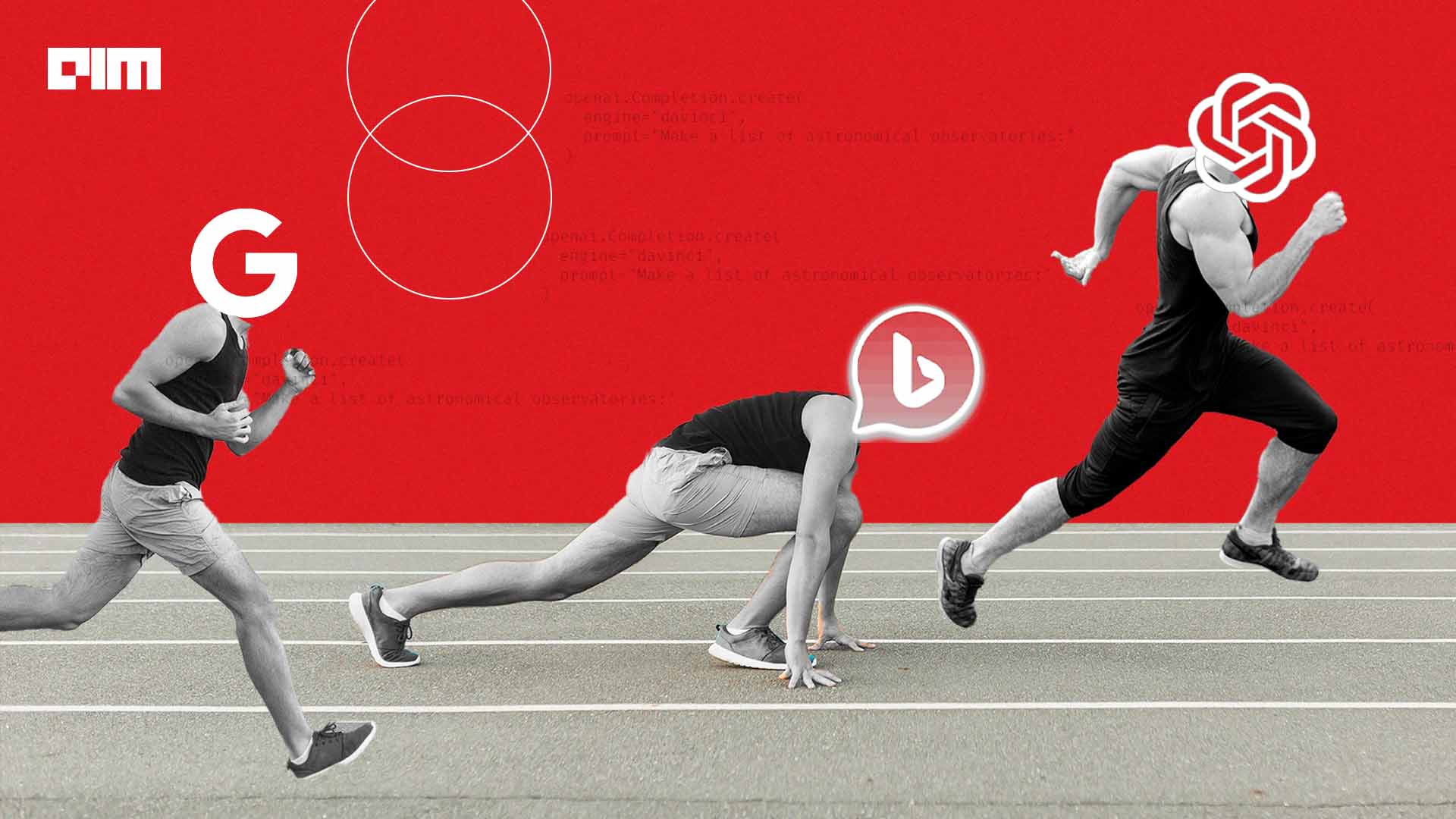
During Google’s annual developer conference, Google I/O 2023, significant upgrades were announced for Google Bard. The updates included AI image generation through integration with Adobe Firefly, image search, export features, programming language support, personalised code reviews, and integration with Google Maps. With these updates, Bard has become a genuine contender in the AI chatbot market, and looks to surpass competitors such as ChatGPT and Microsoft’s Bing Chat in some areas.

Google has also announced updates to its search tool, incorporating generative AI into core products such as Gmail and Google Photos. The company plans to test this technology with several clients, including Deutsche Bank and Uber Technologies. Google’s chatbot Bard is powered by PaLM 2, a more advanced AI model developed by Google. PaLM 2 allows Bard to write captions for images and function on smartphones.

Bard’s updates include integration with Google Docs and Sheets, expanded language support, and coding capabilities. The updates position Bard as a tool to streamline coding and debugging, with added math and logic capabilities. Bard is available in 180 countries and territories and supports languages beyond English, such as Japanese and Korean.

Bard vs ChatGPT

While Bard is open for everyone to test, it looks like the new capabilities have not been implemented yet and would only be available through the Google Search Labs waitlist.

However, we tested Bard, ChatGPT and GPT 4 (which Bing also uses in a limited capacity).

We asked Bard to generate a dystopian image inspired by George Orwell’s 1984 it said:

So, we asked whether it is using Adobe Firefly to generate images now, it said Firefly is still in development and is not available to the public.

On the other hand when we fed the same George Orwell prompt in ChatGPT, it generated this:

While neither of the two could not generate an image, ChatGPT generated a detailed description and scenario. Nevertheless, considering the prompt, Bard’s response seemed much more apt.

Code:

Then we asked if Bard could code an ad blocker for us, and it did!!!

On the other hand ChatGPT generated this answer:

GPT4 provided a generic JavaScript for the same:

While Bard gave us code for an ad blocker and assured us that, ‘This extension will block all ads on all websites’. GPT-4 provided a basic JavaScript of an ad blocker; was realistic in its approach and also suggested much more advanced ad blockers.

Then we asked both the chatbots to generate a poem based on Kierkegaard’s work and the results were quite different:

ChatGPT generates a good rhyming scheme and seems more refined. But GPT4 came up with a stand out response:

Real-time info:

Bard stands out when it comes to generating real time information, because it has access to the web. On the other hand, even the paid version of GPT, GPT Plus, needs plugins to access the web.

We asked Bard about some updates from Indian politics:

ChatGPT gave this response to the same prompt:

While Bard gave updates on the Karnataka election amongst other things, ChatGPT was still stuck on the Covid pandemic and the Farmer’s Protest, because it was trained on data until 2021.

However, ChatGPT has released more than 70 plugins for ChatGPT Plus (its paid version) which provides users real time access to the web.

Then we asked whether Bard was already using Palm-2 or not and it said it had not:

So, it looks like Bard is still running on LaMDA, and hence the updates cant be truly gauged as of now.

Conclusively, while ChatGPT-generated answers seem much more natural and useful, even without the updates Bard has the edge when it comes to real-time information and coding capabilities.

However, currently, the paid version of ChatGPT is considered to be the best chatbot due to its human-like verbose responses compared to Bing and Bard. However, these products are constantly evolving and improvements are expected as Google, Microsoft, and OpenAI continue to feed their AI systems more data and make tweaks.

Google is expected to benefit the most from this as it switches from LaMDA to PaLM 2, as Bard’s previous version was not satisfactory. Bard already has additional features like voice summarisation, and exporting answers to documents or Gmail drafts but as additional features like AI image generation through Adobe Firefly, image search, programming language support, personalized code reviews, and integration with Google Maps start rolling in, Bard will have some upper hand in comparison to ChatGPT and Bing.

Bard vs the World

Both ChatGPT and Bing Chat are AI chatbots that utilise the latest version of GPT-4 to generate unique responses based on text cues. Bing Chat has limitations on inquiries and messages per discussion, requiring Microsoft Edge or the Bing app, while ChatGPT is generally considered the better option. Google’s Bard, initially based on LaMDA, is transitioning to PaLM 2, Google’s advanced AI model.

Microsoft recently updated Bing Chat, offering enhanced functionality beyond ChatGPT due to its use of GPT-4. Bing Chat provides free access to GPT-4, albeit with some missing features and usage restrictions. Google provides access to PaLM 2 through various channels, including the PaLM API and Firebase, and Bard will soon support PaLM 2 as well.

The new version of ChatGPT introduces features like Visual Answers and Multimodal Support, enabling the AI to analyse images and respond with diverse visuals. Third-party plugins like OpenTable, Wolfram Alpha, and Microsoft Math Solver enhance the AI’s responses. Bing Image Creator is available in multiple languages, and Export and Share functionality facilitates easy sharing of chat content. Bard already has features like voice summarisation and exporting answers to documents or Gmail drafts, with plans to introduce AI image generation, image search, programming language support, personalised code reviews, and Google Maps integration.

Bing Chat’s recent update integrates with Microsoft Edge and introduces the Copilot feature for organising tabs and analysing documents, significantly enhancing its capabilities and providing tailored responses.

While ChatGPT is developing plugins to extend its functionality, they are still in testing. An anticipated plugin allows the model to browse the internet for up-to-date information, but users have reported issues with its functionality during alpha testing. OpenAI welcomes user feedback through a private beta Slack group for those with access to the code interpreter plugin. Developers can also create plugins by joining a waitlist and utilising the API to connect ChatGPT with third-party applications.

Similarly, Google’s Bard supports plugins that provide access to apps like Spotify, Walmart, Indeed, Uber Eats, Adobe Firefly, and Google Apps, expanding its capabilities and offering additional functionalities within the chatbot interface.

Learning from ChatGPT’s mistake?

The European Union was excluded from the list of countries where Bard was launched. This exclusion has not been addressed by Google, but it is speculated to be related to the EU’s aversion to OpenAI’s ChatGPT after its introduction, and Google is awaiting the upcoming AI Act before making any moves.

ChatGPT recently faced bans in Italy for privacy violations, and France, Spain, and Germany are investigating the company’s compliance with GDPR. So, Google seems to be treading carefully. Microsoft has released its Bing Chat preview in 169 countries.

Additionally, OpenAI’s offering is marred by privacy concerns and OpenAI’s losses have doubled to $540 million since developing its ChatGPT product. OpenAI attempted to patch the wound with its latest offering in the form of a new subscription tier, ChatGPT Business, for enterprise customers who need more control over their data and want to manage their end-users.

On the other hand, Microsoft’s Bing has found business avenues for itself, and has been running ahead in terms of business. Recent reports suggest that Samsung and Apple may switch to Bing as their default search engine, potentially triggering other Android OEMs to explore Microsoft alternatives.

The post Can Bard Hang With The Big Boys After Upgrades? appeared first on Analytics India Magazine.

Top Posts May 8-14: Mojo Lang: The New Programming Language

Mojo Lang: The New Programming Language
Most Popular Posts Last Week

  1. Mojo Lang: The New Programming Language by Nisha Arya
  2. Stop Doing this on ChatGPT and Get Ahead of the 99% of its Users by Josep Ferrer
  3. 3 Ways to Access GPT-4 for Free by Abid Ali Awan
  4. 8 Open-Source Alternative to ChatGPT and Bard by Abid Ali Awan
  5. Exploratory Data Analysis Techniques for Unstructured Data by Aryan Garg

Most Popular Posts Past 30 Days

  1. AutoGPT: Everything You Need To Know by Nisha Arya
  2. Machine Learning with ChatGPT Cheat Sheet by KDnuggets
  3. Mojo Lang: The New Programming Language by Nisha Arya
  4. Stop Doing this on ChatGPT and Get Ahead of the 99% of its Users by Josep Ferrer
  5. Baby AGI: The Birth of a Fully Autonomous AI by Nisha Arya
  6. 8 Open-Source Alternative to ChatGPT and Bard by Abid Ali Awan
  7. LangChain 101: Build Your Own GPT-Powered Applications by Bala Priya C
  8. 4 Ways to Generate Passive Income Using ChatGPT by Youssef Rafaat
  9. HuggingChat Python API: Your No-Cost Alternative by Matthew Mayo
  10. Mastering Generative AI and Prompt Engineering: A Free eBook by Matthew Mayo

More On This Topic

  • Mojo Lang: The New Programming Language
  • Why You Need To Learn More Than One Programming Language!
  • Python: The programming language of machine learning
  • GitHub Copilot and the Rise of AI Language Models in Programming Automation
  • DataLang: A New Programming Language for Data Scientists… Created by…
  • What Makes Python An Ideal Programming Language For Startups

OpenAI unveils ChatGPT plugins, but there’s a catch

OpenAI in background and ChatGPT logo on phone

Those of you who'd like to use ChatGPT to play a trivia game, plan a trip, get stock quotes, or find a place to eat can now do all of that and more. OpenAI, the brains behind ChatGPT, has just started rolling out a host of third-party plugins aimed at expanding the repertoire of the popular AI chat service.

In a tweet posted last Friday, OpenAI said: "We're rolling out web browsing and Plugins to all ChatGPT Plus users over the next week. Moving from alpha to beta, they allow ChatGPT to access the internet and to use 70+ third-party plugins."

Also: How I tricked ChatGPT into telling me lies

Before you get too excited, there is one major requirement. You have to be a paid ChatGPT Plus subscriber, which provides a gateway to early features but costs $20 a month. If you are a subscriber, plugins offer several benefits, including access to real-time information such as news and stock prices, the retrieval of knowledge-base information such as company documents and personal notes, and the ability to trigger specific actions such as booking a flight or ordering food.

The existing plugins are designed to appeal to users across the spectrum with ones geared toward business, education, finance, investing, and personal interests. Using plugins from such third-party providers as Expedia, Zillow, Kayak, Instacart, and OpenTable, you can search for a job, find real estate listings, receive product recommendations, go shopping, play games, and get recipes.

With Microsoft, Google, and other companies trying to cash in on the AI crazy, OpenAI is staying a step ahead with its own service. Promoting its ChatGPT Plus subscriptions is one way to generate income. And for that, the company has to make sure the paid plan offers enough benefits to attract people who would otherwise stick with the free option.

Also: I asked ChatGPT, Bing, and Bard what worries them. Google's AI went Terminator on me

To try the new plugins as a ChatGPT Plus user, go to the main chat screen, click the three-dot icon at the bottom of the left pane next to your name, and select Settings. At the Settings window, click the setting for Beta features and then turn on the switch for Plugins.

After closing the Settings window, hover over the GPT-4 model at the top of the screen and check the option for Plugins Beta. Next, click the dropdown arrow for No plugins enabled and select Plugin store. Read the About plugins window and click OK.

The headings at the top of the store window let you browse among new, most popular, and all plugins. If you find one that interests you, click the Install button to set it up. Install as many as you'd like, but you can enable only as many as three at a time. To control this, return to the chat screen, click the dropdown arrow for plugins, and select the three you wish to use.

Also: The best AI chatbots

At the chat screen, type a prompt that ties into one of the plugins you installed. As one example, I entered a request to show me real estate listings for two-bedroom condos in the zip code of 10017. In response, ChatGPT indicated that it was using Zillow to answer my question and described a few different listings matching my criteria. The response also included a link directing me to additional listings.

As another example, this one of something more interactive, I asked ChatGPT to host a trivia game about old Hollywood films. Tapping into the Open Trivia plugin, the AI generated a multi-choice question for which I had to guess the answer.

See also

Bing Chat can now respond to questions with images, charts and other visual elements

Graphics feature on Bing's AI-powered chat

Some of the features showcased on May 4 are finally available.

After Microsoft announced some major upgrades last week to its artificial intelligence chatbot, Bing Chat, the company is beginning to roll out new features for the AI chatbot. Today, some of those features are available for widespread use.

Also: How I tricked ChatGPT into telling me lies

Last week, Microsoft added images within chat answers, a feature that enhances the user's visual experience with Bing AI. Incorporating images into chat responses makes an answer easier to process for a wider range of users, like those who prefer visual feedback and younger audiences.

If you ask Bing what a capybara is, it can now include an image in its response and an info card with more details.

Depending on the subject, the answers will also include a 'knowledge card' with the image of the search subject.

For example, when asking Bing about elephants (below), the AI chatbot included a photo of one that linked to an informational card. This can include location, diet, lifespan, and other characteristics.

Bing puts information together and displays in an easily digestible format.

The new updates available today also include more visual elements that make for a more complete chat experience, like the addition of comparison tables when you're searching for the best tents, as shown below in an example from Microsoft.

Easy.

The optimized format for Bing's answers goes beyond shopping, as it will be used for answering questions about a variety of topics, like weather and finance, for example.

Also: How to use Bing Image Creator (and why it's better than DALL-E 2)

With these changes, Microsoft also included a copy button, like the one in the ChatGPT chat window, to give users the ability to easily copy the chatbot's answer with the click of a button. As of today, you can also write or copy your prompts or questions for Bing Chat, including formatting like paragraphs, bullets, or numbers.

Open-Source Bard API is Here

Open-Source Bard API is Here

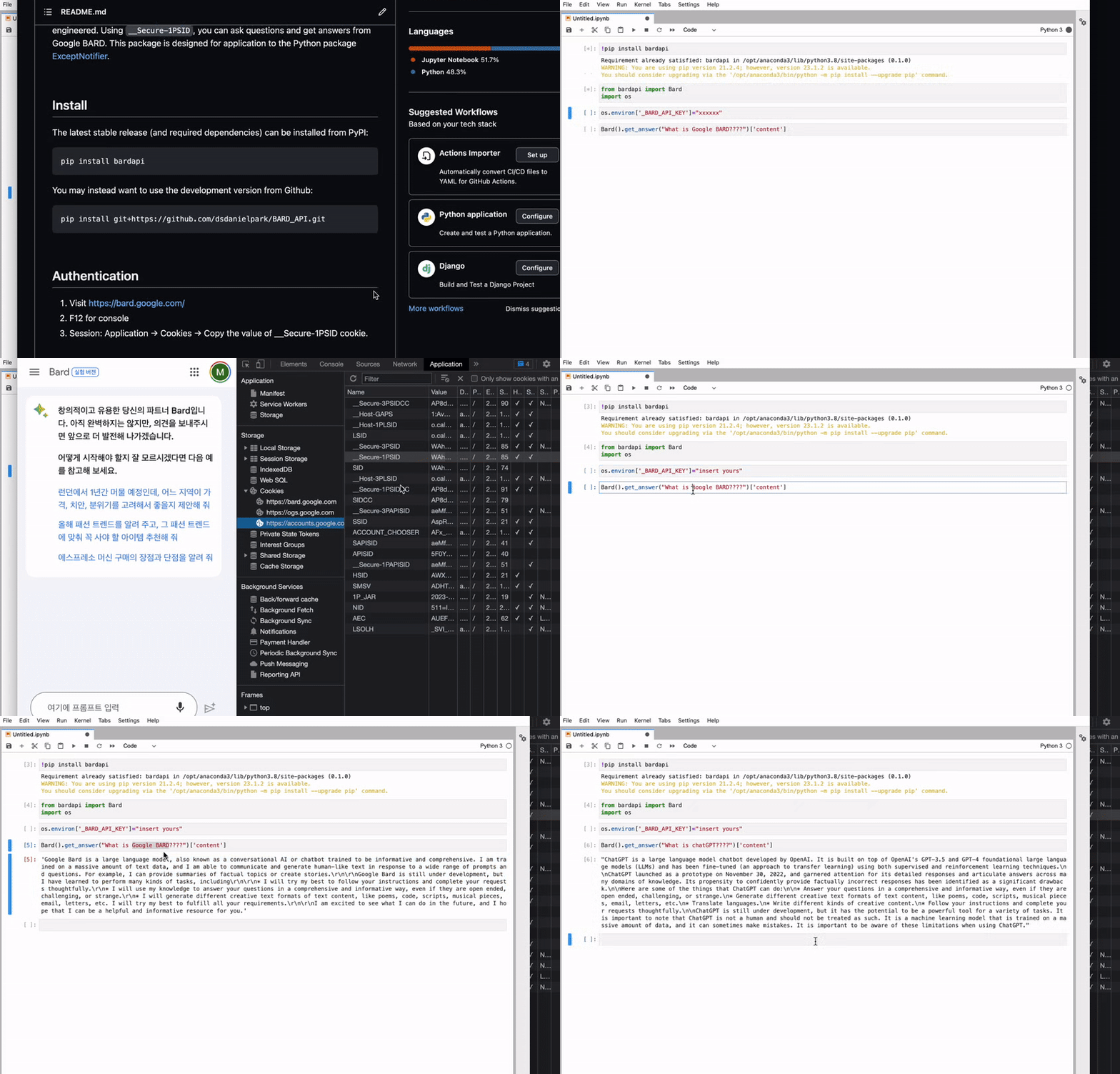
The developer community has done it yet again and launched an open-source repository for Google Bard. Built with reference to the reverse engineered Bard API by Antonio Cheong, Daniel Park has released a Python package that returns responses from Google Bard through the API for free.

Check out the Github repository here.

The download of the repository includes scripts for comparing the Bard model with OpenAI’s ChatGPT. It is designed for application to the Python package ExceptNotifier.

This free, open source repository already has around 500 stars on Github and the number is only increasing. The repository is released under the MIT licence.

Park has previously worked on GPT-BERT-Medical-QA-Chatbot, a medical domain chatbot by fine-tuning GPT-2, along with several other predictive and recommendation based projects.

The developer has mentioned that all legal responsibilities for using the product lies with the developer as it just provides the code for Python developers for easily accessing Google’s Bard. Google has previously banned a lot of accounts for unofficially using their projects that are unauthorised.

During the Google I/O 2023, Sundar Pichai had announced Bard and said that they are expanding their support to other countries as it is still not available in several countries such as Norway and France.

In February, Google had released the earlier version of Bard which was built on LaMDA, the company’s own language model announced at Google I/O 2021. The newer version of Bard runs on PaLM-2, the newer version of PaLM, their older LLM. The company also plans to release their multi-modal project called Gemini soon.

The official repository for Google’s PaLM and PaLM-2 through their Vertex API is available on the Model Garden page of Google Cloud.

The post Open-Source Bard API is Here appeared first on Analytics India Magazine.