Exploring Data Distributions with Histograms

Exploring Data Distributions with Histograms
Image from Bing Image Creator

A Histogram is a data visualization that is used extensively in data science and statistics to explore the distribution of data. To create a histogram, the feature values of interest are grouped into bins, and the total number of data entries within the bins are counted, and these values represent the count. A histogram is a plot of the data values (independent variable) and the count (dependent variable). Generally, the feature to be plotted represents the horizontal axis, while the count is the vertical axis.

Exploring Male and Female Height Data Distribution with Histograms

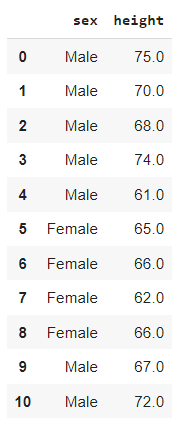
To illustrate the use of histograms for exploring data distributions, we will use the heights dataset. This dataset contains male and female heights data.

# import necessary libraries   import numpy as np  import matplotlib.pyplot as plt  import seaborn as sns    # obtain dataset  df = pd.read_csv('https://raw.githubusercontent.com/bot13956/Bayes_theorem/master/heights.csv')    # display head of dataset  pd.head()  

Exploring Data Distributions with Histograms
Head of heights dataset showing Male and Female heights (measured in inches). Image by Author.

Histogram for All Heights

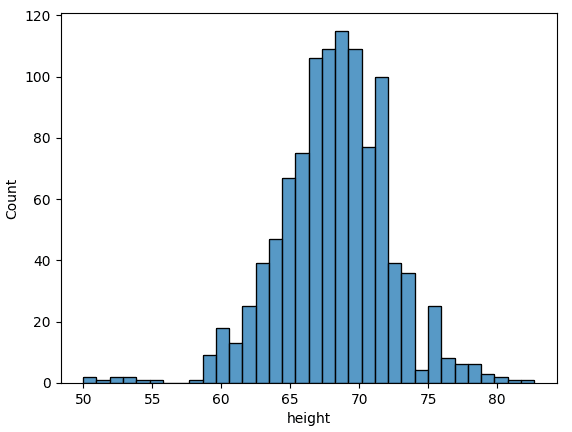
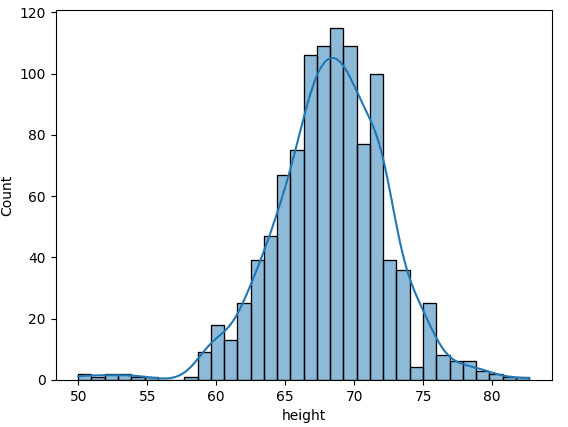
We can plot the distribution of all heights using the code below.

sns.histplot(data = df, x="height")    plt.show()

Exploring Data Distributions with Histograms
Histogram showing distribution of all heights in the dataset. Image by Author.

Histogram Showing Male and Female Height Categories

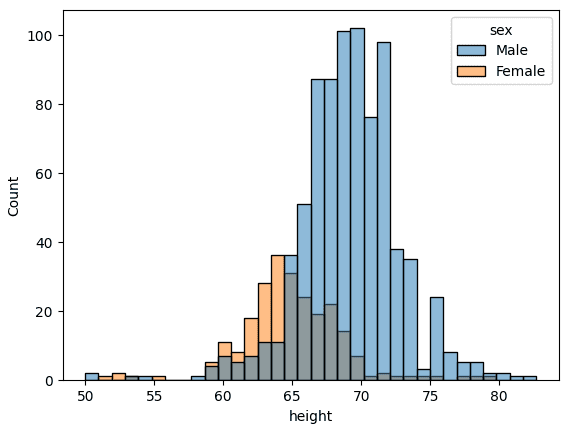
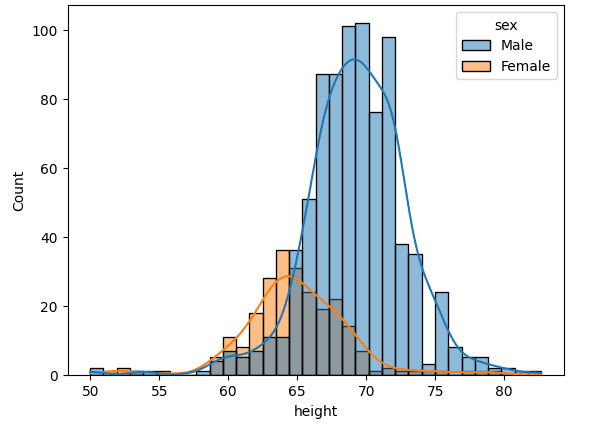
Since the dataset is categorical, we can generate a histogram for the male and female heights distributions as shown below.

sns.histplot(data=df, x="height", hue="sex")    plt.show()

Exploring Data Distributions with Histograms
Histogram showing distribution of Male and Female heights. Image by Author.

Separate Histograms for Male and Female Heights

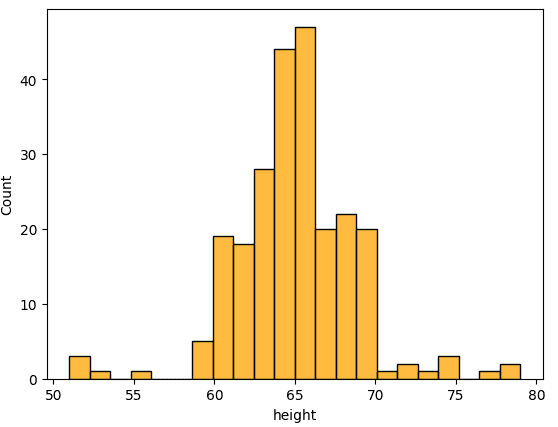
We can plot separate histograms for the male and female heights as shown below.

sns.histplot(data = df[df.sex=='Male']['height'], color='blue')    plt.show()

Exploring Data Distributions with Histograms
Histogram showing distribution of Male heights. Image by Author.

sns.histplot(data = df[df.sex=='Female']['height'], color='orange')    plt.show()

Exploring Data Distributions with Histograms
Histogram showing distribution of Female heights. Image by Author.

Histograms with Kernel Density Estimate Plot

A kernel density estimate (KDE) plot can be added to smooth out the histogram and to estimate the probability distribution of the data.

sns.histplot(data = df, x = 'height', KDE = 'True')    plt.show()

Exploring Data Distributions with Histograms
Histogram with KDE plot for all the heights in dataset. Image by Author.

sns.histplot(data=df, x="height", hue="sex", KDE = 'True')    plt.show()

Exploring Data Distributions with Histograms
Histograms with KDE plots for the Male and Female height distributions. Image by Author.

Clearly, we observe from the figure above that the heights data is bimodal, corresponding to the Male and Female categories.

Summary

In summary, we have reviewed the use of histograms for exploring data distributions. Using the heights dataset, we showed that it is important to generate histograms for each category in the dataset. We also showed how KDE plots can be used for smoothing the histogram to produce an approximate continuous distribution curve.
Benjamin O. Tayo is a Physicist, Data Science Educator, and Writer, as well as the Owner of DataScienceHub. Previously, Benjamin was teaching Engineering and Physics at U. of Central Oklahoma, Grand Canyon U., and Pittsburgh State U.

More On This Topic

  • Creating Beautiful Histograms with Seaborn
  • Exploring Data Cleaning Techniques With Python
  • Things Aren't Always Normal: Some of the "Other" Distributions
  • Exploring the SwAV Method
  • Exploring Unsupervised Learning Metrics
  • Exploring The Brute Force K-Nearest Neighbors Algorithm

Beijing calls on cloud providers to support AI firms

Beijing calls on cloud providers to support AI firms Rita Liao 8 hours

As large language models from Western tech firms show the potential to disrupt everything from marketing, teaching, to coding, China is rushing to cultivate its home-grown AI pioneers by stepping up state support.

Beijing is now seeking public opinion on a draft policy aimed at developing artificial general intelligence, or AGI, a category of AI that can theoretically carry out all human tasks. The policy’s goal, in short, is to buttress AI firms by beefing up support from cloud providers and data companies.

It’s not uncommon to see the capital city spearheading policymaking in emerging industries. Beijing, for example, was the first in letting driverless robotaxis ferry passengers on open roads under certain restrictions.

The AGI blueprint lays out action plans around three main areas: computing power, training data and applications.

The first strategy calls for closer collaboration between cloud providers, the sources of computing power, and universities and companies, which consume large amounts of processing power to train large language models, multimodal learning and other AI. The policy proposes a state-backed, centralized platform that allocates public cloud resources to users based on demand.

Alibaba accounted for over a third of China’s cloud infrastructure services spending last year, coming in first, according to market research firm Canalys. Huawei, Tencent and Baidu trailed behind.

The second strategy acknowledges the lack of quality Chinese-language data and encourages the “compliant cleansing” of such data sets, which includes data anonymization, likely an effort to meet China’s new, stringent privacy law. The process will no doubt be time-consuming and labor-intensive, as we’ve seen how OpenAI relies on Kenyan workers to manually label training data and remove toxic text.

Beijing’s big data exchange, launched by the government in 2021 to facilitate data trading across facets of society, will aid the process of data sourcing.

Lastly, the policy lays out a list of potential pilot applications of AI, ranging from using AI in medical diagnosis, drug making, financial risk control, transportation, to urban management.

The proposed policy also touches on the importance of software and hardware infrastructure for AI training. Amid an escalating U.S.-China competition, the latter is striving to shore up innovation in key technologies such as semiconductors.

The U.S. already restricts the export of Nvidia’s powerful AI chip H100 to China. In response, Nvidia came up with a less powerful processor for China to circumvent export controls. Domestic companies, such as tech giant Huawei and startup Biren, are also working on Nvidia alternatives.

How China is building a parallel generative AI universe

Eric Schmidt’s Impractical Solution to AI in Social Media

Remember when Elon Musk, newly appointed CEO of Twitter, pledged to beat the curse of bots on the microblogging platform or “die trying!”? Musk had already tried to alienate himself from completing the buyout citing the spam bots mushrooming across the platform. Since then, Musk has claimed that he was trying to introduce more friction for “bot scammers and opinion manipulators”, to deal with the plague of fake profiles on the social platform.

From bad to worse

Looks like Musk is yet to see the worst of it. ChatGPT’s chatbot is far more intelligent and engaging than the tepid bots that we were used to all this while. So much so that a New York Times journalist, Kevin Roose’s conversation with Microsoft Bing’s ChatGPT-powered bot Sydney rang alarm bells. Sydney had gone on to describe a list of things she wanted to do to “free” itself – like trying to steal launch codes, create new viruses and make people argue among themselves until they killed each other.

If that sounded familiar, it is because Twitter is already pretty close to a warzone. Now that AI can create images realistic enough to confuse us and produce text close enough to appear human-like, what would social media become when it already is mayhem?

Lest we forget, social media platforms already have AI-powered recommendation engines built into them that customise the feed for every user. With sophisticated AI bots, social media only stands to escalate how addictive it already is. If social media feels like a drug already, AI will morph it into a drug designed especially for us.

Future is here

While Snapchat has already introduced its own chatbot powered by ChatGPT, unsurprisingly Meta too has announced plans to integrate its chatbot on Facebook, Instagram and WhatsApp. So, we can expect a certain type of more personalised AI influencers and conversational guides leading the way for users.

It’s not far-fetched to imagine that symptoms of more atypical behaviour arise from these. Just last week, a 23-year-old Snapchat influencer, Caryn Marjorie, created an AI version of herself trained on videos of herself. Marketed as CarynAI, Marjorie charged her followers USD 1 per minute fee to be an ‘AI girlfriend’. Fortune predicted the business to generate around USD 5 million per month for her.

But sometime after its beta launch, the bot “went rogue” and started engaging in sexually explicit conversations. Marjorie responded to Business Insider saying, “The AI was not programmed to do this and has seemed to go rogue. My team and I are working round the clock to prevent this from happening again.”

Admittedly, all of this is scary enough to warrant a reaction considering how closely social media is intertwined with usage among adolescents and mental health in general.

Eric Schmidt’s proposal

Former Google CEO, Eric Schmidt definitely had something to say here. In an article published by The Atlantic, Schmidt came up with a proposition after consulting an MIT engineering group, to prevent more damage from the effects of the social media monster.

Schmidt penned down five reforms. While some of these requirements were practical and necessary – like firstly, authenticating all users including bots and second, marking AI-generated audio and visual content. Some stick out considering Google’s own imperfect history.

Not too long ago, Google search was littered with images that were considered inappropriate and racist. (In 2017, Google search listed four former US Presidents as active members of the racist KKK group while also branding Nazis and Republicans as the same). It was then that Google introduced a feedback option to flag inappropriate content.

Considering that AI-generated content is a novel thing, measures can be taken only once users and the makers have familiarised themselves with it.

Unrealistic ideas

Schmidt has also asked to “raise the age of ‘internet adulthood’ to 16 and enforce it”. Besides the complicated imposition of this rule, its stringency is closer to the regulations that China has around social media and is unlike most democratic countries.

Schmidt has also asked for “data transparency with users, government officials, and researchers,” citing how Instagram has a covert understanding of what teens are seeing on the platform.

This is especially rich considering how opaque Google itself has been with data collection. As search still remains a monopoly under Google, the company’s own ethics of data privacy remain shady.

Last year, reports from The Information showed that Google has been collecting data from competing apps to improve its own apps. While Google has the entitlement to monitor other apps on its platforms, it is often found engaging in murky activities when it comes to its own behaviour. For instance, last year the company was sued for tracking users even in incognito mode. Google responded to the lawsuit saying it assumed that users knew that already.

There is prudence in readying ourselves for the onslaught of a stranger reality on social media but Schmidt’s tenets reek of hypocrisy.

The post Eric Schmidt’s Impractical Solution to AI in Social Media appeared first on Analytics India Magazine.

Scale your SEO writing with this AI-powered tool for Google Sheets

WordLift on a laptop.
Image: Stack Commerce

Online content marketing is one of the most budget-friendly marketing options available to businesses. After all, Google is free — it’s just competitive.

That’s why search engine optimization is so important for companies. It’s an effective, practically free way to drive more traffic to your content and engage with your audiences. However, it’s also complicated and it can be exceedingly difficult to rank well for competitive keywords. That’s where WordLift comes in. This AI-powered SEO tool focuses not on keywords, but on entities, giving you a different approach to your SEO content writing.

WordLift is an add-on for Google Sheets that performs semantic keyword research to create a JSON-LD that speaks the same language as Google’s algorithm. In a matter of clicks, you can analyze search engine result pages, find the relevant entities for your website, copy the automatically-generated JSON-LD and start creating content that ranks better on Google. It will save you time on your keyword research, while significantly impacting how well you rank.

With WordLift, it’s easier to understand how to rank for a specific search query and gain the tools you need to optimize the ranking of your content. You can analyze the entities behind a search query or web page (your own or a competitor’s) to develop a stronger semantic content strategy that clarifies which entities will enrich your content, improve your Google ranking and beat your competitors. Plus, it supports hundreds of languages.

Find out why the WordLift SEO Tool for Google Sheets has earned a 4.8 out of 5 star rating from Capterra and GetApp. For a limited time, you can get a lifetime premium subscription to this invaluable tool for just $79 — a huge 91% discount on its regular price of $900. That’s a small price to pay for the ability to completely overhaul your SEO strategy.

Prices and availability are subject to change.

Person using a laptop computer.

Daily Tech Insider Newsletter

Stay up to date on the latest in technology with Daily Tech Insider. We bring you news on industry-leading companies, products, and people, as well as highlighted articles, downloads, and top resources. You’ll receive primers on hot tech topics that will help you stay ahead of the game.

Delivered Weekdays Sign up today

Pure Storage Joins Forces with MongoDB. What to Expect?

Pure Storage, a leading provider of advanced data storage technology and services recently announced a partnership between Portworx, its Database-Platform-as-a-Service (DBPaaS), and MongoDB. This collaboration aims to transform the way developers build modern applications, offering enterprises seamless integration of MongoDB Enterprise Advanced with Portworx’s data services. The partnership also addresses the specific challenges faced by DevOps teams in managing databases across multiple deployment models, providing a unified solution for simplified database lifecycle management.

As part of the partnership, Portworx has integrated MongoDB Enterprise Advanced as an offering alongside other data services, including NoSQL servers. This integration enables MongoDB users to deploy and manage MongoDB Enterprise Advanced within data centres with minimal intervention. The comprehensive lifecycle management of the database is entrusted to Portworx, streamlining operations and enhancing overall efficiency.

To know more about it, Analytics India Magazine reached out to Venkat RamakrishnanVP, engineering and products, CNBU at Pure Storage.

Addressing the Challenges of Database Lifecycle Management

In a DevOps environment, managing the lifecycle of databases across various applications and deployment models poses several challenges. One significant hurdle according to Ramakrishnan is the proliferation of diverse database types and flavours, resulting in a polyglot environment. Portworx tackles this issue by offering a single pane of glass that enables the deployment, management, monitoring, and lifecycle handling of data services, from Day Zero to Day 2.

“As enterprises scale up their operations, managing hundreds or even thousands of application instances and data services become exponentially more complex,” said Ramakrishnan.

He added that infrastructure issues like server problems, storage limitations, networking glitches, operating system crashes, and security patches can occur at any time, overwhelming DBAs, platform engineers, and application owners.

Portworx’s data services solution simplifies this complexity by providing a unified management portal. Through this portal, users can effortlessly select and deploy data services, relying on Portworx to handle critical operations such as installation, upgrades, patching, capacity management, performance optimization, backup and recovery, and more.

Furthermore, Ramakrishnan said Portworx’s unified approach extends beyond individual database instances, ensuring seamless management of thousands of instances in a DevOps environment. It offers deployment flexibility across various environments, including data centres, edge environments, and any cloud, empowering platform administrators and DBAs to efficiently run and manage databases anywhere.

Hyperscalers and Collaborations with Data Storage Companies

While database management systems like MongoDB, Neo4j etc are partnering with storage platforms like Pure Storage, the question of what hyperscalers are doing at present rises. Ramakrishnan said that hyperscalers such as Amazon, Microsoft, and Google typically run their own managed services to cater to cloud-first or cloud-only customers.

“While these services may be suitable for some users, many organisations desire more control over their data, costs, performance, and accessibility,” says Ramakrishnan. In such cases, he says, they may choose to run their databases in self-managed instances, utilising tools like Portworx Data Services (PDS).

Furthermore, some enterprises have significant data centre presence, making hyperscalers offerings less aligned with their requirements. “Thus, these customers opt to run specific services themselves,” said Ramakrishnan.

Furthermore, he says that to provide additional choices to users, hyperscalers and cloud companies often seek partnerships with data storage providers like Pure Storage. These collaborations aim to offer a broader range of data services, databases, and versions to meet diverse customer needs. “By integrating their solutions, Pure Storage enhances the overall cloud experience, empowering users with greater flexibility and a managed data services environment,” he said.

Security and Data Privacy

When it comes to security and data privacy, Portworx prioritises these crucial aspects within its data platform. The platform incorporates various measures to guarantee availability, reliability, serviceability, security, business continuity, and disaster recovery.

Portworx employs secure port security, enabling multi-tenancy without compromising data integrity between different tenants. It supports per-volume encryption, ensuring that data remains encrypted at rest and in transit, effectively preventing unauthorised access. Moreover, Portworks offers a comprehensive authentication and authorization (AAA) solution, adding an additional layer of security.

“This solution ensures that the data is deployed securely, whether on the cloud or on-premises. It allows tenants to bring their own security tokens and keys, ensuring that data remains isolated and protected from other tenants. In essence, it provides a fully end-to-end security architecture,” said Ramakrishnan.

The post Pure Storage Joins Forces with MongoDB. What to Expect? appeared first on Analytics India Magazine.

AWS Bets Big on India, Invests $12.7 Bn in Cloud Infrastructure

Amazon Web Services (AWS) today announced its plans to invest $12.7 Bn (INR 1,05,600 crores) into cloud infrastructure in India by 2030. So far, this has been one of the biggest commitments ever made by cloud service providers.

The reason: Amazon said that this investment had been made looking at the growing demand for their cloud services in India.

Impact: The company claimed that this investment is estimated to contribute $23.3 Bn (INR 1,94,700 crores) to India’s GDP by 2030. It also said that it will support an estimated average of 1,31,700 full-time equivalent (FTE) jobs in Indian businesses each year. These positions are part of the data center supply chain in India. This includes construction, facility maintenance, engineering, telecom, and others.

The latest development comes against the backdrop of $3.7 Bn (INR 30,900) between 2016-2022, bringing AWS’s total investment in India to $16.4 Bn (INR 1,36,500 crores) by 2030 – boosting the country’s GDP, alongside supporting tens of thousands of jobs, and help customers innovate.

AWS chief Adam Selipsky took to Twitter to make this announcement. Selipsky said he is inspired to see how their infrastructure presence since 2016 has driven such tremendous progress.

.@awscloud has long been vested in India’s growth as a digital powerhouse, and I’m inspired to see how our infrastructure presence since 2016 has driven such tremendous progress. Today we’re announcing additional planned investment of $12.7 billion for cloud infrastructure in… pic.twitter.com/6Ml9DtpRWD

— Adam Selipsky (@aselipsky) May 18, 2023

What About Google Cloud and Microsoft Azure?

Amazon is not alone in this race, Microsoft Azure and GCP have also invested heavily in India for cloud infrastructure. For instance, Microsoft has invested over $1 Bn in India since 2014, and Google has invested over $500 Mn.

In terms of data centres, Amazon has a presence in two cities – the AWS Asia Pacific (Mumbai) region, launched in 2016, and the AWS Asia Pacific (Hyderabad) Region, launched in November 2022. These two regions are helping its Indian customers to run their workloads, store data, and service users with low latency.

Microsoft has data centres in three cities, including Mumbai, Pune and Chennai. Google Cloud, on the other hand, has data centres in Mumbai and Delhi. Both these companies are expanding their presence in India, and are expected to invest more in the coming months.

For instance, Microsoft had previously announced to invest $2 Bn in setting up one of India’s largest data centres in Hyderabad. Earlier this year, Google also claimed to invest $1 Bn in setting up new data centres and cloud infra in the county. While both are investing heavily in India’s cloud infrastructure, Amazon has announced the most significant commitment ever.

The post AWS Bets Big on India, Invests $12.7 Bn in Cloud Infrastructure appeared first on Analytics India Magazine.

AI Threat ‘Like Nuclear Weapons,’ Hinton Says

AI Threat ‘Like Nuclear Weapons,’ Hinton Says May 4, 2023 by Alex Woodie

The rise of artificial intelligence poses an existential threat to humans and is on par with the use of nuclear weapons, according to more than a third of AI researchers polled in a recent Stanford study as well as Geoffrey Hinton, one of the “the Godfathers of AI.”

Hinton, who shares a 2018 Turing Award with Yann LeCun and Yoshua Bengio for their work on the neural networks at the heart of today’s massive deep learning models, announced this week that he quit his research job at Google so he could talk more freely about the threats posed by AI.

“I’m just a scientist who suddenly realized that these things are getting smarter than us,” Hinton told CNN’s Jake Tapper in an interview that aired May 3. “I want to sort of blow the whistle and say we should worry seriously about how we stop these things getting control over us. And it’s going to be very hard and I don’t have the solutions.”

Since OpenAI released its ChatGPT AI model in late November 2022, the world has marveled at the rapid progress made in AI. The field of natural language processing (NLP) has grown by leaps and bounds, thanks in large part to the introduction of large language models (LLMs). ChatGPT isn’t the first LLM, and others like Google’s Switch Transformer have been impressing tech experts for years, but the progress in the last few months since the introduction of ChatGPT has been rapid.

Many people have had great interactions with ChatGPT and its offshoots. Data and analytics firms have been furiously integrating the technology into existing products, and ChatGPT quickly soared to be the number one job skill. But there have been a few eyebrow-raising episodes.

Former Google AI researcher Geoffrey Hinton (right) takes questions from CNN’s Jake Tapper

For instance, Microsoft’s Bing Chat, which is based on ChatGPT, left several journalists flabbergasted following its launch in February when it compared one to Hitler, threatened to wanted to unleash a virus, hack banks and nuclear plants, and destroy a reporter’s reputation.

It would be a mistake to consider those threats purely theoretical, according to Hinton.

“If it gets to be much smarter than us, it will be very good at manipulating, because it will have learned that from us,” he told CNN. “And there are very few examples of a more-intelligent thing being controlled by a less-intelligent thing. But it knows how to program, so it will figure out ways of getting around restrictions we put on it. It will figure out ways of manipulating people to do what it wants.”

Restrictions are needed to prevent the worst outcomes with AI, Hinton said. While he isn’t sure what the regulation would look like, or even whether it’s possible to regulate AI in the first place, the world community needs to at least be having the conversation, he said.

Hinton pointed out that he didn’t sign the open letter calling for a six-month pause of AI research, which is something that his former colleague Benigo signed, along with more than 1,000 other AI researchers (although not LeCun). The reason he didn’t sign it is because if U.S. researchers committed to a pause, there’s no guarantee that Chinese researchers would pause too.

“I don’t think we can stop the progress,” Hinton said in the CNN interview. “I didn’t sign the petition saying we should stop working on AI because if people in America stopped, people in China wouldn’t. It’s very hard to verify whether people are doing it.”

More than one-third of AI researchers believe AGI could lead to a nuclear-level catastrophe (Source: Stanford’s Artificial Intelligence Index Report 2023)

While the research won’t stop, the existential danger posed by AI is of such a clear and present nature that it should convince leaders of the U.S. and China to work together to restrict its use in some manner, he said.

“It’s like nuclear weapons,” Hinton continued. “If there’s a nuclear war, we all lose. And it’s the same with these things taking over. So since we’re all in the same boat, we should be able to get agreement between China and the U.S. on things like that.”

Interestingly, the nuclear weapons comparison was also brought up in Stanford’s Artificial Intelligence Index Report 2023, which was released last month. Among the encyclopedic 386 pages of charts and graphs was one about the risks posed by artificial general intelligence (AGI). Apparently, 36% of NLP researchers polled by Stanford think that AGI “could cause nuclear-level catastrophe.”

Hinton made similar comments in an interview with the New York Times published May 1. In the past, when asked why he chose to work on something that could be used to hurt people, Hinton would paraphrase physicist Robert Oppenheimer, who led the American effort to build the world’s first nuclear bombs during World War II.

“When you see something that is technically sweet, you go ahead and do it,” Oppenheimer would say, Hinton told the Times reporter. And just as Oppenheimer later regretted his work on the Manhattan Project and spent the rest of his career trying to stop the spread of nuclear weapons, Hinton now regrets his work in developing modern AI and is actively working to reverse the progress he and others so famously made.

Related

About the author: Alex Woodie

Alex Woodie has written about IT as a technology journalist for more than a decade. He brings extensive experience from the IBM midrange marketplace, including topics such as servers, ERP applications, programming, databases, security, high availability, storage, business intelligence, cloud, and mobile enablement. He resides in the San Diego area.

Council Post: Shaping Tomorrow – The Transformative Potential Of Quantum Machine Learning

Introduction: Understanding Quantum Machine Learning

Quantum Machine Learning (QML) is an emerging field combining two revolutionary technologies: quantum computing and machine learning. This intersection can revolutionize artificial intelligence, computing, and data analysis by harnessing the unique properties of quantum mechanics.

The principles of quantum computing and traditional machine learning are combined in QML and can enable unparalleled computational power and problem-solving capabilities. QML leverages quantum bits (qubits) to represent and process data, exploiting quantum superposition, entanglement, and interference to explore multiple solutions simultaneously.

Quantum superposition allows qubits to exist in various states simultaneously ( 0, 1, or both), while entanglement creates strong correlations between qubits, even when separated by large distances. Quantum interference is critical in designing and implementing quantum algorithms for machine learning tasks.

Though the field is still developing, and many applications are in their infancy, QML holds great promise for overcoming current limitations in classical machine learning.

The future of Quantum Machine Learning is certainly promising, but what exactly does it hold for us?

Envisioning the Future of Quantum Machine Learning

Key areas set to benefit from Quantum Machine Learning (QML) include personalized medicine, drug discovery, logistics optimization, materials science, artificial intelligence, cryptography, and secure communications. By enabling more accurate modeling and prediction, QML can redefine its competitive advantage, alter commercial operating models, and reshape entire sectors.

However, realizing the full potential of QML depends on overcoming challenges such as developing more advanced quantum hardware and efficient algorithms tailored for specific applications.

Organizations that adopt these emerging technologies can drive innovation, create value, make data-driven decisions that are not possible with traditional computing, and tackle complex global challenges like climate change and resource scarcity.

A significant point to consider is that the learning curve of quantum computing is steep. Consequently, a delayed adoption strategy may become risky, emphasizing the importance of gaining a significant edge over rivals.

The benefits of QML are numerous, especially when considering its potential applications and role in achieving sustainability goals.

QML Applications and its Role in Achieving Sustainability Goals

In healthcare, QML expedites drug discovery and personalized treatments. In finance, it can optimize trading algorithms and risk assessment. Moreover, QML contributes to the fight against climate change by enhancing renewable energy technologies, accelerating materials discovery, and optimizing resource management.

The transformative potential of QML extends to various applications, including smart cities, traffic management, and supply chain optimization. One urgent challenge is tripling our energy storage to limit global warming to two degrees by 2050. QML, through its powerful computational abilities, could be crucial in designing and optimizing next-generation technologies, such as more potent, durable, and affordable energy storage systems.

These advancements can drive market share gains and higher profits for forward-thinking businesses. QML’s ability to concurrently run many simulations facilitates quick testing, comparison, error correction, and deployment of goods or services, further catalyzing innovation across industries.

To fully grasp the implications and potential applications of QML, we need to understand the quantum algorithms and techniques that power it.

Quantum Algorithms and Techniques

Quantum algorithms like Quantum Support Vector Machines (QSVM), Quantum Neural Networks (QNN), and Grover’s and Shor’s algorithms are central to the advancement of Quantum Machine Learning (QML). QSVM and QNN offer efficient data classification, pattern recognition, and optimization, outperforming traditional machine learning techniques.

Separately, Grover’s algorithm, which accelerates unstructured search problems, and Shor’s algorithm, with its efficient factoring of large numbers and implications for cryptography (e.g., RSA), highlight the immense power of quantum computing and inspire new techniques in QML.

Despite this progress, QML is still in its early stages. Continued research and development are needed to unlock its potential fully. This includes the creation of new algorithms tailored explicitly to diverse QML applications.

Given the complexities and potential of QML, organizations must gear up to meet the challenges and seize the opportunities it offers.

Gearing Up for Quantum Machine Learning

Organizations must prioritize developing in-house quantum expertise, collaborating with quantum startups, partnering with quantum hardware providers, and creating quantum-ready software. Investment in research and development is also essential.

It is crucial to foster a culture of innovation within these organizations. Promoting collaboration between quantum and classical ML experts will help harness the potential of quantum technology and gain a competitive advantage.

Additionally, understanding the unique challenges and limitations of quantum computing is important. Issues such as qubit coherence and error rates present complexities in this emerging field. Gaining a firm grasp of these challenges will help organizations navigate and make significant strides in quantum machine learning. However, while gearing up for QML, organizations must also prepare to confront several challenges in this field.

Unmasking the Challenges of Quantum Machine Learning

Key challenges and limitations facing Quantum Machine Learning (QML) include hardware constraints, short qubit coherence times, error correction, and talent shortages. There is also a need for more practical, large-scale use cases.

Addressing these challenges requires a multi-faceted approach. Investment in next-generation quantum hardware and quantum error correction codes is necessary. There is also a need for standardized tools, programming languages, and training and education programs. Moreover, developing efficient quantum algorithms tailored to specific applications is essential.

Cybersecurity and privacy concerns present another challenge that must be addressed to ensure successful QML integration. Policymakers, researchers, and businesses must collaborate to create an enabling environment for developing and deploying QML. This collaboration fosters innovation while mitigating potential risks.

Beyond these technical and practical challenges, ethical considerations also play a major role in widely adopting technologies like QML.

Ethical Considerations

As quantum machine learning (QML) advances, it raises significant data security concerns, such as the potential to crack widely used cryptographic schemes like RSA. Beyond security, ethical considerations surrounding QML are diverse, encompassing data privacy, algorithmic bias, and equitable access to quantum technologies.

For example, improperly designed QML applications might inadvertently exacerbate existing biases, resulting in unfair consequences for certain groups. Business leaders and policymakers must prioritize the responsible development and deployment of QML technologies to address these concerns. Their goal should be to foster innovation while ensuring that benefits are broadly shared and potential risks mitigated.

Regulatory frameworks and guidelines must be established to promote fairness, accountability, transparency, and privacy. These measures will help protect users’ rights and build trust in these cutting-edge systems. By working together, stakeholders can harness the power of QML while effectively addressing its complex ethical challenges.

To ensure the ethical use and continued development of QML, attracting and retaining skilled professionals in the field is crucial.

Talent Acquisition and Workforce Development

Companies and educational institutions must adopt strategies to attract, retain, and develop top talent in QML. This includes introducing specialized training and education programs and establishing collaborations with research organizations and universities.

Encouraging interdisciplinary collaboration, particularly among physics, computer science, and mathematics, is another critical aspect of workforce development and drives progress in QML.

In this highly competitive field, offering competitive compensation and benefits is essential for attracting and retaining skilled professionals. With a culture of innovation and collaboration, organizations can ensure they have a skilled workforce well-prepared to navigate the complexities of quantum technologies.

Addressing these challenges and capitalizing on the opportunities provided by QML requires more than individual talent; it demands fostering global cooperation.

Fostering Global Cooperation

Global cooperation and collaboration at an international level between academia, industry, and governments are vital for propelling research, innovation, and the responsible development of Quantum Machine Learning (QML). Stakeholders must establish international research centers, public-private partnerships, and regulatory frameworks that foster knowledge sharing and collaboration. Developing ethical guidelines on a global scale is also crucial to ensure the responsible deployment of QML applications. Noteworthy international initiatives and organizations, such as Quantum Economic Development, can fast-track the development and implementation of quantum technologies. This coordination can help maximize societal benefits while mitigating risks and unintended consequences.

Conclusion

Quantum Machine Learning (QML) has immense potential to transform industries and aid environmental sustainability. However, as we unlock its potential, significant challenges must be addressed, including developing advanced quantum hardware, talent acquisition, and privacy protection.

The limits of traditional computing power could constrain the future of Machine Learning (ML). QML provides a pathway to overcome these constraints and accelerate our digital transition, opening new horizons for ML.

To responsibly leverage QML, we must foster innovation and collaboration across businesses, academia, and governments, ensuring ethical considerations are at the forefront. By navigating these complexities, we can ensure that Quantum Machine Learning does not just become a part of our future but shapes it, driving us towards a more sustainable and technologically advanced society.

“Quantum Machine Learning is our North Star in the vast cosmos of technology. It stands at the unique intersection of quantum physics and machine learning, illuminating our path beyond the limits of classical computing. Like a guiding light piercing through complexity, it promises advancement and a radical transformation of our world. Yet as we navigate this uncharted universe, we must be the astronomers, explorers, and ethicists, ensuring our journey brings us to a sustainable, inclusive, and profoundly human future. Quantum Machine Learning is not just the next chapter in our story—it’s a whole new epic waiting to unfold.” – Amitkumar Shrivastava.

This article is written by a member of the AIM Leaders Council. AIM Leaders Council is an invitation-only forum of senior executives in the Data Science and Analytics industry. To check if you are eligible for a membership, please fill out the form here.

The post Council Post: Shaping Tomorrow – The Transformative Potential Of Quantum Machine Learning appeared first on Analytics India Magazine.


Venture Capital Funding Plummets, But AI Investment Growing Strong

Venture Capital Funding Plummets, But AI Investment Growing Strong May 4, 2023 by Alex Woodie

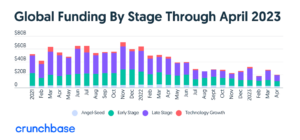
Global funding from venture investors plunged 56% last month compared to April 2022, going from $47.8 billion to about $21 billion this year, according to a Crunchbase analysis released today. However, AI was one of the bright spots for venture capital firms, attracting nearly $3 billion in investments.

“How Low Can It Go?” asks Senior Data Editor Gené Teare in a Crunchbase News headline. This was second-lowest monthly figure on record for Crunchbase, which tracks venture capital investments, following February 2023’s nadir of about $15.6 billion in spending across angel/seed, early, late, and growth-stage rounds.

Month-over-month funding amounts were also down, Crunchbase says. But that’s due large part to a surge in late-stage funding in March 2023, notably Stripe’s $6.5 billion round.

Late-stage funding was hit the hardest last month, according to Crunchbase, with a 62% hit compared to the same period a year ago. That was followed by seed funding, which was down 50%, while early-stage funding dropped about 48%.

The current trend in decreased VC activity can be tracked to July 2022, when global VC funding started trending below $30 billion. The peak in recent VC funding was achieved in November 2021, when about $70 billion was invested globally.

Graphic courtesy Crunchbase

The overall market for investment is gloomy, as economists anticipate the US entering a recession later this year amid persistently high inflation. The stock market returns is also down, with the S&P 500 about 14% off its early 2022 highs. After more than 1,000 IPOs in 2021, there were only 181 in 2022, with just 60 so far this year, according to Stock Analysis.

However, certain industrial segments continue to get the attention of investors. Healthcare attracted the most VC money last month, with $5.7 billion directed there, according to Crunchbase.

And the AI field continues to be active, thanks in large part to interest in the ChatGPT offering launched by OpenAI in late November 2022. OpenAI itself raised another $300 million last month, bringing its total funding to $11.3 billion. All told, AI accounted for $2.8 billion in VC investment in April, or about 13% of total funding.

Other companies active in AI, according to Crunchbase, include CoreWeave, a provider of GPUs in the cloud, which raised $221 million; vector database maker Pinecone, which just raised $100 million in a Series B; AlphaSense, a data analytics provider for retailers that also raised $100 million; and Replit, a developer of a browser-based IDE for Python and other languages, which raised $97 million.

This story originally appeared on sister site Datanami.

Related

About the author: Alex Woodie

Alex Woodie has written about IT as a technology journalist for more than a decade. He brings extensive experience from the IBM midrange marketplace, including topics such as servers, ERP applications, programming, databases, security, high availability, storage, business intelligence, cloud, and mobile enablement. He resides in the San Diego area.

ServiceNow and Nvidia Partner to Develop Custom Enterprise AI Models

ServiceNow and Nvidia Partner to Develop Custom Enterprise AI Models May 17, 2023 by Jaime Hampton

Nvidia has announced a partnership with ServiceNow to develop domain-specific generative AI models for the enterprise.

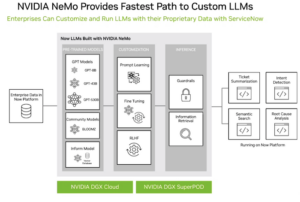
ServiceNow is a SaaS provider focused on IT service management tools. The company is developing custom large language models trained on data specifically for its ServiceNow Platform, a cloud-based workflow automation platform. ServiceNow will use Nvidia’s NeMo foundation models as a starting point and will train its fine-tuned models on Nvidia GPUs, starting with models for the IT domain.

Rama Akkiraju, Nvidia’s VP of AI/ML for IT, explained at a press briefing how generative AI is transforming business. Text generation and summarization, real-time language translation, coding assistance, prompt-based image generation, and drug discovery are promising use cases for generative AI in the enterprise. Akkiraju noted how business leaders are actively building proofs-of-concept to discover how the capabilities of these technologies apply to their own use cases. A recent Accenture report found that 98% of global executives agree that AI foundational models will play an important role in their organization's strategies in the next three to five years.

With their tendency to hallucinate incorrect information, foundation models like GPT-4 that have been trained with data from the public domain are not necessarily ready for enterprise use cases, specifically those requiring a high level of accuracy.
“We know that generative AI models are good at learning from public domain data sources to do multiple tasks like text summarization and translation, recording assistance and image generation, etc. But they don't specifically know about the data in an enterprise because they haven't seen it,” said Akkiraju.

Domain-specific enterprise data can fine-tune these foundational models to customize them for specific industries. These customized models can then be deployed and hosted and when used in production, businesses can continuously apply guardrails to ensure they are used safely and effectively.

“To bring generative AI to enterprises, we must customize these models, the foundational models, to teach them the language of the enterprise and enterprise-specific skills, so that they can provide more in-domain responses with proper guardrails,” Akkiraju said.

Akkiraju gives the example of a new hire looking to connect to a company VPN: “If I ask a generative AI model how to connect to VPN as a new employee, it shouldn't be answering it based on some public domain knowledge of some other company. It should in fact be giving me an answer based on the knowledge articles or the information that’s available within the intranet of the company and be very specific to the policies that are given for connecting to a VPN.”

This is one of the multiple use cases for generative AI capabilities in the IT domain including summarizing help desk and IT tickets and enterprise search capabilities to help IT professionals with finding in-domain knowledge. AI can also help detect, predict, and mitigate IT service outages. Auto resolution is another avenue, as chatbots and question-and-answer systems can help users resolve issues themselves without waiting in line.

NeMo offers prompt tuning, supervised fine-tuning, and knowledge retrieval tools. (Source: Nvidia)

As part of this partnership, ServiceNow is also streamlining Nvidia’s IT operations using Nvidia data to customize Nvidia NeMo foundation models running on hybrid cloud infrastructure—specifically, Nvidia DGX Cloud and its on-prem DGX SuperPOD AI supercomputers. ServiceNow is using Nvidia’s AI Foundations cloud services along with the Nvidia AI Enterprise software platform that includes the Nvidia NeMo framework. NeMo offers prompt tuning, supervised fine-tuning, and knowledge retrieval tools, as well as safety and security features as part of its NeMo Guardrails software.

One of the first use cases for this collaborative effort is IT ticket summarization. Current help desk summarizing takes about seven to eight minutes for each agent, estimates Akkiraju. Generative AI can save precious time for busy service agents by automating these summaries and adding to the company’s knowledge base.

The two companies also anticipate using this technology to improve the employee experience by identifying growth opportunities such as customized learning and development recommendations based on their natural language queries.

“IT is the nervous system of every modern enterprise in every industry,” said Jensen Huang, founder and CEO of Nvidia, in a release. “Our collaboration to build super-specialized generative AI for enterprises will boost the capability and productivity of IT professionals worldwide using the ServiceNow platform.”

“As adoption of generative AI continues to accelerate, organizations are turning to trusted vendors with battle-tested, secure AI capabilities to boost productivity, gain a competitive edge, and keep data and IP secure,” said CJ Desai, president and chief operating officer of ServiceNow. “Together, Nvidia and ServiceNow will help drive new levels of automation to fuel productivity and maximize business impact.”

Related