Noteable Plugin: The ChatGPT Plugin That Automates Data Analysis

Noteable Plugin: The ChatGPT Plugin That Automates Data Analysis
Image by Editor

Generative AI text tools such as ChatGPT have made our life easier. From planning our content, answering questions to code generation is now possible. It’s something that we don’t have in a few years back.

The ChatGPT capability is even further expanded with the ChatGPT plugin. ChatGPT can connect with third-party applications with the plugin and enhance the tools to perform additional actions. One is to perform data analysis, which we will explore further in this article.

How is it works? Let’s get into it.

Notable Plugin

Noteable is a startup company that provides a collaborative notebook for any data activity, such as data preparation, EDA, and machine learning development. It means we can share our working notebook with several users in one notebook. The notebook can also use Python, R, and SQL programming languages as required.

One of the enhancements made by Noteable is the ChatGPT Noteable plugin. With this plugin, users can accelerate their data process by inputting the prompt into the platform. This plugin is excellent for non-technical users who need to become more familiar with using the notebook and technical users who need help with their analysis process.

How to Use Notable Plugin

To use the Noteable plugin, you need access to the ChatGPT plugin. This means you need to become a ChatGPT Plus user. It’s the only way right now to access various plugins from the third party into the ChatGPT platform.

Once you become a Plus user, go to the setting and activate the Plugins selection. Currently, Plugins is in the Beta, so that it would be within the Beta features section.

Noteable Plugin: The ChatGPT Plugin That Automates Data Analysis
Image by Author

Once you activate the Plugins, you will see the Plugins selection under the GPT-4 model within your ChatGPT platforms.

Noteable Plugin: The ChatGPT Plugin That Automates Data Analysis
Image by Author

Select the Plugin and find the plugin store. Search for Noteable and install the plugin.

Noteable Plugin: The ChatGPT Plugin That Automates Data Analysis
Image by Author

Once installed, find the Noteable plugin from all your installed Noteable and enable them. Now we are ready to use the plugin.

Noteable Plugin: The ChatGPT Plugin That Automates Data Analysis
Image by Author

For starters, I would provide the prompt, “Can you give me a simple EDA with Python for Titanic dataset".

Noteable Plugin: The ChatGPT Plugin That Automates Data Analysis
Image by Author

The ChatGPT would then say we don’t have a default project set in Noteable. This means we need to set the Noteable project one before we do anything else with this plugin. To do that, we must log in to the Noteable and create the project. It’s free, so we don’t need to set up a credit card or something.

Once you log in to the Noteable, select the Create button and the Project. After that, name your project and copy the URL link.

Noteable Plugin: The ChatGPT Plugin That Automates Data Analysis
Image by Author

With the project URL available, pass them into your ChatGPT with a prompt similar to the image below.

Noteable Plugin: The ChatGPT Plugin That Automates Data Analysis
Image by Author

Now we are ready for ChatGPT to perform the analysis automatically. Once you pass the above prompt, the Noteable plugin will try to find the data and provide the EDA. The result is shown in your ChatGPT.

Noteable Plugin: The ChatGPT Plugin That Automates Data Analysis
Image by Author

Not only limited to the ChatGPT result, but the notebook containing the code for your data analysis would also be ready within your Noteable project.

Noteable Plugin: The ChatGPT Plugin That Automates Data Analysis
Image by Author

You can continue the analysis in the ChatGPT if you want; for example, I ask the ChatGPT to provide me with a machine learning model that tries to predict the survivor,

Noteable Plugin: The ChatGPT Plugin That Automates Data Analysis
Image by Author

I also ask ChatGPT to save the model into a pickle object. The output also shows how we can deploy the model if required.

Noteable Plugin: The ChatGPT Plugin That Automates Data Analysis
Image by Author

If we look at our Noteable project, there is the model object produced by our analysis above with ChatGPT.

Noteable Plugin: The ChatGPT Plugin That Automates Data Analysis
Image by Author

We can explore further by giving more prompts or changing the dataset by providing the dataset link to our ChatGPT. There are many possibilities that we can do with this Noteable plugin.

Conclusion

ChatGPT plugins have changed how the tool is used, and one of them is the data analysis process. Using the Noteable plugin, we can now accelerate many data jobs such as data preparation, EDA, and machine learning development with several lines of text.
Cornellius Yudha Wijaya is a data science assistant manager and data writer. While working full-time at Allianz Indonesia, he loves to share Python and Data tips via social media and writing media.

More On This Topic

  • Visual ChatGPT: Microsoft Combine ChatGPT and VFMs
  • Data Analysis Using Tableau
  • Data Analysis Using Scala
  • Data Scientist Job Salaries Analysis
  • Revolutionizing Data Analysis with PandasGUI
  • 5 Data Analysis Projects For Beginners

Ransomware and phishing attacks continue to plague businesses in Southeast Asia

Blue cybersecurity lock

Some 8,500 phishing attacks were reported to the Singapore Cyber Emergency Response Team (SingCERT) in 2022, compared to 3,100 cases reported the year before. Small and midsize businesses (SMBs) in Singapore continued to be affected by ransomware incidents last year.

Also: Big tech is actually doing all this with your personal data. True or false?

Over half of such cases in 2022 involved hyperlinks ending with ".xyz," which is a popular top-level domain used by threat actors due to its low cost and limited use restrictions. The average length of phishing links also had been cut by almost half, indicating that cybercriminals likely were tapping URL shortener services to mask their act and track the click-through rate of their phishing campaigns.

More than 80% of phishing sites attempted to pass off as organizations from the banking and financial services sector, according to the Singapore Cyber Landscape 2022 report, released Friday by Singapore's Cyber Security Agency (CSA). The vertical was the most spoofed, alongside the government and logistics sectors, since financial organizations are trusted institutions that hold sensitive and valuable data, such as login credentials.

June and September, in particular, saw the highest number of phishing attempts in the sector last year. More than half of these involved spoofing of China-based banks, even though several of these entities — namely, Agricultural Bank of China, Zhongyuan Bank, and China Minsheng Bank — had little to no presence in Singapore's retail banking market.

Also: Mass adoption of generative AI tools is derailing one very important factor, says MIT

These threat actors likely were tapping the 'spray and pray' tactic to mass-target victims, in hopes of exploiting public concerns over developments in China's banking sector.

The overall increase in phishing attempts parallels that of global trends, the CSA report stated, adding that SingCERT last year facilitated the takedown of 2,918 takedowns phishing sites. Such attacks were the leading type of overall scams in Singapore last year, clocking 7,097 reported cases, up 41.3% from 2021, according to figures from the Singapore Police Force.

CSA did note that the spike in reported cases also could be attributed to its community outreach and increased public awareness of phishing threats, driving more to actively report such cases to SingCERT.

Also: These experts are racing to protect AI from hackers. Time is running out

The cybersecurity regulator said while the number of reported ransomware incidents dipped slightly to 132, compared to 137 in 2021, such attacks remained a significant issue in Singapore and worldwide. It pointed to reports from security vendors indicating a 13% climb in ransomware incidents globally last year.

SMBs remain hot ransomware targets

Furthermore, figures were unlikely to reflect the full extent of such threats since not every victim would report an attack. Citing estimates from the FBI, CSA said just 20% of ransomware victims in the US sought the help of law enforcement.

In Singapore, SMBs again were most impacted by ransomware attacks, particularly, those in manufacturing and retail. These businesses are popular targets because they hold valuable information and intellectual property that cybercriminals hope to extort and capitalize on. SMBs also often lack resources dedicated to tackling cyber threats, CSA said.

Its 2022 report noted that ransomware groups had exhibited increased "commercial and professional-like behavior" and diversified their portfolios to target cloud environments and Linux systems. For instance, they now brand their ransom notes with logos and corporate style to reassure victims they will regain access to their data once ransoms are paid, even providing customer support functions to guide victims through payment and decryption processes.

Also: This $6 USB condom can protect your data in the most unsuspecting places

RaaS (ransomware-as-a-service) strains seen in Singapore's threat landscape also reflect global trends, with LockBit, DeadBolt, and MedusaLocker among the common models deployed. Most of DeadBolt's SMB victims here saw their network-attached storage (NAS) systems encrypted, reported CSA, which recommended that organizations regularly patched and updated their internet-exposed NAS systems.

Some 81,500 infrastructure systems were infected last year, a 13% drop from 2021, pushing Singapore's share of global infected infrastructure to 0.34%, down from 0.84% in 2021.

CSA cautioned, though, that the absolute number of infected systems in the country remains high as it is a data and digital infrastructure hub. "Maintaining good cyber hygiene is crucial as users continue to connect more smart devices to the internet," the regulator said, noting that the average number of connected devices in Singapore households increased to 7 in 2021, up from 6.5 the year before.

Cobalt Strike was the leading malware family infecting locally hosted C&C (Command and Control) servers, followed by Emotet and Guloader.

Anticipated threats as AI takes form

CSA has anticipated ransomware attacks to continue, with businesses possibly looking at ransom payment to mitigate damages to their reputation. This may prove a more compelling factor rather than paying to regain access to encrypted data, the Singapore regulator said.

This will prompt cybercriminals to rely on extortion, even amid a possible decline in actual ransomware deployments. RaaS providers may focus more on data exfiltration and public shaming of breached sites.

Also: Were you caught in the latest data breach? Here's how to find out

Artificial intelligence (AI) also is expected to be a double-edged sword used by both attackers and defenders, according to the CSA report.

Specifically, the use of natural language processing and machine learning technologies can power real-time insights for ascertaining potential cyber attacks. As AI becomes more accessible and advanced, threat actors also may leverage such technology for their nefarious activities, such as launching highly-targeted spear-phishing campaigns.

Furthermore, cybercriminals may use AI-enabled deepfakes to impersonate C-suite executives to facilitate account takeovers, business fraud, or impact the share price or reputation of an organization.

"With ChatGPT, Bard, and other chatbots showcasing increasingly astounding capabilities, cybersecurity experts warn of their potential abuse to enable malicious cyber activities. Emerging technologies like these are double-edged, as with digitalization," said David Koh, CSA's chief executive and cybersecurity commissioner. "While we should be optimistic about the opportunities it brings, we have to carefully manage its accompanying risks to fully reap the benefits of our digital future."

Also: Chatbot showdown: ChatGPT, Google Bard, and Bing Chat put to a real-world test

The Singapore government early this month identified six top risks associated with generative AI and proposed a framework on how these issues can be addressed. It also established a foundation that looks to tap the open-source community to develop test toolkits that mitigate the risks of adopting AI.

Singapore also has laid out a years-long roadmap it believes will ensure its digital infrastructure is ready to tap emerging technologies, such as generative AI, autonomous systems, and immersive multi-party interactions. Its Digital Connectivity Blueprint maps out key priorities for the country's infrastructure over the next decade and serves as a foundation on which it can realize better opportunities.

Security

Google Lens: My 7 favorite ways to use this amazing image tool

Google Lens for plant ID

One of my go-to ways to use Google Lens is plant identification, but it goes far beyond that.

I recently stumbled upon a Google blog post detailing various ways to use Google Lens — from translating street signs to searching for skin conditions. To my surprise, many of my favorite uses of Google Lens weren't on the list. So, I made my own list!

Also: Gmail will help you write your emails now: How to access Google's new AI tool

Google Lens is an image recognition tool that uses artificial intelligence through advanced deep learning algorithms trained on massive datasets to identify objects and text. It can identify items within an image captured in real-time with your phone or uploaded to the Google Lens app. According to announcements at last month's Google I/O, Google Lens is also coming to Bard, allowing users to upload photos to Google's AI tool.

These are some ways that Google Lens helps improve my life every day.

Those are some of my favorite uses of Google Lens. What are your favorites? Let me know in the comments below.

Google

UK touts £21M fund to extend AI deeper into the National Health Service

UK touts £21M fund to extend AI deeper into the National Health Service Paul Sawers 7 hours

The AI revolution has swung full-force into the mainstream conversation this year, powered by consumer-friendly generative AI applications such as OpenAI’s ChatGPT. But while such tools are raising myriad legal and ethical questions, the emergence of new and powerful large language models (LLMs) also have the potential to revolutionize healthcare.

This is why the U.K. Government today announced that it’s committing £21 million ($26.75 million) to National Health Service (NHS) trusts, which can apply for funding to “accelerate the deployment of the most promising AI tools” in hospitals across the country.

It’s worth noting that the NHS has courted controversy in the past over its dabblings in the AI realm, with a U.K. data regulator ruling back in 2017 that a data-sharing partnership the NHS had struck with Google’s DeepMind’s broke privacy laws. This led to a class-action lawsuit against Google, which was ultimately tossed out by a U.K. court earlier this year.

But with recent advances in AI and LLMs, the U.K. has been pushing to position itself at the center of the AI gold rush, launching “global” summits, million-pound prizes for AI development, tech company-friendly guidelines (rather than legislation) around AI development, and a £100 million pot to develop AI models for use in areas such as education and healthcare. And earlier this month, Prime Minister Rishi Sunak announced that AI juggernauts OpenAI, Google’s DeepMind and Anthropic were to provide “early or priority access” to all their AI models as a means to support research into evaluation and safety of the AI.

Decision-support

Now, the U.K. has launched its so-called AI Diagnostic Fund to bring “the most promising AI imaging and decision-support tools” to diagnose and treat patients with heart conditions, cancer, and strokes. Indeed, the Government said that it wants to deploy AI tools across all NHS stroke networks by the end of this year, having already used AI to support clinical decision making in for several years already — prompted by the COVID-19 pandemic in 2020, which stretched the NHS to its limits.

“The use of AI decision support software in the initial stages of stroke care means patients get interventions quicker, reducing the likelihood of disability and saving the brains,” said Dr Deb Lowe, national clinical director for stroke medicine at NHS England, in a statement. “We are already seeing the positive impact of AI decision support software on stroke care, where rapid assessment and treatment are of the essence, and we now have real world evidence of the benefit for NHS patients.”

On top of that, the Government says that it’s also looking to use AI to analyze chest x-rays which will help clinicians detect early signs of lung cancer — the leading cause of cancer-related deaths in the U.K., killing more than 35,000 people each year.

According to the U.K.’s department of health and social care, NHS Trusts will be able to apply for funds for “any AI diagnostic tool” that Trusts see fit to deploy, though it will have to justify its request in terms of value-for-money.

Tech Mahindra, BosonQ Psi to Move AI to Quantum

Tech Mahindra, BostonQ Psi to Move AI to Quantum

The Indian government’s allocation of INR 6,000 crore (approximately $800 million) in April for quantum computing startups reflects its recognition of the potential of this technology. However, to foster a thriving quantum ecosystem in India, efforts must extend beyond funding.

Recognising the immense potential and need of quantum computing, Tech Mahindra, the IT giant, has formed a strategic partnership with BosonQ Psi, a pioneering quantum computing startup in India. AIM caught up with Nikhil Malhotra, chief innovation officer at Tech Mahindra and creator of Makers’ Lab and Aditya Singh, one of the founding members and head of growth and infrastructure of BosonQ Psi to understand the vision and scope of the partnership.

Together, they aim to harness the power of quantum software and advance the realms of computing and post-quantum cryptography.

Malhotra said that while quantum computing encompasses various applications such as communication and sensing, the partnership between Tech Mahindra and BosonQ Psi focuses on exploring the practical use cases and driving innovation. Their collaboration extends to both scientific and business domains, spanning areas like drug discovery in healthcare, untapped opportunities in the telecom sector, and simulation-based optimisation for personalised customer experiences and network design. By leveraging BosonQ Psi’s expertise in software simulation, Tech Mahindra aims to deliver cutting-edge solutions to its customers.

Read: Year in Review: Will Tech Mahindra’s Good Spell Continue in 2023?

Currently, BosonQ Psi is in the process of developing BQPhy™, an innovative software suite that utilises quantum power to deliver simulation-as-a-service (Q-SaaS). The groundbreaking software suite will offer unparalleled computational benefits in a wide range of engineering simulation domains. Currently, it offers functionalities in structural mechanics, thermal sciences, and design optimisation.

Malhotra explains that Tech Mahindra’s decision to partner with BosonQ Psi was driven by the startup’s exceptional prowess in software simulation, a critical aspect for digital twin creation and growth. “While hardware providers like IBM have made significant strides in quantum technology, there are few software providers operating in this niche domain,” he said, emphasising that BosonQ Psi has carved out a unique position in this arena.

Boosting AI with Quantum

Tech Mahindra had been actively involved in the development of generative AI even prior to the release of OpenAI’s ChatGPT. The company’s innovative Storicool platform, an automatic content creation tool, was regarded as ahead of its time by CP Gurnani, the chief executive of Tech Mahindra.

In April of this year, Tech Mahindra introduced its Generative AI Studio as part of its comprehensive suite of AI offerings and solutions known as amplifAI0->∞.

Read: How Indian IT Giants are Bringing GenAI to Their Clients

Now, this partnership opens doors to explore synergies between quantum computing and AI. Malhotra said, “It is important to note the large amount of energy that is being utilised in these AI systems, and this is where quantum neural networks, conversational systems, and sequence systems hold promise in AI.”

Although he admits that further research and development are required to fully realise their potential. Preliminary studies are already underway to uncover the applications of quantum in language-related fields, hinting at a future where quantum-powered AI becomes a reality.

Aligned in their vision of moving beyond just being consultancy services, Tech Mahindra seeks to commercialise quantum computing and apply this transformative technology to benefit their customers. Malhotra said that a lot of customers want Tech Mahindra to explore this field and reap the benefits.

The collaboration between Tech Mahindra’s research and development wing, Makers Lab, and BosonQ Psi was built on the shared ideology of translational research, translating cutting-edge innovations into practical solutions. With a customer-centric approach, Tech Mahindra aims to showcase the possibilities of quantum computing and its tangible impact, going beyond mere consultancy services.

Quantum, revenue, and India

Speaking with AIM, Mark Mattingley-Scott, chief revenue officer at Quantum Brilliance, said that generating revenue in a quantum startup depends on when we reach the final commercial state of quantum which might take a few more years from now.

Read: ‘India Can be a 600-Pound Gorilla of Quantum Applications’

Similar views were expressed by Singh from BosonQ Psi. The company is targeting the commercialisation of its quantum solutions this year. By collaborating with Tech Mahindra instead of independently pursuing hardware development, the startup can focus on utilising quantum capabilities to benefit clients. This strategic approach ensures that customers can experience the advantages of quantum computing when the hardware is ready for deployment.

Tech Mahindra’s previous partnership with IBM Quantum, as well as their collaboration with IQM, highlights the company’s commitment to exploring different quantum hardware options and leveraging each for specific use cases. IQM’s unique hardware offerings, such as their demonstration of a high-value introduction of quantum volume, make them a natural fit for Tech Mahindra’s software layer development. The addition of BosonQ Psi to this equation brings valuable software expertise, resulting in a partnership that combines the best of both worlds—software and hardware—for transformative quantum solutions.

“Quantum still remains a far off field for Indian IT giants,” said Malhotra. A comprehensive approach encompassing quantum research, education, industry partnerships, and understanding the needs of startups is essential. By nurturing this ecosystem, India can emerge as a global leader in quantum computing, capitalising on its unique challenges and diverse linguistic landscape to develop novel algorithms and transformative solutions. “The Indian government wants to build its own hardware just like any other government. We need a good think tank within India to build that,” concluded Singh.

The post Tech Mahindra, BosonQ Psi to Move AI to Quantum appeared first on Analytics India Magazine.

Stop Hard Coding in a Data Science Project – Use Config Files Instead


Problem

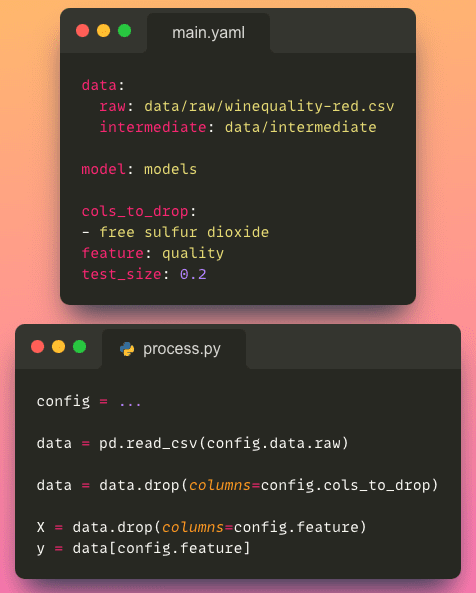
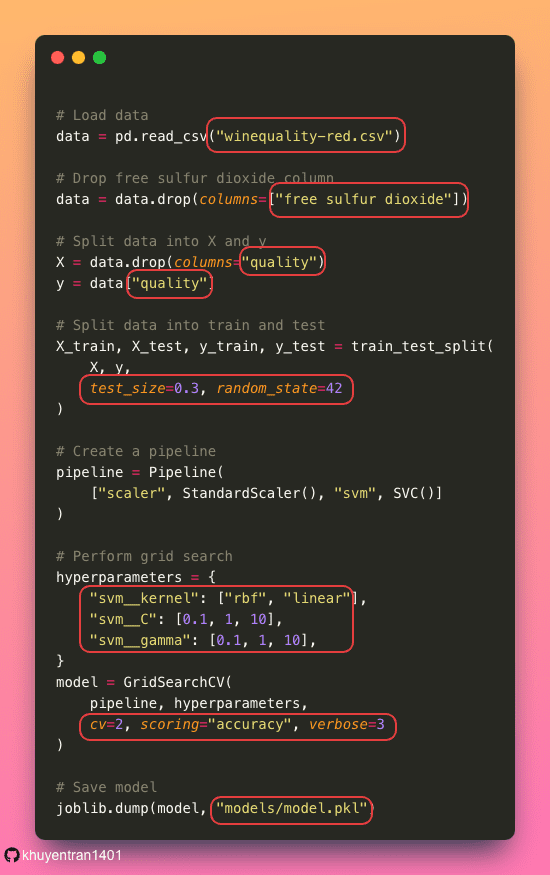
In your data science project, certain values tend to change frequently, such as file names, selected features, train-test split ratio, and hyperparameters for your model.

Stop Hard Coding in a Data Science Project - Use Config Files Instead

It is okay to hard-code these values when writing ad-hoc code for hypothesis testing or demonstration purposes. However, as your code base and team expand, it becomes essential to avoid hard-coding because it can give rise to various issues:

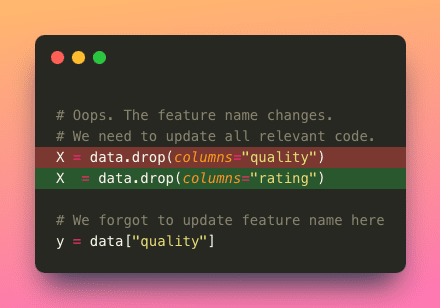
  • Maintainability: If values are scattered throughout the codebase, updating them consistently becomes harder. This can lead to errors or inconsistencies when values must be updated.

Stop Hard Coding in a Data Science Project - Use Config Files Instead

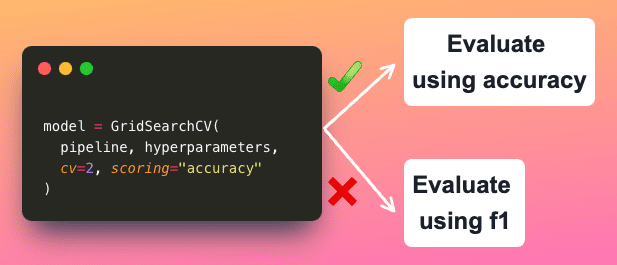
  • Reusability: Hardcoding values limits the reusability of code for different scenarios.

Stop Hard Coding in a Data Science Project - Use Config Files Instead

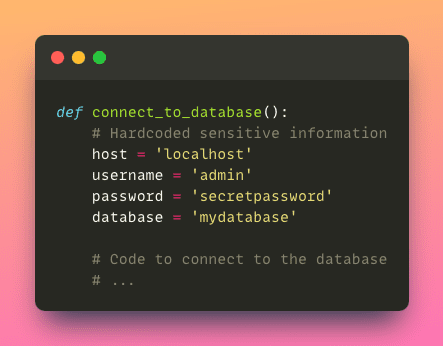
  • Security concerns: Hardcoding sensitive information like passwords or API keys directly into the code can be a security risk. If the code is shared or exposed, it could lead to unauthorized access or data breaches.

Stop Hard Coding in a Data Science Project - Use Config Files Instead

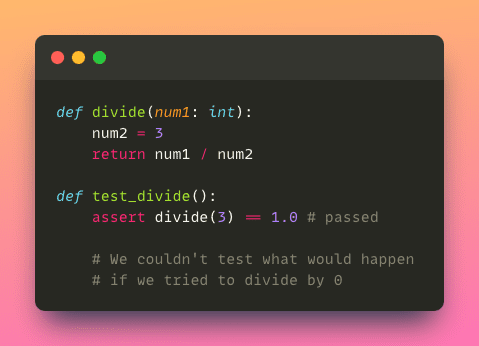
  • Testing and debugging: Hardcoded values can make testing and debugging more challenging. If values are hard-wired into the code, it becomes difficult to simulate different scenarios or test edge cases effectively.

Stop Hard Coding in a Data Science Project - Use Config Files Instead
Solution – Configuration Files

Configuration files solve these problems by offering the following benefits:

  • Separation of configuration from code: A config file allows you to store parameters separately from the code, which improves code maintainability and readability.

Stop Hard Coding in a Data Science Project - Use Config Files Instead

  • Flexibility and modifiability: With a config file, you can easily modify project configurations without modifying the code itself. This flexibility allows for quick experimentation, parameter tuning, and adapting the project to different scenarios or environments.

Stop Hard Coding in a Data Science Project - Use Config Files Instead

  • Version control: Storing the config file in version control allows you to track changes to the configuration over time. This helps maintain a historical record of the project’s configurations and facilitates collaboration among team members.

Stop Hard Coding in a Data Science Project - Use Config Files Instead

  • Deployment and productionization: When deploying a data science project to a production environment, a config file enables easy customization of settings specific to the production environment without the need for code modifications. This separation of configuration from code simplifies the deployment process.

Introduction to Hydra

Among the numerous Python libraries available for creating configuration files, Hydra stands out as my preferred configuration management tool because of its impressive set of features, including:

  • Convenient parameter access
  • Command-line configuration override
  • Composition of configurations from multiple sources
  • Execution of multiple jobs with different configurations

Let’s dig deeper into each of these features.

Feel free to play and fork the source code of this article here:

View on GitHub

Convenient parameter access

Suppose all configuration files are stored under the conf folder and all Python scripts are stored under the src folder.

.  ├── conf/  │   └── main.yaml  └── src/      ├── __init__.py      ├── process.py      └── train_model.py

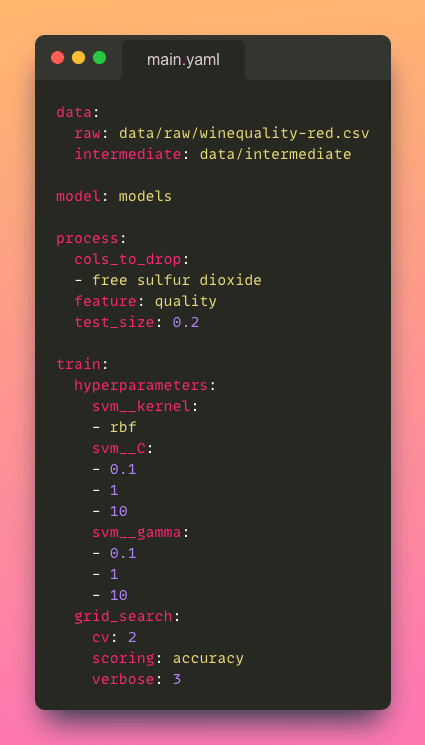
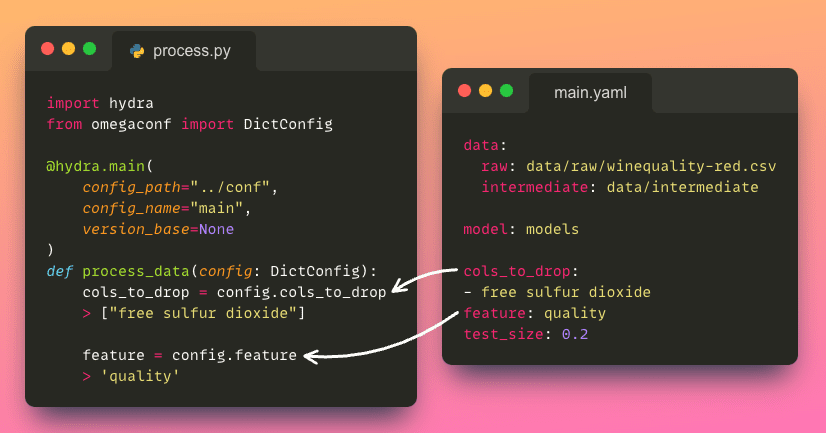
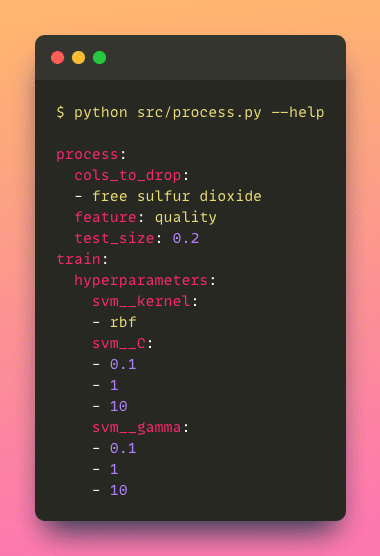
And the main.yaml file looks like this:

Stop Hard Coding in a Data Science Project - Use Config Files Instead

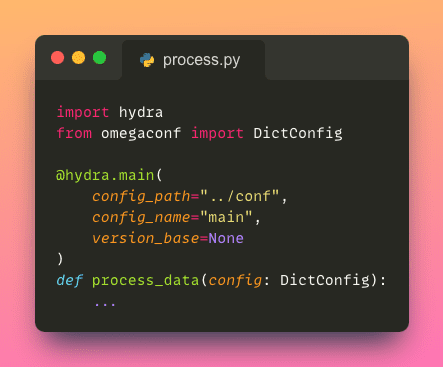
Accessing a configuration file within a Python script is as simple as applying a single decorator to your Python function.

Stop Hard Coding in a Data Science Project - Use Config Files Instead

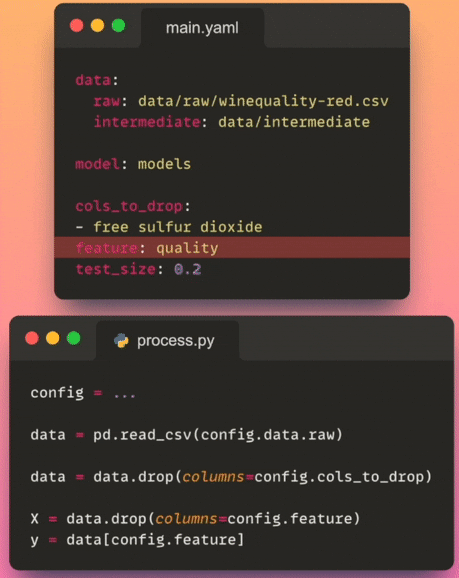
To access a specific parameter from the configuration file, we can use the dot notation (.e.g., config.process.cols_to_drop), which is a cleaner and more intuitive way compared to using brackets (e.g., config['process']['cols_to_drop']).

Stop Hard Coding in a Data Science Project - Use Config Files Instead

This straightforward approach allows you to effortlessly retrieve the desired parameters.

Command-line configuration override

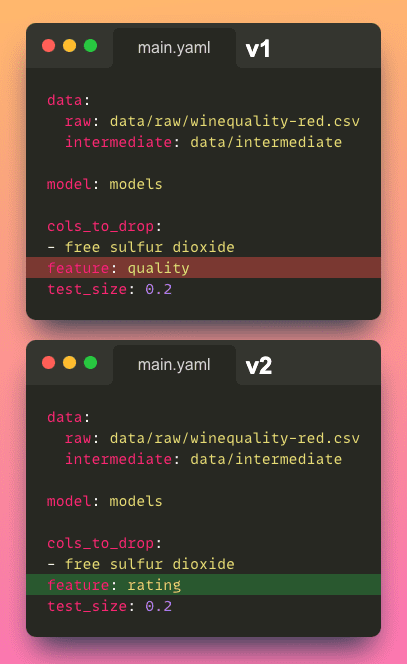
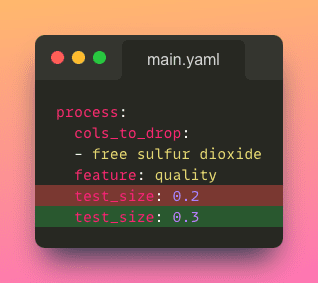
Let’s say you are experimenting with different test_size. It is time-consuming to repeatedly open your configuration file and modify the test_size value.

Stop Hard Coding in a Data Science Project - Use Config Files Instead

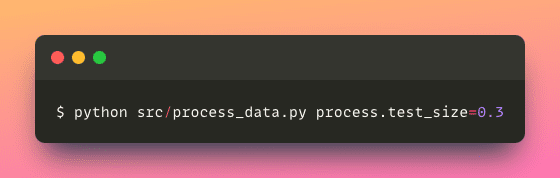
Luckily, Hydra makes it easy to directly overwrite configuration from the command line. This flexibility allows for quick adjustments and fine-tuning without modifying the underlying configuration files.

Stop Hard Coding in a Data Science Project - Use Config Files Instead

Composition of configurations from multiple sources

Imagine you want to experiment with various combinations of data processing methods and model hyperparameters. While you could manually edit the configuration file each time you run a new experiment, this approach can be time-consuming.

Stop Hard Coding in a Data Science Project - Use Config Files Instead

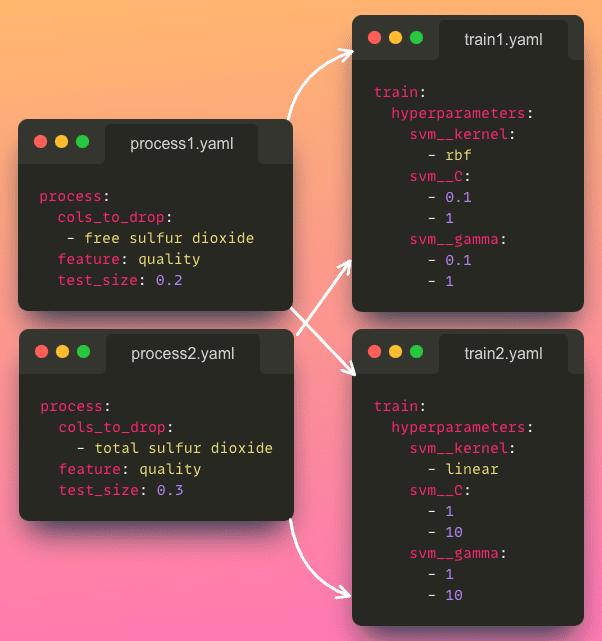
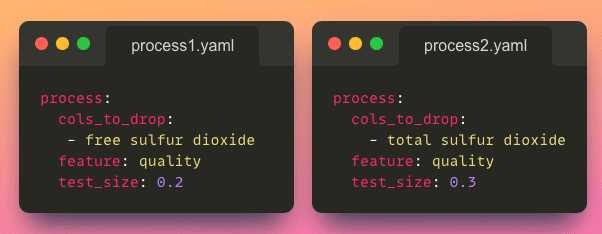
Hydra enables the composition of configurations from multiple sources with config groups. To create a config group for data processing, create a directory called process to hold a file for each processing method:

.  └── conf/      ├── process/      │   ├── process1.yaml      │   └── process2.yaml      └── main.yaml

Stop Hard Coding in a Data Science Project - Use Config Files Instead

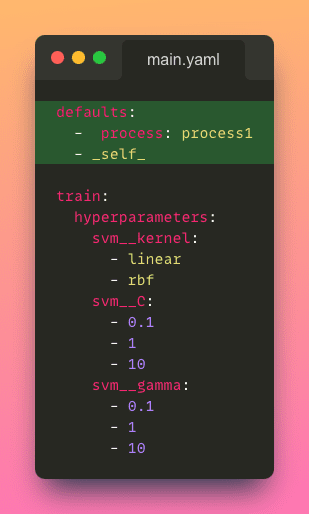
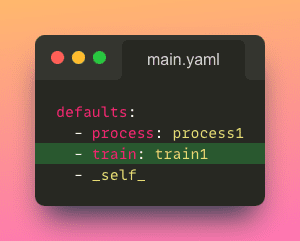
If you want to use the process1.yaml file by default, add it to Hydra’s default list.

Stop Hard Coding in a Data Science Project - Use Config Files Instead

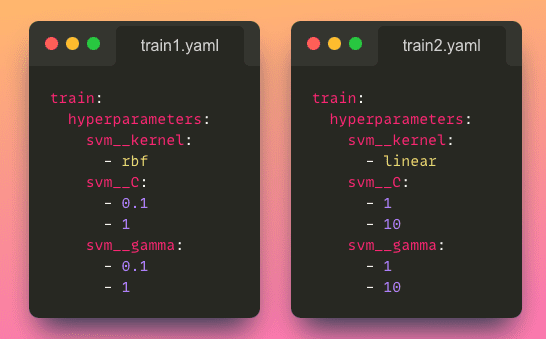
Follow the same procedures to create a config group for training hyperparameters:

.  └── conf/      ├── process/      │   ├── process1.yaml      │   └── process2.yaml      ├── train/      │   ├── train1.yaml      │   └── train2.yaml      └── main.yaml

Stop Hard Coding in a Data Science Project - Use Config Files Instead

Set train1 as the default config file:

Stop Hard Coding in a Data Science Project - Use Config Files Instead

Now running the application will use the parameters in process1.yaml file and model1.yaml file by default:

Stop Hard Coding in a Data Science Project - Use Config Files Instead

This capability is particularly useful when different configuration files need to be combined seamlessly.

Multi-run

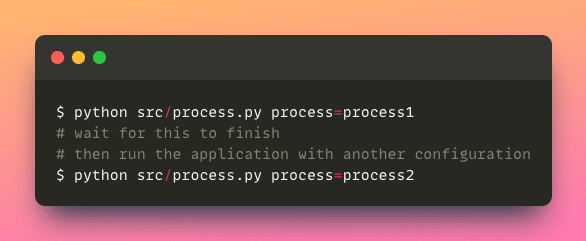
Suppose you want to conduct experiments with multiple processing methods, applying each configuration one by one can be a time-consuming task.

Stop Hard Coding in a Data Science Project - Use Config Files Instead

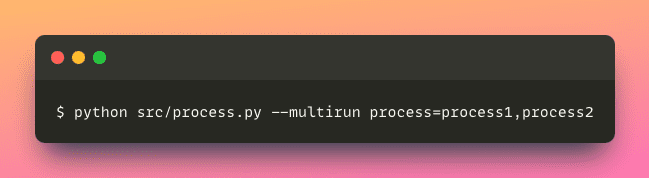
Luckily, Hydra allows you to run the same application with different configurations simultaneously.

Stop Hard Coding in a Data Science Project - Use Config Files Instead

This approach streamlines the process of running an application with various parameters, ultimately saving valuable time and effort.

Conclusion

Congratulations! You have just learned about the importance of using configuration files and how to create ones using Hydra. I hope this article will give you the knowledge needed to create your own configuration files.

Khuyen Tran is a prolific data science writer, and has written an impressive collection of useful data science topics along with code and articles. Khuyne is currently looking for a machine learning engineer role, a data scientist role, or a developer advocate role in Bay Area after May 2022, so please reach out if you are looking for someone with her set of skills.

Original. Reposted with permission.

More On This Topic

  • 3 Hard Python Coding Interview Questions For Data Science
  • Free Python Project Coding Course
  • Data Science as a Product — Why Is It So Hard?
  • KDnuggets News, May 4: 9 Free Harvard Courses to Learn Data Science; 15…
  • 3 Differences Between Coding in Data Science and Machine Learning
  • How to Answer Data Science Coding Interview Questions

Shiprocket’s Seller App Streamlines ONDC Onboarding & Integration for Merchants

Shiprocket, a prominent e-commerce enablement platform has recently announced the integration of its seller app with ONDC. This integration aligns with Shiprocket’s mission to democratize e-commerce for merchants in BHARAT (India). The integration aims to generate increased revenue for merchants by onboarding their MSME (Micro, Small, and Medium Enterprises) along with leading brands such as GIVA and Boult Audio onto the ONDC platform.

By using the Shiprocket seller app, merchants’ stores will become instantly discoverable on the ONDC network, allowing them to tap into a wider customer base. Shiprocket aims to provide a seamless onboarding and post-support experience for sellers on ONDC, offering an additional low-cost demand channel. The company plans to enable key categories such as Beauty and Personal Care, Fashion, Electronics and Appliances, Health and Wellness, and Home and Kitchen on the ONDC platform, expanding the range of offerings for sellers.

Shiprocket’s integration with ONDC marks its commitment to becoming a growth partner for its sellers. While ONDC primarily focuses on food and grocery, Shiprocket plans to unlock the potential of additional categories and brands. Renowned brands like Giva, Boult Audio, and TNW have already enriched the ONDC network’s catalogue. The integration allows merchant catalogues to be visible across various buyer apps integrated with ONDC, such as Pincode, Paytm, Mystore, and E-unimart.

The seller app provided by Shiprocket streamlines order management, inventory tracking, and identification of ONDC orders for sellers. It offers effective growth monitoring tools, empowering merchants to track their progress. Shiprocket’s CEO, Saahil Goel, emphasizes their shared mission with ONDC to democratize e-commerce for Indian merchants, enabling them to access new markets and revenue opportunities.

ONDC’s Managing Director and CEO, T Koshy, highlights the goal of creating a level playing field for online and offline sellers in the rapidly growing e-commerce landscape. Shiprocket’s seller app will contribute to this mission by providing a seamless, secure, and cost-effective way for sellers to showcase and sell their products on ONDC.

The company offers comprehensive support to its sellers, including round-the-clock assistance, from onboarding to troubleshooting. The integration not only transforms the traditional way of doing business but also opens up new sales channels and opportunities for merchants within the ONDC network.

Previously, in a conversation with AIM, ONDC CTO, Nitin Mishra had acknowledged that the onboarding process for ONDC has been slower compared to platforms like UPI.

The post Shiprocket’s Seller App Streamlines ONDC Onboarding & Integration for Merchants appeared first on Analytics India Magazine.

More Free Courses on Large Language Models

More Free Courses on Large Language Models
Image by Author

Given the potential of large language models (LLMs) and LLM applications, the best time to learn more about them is now! From fun personal projects to academic research and work, it’s always exciting to understand LLMs better so we can build interesting applications using them.

In a previous article, we enumerated free courses and resources that’ll help you learn about large language models. We’ve curated yet another list of free courses to help you upskill.

Let’s get started!

ChatGPT Prompt Engineering for Developers

ChatGPT Prompt Engineering for Developers is offered by DeepLearning.AI in collaboration with the OpenAI team.

If you already use ChatGPT or GPT-4, this course teaches you how to get better at using them. You’ll learn how to use the OpenAI API effectively by using prompt engineering best practices.

Along the way, you’ll have the opportunity to build a custom chatbot and learn to use the OpenAI API for common use cases including summarization, inference, translation, spelling and grammar checks.

Also check out this detailed review of this prompt engineering course by Josep Ferrer.

LangChain for LLM Application Development

The LangChain for LLM application Development by DeepLearning.AI is co-taught by Harrison Chase, the creator of LangChain. Focusing on building applications by leveraging the LangChain ecosystem, this course will help you get the hang of:

  • Managing prompts and parsing responses, memory and context window constraints
  • Using chains to perform a sequence of actions
  • Question answering over a document corpus
  • Leveraging the reasoning capabilities of agents for reasoning capabilities

Building Systems with the ChatGPT API

Building Systems with the ChatGPT API is also offered by DeepLearning.AI in partnership with OpenAI. In this free course in this free course, you’ll build a customer service chatbot to apply the following concepts covered in the course:

  • Building systems using large language models
  • Using multistage prompts
  • Building a subtask pipeline by breaking down tasks into subtasks
  • Evaluating LLM inputs and outputs

Note: All the above courses are free for a limited time.

Google Cloud Generative AI Learning Path

Google Cloud recently released a dedicated Generative AI learning path. The series of micro courses that make up this path aim at enabling development and deployment of generative AI solutions on Google Cloud.

If you’re interested in learning about large language models, you’ll find the following courses helpful:

  • Introduction to Generative AI
  • Introduction to Large Language Models
  • Generative AI Fundamentals
  • Encoder-Decoder Architecture
  • Attention Mechanism
  • Transformer Models and BERT Model
  • Generative AI Explorer — Vertex AI

Introduction to Large Language Models with Google Cloud

Introduction to Large Language Models with Google Cloud is part of Udacity’s free course library, and covers getting started with understanding and building LLM applications including:

  • Basics of large language models and use cases
  • Prompt tuning

LLM University

LLM University by Cohere provides an easy-to-follow learning path: from the fundamentals of LLMs to building applications using them. The course covers:

  • Concept such as word and sentence embeddings
  • Foundational concepts of large language models: transformers and attention mechanism
  • Applications of LLMs in text generation, classification, and analysis
  • Building and deploying building applications using Cohere’s end points

Full Stack LLM Bootcamp

The Full Stack LLM Bootcamp covers it all: from prompt engineering to get the most out of GPT assistants to deploying and monitoring LLM applications.Here’s an overview of what this bootcamp offers:

  • Prompt engineering
  • LLM foundations
  • LLMOps
  • Augmented language models
  • UX for Language user interfaces

Here’s a post that breaks down the contents of this Full Stack LLM bootcamp.

Other Helpful Resources

Here are a few other interesting resources that’ll help you get up to speed with LLMs:

  • State of GPT Talk: This talk by Andrej Karpathy at Microsoft Build 2023 provides a comprehensive overview of the training pipelines of GPT assistants including tokenization, pretraining, fine tuning, and reinforcement learning from human feedback.
  • Practical Deep Learning for Coders, Part 2 by fast.ai: Lessons on attention and transformer models can be helpful.
  • CS25: Transformers United V2 by Stanford is a series of lectures that covers the basics of transformers up to the most recent advances and applications of large language models—beyond common NLP tasks.
  • LangChain Tutorials by Data Independent on YouTube: A series of short tutorials that use LangChian to build LLM apps over different custom data sources and explore a variety of tasks including solving math problems, summarization, and search.

Wrapping Up

Hope you found this round-up of some of the best resources to learn large language models helpful. We had a great time putting together this listicle, and we hope you’re excited to learn and start building! Happy learning!
Bala Priya C is a developer and technical writer from India. She likes working at the intersection of math, programming, data science, and content creation. Her areas of interest and expertise include DevOps, data science, and natural language processing. She enjoys reading, writing, coding, and coffee! Currently, she's working on learning and sharing her knowledge with the developer community by authoring tutorials, how-to guides, opinion pieces, and more.

More On This Topic

  • Top Free Courses on Large Language Models
  • What are Large Language Models and How Do They Work?
  • AI: Large Language & Visual Models
  • Learn About Large Language Models
  • Top Open Source Large Language Models
  • Introducing TPU v4: Googles Cutting Edge Supercomputer for Large Language…

Google Search is Killing the SEO Experience

Google Search is Killing the SEO Experience

We all know about Yahoo Answers and how it shut down in 2021 forever. Little do we know about Google Answers, the search engine giant’s question-and-answer platform. For a flat fee of $3, Google staffers would answer questions sent via email. Launched in April 2002, the service was shut down within 24 hours due to unanticipated excessive demand and also because everyone was already using Yahoo!

The same year, Larry Page said, “Google will fulfil its mission only when its search engine is AI-complete”. Two decades later, by integrating generative AI in its search engine, isn’t Google bringing back Answers? Only this time, instead of Google staff, AI replies to your answers.

Will we still have Search as we know it then? Seems like Page’s vision is coming true.

Lex Fridman asks the same question to Marc Andreessen on his podcast. To which Andreessen said, “Probably not, we will just have answers.” The AI will probably give you a few blue links that you can cite if you are trying to write something, but that’s all. You will be forced back to conversing with AI.

“It is just like reading a research paper — it’s got the list of sources at the end. If you wanna investigate for yourself, you go read those papers,” added Andreesen. Now, instead of interacting with people, you just interact with the summarisation of different links into a research paper kind of document, with just links at the end.

Search would turn into conversations with AI

Search has always dominated the way we interact with the internet. Andreessen said that in a hypothetical world, if the current LLM guys like Google or Microsoft always had that technology, would they ever want to build something like a search engine offering users 10 blue links? “I think the answer is pretty clear, no.” he said.

He further added that Google has been trying to drive to the answer for a very long time anyway. The company has always had the idea to just give answers in a single box, instead of giving you links to the answer. This shift towards providing direct answers is a significant departure from the traditional search experience, and it has the potential to revolutionise how we browse the internet.

With the integration of AI into Google’s search engine, the landscape is definitely about to change in this direction. Google is probably realising Page’s dream now. Instead of presenting users with a list of search results and links to various websites, it will provide direct answers to users’ queries, eliminating the need for them to click on multiple links to find the information they need. No more sifting through pages of search results or clicking on multiple websites to find the information you’re looking for.

A lot of people have already started using ChatGPT or Bard to do this job. Moreover, Google is now just a classified ad-page, with just ads and a paragraph of information, not useful links. That is anyway the company’s biggest source of revenue. Now with summarisation capabilities, the ad revenue can also probably go down.

Search engine ‘non’ optimisation

The SEO industry is basically about trying to cheat Google Search by ranking their websites on top. Fortunately or unfortunately, the impact of this change on the SEO industry would be profound. In the current search landscape, websites compete for visibility and traffic by optimising their content to rank higher in search engine results pages. This is achieved through various strategies, including keyword optimization, link building, and creating high-quality content.

However, with the shift towards direct answers provided by AI, the importance of traditional SEO techniques may diminish. Instead of focusing on ranking for specific keywords or acquiring backlinks, website owners will need to adapt their strategies to ensure that their content is structured and formatted in a way that can be easily understood and processed by AI algorithms.

This new paradigm may favour websites that prioritise providing clear and concise information, as well as those that excel in formatting their content to enhance readability and accessibility. Websites that can effectively present their information in a manner that aligns with AI algorithms’ understanding and generation capabilities will have an advantage in this AI-driven search landscape.

Google just wants answers

This is Google 2.0. Here, an AI-powered genie pops out of the search box and grants you the answers you seek. Who needs links and web pages when you have an AI buddy ready to spill the knowledge beans? But at the same time, this does not diminish the role of building websites as that is where the AI is seeking the beans from. But now, Google wouldn’t drive you to the page where it gets the information, quite hypocritical Google!

The post Google Search is Killing the SEO Experience appeared first on Analytics India Magazine.

Google Cloud Launches Anti-Money-Laundering AI Tool for Banks

Google Cloud, a division of Alphabet, has unveiled Anti Money Laundering AI, an innovative AI-driven tool that aims to revolutionise anti-money laundering efforts in the financial industry. The product utilises machine learning to assist banks and other financial institutions in meeting regulatory requirements for identifying and reporting suspicious activities.

What distinguishes Google Cloud’s solution is its departure from traditional rules-based programming in anti-money laundering surveillance systems. This unconventional design choice challenges industry norms and has garnered attention from major players like HSBC, Banco Bradesco, and Lunar.

This release aligns with the current trend among leading US tech companies, leveraging AI to enhance various sectors. Google’s success with ChatGPT has prompted corporations to integrate similar technologies.

Financial institutions have long relied on AI to sift through daily transaction volumes. Typically, a combination of human judgment and machine learning identifies potentially suspicious activities for reporting to regulators.

Google Cloud’s shift away from rules-based systems is a significant bet on AI’s potential to address persistent challenges in anti-money laundering. Calibration of such tools can result in too few or too many flagged activities, raising concerns or overwhelming compliance teams. Manual rules input further contributes to high false positive rates.

With an AI-first approach, Google Cloud aims to mitigate these challenges. Users can customize the tool with their own risk indicators, reducing alerts by up to 60% and increasing accuracy. HSBC experienced up to four times more “true positives” after implementing the solution.

HSBC’s Jennifer Shasky Calvery hails Google Cloud’s technology as a “fundamental paradigm shift” in detecting unusual activity. However, convincing financial institutions to entrust decisions to machine learning may be challenging. Regulators expect clear rationales tailored to specific risk profiles, and skepticism remains regarding the ability of machine learning to replace human expertise.

To address concerns, Google Cloud delivers better results and enhanced “explainability.” The solution leverages diverse data sources to identify high-risk customers, providing detailed information on transactions and contextual factors. Transparency fosters trust and facilitates understanding.

Calvery highlights extensive testing and validation of Google Anti Money Laundering AI, gaining acceptance from regulators. Improved risk identification and reduced noise levels convinced HSBC to embrace the technology.

Google Cloud’s AI-driven anti-money laundering solution has the potential to transform efforts to combat illicit financial activities. The shift to machine learning represents a bold step, promising enhanced accuracy, customisation, and transparency to foster confidence among financial institutions and regulators.

The post Google Cloud Launches Anti-Money-Laundering AI Tool for Banks appeared first on Analytics India Magazine.