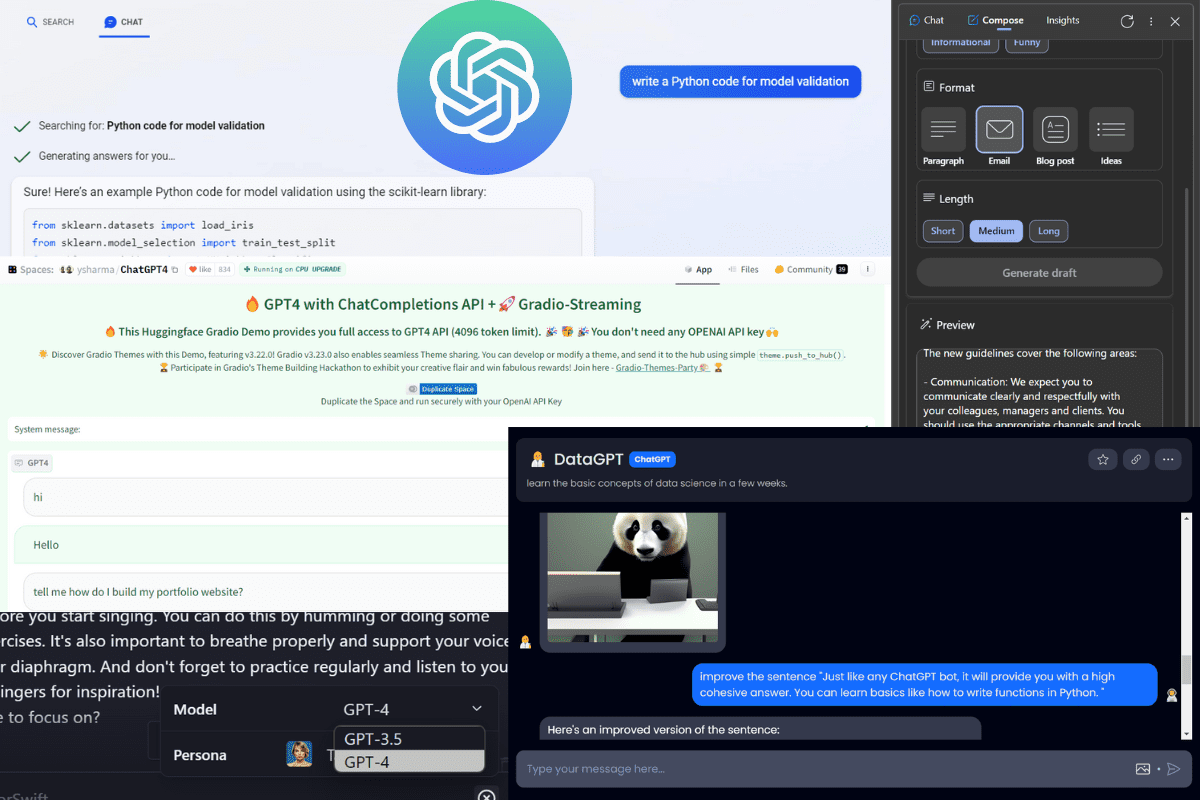
Microsoft-owned professional networking platform LinkedIn has recently introduced a new feature allowing users to generate AI-based posts by using a concise 30-word prompt.
Once you provide an outline of the content you wish to share in the designated post section, the generative AI system will produce an initial draft within seconds. You can then review, edit, and enhance the text before ultimately clicking the “post” button.
In a post introducing the feature, Keren Baruch, chief product officer, emphasised the importance of responsible AI in this new feature stating that LinkedIn is dedicated to gathering feedback and conducting extensive testing to refine the user experience and address any concerns.
Additionally, LinkedIn extended the use of AI beyond post writing assistance by introducing an AI-powered tool to aid marketers. Leveraging OpenAI models, this powerful tool generates multiple versions of an advertisement by analysing data extracted from the marketer’s LinkedIn page and Campaign Manager configurations.
Earlier, LinkedIn also launched AI-powered writing suggestions for profile enhancement and job description writing. These features utilise GPT-4 for personalised profiles and GPT-3.5 for job descriptions. Additionally, LinkedIn is placing a greater emphasis on AI in its learning platform, offering 100 courses on the subject and introducing 20 new courses specifically focused on generative AI. The AI-powered writing prompts for profiles will initially be available to Premium users and aim to assist individuals who struggle to craft compelling overviews of their experiences, enabling the AI to transform their input into a more polished narrative.
However, LinkedIn has been utilising AI and automation behind the scenes for a while now. Now, with Microsoft’s strong support of OpenAI, AI is becoming a more integral part of LinkedIn’s front-end strategy.
The post LinkedIn Adds Generative AI Features to Enhance User Productivity appeared first on Analytics India Magazine.
Building large language models (LLMs) is no easy feat. Only a few enterprises worldwide possess the necessary resources. In fact, Microsoft had to construct a supercomputer for OpenAI to train its models.
Recently, OpenAI CEO Sam Altman’s visit sparked a hot debate on whether India should develop its own LLM. Tech Mahindra CEO CP Gurnani hinted at the possibility of having their own LLMs. Similarly, AI4Bharat, an initiative of IIT Madras, is reportedly working on a multilingual ChatGPT alternative, but the details are scarce.
When it comes to building LLMs, India can draw inspiration from the UAE. The Technology Innovation Institute (TII) in Abu Dhabi recently unveiled Falcon, a fully open-source LLM. Falcon boasts three variations (1B, 7B, and 40B) and ranks highly on the Hugging Face OpenLLM Leaderboard.
Lessons from UAE
Established in 2020 and funded by the Abu Dhabi government, TII has made remarkable progress. In just two years, they have created the open source LLM that surpasses Meta’s LLaMA. This achievement is truly remarkable and presents valuable lessons that India can learn from. Not just in Abu Dhabi, but across the Emirates, the governments want to accelerate scientific breakthroughs, develop local talent, attract top global researchers, and promote knowledge-based economic growth, a step taken to reduce their economy’s dependence on oil.
Interestingly, both governments have made a significant commitment towards the development and implementation of AI technologies as part of its national strategy. Both the UAE and the Indian governments have announced their desire to be a leader in AI and released their AI strategy in 2017 and 2018, respectively. However, India seems to be lagging behind when it comes to output.
In 2017, UAE made history by appointing Omar Sultan Al Olama as the world’s first Minister of State for AI. Contrastingly, in India, the government has miserably failed to appoint the right person in various top positions. For example, in January 2022, the government said it will hire someone with over 25 years of experience in the semiconductor industry and more than 10 years of experience at global level to serve as the CEO of the India Semiconductor Mission (ISM). However, currently, “The CEO is a joint secretary of the Ministry of Electronics and IT (MeitY) and has absolutely no semiconductor background. The CTO is a scientist at MeitY and he too had no real exposure to the semiconductor industry throughout his career,” Arun Mampazhy, semiconductor analyst, told AIM.
Moreover, in 2019, the UAE’s AI minister unveiled an ambitious roadmap aiming to position the UAE as a global leader in AI by 2031. This roadmap outlines a vision to leverage AI’s full potential for the country’s development. In contrast, India currently lacks a similar roadmap, although reports in April indicated that the government has established a task force to draft a roadmap for the AI ecosystem.
Not only that, in 2019, the government set up the Mohamed bin Zayed University of Artificial Intelligence (MBZUAI), a institution solely focussed on driving AI education in the country. The UAE’s focus on AI education and skill development can inspire India to enhance its education system to produce a future-ready workforce. Incorporating AI-related curriculum, promoting AI literacy, and offering skill development programmes can help India meet the demands of the AI-driven economy.
Although India has taken steps towards AI development, such as establishing three centers of excellence, the UAE government’s dedication and enthusiasm in driving AI growth is a notable example that India can emulate.
Moonshot approach
Most of the research in this country happens in the AI labs of our educational institutions. However, when compared to the West, most of these are still languishing in the theory stage. In a previous interaction with AIM, Prof Amrutur Bharadwaj, research head and director, ARTPARK, said, “I think it has to be driven by the government and they need to pump in money into the ecosystem for a certain period of time.”
Just as India has successfully executed ambitious missions in nuclear power and space exploration, it now requires a similar approach in AI, Bharadwaj said, “We can embark on ‘moonshot’ mission goals with adequate funding support to change the narrative. We have done so in the space and nuclear sectors – so it is doable.”
The government also needs to ensure active collaborations between academia, industry, and government entities to drive AI research and innovation. India can emulate this approach by promoting public-private partnerships, encouraging knowledge exchange, and facilitating collaboration to accelerate AI development.
The post What Can India Learn from the UAE in AI? appeared first on Analytics India Magazine.
Ever since the UAE’s TII launched Falcon, Hugging Face Open LLM Leaderboard has been trending for both right and wrong reasons. The model came out as the champion of open source on various evaluation metrics. Interestingly, there has been no paper of the model yet. It might be possible that the researchers would have used some other metric or dataset for the evaluation of the model.
Hugging Face founders, including Thomas Wolf, the one who made a lot of noise about Falcon reaching the top of the leaderboard, stumbled upon this problem with the evaluation metrics of the recent models. According to the Open LLM Leaderboard, the benchmark of Massive Multitask Language Understanding (MMLU) showed that Meta AI’s LLaMa’s score was significantly lower than the score published in the model’s paper.
This was questioned by many people. Firstly, Andrej Karpathy raised concerns about the leaderboard and promotion of Falcon over LLaMa. It was later evaluated by Yao Fu from Allen Institute, that with no fancy prompting and decoding, LLaMa performed better than Falcon on MMLU evaluation.
Is Falcon really better than LLaMA? Short take: probably not. Longer take: we reproduced LLaMA 65B eval on MMLU and we got 61.4, close to the official number (63.4), much higher than its Open LLM Leaderboard number (48.8), and clearly higher than Falcon (52.7). Code and prompt…
— Yao Fu (@Francis_YAO_) June 8, 2023
In the blog ‘What’s going on with the Open LLM Leaderboard?’ Hugging Face founders, including Wolf, decided to dive into the issue to discuss why there is a discrepancy between the paper’s benchmarks and the leaderboard benchmarks.
Evaluating Evaluation Metrics
With the increasing number of LLM papers, it always becomes a question if the evaluation metrics used by the researchers are trustable or not. This also becomes a question for researchers if a single evaluation for a model is enough or not.
Firstly, MMLU score in the LLaMa paper was claimed to be irreproducible. This was because the LLaMA team used two different code implementations to evaluate their model on the MMLU benchmark. One implementation was developed by the original UC Berkeley team, which can be called the original implementation, and the other was provided by Stanford’s CRFM evaluation benchmark called HELM.
Now, the Open LLM Leaderboard uses these different implementations along with other benchmarks to evaluate the models. They do this because these benchmarks gather multiple evaluations in a single codebase, giving a comprehensive view of a model’s performance.
To resolve the discrepancy, the researchers ran these three implementations (the LLaMA team’s adapted code, the UC Berkeley implementation, and the Stanford HELM implementation) on a set of models to rank them based on the results. The surprising part is that these different implementations produced significantly different numbers and even changed the ranking order of the models on the leaderboard.
We can observe that the choice of evaluation method has a significant impact on both the absolute scores and the rankings of models when assessing the same dataset. Based on the average of the three scores by researchers, Falcon actually dropped below LLaMa.
Let’s imagine you have trained a perfect replica of the LLaMA 65B model and evaluated it using the harness, resulting in a score of 0.488 (as shown above). Now, if you compare it to the published score of 0.637 (evaluated using the original MMLU implementation), which has a difference of 30%, you might worry that your training went completely wrong. However, this discrepancy in scores does not indicate a failure in your training process. These numbers cannot be directly compared, even though they are both labelled as “MMLU scores” and evaluated on the same MMLU dataset.
This clearly shows that there needs to be a standardisation on the evaluation metric of LLMs. Now, is there an ideal way to evaluate models among all the methods we have discussed? It’s a challenging question. Different models may perform differently depending on the evaluation method, as evidenced by the changes in rankings.
The Hugging Face founders say that evaluations are closely tied with the implementation details such as prompt and tokenization. “The mere indication of ‘MMLU results’ gives you little to no information about how you can compare these numbers to others you evaluated on another library,” reads the blog.
The way forward
It would be beneficial for a researcher to use the evaluation metric that gives the highest score to rank on top of the leaderboard. But simply calling it MMLU does not qualify its rating above any other as the evaluation is varied.
Standardisation of evaluation methods in the field is still lacking. Different research papers report different datasets, sometimes with overlapping content. Additionally, papers often do not provide detailed analysis beyond reporting average scores, as they are not constrained by page limits. This is why the average, open, and reproducible benchmarks such as EleutherAI Eval Harness or Stanford HELM become very important for the open source community.
It is also important to take a closer look at these evaluation datasets to gain a better understanding of their characteristics and what makes them suitable for assessing LLMs. Up until then, Hugging Face is pushing to fix the leaderboard by implementing standardised and open evaluation methods.
The post LLM Leaderboard Gone Wrong? appeared first on Analytics India Magazine.
IBM will put down $4.6 billion in cash to acquire the business management and FinOps software company Apptio from Vista Equity Partners. Assuming all regulatory processes go smoothly, IBM expects the deal to close later this year.
Jump to:
Apptio will integrate with IBM IT finance operations services
What is Apptio?
What does the acquisition mean for enterprise IT?
Apptio will integrate with IBM IT finance operations services
The acquisition is part of IBM’s increasing efforts to bolster its machine learning and hybrid cloud offerings. Along with Apptio’s products and people, IBM will now be able to find uses for $450 billion of anonymized IT spend data from Apptio’s backlog. Apptio also has relationships with 60% of the Fortune 100, according to the company’s website.
IBM’s IT automation software, such as Turbonomic, Instana and AIOps, will be able to integrate with Apptio data and services after the acquisition. This will enable IT teams to combine services into one “virtual command center” that can keep track of spending across a company’s entire tech stack, IBM said in a press release.
IBM also plans to use Apptio services and data to bolster other services Big Blue has acquired over the years, including Red Hat and IBM Consulting, and its automation and AI portfolio in general. IBM’s watsonx AI training model will specifically benefit from Apptio’s anonymized FinOps data. Apptio has used machine learning since 2018 when ML was added to the Apptio Technology Business Management Unified Model.
“The acquisition of Apptio is a continuation of IBM’s deep focus and investment in hybrid cloud and AI and is expected to drive significant synergies across several key growth areas for IBM, including FinOps,” Kareem Yusuf, senior vice president, product management and growth, IBM Software, told TechRepublic in an email.
“Apptio has transformed how leading organizations optimize their IT spend and performance for better outcomes,” said Robert F. Smith, founder, chairman and CEO of Vista Equity Partners, in a press release. “We are proud of these shared accomplishments and look forward to seeing Apptio further evolve with IBM.”
What is Apptio?
Apptio makes finance operations and business management software-as-a-service applications. It gives CTOs and/or CFOs better visibility into their spending across different parts of their work, including hybrid and multicloud environments and labor. IT budget holders can then make decisions based on the data Apptio produces in order to improve operations and budgeting.
Apptio was founded in 2007 and acquired by Vista Equity Partners in 2018. It has more than 1,300 employees. Its three core services are:
ApptioOne, which can be used to analyze, optimize and plan IT spending.
Apptio Cloudability, which provides financial management best practices to multicloud and SaaS infrastructure.
Apptio Targetprocess, which offers investment planning.
Apptio services already integrate with Amazon Web Services, Microsoft Azure, Google Cloud Platform, Salesforce, ServiceNow, Oracle and SAP.
Three recent acquisitions by Apptio also add more tools to IBM’s tool belt: Apptio acquired Cloudability, Cloudwiry and TargetProcess within the last five years.
What does the acquisition mean for enterprise IT?
IBM’s acquisition of Apptio comes partially in response to a growing need for technology companies to keep tighter leashes on budgets. IBM saw an under 1% year-over-year increase in revenue in Q1, Reuters reported. Apptio’s services to help IT departments optimize how they spend money could be a smart investment in a time when economic uncertainty and slowing growth are on many business decision-makers’ minds.
SEE: IBM snatched up cloud data security management firm Polar Security in May. (TechRepublic)
In addition, the acquisition goes hand-in-hand with the increasing use of hybrid cloud environments, for which it can be difficult to find unified data.
“Our customers are evolving to a complex digital-first, hybrid world where technology investments are distributed and decentralized, but all innovation must be aligned with clear business outcomes,” explained Sunny Gupta, Apptio co-founder and CEO, in a press release.
Subscribe to the Cloud Insider Newsletter
This is your go-to resource for the latest news and tips on the following topics and more, XaaS, AWS, Microsoft Azure, DevOps, virtualization, the hybrid cloud, and cloud security.
TikTok popularized short-form video content, which is now supported by nearly every social media and video platform. It was only a matter of time before the AI boom made its way to transform short-form video, too.
On Tuesday, Zoomerang, a video editing app, announced that it is adding two new AI technologies, Deforum and Restyle, to facilitate short-form video AI transformations on mobile.
Also:These 3 AI tools made my two-minute how-to video way more fun and engaging
Deforum, known on the application as Deform, uses Stable Diffusion's image-to-image function to generate a series of images that when stitched together create a video.
To use this feature, users can upload an image or video and then select from a pre-made template or input a prompt, much like one would on a regular AI-image generator, to see the effect applied to the video.
Similarly, the Restyle feature will allow users to transform a video, up to thirty seconds, into an AI-generated stylized video using Image-to-Image Batch Processing technology powered by Stable Diffusion.
Also: 6 skills you need to become an AI prompt engineer
Users will be able to select a template or create their own prompt.
Both Deform and Restyle have been used in videos for months through a variety of applications. However, the significance of this release is that it brings the technology to mobile on both iOS and Android.
"By introducing Deform and Restyle to the Zoomerang application, we enable video creators to unleash their imagination and bring their unique artistic visions to life," said David Grigoryan, co-founder of Zoomerang.
Also:AI will change software development in massive ways, says MongoDB CTO
Zoomerang's announcement builds on Qualcomm's integration of Stable Diffusion into mobile, specifically Android, in February.
The Deform and Restyle features will only be available on Zoomerang's subscription tier, which costs $12.99 per month or $59.99 a year.
DeepMind claims its next chatbot will rival ChatGPT Kyle Wiggers 9 hours
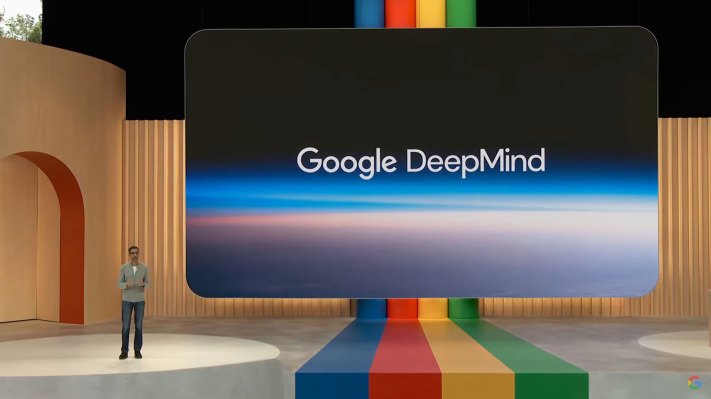
ChatGPT might’ve captured the world’s attention. But DeepMind claims that its next large language model will rival — or even best — OpenAI’s.
According to a piece in Wired, DeepMind, the Google-owned research lab, is using techniques from AlphaGo, DeepMind’s AI system that was the first to defeat a professional human player at the board game Go, to make a ChatGPT-rivaling chatbot called Gemini.
If all goes according to plan, Gemini will have the ability to plan or solve problems as well as analyze text, DeepMind CEO Demis Hassabis told Wired’s Will Knight.
“At a high level you can think of Gemini as combining some of the strengths of AlphaGo-type systems with the amazing language capabilities of the large models,” Hassabis said. “We also have some new innovations that are going to be pretty interesting.”
Knight speculates that Gemini, which was briefly teased at Google’s I/O developer conference in May, will leverage innovations in reinforcement learning to accomplish tasks with which today’s language models struggle. Reinforcement learning involves “rewarding” an AI system for certain behaviors and/or punishing undesired ones, with the goal of “teaching” the system which behaviors to exhibit in a given situation.
As Knight notes, reinforcement learning has already led to gains in the language model space — it’s key to the way systems such as ChatGPT respond to prompts. DeepMind, having a wealth of experience in reinforcement learning (AlphaGo being one example), is no doubt eager to apply its learnings to the generative AI domain.
Gemini isn’t DeepMind’s first foray into language models, it’s worth noting. The company last year introduce Sparrow, a chatbot that the lab claimed was less likely than other language models to give “unsafe” or “inappropriate” answer to questions. Hassabis told Time in January that DeepMind would consider releasing Sparrow for a private beta sometime this year; it’s unclear whether those plans are still on track.
Gemini is, however, DeepMind’s most ambitious work in the space so far, at least if early reports are to be believed. The Information reported in March that Gemini, which was spurred by the failures of Bard, Google’s chatbot project, to keep pace with ChatGPT, has direct participation from Google higher-ups including Jeff Dean, the company’s most senior AI research executive.
The race for dominance in the generative AI space comes amidst sky-high investor — and customer — enthusiasm. According to Grand View Research, the market for generative AI — including text-analyzing AI like Gemini — could reach $109.37 billion by 2030, an increase of 35.6% from 2030.
Intel recently unveiled the latest long-term support (LTS) release of the Intel ® Distribution of OpenVINO toolkit. This new release gives developers the ability quickly and easily develop world-class AI applications or deploy deep learning inference workloads from edge to cloud.
Here’s what you need to know about this latest update of the AI inferencing toolkit:
What is an LTS release and how is it different from other releases?
In the software industry, an LTS release’s focus is to expand or consolidate features already introduced in the previous releases of the same product and guarantee long-term support for them. It provides AI developers with one year of bug fixes and two years of security patches from the date of the official release.
While the price to pay for this stability and longevity is the lack of additional features for such releases in their entire life cycle, the good news is that all the new capabilities introduced to OpenVINO this year will be included in the 2022.3 LTS release. Those features include dynamic shapes, automatic batching, performance hints, the AUTO plugin, and support for Intel’s new discrete GPUs (Intel ® Arc and Flex Series) as well as 6th to 13th-generation Intel ® Core processors.
The LTS also includes the new API 2.0, which was introduced in OpenVINO 2022.1 earlier this year and designed to make it easier for AI developers to adopt and maintain code. More information on API 2.0 and how to transition is available here.
What’s new?
In addition to an integrated, stable, and well-tested release of the toolkit’s 2022 updates, OpenVINO 2022.3 LTS comes with support for additional deep-learning models and devices.
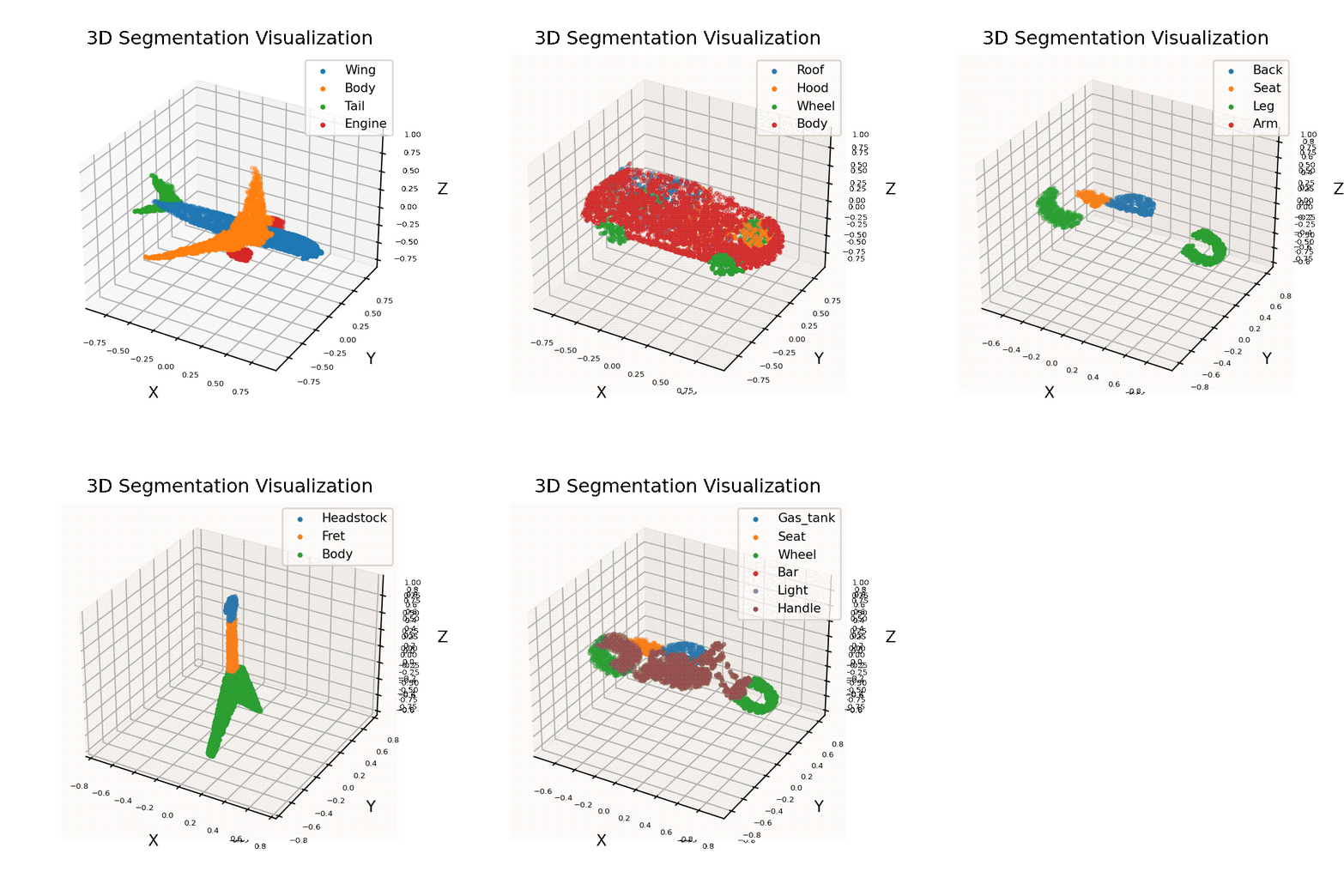
AI developers will find broader support for transformer-based natural language processing (NLP) models like GPT and OpenAI Whisper, and other models like Stable Diffusion (Figure 1); improved portability and performance enhancements; an integration with Hugging Face Optimum; new Jupyter notebook tutorials for YOLOv7, Style Transfer (Figure 2), and 3D Point Cloud Segmentation (Figure 3); and more.
Stable Diffusion generates complex artistic images based on text prompts. For example, butterfly partly on top of a snowy mountain.
Style Transfer blends a single style into a given image.
3D Segmentation Visualization uses OpenVINO to consume point cloud data and perform inferences.
Hardware support
On the hardware side, the short story is that OpenVINO 2022.3 LTS runs faster and smarter on more GPUs than ever before. The full story is about performance boosts across all supported CPUs and GPUs, hand in hand with automatic device discovery and load balancing, dynamic inference parallelism, and selection of compute modes added to AUTO functionality—enabling multiple accelerators (e.g., multiple Intel® Data Center GPU Flex Series) to be used at once to maximize inferencing performance.
And above all, we are quite happy to share that OpenVINO 2022.3 LTS officially fully supports Intel discrete GPUs!
Why is support for discrete Intel® GPUs big news?
This is the first time OpenVINO is providing gold-level support for running inference workloads on Intel discrete GPUs. Backed by more than five years of experience optimizing, testing, and deploying inference on Intel® Processor Graphics (or “iGPU”), this is just the last step of a long journey that successfully brings OpenVINO to many affordable GPUs that are widely available for desktops, laptops, and servers.
Will the OpenVINO 2022.3 LTS break your existing AI code?
Not if that code was written or had already been ported to the new API 2.0.
If you plan on upgrading to future versions of OpenVINO in 2023 to leverage new features, keep in mind that these features and optimizations will not get backported to the 2022.3 LTS release. For production deployments, we recommend staying up to date with OpenVINO 2022.3 LTS dot releases until new features in 2023 are stabilized in next year’s LTS.
When should you upgrade and what is the best way to upgrade?
We recommend that everybody wishing to quickly develop and deploy high-performing AI applications use OpenVINO 2022.3 LTS. But, for whatever reason, if that is not possible and you don’t want or need to take advantage of all the great features released throughout the year, the previous LTS release, OpenVINO 2021.4 LTS, will be supported with security patches until 2024.
When deciding, it’s extremely important to keep in mind that LTS releases are the only ones for which we provide official bug fixes and security patches through dot releases over an extended period of time.
You can upgrade to OpenVINO 2022.3 LTS using the following command:
pip install –upgrade openvino-dev
However, make sure to check all your dependencies because the upgrade may update other packages beyond OpenVINO. If you wish to install the C/C++ API, pull a pre-built Docker image or download from another repository, visit the download page to find a package that suits your needs. If you are looking for model serving instructions, check out the new documentation.
In addition to an integrated, stable, and well-tested release of the toolkit’s 2022 updates, OpenVINO 2022.3 LTS comes with support for additional deep-learning models and devices.
AI developers will find broader support for transformer-based natural language processing (NLP) models like GPT and OpenAI Whisper, and other models like Stable Diffusion (Figure 1); improved portability and performance enhancements; an integration with Hugging Face Optimum; new Jupyter notebook tutorials for YOLOv7, Style Transfer (Figure 2), and 3D Point Cloud Segmentation (Figure 3); and more.
The post 6 Things to Know About OpenVINO 2023.3 LTS Release appeared first on Analytics India Magazine.
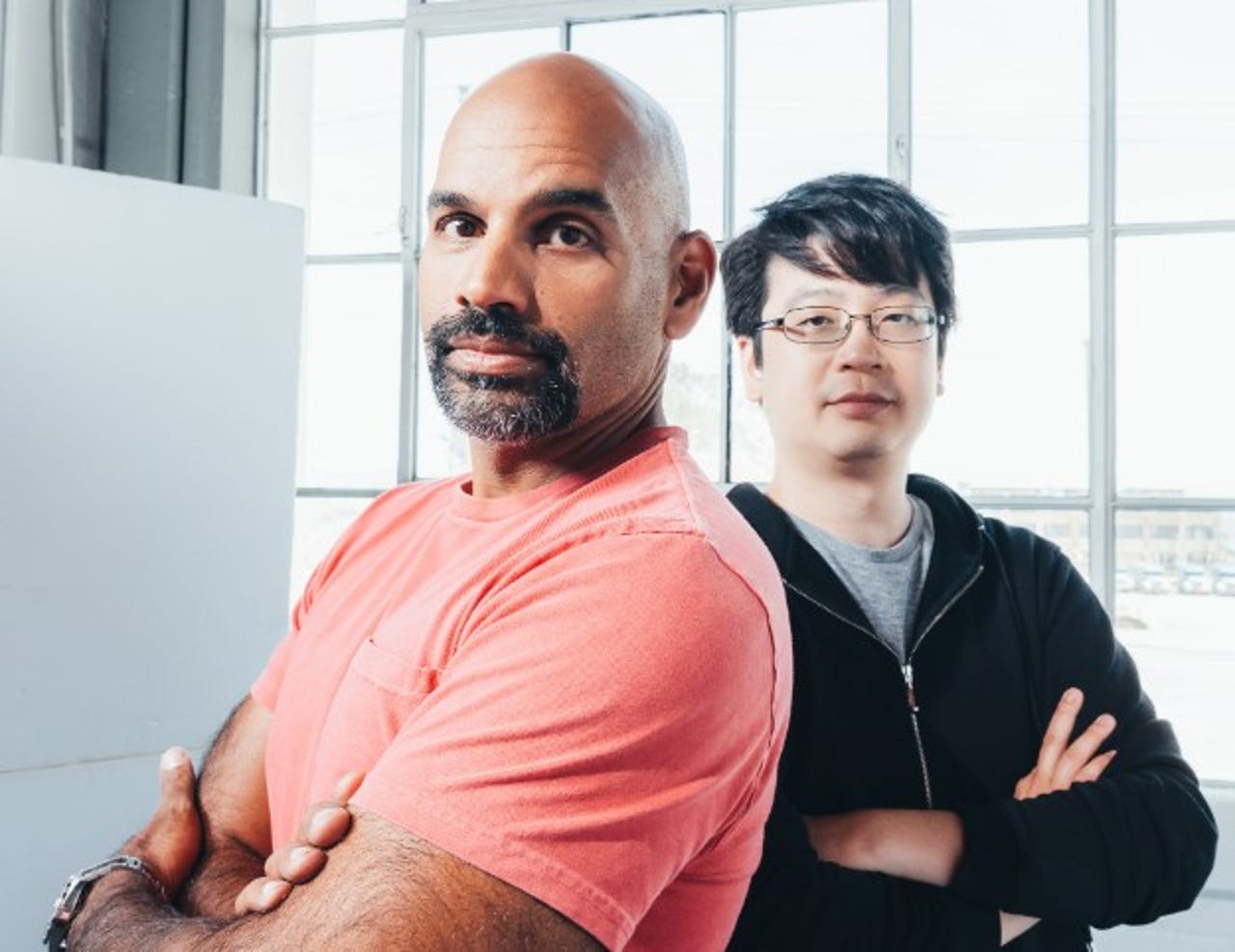
Naveen Rao, [left] MosaicML co-founder and CEO, and Hanlin Tang, co-founder and CTO. The company's training technologies are being applied to "building experts," using large language models more efficiently to handle corporate data.
On Monday, Databricks, a ten-year-old software maker based in San Francisco, announced it would acquire MosaicML, a three-year-old San Francisco-based startup focused on taking AI beyond the lab, for $1.3 billion.
The deal is a sign not only of the fervor for assets in the white-hot generative artificial intelligence market, but also a sign of the changing nature of the modern cloud database market.
Also: What is ChatGPT and why does it matter? Here's what you need to know
MosaicML, staffed with semiconductor veterans, has built a program called Composer that makes it easy and affordable to take any standard version of AI programs such as OpenAI's GPT and dramatically speed up the development of that program, the beginning phase known as the training of a neural network.
The company this year introduced cloud-based commercial services where businesses can for a fee both train a neural network and perform inference, the rendering of predictions in response to user queries.
However, the more profound element of MosaicML's approach implies that whole areas of working with data — such as the traditional relational database — could be completely reinvented.
"Neural network models can actually be thought of almost as a database of sorts, especially when we're talking about generative models," Naveen Rao, co-founder and CEO of MosaicML, told ZDNET in an interview prior to the deal.
"At a very high level, what a database is, is a set of endpoints that are typically very structured, so typically rows and columns of some sort of data, and then, based upon that data, there is a schema on which you organize it," explained Rao.
Unlike a traditional relational database, such as Oracle, or a document database, such as MongdoDB, said Rao, where the schema is preordained, with a large language model, "the schema is discovered from [the data], it produces a latent representation based upon the data, it's flexible." And the query is also flexible, unlike fixed lookups into a database such as SQL, which dominates a traditional database.
Also: Serving Generative AI just got a lot easier with OctoML's OctoAI
"So, basically," added Rao, "You took the database, loosened up the constraints on its inputs, schema, and its outputs, but it is a database." In the form of a large language model, such a database, moreover, can handle large blobs of data that have eluded traditional structured data stores.
"I can ingest a whole bunch of books by an author, and I can query ideas and relationships within those books, which is something you can't do with just text," said Rao.
Using clever prompting in an LLM, the prompt context gives flexible ways to query the database. "When you prompt it the right way, you'll get it to produce something because of the context created by the prompt," explained Rao. "And, so, you can query aspects of the original data from that, which is a pretty big concept that can apply to many things, and I think that's actually why these technologies are very important."
The MosaicML work is part of a broad movement to make so-called generative AI programs like ChatGPT more relevant for practical business purposes.
Also: Why open source is essential to allaying AI fears, according to Stability.ai founder
For example, Snorkel, a three-year-old AI startup based in San Francisco, offers tools that let companies write functions which automatically create labeled training data for so-called foundation models — the largest neural nets that exist, such as OpenAI's GPT-4.
And another startup, OctoML, last week unveiled a service to smooth the work of serving up inference.
The acquisition by Databricks brings MosaicML into a vibrant non-relational database market that has for several years been shifting the paradigm of a data store beyond row and column.
That includes the data lake of Hadoop, techniques to operate on it, and the map and reduce paradigm of Apache Spark, of which Databricks is the leading proponent. The market also includes streaming data technologies, where the store of data can in some sense be in the flow of data itself, known as "data in motion," such as the Apache Kafka software promoted by Confluent.
Also: The best AI chatbots: ChatGPT and other noteworthy alternatives
MosaicML, which raised $64 million prior to the deal, appealed to businesses with language models that would be not so much the generalists of the ChatGPT form but more focused on domain-specific business use cases, what Rao called "building experts."
The prevailing trend in artificial intelligence, including generative AI, has been to build programs that are more and more general, capable of handling tasks in all sorts of domains, from playing video games to engaging in chat to writing poems, captioning pictures, writing code, and even controlling a robotic arm stacking blocks.
The fervor over ChatGPT demonstrates how compelling such a broad program can be when it can be wielded to handle any number of requests.
Also: AI startup Snorkel preps a new kind of expert for enterprise AI
And yet, the use of AI in the wild, by individuals and institutions, is likely to be dominated by approaches far more focused because they can be far more efficient.
"I can build a smaller model for a particular domain that greatly outperforms a larger model," Rao told ZDNET.
MosaicML had made a name for itself with performance achievements by demonstrating its prowess in the MLPerf benchmark tests that show how fast a neural network can be trained. Among the secrets to speeding up AI is the observation that smaller neural networks, built with greater focus, can be more efficient.
That idea was explored extensively in a 2019 paper by MIT scientists Jonathan Frankle and Michael Carbin that won a best paper award that year at the International Conference on Learning Representations. The paper introduced the "lottery ticket hypothesis," the notion that every big neural net contains "sub-networks" that can be just as accurate as the total network, but with less compute effort.
Also: Six skills you need to become an AI prompt engineer
Frankle and Carbin have been advisors to MosaicML.
MosaicML also draws explicitly on techniques explored by Google's DeepMind unit that show there is an optimal balance between the amount of training data and the size of a neural network. By boosting the amount of training data by as much as double, it's possible to make a smaller network much more accurate than a bigger one of the same type.
All of those efficiencies are encapsulated by Rao in what he calls a kind of Moore's Law of the speed-up of networks. Moore's Law is the semiconductor rule of thumb which posited, roughly, that the amount of transistors in a chip would double every 18 months, for the same price. This is the economic miracle that made possible the PC revolution, followed by the smartphone revolution.
Also: Google, Nvidia split top marks in MLPerf AI training benchmark
In Rao's version, neural nets can become four times faster with every generation, just by applying the tricks of smart compute with the MosaicML Composer tool.
Several surprising insights come from such an approach. One, contrary to the oft-repeated phrase that machine learning forms of AI require massive amounts of data, it may be that smaller data sets can work well if applied in the optimal balance of data and model à la DeepMind's work. In other words, really big data may not be better data.
Unlike gigantic generic neural nets such as GPT-3, which is trained on everything on the Internet, smaller networks can be the repository of the unique knowledge of a company about its domain.
"Our infrastructure almost becomes the back-end for building these types of networks on people's data," explained Rao. "And there's a whole reason why people need to build their own models."
Also: Who owns the code? If ChatGPT's AI helps write your app, does it still belong to you?
"If you're Bank of America, or if you're the intelligence community, you can't use GPT-3 because it's trained on Reddit, it's trained a bunch of stuff that might even have personally identifiable information, and it might have stuff that hasn't been explicitly permitted to be used," said Rao.
For that reason, MosaicML has been part of the push to make open-source models of large language models available, so that customers know what kind of program is acting on their data. It's a view shared by other leaders in generative AI, such as Stability.ai founder and CEO Emad Mostaque, who in May told ZDNET, "There is no way you can use black-box models" for the world's most valuable data, including corporate data.
MosaicML last Thursday released as open source their latest version of a language model — one containing 30 billion parameters, or neural weights — called MPT-30B. The company claims MPT-30B surpasses the quality of OpenAI's GPT-3. Since the company's introduction of open-source language models in early May, it has had over two million downloads of the language models, it said.
Although automatically discovering schema may prove fruitful for database innovation, it's important to bear in mind that large language models still have issues such as hallucinations, where the program will produce incorrect answers while ensuring they are real.
Also: ChatGPT vs. Bing Chat: Which AI chatbot is better for you?
"People don't actually understand, when you ask something of ChatGPT, it's not correct many times, and sometimes it sounds so correct, like a really good bullsh*t artist," said Rao.
"Databases have an expectation of absolute correctness, of predictability," based on "a lot of things that have been engineered over the last 30, 40 years in the database space that need to be true, or at least mostly true, for some kind of new way of doing it," observed Rao.
"People look at it [large language models] like it can solve all the problems they've had," said Rao of enterprise interest. "Let's figure out the nuts and bolts of actually getting there."
Have you used any generative AI tools to accomplish fixes and tweaks that you might have otherwise not been able to do (or justify the time to work on)?
Without AI's help, frankly, I wouldn't have bothered.
Today, I'll show you how I selected and used three AI tools to help improve a short informational video for my YouTube channel. One tool rescued the entire little project, and the others punched up the end result. For this project, we'll be using Adobe's Photoshop Beta, Adobe Podcast, and the latest version of Apple's Final Cut Pro for Mac.
Also: How does ChatGPT actually work?
The project
I had figured out how to solve a problem with my Glowforge, a laser cutter used in many maker projects. I'm using it to make acrylic two-color labels for the special adapters I 3D-printed. The adapters attach various tools to the dust collector I use in my workshop. The video was a simple walkthrough of the problem (the resulting laser cut was the wrong size) and the solution (a checkbox in an options dialog).
In the video, I'm mostly sitting and talking in front of the laser, with some photos and screenshots sprinkled throughout to illustrate aspects of the solution.
Because this was a quick informational video, I didn't put a lot of effort into the production design — and it showed. Worse, something went very wrong with the audio. Let's start there.
AI #1: Using Adobe Podcast to clean up terrible audio
For some reason, my mic didn't record clean audio as I was reading from my script. I made this video mostly so I'd have a reference for how I solved the problem if I encounter it again, and to share the solution with other Glowforge users.
But it just wasn't worth going back and setting up the camera and prompter, and doing the talking head bit again. Here's an eight-second sample of the original audio:
As you can hear, it's pretty rough. I've tried to clean up other audio before, and the results are never particularly good.
To make this work, I started with the original MP4 video recorded on my iPad. I used QuickTime to export the audio track, an M4A file. Unfortunately, Adobe Podcast doesn't support M4A. I have a Creative Cloud license, so I went into Adobe Audition, opened the M4A, and saved it back out as a WAV. (You can also use the free open-source Audacity program to do the same thing.)
Also: These are my 5 favorite AI tools for work
I then pointed my browser to Adobe Podcast, which is Adobe's experimental AI audio tweaking tool. (It's not only for podcasters. I'm using it to fix my audio for a YouTube video.) This very useful little suite of audio composition and repair tools is available to everyone for free. Just sign up with your email address.
I scrolled down to the Enhance Speech option, hit the Try It button, and uploaded my audio track.
Here's what I got back a few minutes later:
Wow, that's an improvement! Like night and day, isn't it? All I had to do in the video editor was drop out the original audio track and drop this one in. It took me maybe 10 minutes overall, instead of what could have been hours of frustration that would have netted me a result not nearly as good.
AI #2: Using Final Cut to separate performer from background
When Final Cut Pro 10.6.6 was released on May 23, it included a new AI-powered masking tool, the Scene Removal Mask. This tool provides green screen functionality without having to use a green screen.
Here's how it works: You capture a second or two of video with just the background (without the subject in the frame). Then you capture your normal video. If you apply the Scene Removal Mask to the video, you can drop the background out from behind the speaker. At that point, you can put anything behind the person in the video.
Also: Mass adoption of generative AI tools is derailing one very important factor
I started out with a two-minute video that looked like this:
The Scene Removal Mask allowed me to drop out the background. Once the background was gone, I could also enlarge myself to better fill the frame:
But there were still issues with the background that I wanted to fix. For that, let's switch to the new Photoshop Generative Fill features, and then we'll come back to Final Cut to wrap things up.
AI #3: Using Adobe Generative Fill to clean up the background
This is what the camera saw behind where I was sitting doing my talking head bit:
The first thing I wanted to do was remove the 3D printer that was blocking the corner of the Glowforge:
Notice the printer in the image on the left. I drew a selection area around the printer and, in the Photoshop beta, I clicked on Generative Fill. Photoshop knew to remove the 3D printer, draw in the missing area of the wall, and — here's what amazed me — the AI drew in the rest of the Glowforge (including the texture and lines) that were originally missing from the image.
I decided the wall was a bit blank, so why not use an old-school Photoshop feature and add a poster? I found a picture of a great Daleks poster from Doctor Who, used Photoshop's non-AI distort feature with a blend mode, and added it into the background.
Also: The 4 best free video editing apps: Free but powerful software
We'll return to the AI Generative Fill in a few minutes, but let's first composite up the changes we've made so far.
Compositing the video image
Back in Final Cut, I brought in the new background image I'd modified in Photoshop. There are three track layers here: a compound clip on the bottom layer that integrates the previously repaired audio, the modified background image, and a masked version of my talking head scaled to fit over the background:
But since I had the "masked" me floating above the background, I decided I could tinker with the background. So, for my opening teaser clip, I applied the standard non-AI Comic Ink effect and placed myself over an ink-style background:
Then, at the end of the video, I replaced the background with a YouTube channel identifier. This was also super-easy because I already had the masked clip of my talking head.
With that, the video was done. But I still had one more place where I needed AI's help.
Using Photoshop AI to move me and fix a window shade
When you're making a YouTube video, the video thumbnail is often as important — some say more so — as the video itself. That's because it's the thumbnail that catches viewer attention and gets your video seen.
My channel's thumbnail format has words on the left and bottom, and an image on the right. That image is usually a photo of me in the context of whatever the video is about. The problem was that my talking head was on the left side of the screen.
Also: How to use Photoshop: 5 basic steps to edit a photo
This could have been an easy fix in Final Cut. But I wanted to use Photoshop's new AI background removal feature instead. So I saved a frame from my video and pulled it into Photoshop. I then used the new Photoshop AI background removal tool to mask out the background, and slid my image to the right:
I then composited the background image — the image that I'd previously prepared for Final Cut under the masked image of me — and added in the brand styling for my channel. That included the text about the video, the little robot logo, and the yellow sunburst bar along the bottom:
Unfortunately, the gray Glowforge exhaust vent area (with mini Spock, Kirk, and Lab Bear) proved distracting in the thumbnail. Thumbnails on YouTube are much smaller than the image you see above; when sized so small, it simply didn't look right. The red box in the photo above shows the area of concern.
What I really needed to do was extend the white blinds down through the distracting area. Unfortunately, it was a lot harder to clone the blinds than you'd expect. I tried using the Photoshop Clone Stamp tool and even tried to cut, paste, and distort part of the blinds, but it just didn't come out right.
Also: How to create Photoshop actions to share or sell
I think that's because the blinds aren't strictly parallel in the image. They're parallel in real life, but the picture is taken from an angle, which makes every blind element a slightly different shape, with a slightly different angle.
So, I went back to the Photoshop AI Generative Fill feature. I turned off the layers with the text and with me, selected a rectangle around the gray area, and hit Generative Fill. As you can see, the newly generated shades are nearly perfect:
And here's how the full video thumbnail looks, with the clutter removed, the new shade area added, and my image moved to the right:
AI to the rescue
We're used to splashy special effects when watching a big-budget blockbuster sci-fi movie or TV show. But powerful special effects can be at play in even the most mundane productions.
My video is only two minutes and 41 seconds long. All it does is show how to select a checkbox in Adobe Illustrator. And yet, it uses an entire array of special effects, designed to make the production look and sound better.
But here's the thing: Because this is such a mundane video, there's no way I could have justified the hours it would take to mask out my moving head and torso frame-by-frame. It might not even have been worth trying to clone and replicate the portion of the Glowforge obscured by the 3D printer in the background image. And I really did try to extend the blinds using traditional Photoshop tools and gave up after about an hour.
Also: The best AI art generators: DALL-E 2 and other fun alternatives to try
And try as I might, I just don't have the audio engineering chops to clean up the audio that went so wrong during recording. But with the help of AI, I was able to clean it up in post-production.
Each of the AI tools took five to 10 minutes to use. All told, here's a summary of how I used the AI tools:
Adobe Podcast Enhance Speech: To clean up ruined audio.
Final Cut Pro Scene Removal Mask: To remove the background so I could scale and move my talking head and torso (which allowed for three custom backgrounds).
Photoshop Generative Fill: To remove the ugly 3D printer and extend the Glowforge in the background image.
Photoshop Background Removal: To remove my head and torso from the background so I could move it to the right and provide space for text.
Photoshop Generative Fill: To extend the shades to clean up a cluttered image.
I used these in addition to the regular suite of tools I've used for years in Final Cut and Photoshop. But knowing how hard those five AI-assisted effects would have been without AI, I can tell you I probably wouldn't have done them… and possibly would not have released the video.
Also: Final Cut Pro on the iPad: A surprisingly touching experience
Yes, I'm concerned about how generative AI will impact employment (especially when a lot of low-end writing work can be replaced by an AI). But these five AI-generated fixes saved me a tremendous amount of time, handled things that I didn't have the skill set to do myself, and yielded a much more fun and engaging video — a video project I might have just tossed aside because, without these AI tools, I couldn't get it right.
Here's how it all came together:
Have you used any generative AI tools to accomplish fixes and tweaks that you might have otherwise not been able to do (or justify the time to work on)? Let us know in the comments below.
You can follow my day-to-day project updates on social media. Be sure to follow me on Twitter at @DavidGewirtz, on Facebook at Facebook.com/DavidGewirtz, on Instagram at Instagram.com/DavidGewirtz, and on YouTube at YouTube.com/DavidGewirtzTV.






 toolkit. This new release gives developers the ability quickly and easily develop world-class AI applications or deploy deep learning inference workloads from edge to cloud.