Reka emerges from stealth to build custom AI models for the enterprise Kyle Wiggers 9 hours
Large language models (LLMs) like OpenAI’s GPT-4 are all the rage these days, owing to their unparalleled ability to analyze and generate text. But for organizations looking to leverage LLMs for specific tasks — say, writing ad copy in a brand’s style — their generalist nature can become a liability.
When the instructions get too precise, even the best LLMs struggle with consistency. Fine-tuning, or narrowing an LLM’s scope, is one solution. But it’s often challenging from a technical standpoint, not to mention costly.
Motivated to find an easier way, a team of researchers from DeepMind, Google, Baidu and Meta founded Reka, which emerged from stealth today with $58 million. DST Global Partners and Radical Ventures led the tranche with participation from strategic partner Snowflake Ventures, alongside a cohort of angel investors that included former GitHub CEO Nat Friedman.
San Francisco-based Reka is the brainchild of Dani Yogatama, Cyprien de Masson, Qi Liu Head and Yi Tay. While working on AI systems including DeepMind’s AlphaCode and Bard, they four co-founders say that they realized it was impractical to expect a large LLM to be deployed for all possible use cases.
“We understand the transformative power of AI and would like to bring the benefits of this technology to the world in a responsible way,” Yogatama told TechCrunch in an email interview. “Reka is a research and product company that develops models to benefit humanity, organizations and enterprises.”
Reka’s first commercial product, Yasa, doesn’t quite meet those lofty ambitions. But it exemplifies the startup’s early approach. Going beyond text, Yasa is a multimodal AI “assistant” trained to understand images, videos and tabular data in addition to words and phrases. It can be used to generate ideas and answer basic questions, Yogatama says, as well as derive insights from a company’s internal data.
In this way, Yasa, which is in closed beta, isn’t dissimilar to models like GPT-4, which can also understand text and images. But the twist is that Yasa can be easily personalized to proprietary data and applications.
“Our technology allows enterprises to benefit from progress in LLMs in a way that satisfies their deployment constraints without requiring a team of in-house expert AI engineers,” Yogatama said.
Yasa is just the start. Next, Reka plans to turn its attention to AI that can accept and generate even more types of data and continuously self-improve, staying up to date without the need for retraining.
To that end, only available to select customers for now, Reka also provides a service to adapt LLMs it developed to custom or proprietary company data sets. Customers can run the “distilled” models on their own infrastructure or via Reka’s API, depending on the application and project constraints.
Reka, it should be noted, isn’t the only startup chasing after models better suited for enterprise use cases. Writer lets customers fine-tune LLMs on their own content and style guides. Contextual AI and LlamaIndex, which recently emerged from stealth, are developing tools to allow companies to add their own data to existing LLMs. And Cohere trains LLMs to customers’ specifications.
Not to be outdone, incumbents like OpenAI now offer tools for fine-tuning models and connecting them to the internet and other sources to ensure that they remain up to date.
But Reka’s sales pitch won over one early customer (and investor), Snowflake, which partnered with the startup to let Snowflake customers deploy Yasa from their accounts. Appen, the big data analytics company, also recently announced that it’s working with Reka to build tailored multimodal model-powered apps for the enterprise.
Rob Toews, a partner at Radical Ventures, had this to say when asked why he invested in Reka:
“What makes Reka unique is how it offers every business the power and potential of an LLM without having to put up with many tradeoffs,” Toews said via email. “Reka’s distilled Yasa models keep the data within the enterprise, they’re incredibly efficient in terms of cost and energy and they don’t require costly research teams building models from scratch. If every business will become an ‘AI’ business, Reka’s ambition is to give each of those businesses its own, production-quality foundation model.”
Yogatama says Reka, which currently isn’t generating revenue, will use its funding to date to acquire computing power from Nvidia and build a business team.
Indian IT giant Infosys on Tuesday announced that it has signed a Memorandum of Understanding(MoU) with Skillsoft, a leading provider of transformative learning experiences, to revamp education and learning.
The company said it will provide learners, free of cost, access to a rich repository of Skillsoft learning content designed to build technology, leadership and business, and behavioral skills through Infosys Springboard.
The company further added that the content ranges from Skillsoft’s basic to advanced level courses covering topics such as digital transformation, AI and ML, data science, cloud, cybersecurity, and effective communication and presentation.
To cater to the audience of Tier 2 and Tier 3 cities, content will be augmented with commentaries in multiple Indian regional languages, including Hindi, Marathi, Gujarati, Tamil and in some international languages.
“This collaboration, aided by commentaries in Indian regional language and international language subtitles, will transcend geographical boundaries and offer solid learning opportunities to learners across the world,” said, Thirumala Arohi, senior vice president and head – education, training and assessment – Infosys.
“Our collaboration with Infosys will give young learners access to quality content that will help them build mission-critical leadership and technology skills needed for success in the 21st century.” said Apratim Purakayastha, chief product officer and Chief Technology Officer, Skillsoft.
The collaboration with Skillsoft comes after Infosys launched a comprehensive and free AI certification training programme through Infosys Springboard earlier this month to empower individuals with the necessary skills to succeed in the future job market.
Infosys Springboard is a virtual platform offering a curriculum-rich learning experience accessible on any device. It fosters collaboration between educators and learners, catering to students from Class 6 to lifelong learners.
With over 5.5 million registered users, it meets the increasing demand for AI education and positions Infosys as a trusted provider. Infosys Springboard aims to impact global education and career development.
The post Infosys Collaborates with Skillsoft to provide AI Courses through SpringBoard Platform appeared first on Analytics India Magazine.
Generative AI is rapidly transforming the life sciences and healthcare industries, offering new possibilities for drug discovery, manufacturing and sales engagement, disease diagnosis, and personalized treatment. In the upcoming Generative AI in Life Sciences and Healthcare: Current and Future Trends webinar, Dataiku & Deloitte leaders Ben Taylor and Ayan Bhattacharya will explore the latest trends in generative AI and their potential applications in the life sciences and healthcare space. Join us to learn how cutting-edge Generative AI applications can improve patient care and help develop new products to drive wellness.
With the hybrid workplace here to stay, employers are facing unprecedented challenges to recruiting and retaining workers in these uncertain times. Join the Employee Experience in the Hybrid Workplace summit to hear from leading experts on the newest solutions for enhancing the workplace learning process, the leading tools and technology to get a pulse on what employees really need, and the talent technology companies can use to ensure they recruit the right people for the right positions
Top Stories
DSC Webinar Series – The Hybrid Workflow – Combining the Best of Desktop and Cloud June 22, 202 by Sean Welch Want to leverage Cloud data technology without sacrificing your existing expertise on Desktop tools? This webinar is for you. Cloud tools, like Designer Cloud Powered by Trifacta, allow data professionals to take advantage of new powerful capabilities such as machine-learning powered data transformation suggestions, unlimited scalability, browser-based manageability, and strong governance. But Desktop tools, like… Read […]
Fast Path to Becoming a Generative AI Technical Expert June 22, 2023 by Vincent Granville Training programs on generative AI are now popping up everywhere. One of my connections called it “a joke” after enrolling in such a program. Many are expensive, time consuming and offer low value. Participants proudly display the certification and even praise the instructors. They don’t know that in the end, it won’t lead to any… Read […]
Will coding be a collaborative experience using GitHub copilot? – Part one June 26, 2023 by ajitjaokar Will coding be a collaborative experience using github copilot? – part one. Gitub recently released a survey about developer experience which claimed that “AI is here and it’s being used at scale. 92% of U.S.-based developers are already using AI coding tools both in and outside of work.” This metric (92%) has garnered some attention… Read […]
In-Depth
Human and AI translations: How to skillfully combine them June 27, 2023 by Erika Balla In today’s fast-paced world, technology is constantly pushing the boundaries of content translation. The question of whether to rely on AI or human translation services has sparked a lively debate. However, rather than viewing it as an “either-or” situation, a more effective approach is to combine the strengths of both. By leveraging the power of… Read […]
The benefits of automated data capture June 27, 2023 by Ovais Naseem In this era of digitization, enterprises receive and send many documents daily. One area that often poses challenges to enterprises is the extraction of unstructured data from various documents, such as invoices and purchase orders. Over 80% of data nowadays is unstructured, and unstructured data is projected to grow in 2023 and beyond. However, this process… Read […]
Cosmetic product recognition system for product categorization using AI & ML June 27, 2023 by Rayan Potter Welcome to the shining world of beauty and wellness. This is where makeup artists, skincare devotees, and beauty enthusiasts come together to find the right potion to enhance their beauty. There is, however, a comical conundrum hidden amongst the sea of cosmetic products – the constant struggle to categorize them all! Let’s explore the mysteries… Read […]
Automation Game-Changer: Exploring GPT Function Call with AWS S3 Integration June 27, 2023 by Ahmad Albarqawi The state-of-the-art models like GPT-4 and PaLM 2 have demonstrated the ability to perform complex tasks requiring reasoning and decision-making, pushing the boundaries of automated processes. Adding to this advancement, OpenAI’s recent API update empowers developers to define functions and parameters when prompting ‘gpt-4’ and ‘gpt-3.5’ models , making the automation of tasks more practical. … Read […]
Will coding be a collaborative experience using GitHub copilot? – Part one June 26, 2023 by ajitjaokar Will coding be a collaborative experience using github copilot? – part one. Gitub recently released a survey about developer experience which claimed that “AI is here and it’s being used at scale. 92% of U.S.-based developers are already using AI coding tools both in and outside of work.” This metric (92%) has garnered some attention… Read […]
Artificial Intelligence and localization: How AI is changing the landscape June 26, 2023 by Julia Kesprov Artificial Intelligence (AI) has emerged as a revolutionary technology that is transforming various industries, and one area where it is making a significant impact is localization. Localization refers to the process of adapting products, services, and content to meet the cultural, linguistic, and functional requirements of a specific target market. With the advent of AI,… Read […]
Application analytics: How to leverage analytics during app creation June 26, 2023 by Gregory Batchelor There probably isn’t a better time than now to develop an app for your business. By the end of 2023, mobile apps are expected to generate over $935 billion. Customers are hungry for apps that can provide instant access to services. Of course, simply having an app isn’t good enough. Consumers will only use your… Read […]
Is AI the key to fighting wildfires? June 26, 2023 by Jane Marsh Artificial intelligence is a rapidly evolving technology. Its versatility and unique functions make it a prime candidate for firefighting. In addition, its processing speed is a significant benefit in a situation that demands a rapid response. Could it be the key to fighting wildfires? Is AI-powered wildfire prevention mecessary? Wildfires are becoming more common and… Read […]
An algorithm for checking for palindrome numbers June 24, 2023 by Sonia Mathias Checking whether a number is a palindrome can be a common problem in programming, and there are different approaches to solving it. In this article, we will discuss an algorithm for checking if a number is a palindrome number. We will explain the steps involved in the algorithm, provide examples to illustrate it, and explore… Read […]
Fast Path to Becoming a Generative AI Technical Expert June 22, 2023 by Vincent Granville Training programs on generative AI are now popping up everywhere. One of my connections called it “a joke” after enrolling in such a program. Many are expensive, time consuming and offer low value. Participants proudly display the certification and even praise the instructors. They don’t know that in the end, it won’t lead to any… Read […]
DSC Webinar Series – The Hybrid Workflow – Combining the Best of Desktop and Cloud June 22, 202 by Sean Welch Want to leverage Cloud data technology without sacrificing your existing expertise on Desktop tools? This webinar is for you. Cloud tools, like Designer Cloud Powered by Trifacta, allow data professionals to take advantage of new powerful capabilities such as machine-learning powered data transformation suggestions, unlimited scalability, browser-based manageability, and strong governance. But Desktop tools, like… Read […]
DSC Webinar Series – Modernize your SAP environments quickly and effectively June 22, 202 by Sean Welch An SAP S/4HANA deployment can be a demanding, complex, and time-consuming project. SAP modernization, SAP database adoption, and SAP cloud migration together pose a challenge with too many variables for most businesses. Even with the wealth of support options available to businesses making the move to SAP S/4HANA not all succeed. Seeing these unsettling trends… Read […]
New low-code approaches to machine learning pioneered by Uber, Apple, and Meta
Building ML solutions from scratch is a challenge: complex low-level code and long dev cycles make it hard to deploy a single model in less than 6 mos. On the other hand, existing commercial AutoML solutions lack flexibility and support for unstructured data, and typically don’t perform well for complex deep-learning use cases.
A new generation of AutoML technologies—like those pioneered at Uber, Apple, and Meta—aim to change that. These declarative machine learning systems provide a glass-box approach to automating ML that enables data teams to bring new models to market faster with complete flexibility and control, and the power to work with unstructured data sets for a broad range of use cases like NLP and Computer Vision.
Join this webinar and demo to learn:
● Why current AutoML solutions fall short ● What are declarative ML systems with a deep dive on open-source Ludwig from Uber ● How to build state-of-the-art deep learning models in
Australia remains woefully under-represented with IT skills, according to the recently published AIIA Digital State of the Nation 2023 report. Worse, the areas with the keenest skill shortages are those where skills will be most in demand.
According to the report, skill shortages remain the single biggest inhibitor to business growth in Australia, at 44%. This is ahead of categories like limited access to finance, limited demand for products and services and supply constraints. One-half of Australian organizations are outsourcing IT roles globally due to a lack of local skills, and AI (56%) and cyber security (40%) were the most commonly outsourced skills.
SEE: Explore methods for recruiting skilled STEM talent.
With Australian organizations looking to embrace AI to improve their local and global competitiveness, and with the Australian government cracking down on poor cyber security practices with new regulations and steeper penalties, the inability of Australian organizations to find these skills is rapidly becoming a critical concern.
Jump to:
IT to become an even more substantial cost center
Lack of education increases Australian IT skills shortage
What can be done to address Australia’s skills shortages?
IT to become an even more substantial cost center
Because the skills shortage is so severe, Australian IT pros are in a stronger bargaining position when it comes to salaries and the choice of companies that they work with. Recent research suggests that 93% of tech employers will see their salaries increase in the coming financial year. Furthermore, roughly one in three IT professionals is looking for a pay rise of 10%, and another third believe that a pay rise of even more than that is in line with the value that they add to their organizations.
Despite the pay rises, organizations will also need to contend with churn. One in three employees is currently considering moving on from their jobs, and 50% of workers between 18 and 54 report exhaustion as one of the key reasons.
With most IT teams facing staffing shortages, and it being difficult to fill roles, IT pros are more at risk of overworking to meet objectives, and therefore burnout is even more likely than in other areas of the business.
Lack of education increases Australian IT skills shortage
The AIIA report paints a concerning picture that the education system is performing badly at producing graduates with IT skills. A dismal 3% of respondents to the report thought the education system produces job-ready graduates, and that’s a drop from 2022’s result of 5%.
Furthermore, for the second year running, nearly half (49%) of respondents reported further training is needed for graduates to be effective employees. These results highlight the concerns the AIIA has with Australia’s current ICT training pathways.
Without properly trained graduates stepping into the IT workforce, current IT professionals will continue to command high wages. As a result, organizations will likely struggle to retain them for long periods of time as understaffing continues to create highly stressful work environments, leading professionals to seek work elsewhere.
What can be done to address Australia’s skills shortages?
The government is flagging changes to the skilled migration program, which are designed to make it more affordable for smaller businesses to recruit overseas talent and reduce the processing time to get the skills into the country more quickly.
“It will eliminate the need for labor market testing, which many employers find cumbersome, especially in industries where chronic skill shortages are well-documented,” Absolute Immigration CEO, Jamie Lingham, noted in an analysis of the changes. Though the changes also substantially lift the minimum salary that a person must earn to be considered a skilled migrant, for the tech industry, this limit ($70,000/year) won’t apply.
The government has also extended post-study work rights across a wide range of sectors, including IT, that allow international students to work more hours and remain and work in the country for more years.
Meanwhile, within enterprises, reskilling existing employees to help fill IT shortages is seeing a significant push, both as a retention strategy and as a way to bolster skills within IT teams. According to research by Equinix, more than 80% of Australian businesses are reskilling people into IT workers, with 56% of Australian IT decision-makers looking to reskill workers from similar industries, while 34% are looking to bolster their workforce with recruits from unrelated sectors.
SEE: Discover the benefits and barriers of upskilling versus hiring.
This can be a significant positive for workers, who are being given ample opportunity to skill up in areas where severe shortages allow them a pathway to better salaries. As the Equinix report noted, “the most common sources of reskilled workers are administration and business support (41%), those returning to work after a period of absence (23%), and transportation and warehousing (21%). These reskilled workers tend to help businesses bridge the tech skills gaps by working in an area like IT technician (41%), cloud computing (36%) and data analysis roles (28%).”
It’s also an opportunity for organizations to hit DEI objectives by giving women and those from underrepresented groups the opportunity for skills development and mentorship programs. Research from Randstad suggests that getting better representation in IT will be critical for addressing the long-term skills shortage.
Fully addressing the IT skills shortage, and preparing Australian businesses for the next evolution of tech-driven business, requires the urgent coming together of both enterprise and government. Across the education sector, hiring practices and post-employment training, a lot of work needs to be done to encourage more professionals to add IT feathers to their skills cap.
Subscribe to the Daily Tech Insider AU Newsletter
Stay up to date on the latest in technology with Daily Tech Insider Australian Edition. We bring you news on industry-leading companies, products, and people, as well as highlighted articles, downloads, and top resources. You’ll receive primers on hot tech topics that are most relevant to AU markets that will help you stay ahead of the game.
A software toolkit has been updated to help financial institutions cover more areas in evaluating their "responsible" use of artificial intelligence (AI).
First launched in February last year, the assessment toolkit focuses on four key principles around fairness, ethics, accountability, and transparency — collectively called FEAT. It offers a checklist and methodologies for businesses in the financial sector to define the objectives of their AI and data analytics use and identify potential bias.
Also:These 3 AI tools made my two-minute how-to video more fun and engaging
The toolkit was developed by a consortium led by the Monetary Authority of Singapore (MAS) that compromises 31 industry players, including Bank of China, BNY Mellon, Google Cloud, Microsoft, Goldman Sachs, Visa, OCBC Bank, Amazon Web Services, IBM, and Citibank.
The first release of the toolkit had focused on the assessment methodology for the "fairness" component in the FEAT principles, which included automating the metrics assessment and visualization of this principle.
The second iteration has been updated to include review methodologies for the other three principles, as well as an improved "fairness" assessment methodology, MAS said. Several banks in the consortium had tested the toolkit.
Available on GitHub, the open-source toolkit allows for plugins to enable integration with the financial institution's IT systems.
Also:Six skills you need to become an AI prompt engineer
The consortium, called Veritas, also developed new use cases to demonstrate how the methodology can be applied and offer key implementation lessons. These included a case study involving Swiss Reinsurance, which ran a transparency assessment for its predictive AI-based underwriting function. Google also shared its experience applying the FEAT methodologies to its fraud detection payment systems in India and to map its AI principles and processes.
Veritas also released a whitepaper outlining lessons shared by seven financial institutions, including Standard Chartered Bank and HSBC, on the integration of the AI assessment methodology with their internal governance framework. These include the need for a "responsible AI framework" that spans geographies and a risk-based model to determine the governance required for the AI use cases. The document also details responsible AI practices and training for a new generation of AI professionals in the financial sector.
MAS Chief Fintech Officer Sopnendu Mohanty said: "Given the rapid pace of developments in AI, it is critical financial institutions have in place robust frameworks for the responsible use of AI. The Veritas Toolkit version 2.0 will enable financial institutions and fintech firms to effectively assess their AI use cases for fairness, ethics, accountability, and transparency. This will help promote a responsible AI ecosystem."
Also:AI has the potential to automate 40% of the average work day
The Singapore government has identified six top risks associated with generative AI and proposed a framework on how these issues can be addressed. It also established a foundation that looks to tap the open-source community to develop test toolkits that mitigate the risks of adopting AI.
During his visit to Singapore earlier this month, OpenAI CEO Sam Altman urged the development of generative AI alongside public consult, with humans remaining in control. He said this was essential to mitigate potential risks or harm that might be associated with the adoption of AI.
Altman said it also was critical to address challenges related to bias and data localization, as AI gained traction and the interest of nations. For OpenAI, the brainchild behind ChatGPT, it meant figuring out how to train its generative AI platform on datasets that were "as diverse as possible" and that cut across multiple cultures, languages, and values, among others.
ChatGPT was the first AI chatbot to gain massive popularity, setting the standard for all future competitors and making it the one to beat. Now, two new chatbots claim to be better than ChatGPT, and one hasn't even been released yet.
Baidu Inc., China's leading search engine provider, has been working on developing a worthy ChatGPT competitor since March with the release of Ernie Bot. The company is claiming that its latest version of that chatbot, Ernie 3.5, surpasses ChatGPT.
Also:GPT-3.5 vs GPT-4: Is ChatGPT Plus worth its subscription fee?
In a statement, the company reported that its chatbot surpasses ChatGPT built on GPT-3.5 in "comprehensive ability" scores and outperformed GPT-4 on "several Chinese-language capabilities."
To back up its claims, the company cited a report by China Science Daily, a Chinese national newspaper, that ran a test using two benchmarks, AGIEval and C-Eval, to measure the performance of AI models.
Ernie 3.5 has been testing in public beta for three months. Since then, the company claims it has improved in "efficacy, functionality, and performance." In the statement, the company also disclosed that the chatbot will support plugins as ChatGPT does.
Also:ChatGPT vs Bing Chat vs Google Bard: Which is the best AI chatbot?
Google is also vying to steal ChatGPT's spot. The tech giant's first attempt at a ChatGPT counterpart, Google Bard, has not been successful at dethroning ChatGPT and delivered an underwhelming performance.
Even when Google switched Bard from a lightweight version of LaMDA to a much more advanced LLM, PaLM 2, the performance of the chatbot didn't greatly improve.
Now, in an interview with Wired, Google DeepMind's co-founder and CEO, Demis Hassabis, is claiming that its next model will be more capable than that of ChatGPT.
The model Hassabis is referring to is Gemini, which was initially unveiled at Google's keynote event where the company made many AI announcements.
In the interview, Hassabis revealed that to build Gemini, DeepMind is using techniques from AlphaGo, the company's very capable AI system, which was the first to defeat a Go human professional.
Also:ChatGPT vs Bing Chat: Which AI chatbot is better for you?
"At a high level you can think of Gemini as combining some of the strengths of AlphaGo-type systems with the amazing language capabilities of the large models," Hassabis said to Wired.
Gemini is still being developed by DeepMind and it could take a number of months, according to the report.
The Gemini development follows Google's Brain Team, its Google Research team that focuses on machine learning and AI, merging with DeepMind to create a new group called Google DeepMind in April.
Fractal, a global provider of artificial intelligence and advanced analytics solutions, has unveiled Flyfish, the first-ever 360-degree generative AI platform for digital sales, which provides consultative experiences via intuitive sales advisors. These advisors engage in personalized, data-driven shopping experiences with consumers, resulting in increased revenue and long-lasting consumer relationships.
The platform allows brands to offer consultative sales experiences by analyzing customers’ buying patterns, purchase history, and preferences. By integrating product catalogs with customer data, brands can quickly create friendly AI Sales Advisors in just a few minutes.
Srikanth Velamakanni, Co-Founder, Group Chief Executive, and Vice Chairman of Fractal said, “We envision the future of sales as building meaningful customer relationships based on a deep understanding of consumers’ unique needs and preferences. We can seamlessly integrate the platform into an organizations’ sales processes and train on specific product data, and its power to deliver custom user experiences.”
Flyfish synchronizes product catalogs, marketing collateral, and relevant data, companies can connect it with their customer relationship management (CRM) systems or other platforms. The platform offers a user-friendly interface that allows companies to configure, train, and create an AI Sales Advisor using Flyfish Domain Models within minutes. Rigorous testing guarantees optimal performance before launching the AI Sales Advisor across preferred digital channels. Customizable analytics dashboards enable a continuous analysis of customer interactions and sales data, providing valuable insights.
Shridhar Marri, CEO and Founder of Flyfish, outlined the platform’s objective to create an experience akin to that of a personal shopper or product specialist. Flyfish disrupts the digital sales landscape and has already gained significant momentum in industries such as e-commerce, retail, consumer packaged goods (CPG), and financial services.
Customers can integrate structured and unstructured data with existing marketing technology. It streamlines the checkout process and also integrates human consultants, providing a comprehensive solution that enhances existing staff roles and management workflows.
“Flyfish enables brands to create high touch experiences at scale in all digital channels preferred by their audiences, including web, mobile, WhatsApp, Instagram, Facebook Messenger, Google Business Messages, Apple Business Chat & WhatsApp. Flyfish has taken extensive measures to safeguard sensitive customer data and does not compromise data privacy and security,” said Neeraj Tripathi, Chief Product Officer of Flyfish.
The post Fractal Launches Flyfish, the First Generative AI Sales Platform appeared first on Analytics India Magazine.
Databricks’ $1.3B MosaicML Buyout: A Strategic Bet on Generative AI June 27, 2023 by Jaime Hampton
Databricks is the latest company to place a large bet – to the tune of $1.3 billion – on generative AI. On the first day of its sold-out Data + AI Summit, the company announced a definitive agreement for the acquisition of MosaicML, a generative AI startup and OpenAI competitor.
MosaicML is the creator of MPT-7B, an open source, Apache 2.0-licensed foundation model that the company claims has been downloaded 3.3 million times since its release in May. A more advanced model called MPT-30B debuted just last week. The company says MPT-30B is equal in quality to OpenAI’s GPT-3 but has a smaller footprint – the model was trained with only 30 billion parameters versus GPT-3’s 175 billion parameters. In addition to the base models, the company offers several variants focused on specific use cases, including models fine-tuned for chatbots, short-form instruction, and story writing.
Databricks says the entire MosaicML team, including its research team of ML and neural networks specialists, will join Databricks at the close of this transaction. The MosaicML platform will be scaled and integrated into the Databricks Lakehouse Platform over time, Databricks noted in a release.
Earlier this year, Nvidia CEO Jensen Huang called generative AI the “iPhone moment of AI” and many organizations are weighing their options for how to best leverage this technology while retaining control of their data. Enterprise use cases for generative AI often require high levels of accuracy due to regulatory requirements, which is something foundation models alone cannot guarantee, and building proprietary models using company data while maintaining control, security, and ownership over data is a goal for many businesses.
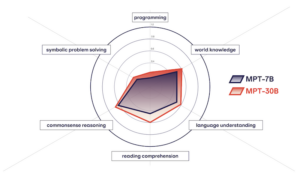
MosaicML recently compared its latest foundation models in six core capabilities, finding that MPT-30B significantly improves over MPT-7B in every respect. (Source: MosaicML)
MosaicML Co-founder and CEO Naveen Rao said in a statement that MosaicML was launched to solve the difficult engineering and research problems necessary to make large-scale training more accessible to everyone, an initiative made all the more critical with the recent generative AI wave.
“At MosaicML, we believe in a world where everyone is empowered to build and train their own models, imbued with their own opinions and viewpoints – and joining forces with Databricks will help us make that belief a reality,” said Rao.
MosaicML’s customers include the nonprofit research institute Allen Institute for AI and Generally Intelligent, a developer of general-purpose AI agents. San Franciso-based IDE Replit and healthcare chatbot developer Hippocratic AI are also customers of the platform.
Databricks says MosaicML’s generative AI capabilities combined with the Databricks Lakehouse Platform will provide a robust and flexible platform geared toward large enterprises with a broad range of use cases. Tamping down the high costs of training AI models is another factor: “According to MosaicML, automatic optimization of model training provides 2x-7x faster training compared to standard approaches. Combined with near linear scaling of resources, multi-billion-parameter models can be trained in hours, not days. With Databricks and MosaicML, training and using LLMs will cost thousands of dollars, not millions,” the company said in a statement.
“Every organization should be able to benefit from the AI revolution with more control over how their data is used. Databricks and MosaicML have an incredible opportunity to democratize AI and make the Lakehouse the best place to build generative AI and LLMs,” said Ali Ghodsi, co-founder and CEO of Databricks. “Databricks and MosaicML’s shared vision, rooted in transparency and a history of open source contributions, will deliver value to our customers as they navigate the biggest computing revolution of our time.”
This article originally appeared on sister site Datanami.
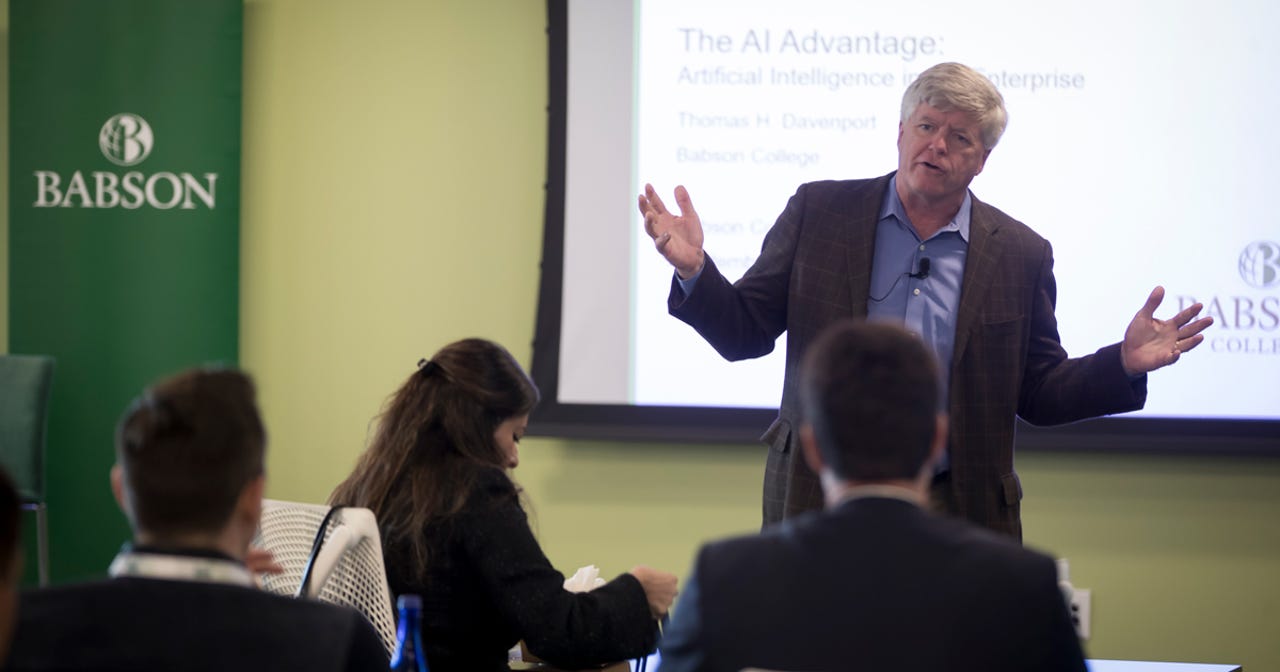
"Artificial intelligence is often considered magic," says Professor Tom Davenport, addressing a crowd at Babson's Boston campus.
The latest research on the impact of generative AI found that AI has the potential to automate 40% of the average work day. Artificial intelligence (AI) can play a crucial role in assisting leaders and their teams in making strategic, as well as immediate, data-driven decisions. Generative AI will revolutionize the way we work.
AI is the electricity of the 21st century. Ignore it and your business will be left in the dark. Automation is already under way at many companies, with workers reporting they have automated an average of 20% of previously manual tasks during the past two years. Although the level of automation varies by geography, job role, and industry, nearly all workers have experienced some automation in the past two years. In many cases, low-code and no-code platforms have enabled business users to automate their own processes.
Also: ChatGPT is the most sought out tech skill in the workforce, says learning platform
What's already certain is that today's businesses and their leaders face unprecedented complexity and turbulence. And there are no signs that the ride is going to get easier or smoother any time soon. So, the time is ripe for a fundamental rethink, with a new mindset that abandons hope of stability and that embraces the exact opposite. Here, a key question arises: what can educators do to prepare students for the future of work?
Research suggests students want to be prepared for the future of work. Nearly half (47%) of students reported selecting their institution for career prospects, but only 11% felt very prepared for work. Students who feel well-prepared are four times more likely to have a great university experience. In addition, nearly half of students (49%) plan to continue learning through a higher education institution after graduating.
Given the fast-changing work environment, and growing expectations on recruiting and retaining the top talent with the right mix of skills, how can educators better prepare graduates for the turbulence ahead? Given the need for change, what are some of the things that come to mind when you contemplate the modern workplace? Perhaps you've thought about some of the challenges involved in managing virtual relationships, especially between you and your supervisor? Maybe you're starting to think about upskilling for AI?
Also: Future ChatGPT versions could replace a majority of work people do today, says Ben Goertzel
Some of you are managing a diverse team and working to provide open, equitable, and safe hybrid workplaces. These are all important things to consider, especially for current students and recent grads entering the workforce. These were also topics addressed during a multi-week graduate school workshop titled "Managing Your Career and the Future of Work" at Babson College, which has been ranked the number one college for entrepreneurship.
In an article for ZDNET, Lily Awad — who is a curriculum designer, instructor and a career development expert at Babson College — talks about how to position yourself to succeed in today's economy. Awad outlines a three-step process, taught by herself and leadership and career coach Lisa Mesicek on how to prepare for the modern workplace: 1) Harness Self-Awareness; 2) Develop Foresight; and 3) Build Your Community. To better understand these skills, Awad shares additional insights on what educators need to consider as they prepare the next generation of workers.
Workshop design and goals
The start of 2023 felt ideal for an in-person workshop focused on real-life workplace scenarios. Such scenarios have changed vastly during the past few years, so Awad and Mesicek wanted to shed light on some of the complexities their students were soon to face as managers and workers. When designing the curriculum for the four-week workshop they kept in mind the desired learning outcomes:
Problem solve during rapid change
Source knowledge to develop foresight
Communicate knowledge through team and individual presentations
Develop lifelong modern workplace skills: adaptability, comfort with change, flexibility
Enhance self-awareness and confidence in career readiness
Awad says the workshop ran for four weeks and met once a week for 90 minutes. Each week, the students were presented with a new workplace challenge to tackle. For example, during week one, students solved a problem of Proximity Bias: how do remote workers influence their manager's perspectives of them with little in-person time? And, as a manager, how do you accommodate your diverse workforce to make sure your approach is equitable and inclusive? These were important things to consider as students were soon to enter hybrid and remote work environments, some as managers themselves.
Also: Generative AI can make some workers a lot more productive, according to this study
Awad says the scenarios were designed to incorporate diverse and inclusive subjects based on race, ethnicity, gender, and more. However, she acknowledges the scenarios did not incorporate neurodivergent or physical and unseen disabilities. This is something they will consider for future course design.
Student outcomes
Participants were surveyed before and after the workshop. While many students at the beginning of the semester ranked their understanding of the future of work between "not well" to "well", it was clear that they had a pulse on current workplace trends.
When asked to define what the future of work means at the start of the first session, the following terms were shared: flexible, AI, technology, human-centric, challenging, value-centered, upskilling, agility, environmentally sustainable, diverse, and profitable. The post-workshop survey showed an increase in the participants' understanding of the future of work, which went from "not well to well" to "well to extremely good understanding".
Also: AI bots have been acing medical school exams, but should they become your doctor?
Interesting solutions were presented by the students when it came to the various scenarios. For Impression Management and Proximity Bias, students explored in-person social events and often presented in-person solutions. It was clear that this generation of workers appreciates the flexibility of being hybrid, but thrives on in-person human connection, especially when in-person obligations are centered on socializing, relationship building, and entertainment.
Insights for educators
The workplace is dynamic. It will be interesting to see which topics will resonate with future students. But a few observations could help educators who are contemplating offering practical courses on modern workplace prep:
Integrate diversity, equity, and inclusion into each and every example. The workshop used scenarios where workers were from different countries, used different pronouns, and had different professional experiences. There was also some discussion around mental health.
Bring external speakers to share real-life examples. During an "Upskills/Reskill" week, the participants were joined by a guest from UpWork to describe the freelance world, to consider how the word "remote" is the most searched word on job search platforms today, and also to share how some big companies use the platform.
Have students work on teams and conduct formal presentations. This format helps achieve important workplace skills like communication, teamwork, presenting, influencing, and negotiating. After all, these are still highly sought-after skills among business school corporate recruiters. Making sure teams are diverse is useful and reflective of what students will soon face in the workplace.
Recommendations and discussion
Lily Awad gives us her feedback on the workshop: In just four weeks at one and a half hours per session, we were not able to cover all the topics we had liked to. We recommend faculty work closely with their campus career development teams to bring this element of teaching into the classroom. We also find it critical that organizations collaborate with higher education institutions as a way to ensure faculty recognize and understand employable skills and hybrid trends, and work towards teaching them.
Topics around modern workplace scenarios seemed well received. Students called the workshop "eye-opening" and provided the following additional feedback: "I have more awareness of the different concepts due to the discussion and suggested tools and how [I] can utilize them to advance in my career", and also, "I loved the team exercises and the opportunity to learn different perspectives", and finally, "I learned a lot about new trends and opportunities that I have, a lot of them I have never considered before."
Also: Just how big is this generative AI? Think internet-level disruption
Overall, it was a fun experience and we look forward to collaborating with campus partners to diversify our portfolio of modern workplace offerings.
This article was co-authored by Lily Awad, adjunct instructor and senior associate director at Babson College's F.W. Olin Graduate School of Business, where she works with MBA and MS students, designs career education curricula, and teaches.