My 5 favorite AI tools for school: Class is in session, and generative AI can help

Illustration of a robot on a phone

During last year's back-to-school season, ChatGPT had not yet been unveiled, and generative AI wasn't on everyone's radar. However, today, the topic is more popular than ever, and new helpful AI tools for students are released daily.

A common misconception is that generative AI can harm education by promoting cheating. However, when used properly, these tools have the potential to improve student learning and transform workflow significantly.

As someone who consistently tests new generative AI tools, I wish I'd had these tools when I was in school.

Also: Meet generative AI's 'super users': 70% of Gen Z use GenAI

Generative AI would have allowed me to focus on the tasks that would improve my education, helping me to produce higher quality output and create a better understanding of the material I was learning.

Today, a student can use AI to help them find sources for a paper, which cuts down on time searching on Google. They can then use the technology to save time on reading materials and synthesizing ideas into a paper.

The key to correctly using AI for schoolwork is identifying the right tools and use cases. Since there are so many tools, I compiled the list below from months of testing to make your life easier.

1. Bing Chat

Bing Chat is at the top of my list because of its multiple potential use cases that could improve a student's workflow.

Also: ChatGPT vs. Bing Chat: Which AI chatbot is better for you?

If you are familiar with ChatGPT, Bing Chat is the same concept — an AI chatbot, powered by OpenAI technology, but with significant differences that, in my testing, make it better.

First off, Bing Chat uses OpenAI's most advanced large language model (LLM), GPT-4, for free. Besides Bing Chat, the only other GPT-4-based chatbot available is ChatGPT Plus, which costs $20 a month, which is a big outlay for a student who's already juggling school expenses.

Another major pro for Bing Chat is that it's connected to the internet and has information on all current events and sites, making it possible to access any information you need. The technology also cites its sources as footnotes, making it easier to fact-check and to avoid hallucinations.

Lastly, Bing Chat can answer everything that Google can, but instead of having to aimlessly search through the search results for what you're looking for, the technology gives you the answer in an easy-to-understand response with footnotes that you can follow to lead you to the site.

Also: 7 ways you didn't know you can use Bing Chat and other AI chatbots

Bing Chat also has the advanced writing, coding, and mathematical abilities that ChatGPT has, making it a great assistant for writing and editing essays, solving and explaining math problems, and generating and debugging code.

Some other ways you can use Bing Chat in your studies are:

  • Answering questions you have about class or materials
  • Researching for a paper
  • Finding answers for take-home exams or assignments
  • Explaining complex topics, such as history, current events, politics, and scientific terms, in a more digestible way
  • Creating Excel formulas
  • Making graphs and charts
  • Planning vacation itineraries (we all need a break from school sometimes)

To find the best way to use Bing Chat for your own workflow, I recommend using it for the use cases discussed above and experimenting with different things.

2. Quizlet

I used Quizlet from middle school through college as a study tool to help me remember content for tests. Students can use it by building a study set with terms and definitions and then using various different learning methods, such as flashcards (my personal favorite), matching columns, and more.

Students can also browse the millions of study sets created by other users. When I was a student, I found that if I searched Quizlet for a study set about any topic or even a specific textbook, someone else had likely made one.

Also: Quizlet launches four generative AI-powered tools to simplify studying

Although the platform is far from new, it has leveraged AI for more than six years to create its study features, such as its Learn mode, and to create testing options for students to review their material.

Quizlet recently delved further into AI by using OpenAI's ChatGPT API to create an AI-enabled tutor called Q-Chat, which is available in beta for free.

I tested the AI tutor and its interactive question-answer prompt system impressed me. The AI tutor simulates a real conversation, either teaching you or testing you on the study information through a natural language dialogue.

Quizlet also recently announced other AI features, including Magic Notes, Memory Score, Quick Summary, and AI-enhanced Expert Solutions.

Overall, whether it's the older standard tools I used or one of the more advanced ones, Quizlet is a powerful tool for learning and studying classroom materials, and learners of all ages can benefit from it.

3. ChatPDF

As a student, a big portion of the documents you get are sent as PDFs. Whether these PDFs are class readings, research papers, or syllabi, they are often lengthy and tedious. ChatPDF can entirely change the way you interact with PDFs for your studies.

With ChatPDF, all you need to do is upload your PDF, and it will process your file in seconds. Then, you are redirected to a chatbot interface where you can ask ChatPDF any question you have regarding the PDF.

Also: How to use ChatPDF: The AI chatbot that can tell you everything about your PDF

The questions can be as broad as asking for a summary of the PDF or as specific as asking for a particular term in the text and what it means. Once it finds an answer, it tells you where in the text it formulated its response from.

This tool can be leveraged when you read a research paper and are left with a million questions, or it can even quickly find the information you need to complete an assignment or paper.

ChatPDF would have changed my life for the better when I was at college and was sent papers to read almost every day. I even still use ChatPDF as a working professional to help me understand some otherwise complex topics and to double-check my findings.

4. Duolingo

Duolingo is a great app for learning a new language. Students can use it to supplement the language courses they are taking in school.

The appeal of the Duolingo app is that it gamifies the language-learning experience through bite-sized lessons that feel like individual quests. It also has a streak, leaderboard, league, and point system that motivates learners to want to keep going.

Even though I am not a student, I do have a 245-day streak in an attempt to learn a new language.

Also: Duolingo's new music course gamifies how you learn to play and read music

Foreign language courses are typically mandatory for students throughout their education, starting at the middle school level all the way through to college.

As if learning a new language isn't already hard, my experiences suggest foreign language courses are not a priority for schools, especially at the younger learning levels, making them under-resourced and poorly taught.

Duolingo would be a great way to bridge the understanding gap that is being created in class. Test yourself on your understanding of the language before an exam or simply supplement your in-class lessons with some out-of-classroom practice.

5. Socratic

Although younger learners can benefit from AI chatbots, such as Bing Chat, there are concerns about giving them access to the entirety of the internet. If you are a parent with those concerns, Socratic by Google is a great alternative.

Also: How Google Socratic can help you with your homework

With the Socratic app, students can type in any question about what they are learning in school or upload their worksheets. Then, the app will generate a conversational, human-like response with unique graphics and even related YouTube video links.

The app will not just pump out answers or generate essays. Instead, it will give step-by-step explanations and instructions that students can use to get the answer themselves, functioning as an intelligent learning tool.

To give parents peace of mind, Socratic also blocks inappropriate questions from being answered.

The app isn't limited to younger learners, and Google actually refers to it as a "learning app from Google that helps high school and university students." However, due to its functionality, I would say it's actually better suited for younger learners because of the limits and the fun graphics.


Artificial Intelligence

Can the Real NVIDIA Please Stand Up

Can the Real NVIDIA Please Stand Up

There is no doubt about the NVIDIA monopoly in the AI world with its chips and GPUs. There have been several people who say that there might be a point when it might actually start crumbling down given a lot of competitors are coming up in the space. Even its customers are trying to build up capabilities by themselves.

One of the biggest flex companies of the NVIDIA chips, Microsoft has also recently decided to fund another AI chip startup. d-Matrix recently raised $110 million from investors led by Temasek, Playground Global, and Microsoft in a series B funding round. CEO Sid Sheth told Reuters, “This is capital that understands what it takes to build a semiconductor business. They’ve done it in the past. This is capital that can stay with us for the long term.”

Things got even more interesting here. Corsair C8, the company’s compute platform has made a groundbreaking claim that it has the capability to displace NVIDIA H100 GPUs, the industry leading GPU, which is still in shortage according to several reports. Not just by little, d-Matrix claims that there is a nine times increase in throughput compared to H100, and 27 times when compared against A100.

How are companies planning to displace NVIDIA

As d-Matrix explains that NVIDIA GPUs are not particularly optimised for running inference tasks for large language models (LLMs). A lot of GPUs are needed to handle the AI workloads even after training them, and relying on these high-end GPUs just leads to excessive energy consumption. Paying for H100s and A100s for inference tasks is a little excessive and redundant for companies, and they are increasingly looking for alternatives.

This is not Microsoft’s first attempt to build AI chips. According to reports, the company has been developing Athena AI chips since 2019, which the company and OpenAI had secret access to all this while, and was even tested for running GPT-4. Though there is no direct evidence that these chips were made for training AI models, it seems likely that they were just trying to use them for inference tasks.

But Microsoft is not the first one to do this. Meta, Google, IBM, and Amazon have all been trying to build their own AI chips, to possibly stop their reliance on NVIDIA. Interestingly, all of these companies claim that their chips are a lot better than what NVIDIA can do, but in the end still rely on it the next day.

True. Also, many other NN accelerator chips are also under development.
Nvidia will not have a monopoly on large-scale training & inference forever.

— Elon Musk (@elonmusk) June 7, 2023

According to Elon Musk, a lot of companies are working on AI chips. The only thing is that none of them are actually trying to build an alternative to NVIDIA. There is a new segment of startups that are focused on developing chips for inference. Moreover, Tesla’s Dojo chip is also in the making. There is not enough reason to believe that it would be a competitor to NVIDIA as Musk has already hoarded thousands of its GPUs for training his own AI model.

NVIDIA is on a different game altogether, it doesn’t care

Ever since 2017, startups have been coming in waves trying to topple down NVIDIA monopoly, but end up failing to mark even a dent to it. Startups like Modular, Qyber, MatX, are the latest ones, but even their plans to dethrone NVIDIA AI chips has been diverted to tackling them on the software front, by building alternatives to NVIDIA’s CUDA, the platform for AI computing.

On the other hand, TSMC has said that shortage of high performance computing (HPC) GPUs might still continue for another 1.5 years. This possibly indicates that NVIDIA might also shift its focus on building less powered GPUs, which means designed for inference and fine-tuning tasks, instead of building models.

Moreover, Microsoft investment in d-Matrix hints that the company might be shifting its focus on providing its customers with easier and cheaper inference capabilities, and shifting away from building new models. Even OpenAI’s recent comments about not announcing GPT-5 until November might be like they are done with building new models at the moment.

Regardless of all of this, NVIDIA through its DGX Cloud has been offering inference capabilities. But given the price point, NVIDIA might try to drop the price of its server given no one is actually able to compete with them, and continue the monopoly. Moreover, the upcoming L40 GPU is also focused on being a power-efficient inference GPUs. It is clear that the trillion dollar company knows what it is doing.

To quote Jensen Huang on GPU shortage and competition around who gets how much in Silicon Valley, “There’s more, come get them. Everybody should win.” But for the moment, NVIDIA is going to continue its winning streak, even if Microsoft tries to go around it. There is definitely more coming up from NVIDIA, just have to wait.

The post Can the Real NVIDIA Please Stand Up appeared first on Analytics India Magazine.

Researchers Experiment with Google DeepMind’s Flamingo & OpenAI’s Dall-E, the Results Will Surprise You

While text-based AI models have been found coordinating amongst themselves and developing a language of their own, communication between image-based models remains an unexplored territory. A group of researchers set out to find how well Google Deepmind’s Flamingo and OpenAI’s Dall-E understand each other — their synergy is impressive.

Despite the closeness of the image captioning and text-to-image generation tasks, they are often studied in isolation from each other, i.e the information exchange between these models remains a question someone never looked for an answer to. Researchers from LMU Munich, Siemens AG, and the University of Oxford wrote a paper titled, ‘Do Flamingo and DALL-E Understand Each Other?‘ investigating the communication between image captioning and text-to-image models.

The team proposes a reconstruction task where Flamingo generates a description for a given image and DALL-E uses this description as input to synthesise a new image. They argue that these models understand each other if the generated image is similar to the given image. Specifically, they studied the relationship between the quality of the image reconstruction and that of the text generation. As a result, they found that a better caption is the one that leads to better visuals and vice-versa.

In the recent past, strides have been made in multimodal models — AI systems designed to process multiple forms of sensory input at the same time. Models trained solely on text data inherently face limitations when it comes to common sense. While expanding the training dataset helps to a certain degree, these models may still have unexpected knowledge gaps. Multimodality comes into the picture as a saviour here. Multi-modal models have demonstrated improved reasoning abilities compared to their single-sense counterparts. It is worth noting, however, that symbolic logic, an approach dominating decades, yielded minimal progress during the time period.

The post Researchers Experiment with Google DeepMind’s Flamingo & OpenAI’s Dall-E, the Results Will Surprise You appeared first on Analytics India Magazine.

Climate Crisis Meets Data Genius: Top 3 Winners Announced from Genpact-Google Hackathon

Climate Crisis Meets Data Genius: Top 3 Winners Announced from Genpact-Google Hackathon

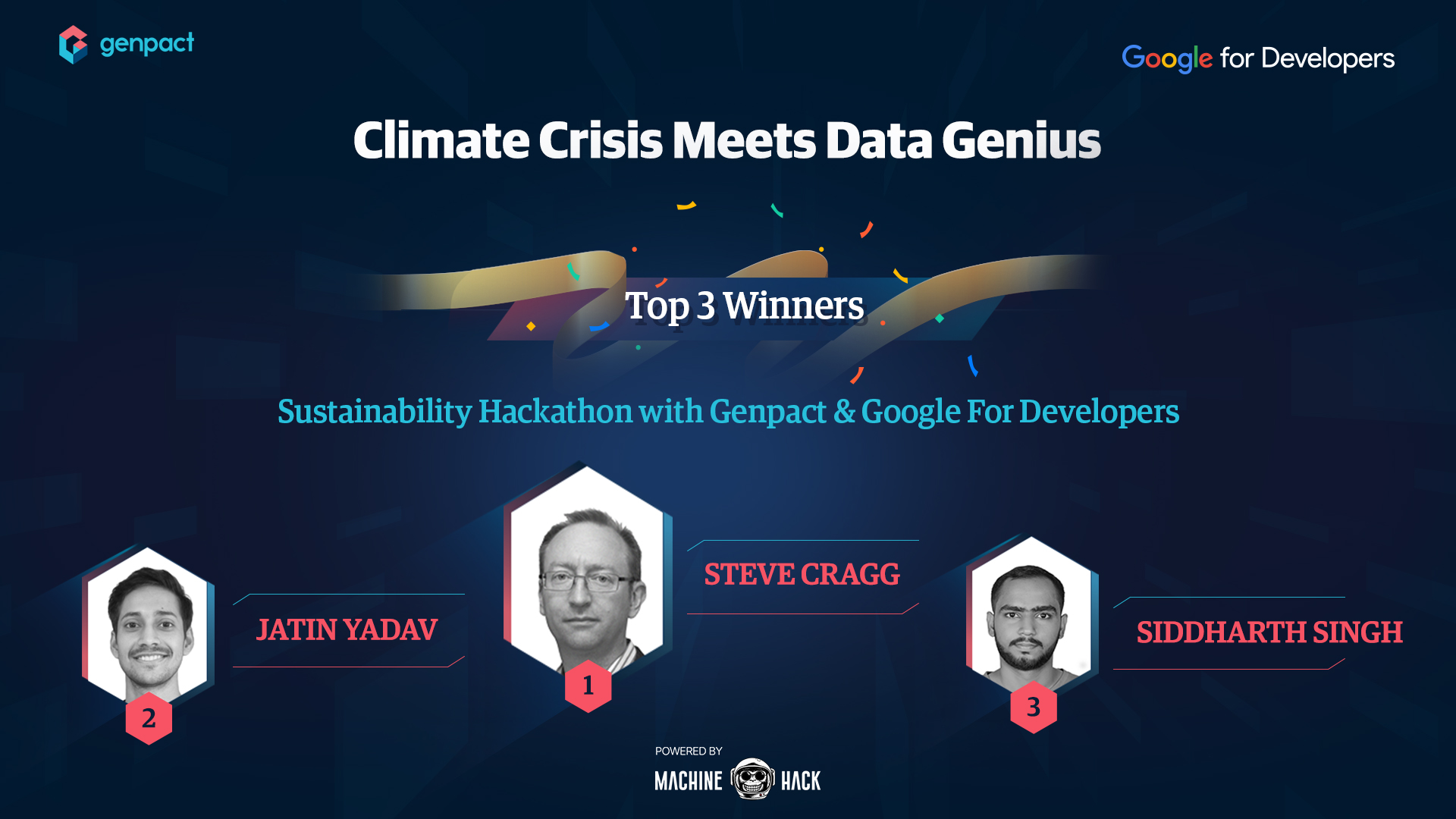
In a dynamic collaboration of innovation and creativity, Genpact and Google for Developers wrapped up their hackathon leaving behind positive change and happy winners. The event, held from June 9 to July 21, harnessed the power of artificial intelligence and machine learning (AI/ML) models to find potential solutions for the climate crisis. A slew of existing prizes, like Google Pixel 7 Pro, attracted more than 4,000 registrations from the data science community. This attracted participants from numerous countries, including India, the United States, Nigeria, Pakistan, Brazil, the Netherlands, the United Kingdom, Canada, France, and beyond. Additionally, in terms of participation, we have observed a diverse representation, with 55% being data science professionals and 22% consisting of analysts and software engineers.

The data showdown harnessed Genpact’s longstanding dedication to sustainability, deep expertise in ML techniques, and strategic partnership with Google Cloud.

The hackathon’s mandate was to address the climate crisis by developing ML models that predict the impact of environmental shifts on commodity prices. As a result, data scientists from around the globe united with a common purpose: employing technology for the betterment of our planet.

As the competition gained steam, three participants rose to the leaderboard. AIM spoke to the podium winners – and the judges – to find out their journey to become champions of MachineHack.

Diverse winners emerged from a pool of hundreds of participants across countries, from India to the United Kingdom. Despite having distinct paths in their pursuit of careers, what binds these developers together is their passion for resolving real-life issues through intricate data analysis.

Third place – Siddharth Singh, Bangalore, India

Siddharth Singh has worked as a data scientist at Karmalife.AI since 2021. The Kaggle expert from Bangalore has been participating in hackathons for the past three years. MachineHack has been Singh’s go-to platform for competing with some of the greatest minds in data science.

Talking about the approach that helped him climb the leaderboard, Singh said, “When I started with the baseline, I saw there is much room for improvement in India’s cotton yield predictions.”

Here’s the approach that worked for him:

  1. District-wise or state-wise trend predictions
  2. Rolling out features at different time intervals
  3. Features related to cotton yields
  4. Since NAN was present randomly in the data, he oversampled the data 15 times and trained a regression model on top of that

Singh’s work stood out because he creatively made the model better by using past data values. His clever way of improving the model in unique ways showcased his problem-solving skills. His work showed the judges his commitment to improving his technical skills.

>> Watch Katie Stein, Genpact’s Chief Strategy Officer and Global Business Leader, deliver a keynote at MachineCon in New York

Second place – Jatin Yadav, Pune, India

The first time Jatin Yadav came across data engineering concepts was in a session held at his college, after which he did some courses related to data science. Currently, he is working at Cognizant in the Google Cloud Platform division. Yadav stumbled upon the sustainability hackathon on the internet, and it piqued his interest. He thought of giving it a try, and while going through the ML challenge and the dataset, he decided to sign up.

For the first part of the hackathon – dealing with the Indian dataset – he combed through the data, and from the prediction of the Random Forest model, he got the following result:

A graph showing a line  Description automatically generated

For the commodity dataset, he mapped the price values with the US (train and test datasets) grouped by year. Then, he trained the model on columns and got the final result.

Talking about his first experience with MachineHack, Yadav said, “I really enjoyed competing with other participants on the leaderboard, and the resources available on MachineHack did help me a lot in understanding the core concepts while working on an ML problem. I’m glad that I got to participate in the hackathon, and I’m looking forward to upcoming events on MachineHack.”

Yadav’s approach showed how well-acquainted he is with data and building models. He’s good at getting the data ready for analysis. While his modelling work was impressive, he got more interesting information by looking deeper into how the features in the data are distributed.

First place – Steve Cragg, Telford, United Kingdom

Mechanical engineer Steve Cragg’s approach to data science is influenced by physics. Often, he considers external noise factors and how they affect the data.

In 2012, he bought one of the first Raspberry Pi’s (a series of small single-board computers), which got him into learning how to code.

“I do data science for two main reasons: firstly, I enjoy it, and am fortunate to have real industrial applications on which to practise. Secondly, I want to influence others to develop their coding skills and learn some data science. The tools (and accessibility of good training material) have matured to the point where they are much more accessible to most non-scientists,” he said.

For him, the sustainability challenge was essentially forecasting in three parts: the Indian yields, the US yields, and finally forecasting the price. For the India data, the ‘best’ model according to Cragg was an XGBoost regressor.

This was Cragg’s fourth hackathon on the MachineHack platform. Talking about his experience, he enjoyed the contest. “There was enough challenge to encourage thinking, (while) excluding teams made it more accessible to individuals, and the datasets were small enough to run on readily available laptops.”

For the judges, Cragg’s work really shined through because he had carefully studied a small dataset and figured out important details from it. He used different ways to show the data using Seaborn, which helped the panel see all the little details. His strategic approach to coding showcased his skills and knowledge.
Ready for your next challenge? Explore Genpact’s career opportunities

The post Climate Crisis Meets Data Genius: Top 3 Winners Announced from Genpact-Google Hackathon appeared first on Analytics India Magazine.

Why Cypher 2023 is a Must-attend Event for AI Enthusiasts & Business Leaders

“If you’re not in the AI game, you’re already lagging behind.

The message resonated deeply within the AI community and beyond when NVIDIA’s chief Huang Jensen said — “Those without AI expertise will be left behind…,” addressing the students at National Taiwan University, Taipei, urging them to create something new in the AI age fast, or risk getting left behind.

In a bid to bring industry leaders, AI experts and companies under one roof, AIM is organising the seventh edition of its flagship event – Cypher 2023 – India’s biggest AI conference. And for those looking to be a part of the AI revolution, there’s no better time than this. The event offers keynote, networking opportunities, insightful sessions, workshops and much more – and this time at a brand new location.

  • Where: Hilton Garden Inn, Bengaluru Embassy Manyata Business Park, Bengaluru, India
  • When: October 11-13, 2023 | Wednesday – Friday
    Register now

We are Here!

Organised by Analytics India Magazine, Cypher ‘23 guarantees a once-in-a-year experience like no other, bringing every nook and corner of AI and other advancements to the limelight. So, whether your interests lie in AI art, ethics, deployment strategies, or the technical aspects of AI, Cypher 2023 will leave no stone unturned to enthral and empower you.

The three-day event, being hosted at Hilton Garden Inn, Bangalore, will provide you the perfect platform to indulge in thought-provoking discussions, ask questions, and learn everything you need to know about the AI ecosystem. Moreover, the event will provide ample opportunities to connect with industry leaders and like-minded AI enthusiasts making strides in AI and machine learning.

What Sets Cypher ‘23 Apart

One of the distinguishing features of Cypher ’23 is the convergence of AI professionals from diverse backgrounds, creating a melting pot of ideas and perspectives. So whether you are a seasoned AI expert or just a beginner to the GenAI wave, Cypher ’23 is the perfect place to network and collaborate.

The meticulously curated content features a list of profound speakers and practitioners from around the globe. They will delve into every topic ranging from AI fundamentals to the latest developments in GenAI, covering every facet of this transformative technology.

Whom to look for at Cypher 23:

  • Kartik Ranganath, general manager – Business IT, SHELL R&D
  • Jacy Reese Anthis, co-founder, Sentience Institute
  • Raghu Krishnananda, chief product and technology officer, Myntra
  • Tapan Aslot, creative director and AI artist
  • Ashutosh Gavali, director (IT) – Engineering & Analytics, boAt

And the list goes on.

With over 1,500 attendees and 100+ speakers, Cypher ’23 boasts the largest representation from both the Indian and global AI communities. The conference will have three tracks — Thought leadership, Knowledge sessions, and Hands-on workshops. Attendees can choose from a variety of sessions based on their interests in AI.

The event will also feature several exhibitions spotlighting the latest AI art, solutions and technology. Attendees can interact with exhibitors and get a hands-on experience with the latest products and services.

A Legacy of Excellence

As the saying goes, “With age comes wisdom”. Cypher has a storied history, establishing itself as one of the oldest and most respected AI conferences on the Indian subcontinent. Since its launch in 2015, the conference has evolved and adapted to stay at the forefront of innovation. The rich history is a testament to its relevance and the ability to anticipate and showcase the latest technological trends focused on AI.

In its previous chapters, Cypher has attracted industry leaders and experts as speakers from renowned companies like Amazon, Oracle, Infosys, L&T, Wells Fargo, Hindustan Unilever, Swiggy, Dunzo, Viacom18, and many more.

Cypher ‘23 is not your run-of-the-mill AI conference; it’s the best edition yet. Going beyond the surface-level understanding of new-age tech in fields right from GANs to autoregressive models, Cypher brings to you an understanding of all the relevant AI/ML practices. Everything you’re looking for in an AI event depending on your profession and personal interests – Cypher 23 will have them all! So mark the dates to learn from AI practitioners and global leaders only during this annual get-together at India’s Silicon Valley.

What are you waiting for? Register now.

The post Why Cypher 2023 is a Must-attend Event for AI Enthusiasts & Business Leaders appeared first on Analytics India Magazine.

Why Cypher 2023 is a Must-attend Event for AI Enthusiasts & Business Leaders

“If you’re not in the AI game, you’re already lagging behind.

The message resonated deeply within the AI community and beyond when NVIDIA’s chief Huang Jensen said — “Those without AI expertise will be left behind…,” addressing the students at National Taiwan University, Taipei, urging them to create something new in the AI age fast, or risk getting left behind.

In a bid to bring industry leaders, AI experts and companies under one roof, AIM is organising the seventh edition of its flagship event – Cypher 2023 – India’s biggest AI conference. And for those looking to be a part of the AI revolution, there’s no better time than this. The event offers keynote, networking opportunities, insightful sessions, workshops and much more – and this time at a brand new location.

  • Where: Hilton Garden Inn, Bengaluru Embassy Manyata Business Park, Bengaluru, India
  • When: October 11-13, 2023 | Wednesday – Friday
    Register now

We are Here!

Organised by Analytics India Magazine, Cypher ‘23 guarantees a once-in-a-year experience like no other, bringing every nook and corner of AI and other advancements to the limelight. So, whether your interests lie in AI art, ethics, deployment strategies, or the technical aspects of AI, Cypher 2023 will leave no stone unturned to enthral and empower you.

The three-day event, being hosted at Hilton Garden Inn, Bangalore, will provide you the perfect platform to indulge in thought-provoking discussions, ask questions, and learn everything you need to know about the AI ecosystem. Moreover, the event will provide ample opportunities to connect with industry leaders and like-minded AI enthusiasts making strides in AI and machine learning.

What Sets Cypher ‘23 Apart

One of the distinguishing features of Cypher ’23 is the convergence of AI professionals from diverse backgrounds, creating a melting pot of ideas and perspectives. So whether you are a seasoned AI expert or just a beginner to the GenAI wave, Cypher ’23 is the perfect place to network and collaborate.

The meticulously curated content features a list of profound speakers and practitioners from around the globe. They will delve into every topic ranging from AI fundamentals to the latest developments in GenAI, covering every facet of this transformative technology.

Whom to look for at Cypher 23:

  • Kartik Ranganath, general manager – Business IT, SHELL R&D
  • Jacy Reese Anthis, co-founder, Sentience Institute
  • Raghu Krishnananda, chief product and technology officer, Myntra
  • Tapan Aslot, creative director and AI artist
  • Ashutosh Gavali, director (IT) – Engineering & Analytics, boAt

And the list goes on.

With over 1,500 attendees and 100+ speakers, Cypher ’23 boasts the largest representation from both the Indian and global AI communities. The conference will have three tracks — Thought leadership, Knowledge sessions, and Hands-on workshops. Attendees can choose from a variety of sessions based on their interests in AI.

The event will also feature several exhibitions spotlighting the latest AI art, solutions and technology. Attendees can interact with exhibitors and get a hands-on experience with the latest products and services.

A Legacy of Excellence

As the saying goes, “With age comes wisdom”. Cypher has a storied history, establishing itself as one of the oldest and most respected AI conferences on the Indian subcontinent. Since its launch in 2015, the conference has evolved and adapted to stay at the forefront of innovation. The rich history is a testament to its relevance and the ability to anticipate and showcase the latest technological trends focused on AI.

In its previous chapters, Cypher has attracted industry leaders and experts as speakers from renowned companies like Amazon, Oracle, Infosys, L&T, Wells Fargo, Hindustan Unilever, Swiggy, Dunzo, Viacom18, and many more.

Cypher ‘23 is not your run-of-the-mill AI conference; it’s the best edition yet. Going beyond the surface-level understanding of new-age tech in fields right from GANs to autoregressive models, Cypher brings to you an understanding of all the relevant AI/ML practices. Everything you’re looking for in an AI event depending on your profession and personal interests – Cypher 23 will have them all! So mark the dates to learn from AI practitioners and global leaders only during this annual get-together at India’s Silicon Valley.

What are you waiting for? Register now.

The post Why Cypher 2023 is a Must-attend Event for AI Enthusiasts & Business Leaders appeared first on Analytics India Magazine.

Why Cypher 2023 is a Must-attend Event for AI Enthusiasts & Business Leaders

“If you’re not in the AI game, you’re already lagging behind.

The message resonated deeply within the AI community and beyond when NVIDIA’s chief Huang Jensen said — “Those without AI expertise will be left behind…,” addressing the students at National Taiwan University, Taipei, urging them to create something new in the AI age fast, or risk getting left behind.

In a bid to bring industry leaders, AI experts and companies under one roof, AIM is organising the seventh edition of its flagship event – Cypher 2023 – India’s biggest AI conference. And for those looking to be a part of the AI revolution, there’s no better time than this. The event offers keynote, networking opportunities, insightful sessions, workshops and much more – and this time at a brand new location.

  • Where: Hilton Garden Inn, Bengaluru Embassy Manyata Business Park, Bengaluru, India
  • When: October 11-13, 2023 | Wednesday – Friday
    Register now

We are Here!

Organised by Analytics India Magazine, Cypher ‘23 guarantees a once-in-a-year experience like no other, bringing every nook and corner of AI and other advancements to the limelight. So, whether your interests lie in AI art, ethics, deployment strategies, or the technical aspects of AI, Cypher 2023 will leave no stone unturned to enthral and empower you.

The three-day event, being hosted at Hilton Garden Inn, Bangalore, will provide you the perfect platform to indulge in thought-provoking discussions, ask questions, and learn everything you need to know about the AI ecosystem. Moreover, the event will provide ample opportunities to connect with industry leaders and like-minded AI enthusiasts making strides in AI and machine learning.

What Sets Cypher ‘23 Apart

One of the distinguishing features of Cypher ’23 is the convergence of AI professionals from diverse backgrounds, creating a melting pot of ideas and perspectives. So whether you are a seasoned AI expert or just a beginner to the GenAI wave, Cypher ’23 is the perfect place to network and collaborate.

The meticulously curated content features a list of profound speakers and practitioners from around the globe. They will delve into every topic ranging from AI fundamentals to the latest developments in GenAI, covering every facet of this transformative technology.

Whom to look for at Cypher 23:

  • Kartik Ranganath, general manager – Business IT, SHELL R&D
  • Jacy Reese Anthis, co-founder, Sentience Institute
  • Raghu Krishnananda, chief product and technology officer, Myntra
  • Tapan Aslot, creative director and AI artist
  • Ashutosh Gavali, director (IT) – Engineering & Analytics, boAt

And the list goes on.

With over 1,500 attendees and 100+ speakers, Cypher ’23 boasts the largest representation from both the Indian and global AI communities. The conference will have three tracks — Thought leadership, Knowledge sessions, and Hands-on workshops. Attendees can choose from a variety of sessions based on their interests in AI.

The event will also feature several exhibitions spotlighting the latest AI art, solutions and technology. Attendees can interact with exhibitors and get a hands-on experience with the latest products and services.

A Legacy of Excellence

As the saying goes, “With age comes wisdom”. Cypher has a storied history, establishing itself as one of the oldest and most respected AI conferences on the Indian subcontinent. Since its launch in 2015, the conference has evolved and adapted to stay at the forefront of innovation. The rich history is a testament to its relevance and the ability to anticipate and showcase the latest technological trends focused on AI.

In its previous chapters, Cypher has attracted industry leaders and experts as speakers from renowned companies like Amazon, Oracle, Infosys, L&T, Wells Fargo, Hindustan Unilever, Swiggy, Dunzo, Viacom18, and many more.

Cypher ‘23 is not your run-of-the-mill AI conference; it’s the best edition yet. Going beyond the surface-level understanding of new-age tech in fields right from GANs to autoregressive models, Cypher brings to you an understanding of all the relevant AI/ML practices. Everything you’re looking for in an AI event depending on your profession and personal interests – Cypher 23 will have them all! So mark the dates to learn from AI practitioners and global leaders only during this annual get-together at India’s Silicon Valley.

What are you waiting for? Register now.

The post Why Cypher 2023 is a Must-attend Event for AI Enthusiasts & Business Leaders appeared first on Analytics India Magazine.

Why Cypher 2023 is a Must-attend Event for AI Enthusiasts & Business Leaders

“If you’re not in the AI game, you’re already lagging behind.

The message resonated deeply within the AI community and beyond when NVIDIA’s chief Huang Jensen said — “Those without AI expertise will be left behind…,” addressing the students at National Taiwan University, Taipei, urging them to create something new in the AI age fast, or risk getting left behind.

In a bid to bring industry leaders, AI experts and companies under one roof, AIM is organising the seventh edition of its flagship event – Cypher 2023 – India’s biggest AI conference. And for those looking to be a part of the AI revolution, there’s no better time than this. The event offers keynote, networking opportunities, insightful sessions, workshops and much more – and this time at a brand new location.

  • Where: Hilton Garden Inn, Bengaluru Embassy Manyata Business Park, Bengaluru, India
  • When: October 11-13, 2023 | Wednesday – Friday
    Register now

We are Here!

Organised by Analytics India Magazine, Cypher ‘23 guarantees a once-in-a-year experience like no other, bringing every nook and corner of AI and other advancements to the limelight. So, whether your interests lie in AI art, ethics, deployment strategies, or the technical aspects of AI, Cypher 2023 will leave no stone unturned to enthral and empower you.

The three-day event, being hosted at Hilton Garden Inn, Bangalore, will provide you the perfect platform to indulge in thought-provoking discussions, ask questions, and learn everything you need to know about the AI ecosystem. Moreover, the event will provide ample opportunities to connect with industry leaders and like-minded AI enthusiasts making strides in AI and machine learning.

What Sets Cypher ‘23 Apart

One of the distinguishing features of Cypher ’23 is the convergence of AI professionals from diverse backgrounds, creating a melting pot of ideas and perspectives. So whether you are a seasoned AI expert or just a beginner to the GenAI wave, Cypher ’23 is the perfect place to network and collaborate.

The meticulously curated content features a list of profound speakers and practitioners from around the globe. They will delve into every topic ranging from AI fundamentals to the latest developments in GenAI, covering every facet of this transformative technology.

Whom to look for at Cypher 23:

  • Kartik Ranganath, general manager – Business IT, SHELL R&D
  • Jacy Reese Anthis, co-founder, Sentience Institute
  • Raghu Krishnananda, chief product and technology officer, Myntra
  • Tapan Aslot, creative director and AI artist
  • Ashutosh Gavali, director (IT) – Engineering & Analytics, boAt

And the list goes on.

With over 1,500 attendees and 100+ speakers, Cypher ’23 boasts the largest representation from both the Indian and global AI communities. The conference will have three tracks — Thought leadership, Knowledge sessions, and Hands-on workshops. Attendees can choose from a variety of sessions based on their interests in AI.

The event will also feature several exhibitions spotlighting the latest AI art, solutions and technology. Attendees can interact with exhibitors and get a hands-on experience with the latest products and services.

A Legacy of Excellence

As the saying goes, “With age comes wisdom”. Cypher has a storied history, establishing itself as one of the oldest and most respected AI conferences on the Indian subcontinent. Since its launch in 2015, the conference has evolved and adapted to stay at the forefront of innovation. The rich history is a testament to its relevance and the ability to anticipate and showcase the latest technological trends focused on AI.

In its previous chapters, Cypher has attracted industry leaders and experts as speakers from renowned companies like Amazon, Oracle, Infosys, L&T, Wells Fargo, Hindustan Unilever, Swiggy, Dunzo, Viacom18, and many more.

Cypher ‘23 is not your run-of-the-mill AI conference; it’s the best edition yet. Going beyond the surface-level understanding of new-age tech in fields right from GANs to autoregressive models, Cypher brings to you an understanding of all the relevant AI/ML practices. Everything you’re looking for in an AI event depending on your profession and personal interests – Cypher 23 will have them all! So mark the dates to learn from AI practitioners and global leaders only during this annual get-together at India’s Silicon Valley.

What are you waiting for? Register now.

The post Why Cypher 2023 is a Must-attend Event for AI Enthusiasts & Business Leaders appeared first on Analytics India Magazine.

Why Cypher 2023 is a Must-attend Event for AI Enthusiasts & Business Leaders

“If you’re not in the AI game, you’re already lagging behind.

The message resonated deeply within the AI community and beyond when NVIDIA’s chief Huang Jensen said — “Those without AI expertise will be left behind…,” addressing the students at National Taiwan University, Taipei, urging them to create something new in the AI age fast, or risk getting left behind.

In a bid to bring industry leaders, AI experts and companies under one roof, AIM is organising the seventh edition of its flagship event – Cypher 2023 – India’s biggest AI conference. And for those looking to be a part of the AI revolution, there’s no better time than this. The event offers keynote, networking opportunities, insightful sessions, workshops and much more – and this time at a brand new location.

  • Where: Hilton Garden Inn, Bengaluru Embassy Manyata Business Park, Bengaluru, India
  • When: October 11-13, 2023 | Wednesday – Friday
    Register now

We are Here!

Organised by Analytics India Magazine, Cypher ‘23 guarantees a once-in-a-year experience like no other, bringing every nook and corner of AI and other advancements to the limelight. So, whether your interests lie in AI art, ethics, deployment strategies, or the technical aspects of AI, Cypher 2023 will leave no stone unturned to enthral and empower you.

The three-day event, being hosted at Hilton Garden Inn, Bangalore, will provide you the perfect platform to indulge in thought-provoking discussions, ask questions, and learn everything you need to know about the AI ecosystem. Moreover, the event will provide ample opportunities to connect with industry leaders and like-minded AI enthusiasts making strides in AI and machine learning.

What Sets Cypher ‘23 Apart

One of the distinguishing features of Cypher ’23 is the convergence of AI professionals from diverse backgrounds, creating a melting pot of ideas and perspectives. So whether you are a seasoned AI expert or just a beginner to the GenAI wave, Cypher ’23 is the perfect place to network and collaborate.

The meticulously curated content features a list of profound speakers and practitioners from around the globe. They will delve into every topic ranging from AI fundamentals to the latest developments in GenAI, covering every facet of this transformative technology.

Whom to look for at Cypher 23:

  • Kartik Ranganath, general manager – Business IT, SHELL R&D
  • Jacy Reese Anthis, co-founder, Sentience Institute
  • Raghu Krishnananda, chief product and technology officer, Myntra
  • Tapan Aslot, creative director and AI artist
  • Ashutosh Gavali, director (IT) – Engineering & Analytics, boAt

And the list goes on.

With over 1,500 attendees and 100+ speakers, Cypher ’23 boasts the largest representation from both the Indian and global AI communities. The conference will have three tracks — Thought leadership, Knowledge sessions, and Hands-on workshops. Attendees can choose from a variety of sessions based on their interests in AI.

The event will also feature several exhibitions spotlighting the latest AI art, solutions and technology. Attendees can interact with exhibitors and get a hands-on experience with the latest products and services.

A Legacy of Excellence

As the saying goes, “With age comes wisdom”. Cypher has a storied history, establishing itself as one of the oldest and most respected AI conferences on the Indian subcontinent. Since its launch in 2015, the conference has evolved and adapted to stay at the forefront of innovation. The rich history is a testament to its relevance and the ability to anticipate and showcase the latest technological trends focused on AI.

In its previous chapters, Cypher has attracted industry leaders and experts as speakers from renowned companies like Amazon, Oracle, Infosys, L&T, Wells Fargo, Hindustan Unilever, Swiggy, Dunzo, Viacom18, and many more.

Cypher ‘23 is not your run-of-the-mill AI conference; it’s the best edition yet. Going beyond the surface-level understanding of new-age tech in fields right from GANs to autoregressive models, Cypher brings to you an understanding of all the relevant AI/ML practices. Everything you’re looking for in an AI event depending on your profession and personal interests – Cypher 23 will have them all! So mark the dates to learn from AI practitioners and global leaders only during this annual get-together at India’s Silicon Valley.

What are you waiting for? Register now.

The post Why Cypher 2023 is a Must-attend Event for AI Enthusiasts & Business Leaders appeared first on Analytics India Magazine.

Anthropic unveils Claude Pro, a paid subscription plan for its ChatGPT rival

Claude Pro

ChatGPT has been the most well-known AI chatbot since its release; however, newer chatbots like Anthropic's Claude 2 have entered the space and even surpassed ChatGPT's capabilities. Now, Anthropic is adding a paid subscription to its AI chatbot to offer even more advanced capabilities.

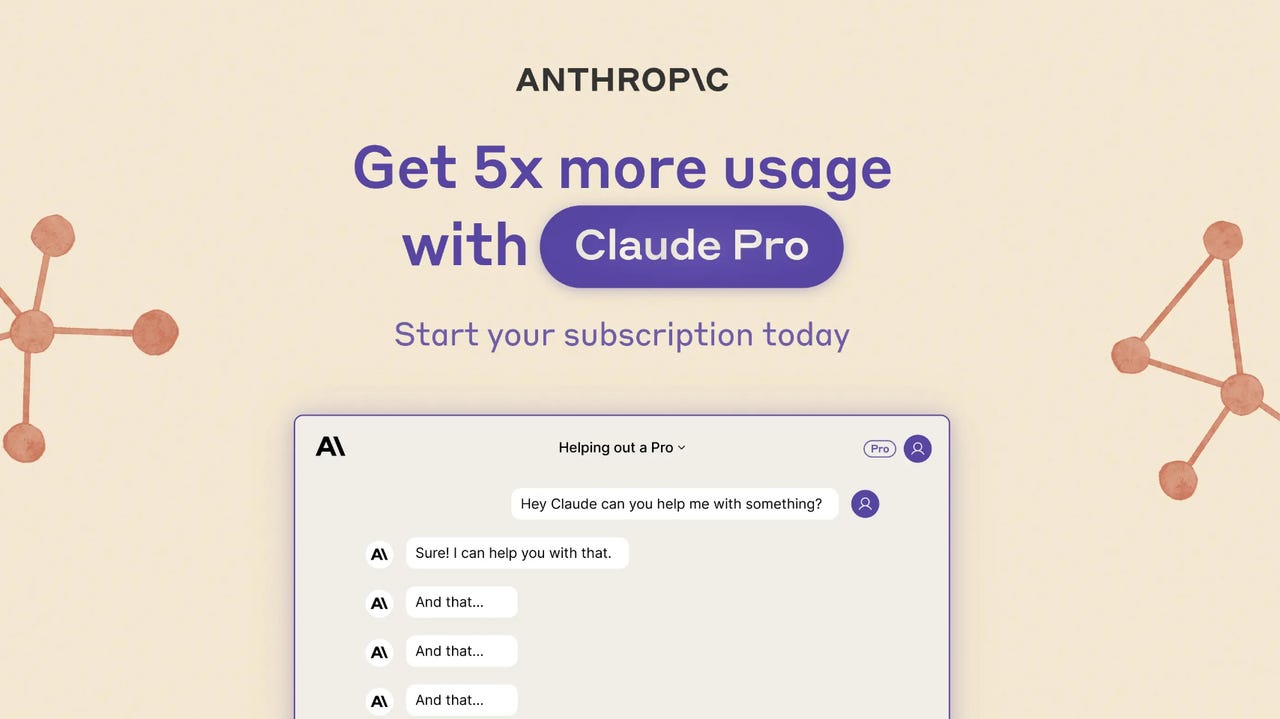
On Thursday, Anthropic released Claude Pro, a paid plan for the Claude.ai chat experience, available in the US and the UK that gives users up to five times more usage than its latest free model, Claude 2.

Also: 4 things Claude AI can do that ChatGPT can't

Along with more usage, Claude Pro will offer users longer conversations, more messaging, priority access to Claude.ai during high-traffic periods, and early access to new features while still leveraging Claude 2's advanced features.

Claude Pro will still have usage limits depending on the length of the message, including the length of files attached and the length of the conversation. Users will get a warning before they have ten messages remaining, and the limit resets every eight hours, according to Anthropic.

Also: How to use Claude AI (and how it's different from ChatGPT)

The free version will still be accessible via Claude.ai; it will just have usage and conversation limits, as well as waits during high usage periods.

Anthropic explains that it needs to have limits in place because Claude 2 requires the use of powerful computers to run, and the limits allow Claude to let new users try out its capabilities for free while also allowing power users to integrate it into their everyday workflow.

Also: Meet generative AI's 'super users': 70% of Gen Z use GenAI

Claude Pro's subscription cost is $20 per month, matching the cost of ChatGPT's subscription plan, ChatGPT Plus.

The subscription is available now, and all users must do to subscribe is log into their Claude.ai account, click on their profile in the top right, and then click on the "Upgrade to Pro" option.

Artificial Intelligence