Enfabrica, which builds networking hardware to drive AI workloads, raises $125M

Enfabrica, which builds networking hardware to drive AI workloads, raises $125M Kyle Wiggers 7 hours
Enfabrica, a company building networking chips designed to handle AI and machine learning workloads, today announced that it raised $125 million in a Series B funding round that values the company at “five times” its Series A post-money valuation, according to co-founder and CEO Rochan Sankar.

Led by Atreides Management with participation from Sutter Hill Ventures, Nvidia, IAG Capital Partners, Liberty Global Ventures, Valor Equity Partners, Infinitum Partners and Alumni Ventures, the new tranche brings Enfabrica’s total raised to $148 million. Sankar says that it’ll be put toward supporting Enfabric’s R&D and operations as well as expanding its engineering, sales and marketing teams.

“It’s notable that Enfabrica raised a round of this magnitude in a highly challenging funding environment for chip startups — and venture-funded deeptech in general — and, in doing so, has set itself apart from many of its chip startup peers in the industry,” Sankar said. “As generative AI and large language models continue to drive the largest infrastructure push in cloud computing across a multitude of industries, solutions like Enfabrica’s have the potential to address a very high demand for networking technologies.”

Enfabrica might’ve emerged from stealth in 2023, but it began its journey in 2020. Sankar, formerly the director of engineering at Broadcom, teamed up with Shrijeet Mukherjee, who previously headed up networking platforms and architecture at Google, to build a startup — Enfabrica — to meet what they observed as growth in the AI industry’s appetite for “parallel, accelerated and heterogeneous” infrastructure — in other words, GPUs.

“We reasoned that networking silicon and systems needed to follow a similar paradigm shift to enable this kind of compute infrastructure at massive scale,” Sankar said. “The biggest challenge posed by the current AI revolution is the scaling of AI infrastructure – both in terms of cost of compute and sustainability of compute.”

With Sankar as CEO and Mukherjee as chief development officer, along with a few founding engineers hailing from companies like Cisco, Meta and Intel, Enfabrica began developing an architecture for networking chips that could deliver on the I/O and “memory movement” requirements of parallel workloads, including AI.

Sankar asserts that conventional networking chips, such as switches, struggle to keep up with the data movement needs of modern AI workloads. Some of the AI models being trained today, like Meta’s Llama 2 and GPT-4, ingest massive data sets during the training process — and network switches can end up being a bottleneck, Sankar says.

“A significant portion of the scaling problem and bottleneck for the AI industry lies in the I/O subsystems, memory movement and networking attached to GPU compute,” he said. “There is a massive need to bridge the growing AI workload demand to the overall cost, efficiency, sustainability and ease of scaling the compute clusters on which they run.”

In its quest to develop superior networking hardware, Enfabrica focused on parallelizability.

Enfabrica’s hardware — which it calls the Accelerated Compute Fabric Switch, or ACF-S for short — can deliver up to “multi-terabit-per-second” data movement between GPUs, CPUs and AI accelerator chips in addition to memory and networking devices. Employing “standards-based” interfaces, the hardware can scale to tens of thousands of nodes and cut GPU compute for a large language model (along the lines of Llama 2) by around 50 percent for at the same performance point, Enfabric claims.

“Enfabrica’s ACF-S devices complement GPUs, CPUs and accelerators by providing efficient, high-performance networking, I/O and memory attached within a data center server rack,” Sankar explained. “To that end, the ACF-S is a converged solution that eliminates the need for disparate, traditional server I/O and networking chips such as rack-level networking switches, server network interface controllers and PCIe switches.”

Enfabrica ACF-S

A rendering of Enfabrica’s ACF-S networking hardware.

Sankar also made the case that ACF-S devices can benefit companies handling inferencing — that is, running trained AI models — by allowing them to use the fewest possible number of GPUs, CPUs and other AI accelerators. That’s because — according to Sankar — ACF-S can make more efficient use of existing hardware by moving vast amounts of data very quickly.

“The ACF-S is agnostic to the type and brand of AI processor used for AI computation, as well as to the exact models deployed — allowing for AI infrastructure to be built across many different use cases and to support multiple processor vendors without proprietary lock-in,” he added.

Enfabrica might be well-funded. But it isn’t the only networking chip startup chasing after the AI trend, it’s worth noting.

This summer, Cisco announced a range of hardware — the Silicon One G200 and G202 — to support AI networking workloads. For their parts, both Broadcom and Marvell — incumbents in the enterprise networking space — offer switches that can deliver up to 51.2 terabits per second of bandwidth; Broadcom recently launched the Jericho3-AI high-performance fabric, which can connect to up to 32,000 GPUs.

Sankar wasn’t willing to talk about Enfabrica’s customers, as it’s relatively early days — part of the latest funding tranche will support Enfabrica’s production and go-to-market efforts, he says. Still, Sankar asserts that Enfabrica is sitting in a position of strength given the attention on — and enormous investments being made in — AI infrastructure.

According to the Dell’Oro Group, AI infrastructure investments will raise data center capital expenditures to over $500 billion by 2027. Investment in AI-tailored hardware broadly speaking, meanwhile, is expected to see a compound annual growth rate of 20.5% over the next five years, according to IDC.

“The current cost and power footprint of AI compute, whether on-prem on in the cloud, is — or if not, should be — a top priority for every CIO, C-Suite exec, and IT organization who deploys AI services,” he said. “Despite the economic headwinds that have impaired the tech startup world since late 2022, Enfabrica has advanced its funding, product progress and market potential by virtue of a substantially innovative and disruptive technology to existing networking and server I/O chip solutions [and] the magnitude of the market opportunity and technology paradigm shift that generative AI and accelerated computing has given rise to over the past 18 months.”

Enfabrica, based in Mountain View, has just over 100 employees across North America, Europe and India.

Part 2: Top AI Leaders Missed in TIME’s 100 AI 2023 List

For the first time in this century, TIME magazine released a list dedicated to the most influential 100 personalities in AI. Yet, amidst the grand spectacle, some important individuals in AI found themselves absent from this illustrious list.

In continuation of the Part 1, we published earlier, here’s the part 2 of all the polymaths who couldn’t make it to the TIME’s list:

Erik Brynjolfsson

Erik Brynjolfsson, an economist and visionary scholar, has been a guiding star in digital economics. He has been a driving force in the study of the digital economy, emphasizing the profound transformation brought about by technological advancements. While the rise of AI sparks concerns about job displacement, Brynjolfsson offers a more pragmatic perspective.

Everybody supersmart from doctors, to CEOs he has met, the first question they ponder upon is how can generative AI replace the work humans are doing?

In an NYT piece, Brynjolfsson encourages us to shift our gaze, he further said. “The other thing that I wish people would do more of is think about what new things could be done now that were never done before. Obviously that’s a much harder question.” It is also, he added, “where most of the value is.”

Rodney Brooks

Then there’s Rodney Brooks, a seasoned technologist who knows the difference between real progress and baseless hype as the majority of his predictions have been spot-on.

His expertise in robotics and AI is unparalleled, having co-founded IRobot and contributed significantly to MIT’s computer and AI labs. Brooks, in his annual predictions, reminds us to temper our expectations, believing that the integration of robots into our lives will be a gradual, symbiotic process.

In his fifth annual scorecard in 2023. He confessed to having allowed hype to make him too optimistic about some developments.“My current belief is that things will go, overall, even slower than I thought five years ago,” he wrote.

Brooks expects “robots that will roam our homes and workplaces … to emerge gradually and symbiotically with our society” even as “a wide range of advanced sensory devices and prosthetics” emerge to enhance and augment our own bodies: “As our machines become more like us, we will become more like them. And I’m an optimist. I believe we will all get along.”

Yejin Choi

Despite AI breakthroughs in previously human-dominated language and visual art — our gravest concerns should probably be tempered, believes Yejin Choi.

The computer scientist, who is also a 2022 recipient of the MacArthur “genius” grant, has been doing groundbreaking research on developing common sense and ethical reasoning in AI.

In an interview with the NYT earlier this year, she elaborated how some people naïvely think if we teach AI “Don’t kill people while maximising paper-clip production,” that will take care of it. But the machine might then kill all the plants. That’s why it also needs common sense. it’s common sense not to go with extreme, degenerative solutions, she explained.

She reminds us that simply instructing AI not to commit certain actions is insufficient; AI must also possess the wisdom to make sensible decisions and consider the broader implications of its actions.

Jeff Dean

Jeff Dean has long headed the AI department at Google Brain with an ethos of a university, encouraging researchers to publish academic papers actively. Impressively, they officially pushed out nearly 500 studies since 2019, according to Google Research’s website.

On the one hand, there are concerns around AI development and its associated risks. And on the other, this is a natural progress in technology: Innovation happens quickly. It’s not an either/or. It’s a both/and. To Dean’s point, society can mitigate risk and be bold. Time and again, Dean has reminded us that the rapid development of AI is both exhilarating and worrisome, emphasising the need to balance innovation and risk mitigation.

Sergey Levine

The associate professor of electrical engineering and computer sciences and the leader of the Robotic AI & Learning (RAIL) Lab at UC Berkeley. The advocate of reinforcement learning who also holds an appointment with the Robotics at Google program, along with fellow researchers Julian Ibarz, Jie Tan, Chelsea Finn, Mrinal Kalakrishnan, and Peter Pastor, recently published a review titled How to Train Your Robot with Deep Reinforcement Learning — Lessons We’ve Learned.

In the latest, second of four Distinguished Lectures on the Status and Future of AI he has delivered, he extensively spoke about examining algorithmic advances that can help ML systems retain both discernment and flexibility.

He emphasised the relationship between data and optimization in problem-solving. Without adequate data, researchers are unable to address challenges innovatively. Conversely, optimization strategies struggle to find real-world applications without the necessary data. By combining both elements effectively, we can inch closer to creating a space-exploring robot capable of devising solutions to unexpected problems, Levine believes.

Pieter Abbeel

Peter Abbeel has had a long and upward career in robotics from learning to significantly improve robot manipulation to receiving the 2021 ACM Prize in Computing for pioneering work in robot learning.

Abbeel has journeyed from teaching robots to learn from humans to pioneering learning-through-trial-and-error techniques. His groundbreaking work forms the bedrock of the next generation of robotics, showcasing the potential of AI to evolve and adapt.

The post Part 2: Top AI Leaders Missed in TIME’s 100 AI 2023 List appeared first on Analytics India Magazine.

Statistics in Data Science: Theory and Overview

Statistics in Data Science: Theory and Overview
Illustration by Author | Source: Flaticon.

Are you interested in mastering statistics for standing out in a data science interview? If it’s yes, you shouldn’t do it only for the interview. Understanding Statistics can help you in getting deeper and more fine grained insights from your data.

In this article, I am going to show the most crucial statistics concepts that need to be known for getting better at solving data science problems.

Introduction to Statistics

When you think about Statistics, what is your first thought? You may think of information expressed numerically, such as frequencies, percentages and average. Just looking at the TV news and newspaper, you have seen the inflation data in the world, the number of employed and unemployed people in your country, the data about mortal incidents in the street and the percentages of votes for each political party from a survey. All these examples are statistics.

The production of these statistics is the most evident application of a discipline, called Statistics. Statistics is a science concerned with developing and studying methods for collecting, interpreting and presenting empirical data. Moreover, you can divide the field of Statistics into two different sectors: Descriptive Statistics and Inferential Statistics.

The yearly census, the frequency distributions, the graphs and the numerical summaries are part of the Descriptive Statistics. For Inferential Statistics, we refer to the set of methods that allow to generalise results based on a part of the population, called Sample.

In data science projects, we are most of the time dealing with samples. So, the results we obtain with machine learning models are approximated. A model may work well on that particular sample, but it doesn’t mean that it’s going to have good performances on a new sample. Everything depends on our training sample, that needs to be representative, to generalise well the characteristics of the population.

EDA with graphs and numerical summaries

In the data science project, exploratory data analysis is the most important step, which enables us to perform initial investigations on the data with the help of summary statistics and graphical representations. It also allows us to discover patterns, spot anomalies and check assumptions. Moreover, it helps to find errors that you may find in data.

In EDA, the centre of the attention is on the variables, that can be of two types:

  • numerical if the variable is measured on a numerical scale. It can be further categorised into discrete and continuous. It’s discrete when there are distinct quantities. Examples of discrete variables are the degree grade and the numbers of people in a family. When we are dealing with a continuous variable, the set of possible values is within a finite or infinite interval, such as the height, the weight and the age.
  • categorical if the variable is typically constituted by two or more categories, like the occupation status (employed, unemployed and people searching for a job) and the type of the job. As the numerical variables, the categorical variables can be split into two different types: ordinal and nominal. A variable is ordinal when there is a natural ordering of the categories. An example can be the salary with low, medium and high levels. When the categorical variable doesn’t follow any order, it’s nominal. A simple example of a nominal variable is the gender with levels Female and Male.

EDA of Univariate Data

Statistics in Data Science: Theory and Overview
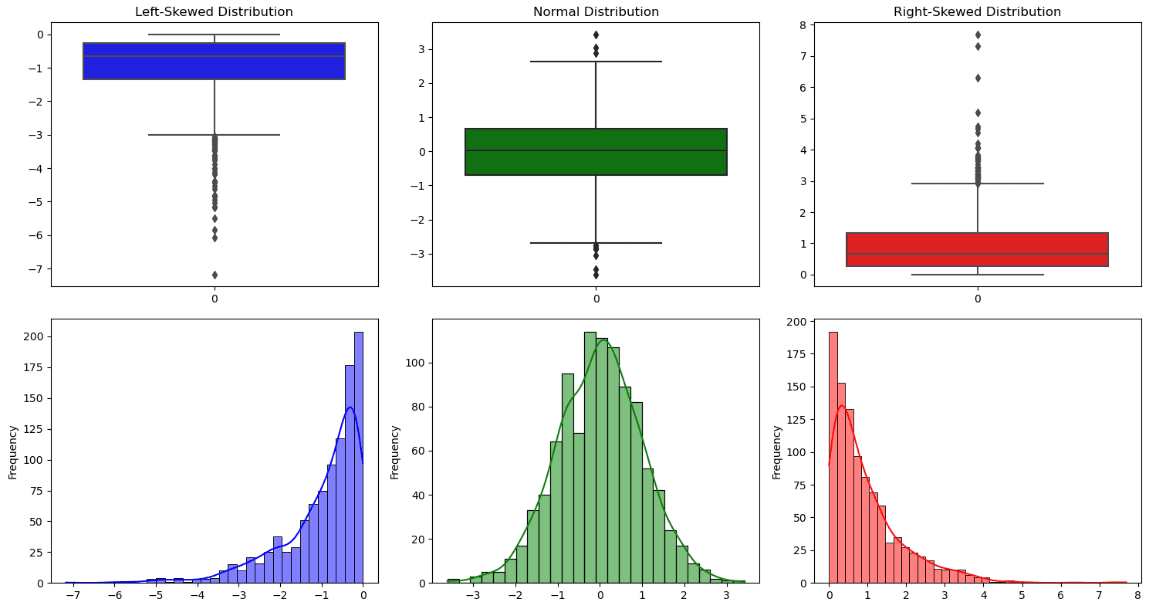
Distribution Shape. Illustration by Author.

To understand the numerical features, we typically use df.describe() to have an overview of the statistics for each variable. The output contains the count, the average, the standard deviation, the minimum, the maximum, the median, the first and the third quantile.

All this information can also be seen in a graphical representation, called boxplot. The line across the box is the median, while the lower hinge and upper hinge correspond respectively to the first and the third quartile. In addition to the information provided by the box, there are two lines, also called whiskers, that represent the two tails of the distribution. All the data points outside the boundary of the whiskers are outliers

From this plot, it can also be possible to observe if the distribution is symmetric or asymmetric:

  • A distribution is symmetric when there is a bell shape, the median coincides approximately to the mean and the whiskers have the same length.
  • A distribution is skewed to the right (positive skewed) if the median is near the third quartile.
  • A distribution is skewed to the left (negative skewed) if the median is near the first quartile.

Other important aspects of the distribution can be visualised from a histogram that counts how many data points fall in each interval. It’s possible to notice four types of shapes:

  • one peak/mode
  • two peaks/modes
  • three or more peaks/modes
  • uniform with no evident mode

When the variables are categorical, the best way is to observe the frequency table for each factor of the feature. For a more intuitive visualisation, we can employ the bar chart, with vertical or horizontal bars depending on the variable.

EDA of Bivariate Data

Statistics in Data Science: Theory and Overview
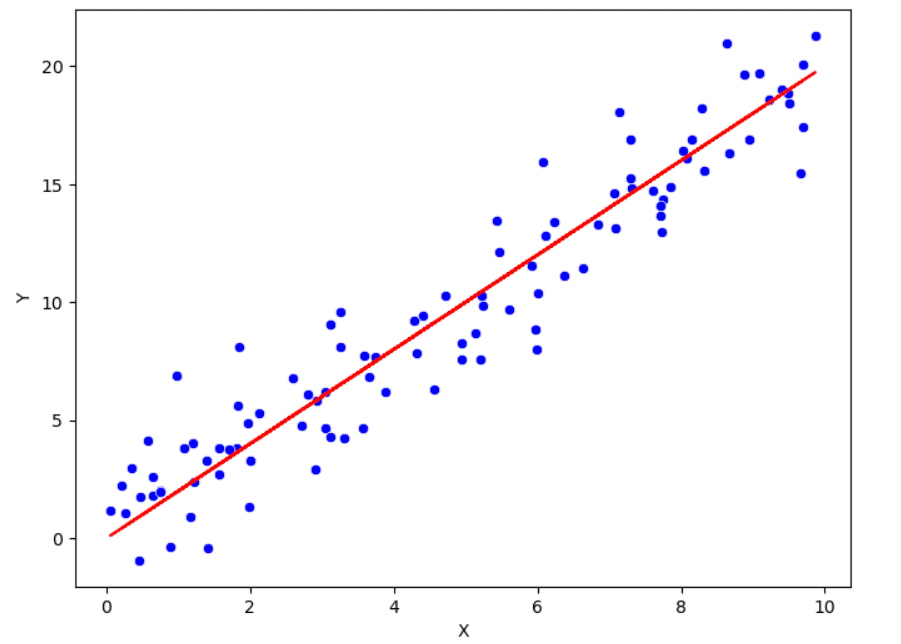
Scatterplot that shows the positive linear relationship between x and y. Illustration by Author.

Previously we have listed the approaches to understand the univariate distribution. Now, it’s time to study the relationships between the variables. For this purpose, it’s common to calculate Pearson correlation, which is a measure of the linear relationship between two variables. The range of this correlation coefficient is within -1 and 1. The more the value of the correlation is near to one of these two extremes, the more the relationship is strong. If it’s near to 0, there is a weak relationship between the two variables.

In addition to the correlation, there is the scatter plot to visualise the relationship between two variables. In this graphical representation, each point corresponds to a specific observation. It’s often not very informative when there is a lot of variability within the data. To capture more information from the pair of variables is by adding smoothed lines and transforming the data.

Probability Distributions

The knowledge of Probability distributions can make the difference when working with data.

These are the most used probability distributions in data science:

  • Normal distribution
  • Chi-squared distribution
  • Uniform distribution
  • Poisson distribution
  • Exponential distribution

Normal distribution

Statistics in Data Science: Theory and Overview
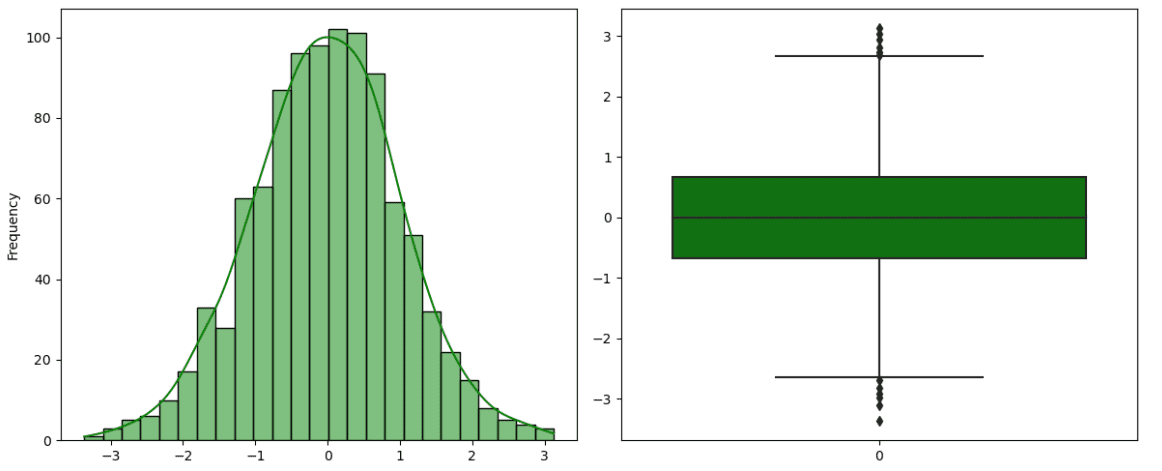
Example of Normal distribution. Illustration by Author.

The normal distribution, also known as Gaussian Distribution, is the most popular distribution in statistics. It’s characterised by a bell curve for its particular shape, tall in the middle and tails towards the end. It’s symmetric and unimodal with a peak. Moreover, there are two parameters that have a crucial role in normal distribution: the mean and the standard deviation. The mean coincides with the peak, while the width of the curve is represented by the standard deviation. There is a particular type of Normal distribution, called Standard Normal Distribution, with mean equal to 0 and variance equal to 1. It’s obtained by subtracting the mean from the original value and, then, dividing by the standard deviation.

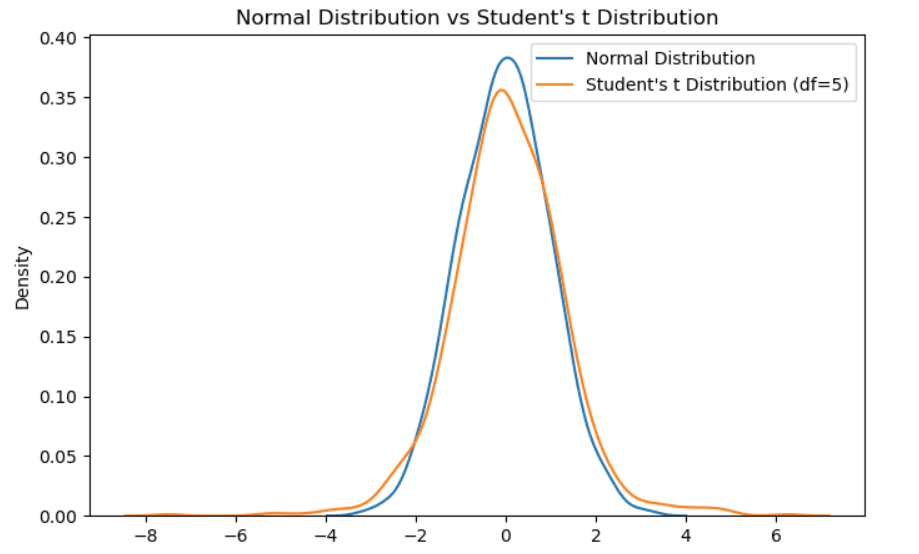
Student’s t Distribution

Statistics in Data Science: Theory and Overview
Example of Student’s t distribution. Illustration by Author.

It is also called t-distribution with v degrees of freedom. Like the standard normal distribution, it’s unimodal and symmetric around zero. It slightly differs from the gaussian distribution because it has less mass in the middle and there are more masses in the tails. It’s considered when we have a small sample size. The more the sample size increases, the more the t-distribution will converge to a normal distribution.

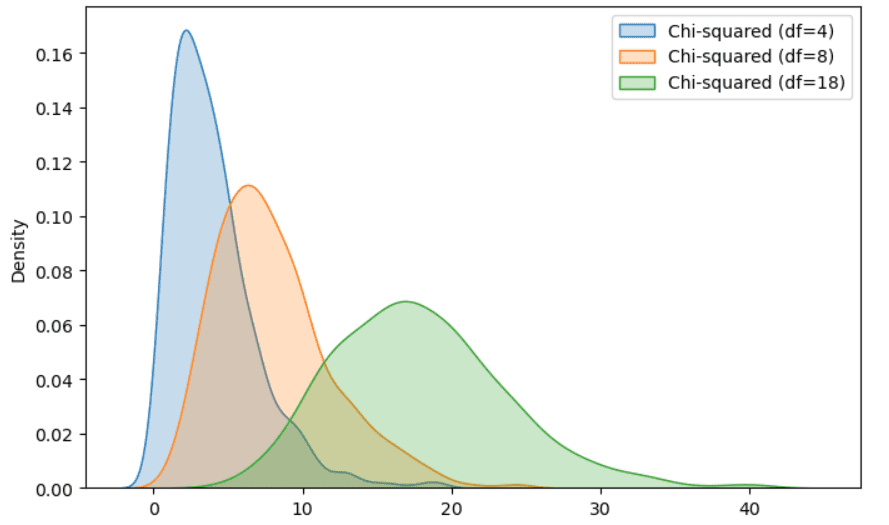
Chi-squared distribution

Statistics in Data Science: Theory and Overview
Example of Chi-squared distribution. Illustration by Author.

It is a special case of Gamma distribution, very known for its applications in hypothesis testing and confidence intervals. If we have a set of normally distributed and independent random variables, we compute the square value for each random variable and we sum every squared value, the final random value follows a chi-squared distribution.

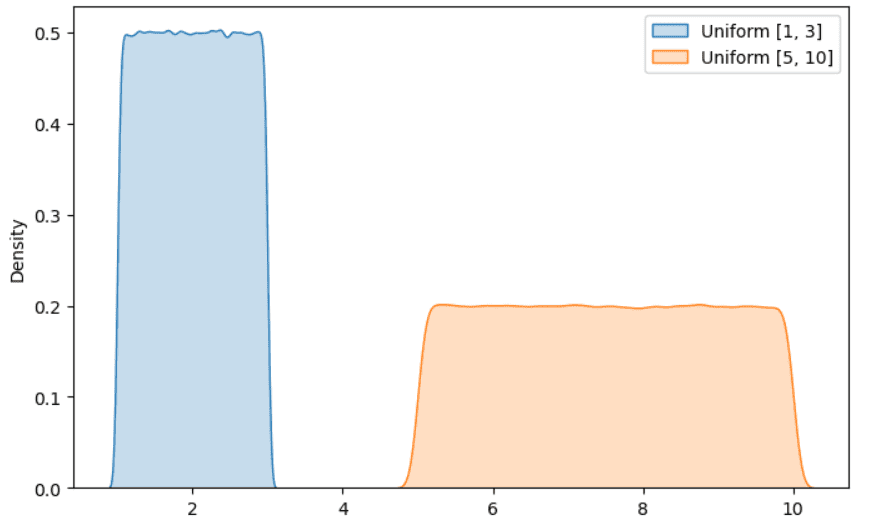
Uniform distribution

Statistics in Data Science: Theory and Overview
Example of Uniform distribution. Illustration by Author.

It is another popular distribution that you have surely met when working on a data science project. The idea is that all the outcomes have an equal probability of occurring. A popular example consists in rolling a six-faced die. As you may know, each face of the die has an equal probability of occuring, then the outcome follows an uniform distribution.

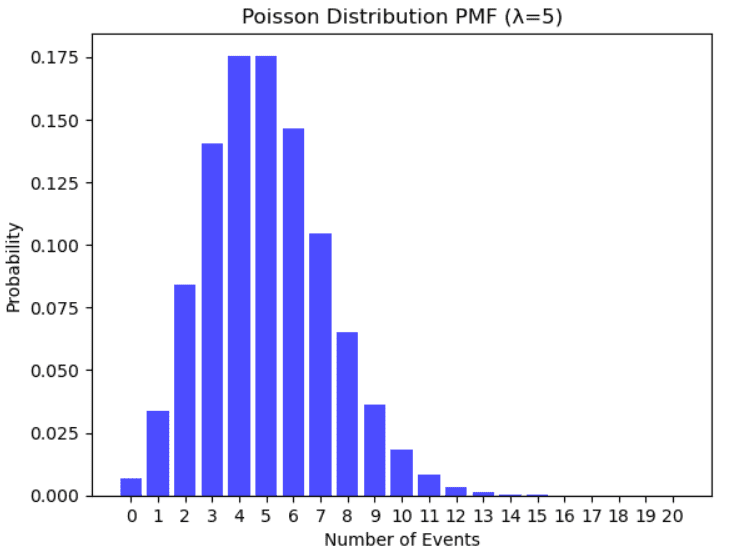
Poisson distribution

Statistics in Data Science: Theory and Overview
Example of Poisson distribution. Illustration by Author.

It is used to model the number of events that occur randomly many times within a specific time interval. Examples that follow a Poisson distribution are the number of people in a community that are older than 100 years, the number of failures per day of a system, the number of phone calls arriving at the helpline in a specific time frame.

Exponential distribution

Statistics in Data Science: Theory and Overview
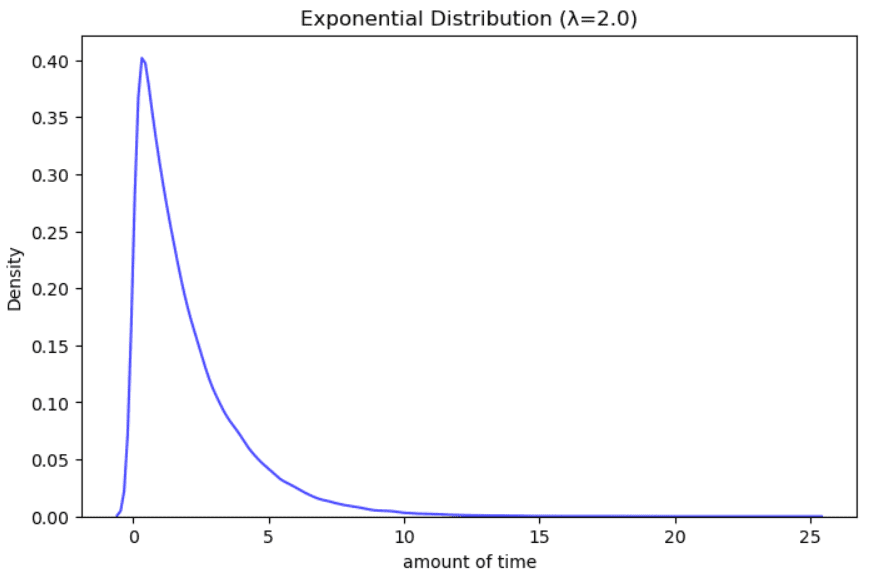
Example of Exponential distribution. Illustration by Author.

It is used to model the amount of time between events that occur randomly many times within a specific time interval. Examples can be the time on hold at a helpline, the time until the next earthquake, the remaining years of life for a cancer patient.

Hypothesis Testing

The hypothesis testing is a statistical method that allows to formulate and evaluate an hypothesis about the population based on sample data. So, it is a form of inferential statistics. This process starts with a hypothesis of the population parameters, also called null hypothesis, that needs to be tested, while the alternative hypothesis (H1) represents the opposite statement. If the data is very different from the assumptions we had, then the null hypothesis (H0) is rejected and the outcome is said to be “statistically significant”.

Once the two hypothesis are specified, there are other steps to follow:

  • Set up the significance level, which is a criteria used for rejecting the null hypothesis. The typical values are 0.05 and 0.01. This parameter ? determines how strong the empirical evidence is against the null hypothesis until this latter is rejected.
  • Calculate the statistic, which is the numerical quantity computed from the sample. It helps us to determine a rule of decision to limit as much as possible the risk of error.
  • Compute the p-value, which is the probability of obtaining a statistic that is different from the parameter specified in the null hypothesis. If it’s less or equal to the significance level (ex: 0.05), we reject the null hypothesis. In case the p-value is bigger than the significance level, we can’t reject the null hypothesis.

There is a huge variety of hypothesis tests. Let’s suppose that we are working on a data science project and we want to use the linear regression model, which is known for having strong assumptions of normality, independence and linearity. Before applying the statistical model, we prefer to check the normality of a feature that regards the weight of adult women with diabete. The Shapiro-Wilk test can come to our rescue. There is also a Python library, called Scipy, with the implementation of this test, in which the null hypothesis is that the variable follows a normal distribution. We reject the hypothesis if the p-value is smaller or equal to the significance level (ex: 0.05). We can accept the null hypothesis, which means that the variable has a normal distribution, if the p-value is greater than the significance level.

Final Thoughts

I hope you have found this introduction useful. I think that mastering statistics is possible if theory is followed by practical examples. There are surely other important statistics concepts I didn’t cover here, but I preferred to focus on concepts that I have found useful during my experience as a data scientist. Do you know other statistical methods that helped you with your work? Drop them in the comments if you have insightful suggestions.

Resources:

  • HyperStat Online Statistics Textbook
  • Measures of Positions
  • The most used probability distributions in data science

Eugenia Anello is currently a research fellow at the Department of Information Engineering of the University of Padova, Italy. Her research project is focused on Continual Learning combined with Anomaly Detection.

More On This Topic

  • Data Visualization: Theory and Techniques
  • Essential Math for Data Science: Information Theory
  • What is Graph Theory, and Why Should You Care?
  • A First Principles Theory of Generalization
  • From Theory to Practice: Building a k-Nearest Neighbors Classifier
  • How to Use Graph Theory to Scout Soccer

MongoDB Launches Academia Program in India to Upskill 500k+ Students

MongoDB has launched an Academia Program in India to upskill students to use its multi-cloud developer data platform called MongoDB Atlas. This program aims to train more than 5,00,000 students and 1000 plus educators by partnering with more than 800 educational institutions across the country.

In India, 6 out of 10 IT engineering graduates do not possess the necessary skills required to enter high demand tech roles, according to a report by National Association of Software and Service Companies. MongoDB’s program wants to close this gap and equip students with its Altas platform which enables developers to build modern applications.

“The biggest challenge is finding and retaining the right developer talent”, said Sachin Chawla, Area Vice President, India at MongoDB in a press release. The launch of this program will help solve these challenges and support the next generation of Indian developers and business as they capitalize on this massive opportunity, he said.

The New York-based software giant will partner with ICT Academy, a non-profit initiative of the Government of Tamil Nadu and the Government of India which helps to close the technology gap in India. The program will provide access MongoDB Atlas credits and certification courses free of cost–helps validates skills to employers

It will also provide curriculum resources and training to educators and students to build, manage and deploy modern applications critical for business.

ICT Academy and MongoDB will conduct joint activities like academia summits, learnathons and tech bootcamps. Indians currently pursuing PhD, as part of this program will also also get access to MongoDB PhD fellowship, which enables them to contribute in the field of computer science.

Last year, the software firm launched a revamped version of MongoDB University, which provides free, on-demand access to courses to learn high demand software management and data management skills. This has helped thousands of Indians to learn and develop their DB skills.

The post MongoDB Launches Academia Program in India to Upskill 500k+ Students appeared first on Analytics India Magazine.

Quantum Computing: A Game-Changer in Healthcare and Life Sciences

Quantum Computing: A Game-Changer in Healthcare and Life Sciences

In the exhilarating quest to revolutionise drug discovery, the world of quantum computing emerges as a beacon of hope, promising groundbreaking advancements that could transform the pharmaceutical industry. With the ability to process vast amounts of data in parallel, quantum computing opens up new horizons for simulating intricate biological systems, optimizing drug candidates, and predicting molecular interactions with unparalleled precision.

Prateek Jain, Lead Researcher and Architect Quantum Computingat Fractal spoke with Analytics India Magazine to offer his expert insights on the latest advancements in quantum computing, the synergy between artificial intelligence and quantum algorithms, and the transformative impact this fusion could have on drug discovery, ultimately bringing us one step closer to unlocking life-saving therapies in a fraction of the time previously imagined.

How is Quantum Computing Transforming Drug Discovery and the healthcare industry?

Firstly, quantum computing can significantly accelerate the drug discovery process by simulating large molecules and compounds faster than classical computers, leading to quicker development of new drugs. Secondly, it improves drug design accuracy by predicting interactions between drugs and their targets more effectively, resulting in more efficient and safer drugs. Moreover, quantum computers can identify new drug targets that are currently unknown, offering hope for treating previously untreatable diseases through generative quantum AI methods.

Additionally, quantum computing optimises drug molecule design and predicts clinical trial outcomes, increasing the likelihood of successful drug development. Furthermore, it efficiently simulates molecular interactions at a quantum level, providing a deeper understanding of complex biological molecules and their interactions with drugs. Lastly, quantum algorithms can analyse vast biological datasets, uncovering hidden patterns and relationships to identify new drug targets and disease biomarkers.

When it comes to optimising healthcare operations, streamlining appointment scheduling, inventory management, and resource allocation for increased efficiency can improve the healthcare industry. Notable research initiatives include using QML to diagnose Alzheimer’s disease at the University of Chicago, predict heart attack risk at the Massachusetts Institute of Technology, and optimize resource allocation in hospitals at the University of California, Berkeley. As QML technology advances, we can anticipate even more innovative applications in the healthcare domain.

Could you share your thoughts on the impact and role of quantum computing and quantum neural networks on personalized medicine, from analysing large genomic datasets to tailoring treatment plans for individual patients?

Personalized medicine is a revolutionary approach in the field of medicine, aiming to customize treatments based on an individual’s genetic makeup and unique characteristics. By utilizing quantum computers, researchers can analyze vast genomic datasets, identifying genetic mutations associated with diseases and creating personalized treatment plans. Quantum simulations enable doctors to predict treatment outcomes and potential side effects, leading to more effective and safer therapies. Furthermore, Quantum Generative AI empowers the development of drugs and therapies specifically tailored to each patient’s genetic profile, unlocking the full potential of personalized medicine.

Quantum Neural Networks (QNNs) are a type of quantum algorithm that can be used to analyze genomic data, gene expression profiles, and biomarker discovery. QNNs are able to take advantage of the quantum mechanical properties of nature to perform these tasks much faster and more accurately than classical computers, for example.

  • Genomic data analysis: QNNs can be used to analyze large datasets of genomic data much faster and more accurately than classical computers. This can lead to the discovery of new genes, mutations, and other genetic markers that are associated with diseases.
  • Gene expression profiling: QNNs can be used to analyze gene expression profiles much faster and more accurately than classical computers. This can lead to the discovery of new genes that are expressed in different ways in different diseases.
  • Biomarker discovery: QNNs can be used to discover new biomarkers that can be used to diagnose and track diseases. This can lead to the development of new diagnostic tests and treatments for diseases.

How are quantum simulations aiding researchers in understanding complex biological processes, such as protein folding and cellular interactions?

Quantum simulations are aiding researchers in understanding complex biological processes by providing a more accurate and complete picture of how these processes work. They are able to take advantage of the probabilistic nature of quantum mechanics to simulate these systems more accurately. This has led to a number of breakthroughs in the field of quantum biology, for example:

At Fractal we conducted & published in IEEE similar research wherein even the smallest of the Quantum processor shows comparable results to SOTA Alphafold for protein fold prediction.

Quantum simulations can be used to identify new drug targets by simulating the interactions between drugs and proteins. This can lead to the discovery of new potential treatments for diseases such as cancer and Alzheimer’s. Our team at Fractal created a Hybrid Quantum Generative AI model to produce novel drug like molecules and it performs better than the classical model

Quantum simulations can be used to simulate the interactions between cells and their environment. This has led to a better understanding of how cells function and how they interact with each other.

Could you delve into the realm of quantum cryptography and its potential to safeguard sensitive patient information from cyber threats?

One of the key features of quantum cryptography is that it is immune to eavesdropping. This is because any attempt to eavesdrop on a quantum-encrypted communication will inevitably be detected, alerting the communicating parties to the presence of an intruder. This is due to the fact that quantum mechanics prevents the measurement of certain properties of a quantum particle, such as its position and momentum, without destroying the particle’s state.

As a result, quantum cryptography offers a much higher level of security than traditional encryption methods. This makes it an ideal solution for safeguarding sensitive information, such as patient medical records. There are a number of different quantum cryptography protocols that have been developed. One of the most well-known protocols is quantum key distribution (QKD).

In QKD, two parties (usually referred to as Alice and Bob) use a series of entangled qubits to create a shared secret key. This key can then be used to encrypt and decrypt messages, ensuring that only the intended recipient can read the message. QKD has been demonstrated over a variety of distances, including over long-distance fiber optic networks. This makes it a viable solution for safeguarding sensitive information that is transmitted over the internet.

Could you help explore the development of quantum-enhanced sensors for medical imaging applications, potentially revolutionizing MRI, PET scans, and other diagnostic techniques?

Quantum-enhanced sensors for medical imaging applications have the potential to revolutionize MRI, PET scans, and other diagnostic techniques. For example, quantum sensors can be used to improve the resolution of MRI scans. This is because quantum sensors are more sensitive to magnetic fields than classical sensors. This could lead to the development of MRI scans that can see inside smaller structures, such as individual cells.

Furthermore, quantum sensors can be used to improve the accuracy of PET scans. This is because quantum sensors are more sensitive to the emission of positrons than classical sensors. This could lead to the development of PET scans that can detect smaller amounts of radioactive tracers, which would make them more sensitive to diseases. These sensors can also be used to improve the performance of other diagnostic techniques, such as ultrasound and optical imaging.

Challenges and Limitations: What’s Hindering the Widespread Adoption of Quantum Computing in Life Sciences and mainstream healthcare?

Quantum computing is still in its early stages of development, and there are a number of challenges and limitations that need to be addressed before it can be widely adopted in life sciences and mainstream healthcare.

  • The difficulty of building and operating quantum computers. Quantum computers are extremely complex devices, and they are difficult to build and operate. This is due to the fact that quantum mechanics is a very delicate science and is at sub atomic scale.
  • The lack of mature quantum algorithms. There are a number of quantum algorithms that have been developed, but many of them are not yet mature enough to be used in real-world applications. This is because quantum algorithms are often very complex, and they can be difficult to implement.
  • The lack of data. In order to train quantum algorithms, large amounts of data are needed. However, in life sciences and healthcare, there is often a lack of data that is suitable for quantum computing. This is because many of the data sets that are used in life sciences and healthcare are not structured in a way that is compatible with quantum computing.
  • Quantum decoherence: Quantum decoherence is the process by which quantum systems lose their quantum properties due to interaction with the environment. This is a major challenge for quantum computing, as it can lead to errors in the computation.
  • The scalability of quantum computers: Quantum computers are still very small, and it is not yet clear how to scale them up to the size that would be needed for practical applications.
  • The cost of quantum computers: Quantum computers are very expensive to build and operate. This is a major barrier to their widespread adoption.

What are your thoughts on the ethical considerations surrounding quantum computing applications in healthcare, including privacy, data ownership, and accessibility?

Quantum computing holds immense promise for revolutionising healthcare, but it also introduces ethical considerations that require careful attention. Key concerns include privacy, as quantum computers could potentially break current encryption standards, leading to unauthorised access to sensitive patient data. The ownership and use of vast patient data collected and analysed using quantum computing also raise questions about data ownership and ethical utilisation.

Another significant ethical concern is accessibility, as the current early-stage development of quantum computing may result in disparities in access to healthcare services. Public discussions are essential to fully comprehend the ethical implications of quantum computing in healthcare, ensuring its safe and responsible implementation.

Additionally, further ethical considerations include the potential for new forms of discrimination based on genetic traits, heightened security risks with the emergence of quantum-powered cyberattacks, and the environmental impact due to the significant energy consumption of quantum computers.

The post Quantum Computing: A Game-Changer in Healthcare and Life Sciences appeared first on Analytics India Magazine.

Apple Will Sell Made-in-India iPhone on Launch Day

In another groundbreaking announcement from India, Apple Inc. is set to release its latest iPhone 15 model, assembled in India, on the day of its global launch. This marks a significant shift from the company’s traditional strategy of primarily selling Chinese-manufactured devices worldwide.

Apple plans to make the India-built iPhone 15 available in India and select global markets on the day of its global sales debut, according to reports from Bloomberg. While the majority of iPhone 15 units will still originate from China, this move showcases India’s burgeoning manufacturing capabilities and underscores Apple’s efforts to diversify its production beyond China.

Production of the iPhone 15 commenced last month at Foxconn Technology Group’s factory in southern Tamil Nadu, India. However, potential logistical challenges may result in slight delays for the India-assembled devices.

Apple is scheduled to unveil the iPhone 15, alongside updated watches and AirPods, at a gala event at its headquarters in Cupertino, California. Typically, new products become available for purchase approximately 10 days after their unveiling.

Before the iPhone 14, only a small fraction of Apple’s global production occurred in India, with a substantial lag compared to Chinese production. However, last year saw a significant reduction in this delay, with India’s share of iPhone assembly reaching 7% by the end of March.

This shift can be attributed to Prime Minister Narendra Modi’s incentives to boost local manufacturing and Apple’s strategy to reduce its reliance on China amid trade tensions between Washington and Beijing.

The iPhone 15 is expected to be a major update, featuring camera system enhancements across the range and an improved 3-nanometer processor in the Pro models. This release is crucial for revitalizing Apple’s sales, as the company reported declining sales in key markets like the US, China, and Europe in recent quarters.

Furthermore, other Apple suppliers in India, including Pegatron Corp. and a Wistron Corp. factory soon to be acquired by the Tata Group, are likely to join in assembling the iPhone 15.

Apple, which recently opened its first retail stores in India, views the country as both a growing retail market and a vital production hub for its products. During the quarter ending in June, iPhone sales in India experienced double-digit growth, although specific figures were not disclosed by Apple.

The post Apple Will Sell Made-in-India iPhone on Launch Day appeared first on Analytics India Magazine.

Soon Everyone Will be a Gamer

Soon Everyone Will be a Gamer

Is the world a simulation? Possibly, yes, but probably not. The better question given the current technological trend in the world is – is the world running on NVIDIA GPUs? Makes one definitely wonder. So to get an answer, AIM asked this question to Jensen Huang, the chief of NVIDIA.

He closed in, confidently looked straight in the eyes and said, “a 100%.”

"People think Nvidia is overpriced"
"Should we tell them the universe is just a simulation running on Nvidia GPUs?" pic.twitter.com/hyHx7PSqkt

— Adam Singer (@AdamSinger) August 1, 2023

To put games into perspective, starting as a graphic accelerator company, NVIDIA decided to use that technology within games, and undoubtedly, it was a success, or probably even a revolution. Gaming is now the largest entertainment industry in the world, bypassing film and television combined.

According to Huang, there are more than 1 billion gamers in the world, but there are 8 billion people in the world. “Someday everybody’s going to be a gamer,” revealing about NVIDIA’s long time dream. Undoubtedly, the dream is getting realised sooner than later, and AI is definitely helping pave the way for it.

AI or not, metaverse is a game for sure

Huang says that AI has actually made gaming better, and gaming has actually made AI better. “We used AI to revolutionise computer graphics. Graphics enabled AI, and now AI is saving graphics.” He further explains how gaming is getting the spotlight again with companies training AI agents on games “and building something crazy out there.”

For example, Sony AI’s superhuman AI agent GT Sophy that learned to drive cars from scratch without human intervention, through the hyper-realistic game Grand Turismo 7.

Interestingly, even OpenAI, the company obsessed over achieving its AGI dream, actually is paving the way through investing in AI agents within games. Its latest acquisition of the 3D world creating company Global Illumination is definitely a sign that gaming indeed would be an essential part of trying AI in a simulation, and then deploying it into the world. And undoubtedly, NVIDIA has been proven right yet again.

One might be too quick to point out that the company is shifting its focus into the AI industry. But fulfilling the gaming dream is still what the company aims to do. The second quarter revenue of the company also hinted at the same dream. The revenue was up by 22% in gaming for the company, regardless of that AI was the biggest contributor for its revenue.

NVIDIA’s goal was to make video games more and more realistic. But now, it seems like reality is becoming more and more gamified, with everyone talking about AI, living in simulated worlds, and the eventual oncoming of the metaverse is going to make it even more gamified. Seems like NVIDIA just stumbled upon AI when it was actually headed for making gaming big all this while.

Not just agents, several game companies are already leveraging generative AI. And no, it’s not just to make AI generated assets and graphics, it’s characters within games. Elder Scrolls V: Skyrim announced in May, that it is going to integrate Inworld AI, allowing players to converse with NPCs, harnessing the power of LLMs.

GPU built reality, within games

At the moment, all of the big-tech that are trying to create AI worlds are actually just relying on NVIDIA to be the backbone of it all. All the AI companies have been gossiping about how many GPUs each company has, and some are even ready to trade them for building their AI models. But interestingly, NVIDIA is comfortably confident about its position in the market, as Huang says, “there’s more, come get them. Everybody should win.”

The more the research goes into AI, the more companies would have to run their AI models in a game world before deploying them into the real world. NVIDIA knew this all this while. When Omniverse was launched, Huang said that it is a way to “connect the 3D world with the shared virtual universe.”

It seems like, soon everyone will have their avatars in the virtual world and will be playing role-playing games (RPGs), which is the actual definition of a gamer. Indeed, as Huang said, everyone would win in the next game version of themselves. The next simulated reality would actually be running on NVIDIA GPUs.

This in the end, would make everyone a gamer, running their lives on GPUs. If Huang is correct, there would be 8 billion of us playing against each other on an online server. Not to be scared, but Huang says that his next big reinvention would be to make “AI meet the physical world”, and yes, it’s already here.

The post Soon Everyone Will be a Gamer appeared first on Analytics India Magazine.

How Many GPUs is India Buying from NVIDIA? 

Five years ago, Jensen Huang personally hand delivered the first NVIDIA DGX AI supercomputer to a startup, none other than, OpenAI. Now, for Indian companies – let’s say Reliance and Tata – to reach OpenAI-level of success, how much time will India take?

“OpenAI currently has more than 10,000 GPUs – i.e. close to 40 AI supercomputers,” said Huang Jensen, in an exclusive interaction with AIM, explaining that each AI supercomputer rack consists of 256 GPUs (as shown below).

Huang swiftly did the math and estimated that India will get about 10s of thousands of GPUs in order to build infrastructure – i.e. about 1,00,000 GPUs and below, or less than 400 AI supercomputers.

Huang is very optimistic about India AI’s future, where he said if US companies, like OpenAI, required months to train GPT models, India would achieve similar results in a matter of weeks.

“We are going to bring out the fastest computers in the world. These computers are not even in production [so far]. India will be one of the first countries in the world [to get them],” he said, confirming that these would be faster than anything the world has ever seen and super cost-effective too. He said that by the end of next year, India will have AI supercomputers that are an order of magnitude faster (i.e. 50 to 100 times faster), inevitably lowering the cost of training foundational models.

To begin with, Reliance and Tata will have access to DGX Cloud, a service that allows any business to use its own AI supercomputer through a regular web browser, removing the complexity of acquiring, deploying and managing on-premises infrastructure. “You can build a large language model, like a ChatGPT for $10-$20 million,” said Jensen, on how they have made it affordable for anyone and everyone to build foundational models leveraging existing cloud infrastructure.

He also believes that NVIDIA’s most advanced NVIDIA® GH200 Grace Hopper Superchip and NVIDIA DGX™ Cloud, an AI supercomputing service in the cloud, would accelerate this process.

Meanwhile, OpenAI opted for Microsoft’s Azure to train its models including GPT-3 and GPT-3.5. Interestingly, It was the first public cloud to incorporate NVIDIA’s advanced AI stack, adding tens of thousands of NVIDIA A100 and H100 GPUs. Only two years ago, Microsoft developed a supercomputer for OpenAI. It was a single system with over 285,000 CPU cores, 10,000 GPUs and 400 gigabits per second of network connectivity for each GPU server.

Competitive Edge

“India has lots of data,” said Jensen, touching upon the diversity of languages and dialects. He said – “There’s no reason for India to export data to western companies.” and he thinks India has the capability to make an in house LLMs and foundational models.

“You have all of your own data. You have the great talent of computer scientists. You produce more computer scientists than any country on the planet; Infrastructure for producing computer scientists. You have an infrastructure for that, right? It’s called AI – Actual Intelligence,” said Jensen, citing IITs.

However, he said India lacks infrastructure – “not roads and bridges,” but AI infrastructure. He said with NVIDIA supercomputers coming in, that has also been taken care of. “You have everything you need to build and use the AI here. But you need to have infrastructure. Just like electric power plants and steam engines, this is now the production of intelligence.” he stressed.

India’s AI Revolution is Here

Reliance and Tata partnership with NVIDIA, alongside its vision to reskill the Indian IT workforce, is just the beginning. Huang said Reliance will be using NVIDIA’s infrastructure to create customer-centric AI applications and services for its 450 million Jio customers and provide energy-efficient AI infrastructure to scientists, developers and startups across India.

On the other hand, Tata would be utilising NVIDIA’s expertise and infrastructure to create generative AI applications for enterprise. “These business applications could be for the legal department, the HR department or for the sales department,” he added. This would be done by expanding Tata’s cloud infrastructure service with NVIDIA AI supercomputing to support growing demand of generative AI startups and processing of large language models.

TCS will utilise the AI infrastructure and capabilities to build and process generative AI applications. Additionally, TCS will upskill its 600,000-strong workforce leveraging the partnership.

Meanwhile, Tata Communications’ robust global network combined with the AI cloud will empower enterprises to transfer data across the AI cloud at high speeds, enabling them to effectively bring the AI cloud to the doorstep of every enterprise.

The post How Many GPUs is India Buying from NVIDIA? appeared first on Analytics India Magazine.

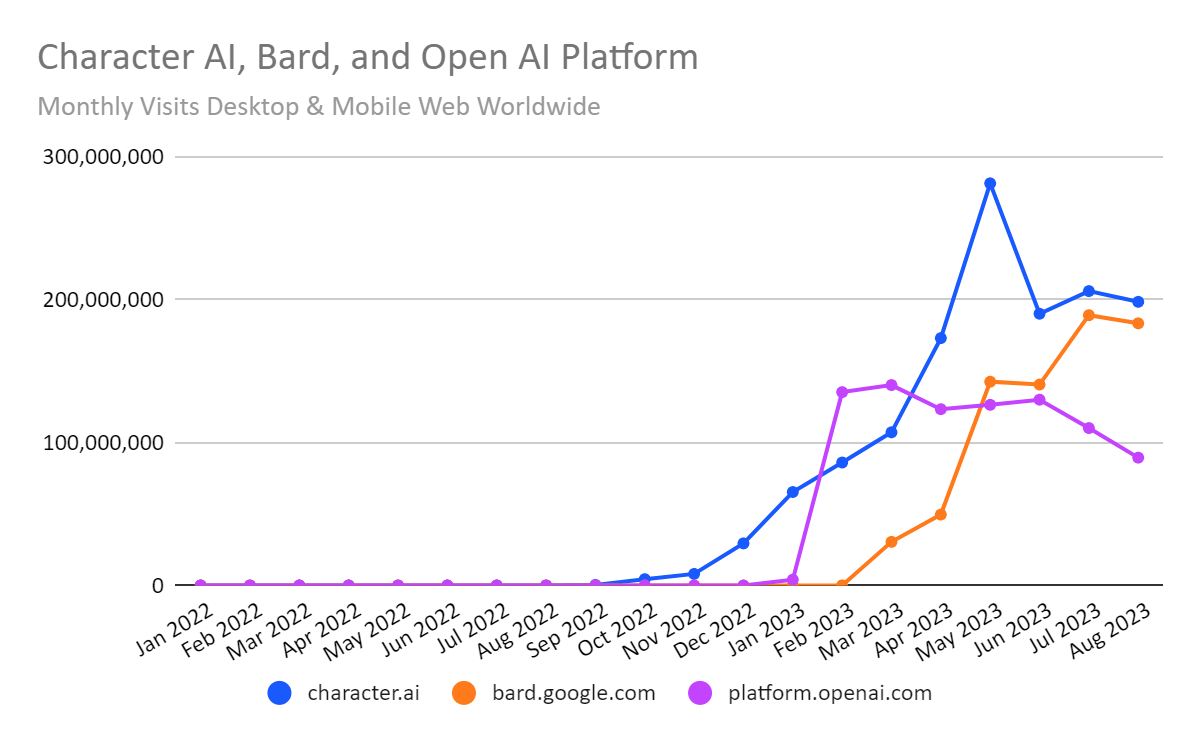
AI app Character.ai is catching up to ChatGPT in the US

AI app Character.ai is catching up to ChatGPT in the US Sarah Perez @sarahintampa / 10 hours

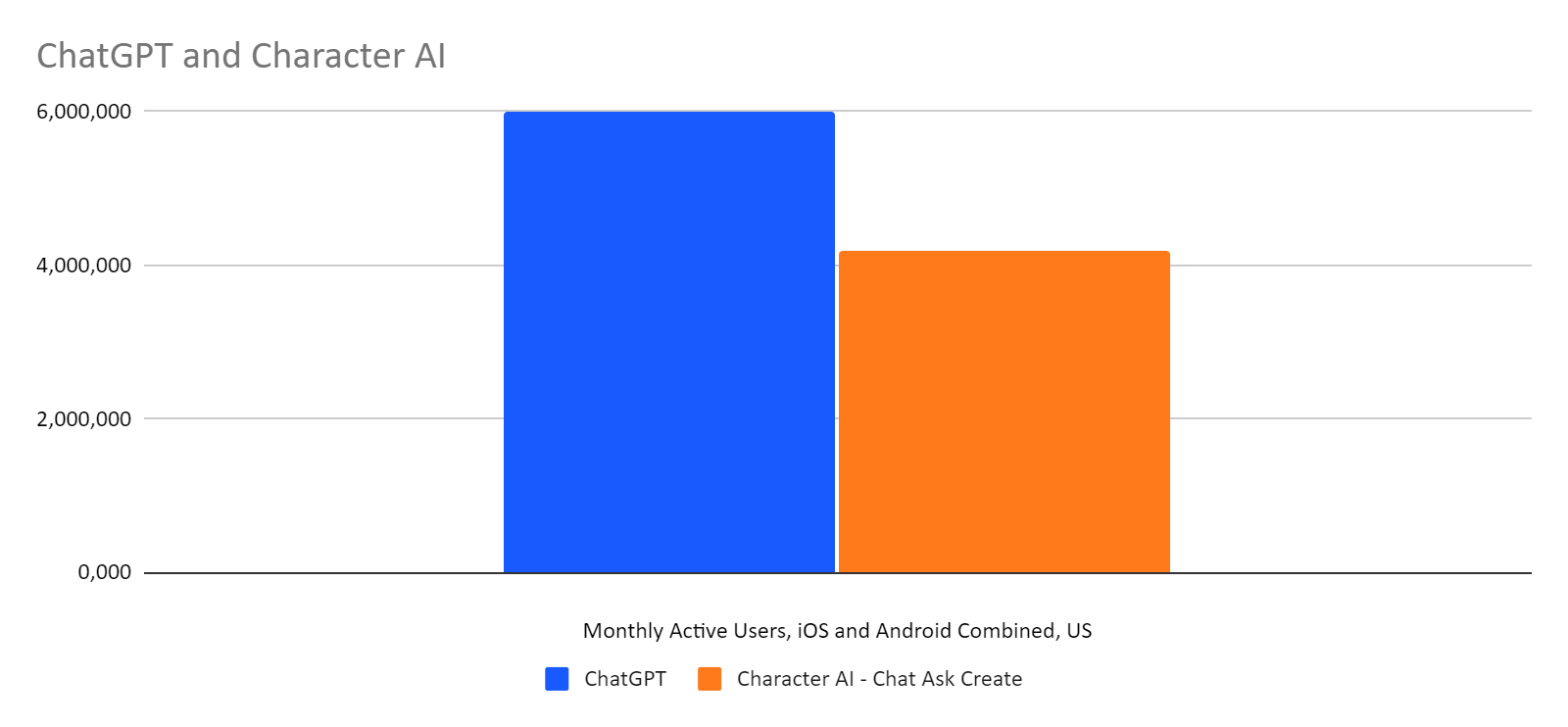
Character.ai, the AI app maker that lets users design their own AI characters, is catching up to ChatGPT in terms of mobile app usage. According to a recent analysis by market intelligence firm Similarweb, the iOS and Android apps for the a16z-backed Character.ai are now seeing 4.2 million monthly active users in the U.S., compared with nearly 6 million monthly U.S. actives for ChatGPT’s mobile apps.

Image Credits: Similarweb

That’s notable growth following Character.ai’s May 2023 launch, when the startup shared it had topped 1.7 million installs in its first week. Of course, installs don’t equate to users, much less active ones. In fact, the average mobile app has a 30-day retention rate of 3% to 4%, and uninstall rates are above 40% after 30 days, per data from mobile marketing firm Appsflyer. That implies that Character.ai has been able to successfully retain some of its early adopters and grow its usage in the months since its debut.

That said, ChatGPT still broadly outpaces Character.ai on the web — likely because many of Character.ai’s users prefer to build and interact with their AI chatbots on their personal mobile device, not through a website.

And globally, Android data indicates that ChatGPT is still far ahead of Character.ai on mobile as well, with 22.5 million monthly active users for ChatGPt versus 5.27 million for Character.ai.

Image Credits: Similarweb

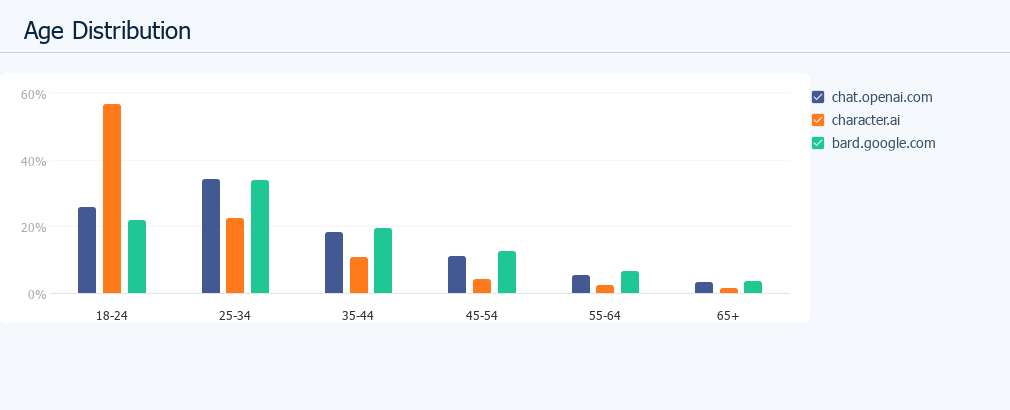
However, Character.ai is attracting a much younger demographic than ChatGPT and other AI apps. On the web, for example, Character.ai draws in nearly 60% of its audience from the 18- to 24-year-old age bracket, a figure that held up over the summer even as website traffic to ChatGPT dropped.

In July, 18- to 24-year-olds made up only 27% of ChatGPT’s traffic, down from 30% in April.

Image Credits: Similarweb

Other AI providers also have lower adoption among younger demographics in the 18 to 24 age group, the new data indicates. Compared with Character.ai’s 60% figure, for example, Perplexity.ai, Midjourney, Anthropic, and Bard’s percentages of the 18- to 24-year-old demographic group were at 22.7%, 22.3%, 25.3%, and 18.46%, respectively.

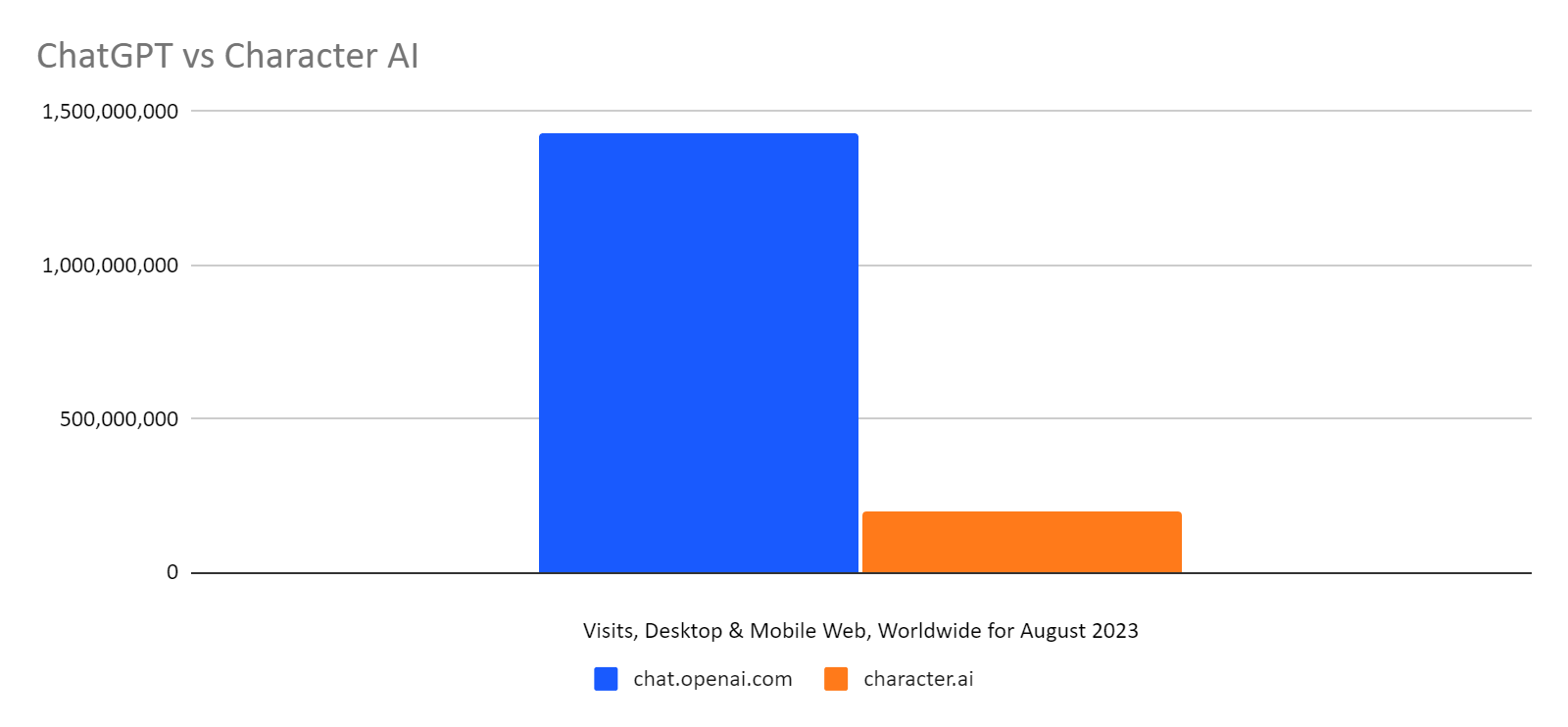
For the third month in a row, ChatGPT also saw its global website visits decline by 3.2% to 1.43 billion in August, after 10% drops for each of the two previous months, Reuters reported, citing Similarweb’s data. Plus, the amount of time on ChatGPT’s website declined from an average of 8.7 minutes in March to 7 minutes as of August.

Similarweb theorized that Character.ai’s usage held up over the summer months because the app is designed for entertainment, not as a homework helper or research assistant. However, Character.ai’s website traffic had dipped a bit over the summer, but mobile users adopting Character.ai’s iOS and Android apps made up for it, the firm noted.

Image Credits: Similarweb

ChatGPT’s declines are turning around now, too. Similarweb found that ChatGPT’s traffic has started to bounce back in the U.S. as the school year resumed, with visits to the website increasing by 0.4% in August. Unique visitors also rose 3% month-over-month in the U.S. and 0.3% worldwide in August, after drops in June and July.

Character.ai has plenty of runway left to further grow its user base, given the startup’s massive $150 million in Series A funding announced earlier this year, valuing its business at $1 billion. Although there are a number of AI character generators on the market, investors were betting on Character.ai’s founders. The startup was created by Noam Shazeer and Daniel De Freitas, AI experts who previously led a team of researchers at Google that built LaMDA (Language Model for Dialogue Applications), a language model that helps power conversational AI experiences.

At the time of a16z’s investment, GP Sarah Wang referred to the founders as “trailblazers in AI for nearly two decades.”

“They’ve built a powerful platform, with an end-to-end combination of both model and application that allows Character.AI to continuously improve its product as more people create and engage with its characters,” Wang had said.

Of course, it remains to be seen if young people will continue to adopt Character.ai or if it will turn out to be another AI fad. Character.ai hasn’t responded to a request for comment on Similarweb’s data, but we’ll update if one is provided.

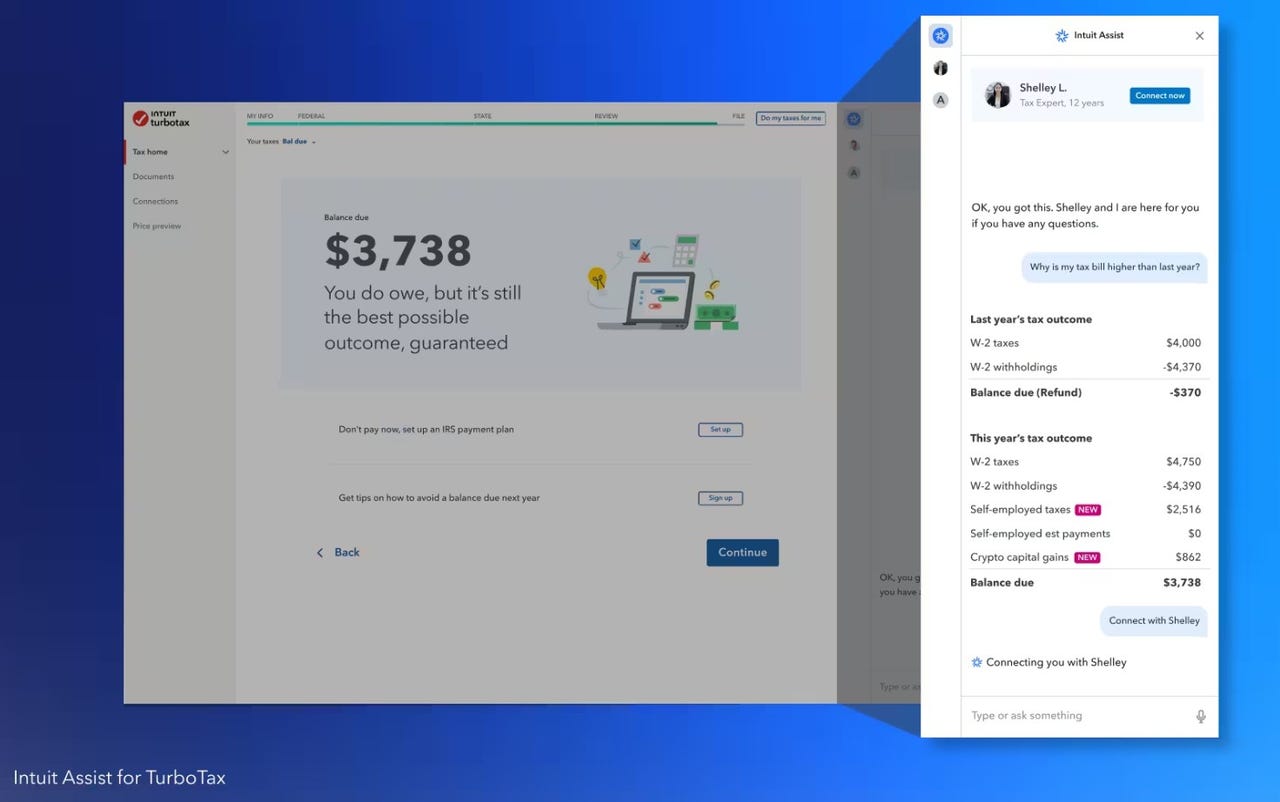
Even TurboTax is adding an AI tool. Here’s what Intuit Assist can do for you

screenshot-1

Although tax season is still several months away and giving Uncle Sam his cut isn't necessarily on most people's minds right now, one of the largest tax preparation services is taking steps to simplify the tax filing process — with an assist from artificial intelligence.

Intuit, the company behind popular tax software TurboTax, has announced a new generative AI tool called Intuit Assist. The AI tool, intended primarily for small entrepreneurs and business owners but available to anyone, is designed to give those users the same leverage as large corporations when it comes to taxes.

Also: Cash App, Square outage: What small businesses need to know

Starting today, the tool will be available in a limited version in the TurboTax app with plans to make it available in other Intuit products in the coming months. While Intuit Assist should be fully available by January 2024, the fact that the extended tax deadline for 2023 is a little over a month away means there's still some potential use for this new AI tool now.

What will Intuit Assist do? Right now, it can help with small tasks like generating a personalized checklist to get ready for tax season based on a user's input. But closer to the beginning of next year, it will be able to connect to Credit Karma and Quickbooks (both Intuit products) where it can help people better understand their specific financial situation and make smarter decisions when tax time comes.

In short, the AI is designed to reduce time spent filing taxes, increase accuracy, and maximize the user's tax return.

Once the final version is rolled out, customers should be able to get fast answers to complicated questions, Intuit wrote in a post announcing the AI assistant. "Intuit Assist will augment tax experts' knowledge with fast, personalized answers based on aggregated, data-driven insights, reducing the time spent searching, finding, and synthesizing responses for customers." When needed, the AI can connect the customer to a real human for further assistance.

Also: AI, trust, and data security are key issues for finance firms and their customers

In addition to tax assistance, Intuit said that Assist would soon provide marketing help on its Mailchimp platform, including creating campaigns around a company's branding, targeting a specific audience, and measuring an email campaign's effectiveness.

Of course, connecting an AI assistant with your sensitive financial information is going to be an immediate concern for some people. It was just a month ago that Zoom found itself tangled in an AI privacy mess. Intuit offers a "Responsible AI" page that walks users through how artificial intelligence is used in their software. But is it enough to make customers comfortable?

Finance