AI and the cyber challenge: Bridging vulnerabilities in modern defense strategies

ai-cybersecurity-risks

In our increasingly interconnected world, the digital realm has become both a frontier of innovation and a battleground of threats. As technology advances, so do the tactics of malicious actors who seek to exploit vulnerabilities in our digital infrastructure.

The rapid evolution of cyber threats calls for a paradigm shift in defense strategies, and that’s where Artificial Intelligence (AI) comes into play. In this article, we will delve into the world of cybersecurity, exploring how AI is revolutionizing modern defense strategies to bridge vulnerabilities and create a more resilient digital landscape.

Evolution of cyber threats

Gone are the days when simple firewalls and antivirus software were sufficient to protect our digital assets. The evolution of cyber threats has brought us face-to-face with highly sophisticated attacks that can cripple even the most secure systems.

From ransomware attacks on critical infrastructure to nation-state-sponsored espionage, the breadth and depth of cyber threats have expanded exponentially. Just look at the infamous SolarWinds attack, which exploited software updates to compromise numerous organizations, including government agencies. This incident highlighted the need for a more proactive and adaptable defense approach.

The challenges posed by these advanced threats are substantial. Attack vectors now encompass a wide range of techniques, including zero-day exploits, social engineering, and insider threats, all of which are often waged from anonymous proxies. Moreover, these threats are not isolated incidents but are often part of larger, coordinated campaigns that require real-time analysis and response.

Traditional defense strategies, relying heavily on static rule-based systems, struggle to keep pace with the dynamic nature of these attacks. As a result, there is an urgent need for defense mechanisms that can rapidly detect, analyze, and counteract cyber threats, and this is where AI steps onto the stage.

Traditional defense strategies

For years, cybersecurity relied on well-defined rules and signatures to identify and counter threats. While effective against known threats, this approach falters when faced with novel attacks that don’t conform to established patterns.

This reactive nature of traditional defense strategies creates a significant gap in the defense perimeter, leaving organizations vulnerable to new and evolving threats. Moreover, the sheer volume of data generated by modern systems makes manual analysis impractical, leading to missed signals in the noise.

Enter AI—a game-changer in the world of cybersecurity. AI brings the power of automation and machine learning to the table, enabling systems to learn from data, adapt to new information, and make informed decisions in real-time

Rather than relying on predefined rules, AI models can identify anomalies, detect subtle patterns, and predict potential threats. This shift from rule-based to behavior-based defense marks a fundamental transformation in how we secure our digital environments. AI-driven tools not only enhance threat detection but also minimize false positives, saving valuable time and resources.

Role of AI in cybersecurity

The role of AI in cybersecurity cannot be understated. Imagine an AI-powered system that can sift through massive amounts of data, identify unusual activities, and distinguish between benign anomalies and genuine threats. Such a system is no longer a futuristic fantasy—it’s a reality.

Machine learning algorithms can analyze network traffic, user behavior, and system logs to identify patterns that human analysts might overlook. By continuously learning from new data, AI models become more adept at spotting emerging threats, even those with no historical precedent.

An illustrative example of AI’s impact is in the realm of phishing attacks. Phishing, a common technique used by attackers to trick users into revealing sensitive information, can be challenging to combat due to its ever-evolving tactics.

AI can analyze email content, sender behavior, and other contextual information to identify suspicious messages that might go unnoticed by traditional filters. This dynamic analysis greatly enhances the chances of stopping phishing attacks before they infiltrate an organization’s systems.

Bridging vulnerabilities with AI

The true strength of AI lies in its ability to bridge the vulnerabilities that often plague traditional defense strategies. One of the key advantages is its real-time monitoring and response capabilities.

AI-driven systems can instantly react to unfolding threats, minimizing the window of exposure and reducing the time attackers have to exploit vulnerabilities. This is especially crucial in cases where swift action can prevent data breaches or system compromise.

Additionally, AI helps organizations streamline incident response. Human error and the time it takes to identify and contain threats are significant challenges in cybersecurity. AI can automate repetitive tasks, ensuring that responses are consistent and rapid. This augmentation of human capabilities allows cybersecurity teams to focus on more strategic aspects of defense rather than getting bogged down in routine tasks.

However, the integration of AI into cybersecurity also raises important ethical considerations. The power of AI can be harnessed for offensive purposes as well, blurring the lines between protection and aggression.

The idea of AI-initiated counterattacks raises questions about proportionality, accountability, and unintended consequences. Striking the right balance between AI’s potential benefits and the ethical implications it brings is a challenge that both technologists and policymakers must address.

Building AI-integrated defense strategies

Integrating AI into defense strategies requires a concerted effort from various stakeholders, including AI experts and cybersecurity professionals. To effectively harness the power of AI, organizations need to start with a solid foundation of data.

High-quality, diverse datasets are essential for training AI models to accurately detect threats. Organizations should also collaborate closely with AI specialists to develop models that align with their unique threat landscape.

Continuous learning is a core tenet of AI integration. As threats evolve, so should the AI models that defend against them. Regular updates and refinements to these models ensure they remain effective in a dynamic environment.

Furthermore, organizations should invest in skilled cybersecurity personnel who can interpret AI-generated insights and make strategic decisions based on them.The symbiotic relationship between AI and human expertise is crucial for maintaining a robust defense posture.

Future outlook

Looking ahead, the future of AI in cybersecurity holds immense promise. We can expect AI to become even more adept at predictive analysis, enabling organizations to anticipate threats before they materialize.

This shift from reactive defense to proactive prevention has the potential to reshape the cybersecurity landscape fundamentally. AI-powered threat intelligence will not only help organizations defend themselves but also enable governments and international bodies to collaborate on a global scale to counter cyber threats.

However, the road ahead is not without its challenges. As AI becomes more integral to defense strategies, attackers will also seek to exploit its weaknesses. Adversarial attacks, where attackers manipulate AI models to produce incorrect results, pose a significant concern. Addressing these challenges requires ongoing research, innovation, and collaboration among experts across disciplines.

Conclusion

The rise of AI presents a transformative opportunity to strengthen our cybersecurity defenses. By embracing AI-driven approaches, organizations can bridge vulnerabilities in their defense strategies, adapt to evolving threats, and create a more resilient digital ecosystem. However, this journey requires a balanced approach, addressing technical, ethical, and practical considerations.

As AI and cybersecurity continue to evolve, the partnership between human expertise and AI capabilities will define the success of our efforts to secure the digital world. In the face of increasingly sophisticated cyber challenges, the synergy of human and machine intelligence is our best line of defense.

Data Warehousing: The key to effective marketing campaign management

Businesses today constantly strive to gain a competitive edge in their marketing efforts. Leveraging their data effectively to create data-driven campaigns is the best way to trump the competition. One of the best tools at their disposal to utilize their data is a data warehouse.

Data warehousing is crucial in enhancing marketing and campaign management by providing a centralized and integrated repository of valuable customer information.

In this blog, we analyze how data warehousing enhances marketing strategies and enables businesses to achieve targeted and impactful campaigns. First, a quick recap of data warehousing.

Understanding data warehousing

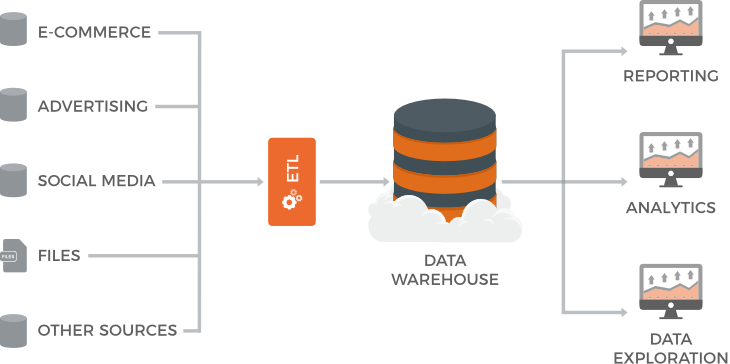
Data warehousing refers to collecting, organizing, and storing data from various sources in a central repository. It involves extracting data, transforming it into a standardized format, and loading it into the data warehouse. By consolidating data from multiple sources, such as customer interactions, sales transactions, and online behavior, data warehousing provides marketers with a holistic view of their audience.

But how does collecting and loading data in a single destination help improve marketing campaigns?

data warehousing for marketing
Source

Benefits of data warehousing in campaign management

Improved campaign planning and execution

Data warehousing empowers marketers to plan and execute campaigns more effectively. With access to comprehensive customer data and historical campaign results, marketers can make data-driven decisions. They can identify the most responsive segments, determine optimal channels, and personalize their messaging.

Furthermore, data warehousing allows marketers to track and measure campaign performance in real-time, enabling them to make timely adjustments and optimizations. Real time analytics provides faster decision-making at a time when around 37% of managers’ time is spent inefficiently.

Real-time monitoring and tracking of campaign performance

Measuring campaign performance and obtaining real-time insights was a challenge in traditional marketing approaches. Data warehousing solves this problem by providing marketers with real-time monitoring and tracking capabilities. Marketers can monitor key performance indicators (KPIs), such as click-throughs, conversions, and revenue generated, on a granular level. This allows them to gauge their campaigns’ effectiveness and promptly make data-driven decisions.

Personalization and targeted marketing

Personalization is an important component of successful marketing campaigns. Data warehousing facilitates personalized marketing by providing marketers with a deep understanding of individual customer preferences and behaviors. Marketers can use this knowledge to create highly personalized and specific campaigns that resonate with their target audience.

Marketers can significantly improve customer engagement and conversions by delivering the right message at the right time. According to a McKinsey survey, over 90% of customers prefer personalized shopping experiences over generic campaigns.

Optimization of marketing spend

Data warehousing enables marketers to optimize their marketing spend by providing insights into the effectiveness of various marketing channels and campaigns. Marketers can identify high-performing channels by analyzing campaign performance metrics and allocate resources accordingly. They can also identify underperforming campaigns and make necessary adjustments to improve ROI. This data-driven approach to marketing spend optimization helps businesses maximize their return on investment and minimize wasted resources.

A few simple scenarios

Company A: Leveraging data warehousing for customer segmentation

Company A, a leading e-commerce retailer, implemented a data warehousing solution to enhance its marketing efforts. They created a comprehensive customer database by consolidating customer data from their online store, social media platforms, and email marketing campaigns. Using data analytics tools, they segmented their customers based on purchase history, preferences, and engagement levels.

This enabled them to personalize their marketing messages and target specific customer segments with tailored offers. As a result, Company A experienced a significant increase in customer engagement and a boost in sales revenue.

Company B: Utilizing data warehousing for personalized email campaigns

Company B, a software-as-a-service (SaaS) provider, recognized the power of personalized marketing. They leveraged data warehousing to create a single customer view by integrating data from their CRM system, website interactions, and customer support interactions.

With this comprehensive customer profile, they designed personalized email campaigns that aligned with each customer’s interests and needs. By tailoring its messaging and offers, Company B achieved higher open and click-through rates, increasing trial sign-ups and conversions.

Best practices for implementing a data warehouse

Establishing clear objectives and goals

Before implementing a data warehousing solution, defining clear objectives and goals is essential. Managers must identify the key business questions they want to be answered with the data warehouse, such as improving campaign effectiveness, enhancing customer segmentation, or optimizing marketing spend. This step helps align the data warehousing efforts with a business’s specific needs.

Ensuring data cccuracy and quality

Data accuracy and quality are paramount for effective data warehousing. Implement data validation processes to ensure the accuracy and consistency of the data. Regularly review and update data cleansing procedures to maintain data integrity and minimize errors.

Implementing robust data governance policies

Establish robust data governance policies to ensure compliance with privacy regulations and protect customer data. Define roles and responsibilities, establish data access controls, and monitor data usage to maintain security and privacy. Data privacy should be of utmost importance, as compromised data can cause millions of dollars in damages.

Regular monitoring and maintenance of the data warehouse

Continuous monitoring and maintenance of the data warehouse are crucial to ensure its optimal performance. Regularly monitor data quality, performance metrics, and system health. Implement proactive measures to address any issues promptly and conduct regular audits to identify areas for improvement.

Final words

Data warehousing has transformed marketing and campaign management by providing a centralized and integrated view of customer data. By leveraging data warehousing tools, marketers can streamline their campaign management processes, improve efficiency, and drive better results.

With the continuous evolution of data warehousing technologies and the integration of AI and ML, the future holds even greater opportunities for marketers to leverage data for enhanced customer experiences and improved campaign outcomes. By embracing data warehousing, businesses can unlock the full potential of their marketing strategies and achieve remarkable results.

Check Point: Hackers Are Dropping USB Drives at Watering Holes

Check Point logo and website.
Image: Timon/Adobe Stock

In its 2023 Mid-Year Cyber Security Report, Check Point Software spotlighted numerous exploits so far this year, including novel uses of artificial intelligence and an old-school attack vector: USB drives. Cybercriminals and nation-state actors see these devices as the best way to infect air gapped, segmented and protected networks, according to Check Point.

The report’s authors noted the Raspberry Robin worm was one of the common malware variants distributed through USB drives via “autorun.inf” files or clickable LNK files. Check Point also reported that state-aligned threat actors are even launching 10-year-old infections such as ANDROMEDA via USB drives.

China-related espionage threat actor Camaro Dragon, for example, used USB drives as a vector to infect organizations all over the world, according to the report’s authors. In addition, the security researchers pointed out that Russian-aligned group Gamaredon used USB drive-delivered Shuckworm to target Ukrainian military and associated individuals.

I spoke with Pete Nicoletti, global chief information security officer for the Americas at Check Point Software, about some other top-line findings from the report. Nicoletti, who has more than 30 years in the field, said AI is a game changer, and that out of Check Point Software’s 70-plus engines, AI and machine learning drives 40 of them. The following transcript of my interview with Nicoletti has been edited for length and clarity.

Jump to:

  • Found an orphan USB? Better to leave it be
  • Bad bots: AI for spam, spearphishing and malware
  • AI for the defense: Finding spam, insurance reviews, penetration tests
  • Education sector is the top target
  • Microsoft: A big house with many doors and “Windows”
  • Sound and vision: The next AI threats

Found an orphan USB? Better to leave it be

Karl Greenberg: I was surprised by the report’s details around physical USB drivers as a viable attack vector. Really? Today?

Pete Nicoletti, global chief information security officer for the Americas at Check Point Software.

Pete Nicoletti: As a former penetration tester, I thought the days of USB drivers… USB devices being used to hack were going to go away, but we’ve seen a big uptick in companies falling for a USB drive insertion. When I used to try to break into companies, we used a watering hole attack: You go to the bar where the employees go, you go to the office building or bathroom where the employees go, and you drop a couple of USBs (it used to be CDs, with labels saying “3rd quarter layoffs” and people would grab them). We are seeing the same thing happening with flash drives, and this is dramatic.

Karl Greenberg: Hackers are physically leaving USB drives around?

Pete Nicoletti: Yes, and this tactic is infecting organizations. Before COVID, we used to have better policies against using USBs in corporate-owned laptops, because that laptop would be inspected. Post COVID, it’s BYO device, and there are fewer corporate protections, so that’s partly why we’re seeing a spike. Also, we’re seeing an uptick in hacktivism with politically motivated groups launching attacks and artificial intelligence misuse such as using AI to craft emails. We just saw the release of an AI-based keystroke monitoring tool that has about 85% to 95% accuracy in understanding the keystroke just by sound.

Bad bots: AI for spam, spearphishing and malware

Karl Greenberg: How important are AI tools today for cybersecurity practitioners, and what do you see as key ways hackers are using it?

Pete Nicoletti: If you don’t have artificial intelligence to battle artificial intelligence, you’re going to be a statistic, because AI is lowering the bar for the attackers. Just for spam, as an example, there are a lot more (non-English speaking) people now who can create emails using really good English.

Basically, hackers are using AI in at least two ways: They are using AI to write snippets of code rather than full-blown ransomware programs for, say, a zero day for a given common vulnerability and exposure; they are using it, for example, to write a keyboard stroke collector. And they are using AI to automate spam creation using hacked data to generate content. These could, for example, be tied to hacked private information about a patient’s information that may have been part of a large breach; hackers are using such data to create personalized emails: “You were just in for such and such a procedure, and you owe an additional $200 on the bill.”

SEE: Check Point announces raft of 2023 AI features (TechRepublic)

AI for the defense: Finding spam, insurance reviews, penetration tests

Karl Greenberg: How do you prevent or defend against these forms of AI-powered, spearphishing campaigns?

Pete Nicoletti: All of our big carrier customers use Avanan, an AI-powered (email security) tool we acquired two years ago. With it, we are able to discover new kinds of challenging-to-find spam — and spam is still 89% the vector of choice for successful attacks.

SEE: Check Point’s Avanan spotlights how business email compromise attacks emulate legitimate web services to lure clicks (TechRepublic)

Karl Greenberg: Besides use for reducing analyst workloads, where else are you seeing AI being used more today?

Pete Nicoletti: We’re seeing people use ChatGPT and other large language models to review their cyber insurance programs. We’re seeing people use it to write up penetration tests to give them more relevance and a deeper understanding of certain issues. If you’re not using artificial intelligence, you’re not going to be competitive.

Education sector is the top target

Karl Greenberg: What are the other top-line findings from the first half of the year?

Pete Nicoletti: We’re seeing the education sector being the number one attack vertical; we’ve seen a huge spike in this.

Karl Greenberg: Why?

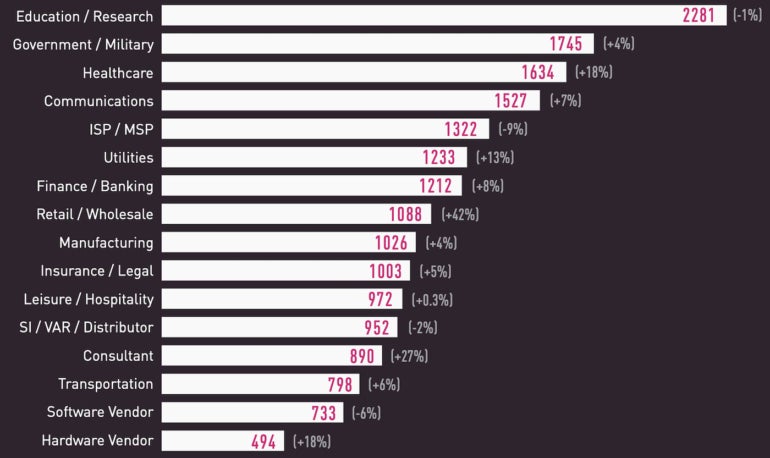
Pete Nicoletti: A couple of reasons, including schools transitioning to outsourced IT and using more online education tools. Also, educational institutions don’t have the budgets the commercial sector has. We have seen at least one university go out of business for the first time (Lincoln College in May 2022) because of ransomware demands. Globally, education and research are still the top targets for attacks (Figure A).

Figure A

Global average of weekly attacks per organization by industry in H1 2023 (change in percentage from H1 2022).
Global average of weekly attacks per organization by industry in H1 2023 (change in percentage from H1 2022). Image: Check Point Software

Microsoft: A big house with many doors and “Windows”

Karl Greenberg: I noticed the number of vulnerabilities in commonly used corporate software is very high; Microsoft is number one. Why does Microsoft have so many CVEs?

Pete Nicoletti: Someone famously said they rob banks because that’s where the money is. If you’re a hacker, you want to target Microsoft because it’s so ubiquitous. It’s everywhere — an application developing company and an operating system. It’s used by everyone. So if you’re going to find a zero day, whether you’re a state-sponsored hacking group or just a 16-year-old in the basement wearing a hoodie, you’re going to be targeting Microsoft.

The other thing a lot of people don’t talk about: when you turn the knob as a company to push products out the door, because companies can take all the time in the world to develop something and test it, but companies want to release products now, not tomorrow. And when they turn the knob to be competitive and gain market share, this is the unspoken kind of risk of development that gets you in trouble.

Karl Greenberg: Which is why AI tools in DevOps are critical.

Pete Nicoletti: Companies with fast development shops are picking up these tools to increase security of their development pipeline, containers and Kubernetes, and it’s so much cheaper to fix in the development pipeline rather than in the test or production environment. So companies are finally figuring that out.

Sound and vision: The next AI threats

Karl Greenberg: What about other uses of AI for threats beyond text and code generation?

Pete Nicoletti: We have always been dealing with business email compromise; well, now it’s going to be voice compromise and video compromise. It’s absolutely coming. We’re going to start seeing a lot more photos converted to a video discussion. We’ve seen voice compromises already, and every bank that’s using voice confirmation and voice identification can be fooled now. So, if you have credit cards or banks that use this? Say goodbye. I wouldn’t enable that at all any more.

Subscribe to the Cybersecurity Insider Newsletter

Strengthen your organization's IT security defenses by keeping abreast of the latest cybersecurity news, solutions, and best practices.

Delivered Tuesdays and Thursdays Sign up today

DSC Weekly 12 September 2023

Announcements

  • End-user computing must now account for the millions of workforces that have transitioned to hybrid and remote models. Virtual workspace models such as DaaS and VDI allow users to access virtual desktops to help streamline their workflow and minimize the burden on IT staff. However, companies must consider cost, scalability and management when deploying a virtual workspace, as well as security strategies to ensure workers are protected and able to remain productive. Join the Next-Generation End User Computing summit to discover how to best implement and manage hosted and virtual workspaces including DaaS and VDI.
  • Managing the supply chain is exceedingly difficult with global conflicts and market ups and downs interfering with companies’ ability to timely deliver and fulfil orders. Tune into the Overcoming Supply Chain Challenges summit to hear leading experts discuss emerging technologies to help protect and streamline supply chain management along with strategies and tools to secure the supply chain against the many cyber threats it faces. Register for free and gain access to live webinars, fireside chats and keynote presentations from the world’s leading supply chain innovators, vendors and evangelists.

Top Stories

  • AI for Natural Language Understanding (NLU)
    September 12, 2023
    by Seven Kole
    In the panorama of Artificial Intelligence (AI), Natural Language Understanding (NLU) stands as a citadel of computational wizardry. No longer in its nascent stage, NLU has matured into an irreplaceable asset for business intelligence. In this discussion, we delve into the advanced realms of NLU, unraveling its role in semantic comprehension, intent classification, and context-aware decision making.
  • AI apps product development canvas – Part 1
    September 10, 2023
    by Bill Schmarzo
    AI Apps are domain-infused, AI/ML-powered applications that continuously learn and adapt with minimal human intervention in helping non-technical users manage data and analytics-intensive operations to deliver well-defined operational outcomes.
  • Fraud detection using Machine Learning: Unmasking deceptive patterns
    September 6, 2023
    by Diana Jane
    In an increasingly interconnected world where digital transactions have become the norm the battle against fraud has taken on new dimensions. The challenge lies not only in identifying familiar fraud patterns but also in unearthing the intricate web of evolving deceptions that threaten industries such as finance, e-commerce, and insurance.
Education_DSC_160x600-2

In-Depth

  • Securing your AI data pipeline with MLOps
    September 12, 2023
    By Colin Priest
    Enterprises are increasingly implementing Artificial Intelligence (AI) into their operations. However, AI-ready data pipeline practices are still in their infancy, especially when it comes to IT security.
  • Data Warehousing: The key to effective marketing campaign management
    September 12, 202
    by Ovais Naseem
    Businesses today constantly strive to gain a competitive edge in their marketing efforts. Leveraging their data effectively to create data-driven campaigns is the best way to trump the competition. One of the best tools at their disposal to utilize their data is a data warehouse.
  • Data-driven insights: Improving remote team performance with time-tracking analytics
    September 12, 2023
    by Costanza Tagliaferi
    The way we work has changed, with remote teams now a common part of the landscape. While remote work offers flexibility, it also brings challenges. Managing remote teams effectively is crucial to ensure productivity and collaboration. In this article, we’ll explore how using time tracking for remote teams can help manage employees’ performance better.
  • How can IoT transform and benefit the entertainment industry?
    September 12, 2023
    by Ryan Williamson
    The Internet of Things (IoT) has been transforming entertainment and has given it new ways of creating, delivering and consuming content. The wide-ranging utility of IoT devices has improved user experience while enhancing the safety and security of users.
  • AI and the cyber challenge: Bridging vulnerabilities in modern defense strategies
    September 12, 2023
    by Anas Baig
    In our increasingly interconnected world, the digital realm has become both a frontier of innovation and a battleground of threats. As technology advances, so do the tactics of malicious actors who seek to exploit vulnerabilities in our digital infrastructure.
  • DSC Weekly 5 September 2023
    September 5, 2023
    by Scott Thompson
    Read more of the top articles from the Data Science Central community.
  • 16 most interesting AI applications across industries worldwide
    September 5, 2023
    by Tarique
    Artificial Intelligence has become a compulsive innovation for humankind, that we cannot live without. It has been gaining strength with every passing moment. The impact of AI applications extends beyond improved business results and can be significant in elevating and enriching the human experience.

Study AI and machine learning with this $30 e-degree program

stacksocial-ai-degree

Learn AI and machine learning skills with these self-paced courses.

Artificial intelligence tools have become some of the hottest in the tech field. Understanding how to use them can not only streamline your day-to-day productivity, but could also boost your career potential in developing, data engineering, and machine learning.

Instead of trying to learn these tools and their tricks yourself, you might want to take this e-degree program on machine learning for absolute beginners. Right now, you can get lifetime access for just $30 (reg. $300), the lowest price found online.

Advance your AI skill set

No previous experience in AI or machine learning is required for this program, just a desire to learn. Whether you're a total beginner who doesn't even know what ChatGPT is, or a seasoned IT professional who wants to stay up-to-date on trends, these courses likely have something new to teach you.

You'll begin by developing a strong understanding of Python programming and how it's used in AI and machine learning. This includes techniques for collecting, processing, and visualizing data, using statistics and hypothesis testing, and developing regression analysis and prediction skills.

Sounds a bit technical? That's why this e-degree program offers hands-on projects to pair each new skill with a practical application. You might write programs that detect credit card fraud or predict housing and stock prices.

A personalized learning experience

Enjoy total freedom in how and when you take this e-degree program since you'll have lifetime access to over 200 lectures and 35 hours of content. You have this flexibility because this isn't actual college, though you do earn a certificate of completion if you finish all six modules. It's not a formal degree, but it might be an asset to your resume.

Ready to learn about the hottest tools in tech? Get the machine learning for absolute beginners e-degree program from StackSocial while it's price-dropped to just $30 (reg. $300).

ZDNET Recommends

Midjourney Shows the Way to Success without VC Funding

Midjourney has lots of issues. The platform is counterintuitive to use, needs very specific prompts to generate great pictures, and requires a subscription. But above all, the platform is neck-deep battling the copyright infringement lawsuits. And although it looks like nothing is going its way, Midjourney continues to be the second-most popular platform in the generative AI space and the most popular in the AI image generation segment.

According to media reports, with a mere 40-member team, the company is slated to rake in $200 million in revenue this year from its 15 million community members. Midjourney boasts of a remarkable revenue of $5 million per employee, far surpassing the the likes of publicly listed SaaS companies like Dropbox ($595K), Slack ($240K), Squarespace ($493K), and Palantir ($310K), showcasing the company’s exceptional efficiency and profitability.

How Midjourney makes money

Midjourney generates revenue primarily through two channels—subscription fees and additional GPU time purchases. They offer monthly and annual subscription plans for $10 and $120, respectively, granting users access to their AI-powered creative tools. Users pay based on their artistic needs and budget, allowing Midjourney to sustain and develop its platform while catering to individual preferences.

In addition, users can purchase extra GPU time at a flat rate of $4 per hour, ensuring uninterrupted creative work when they exceed their allotted GPU hours. This straightforward pricing model offers flexibility for users to extend their creative time as needed.

Midjourney has been appreciated for the sheer brilliance of the product minus the fluff. A user on LinkedIn wrote, “No funding. No management layers. No B2B. Just discord and the excited public!” Others acknowledged the competence of the individual/team behind Midjourney, emphasising their coding skills, timing, and strong work ethics, highlighting the distinction between genuine businesses and those that rely on empty promises.

Interestingly, the platform has been able to rake in this huge revenue without VC funding.

VC Averse

Ironically, many in the AI community expressed surprise at the company prioritising profit over constantly raising money for an idea, hinting at AI startups like Mistral AI, amongst others who have picked up millions of dollars without a product in hand. Midjourney founder David Holz has expressed scepticism about the survival of companies heavily reliant on venture capital, highlighting the cycle of burning through funds and seeking more investments, which Midjourney has actively avoided.

Though venture capitalists have shown strong interest in the platform, Holz has been rejecting their offer, citing uncertainty about capital needs. He’s determined to keep Midjourney self-funded, aiming for long-term sustainability.

Besides, VCs tend to be less reliable; they invest in a hype cycle and exit once the bubble bursts. Holz’ bitterness also stems from his disappointing experience with venture capital in his previous startup Leap Motion, which raised over $100 million from investors, but was eventually sold for just $30 million in 2019. Holz wants Midjourney to be “this weird thing that no one knows how to compete with that just sort of stands alone”, according to his own admission in an interview.

Prominent venture capital firms like Greylock Partners, Sequoia Capital, Andreessen Horowitz, Index Ventures, and Spark Capital have also shown a keen interest in investing in his new venture, but Holz is in not interested.

What Others Can Learn

Holz relies on his experience building AI teams at Leap Motion, which he believes distinguishes him from other emerging AI company founders. And it has paid off handsomely for him. The team of 40 has yielded better ROI than many huge corporations.

Another unconventional decision Holz has made is forging a partnership with Discord. While the platform is focused on the instant messaging platform, many have echoed caution, with individuals expressing scepticism about using Discord for business, due to perceived risks on a platform that lacks control and support. Others have also suggested that the business would have been even more successful without Discord’s integration. Nevertheless, despite the impending launch of a standalone website, Midjourney intends to maintain its strong presence on Discord, where millions of users engage with AI apps.

Midjourney believes that its Discord server has set it apart from other generative AI platforms, fostering a sense of community and collective engagement among users. Midjourney’s server has experienced significant growth, reaching 14.8 million users over the past year, becoming Discord’s largest server.

He runs the company differently from typical Silicon Valley startups, with few managers, no board of directors, and small, independent teams. Holz relies on external advisers including AI investor and former GitHub CEO Nat Friedman for guidance and opts to give employees a share in profits rather than substantial stock packages.

Holz has also assembled a team of familiar faces and advisers, including Bill Warner, the founder of Avid Technology and Leap Motion’s initial investor. Many employees, including the CFO Nadia Ali, come from Leap Motion. Other advisers include Jim Keller, the former chip designer at Intel and Apple, Philip Rosedale from Second Life, and Rich Miner, the co-founder of Android.

The company also keeps upgrading its product and has plans to release its sixth software version with improved technology by year end. The company is also developing 3D art and video capabilities.

The post Midjourney Shows the Way to Success without VC Funding appeared first on Analytics India Magazine.

Securing your AI data pipeline with MLOps

A graphic depiction of a data pipeline with arrows flowing in different directions, illustrating the continuous movement and integration of data for real-time insights.  Generative AI technology.

By Colin Priest, Chief Evangelist at FeatureByte

Enterprises are increasingly implementing Artificial Intelligence (AI) into their operations. However, AI-ready data pipeline practices are still in their infancy, especially when it comes to IT security.

The pervasiveness of “Spaghetti Code”

Enterprises delving into AI data pipelines often find themselves wading through a mess of complex and convoluted code, commonly referred to as “spaghetti code.” This jumbled mass is not only challenging to understand but also hard to maintain, while introducing a multitude of security risks.

Due to its intertwined structure, spaghetti code can be incredibly challenging to audit for vulnerabilities. Without clear pathways and logical sequences, potential security flaws remain hidden, making the system susceptible to breaches.

Often, due to its patchwork origins, spaghetti code lacks a uniform structure that aligns with standard security protocols. This inconsistency can lead to unintentional loopholes or backdoors that malicious actors can exploit.

The role of generative AI in code creation

With the advent of generative AI, a small but rapidly growing percentage of this code is now written by AIs. Rather than being trained on high-quality, enterprise-grade code, AIs are learning from publicly available code snippets that do not always prioritize code efficiency or security. The result? AI-generated code may lack the robustness and/or the security enterprises desperately need. While some snippets might be secure and efficient, others could be outdated or riddled with vulnerabilities, inadvertently introducing weak points into the system.

Industrializing code

The solution to this challenge may lie in the realm of industrialized code, which is designed to be secure, traceable, and reusable. Enterprises can gain enormous efficiencies and reliability by switching from tangled spaghetti code to streamlined solutions using standard components.

Industrialized code is created with rigorous checks and balances, ensuring that common pitfalls and errors in coding are avoided. By reducing the chances of human error, a major cause of security vulnerabilities, the overall security posture of applications improves.

Industrialized coding practices come with documentation standards, making it easier for teams to collaborate and understand the codebase. This transparency ensures that any potential security concerns are easier to spot and rectify by any team member, not just the original author. This transparency makes it easier to audit, review, and rectify any potential security issues.

Governance in AI data pipelines: A pressing concern

MLOps have greatly refined validation and deployment practices for machine learning models from their training phase to their deployment. However, AI data pipeline governance practices remain immature.

A common concern is the capacity for arbitrary code execution. This ability, intended for flexibility, inadvertently paves the way for security lapses. The absence of Role-Based Access Controls (RBAC) exacerbates the issue, leaving room for unauthorized access and potential system disruptions.

As a result of lax access controls and the lack of validation checks, AI data pipelines resemble open floodgates. Without stringent validations, there’s a risk of allowing erroneous or malicious code into the system. Such intrusions could distort model outputs, leading to inaccurate results or, even worse, significant security breaches.

Building safer AI data pipelines

To ensure the effective and safe use of AI data pipelines, enterprises need to incorporate three key features:

  1. Code Standardization: By standardizing code and using tools that implement pipelines in a more standard and automated way, you will reduce human error and code maintenance challenges, while also improving security.
  2. Guardrails: Just as they sound, guardrails will keep AI data pipelines on track, ensuring that they operate within specified parameters and don’t go off the rails with unexpected or undesirable outputs.
  3. Role-Based Access Control (RBAC): RBAC ensures that only authorized personnel have access to specific parts of the pipeline. By controlling who can access what, enterprises can significantly reduce the risk of human-induced errors or security breaches.
  4. Governance Processes: This involves a structured process to oversee and manage the AI data pipelines. With proper governance, enterprises can track the versions of LLMs in use, their specific applications, and any potential issues or vulnerabilities.

As the AI ecosystem evolves, enterprises are facing an intricate challenge: crafting robust AI data pipelines that prioritize security, efficiency, and governance. The existing quagmire of spaghetti code, coupled with the risky integration of AI-generated code, underscores a need for change. By embracing industrialized code and embedding stringent governance measures, businesses can navigate the complex AI landscape with increased confidence. In focusing on these foundational aspects, enterprises can not only ensure the effectiveness of their AI systems, but also safeguard their operations against potential threats, allowing AI to be both valuable and secure.

###

Author bio:

<a></a>Securing your AI data pipeline with MLOps

Colin Priest is Chief Evangelist at FeatureByte. With a focus on data science initiatives, he has held several CEO and general management roles, while also serving as a business consultant, data scientist, thought leader, behavioral scientist, and educator. He has over 30 years of experience across various industries, including finance, healthcare, security, oil and gas, government, telecommunications, and marketing.

Jensen Uses ChatGPT to Dissolve Plastic

NVIDIA, Jensen Huang

ChatGPT is a household name now. If you ask anyone how they use the chatbot, the most common response you would get is to draft emails, code, write resumes, and improve the quality of some basic tasks. For example, Satya Nadella uses ChatGPT to understand poetry. Sam Altman uses it for programming. But guess what Jensen Huang, the chief of NVIDIA, is using it for.

“I have had long conversations with ChatGPT about how generative AI can be used in solving real-world problems like dissolving plastics, reducing carbon emissions and so much more,” Huang, the chief of NVIDIA, told AIM in an exclusive interview during his recent visit to Bengaluru last week.

Huang, who is literally dominating the AI hardware space, discussed the challenges of addressing climate change, including resource allocation, timing of adaptation efforts, and limited resources with the help of AI. He highlighted the threat of rising ocean levels in Southeast Asia affecting agriculture and water supply could be solved by using LLMs. Huang also proposed using AI to simulate long-term weather patterns to aid in predicting climate change impacts.

“There’s a significant shift from traditional software and product design to the design of biological solutions. AI can be used to address environmental issues, such as reducing plastic waste in the oceans, capturing carbon emissions, and finding new solutions to tackle these challenges,” Huang told.

The Year of Protein Folding

Before generative AI chatbots disrupted the AI field, tech giants were working on something more concrete — protein folding. Just last year, Google DeepMind’s AlphaFold solved the 50-year-old grand challenge of protein folding. Unfortunately, it did not yet receive the attention it deserved.

However, its potential extends beyond just medicine and drug discovery. And that is where NVIDIA comes into the picture. CEO Jensen Huang believes in the incredible potential of generative AI in protein folding.

Protein folding research offers significant indirect contributions. By comprehending protein folding dynamics, scientists can engineer enzymes for efficient biofuel production, capture and store carbon dioxide, enhance agricultural practices for climate-resilient crops, facilitate bioremediation of pollutants, and promote sustainable protein sources.

Additionally, protein folding insights aid in drug discovery for climate-related diseases. While not a standalone climate solution, this research provides crucial tools and knowledge to develop technologies and strategies to address climate-related challenges and underscores the value of interdisciplinary approaches in tackling global environmental issues.

NVIDIA’s Big Bets Healthcare

Back in March at the GTC conference, NVIDIA launched a set of generative AI cloud services known as BioNeMo Cloud consisting of AlphaFold2 by DeepMind, DiffDock by MIT, ESMFold and ESM2 by Meta, MoFlow by Cornell University and ProtGPT-2. This service accelerates various aspects of drug discovery, including protein and therapeutics research, genomics, chemistry, biology, and molecular dynamics, making them easily accessible through an interactive interface. Researchers can fine-tune generative AI models on proprietary data, run AI model inference through web browsers or cloud APIs, and access pretrained models for drug development.

Since then several pharmaceutical companies like Amgen have used BioNeMo to reduce drug discovery times, while startups like Evozyne and Insilico Medicine have harnessed it to design therapeutic candidates more efficiently and cost-effectively.

In July, Recursion, an AI-driven drug discovery company, expanded its capabilities through a partnership with NVIDIA whereby the latter would invest $50 million in Recursion and provide access to its cloud-based AI tools for drug discovery. The companies plan to develop new AI models for drug discovery on NVIDIA’s DGX Cloud, using the former’s extensive biological and chemical dataset. Recursion also intends to leverage BioNeMo for its own drug discovery projects.

Not just BioNeMo, NVIDIA also plays a pivotal role in advancing drug discovery through its GPU-accelerated platform, NVIDIA Clara which integrates AI, data analysis, simulations, and visualisation to swiftly sift through extensive chemical libraries for potential drug candidates, modelling protein structures and dynamics to comprehend their roles and interactions with medications, crafting novel molecules with desired attributes, simulating drug effects within the human body, and visualising findings from drug discovery experiments.

Leveraging NVIDIA Clara, healthcare professionals and organisations have accomplished significant breakthroughs like the creation of plans for two innovative proteins using BioNeMo, the successful execution of a groundbreaking surgical procedure with Holoscan, and the implementation of cutting-edge MONAI-driven solutions within radiology departments.

Deloitte utilises BioNeMo for 3D protein structure prediction, while Innophore analyses protein cavities with it. Holoscan enhances medical devices for real-time AI applications, as exemplified by a successful robot-assisted surgery. Parabricks accelerates genomic analysis, enabling faster and more accurate diagnoses, with Form Bio and PacBio as prime examples.

Beyond software, NVIDIA also offers a suite of hardware solutions, encompassing GPUs, servers, and storage systems tailored to meet the exact computational demands of drug discovery, consequently enhancing the process’s speed and efficiency.

It is safe to say that NVIDIA is only going to get bigger and better with their protein folding missions.

Read more: Meet the Genius behind Med-PaLM 2

The post Jensen Uses ChatGPT to Dissolve Plastic appeared first on Analytics India Magazine.

How can IoT transform and benefit the entertainment industry?

How can IoT transform and benefit the entertainment industry?

The Internet of Things (IoT) has been transforming entertainment and has given it new ways of creating, delivering and consuming content. The wide-ranging utility of IoT devices has improved user experience while enhancing the safety and security of users. The media and entertainment (M&E) companies can leverage IoT technology to improve the overall quality of their products and services, and provide users with personalized experiences, reduce costs and increase efficiency.

For example, imagine settling down in your home to watch a movie. The room dims, the sound-picture settings and even the entertainment preferences adjust tailored to the user requirements. All of these actions happen automatically, seemingly like magic. This is IoT and big data in motion. IoT devices and sensors gather information, which is then analyzed and processed to create personalized experiences.

Considering such examples of how IoT can be leveraged, we explore more advantages of IoT in the media and entertainment industry.

Advantages of IoT in the entertainment industry:

  • Asset management: Employing IoT for Asset management in the media and entertainment industry enables using sensors, big data, data analytics and cloud platforms to track, monitor and ultimately optimize the performance of digital and physical assets. The steps to asset management include data acquisition, data consolidation, data hooks and data visibility. Examples of M&E industry assets are cameras, microphones, speakers, projectors, servers, electronic bracelets and more. The benefits of asset management are improved asset utilization, customer experience and engagement, reduced operational costs and maintenance, and increased revenue streams.
  • Optimizing content or personalized content recommendation: IoT helps create engaging entertainment experiences with customized offers and content that resonates with the viewer. IoT and predictive analytics in M&E companies are vital in maintaining customer engagement and increasing content consumption. Data collected by IoT sensors enables analytics to identify types of content most likely to be viewed and this information can be used for content creation. It can help identify and target potential new audiences with content that is based and tailored to their interests. Increasing social media use has also set the stage for generating individual connections with viewers, and personalized content can be delivered as per preferences.
  • Immersive content: IoT sensors within devices like augmented reality (AR), virtual reality (VR) and mixed reality (MR) are helping build an entire ecosystem that offers immersive content for users. These sensors and devices provide real-time data integration, connectivity and personalization, delivering interactive, personalized and engaging M&E content.
  • Targeted advertising: Program advertising is a major source of revenue for many media and entertainment brands. IoT sensors and devices can gather data such as age, activities, preferences, and consumption patterns from users. Predictive analytics on this data gives a better understanding of the content customers watch at what time and duration. This helps take the guesswork out of what should be advertised and helps advertisers and businesses target customer preferences. This visibility helps improve the efficiency of ad targeting, resulting in higher conversion rates, increased TRPs and revenue.
  • Venue management: The Media and entertainment industry keeps evolving and harnessing the power of interconnected devices to monitor and control the venue intelligently. It can help improve operational efficiency by gathering real-time data to automate various processes and enhance user experiences. Energy consumption is a significant concern today, and using IoT to optimize energy usage makes much sense. With smart devices, sensors, and automated controls, venues can monitor and manage energy consumption patterns, easily identify inefficiencies, and implement energy optimization strategies. Such IoT device utilization can reduce operational costs and contribute to a greener and sustainable future. Security is a prime concern in M&E venues. IoT provides advanced and innovative ways to increase safety measures. IoT-based surveillance security systems can provide real time monitoring and notifications for an immediate response towards any potential threats.
  • Cost optimization: Data gathered by IoT can be used for cost optimization in M&E by using various analytic methods. Data analytics of resource utilization, audience response and content appreciation can help identify areas where cost can be trimmed or resources can be optimized.

Bottom line

The Internet of Things is a powerful technology that has the potential to revolutionize the media and entertainment industry. It can help generate better content, target audience more effectively, optimize operations and improve customer experience. Services for IoT app development can help shape interactive experiences, improve customer experience and monetize content for the media and entertainment industry.

How to access thousands of free audiobooks, thanks to Microsoft AI and Project Gutenberg

Project Gutenberg's Open Audiobook Collection

Audiobooks are a great way to enjoy your favorite books when you're driving, resting, or just don't feel like reading. You'll find plenty of audiobooks online and through other sources. But many of the books read by human beings require a one-time fee or even a subscription. And the free audiobooks are often read in a computerized voice that isn't exactly pleasing to the ear.

To overcome these audiobook obstacles, Project Gutenberg and Microsoft have created thousands of free audiobooks that use neural text-to-speech technology to generate the voices.

Also: The best reading tablets

The neural TTS feature uses AI to generate natural-sounding speech that matches the emotion of human voices. This option lets the developer of the audiobook choose a specific voice and tweak the pronunciation, pitch, rate, pauses, and intonation to create a more pleasing tone for narration.

Another challenge with audiobooks is that they can take hundreds of hours to create, edit, and publish. Working with Microsoft AI, Project Gutenberg was able to cut that time dramatically by automatically producing high-quality audiobooks from existing online e-books.

"In particular, we leverage recent advances in neural text-to-speech to create and release thousands of human-quality, open-license audiobooks from the Project Gutenberg e-book collection," a team of people from Project Gutenberg and Microsoft said in a paper about the project.

Also: How to add reading mode to your Android devices (and why you should)

"Our method can identify the proper subset of e-book content to read for a wide collection of diversely structured books and can operate on hundreds of books in parallel," the team explained. "This work contributed over five thousand open-license audiobooks and an interactive demo that allows users to quickly create their own customized audiobooks."

To listen to any of the audiobooks, browse to the Project Gutenberg Open Audiobook Collection. From here, you can access the books via Spotify, Apple Podcasts, Google Podcasts, or the Internet Archive. The books are all public domain, which means you'll mostly find classic works from authors such as William Shakespeare, Mark Twain, Edith Wharton, Leo Tolstoy, Jules Verne, T. S. Eliot, and Robert Louis Stevenson.

A list of the audiobooks from the Open Audiobook Collection.

Click the book you want to hear. You can then listen to it directly in your browser where you're able to pause, play, skip ahead, go back, and control the volume.

Also: The best Kindle readers

Using Apple Podcasts, Spotify, or one of the other services, you can also download and listen to the book on your mobile device.

The audio player narrates one of the audiobooks.

"This project aims to make literature more accessible to (audio)book-lovers everywhere and democratize access to high-quality audiobooks," Project Gutenberg said. "Whether you are learning to read, looking for inclusive reading technology, or about to head out on a long drive, we hope you enjoy this audiobook collection."

Artificial Intelligence