Even as economic conditions challenge enterprise spending, a surge in AI investments has been a game-changer, with 82% of IT executives acknowledging the impact, reveals the recent State of Intelligent Automation Report by ABBYY, focused on the economic repercussions on AI priorities. This study amassed insights from the minds steering IT in the US, UK, Germany, and France.
The AI Effect: Amplified Work Value and Innovation
Contributors from prominent countries shared an intriguing panorama of the AI terrain, linking AI endeavours to elevated value work (60%), a surge in happiness (62%), and enhanced employee innovation (59%). This advancement in intelligent automation appears to liberate employees from daily monotony, providing the freedom to delve deeper into initiatives that are more aligned with customer needs and revenue generation.
A New Era of Employee Retention and Efficiency
In a time marked by concerns of job losses due to AI, a substantial 49% of participants witnessed a climb in staff retention post the integration of intelligent automation. Enhanced employee efficiency (52%) and productivity (48%) are amongst the crowning jewels AI has bestowed upon organizations. About a third of global employees reported experiencing a more balanced work-life paradigm due to AI innovations, with the US (47%) and the UK (42%) reporting significant stress reduction.
“IT executives are gaining powerful value from their AI investments,” Gabrielle Lukianchuk, the Chief Marketing Officer at ABBYY articulated. With over half the surveyed leaders citing refined quality and expedited product delivery as notable gains from AI, and more than a third experiencing elevated customer service levels, the doubled ROI from AI initiatives in intelligent automation is well-justified.
Investing in the Future: AI Budgets and Strategies
AI investments have marked a compelling narrative in 2023, with nearly half (47%) of enterprise captains experiencing a twofold return, a rise from 43% in the previous year. A whopping 82% confessed to AI budget escalations, with 48% inclined towards further investments. These numbers are all the more impressive considering the concurrent cost cut-downs in other enterprise segments.
Medium to large-scale enterprises are leading the charge in AI investments to fuel intelligent automation, with emerging entities enhancing investments by up to 35%. This trend underscores a growing acknowledgment of AI as a requisite competitive edge.
The AI wave is further intensified by the advent of expansive language models and generative AI, with a staggering 89% of IT executives having robust AI strategies embedded in their frameworks. Revenue-affecting operations like marketing, product development, sales, and logistics are emerging as primary focal points in compressed three-to-five-year AI roadmaps.
Concluding Remarks
The AI revolution is paving the way for transformative changes in employee mindset, work efficiency, and enterprise innovation. For an immersive dive into the nuances of AI investments, returns, budget allocations, and the consequent benefits, ABBYY’s report, The State of Intelligent Automation: Impact of the Economy on AI Priorities, serves as a comprehensive guide.
This amalgamation of insights underscores the transformative essence of AI, painting a vivid picture of its sprawling impact across multiple industries. It remains to be seen whether the exponential growth in AI will continue to pave the way for more technological breakthroughs over the next decade.
In a way, open source and artificial intelligence were born together.
Back in 1971, if you'd mentioned AI to most people, they might have thought of Isaac Asimov's Three Laws of Robotics. However, AI was already a real subject that year at MIT, where Richard M. Stallman (RMS) joined MIT's Artificial Intelligence Lab. Years later, as proprietary software sprang up, RMS developed the radical idea of Free Software. Decades later, this concept, transformed into open source, would become the birthplace of modern AI.
Also: The best AI chatbots: ChatGPT and alternatives
It wasn't a science-fiction writer but a computer scientist, Alan Turing, who started the modern AI movement. Turing's 1950 paper Computing Machine and Intelligence originated the Turing Test. The test, in brief, states that if a machine can fool you into thinking that you're talking with a human being, it's intelligent.
According to some people, today's AIs can already do this. I don't agree, but we're clearly on our way.
In 1960, computer scientist John McCarthy coined the term "artificial intelligence" and, along the way, created the Lisp language. McCarthy's achievement, as computer scientist Paul Graham put it, "did for programming something like what Euclid did for geometry. He showed how, given a handful of simple operators and a notation for functions, you can build a whole programming language."
Lisp, in which data and code are mixed, became AI's first language. It was also RMS's first programming love.
Also: My two favorite ChatGPT Plus plugins and the remarkable things I can do with them
So, why didn't we have a GNU-ChatGPT in the 1980s? There are many theories. The one I prefer is that early AI had the right ideas in the wrong decade. The hardware wasn't up to the challenge. Other essential elements — like Big Data — weren't yet available to help real AI get underway. Open-source projects such as Hdoop, Spark, and Cassandra provided the tools that AI and machine learning needed for storing and processing large amounts of data on clusters of machines. Without this data and quick access to it, Large Language Models (LLMs) couldn't work.
Today, even Bill Gates — no fan of open source — admits that open-source-based AI is the biggest thing since he was introduced to the idea of a graphical user interface (GUI) in 1980. From that GUI idea, you may recall, Gates built a little program called Windows.
Also: The best AI image generators to try
In particular, today's wildly popular AI generative models, such as ChatGPT and Llama 2, sprang from open-source origins. That's not to say ChatGPT, Llama 2, or DALL-E are open source. They're not.
Oh, they were supposed to be. As Elon Musk, an early OpenAI investor, said: "OpenAI was created as an open source (which is why I named it "Open" AI), non-profit company to serve as a counterweight to Google, but now it has become a closed source, maximum-profit company effectively controlled by Microsoft. Not what I intended at all."
Be that as it may, OpenAI and all the other generative AI programs are built on open-source foundations. In particular, Hugging Face's Transformer is the top open-source library for building today's machine learning (ML) models. Funny name and all, it provides pre-trained models, architectures, and tools for natural language processing tasks. This enables developers to build upon existing models and fine-tune them for specific use cases. In particular, ChatGPT relies on Hugging Face's library for its GPT LLMs. Without Transformer, there's no ChatGPT.
Also: Want to build your own AI chatbot? Say hello to open-source HuggingChat
In addition, TensorFlow and PyTorch, developed by Google and Facebook, respectively, fueled ChatGPT. These Python frameworks provide essential tools and libraries for building and training deep learning models. Needless to say, other open-source AI/ML programs are built on top of them. For example, Keras, a high-level TensorFlow API, is often used by developers without deep learning backgrounds to build neural networks.
You can argue until you're blue in the face as to which one is better — and AI programmers do — but both TensorFlow and PyTorch are used in multiple projects. Behind the scenes of your favorite AI chatbot is a mix of different open-source projects.
Some top-level programs, such as Meta's Llama-2, claim that they're open source. They're not. Although many open-source programmers have turned to Llama because it's about as open-source friendly as any of the large AI programs, when push comes to shove, Llama-2 isn't open source. True, you can download it and use it. With model weights and starting code for the pre-trained model and conversational fine-tuned versions, it's easy to build Llama-powered applications. There's only one tiny problem buried in the licensing: If your program is wildly successful and you have
greater than 700 million monthly active users in the preceding calendar month, you must request a license from Meta, which Meta may grant to you in its sole discretion, and you are not authorized to exercise any of the rights under this Agreement unless or until Meta otherwise expressly grants you such rights.
You can give up any dreams you might have of becoming a billionaire by writing Virtual Girl/Boy Friend based on Llama. Mark Zuckerberg will thank you for helping him to another few billion.
Also: AI is a lot like streaming. The add-ons add up fast
Now, there do exist some true open-source LLMs — such as Falcon180B. However, nearly all the major commercial LLMs aren't properly open source. Mind you, all the major LLMs were trained on open data. For instance, GPT-4 and most other large LLMs get some of their data from CommonCrawl, a text archive that contains petabytes of data crawled from the web. If you've written something on a public site — a birthday wish on Facebook, a Reddit comment on Linux, a Wikipedia mention, or a book on Archives.org — if it was written in HTML, chances are your data is in there somewhere.
So, is open source doomed to be always a bridesmaid, never a bride in the AI business? Not so fast.
In a leaked internal Google document, a Google AI engineer wrote, "The uncomfortable truth is, we aren't positioned to win this [Generative AI] arms race, and neither is OpenAI. While we've been squabbling, a third faction has been quietly eating our lunch."
That third player? The open-source community.
As it turns out, you don't need hyperscale clouds or thousands of high-end GPUs to get useful answers out of generative AI. In fact, you can run LLMs on a smartphone: People are running foundation models on a Pixel 6 at five LLM tokens per second. You can also finetune a personalized AI on your laptop in an evening. When you can "personalize a language model in a few hours on consumer hardware," the engineer noted, "[it's] a big deal." That's for sure.
Also: The ethics of generative AI: How we can harness this powerful technology
Thanks to fine-tuning mechanisms, such as the Hugging Face open-source low-rank adaptation (LoRA), you can perform model fine-tuning for a fraction of the cost and time of other methods. How much of a fraction? How does personalizing a language model in a few hours on consumer hardware sound to you?
The Google developer added:
"Part of what makes LoRA so effective is that — like other forms of fine-tuning — it's stackable. Improvements like instruction tuning can be applied and then leveraged as other contributors add on dialogue, or reasoning, or tool use. While the individual fine tunings are low rank, their sum need not be, allowing full-rank updates to the model to accumulate over time. This means that as new and better datasets and tasks become available, the model can be cheaply kept up to date without ever having to pay the cost of a full run."
Our mystery programmer concluded, "Directly competing with open source is a losing proposition.… We should not expect to be able to catch up. The modern internet runs on open source for a reason. Open source has some significant advantages that we cannot replicate."
Also: Extending ChatGPT: Can AI chatbot plugins really change the game?
Thirty years ago, no one dreamed that an open-source operating system could ever usurp proprietary systems like Unix and Windows. Perhaps it will take a lot less than three decades for a truly open, soup-to-nuts AI program to overwhelm the semi-proprietary programs we're using today.
The second day of announcements at Intel’s Innovation event in San Jose, California focused on privacy and security, including confidential AI. Major announcements included an attestation service for Intel Trust Authority and a software toolkit for fully homomorphic encryption.
Intel positioned its company strategy as supporting developers who need high-performance AI hardware and software for sensitive business data.
“The developer community is the catalyst helping industries leverage AI to meet their diverse needs – both today and into the future,” Intel CTO Greg Lavender said. “AI can and should be accessible to everyone to deploy responsibly.”
In addition, the company announced Intel-optimized distributions of enterprise software releases from Red Hat, Canonical and SUSE.
Jump to:
Attestation service added to Intel Trust Authority
Integrated circuit (ASIC) accelerator helps with fully homomorphic encryption
Introducing Auto Pilot for Kubernetes pod resource rightsizing
Encrypted computing software toolkit for developers coming out in beta
Intel joins the Linux Foundation’s newly formed Unified Acceleration Foundation
Attestation service added to Intel Trust Authority
An attestation service will join the Intel Trust Authority, a security assessment platform released in 2022. The attestation service can verify the trustworthiness of a confidential computing environment, regardless of who is operating the data center. Users can set their own policies about what is required of their environment.
The beta release of attestation for Intel Trust Authority will go live later this year in Intel Developer Cloud.
Trust Authority integrates with the technical requirements for confidential AI environments in which intellectual property and sensitive or proprietary data may be processed in secured machine learning applications.
“Zero Trust gives organizations the ability to operate more securely in IT environments where they can’t verify directly that users, devices or network infrastructure are secure and who/what they claim they are. Intel Trust Authority takes that security one step further and verifies the computation path from apps to silicon can be trusted,” said Ken Urquhart, global vice president of 5G strategy at Zscaler, in a case study (PDF) by Intel and Zscaler.
Integrated circuit (ASIC) accelerator helps with fully homomorphic encryption
Intel plans to develop an application-specific integrated circuit (ASIC) accelerator for fully homomorphic encryption. It fills a need for very high performance overhead in a software-only FHE approach, Intel said.
FHE is important to AI models because it allows calculations to take place directly on encrypted data, protecting AI models and data from tampering and outside manipulation.
Introducing Auto Pilot for Kubernetes pod resource rightsizing
Auto Pilot for Kubernetes pod resource rightsizing is coming to Intel Granulate, a workload performance optimization solution. Pod resource rightsizing monitors memory capacity and automatically gives capacity management recommendations when needed. Ideally, Auto Pilot for Kubernetes pod resource rightsizing will lower the investment threshold for cost-performance metrics for containerized environments. It can result in lowered Kubernetes costs, Lavender said.
Encrypted computing software toolkit for developers coming out in beta
Intel plans to launch a beta later this year of an encrypted computing software toolkit in Intel Developer Cloud. The encrypted computing software toolkit will let researchers, developers and other users try out FHE coding. The toolkit will include interfaces to develop FHE software, translation tools and a hardware accelerator simulator. Intel expects to release version 1.0 in December.
Intel joins Linux’s newly formed Unified Acceleration Foundation
Intel has joined The Linux Foundation’s Unified Acceleration consortium, which will build upon Intel’s oneAPI specification to provide standards for cross-platform development across multiple architectures. Intel will contribute the oneAPI specification, which can be used to work on cross-platform development across multiple architectures.
Subscribe to the Cybersecurity Insider Newsletter
Strengthen your organization's IT security defenses by keeping abreast of the latest cybersecurity news, solutions, and best practices.
At Microsoft's annual fall event, the company unveiled major AI products such as Copilot, an updated Windows 11, and Microsoft 365 Chat that are all capable of doing many different tasks, almost too many to keep track of.
New AI productivity assistants enter the space nearly every day with promises to do various tasks to improve your workflow. Yet, sometimes, the tasks they can do are not that helpful or require the same amount of human supervision, making them not worth using.
From my hands-on experience at the event, I am happy to report that five of Microsoft's new AI offerings are actually helpful in solving real-world problems.
I rounded up the new Microsoft AI features that will likely make it into my own workflows.
Bing Chat Personalized Answers
Bing Chat Personalized Answers reminds me of OpenAI's ChatGPT Custom Instructions feature, but smarter.
With the Personalized Answers features, Bing Chat will be able to refer back to the content from your previous conversations to give you new answers, preventing you from having to retype the same guideline over and over.
For example, if you told Bing Chat once in a previous conversation that you were allergic to shellfish and you later asked it for a recipe idea, it would automatically filter out recipes that contained shellfish.
Also: How to use Bing Chat (and how it's different from ChatGPT)
By remembering your previous prompts, you don't have to be as specific every single time, making your prompt writing easier.
The feature is especially convenient when you ask the chatbot prompts that all relate to the same topic, such as planning for vacation or creating content for a particular audience.
With Custom Instructions on ChatGPT, you can get the same end result by typing in a guideline such as, "Make sure you explain the terms in a level a child can understand," so it can automatically be applied to all of your prompts thereafter.
However, with ChatGPT's alternative, you would have to physically type in the instruction, and it would only apply that one instruction to all of your prompts.
Also: Microsoft quietly announced two products today that business users will love
With Bing Chat's Personalized Answers, the chatbot would remember all of the different information you have given it in the past, and it would use it as context every time it produces an answer.
If you don't want Bing Chat to refer back to a conversation in future answers, all you have to do is delete it from your chat history.
2. DALLE-3 supported Bing Image Creator
Bing Image Creator will now be supported by DALLE-3, which is OpenAI's most advanced image-generating model. This upgrade will allow Bing's Image Creator to better understand your prompts and generate more accurate and detailed images, reducing the frequency of blurry and warped details in its outputs.
The best part is that you can open the higher quality renditions in Microsoft Designer, the company's take on Canva, right from Bing Chat with the new "Start a Design" option.
Also: How to use Canva AI to turn any photo into a professional headshot
This is particularly helpful if you need the image for a specific project such as a flyer, social post, banner, or more. Instead of having to download the image from Bing Chat and manually import it into Designer yourself, you can do it all in one swoop.
Lastly, the images will now display content credentials in the form of a tag that says "Generated with AI" which will hopefully help reduce the spread of misinformation, one of the biggest concerns with AI image generation.
3. Microsoft Shopping Assistant
Before you write off this feature, hear me out because I watched the Shopping Assistant do its magic from start to finish and was left impressed.
Also: These are my 5 favorite AI tools for work
With the new Microsoft Shopping Assistant, users will be led to the exact product they are looking for by answering specific questions posed by the assistant.
For example, suppose you tell the assistant you are shopping for new fall boots. In that case, the assistant may follow up by asking what type of boot specifically, then what color, and so on, showing you updated results each time until you narrow it down to the product you want to purchase.
During that process, it can create charts comparing all of the different product specs and prices to help you make the best buying decision.
Also: 5 emerging use cases of generative AI in commerce
The Microsoft Shopping Experience will be a standalone site that can be accessed through any browser. However, if you want the extra bells and whistles, such as price trends, coupons, and more, similar to the ones featured on popular RetailMeNot and Honey browser extensions, you can only find those on Edge.
I will likely use this feature when looking for specific products because I often get frustrated after scrolling aimlessly through Google and not finding a product that meets all my criteria.
4. The new Paint
The Paint tool is finally getting a much-needed AI facelift that elevates the tool from being a Windows application you ignore to an application you actually reach out for.
Also: 4 ways generative AI can stimulate the creator economy
Paint now features a background removal tool that can isolate the subject of a picture within seconds, allowing you to layer it on other images or projects. The most noteworthy feature, however, is its new Cocreator feature, which infuses generative AI into the Paint experience.
With this feature, you can type up a description like you typically would with another AI image generator. Then, in seconds, it will generate the image you can incorporate into your Paint project, as seen in the video above.
5. Copilot in Word
This feature didn't make last place because of its capabilities, but rather because it is so capable that I can see it will open a Pandora's box of issues in terms of plagiarism and discerning between human and AI-generated work.
Also: How to use ChatGPT to do research for papers, presentations, studies, and more
Copilot will live in Microsoft Word and assist through every step of the writing process. The most helpful and harmless feature is its ability to summarize and document for you with detailed, bulleted lists.
Copilot will also serve as a writing assistant, rewriting your text and presenting you with a series of options to pick from, which you can then adjust in tone to your liking.
It can also write full documents based on other content within your Microsoft workspace. Think "Write my blog post based on the findings of this year's monthly report."
Also: 5 handy AI tools for school that students, teachers, and parents can use, too
These last two features could be extremely useful for many professionals' workflows to help with mundane document writing; however, in my line of work or for students' assignments, leveraging either of these tools would likely violate writing policies.
Lastly, Copilot in Word will also be able to generate tables from copy or tweak tables with a simple command.
“Generative AI showed up about a year ago, and it changed everything, and it is definitely changing everything at Oracle,” said Larry Ellison, CTO of Oracle, in his keynote at Oracle CloudWorld 2023. The conference and the keynote address was proof that Oracle is optimistic about generative AI and the future it holds, instead of the fear mongering that a lot of tech companies have been pushing around.
The reason is simple — Oracle is going all in on generative AI through its cloud platform. As Ellison further mentioned, “Cloud should be open”, highlighting how all of its customers are already leveraging a multi-cloud approach. Arguably, it is quite a gamble for Oracle.
Regardless, Ellison says that generative AI is “probably” the most-important new computer technology ever. “Billions of dollars are already being invested in the field. Every company is ready to experiment and implement the technology within its working.”
Making generative AI for everyone
Oracle aims to build the largest scientific supercomputer partnering with NVIDIA. It would be the biggest supercluster of NVIDIA’s H100s, or probably the upcoming GH100s. For both the companies, generative AI is a revolution. “It is a breakthrough. It’s transformational. It’s fundamentally changing things at Oracle…this makes AI central to almost everything we’re doing.”
On NVIDIA’s part, it is clear that it is on the side of AI being safe, and not the doomsday that science fiction has been promoting, which even has the creators of AI worried. Bill Dally, NVIDIA’s chief scientist testified before the US Senate, “Fortunately, uncontrollable artificial general intelligence is science fiction, not reality. At its core, AI is a software program, which is limited to its training, the inputs provided to it, and nature of its output.”
OpenAI: AI will kill us. Anthropic: AI will kill us. InflectionAI: AI will kill us. Nvidia: pic.twitter.com/kDUkBBG9wa
— Yam Peleg (@Yampeleg) September 18, 2023
“Humans will always decide how much power they will cede to AI models,” said Dally.
In his keynote, Ellison revealed how Elon Musk’s xAI is also training on Oracle’s Cloud. The self-driving cars that he mentioned in his talk were the ones that Tesla is developing. “They won’t crash as much as the human driven cars do.” Moreover, he also mentions OpenAI as the company founded by Musk. It is clear that Ellison is on the side of what Musk is trying to do. They are even ready to build a Tesla Police car.
“A lot of customers are not going to build what xAI, OpenAI, or Cohere are building using our cloud,” said Ellison. Most of the companies would use what these first-movers have already built, building their own specialised models. That is what Oracle is going to enable through its cloud. “A lot of this is going to focus on healthcare,” which was clearly visible through Ellison’s address.
Addressing the fears around AI
“That does not mean that AI is going to take over the doctor’s job”, it is just going to make his job easier. Addressing this, Ellison also spoke about how privacy was one of the key focuses of all the generative AI vendors in the market, highlighting that generative AI is going to be safe, and in fact already is. Oracle is also building autonomous drones for addressing forest fires and mapping out easier routes for firefighters.
“Automation is much more reliable.” Oracle is focusing on a lot of automation of its tasks by leveraging generative AI to write applications faster. He also added that the teams are already getting a lot smaller. “Does that mean we are going to have massive layoffs at Oracle? No, we are too ambitious for that. We are going to do a lot more,” assured Ellison.
“In the Oracle Cloud, you can use your training data to train your private model with your private data that remains private after training,” Ellison highlights how if users want to use their own data, instead of relying on Microsoft or Oracle ones, they can easily do it, without being concerned about data breach and privacy.
Moreover, Ellison highlighted the company’s dedication towards using AI sustainably and responsibility, and for responsible reasons. Oracle is focusing on integrating its cloud within Microsoft’s Azure cloud so that there is no latency and it also becomes more sustainable.
In the AI doomsday commotion, Ellison took a very different approach, addressing the apprehension and highlighting the benefits of generative AI. He was able to ease into the audience that generative AI is here to stay, and for all the good reasons.
The post Larry Lulls Everyone into Generative AI appeared first on Analytics India Magazine.
Microsoft's private launch event in NYC has kicked off, and ZDNET's on the floor to report on the latest Surface products, AI updates, and changes to Windows.
At last year's Microsoft fall event, the company unveiled the Surface Laptop 5, Surface Pro 9, Surface Studio 2+, and two Surface accessories to optimize the hybrid meeting experience.
Also: Missed yesterday's Amazon event? Here's the summary of everything announced
This year, much of the same is coming from the AI leader, with the release of new Surface hardware and a healthy dose of AI-powered upgrades to Bing Chat, Windows Copilot, and more. One question to keep in mind is how will Microsoft tackle Surface hardware now that its former chief product officer, Panos Panay, has departed for other ventures.
What's new with software and AI?
What's new with hardware?
For the most up-to-date news coming from the Microsoft show floor, stay tuned to this roundup. This story is developing…
AppCyclers wants to fight e-waste pollution across Africa Harri Weber 8 hours
Most electronic waste isn’t recycled; instead, our dumped devices (and the toxic metals within) pile up in landfills, polluting the air and contaminating nearby soil and groundwater.
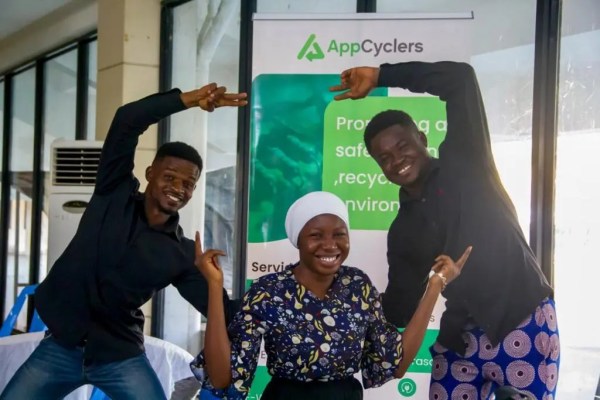
Ghana-based AppCyclers aims to tackle this crisis across Africa via an online marketplace, where individuals and businesses can buy and sell recyclable e-waste. The startup says its mission is to maximize the “reuse and recycling of electronic materials,” and out of necessity, the company’s efforts go far beyond operating a digital platform.
“We are forced to do the collection ourselves,” said co-founder and CEO Agudor Agabas, citing the lack of local recycling infrastructure. While the executive aims to scale AppCyclers across Africa via its marketplace, Agabas told TechCrunch that the company also intends to invest in new recycling infrastructure in Ghana.
To get there, AppCyclers is seeking to raise a $100,000 to $250,000 pre-seed. The startup says it’s secured $20,000 to date, via a combination of “bootstrapping, grants and pitch competitions.”
A Startup Battlefield 200 company at TechCrunch Disrupt 2023, AppCyclers also has its hands in recycling education and e-waste stripping machines. Those machines help recyclers separate rubber and plastics from more valuable materials, such as copper and gold — they’re an alternative to the practice of burning away insulating materials.
AppCyclers says it’s also developing an AI model to identify the value of e-waste in photographs. “This approach will automate the manual process of pricing waste items, and will ensure consumers visiting our web platform have a hassle-free experience,” the startup told TechCrunch.
Oracle Corp. announced a series of new AI-powered capabilities for its cloud-based applications, to help organisations improve customer service, sales, marketing, and field operations.
The new features include generative AI for service, which can automatically create content and streamline processes to resolve customer issues faster; guided campaigns, which can help marketing and sales teams launch personalised campaigns and deliver qualified leads to sellers; and AI-powered account linking, which can give sellers full visibility into accounts.
According to Rob Tarkoff, executive vice president and general manager, Oracle Cloud CX, pre-trained LLMs are changing the way we interact with people, content, and critical knowledge in our enterprises.
“With a unique combination of traditional and generative AI, running on Oracle Cloud Infrastructure and embedded in application flows, Oracle Cloud CX enables customer experience professionals to do their jobs with more accuracy and efficiency to ultimately drive more revenue,” he said.
Oracle also introduced enhancements to its B2B customer data platform, which can score and identify sales opportunities based on past engagement and target complex buying groups; intelligent sales orchestration, which can automate processes and provide AI-generated insights and recommendations for sellers; and advanced field asset monitoring, which can improve field service productivity by providing technicians with relevant information of all managed assets.
The new capabilities are part of Oracle Fusion Cloud Applications, a suite of integrated applications that span the entire business process from finance and human resources to supply chain and manufacturing. Oracle said the new features are designed to help organisations adapt to changing customer expectations and market conditions, as well as drive innovation and growth.
The post Oracle Supercharges Customer Service, Sales, and Marketing With AI appeared first on Analytics India Magazine.
ConveGenius, an Indian edtech company has successfully developed SwiftChat, a conversational AI chatbot platform tailored for government and low-cost private schools on Amazon Web Services (AWS). The platform will play a pivotal role serving over 1.5 million government schools across 14 Indian states. The edtech’s move to AWS in 2021 has resulted in a 45% reduction in IT expenses and the capacity to handle a 154-fold surge in its user base by using Amazon Elastic Compute Cloud (Amazon EC2).
SwiftChat’s mission is to improve the learning outcomes of K-12 students by using over 53 AI chatbots that deliver personalised educational content in 13 regional languages to over 100 million students. Currently, the platform manages 124 million student profiles spread across 19 million devices. It also offers teacher training, as well as data-driven insights for school administrators to maintain an optimal teacher-to-student ratio.
With AWS, ConveGenius is helping Indian state governments implement Vidya Samiksha Kendra (VSK), a centralised system designed to monitor student enrolment, participation, and academic progress at the state level. VSK provides access to study materials and supports 9.5 million teachers at 1.5 million government-run schools across India.
Pankaj Gupta, Leader of Public Sector (Government, Education, Healthcare) at AWS India Private Limited, emphasised how cloud technologies, AI, and data analytics are transforming India’s education sector. SwiftChat is seen as a powerful catalyst for change, impacting the lives of over 100 million Indian students by providing inclusive and high-quality education.
To deliver its e-learning solution at scale, ConveGenius required a hosting environment for its platform. Leveraging Amazon Redshift, a cloud data warehouse, the company analyses school data. Amazon QuickSight, a cloud-based business intelligence service, lets ConveGenius create dashboards for administrators and teachers to understand school data. Additionally, AWS security services, including AWS Shield Advanced, AWS WAF, AWS Key Management Service (AWS KMS), Amazon GuardDuty, and AWS Security Hub, are used to ensure security of student and school data while running ConveGenius’s solutions.
The post AWS Fuels ConveGenius’ AI to Educate 100 Million Students appeared first on Analytics India Magazine.
Like almost every tech company on the planet, Opera dove into the AI trend some time ago. And although AI is a divisive subject, if the tech giants have their way, it's not going anywhere anytime soon.
While there are certain avenues that I believe AI should be closed to (such as art, literature, journalism, and politics), there are some places where it has obvious benefits (such as the medical industry, science, technology, and math).
Also: The best AI chatbots of 2023: ChatGPT and alternatives
And I'm not going to lie: I've not used AI much more than to peek my head in to see what was what. But the other day I got curious. I wanted to compare what it would be like to research something with Google versus with an AI chatbot. The results actually surprised me (and should probably unnerve Google a bit).
For those who opt to use Opera as your default browser (and you should, it's amazing), there's a simple-to-use AI chatbot built-in with real-time access to the web, called Aria.
Turns out, opting for Aria (over Google) makes it easier to sift through the garbage to get right at what you're looking for. Instead of having to jettison old, outdated content and content from suspect sites, you simply get your answer. No clicking through different articles to find what you're looking for. No worries you're going to land on a site with malicious code.
It's just simple.
Of course, there's a caveat to this. Is the answer correct?
I did a few tests and found the answers to be mostly right. However, there were a few instances where Aria botched the answer. One instance involved configuring a static IP in Linux with netplan.
Also: Firefox vs Opera: Which web browser is best for you?
Aria answered the question correctly, except it used the deprecated method of configuring a gateway address. Had I followed the steps Aria gave me, the configuration would have failed.
That being said, what I found was that using Aria as a search tool is pretty efficient.
Let me show you how to enable and use it, so you can empower your searches.
How to enable Aria on Opera
What you'll need: You'll need two things for this: An updated version of Opera installed on your desktop and a free Opera account. Make sure to create an account and log into it from your Opera browser.
With those things at the ready, it's time to enable Aria.
You can also enable AI in the text highlight popup, in case you come across a term or phrase you want to use as a prompt for Aria.
How to use Aria
Using Aria is very simple. Click the Aria icon (it looks like a white A in a purple square) in the sidebar. This will open Aria, where you can type your prompt at the bottom right of the screen. Aria will take a moment and then display the results of your prompt in the sidebar.
The Aria prompt is easily accessed from the Opera sidebar.
You can repeat the same prompt by clicking the circle with the arrow or copy the results by clicking the copy button (both are to the right and above the prompt).
To dismiss Aria, simply click the icon in the sidebar. Until you clear them, all of your prompts will remain.
Also: How to reset Opera | How to pin extensions | How to add a custom site block list | Opera's Battery Saver mode
One thing to keep in mind is that every time you want to start a new prompt, click the + button at the top right of the Aira sidebar, otherwise, all of your prompts will be bundled together and you can view them individually.
To view your prompts, click the three-horizontal-line button at the top left of the Aria sidebar, where you can select which of your previous prompts you want to view.
Access all of your previous prompts and start a new one from here.
And that's all there is to enabling and using the Aria AI in the Opera browser. Do remember to check the results; otherwise, you could wind up with incorrect (or plagiarized) information.