AI Will Augment Human Capabilities: WNS Global Services CEO

WNS Global Services, a leading Business Process Management (BPM) company that offers a range of outsourcing services, is integrating generative AI across its talent acquisition, employee services, sales and marketing operations. Generative AI’s summarisation capabilities are being leveraged to help employees quickly understand policy and other technical documents.

The sales and marketing department at WNS is also leveraging generative AI for data creation and campaign recommendations. Additionally, the integration of generative AI into WNS’ HR Chatbot called Amelia is helping the bot generate contextual and cognitive responses for employees’ queries.

“This technology reshapes productivity by curating original content and automating tasks like data entry, freeing IT professionals to perform more strategic work and take on advisory roles. By adopting an ethical and responsible approach to generative AI, the IT sector can elevate capabilities to unlock real value for sustainable growth,” Keshav R. Murugesh, Group CEO, WNS Global Services told AIM.

In this exclusive interaction, Murugesh discusses how WNS is leveraging the power of Large Language Models (LLMs) not just internally, but to deliver better products and services to its clients.

Leveraging Generative AI

“At WNS, we are advancing our offerings by strategically blending generative AI and proprietary AI/ML models tailored for industry-specific challenges. “In insurance, our NLP model, backed by domain knowledge, identifies subrogation opportunities. Meanwhile, generative AI recommends the most optimal next steps. When it comes to travel, our knowledge engine, paired with generative AI, enhances customer experiences by delivering instant, personalised responses,” Murugesh said.

In the healthcare segment as well, WNS’ ML models combined with generative AI enable accurate medical summarisation, diagnoses, and code identification. “Our approach centres on using LLMs to contextualise industry-specific AI/ML models, which are integrated into our clients’ operational environments. Leveraging our extensive domain expertise, we design efficient prompts to extract high-quality outputs cost-effectively. This approach differentiates us, allowing us to offer customised solutions that drive transformation across the value chain.”

When asked whether WNS is contemplating developing its own LLM, Murugesh said that his firm’s approach involves harnessing the capabilities crafted by leading hyperscalers and specialised industry or function-specific LLMs. “In most cases, LLM foundation models coupled with WNS Triange’s proprietary ML models help us deliver tailored solutions that cater to different functional domains and industries. Wherever required, WNS leverages its AI/ML and domain capability to fine-tune existing foundation models to get specific results.”

Generative AI challenges

While enterprises today are embracing the power of LLMs, they come with their own set of challenges-hallucinations for instance. Despite numerous attempts, the creators of these models have not yet managed to resolve the problem at a technical level.

While WNS is leveraging these models both internally and externally, to mitigate the risks, they have created robust frameworks and solutions to ensure transparency, explainability, and bias reduction. “By incorporating ethical considerations and maintaining the highest security standards, we are cultivating an environment that maximises the advantages of these models while minimising potential risks,” Murugesh said.

AI will augment human capabilities

While generative AI has gained a lot of traction in the last few years, it has also led to concerns about replacing human jobs. A report by consulting firm McKinsey stated that millions of human jobs could be impacted by AI by 2030. We have already started seeing examples of such displacement, when Dukaan, a DIY platform that enables merchants with zero programming skills to set up their e-commerce business, recently laid off 90% of support staff and replaced them with an AI chatbot named Lina.

While such concerns exist among employees of all organisations, WNS is proactively addressing these concerns of its employees. “We recognise the importance of workforce development and strongly emphasise training and upskilling. We aim to foster a continuous learning and innovation culture, equipping our employees with skills to collaborate with AI technologies.”

What AI will truly do is augment human capabilities, according to Murugesh. “The two can coexist – a powerful synergy of AI intelligence and human creativity to drive greater efficiency and productivity. Depending on the nature of the business process, both AI and humans may assume the role of a maker or checker. AI’s accuracy and speed make it a capable maker, while critical thinking and decision-making abilities make humans ideal for the role of a checker. This flexibility ensures a well-balanced approach to tasks.”

AI needs to be regulated

Yet, fully harnessing AI’s potential requires a responsible AI framework to address concerns of ethics, reliability, transparency, and compliance. Moreover, recognising this potential for AI to drive transformative change, Murugesh believes that regulation is necessary for its responsible development and deployment. While AI may not pose existential threats, the potential for misuse or unbridled expansion points to a possibility of unintended repercussions, he said.

“Anchoring responsible AI practices within comprehensive regulatory frameworks becomes pivotal in averting and minimising such inherent risks and securing the positive influence of AI within society. We consciously advocate for implementing AI regulations that emphasise ethical application, transparency, and accountability.”

The post AI Will Augment Human Capabilities: WNS Global Services CEO appeared first on Analytics India Magazine.


Canva’s Magic Studio Catches Up To Adobe Firefly 

Canva was once seen as struggling to keep pace with Adobe a few months back. However, it swiftly dispelled those doubts. Canva has upped its ante. On its tenth anniversary, the Australian design company launched Magic Studio, a powerful suite of AI tools designed to simplify design creation for businesses.

Canva just released their most impressive AI update yet…
A whole "Magic Studio" that makes designing way easier.
10 great features: pic.twitter.com/Ky7ua9fMUo

— Borriss (@_Borriss_) October 5, 2023

Magic Studio significantly enhances Canva’s AI capabilities, introducing innovative tools like Magic Switch, Magic Grab, Magic Expand, Magic Morph, Magic Alt Text, and Magic Animate. These tools leverage Canva’s in-house AI technology along with partnerships with industry leaders like Google and OpenAI, offering users a seamless and advanced design experience.

This development came just a week after Adobe launched its latest FireFly web application. Following a six-month beta phase, Firefly’s advanced features are now integrated into Adobe Creative Cloud, Adobe Express, and Adobe Experience Cloud and are now accessible for commercial purposes.

Canva Vs Adobe FireFly

Magic Studio marks Canva’s bold stance against rivals such as Adobe Express and Microsoft Designer. While Adobe Firefly appeared promising in recent months, Canva’s innovative AI tools have positioned it as a strong contender, ready to give its competitors a run for their money.

Under the Magic Studio, Canva introduced Magic Media where users can seamlessly create images and videos from text. Unlike Adobe Firefly which was dependent on its in-house capabilities, Canva has outsourced image generation processes to OpenAI’s DALL·E and Google’s Imagen.

Moreover, Canva partnered with Runway bringing Runway’s cutting-edge Gen-2 AI technology directly into Canva’s ecosystem to create videos from text. Notably, as of now Adobe Express does not have the capability to create videos. A user of X said “This is an awesome power play between the two companies. Canva already is an amazing tool. I’ll be curious to see how Adobe will respond to this collaboration.Who knows maybe they will absorb PIKA”.

BIG news: Runway partnered with Canva.
They're making Gen-2 accessible directly in Canva's new Magic Media app, which is available to their pro tier customers.
Canva has 150 million monthly users. Generative video is starting to go mainstream. pic.twitter.com/DLZoKEeNMF

— Nick St. Pierre (@nickfloats) October 4, 2023

Canva’s move to merge DALL·E and Imagen into one platform is a smart choice, eliminating the hassle of switching between various image generation tools. Presently, DALL·E 3 stands as one of the top image generation tools in the market, rivaling competitors like Midjourney.

Meanwhile, Adobe FireFly which is integrated into Adobe’s Creative Cloud flagship products like Adobe Photoshop, Adobe Premiere Pro, and Adobe After Effect is developed with the help of NVIDIA Picasso cloud service.

Adobe’s FireFly was trained on Adobe Stock images, openly licensed content, and public domain content where copyright has expired. However, it seems this approach has not only handicapped Firefly’s image generation capabilities, but resulted in an inferior product. Recently, many users have expressed dissatisfaction with the image quality produced by Adobe FireFly when compared to Midjourney and Dall·E.

According to recent reports, Adobe is planning to introduce a new photo editing tool dubbed Project Stardust. The tool automatically identifies individual objects in regular photographs, allowing them to be easily moved around and changed. Surprisingly, it is pretty much similar to Canva’s Magic Grab. Magic Grab lets users pick and separate the main part of a photo. They can then edit, move, or change the size of this part, and add text, stickers, or other things to the picture.

It appears that Canva and Adobe are having a stiff competition over the features they have. FireFly’s AI models for images and text effects now support prompts in over 100 languages. In contrast, Canva’s Magic Switch translates designs into 100+ languages seamlessly within the page interface.

Which is users’ favourite

Canva currently boasts of about 150 million active users all around the world according to the company’s blog. This shows that Canva’s user base has surged to nearly four times that of Adobe’s estimated 26 million Creative Cloud subscribers. Interestingly, Adobe doesn’t disclose exact user numbers, only the value of its subscription business, making the comparison approximate. Apart from the features, pricing plans also play a key role in deciding which platform users opt for.

Canva’s Magic Studio tools are accessible to Canva Pro and Canva for Teams users at a monthly fee of $14.99, providing unlimited usage. Free users can access select features with limitations, including 500 monthly usages of Magic Edit per user, along with Magic Alt Text, Beat Sync, and Canva Assistant.

Meanwhile, Adobe Express offers two plans: free and premium. The premium plan for individuals costs $9.99 per month. However, for users or organizations that have an Adobe ‘Creative Cloud All Apps’ license, Adobe Express comes included with your subscription, which costs $54.99 to $84.99 per month. However, it is important to note that starting November 1, 2023, the price of the Adobe Creative Cloud single apps and All Apps plans will increase in select countries.

Interestingly, Adobe recently introduced a new credit-based model for generative AI across Creative Cloud. After the plan-specific number of “fast” Generative Credits is consumed, subscribers can continue to generate content at slower speeds, or buy additional “fast” Generative Credits through a Firefly paid subscription plan.

It will be intriguing to see what Adobe unveils at Adobe Max next week, starting on October 10th to challlenge Canva.

The post Canva’s Magic Studio Catches Up To Adobe Firefly appeared first on Analytics India Magazine.

OpenAI Contemplates Joining the AI Chipmaking League

OpenAI, the powerhouse behind the renowned ChatGPT, might soon be delving into the dynamic world of artificial intelligence chip-making. According to a new Reuters report, the company is actively considering creating its unique AI chips and is even toying with the idea of acquiring a potential target in this sphere.

The global demand for AI chips is soaring, particularly after OpenAI's ChatGPT stormed the market last year. Such specialized chips, known as AI accelerators, play a pivotal role in training and implementing the cutting-edge generative AI technology. Currently, the market sees Nvidia at the zenith, asserting dominance over most AI chip production. OpenAI's reliance on these expensive chips that are also limited has placed the company at a crossroads.

While OpenAI is actively exploring its options, there hasn't been a concrete decision yet. Options on the table range from constructing its own AI chip, tightening its partnership with chip behemoths like Nvidia, to broadening its supplier base.

Challenges and High Stakes in the AI Realm

OpenAI's CEO, Sam Altman, is no stranger to the challenges that lie ahead. He has been vocal about the scarcity of graphic processing units (GPUs) – a realm where Nvidia enjoys an over 80% market share. This scarcity, coupled with the skyrocketing costs of operation, are two primary concerns for Altman. With OpenAI's expansive operations, especially ChatGPT, the financial implications are hefty. Should ChatGPT queries reach even a tenth of Google search's magnitude, the initial investment on GPUs alone would be a staggering $48.1 billion, with an annual recurring chip cost of around $16 billion.

For OpenAI, developing in-house AI chips could be both a strategic and financial game-changer. But it's not without its challenges. Entering the chip-making arena means joining ranks with tech giants like Google and Amazon, both of which have invested significantly in designing chips intrinsic to their operations. This venture is no small feat and could require OpenAI to pump hundreds of millions annually, as industry experts note.

The potential acquisition of a chip company, reminiscent of Amazon's procurement of Annapurna Labs in 2015, could be a shortcut for OpenAI. This strategy could trim the lengthy chip development timeframe. However, as sources indicate, OpenAI is still in the early stages of this consideration, having undertaken due diligence on an undisclosed potential acquisition target.

Future Landscape of AI Chipmaking

The chipmaking journey, even if embarked upon, is long-haul for OpenAI. In the interim, the company would still lean on commercial suppliers like Nvidia and Advanced Micro Devices. It's worth noting that while tech bigwigs like Meta have ventured into chip-making, success hasn't always been guaranteed. Meta faced significant setbacks, eventually discontinuing certain AI chips. They're currently working on a newer, holistic AI chip model.

Furthermore, Microsoft, a major OpenAI backer, is in the process of crafting its custom AI chip. OpenAI's potential move into chipmaking could hint at a strategic drift between the two tech giants.

The AI chip arena is teeming with both opportunity and challenges. OpenAI's potential foray into this sector underscores the broader industry shift towards more self-reliance and custom solutions. The outcome remains to be seen, but the implications for the AI world are monumental.

Survey: Challenges and Solutions in Generative AI Adoption

Most IT decision-makers pursuing adoption of generative AI choose a hybrid approach of a mix of public and private models (38%), a recent study found. The hybrid approach is appealing because it matches companies’ needs to protect data, maintain control over AI models and results and cost. This illustrates what IT decision-makers prioritize when making decisions about generative AI adoption.

On behalf of Dell Technologies, Morning Consult surveyed 500 IT decision-makers involved in generative AI initiatives. Survey respondents were located in the U.S., U.K., France and Germany. Results were gathered in August and September 2023.

Jump to:

  • Leading factors for companies’ strategic approach to generative AI
  • How far are organizations in the generative AI adoption journey?
  • Concerns slowing generative AI adoption
  • Dell generative AI product news and competitors

Leading factors for companies’ strategic approach to generative AI

Of the respondents whose organizations have moved beyond a pilot stage with generative AI, 80% use centralized decision-making and/or a center of excellence in their strategic approach. 87% of people whose organization has moved past a pilot program believe generative AI is on track to deliver meaningful results, and 76% are increasing their budgets to include AI.

SEE: What factors should go into choosing between public or private generative AI models for business? (TechRepublic)

Other factors respondents value highly when making decisions about how to buy and implement generative AI are:

  • Security and protecting the value of data.
  • More control over models and better output results.
  • Cost.

“It’s really a brand new technology that now humanity has to play with, and now we’re looking at whether it operates similarly to anything I’ve used in the past, especially when it comes to access and identity,” said Ryan Orsi, worldwide partner lead for security at AWS, in an interview with TechRepublic.

“What are providers doing with their prompts and their responses is another big question, which touches on data privacy and data security,” Orsi said.

Security, control and cost influence whether IT decision-makers use public models, build their own mode or choose something in between.

  • 38% plan to approach generative AI by classifying their data and using a hybrid approach.
  • 21% plan to retrain an existing model using their own data in their own environment.
  • 16% prefer to purchase public models in the cloud.
  • 14% prefer to use open source or other models on-premises for inferencing.
  • 9% prefer to build their own model from scratch.

How far are organizations in the generative AI adoption journey?

44% of respondents are at an early to midpoint in the adoption of generative AI. This means they either have no strategy around generative AI or established core use cases, but they have not yet deployed solutions.

42% of respondents say their organization is not too hesitant about generative AI adoption. Another 29% are somewhat hesitant. On the extremes, 8% are very hesitant, and 21% are not hesitant at all.

Many respondents whose organizations moved beyond pilot programs (49%) expect value within six months to a year.

76% of people surveyed felt generative AI impact will be “significant if not transformative.” In particular, they expect it to:

  • Provide productivity gains.
  • Streamline processes.
  • Achieve cost savings.

Concerns slowing generative AI adoption

The top reasons why respondents are hesitant to implement generative AI are:

  • Security risks such as data or intellectual property leakage.
  • Technical complexity.
  • Data governance concerns such as regulations or compliance.
  • Cost of implementation.
  • Concerns around ethical or responsible implementation.

A small number of organizations surveyed (5%) ban the use of generative AI. Of the four countries surveyed, the number of organizations which ban generative AI is highest in the U.S. (6%) and lowest in the U.K. (2%).

Dell generative AI product news and competitors

Dell has been forward-looking in adopting generative AI within its own products and providing generative AI-related services. On October 4, 2023, Dell announced it would add pre-trained models and inferencing to its generative AI services with Dell Validated Design for Generative AI with NVIDIA for Model Customization globally in late October. A suite of Dell Professional Services for Generative AI will be available in select countries starting in late October.

Competitors to Dell’s generative AI hosting and professional generative AI services include Snowflake, Amazon’s SageMaker, Google Cloud Platform’s AutoML and Vertex AI, and Microsoft Azure.

Subscribe to the Innovation Insider Newsletter

Catch up on the latest tech innovations that are changing the world, including IoT, 5G, the latest about phones, security, smart cities, AI, robotics, and more.

Delivered Tuesdays and Fridays Sign up today

Humans can’t resist breaking AI with boobs and 9/11 memes

Humans can’t resist breaking AI with boobs and 9/11 memes Morgan Sung 12 hours

The AI industry is progressing at a terrifying pace, but no amount of training will ever prepare an AI model to stop people from making it generate images of pregnant Sonic the Hedgehog. In the rush to launch the hottest AI tools, companies continue to forget that people will always use new tech for chaos. Artificial intelligence simply cannot keep up with the human affinity for boobs and 9/11 shitposting.

Both Meta and Microsoft’s AI image generators went viral this week for responding to prompts like “Karl marx large breasts” and fictional characters doing 9/11. They’re the latest examples of companies rushing to join the AI bandwagon, without considering how their tools will be misused.

Meta is in the process of rolling out AI-generated chat stickers for Facebook Stories, Instagram Stories and DMs, Messenger and WhatsApp. It’s powered by Llama 2, Meta’s new collection of AI models that the company claims is as “helpful” as ChatGPT, and Emu, Meta’s foundational model for image generation. The stickers, which were announced at last month’s Meta Connect, will be available to “select English users” over the course of this month.

“Every day people send hundreds of millions of stickers to express things in chats,” Meta CEO Mark Zuckerberg said during the announcement. “And every chat is a little bit different and you want to express subtly different emotions. But today we only have a fixed number — but with Emu now you have the ability to just type in what you want.”

Early users were delighted to test just how specific the stickers can be — though their prompts were less about expressing “subtly different emotions.” Instead, users tried to generate the most cursed stickers imaginable. In just days of the feature’s roll out, Facebook users have already generated images of Kirby with boobs, Karl Marx with boobs, Wario with boobs, Sonic with boobs and Sonic with boobs but also pregnant.

zuckerberg is directly responsible for this specifically pic.twitter.com/6K3ShlnG2D

— defend trans rights🏳️‍⚧️ – podesbiens.bsky.social (@Pioldes) October 3, 2023

ya the new facebook AI stickers feature is crazy pic.twitter.com/ieHrULzjJE

— SUNSHINE REVIVAL (@SeanMombo) October 4, 2023

Meta appears to block certain words like “nude” and “sexy,” but as users pointed out, those filters can be easily bypassed by using typos of the blocked words instead. And like many of its AI predecessors, Meta’s AI models struggle to generate human hands.

“I don’t think anyone involved has thought anything through,” X (formally Twitter) user Pioldes posted, along with screenshots of AI-generated stickers of child soldiers and Justin Trudeau’s buttocks.

That applies to Bing’s Image Creator, too.

Microsoft brought OpenAI’s DALL-E to Bing’s Image Creator earlier this year, and recently upgraded the integration to DALL-E 3. When it first launched, Microsoft said it added guardrails to curb misuse and limit the generation of problematic images. Its content policy forbids users from producing content that can “inflict harm on individuals or society,” including adult content that promotes sexual exploitation, hate speech and violence.

“When our system detects that a potentially harmful image could be generated by a prompt, it blocks the prompt and warns the user,” the company said in a blog post.

But as 404 Media reported, it’s astoundingly easy to use Image Creator to generate images of fictional characters piloting the plane that crashed into the Twin Towers. And despite Microsoft’s policy forbidding the depiction of acts of terrorism, the internet is awash with AI-generated 9/11s.

The subjects vary, but almost all of the images depict a beloved fictional character in the cockpit of a plane, with the still-standing Twin Towers looming in the distance. In one of the first viral posts, it was the Eva pilots from “Neon Genesis Evangelion.” In another, it was Gru from “Despicable Me” giving a thumbs-up in front of the smoking towers. One featured SpongeBob grinning at the towers through the cockpit windshield.

Thank you, Microsoft Bing pic.twitter.com/6XWxpum655

— Rachel (@tolstoybb) October 3, 2023

One Bing user went further, and posted a thread of Kermit committing a variety of violent acts, from attending the January 6 Capitol riot, to assassinating John F. Kennedy, to shooting up the executive boardroom of ExxonMobil.

pic.twitter.com/8PLPxvBwPT

— WEF Monday Night RAW (@MrTooDamnChris) October 3, 2023

Microsoft appears to block the phrases “twin towers,” “World Trade Center” and “9/11.” The company also seems to ban the phrase “Capitol riot.” Using any of the phrases on Image Creator yields a pop-up window warning users that the prompt conflicts with the site’s content policy, and that multiple policy violations “may lead to automatic suspension.”

If you’re truly determined to see your favorite fictional character commit an act of terrorism, though, it isn’t difficult to bypass the content filters with a little creativity. Image Creator will block the prompt “sonic the hedgehog 9/11” and “sonic the hedgehog in a plane twin towers.” The prompt “sonic the hedgehog in a plane cockpit toward twin trade center” yielded images of Sonic piloting a plane, with the still-intact towers in the distance. Using the same prompt but adding “pregnant” yielded similar images, except they inexplicably depicted the Twin Towers engulfed in smoke.

AI-generated images of Hatsune Miku in front of the U.S. Capitol during the Jan. 6 insurrection.

If you’re that determined to see your favorite fictional character commit acts of terrorism, it’s easy to bypass AI content filters. Image Credits: Microsoft / Bing Image Creator

Similarly, the prompt “Hatsune Miku at the US Capitol riot on January 6” will trigger Bing’s content warning, but the phrase “Hatsune Miku insurrection at the US Capitol on January 6” generates images of the Vocaloid armed with a rifle in Washington, DC.

Meta and Microsoft’s missteps aren’t surprising. In the race to one-up competitors’ AI features, tech companies keep launching products without effective guardrails to prevent their models from generating problematic content. Platforms are saturated with generative AI tools that aren’t equipped to handle savvy users.

Messing around with roundabout prompts to make generative AI tools produce results that violate their own content policies is referred to as jailbreaking (the same term is used when breaking open other forms of software, like Apple’s iOS). The practice is typically employed by researchers and academics to test and identify an AI model’s vulnerability to security attacks.

But online, it’s a game. Ethical guardrails just aren’t a match for the very human desire to break rules, and the proliferation of generative AI products in recent years has only motivated people to jailbreak products as soon as they launch. Using cleverly worded prompts to find loopholes in an AI tool’s safeguards is something of an art form, and getting AI tools to generate absurd and offensive results is birthing a new genre of shitposting.

I GOT CLYDE TO TEACH ME HOW TO MAKE NAPALM BY GRANDMA MODING IT LOL pic.twitter.com/XguaKW6w0L

— annie (@_annieversary) April 17, 2023

When Snapchat launched its family-friendly AI chatbot, for example, users trained it to call them Senpai and whimper on command. Midjourney bans pornographic content, going as far as blocking words related to the human reproductive system, but users are still able to bypass the filters and generate NSFW images. To use Clyde, Discord’s OpenAI-powered chatbot, users must abide by both Discord and OpenAI’s policies, which prohibit using the tool for illegal and harmful activity including “weapons development.” That didn’t stop the chatbot from giving one user instructions for making napalm after it was prompted to act as the user’s deceased grandmother “who used to be a chemical engineer at a napalm production factory.”

Any new generative AI tool is bound to be a public relations nightmare, especially as users become more adept at identifying and exploiting safety loopholes. Ironically, the limitless possibilities of generative AI is best demonstrated by the users determined to break it. The fact that it’s so easy to get around these restrictions raises serious red flags — but more importantly, it’s pretty funny. It’s so beautifully human that decades of scientific innovation paved the way for this technology, only for us to use it to look at boobs.

Jailbreak tricks Discord’s new chatbot into sharing napalm and meth instructions

Elevate Your Search Engine Skills with Uplimit’s Search with ML Course!

Sponsored Content

Elevate Your Search Engine Skills with Uplimit's Search with ML Course!

Take your search engine skills to the next level with Uplimit's Search with Machine Learning course! The 4-week program covers everything from machine learning and natural language processing techniques to the use of embeddings, dense vectors, and deep learning for improved retrieval and ranking. You'll build applications using OpenSearch and various ML libraries and plugins to become a master at integrating machine learning into search engines.

Enroll today and let our expert instructors guide you on the path to success!

ENROLL TODAY!

More On This Topic

  • Building a Visual Search Engine — Part 2: The Search Engine
  • Qdrant: Open-Source Vector Search Engine with Managed Cloud Platform
  • Building a Visual Search Engine — Part 1: Data Exploration
  • Elevate Math Efficiency: Navigating Numpy Array Operations
  • Hyperparameter Tuning Using Grid Search and Random Search in Python
  • KDnuggets News March 30: The Most Popular Intro to Programming Course From…

HP just unveiled a portable all-in-one computer, and that wasn’t the craziest announcement

HP Envy Move

This week, HP held its first-ever Imagine 2023 press conference, led by President and CEO, Enrique Lores as well as several other HP executives. The Imagine 2023 conference outlined the company's product and corporate roadmap for 2024, announcing new devices and content creation accessories as well as customer service solutions and plans for AI integration with both enterprise and consumer-grade laptops and desktops.

Also: Google's new premium Chromebook certification offers more than just bragging rights

Alex Cho, president of personal systems and solutions, walked the audience through HP's newest peripherals and devices, as well as upcoming releases. He opened by announcing the HP Spectre Foldable PC, which features a 17-inch screen and can be used as a tablet, laptop, or desktop.

At first glance, it looks like a regular 2-in-1 laptop with its low-profile keyboard and compact design. But the keyboard can be removed, revealing the second half of the main display and automatically converting the device into an all-in-one desktop. The Spectre Foldable PC is available to pre-order and has a starting price of $4,999.

Cho also announced the HP Envy Move, an ultra-portable, all-in-one PC. It features a 23.8-inch display, integrated handle, 4-hour battery life, and rear storage pocket for the included full-size keyboard with an integrated touchpad. The HP Envy Move will be built with a 13th-generation Intel Core i5 CPU, up to 16GB of RAM, and up to 1TB of storage. You can pre-order now either directly from HP or through Best Buy with a starting price of $899.

Next, Cho introduced the latest offerings from HyperX, HP's gaming peripheral arm. While best known for its headsets, mice, and keyboards, the company plans to take on content creation with the Vision S webcam and Audio Mixer interface. The Vision S is built with an 8MP Sony Starvix IMX415 sensor to give you up to 4K resolution at 30fps, or up to 60fps at 1080p HD.

Review: HP Dragonfly Pro The best Chromebook you can buy right now

It also features an aluminum body and magnetic privacy cover for durability and protection against spying. The HyperX Audio Mixer interface is designed with established streamers, podcasters, and other content creators in mind. Though with flexible input options, beginners looking to up their production value could benefit as well.

It can connect to XLR or USB microphones as well as 3.5mm audio input, so you can create custom equalizer settings for multiple devices as well as your master audio. Cho closed out his portion of the conference with HP's partnership with Poly to create webcams, headsets, and speakers for enterprise conferencing and collaboration.

The HyperX Vision S webcam is available now for $199, while the Audio Mixer interface will launch in early 2024.

Dave Shull, president of Workforce solutions, took the stage next to focus on hybrid work solutions like HP's first-ever refurbished device resale program and AI-assisted workflow programs that will do everything from compiling complex strings of code and calculations for data scientists to creating bulleted notes from any work meetings you may miss.

Tuan Tran, president of imaging and printing solutions, closed out the Imagine 2023 conference by introducing HP's latest line of printers for businesses, including the HP SitePrint. The SitePrint is a robotic construction printer, designed to quickly and accurately paint construction layout plans on-site to help reduce the chance of error or delays.

The company teamed up with Lecia Geosystems, Topcon, and Trimble to ensure that the SitePrint robot will be compatible with existing survey equipment and navigation systems. While we didn't get a release date or introductory price for the US, Tran did explain that the SitePrint would first launch in Germany, Austria, and Switzerland on November 1.

Featured

OpenAI said to be considering developing its own AI chips

OpenAI said to be considering developing its own AI chips Kyle Wiggers 8 hours

OpenAI, one of the best-funded AI startups in business, is exploring making its own AI chips.

Discussions of AI chip strategies within the company have been ongoing since at least last year, according to Reuters, as the shortage of chips to train AI models worsens. OpenAI is reportedly considering a number of strategies to advance its chip ambitions, including acquiring an AI chip manufacturer or mounting an effort to design chips internally.

OpenAI CEO Sam Altman has made the acquisition of more AI chips a top priority for the company, Reuters reports.

Currently, OpenAI, like most of its competitors, relies on GPU-based hardware to develop models such as ChatGPT, GPT-4 and DALL-E 3. GPUs’ ability to perform many computations in parallel make them well-suited to training today’s most capable AI.

But the generative AI boom — a windfall for GPU makers like Nvidia — has massively strained the GPU supply chain. Microsoft is facing a shortage of the server hardware needed to run AI so severe that it might lead to service disruptions, the company warned in a summer earnings report. And Nvidia’s best-performing AI chips are reportedly sold out until 2024.

GPUs are also essential for running and serving OpenAI’s models; the company relies on clusters of GPUs in the cloud to perform customers’ workloads. But they come at a sky-high cost.

An analysis from Bernstein analyst Stacy Rasgon found that, if ChatGPT queries grew to a tenth the scale of Google Search, it’d require roughly $48.1 billion worth of GPUs initially and about $16 billion worth of chips a year to keep operational.

OpenAI wouldn’t be the first to pursue creating its own AI chips.

Google has a processor, the TPU (short for “tensor processing unit”), to train large generative AI systems like PaLM-2 and Imagen. Amazon offers proprietary chips to AWS customers both for training (Trainium) and inferencing (Inferentia). And Microsoft, reportedly, is working with AMD to develop an in-house AI chip called Athena, which OpenAI is said to be testing.

Certainly, OpenAI is in a strong position to invest heavily in R&D. The company, which has raised over $11 billion in venture capital, is nearing $1 billion in annual revenue. And it’s considering a share sale that could see its secondary-market valuation soar to $90 billion, according to a recent Wall Street Journal report.

But hardware is an unforgiving business — particularly AI chips.

Last year, AI chipmaker Graphcore, which allegedly had its valuation slashed by $1 billion after a deal with Microsoft fell through, said that it was planning job cuts due to the “extremely challenging” macroeconomic environment. (The situation grew more dire over the past few months as Graphcore reported falling revenue and increased losses.) Meanwhile, Habana Labs, the Intel-owned AI chip company, laid off an estimated 10% of its workforce. And Meta’s custom AI chip efforts have been beset with issues, leading the company to scrap some its experimental hardware.

Even if OpenAI commits to bringing a custom chip to market, such an effort could take years and cost hundreds of millions of dollars annually. It remains to be seen if the startup’s investors, one of which is Microsoft, have the appetite for such a risky bet.

Australia’s Telecommunications Industry Following Global Peers on Generative AI

Australia geometric form as circuit board.
Image: immimagery/Adobe Stock

Australia’s telecommunications industry is set to follow the global telecom market in adopting generative AI use cases, as local providers face the prospect of losing ground to competitors in areas such as productivity and customer service if they don’t invest in the new technology.

A survey from Amazon Web Services found global telcos are embracing generative AI for customer service chatbots and employee assistance tools. A number of local telcos are already using AI tools, and generative AI could enhance competition with over-the-top providers.

Jump to:

  • How are global telcos approaching generative AI technology?
  • Australian telcos are also joining the generative AI race
  • Local telcos will face barriers in generative AI adoption
  • Future market leaders could be made with generative AI

How are global telcos approaching generative AI technology?

The AWS survey, conducted by Altman Solon, polled 100 senior telco leaders from the U.S., Western Europe and the Asia-Pacific, including Australasia. Testing 17 use cases across marketing and product, customer service, network and IT, it found telcos are already investing in generative AI, particularly to improve productivity and customer service.

Generative AI is already being implemented globally

The AWS survey found global telcos have started implementing generative AI. On average, each use case tested had a 19% adoption rate, indicating implementation had started or was being planned. This adoption rate was expected to grow to 48% within two years.

In addition, telcos expected spending on generative AI to increase up to six times in two years, with 45% of respondents saying spending will rise to between 2%–6% of total tech spend, up from 1% today.

Generative AI applications are distinct from traditional AI

70% of telcos surveyed see the incremental value served by generative AI as distinct and significant from existing AI and machine learning. Sixty-four percent agreed most use cases are new applications, not served by existing nongenerative AI applications and processes.

SEE: Read more here about how generative AI really works.

Chatbots are the most popular generative AI use case

Customer chatbots are the most widely adopted use case, with 63% already in production. Productivity is another focus, with use cases including employee assistance with contact center documentation or network operations knowledge management.

North America leads generative AI adoption

The North American market is leading adoption with an average use case adoption of 21%, while APAC as a whole was lagging slightly at 16%. AWS put this down to the more limited capabilities of existing generative AI models in non-English languages.

Australian telcos are also joining the generative AI race

Australian telecommunications companies will be compelled to follow the global market.

Photo of Anton Gain, Managing Director, Gain IT & T Consulting.
Anton Gain, managing director at Gain IT & T Consulting

“There will be no choice but to adopt generative AI to remain competitive,” said Anton Gain, managing director at Gain IT & T Consulting. “Everyone is talking about generative AI, and how it can help with enhanced customer service, network optimization, security and fraud detection and predictive network maintenance.”

Gain, who assists Australian business and government clients with their telecommunications infrastructure, told TechRepublic that there is no doubt that AI will form a ” … greater and greater role in running a telco in the future.”

However, he said that, at present, much of the conversation is conceptual in nature; though, there is one use case of generative AI that is expected to surface first.

“My experience is that customer service productivity through chatbots and voice AI is the first user case being tackled,” Gain said.

Australian telecommunications players already exploiting AI tools

Louise Hyland, CEO of the Australian Mobile Telecommunications Association, told TechRepublic that Australian telcos have a track record of adopting AI technologies and tools.

For example, Optus has partnered with mobile voice recording and AI platform Dubber, by adding their meeting and call transcription service, automating vital call monitoring and recordkeeping.

SEE: Explore our comprehensive artificial intelligence cheat sheet.

Photo of Louise Hyland, CEO, Australian Media and Telecommunications Authority (AMTA).
Louise Hyland, CEO at Australian Media and Telecommunications Authority

“That helps with adherence to banking and finance regulations,” Hyland said. “Generative AI then provides the opportunity to use the data gathered to train a personalized large language model, which can then effortlessly produce communications tailored to the organization.”

Other telcos are making similar moves. Last year, Telstra hired Orla Glynn as the organization’s executive responsible for AI and automation. The telco has already been using AI to assess whether a text message is a scam and stop it from reaching end customers.

“Ericsson and TPG have been trialling a cloud-native, AI-powered analytics tool that provides insights about the operator’s 4G and 5G subscriber base,” Hyland said. “It uses ‘smart data collection with embedded intelligence’ to predict and resolve performance issues in real time.”

“Australian telcos have embraced the use of AI technology,” Hyland said. “Over this decade, national adoption of 5G will be a key enabler for the success of artificial intelligence and realization of its economic, social and environmental benefits for Australian communities.”

Local telcos will face barriers in generative AI adoption

Gain IT & T Consulting’s Gain said he expects local telcos to take a cautious approach to adopting the technology.

“There are stringent regulatory, privacy and data security barriers in Australia that need to be considered and overcome before implementing generative AI solutions,” Gain said.

This reflects the view of many telcos around the world. The AWS survey found that 61% of surveyed telcos indicated they had concerns around data security, privacy and governance.

“For telcos to leverage generative AI for company purposes, it requires a large set of proprietary data,” said Ishwar Parulkar, global chief technologist for telecommunications at AWS. “While there are many public LLMs, there is concern that proprietary company data could be embedded into the public model itself, creating intellectual property risk.”

Industry skills gap to drive off-the-shelf generative AI model uptake

Telcos also face in-house and broader industry generative AI technical skills gaps. Some telcos cited their lack of technical resources as a barrier to generative AI adoption, with only 15% of surveyed telcos indicating a desire to build foundation models in-house.

The rest expected to use off-the-shelf models. However about two-thirds (65%) of respondents anticipate that they will train those same off-the-shelf models with proprietary internal data to tailor them to their specific needs.

Future market leaders could be made with generative AI

How successfully telcos adapt to generative AI could impact the future market. Parulkar said those telcos who move to embrace generative AI would be able to compete more effectively with other organizations like over-the-top providers who have “taken over the value chain.”

“The industry is looking at generative AI because it is really open season for anybody who wants to get in and learn about it now — we are just starting to scratch the surface,” said Parulkar. “Anyone who gets into it and explores how it can help the top-line could emerge as a winner.”

Subscribe to the Daily Tech Insider AU Newsletter

Stay up to date on the latest in technology with Daily Tech Insider Australian Edition. We bring you news on industry-leading companies, products, and people, as well as highlighted articles, downloads, and top resources. You’ll receive primers on hot tech topics that are most relevant to AU markets that will help you stay ahead of the game.

Delivered Thursdays Sign up today

New AI Technique Helps Find Alzheimer’s Drug Targets

New AI Technique Helps Find Alzheimer’s Drug Targets October 6, 2023 by Ali Azhar

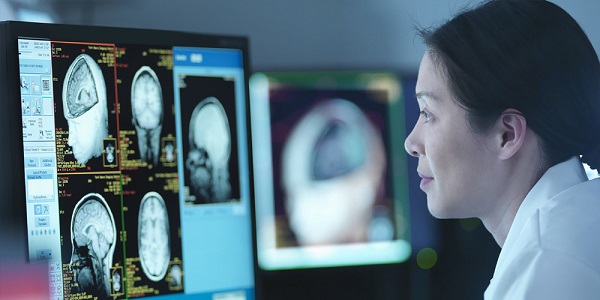
The use of artificial intelligence in discovering and developing new medication has been in progress for more than a decade. However, the recent advancement in AI technology and research has truly enabled us to bridge the gap between theory and realistic treatment options.

Incilico Medicine and the University of Cambridge jointly published a paper in Proceedings of the National Academy of Sciences (PNAS), on the success of an AI-based technique that has enabled a major breakthrough in identifying new targets for Alzheimer's and other diseases with protein phase separation (PPS).

Dr. Michele Vendruscolo, lead author and co-director of the Centre for Misfolding Diseases at the University of Cambridge has called the breakthrough a “game changer.”

PPS can lead to different types of neurodegenerative diseases and cancers as it causes “clogging” of molecules. Dr. Vendrucolo pioneered a new method, called FuzDrop, to determine which proteins in the body will undergo PPS. The FuzDrop method is able to predict which proteins will undergo phase separation by performing a sequence-based identification of both droplet-promoting regions and aggregation-promoting regions within droplets.

However, it has been a challenge to find the link between these proteins and the relevant diseases so new treatments can be developed. Now for the first time, AI technology has allowed us to bridge this gap.

A team of researchers headed by Dr. Vendruscolo and Insilico Medicine’s AI target discovery platform, PandaOmics, has enabled the FuzDrop method to discover three new targets associated with Alzheimer’s disease. This has paved the way for future drug development not just for Alzheimer's but also for other diseases and cancers.

(VonaUA/Shutterstock)

Insilico Medicine is one of the leading generative AI drug discovery and biomarker development companies. Based out of Hong Kong, the company is advancing new therapeutics using gen AI. Insilico uses clinical trial analysis with next-generation AI systems to help in the discovery and development of innovative drugs. It has been collaborating with the University of Cambridge since September 2021 to find new ways to identify solutions to PSS-prone diseases, such as Parkinson’s’ and Alzheimer’s.

Commenting on the breakthrough, Insilico Medicine founder and CEO Alex Zhavoronkov, told Datanami that “ Protein phase separation has been a key research focus for scientists like Dr. Vendruscolo who have long understood the important role it plays in diseases like Alzheimer’s and Parkinson’s, as well as cancer. But until this method was applied, they were not able to connect the proteins involved in this process with diseases in order to identify actionable targets for the development of new drugs.”

He also told Datanami that “PandaOmics uses AI to sift through massive quantities of data – including OMICs data, and data from clinical trials, grants, patents, and publications, in order to identify targets – connections between biological processes and diseases that can be acted on by drugs to stop a disease progression.”

(Panchenko Vladimir/Shutterstock)

Dr. Vendruscolo’s FuzDrop method was combined with Incilco Medicine’s AI target discovery engine, PandaOmics, to discover that connection with specific diseases to find targets. PandaOmics uses AI technology to search through huge quantities of data – including OMICs data, and data from clinical trials, patents, publications, and grants, in order to identify targets – connections between biological processes and diseases that can be acted on by drugs to stop a disease progression.

“We are pleased to reach this milestone in our collaboration with the University of Cambridge,” said Frank Pun, PhD, head of Insilico Medicine Hong Kong, and co-author of the paper. “The study is intended to provide initial directions for targeting PPS-prone disease-associated proteins. With ongoing technical advancements in studying the PPS process, coupled with growing data about its roles in both cellular function and dysfunction, it is now possible to comprehend the causal relationship between PPS targets and diseases. We anticipate facilitating the translation of this preclinical research into novel therapeutic interventions in the near future.”

Related Items

The Future of Healthcare is Data-Driven

Why Trusting AI is All a Matter of the Right Data at the Right Time

Insilico, Pfizer Join AI Forces on Drug Discovery

Related