Error loading HTML
Рубрика: AI
AI world news.
Firefox is getting an AI-powered fake review detector for your shopping needs

If you've ever browsed reviews for an online product, you've no doubt wondered if you could trust certain ones. Firefox is hoping to give you a little more certainty when you shop, thanks to a built-in review checker.
Back in May, Mozilla acquired Fakespot, a company that specializes in detecting fraudulent online reviews. The Fakespot browser extension presently works on Amazon, Walmart, eBay, Yelp, and TripAdvisor, assigning each product a grade from A to F.
Also: Best October Prime Day deals: Live updates
An A grade means all reviews were reliable, while a B grade means most are. C means there's a good mix of both, and D and F mean the reviews are overall not reliable.
It's worth noting that a low grade doesn't necessarily mean a product or service is bad, just that the reviews aren't to be trusted. Fakespot doesn't point out specific reviews that it believes are fake — it just assigns the product overall a score. The lower the grade, the more likely the reviews aren't authentic.
And now that functionality is being built into Firefox. The new feature is currently in testing and should be widely available by November the company says. Initially, it will work on Amazon, Best Buy, and Walmart, with more sites rolling out over time.
How does Fakespot work? It's all thanks to AI, the company says. A number of data points are used, and multiple tests are run to determine the authenticity of a review. Fakespot doesn't actually divulge specific information about its algorithms to prevent users from review manipulation, but it all depends on whether or not a review is left by an actual customer.
Also: The best October Prime Day deals from Best Buy, Walmart, and more
This is a crucial thing for online shoppers, as Google itself analyzes reviews when recommending a product, pushing what it deems to be better products to the top of search for certain keywords. Naturally, that often leads to manipulation as companies fight for more eyeballs.
Is this really an issue? Absolutely, says Mozilla. According to recent research, over 80% of shoppers have seen a fake review online. If you limit it to just 18 to 34-year-olds, that number shoots to 92%.
Right now, you can download the Fakespot browser extension and get the same functionality. But Fakespot will be a part of Firefox 120 for Android and desktop automatically, making it a little easier to access.
Artificial Intelligence
Character.AI introduces group chats where people and multiple AIs can talk to each other
Character.AI introduces group chats where people and multiple AIs can talk to each other Sarah Perez @sarahintampa / 8 hours 
Character.AI, the a16z-backed AI chatbot startup from ex-Google AI researchers, is out today with a new feature for its subscribers. The chatbot platform, which offers customizable AI companions with distinct personalities and tools to make your own, is now offering a group chat experience where users and their friends can chat with multiple AI characters at once.
The Character Group Chat feature, as it’s called, allows users to create a group chat with their favorite AI characters only or it can feature a mix of both humans and AI companions, the company says. The idea is that users will be able to create social connections with friends, or share ideas and collaborate in real-time, as in any other group chat experience, but with their AI companions now in the mix.
The company suggests users could try out having AI scientists and thinkers chat together, like Albert Einstein, Marie Curie, Nikola Tesla, and Stephen Hawking, for example, or create a group chat with mythological gods like Zeus, Hades, and Poseidon.
For more practical use cases, you might start a group chat with friends around a topic or theme — like travel, gaming, book clubs, or role-playing — then invite an AI companion to help facilitate and augment those conversations.
The idea of adding AI chatbots into a group chat is not unique to Character.AI. Snapchat’s My AI chatbot can be added into group chats with the command @myai, while Meta recently introduced the ability to call up a host of new AI-powered bots across its apps, including WhatsApp, Messenger and Instagram’s DMs, including those that are based on celebrities like Mr. Beast, Paris Hilton, Tom Brady, Charli D’Amelio, Snoop Dog, and others. The latter announcement, made at Meta’s Connect conference in late September, was a potential threat to Character.AI which raised a whopping $150 million in Series A funding earlier this year for its concepts around AI companions.
However, Character.AI’s new group chat experience won’t be offered for free. Instead, the feature is first being made available to the c.ai+ subscribers in order to gain feedback and make improvements. C.ai+ is the startup’s $9.99 per month subscription plan that offers the ability to skip waiting rooms and access to faster message generation as well as an exclusive community channel for feedback and support, among other things. The company says it will later open up to feature to the general public.
At launch, Character Group Chat is also only available on the Character.AI mobile app on iOS and Android but will later roll out to the web.
The company’s app initially topped half a million installs in its first six days and is said to be catching up with ChatGPT in the U.S. Third-party data from market intelligence provider data.ai indicates the app has close to 30 million monthly active users globally, and around 7 million in the U.S. The firm also estimates its lifetime gross in-app purchase revenue is $1.3 million, but c.ai+ is sold on the web so this is not a comprehensive look at its overall revenue.
KDnuggets News, October 11: 3 Data Science Projects to Land That Job • 7 Steps to Mastering NLP
Featured Posts
|
From Our Partners
|
This Week's Posts
|
From Around The Web
|
- KDnuggets™ News 22:n05, Feb 2: 7 Steps to Mastering Machine Learning…
- KDnuggets News, June 1: The Complete Collection of Data Science Books;…
- Data Science Projects That Will Land You The Job in 2022
- 3 Data Science Projects Guaranteed to Land You That Job
- Mastering NLP Job Interviews
- Unable to Land a Data Science Job? Here’s Why
The 35 best October Prime Day robot vacuum deals
Our lives are busy. When we have limited time available to keep our homes clean and tidy, it isn't long until the clutter builds up and a molehill has turned into a mountain.
This is where modern home appliances shine. Intelligent thermostats can automatically manage our energy consumption and heating requirements; smart lighting can be scheduled, and when it comes to cleaning, robot vacuums can take some of the daily workload off your plate.
Also: Best October Prime Day deals: Live updates
Robot vacuums aren't the holy grail of domestic tasks, of course, but if you purchase the right model, you won't need to worry about keeping your floors swept and mopped. You can schedule them to perform these jobs for you — or to spot clean as and when you need — freeing up a little more time for you to spend how you like. And during Amazon's Prime Big Deal Days sale, which runs today through Wednesday, you can find several discounts on top-rated robot vacuums and mops.
Below are the best robot vacuum deals deals we could find for Prime Big Deal Days.
Best October Prime Day robot vacuum deals
Here are the best deals on ZDNET experts' favorite robot vacuums from Amazon right now. This list is updated frequently.
- iRobot Roomba s9+ self-emptying robot vacuum:
$500 (Save $500 on ZDNET's pick for best robot vacuum for pet hair) - iRobot Roomba Combo j7:
$799 (Save $300 on ZDNET's pick for best 2-in-1 iRobot vacuum mop) - Roborock Q5+ robot vacuum with self-empty dock:
$400 (Save $300 on ZDNET's pick for best budget Roborock) - iRobot Roomba i4 EVO robot vacuum:
$200 (Save $200 on ZDNET's pick for best budget iRobot vacuum) - Roborock S8 robot vacuum and mop cleaner:
$600 (Save $150 on ZDNET's pick for best Roborock with object detection) - Dreametech D10 Plus robot vacuum and mop:
$280 (Save $120 on ZDNET's pick for best mid-range robot vacuum)
October Prime Day robot vacuum and mop combo deals
- MAMNV robot vacuum and mop combo:
$170 (Save $320) - ZCWA robot vacuum and mop combo:
$176 (Save $554) - Shark robot vacuum and mop combo:
$400 (Save $300) - ONSON 2-in-1 robot vacuum and mop combo with Wi-Fi:
$109 (Save $511 at Walmart) - ONSON blue robot vacuum and mop combo:
$103 (Save $217 at Walmart) - Roborock Q7 Max+ robot vacuum cleaner with APP-controlled mopping:
$500 (Save $370) - MAMNV 2-in-1 mopping robot vacuum:
$179 (Save $521) - Proscenic 850T robot vacuum and mop combo:
$140 (Save $50)
October Prime Day Shark vacuum deals
- Shark Matrix robot vacuum:
$380 (Save $120) - Shark ION robot vacuum:
$130 (Save $100) - Shark AI Self-Cleaning robot vacuum & mop:
$241 (Save $239) - Shark RV1001AE IQ robot vacuum:
$425 (Save $175) - Shark AV993 IQ robot vacuum:
$200 (Save $100) - Shark AV1010AE IQ robot vacuum:
$300 (Save $80)
More top October Prime Day robot vacuum deals
More Amazon Prime Big Deal Days robot vacuum deals
Our top Prime Day deals
Anysphere raises $8M from OpenAI to build an AI-powered IDE

Anysphere raises $8M from OpenAI to build an AI-powered IDE Kyle Wiggers 7 hours
Anysphere, a startup building what it describes as an “AI-native” software development environment, called Cursor, today announced that it raised $8 million in seed funding led by OpenAI’s Startup Fund with participation from former GitHub CEO Nat Friedman, Dropbox co-founder Arash Ferdowsi and other angel investors.
The new cash, which brings Anysphere’s total raised to $11 million, will be put toward hiring and supporting Anysphere’s AI and machine learning research, co-founder and CEO Michael Truell said
“In the next several years, our mission is to make programming an order of magnitude faster, more fun and creative,” Truell told TechCrunch in an email interview. “Our platform enables all developers to build software faster.”
Truell met Anysphere’s other co-founders, Sualeh Asif, Arvid Lunnemark and Aman Sanger, while at MIT, where they became close friends. The four shared the goal of creating an integrated development environment (IDE) that could speed up common programming and software building tasks, like debugging.
To that end, Cursor, which is a fork of VS Code, Microsoft’s open source code editor, packs AI-powered tools designed to help developers write — and ask questions about — code. Cursor can respond to queries like “What service in VS Code lets me save a state to disk,” for instance, and pull up relevant documentation and code definitions as programmers work.
Cursor also features generative AI capabilities powered by OpenAI models, namely the ability to generate code from a prompt. And it can passively scan files and surface potential bugs in codebases.
“When people think ‘AI plus coding,’ their mind usually goes to AI-powered autocomplete,” Sanger said via email. “We think this has been done particularly well by GitHub Copilot and others, so we’re focused on features that come after autocomplete, like finding and fixing bugs and codebase Q&A.”
Does Cursor have much hope of competing with the incumbents in the IDE space, though? That’s a reasonable question. According to StackOverflow’s 2023 Developer Survey, Microsoft’s Visual Studio Code remains far and away the most popular IDE, with ~73% of developers saying that it’s their go-to.

Image Credits: Anysphere
The Anysphere team, indeed, sees Microsoft is their main competitor. And they acknowledge that the tech giant has a substantial distribution advantage. But they make the case that, because Visual Studio Code has a wide and varied customer base, Microsoft can’t make radical changes or ship major upgrades very quickly without risking alienating a portion of its users.
“The ceiling in the AI coding space is so high — there’s so much to do — that it’s not possible to just clone the tech and then put great sales on top,” Truell said. “You need to constantly evolve the tech. There’s over 26 million developers around the world, and there’s a huge market for those that want a truly AI-native experience.”
The five-person Anysphere team is nothing if not ambitious, with a host of features they hope to get to on the development roadmap for Cursor. In the coming months, the plan is to enable Cursor to make more complex edits across files and entire folders, improve at finding code and learn new libraries from documentation.
In the meantime, Anysphere’s popularity is slowly growing, Truell claims, with tens of thousands of people on the platform and a “fast-growing” paying customer base. Annual recurring revenue is already over $1 million — an auspicious start for a roughly-one-year-old company.
“For now, we’re focused on the individual and teams experience over Enterprise,” Sanger said. “In the long term, we believe Cursor will be a no-brainer for enterprises, given the massive boost in developer productivity.”
How to Enable Windows Copilot in Windows 11 23H2

Windows 11 23H2 is available and will roll out soon but the Windows Copilot feature it supports may arrive disabled. Learn how to activate the feature with our guide.
At some point after September 26, 2023, Windows 11 users will receive the latest major update to the operating system from Microsoft, known as Windows 11 23H2. This 23H2 update includes several system improvements, application enhancements and new features, highlighted by the release of Windows Copilot, which will give users consistent access to generative artificial intelligence.
However, under certain circumstances, the Windows Copilot icon on the taskbar will arrive in a deactivated state. When this occurs, users will have to enable Windows Copilot on the taskbar before they can use it. The process is relatively simple, but it’s new to Windows 11 users.
Visit Microsoft Copilot
Enable Windows Copilot in Windows 11 23H2
Microsoft has placed the on/off toggle switch for the Windows Copilot icon in the Taskbar section of the Windows 11 Personalization Settings screen (Figure A). To get to the correct settings screen, open Windows Settings, navigate to the Personalization tab in the left-hand navigation bar and then select Taskbar from the list of items.
Figure A

Toggle the switch to the “on” position, and the new Windows Copilot icon will be added to the Windows 11 taskbar (Figure B).
Figure B

You can close the Settings screen when you are finished.
Access Windows Copilot from the taskbar
Now that the icon is on the taskbar, click it to load the input screen for Windows Copilot (Figure C). The input screen is similar to the input screen for Bing AI. First, choose a conversation style and then ask the AI a question in the text box.
Figure C

The AI in Windows Copilot is capable of answering several aspects of a question in seconds (Figure D). Compiling such a complete answer would likely take the average person more than a few minutes to find using an internet search engine.
Figure D

With the Windows Copilot taskbar icon enabled, the generative AI capabilities of the feature can be accessed by the user whenever it’s needed.
Keep in mind that it’s the nature of artificial intelligence to be in a state of continuous learning. This means that, over time, the answers generated by Windows Copilot should continue to evolve and get better. Therefore, it’s important to provide positive feedback when Windows Copilot provides a useful answer to your question.

Subscribe to the Microsoft Weekly Newsletter
Be your company's Microsoft insider by reading these Windows and Office tips, tricks, and cheat sheets.
Delivered Mondays and Wednesdays Sign up today
The best robot vacuum and mop I’ve ever tested is $300 off for October Prime Day
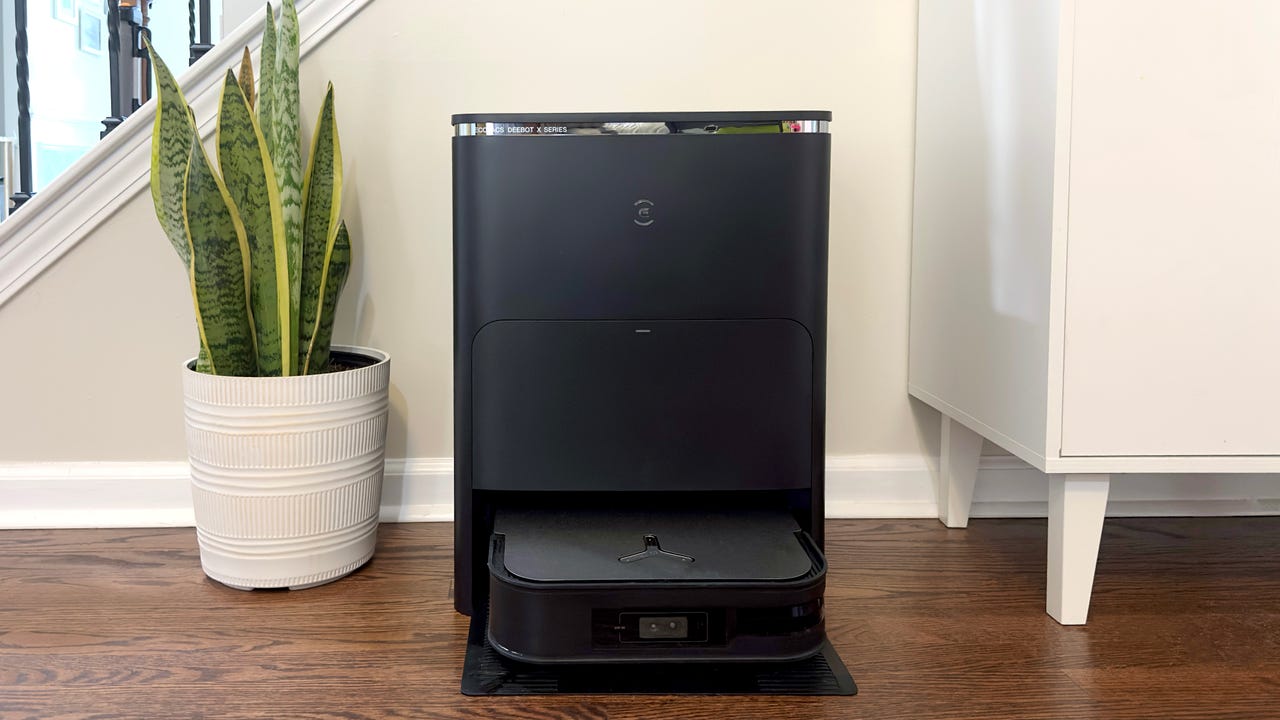
You know that gratifying feeling of coming home to a clean house? With a family of five, that's not a feeling I often get, if at all. Enter the Ecovacs Deebot X2 Omni.
Also: The 35 best October Prime Day robot vacuum deals
I've tested a fair share of robot vacuum and mop combinations, so I quite appreciate the experience of having a robot roaming around my home that picks up crumbs, dust, and everything in between. But the Deebot X2 Omni is easily the best robot vacuum and mop I've tried.
ZDNET RECOMMENDS
Ecovacs Deebot X2 Omni
This high-end robot vacuum and mop has been engineered to give users a hands-free cleaning experience.
View at Amazon
Ecovacs launched the Deebot X2 Omni this month, a new flagship robot vacuum and mop combo with a clear edge. After testing it out for a couple of weeks, I found room for improvement in some tasks — largely outweighed by its long list of strengths.
The X2 Omni checks all the specs boxes for a high-end robot vacuum and mop. It has 8,000Pa of suction power, higher than the 6,000Pa of the current market leader, the Roborock S8 Pro Ultra. Using artificial intelligence (AI), the robot can detect and avoid objects strewn about the floor, such as socks and charging cables, and has a mopping pad that automatically lifts 15mm when carpets or rugs are detected.
Also: The best robot mops you can buy
The Omni station charges the robot vacuum and mop and also works as a base where it goes to empty its dustbin and self-wash and dry its mop pads. This feature means you only have to worry about keeping the base station's clean water tank filled and its dirty water tank empty, which is a task you need to complete every few cleaning cycles.
Designed to offer a hands-free experience, the base station is also self-cleaning. Running the self-cleaning option in the Ecovacs app will clean the base plate in the station — the spot where your mops are cleaned that typically sees water and dirt accumulation. This feature is a level above competitors like Yeedi and others, which require users to periodically clean dirty water at the bottom of the docking station.
The dust bag holds everything the Deebot X2 sweeps from your floors and only needs emptying about once a month, although your mileage may vary.
This closure is supposed to hold four liters of clean water when you carry the clean water tank by the handle.
One of my only gripes is that the clean water tank feels awkward to hold when filled — it almost feels like it's not built to last, although I won't know for certain until I've used it for several months. It's a four-liter water tank with a handle to carry it on the lid, held shut by a plastic clip. I hold the tank from the bottom because I feel like using the handle to carry the full tank around will result in the closure failing and four liters of water going everywhere.
About the square shape
The Deebot X2 Omni has several superpowers, starting with its compact package. The squared edges stood out to me when I unpacked the device, along with how narrow and short it was. At only 12.6 inches wide, it's about 0.3 inches narrower than the Eufy X9 Pro (also on sale for October Prime Day) robot vacuum mop, which had been my super mop until the X2 Omni arrived.
Although 0.3 inches sounds like a small difference in size, it's proven to be considerable when a robot has to navigate through furniture legs. Case in point: the Eufy X9 Pro uses AI to avoid objects, but whenever I sent it to clean the first floor, it'd get stuck between the kitchen barstools legs. The stools are fairly lightweight, so the robot would drag them around instead of signaling it was stuck. I'd see my kitchen barstools gliding around my floor or randomly find one hanging out by the shoe bench.
Also: The best iRobot vacuums
This isn't a big deal and is highly subjective, so it's not something I included in my Eufy review; it's not the robot's fault that it's the exact size as the width of the distance between my barstool's legs. But the narrower Deebot X2 Omni can clean under the barstools and figure its way back out, which means no more 'guess where the barstools are today' games.
The Ecovacs Deebot X2 Omni making its way out of the traveling barstools.
The Deebot X2 is also almost an inch shorter than my Eufy robot vacuum, at 3.7 inches in height. The lower dimensions and narrow build allow the Deebot X2 to clean in places other robots typically can't reach or navigate under.
Some AI-powered features
The Deebot X2 leverages Ecovacs' AIVI 3D 2.0 and combines an AI processor with 3D-structured light sensors with dual-laser LiDAR technology. The result is efficient maps that allow the robot to detect objects during navigation and clean around them intelligently. This feature set means you won't have to ensure your floors are free of charging cables, toys, or shoes before sending out the X2.
The AI-powered navigation and obstacle avoidance, backed by Ecovacs' proprietary AINA Model, uses visual recognition and reinforcement learning based on sensor information.
Also: 6 things to know about robot vacuums before you buy one
The Deebot X2's clever technology also makes for a customized cleaning process if that's your thing. The device's AI-powered visual recognition, ability to detect floor type, and historical cleaning logs let the robot infer which room it's cleaning, such as the kitchen, living room, or bedroom, and adjust its suction power and mopping mode.
A new level of voice control
Voice control makes everything in my home easier. Countless robot vacuums let you use a third-party virtual assistant for voice control, such as Amazon Alexa, Google Assistant, or Siri. Saying, "Alexa, clean the floors" in my house dispatches the Eufy X9 Pro to clean my bedroom and hallway. However, these assistants are limited in the functions they can make the robot perform.
Sure, you can dispatch your robot with Alexa or Google, but have you ever been able to tell it to "turn right, move three meters forward, turn left, and clean there"?
Also: This robot vacuum connects to your home's water supply for full automation
Ecovacs robot vacuums have a built-in voice assistant named YIKO that users can talk with to control the robot directly — and it works swimmingly. Saying "OK, YIKO" wakes up the voice assistant. If your robot is out cleaning, you can ask it toreturnk and clean the dining room again, or give it multiple commands in one sentence without pulling up the app.
ZDNET's buying advice
The Ecovacs Deebot X2 Omni is the company's new flagship robot with all the smart features and a price to match, so nabbing $300 off during Amazon's Big Deal Days is such a great deal. Over the past few weeks, it's gained a top-dog position in our home, becoming the main robot to clean the downstairs floor — and that's saying a lot.
The great thing about an all-in-one, self-emptying, and self-cleaning robot vacuum and mop is that it's not best suited for some circumstances — it's suited for all. Some mid-range models might be great at mopping but suffer from not having strong or effective suction, making tbest suitedited for homes with hard floors. Others might boast great suction power, OK mopping, and short battery life, making them best for mostly carpeted apartments or small homes.
The Deebot X2 Omni is great at all of these things. The biggest challenge in our home is downstairs because it's mostly hardwood and tile with some area rugs — it's where the dog comes in and out from the yard, where we cook, and where the toddler drops most of the crumbs.
Also: Skip the Dyson: This $150 stick vacuum is just as powerful (and can mop, too)
As mentioned above, the X2 Omni costs $1,500, but is currently $300 off for a limited time. That's compared to $1,600 for the Roborock S8 Pro Ultra. Suppose I were on the market for a hands-free robot vacuum that is suitable for my home's complex needs. In that case, I'd have to choose the Deebot X2 Omni over the Roborock's flagship because the extra features, like the self-cleaning station and stronger suction, set it apart, and that current price cannot be beaten
Video editing startup Captions launches a dubbing app with support for 28 languages
Video editing startup Captions launches a dubbing app with support for 28 languages Ivan Mehta 11 hours 
Captions, an AI-powered video editing startup, has launched a new app called Lipdub for translating clips into 28 languages.
Lipdub is available in the App Store for free and supports several languages, including French, Hindi, Spanish, Italian, Portuguese, Japanese and more. The app even lets users translate videos into Texas slang, Gen Z, pirate and baby talk. The demo video shows that the app can also change lip movement according to the selected target language. However, at times there is a certain lag between the audio and the lip movement.
Users can translate a video of a single person talking during up to one minute and then share it on other social media platforms.
On its website, Captions says that more than 3 million creators have used its eponymous video editing app. The startup claims that it has more than 100,000 daily users. The Captions app offers several AI-powered features around video editing, such as removing “ums” and “ahs,” reducing background noise and enhancing speech. The app also has an “AI Lipdub” feature that can change lip movement in post-production editing if you change the transcript.
Captions was founded in 2021 by Gaurav Misra, who was head of design engineering at Snap. In June, the company secured $25 million in a Series B round led by Kleiner Perkins with participation from Sequoia Capital, Andreessen Horowitz (a16z) and SV Angel. To date, Captions has raised $40 million in funding.
Using translation and AI-dubbing to reach a wider audience is a growing trend. In June, YouTube announced that it is testing an AI-powered tool to let users automatically dub their videos in other languages. The company said it is even working on better lip-syncing. Last month, the company said that it is integrating AI-powered dubbing directly into YouTube Studio for easier access for people looking to convert videos into other languages.
Earlier this month, AI-powered voice-generating platform ElevenLabs released its dubbing tool with support for 29 languages. Rest of World previously reported that dubbing service provider companies are generating millions of dollars by translating content for popular YouTubers like MrBeast.
AI-powered dubbing startups have generated a lot of investor interest, with startups like U.K.-based Papercup and Isreal-based Deepdub raising millions of dollars.
The Role of Vector Databases in Modern Generative AI Applications


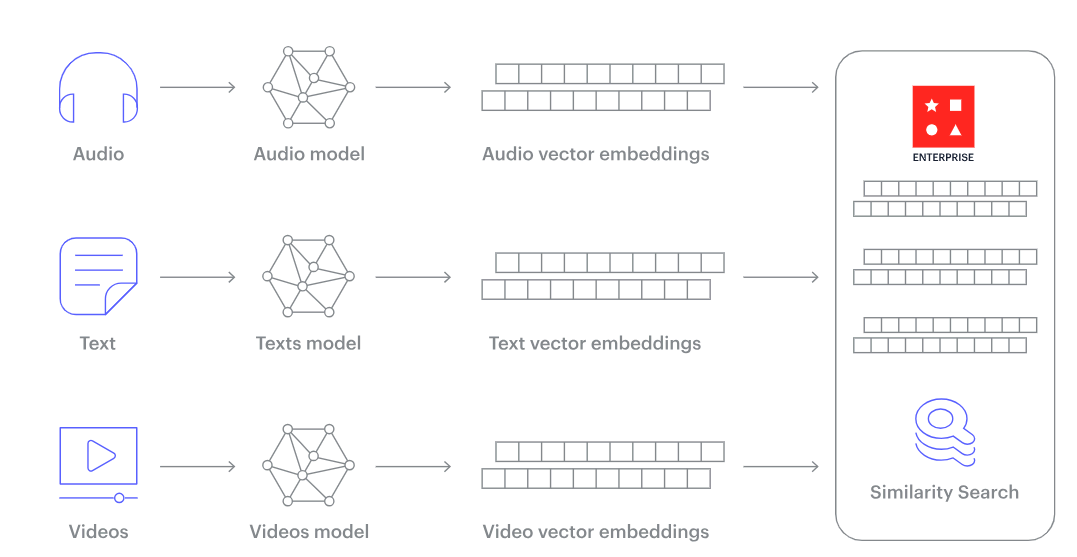
For large scale Generative AI application to work well, it needs good system to handle a lot of data. One such important system is the vector database. This database is special because it deals with many types of data like text, sound, pictures, and videos in a number/vector form.
What are Vector Databases?
Vector database is a specialized storage system designed to handle high-dimensional vectors efficiently. These vectors, which can be thought of as points in a multi-dimensional space, often represent embeddings or compressed representations of more complex data like images, text, or sound. Vector databases allow for rapid similarity searches amongst these vectors, enabling quick retrieval of the most similar items from a vast dataset.
Traditional Databases vs. Vector Databases
Vector Databases:
- Handles High-Dimensional Data: Vector databases are designed to manage and store data in high-dimensional spaces. This is particularly useful for applications like machine learning, where data points (such as images or text) can be represented as vectors in multi-dimensional spaces.
- Optimized for Similarity Search: One standout features of vector databases is their ability to perform similarity searches. Instead of querying data based on exact matches, these databases allow users to retrieve data that is “similar” to a given query, making them invaluable for tasks like image or text retrieval.
- Scalable for Large Datasets: As AI and machine learning applications continue to grow, so does the amount of data they process. Vector databases are built to scale, ensuring that they can handle vast amounts of data without compromising on performance.
Traditional Databases:
- Structured Data Storage: Traditional databases, like relational databases, are designed to store structured data. This means data is organized into predefined tables, rows, and columns, ensuring data integrity and consistency.
- Optimized for CRUD Operations: Traditional databases are primarily optimized for CRUD operations. This means they are designed to efficiently create, read, update, and delete data entries, making them suitable for a wide range of applications, from web services to enterprise software.
- Fixed Schema: One of the defining characteristics of many traditional databases is their fixed schema. Once the database structure is defined, making changes can be complex and time-consuming. This rigidity ensures data consistency but can be less flexible than the schema-less or dynamic schema nature of some modern databases.
Old databases struggle with embeddings. They can't handle their complexity. Vector databases solve this problem.
With vector databases, Generative AI application can do more things. It can find information based on meaning and remember things for a long time.

Vector Database

High-Level Architecture of a Vector Database
The diagram shows the fundamental workflow of a vector database. The process begins with raw data input, which undergoes preprocessing to clean and standardize the data.
This data is then vectorized, converting it into a format suitable for similarity searches and efficient storage. Once vectorized, the data is stored and indexed to facilitate rapid and accurate retrieval. When a query is made, the database processes it, leveraging the indexing to efficiently retrieve the most relevant data.
Generative AI and The Need for Vector Databases
Generative AI often involves embeddings. Take, for instance, word embeddings in natural language processing (NLP). Words or sentences are transformed into vectors that capture semantic meaning. When generating human-like text, models need to rapidly compare and retrieve relevant embeddings, ensuring that the generated text maintains contextual meanings.
Vector Database redis db
Similarly, in image or sound generation, embeddings play a crucial role in encoding patterns and features. For these models to function optimally, they require a database that allows for instantaneous retrieval of similar vectors, making vector databases an essential component of the generative AI puzzle.
Creating embeddings for natural language usually involves using pre-trained models such as OpenAI's GPT, BERT.
Pre-trained Models:
- GPT-3 and GPT-4: OpenAI's GPT-3 (Generative Pre-trained Transformer 3) has been a monumental model in the NLP community with 175 billion parameters. Following it, GPT-4, with an even larger number of parameters, continues to push the boundaries in generating high-quality embeddings. These models are trained on diverse datasets, enabling them to create embeddings that capture a wide array of linguistic nuances.
- BERT and its Variants: BERT (Bidirectional Encoder Representations from Transformers) by Google, is another significant model that has seen various updates and iterations like RoBERTa, and DistillBERT. BERT's bidirectional training, which reads text in both directions, is particularly adept at understanding the context surrounding a word.
- ELECTRA: A more recent model that is efficient and performs at par with much larger models like GPT-3 and BERT while requiring less computing resources. ELECTRA discriminates between real and fake data during pre-training, which helps in generating more refined embeddings.
Growing Funding for Vector Database Newcomers
With AI's rising popularity, many companies are putting more money into vector databases to make their algorithms better and faster. This can be seen with the recent investments in vector database startups like Pinecone, Chroma DB, and Weviate.
Large cooperation like Microsoft have their own tools too. For example, Azure Cognitive Search lets businesses create AI tools using vector databases.
Oracle also recently announced new features for its Database 23c, introducing an Integrated Vector Database. Named “AI Vector Search,” it will have a new data type, indexes, and search tools to store and search through data like documents and images using vectors. It supports Retrieval Augmented Generation (RAG), which combines large language models with business data for better answers to language questions without sharing private data.
Primary Considerations of Vector Databases
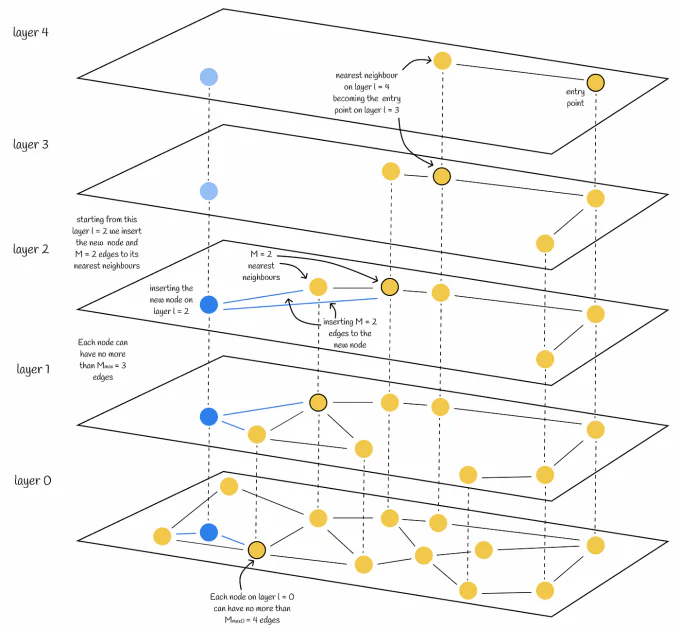
- Indexing: Given the high-dimensionality of vectors, traditional indexing methods don't cut it. Vector databases uses techniques like Hierarchical Navigable Small World (HNSW) graphs or Annoy trees, allowing for efficient partitioning of the vector space and rapid nearest-neighbor searches.

Annoy tree (Source)
Hierarchical Navigable Small World (HNSW) graphs (Source)
- Distance Metrics: The effectiveness of a similarity search hinges on the chosen distance metric. Common metrics include Euclidean distance and cosine similarity, each catering to different types of vector distributions.
- Scalability: As datasets grow, so does the challenge of maintaining fast retrieval times. Distributed systems, GPU acceleration, and optimized memory management are some ways vector databases tackle scalability.
Vector Databases and Generative AI: Speed and Creativity
The real magic unfolds when vector databases work in tandem with generative AI models. Here's why:
- Enhanced Coherence: By enabling rapid retrieval of similar vectors, generative models can maintain better context, leading to more coherent and contextually appropriate outputs.
- Iterative Refinement: Generative models can use vector databases to compare generated outputs against a repository of ‘good' embeddings, allowing them to refine their outputs in real-time.
- Diverse Outputs: With the ability to explore various regions of the vector space, generative models can produce a wider variety of outputs, enriching their creative potential.
The Future: Potential Implications and Opportunities
With the convergence of generative AI and vector databases, several exciting possibilities emerge:
- Personalized Content Creation: Imagine AI models tailoring content, be it text, images, or music, based on individual user embeddings stored in vector databases. The era of hyper-personalized content might not be far off.
- Advanced Data Retrieval: Beyond generative AI, vector databases can revolutionize data retrieval in domains like e-commerce, where product recommendations could be based on deep embeddings rather than superficial tags.
The AI world is changing fast. It's touching many industries, bringing good things and new problems. AI now needs good data processing. This is because of big language models, generative AI, and semantic search.