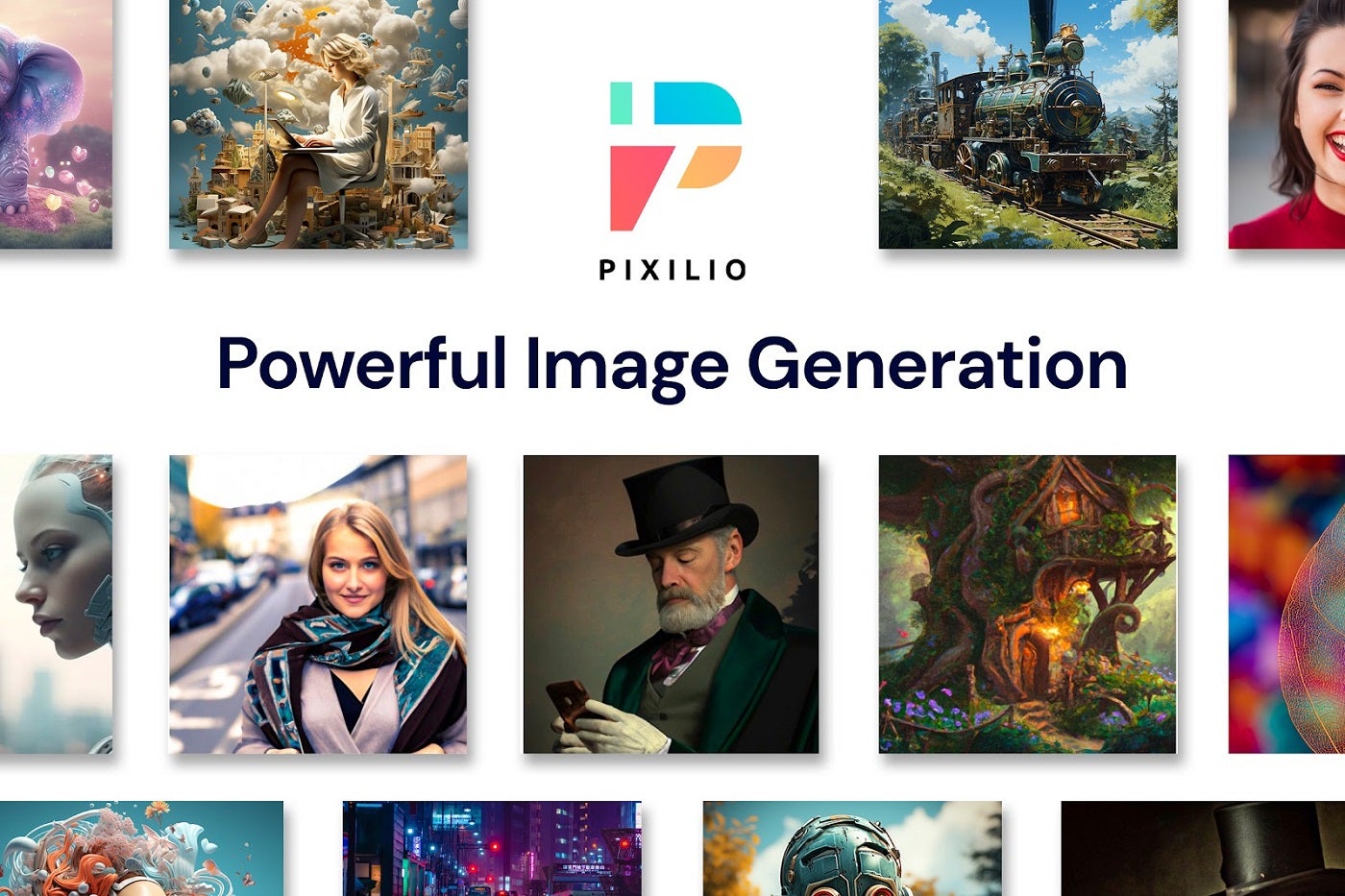
Get a Lifetime of Unique AI Image Generation for Only $20 Through 11/9

Pixilio Powerful Image Generation
Image: StackCommerce

Sifting through hundreds of stock photos is a time-intensive task that rarely returns exactly the result you were hoping for. And then you’re often very limited in the way you can use them for business purposes. If you’d like a way to easily create unique images that you can use however you choose, then a lifetime subscription to Pixilio The Ultimate AI Image Generator is just what you need. Best of all, though it normally retails for $360, the price has been dropped to $19.97 through November 9th.

Pixilio uses artificial intelligence to generate custom, high-quality images. You don’t need to have any design experience whatsoever. Simply enter the parameters for the image you want to create and Pixilio’s advanced machine learning algorithms will deliver the kind of powerful visuals that grab attention on websites, presentations, social media, and more.

Whether you’re a designer, content creator, marketer, or simply a user with no technical background, you can easily generate stunning images with AI that are tailored to your exact specifications in only a matter of seconds. It’s so easy that anyone can use it. Also, every image that Pixilio generates is 100% original and 100% yours, so you can use them in any way you like with no limitations.

You no longer need to suffer through the tedious chore of choosing among stock images or, even worse, spending hours on end trying to create customized visuals with tools you were never trained to use. A few clicks in Pixilio is now all that’s necessary to generate unique, impressive images. And with this subscription, you can do that for a lifetime. It’s no wonder that verified purchasers have given it an average rating of 4.1/5 stars.

Get a lifetime subscription to Pixilio The Ultimate AI Image Generator while its $360 retail price has been dropped to $19.97 through November 9.

Prices and availability are subject to change.

India Becomes a Global AI Powerhouse with 13.2 Million Developers on GitHub

At the ongoing GitHub Universe conference, the developer platform, has released the latest State of the Octoverse 2023 report, showing India’s rise in AI development. With 13.2 million developers now on GitHub in India, the nation has firmly secured its position as the second-largest contributor to AI projects worldwide, just behind the United States. Of the total number 3.5M new developers joined GitHub in 2023.

Sharryn Napier, VP of APAC at GitHub, said: “As we saw with open source, India’s influence extends far beyond creating competitive global enterprises; it’s impacting the future of technology and society as a whole. With the rise of AI, India’s developers can propel this journey even further.”

“Just imagine what India will be able to achieve if its 13.2M developers are empowered with AI. Not only will this transform enterprise innovation and productivity, but it will elevate developer happiness and make a substantial impact on India’s economy and society as a whole,” Sharryn added.

The report highlights the Indian developer community’s consistent year-over-year growth rate of 148%. GitHub’s projections indicate that India is on track to surpass the United States in total developer population by 2027.

Furthermore, the platform acknowledged India’s role in the UN-backed Digital Public Goods Alliance, emphasizing the country’s contributions toward building digital public infrastructure through open materials, ranging from software code to AI models. These projects are aimed at improving digital payment systems and ecommerce platforms not only within India but also in other countries.

In 2022, India’s population on the coding platform alone totaled 9.75 million people—and more than 2.5 million new people in India joined GitHub. Based on the numbers, the company predicted that Indian users will match the current United States GitHub developer population by 2025.

The post India Becomes a Global AI Powerhouse with 13.2 Million Developers on GitHub appeared first on Analytics India Magazine.

Code-generating AI platform Tabnine nabs $25M investment

Code-generating AI platform Tabnine nabs $25M investment Kyle Wiggers 10 hours

Developers are ready to embrace AI tools, spurred by the dual promises of increased productivity and faster learning. According to one recent survey, 77% of devs feel favorably about using AI in their workflows and 70% claim to be using — or planning to use — AI coding tools this year.

Investors see potential in generative coding tools, too — particularly in what the tools can accomplish at enterprise scale. And this enthusiasm is translating to new financing for startups like Tabnine, which today announced that it raised $25 million in a Series B funding round led by Telstra Ventures with participation from Atlassian Ventures, Elaia, Headline, Hetz Ventures, Khosla Ventures and TPY Capital.

Dror Weiss and Eran Yahav co-founded Tabnine in 2012 to create a platform that infuses various steps in the software development lifecycle with generative AI. Yahav was — and still is — a professor at Technion (the Israel Institute of Technology), while Weiss is a Technion computer science graduate.

Among other coding tools powered by first- and third-party generative AI models, Tabnine offers Tabnine Chat, an AI “code assistant” that writes code and answers questions about organizations’ codebases — sort of like a ChatGPT for code.

Tabnine has competitors in GitHub Copilot and Amazon CodeWhisperer. But Weiss asserts that the company affords more control and personalization than rival systems, for example enabling customers to deploy its tools either on-premises or via a virtual private cloud.

“Our flexible architecture means we can switch [code-generating AI] models relatively easily and are thus not ever competing with the big generative AI model builders,” Weiss told TechCrunch in an email interview. “We future-proof as AI evolves and new models become available from other vendors; Tabnine can bring those models to developers wherever they code.”

Weiss also makes the case that Tabnine is less legally risky than its competition — at least from a commercial perspective.

Microsoft, GitHub and OpenAI are currently being sued in a class action lawsuit that accuses them of violating IP law by letting Copilot — which was trained on billions of examples of public code from the web, some under a restrictive license — regurgitate sections of copyrighted code without providing credit. Liability aside, some legal experts have suggested that AI like Copilot could put companies at risk if they were to unwittingly incorporate copyrighted suggestions from the tool into their production software.

Tabnine, Weiss notes, strictly uses AI models trained on code with permissive licenses — or works with customers to train models on their in-house codebases.

“We use a curated data set and know what has gone into it, so we have much better control and security,” Weiss said. “This is also the foundation for our customers using private models that are trained on their own code and run in their own virtual private clouds and datacenters.”

Tabnine’s approach seems to be working for it, certainly — which is all the more impressive in light of the collapse of one of its rivals, Kite, late last year. Tabnine claims to have over a million users and 10,000 customers — which, while short of Copilot’s roughly one million paying users and 37,000 corporate customers, is a respectable user base indeed.

Weiss says that the proceeds from the Series B — which brought Tabnine’s total raised to $55 million — will be put toward expanding Tabnine’s generative coding capabilities and further building out its sales and global support teams. Tabnine expects to end the year with 150 employees, up from ~60 today.

Density Kernel Depth for Outlier Detection in Functional Data

Density Kernel Depth for Outlier Detection in Functional Data
Image generated from DALLE-3 Introduction

In today's era of massive data sets and intricate data patterns, the art and science of detecting anomalies, or outliers, have become more nuanced. While traditional outlier detection techniques are well-equipped to deal with scalar or multivariate data, functional data – which consists of curves, surfaces, or anything in a continuum – poses unique challenges. One of the groundbreaking techniques that has been developed to address this issue is the 'Density Kernel Depth' (DKD) method.

In this article, we will delve deep into the concept of DKD and its implications in outlier detection for functional data from a data scientist's standpoint.

1. Understanding Functional Data

Before we delve into the intricacies of DKD, it's vital to understand what functional data entails. Unlike traditional data points which are scalar values, functional data consists of curves or functions. Think of it as having an entire curve as a single data observation. This type of data often arises in situations where measurements are taken continuously over time, such as temperature curves over a day or stock market trajectories.

Given a dataset of n curves observed on a domain D, each curve can be represented as:

”Equation”

”Equation”

2. The Challenge with Outlier Detection in Functional Data

For scalar data, we might compute the mean and standard deviation and then determine outliers based on data points lying a certain number of standard deviations away from the mean.

For functional data, this approach is more complicated because each observation is a curve.

One approach to measure the centrality of a curve is to compute its "depth" relative to other curves. For instance, using a simple depth measure:

Equation

Where n is the total number of curves.

While the above is a simplified representation, in reality, functional datasets can consist of thousands of curves, making visual outlier detection challenging. Mathematical formulations like the Depth measure provide a more structured approach to gauge the centrality of each curve and potentially detect outliers.

In a practical scenario, one would need more advanced methods, like the Density Kernel Depth, to effectively determine outliers in functional data.

3. How DKD Works

DKD works by comparing the density of each curve at each point to the overall density of the entire dataset at that point. The density is estimated using kernel methods, which are non-parametric techniques that allow for the estimation of densities in complex data structures.

For each curve, the DKD evaluates its "outlyingness" at every point and integrates these values over the entire domain. The result is a single number representing the depth of the curve. Lower values indicate potential outliers.

The kernel density estimation at point t for a given curve Xi?(t) is defined as:

Equation

Where:

  • K (.) is the kernel function, often a Gaussian kernel.
  • h is the bandwidth parameter.

The choice of kernel function K (.) and bandwidth h can significantly influence the DKD values:

  • Kernel Function: Gaussian kernels are commonly used due to their smooth properties.
  • Bandwidth ?: It determines the smoothness of the density estimate. Cross-validation methods are often employed to select an optimal h.

3. Density Kernel Depth Calculation

The depth of curve Xi?(t) at point t in relation to the entire dataset is calculated as:

Equation

where:

Equation

Equation

Equation

Equation

The resulting DKD value for each curve gives a measure of its centrality:

  • Curves with higher DKD values are more central to the dataset.
  • Curves with lower DKD values are potential outliers.

4. Advantages of Using DKD in Functional Data Analysis

Flexibility: DKD does not make strong assumptions about the underlying distribution of the data, making it versatile for various functional data structures.

Interpretability: By providing a depth value for each curve, DKD makes it intuitive to understand which curves are central and which ones are potential outliers.

Efficiency: Despite its complexity, DKD is computationally efficient, making it feasible for large functional datasets.

5. Practical Implications

Imagine a scenario where a data scientist is analyzing heart rate curves of patients over 24 hours. Traditional outlier detection might flag occasional high heart rate readings as outliers. However, with functional data analysis using DKD, entire abnormal heart rate curves – perhaps indicating arrhythmias – can be detected, providing a more holistic view of patient health.

Conclusion

As data continues to grow in complexity, the tools and techniques to analyze it must evolve in tandem. Density Kernel Depth offers a promising approach to navigate the intricate landscape of functional data, ensuring that data scientists can confidently detect outliers and derive meaningful insights from them. While DKD is just one of the many tools in a data scientist's arsenal, its potential in functional data analysis is undeniable and is set to pave the way for more sophisticated analysis techniques in the future.

Kulbir Singh is a distinguished leader in the realm of analytics and data science, boasting over two decades of experience in Information Technology. His expertise is multifaceted, encompassing leadership, data analysis, machine learning, artificial intelligence (AI), innovative solution design, and problem-solving. Currently, Kulbir holds the position of Health Information Manager at Elevance Health. Passionate about the advancement of Artificial Intelligence (AI), Kulbir founded AIboard.io, an innovative platform dedicated to creating educational content and courses centered on AI and healthcare.

More On This Topic

  • Pythia: A Suite of 16 LLMs for In-Depth Research
  • Understanding Machine Learning Algorithms: An In-Depth Overview
  • Unlocking GPT-4 Summarization with Chain of Density Prompting
  • A Beginner's Guide to Anomaly Detection Techniques in Data Science
  • KDnuggets News, August 17: How to Perform Motion Detection Using…
  • Evaluating Object Detection Models Using Mean Average Precision

LatentView’s LASER Focus GenAI for Business Breakthroughs 

LatentView Analytics considers “generative AI” to be the buzzword as everybody is looking at how to make use of it to create further impact on the business. “It’s not that organisations were not making use of data or analytics in the past. But in some sense generative AI has democratised this whole area.” said Rajan Sethuraman , CEO, LatentView Analytics, in an exclusive interview with AIM.

Sethuraman said that every organisation has its own databases. “Utilize them to generate higher quality insights and create a greater business impact from the information already available within the organisation,” he added.

Furthermore, he said that LatentView Analytics is focused on a two-pronged approach when it comes to Generative AI through its offerings – LASER and GenCompose, utilising OpenAI’s and a few open-source models. Moreover, he said the company is not planning to create its own LLMs due to the high computational costs and power requirements.

“GenCompose is aimed at creating highly personalised marketing email content and campaigns for the long tail of accounts that you want to target but don’t have the salesforce and bandwidth to make that kind of personalised effort,” said Sethuraman.

He further explained that GenCompose helps create engaging content, whether it is text or visual images, analytics images, with the intent of having specific, tailored content that appeals to target customer segments.

LASER, on the other hand, is aimed at mining insights from text documents. “Everybody does text analytics, but now, with the power of generative AI, there is a lot more you can do, whether it’s your procurement contracts, customer reviews, or services that you conducted,” said Sethuraman.

For the above mentioned products he highlighted the company’s strategic approach of targeting a wide range of SaaS companies in the B2B market, considering substantial traction observed in that sector. “We are also observing traction with consumer packaged goods (CPG) and retail companies utilising LASER, which focuses on mining text data,” he added.

Moreover he mentioned that their partnership team is working with several organisations, starting with Amazon AWS, Redshift, Google Cloud Platform Snowflake, and Databricks. Additionally, they have collaborated with providers like Fivetran and Neo4j for graph databases. “However I would say that the most traction is with AWS and with Databricks. That’s where we are seeing a good amount of interest reciprocated by the partner as well”, he added.

Focuses on Europe

In the backdrop of concerns about the macroeconomic environment, Rajan stated that the focus is currently on the US market. However, LatentView Analytics is expecting new opportunities to arise in Europe.

“Right now, it is all US-centric, and Europe is still very small, contributing only 2% of that. We are expecting that as we exit the year, Europe will start picking up more steam,” he said. He further added that LatentView Analytics has already won a couple of accounts in Europe.

“I’m expecting that maybe by the middle of next year, in the next fiscal year, Europe will start reaching the 5% plus mark in terms of contribution. Our target is to reach 8% over a two-year period. We are anticipating that Europe will start contributing about 15% of the revenue.” he added.

India still in early days

Sethuraman told AIM that the Indian market is still in its very early stages, considering bandwidth and other constraints. However, to date, the company has executed three projects in India. Sethuraman explained that one of them involves a complete Indian business house in the two-wheeler automotive space.

Another project involves a Japanese device manufacturer, and LatentView has been assisting them with a comprehensive overhaul of their data analytics strategy and initiatives. The third project is for a multinational oil and gas company based in the GCC operating in India, where they require support in the field of data analytics.

Sethuraman further spoke about the company’s expanding presence in the Indian market.”We have a small team that is now dedicated to the India market.” he said. Sharing the strategy for the India expansion, Sethurman said that the participation in external events has generated a stream of promising leads for them. He further mentioned that the company’s recent IPO has significantly increased awareness of LatentView Analytics in the market.

Future Projections

In the latest second-quarter results for the fiscal year 2024, the company witnessed a growth of 5.4% quarter-on-quarter and 17.6% year-on-year, reporting a revenue of $1.56 billion.

He is optimistic that in Q3, the company will be able to report slightly better numbers in growth terms over Q2. “We are expecting that revenue growth will probably be in the 6% to 7% range for quarter three,’ said Sethuraman. He added that the number and value of opportunities are more than double what they were at the same time last year.

The post LatentView’s LASER Focus GenAI for Business Breakthroughs appeared first on Analytics India Magazine.

Samsung Announces Gauss, On Device Generative AI 

Samsung has introduced its generative AI model, Samsung Gauss, during the Samsung AI Forum 2023. Developed by Samsung Research, Samsung Gauss comprises three distinct tools: Samsung Gauss Language, Samsung Gauss Code, and Samsung Gauss Image.

According to the reports, Gauss is set to be incorporated into the upcoming Galaxy S24 smartphone, slated for release in early 2024. The company intends to integrate this language model into its devices like phones, laptops, and tablets to augment the capabilities of its smart devices. When queried about language support, Samsung’s spokesperson refrained from comment.

Samsung Gauss Language is a generative language model aimed at enhancing work efficiency by facilitating tasks such as composing emails, summarizing documents, and translating content. Integration into products can enable smarter device control, enhancing the consumer experience.

Samsung Gauss Code, designed to collaborate with code.i, focuses on code development, offering assistance to developers for speedy code creation. The AI model facilitates code description and test case generation through an interactive interface.

Samsung describes Gauss as “named after Carl Friedrich Gauss, the legendary mathematician who established normal distribution theory, the backbone of machine learning and AI.

Daehyun Kim, executive vice president of the Samsung Research Global AI Center, stated, “We will continue to support and collaborate with the industry and academia on generative AI research” at the AI forum.

Notably, Samsung’s foray into generative AI comes seven months after a temporary ban on generative AI tools, including OpenAI’s ChatGPT and Google’s Bard, on company-owned devices, in response to an internal data leak earlier this year.

In addition, Samsung has established an AI Red Team to oversee security and privacy issues throughout the data collection and AI development process, ensuring the ethical use of AI principles.

Apple, despite its initial passivity in the AI space, is now gearing up to integrate generative AI features into its range of devices, including iOS and Siri. The company acknowledges a delay in embracing generative AI technology and aims to catch up with the competition.

Moreover, Google’s Pixel 8, featuring on-device generative AI powered by the Tensor G3 chip, is poised to revolutionise smartphone user experiences. This advancement allows the device to provide custom and helpful solutions without relying on cloud-based AI, potentially reducing latency issues.

The post Samsung Announces Gauss, On Device Generative AI appeared first on Analytics India Magazine.

The New Ethical Implications of Generative Artificial Intelligence

The rate at which the advanced AI landscape is progressing is blazing fast. But so are the risks that come with it.

The situation is such that it has become difficult for experts to foresee risks.

While most leaders are increasingly prioritizing GenAI applications over the coming months, they are also skeptical of the risks that come with it – data security concerns and biased outcomes, to name a few.

Mark Suzman, CEO of the Bill & Melinda Gates Foundation, believes that “while this technology can lead to breakthroughs that can accelerate scientific progress and boost learning outcomes, the opportunity is not without risk.”
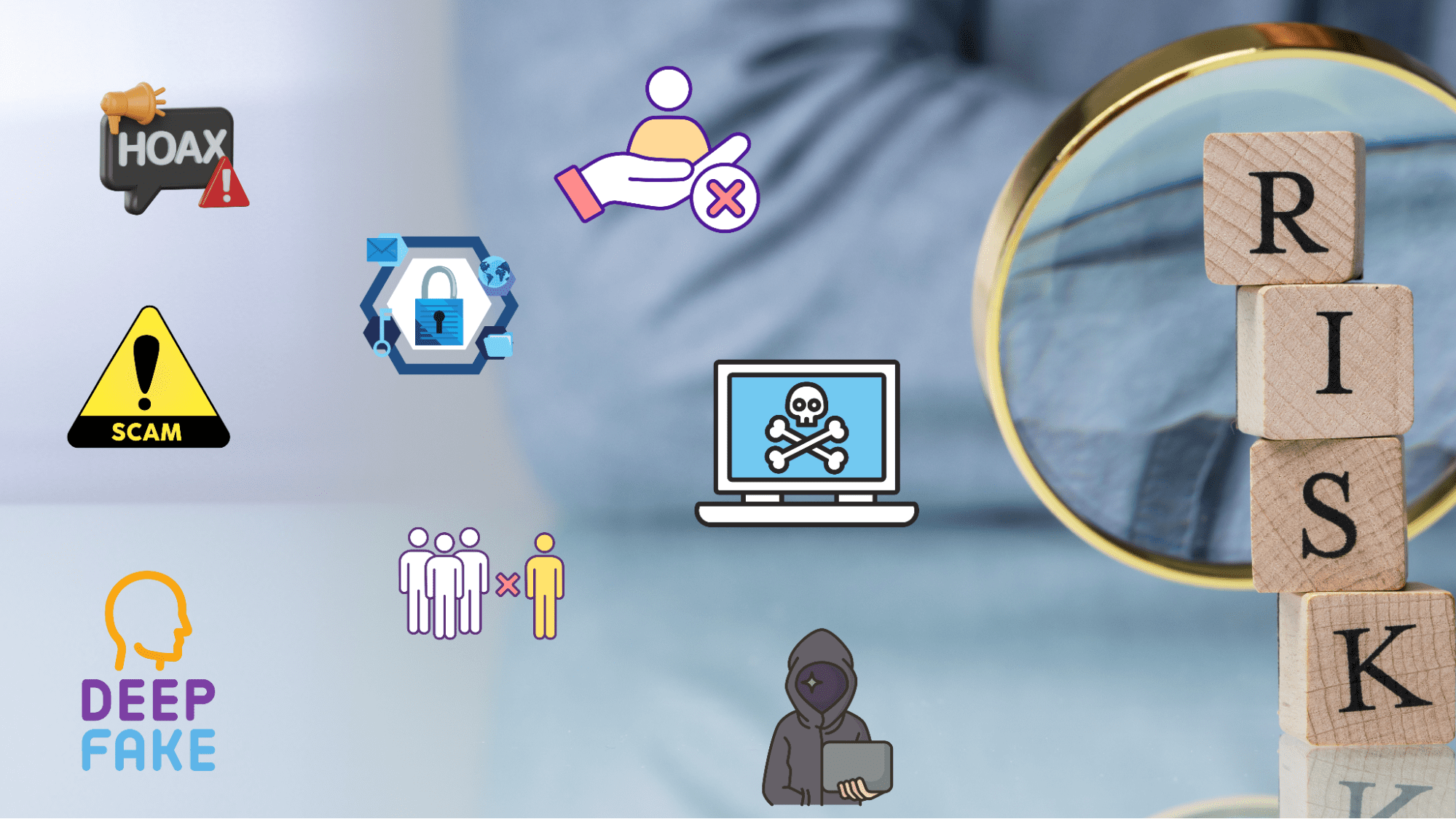
The New Ethical Implications of Generative Artificial Intelligence
Image by Author

Let Us Start With Data

Consider this – a famous Generative AI model creator states, “It collects personal information such as name, email address, and payment information when necessary for business purposes.”

Recent times have shown multiple ways it can go wrong without a guiding framework.

  • Italy expressed concerns over unlawfully collecting personal data from users, quoting “no legal basis to justify the mass collection and storage of personal data for 'training' the algorithms underlying the platform's operation."
  • Japan's Personal Information Protection Commission also issued a warning for minimum data collection to train machine learning models.
  • Industry leaders at HBR echo data security concerns and biased outcomes

As the Generative AI models are trained on data from almost all of the internet, we are a fractional part hidden in those neural network layers. This emphasizes the need to comply with data privacy regulations and not train models on users' data without consent.

Recently, one of the companies was fined for building a facial recognition tool by scraping selfies from the internet, which led to a privacy breach and a hefty fine.
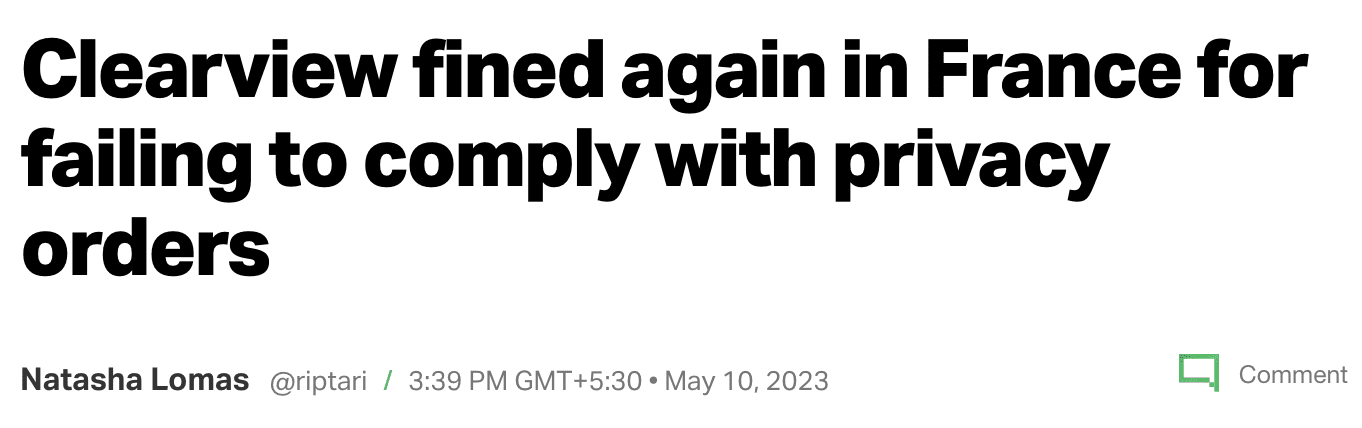
The New Ethical Implications of Generative Artificial Intelligence
Source: TechCrunch

However, data security, privacy, and bias have all existed from pre-generative AI times. Then, what has changed with the launch of Generative AI applications?

Well, some existing risks have only become riskier, given the scale at which the models are trained and deployed. Let’s understand how.

Scale – A Double-Edged Sword

Hallucination, Prompt Injection, and Lack Of Transparency

Understanding the internal workings of such colossal models to trust their response has become all the more important. In Microsoft’s words, these emerging risks are because LLMs are “designed to generate text that appears coherent and contextually appropriate rather than adhering to factual accuracy.”

Consequently, the models could produce misleading and incorrect responses, commonly termed hallucinations. They may emerge when the model lacks confidence in predictions, leading to the generation of less accurate or irrelevant information.

Further, prompting is how we interact with the language models; now, bad actors could generate harmful content by injecting prompts.

Accountability When AI Goes Wrong?

Using LLMs raises ethical questions about accountability and responsibility for the output generated by these models and the biased outputs, as is prevalent in all AI models.

The risks are exacerbated with the high-risk applications, such as in the healthcare sector – think of the repercussions of wrong medical advice on the patient’s health and life.

The bottom line is that organizations need to build ethical, transparent, and responsible ways of developing and using Generative AI.

If you are interested in learning more about whose responsibility it is to get Generative AI right, consider reading this post that describes how all of us can come together as a community to make it work.

Copyright Infringement

As these large models are built on top of worldwide material, it is highly likely that they consumed creation – music, video, or books.

If the copyrighted data is used to train AI models without obtaining the necessary permission, crediting, or compensating the original creators, it leads to copyright infringement and can land the developers in serious legal trouble.
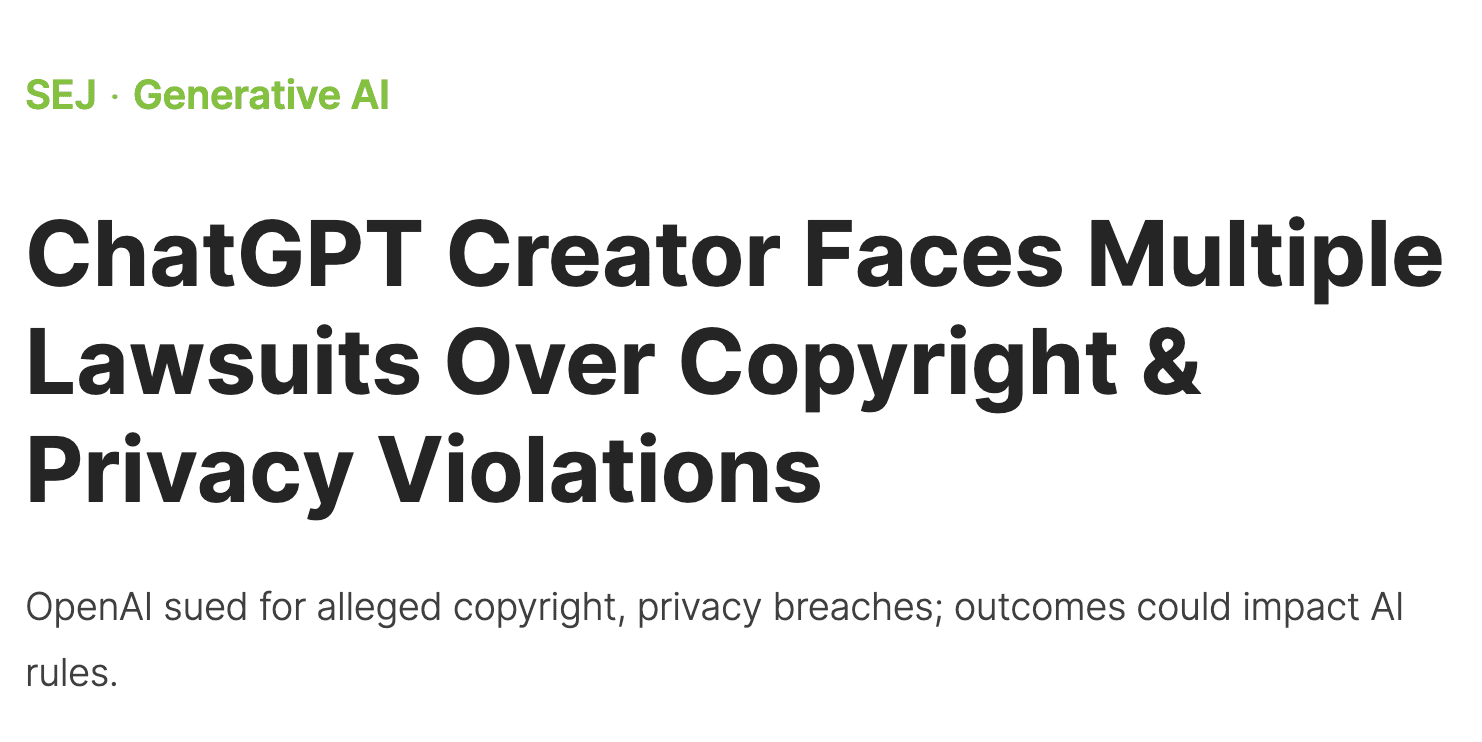
The New Ethical Implications of Generative Artificial Intelligence
Image from Search Engine Journal

Deepfake, Misinformation And Manipulation

The one with a high chance of creating ruckus at scale is deepfakes—wondering what deepfake capability can land us into?

They are synthetic creations – text, images, or videos, that can digitally manipulate facial appearance through deep generative methods.

Result? Bullying, misinformation, hoax calls, revenge, or fraud – something that does not fit the definition of a prosperous world.

The post intends to make everyone aware that AI is a double-edged sword – it is not all magic that only works on initiatives that matter; the bad actors are also a part of it.

That is where we need to raise our guards.

Safety Measures

Take the latest news of a fake video highlighting the withdrawal of one of the political personalities from the upcoming elections.

What could be the motive? – you might think. Well, such misinformation spreads like fire in no time and can severely impact the direction of the election process.

So, what can we do not fall prey to such fake information?

There are various lines of defense, let’s start from the most basic ones:

  • Be skeptical and doubtful of everything you see around yourself
  • Turn your default mode – “it might not be true,” rather than taking everything at face value. In short, question everything around you.
  • Confirm the potentially suspicious digital content from multiple sources

Is Pausing The Development A Solution?

Prominent AI researchers and industry experts such as Yoshua Bengio, Stuart Russell, Elon Musk, Steve Wozniak, and Yuval Noah Harari have also voiced their concerns, calling for a pause on developing such AI systems.

There is a large looming fear that the race to build advanced AI, matching the prowess of Generative AI can quickly spiral out and go out of control.

There Is Some Progress

Microsoft has recently announced that it will protect the buyers of its AI products from copyright infringement implications as long as they comply with guardrails and content filters. This is a significant relief and shows the right intent to take responsibility for the repercussions of using its products – which is one of the core principles of ethical frameworks

It will ensure that the authors retain control of their rights and receive fair compensation for their creation.

It is a great progress in the right direction! The key is to see how much it resolves the authors’ concerns.

What’s Next?

So far, we have discussed the key ethical implications related to the technology to make it right. However, the one that stems from the successful utilization of this technological advancement is the risk of job displacement.

There is a sentiment that instills fear that AI will replace most of our work. Mckinsey recently shared a report about what the future of work will look like.

This topic requires a structural change in how we think of work and deserves a separate post. So, stay tuned for the next post, which will discuss the future of work and the skills that can help you survive in the GenAI era and thrive!

Vidhi Chugh is an AI strategist and a digital transformation leader working at the intersection of product, sciences, and engineering to build scalable machine learning systems. She is an award-winning innovation leader, an author, and an international speaker. She is on a mission to democratize machine learning and break the jargon for everyone to be a part of this transformation.

More On This Topic

  • Simpson's Paradox and its Implications in Data Science
  • Towards a Responsible and Ethical AI
  • Artificial Intelligence vs Machine Learning in Cybersecurity
  • ARTIFICIAL INTELLIGENCE (AI), A TEXTBOOK
  • Demystifying AI: The prejudices of Artificial Intelligence (and…
  • Should You Become a Freelance Artificial Intelligence Engineer?

Why OpenAI Launched Copyright Shield? 

OpenAI is well known in the tech ecosystem for copyright infringement lawsuits for training its language models like GPT-4 and DALL.E 3. At the first-ever DevDay, the AI research lab launched the Copyright Shield program, which aims to provide financial support and legal defense to the enterprise-level users of ChatGPT against such claims.

While unveiling the program, Sam Altman emphasised their efforts to ensure copyright compliance within their AI systems, which are trained on a combination of licensed and publicly available data sources.

With this initiative, OpenAI aligns itself with tech giants like Microsoft, Amazon, and Google, all of which offer legal aid to their users facing similar issues. Adobe and Shutterstock, known for their stock images and generative AI tools, have also pledged to offer comparable protections.

Following the Lead

In recent months, major tech companies have proactively tackled the copyright issues associated with generative AI tools. Back in September, Microsoft introduced the Copilot Copyright Commitment program to cover legal costs for customers of its AI services, including Microsoft 365 Copilot and GitHub Copilot, provided they adhere to guidelines like using content filters.

Adobe, too, has set up a safeguard for its AI art tool, Firefly, offering support against copyright claims and ensuring that the images are either licensed or public domain.

Google has stepped up by offering to defend Google Cloud and Workspace users against IP infringement claims related to both the training materials and the AI-generated content, though this does not cover misuse. These initiatives by the tech giants aim to navigate the legal complexities of AI content creation and offer some security to users.

Amazon has opted for a different approach with its Kindle Direct Publishing platform, requiring authors to disclose if their content is AI-generated—though this does not extend to AI-assisted edits. This policy seeks to ensure transparency about the content’s origins rather than offering legal protection.

OpenAI’s History of Lawsuits

Prominent authors, including George R.R. Martin, the creator of Game of Thrones and Pulitzer prize winner Michael Chabon, have filed lawsuits against OpenAI, alleging unauthorised use of their works in training AI programs like ChatGPT. However, the ChatGPT maker contends that their methods are covered by fair use—a claim not recognised by the authors, leading to ongoing legal battles.

Further, OpenAI has faced additional lawsuits for allegedly using private data without permission and for systematic copyright infringement, as claimed by the Author’s Guild.

Copyright for Big Tech is Fluff

Elon Musk’s recent unveiling of the xAI chatbot, Grok. The most interesting as well as concerning thing about this is that the 33 billion parameter model was developed by a small team of 16 members in less than just four months, in contrast to Google’s Bard, which took about two years, and OpenAI’s ChatGPT, which took several years, raising questions about the authenticity and IP rights of the training data.

One of Grok’s distinct advantages is its access to real-time data from the exclusive X platform. This is significant, particularly after Musk restricted free API access to X to prevent data scraping for training competing models, highlighting the increasing value and protectiveness of proprietary data in AI.

Yet, the scarcity of clean, licensed data for AI training is the root cause which no big tech wants to address. While coding platform Replit is one of the very few companies to openly state that it used 1 trillion licensed code tokens from the Stack dataset and StackExchange to train their AI chatbot Replit AI, other companies’ transparency levels vary, raising questions about the purity of their data sources.

Further complicating the landscape are the ever-growing jailbreakers, adept at bypassing the constraints placed on AI tools to access or repurpose their capabilities, often pushing the boundaries of usage policies. Their actions can intensify the data-sourcing problem, as they might use methods that compromise the integrity or legality of the data used to train other models.

This "copyright shield" is outrageous! And at the same time OpenAI prohibits using the output of ChatGPT to train competing models. It's data laundering and misplacing copyright to people who didn't create anything. pic.twitter.com/x8eR5vyDQA

— Marge Nelk (@NelkMarge) November 6, 2023

Meanwhile, several users took to X to criticise measures such as OpenAI’s copyright shield, which paradoxically restricts the use of its output to train other models, as per their official website. This has sparked debates over the ethics of copyright in the AI domain, as it may improperly attribute rights to those who did not contribute to the original creation.

The current race for AI dominance is now not only about technological prowess but also about securing exclusive data, with Google utilising YouTube, Poe tapping Quora, and OpenAI drawing from web data only up until January 2022. The struggle extends to maintaining control over data in a rapidly evolving field where jailbreakers and AI companies vie for the upper hand.

Read more: Now Everyone is an App Developer, Thanks to OpenAI

The post Why OpenAI Launched Copyright Shield? appeared first on Analytics India Magazine.

KDnuggets News, November 8: 5 Simple Steps to Master Python, SQL, Scikit-learn, PyTorch & Google Cloud • SQL for Data Visualization

Features 5 Simple Steps Series: Master Python, SQL, Scikit-learn, PyTorch & Google Cloud
Nisha Arya
SQL for Data Visualization: How to Prepare Data for Charts and Graphs
Nate Rosidi
This Week's Posts Is Academia Obsessing Over Methodology at the Cost of True Insights?
Nisha Arya
7 Machine Learning Algorithms You Can't Miss!
April Miller
Leveraging the Power of GPUs with CuPy in Python
Abid Ali Awan
Building Data Pipelines to Create Apps with Large Language Models
Anup Surendran
An Honest Comparison of Open Source Vector Databases
Nahla Davies
Dive into the Future with Kaggle's AI Report 2023 – See What's Hot
Nisha Arya
6 Artificial Intelligence Myths Debunked: Separating Fact from Fiction
Josep Ferrer
Hyperparameter Tuning: GridSearchCV and RandomizedSearchCV, Explained
Bala Priya C
Back to Basics Week 1: Python Programming & Data Science Foundations
Nisha Arya
Getting Started with Graph Database Queries, with Cheat Sheet!
Stan Pugsley
Why Prompt Engineering is a Fad
Nahla Davies
5 Free University Courses on Data Analytics
Nisha Arya
Navigating Data Science Job Titles: Data Analyst vs. Data Scientist vs. Data Engineer
Nate Rosidi
Between Dreams and Reality: Generative Text and Hallucinations
Josep Ferrer
5 Ways You Can Use ChatGPT Vision for Data Analysis
Abid Ali Awan
From Our Partners Monte Carlo is Kicking Off IMPACT 2023, Keynotes From Data & AI Pioneers
Monte Carlo Data
Fast and Cheap Fine-Tuned LLM Inference with LoRA Exchange (LoRAX)
Predibase
365 Data Science Offers Free Course Access Until Nov. 20
365 Data Science
Introduction to Giskard: Open-Source Quality Management for AI Models
Giskard.AI
From Around The Web K-Nearest Neighbors Classification Using OpenCV
Machine Learning Mastery
Build a ChatGPT-esque Web App in Pure Python using Reflex
Towards Data Science

More On This Topic

  • 5 Simple Steps Series: Master Python, SQL, Scikit-learn, PyTorch &…
  • KDnuggets News, November 9: 7 Tips To Produce Readable Data Science…
  • KDnuggets News, October 27: 5 Free Books to Master Data Science • 7…
  • Getting Started with Scikit-learn in 5 Steps
  • Getting Started with Google Cloud Platform in 5 Steps
  • KDnuggets News, November 30: What is Chebychev's Theorem and How…

Indian Billionaires Turn to AI to Become Trillionaires 

Indian Billionaires Turn to AI to Become Trillionaires

Indian billionaires have a newfound love – artificial intelligence, which would now help them become trillionaires, obviously. According to recent reports, billionaire Binny Bansal is launching an AI-as-a-service startup that will target global customers, and then enable their AI needs. The head wants to shift to the fastest growing sector in the economy, after making a fortune in Indian e-commerce.

Bansal aims to assemble a dream team of 15 brilliant minds, primarily AI experts, in his latest endeavour. Sources in the know reveal that he’s on a mission to offer a blend of AI products and services to corporate clientele, mimicking the modus operandi of outsourcing giants like TCS and Infosys.

Tapping into India’s best

The heart of this startup is in Bengaluru, while its official HQ resides in Singapore, where it’s maintaining a low profile for the moment. It plans to unveil its offerings within a matter of months and even has its sights set on expanding to the U.S. The projected timeline for product and service rollout is set for the latter half of 2024.

When it comes to generative AI, India has a leverage of the vast number of languages that no other country has. Take the example of Project Indus by Tech Mahindra, which is a Indic-based foundational model, which is expected to launch in December this year, or January next year. If Anand Mahindra’s project works out, it might be a game changer for multilingual generative AI globally.

On the other hand, Bansal’s strategy involves tapping into India’s large English-speaking, youthful population to train professionals for various AI services. While the specific offerings remain undisclosed, there are indications that the legal and e-commerce sectors will be the initial targets, with potential expansions into financial services, data science, and analytics.

Indian tech giants such as TCS, Infosys, and Wipro, are also heavily investing in training their employees to tap into the generative AI field. Bansal’s AI startup is also notable for its emphasis on talent development and cost-effective operations in smaller Indian cities with lower costs of living. The idea is clearly focused on building up the Indian workforce.

Chance to build a trillion dollar company

Vinod Khosla, the billionaire businessman and investor, spoke at Forbes’ Forging the Future of Business with AI’ event, about the immense opportunity that AI presents for all the businesses and entrepreneurs across the globe. “AI is the opportunity for entrepreneurs in the audience if they want to build a trillion dollar company. That’s an incredible amount, it’s orders of magnitude bigger than Google’s current market,” he said.

At Reliance’s 46th Annual General Meeting, Mukesh Ambani announced his plans to build India-specific AI models. The Jio chief is probably one of those bigwigs from India who can actually challenge OpenAI. “India has scale. India has data. India has talent. But we also need AI-ready digital infrastructure that can handle AI’s immense computational demands,” said Ambani.

Reliance has also partnered with NVIDIA for the same mission. Similarly, Ratan Tata’s TCS, Tata Communications, and Tata Motors, have also partnered with NVIDIA for harnessing India’s generative AI capabilities. The company has been continuously training its employees with generative AI.

Gautam Adani, another billionaire has been hooked onto ChatGPT since January and his Adani Digital Labs is also focusing on building something similar. He is also planning to set up an AI lab in Tel Aviv, as he says it’s a transformational and democratising technology. Adani Group also recently partnered to improve airport travel with AI in Bengaluru.

We all know about Infosys co-founders, Narayana Murthy and Nandan Nilkeni’s investment in generative AI. The tech giant is also partnering with NVIDIA for creating a Centre of Excellence for training 50,000 employees with generative AI. Similarly, Wipro’s Azim Premji also believes that the next decade will be the age of AI.

Paytm founder Vijay Shekhar Sharma has launched a $3.6 million fund for investing in AI and electric vehicles. Anil Agarwal of Vedanta is investing $5 billion in semiconductor fab in India for AI chipmaking.

Biocon Limited’s executive chairperson, Kiran Mazumdar Shaw invested an undisclosed amount in Univ.AI, an edtech startup. Kumar Mangalam Birla, the chairperson of Aditya Birla Group has also announced the company’s focus on harnessing generative AI in the works.

It is clear that all billionaires have understood that AI is the way for them to jump from being a billion dollar company to a trillion dollar one, the fastest way as well.

The post Indian Billionaires Turn to AI to Become Trillionaires appeared first on Analytics India Magazine.