Who knows what GamePlanner does, but Airbnb just bought the company

Who knows what GamePlanner does, but Airbnb just bought the company Haje Jan Kamps 8 hours

Welcome to Startups Weekly. Sign up here to get it in your inbox every Friday.

One of the most interesting stories on the site this week — both to me personally as a hardware and AI nerd and according to our “how many people read this story” tools — is Brian’s meeting with the Humane AI pin. The product is a matchbook-sized marvel crammed full of tech, including 32GB storage, a multifunctional 12-megapixel camera. Its pièce de résistance, though, is a laser projection system capable of displaying information on any surface, even your palm. The device is a voice-first device, offering a seamless AI-driven experience with proprietary and OpenAI integrations, including GPT-4. It’s not just a gadget; it’s a glimpse into a future where AI is as wearable as a pin and as personal as your daily routine.

The other part of AI I’ve been thinking about is why we are collectively happy to let AI do some jobs but bristle at others. A lot of this shows up for me when I’m thinking about pursuits that are fundamentally human in nature: Making art, worrying about stuff we shouldn’t be worrying about, and other such activities. What does it mean to be human, anyway?

Finally, Airbnb has acquired the AI startup GamePlanner.AI, which was co-founded by Adam Cheyer and Siamak Hodjat, in a secretive deal rumored to be around $200 million. The co-founders are responsible for Siri and Samsung’s Bixby assistants. GamePlanner is shrouded in mystery, but its acquisition suggests that Airbnb may be working toward a travel concierge service. GamePlanner is Airbnb’s first acquisition since 2019 and its first as a public company.

Let’s see what else there is on the site this week . . .

Beep boop, I’m a robot
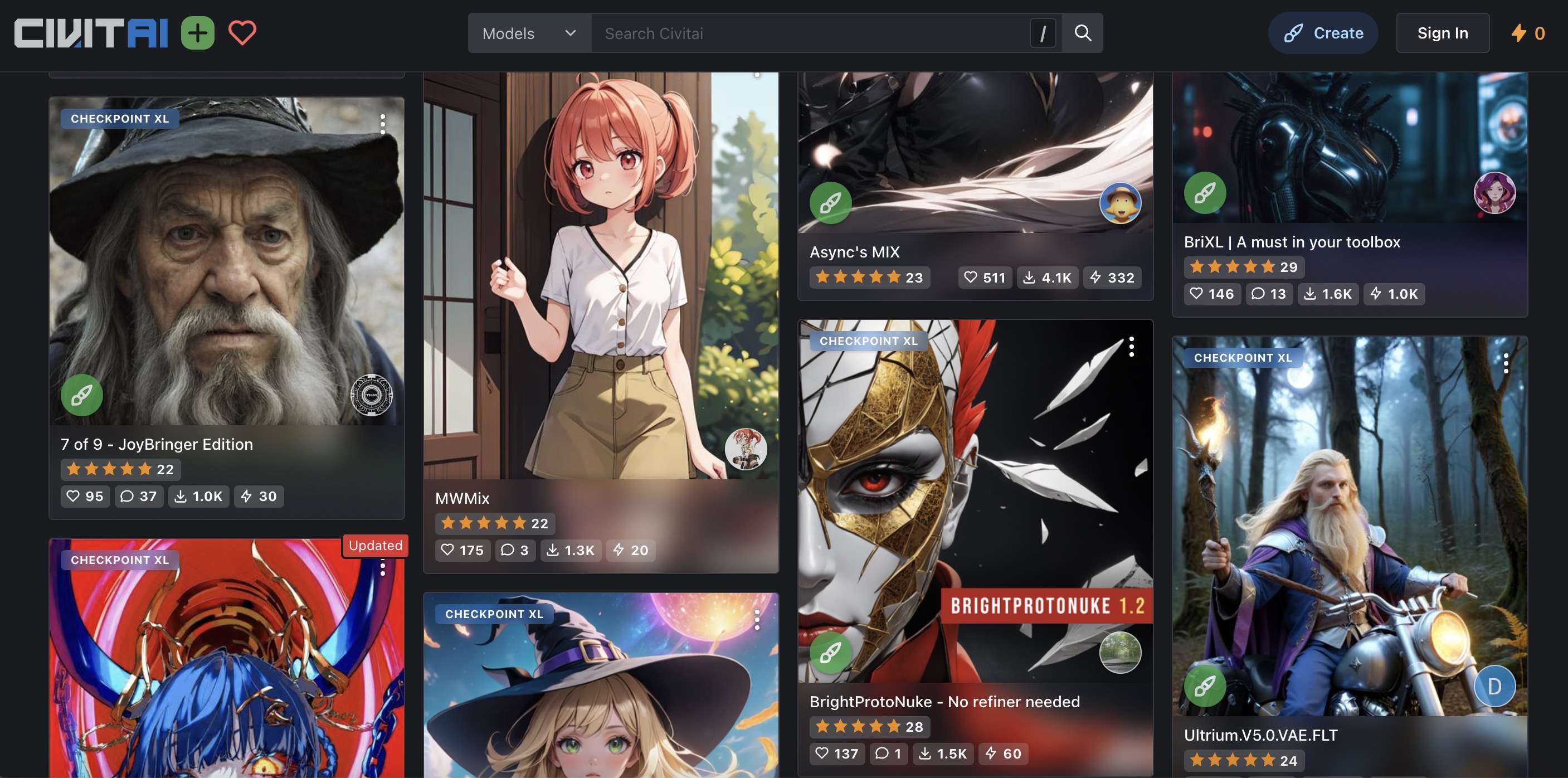
Image Credits: Civitai

We are getting closer and closer to being able to get AI-powered robots capable of learning to interact with the physical world, enhancing repetitive tasks across various sectors. The challenge in robotics is creating high-quality datasets for physical interactions, necessitating a fleet of robots for diverse data collection. Deep reinforcement learning is crucial for success, argues Peter Chen, co-founder of Covariant. He claims that enabling robots to adapt and refine their strategies has laid the groundwork for this transformation, predicting a surge in viable robotic applications by 2024.

Meanwhile, in France, Romain is observing that a lot of the startup ecosystem — including French AI startups like Dust, Finegrain, Gladia, Mistral AI, and Scenario — is indicating that France is turning into a major AI hub. He says this is due to a strong talent pool — and, of course, notable venture capital activity, with firms like Index Ventures actively investing in AI startups.

Moar AI nuggets:

Startup shrugged: Atlas, a 3D generative AI platform, has launched with $6 million in seed funding after two years of development in stealth mode. Its aim is to make world designing easier for games development.

Like Flickr, but for Gen AI: Civitai, a generative AI content marketplace, provides a platform for users to share and discover AI-generated image models based on Stable Diffusion. The startup has experienced significant growth, leading to a $5.1 million funding round from a16z, at a $20 million valuation.

ChatGPT, take the weel: Ghost Autonomy, a company developing autonomous driving software, has partnered with OpenAI and landed a $5 million investment to explore the use of multimodal large language models (LLMs) in self-driving cars. Talk about making the hallucinations high stakes, y’all.

The robot will see you now: Forward Health has launched the CarePod, a self-contained and stand-alone medical station powered by AI, designed to perform clinical tasks found in primary care offices, such as blood tests and blood pressure readings, without the need for a doctor or nurse on-site.

Helloooo, startup land

BuildCasa rendering - Backyard house

Image Credits: BuildCasa

In the context of a funding winter where investment activity is at a three-year low, founders, particularly those approaching Series A funding, are facing challenging times. I really enjoyed Katie Konyn and Daniela Restrepo’s guest article on TC+, talking about how to leverage LinkedIn to raise funding. They recommend growing a network, engaging with investors without immediately pitching, maintaining visibility through regular updates and accomplishments, and building reciprocal relationships. It’s a long game, they conclude.

Inversion Art aims to be the Y Combinator for artists, I wrote on TC+ this week. The company is offering an accelerator program to help artists find success. Co-founders Joey Flores and Jonathan Neil provide artists with support through purchase commitments, a share in sales, and practical services for five years. This approach includes a biannual, three-month program in Los Angeles for selected artists, culminating in an exhibition. Their model blends direct financial investment with comprehensive back-office management services, targeting fine artists and potentially extending to other creative professionals. It’s a cool idea — god knows if it’ll prove to be venture-scale, but I like the approach of empowering artists to define and achieve success on their own terms.

More startup stories:

Well that’s one way to make a market: Samara, a company spun out of Airbnb, has recently obtained new funding, positioning itself as a potential solution to the U.S. housing crisis. I have mixed feelings about this one, especially given that Airbnb may itself have some responsibility in causing the housing crisis in the first place.

Revolving doors: Zeus Living, a proptech startup reportedly backed by Airbnb, is shutting down its operations. Founded in 2015, the company initially focused on redecorating landlords’ homes and renting them to relocated workers for extended stays, later expanding to offer more flexible living options to a broader audience. That didn’t quite work out as planned.

Here’s a browser for you, my AI friend: When OpenAI connected ChatGPT to the internet, it supercharged the AI chatbot’s capabilities. Now the search engine You.com wants to do the same for every large language model out there.

Let’s go on an adventure!

Image Credits: Amazon

Rocky waters at GM at the moment, as the mothership intensified its oversight over Cruise, its self-driving car subsidiary, following incidents that led to the suspension of Cruise’s commercial operation permits in California. GM executive Craig Glidden, who is also a Cruise board member, has been appointed as chief administrative officer to lead the company’s legal, policy, communications, and finance teams. Cruise has paused all supervised and manual autonomous vehicle operations in the U.S., affecting about 70 vehicles. A survey found that half of Cruise employees surveyed have low confidence in the company’s safety culture.

More known for hauling fossil fuels out of the ground, Exxon is planning to tap into the U.S.’s vast lithium reserves to power electric vehicles. The U.S. holds large quantities of recoverable lithium, critical for EV batteries. The scale is pretty beefy: The amount of lithium the company wants to drill would supply more than a million vehicles per year.

More transportation news:

Okay, fine, you can drive: Uber is implementing new measures to address the issue of unfair driver deactivations, a significant concern for ride-hail and delivery drivers. The measures include better reviews, recording features, and voluntary drug testing.

Is it a bird? A plane?: Joby Aviation and Volocopter performed brief demonstration flights of their electric aircraft over New York City, showcasing a glimpse of the future of aviation.

Let’s see other people: Rivian’s electric vans are no longer exclusive to Amazon, as the automaker has announced it will now sell its commercial electric vans to other companies. This decision ends the exclusive deal made with Amazon in 2019.

Who needs music anyway?: A recent software update intended to fix bugs and improve proximity locking in Rivian’s vehicles inadvertently bricked some of their infotainment systems. It isn’t clear whether this can be resolved with an OTA update. Luckily, Rivian says only about 3% of vehicles were affected — but they may need to be serviced by a technician. Whoops.

Top reads on TechCrunch this week

Alpha and Omegle: Omegle, a popular online chat service known for connecting strangers for conversations, has been shut down after more than 14 years due to the growing misuse of the platform, which included involvement in “unspeakably heinous crimes” — including an alleged 600,000 instances of child abuse.

Ahh, finally some peace and Dimmu Borgir: The Bose QuietComfort Ultra headphones deliver exceptional comfort, sound quality, and top-notch noise cancellation, Brian reviews. The headphones justify their $429 price tag as one of the best noise-canceling Bluetooth headphones available.

We have trust issue: Epic and Google clashed in a court, with a trial focusing on Google’s alleged anticompetitive practices in its Play Store. The core challenge is Google’s commission on in-app purchases and special deals with developers. Here’s 5 things we learned this week

Price lists at dawn: Lyft’s aggressive pricing strategy to compete with Uber has led to gradual growth for the company, although the competition in the ride-hail market remains intense.

How Salesforce is AI-ding India’s Tech Future

How Salesforce is AI-ding India’s Tech Future

Salesforce recently announced that it would be partnering with the Ministry of Education to upskill 100K students in AI, through its Trailhead cloud platform, for fostering tech talent in India. In addition to this, the partnership will also be offering a virtual internship program – funded by Salesforce – which would serve as a great platform to promote the capability of the growing generation.

Salesforce, the world’s leading AI CRM platform, has decided to provide its free online platform to promote the growth of 100,000 students by collaborating with the Ministry of Education by 2026.

The collaboration aims to align with IDC projections in order to indicate that the global Salesforce economy, driven by AI, will create 11.6 million jobs and generate $2.02 trillion in business revenues between 2022 and 2028.

Arundhati Bhattacharya, CEO of Salesforce India, highlighted that India’s talent pool, digital adoption, and innovation are all factors in the country’s technological dominance. “With this aim in mind, Salesforce is trying to build a promising career through strategic partnerships with Indian academic institutions,” she added.

According to CFO Amy Weaver, India is Salesforce’s largest ecosystem outside of India. By the start of 2023, Bhattacharya said that Salesforce India already has 7,500 employees, and aims to increase the number to 10,000 as soon as possible.

Tailored Programs

Infosys founder NR Narayana Murthy also said that India should invest at least $1 billion annually for the next two decades. This would help accelerate the outcome of the NEP, he believes. There is a need for upskilling in the Indian economy to foster innovation.

The Salesforce program is designed with industry-relevant courses that follow the National Occupational Standards set by the Ministry of Education. This partnership is initiating this through mentoring programs, “train-the-trainer” workshops for educators, and direct links to Salesforce partners and clients in need of qualified workers, along with helping budding IT workers.

The Trailhead course material will be modified to fit the unique needs of the programs that the Ministry of Education, as well as other ministries, agencies, and organisations, have laid out. The personalised approach ensures students get the best benefits, helping them align their skills with the ever-changing needs of the industry.

An urgent need

Currently, a lot of major Indian IT firms are freezing the hiring of new freshers to reduce the size of their existing bench. Even then, with more than 500,000 graduates per year in the field of software engineering and technology, India is well-positioned to become a worldwide centre for IT talent, if fostered properly.

Yet, achieving this goal hinges on the careful and strategic expansion of these employees. The Salesforce-Ministry of Education partnership seeks to narrow this knowledge gap.

This collaboration looks forward to developing a new pool of talent within the Salesforce ecosystem by making it easily accessible to the upcoming generation of software enthusiasts. This initiative is further supported by the acknowledgement of academia’s critical role in driving India’s technological progress.

Through direct communication with Salesforce partners and consumers, the project aims to help students make a smooth transition from school to the workplace, thereby building a bridge between academics and business. This will be an essential criterion in producing a workforce that is capable of applying its theoretical knowledge to real-world situations.

Govind Jaiswal, Joint Secretary of the Department of Higher Education, in the Ministry of Education, stated, “Our combined efforts can create a program empowering students with the skills needed for job market success. This collaboration will benefit individuals and contribute to overall personal growth,” he added.

Salesforce has always been upskilling

This is not the first time that Salesforce has taken the initiative to upskill Indian employees and students. In 2020, Salesforce launched its upskilling program for employees to close the knowledge gap caused by the impact of the pandemic. The Trailhead initiative was also launched in 2022 for the same reasons.

The collaboration between Salesforce and the Ministry of Education is a big step forward for India’s tech goals. Training 100,000 students isn’t just about education—it’s a journey to empower youth for success in the digital age. As Salesforce’s global impact grows, this partnership sets a precedent for how tech companies and education can work together, creating an environment where talent flourishes and innovation has limitless possibilities.

The post How Salesforce is AI-ding India’s Tech Future appeared first on Analytics India Magazine.

AI is outperforming our best weather forecasting tech, thanks to DeepMind

science-deepmind-2023-learning-skillful-medium-range-global-weather-forecasting-slide-9

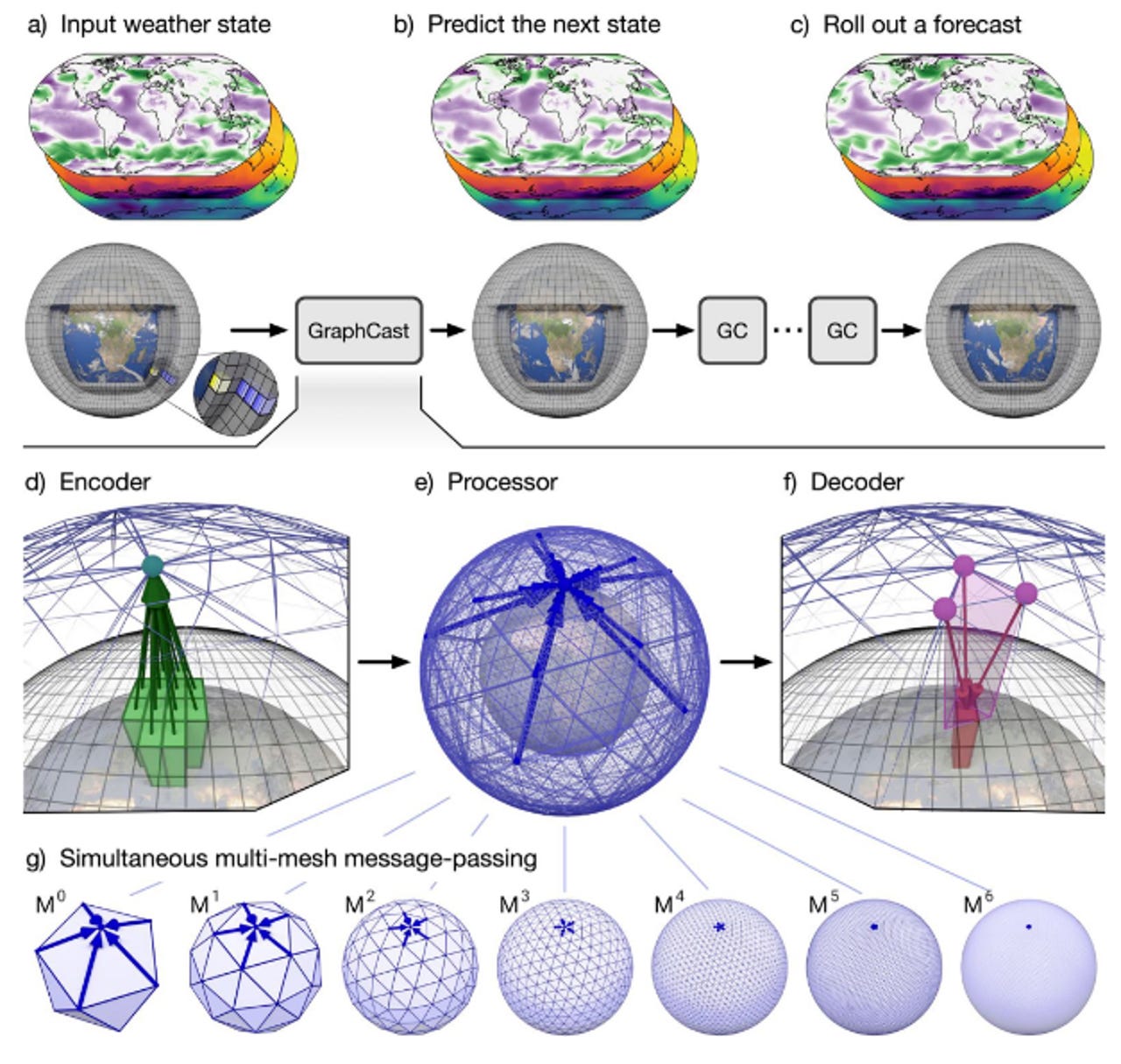
Data from a multi-decade simulation, called ERA5, is fed into the GraphCast graph network as a set of measurements at a particular point. By traversing the graph, GraphCasts predicts the next measurement for that point and for its neighbors.

Climatologists have spent decades amassing data on how the weather has changed at points around the globe. Efforts such as ERA5, a record of climate back to 1950, developed by the European Centre for Medium-Range Weather Forecasts (ECMWF), are a kind of simulation of the earth over time, a record of the wind speed, temperature, air pressure, and other variables, hour by hour.

Google's DeepMind this week is heralding what it calls a turning point in using all that data to make inexpensive predictions of the weather. Running on a single AI chip, Google's Tensor Processing Unit (TPU), the DeepMind scientists were able to run a program that can predict weather conditions more accurately than a traditional model running on a supercomputer.

Also: Less is a lot more when it comes to AI, says Google's DeepMind

The DeepMind paper is published in next week's issue of the scholarly journal Science, accompanied by a staff article that likens the paper to part of a "revolution" in weather forecasting.

Mind you, GraphCast, as the program is called, is not a replacement for traditional models of forecasting, according to lead author Remi Lam and colleagues at DeepMind. Instead, they view it as a potential "complement" to existing methods. Indeed, the only reason GraphCast is possible is because human climate scientists built the existing algorithms that were used to "re-analyze," meaning, go back in time and compile the enormous daily data of ERA5. Without that precision effort to create a world model of weather, there would be no GraphCast.

The challenge Lam and team took on was to take a number of the ERA5 weather records and see if their program, GraphCast, could predict some unseen records better than the gold standard for weather forecasting, a system called HRES, also developed by ECMWF.

HRES, which stands for High RESolution Forecast, predicts the weather for the next 10 days, around the world, using an hour's worth of work, for an area measuring around 10 kilometers squared. The HRES is made possible because of mathematical models developed over decades by researchers. HRES is "improved by highly trained experts" which — while valuable — "can be a time-consuming and costly process," write Lam and team, and which comes with the cost of multi-million-dollar supercomputers.

Also: Why DeepMind's AI visualization is utterly useless

The question is whether a deep learning form of AI could match that model created by human scientists with a model automatically generated.

GraphCast takes weather data such as temperature and air pressure and represents it as a single point for a square area on the globe. That individual point is linked to neighboring areas' weather conditions by what are called "edges." Think of the Facebook social graph, where each person is a dot and they are linked to friends by a line. The earth's atmosphere becomes a mass of points, each square area, linked by lines representing how each area's weather is related to its neighboring area.

That's the "graph" in GraphCast. Technically, it's a well-established area of deep learning AI called a graph neural network. A neural network is trained to pick out how the points and lines relate, and how those relations can change over time.

Armed with the GraphCast neural net, Lam and team entered 39 years' worth of the ERA5 data on air pressure, temperature, wind speed, etc., and then measured how well it predicted what would happen next over a 10-day period in comparison to the HRES programs.

Also: I replaced my phone's weather app with this $340 forecasting station. Here's why

It takes a month on 32 of the TPU chips working in concert to train GraphCast on the ERA5 data; that's the training process in which the neural network has its parameters — or neural "weights" — tuned to the point where they can reliably make predictions. Then, a group of the ERA5 data that has been set aside —the "held-out" data, as it's known — is fed into the program to see if the trained GraphCast can predict from the data points how those points will change over ten days — effectively predicting the weather inside this simulated data.

"GraphCast significantly outperforms" HRES on 90% of the prediction tasks, the authors observe. GraphCast is able to best HRES in predicting the shape of extreme hot and cold developments as well. They notice that HRES does better with predictions that have to do with the stratosphere, versus surface changes in weather.

It's important to realize that GraphCast is not actively predicting the weather in production. What it did well at is a controlled experiment with previously known weather data, not live data.

An intriguing limitation of GraphCast is that it stumbles when it gets outside of a 10-day period, Lam and team note. As they write, "there is increasing uncertainty at longer lead times." GraphCast gets "blurry" when things get more uncertain. That suggests that they have to make changes to GraphCast to handle the greater uncertainty of longer time frames, most likely by crafting an "ensemble" of forecasts that overlap. "Building probabilistic forecasts that model uncertainty more explicitly … is a crucial next step," write Lam and team.

Also: How a digital twin for intense weather could help scientists mitigate climate change

Interestingly, DeepMind has big ambitions for GraphCast. Not only is GraphCast just one of what they expect to be a family of climate models, but it is part of a broader interest in simulation. The program is operating on global data that simulates what happens over time. Lam and team suggest other phenomena can be mapped, and predicted, in this way, not just weather.

"GraphCast can open new directions for other important geo-spatiotemporal forecasting problems," they write, "including climate and ecology, energy, agriculture, and human and biological activity, as well as other complex dynamical systems.

"We believe that learned simulators trained on rich, real-world data, will be crucial in advancing the role of machine learning in the physical sciences."

Artificial Intelligence

Microsoft to Bring Cohere’s Enterprise AI Models on Azure AI Service

Cohere has announced that its flagship enterprise AI model, Command, will now be accessible through the Microsoft Azure AI Model Catalog and Marketplace as a managed service for the first time. The partnership brings Cohere’s English and multilingual capabilities to Microsoft Azure, enabling global use across various languages and regions.

Notably, Azure AI customers can now employ Cohere’s models without their data leaving the Azure cloud. Jaron Waldman, Cohere’s Chief Product Officer, highlighted the significance of this move in aligning with customer data locations and facilitating efficient scaling of AI prototypes.

Eric Boyd, CVP of Azure AI Platform at Microsoft, expressed enthusiasm about offering Cohere’s Command model as a service, emphasizing the expanded choices for developers in building Generative AI applications.

At Ignite 2023, Microsoft announced the newest iteration of the Phi Small Language Model (SLM) series termed Phi which is also available in Azure AI service. It also includes Meta’s Llama 2, OpenAI’s LLMs and Jais, a 13-billion parameter model developed by UAE tech firm G42.

Additionally, at Ignite, NVIDIA launched an AI foundry service aimed at accelerating the development and optimisation of custom generative AI applications for enterprises and startups on Microsoft Azure. The service integrates three components: NVIDIA AI Foundation Models, NVIDIA NeMo framework and tools, and NVIDIA DGX Cloud AI supercomputing services.

The post Microsoft to Bring Cohere’s Enterprise AI Models on Azure AI Service appeared first on Analytics India Magazine.

India Needs a National Level AI Skill Development Programme ASAP

India Needs a National Level AI Skill Development Programme ASAP

My cousin who is in class twelfth, worriedly called me the other day, asking if he will get a job after he leaves school or college since AI is replacing all the jobs.. The same emotion is across the spectrum of students, from school going kids to engineering graduates, who are worried about future job prospects as these subjects (particulalry AI and analytics) are not taught in their curriculum – an entire generation is studying for jobs that won’t exist.

Unfortunately, the majority of these students and graduates – say my cousin and his friends – are likely to afford online courses to upskill themselves. What about the others who have no resources to do this?

Plus, there is a pool of fresh graduates, a large chunk of the population, which is skilled, but not enough to land a job. The situation is only getting worse with a lot of IT majors also freezing the hiring of freshers.

If India needs to rise up in the AI world, it needs to plant an innovation seed in its population. Most importantly, that seed should be planted within the youths, which should start with teaching students the basics of the field, and getting them used to AI like a tool, not something that they should fear.

It all should start with a national level AI skill development programme in India.

The need is ASAP

Possibly, the government recognises the urgency of this. It needs to invest a lot more than it already is when it comes to the National Education Policy (NEP) in India. Infosys founder NR Narayana Murthy has suggested that India should invest at least $1 billion annually for the next two decades. This would help accelerate the outcome of the NEP, he believes.

Addressing the solution to the gap between research and production in India, Murthy advocated for enhancing research and education quality in higher learning institutions, attributing the NEP as a step in the right direction.

To expedite NEP’s impact, he proposed the recruitment of 10,000 retired accomplished teachers in STEM fields from the developed world and India to establish 2,500 ‘Train the Teacher’ colleges nationwide. This year-long training program, costing $1 billion annually and $20 billion over 20 years, aims to produce a substantial number of skilled teachers who, in turn, become trainers.

Simultaneously, Murthy also appreciated PM Narendra Modi’s NEP, by calling it an “excellent idea”. He highlighted that the policy promotes innovation and deeper focus on invention in the Indian mindset. He believes that this should further extend beyond just employees, and focus on primary and secondary education.

This was after NEP recommending that teachers should be trained with AI and design thinking with subjects that are enabled through AI-enabled digital infrastructure which is called DIKSHA. The portal integrates AI solutions to facilitate learning and monitoring.

The Central Board of Secondary Education (CBSE) has already introduced AI as a subject in classes 9 and 11 for affiliated schools. The NISHTHA and Integrated Teacher Education (ITEP) program is teaching educators to fulfill this requirement within students.

Are things getting any better?

Rajeev Kumar Singh, Associate Dean of Academic at Shiv Nadar University told AIM that he is optimistic about adopting AI tools in teaching methods, as it would be able to save time for transferring information, while teachers can focus on better things. At the same time, he is also optimistic for students to use and experiment with it.

“We are not one of those universities. We actually thought that let us see how this (ChatGPT) evolves.” he said talking about universities and schools banning ChatGPT. “We are basically very neutral and we have left to the wisdom of both the students and the faculty to figure out the best way to deal with it.”

But this adoption of technology by teachers and students is just one step of removing the fear that students have about AI. For that, the only step is incorporating these tools within their curriculum to make them used to it. Because the tools are not going anywhere. And all of this starts with the government making changes to its policies.

For this the Ministry of Education (MoE) is partnering with various companies to upskill students with AI. Recently, it partnered with Salesforce for upskilling 100K students in AI through their cloud platforms. It also announced its MoU with Adobe for training and certification to 20 million students and 5,00,000 teachers by 2027.

IBM also partnered with MoE for co-creation of curriculum and enabling access to IBM SkillsBuild for teaching students about AI, cybersecurity, and cloud computing. MoE and CBSE collaborated with Intel for the AI for All initiative for making the technology available for everyone in India.

The tech giants such as Microsoft, Google, Meta, and AWS, all have partnered with MoE for their initiatives for educating and upskilling school students in India.

“If you think education is expensive, try ignorance”

The schools were on a break for the longest time during the pandemic. Then when they started again, the AI race also began almost around the same time. Then during the holidays, the students were disconnected with education, and were bombarded with news headlines where AI was replacing jobs in the market. When they came back, the teachers were as ignorant of the technology as the students were, making the whole situation an AI chaos.

To put in simple words, amidst all the fear of getting replaced by AI, the idea that tools such as ChatGPT and Bard should be assistants should be embedded within students ever since they start school. They should be allowed to experiment with these tools, and then understand the limitations of the technology, to be able to adapt to it, and build better in the future.

The post India Needs a National Level AI Skill Development Programme ASAP appeared first on Analytics India Magazine.

Amazon’s PartyRock Jams Past OpenAI

Amazon’s PartyRock Jams Past OpenAI

Recently, AWS announced a launch of a new invention called PartyRock, an approachable Amazon Bedrock Playground for developers to build applications without any hustles, enabling anybody to create a generative AI program – just likeOpenAI’s GPT Builder.

Providing a creative space for everyone to express themselves, the application is completely ahead regardless of the coding expertise, along with allowing the creators to build their own application according to their own preferences and needs.

Just like OpenAI is making everyone an app developer with GPT Builder, Amazon with PartyRock is effortlessly seizing the creative and user-friendly realm, providing a seamless environment for building and exploring generative AI applications in just a few simple steps. In simple terms – letting everyone build AI apps.

From Bedrock to PartyRock

Similar to OpenAI’s GPTs, PartyRock allows users to create customised LLM based models with personal information. For example, users can give superhero names for their dog or themselves to generate an application that gives them information about certain places or even ratings on food, and you can even use it to generate game content, such as levels, characters, or storylines.

The app builder is powered by Anthropic’s Claude-2, where users can give prompts to start generating their desired app. The user interface of Amazon’s app building platform is pretty minimal and attractive. Whether generating text-based responses or connecting prompts, the platform encourages users to explore and enhance their knowledge of generative AI capabilities. It also has come up with reliable and easy-to-share options, recognising the importance of the community.

PartyRock is helping users enable an API-based interface for accessing foundation models (FMs) from Amazon and other top AI providers, such as AI21 Labs, Anthropic Cohere, Meta, Stability AI, and Amazon with a single API. With this interface, users will have a strong base to test out different generative AI approaches. Along with that, it allows it to be more accessible to anyone by providing a platform that makes working with foundation models less complicated.

Moreover, it has been made easier for users to share the apps they have created with their friends and the community. By providing a straightforward means to publish links on social media platforms using #partyrockplayground, AWS aims to foster a vibrant community of creators inspiring each other through their generative AI creations.

What’s the rock in PartyRock?

The best part about Amazon’s PartyRock is that it offers a limited-time free trial offer without the requirement of a credit card, unlike OpenAI’s GPT Builder, which requires a ChatGPT Plus subscription to start, making it widely accessible for a larger audience. It seems like Amazon is actually making everyone an app developer.

If you’ve been wanting to experiment with #generativeAI, check out PartyRock powered by Amazon Bedrock. https://t.co/Cz8An1L8Au
With PartyRock, anyone can learn about prompt engineering/writing and build apps in just a few clicks. I built one to find the best bike trails in the… pic.twitter.com/Cp7eOmmW9x

— Adam Selipsky (@aselipsky) November 16, 2023

“With PartyRock’s introduction, the conventional view of generative AI development as a challenging and specialised field is changing,” says Amazon. But it is just one step after OpenAI announced the same with GPT Builder. Apart from the free trial, what sets PartyRock apart is yet to be seen.

The rise of these agent building platforms such as OpenAI’s and now Amazon’s seems like the next frontier for LLM development. It is not just a playground for creating fun applications; rather, it also serves as an educational tool.

The post Amazon’s PartyRock Jams Past OpenAI appeared first on Analytics India Magazine.

The 5 Best Vector Databases You Must Try in 2024

The 5 Best Vector Databases You Must Try in 2024
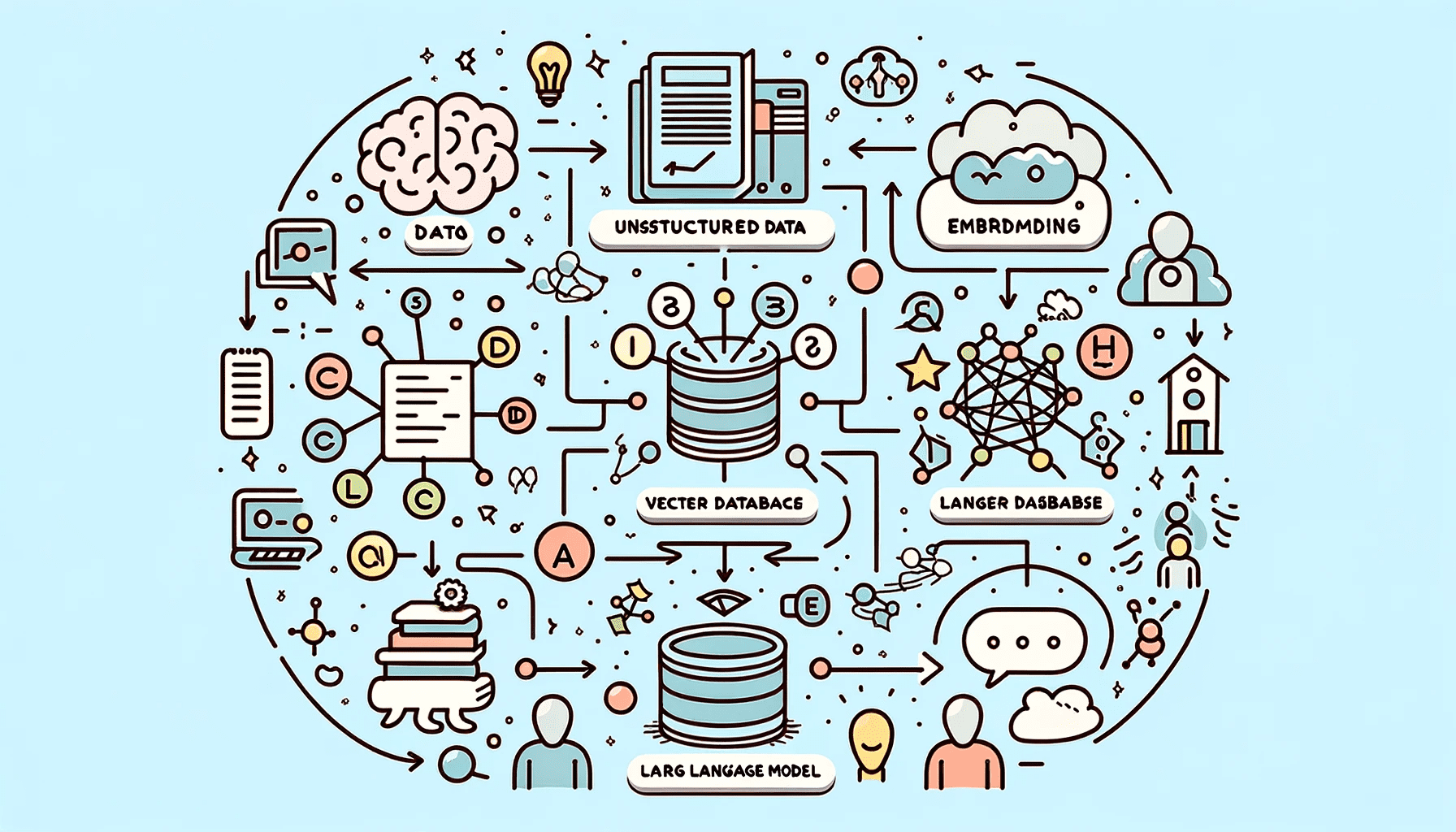
Image generated with DALL-E 3 Introduction

A vector database is a specialized type of database that is designed to store and index vector embeddings for efficient retrieval and similarity search. It is used in various applications that involve large language models, generative AI, and semantic search. Vector embeddings are mathematical representations of data that capture semantic information and allow for understanding patterns, relationships, and underlying structures.

Vector databases have become increasingly important in the field of AI applications, as they excel at handling high-dimensional data and facilitating complex similarity searches.

In this blog, we will explore the top five vector databases that you must try in 2024. These databases have been selected based on their scalability, versatility, and performance in handling vector data.

The 5 Best Vector Databases You Must Try in 2024
Image by Author 1. Qdrant

Qdrant is a open source vector similarity search engine and vector database that provides a production-ready service with a convenient API. You can store, search, and manage vector embeddings. Qdrant is tailored to support extended filtering, which makes it useful for a wide variety of applications that involve neural network or semantic-based matching, faceted search, and more. As it is written in the reliable and fast programming language Rust, Qdrant can handle high user loads efficiently.

By using Qdrant, you can build full applications with embedding encoders for tasks like matching, searching, recommending, and beyond. It is also available as Qdrant Cloud, a fully managed version including a free tier, providing an easy way for users to leverage its vector search abilities in their projects.

2. Pinecone

Pinecone is a managed vector database that has been specifically designed to tackle the challenges associated with high-dimensional data. With advanced indexing and search capabilities, Pinecone enables data engineers and data scientists to build and deploy large-scale machine learning applications that can efficiently process and analyze high-dimensional data.

Key features of Pinecone include a fully managed service that is highly scalable, enabling real-time data ingestion and low-latency search. Pinecone also provides integration with LangChain to enable natural language processing applications. With its specialized focus on high-dimensional data, Pinecone provides an optimized platform for deploying impactful machine learning projects.

3. Weaviate

Weaviate is an open-source vector database that allows you to store data objects and vector embeddings from your favorite ML models, scaling seamlessly into billions of data objects. With Weaviate, you get speed — it can quickly search ten nearest neighbors from millions of objects in just a few milliseconds. There is flexibility to vectorize data during import or upload your own vectors, leveraging modules that integrate with platforms like OpenAI, Cohere, HuggingFace, and more.

Weaviate focuses on scalability, replication, and security for production readiness, from prototypes to large-scale deployment. Beyond fast vector searches, Weaviate also offers recommendations, summarizations, and neural search framework integrations. It provides a flexible and scalable vector database for a variety of use cases.

4. Milvus

Milvus is a powerful open-source vector database for AI applications and similarity search. It makes unstructured data search more accessible and provides a consistent user experience regardless of deployment environment.

Milvus 2.0 is a cloud-native vector database with storage and computation separated by design, using stateless components for enhanced elasticity and flexibility. Released under Apache License 2.0, Milvus offers millisecond search on trillion vector datasets, simplified unstructured data management through rich APIs and consistent experience across environments, and embedded real-time search in applications. It is highly scalable and elastic, supporting component-level scaling on demand.

Milvus pairs scalar filtering with vector similarity for a hybrid search solution. With community support and over 1,000 enterprise users, Milvus provides a reliable, flexible, and scalable open-source vector database for a variety of use cases.

5. faiss

Faiss is an open-source library for efficient similarity search and clustering of dense vectors, capable of searching massive vector sets exceeding RAM capacity. It contains several methods for similarity search based on vector comparisons using L2 distances, dot products, and cosine similarity. Some methods like binary vector quantization enable compressed vector representations for scalability, while others like HNSW and NSG use indexing for accelerated search.

Faiss is primarily coded in C++ but integrates fully with Python/NumPy. Key algorithms are available for GPU execution, accepting input from CPU or GPU memory. The GPU implementation enables drop-in replacement of CPU indexes for faster results, automatically handling CPU-GPU copies. Developed by Meta's Fundamental AI Research group, Faiss provides an open-source toolkit empowering swift search and clustering within large vector datasets, on both CPU and GPU infrastructure.

Conclusion

Vector databases are quickly becoming an essential component of modern AI applications. As we have explored in this blog post, there are several compelling options to consider when selecting a vector database in 2024. Qdrant offers versatile open-source capabilities, Pinecone provides a managed service designed for high-dimensional data, Weaviate focuses on scalability and flexibility, Milvus delivers consistent experiences across environments, and faiss enables efficient similarity search through optimized algorithms.

Each database has its own strengths and benefits depending on your use case and infrastructure. As AI models and semantic search continue to advance, having the right vector database to store, index, and query vector embeddings will be key. You can learn more about vector databases by reading What are Vector Databases and Why Are They Important for LLMs?

Abid Ali Awan (@1abidaliawan) is a certified data scientist professional who loves building machine learning models. Currently, he is focusing on content creation and writing technical blogs on machine learning and data science technologies. Abid holds a Master's degree in Technology Management and a bachelor's degree in Telecommunication Engineering. His vision is to build an AI product using a graph neural network for students struggling with mental illness.

More On This Topic

  • Python Vector Databases and Vector Indexes: Architecting LLM Apps
  • 5 Must Try Awesome Python Data Visualization Libraries
  • An Honest Comparison of Open Source Vector Databases
  • What are Vector Databases and Why Are They Important for LLMs?
  • A Comprehensive Guide to Pinecone Vector Databases
  • 5 Amazing & Free LLMs Playgrounds You Need to Try in 2023

10 Machine Learning Roles Open at Hugging Face

One of the coolest hubs of AI is looking for researchers and interns to build an open-sourced future. Hugging Face, one of the developer’s favourite platforms on the internet is building a company and community, pushing forth the advancements in AI.

The team is currently looking for candidates who love building tools for and collaborating with the wider community and share their vision for making technology accessible.

Here are 10 full-time and internships opportunities at Hugging Face for candidates looking to work in a diverse ML environment:

Applied Policy Researcher

Ever dreamed of influencing both policymakers and developers? This role will let you build tools and participate in policy conversations, bridging the gap between regulations and tech. Your written communications skills will come in handy for this internship.

Apply here

ML Engineer for Audio

In this role, candidates will play a part in improving the accessibility of state-of-the-art speech-to-text and text-to-speech technologies for the open-source community.

Prior expertise in the industry, particularly in speech recognition, speaker diarization, dialogue systems, or text-to-speech, is considered beneficial.Successful candidates will actively engage with established open-source libraries, including but not limited to Transformers.

Their responsibilities will encompass fortifying the support for resilient speech-to-text, speaker diarization, and text-to-speech within these existing frameworks. Moreover, they will take the lead in conceiving and developing innovative open-source libraries tailored for machine learning applications in the audio domain.

Apply here

Internships

ML Engineer, Watermarking

Watermarking has garnered attention throughout the year, driven by an increasing demand to distinguish between content generated by AI and humans.

This internship operates at the intersection of language, vision, and audio modalities, with a primary emphasis on imprinting models’ outputs with watermarks. The objective is to upgrade the security of these outputs and facilitate their deployment in suitable contexts.

Collaborating closely with ML engineers, the intern will play a crucial role in assimilating research into open-source toolkits. Furthermore, they will actively contribute to the dissemination of these toolkits, ensuring widespread use within the community.

Apply here

ML Engineer, Generation

This internship operates at the corner of software engineering and ML engineering, merging Large Language Model (LLM) research with transformative multimodal generative advancements in transformers, all designed for user-friendly integration.

Throughout the internship, participants will gain exposure to the intricacies highlighting LLM Application Programming Interfaces (APIs), including elements such as hardware acceleration, challenges related to numerical precision, common pitfalls in machine learning, and the significance of building scalable software solutions.

Apply here

ML Engineer, Quantization

Quantization for large language models (LLMs) holds promise, enabling the operation and fine-tuning of LLMs on consumer-grade hardware, thereby making the technology more accessible to a more extensive user base. Presently, several academic publications have set the stage for a competitive pursuit of the 1-bit precision transformer model.

This internship is dedicated to understanding these quantization techniques. The objective is to replicate select outcomes while bringing together diverse approaches outlined in various academic papers.

Apply here

ML Engineer, Tokenizers and Maintenance

This internship is designed to provide practical exposure to the fundamental upkeep of the Transformers library, coupled with research projects concentrated on investigating tokenizer-less and standardisation methods, exploring their potential integration into the `transformers` architecture.

Examples include invictus717/MetaTransformer, improving upon Canine, MegaByte, CharBert, and similar initiatives.

Apply here

ML Engineer, Computer Vision

The selected candidate for this role will collaborate closely with ML engineers throughout the organisation to introduce models, tools, and datasets. Additionally, they will engage in research efforts to enhance the accessibility and practicality of these resources for the broader community.

Apply here

ML Engineer, Document AI

The selected candidates will collaborate with experts in the open-source domain, specialising in ML applications for computer vision and document AI. This includes development and integration of research concepts, along with driving progress in the field through the establishment of benchmarks, leaderboards, implementations, and evaluations.

Apply here

ML Engineer, Data processing

This internship is all about understanding the effectiveness of data fueling large language models today. Collaborating with primary contributors to web-scale datasets, such as Guilherme, the lead author of the RefinedWeb dataset, the focus will be on pushing the boundaries of LLM model performance through data engineering and processing.

Apply here

ML Engineer, BigCode

Chosen candidates will become integral members of the team leading the large-scale collaboration. A knack for community management, coordination of distributed teams, and addressing various tasks within a highly adaptable project framework are essential qualities for applicants.

Apply here

The post 10 Machine Learning Roles Open at Hugging Face appeared first on Analytics India Magazine.

Google DeepMind Launches Lyria, Transforming the Future of Music with AI

In a groundbreaking partnership with YouTube, Google DeepMind unveiled Lyria, their most sophisticated AI music generation model yet, alongside two experimental projects set to revolutionise music creation and collaboration.

Music, with its intricate layers of melody, rhythm, and vocals, has long posed a challenge for AI systems. But today marks a turning point. Lyria, developed by Google DeepMind, represents a leap in AI music generation. This model excels in producing high-quality music, handling instrumentals and vocals, and offers nuanced control over style and performance, aiming to bridge the gap between AI and musical continuity.

In a bid to foster connections between artists and audiences, YouTube Shorts hosts Dream Track, an experiment powered by Lyria. Selected creators will collaborate with renowned artists like Charlie Puth, Demi Lovato, and Sia, among others, to produce unique soundtracks using AI-generated voices and musical styles. Dream Track users can seamlessly generate 30-second soundtracks by selecting an artist and a topic, receiving an AI-generated voice and musical accompaniment tailored to the chosen style.

Additionally, Google’s collaborative efforts with industry experts in YouTube’s Music AI Incubator aim to innovate music AI tools. These tools are envisioned to facilitate creativity, enabling users to compose melodies from hums, transform chords into vocal choirs, or even convert music styles and instruments seamlessly.

Through this initiative, Google DeepMind and YouTube are reshaping the creative landscape, providing a glimpse into a future where AI and human collaboration redefine the boundaries of musical innovation. Watch the evolution of music creation unfold as AI meets artistry in this groundbreaking endeavor.

The post Google DeepMind Launches Lyria, Transforming the Future of Music with AI appeared first on Analytics India Magazine.

A Microsoft Engineer’s Guide to AI Innovation and Leadership

A Microsoft Engineer's Guide to AI Innovation and Leadership
Image by Author

It can be hard to have a 1-1 conversation with senior data professionals, especially when you’re just starting. This interview-style article aims to get a better understanding of the senior-level data professional journey and advice, to provide you with the resources to self-reflect on your journey in the data world.

Let’s start…

How did you Become a Senior Software Engineer at Microsoft?

My journey into the world of AI and software engineering began in my childhood with a keen interest in programming. This passion led me to pursue an undergraduate degree in Computer Science and Engineering at NIT Warangal, where I graduated in 2015. I then joined Microsoft through a campus placement, in which I later joined the Bing Maps team within the Search and AI organisation.

In my time with Bing Maps, I contributed to several projects aimed at improving the service. My most notable contribution was leading the development of a new machine learning algorithm to enhance label density detection on maps. I wrote a research paper on the new technique that received several awards and was published in the Microsoft Journal of Applied Research.

After maps, I became a founding member of the Bing Shopping vertical. There, I led the launch of multiple features coupled with product ads, playing a significant role in bolstering Bing's revenue. I love innovating and solving everyday problems. I have won numerous hackathons throughout my career, the last one being where I created an AI chatbot designed to streamline online grocery shopping. Currently, I'm back at Bing Maps, working on innovative ways to refine and expand our mapping services.

The key to my career growth has been a relentless drive to lead projects filled with unknowns and a determination to solve complex problems.

How can Data Professionals Transition into AI?

I think the move from data science or analytics to AI is often smoother than people realise. Both fields demand a strong foundation in math and programming. But, if you're a data professional wanting to pivot, you will need to drill down on machine learning algorithms and neural networks.

What Educational Background is Necessary?

One of the first questions professionals usually ask is the educational prerequisites for getting into AI. Do you need a Ph.D., or will a bachelor’s or master's degree suffice?

The answer varies depending on the role and the company. While a Ph.D. can be beneficial, especially for research positions, it's not a strict requirement. A bachelor's or master's degree in computer science, mathematics, or a related field can suffice.

What’s crucial is a deep understanding of the principles of AI and machine learning, which can be acquired through specialized courses and self-study.

Are Certifications Useful?

Certifications can help demonstrate your interest and foundational knowledge in AI, especially when transitioning from a different field. But they should complement your education and experience, not replace them. It's important to note that certifications are not a golden ticket.

They serve best when used to supplement real-world experience and a solid foundational education. Employers typically look for hands-on experience and problem-solving capabilities, which can sometimes be gained outside of certification programs.

Are there Recommended Pathways or Courses?

Skipping the basics is a bad idea. Start with fundamental courses in linear algebra, calculus, and statistics.

From there, I recommend diving into machine learning, possibly through online courses like Coursera’s Machine Learning Course by Andrew Ng. EdX and Udacity also offer programs like the MicroMasters in Artificial Intelligence and Nanodegrees in AI, respectively.

Then, explore specialized courses or projects that align with your interests, be it natural language processing, computer vision, or reinforcement learning.

What are the Must-Learn Technologies and Tools?

While Python remains the go-to language in both fields, for AI, you'll also need to get your hands dirty with specialized libraries like TensorFlow and PyTorch. They provide the building blocks for designing, training and validating models with efficiency and scalability. Jupyter Notebooks are also crucial for prototyping and sharing models with peers.

Beyond the language and libraries, knowing your way around cloud-based AI services such as Azure AI or AWS SageMaker can set you apart from the pack.

How can Someone Gain Practical Experience?

Theoretical knowledge is important, but you'll also need hands-on experience.

One effective way is by engaging in personal projects. Tailor these projects to solve problems you’re passionate about or that address gaps in current technology—this will make the learning process more enjoyable and the outcome more impactful.

Additionally, contributing to open-source projects can not only hone your skills but also get you noticed in the community. Another avenue is participating in competitions, like those on Kaggle, which challenge you to apply your skills to novel problems and learn from the global community.

Internships are invaluable, offering mentorship and hands-on experience in industrial settings. Even if unpaid, the practical knowledge gained can be a significant stepping stone. Practical experience isn’t just about coding—it’s also about understanding how AI can be deployed effectively to solve real-world issues.

Therefore, through project work, collaborations, and competitions, you can build a portfolio that showcases your ability to deliver AI solutions with tangible impact.

What's the Role of Networking?

Networking is vital. Attend AI meetups, webinars, and conferences. Follow thought leaders in the field on social media. Engage in discussions, seek mentorship, and don’t shy away from asking questions. Relationships can open doors that may otherwise remain closed. Real-world problems offer the best learning experiences.

What Helped You? What Would You Have Done Differently?

What propelled me forward was a blend of curiosity and the drive to tackle the unknown, which guided my project leadership at Microsoft.

If I could revisit the past, I'd emphasize networking even more. Building relationships within the industry can open doors to collaborative opportunities and insights that are invaluable in a field as dynamic as AI.

I'd also allocate more time to personal projects to innovate freely without constraints, allowing a fuller exploration of AI's possibilities and perhaps, even more, groundbreaking contributions to the field.

Wrapping it Up

Manas Joshi is a Senior Software Engineer at Microsoft and has led several projects across the Microsoft Bing ecosystem with expertise in AI, NLP and machine learning. In this article, we hope you have been able to learn about Manas’ experience, take on board his advice, and have a better understanding of the skills necessary for data professionals eager to break into the ever-evolving field of AI.

Nisha Arya is a Data Scientist and Freelance Technical Writer. She is particularly interested in providing Data Science career advice or tutorials and theory based knowledge around Data Science. She also wishes to explore the different ways Artificial Intelligence is/can benefit the longevity of human life. A keen learner, seeking to broaden her tech knowledge and writing skills, whilst helping guide others.

More On This Topic

  • Models Are Rarely Deployed: An Industry-wide Failure in Machine…
  • Celebrating Women in Leadership Roles in the Tech Industry
  • Learn Data Science and Business Analytics to Drive Innovation and Growth
  • Go from Engineer to ML Engineer with Declarative ML
  • Meet Gorilla: UC Berkeley and Microsoft’s API-Augmented LLM…
  • The Power of a Semantic Layer: A Data Engineer's Guide