Stable Video Diffusion: Latent Video Diffusion Models to Large Datasets

Stable Video Diffusion: Scaling Latent Video Diffusion Models to Large Datasets

Generative AI has been a driving force in the AI community for some time now, and the advancements made in the field of generative image modeling especially with the use of diffusion models have helped the generative video models progress significantly not only in research, but also in terms of real world applications. Conventionally, generative video models are either trained from scratch, or they are partially or completely finetuned from pretrained image models with extra temporal layers, on a mixture of image and video datasets.

Taking forward the advancements in generative video models, in this article, we will talk about the Stable Video Diffusion Model, a latent video diffusion model capable of generating high-resolution, state-of-the-art image to video, and text to video content. We will talk about how latent diffusion models trained for synthesizing 2D images have improved the abilities & efficiency of generative video models by adding temporal layers, and fine-tuning the models on small datasets consisting of high-quality videos. We will be having a deeper dive into the architecture and working of the Stable Video Diffusion Model, and evaluate its performance on various metrics and compare it with current state of the art frameworks for video generation. So let’s get started.

Stable Video Diffusion Model and Generative Video Models : An Introduction

Thanks to its almost unlimited potential, Generative AI has been the primary subject of research for AI and ML practitioners for a while now, and the past few years have seen rapid advancements both in terms of efficiency and performance of generative image models. The learnings from generative image models have allowed researchers and developers to make progress on generative video models resulting in enhanced practicality and real-world applications. However, most of the research attempting to improve the capabilities of generative video models focus primarily on the exact arrangement of temporal and spatial layers, with little attention being paid to investigate the influence of selecting the right data on the outcome of these generative models.

Thanks to the progress made by generative image models, researchers have observed that the impact of training data distribution on the performance of generative models is indeed significant and undisputed. Furthermore, researchers have also observed that pretraining a generative image model on a large and diverse dataset followed by fine-tuning it on a smaller dataset with better quality often results in improving the performance significantly. Traditionally, generative video models implement the learnings obtained from successful generative image models, and researchers are yet to study the effect of data, and training strategies are yet to be studied. The Stable Video Diffusion Model is an attempt to enhance the abilities of generative video models by venturing into previously uncharted territories with special focus being on selecting data.
Recent generative video models rely on diffusion models, and text conditioning or image conditioning approaches to synthesize multiple consistent video or image frames. Diffusion models are known for their ability to learn how to gradually denoise a sample from normal distribution by implementing an iterative refinement process, and they have delivered desirable results on high-resolution video, and text to image synthesis. Using the same principle at its core, the Stable Video Diffusion Model trains a latent video diffusion model on its video dataset along with the use of Generative Adversarial Networks or GANs, and even autoregressive models to some extent.

The Stable Video Diffusion Model follows a unique strategy never implemented by any generative video model as it relies on latent video diffusion baselines with a fixed architecture, and a fixed training strategy followed by assessing the effect of curating the data. The Stable Video Diffusion Model aims to make the following contributions in the field of generative video modeling.

  1. To present a systematic and effective data curation workflow in an attempt to turn a large collection of uncurated video samples to high-quality dataset that is then used by the generative video models.
  2. To train state of the art image to video, and text to video models that outperforms the existing frameworks.
  3. Conducting domain-specific experiments to probe the 3D understanding, and strong prior of motion of the model.

Now, the Stable Video Diffusion Model implements the learnings from Latent Video Diffusion Models, and Data Curation techniques at the core of its foundation.

Latent Video Diffusion Models

Latent Video Diffusion Models or Video-LDMs follow the approach of training the primary generative model in a latent space with reduced computational complexity, and most Video-LDMs implement a pre trained text to image model coupled with the addition of temporal mixing layers in the pretraining architecture. As a result, most Video Latent Diffusion Models either only train temporal layers, or skip the training process altogether unlike the Stable Video Diffusion Model that fine-tunes the entire framework. Furthermore, for synthesizing text to video data, the Stable Video Diffusion Model directly conditions itself on a text prompt, and the results indicate that the resulting framework can be finetuned into a multi-view synthesis or an image to video model easily.

Data Curation

Data Curation is an essential component not only of the Stable Video Diffusion Model, but for generative models as a whole because it’s essential to pretrain large models on large-scale datasets to boost performance across different tasks including language modeling, or discriminative text to image generation, and much more. Data Curation has been implemented successfully on generative image models by leveraging the capabilities of efficient language-image representations, although such such discussions have never been focussed on for developing generative video models. There are several hurdles developers face when curating data for generative video models, and to address these challenges, the Stable Video Diffusion Model implements a three-stage training strategy, resulting in enhanced results, and a significant boost in performance.

Data Curation for High Quality Video Synthesis

As discussed in the previous section, the Stable Video Diffusion Model implements a three-stage training strategy, resulting in enhanced results, and a significant boost in performance. Stage I is an image pretraining stage that makes use of a 2D text to image diffusion model. Stage II is for video pretraining in which the framework trains on a large amount of video data. Finally, we have Stage III for video finetuning in which the model is refined on a small subset of high quality and high resolution videos.

However, before the Stable Video Diffusion Model implements these three stages, it is vital to process and annotate the data as it serves as the base for Stage II or the video pre-training stage, and plays a critical role in ensuring the optimal output. To ensure maximum efficiency, the framework first implements a cascaded cut detection pipeline at 3 varying FPS or Frames Per Second levels, and the need for this pipeline is demonstrated in the following image.

Next, the Stable Video Diffusion Model annotates each video clip using three varying synthetic captioning methods. The following table compares the datasets used in the Stable Diffusion Framework before & after the filtration process.

Stage I : Image Pre-Training

The first stage in the three-stage pipeline implemented in the Stable Video Diffusion Model is image pre-training, and to achieve this, the initial Stable Video Diffusion Model framework is grounded against a pre-trained image diffusion model namely the Stable Diffusion 2.1 model that equips it with stronger visual representations.

Stage II : Video Pre-Training

The second stage is the Video Pre-Training stage, and it builds on the findings that the use of data curation in multimodal generative image models often results in better results, and enhanced efficiency along with powerful discriminative image generation. However, owing to the lack of similar powerful off the shelf representations to filter out unwanted samples for generative video models, the Stable Video Diffusion Model relies on human preferences as input signals for the creation of an appropriate dataset used for pre-training the framework. The following figure demonstrate the positive effect of pre-training the framework on a curated dataset that helps in boosting the overall performance for video pre-training on smaller datasets.

To be more specific, the framework uses different methods to curate subsets of Latent Video Diffusion, and considers the ranking of LVD models trained on these datasets. Furthermore, the Stable Video Diffusion framework also finds that the use of curated datasets for training the frameworks helps in boosting the performance of the framework, and diffusion models in general. Furthermore, data curation strategy also works on larger, more relevant, and highly practical datasets. The following figure demonstrates the positive effect of pre-training the framework on a curated dataset that helps in boosting the overall performance for video pre-training on smaller datasets.

Stage III : High-Quality Fine-tuning

Till stage II, the Stable Video Diffusion framework focuses on improving the performance prior to video pretraining, and in the third stage, the framework lays its emphasis on optimizing or further boosting the performance of the framework after high quality video fine-tuning, and how the transition from Stage II to Stage III is achieved in the framework. In Stage III, the framework draws on training techniques borrowed from latent image diffusion models, and increases the training examples’ resolution. To analyze the effectiveness of this approach, the framework compares it with three identical models that differ only in terms of their initialization. The first identical model has its weights initialized, and the video training process is skipped whereas the remaining two identical models are initialized with the weights borrowed from other latent video models.

Results and Findings

It's time to have a look at how the Stable Video Diffusion framework performs on real-world tasks, and how it compares against the current state of the art frameworks. The Stable Video Diffusion framework first uses the optimal data approach to train a base model, and then performs fine-tuning to generate several state of the art models, where each model performs a specific task.

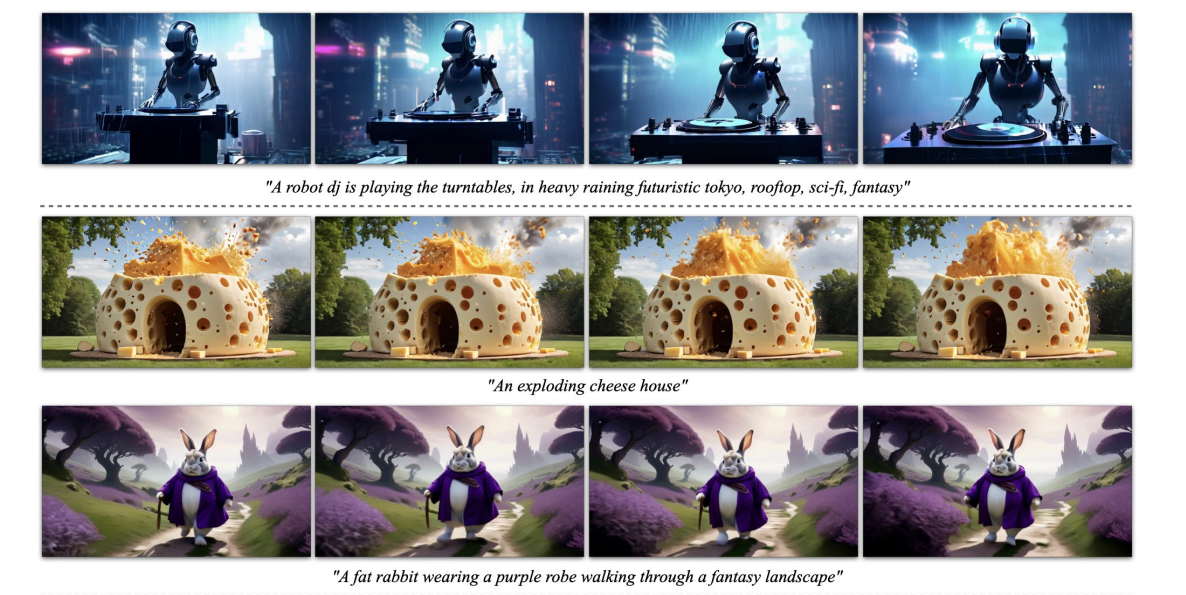
The above picture represents the high-resolution image to video samples generated by the framework whereas the following figure demonstrates the ability of the framework to generate high-quality text to video samples.

Pre-Trained Base Model

As discussed earlier, the Stable Video Diffusion model is built on the Stable Diffusion 2.1 framework, and on the basis of recent findings, it was crucial for developers to adopt the noise schedule and increase the noise to obtain images with better resolution when training image diffusion models. Thanks to this approach, the Stable Video Diffusion base model learns powerful motion representations, and in the process, outperforms baseline models for text to video generation in a zero shot setting, and the results are displayed in the following table.

Frame Interpolation and Multi-View Generation

The Stable Video Diffusion framework finetunes the image to video model on multi-view datasets to obtain multiple novel views of an object, and this model is known as SVD-MV or Stable Video Diffusion- Multi View model. The original SVD model is finetuned with the help of two datasets in a way that the framework inputs a single image, and returns a sequence of multi-view images as its output.

As it can be seen in the following images, the Stable Video Diffusion Multi View framework delivers high performance comparable to state of the art Scratch Multi View framework, and the results are a clear demonstration of SVD-MV’s ability to take advantage of the learnings obtained from the original SVD framework for multi-view image generation. Furthermore, the results also indicate that running the model for a relatively smaller number of iterations helps in delivering optimal results as is the case with most models fine-tuned from the SVD framework.

In the above figure, the metrics are indicated on the left-hand side and as it can be seen, the Stable Video Diffusion Multi View framework outperforms Scratch-MV and SD2.1 Multi-View framework by a decent margin. The second image demonstrates the effect of the number of training iterations on the overall performance of the framework in terms of Clip Score, and the SVD-MV frameworks deliver sustainable results.

Final Thoughts

In this article, we have talked about Stable Video Diffusion, a latent video diffusion model capable of generating high-resolution, state-of-the-art image to video, and text to video content. The Stable Video Diffusion Model follows a unique strategy never implemented by any generative video model as it relies on latent video diffusion baselines with a fixed architecture, and a fixed training strategy followed by assessing the effect of curating the data.

We have talked about how latent diffusion models trained for synthesizing 2D images have improved the abilities & efficiency of generative video models by adding temporal layers, and fine-tuning the models on small datasets consisting of high-quality videos. To gather the pre-training data, the framework conducts scaling study and follows systematic data collection practices, and ultimately proposes a method to curate a large amount of video data, and converts noisy videos into input data suitable for generative video models.

Furthermore, the Stable Video Diffusion framework employs three distinct video model training stages that are analyzed independently to assess their impact on the framework’s performance. The framework ultimately outputs a video representation powerful enough to finetune the models for optimal video synthesis, and the results are comparable to state of the art video generation models already in use.

Stability AI Didn’t Reach Out to Jasper or Cohere for Acquisition 

Stability AI chief Emad Mostaque has clarified that Stability AI did not approach Jasper or Cohere to sell its business. This clarification follows recent reports suggesting that Stability AI had reached out to the aforementioned companies

Mostaque said, “We have never reached out to anyone to be acquired. Jasper is an awesome partner, and Cohere is doing great work”.

In response to my inbox deluge I’d like to note:
1. We have never reached out to anyone to be acquired
2. Jasper is an awesome partner & Cohere are doing great work
3. We work with many strategics, more announcements to come (!)
4. Stability has simple governance
5. Open rocks

— Emad (@EMostaque) November 30, 2023

Speculation about Stability AI pursuing acquisition has surfaced due to the company’s existing business challenges. According to Mostaque, the company’s current state is described as ‘relatively stable,’ if not ‘unstable’.

To keep Stability AI’s business afloat, Mostaque has recently expressed his intentions to introduce Stability AI Memberships. He believes that in today’s market any AI startup needs to have a business model; otherwise, survival in the market won’t be easy.

“We are doing ok as a business and ramping up nicely” he posted on X.

The company generated $1.2 million in revenue in August and was projected to reach $3 million this month from software and services, according to a post by Mostaque on X on Monday, which he later deleted.

To determine the ideal pricing for his new core Stable models, he ran a poll on X. Ironically, most users voted for $1, indicating that they want the models to be available for free.

What should we price @StabilityAI monthly memberships at allowing commercial use of our new core Stable models (eg SDXL Turbo, Stable Video Diffusion) for those making < $1 million a year in revenue?

— Emad (@EMostaque) November 29, 2023

Mostaque mentioned that there has been tension in the organisation lately regarding what to release versus withhold, how to compete on API and other products, including consumer-focused ones.

“We want to release good models, and the line between open-source and releasing in the open, plus how to build a sustainable business, has been something we have spent a lot of time thinking about,” he added.

Mostaque said that for commercial usage you will compulsorily need to have a Stability AI Membership. “For example, we’re considering, for an indie developer, this fee to be $100 a month, but only if you make above a certain amount of revenue, similar to game engines,” he said.

The post Stability AI Didn’t Reach Out to Jasper or Cohere for Acquisition appeared first on Analytics India Magazine.

On ChatGPT’s first anniversary, its mobile apps have topped 110M installs and nearly $30M in revenue

On ChatGPT’s first anniversary, its mobile apps have topped 110M installs and nearly $30M in revenue Sarah Perez @sarahintampa / 8 hours

It’s officially been one year since ChatGPT launched, taking the world by storm as the research preview turned into an everyday tool that brought AI chatbot technology to mainstream users. A large part of that effort was driven by the release of the ChatGPT mobile app, whose May 2023 launch on iOS put the chatbot into more consumers’ hands, later followed by a July 2023 release on Android. Now, on the technology’s first anniversary, new data indicates the mobile app versions of ChatGPT have topped 110 million combined installs and have reached nearly $30 million in consumer spending, according to a market analysis provided to TechCrunch by mobile intelligence provider, data.ai.

ChatGPT’s mobile apps make money by selling the ChatGPT Plus subscription via in-app purchases. The $19.99 per month service offers a variety of extra perks, including general access during peak times, faster response times, and early access to new features and improvements. The subscription was expanded to users outside the U.S. in February 2023, ahead of the mobile apps’ debut.

As an in-app purchase, the subscription is fairly pricey given that it costs more than many music and streaming services, but consumers’ interest in ChatGPS Plus access has driven demand higher over time, data.ai says. In total, ChatGPT’s apps have generated approximately $28.6 million in global consumer spending on mobile, though likely many more users have subscribed via the web. However, other mobile app users may have also subscribed to different AI chatbot apps, some likely using ChatGPT’s API. For example, Poe, an app that lets you play with OpenAI’s ChatGPT and other AI chatbots like Anthropic’s Claude and more in one interface, had 1.18 million monthly active users as of September 2023, according to app intelligence firm Apptoppia.

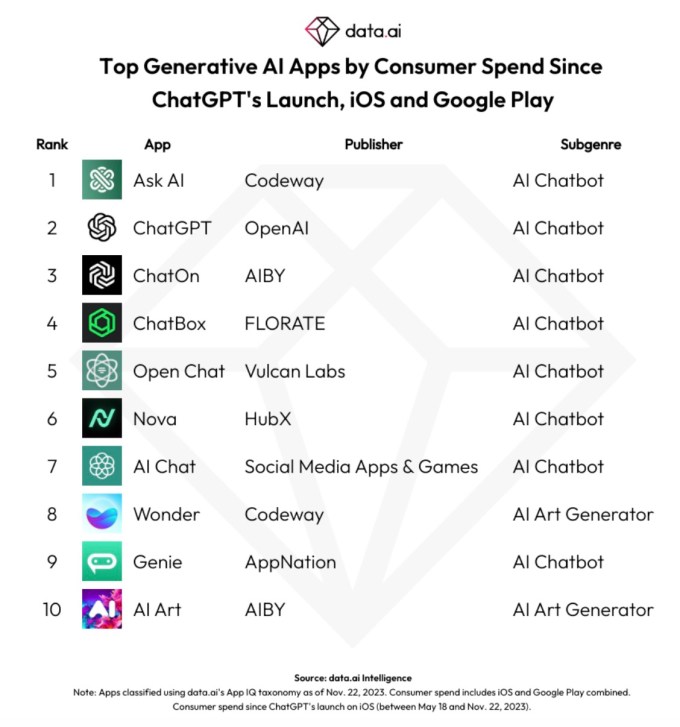
Image Credits: data.ai

While data.ai’s analysis differs from others in terms of ChatGPT’s ranking by consumer spending, it still indicates that it’s not the top chatbot by revenue. Ask AI, which beat ChatGPT to mobile, is ahead and it offers several lower-priced in-app purchase options for premium features, ranging from one week up to one year as well as multiple tiers, like “premium” and “elite.”

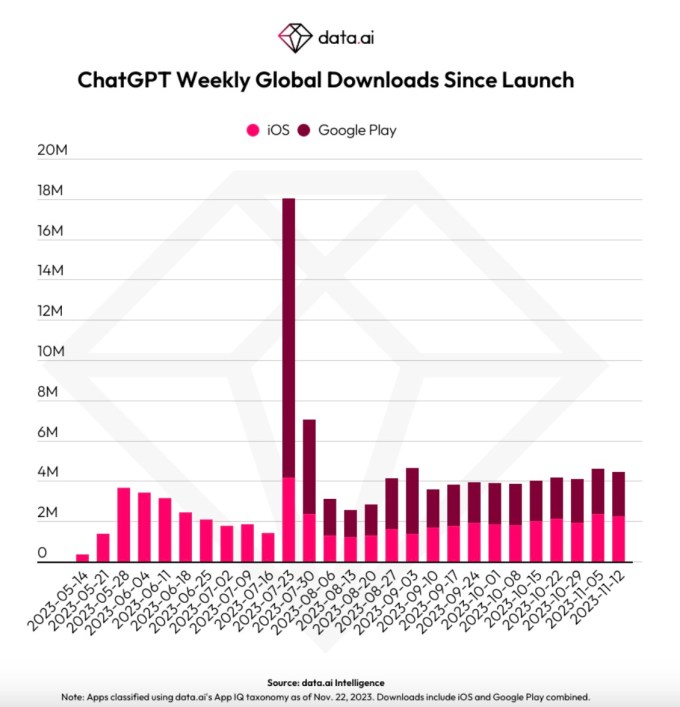
Image Credits: data.ai

In addition to its money-making capabilities, ChatGPT’s mobile app downloads continue to grow following its spring and summer debuts on iOS and Android, respectively, now topping 110 million.

Within a week of its Google Play release, ChatGPT’s Android downloads saw record adoption with about 18 million new installs — a figure that has yet to be beaten by other mobile apps, data.ai notes. Combined iOS and Android downloads now average above 4 million on a weekly basis. And they’ve retained that figure for the past five weeks.

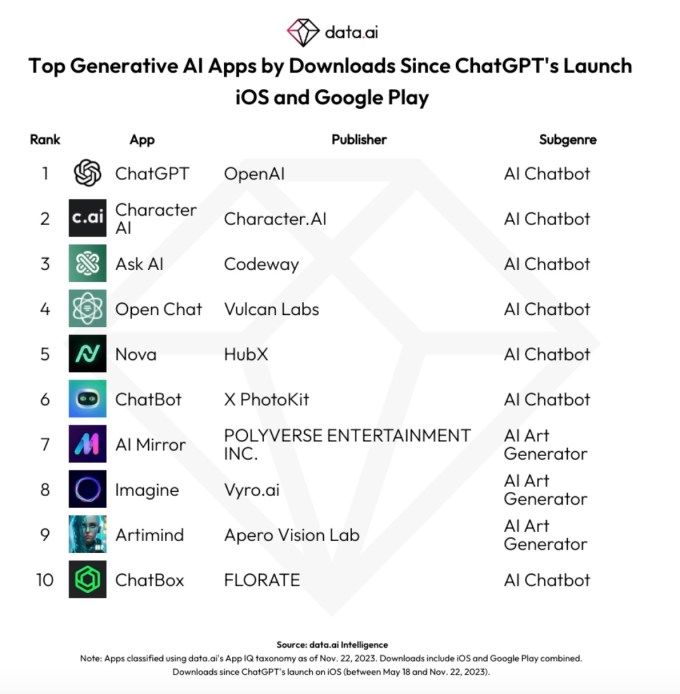
Image Credits: data.ai

In terms of downloads, that puts ChatGPT ahead of other generative AI apps like Character AI, Ask AI, Open Chat, Nova, ChatBot, AI Mirror, Imagine, Artimind, and ChatBox, the data indicates.

Meanwhile, India and the U.S. are nearly neck and neck in terms of the country accounting for the most ChatGPT downloads at 18% and 17.5%, respectively.

Image Credits: data.ai

Still, an analysis of Android data indicates that ChatGPT may not be the most often used AI app. Instead, it ranks number three behind Character AI, where users can create personified AI chatbots, and another similar AI app, Chai. These sorts of apps lend themselves to more sessions overall than the more utilitarian ChatGPT, though that could change with the launch of special-purchase GPTs, data.ai suggested.

The firm expects that by year-end 2023, ChatGPT will have added tens of millions more installs and revenue.

One year later, ChatGPT is still alive and kicking

Apple and Google avoid naming ChatGPT as their ‘app of the year,’ picking AllTrails and Imprint instead

How Amazon’s Silicon Innovation Is Instrumental in AWS Success

With a series of announcements showcasing Amazon’s prowess not only in the cloud space but also generative AI, and even taking digs at OpenAI’s security flaws in the process, AWS re:Invent2023 at Las Vegas had a lot to offer. Advancing their AI chip ambitions, the company announced two new AI chips, AWS Graviton4 and AWS Trainium 2, at the event.

Almost a decade ago, Amazon realised that in order to consistently improve the cost-effectiveness of tasks, it needed to redefine general-purpose computing for the cloud era, thereby pushing innovation to the silicon level. “In 2018, we became the first major cloud provider to develop our own general compute processors,” said Adam Selipsky, CEO of Amazon Web Services, at the event.

Releasing Graviton Power

Adam Selipsky at AWS re:Ignite 2023. Source: AWS Youtube

AWS Graviton, a family of processors, which was first released in 2018, was designed for cloud computing infrastructure running in Amazon Elastic Compute Cloud (EC2). The fourth version – Graviton4, which was unveiled yesterday, is the most powerful and energy efficient chip built by AWS, with 50% more cores and 75% more memory bandwidth than the previous version Graviton3.

Furthermore, Selipsky announced the preview of R8g Instances that is powered by Graviton4 and is part of the memory optimise instance family. R8g Instances are designed to deliver fast performance for large data sets, and are energy efficient for memory intensive workloads.

Breaking Barriers

In 2020, CEO Andy Jassy, who was then the CEO of AWS, emphasised Amazon’s commitment to advancing the cost-effectiveness of machine learning training by investing in proprietary chips. With these chips, AWS lowered the cost barrier for ML training.

Similarly in 2018, the release of Graviton was to break the existing market of processors where Intel was comfortably placed. The lack of hardware options for building data centres and cloud services gave them an advantage. Furthermore, the power efficiency of Arm cores made Graviton well-suited for mobile computing and enterprises with extensive arrays of data centres, especially AWS. Today, Amazon has got 150 Graviton-based instances across the EC2 portfolio and more than 50,000 customers.

AWS Had It Planned All Along

With GPUs being the indispensable component for AI compute, AWS has strategically placed themselves in the said race, and it wasn’t a recent development. Trainium, a chip built for training machine learning models, and Inferentia, a chip optimised for running inference on those models, were released a few years ago. At the event, Selipsky released the second version of Trainium 2.

In 2015, Amazon acquired Annapurna Labs for $350 million and in 2017, AWS launched Graviton, thereby entering the chip race.

Chirag Dekate, VP analyst at Gartner, had earlier quoted that Amazon’s true differentiation is in bringing their technical capabilities. “Microsoft does not have Trainium or Inferentia,” he said.

The chips were designed to provide accelerated performance and cost-effectiveness for ML training workloads on the cloud platform. This was something that started before ChatGPT rage, but probably gained steam post OpenAI’s chatbot.

AWS has already found a number of partners that have utilised their AI chips. Companies such as Adobe, Deutsche Telekom, Leonardo AI have deployed Inferentia 2 for their generative AI models at scale. Similarly, Trainium has already been used by partners such as Anthropic, Databricks and Ricoh. The use cases lie in the internal search team as well, where the chip has been used to train large, deep learning models.

Strategic Partnerships

Amazon’s partnership with AI research company Anthropic has been a crucial one to showcase their united power in the generative AI space. By not just investing in the company but hosting Claude models on Amazon’s Bedrock platform, the partnership goes beyond simple compute.

Anthropic CEO and co-founder, Dario Amodei said that AWS is the “primary cloud provider for our mission critical workloads,” and that there are three components to their partnership – compute, customer and hardware. On the hardware aspect, Amodei spoke about working to optimise Trainium and Inferentia for their use cases.

The biggest chip competitor NVIDIA has also built a strategic partnership with AWS. NVIDIA chief Jensen Huang, also made an appearance at the AWS event and spoke about how AWS was the “world’s first cloud to recognise the importance of GPU accelerated computing.” The act was seen as a reassurance of powerful combat teams, making it a symbiotic partnership favouring both parties.

Amazon’s steady growth in silicon innovation has helped shape Amazon’s stance in the current AI market. With crucial partnerships AWS is proving to be an essential part of AI compute power.

The post How Amazon’s Silicon Innovation Is Instrumental in AWS Success appeared first on Analytics India Magazine.

Revolutionize The Way You Edit Photos With Luminar Neo, on Sale For $149.97

the award-winning Luminar Neo Lifetime Bundle.
Image: StackCommerce

Looking for the perfect gift for the creative in your life? Or, maybe it’s you. Luminar Neo is a user-friendly photo-editing software designed for photography enthusiasts, offering a blend of ease and innovation with its AI-driven tools. Luminar Neo stands out by utilizing popular LuminarAI tools while including advanced technologies and improvements. Along with helpful add-ons meant to enhance color, lighting, backgrounds and more, this Luminar Neo lifetime bundle is on sale for Cyber Monday — get it for just $149.97 from now through December 3rd.

This software has an intuitive and user-friendly interface that makes it suitable for users of all skill levels and carries an App Store rating of 4.6 out of 5 stars. Luminar Neo offers wide compatibility for Windows as well as macOS, and can also be used as a plugin for Photoshop and Lightroom. It features multiform presets for quick, professional-level results.

The full version of Luminar Neo boasts a range of features:

  • EnhanceAI: generates naturally stunning results with a slider
  • SkyAI: offers instant sky replacement
  • RelightAI: allows for control of lighting in photos
  • Erase function: effortlessly removes unwanted objects

Additional features include SkinAI for automatic skin enhancement and retouching, CompositionAI for automated photo composition, adjustment, cropping and perspective, Supercontrast for precise tonal contrast adjustment and StructureAI for detailed image clarity adjustments.

Luminar Neo also has new extensions to further enhance its capabilities, like Panorama Stitching for creating stunning panoramas from multiple photos or videos, Magic LightAI for adjusting light sources, SupersharpAI for balanced compositions and many more. Plus, check out these helpful add-ons included in this bundle: light reflections overlay, color harmony LUTs, wintertime overlay, frosty winter LUTs, tranquil dawn skies and tender blushing skies.

Also featured in this bundle is a video course titled Creative Photo Editing Techniques in Luminar Neo. This instructional video walks you through using all of Luminar’s features and capabilities to their fullest potential.

Shop this Cyber Monday deal until December 3rd at 11:59 pm PT, and grab a Luminar Neo lifetime bundle for just $149.97.

Prices and availability are subject to change.

Embracing Prudence and Pragmatism: Tredence’s Ethos for Innovation-led Product Development

All through 2023, a majority of the IT and data analytics companies were busy jumping on the generative AI bandwagon. However, a handful of companies advocate for extensive due diligence. One among them is Bangalore-based data analytics firm Tredence.

“Generative AI is a key investment area and innovation focus for us for over 3 years. However, before incorporating emerging tech, especially in AI, it’s crucial to evaluate if there’s a clear path to generate value for specific business problems,” Pavan Kumar, senior manager at Tredence Studio, told AIM in an exclusive interaction.
Kumar further elaborated on the importance of due diligence when it comes to generative AI. “Many AI models are trained on generic datasets, so adapting them to address specific issues requires incorporating business and process context to these models. Stability is another consideration; generative AI, in particular, needs to provide repeatable responses over time,” he said.

“Answering these questions helps us ensure that the technology aligns with the specific business challenges that we’re addressing. From our research, we were able to create a stable extractive AI model and meaningfully incorporate it in our solutions. We are currently tinkering with Gen AI models to improve stability and product fit before they are integrated in our solutions.” he added.

Kumar works with the Studio team, an innovation pod within the Tredence organisation. “Our role involves collaborating with various teams – strategy, domain and technical – to design and deliver products for our customers,” he stated.

At the organisation, Kumar started with analytics and BI, transitioned to data engineering, spent a couple of years in data science, and has been doing product management for the last three years.

The Need for Data Product Management

For Tredence, data product management has become crucial in recent years. “After establishing a practice on the services side, we identified opportunities for innovation in building reusable assets for clients. This realisation stemmed from our consulting experience over five years,” recalled Kumar.

A pivotal change for the organisation was bringing in industry leaders in key strategy roles. Kumar explained that the three key pillars for establishing the data product management process are executive sponsorship, domain expertise, and dedicated technical expertise for innovation.

The data product team is cross-functional, with members specialising in marketing, supply chain, RGM, and one of the tech domains—data engineering, data science, or analytics.

“Our approach involves collaborating with the strategy team to identify gaps in the industry. We then work with these teams to build prototypes, validate them with customers, and design a go-to-market strategy,” he said.

He further said that within Tredence, their data quality practice addresses anomalies in transactional data, master data, and platform data. “We have designed accelerators for each scenario, such as addressing anomalies in transaction data, leveraging custom AI algorithms for master data, and utilising the platform Atom.ai to manage data platforms,” he said.

“These accelerators are integral to our core DNA,” Kumar explained. For client engagements, the company incorporates these accelerators and conducts educational sessions within Tredence to emphasise the importance of data quality across all products.

Data Quality and User Feedback a Priority

Visionaries in the industry have long preached the ‘garbage in, garbage out’ approach for data. And Tredence aligns with the same.

“Data quality is the biggest focus for us,” emphasised Kumar, explaining the foundational nature of the approach. “If a scenario arises where a feature or data quality is in question, data quality takes precedence. This is because businesses cannot function optimally without the right quality of data. Providing accurate data at the right time is crucial for effective decision-making,” he added.

Kumar and his team have observed that enterprise business process management products often lack a user feedback mechanism – an important element in creating a data product.

“Let’s take the example of a data stewardship product we have. Initially, our value proposition centred around consolidating master data in a clean way, which was relevant to the business users. However, when deployed for clients, we realised that different teams like merchandising and supply chain had distinct harmonisation requirements, and keeping a human in the loop was necessary to address this.” he said.

He further elaborated that this step led them to integrate a user feedback loop into their products so that teams could provide feedback on the harmonised data.

To enhance user feedback adoption, Tredence has implemented prompts with multiple options, reducing ambiguity for users. They also analyse product logs to better understand usage patterns and improve the user experience of their products.

“Domain experts within our company validate the features by using our products as end-users, identifying any blind spots we might have missed,” he revealed.

Keeping Up with the Market
Keeping up with trends is relatively straightforward, says Kumar. He attributes this ease to the prevalence of social media content creators on platforms like LinkedIn, Spotify, and YouTube, where leaders from leading tech companies create content tailored for professionals. Another area is industry certifications, certifications help in keeping the tech skills up to date.

“Additionally, hyper-scalers like AWS, GCP, Azure, Snowflake, and Databricks hold annual summits, publishing notes on the latest industry innovations. We also conduct educational sessions within our organisation, discussing research papers, successful business practices, and product management practices,” he concluded.

The post Embracing Prudence and Pragmatism: Tredence’s Ethos for Innovation-led Product Development appeared first on Analytics India Magazine.

Amazon Titan Crushes Google’s Imagen, Meta’s CM3leon

Titan, Amazon’s suite of foundation models has got another addition. The Titan image generator. This week, at the re:Invent conference in Las Vegas, Swami Sivasubramaniam, VP of Analytics and Machine learning announced Titan Image Generator. He said that the tool is now available in preview. He went on to say, “You can customize these images using your own data to create content that better reflects your industry or your brand.”

Amazon has entered the market for text-to-image models along with Adobe Firefly. While it’s early to judge, Titan’s competitors have faced challenges. For instance, Google’s Imagen admitted to encoding biases, sometimes resulting in racist or toxic outputs. Similar issues have been observed with DALL.E, Stable Diffusion, and others.

The model is said to have been trained on ‘diverse datasets’ though Subramaniam declined to elaborate on the specifics of the data source. “We’re carefully choosing how we train our models and the data we use to do so,” Sivasubramanian said during the announcement.

Better late than never

AWS is the largest provider of rented computing power and data storage. But it has trailed OpenAI and Microsoft Bing Image Creator (which incidentally uses Dall-E) in bringing to market products based on its own text to image models. Amazon’s Titan line has added new models since a bare-bones launch in April, including some designed to generate text more cheaply than OpenAI’s latest versions. While big tech companies are cautious to release their image models like Imagen and CM3leon to the public, Midjourney, RunwayML, Stable Diffusion have a thriving user base for the same.

The main reason most of them are reluctant to release them is because of safety and the risk of spitting out harmful, biased and stereotypical images. Josh Woodward, VP of Google Labs, explained, “The whole point of AI Test Kitchen is to a) get feedback from the public on these AI systems and b) find out more about how people will break them.”

Runway ML, Midjourney, Stability AI and Stable Diffusion have retained the right to ban users creating harmful images and the platform does not process obscene prompts. Meanwhile Amazon has done the same and has built-in guardrails against bias. The feature is said to deny topics that are unsafe and check the user inputs and outputs.

In contrast Amazon refuses to release the datasets the model is trained on, and just trust that it has built in mitigations against toxicity. Swami Sivasubramaniam said at the re:Invent that,“ Titan image generator is trained on a diverse set of datasets to enable you to create more accurate outputs.”

To combat intellectual property theft and to distinguish between AI generated images to an authentic one, Amazon has added invisible watermarks to their output. Besides just creating a new image, Titan Image Generator allows users to isolate, extract, or integrate new components and edit images. Most useful applications are swapping backdrop settings or incorporating items into lifestyle photographs.

Amazon is also hedging its bets, trying to entice other large model makers to offer their software to AWS customers. Their primary model taps the B2B market unlike the already existing platforms. “Generative AI is poised to be the most transformational technology of our time, and we are inspired by how customers are applying it to new opportunities and tackling business challenges,” Sivasubramanian said in the company’s release.

Amazon has also highlighted the model’s adaptability for various sectors, such as e-commerce, advertising, and entertainment. For instance, companies can tailor the model with their proprietary imagery to maintain a uniform visual style.

Earlier this year, Amazon agreed to invest as much as $4 billion in AI startup Anthropic. As part of the deal, AWS clients have access to Anthropic’s Claude models, including one released last week, Sivasubramanian said. He also said Amazon offers an updated version of Meta Platforms Inc.’s Llama model. “As customers incorporate generative AI into their businesses, they turn to Amazon Bedrock for its choice of leading models, customisation features, agent capabilities, and enterprise-grade security and privacy in a fully managed experience.”

The post Amazon Titan Crushes Google’s Imagen, Meta’s CM3leon appeared first on Analytics India Magazine.

The Top 5 Alternatives to GitHub for Data Science Projects

The Top 5 Alternatives to GitHub for Data Science Projects
Image by Author

GitHub has long been the go-to platform for developers, including those in the data science community. It offers robust version control and collaboration features. However, data scientists often have unique requirements, such as handling large datasets, complex workflows, and specific collaboration needs that GitHub may not fully cater to. This has led to the rise of alternative platforms, each offering distinctive features and advantages.

In this blog, we explore the top five GitHub alternatives that are particularly suited for data science projects, providing diverse options for collaboration, project management, and data and model handling.

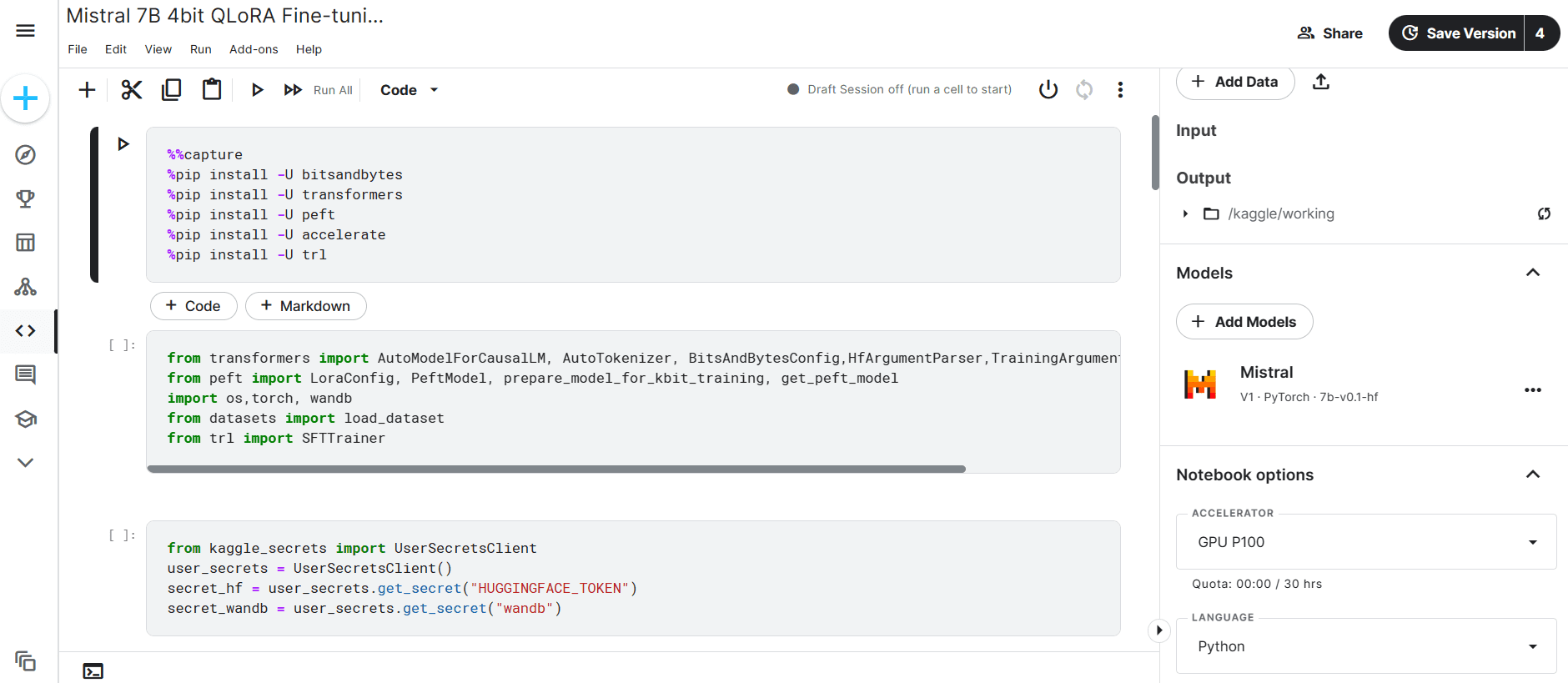
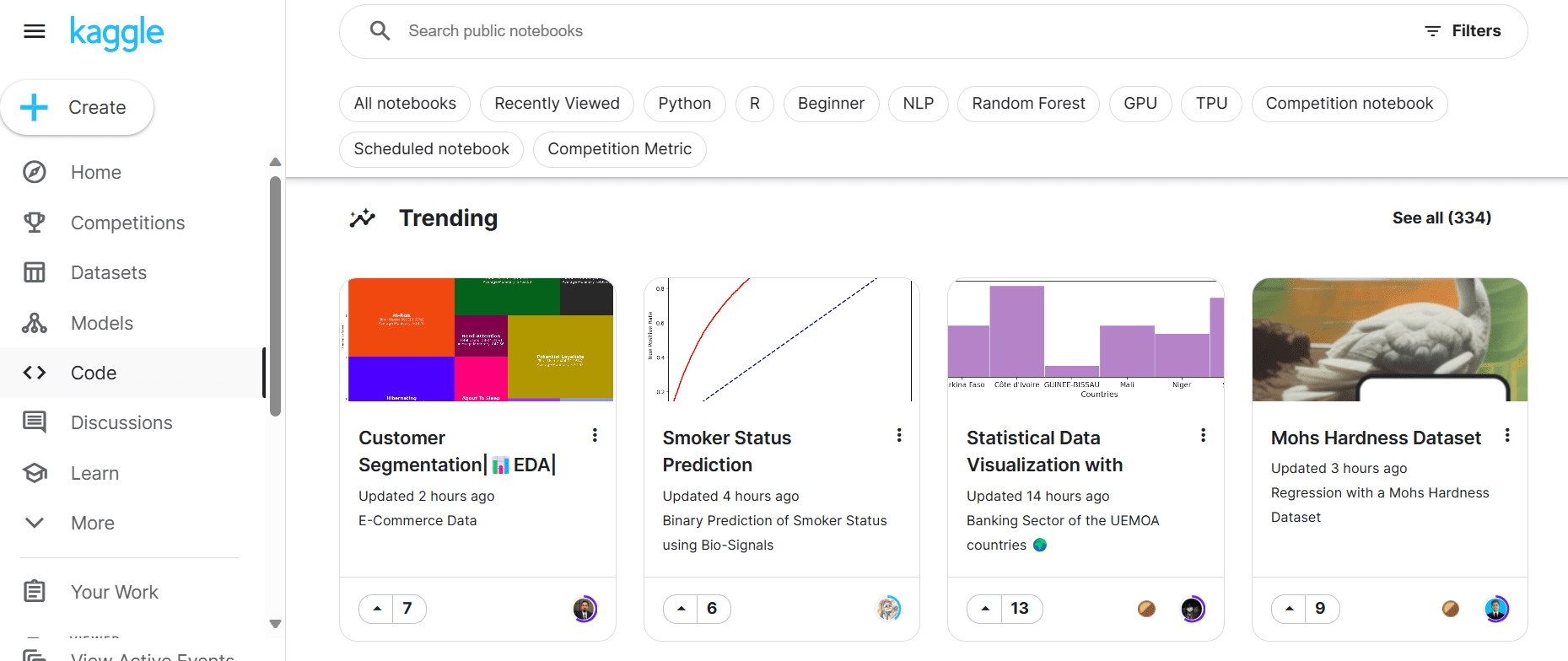
1. Kaggle

Kaggle is renowned in the data science community for its unique combination of data science competitions, datasets, and a collaborative environment.

The platform offers access to a vast repository of datasets and an opportunity for data scientists to test their skills in real-world scenarios through competitions. Moreover, I provide access to edit, run, and share code notebooks with outputs.

The Top 5 Alternatives to GitHub for Data Science Projects
Image from Kaggle

I have been using Kaggle for three years now, and I absolutely love it. This platform allows me to quickly run deep learning projects on free GPUs and TPUs. With its help, I have been able to create a strong portfolio by sharing my analytical reports and machine learning projects. Additionally, I have participated in various data analytics and machine learning competitions, which has helped me improve my skills in these areas. Overall, Kaggle has been an excellent resource that has enabled me to grow both personally and professionally.

If you are a beginner in data science, I highly recommend starting with Kaggle instead of GitHub. Kaggle offers a wide range of free features that are essential for any data science project. Additionally, you can learn from others and ask questions directly in a community of like-minded individuals who want to help each other.

The Top 5 Alternatives to GitHub for Data Science Projects
Image from Kaggle 2. Hugging Face

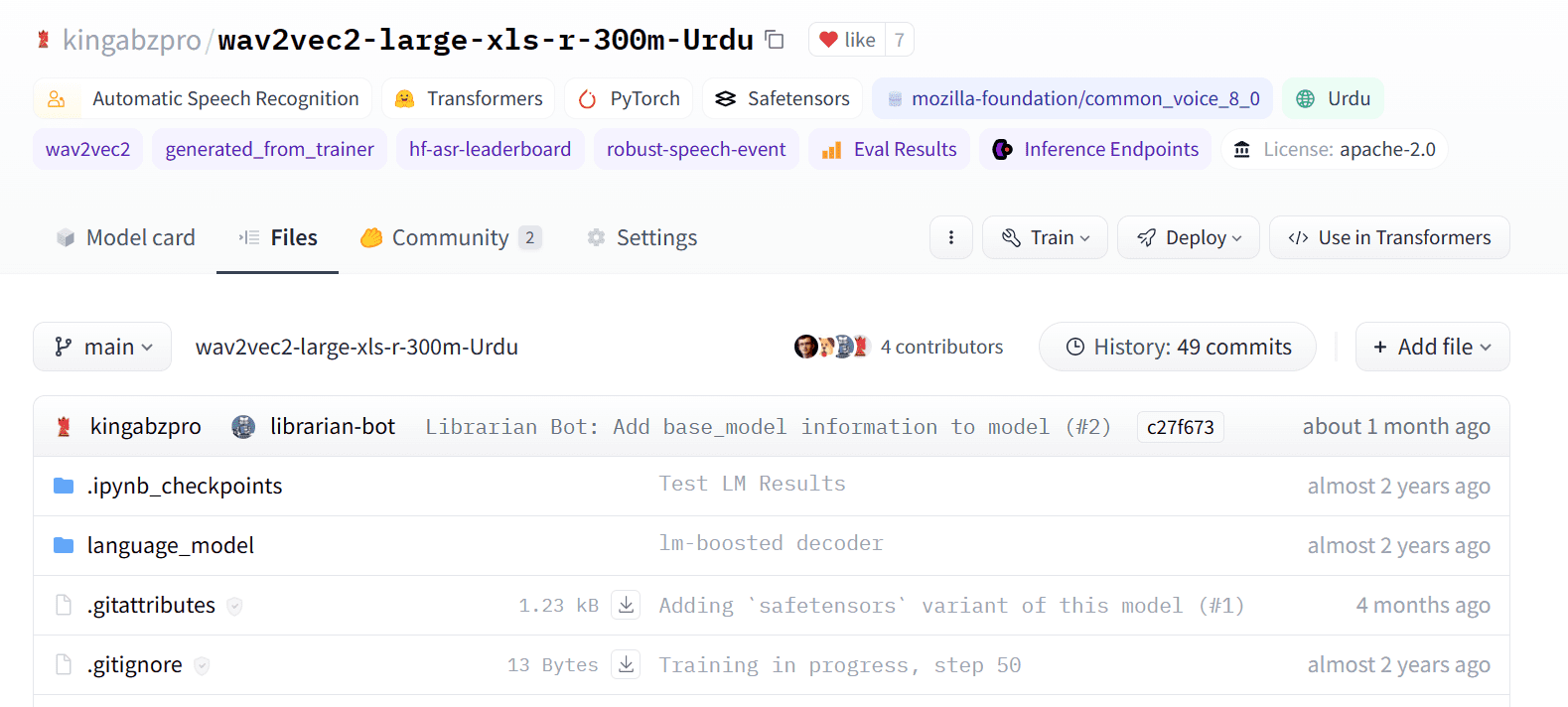
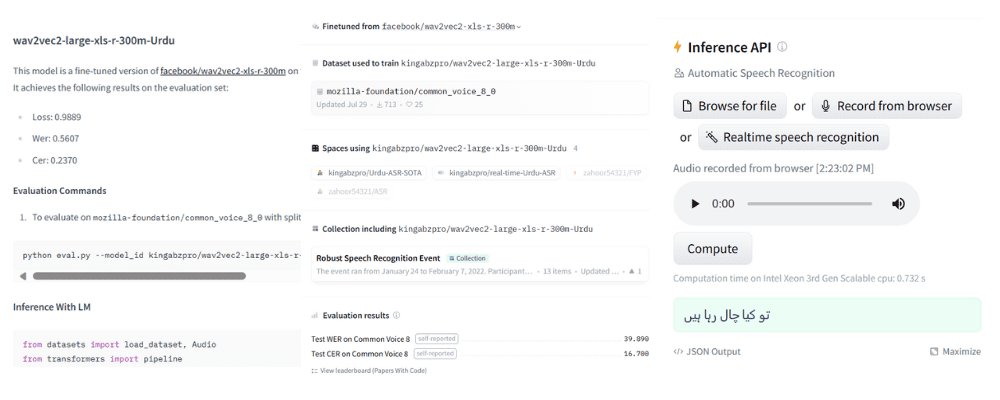
Hugging Face has rapidly become a center for the newest developments in natural language processing (NLP) and machine learning. It sets itself apart by offering a vast collection of pre-trained models, along with a collaborative ecosystem for training and sharing new models. Additionally, it has become effortless to upload your dataset and deploy your machine learning web app for free.

In Hugging Face, a model repository is similar to GitHub and contains various types of information, including files and models. You can attach a research paper, add performance metrics, build a demo with the model, or create an inference. Additionally, you can now comment and submit pull requests, just like in GitHub.

The Top 5 Alternatives to GitHub for Data Science Projects
Image from Hugging Face

I use Hugging Face frequently to deploy models, upload trained models, and build a strong machine learning portfolio. I have implemented deep reinforcement learning, multilingual speech recognition, and large language models.

This platform is primarily designed for the community, and one of its most important features is that it offers most of its features for free. However, if you have a state-of-the-art model, you can even request paid features. This makes it the go-to platform for anyone who aspires to become an ML engineer or NLP engineer.

The Top 5 Alternatives to GitHub for Data Science Projects
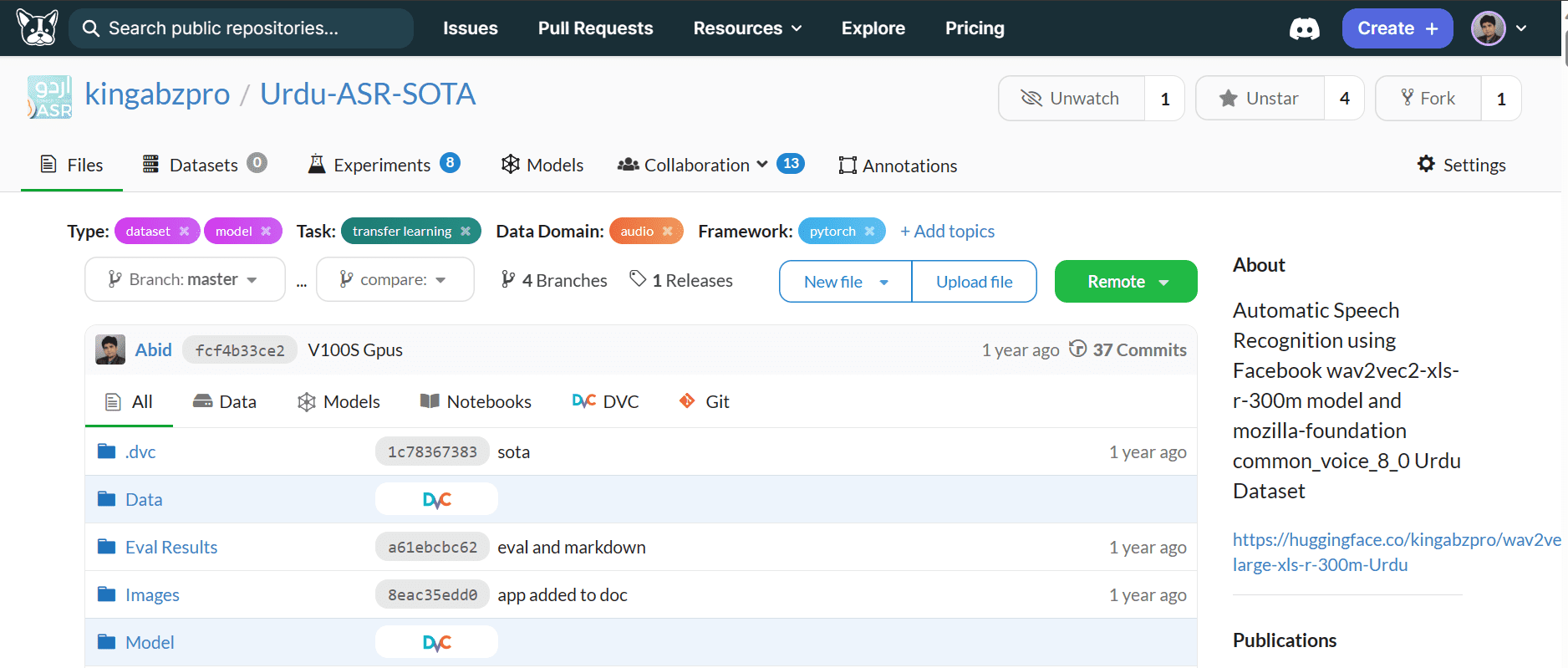
Image from Hugging Face 3. DagsHub

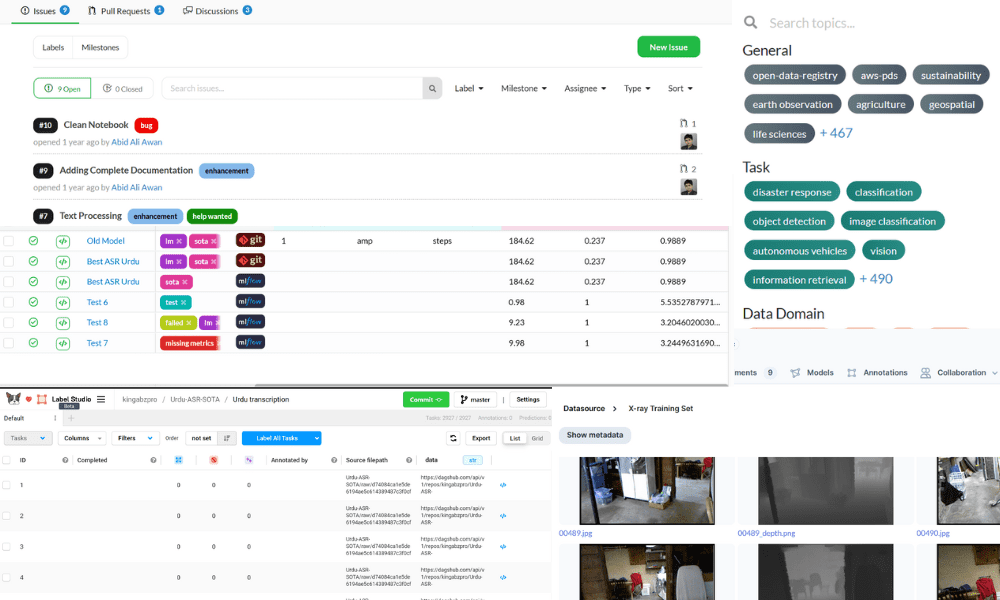
DagsHub is a platform tailor-made for data scientists and machine learning engineers, focusing on the unique needs of managing and collaborating on data science projects. It offers exceptional tools for versioning not just code but also datasets and ML models, addressing a common challenge in the field.

The platform integrates well with popular data science tools, allowing for a smooth transition from other environments. DagsHub's standout feature is its community aspect, offering a space for data scientists to collaborate and share insights, making it a particularly attractive choice for those looking to engage with a community of peers.

The Top 5 Alternatives to GitHub for Data Science Projects
Image from DagsHub

I am a huge fan of DagsHub due to its user-friendly approach in uploading and accessing data and models. DagsHub provides both a simple API and a GUI that allows you to upload and access data and models with ease. Moreover, it offers MLFlow instances for experiment tracking and model registry. Additionally, it provides a free instance of Label Studio to label your data. It's an all-in-one platform for all your machine learning requirements. DagsHub also offers third-party integrations such as S3 bucket, New Relic, Jenkins, and Azure blob storage.

The Top 5 Alternatives to GitHub for Data Science Projects
Image from DagsHub 4. GitLab

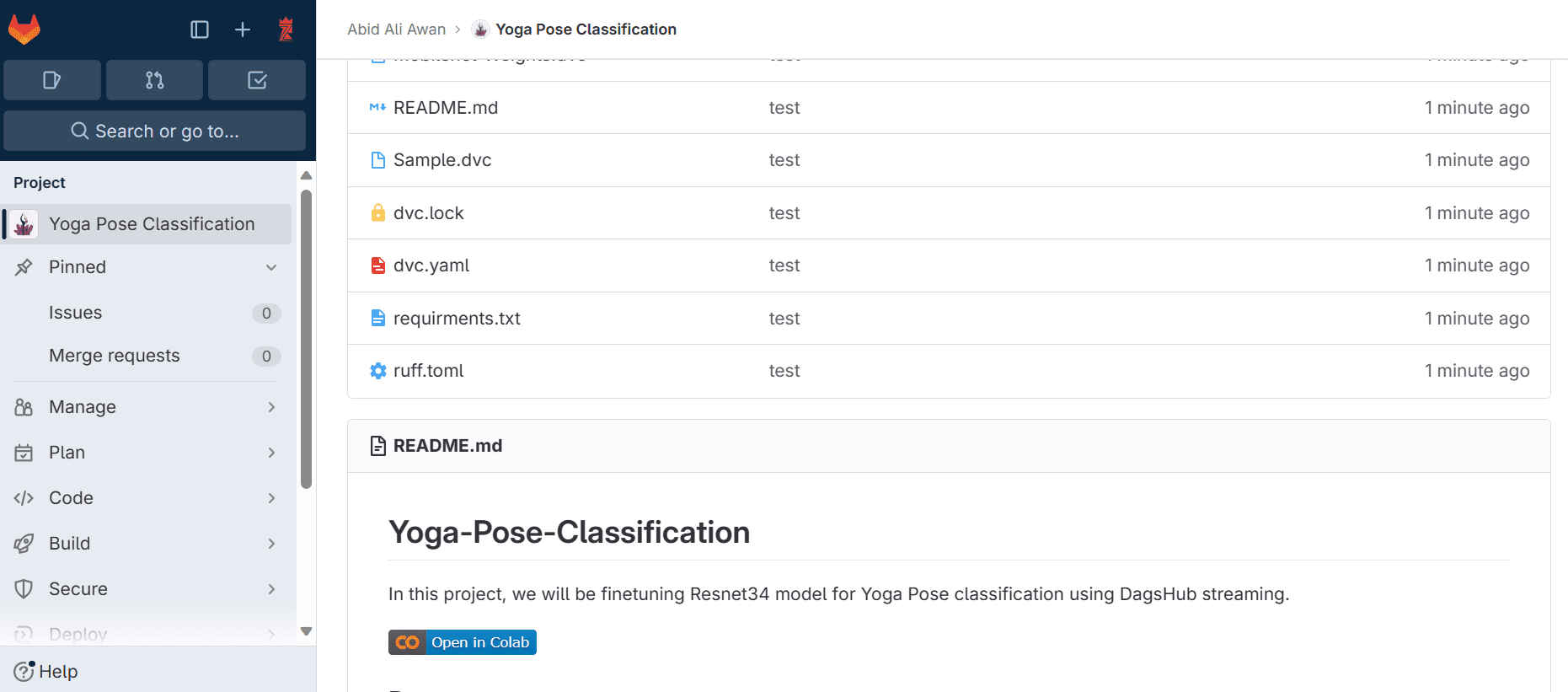
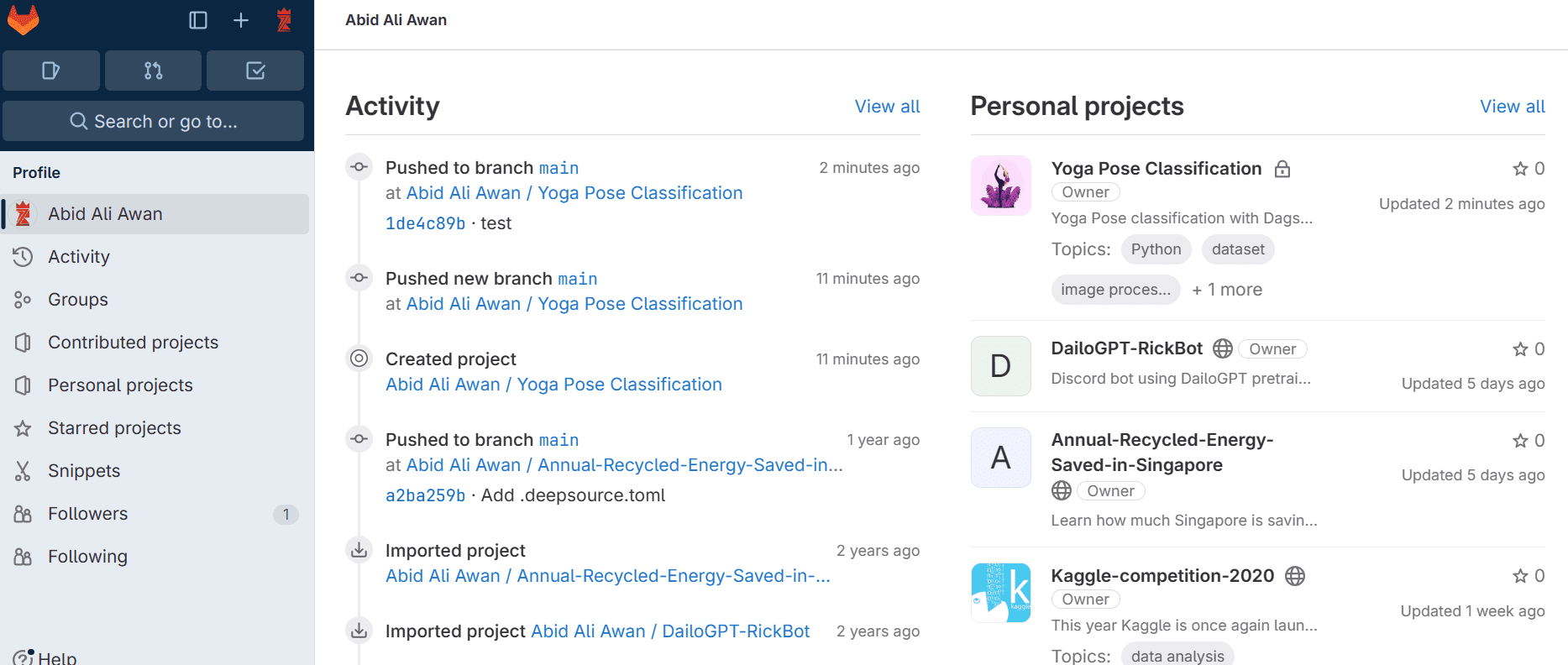
GitLab is a good alternative to GitHub for all kinds of tech professionals. It offers robust version control and collaboration, CI/CD, Project Management and Issue Tracking, Security and Compliance, Analytics and Insights, Webhooks and REST API, Pages, and more.

This platform is an ideal solution for developers and data scientists who need to build seamless workflow automation, from data collection to model deployment. It also offers powerful issue tracking and project management tools, which are essential for coordinating complex data science projects.

The Top 5 Alternatives to GitHub for Data Science Projects
Image from GitLab

I have been using GitLab for the past three years, primarily to familiarize myself with the platform and to migrate my static websites from GitHub to GitLab. GitLab's user interface is easy to understand and it offers a wide range of tools for free users. Moreover, you have the option to host your own GitLab Community Edition instance for free, giving you complete control over your projects.

Just like GitHub, GitLab can also be used as a portfolio for your data science projects. You can upload and share all of your work in one place, and it even has better collaboration tools for larger and more complex projects. GitLab is a powerful platform that you should definitely consider, even if you're already satisfied with GitHub.

The Top 5 Alternatives to GitHub for Data Science Projects
Image from GitLab 5. Codeberg

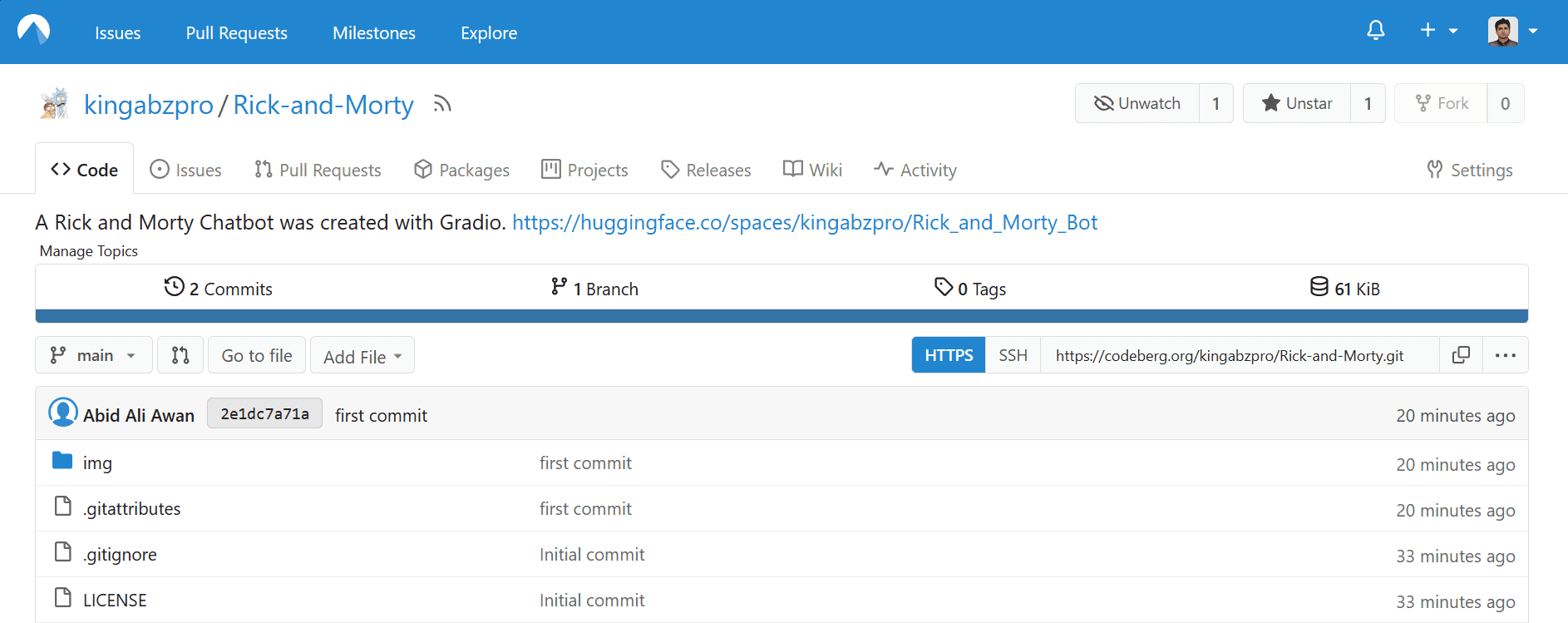
Codeberg.org sets itself apart as a non-profit, community-driven platform that puts a strong emphasis on open source and privacy. It offers a simple, user-friendly interface that appeals to those looking for an uncomplicated and straightforward code hosting solution. For data scientists who prioritize open-source values and data privacy, Codeberg presents an attractive alternative.

The Top 5 Alternatives to GitHub for Data Science Projects
Image from Codeberg

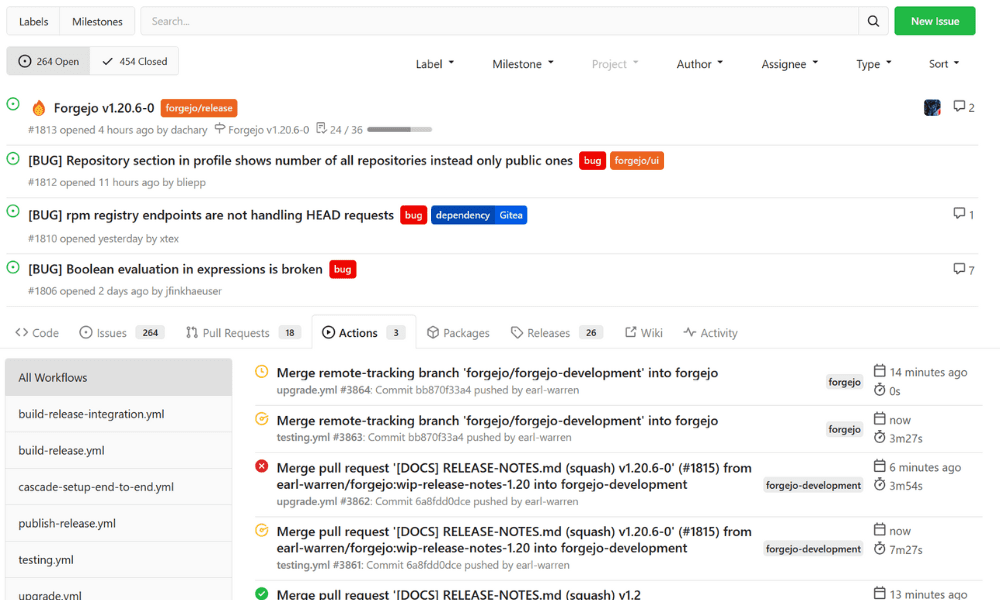
It offers CI/CD solutions, Pages, SSH and GPG, webhooks, third-party integrations, and collaboration tools for projects of all types, similar to GitHub.

While installing Librewolf, I discovered Codeberg and Forgejo. They provide a GitHub-like experience with Git and simplified workflow automation. I highly recommend giving them a try for hosting your projects.

The Top 5 Alternatives to GitHub for Data Science Projects
Image from Codeberg Conclusion

Each of these platforms offers unique features and advantages for data scientists. GitLab excels in integrated workflow management, DagsHub and Hugging Face is tailored for machine learning project hosting and collaboration, Kaggle provides an interactive environment for learning and competition, and Codeberg emphasizes open source and privacy. Depending on their specific needs, whether it's advanced project management, community engagement, specialized tools, or a commitment to open-source principles, data scientists can find a suitable alternative to GitHub among these options.

Abid Ali Awan (@1abidaliawan) is a certified data scientist professional who loves building machine learning models. Currently, he is focusing on content creation and writing technical blogs on machine learning and data science technologies. Abid holds a Master's degree in Technology Management and a bachelor's degree in Telecommunication Engineering. His vision is to build an AI product using a graph neural network for students struggling with mental illness.

More On This Topic

  • GitHub Copilot Open Source Alternatives
  • Top 5 Free Alternatives to GPT-4
  • Pandas not enough? Here are a few good alternatives to processing…
  • Learn Data Science From These GitHub Repositories
  • GitHub CLI for Data Science Cheat Sheet
  • GitHub Desktop for Data Scientists

How the Eufy Indoor Cam S350 became my favorite motion-tracking indoor cam

Eufy Security Indoor Cam S350

The Eufy Security Indoor Cam S350 is a pan/tilt dual security camera with 360 degrees of coverage. It tracks objects in motion using two cameras, captures footage with 4K resolution, and supports dual-band Wi-Fi 6.

Also: This no-fee video doorbell can guard your packages this holiday season

I've had my Eufy Security Indoor Cam S350 for over a month and it's proven itself to be indispensable to my home security.

ZDNET RECOMMENDS

Eufy Security Indoor Cam S350

The Eufy Security Indoor Cam S350 has two cameras that work together to track motion and capture footage in 4K resolution.

View at Amazon

What truly makes this indoor security device stand out is the fact that it houses two cameras in one body; one with a wide-angle lens and the other with a telephoto lens. The wide-angle lens camera has a 130-degree field of view when static and records in 4K.

The telephoto lens camera records in 2K, features 3x optical zoom, so you can zoom in on people or objects without sacrificing image quality, and an 8x digital zoom. Both cameras have a low aperture, at f/1.6, to better capture lighting and record in low-light conditions.

Also: Eufy's new Floodlight Cam E340 is the hardest working security camera I've tested

And then the device can pan, tilt, and swivel in any direction smoothly, giving you a full view of its surroundings. The Eufy Cam S350 smoothly tracks people in motion, keeping the target in view with no staggering, and the Local AI in the HomeBase 3 can distinguish humans and pets.

We paired this camera with our HomeBase 3, which we had at home and use for the rest of our Eufy security system. The HomeBase 3 retails for $150; it's a hub for Eufy security devices that supports local storage for its cameras, so we can enjoy the full benefit of a security camera without monthly fees. However, you don't need to buy a HomeBase 3 to use this camera.

The Indoor Cam S350 can store footage on the HomeBase 3, but also on an inserted microSD card, which is not included, of up to 128GB. This card would still give you the local storage you need to avoid paying monthly cloud fees and it would support the live notifications of detected motion.

Also: EufyCam 3 and HomeBase 3 review: Why I'm not getting rid of these cameras yet

These pan/tilt indoor cameras are commonly marketed as baby monitors or pet cams because of their ability to track motion in real time and to cover the lens when the privacy mode is turned on. While this is a perfect camera for any of these options, I use it as an indoor security camera in conjunction with our security system.

My home's Eufy security system includes some motion sensors that are spread around downstairs, several outdoor security cameras, a keypad, and the HomeBase 3, which sounds an alarm when the system is triggered.

I don't use indoor cameras in our living room, where I have a motion detector, because I don't like the idea of having a camera looking at my family's every move. If a sensor detects motion and the alarm goes off at three in the morning, I have no way to see what the motion is. So, I do have a smaller pan/tilt Ezviz camera that is always set to privacy mode, just so I can look at it whenever motion is detected. But this process takes time.

Also: Missed Cyber Monday? The Schlage Encode smart lever lock is still $70 off right now

The Eufy Indoor Cam S350 has become a better solution to this problem, as it works with my existing system and gives me a live view within the same app as the rest of my security devices.

ZDNET's buying advice

The Eufy Security Indoor Cam S350 works seamlessly each time motion is detected, it doesn't get distracted by false alerts often, notifications are fast to appear on my mobile device when triggered, and it can quickly hide its lenses when privacy mode is turned on.

However, I'm left wishing for two things. First, I'd love to schedule when the camera goes to privacy mode, so I can set a schedule to have it automatically guard each night at bedtime and stop watching during the day. I also wish it had a button to manually engage privacy mode, so the camera can stop capturing motion when I press it.

These additions to the camera's privacy mode would only be a bonus, as the camera performs and records so well that I don't end up missing them, but they would be nice to have. As it is right now, I'd recommend the Indoor Cam S350 to anyone looking for an indoor security camera, pet cam, or baby monitor camera, as it's proven itself to be capable of performing these tasks with clear, high-resolution images.

Featured reviews

One year later, ChatGPT is still alive and kicking

One year later, ChatGPT is still alive and kicking Kyle Wiggers 9 hours

ChatGPT, OpenAI’s viral AI chatbot, turns one today.

A year ago, OpenAI released ChatGPT as a “low-key research preview” — reportedly spurred in part by an intense rivalry with AI startup Anthropic. The goal, OpenAI leadership told the OpenAI rank-and-file at the time, was to gather more data on how people use and interact with generative AI to inform the development of OpenAI’s future models.

Initially a basic free-to-use, web-based and chat-focused interface on top of one of OpenAI’s existing models, GPT-3.5, ChatGPT would go on to become the company’s most popular product… ever — and the fastest-growing consumer app in history.

a year ago tonight we were probably just sitting around the office putting the finishing touches on chatgpt before the next morning’s launch.

what a year it’s been…

— Sam Altman (@sama) November 30, 2023

In the months following its launch, ChatGPT gained paid tiers with additional features, including a plan geared toward enterprise customers. OpenAI also upgraded ChatGPT with web searching, document analyzing and image creating (via DALL-E 3) capabilities. And, leaning on speech recognition, voice synthesis and text-image understanding models developed in house, OpenAI gave ChatGPT the ability to “hear,” “speak,” “see” and take actions.

Indeed, ChatGPT became priority number one at OpenAI — not simply a one-off product but a development platform to build upon. And, as often happens in a competition-driven marketplace, it shifted the focus at other AI firms and research labs, too.

Google scrambled to launch a response to ChatGPT, eventually releasing Bard, a more or less comparable AI chatbot, in February. Countless other ChatGPT rivals and derivatives have arrived to market since, most recently Amazon Q, a more business-oriented take on ChatGPT. DeepMind, Google’s premier AI research lab, is expected to debut a next-gen chatbot, Gemini, before the end of the year.

Stella Biderman, an AI researcher at Booz Allen Hamilton and the open research group EleutherAI, told me that she doesn’t see ChatGPT as an AI breakthrough per se. (OpenAI, which has released dozens of research papers on its models, tellingly never released one on ChatGPT). But, she says, ChatGPT was a bonafide “user experience breakthrough” — taking generative AI mainstream.

“The primary impact [ChatGPT] has had [is] encouraging people training AIs to try to mimic it, or encouraging people studying AIs to use it as their central object of study,” Biderman said. “Previously you needed to have some skill, albeit not be an expert, to consistently get usable stuff out of [text-generating models]. Now that that’s changed … [ChatGPT has] brought a very large amount attention to and discussion about the technology.”

And ChatGPT still gets a lot of attention — at least if third-party statistics are anything to go by.

ChatGPT app

Image Credits: CFOTO/Future Publishing / Getty Images

According to Similarweb, the web metrics company, OpenAI’s ChatGPT web portal saw 140.7 million unique visitors in October while the ChatGPT iOS and Android apps have 4.9 million monthly active users in the U.S. alone. Data from analytics firm Data.ai suggests that the apps have generated nearly $30 million in subscription revenue — a hefty amount considering that they launched just a few months ago.

One of the reasons for ChatGTP’s enduring popularity is its ability to conduct conversations that are “convincingly real,” according to Ruoxi Shang, a third-year Ph.D. student at the University of Washington studying human-AI interaction. Prior to ChatGPT, people were already familiar with chatbots — they’ve existed for decades after all. But the models powering ChatGPT are much more sophisticated than what many users were accustomed to.

“Human-computer interaction researchers have studied how conversational interfaces can improve understandability of information, and the socialization aspects of chatbots bring increased engagement,” Shang said. “Now, AI models have enabled conversational agents to conduct conversations nearly indistinguishable from human dialogues.”

Adam Hyland, also a Ph.D. student studying AI at the University of Washington, points out the emotional component: conversations with ChatGPT have a palpably different “feel” than with more rudimentary chatbots.

“In the 1960s, ELIZA offered a chatbot, the response to which was very similar to how people reacted to ChatGPT,” Hyland said, referring to the chatbot created by MIT computer scientist Joseph Weizenbaum in 1966. “Humans interacting with the system inferred emotional content and a narrative through line in chat messages.”

Indeed, ChatGPT has impressed cynics like the New York Times’ Kevin Roose, who called it the “the best AI chatbot ever released to the general public.” In The Atlantic magazine’s “Breakthroughs of the Year” for 2022, Derek Thompson included ChatGPT as part of “the generative-AI eruption” that “may change our mind about how we work, how we think and what human creativity is.”

ChatGPT’s skills extend beyond conversation, of course — another likely reason for its staying power. ChatGPT can complete and debug code, compose music and essays, answer test questions, generate business ideas, write poetry and song lyrics, translate and summarize text and even emulate a computer running Linux.

An MIT study showed that, for tasks like writing cover letters, “delicate” emails and cost-benefit analyses, ChatGPT decreased the amount of time it took workers to complete the tasks by 40% while increasing output quality by 18%, as measured by third-party evaluators.

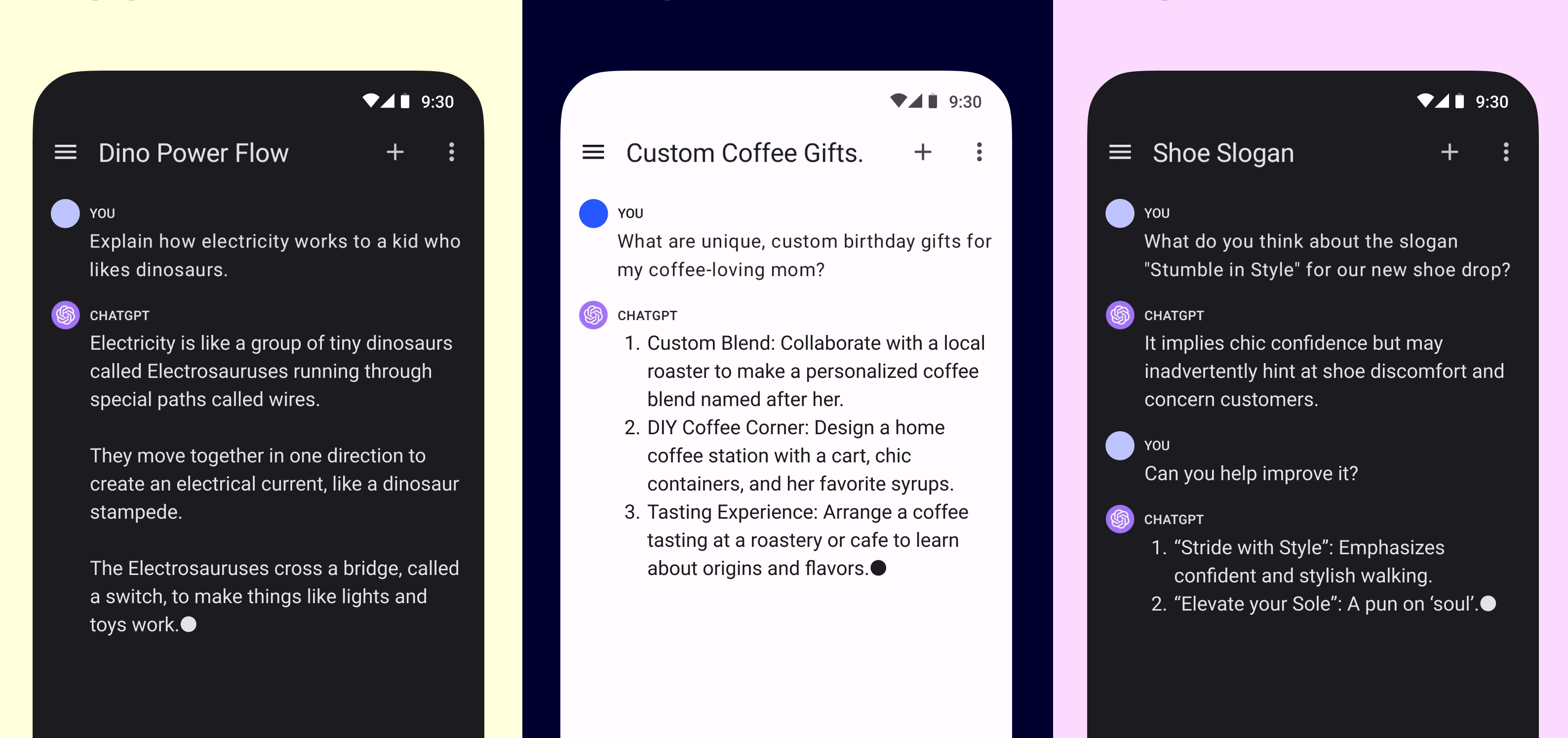
ChatGPT screens from the Android app.

ChatGPT screens and prompt examples from the Android app, which launched in July.

“Because [the AI models powering OpenAI] have been trained extensively on vast amounts of data,” Shang added, “they [have] shifted focus from training specialized chatbots for specific domains to creating more general-purpose systems that can handle a variety of topics easily through prompting with instructions … [Chatbots like ChatGPT] don’t require users to learn any new form of language, as long as they provide a task and some desired output just like how a manager would communicate to an intern.”

Now, there’s mixed evidence as to whether ChatGPT is actually being used in these ways. A Pew Research survey from August showed that only 18% of Americans have ever tried ChatGPT, and that most who’ve tried it use the chatbot for entertainment purposes or answering one-off questions. Teens might not be using ChatGPT all that often, either (despite what some alarmist headlines imply), with one poll finding that only two in five teenagers have used the tech in the last six months.

ChatGPT’s limitations might be to blame.

While undeniably capable, ChatGPT is far from perfect owing to the way it was developed and “taught.” Trained to predict the likeliest next word — or likeist next parts of words — by observing billions of examples of text from around the web, ChatGPT sometimes “hallucinates,” or writes answers that sound plausible but aren’t factually correct. (ChatGPT’s hallucinating tendencies got its answers banned from the Q&A site Stack Overflow and from at least one academic conference — and accused of defamation.) ChatGPT can also show bias in its responses, answering in sexist and racist, overtly Anglocentric ways — or regurgitating portions of the data that it was trained on.

Lawyers have been sanctioned after using ChatGPT to assist in writing motions, discovering — too late — that ChatGPT invented fake lawsuit citations. And scores of authors have sued OpenAI over the chatbot regurgitating portions of their work — and not receiving compensation for it.

So what comes next? What might ChatGPT’s second year hold, if not more of the same?

Interestingly — and fortunately — some of the more dire predictions about ChatGPT didn’t come to pass. Some researchers feared the chatbot would be used to generate disinformation on a massive scale, while others sounded the alarm over ChatGTP’s phishing email-, spam- and malware-generating potential.

The concerns pushed policymakers in Europe to mandate security assessments for any products using generative AI systems like ChatGPT, and over 20,000 signatories — including Elon Musk and Apple co-founder Steve Wozniak — to sign an open letter calling for the immediate pause of large-scale AI experiments like ChatGPT.

But examples of ChatGPT abuse in the wild have been few and far between — so far.

With the launch of GPTs, OpenAI’s tool for building custom conversational, action-taking AI systems powered by OpenAI’s models, including the models underpinning ChatGPT, ChatGPT could become more a gateway to a broader ecosystem of AI-powered chatbots than the end-all-be-all.

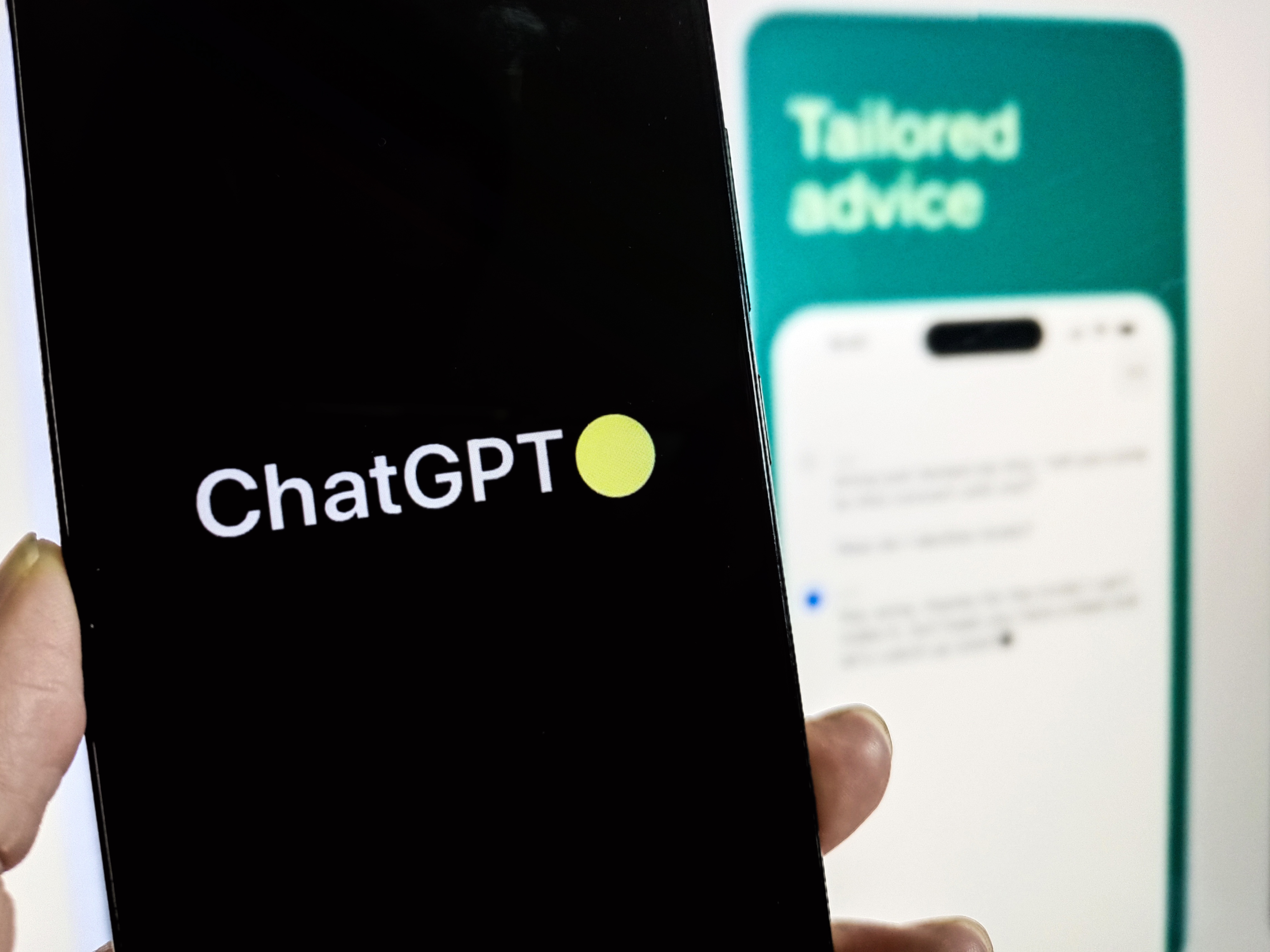
OpenAI logo is being displayed on a mobile phone screen in front of computer screen with the logo of ChatGPT

The OpenAI logo on a smartphone screen in front of laptop with the ChatGPT logo.

With GTPs, a user can train a model on a cookbook collection, for example, so that it can answer questions about ingredients for a specific recipe. Or they can give a model their company’s proprietary codebases so that developers can check their style or generate code in line with best practices.

Some of the initial GPTs — all created by OpenAI — include a Gen Z meme translator, a coloring book and sticker creator, a data visualizer, a board game explainer and a creative writing coach. Now, ChatGPT can accomplish these tasks given carefully-engineered prompts and foreknowledge. But purpose-built GTPs drastically simplify things — and might just kill the cottage industry that emerged around creating and editing prompts to feed to ChatGPT.

GPTs introduce a level of personalization far beyond that ChatGPT offers today, and — once OpenAI sorts out its capacity issues — I expect we’ll see an explosion of creativity there. Will ChatGPT be as visible as it once was after GPTs flood the marketplace? Perhaps not. But it won’t go away — it’ll simply adapt and evolve, no doubt in ways not even its creators can anticipate.