How Opera’s AI bot beats Google at its own game

AI data blocks stacked together

Opera has been my on-and-off default browser for years. Starting early in 2023, once the development team added artificial intelligence to the browser, I thought I was done with it permanently. But I gave it a chance and am glad I did.

To my surprise, I found Aria — Opera's built-in AI tool — to come in handy for one specific function. And that function has me using google.com less and less with every passing day.

Also: How to use Opera's built-in AI chatbot (and why you should)

Let me explain.

When I run a search on google.com and the results appear, I always assume one or more of the following:

  • The resulting site content will be out-of-date.
  • The resulting site will contain so many ads (or poorly designed code) that it will cause problems with my web browser.
  • The resulting site content is behind a paywall.
  • The resulting site content will require that I sign up.

I realize that's a bit heavy on the pessimism, but anyone who searches as much as I do will get what I'm throwing down.

It can be exhausting.

It also means I have to continue refining my search to find what I'm looking for. And, given most often what I'm querying is for research purposes (either for an article or a book), I need to be as efficient as possible. I'm too busy to spend my time on deep dives down various rabbit holes to find what I need.

That's where Opera's Aria comes in. Let me give you an easy example.

In the current book series I'm writing, every character's name is a combination of classical composer's names. For example, one of the main characters is Anton Frank. The first name is from Anton Dvorak and the last name from Frank Bridge. I'm sometimes randomly putting those names together and sometimes with intention. Although I know a lot of classical composer names, once you're four books into a series, you have to start digging deep into more obscure composers.

Also: Best secure browsers to protect your privacy online

To that end, instead of using a Google search — which might have me clicking through sites until I find one that's useful — I open Aria and type:

List 50 classical composers

If that doesn't give me what I need, I might type:

List 50 female classical composers

I can continue narrowing down the query, making sure to start each one as a new chat — which saves it in the Aria sidebar — so I can refer back to it later.

When I go this route, I don't have to worry about poorly coded websites dragging my browser to a halt or any of the other issues I've run into when researching something.

Aria just works.

Keep this in mind: I don't use Aria (or any AI) for anything but that purpose. I'm not using it as a crutch to write for me. AI is not my muse and it never will be. You see, I've spent 30 years developing my "writer's voice" and have no intention of not using it.

Also: Google unveils a search trend time capsule tool to make you feel old

Essentially, I use Aria in place of Google searches.

One thing to keep in mind, however, is that I don't use Aria in place of the sites I like to frequent. When I follow a writer, it's because of their unique perspective and/or voice. I don't want to read pieces that were generated by soulless algorithms. I want heart in my news and/or entertainment; I want vision, depth, and experience in the words I read. I want to know that someone was moved enough by something to write about it.

When I discover that a site uses AI to create content, I never return. I won't knowingly read articles or books written by AI, won't listen to music created by AI, and would never watch videos created by AI. AI is not a creative process and it never will be.

But for research…I only need information (like names).

So, at least for me, Aria is beating Google at its own game and I don't see this changing any time soon. Give Opera's Aria a try. I believe you'll find it can often best Google at helping you find the answers you need for your queries, without worrying about what site you're being sent to.


Artificial Intelligence

Ride the Hype: AI Events in Bay Area

San Francisco stands tall as the AI Capital of the World. If you're delving into the realm of AI, now is the perfect time to be in this city. A significant part of this phenomenon revolves around the surge of AI-focused events.

The past couple of years were challenging for event organizers in the Bay Area, but the fall of 2023 is witnessing a frenzy of AI-centric conferences, meetups, and hackathons occurring nearly every day.

The AI upswing in the SF Bay has lured back entrepreneurs and tech professionals who had previously left due to Covid restrictions. The city has witnessed a groundbreaking $10.7 billion in funding for generative AI startups announced in the first three months of 2023.

Whether you're a founder, venture capitalist, or corporate employee, if you have even a remote interest in AI, you're likely to find yourself at one of these events. Connecting with like-minded builders and investors is a key value, and there are specific business goals achievable through active participation, including fundraising, recruiting top talent, acquiring best-in-class teams and startups, exploring revolutionary products and services, and more.

To illustrate, the SF Tech Week by a16z is a week filled with numerous events hosted by VC firms, corporations, and prominent startups. Any business objective you have in mind can be fulfilled here. Personally, I hosted an AI Tea party in collaboration with DVC, M12 and Microsoft for Startups. We had a panel with a VC, a founder, and a corporate executive sharing their perspectives on how most GenAI projects and corporations lack a moat – “Now, here, you see, it takes all the running you can do, to keep in the same place. If you want to get somewhere else, you must run at least twice as fast as that!” was the motto of the event which represents the fact that it’s not enough to create an AI product, but rather you’ll have to be twice as fast and resourceful to acquire the user or client base to succeed in this red ocean of AI startups and technologies.

Only in the Bay Area can you attend a 100-person hackathon and witness Sergey Brin or Eric Schmidt in person, delivering inspirational talks about the fundamental shift in technologies and business to builders. Just a few weeks ago, I attended a free event hosted by the Robot Heart Foundation where Sam Altman was discussing the challenges and future of the intersection of Art and AI with Android Jones. Sam addressed concerns artists had regarding their intellectual property and the future of Generative AI. The main subjective takeaway for me was that the next leap in AI would involve generating entirely new knowledge beyond what humanity has already created and achieved.

Most meetups and hackathons are free but often have limited spots, so act quickly to secure your spot and present yourself well on the registration page. Some conferences can be expensive, but one effective way to participate is by volunteering. I know people who gained access to the $1500 Ted AI Conference by assisting organizers – as an organizer myself, I can say we appreciate help and support.

Another aspect to consider is how to kickstart an AI event in the Bay Area. Let's examine the simplest format – meetups. It's not easy, but my suggestion is to work within your budget. If it's limited or non-existent, consider one of the many coworking spaces or academic organizations, some of which are willing to host events for free or at a very affordable price.

The next crucial element is securing good speakers. You don't need many, but the event won't succeed without at least a couple of known speakers. Even if they're not widely popular, having speakers from prominent startups, corporations, or VC firms can make a significant difference.

Marketing is typically the most challenging part and relies on the first two items. The better the venue and speakers, the easier it is to attract people. An important first step is listing the event on as many free platforms as possible to generate organic traffic (Eventbrite, Lu.ma, Partifull, etc.). Second, send personal invitations via email and LinkedIn – there are plenty of tools to automate this process.

Monetization is another consideration. Since we're talking about a meetup, tickets are typically free, so the only other option is attracting sponsors. The main value for sponsors is the guests, so, for example, if the meetup focuses on developers and founders, the main target sponsors would be cloud providers and companies aiming to sell their products and services to those groups. If it's a corporate meetup, vendors should be interested. It's not trivial, but once the relationship is established, it gets easier. No connections? No problem – attend other AI events and meet sponsors.

Food and drinks – people usually don't expect fancy dinners at meetups, so the most common fare will be pizza and a variety of canned or bottled drinks.

This is the simplest way to kickstart a meetup, but with larger ambitions and budgets, anything is possible.

I've successfully organized conferences with 50-150 speakers in less than 2 months, and I'll share perhaps the most important takeaway – try to involve as many people and organizations as possible. Community partners can assist in various ways, such as bringing in speakers, sponsors, and promoting the event. I've experienced a lot of success with partnerships, and that is the single most important advice I would give to anyone planning to host a tech event.

13 AI Companies that Pay A Bomb to their Researchers

Top 13 Highest Paying AI Companies for Researchers

AI is obviously the hottest industry to work in right now. And it would be a dream come true if you got to work at the top AI companies in the world such as OpenAI or DeepMind. But have you ever tried to find out if your favourite company is a generous-pay firm or a tight-budget employer? What is the difference in the annual compensations of these company?

Rora, the company that helps PhD holders negotiate their salaries, published its report on salary negotiations and gave away the average salary each of these AI companies gave to its researchers; and it is quite interesting.

Here is the list of top AI companies and how much they pay their researchers:

OpenAI

The hottest AI startup of 2023, and the creator of ChatGPT, OpenAI is on the top of the list. The company pays an annual $865K compensation with an initial compensation of $665K, which gives a negotiated delta of 30%. And the good news is, the company is planning to set up its office in India, possibly in the coming year.

Anthropic

Possibly the biggest rival to OpenAI and the creator of Claude-2, Anthropic, which was started by former OpenAI researchers Dario Amodei and Daniela Amodei, also pays its researchers handsomely. With $855K annual compensation, the company ranks second on the list.

Interestingly, during the OpenAI fiasco, the board members of the company allegedly approached Dario for a possible merger, wanting to make him the CEO of the company, which he rejected.

Inflection

The creator of the most friendly and personalised chatbot Pi, Inflection pays a huge sum to its researchers as well. Though the initial compensation is unknown, Inflection pays an average of $825K annual compensation to its engineers.

Inflection was started by former DeepMind co-founder Mustafa Suleyman and the famous investor Reid Hoffman, and has a valuation of $4 billion. Although the company is in the big billion dollar club, it has a small team of 35 researchers.

Tesla

Elon Musk’s Tesla, the AI company behind the self-driving cars and possibly that provides a lot of power to xAI (the company behind Grok), pays an annual compensation of $780k to its researchers. This comes with $702k initial compensation, giving a 11% increase in negotiated delta.

Amazon

It is interesting to see how startups are paying more than all the big-tech. Amazon is the highest paying big-tech of all with $719k annual compensation. Furthermore, with one of the highest negotiated delta of 38%, the initial compensation stands at $520k annually.

Google Brain

The two research companies under Alphabet, the parent company of Google, pay very different compensations to its researchers. Brain, though being merged with DeepMind, offers an annual compensation of $695k. This is after a 17% negotiated delta, giving a jump from 17%.

On the other hand, Google Research gives an annual compensation of $549k with a whopping 77% negotiated delta, jumping from $310k annual compensation.

Meta AI

With offices in New York, Menlo Park, and London, Meta AI, formerly known as FAIR, focuses on AI research with its 150k GPUs involving powering its social media platform, along with AI. The research lab of Meta pays $556k annual compensation, with an initial compensation of $480k, signalling a 15% negotiated delta.

DeepMind

Now merged with Google Brain, DeepMind is touted as one of the alternatives to Microsoft-OpenAI partnership. The “brain” behind the recent Gemini model, DeepMind pays $515k annual compensation to its researchers, with an initial compensation of $452k, and a 13% negotiated delta.

Apple

Apple pays almost half of what OpenAI pays, which is surprising given the difference in valuations of the companies. Well, the employee size matters too. With an initial compensation of $337k, Apple pays $450K annual compensation to its researchers with a 33% negotiated delta.

Microsoft Research

Surprisingly, Microsoft Research, the big-tech’s own research lab pays almost equivalent to Apple, which is the half of OpenAI, its own funded company. Though it gives a whopping 66% negotiated delta along with $270k initial compensation, Microsoft Research’s researchers earn around $449K in annual compensation.

This is probably why OpenAI researchers didn’t actually want to go to Microsoft when the entire mess happened.

NVIDIA

The biggest winner of the AI race with a trillion dollar valuation owing it all to AI, NVIDIA gives an initial compensation of $340k to its researchers along with a negotiated delta of 14%. Overall, the chip and GPU giant pays $390k annual compensation to its researchers.

IBM Research

Similar to NVIDIA, IBM Research, the company which balances between quantum computing and AI, pays $377k annual compensation to its researchers, along with a 43% negotiated delta and initial compensation of $262k.

Hugging Face

At the bottom of this list is the open source champion Hugging Face. Though the salaries of the researchers are not less, Hugging Face with its open source approach pays $238k annual compensation to its researchers, along with a 27% negotiated delta and initial compensation of $185k.

The post 13 AI Companies that Pay A Bomb to their Researchers appeared first on Analytics India Magazine.

DSC Weekly 12 December 2023

Announcements

  • Generative AI signifies a pivotal shift in today’s technological landscape. It promises profound insights, streamlined operations, and assistance with data-driven decisions on an unprecedented scale. However, GenAI also brings forth ethical and regulatory considerations that require attention for modern businesses seeking to capitalize on the still-evolving technology. Register for the Enterprise Strategy Group’s upcoming GenAI Summit​ to engage with thought leaders as they navigate the intricate dilemmas, evolving regulatory landscape, and responsible AI practices that maximize the benefits of GenAI technology and mitigate inherent risks and biases.​
  • Ransomware attacks show no signs of slowing down. This year marked a record-breaking year for ransomware attacks, as they surged 74% by the first three months of 2023. Organizations require not only a solid prevention plan, but they need established recovery solutions to ensure they bounce back from attacks that can cause irreparable economic and reputational damage. The newer and more treacherous modern threat landscape forces organizations to take a second look at cyber insurance and the security it can ensure against fallout from an attack. Join the upcoming Ransomware Preparedness: Strategies for a Secure Future summit to hear leading experts discuss actionable strategies to prevent ransomware attacks, mitigate damage, and select the best cyber insurance option for your organization.

Top Stories

  • AI and Justice in a Brave New World Part 2 – Humanizing AI
    December 9, 2023
    by Bill Schmarzo
    In part 1 of the series, “A Different AI Scenario: AI and Justice in a Brave New World,” we outlined some requirements for the role that AI would play in enforcing our laws and regulations in a more just and fair manner and what our human legislators must do to ensure those more just and fair outcomes.
  • An integration tax that every adult in the US pays
    December 8, 2023
    by Alan Morrison
    I live in Northern California and have a new primary care doctor now. My previous primary care doctor, who has since retired, was part of the Stanford Health Care (SHC) system. My new doctor is merely in a different SHC office.
  • Harness the power of an AI-powered forecasting model to revitalize your business
    December 8, 2023
    by John Lee
    Inventory management is crucial for businesses, but it can be tedious. It can make or break a business, regardless of its age. AI has revolutionized business management and inventory control. AI can now do more than just follow instructions. It can analyze inventory history, predict customer behavior, and anticipate business needs.
Education_DSC_160x600-2

In-Depth

  • Data science transformations for 2024 and beyond
    December 12, 2023
    by Aileen Scott
    Data science has come a long way! Using basic statistical models, 19th-century organizations gathered, stored, and processed data. Later, when computers entered the picture, the digital age started producing enormous volumes of data.
  • Maximizing marketing potential: The AI-driven revolution in outsourced digital marketing
    December 11, 2023
    by Evan Rogen
    In today’s digital marketing world, things are changing fast, and artificial intelligence (AI) is a big part of that. Companies want to stay ahead, so they’re smartly choosing to get help from outside experts in digital marketing who use AI tools.
  • Universal basic income and the gig economy: A combined policy approach to alleviate the challenges of AI
    December 11, 2023
    by Ajit Jaokar
    Much has been said about the economic impact of AGI, some of it is already been feltBut not much has been proposed about solutionsSpecifically, what approaches should policy makers take? Here, I propose that policy makers should encourage two key trends – together which could alleviate the issues of AI.
  • DSC Weekly 5 December 2023
    December 5, 2023
    by Scott Thompson
    Read more of the top articles from the Data Science Central community.
  • Decoding the Future: The Intersection of Advanced Analytics and Fraud Prevention in Revolutionizing Digital Payments
    December 5, 2023
    by John Lee
    In 2023, online payment fraud cost the world US$48 billion. Businesses prioritize fighting payment fraud and minimizing its financial and reputational damage. In addition to monetary losses, payment fraud can damage a customer’s trust and loyalty, as well as increase the scrutiny from regulators and law enforcement.

Don’t diss the pigeons: How nature’s algorithm rivals AI

Pigeon in flight

There is a scene in the Michael Winterbottom-directed film '24 Hour Party People' that charts the emergence of British New Wave music and also exemplifies our attitude toward pigeons.

Two young men head to the rooftop of a building, where hundreds of pigeons come to roost, and they proceed to shower the place with breadcrumbs. As the pigeons consume them and take flight, they suddenly start plummeting towards earth and dying.

Also: Five ways to use AI responsibly

The crumbs are filled with poison as are ostensibly the hearts and souls of the wayward youths. It's a funny scene, if a little morbid.

A carrier pigeon with a message attached to its leg is about to be released.

While many of the people who chuckled at the scene are probably not the kind of people who flirt with thoughts of mass murdering pigeons, it would be false to say the notion of dispensing with a handful of the birds now and then hasn't crossed some of our minds.

After all, these birds are habitually guilty of pooping right next to human habitation, in courtyards, stairwells, and pretty much everywhere else. Their feathers often stick to their waste, making an unholy mess.

In other words, pigeons are considered vermin, the lowest of the low among birds. Pigeons are not usually described as 'majestic', like say, golden eagles, which soar on lofty currents while surveying prey. And pigeons are not lauded for their stunning plumage, like peacocks.

Also: The best AI chatbots: ChatGPT and other noteworthy alternatives

Boxing legend Mike Tyson may rear pigeons with great affection, but that doesn't stop the rest of the world from considering this maligned bird to be a 'flying rat' with no redeeming qualities.

But what about if — just like many of our prejudiced notions about each other and certain species in the animal kingdom — this bias against the pigeon is grossly misplaced?

In fact, it turns out that the much-reviled bird is not only brainier than cats, but could be as smart as your three-year-old child.

Most impressively, however, is the fact that pigeons make choices that are very similar to the most-talked about technology today — artificial intelligence (AI).

Tarred and feathered unfairly

In a study led by Brandon Turner, professor of psychology at Ohio State University, and Edward Wasserman, professor of psychology at University of Iowa, 24 pigeons were put to work slotting patterns into categories, as if they were training for a Mensa conference.

Some of the patterns were groups of lines — with different thicknesses, placed and arranged in varying ways — while others were circles.

Also: Today's AI boom will amplify social problems if we don't act now

The patterns were accompanied by left and right buttons to indicate which family each visual belonged to. Correct answers were awarded a pellet treat while wrong choices got nothing.

In a feat that could fox many humans, pigeons were able to improve their scores from 55% accuracy to 95% for some of the easier assignments. For the more complicated tasks, these burbling birds were able to peck their way to a 68% score.

As it happens, the method with which the birds went about their selection process mirrors AI's strategy when it's making choices — a process you may recognize from when you taught your puppy to sit using treats. You sit, you get a treat; simple.

"The pigeons' demonstrated success seems to be based on their deploying a single, simple biological mechanism — one that can be effectively emulated by a computational model involving just two free parameters and one hidden layer," said authors Turner and Wasserman.

"That biological mechanism is associative learning, which gradually connects behavioral responses to circumscribed regions of perceptual space via an error-correction process. In this sense, the pigeon's category learning prowess can be understood as if the pigeon were a machine," they added.

Also: AI and advanced applications are straining current technology infrastructures

Scientific thinking has maintained until now that associative learning is just too simple and primitive and lacking in the elevated cognition required to carry out complex visual categorization tasks.

In fact, it is the human that is an under-performer when confronting tasks like these, say the authors, because we tend to look for some definitive rules under which we can carry out a task, and then get bewildered and frustrated when they don't exist.

But the pigeon uses 'brute force' tactics to get the job done, much like AI does.

A winged machine

This ability is why pigeons can tell the difference between two human beings in the same photograph, and even between a Van Gogh painting and a Chagall.

In other words, the same technology — which is helping cancer hospitals spot tumors and fire-fighting towers to differentiate smoke from clouds — is one that is embedded in this unheralded feathered being.

We shouldn't be surprised. After all, Pigeon No. 498 — who didn't merit a proper name, apparently (or even a prime number at the minimum) — was launched by naval skipper Thomas Crisp to go and get help when he was torpedoed by a German U-boat in the First World War.

Also: Leadership alert: The dust will never settle and generative AI can help

Alas, Crisp did not survive, but No. 498 flew on a wing and a prayer, literally — shrapnel had badly damaged one side of his body. Yet, the pigeon was able to deliver the message and help get the crew rescued. Thousand of other people were saved in similar fashion by the 100,000 or so pigeons that served in the War.

"We celebrate how smart we are that we designed artificial intelligence; at the same time we disparage pigeons as dim-witted animals," said Ohio State's Turner, emphasizing the irony that the learning principles used by pigeons and AI are almost identical.

"Nature has created an algorithm that is highly effective in learning very challenging tasks," added Iowa State's Wasserman. "Not necessarily with the greatest speed, but with great consistency."

Artificial Intelligence

Deadmau5-founded startup Korus taps into AI for music creation

Deadmau5-founded startup Korus taps into AI for music creation Lauren Forristal 9 hours

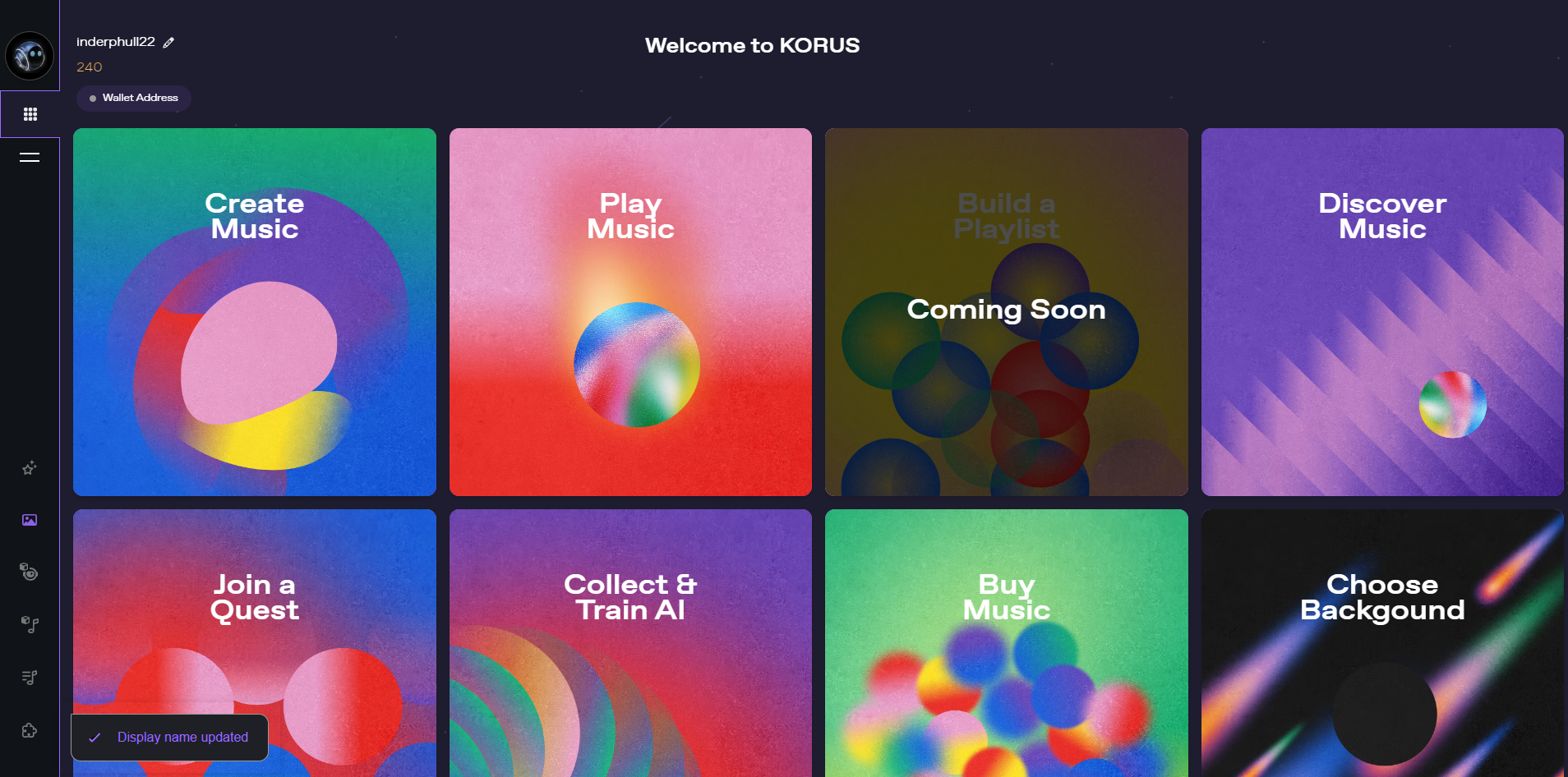
Pixelynx, an Animoca Brands-owned metaverse company co-founded by DJ and producer Deadmau5, announced today its newest suite of tools for its flagship product Korus, an AI-powered music creation platform where you can remix content using AI and licensed stem files made by artists and music labels, then mint music and earn revenue.

Starting today, Korus is launching its new features to introduce ways for users to create and experiment with music, including interactive visuals, a layering tool, and video recording. There’s also a new playlist feature and rewards program to incentivize artistic contributions.

Korus’ main proprietary tool is called “Sound Mosaic,” a music composition algorithm that can compose music based on the stem files uploaded into it. Korus pays artists for the music they upload, and artists get ownership of every new piece of content that uses their stems. Users split royalties with the original IP holders. The Sound Mosaic tool will soon be offered as an SDK for developers to launch new music experiences in their products.

Each artist on the platform is developing their own proprietary AI models based on their IP to monetize it to fans. Deadmau5 dropped his AI model “Mau5trap DNA” in June, featuring tracks from his independent record label.

“The idea that you can buy this AI model from your favorite label and play with it is a new paradigm. The [Mau5trap] drop made about $18,000 in about 24 hours and included music from three artists who are all relatively unknown — less than 10,000 followers each — and, generally speaking, would not make a fraction of that in five years of their career, let alone 24 hours,” Pixelynx co-founder and CEO Inder Phull told TechCrunch.

The company is still figuring out its business model, Phull told us, but mentioned that it has taken an equity stake in Reveal, an unchained royalty-splitting platform, to provide artists and creators with “full transparency over the royalties,” he added.

“The economy and the business model we’re trying to design is inspired very much by gaming, soft currencies, ways for people to spend on microtransactions in-platform… We’re putting the pieces in place right now,” Phull said.

Image Credits: Korus

Another feature on the platform is its AI companions or “KORS,” a friendly robot that you can train to generate new music and album images. For instance, “Create a track with a dark mood and angry vibe.” There are three free companions for you to collect, designed in collaboration with Mau5trap and music companies Beatport and Pioneer DJ. Korus plans to add paid companions customized by emerging and top artists that include exclusive content for fans.

“As we continue evolving the platform, these will start to gain personalities…they will know your interests. So, for example, you are building this country house genre, let’s say it knows that and it’s going to continue aiding your experience in that direction or feeding you with content that is relevant to the communities that you’re a part of,” Phull said.

Image Credits: Korus

The first new feature to be added to the platform is “Scenz,” a video tool that helps you craft aesthetically pleasing visuals by selecting from animated backgrounds and moving images and avatars around the screen. Korus also allows you to video record and share your creations across social media.

“Whether you want to create your experience in a 3D environment and build a space for that visual experience to take place or whether you want to just use more traditional video and textures, this is all a real-time visual composition engine in many ways,” Phull explained during a demo with TechCrunch. Phull adds that there are webcam interactions so you can upload a scan of yourself and perform as an avatar, but this capability wasn’t ready in time for the demo.

The next feature is called “Layer Mosaic,” which allows you to modify stems by adjusting drums, vocals, harmony, melody, and chords as well as use an XY pad for effects. It’s designed to give you the feeling of performing like a DJ and provide a sense of “musical creative agency,” Phull said. You can also generate new sounds through AI text prompts, similar to CreateSafe’s recently launched Triniti platform. Korus plans to include voice inputs in the next iteration.

Korus is also introducing soft currency, “NOIZ,” which can be used to purchase audio and visual content and music downloads. The platform rewards you for making tracks, sharing content, and engaging with the platform. You’ll get rewarded if you log in every day, too. Your rewards can be redeemed for digital collectibles, merch, and gift cards.

Lastly, the new playlist feature lets you curate collections of content while also exploring playlists from other users. Korus hopes the playlists will help enhance music discovery and cultivate a community of creators within the platform.

Image Credits: Korus

In addition to the new tools, Phull also revealed that the company is partnering with Netflix’s hit sci-fi series “Black Mirror” to launch its own web3 experience where you have to smile at the camera for 15-20 seconds to enter the website.

“The goal is to fuse together many sectors from music to film and TV with our core technology to bring fans closer to the IP and worlds they love. Many people think the future with AI is going to be this dystopian dark tale. We hope to show that isn’t going to be the case and will always try to have fun with our partners along the way,” Phull said.

Pixelynx was also founded by musician Richie Hawtin and veterans of the music industry, Ben Turner and Dean Wilson. Since launching in May, there have been over 10,000 songs created and minted on-chain by Korus users.

OpenAI to Host its Developer Conference in Bengaluru in January

OpenAI to Host its Developer Conference in Bengaluru in January

After hosting its first DevDay conference in November, OpenAI is gearing up to host a developer gathering in Bengaluru in January, focusing on engaging with Indian tech professionals to address safety concerns in artificial intelligence, as announced by a senior executive on December 12.

Anna Makanju, Vice President of Global Affairs at OpenAI, expressed excitement about the upcoming event, stating, “I am delighted to announce we will hold a developer gathering with our VP of engineering Srinivas Narayanan in Bengaluru in January with more to follow. Our plan is to convene developers here in India alongside OpenAI product leaders to address some of the most difficult safety challenges.”

Emphasising the significance of India’s talent pool and its role on the global stage in the field of technology, Makanju highlighted the importance of developing governance models for AI.

She stated, “We have learnt how important it is to develop governance models for AI. We have worked with the Biden Administration and G7… We must develop an international body to ensure that the most powerful technology is safe and the benefits of it are equally distributed,” during her address at the Global Partnership on Artificial Intelligence (GPAI) Summit in Delhi.

On similar lines, OpenAI is planning to expand its footprint in India by roping in Rishi Jaitly, former VP of Elon Musk’s X, as reported by TechCrunch. Jaitly will be working as a senior advisor and will be responsible for guiding the company to navigate India’s AI policy and regulatory landscape.

Though the news is not officially announced by OpenAI, he’s helping the team to set up an office in India. Interestingly, the development is said to have taken place soon after Altman’s inaugural trip to the country in June.

The GPAI summit inaugurated by Prime Minister Narendra Modi on December 12, will feature international delegates participating in various sessions focused on AI. As part of the summit, the Indian government is actively working on a multi-country, consensus-based declaration on AI, specifically addressing strategies to mitigate risks and foster innovation.

The post OpenAI to Host its Developer Conference in Bengaluru in January appeared first on Analytics India Magazine.

Data science transformations for 2024 and beyond

Data Science Transformations 2024 and Beyond

Data science has come a long way! Using basic statistical models, 19th-century organizations gathered, stored, and processed data. Later, when computers entered the picture, the digital age started producing enormous volumes of data. The proliferation of data on the internet has revolutionized communication, and the field of data science has grown because of the necessity to manage Big Data. PayScale predicts that data science will be the next big thing in employment, with salaries ranging from $65k to $153k annually.

What is data science?

According to today’s industry experts, data science is the study and data science frameworks to support business choices and develop new products that interact with customers. Usually, data scientists oversee using data analytics to uncover fresh insights. They frequently use sophisticated machine learning models to forecast consumer or market behavior in the future by looking at historical patterns.

Data science is a dynamic and rapidly evolving field, constantly adapting to new technologies and data sources. It has a significant impact on various industries, including healthcare, finance, technology, and retail, helping businesses make informed decisions, improve efficiency, and drive innovation.

Does data science have a future?

These days, technology companies offer platforms that abstract data into low-code or no-code environments and automate tasks, potentially eliminating a large portion of the work currently performed by data scientists.

There are uses of data in practically every industry. The field of data science has a bright future ahead of it. A data scientist will aid in the expansion of an organization by helping it make wiser decisions.

Many different businesses have a significant demand for data scientists. Their duties encompass gathering, sanitizing, evaluating, and construing information to facilitate more informed business choices. Data scientists use a variety of data science tools and techniques, including machine learning, statistics, and programming, to extract insights from data.

The increasing demand for data scientists is also driving up salaries. According to Glassdoor, the estimated yearly salary for a data scientist in the US is $126,200. The data science jobs market is expected to remain strong in the coming years, making it a rewarding career choice for people with the right skills and experience.

Data Science Trends and Use Cases

  1. Predicting Customer Behavior in Retail: You must comprehend past customer interactions to comprehend future needs, wants, and spending. To do this, you gather data from past customer journeys and utilize it to forecast upcoming ones.
  2. Fraud Detection in Finance: Using anomaly detection techniques and machine learning algorithms, these organizations can spot suspicious patterns and report possible fraudulent activity quickly.
  3. Predicting Equipment Failures in Manufacturing: Condition-based maintenance, or CBM, is a useful strategy to predict equipment failures in your plant. CBM is a maintenance approach that does not rely on a set usage or time interval but rather on the real state of your equipment.
  4. Predicting Patient Outcomes in Healthcare: Predictive models are trained to recognize trends and risk factors linked to different patient outcomes using machine learning algorithms, enabling healthcare providers to provide individualized interventions for improved health outcomes.
  5. Predicting Traffic Patterns in Transportation: The transportation sector uses data science to forecast traffic patterns. This can involve forecasting traffic patterns on a specific road or highway and spotting bottlenecks to help prevent delays.
  6. AI as a Service: It describes companies that provide clients with low-cost implementation and scalability of AI techniques through out-of-the-box AI solutions. OpenAI recently declared that the public would have access to its transformer language model, GPT-3, through an API. One of the newest trends is AIaaS, which offers state-of-the-art models as services.
  7. Growth of TinyML: Machine learning is being implemented on small, low-powered devices with TinyML. TinyML devices can operate on microcontrollers, which require 1,000 times less power than consumer CPUs or GPUs. TinyML avoids costs and offers machine learning advantages at the same time.

How will quantum computing impact data science jobs?

  • Data analysis: Quantum computers can process large amounts of data faster than traditional computers, which can help data scientists analyze data more efficiently.
  • Machine learning: Quantum computers can help construct machine learning models and contribute to the rapid development of AI.
  • Cybersecurity: With the use of Quantum computing there will be an enhancement in cybersecurity and intelligence gathering by providing stronger data encryption services and high-level intrusion-detection systems.
  • Decision-making: Quantum computing will accelerate data science applications like data analysis and decision-making processes.
  • Quantum data: Quantum data tasks include quantum data preprocessing, feature extraction, and statistical analysis of quantum data.

Conclusion

Even though there will probably be a continued demand for data scientists in the years to come. Data science opens powerful new avenues with numerous rising trends that support the success of organizations. However, these adjustments would force the companies to search for applicants with highly developed data scientist abilities. Thus, seize the opportunity, explore the data science job options, and let the future of data science unveil your boundless skillsets. The future beckons you!

Laredo wants to use gen AI to automate dev work

Laredo wants to use gen AI to automate dev work Kyle Wiggers 10 hours

Developers are embracing AI — some surveys suggests, at least. The Q&A site Stack Overflow polled devs on their attitudes toward code-generating AI tools and found that the vast majority were quite positive. Seventy-seven percent of developers feel favorably about using AI in their workflows, per the survey — citing benefits like increased productivity and faster learning.

GitHub Copilot appears to be gaining traction where it concerns AI-powered tools, and to a lesser extent Amazon CodeWhisperer. But in spite of tech giants’ efforts to corner the nascent space, entrepreneurs are launching their own takes.

Take for example Laredo Labs, a startup developing an AI-driven platform for code generation. Leveraging an AI model trained on data from around a hundred million software projects, Laredo writes code based on high-level natural language commands — writing, editing and deleting code to accomplish dev tasks while documenting progress.

Laredo was co-founded in 2022 by Mark Gabel and Daniel Lord. Gabel was previously the chief scientist at Viv Labs, which Samsung acquired in 2016 to beef up its Bixby voice assistant. Lord, meanwhile, was a platform engineer at Siri prior to Apple’s purchase of the startup.

“We’ve always cared a great deal about our craft and have always strived to make better software, faster,” Gabel told TechCrunch in an email interview. “My background in AI-driven software engineering — and the sudden increase in AI scale — created a unique opportunity to make a massive leap in software development tooling.”

And that’s how Laredo came about. Gabel and Lord built their own models, user experience and — to train those models — what they claim is one of the most comprehensive software engineering data sets in existence. Currently available in private preview, Laredo’s platform can complete “repository-level” tasks from instructions or even text taken verbatim from an issue tracker, Gabel claims.

“Laredo is a ‘full stack’ machine learning company,” Gabel said. “We’re introducing an ambitious new AI-driven developer experience.”

Now, generative coding tools — like all tools underpinned by generative AI — can be legally risky.

Microsoft, GitHub and OpenAI are currently being sued in a class action lawsuit that accuses them of violating IP law by letting Copilot, which was trained on billions of examples of public code from the web, some under a restrictive license, regurgitate sections of copyrighted code without providing credit. Liability aside, some legal experts have suggested that AI like Copilot could put companies at risk if they were to unwittingly incorporate copyrighted suggestions from the tool into their production software.

It’s not clear if Laredo’s models were trained on copyrighted code or what the startup’s indemnification policy might be in the event a customer’s sued over IP regurgitated by Laredo’s models. I’ve asked Gabel for clarification and will update this piece once I hear back.

Legal hurdles aside, Laredo is entering an increasingly competitive field, as alluded to earlier. One recent new entrant, Sweep, aims to automate basic dev tasks very similar to the way Laredo appears to be doing it — using generative models trained on large data sets of coding projects.

But Gabel thinks that Laredo has a fighting chance.

“The software engineering space is an enormous market, with room for many participants, and Laredo … currently occupies its own niche,” he said.

Laredo is pre-revenue. But it’s raised $8.5 million in a seed round co-led by Radical Ventures and Horizons Ventures. A portion of the new capital will go toward hiring — expanding Laredo’s team from eight people to ten by the end of the year.

Lights, Camera, Action! Womenpreneur Duo Reinvent Text-to-Video AI

A former product manager who has worked with Microsoft, Snap and Waymo, entered a hackathon in May this year. The solo woman hacker won against hundreds of other hackers, where Replit CEO, Amjad Masad, was one of the judges. “If you’re going to start a company, I’m going to invest in you,” assured Masad.

However, having a full time job and not really confident about starting a company at that time, Priyaa K, went about her work.

After a few months, she quit her job and joined South Park Commons (community of technologists and builders), and the word got out. Masad reached out – “I heard you quit your job. So, when are you going to raise money?” he asked.

Thus, began Lica!

Companies such as Midjourney, Runway and the latest Pika, that employ generative AI to transform text to image/video have been built for a specific niche where creators use these tools for the creative/movie industry alone. Furthermore, the generation is from a pure text prompt.

However, a storytelling platform for all modes of writing was missing, and a couple of Indian-origin women were on a mission to change that. Priyaa K and Purvanshi Mehta have been working on Lica, a platform that works on converting every form of writing such as documents, presentations, emails, and many others, into captivating videos.

Hello World! Here's what we are up to, and we are working towards launching soon. If you're someone who has to or loves to write extensively and wants to get that writing to a wide audience, let us know in the comments/DM. We would love to talk to you! pic.twitter.com/OebjDZATzy

— Lica World (@world_lica) November 16, 2023

“We are building something where video storytelling, which is the most effective form of storytelling, can be democratised for people who don’t have access to the most powerful video editors or even have the knowledge to be able to use them effectively,” said Priyaa, co-founder of Lica World, an AI startup in San Francisco, in an exclusive interaction with AIM.

Need for Lica

“Lights, Camera, Action,” or Lica, arose from the need to address common modes of office communication, such as powerpoint and other office products, that were built in the 90s and early 2000s and have not evolved since. Priyaa believes that every time a story needs to be told, for example, a developer presenting a technical documentation, or a journalist writing a brief for their executive team, they are constrained within the paradigm of a tool.

“We realised video storytelling, specifically interactive videos, are really going to be a powerful tool for storytelling because you can embed more information within a video than in text. You can encode more things more succinctly in a video because it’s visual and it’s the closest proxy you have to watch something live in front of you. So that’s why we chose videos,” said Priyaa.

Furthermore, with a number of large language models and research teams working on similar platforms of text-to-video, there still exists a big market gap as Priyaa believes that a person needs an interface to connect with all these AI models because they are all “disparate models in disparate silos in disparate applications”.

Just like how people use powerpoint templates created by someone, Priyaa firmly believes that people will use design agents created by developers, and that these agents will be able to generate visuals, graphics, audio, music and that there would be an orchestration layer to put these things together. “We are building an LLM that can predict the design action that a user needs to get to a certain output, and that output today is an interactive video.”

A Mix of Models

“We use a couple of modules, and what we are trying to build is an orchestrator module, which would be our proprietary model with IP there. Its job is to coordinate which downstream model to call. It would be a multimodal model, which understands how the downstream models perform. So, the orchestrator model will be taking all these design actions on its own. So it would be an action transformer kind of model,” said Mehta, co-founder of Lica.

The models will involve different levels of human intervention which will allow a person to create customised video depending on the occasion, and even fine tune at various stages to change background, voiceover sound, and many more as per one’s directorial style.

Currently, they are working on integrating a number of downstream models such as lip sync models, video generation models, voice cloning models, music generation models, and others. “We use GPT-4 for APIs, but soon we want to have our own in-house models which are open source, and fine tune them for some of the screenplay generation that we are doing,” said Mehta.

Journey to Effective Communication

The startup is not only backed by Amjad Masa, but also Replit VP of AI Michele Catasta, and Village Global, a venture capital firm chaired by Reid Hoffman and backed by Jeff Bezos, Bill Gates, Mark Zuckerberg and others. Lica recently closed a pre-seed round of funding.

After winning the hackathon where Priyaa met Amjad, he tweeted about the same which went viral. VC Vinod Khosla recently referred to that tweet while talking about AI predictions.

Amjad’s tweet after Priyaa’s win at the hackathon. Source: X

Combining Forces

At Microsoft, Priyaa had worked with the designer team to make presentation, design and automation possible, and also started Microsoft Designer which used to look different back then. “After working there for a couple of years, I got a lot of faith and I could see a lot of feedback from users, like no matter how cool AI is, it’s always five steps behind what’s there on TikTok or Instagram, where consumers enjoy a form of communication that business users don’t,” said Priyaa.

Mehta comes from a machine learning and applied research background of building large language models, or rather ‘the intersection of graph intelligence and multimodal models’, and has also worked with Microsoft, building features for Microsoft 365 suite. “We kind of joined forces together to build Lica where anyone can create videos in AI,” said Priyaa.

Stemmed from the need to effectively build communication between audiences, such as teachers who want to find ways to engage with their students who liked TikTok and not powerpoint, Priyaa always had the idea of building agents for video. Playing on the idea of how to tell an effective story and having been a public speaker and participating in competitive debating throughout school and college, Priyaa has learned how to tell stories. She also believes that anyone can tell a good story, but tools are the limitation.

Still in the experiment phase, the beta programme is expected to start in January 2024 as a gradual rollout with specific users for feedback. In the future, Lica looks to probably give access to companies that are brand compliant, to put up their own models on the platform. “So, today any of the independent tools in the market could become an agent on our platform, because we are more interested in the infrastructure problem than specifically solving one vertically integrated problem that one particular industry has got,” said Priyaa.

The post Lights, Camera, Action! Womenpreneur Duo Reinvent Text-to-Video AI appeared first on Analytics India Magazine.