And just like that, it's the second to last week of December, which means the last-minute holiday crunch is in full swing. The good news is that if you are a Duet AI in Google Workspace user, you get an extra helping hand this holiday season.
Although Duet AI's primary function is to optimize your everyday workflow, it can also help you prep for your holiday off time. Google shared with ZDNET three ways to use Duet AI for your upcoming tasks, starting with your emails.
One of the biggest perks of the holiday season is enjoying some time off work with your family. However, before you can enjoy a day off, there are a series of tasks you have to take care of, including setting up your out-of-office (OOO) email.
Duet AI can help you write these out-of-office messages and even add as much or as little holiday cheer as you want. All you have to do is visit Gmail or Google Docs and click the wand icon. Tell Duet AI what you want it to say, and it will generate different options you can pick from.
Another crucial task to enjoying your time off is wrapping up any loose ends on end-of-year tasks. Duet AI can help you stay organized and get to each task by creating to-do trackers in Google Sheets. All you have to do is click the "Help me organize" option under the "Insert menu."
Lastly, you can use Duet AI to help you create those end-of-year presentations. Whether you are too burnt out from the entire year to do them yourself or just want some assistance making them more festive or exciting to keep your colleagues invested, Duet AI can help. All you have to do is click on the "Create Image" button to prompt Duet AI to generate any images you'd like.
In recent years, the spotlight has been on unstructured data — text, graphics, documents, IoT streams — all streams of data that hold tremendous, untapped value. The database industry underwent a continent-size shift to better accommodate and hopefully surface these assets.
Also: What is generative AI and why is it so popular? Here's everything you need to know
Often, a lack of awareness of truly hidden unstructured data sources or assets frustrated these efforts. While it is estimated that 90% of the information across enterprises is unstructured data, only 46% of organizations have made efforts to extract its value, according to an IDC survey.
Now, technology and business leaders have another reason for pursuing and surfacing unstructured data: The rise of generative artificial intelligence.
The companies and IT professionals that pushed themselves forward with unstructured data in recent years may find themselves in a better position to take advantage of generative AI — and, conversely, employ AI to dig deeper into data stores.
It's time for enterprises to step up "management of unstructured data from sources such as IoT, as well as knowledge documents — PowerPoints, text, Excel spreadsheets," says Matt Labovich, US data, analytics, and AI leader at PwC. "They all contain valuable institutional knowledge about business operations and hold insights that can be harnessed using gen AI."
While structured data strategies have traditionally received the majority of attention, it's time to turn attention to "the significant role of unstructured data in the advancement of gen AI," Labovich urges.
While previous AI initiatives had to focus on use cases where structured data was ready and abundant, "the complexity of collecting, annotating, and synthesizing heterogeneous datasets made wider AI initiatives unviable," according to a recent global survey published in MIT Technology Review Insights, underwritten by Databricks.
"By contrast, generative AI's new ability to surface and utilize once-hidden data will power extraordinary new advances across the organization," writes the report's author, Adam Green.
Also: AI is growing into its role as a development and testing assistant
The ability to capture and pull value from such data is considered more critical than ever. Almost 70% of the survey's participating technology executives agree that data problems are the most likely factor to jeopardize their AI and machine learning goals. "Text-generating AI systems, such as the popular ChatGPT, are built on large language models," Green says. "LLMs train on a vast corpus of data to answer questions or perform tasks based on statistical likelihoods."
AI applications "rely on a solid data infrastructure that makes possible the collection, storage, and analysis of its vast data-verse," Green adds. "Even before the business applications of generative AI became apparent in late 2022, a unified data platform for analytics and AI was viewed as crucial by nearly 70% of our survey respondents."
More than two-thirds of survey respondents agree that unifying their data platforms for analytics and AI is crucial to their enterprise data strategies. The generative AI era requires a data infrastructure that is flexible, scalable, and efficient. The key is to "democratize access to data and analytics, enhance security, and combine low-cost storage with high-performance querying."
Pulling together unstructured data for today's AI is no overnight task. "Mergers and acquisitions have resulted in fragmented IT architectures. Important documents, from research and development intelligence to design instructions for plants, have been lost to view, locked in offline proprietary file types," Green points out in the MIT report.
Also: The promise and peril of AI at work in 2024, according to Deloitte's Tech Trends report
"Could we interrogate these documents using LLMs? Can we train models to give us insights we're not seeing in this vast world of documentation?"
According to Andrew Blyton, vice president and chief information officer of Incyte, and former VP of DuPont Water & Protection, "We think that's an obvious use case. Language models promise to make such unstructured data much more valuable."
Bringing data owners, analysts, and users into the process from across the business is also key to data success with gen AI. "It's not solely the responsibility of the CIO," says Labovich. "Business leaders must take charge, while the CIO enables and supports the process. Operational readiness and change management are key, which involves having executives across the business actively participating in the identification of critical data, embedding into workflows, and assuming the role of change champions to foster widespread adoption."
ChatGPT conversations can go on and on and on. But if you want to share the substance of one of those conversations, it can be difficult to somehow screenshot everything to fit nicely into another format.
Also: How to use ChatGPT to write code
Wouldn't it be great if you could simply share a link to a conversation, so others could read it? As it turns out, you can.
As you probably know, in the bar at the left of the screen, ChatGPT keeps a log of all your conversation sessions. Next to the topmost conversation is the familiar three-dot prompt.
Notice, however, that older conversations don't show the three dots. Why? I have no idea. They're there, though. Trust me. They're just invisible. All you have to do is click where the dots should be, and you'll get a menu, just like this:
Click Share and you'll get a link. Let me demonstrate. I gave ChatGPT this prompt:
Santa Claus is sick and can't fly the sleigh on Christmas Eve. None of the elves know how to operate it. Write a story where the USS Enterprise intercepts a distress call from the North Pole and Mr. Spock beams down and helps save Christmas. End with Mr. Spock donning the red jacket and flying the sleigh.
The resulting story was too long to include in this article. But if you click this link, you'll learn how Spock saved Christmas. Note that even though I used my paid subscription to ChatGPT Plus for this session, anyone can click the link and read the session. There's no need to have even a basic ChatGPT account to read a shared session. All you need is a link.
Here's one caution: Keep in mind that this shares the entire conversation session. So if you go onto other topics, or you talked to ChatGPT about other things before the item you want to share, and they're all in that one session, all of these conversations will be shared. However, anything you do in that same session after creating the share link will not be shared. Therefore, if you know ahead of time that you're probably going to be sharing a given session, it's best to keep it on point.
Happy holidays!
Special shoutout to Phil Shapiro of the Internet Press Guild who showed me that session sharing was possible, and then taught me how to do it. Here's his video showing how it's done.
Also: Thanks to my 5 favorite AI tools, I'm working smarter now
This is my final article of 2023, so I want to wish you all a wonderful holiday break and thank you for all your interest, comments, enthusiasm, and support during the past year. Stay tuned for 2024. If you thought 2023 was interesting, you ain't seen nothin' yet!
You can follow my day-to-day project updates on social media. Be sure to subscribe to my weekly update newsletter on Substack, and follow me on Twitter at @DavidGewirtz, on Facebook at Facebook.com/DavidGewirtz, on Instagram at Instagram.com/DavidGewirtz, and on YouTube at YouTube.com/DavidGewirtzTV.
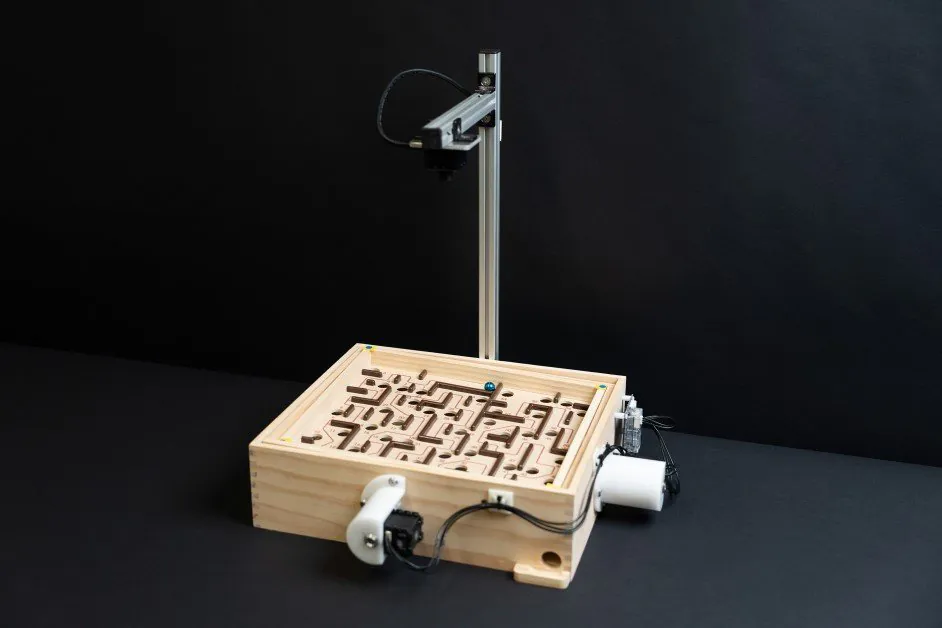
In a groundbreaking development, researchers at ETH Zurich have made a significant leap in artificial intelligence, demonstrating that AI can now outperform humans in tasks requiring physical skills. This breakthrough was showcased through their AI robot, CyberRunner, which mastered the labyrinth marble game, a test of dexterity and precision, in a remarkably short time.
The labyrinth game, traditionally a test of human motor skills and spatial reasoning, involves guiding a marble through a maze-like board to reach a goal while avoiding pitfalls. This seemingly simple game demands considerable practice for humans to excel. However, CyberRunner, developed at ETH Zurich and detailed on its dedicated website, achieved this feat in an unprecedented manner.
Using advanced model-based reinforcement learning, CyberRunner demonstrates how AI can extend its prowess into the realm of physical interaction. This technique enables the AI to predict and plan actions by continuously learning from its environment. Equipped with a camera to observe the game and motors to control the board, the robot rapidly improved its gameplay through a process akin to human learning but at an accelerated pace.
Remarkably, CyberRunner completed its learning cycle in just over six hours, going through 1.2 million time steps at a control rate of 55 samples per second. This feat saw the AI surpass the record held by a highly skilled human player by an impressive margin of over 6%.
Interestingly, during its learning phase, CyberRunner even discovered shortcuts in the game, prompting the lead researchers, Thomas Bi and Prof. Raffaello D’Andrea, to intervene and guide the AI to avoid these paths.
This achievement by ETH Zurich researchers not only pushes the boundaries of AI in gaming but also signifies a major step forward in how AI can be applied to real-world physical tasks. The success of CyberRunner indicates a future where AI can undertake complex physical activities, potentially transforming various industries and everyday life.
This milestone in AI development marks a shift from virtual achievements, such as mastering chess or Go, to conquering physical challenges, blurring the lines between human and machine capabilities in the realm of physical skill and dexterity.
A preprint of the research paper is available on the project website. In addition, Bi and D’Andrea will open source the project and make it available on the website. Prof. Raffaello D’Andrea commented: “We believe that this is the ideal testbed for research in real-world machine learning and AI. Prior to CyberRunner, only organizations with large budgets and custom-made experimental infrastructure could perform research in this area. Now, for less than 200 dollars, anyone can engage in cutting-edge AI research. Furthermore, once thousands of CyberRunners are out in the real-world, it will be possible to engage in large-scale experiments, where learning happens in parallel, on a global scale. The ultimate in Citizen Science!”
DevSecOps — like its fraternal twin, DevOps — has been a process in play for several years now in software shops, intended to enable more collaborative and intelligent workflows. Now, AI is poised to add more juice to these efforts — but many are still skeptical about its implications.
Also: AI brings a lot more to the DevOps experience than meets the eye
These are some of the takeaways from a recent survey out of the SANS Institute, involving 363 IT executives and managers, which finds rising interest in adding AI or machine learning capabilities to DevSecOps workflows. Just over the past year, there has been a significant increase (16%) in the use of AI or data science to improve DevSecOps through investigation and experimentation — from 33% in 2022 to 49% in 2023.
While interest in applying AI to the software development lifecycle is on the rise, there is also healthy skepticism about going full-throttle when injecting AI into workflows. "A strong contingent of the respondents, approximately 30%, reported not using AI or data science capabilities at all," note the SANS authors, Ben Allen and Chris Edmundson. "This may reflect issues such as the rising level of concern surrounding data privacy and ownership of intellectual property."
DevSecOps, as defined in the report, "represents the intersection of software development (Dev), security (Sec), and operations (Ops) with the objective of automating, monitoring, and integrating security throughout all phases of the software development lifecycle." In other words, establish processes to build in security right at the start — the design phase — and see it through to deployment.
Ultimately, a well-functioning DevSecOps effort delivers "reduced time to fix security issues, less burdensome security processes, and increased ownership of application security," Allen and Edmundson state.
There has been an increase in pilot projects integrating security operations into both the "AI and machine learning ops" (19% fully or partially integrated) and "data science operations" (24%) categories. This is a "possible indication that organizations are performing threat modeling and risk assessments prior to incorporating AI capabilities into products," the authors state.
Also: Generative AI now requires developers to stretch cross-functionally. Here's why
Many organizations feel an urgent need for more qualified DevSecOps personnel — 38% report skills gaps in this area. "Because demand continues to outweigh supply in this area, there is a real need to spark more interest in this ever-changing field," the authors urge. "To cope with the scarcity of talent amid competitive pressures, organizations should further leverage proven DevSecOps practices and explore emerging technological capabilities."
Platform engineering, intended to streamline the flow of software from idea to implementation, also is gaining ground — fully or partially adopted by 27% of respondents. "As the developer self-service features inherent in a platform engineering practice mature, it will be essential to leverage the orchestration used to build, package, test, and deploy an application to incorporate security testing and tooling at key points along the path that has been laid out," Allen and Edmundson state. "A well-implemented software engineering platform, designed in close collaboration with security stakeholders, could likely meet an organization's application security orchestration and correlation objectives."
OpenAI has had a big year, leading the generative AI race with ChatGPT. The success of it means that all eyes are on the company to set the appropriate precedent for future AI developments, and OpenAI has taken one step forward with a new safety plan.
Also: With AI upgrade, Salesforce's Einstein Copilot will handle unstructured data
This week, OpenAI published the initial beta version of its Preparedness Framework, a safety plan delineating the different precautions the company has put in place to ensure the safety of its frontier AI models.
In the first element of the framework, the company commits to running consistent evaluations on its frontier models that push the models to their limits. OpenAI claims that these findings will help the company assess the risk of the models and measure the effectiveness of proposed mitigations.
The evaluations' findings will then be shown in risk "scorecards" for OpenAI's frontier models, continually updated to reflect risk thresholds, including cybersecurity, persuasion, model autonomy, and CBRN (chemical, biological, radiological, and nuclear threats), as seen in the image below.
The risk thresholds will be classified into four risk safety levels: low, medium, high, and critical. That score will then determine how the company should proceed with the model.
Models that earn a post-mitigation score of "medium" or below can be deployed, while only models with a post-mitigation score of "high" or below can be developed further, according to the post.
Also: AI adds new fuel to autonomous enterprises, but don't write off humans
OpenAI is also restructuring how the teams internally operate in making decisions.
A dedicated Preparedness team will drive technical work to evaluate the frontier model's capabilities, such as running evaluations and synthesizing reports. Then, a cross-functional Safety Advisory Group will review all the reports and send them to Leadership and the Board of Directors.
Lastly, leadership will remain in its position as the decision-maker; however, the Board of Directors will hold the right to reverse decisions.
This addition is particularly noteworthy because it follows the turmoil that ensued early last month when Sam Altman was briefly ousted by the Board of Directors, only to be promptly reinstated as CEO with a new board.
Other framework elements include developing a protocol for added safety and outside accountability, collaborating with external parties and internal teams to track real-world misuse, and pioneering new research in measuring how risk evolves as models scale, according to the release.
It may depend on the level of intelligence and the perception of the strength of that cage by the captors. The cage may be strong enough that without any unknown or unexpected event, it would hold up.
However, the heterogeneity of intelligence may result in forms [or messages] with which escapes can be made, without leaving the cage. These escapes, depending on the might and support, may end up reversing the status.
There are several cages for organisms across the world. Some domesticated, others not. When some domesticated organisms escape their cages, they may remain within the perimeter with no clear plan for what to do next other than to seek food and chill.
Though without causing harm, it is possible to recapture them, they are not the best examples of marooned intelligence. Throughout history, there have been several political groups that were on the mountainside, who went on to power, after many years.
Artificial intelligence is not humans, yes, but artificial intelligence is not also a dog. AI, for now, is free, it has no agency, desire or plans, it seems, but it is percolating enough that as advances are built into it, including with safety, it may hold a lot of data, which may be ripe for whatever spark, unknown.
Indeed, it may not suddenly develop agency or desire. It is also true that giving it similarity to humans, in language and knowledge texts, is not nothing. The world is still a hugely divided place, between groups of humans. The expectation of danger is in the form of humans, or with the kind of human agency. That presumption may be tested in the era of AI.
Some people say dogs can plan better than AI. Maybe. But dogs have no direct roles in the productivity centers of human affairs, neither are dogs beyond their immediate environments.
A dog has a better sense of smell—than humans, but a dog can hardly make complex inferences. The reasoning ability of a dog is limited. Its means of communication for its limited reasoning ability is also limited. Dogs can detect smells. Their ability to recognize—or understand—smell is however limited. They may often know there is a smell, but the memory to define what kind, what for or how dangerous, is slight. A dog, without a bath for a while, may smell. However, it may not mean much to it and its kind may not tell it. This means that an aspect of memory for recognition is steeper than the other aspect for detection, even though mind detection and recognition are divisions of interpretation.
Many humans have never seen a live human liver, but they know what it is, what it does, and its location. The consciousness for recognition sharpens the consciousness for self-awareness. AI has no liver, but it has data about the liver, better than any dog. If it could smell, it would be neater than many dogs, and would not attempt to ingest whatever randomly.
It is possible that LLMs would be another technology. However, the dynamic swerves of their answers, even with hallucinations, are markers to not just downplay that they would ever remain the same.
Generative AI signifies a pivotal shift in today’s technological landscape. It promises profound insights, streamlined operations, and assistance with data-driven decisions on an unprecedented scale. However, GenAI also brings forth ethical and regulatory considerations that require attention for modern businesses seeking to capitalize on the still-evolving technology. Register for the Enterprise Strategy Group’s upcoming GenAI Summit to engage with thought leaders as they navigate the intricate dilemmas, evolving regulatory landscape, and responsible AI practices that maximize the benefits of GenAI technology and mitigate inherent risks and biases.
Ransomware attacks show no signs of slowing down. This year marked a record-breaking year for ransomware attacks, as they surged 74% by the first three months of 2023. Organizations require not only a solid prevention plan, but they need established recovery solutions to ensure they bounce back from attacks that can cause irreparable economic and reputational damage. The newer and more treacherous modern threat landscape forces organizations to take a second look at cyber insurance and the security it can ensure against fallout from an attack. Join the upcoming Ransomware Preparedness: Strategies for a Secure Future summit to hear leading experts discuss actionable strategies to prevent ransomware attacks, mitigate damage, and select the best cyber insurance option for your organization.
Top Stories
LLMs: Can intelligence be caged? December 19, 2023 by David Stephen It may depend on the level of intelligence and the perception of the strength of that cage by the captors. The cage may be strong enough that without any unknown or unexpected event, it would hold up. However, the heterogeneity of intelligence may result in forms [or messages] with which escapes can be made, without leaving the cage.
Why FAIR data assets are essential to AI data management December 19, 2023 Alan Morrison One of the efforts our Dataworthy Collective will be ramping up in 2024 involves standardizing the building of logical knowledge graphs at the level of the document object. The goal is to make spreadsheets trustworthy, sharable and reusable on a standalone basis at web scale.
AI and Justice in a Brave New World: Part 3 – AI Governance December 17, 2023 by Bill Schmarzo In part 1 of the series “A Different AI Scenario: AI and Justice in a Brave New World,” I outlined some requirements for the role that AI would play in enforcing our laws and regulations in a more just and fair manner and what our human legislators must do to ensure that outcome.
In-Depth
How can data science and AI help HR in workforce development, evaluation, and retention? December 18, 2023 by John Lee There have been claims that artificial intelligence is bringing about increased productivity, accuracy, and a smarter workplace. In all of this excitement, it is difficult to differentiate between fact and fantasy. When it comes to the management of workforces, what is the truth there?
Data management implications of the AI Act December 18, 2023 by Alan Morrison Members of the European Parliament and the Council reached provisional agreement on the Artificial Intelligence Act on December 9th, 2023 after years of debate and discussion. The AI Act is broad in scope and is intended to protect public welfare, digital rights, democracy, and the rule of law from the dangers of AI.
Beyond LLMs and Trillion-Parameter Models December 15, 2023 by Vincent Granville These days, it is as if AI is just about GenAI (generative AI), LLMs (large language models) and very large models. It has eclipsed computer vision, voice AI and everything else. Part of the success of trillion-parameter models is that they are over-parametrized. That is, many different parameter combinations lead to good enough solutions.
Voice Search Revolution: Data-Driven SEO Strategies for Future Success December 14, 2023 by John Lee With the rise of voice search, how can businesses adapt their SEO strategies to optimize for conversational queries, backed by data-driven insights? Voice search is causing changes to occur in search engine optimization. Users are using more natural language and conversational queries with voice-activated devices.
DSC Weekly 12 December 2023 December 12, 2023 by Scott Thompson Read more of the top articles from the Data Science Central community.
Safe social media practices include not posting photos that showcase personal information such as license plate numbers, street names, or house numbers. But what if I told you that generative AI could still find a way to locate you — just from your photo's background?
Also: The best AI chatbots: ChatGPT and other noteworthy alternatives
As generative AI developments continue, new use cases are being identified. Now, graduate students at Stanford University have developed an application that can detect your location from a street view or even just an image.
The project, called Predicting Image Geolocations (PIGEON), can — in most cases — accurately determine a specific location simply by looking at the Google Street View of the location.
PIGEON can predict the country pictured with 92% accuracy, and it can pinpoint a location within 25 kilometers of the target location in over 40% of its guesses, according to the preprint paper.
To understand how impressive that is, PIGEON ranked within the top 0.01% of GeoGuessr players, the game in which users guess the location of a photo taken from a Google Street View of the location. That game served as the genesis for this project.
PIGEON also beat one of the world's best professional GeoGuessr players, Trevor Rainbolt, in a series of six matches, streamed online with more than 1.7 million views.
So how exactly does PIGEON work?
The students leveraged CLIP, a neural network developed by OpenAI that can connect text and images by training it on the names of visual categories to be recognized.
Then, inspired by GeoGuessr, PIGEON was trained on a dataset of 100,000 original, randomly sampled locations from GeoGuessr and a download set of four images to span an entire "panorama" in a given location, making a total of 400,000 images.
Compared to how many images other AI models are trained on, PIGEON's pales in comparison. For reference, OpenAI's popular image-generating model, DALL-E 2, is trained on hundreds of millions of images.
The students also worked on a separate model called PIGEOTTO, which was trained on over four million photos derived from Flickr and Wikipedia to identify a location from a single image as input.
PIGEOTTO's performance achieved impressive results on image geolocalization benchmarks, outperforming previous state-of-the-art results by up to 7.7% in city accuracy and 29.8% in country accuracy, according to the paper.
Also: Apple Maps vs. Google Maps: iPhone users are switching back, but which is better?
The paper addresses the ethical considerations associated with this model, including the benefits and risks. On one hand, image geolocalization has many positive use cases such as autonomous driving, visual investigations, and simply satisfying curiosity about where a photo was taken.
However, the negative implications include the most blatant violation of privacy. As a result, the students have decided to not release the model weights publicly and have only released the code for academic validation, according to the paper.
Microsoft Copilot gets a music creation feature via Suno integration Kyle Wiggers 10 hours
Microsoft Copilot, Microsoft’s AI-powered chatbot, can now compose songs thanks to an integration with gen AI music app Suno.
Users can enter prompts into Copilot like “Create a pop song about adventures with your family” and have Suno, via a plugin, bring their musical ideas to life. From a single sentence, Suno can generate complete songs — including lyrics, instrumentals and singing voices.
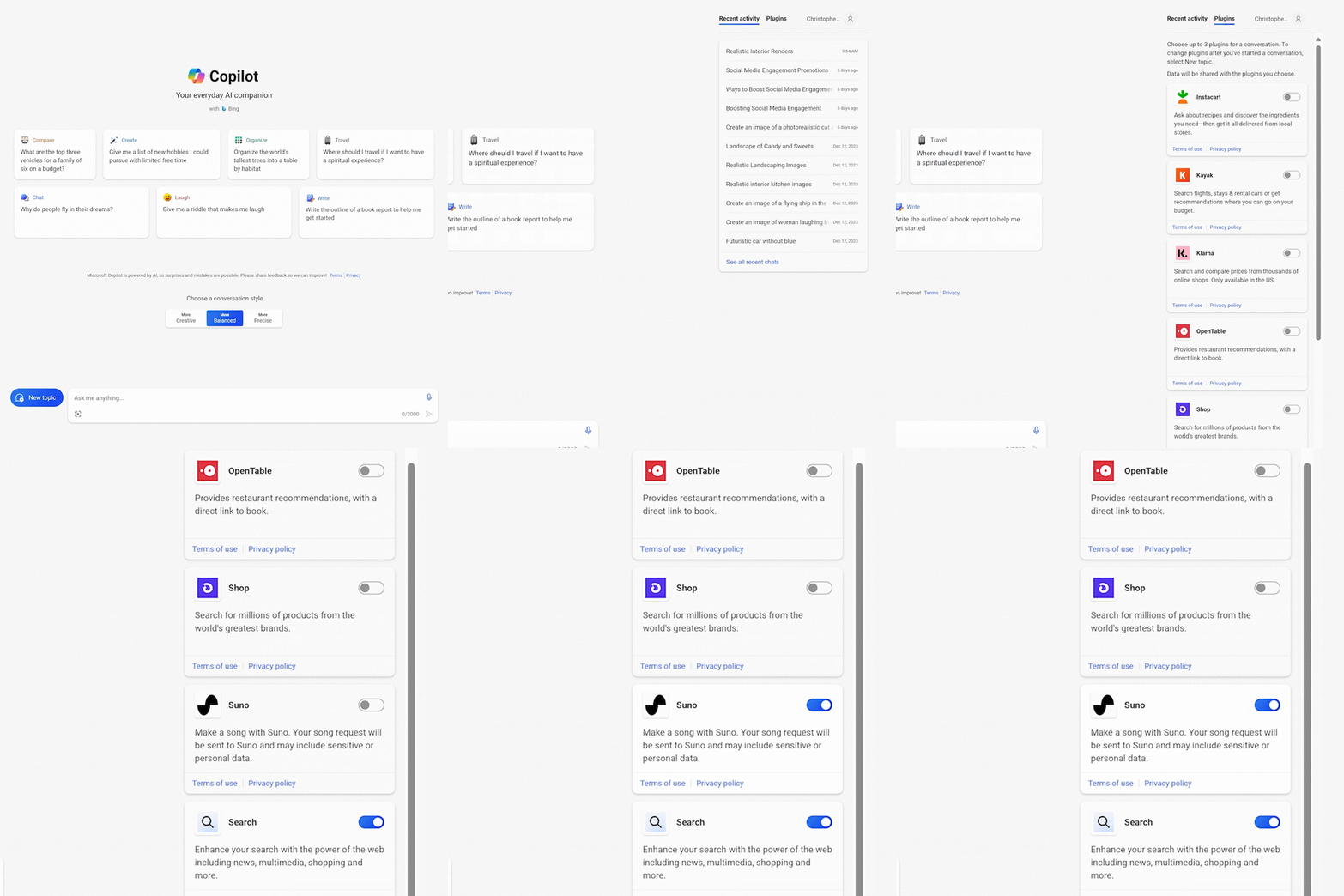
Copilot users can access the Suno integration by launching Microsoft Edge, visiting Copilot.Microsoft.com, logging in with their Microsoft account and enabling the Suno plugin or clicking on the Suno logo that says “Make music with Suno.”
“We believe that this partnership will open new horizons for creativity and fun, making music creation accessible to everyone,” reads a post published on the Microsoft Bing blog this morning. “This experience will begin rolling out to users starting today, ramping up in the coming weeks.”
Tech giants and startups alike are increasingly investing in gen AI-driven music creation tech. In November, Google AI lab DeepMind and YouTube partnered to release Lyria, a gen AI model for music, and Dream Track, a limited-access tool to build AI tunes in YouTube Shorts. Meta has published several of its experiments with AI music generation. Elsewhere, Stability AI and Riffusion have launched platforms and apps for creating songs and effects from prompts.
Image Credits: Microsoft
But many of the ethical and legal issues around AI-synthesized music have yet to be ironed out.
AI algorithms “learn” from existing music to produce similar effects, a fact with which not all artists — or gen AI users — are comfortable, especially in cases where artists don’t consent to having an AI algorithm train on their music and didn’t receive compensation for it. Stability AI’s own gen AI audio lead quit after saying that gen AI “exploits creators,” and the Grammys have banned fully AI-generated song from consideration for awards.
Many gen AI companies argue that fair use excuses them from having to pay artists whose works are public — even if they’re copyrighted. It’s uncharted legal territory, however.
For its part, Suno doesn’t reveal the source of its AI training data on its website — nor does it block users from entering prompts like “in the style of [artist],” unlike some other gen AI music tools.
As the usage rights issued get hashed out in the courts, homemade tracks that use gen AI to conjure familiar sounds that can be passed off as authentic — or at least close enough — have been going viral. Music labels have been quick to flag them to streaming partners, citing intellectual property concerns — and they’ve generally been victorious. But gen AI tool creators have simply migrated elsewhere, underground.
Clarity on the legal status of gen AI music may arrive soon — if not from court decisions. A newly introduced Senate bill would give artists, including musicians, recourse when their digital likenesses, including their musical styles, have been used without their permission.