LLMs are just like Toothpaste

The recent legal clash between the NYT and OpenAI about copyright in AI models has thrust the term “memorisation” or “plagiarisation” into the forefront. One such term which is more closely related to AI is ‘approximate retrieval’ which might be all that OpenAI needs to win the case.

“We can have conversations with our dogs, or even a potato,” said Subbarao Kambhampati, professor at ASU, in a podcast talking about ChatGPT and how information received from it can not exactly be repeated. “The biggest problem is that it should be factual.” He says it is like an AI toothpaste, which has all the human wisdom and knowledge within it and can be squeezed out in a convenient form, however needed.

LLMs are “not exactly repeating it but they are the kinds of things that you are likely to be talking about,” he added.

At the core of approximate retrieval lies the fact that LLMs don’t fit the mould of traditional databases, where precision and exact matches are paramount. Instead, they operate as n-gram models, injecting an element of unpredictability into the retrieval process. Rather than functioning as keys to a structured database, prompts serve as cues for the model to generate the next token based on context.

Kambhampati explained in a recent LinkedIn post that for the legal discourse surrounding the NYT lawsuit, this distinction becomes crucial. LLMs don’t promise exact retrieval, blurring the lines between flexibility and unpredictability. They exist in a space neither purely database nor traditional Information Retrieval (IR) engine, prompting a closer examination of their characteristics.

A trade off between better AI models and proper copyright attribution

The lawsuit itself revolves around the delicate issue of memorisation. While LLMs cannot guarantee verbatim reproduction, their extensive context window and robust network capacity open the door to potential memorisation, raising concerns about unintentional plagiarism. It was visible in the lawsuit where the prompter was able to generate exact sentences if prompted again and again.

To instil ‘thinking’ abilities into LLM, attempts to fine-tune LLMs on planning problems merely transformed tasks into memory-based retrieval, lacking proof of autonomous planning. This was also accompanied with increasing the context length of LLM, making the memorisation problem even worse. Prompting LLMs with hints also raised concerns about the reliability of human-in-the-loop methods.

All in all, commercial LLM creators such OpenAI would find themselves strategically navigating both ends of the approximate retrieval spectrum.

In legal discussions, they can emphasise the models’ inability to achieve exact retrieval, framing it as a defence against copyright infringement. Simultaneously, when marketing LLMs for search applications, they highlight the memorisation capabilities as features.

What’s the end goal?

The truth is, there’s no foolproof strategy to control these dual behaviours. Attempts to curb memorisation might compromise the “LLM’s masquerade as a search engine” leaving us in a perplexing conundrum of making the AI models better or caring about copyright.

For example, a user on X points out, “There is a dilemma particularly in news generation: if LLM is too creative, it generates fake news or at least inaccurate news; otherwise, copyright problem comes into play. There is a problem either way.”

Another user points out that the same is the case with AI image generators based on Diffusion models such as Midjourney, Stable Diffusion, and DALL-E, which also do not aim to generate the same images, but end up creating very similar outputs. The better these models are getting, the closer they are to what the user prompts, and not the inherent need to avoid copyright.

The emergence of the Retrieval-Augmented Generation (RAG) trend introduces an external IR component, attempting to blend with LLMs with a more structured approach to information retrieval. It’s a nuanced effort to strike a balance between the spontaneity of LLMs and the orderliness of traditional search methods which were mostly introduced to reduce hallucinations in these models.

But Kambhampati explains that this increases the chance of LLM such as GPT-4 retrieving the exact information from sources such as NYT, which are essentially added as a Vector Database on the models. That was the whole purpose of making RAG, but it is standing against the AI model creators when it comes to copyright.

“Because of the way n-gram models work, there is never any 100% guarantee that some stored record (be it a program or an NYT article) is retrieved unaltered. So why is NYT suing OpenAI,” asked Kambhampati. The case remains if the base training dataset actually included NYT articles, which it obviously did, and if OpenAI’s model created a dent at the publications revenue.

If LLM makers try to reduce “memorisation”, they will certainly see that the ability of LLMs to masquerade as search engines, “which is already quite questionable, degrade even further”, concluded Kambhampati.

The post LLMs are just like Toothpaste appeared first on Analytics India Magazine.

How This Pune-based AI Startup is Revolutionising Radiology Workflow

Recently, DeepTek.ai, a Pune-based medical imaging AI-based startup unveiled Augmento X-Ray, an AI solution for chest X-rays. This FDA-approved AI-powered tool aims to alleviate radiologist workload by up to 30-50 per cent and enhance chest X-ray reporting quality.

It achieves this by using deep learning algorithms to detect abnormalities in chest X-rays—identifying, categorising, and highlighting suspicious areas automatically, aiding clinicians in making precise interpretations.

Given the vast volume of chest X-rays annually, reaching 1.5 billion, the tool responds to the critical need for accurate and timely interpretations. It addresses the dearth of expertise in the country, with a population of 1.4 billion people and only 20,000 radiologists.

In an exclusive conversation with AIM, Ashutosh Pathak, Chief Technology Officer of DeepTek, provided significant insights about the company’s cutting-edge AI models in radiology, global expansion plans, recent FDA approvals, and strategic partnerships.

“We are developing AI models for various radiological scans like chest X-rays, MRI of the spine, and brain scans etc. Our AI deployment platform, Augmento also has features which enable it to integrate with deep tech models and other third-party AI models,” said Pathak.

The company boasts a team of 200, with a dedicated tech team and a panel of 70-80 radiologists. DeepTek’s co-founder, Dr. Amit Kharat is a radiologist with over 20 years of experience, bringing substantial domain expertise to the team.

DeepTek also boasts of a solid international presence with over 500 customers including in APAC countries and Japan. The company recently received FDA approval for two of its products, Augmento and a chest AI model, paving the way for expansion into the US market.

Efforts in India

The company’s Genki solution, a public health screening tool, has been extensively employed in India, particularly by the Chennai Municipal Corporation for over four years. “It is deployed in vans with portable X-ray machines and can swiftly detect tuberculosis or any chest abnormalities,” said Pathak, saying that this can be deployed in remote areas and without the immediate need for a radiologist’s presence.

The solution significantly enhances patient detection capabilities, ensuring a larger population coverage. Pathak also elaborated on their expansion plans, mentioning their collaboration with the Tamil Nadu state government, aiming to cover multiple districts and eventually the entire state.

Additionally, DeepTek is partnering with various state governments and city bodies in India, aligning with the country’s commitment to combat tuberculosis and eliminate it by 2025. It is closely working with institutions like the Clinton Health Access Initiative and the Bill & Melinda Gates Foundation, contributing their solutions to support India’s efforts in tuberculosis eradication.

Pathak also highlighted the uniqueness of their CXR Analyzer in India, emphasising its organ-based approach, a departure from typical pathology-specific AI models. This particular model, the only US FDA-approved one in India with an organised approach, covers a wide range of pathologies within chest X-rays, assisting radiologists in identifying and categorising abnormalities. Unlike models focused on one or two pathologies, this approach encompasses various abnormalities present in chest X-rays, benefiting radiologists by streamlining the identification process.

While the model aids in detecting, categorising, and localising abnormalities, it doesn’t replace the radiologist’s final diagnosis. Instead, it enhances their efficiency by helping them prioritise AI-flagged abnormalities, improving the turnaround time for critical cases.

Tech Stack & Partnerships

Pathak mentioned that their’s is a slew of proprietary models developed using the unit architecture, primarily programmed in Python and trained on platforms such as PyTorch and TensorFlow. Additionally, they use React for the front end and Java with MySQL for the back end.

“Augmento however, is predominantly a Java-based enterprise application with a React front-end, Java middleware using Spring Boot, and a MySQL backend,” Pathak said.

Deeptek benefits from its collaboration with NVIDIA, Microsoft Azure, Google Cloud, and AWS as their models are GPU-powered and cloud-agnostic meeting various customer needs.

He also reflected on the demand for large storage capacity because of the size of the files, saying, “We use bucket services, like Google Cloud Storage, AWS S3 and Azure Blob for storage because our application handles large DICOM files. Typically, an X-ray will be around 7 to 10 MB of file and CT MRI could be, 50 to 500 MP5.”

The company derives its training dataset comprising millions of radiology scans sourced from their teleradiology services catering to 300 to 400 customers in India. This dataset forms the basis for model validation, involving an impressive third-party validation process.

“Over 3,000 scans have been used in this for the software validation… done by 27 plus US Board Certified radiologists,” said Pathak. This extensive validation process spanned over 4 months and yielded accuracy exceeding 95% for detecting abnormalities and categorising them within their AI model.

What’s next?

Pathak outlined DeepTek’s visionary strategy, emphasising two key product lines they seek to advance in the market. “One is the Augmento as an AI deployment platform. And second is the AI models that we are developing with the US FDA, which enables us to foray into the US market.”

Simultaneously, they maintain their concentration on the APAC region, citing their recent deployment in Singapore and their intention to broaden their impact across Southeast Asia. Pathak elaborated on their ongoing pilot initiatives in Singapore with hospitals like Changi General Hospital and Singapore General Hospital, stating, “Post the pilot, about a year in, we look into bringing other hospitals on the platform.”

DeepTek’s strategies include close collaborations with renowned entities like Shimadzu and BJC Healthcare, aiming to extend their services to leading hospitals in Thailand, Malaysia, the Philippines, and beyond. They are also intensifying efforts in the US market through partnerships with NTT Data and Shimadzu, aiming to provide Augmento AI and Augmento X-ray solutions to leading hospitals in the United States.

The post How This Pune-based AI Startup is Revolutionising Radiology Workflow appeared first on Analytics India Magazine.

What is Retrieval Augmented Generation?

What is Retrieval Augmented Generation?

Large Language Models (LLMs) have contributed to advancing the domain of natural language processing (NLP), yet an existing gap persists in contextual understanding. LLMs can sometimes produce inaccurate or unreliable responses, a phenomenon known as “hallucinations.”

For instance, with ChatGPT, the occurrence of hallucinations is approximated to be around 15% to 20% around 80% of the time.

Retrieval Augmented Generation (RAG) is a powerful Artificial Intelligence (AI) framework designed to address the context gap by optimizing LLM’s output. RAG leverages the vast external knowledge through retrievals, enhancing LLMs’ ability to generate precise, accurate, and contextually rich responses.

Let's explore the significance of RAG within AI systems, unraveling its potential to revolutionize language understanding and generation.

What is Retrieval Augmented Generation (RAG)?

As a hybrid framework, RAG combines the strengths of generative and retrieval models. This combination taps into third-party knowledge sources to support internal representations and to generate more precise and reliable answers.

The architecture of RAG is distinctive, blending sequence-to-sequence (seq2seq) models with Dense Passage Retrieval (DPR) components. This fusion empowers the model to generate contextually relevant responses grounded in accurate information.

RAG establishes transparency with a robust mechanism for fact-checking and validation to ensure reliability and accuracy.

How Retrieval Augmented Generation Works?

In 2020, Meta introduced the RAG framework to extend LLMs beyond their training data. Like an open-book exam, RAG enables LLMs to leverage specialized knowledge for more precise responses by accessing real-world information in response to questions, rather than relying solely on memorized facts.

Original RAG Model by Meta (Image Source)

This innovative technique departs from a data-driven approach, incorporating knowledge-driven components, enhancing language models' accuracy, precision, and contextual understanding.

Additionally, RAG functions in three steps, enhancing the capabilities of language models.

Taxonomy of RAG Components

Core Components of RAG (Image Source)

  • Retrieval: Retrieval models find information connected to the user's prompt to enhance the language model's response. This involves matching the user's input with relevant documents, ensuring access to accurate and current information. Techniques like Dense Passage Retrieval (DPR) and cosine similarity contribute to effective retrieval in RAG and further refine findings by narrowing it down.
  • Augmentation: Following retrieval, the RAG model integrates user query with relevant retrieved data, employing prompt engineering techniques like key phrase extraction, etc. This step effectively communicates the information and context with the LLM, ensuring a comprehensive understanding for accurate output generation.
  • Generation: In this phase, the augmented information is decoded using a suitable model, such as a sequence-to-sequence, to produce the ultimate response. The generation step guarantees the model's output is coherent, accurate, and tailored according to the user’s prompt.

What are the Benefits of RAG?

RAG addresses critical challenges in NLP, such as mitigating inaccuracies, reducing reliance on static datasets, and enhancing contextual understanding for more refined and accurate language generation.

RAG’s innovative framework enhances the precision and reliability of generated content, improving the efficiency and adaptability of AI systems.

1. Reduced LLM Hallucinations

By integrating external knowledge sources during prompt generation, RAG ensures that responses are firmly grounded in accurate and contextually relevant information. Responses can also feature citations or references, empowering users to independently verify information. This approach significantly enhances the AI-generated content's reliability and diminishes hallucinations.

2. Up-to-date & Accurate Responses

RAG mitigates the time cutoff of training data or erroneous content by continuously retrieving real-time information. Developers can seamlessly integrate the latest research, statistics, or news directly into generative models. Moreover, it connects LLMs to live social media feeds, news sites, and dynamic information sources. This feature makes RAG an invaluable tool for applications demanding real-time and precise information.

3. Cost-efficiency

Chatbot development often involves utilizing foundation models that are API-accessible LLMs with broad training. Yet, retraining these FMs for domain-specific data incurs high computational and financial costs. RAG optimizes resource utilization and selectively fetches information as needed, reducing unnecessary computations and enhancing overall efficiency. This improves the economic viability of implementing RAG and contributes to the sustainability of AI systems.

4. Synthesized Information

RAG creates comprehensive and relevant responses by seamlessly blending retrieved knowledge with generative capabilities. This synthesis of diverse information sources enhances the depth of the model's understanding, offering more accurate outputs.

5. Ease of Training

RAG's user-friendly nature is manifested in its ease of training. Developers can fine-tune the model effortlessly, adapting it to specific domains or applications. This simplicity in training facilitates the seamless integration of RAG into various AI systems, making it a versatile and accessible solution for advancing language understanding and generation.

RAG’s ability to solve LLM hallucinations and data freshness problems makes it a crucial tool for businesses looking to enhance the accuracy and reliability of their AI systems.

Use Cases of RAG

RAG‘s adaptability offers transformative solutions with real-world impact, from knowledge engines to enhancing search capabilities.

1. Knowledge Engine

RAG can transform traditional language models into comprehensive knowledge engines for up-to-date and authentic content creation. It is especially valuable in scenarios where the latest information is required, such as in educational platforms, research environments, or information-intensive industries.

2. Search Augmentation

By integrating LLMs with search engines, enriching search results with LLM-generated replies improves the accuracy of responses to informational queries. This enhances the user experience and streamlines workflows, making it easier to access the necessary information for their tasks..

3. Text Summarization

RAG can generate concise and informative summaries of large volumes of text. Moreover, RAG saves users time and effort by enabling the development of precise and thorough text summaries by obtaining relevant data from third-party sources.

4. Question & Answer Chatbots

Integrating LLMs into chatbots transforms follow-up processes by enabling the automatic extraction of precise information from company documents and knowledge bases. This elevates the efficiency of chatbots in resolving customer queries accurately and promptly.

Future Prospects and Innovations in RAG

With an increasing focus on personalized responses, real-time information synthesis, and reduced dependency on constant retraining, RAG promises revolutionary developments in language models to facilitate dynamic and contextually aware AI interactions.

As RAG matures, its seamless integration into diverse applications with heightened accuracy offers users a refined and reliable interaction experience.

Visit Unite.ai for better insights into AI innovations and technology.

How Bangalore is Technologically Driving Uber Forward

The US-based ride hailing Uber has never been shy about its tech roots in Bangalore. The cab aggregator company has been complemented by its sprawling tech centre in the Indian Silicon Valley. To support migration between platforms, Uber has invested in reliability engineering tools through the Bangalore engineering hub. Apart from facilitating migration they continuously monitor their new system’s reliability post-migration.

One of the notable projects that has come out of the tech hub is Uber’s unified tech stack that allows the teams to combine different software tools so everything works smoothly together.

“Uber’s unified Mobility and Eats tech stacks benefit all Uber customers regardless of the line of business they engage with,” stated Madan Thangavelu, Uber’s Senior Director of Engineering in an exclusive interaction with AIM.

The Uber executive recalled that when the pandemic hit, Uber’s global mobility business was the largest contributor of trips on its tech stack. Things took a turn during the series of global lockdowns, where people were forced to stay indoors. Uber’s global delivery business surged in terms of the magnitude of orders being placed, and the team found themselves serving two equally large businesses with two distinct tech stacks.

The shared tech foundation was a two for one deal for the engineering team. “Innovations like reservation and upfront driver assignment seamlessly transcend both domains, requiring minimal tweaks for optimal functionality,” he noted. “Similarly, when we rolled out the tech to offer a job to multiple drivers to improve acceptance rate, we were able to roll this out to delivery services as well,” added the decade old Uber employee.

He further mentioned that the cost of operating a trip is a critical metric for the business. The Indian team has continued to make significant tech investments to reduce the cost of servers, database resources, and data storage resources. “This means that both businesses benefit from our reduced cost of operations, underlining our dedication to efficiency and sustainability,” Thangavelu explained.

The integration of two platforms is about maintaining consistency between old and new systems, he pointed out.

The Three-Year Tech Tale

Three years ago, merging the tech infrastructure for both Uber Mobility and Uber Eats wasn’t just a whim—it was a necessity. Many features, from tracking earners on their routes to verifying pickups, overlapped between the two. Recognising this, Thangavelu and his team streamline their operations and have invested in Indian tech centres to develop talent towards all functions of the business infrastructure.

Merging the extensive tech stacks was a journey on a three-fold path. First up was the ‘organisational setup’ to make sure that the teams handling delivery and rides were on the same page. The step helped them wrap their heads around earners, fulfilment, fares, pricing, and matching tech stacks posed challenges, said Thangavelu.

Then came the gradual ‘tech strategy development’ during which the fulfilment stack underwent a full rewrite. “We had to rethink our tech approach from the ground up, introducing Java alongside innovative in-house programming frameworks to encapsulate complex business logic seamlessly. The risky endeavour of rewrites showcased our commitment to high-quality engineering and demonstrated a smooth transition with no downtime,” the executive elaborated.

Lastly, it was time for the multi-site execution plan,large-scale redesigns necessitate collaboration. Our approach involved a central team rewriting 80% of the code, complemented by decentralised product teams contributing 20%. This strategy, coupled with a multi-site approach involving teams across the US, Canada and Bangalore, ensured resource availability and successful completion of these significant rewrites. Overcoming challenges in collaboration, project coordination, and team training were pivotal for success.

He explained that this involved multiple rounds of restructuring of teams to settle on the final organisational structure. During the same time, the tech company was in the headlines for laying off a chunk of its workforce, including engineering teams in the US stating ‘streamlining costs’ as the reason. But this was not the case in India.

Thangavelu noted that, despite initial restructuring, sub-groups still managed separate tech systems for each business. “We embarked on a phased tech overhaul, particularly revamping Uber’s fulfilment stack with Java and custom frameworks. While a core team tackled 80% of the coding, decentralised groups handled the rest, with collaboration spanning the US, Canada, and Bangalore. Overcoming coordination hurdles was key to our seamless transition and commitment to top-notch engineering,” he said.

Speaking Design

With the tech revamp, Uber’s re-envisioned its whole user experience. The company has shifted from the old one-trip approach to a model accommodating multiple trips within a given order, whether it’s riders or couriers. The engineering chief believes, “This design evolution holds immense potential as our product portfolio expands. It empowers us to seamlessly integrate tech features representing scenarios such as summoning multiple cars, orchestrating large HCV bus trips with concurrent riders, or optimising courier deliveries with multiple packages.”

He mentioned that some of the benefits are internally realised and will soon make its way into the customer-facing app for better ordering and tracking experience than what is available today.

The post How Bangalore is Technologically Driving Uber Forward appeared first on Analytics India Magazine.

Kerala to Transform Kochi into an AI Hub, Global AI Summit in 2024

Kerala is set to take a giant leap in the field of AI as the state gears up to host a Global AI Summit in Kochi in 2024. The announcement comes as part of a strategic move by IBM, with discussions held between Industries Minister P. Rajeeve, Industries Principal Secretary Suman Billa, and IBM India representatives on Tuesday.

An in-principle agreement has been reached during the talks, positioning Kochi as the potential country hub for AI-assisted technology for IBM. This move is expected to bring about a transformation in Kochi’s technological landscape, with the city poised to become a global center for AI.

The Global AI Summit, scheduled to take place in the middle of this year, will serve as a pivotal platform to showcase and discuss advancements in AI. Industries Minister P. Rajeeve expressed optimism about Kochi becoming the AI hub for IBM, stating that this would lead to a reverse migration trend, attracting top technology professionals from around the world.

“As the AI hub for IBM, Kochi will witness an influx of top-notch technology professionals, positioning the city on the global map of AI innovation,” Minister Rajeeve remarked after discussions with IBM India Senior Vice-President (Products) Dinesh Nirmal.

The proposed AI hub in Kochi will focus on generative AI, going beyond generic AI applications. IBM, a key player in the international AI arena, already provides AI services to major companies like Boeing. Minister Rajeeve disclosed ongoing efforts to secure the participation of Boeing in the upcoming AI summit.

The collaboration for the summit involves the State’s Department of Industry, along with key entities such as IT Parks, Kerala Startup Mission, Digital University, and APJ Abdul Kalam Technological University. Further amplifying Kochi’s potential as an AI hub, the second stage of expansion at Infopark is underway, bolstering facilities for IBM’s AI initiatives.

The Uttar Pradesh government has also announced plans to establish India’s inaugural AI city in Lucknow, aimed at nurturing and advancing the AI ecosystem. The initiative, led by UP Electronics Corporation Ltd, the project’s nodal agency, has issued an expression of interest (EoI) soliciting proposals for the design, development, and operation of this AI city.

The post Kerala to Transform Kochi into an AI Hub, Global AI Summit in 2024 appeared first on Analytics India Magazine.

JPMorgan Announces DocLLM for Multimodal Document Understanding

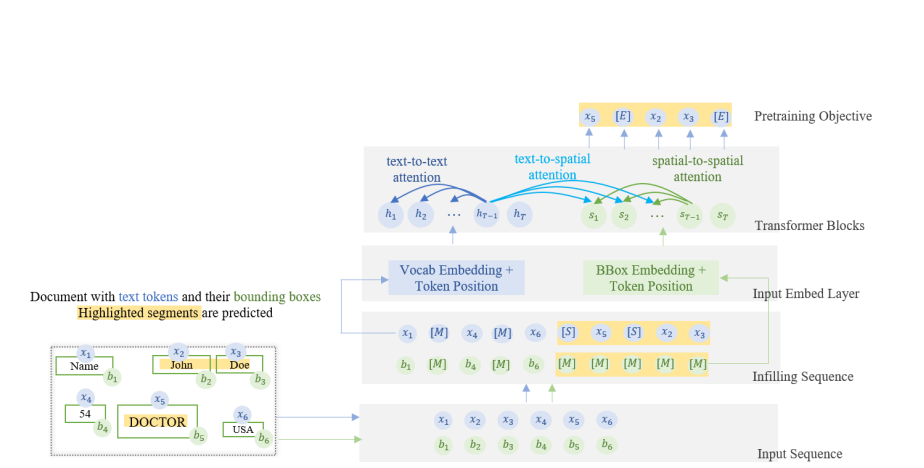
JPMorgan has introduced DocLLM, a generative language model designed for multimodal document understanding. DocLLM stands out as a lightweight extension to LLMs for analysing enterprise documents, spanning forms, invoices, reports, contracts that carry intricate semantics at the intersection of textual and spatial modalities.

Click here to read the paper.

Unlike existing multimodal LLMs, DocLLM strategically avoids expensive image encoders and focuses exclusively on bounding box information to incorporate spatial layout structures. The model introduces a disentangled spatial attention mechanism by decomposing the attention mechanism in classical transformers into a set of disentangled matrices.

DocLLM tackles irregular layouts and heterogeneous content in visual documents by employing a pre-training objective that focuses on learning to infill text segments.

The model features a disentangled spatial attention mechanism facilitating cross-alignment between text and layout modalities, an infilling pre-training objective adept at handling irregular layouts effectively.

For pre-training DocLLM, data was gathered from two primary sources: IIT-CDIP Test Collection 1.0 and DocBank. The former comprises over 5 million documents related to legal proceedings against the tobacco industry during the 1990s, while the latter consists of 500,000 documents, each featuring distinct layouts.

Extensive evaluation across various document intelligence tasks demonstrates DocLLM’s superiority over state-of-the-art LLMs. The model outperforms equivalent models on 14 out of 16 known datasets and exhibits robust generalisation to previously unseen datasets in 4 out of 5 settings.

Looking ahead, JPMorgan expresses its commitment to infusing vision into DocLLM in a lightweight manner, further enhancing its capabilities.

The post JPMorgan Announces DocLLM for Multimodal Document Understanding appeared first on Analytics India Magazine.
Hybrid AI and apps will be in focus in 2024, says Goldman Sachs CIO

Goldman Sachs tower

This year in artificial intelligence will be dominated by "hybrid" AI, and by the rise of applications running on top of large language models, according to a year-outlook interview disseminated by investment bank Goldman Sachs featuring its chief investment officer, Marco Argenti.

Also: Have 10 hours? IBM will train you in AI fundamentals — for free

"Hybrid AI is where you are using these larger models as the brain that interprets the prompt and what the user wants, or the orchestrator that kind of spells out tasks to a number of worker models specialized for a specific task," said Argenti, referring to "foundation" models such as ChatGPT.

Goldman Sachs CIO Marco Argenti

It will be too expensive for any companies other than the world's richest to build such large programs, contends Argenti. Therefore, most enterprises will content themselves with building smaller neural nets, either in their own data centers or in cloud computing services, trained on their proprietary data.

The idea of specialized models fine-tuned with corporate data aligns well with the current trend to string together functionality, such as with LangChain, an open-source framework built on top of generative AI.

Also: Bill Gates predicts a 'massive technology boom' from AI coming soon

"Most companies in 2024 are going to focus on the proof-of-concepts that are likely to show the highest return," said Argenti of the likely roll-out of hybrid AI.

In addition to hybrid structures, Argenti sees 2024 heralding a new class of third-party applications built on top of the foundation models.

"If you think of those [foundation models] as operating systems or platforms, there's a whole world of applications that haven't really emerged yet around those models," said Argenti.

"There's a great opportunity for capital to move towards the application layer, the toolset layer. I think we will see that shift happening, most likely as early as next year."

Also: Microsoft's GitHub Copilot pursues the absolute 'time to value' of AI in programming

The need to coordinate security across different parties is a large issue, Argenti emphasized.

"Looking ahead, it will be important to continue to foster an environment that encourages collaboration between players, encourages open sourcing of the models when appropriate, and develops appropriate principle-based rules designed to help manage potential risks including bias, discrimination, safety-and-soundness, and privacy," said Argenti. "This will allow the technology to move forward so that the US will continue to be a leader in the development of AI."

Artificial Intelligence

5 ways ChatGPT can save you time in the new year

surreal, colorful clocks

It's officially the new year, which likely means you are looking for new ways to optimize your everyday life. Lucky for you, one free, very capable tool is here to help — ChatGPT.

Also: The best AI chatbots now

Although ChatGPT has made headlines because of its advanced coding, writing, and chatting capabilities, it can also help with simpler everyday tasks. You don't have to be a tech wiz to harness the power of ChatGPT in your everyday life.

ChatGPT can improve your productivity and solve real-world problems in many ways, and we rounded up some of the highlights to get you started.

1. Draft emails

Drafting emails can be a tedious, time-consuming task. Stringing together all the right words to get your message across while still using the right tone and corporate jargon is harder than it looks, especially if you are on a time crunch or trying to declutter your crowded inbox. ChatGPT can help.

Also: My 5 favorite AI tools for work

As a sample prompt, I entered the text: "Help me draft an email to my boss letting her know that I have a doctor's appointment today." Within seconds, the chatbot outputted an email template that was perfectly suitable for the situation.The more information you include in your prompt, the more tailored ChatGPT's letter will be. All you have to do is copy and paste what it outputs into your email, tweak it to your liking, and hit send.

2. Prepare for a big task

Experiencing nerves or jitters before a big task is a normal part of the human experience. Sometimes, a good pep talk or game plan can help you stay focused and zero in on the task at hand. Instead of asking your colleagues, family, or even Google for the perfect pre-event strategy, you can ask ChatGPT.

Also: How to get a shareable link to a ChatGPT conversation

As an example, I asked ChatGPT: "I have a big presentation ahead, can you give me some motivation?" As a result, I got a five-step action plan to succeed. The advice was relevant, insightful, encouraging, and, most importantly, helpful. It not only hyped me up but also provided me with feasible things I could do at the moment to ensure success.

You could, of course, tailor the prompt to be as motivational or helpful as you'd like. For example, if you want a more specific, less motivational plan, you can include as much detail as you'd like in your ChatGPT prompt. For example, you can say, "I am about to write an essay; help me compose an outline."

3. Compose lists

As someone who loves lists, this feature is a game-changer. Lists are such an easy way to get organized and ensure you don't forget anything. However, making lists can be time-consuming to write and can require background research. Now ChatGPT can do that for you.

For example, when I go on vacation, instead of writing my own packing list from scratch, I ask ChatGPT to write it for me, and I can ask it to tailor it to the destination I am going to.

Also: How to use ChatGPT to plan a vacation

For the sample prompt in this article, I asked ChatGPT: "Can you make me a grocery list with basic groceries?" Within seconds, I had a 15-item list with kitchen essentials that made a great baseline. After getting my list, I could easily copy and paste it into my notes and tailor it to my liking.

If you are making a specific meal, you could even ask ChatGPT to include the ingredients for that meal in the list by saying something like, "I am making baked ziti tonight. Can you add those ingredients to the list?" The possibilities for these kinds of lists are endless.

4. Help with social media strategy

Whether you are creating content for a personal or professional account, you could benefit from asking ChatGPT to help you come up with captions. Finding a caption that is short and trendy but that also applies to your picture can be challenging, especially for content that isn't particularly descriptive, such as selfies. You can feed a prompt into ChatGPT with as much detail as you'd like about your photo for it to generate the perfect caption.

Also: Generative AI filled us with wonder in 2023 — but all magic comes with a price

I kept my prompt simple and said: "I am going to post a selfie on Instagram; can you help me come up with a caption?" ChatGPT generated eight caption alternatives, which were all fun, trendy, concise, and even included emojis.

ChatGPT can also take it a step further and help you by brainstorming a campaign and even planning posts for you in detail. For example, you could say, "Can you help me plan the next nine grid posts for my Instagram?" Then ChatGPT will ask you more specifics about your account to give you a detailed plan.

5. Make a custom workout plan for you

One of the most popular New Year's resolutions is hitting the gym or working out. If you find yourself in the same boat but need a little help getting started, ChatGPT can create a workout plan tailored to your specific needs with a single prompt. All you have to do is tell ChatGPT as much detail about what you are looking for in a workout as you'd like, and it will generate a plan for you in seconds.

Also: I tested the Whoop 4.0 band with its ChatGPT-like fitness coach, and it blew me away

For this example, I told ChatGPT I wanted treadmill workouts to improve my running stamina, and it generated a list of five different workouts I could try, as seen in the photo above. The bot even includes advice for you to get your desired results, such as warming up and increasing workouts gradually.

…but don't forget!

What chatbots like ChatGPT are doing is taking a vast amount of content from all across the internet and then trying to shape that information into something that could answer the question you are asking.

Also: The promise and peril of AI at work in 2024, according to Deloitte's Tech Trends report

These bots don't know if what they are producing is accurate and we have little way of knowing where the information has come from. There are plenty of examples of these bots providing incorrect information or simply making it up to fill the gaps.

This means you should not rely on what these bots tell you without doing your own due diligence, too — just as you would with a standard (old-fashioned?) web search.

DSC Weekly 2 January 2024

Announcements

  • Generative AI signifies a pivotal shift in today’s technological landscape. It promises profound insights, streamlined operations, and assistance with data-driven decisions on an unprecedented scale. However, GenAI also brings forth ethical and regulatory considerations that require attention for modern businesses seeking to capitalize on the still-evolving technology. Register for the Enterprise Strategy Group’s upcoming GenAI Summit​ to engage with thought leaders as they navigate the intricate dilemmas, evolving regulatory landscape, and responsible AI practices that maximize the benefits of GenAI technology and mitigate inherent risks and biases.​
  • Ransomware attacks show no signs of slowing down. This year marked a record-breaking year for ransomware attacks, as they surged 74% by the first three months of 2023. Organizations require not only a solid prevention plan, but they need established recovery solutions to ensure they bounce back from attacks that can cause irreparable economic and reputational damage. The newer and more treacherous modern threat landscape forces organizations to take a second look at cyber insurance and the security it can ensure against fallout from an attack. Join the upcoming Ransomware Preparedness: Strategies for a Secure Future summit to hear leading experts discuss actionable strategies to prevent ransomware attacks, mitigate damage, and select the best cyber insurance option for your organization.

Top Stories

  • Eight Techniques for Powering ChatGPT Content
    December 22, 2023
    by Kurt Cagle
    ChatGPT has established itself as a true powerhouse for a broad range of applications, though there are several techniques that you can use to make it indispensable for your workflow. In this article, I will dig into these and hopefully give you ideas about how you can extend its reach and power.
  • Operational, real-time edge analytics for developers
    January 1, 2024
    by Alan Morrison
    Interview podcast with Rahul Pradhan, VP of Product and Strategy at Couchbase Operational and analytics systems are coming together with the help of new database management innovations. A recent step from Couchbase’s point of view has been to bring a real-time analytics capability to the operational applications that developers use Couchbase to create.
  • GenAI: Synthesizing DNA Sequences with LLM Techniques
    January 1, 2024
    by Vincent Granville
    When people talk about Large Language Models, the most common topics are text summarization, text generation, and answering prompts with GPT. Yet, this is just the tip of the iceberg. What if the language has an unusual alphabet? In this article, I discuss creating meaningful, synthetic sentences — very long ones with millions of letters — in a peculiar language.
Education_DSC_160x600-2

In-Depth

  • Mastering IoT Data Management for Business Success
    January 2, 2024
    by Ovais Naseem
    In today’s tech-driven landscape, the proliferation of Internet of Things (IoT) devices has revolutionized how businesses collect and utilize data. The interconnectivity of these devices has created an unprecedented influx of data, requiring efficient management strategies to harness its full potential.
  • Generative AI business model disruption: The NYT lawsuit posturing
    January 2, 2024
    by Ajit Jaokar
    2024 will be all about changing business models due to the massive disruption of generative AI. There will be new winners and many losers. The incumbents especially have a lot to lose – but permissionless innovation has always been the hallmark of American innovation.
  • GenAI: Beware the Productivity Trap; It’s About Economics – Part 1
    December 31, 2023
    by Bill Schmarzo
    It’s not technology advancements that are the game-changers. The game-changer is how those technological advancements are leveraged to economically transform industries and society. 2024 is going to be a big year, especially in the realm of Artificial Intelligence (AI).
  • The Best Kept Secret About LLMs
    December 24, 2023
    by Vincent Granville
    GPT can be a great tool to write or summarize articles, and as a chatbot. But one of the most popular uses is to find information. In short, a better alternative to Google search. Yet, all the talk is about deep neural networks, transformers, and embeddings.
  • Data Monetization? Cue the Chief Data Monetization Officer
    December 23, 2023
    by Bill Schmarzo
    It’s the new mantra of many organizations. But what does “data monetization” really mean, how do you do it, and more importantly, who in the organization owns the job of “data monetization” job? The Chief Data Officer (CDO) role is a godsend in answering the data monetization challenge. They should be the catalyst in helping organizations to become more effective at leveraging data and analytics to power digital transformation.
  • Creating a More Fair, Just, and Prosperous Brave New World with AI Summary
    December 22, 2023
    by Bill Schmarzo
    As I completed this blog series, the European Union (EU) announced its AI Regulation Law. The European Union’s AI Regulation Act seeks to ensure AI’s ethical and safe deployment in the EU. Coming on the heels of the White House’s “Executive Order on the Safe, Secure, and Trustworthy Development and Use of Artificial Intelligence,” we should expect a steady stream of legislation designed to ensure that AI is being used to deliver meaningful, relevant, responsible, and ethical outcomes.
  • The challenges cloud migration and modernization solve for enterprises
    December 20, 2023
    by Senthilkumar Thirunavukarasu
    With legacy systems, traditional data storage, and integration methods phasing out for many organizations, businesses are rapidly transitioning to cloud-based data to improve operational workflow and ensure a trustworthy data foundation. Cloud migration and modernization resolve numerous challenges commonly faced by modern companies.

Microsoft’s Copilot AI app expands to iPhone, iPad — here’s what you can do with it

Microsoft's Copilot app for iPad

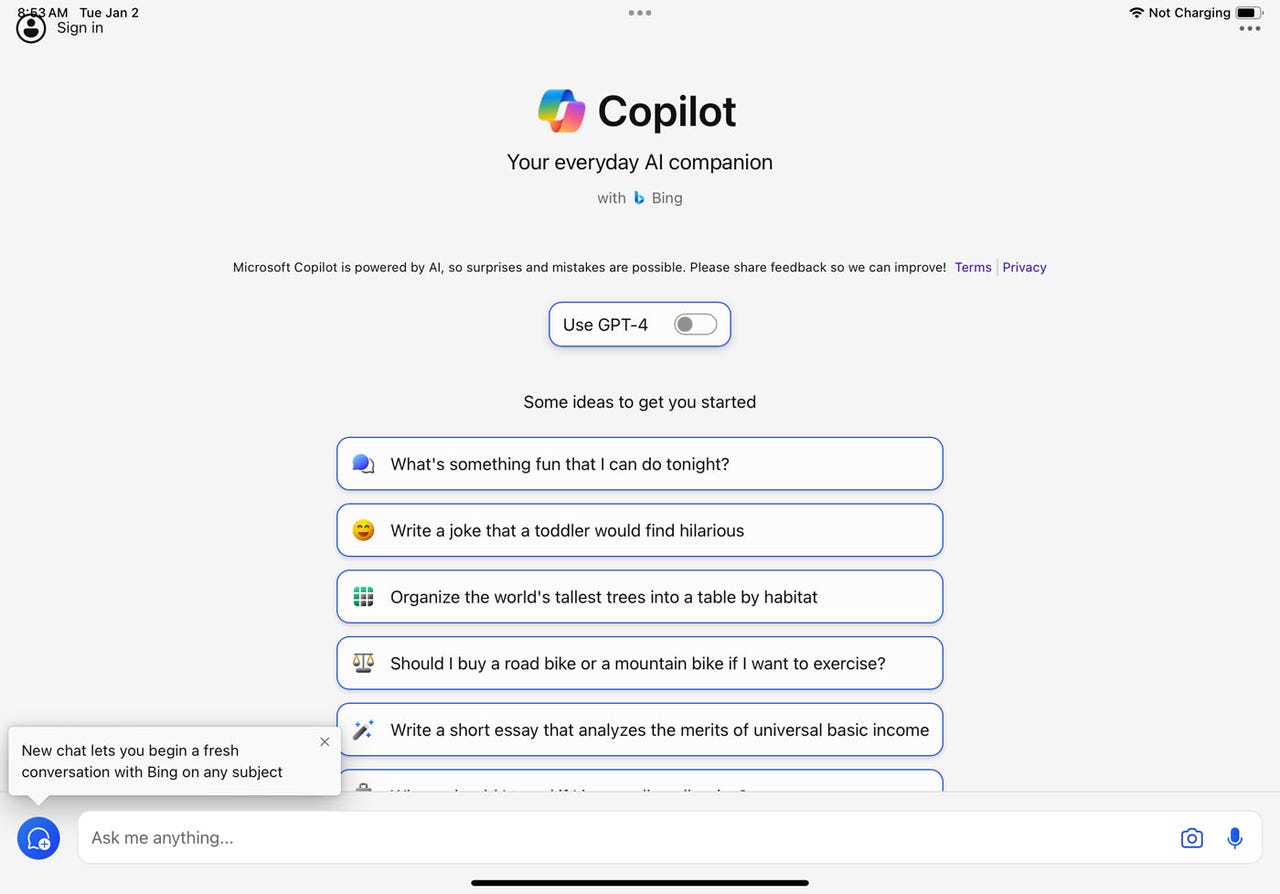
iPhone and iPad owners can now take Microsoft's Copilot app for an AI-infused ride. Popping up in Apple's App Store on December 29, the app was initially limited to Android users, appearing in Google Play on December 19. Capitalizing on the Copilot name, the app offers you a generative AI chatbot with the latest AI models, namely GPT-4 and DALL-E 3.

Also: How to use DALL-E 3 in ChatGPT

To download the app, head to the App Store and select the link for iPhone or iPad. After starting Copilot, you'll see the usual screen where you can start submitting requests or try sample questions to see how the app fares. Though you can use the app without an account, signing in with a Microsoft account lets you ask more questions and engage in longer conversations.

Type your question at the "Ask me anything" prompt or tap the microphone icon to speak your request. Copilot displays its response and speaks it as well. Tap the audio level icon to stop the narration before it ends. You can also upload a photo or other image and ask the app to analyze it.

Flip the switch for GPT-4 if you're seeking more reliable and more accurate responses. And with DALL-E 3 on board, you're able to ask Copilot to create artwork, photos, and other types of images based on your description. Plus, you can switch between Light and Dark modes based on your preference.

At the app's product page on the App Store, Microsoft touts some of the tasks you can accomplish with the app, such as:

  • Draft emails.
  • Compose stories or scripts.
  • Summarize complex texts.
  • Translate and proofread text.
  • Create travel itineraries.
  • Write and update resumes.

And with the DALL-E 3 image generator built in, Microsoft details some text-to-image ideas that you can use, including:

  • Create social media content.
  • Develop brand motifs.
  • Generate logo designs.
  • Create custom backgrounds.
  • Build and update a portfolio.
  • Create illustrations for books.
  • Visualize film and video storyboards.

Copilot joins Microsoft's Bing Chat app in providing an AI-capable program to run on your mobile device. But if Bing AI is already available for iPhone and Android users, why launch another AI-based mobile app?

Microsoft is likely just trying to expand the use of the Copilot branding. The company already offers Copilot for Windows, Copilot for Microsoft 365, Copilot for Azure, GitHub Copilot, and other products. The Bing Chat website was even recently rechristened as Copilot.

Also: What are Microsoft's different Copilots? Here's what they are and how you can use them

Plus, the Bing app tries to act as both AI chatbot and a traditional search engine, resulting in a somewhat cluttered layout. In contrast, Copilot serves as just an AI bot with a simpler and cleaner look and feel.

Artificial Intelligence