7 ways CPGs can win in 2024 with Generative AI

The hype of Generative AI is evident, and new applications and opportunities are discovered every day. In 2024, businesses that can experiment with AI and embed it into their processes will set the road towards new, exciting possibilities.

7 ways CPGs can win in 2024 with Generative AI
7

What you need to know about Gen AI in the CPG industry

2023 was the year of Generative AI, and 2024 will be no different. With the interest in this technology growing increasingly, businesses are experimenting and trying new ways to embed Gen AI in their processes, to stay ahead of the curve and be at the forefront of the revolution.

The CPG industry is leading the way: globally, Generative AI in CPG is expected to grow in value from USD 39.2 million in 2022 to USD 283.5 million by 2032, with a staggering CAGR of 22.5% in 10 years.

However, most companies still struggle to understand this technology and how to best implement it to create value and drive growth. While it is true that Generative AI requires specialized knowledge, skills, and resources and comes with challenges and risks, it remains one of the most promising factors for success across industries.

Here is a guide on how to employ Gen AI in CPG and the benefits it can bring.

1. Businesses will have access to more data for CPG Analytics

Data is at the center of today’s businesses. As noted by Forbes, in the era of big data, it’s even more crucial to access accurate, reliable data to generate insights. CPG Analytics on high-quality data has the power to guide decision-making and truly impact your business, but how do you obtain the right data? Unfortunately, it is easy to incur suboptimal data, which can lead to skewed outcomes and wrong decisions:

  • Missing data
  • Inaccurate data
  • Outdated data
  • Duplicate data
  • Unformatted data

Here is where Generative AI can help. Currently, CPG companies rely mainly on distributors and retailers to collect data, but the advent of Generative AI in CPG offers a new opportunity: AI can collect and analyze enormous amounts of online data and offer CPG insights. It can gather more data, simplify CPG Analytics, and ensure high quality by performing accurate data cleansing.

2. CPG AI opens the door to higher personalization

Personalization matters now more than ever, as it drives performance and better customer outcomes.

A McKinsey report found that fast-growing companies drive 40% more of their revenues from personalized products than slower-growing companies, and 76% of consumers get frustrated with a brand when they can’t find a customized experience.

How can your business leverage the power of personalization to drive growth? CPG AI is the answer, allowing consumers to generate personalized options easily and quickly. With Generative AI, tapping into the revenue stream of personalization becomes easier than ever.

3. Improve marketing strategy with personalization

Personalization applies to marketing, too. Statista considers personalization marketing one of the most indispensable strategies worldwide for B2C and B2B, able to prove much more effective than conventional marketing. In particular, 51% of marketers believe improved customer experience to be the number 1 benefit of personalization marketing.

Generative AI is extremely valuable in personalization marketing, making writing content and interacting with consumers online easier and quicker. Today’s consumers expect content, ads, and interactions to be highly personalized to their industry, segment, and role, and companies can use Gen AI to analyze their target audience and create the perfect marketing content.

However, most businesses already using Generative AI Services in CPG for their marketing strategy don’t delegate the whole workload to Artificial Intelligence. During a March 2023 survey among marketers worldwide, only 4% of respondents said they do not edit AI-generated content before publishing it. The majority (53%) make minor edits, 39% make major edits, and 5% change the content completely.[1]

So, what are companies supposed to do with AI-generated personalized marketing content? The key seems to be always supervising the work and adding some human touch.

4. Smarter factories and improved production

Generative AI in CPG has the power to transform the production side of the industry as well. Plants and factories are becoming more automated, leading to big technological improvements that allow businesses to gather more data, have everything under control, and save time and resources.

In the coming years, we are likely to see a proliferation of high-tech smart factories leveraging the power of artificial intelligence to achieve levels of efficiency unthinkable before.

Unleashing the Boundless Power of Generative AI

5 Critical Hurdles with Innovative Technology Architectures

Download Generative AI POV

5. Generative AI as a Service for Product development

Product development is an area that can benefit greatly from Gen AI, especially in the CPG industry. Fueled by consumer data (like feedback, user behavior data, and market response) and CPG Analytics, it can propel innovation and increase efficiency in the design process.

Here are some ways Gen AI can boost product development:

  • Collecting consumers’ feedback and data
  • Identify prototype strengths and weaknesses through CPG Analytics
  • Identify room for improvement
  • Allow real-time feedback loops
  • Accelerate idea generation
  • Automate and streamline design iterations
  • Optimize resources

Generative AI can be applied for new product development and improvements in existing products. Embracing an AI-driven approach such as with GenAI Consulting supports businesses in navigating the difficult landscape of fast prototyping by fostering innovation and reducing time-to-market; ultimately, it can be the vector of success in an increasingly complex and competitive scenario.

6. Anticipating the market: how to switch from reactive to predictive

Businesses already use data analysis to anticipate market aspects (like demand), but AI-powered CPG Analytics can dramatically boost their predictive capabilities. Generative AI can provide deeper, more accurate insights to anticipate trends and even create them; it can improve inventory management and logistics, optimize resources, and lead to more strategic marketing campaigns.

Companies can significantly enhance their data analytics capabilities by adopting AI, making the difference between merely surviving and thriving.

7. Improve customer experience with Generative AI

Generative AI as a Service can be applied to one of today’s most important aspects of business: customer experience.

97% of consumers say customer service interaction impacts whether they stay loyal to a brand.

Seeing that customer experience is such an important factor, how do you enhance it and make it a value driver? The answer, once again, can be Generative AI. Unleash CPG Growth with Generative AI- Download GenAI Primer.

The CX (customer experience) landscape is changing rapidly to adapt to macroeconomic shifts and evolving consumer behavior and preferences. In this scenario, companies must transition to dynamic contact center operations fueled by Artificial Intelligence. Early adopters are already getting positive results by embedding GeneAI into their customer service, completely transforming the customer experience. Read more about Generative AI Customer Use Cases.

CPG AI applications are several and of high impact and have the potential to transform your business and be the differentiating factor between failure and success. There is plenty of room for Generative AI in the CPG industry, and early adopters are gaining an important competitive advantage in a winner-takes-all market. Businesses are now at a crossroads: leap AI and digitalization, or be left behind?

Are Indian IT Companies Producing AI Coolies Instead of AI Engineers?

Indian IT giants TCS, Infosys, HCLTech, and Wipro recently released their quarterly results and many of them expressed low confidence regarding generative AI and did not disclose the exact revenue figures contributed by generative AI.

Though the Indian IT companies haven’t made any big announcements about the impact of generative AI on the revenue growth, they are quite vocal about integrating generative AI into their operations. Their biggest investment is in training their own employees in the field of GenAI.

How are Indian IT companies training their employees?

Last year, Infosys announced that it plans to train 100,000 employees, focusing on theoretical and practical aspects through partnerships with GenAI leaders. TCS is training over 150,000 employees, emphasising foundational skills in collaboration with tech giants.

“We have over 100,000 GenAI-ready employees today, and we are now investing in deepening their expertise further with the exciting new technology,” said TCS’ executive vice president and global head – human resource, Milind Lakkad, at the recent earnings call.

While the numbers are impressive, questions arise about the depth of skills, specialisation options, and real-world application integration. This trend reflects the industry-wide race to build a skilled GenAI workforce, underscoring the growing demand for expertise in this transformative field.

Through internal training initiatives such as the Infosys Learning Hub and specialised Skill Academies, Infosys trains its employees to delve into a wealth of AI-related courses, covering fundamental concepts to advanced applications. Mentorship programs further enhance learning through personalised guidance from seasoned AI practitioners.

Leveraging technology-enabled learning, Infosys integrates AI simulation platforms and gamified courses, ensuring practical skill development in controlled environments. Meanwhile, TCS, HCL Tech, and Wipro also employ distinct methods to train their employees, like Infosys.

TCS prioritises innovation with research centres, whereas HCL Tech bridges academic-industry gaps, and Wipro emphasises domain-specific training via HOLMES. Despite differences, all invest in job-specific training and leadership development.

The distinct focus areas of these IT giants contribute to a comprehensive landscape where generative AI is harnessed for diverse applications, from enhancing customer experiences to automating compliance tasks.

Despite employing a substantial workforce compared to other major tech giants, they underutilise their highly-trained employees, limiting the potential for innovations. Although they are using generative AI to train their employees, they are not being trained for the actual purpose of what AI engineers serve.

Also read: What to expect from Indian IT in 2024?

Are they making use of their workforce in the right way?

OpenAI, Meta, and Google are the foundation model builders. OpenAI, despite its smaller engineering force, has contributed a lot to research and open-source segments. These companies develop models and serve as product and model sellers, offering APIs and applications for developers to integrate and customise.

On the other hand, Infosys, HCL, TCS and Wipro stand out as genAI application developers and service providers. They use these foundational models to produce client solutions, deploying generative AI in diverse applications.

*Trained on generative AI means – They know how the foundational model like open AI works and develop custom applications by using it. In short Infy and TCS offer services using GenAI
Open AI has 1000 engineers who created foundational model. They are builders of foundational…

— Ishwar Singh (@IshwarBagga) January 12, 2024

Indian tech giants boast of large and experienced workforces with a proven track record of managing complex projects but still struggle with ambitious projects and limited data access. Although the workforce is huge for these Indian IT companies compared to other big tech companies, the question arises as to why they are not using this workforce for a better solution.

To navigate the evolving tech landscape and compete with Big Tech, Indian IT giants like Infosys, TCS, HCL Tech, and Wipro must undergo a transformative shift in mindset. Moving beyond cost optimisation, they should position themselves as innovation partners, deeply understanding clients’ industries and investing in emerging technologies.

While directing the delicate balance between quantity and quality in India’s AI landscape, addressing the current skill gap and aligning the focus towards innovation is imperative. These AI engineers find themselves shouldering the weight of AI services rather than being able to focus on generating innovative AI solutions.

Although India’s extensive pool of AI engineers, notably within companies like TCS and Infosys, offers a strategic advantage in workforce size, there is a pressing need to elevate the skillset and cultivate a culture of innovation.

The post Are Indian IT Companies Producing AI Coolies Instead of AI Engineers? appeared first on Analytics India Magazine.

Accenture Announce $1 Bn Annual Investment in GenAI Training at Davos 2024

At the World Economic Forum in Davos, Julie Sweet, Accenture’s chief, announced that the company allocates an annual budget of $1 billion for training its employees in generative AI. According to Sweet, the technology, though at a nascent stage, is moving fast. GenAI is not a fad; rather, it is developing at a rate ten times faster than that of earlier major advances.

Sweet said that in order to better basic education, collaboration with governments is necessary. She also said, “It’s not going to help now, but we need to think 10-20-30 years ahead.” According to her, leadership is the single most important factor that decides whether the business or government successfully uses GenAI or not.

She also said that “you actually have to understand it at a very deep level because it is not that there are millions of use-cases…. but you have to operationalise it.”

Similarly, Arvind Krishna, chairman and CEO of IBM, who was sitting alongside Sweet in the panel, claimed that Gen AI is a rapidly developing technology that is advancing more quickly than earlier major ones.

In order to apply AI, Krishna underlined the significance of reskilling talent because it will create new employment and solve numerous issues. To secure the success of AI, he also emphasised the necessity for businesses and governments to collaborate on reskilling.

Moreover, he suggested controlling use-cases rather than the technology itself. Additionally, he forecast that before the end of the decade, AI in its current form will produce $4 trillion in yearly productivity.

The post Accenture Announce $1 Bn Annual Investment in GenAI Training at Davos 2024 appeared first on Analytics India Magazine.

Read This Before Making a Career Switch to Data Science

Read This Before Making a Career Switch to Data Science
Image by Author

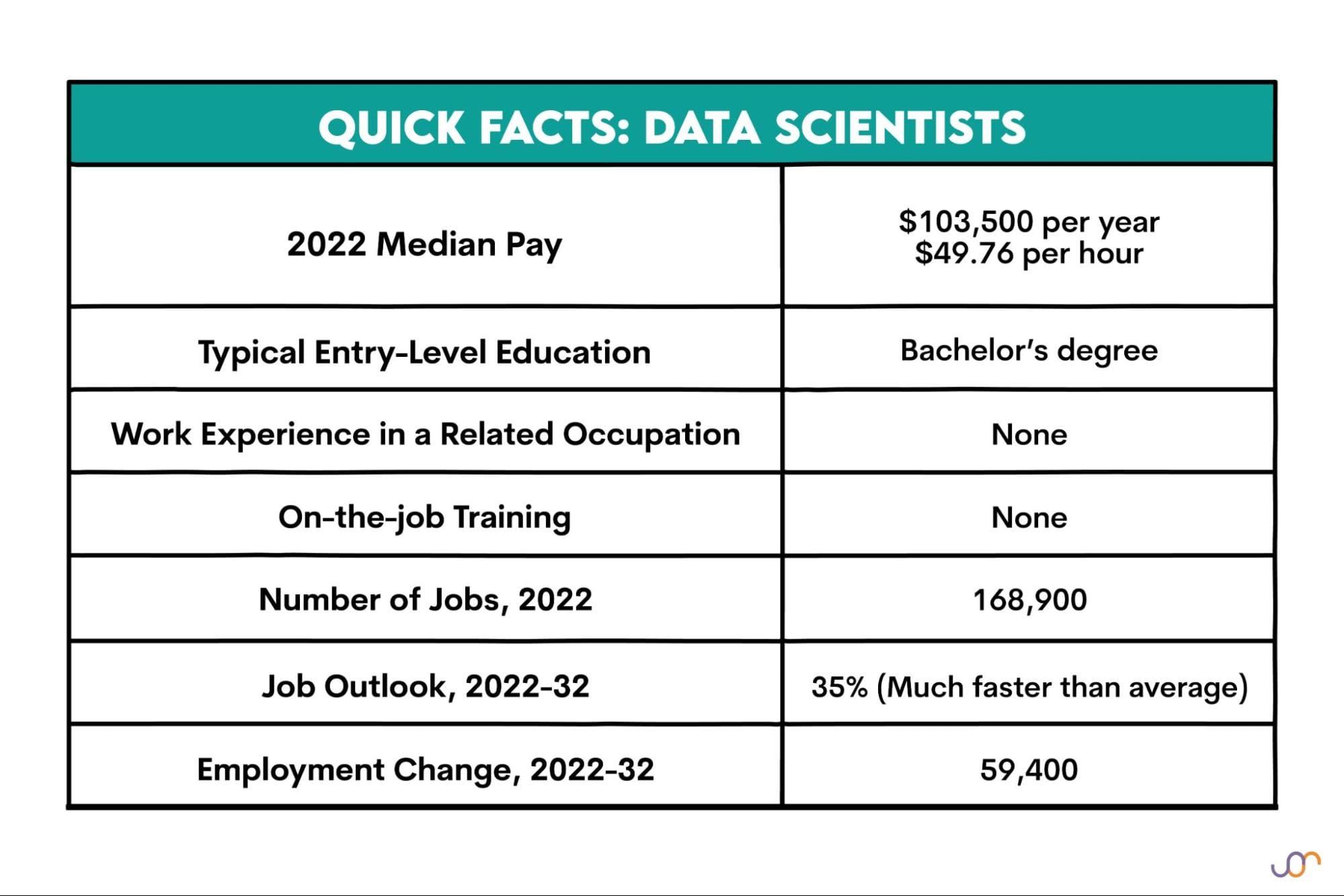
You’re reading this because you’re thinking about joining the ranks of aspiring data scientists. And who can blame you? Data science is a growing field, even a decade after its now-infamous “sexiest job” accolade from the Harvard Business Review. The US Bureau of Labor Statistics currently predicts the employment rate for data scientists will grow by 35 percent from 2022 to 2032. Compare that to the average job growth rate, which is just 5 percent.

It has other things going for it:

  • It’s well-paid (again, the BLS found a median salary of $103k in 2022)
  • It comes with a high quality of life (higher than average job-related happiness according to Career Explorer)
  • There is job security despite the recent round of layoffs – because there’s so much demand for the role

So there are plenty of reasons to want to break into the field.

Read This Before Making a Career Switch to Data Science
Source: https://www.bls.gov/ooh/math/data-scientists.html

But data science is a very broad field, with lots of different job titles and skill sets you need to know before you get started. This article will guide you through the various directions you can go, and what you need to know for each one to get into data science.

How to Make the Move to a Data Science Career

To make a successful transition into a data science career, you'll need to follow a structured approach:

  • Assess your data science skills and identify gaps.
  • Get hands-on experience in the areas where you are weak.
  • Network. Join data science groups, attend meetups, and contribute to forums.

Let’s dive deeper.

Assess Your Starting Position

What do you already know and how can it be applied in data science? Think about: any programming knowledge, statistical skills, or data analysis experience you have.

Next, identify the gaps in your skills, particularly those essential for data science. SQL is a real must, but Python or R programming, advanced statistics, machine learning, and data visualization are also extremely beneficial.

Once you've pinpointed these gaps, seek relevant education or training to fill them. This could be through online courses, university programs, bootcamps, or self-study, with a focus on practical, hands-on learning.

Hands-on Experience

You shouldn’t just watch videos and read blog posts. Hands-on experience is crucial in data science. Engage in projects that allow you to apply your new skills in real-world scenarios. This could be personal projects, contributions to open-source platforms, or participation in data competitions like those on Kaggle.

If you have some basic starting skills, you might want to consider seeking internships or freelance work to gain industry experience.

Most importantly, document all your projects and experiences in a portfolio, highlighting your problem-solving process, the techniques you used, and the impact of your work.

Network

Breaking into data science often comes down to who you know, in addition to what you know. Find mentors, participate in meetups, conferences, and workshops to learn about new trends, and engage in online data science communities like Stack Overflow, GitHub, or Reddit. These platforms allow you to learn from others, share your knowledge, and get noticed within the data science community.

Every Data Science Role Needs…

If you want to become a data scientist from scratch, it makes sense to think of the skills you’ll need to develop as a tree. There are “trunk” skills that are common to every data science job, and then each specialty has “branch” skills that continue branching off into more and more specialized roles.

There are three main skills every data scientist needs, no matter what direction they go in:

Data Manipulation/Wrangling Using SQL

Data science basically boils down to handling and organizing large datasets. To do that, you need to know SQL. It is the essential tool for data manipulation and wrangling.

Read This Before Making a Career Switch to Data Science
Image by Author

Soft Skills

Data science doesn’t happen in a vacuum. You need to play nice with others, which means buffing up your soft skills. Being able to communicate complex data findings in a clear and understandable manner to non-technical stakeholders is as important as technical skills. These include effective communication, problem-solving, and business acumen.

Problem-solving helps in tackling complex data challenges, while business acumen ensures that data-driven solutions are aligned with organizational goals.

Constant Learning Attitude

Data science is different from where it was even five years ago. Just look at where we are today with AI compared to 2018. There are new tools, techniques, and theories constantly emerging. That is why you need a continuous learning mindset to stay up to date with the latest developments and adapt to new technologies and methodologies in the field.

You’ll need self-motivation to learn and adapt, as well as a proactive approach to acquiring new knowledge and skills.

Breaking It Down

While there are common skills as I outlined above, each role demands its own specific skill set. (Remember? Branches.) For example, statistical analysis, programming skills in Python/R, and data visualization are all specific to more specialized jobs in data science.

Read This Before Making a Career Switch to Data Science
Image by Author

Let’s break down each data science-adjacent role so you can see what you need.

Business/Data Analyst

Yes, this is a data science role! Even if the naysayers disagree, I still believe you can treat it as a stepping stone at the very least if you are aiming to get into the data science career track.

As a business or data analyst, you’re in charge of bridging the gap between data insights and business strategy. It’s perfect for those who have a knack for understanding business needs and translating them into data-driven solutions.

As core skills, you’ll need business intelligence – no surprises there –, strong analytical skills, proficiency in data querying languages, predominantly SQL. In this role, Python and R are optional because the main task is to data wrangle.

There is a visualization component but depending on your job, it can mean creating dashboards in Tableau or graphs in Excel.

Data Analytics

This role focuses on interpreting data to provide actionable insights. It’s a great job for you if you enjoy translating numbers into stories and business strategies.

You’ll need a firm handle on statistical analysis and data visualization – though again, these can be tableau dashboards and/or Excel graphs). You’ll also need proficiency in analytics tools like Excel, Tableau, and SQL. Python/R are once again optional, but remember they can really help with implementing statistics and automation.

Machine Learning

Machine Learning scientists develop predictive models and algorithms to make data-driven predictions or decisions. These roles are suited for those who have a strong interest in AI and model building.

No surprises as to core skills: you’ll need a deep understanding of algorithms, experience with machine learning frameworks like TensorFlow and PyTorch, and strong programming skills. Python and/or R are no longer optional but a must-have.

Data Engineering

This role has you focus on the architecture, management, and maintenance of data pipelines. It’s a good fit for individuals who enjoy the technical challenges of managing and optimizing data flow and storage.

To get into this job, you’ll need expertise in database management, ETL processes, and proficiency in big data technologies like Hadoop and Spark. You’ll also need proficiency in data pipeline automation using technologies such as Airflow.

Business Intelligence

In business intelligence, it’s all about building visualizations. It’s great for storytellers and folks with a strong business sense.

You’ll need to be a pro with dashboarding technologies such as Tableau and Qlik since those are the tools you’ll use to build out your visualizations. You’ll also need data manipulation skills (read: SQL skills) to help optimize data queries that make dashboard performance fast.

Keeping It Real

As I mentioned earlier in the article, data science is a quickly evolving field. New jobs and roles are opening up all the time. To go back to my tree analogy, I like to think of it as new branches being added onto the main data science trunk. There are now cloud engineers, SQL specialists, DevOps roles, and more – all still connected to that data science track. So this article provides just a brief smattering of the directions you could go with data science.

More than that, you should also remember that data science comes with challenges attached to that six-figure paycheck. There’s a very steep learning curve, and the learning never really ends. New technologies, trends, and tools all come fast and hard – and if you want to keep your job, you have to keep up.

All that being said, it’s a great career option. With the three main competencies I mentioned under your belt, you’ll be well-equipped to take on any data science role that appeals to you.

Nate Rosidi is a data scientist and in product strategy. He's also an adjunct professor teaching analytics, and is the founder of StrataScratch, a platform helping data scientists prepare for their interviews with real interview questions from top companies. Connect with him on Twitter: StrataScratch or LinkedIn.

More On This Topic

  • Read This Before You Take Any Free Data Science Course
  • Surpassing Trillion Parameters and GPT-3 with Switch Transformers -…
  • From Data Analyst to Data Strategist: The Career Path for Making an Impact
  • What Google Recommends You do Before Taking Their Machine Learning…
  • 5 Things to Keep in Mind Before Selecting Your Next Data Science Job
  • 10 Simple Things to Try Before Neural Networks

Meta Launches MAGNeT, An Open-Source Text-to-Audio Model for On-the-Go Music Creation

Meta AI recently introduced MAGNeT, a text-to-audio generation model that promises to enhance how we create and experience sound. This non-autoregressive transformer model operates on multiple audio token streams, enabling rapid and efficient audio generation with a single-stage approach.

Awesome text-to-{music,sound} system from FAIR.
And yes, it's open source. https://t.co/Dk6o2dyFwt

— Yann LeCun (@ylecun) January 15, 2024

Striking a balance between speed and quality, it combines autoregressive and non-autoregressive methods for different parts of the sequence, ensuring optimal results. Leveraging an externally pre-trained model to rank and refine predictions, ensuring to push the boundaries of audio quality and realism.

A remarkable 7x speed increase compared to autoregressive baselines opens up possibilities in music production, sound design for various media projects, and creative exploration of diverse soundscapes. Moreover, its potential for developing accessibility tools for individuals with visual impairments or reading challenges is promising.

Check out the GitHub repository here.

About MAGNeT

Meta AI’s MAGNeT showcases cutting-edge technology in text-to-audio generation and delves into the trade-offs between autoregressive and non-autoregressive models. Through meticulous ablation studies, the researchers have explored the impact of individual components, providing valuable insights into the model’s performance.

To make the model accessible to a broader audience, Meta AI has also introduced a user-friendly Gradio demo. This web interface empowers users to test MAGNeT’s capabilities without coding experience, democratising access to advanced audio generation technology.

Its innovative architecture and advanced techniques set it apart, as the non-autoregressive design predicts masked token spans simultaneously, accelerating the generation process and simplifying the model by employing a single-stage transformer for both the encoder and decoder.

Integrating a custom masking scheduler during training and progressive decoding during inference adds a layer of adaptability, optimising learning and potentially mitigating errors. MAGNeT further distinguishes itself through a novel rescoring method, leveraging an externally pre-trained model for refining predictions and enhancing audio quality.

Comparing it with other top models reveals its strengths in efficiency and quality, making it an appealing choice for applications where rapid audio synthesis is paramount. While models like Jukebox and MuseNet excel in high-fidelity and expressive music generation, MAGNeT’s focus on overall quality and speed positions it uniquely in the domain.

The hybrid version’s combination of autoregressive and non-autoregressive approaches strikes a balance between initial high-quality generation and subsequent rapid parallel decoding. MAGNeT sets a new standard for efficient and high-quality text-to-audio synthesis, opening avenues for advancements in the field.

The post Meta Launches MAGNeT, An Open-Source Text-to-Audio Model for On-the-Go Music Creation appeared first on Analytics India Magazine.

7 Generative AI Jobs for You

The calendar flipped to 2024 and layoffs have once again began to cause large-scale anxieties. Duolingo, Paytm, Amazon, and Twitch have decided to hand over pink slips to many of their employees. While this trend is likely to grow, we decided to go against the grain and find you something good to cling on to.

Here’s a list of a few lucrative jobs in generative AI.

Principal AR in Generative AI, eBay

The eBay advertising team is seeking a principal applied researcher in generative AI to contribute to the reinvention of ads at eBay. The team focuses on developing innovative ad-tech solutions to enhance ad monetisation and user experience on the platform.

The role involves leading a team of researchers and engineers to apply generative AI in building advanced advertising products, with the ultimate goal of creating a valuable experience for both buyers and sellers, as well as driving performance for advertisers.

In this remote role, the candidate should have a proven track record in applied ML research, a master’s degree in relevant fields, and over seven years of industry experience with strong expertise in generative AI, deep learning, and various related areas such as NLP, recommendation systems, and image understanding.

Head of AI Data Operations, Krutrim

Bhavish Aggarwal’s full stack AI solutions company Krutrim is currently seeking a head of AI data operations for a full-time position in Bangalore. For this role in Ola’s subsidiary, you will oversee all aspects of data annotation and operations for AI model training across text, image, video, and multimodal datasets.

The responsibilities include managing data collection and curation activities, establishing operations for large-scale data collection within the Ola ecosystem, collaborating with engineering leaders, and managing relationships with external data vendors. The ideal candidate should have a strong operations background, extensive project management skills in AI and ML, and a passion for advancing generative AI with data.

The minimum qualification for this position includes a bachelor’s degree in computer science, engineering, or a related field; an advanced degree in operations and management will be preferable. The candidate should have over 10 years of experience in technical data roles for AI, demonstrating a track record of impactful data products and pipelines.

Machine Learning-Software Development Engineer, Accenture

The ML-software development engineer position at Accenture in Bengaluru needs the candidate to have at least 10 years of experience and a bachelor’s degree in technology, engineering, or a quantitative field. The primary tasks include analysing, designing, coding, and testing various components of application code for one or more clients.

The role emphasises the development and implementation of data-driven solutions using generative AI models, involving interactions with client stakeholders to understand AI problems, prioritise use-cases, and define problem statements.

Technical experience requirements include the capacity to develop high-impact thought leadership, extensive use of data-driven techniques such as exploratory data analysis and data pre-processing, proficiency in Python programming for data manipulation, visualisation, and machine learning models, and familiarity with at least one cloud solution (IBM Cloud, Azure, GCP, or AWS).

Tech Lead – Generative AI, Dentsu

The position of tech head-generative AI at Dentsu in Pune involves developing and implementing advanced generative AI models, particularly focusing on text and image generation, and fine-tuning AI. The responsibilities include collaboration with cross-functional teams to understand client requirements, researching emerging trends in generative AI, and evaluating and fine-tuning models for optimal performance.

The tech lead will also collaborate with data scientists and engineers to integrate AI solutions into existing systems, staying updated on AI advancements, and contributing to the company’s technical knowledge base.

The perfect fit for this position should have a minimum of three years of experience in generative AI, a degree in computer science or related fields, a proven track record in implementing generative AI models, strong problem-solving skills, and effective communication abilities.

Technical skills include Python programming, end-to-end understanding of backend workflows, familiarity with chatbots/dialogue flows, and knowledge of NoSQL and unstructured data, TensorFlow, PyTorch, or Keras, basic knowledge of machine learning algorithms, and hands-on experience with cloud platforms such as AWS and Azure for scalable model deployment.

Associate Partner – AI, EPAM Systems

EPAM Systems is looking for an engineering lead with expertise in generative AI and cloud solutions who will spearhead generative AI initiatives for the tech conglomerate. The responsibilities include leading the development and execution of generative AI and LLM projects, ensuring they align with business goals.

The candidate will design and deploy Proof of Concepts (POCs) and Points of View (POVs) across different industry verticals. Besides, the lead should be able to engage with customer CXOs and business unit heads to demonstrate the relevance and impact of generative AI applications.

Requirements for the position include a minimum of 12 years of overall experience, with a strong background in AI/ML and expertise in working with major cloud platforms such as Azure, GCP, and AWS.

Generative AI Analyst, Trust and Safety, Google

The position demands a minimum of four years of experience using analytical tools like SQL and Python. Besides a bachelor’s degree, preferred qualifications include expertise in dealing with abuse, spam, fraud, or malware, as well as experience in product policy analysis and statistical analysis.

The Trust & Safety team focuses on solving significant challenges affecting the safety of Google products, requiring global collaboration to identify and address abuse and fraud cases. The role involves developing and managing cross-functional relationships to enhance processes for resolving policy and quality issues in generative AI products.

The chosen candidate will also establish metrics for generative AI issues, conduct data analyses, and drive project delivery with technical judgement. They will collaborate with various teams, enhance tools, improve workflows, and analyse escalations to identify product risks.

Generative AI Engineer, Gramener

Gramener is looking for generative AI engineers to design and implement advanced foundational models, contributing to the development of AI-driven solutions for high-quality content generation across various media types.

Collaboration with cross-functional teams is crucial, requiring a deep understanding of machine learning, neural networks, and generative modelling techniques. Responsibilities include staying abreast with the latest advancements in generative AI, customising model architectures, preprocessing datasets, optimising model training, fine-tuning hyperparameters, and deploying models into production systems.

The engineer must have a degree in computer science or a related field, proficiency in Python and relevant AI libraries, experience with generative modelling techniques, familiarity with cloud computing platforms, strong problem-solving skills, and effective communication abilities.

The post 7 Generative AI Jobs for You appeared first on Analytics India Magazine.

OpenAI is Not Built by 24-Year-Old Programmers

In the latest episode of Unconfuse Me with Bill Gates, OpenAI chief Sam Altman revealed that his company is led by a bunch of older folks. “It’s not a bunch of 24-year-old programmers,” he added.

“You have a lot in their 30s, 40s, and 50s. It’s not the early Apple, Microsoft, where we were really kids,” fretted Gates, who is in his 60s.

Altman said that somehow it is a bad sign for society. “The best founders have trended older over time. Then in our case, it’s a bit older than the average,” shared Altman, saying that he tracked this during his YC days where companies have gotten older in general.

Is age just a number?

Not just OpenAI, if you look at the majority of the tech companies, the likes of Perplexity AI, Midjourney, Stability AI, Anthropic, Cohere and others, most of them are in their late 30s or early 40s.

The same goes for next generation tech startups, the likes of Humane Ai and Rabbit, who are in their 30s and early 4os, have previously worked in companies like Apple and Baidu, respectively.

“This is a topic that could engender endless debate (esp. since team age != founder age),” said the general partner of RRE Ventures, Jason Black, highlighting the trend of older individuals increasingly founding successful companies, especially in the B2B sector.

He said that seasoned entrepreneurs, rather than first-timers, often make the best founders due to their experience and ability to experiment more effectively, a luxury not as accessible to younger entrepreneurs in the past. He also noted that raising significant capital tends to be easier for those over 30.

Additionally, Jason highlighted the complexities in pioneering new technological fields, which often require not just innovative breakthroughs but also new infrastructure and industry expertise. This expertise is frequently found in individuals who have already established notable careers, hence are older.

“While I think these factors influence the trend towards the ‘best’ founders trending older, our entire industry is based on the exceptions. Fortunately, exceptional people are exceptional regardless of their age,” shared Black.

“As a founder in my 30’s I am encouraged by this,” said founder of Passio AI, Dmitriy Starson, saying that most exciting, inspirational, e/acc ideas he is seeing these days are coming from the 30-40 year olds.

“40 is the new 20!! 😎” said founder of GAIM Network, Brady Lewis, saying that he understands the nuances of tech and business much better after spending eight-years in a tech leadership role at Salesforce.

The Rise of Older Tech Founders

Research from the HBR supports this trend, indicating that the average age of successful tech founders is 45 years old. This data suggests that experience is increasingly valued across various industries, not just technology.

A study published last year revealed that business founders aged 50 or older are more likely to introduce significant new products or services compared to younger entrepreneurs.

Further, the study found that for every additional decade in a founder’s age, the likelihood of bringing something new to the market increases by 30%. This is preceded by the study by the Census Bureau and MIT professors published in 2018 challenging the tech industry’s youth bias.

The research also highlighted that the probability of success increases with age. For instance, a 50-year-old founder is 1.8 times more likely to launch a successful company than a 30-year-old. If this continues, will it be likely that the founders in their 50s and 60s build successful companies?

The post OpenAI is Not Built by 24-Year-Old Programmers appeared first on Analytics India Magazine.

Vodafone Signs $1.5 billion Microsoft Deal to Unleash Generative AI

Microsoft and Vodafone recently announced a 10-year strategic partnership. The collaboration aims to utilise their strengths in providing digital platforms to over 300 million businesses, public sector organisations, and consumers in Europe and Africa.

Vodafone will invest $1.5 billion over the next decade in cloud and customer-focused AI services developed with Microsoft. The partnership will involve the transformation of Vodafone’s customer experience using Microsoft’s generative AI, scaling Vodafone’s managed IoT connectivity platform, developing new digital and financial services, and revamping its global data center cloud strategy.

Microsoft plans to invest in Vodafone’s managed IoT connectivity platform, which will become a separate business by April 2024. The new company aims to attract partners and customers, fostering growth in applications and expanding the platform to connect more devices.

“We are delighted that together with Vodafone we will apply the latest cloud and AI technology to enhance the customer experience of hundreds of millions of people and businesses across Africa and Europe, build new products and services, and accelerate the company’s transition to the cloud.” said Microsoft chief Satya Nadella.

The collaboration identifies five key areas: Generative AI to enhance customer satisfaction, scaling IoT, accelerating digital growth in Africa, supporting enterprise growth, and facilitating Vodafone’s cloud transformation by modernising its data centers on Microsoft Azure.

M-Pesa, Africa’s top fintech platform, will scale with Microsoft’s assistance, aiming to impact millions through digital literacy and SME support.

“This unique strategic partnership with Microsoft will accelerate the digital transformation of our business customers, particularly small and medium-sized companies, and step up the quality of customer experience for consumers.” said Margherita Della Valle, Vodafone Group chief executive.

The post Vodafone Signs $1.5 billion Microsoft Deal to Unleash Generative AI appeared first on Analytics India Magazine.

[Exclusive] Indian AI and Robotic Company Confirms Level 5 Autonomy 

A few weeks back, Swaayatt Robots, an Indian autonomous driving company, claimed Level 5 autonomy. The company announced this big achievement through a video, showcasing autonomous driving of the car at night at a toll plaza amid complex traffic dynamics.

The video was still not convincing for many as the company succeeded in the development of Level 5 autonomy when Tesla, General Motors and others were still at Level 2.

To clear the air, AIM did an exclusive interview with Sanjeev Sharma, founder and chief, Swaayatt Robots, who confirmed, “If we look at the demo which was conducted at the toll plaza, the vehicle showed Level 5 capabilities.”

“At night, there were no traffic rules. You could see trucks going zigzag, overtaking our vehicle randomly. There were also trucks parked here and there. Our vehicle arriving at the intersection slows down for the speed breaker and then decides which lane or gate to commit to. He believes this capability falls under level 5 autonomy,” he added.

Moreover, Sharma said their technology is capable of negotiating bi-directional traffic on a single lane. “No other company deals with this. They just came to a complete halt. Our vehicle just took a small detour even when the object was coming from the wrong end. Now, we are able to do this because this intelligence is inherently embedded.”

Furthermore, he added that he leaves it up to the people to decide whether this is level four, level five, or even if they want to quantify level three – they are okay with it. “However, wherever we felt that a claim had to be made, we made the claim, specifically in toll plaza navigation, asserting that this is level 5.”

Tech Behind This

Sharma said that Swaayatt Robots is heavily invested in Reinforcement Learning and Inverse reinforcement learning. He considers Wavye AI to be their toughest competitor, given that Wavye AI also employs reinforcement learning. Moreover, he said that Swaayatt Robot’s current focus is to get rid of as many algorithms as possible.

According to Sharma, other companies are working on developing algorithms for obstacle detection and the intent of the other vehicles. They are developing a technology to eliminate the obstacle detection algorithm in autonomous vehicles. Their focus is on creating a decision-making system with an inherent understanding of the world’s context, without the need for explicit computation to detect various obstacles or road intent.

Recently, a Bengaluru developer converted his modified Maruti Alto K10 into an autonomous vehicle using a second-hand Redmi Note 9 Pro and an open-source fork of Comma.ai’s OpenPilot.

Regarding Comma.ai, Sanjeev mentioned their use of Apprenticeship Learning. “Apprenticeship learning, in terms of reinforcement learning, involves behavioural cloning, where you try to mimic or clone the human expert. This is the approach taken by Comma.ai and other startups, but it’s not scalable – it’s a dead end already.” he said.

Speaking about Tesla he said they use Autoregressive Reinforcement Learning, which could be scalable but a bit doubtful as training and running ARL models can be computationally expensive, requiring powerful hardware and significant resources.

Sharma said that Swaayatt Robots is trying to challenge the three major pipelines of autonomous driving in the “classical sense”, which are perception, localisation and mapping and planning.

“Since 2019, with the advent of Wavye AI, people have been discussing autonomy without relying on maps. Localisation against maps necessitates the use of maps, but we achieved everything without them. We were the first technology to enable vehicles without the reliance on high-definition maps. In 2017, we implemented multi-RL agents without requiring any maps,” he said.

Furthermore he added that they have autonomous vehicles with mounted cameras; hence, they don’t require external data supply. They have pipelines for automatic data labeling and use generative AI to create specific scenarios, though not on the scale of NVIDIA. Their setup includes 8 side-looking cameras, 2 lidar units, and 2 additional cameras on the bumper. We plan to add 4 more cameras to the rear.

What’s Next?

Sharma revealed that the team is actively working on an undisclosed ‘X’ paradigm, intending to showcase how autonomous vehicles will independently acquire various skills. This demonstration is scheduled for the month of February.

Moreover he said that he expects the autonomous driving tech market is projected to be a trillion-dollar industry by 2030, with only a maximum of five companies expected to survive. “Our goal is to secure 25% of the market by 2030 and evolve into a multinational corporation,” he added.

“I believe that by that time, we will have a pan-India presence and will have raised $1 billion. Currently, we have only $3 million in funding, so even if we achieve sophistication in a specific algorithmic framework for a certain problem, it can only be demonstrated on a limited scale.” he concluded.

The post [Exclusive] Indian AI and Robotic Company Confirms Level 5 Autonomy appeared first on Analytics India Magazine.

OpenAI Tests Source Classifier Tool for DALL·E-Generated Images

Ahead of the US Presidential elections 2024, OpenAI has come up with a suite of updates on how to tackle potential abuses, deepfakes and misinformation created by generative AI for a reliable voting process.

“Our tools empower people to improve their daily lives and solve complex problems – from using AI to enhance state services to simplifying medical forms for patients. We want to make sure that our AI systems are built, deployed, and used safely,” read the official blog post.

Firstly, the company is coming up with a new provenance classifier tool for DALL·E-generated images and has exhibited promising early results, as per its blog post. This tool is set to become available for feedback from initial testers, including journalists and researchers.

This is done to foster transparency in image provenance, allowing voters to check which tools were used in making them. The team is also incorporating digital credentials from the Coalition for Content Provenance and Authenticity to encode image details through cryptography.

Secondly, for ChatGPT and its API, the platform prohibits applications for political campaigning and lobbying until their effectiveness for personalized persuasion is understood. Impersonation of real individuals or institutions, discouraging voting, and misrepresenting voting processes are also forbidden to maintain trust and safeguard democratic processes. Users can report violations using the new GPTs for enhanced accountability and user involvement.

In addition, ChatGPT has integrated with real-time global news reporting, delivering users with sources and relevant links, granting voters the ability to independently evaluate and trust the information they receive.

The AI research lab is also collaborating with the National Association of Secretaries of State (NASS), a nonpartisan group for public officials to improve access to authoritative voting information. ChatGPT guides users to CanIVote.org for accurate U.S. voting details, such as polling locations.

The post OpenAI Tests Source Classifier Tool for DALL·E-Generated Images appeared first on Analytics India Magazine.