Synthetaic claims synthetic data is as good as the real thing when it comes to AI

Synthetaic claims synthetic data is as good as the real thing when it comes to AI Kyle Wiggers 9 hours

Remember the Chinese “spy” balloon from 2023? If not, here’s a refresher: about a year ago, a high-altitude balloon originating from China flew across American airspace largely undetected. Later spotted — and shot down — by the U.S. Air Force, the balloon proved difficult for curious civilian lookers-on to trace back to its origin — until AI firms like Synthetaic showed it could be done with satellite imagery.

The balloon saga turned out to be a strong product demo opportunity for Synthetaic, as luck would have it — catching the attention of investors including defense contractor Booz Allen Hamilton.

This week, Synthetaic raised $15 million in a Series B round co-led by Lupa Systems and TitletownTech, a VC firm formed out a partnership between the Green Bay Packers and Microsoft, with participation from IBM Ventures and the aforementioned Booz Allen Hamilton. Bringing Synthetaic’s total raised to $32.5 million, the new cash will be put toward accelerating commercialization of the company’s computer vision tech and nearly doubling Synthetaic’s headcount to 80 staffers by the end of the year, according to CEO Corey Jaskolski.

“The amount of image data generated is growing exponentially, which underscores the increasing demand for advanced AI solutions to manage and analyze this vast trove of information,” Jaskolski told TechCrunch in an email interview. “We’ve seen that generating insights from these vast amounts of data remains a significant pain point and priority for many industries like defense, geospatial, video security or drone-based monitoring. Synthetaic’s AI solutions in unsupervised learning and data analysis position us strategically to navigate that evolving tech landscape.”

Jaskolski, an MIT graduate and former director of technology at National Geographic, is the adventurous type. He’s scuba dived among icebergs in Antarctica, descended 12,500 feet below the ocean’s surface to explore Titanic wreckage, led a helicopter-based effort to draft a map of the Napolese side of Everest and ventured deep inside flooded caves while cataloguing Maya human sacrifice victims and Ice Age bear skeletons.
Synthetaic

Image Credits: Synthetaic

So what led a death-defying globetrotter like Jaskolski to found Synthetaic? It’s quite simple, he says: a realization that AI, which he’d observed had the potential to help classify the world’s information, was being held back by the need to hand-annotate data.

“Human labeling is the norm for AI training,” Jaskolski said. “As AI models get larger, they perform better, but they need more data to train on because they have more and more internal tunable parameters. For a long time, the industry solution to this problem has been to literally have millions of people draw boxes on stuff and train AI, but what if we didn’t need human labeled data?”

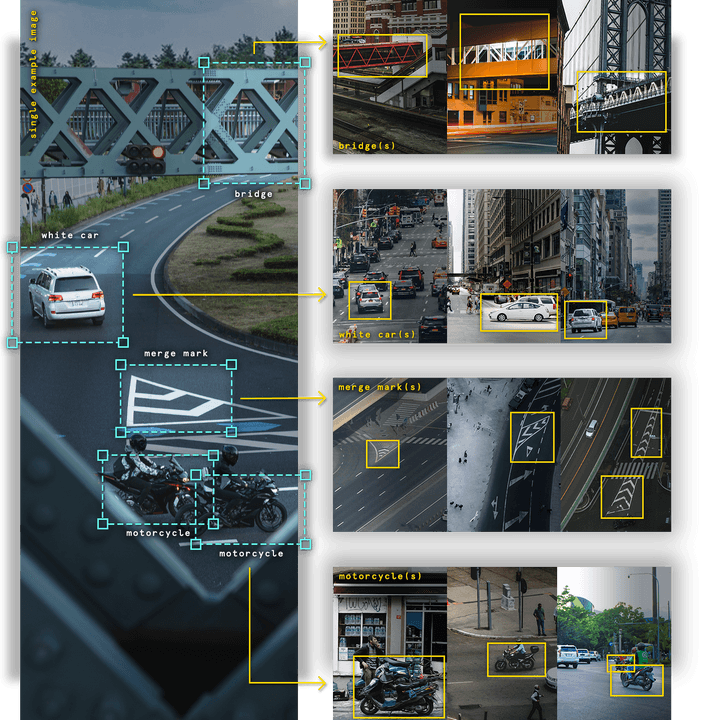
Synthetaic, which launched in 2019, offers a tool — Rapid Automatic Image Categorization, or RAIC for short — designed to automate the analysis of large data sets, namely satellite imagery and video, not containing labels.

Many AI models are trained by having groups of people — annotators — label data so that a model can learn to associate certain annotations (i.e., labels) with characteristics of the data. For example, a model that’s fed lots of cat pictures with annotations for each breed will eventually “learn” to distinguish between bobtails and shorthairs.

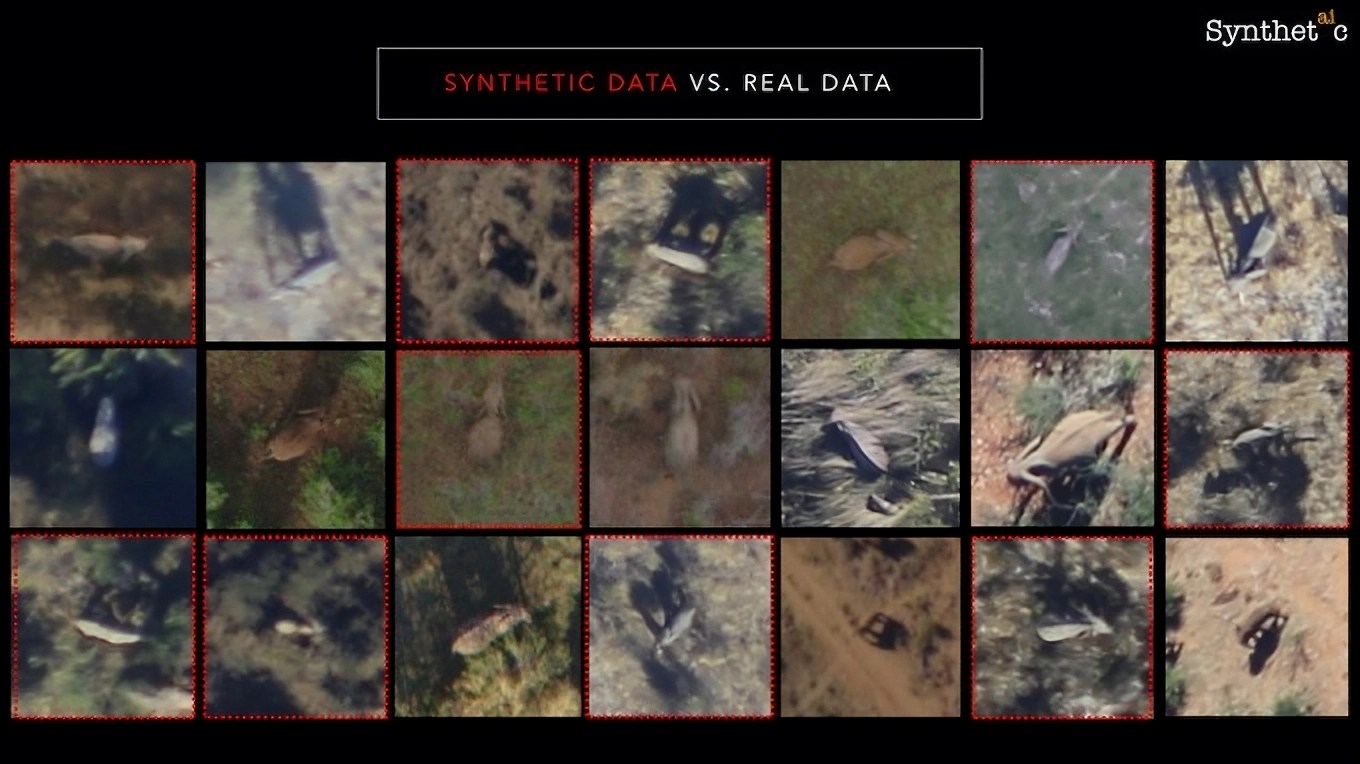
RAIC, by contrast, uses synthetic data — data whose labels are auto-generated — to train models.

In the case of the Chinese balloon, this enabled Synthetaic’s platform to spot the balloon using no more than a sketch of what the balloon might look like from space and recent satellite images from the area where the balloon was shot down.

“RAIC means being able to handle scarce or complex data sets, accelerating AI development and improving predictive modeling without the constraints of data quantity or quality,” Jaskolski said. “This positions RAIC as a strategic asset for driving innovation, operational efficiency and competitive advantage, particularly in use cases where data is a bottleneck to AI adoption and implementation.”

Synthetaic isn’t the only company exploring the use of synthetic data in model training.

Synthesis AI, which raised $17 million in a venture round in April 2022, is developing a platform that generates synthetic data to train AI systems of various types. Scale AI two years ago launched a program that lets machine learning engineers enhance existing real-world data sets with synthetic samples. Elsewhere, there’s firms like Parallel Domain, which are creating synthetic data for specific use cases like autonomous driving.

Gartner predicts that 60% of the data used for the de­vel­op­ment of AI and an­a­lyt­ics projects will be syn­thet­i­cally gen­er­ated by 2024. But while the industry forges ahead, some experts worry that synthetic data’s drawbacks — and potential dangers — are being ignored.
Synthetaic

Image Credits: Synthetaic

In a January 2020 study, Arizona State University researchers showed that an AI system trained on a data set of images of professors could create highly realistic faces — but faces that were mostly white and male. The system amplified the biases in the original data set, which — unsurprisingly — captured mostly male and white professors.

Synthetaic’s customers haven’t been scared away by the risks, for what it’s worth.

The startup claims to have worked with the U.S. Air Force to test AI-powered object detection in geospatial data and with The Nature Conservancy, the nonprofit environmental organization, to identify species of birds previously thought to be extinct. Synthetaic also has a contract with AFWERX, the Air Force research lab, to craft tech for object labeling, AI modeling and object detection in satellite-captured images.

Jaskolski believes that RAIC has applications in countless other domains, from AI prototyping to drone-based monitoring and content moderation. Pointing to Synthetaic’s work with CNN to analyze war images from Gaza and partnership with Planet Labs to sell analytics on top of Earth imaging data, he asserts that Synthetaic’s business is robust to the tech industry’s downturn — and wider macroeconomic headwinds.

“Synthetaic’s technology offers a transformative approach to AI model training and creation, addressing the critical needs of technical decision makers,” Jaskolski said. “For C-suite managers, Synthetaic’s RAIC means being able to handle scarce or complex data sets, accelerating AI development and improving predictive modeling without the constraints of data quantity or quality. This positions RAIC as a strategic asset for driving innovation, operational efficiency and competitive advantage, particularly in use cases where data is a bottleneck to AI adoption and implementation.”


8 Must-Know OCR Tools for Training AI/ML Models 

India boasts over 400 languages and a rich linguistic tapestry but faces the challenge of bridging the digital divide, which is exacerbated by the dominance of English in LLMs. Perpetually hungry for data, large language models are extensively trained on online information. However, the absence of non-English language data and the abundance of vast offline data can be leveraged with OCR.

Optical Character Recognition (OCR), which is the process of transforming an image containing text into a machine-readable text format, digitises content into data that can be used for analytics, automation, training AI models and other processes. With the function to extract data, OCR enables LLMs to analyse and process the said data.

Here are a few OCR tools that can aid developers and coders train AL/ML models.

Surya

Surya, a multilingual text line detection model designed for document OCR, has been trained on diverse documents, including scientific papers. The training ensures that Surya excels in detecting text lines within documents, delivering pinpoint accuracy in line-level bounding boxes and clear identification of column breaks in PDFs and images.

Bhashini

Bhashini, an app developed to help people translate content in different Indian languages, recently introduced an OCR feature, called SCENE. The feature allows users to extract text by simply scanning an image using the camera. Bhashini was recently used by the Prime Minister Narendra Modi to address students during ‘Pariksha Pe Charcha’.

Tesseract OCR

Tesseract OCRis an open-source OCR engine maintained by Google. It was first developed by Hewlett-Packard, and later taken over by Google. Tesseract has unicode (UTF-8), supports more than 100 languages and can be integrated with LLMs to extract text from images. It also supports various image formats such as PNG, JPEG, TIFF.

PyTesseract

Python-Tesseract serves as an optical character recognition (OCR) utility for Python. Essentially, it is capable of identifying and interpreting the text contained within images. Python-tesseract acts as a wrapper for Google’s Tesseract-OCR Engine.

It proves handy as a standalone execution script for Tesseract, capable of interpreting all image formats supported by the Pillow and Leptonica imaging libraries, such as jpeg, png, gif, bmp, tiff, among others. Furthermore, when employed as a script, Python-tesseract outputs the recognized text directly rather than storing it in a file.

EasyOCR

EasyOCR is a Python package that provides a straightforward interface for performing OCR tasks. It is an open-source OCR engine that supports multiple languages and can be used with LLMs for text recognition and data extraction. It also offers pre-trained models for various use cases.

OpenCV

OpenCV (Open Source Computer Vision) is a collection of programming functions primarily focused on real-time computer vision tasks. While it may require more customisation, it can be used in conjunction with LLMs for OCR tasks.

In Python, OpenCV facilitates image processing by providing functions for tasks such as image resizing, pixel manipulation, object detection, and more.

OCRopus

OCRopus is another open-source OCR engine that is designed for high accuracy and efficiency. It includes various preprocessing and post-processing techniques suitable for AI and ML applications. OCRopus commands typically display a stack trace alongside an error message, but this does not necessarily indicate a problem.

Kraken

Kraken is an OCR engine implemented in Python and optimised for historical and degraded document recognition. It can be used in AI and ML models for tasks involving challenging document images. Kraken can be run on Linux or Mac OS X (both x64 and ARM).

The post 8 Must-Know OCR Tools for Training AI/ML Models appeared first on Analytics India Magazine.

Journalism Needs AI to Stay Relevant

Yesterday, Microsoft announced collaborations with several news organisations to equip their journalists with learning how AI tools work. The training workshops will help scribes at Semafor, The GroundTruth Project and other media outlets improve their reporting, research and writing.

According to a recent survey by the London School of Economics, AI is already an integral part of a journalist’s work day with a majority of respondents using AI one way or another.

Instead of turning to third parties, larger organisations are building their own AI systems. The New York Times recently announced that it is prototyping the uses of generative AI and other machine learning techniques to help with reporting. Interestingly, last week, NYT posted job listings for both engineering and editorial roles.

Apart from them, Bloomberg, Reuters, BBC, and a few others have been using AI models as better research tools for their journalists, and to analyse consumer engagement behaviour, streamline workflows, etc. The organisations use an NLP library for low-level text resolution tasks, such as tokenisation, chunking and parsing and even for a sentiment analysis of the article.

For example, Reuters uses AI to generate automatic alerts on financial news. “These real-time alerts allow our customers and journalists to have the most up-to-the-minute information,” said its official blog. These organisations have also come together to draft guidelines for journalists using the AI tools effectively without compromising the quality of their work.

Many startups are also building sites that quickly summarise news, like Infobot.ai, which is AI turning unstructured data like city council transcripts, crime reports, and expert interviews into easy-to-read news stories.

While the larger companies are experimenting, startups are struggling to find their feet in this new(s) space.

“One way or another news sites must equip themselves with AI tools to retain their readerbase,” said Rotem Weiss, the creator of GPT-Newspaper, an open source project that scrapes different news websites and collates the information to provide different opinions.

The future of news

No one wants to be left behind. NYT is suing OpenAI for scraping their data and yet is enthusiastic about building its own AI applications. In October last year, BBC, which formerly blocked OpenAI from scraping its sites, announced that it was “starting a number of projects that explore the use of GenAI”.

While some of the larger organisations are trying to preserve autonomy, the others like Axel Springer and Associated Press have partnered with OpenAI. “There is an even stronger case for payments to be made for any LLM results related to current affairs,” explained Anya Schiffrin, director of media program at Columbia University.

She added that there is no way generative AI can provide results on current affairs without taking input from news publishers and there should be payment for legacy information written by journalists. Most news sites work on a subscription model or run advertisements, so they wouldn’t want readers to go elsewhere for the same information.

Currently, OpenAI is accused of undercompensating the news publications to scrape their sites. Apart from that, it would be hard to trust third-party services because of hallucinations and the fear of incorrect information. “The responsibility lies with the journalist and it is good in some ways that AI is in-house and they’re testing the capabilities and using it with caution,” Weiss added.

Humans vs AI

While larger companies hold themselves to a journalistic standard written by humans, it is difficult to maintain the same with a news source generated by AI.

GPT-Newspaper was born out of a partnership between Tavily and LangChain.“The idea here was to show the potential of a new approach to consuming news,” said Weiss.

This, however, is an idea in its infancy, he stressed, saying, there are multiple hurdles in actually implementing such a project. “One is the issue of compensation and the other more important one is avoiding hallucinations or errors. It is one of the reasons why startups in the journalism space take time to really succeed.”

Artifact, a personalised news feed that shut down last month, used machine learning to understand readers’ interests. Founded by Kevin Systrom and Mike Krieger, the former founders of Instagram, Artifact was forced to shut down due to low engagement. They weren’t alone, Smartnews, a similar platform, is also struggling to retain users.

According to a Statista report, people do not trust AI-generated news. The report also highlights that social media is the least trusted news source globally since 2016. “Despite all the issues, AI delivered many useful, time-saving tools that, if used correctly, will make you a more-efficient journalist,” posted World Editors Forum on X.

Trusted media companies need to keep up with the developments because though these technologies are mere tools, they help journalists do their jobs better. The companies are embracing AI, touching every level from educating journalists to leveraging AI for trend analysis.

The motivation is clear – to remain competitive and relevant in an era where speed and accuracy are paramount. Media outlets, which hesitate to integrate AI, risk losing their audience to more technologically adept rivals.

The post Journalism Needs AI to Stay Relevant appeared first on Analytics India Magazine.

Colossyan uses GenAI to create corporate training videos

Colossyan uses GenAI to create corporate training videos Kyle Wiggers 11 hours

Most people don’t watch corporate training videos — or, in cases where the training’s mandatory, don’t give them their full attention. According to a recent poll from Kaltura, the video tech provider, 75% of staffers admit to skimming through training videos, watching them without sound or listening to them while multitasking.

So, given that training videos aren’t cheap to produce, is there a way to make them more engaging and thus less of a money sink? Dominik Mate Kovacs, the co-founder and CEO of Colossyan, thinks there is — and it involves GenAI.

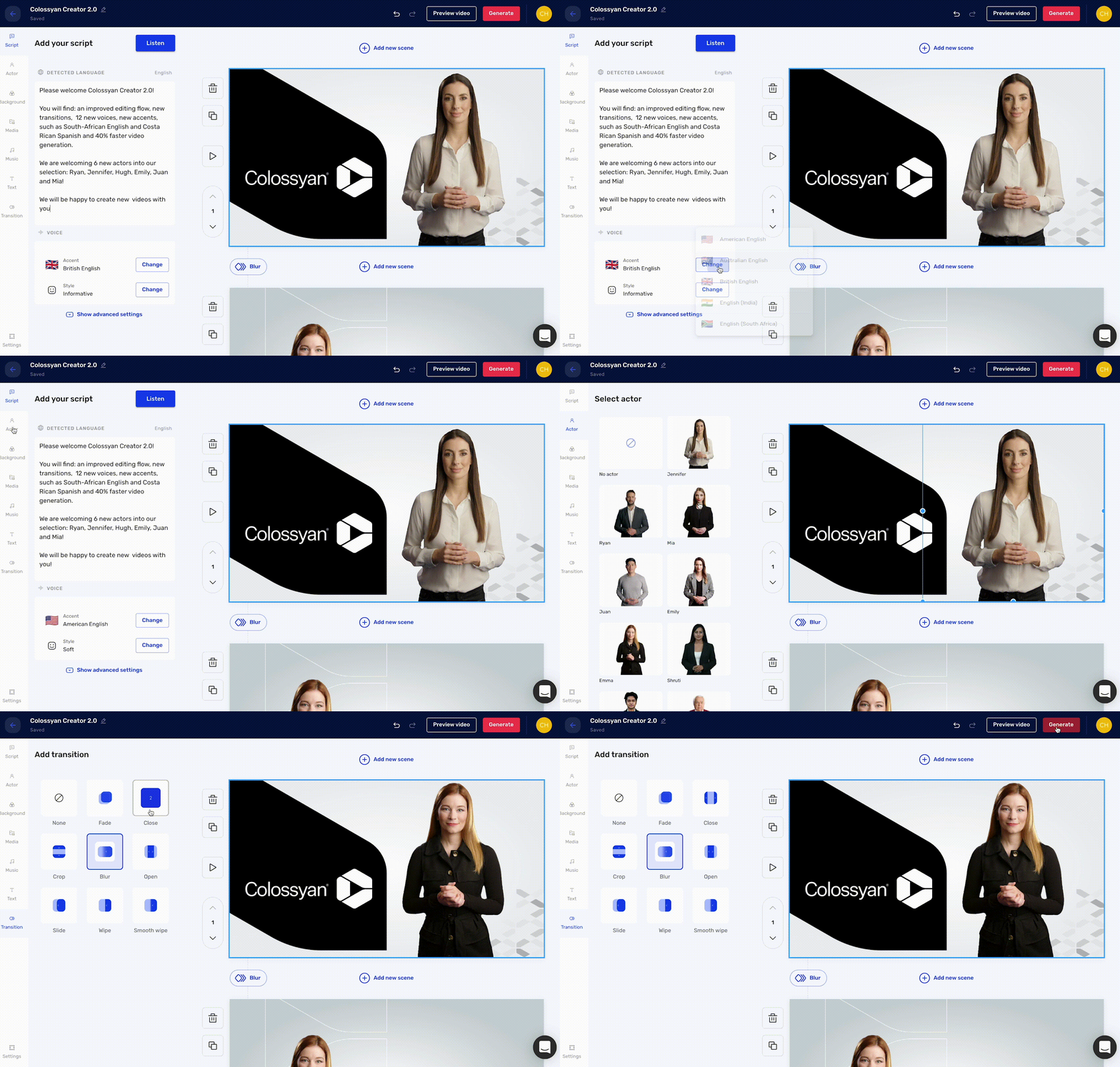
Colossyan taps AI to generate workplace learning videos, remixing, re-animating and editing footage of one of several virtual avatars against changeable backdrops. Users can enter a script to have it “read” aloud by Colossyan’s text-to-speech (TTS) engine, which also translates the script into over 70 languages.

Colossyan

Image Credits: Colossyan

“To generate a video with Colossyan’s AI video platform, all you have to do is input a script and select from a diverse range of avatars,” Kovacs told TechCrunch in an email interview. “Any company can create a video about almost anything efficiently, without the need for conventional filming resources.”

Kovacs founded Colossyan in 2020 after leaving Defudger, a deepfakes detection platform, which he helped to co-launch. An engineer and data scientist by training, Kovacs says that he was inspired to start Colossyan by the budding corporate interest in GenAI.

“Enterprises are leveraging AI in diverse areas such as IT automation, customer care and digital labor — highlighting the broad applicability and potential impact of AI technologies in streamlining operations and enhancing service delivery,” Kovacs said. “The barriers to AI adoption, such as limited AI skills and data complexity, are significant yet surmountable challenges that many organizations are actively working to overcome. ”

For the heck of it, I gave Colossyan’s platform, which offers a free trial, a go to see if I could make a training video that’d successfully hold the attention of my ADHD brain — admittedly a high bar. The avatars were a bit too stiff and cartoonish for my liking and the TTS engine too robotic, at least compared to some of the more sophisticated GenAI tools out there (e.g. ElevenLabs). But I’ve certainly seen worse corporate videos.

Colossyan also doesn’t generate videos as quickly as I’d expect — a 38-second clip takes ~11 minutes. Granted, that’s a lot faster than creating trainings from scratch. But frankly, faced with the prospect of generating more than a handful of videos for whatever purpose, I’d be tempted to go the PowerPoint or Canva route instead.

I’m not Colossyan’s target market, of course. And it seems that several household brands are happy to pay for a subscription to Colossyan as it exists today, including Novartis, Porsche, Vodafone, HPE and Paramount, claims Kovacs.

Kovacs attributes the customer traction to features like integrations with learning management systems and a “conversation mode’ that allows two avatars to hold a dialogue with each other. He doesn’t deny that there’s a fair amount of competition in the GenAI video space — see CommonGround, Synthesia and Surge plus solutions from tech giants like Microsoft — but he thinks that Colossyan’s focus on “interactivity and engagement,” as he puts it, will continue to set the platform apart.

Perhaps he’s right. Colossyan today announced that it raised $22 million in a funding round led by Lakestar with participation from Launchub, Day One Capital and Emerge Education. The proceeds will be put toward tripling Colossyan’s headcount across its New York, London and Budapest offices, Kovacs says, and developing new capabilities like branching videos and knowledge checks.

“For C-suite and IT department leaders, our platform represents a scalable, cost-efficient solution to training and development challenges,” he added.

Top 10 Global Data Labelling & Annotation Companies

Amid the burgeoning generative AI wave, data labelling and annotation have become one of the most important steps in the development of these large language models. This process involves assigning appropriate labels to raw data, such as images, text, or audio files, to clearly define the content.

The performance of a model is directly influenced by the accuracy and quality of these labels. A higher quality of labelled data leads to improved model performance, hence well-labelled data is essential to enable the AI system to interpret and learn from the data accurately, ensuring reliable and precise predictions.

The significance of accurate data labelling and annotation becomes evident as AI models may face challenges in understanding the context and may make errors without it.

Now, let’s take a closer look at the top 10 companies in this domain.

ScaleAI

Alexander Wang’s ScaleAI offers a comprehensive suite of solutions to enhance AI model development. It specialises in efficient AI data labelling and annotation services, addressing challenges in the development of AI models. The Scale Rapid platform facilitates quick project setup, generating high-quality labels promptly, supporting organisations to scale data labelling without compromising quality.

The platform includes a diverse labelling workforce, ensuring accurate and efficient results. It provides infrastructure for various data labelling use cases, offering customised solutions, tailored workflows, and quality assurance processes.

AI-powered tools in Scale Studio automate labelling tasks, reducing time and effort. Google reportedly signed a contract with Scale AI, the $7.3 billion startup focused on training and validating AI software, to test the tools.

Dataloop AI

Israel-headquartered Dataloop AI specialises in creating data infrastructure and operating systems for AI companies. Its main product is a data management and annotation platform, helping AI teams in data visualisation, collaboration, and exploration.

This platform consists of data management, an intuitive annotation tool with automatic capabilities, and tools for data quality assurance and debugging.

Karya AI

Bengaluru-based Karya AI facilitates data labelling and annotation in various Indian languages for AI models by engaging population from rural India. These workers gather and label non-English data in various regional languages to improve the quality of Indian-language data for AI and ML applications.

The company’s ethical practices include compensating low income communities at a rate 20 times higher than the minimum wage. The startup’s approach has gained recognition and support from major tech players such as Google and Microsoft.

Microsoft uses Karya for local speech data sourcing while Google, in partnership with Karya and others, engages in speech data collection across 85 Indian districts. Through its app, Karya AI involves users in tasks like recording audio in native languages, and contributing to AI data enrichment. The company is expanding its reach to various Indian languages, diversifying AI databases with linguistic data.

Appen

Appen excels in data collection, preparation, and annotation, handling diverse data types like text, speech, images, and videos. Its services are vital across industries, helping in the development of technologies like speech recognition and autonomous vehicles.

With a vast, diverse global workforce, the Australia-based company leverages crowdsourcing to bring varied linguistic and cultural insights to projects. It integrates advanced tools with human intelligence, improving the accuracy and efficiency of its data services.

Google, Microsoft, NVIDIA, Amazon, Tesla, Ford, General Motors, Waymo, Pfizer, Roche, Walmart, Alibaba, US Department of Defense, European Commission, etc. are some of the premium customers of Appen.

Labelbox

Entering the space in 2018, Labelbox has swiftly become a known entity in the space of data labelling. The company focuses on enhancing AI training efficiency through its platform. The collaborative training data platform offers diverse annotation tools for image, video, text, and geospatial data, featuring AI-assisted labelling to expedite the process.

Quality control measures, like consensus-based review and benchmark tasks ensure high-quality annotations. Labelbox serves a diverse clientele, including automotive, agriculture, healthcare, retail, e-commerce, government, and defence sector.

The company’s proficiency in handling large and intricate datasets with precision has established it as a preferred choice for those leveraging AI and ML in their daily workflow. Walmart, Burberry, Sharper Shape, Ancestry, and Intuitive are some of its customers.

NextWealth

Founded by Dr Sridhar Mitta, Anand Talwai, and Mythily Ramesh, NextWealth is a Bangalore-based company offering AI and ML data services, digital customer experience, and IT solutions to a global market. Their services range from data enrichment and back-office tasks to advanced AI-driven operations.

NextWealth partners with local entrepreneurs in smaller towns to establish delivery centres, partially owned by the company, to ensure high-quality, standardised services while also fostering job creation, especially for women, in these areas.

Employing innovative AI and ML technologies, NextWealth has carved out a niche in sectors like e-commerce, fintech, and healthcare, with significant partnerships like that with Jumio for identity verification solutions.

Sama AI

Sama AI of San Francisco focuses on providing data labelling services for computer vision, leveraging ML. Catering to sectors like retail, agriculture, and manufacturing, it aims to enhance AI development through ethical, scalable data solutions.

Founded by the late Leila Janah, Sama AI specialises in manually labelling and annotating data, involving tasks such as identifying objects in images, transcribing text data, and classifying different data types. The company also offers customised workflow solutions tailored to specific project needs

iMerit

Founded in 2012 by Radha Basu, iMerit is a tech service company specialising in handling various data forms like text, images, and audio, providing precise annotation and labelling, essential for sectors like healthcare, automotive, and agriculture. Their custom solutions are tailored to meet diverse client needs, often involving complex annotation tasks.

iMerit’s business model is socially conscious, emphasising hiring from underprivileged communities, contributing to their economic advancement. This approach benefits their data quality making it diverse and contributes to social good. It has expanded globally, catering to a wide range of industries beyond AI and ML, like e-commerce and geospatial technology.

It integrates ML algorithms for semi-automated annotation and develops custom software solutions. Its cloud-based platforms enable efficient data processing and storage, while advanced analytics help monitor and improve service quality.

SuperAnnotate

San Francisco-based SuperAnnotate assists computer vision teams in annotating and managing image data for ML. It offers tools for annotating images and videos, essential for training AI models in various sectors such as autonomous vehicles, retail, agriculture, and healthcare.

Founded by Tigran Petrosyan and Vahan Petrosyan, SuperAnnotate’s technology features AI-assisted annotation, facilitating faster and more accurate labelling, and integrates with other ML platforms and data storage services.

Kili

Founded in 2018, Kili focuses on creating a data labelling platform for ML applications in computer vision and neuro-linguistic programming. With additional offices in New York and Singapore, the Paris-based company caters to businesses aiming to develop reliable AI.

Its major clients are L’Oreal, Renault, and Airbus in enhancing technologies ranging from facial recognition to autonomous driving and predictive maintenance. The company has secured over $30 million in funding, showing promising growth with projected revenues.

Kili’s product suite includes tools for image, video, text, OCR, and geospatial annotation, and data labelling.

The post Top 10 Global Data Labelling & Annotation Companies appeared first on Analytics India Magazine.

[Exclusive] Bhashini’s Amitabh Nag on Breaking Language Barriers in India 

Of late, Prime Minister Narendra Modi has been using Bhashini to address gatherings in several Indian languages with elan. During his speech at the Kashi Tamil Sangamam event in Varanasi on December 18, 2023, Modi used Bhashini to translate his speech from Hindi to Tamil. Most recently, the PM addressed students during ‘Pariksha Pe Charcha’ using Bhashini. The list goes on.

“We are a government service being built under government funding,” said Bhashini chief Amitabh Nag, in an exclusive interview with AIM, steering clear of politicising the conversation.

He believes that his work belongs to everyone, and is not restricted to any political party. “Throughout one’s life, regardless of daily endeavours, individuals should not feel pressured to learn another language,” said Nag, expressing a strong desire to eliminate the language barrier in this country.

Enter Bhashini

Bhashini has been getting a lot of attention over the past few months, and is extensively used by a variety of users from software developers, educational institutions to government agencies.

Bhashini offers a range of services, with APIs available on the National Platform for Language Technology. These APIs provide services such as machine translation, speech-to-text, and text-to-speech. “This language technology hub provides modern service APIs to various enterprises. It receives about 100,000 hits per day, and that is where customers might have their own applications,” said Nag.

“The second [aspect] is the Bhashini app, which is targeted towards end-users looking to translate either text or have voice-to-voice discussions,” added Nag.

Bhashini has been constantly adding new features to the app. Recently, it introduced the OCR feature, called SCENE, in its beta version, allowing users to seamlessly extract text and enhance accessibility along with the Browse feature facilitating effortless website translation.

“Additionally, we have another web service called Anuvaad, which handles translation,” said Nag. Anuvaad, much like Google Translate, is a web and mobile application that enables users to translate text between 22 Indian languages and English.

Fuels LLMs & GenAI Jobs

“Currently, a majority of the foundational models are monolingual. We are contributing to the LLM ecosystem by introducing voice modality and multilingual features,” said Nag. Notably, the recently released Indic LLMs, including Sarvam AI’s OpenHathi, Tech Mahindra’s Project Indus, and BharatGPT, are all leveraging Bhashini’s assistance for training datasets.

Last year, Bhashini released IndicTrans2, an open-source, transformer-based multilingual neural machine translation (NMT) model that facilitates high-quality translation across all 22 scheduled Indian languages. “Anyone and everyone building LLMs to serve the Indian market can get in touch with us, and we are open to partnering with them,” said Nag.

Furthermore, generative AI has led to the rise of data labeling and data annotation jobs, creating a demand for high-quality labeled data to train and improve machine learning models, as mentioned by Nag.

“We have approximately 200 translators working in the field and collecting digital data. We have established a straight integrated pipeline in one of our research institutes at IIT Madras, in collaboration with AI4 Bharat. Here, data is collected, curated, annotated, and labeled to train AI models. We also have a specially funded mechanism to create the digital data,” said Nag.

Moreover, Nag told AIM that Bhashini is collaborating with Karya, one of the world’s first data cooperatives that offers labelling and annotation services. Karya is known for constructing datasets for firms like Microsoft and Google, which are used in AI models for education, healthcare, and other services.

“We lack digital data on low-resource languages, such as Bodo or Sindhi. For these languages, we approach individuals proficient in both Bodo and English,” he said, explaining that they help create a training dataset by providing parallel text in English corresponding to the content written in Bodo.

Bhashini launched a crowdsourcing initiative to collect voice and text data in multiple Indian languages called Bhasha Daan. “It’s performing well, but not meeting our initial expectations. We plan to run a campaign to build this up further,” said Nag, when asked about its status.

“Bhashini will definitely change lives because people will be more collaborative, cooperative, and innovative, without the burden of trying to learn more languages,” concluded Nag.

The post [Exclusive] Bhashini’s Amitabh Nag on Breaking Language Barriers in India appeared first on Analytics India Magazine.

Colossyan uses GenAI to create corporate training videos

Colossyan uses GenAI to create corporate training videos Kyle Wiggers 9 hours

Most people don’t watch corporate training videos — or, in cases where the training’s mandatory, don’t give them their full attention. According to a recent poll from Kaltura, the video tech provider, 75% of staffers admit to skimming through training videos, watching them without sound or listening to them while multitasking.

So, given that training videos aren’t cheap to produce, is there a way to make them more engaging and thus less of a money sink? Dominik Mate Kovacs, the co-founder and CEO of Colossyan, thinks there is — and it involves GenAI.

Colossyan taps AI to generate workplace learning videos, remixing, re-animating and editing footage of one of several virtual avatars against changeable backdrops. Users can enter a script to have it “read” aloud by Colossyan’s text-to-speech (TTS) engine, which also translates the script into over 70 languages.

Colossyan

Image Credits: Colossyan

“To generate a video with Colossyan’s AI video platform, all you have to do is input a script and select from a diverse range of avatars,” Kovacs told TechCrunch in an email interview. “Any company can create a video about almost anything efficiently, without the need for conventional filming resources.”

Kovacs founded Colossyan in 2020 after leaving Defudger, a deepfakes detection platform, which he helped to co-launch. An engineer and data scientist by training, Kovacs says that he was inspired to start Colossyan by the budding corporate interest in GenAI.

“Enterprises are leveraging AI in diverse areas such as IT automation, customer care and digital labor — highlighting the broad applicability and potential impact of AI technologies in streamlining operations and enhancing service delivery,” Kovacs said. “The barriers to AI adoption, such as limited AI skills and data complexity, are significant yet surmountable challenges that many organizations are actively working to overcome. ”

For the heck of it, I gave Colossyan’s platform, which offers a free trial, a go to see if I could make a training video that’d successfully hold the attention of my ADHD brain — admittedly a high bar. The avatars were a bit too stiff and cartoonish for my liking and the TTS engine too robotic, at least compared to some of the more sophisticated GenAI tools out there (e.g. ElevenLabs). But I’ve certainly seen worse corporate videos.

Colossyan also doesn’t generate videos as quickly as I’d expect — a 38-second clip takes ~11 minutes. Granted, that’s a lot faster than creating trainings from scratch. But frankly, faced with the prospect of generating more than a handful of videos for whatever purpose, I’d be tempted to go the PowerPoint or Canva route instead.

I’m not Colossyan’s target market, of course. And it seems that several household brands are happy to pay for a subscription to Colossyan as it exists today, including Novartis, Porsche, Vodafone, HPE and Paramount, claims Kovacs.

Kovacs attributes the customer traction to features like integrations with learning management systems and a “conversation mode’ that allows two avatars to hold a dialogue with each other. He doesn’t deny that there’s a fair amount of competition in the GenAI video space — see CommonGround, Synthesia and Surge plus solutions from tech giants like Microsoft — but he thinks that Colossyan’s focus on “interactivity and engagement,” as he puts it, will continue to set the platform apart.

Perhaps he’s right. Colossyan today announced that it raised $22 million in a funding round led by Lakestar with participation from Launchub, Day One Capital and Emerge Education. The proceeds will be put toward tripling Colossyan’s headcount across its New York, London and Budapest offices, Kovacs says, and developing new capabilities like branching videos and knowledge checks.

“For C-suite and IT department leaders, our platform represents a scalable, cost-efficient solution to training and development challenges,” he added.

Analog Devices to Make Custom Chips for India

A global semiconductor leader, Analog Devices, last year recorded $12.3 billion in revenue. Even though the contribution from India towards its global revenue share is minimal, India is emerging as one of the fastest-growing markets for Analog. Besides, the US-based semiconductor company also has plans to develop chips locally.

“We are particularly interested in the industrial market, given India’s emergence as a manufacturing hub. The shift towards smart factories is evident, and Analog, with a robust portfolio in industrial and process automation, plays a significant role,” Srinivas Prasad, senior director and site head at Analog Devices India (ADI), told AIM during an interaction on the sidelines of the IESA Vision Summit 2024.

Vivek Tyagi, managing director-field sales at ADI, concurs. He believes that the Indian market will definitely explode in the next seven to eight years. “So, we expect significant growth accordingly, even though this year is a little soft globally, we are still forecasting a 20% growth in India from our sales,” he told AIM.

In fact, Analog Devices anticipates India’s contribution to global revenue share to increase multifolds by 2030. The growth forecast is a result of India’s renewed focus on manufacturing.

In the recent Union budget, the government allocated INR 15,500 crore for various electronics manufacturing programmes, including the semiconductor mission and mobile and IT hardware PLI schemes for FY25.

En Route to India

Analog Devices, headquartered in Wilmington, Massachusetts, operates an R&D centre in India. The company serves around 100,000 customers across various industries, including communications, computer, instrumentation, military, aerospace, automotive, and consumer electronics applications.

Even though the company has an R&D centre on almost all continents, each chip that undergoes tape-out proudly bears the contribution of the Indian team. “We anticipate this trend to continue, with more innovations, products, and strategic solutions emerging from India. Today, I can confidently affirm that every chip undergoing tape-out has involved the expertise of our Indian team,” Prasad added.

Moreover, given India is one of Analog Devices’ fastest-growing markets, the company is considering building some chips in India to cater to the Indian market.

However, Analog Devices has no plans to fabricate its chips in India. “The crucial aspect is the design, which is paramount because it involves gathering precise specifications from the customer, and having the design team in India ensures the creation of the right chip that can then proceed to manufacturing,” Tyagi said.

Nonetheless, given so many Outsourced Semiconductor Assembly and Test (OSAT) units are coming out of India, he won’t write off the fact that the company could test and package some of its Indian chips locally.

Unleashing Innovations

Semiconductor companies envision not only potential revenue growth but also innovation within the automobile industry. As the sector shifts towards electric, hybrid electric, and autonomous vehicles, the demand for semiconductors sees a significant surge.

Analog Devices has also unveiled innovations in battery management systems (BMS), cockpit solutions, and advanced driver assistance systems (ADAS) aimed at assisting the automotive sector in transitioning towards a more software-defined vehicle.

In India, the company is taking its innovation to both two and four-wheeler original equipment manufacturers (OEMs) in the country.

“For EVs, their reliance on batteries as the primary source of fuel underscores the critical importance of battery management. Analog Technology, an expertise of Analog Devices, plays a pivotal role in this domain. Analog Devices holds a commanding position, accounting for over 50% of the global market share in battery management solutions for cars, solidifying a robust presence, particularly in India,” Tyagi said.

Moreover, Analog Devices’ automobile-focussed innovation also revolves around enhancing the cabin experience. From multimedia and telematics to improved battery performance, the shift to EVs brings a demand for differentiated experiences.

“As this transition unfolds, consumers, especially in India, are increasingly seeking a differentiated experience in their cabin environment. This extends to advanced infotainment systems, improved air conditioning, a desire for a comprehensive surround experience, and advancements in camera technology,” Prasad said.

Analog Devices offers a range of camera solutions for ADAS, powered by their semiconductor chip. These are complete automotive grade solutions powered by GMSL2 (Gigabit Multimedia Serial Link) interface.

“The focus is also on developing capabilities for vehicle-to-vehicle communication channels. While certain features may necessitate sophisticated infrastructure, there is a growing willingness among consumers to invest in enhanced automotive experiences,” Prasad added.

Invests heavily in AI

For Analog Devices, AI is also a big focus area and the semiconductor company has developed AI chips, according to Prasad. The company is also closely monitoring emerging trends and reimagining conventional approaches using AI.

“I believe every segment, from sensors to the cloud, will be influenced by AI. This is also our trajectory,” he said. However, at the same time, it’s also crucial to discern which applications are truly beneficial, avoiding unnecessary additions.

Analog Devices asserts that its focus is on pioneering intelligent edge solutions with smart, efficient algorithms. While conventional algorithms served a purpose, AI is now enhancing them for greater accuracy and efficiency.

“In sectors like vision sensing in automotive and robotics, our focus is on crucial factors like collision detection and providing a comprehensive 360-degree view for informed edge decisions. Analog Devices is actively advancing AI-based solutions in these areas,” he said.

Generative AI Experiments

Today, we are in the era of generative AI and companies across diverse industries are actively exploring various use cases for this transformative technology.

Many aspects of these technologies are still evolving. Prasad feels creating countless use cases is essential for practicality, especially in scenarios where false positives can have severe consequences, such as healthcare.

Currently, Analog Devices is testing generative AI internally in areas of manufacturing and chip designing. “We focus on non-critical applications, as the technology is still in the early stages, with everyone engaged in their research and development phase. Commercialisation benefits will take time to materialise,” he concluded.

The post Analog Devices to Make Custom Chips for India appeared first on Analytics India Magazine.

India’s Oldest Data Centre Operator Announces INR 1900 Cr Expansion Plan

STT GDC India, which is the oldest and largest data centre operator in the state of Tamil Nadu and the country has announced an investment worth INR 1900 crores to expand its presence in the country.

The company recently signed a Memorandum of Understanding (MoU) with the Government of Tamil Nadu during the Tamil Nadu Global Investors Meet 2024

The company currently has close to 45 MW of operational capacity in Chennai, Tamil Nadu. Tthe STT Chennai 2 facility located facility located in its Ambattur campus stands out as one of India’s largest operational data centres with a sprawling space of over 4 lakh sq. ft. and an impressive 25 MW critical IT load capacity.

STT GDC India envisages creating additional data centre capacity of up to 80 MW critical IT load in multiple phases over the next 5 to 7 years across suitable locations in the state.

The spirit of cooperation between STT GDC India and the Government of Tamil Nadu is expected to drive significant growth in the Data centre space, create incremental employment opportunities, and contribute to the overall development of the state’s digital infrastructure.

This MoU reflects the efforts of the government of Tamil Nadu to develop and oversee the growth of advanced data centre facilities in the region and leverage the unique potential of Tamil Nadu, with its advanced state of industrialization and international connectivity, as one of the leading data centre hubs in India and the region.

“We are confident that this collaboration will not only enhance our operational capacity but also contribute to the overall development of the digital infrastructure in Tamil Nadu. Together, we’re laying the groundwork for innovation and progress that will benefit businesses and communities alike,” Sumit Mukhija, Executive Director & Chief Executive Officer of STT GDC India said.

The post India’s Oldest Data Centre Operator Announces INR 1900 Cr Expansion Plan appeared first on Analytics India Magazine.

China’s generative video race heats up

China’s generative video race heats up Rita Liao 8 hours

On Monday, Tencent, the Chinese internet giant known for its video gaming empire and chat app WeChat, unveiled a new version of its open source video generation model DynamiCrafter on GitHub. It’s a reminder that some of China’s largest tech firms have been quietly ramping up efforts to make a dent in the text- and image-to-video space.

Like other generative video tools on the market, DynamiCrafter uses the diffusion method to turn captions and still images into seconds-long videos. Inspired by the natural phenomenon of diffusion in physics, diffusion models in machine learning can transform simple data into more complex and realistic data, similar to how particles move from one area of high concentration to another of low concentration.

The second generation of DynamiCrafter is churning out videos at a pixel resolution of 640×1024, an upgrade from its initial release in October that featured 320×512 videos. An academic paper published by the team behind DynamiCrafter notes that its technology differs from those of competitors in that it broadens the applicability of image animation techniques to “more general visual content.”

“The key idea is to utilize the motion prior of text-to-video diffusion models by incorporating the image into the generative process as guidance,” says the paper. “Traditional” techniques, in comparison, “mainly focus on animating natural scenes with stochastic dynamics (e.g. clouds and fluid) or domain-specific motions (e.g. human hair or body motions).”

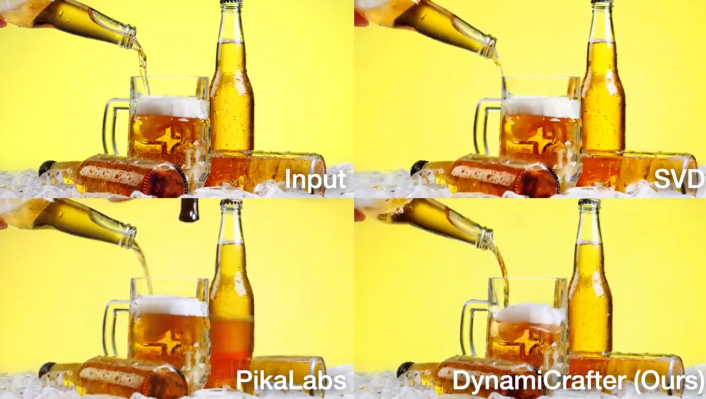
In a demo (see below) that compares DynamiCrafter, Stable Video Diffusion (launched in November), and the recently hyped-up Pika Labs, the result of the Tencent model appears slightly more animated than others. Inevitably, the chosen samples would favor DynamiCrafter, and none of the models, after my initial few tries, leaves the impression that AI will soon be able to produce full-fledged movies.

Nonetheless, generative videos have been given high hopes as the next focal point in the AI race following the boom of generative text and images. It’s thus expected that startups and tech incumbents are pouring resources into the field. That’s no exception in China. Aside from Tencent, TikTok’s parent ByteDance, Baidu and Alibaba have each released their video diffusion models.

Both ByteDance’s MagicVideo and Baidu’s UniVG have posted demos on GitHub, though neither appears to be available to the public yet. Like Tencent, Alibaba has made its video generation model VGen open source, a strategy that’s increasingly popular among Chinese tech firms hoping to reach the global developer community.

DynamiCrafter

Demo: https://t.co/im9Jb6xH3y

model: https://t.co/jvp6qku3MN

Animating Open-domain Images with Video Diffusion Priors pic.twitter.com/sq3x3SMa5t

— AK (@_akhaliq) February 5, 2024