Healthcare has an LLM Problem

Healthcare was already going through tough times in AI adoption, and now LLMs just got added to that list. LLMs showed notable downsides like providing false information, manipulating data, and promoting plagiarism.

“We are not using LLM deliberately, because LLM is not suited for something we are building,” said Anuj Gupta, founder and director of AI4Rx, a health tech startup, who is also a software architect with over three decades of experience. He has also served as the CTO at EasyGov, an Aadhar full stack aggregator of Government Welfare Schemes, that is now a part of Jio Platform.

LLM is Not the Only Way

“We also use LLM but not as our core AI model,” said Gupta, saying they have developed a graph-based model – an inference graph, which is their proprietary model.

Founded in 2019 by Gupta, and healthcare veteran Monika Agarwal. The company launched two AI-based applications MedBeat HealthConnect and MedBeat HealthConnect Plus, for patients and clinicians, respectively. Recently, the company announced the availability of four more languages for patients to check their symptoms. The application now supports English, Hindi, Malayalam, Kannada, Tamil, and Telugu.

“What we realised is that in healthcare, the main issue is that you don’t have enough quality data, and whatever data is available, it’s available from the US or other countries, that may or may not be applicable for Indian patients,” said Gupta.

Adopting a Hybrid Approach

AI4Rx is building a system with doctors from various specialisations vetting the content, which helps in building quality datasets. “We started something where a doctor can build a model without data. We created a graphical studio where you can model a disease through your knowledge, and can be done individually. So each specialist can do it for their area of expertise and since we are doing it for each disease, it is easy for testing verification.”

While it is not possible to completely eliminate LLMs when building such an AI model that helps clinicians and patients alike, a hybrid approach is a suitable one. At AI4Rx, LLMs are used for summarisation, including generating summaries based on a patient’s symptoms, lab investigations and previous prescriptions. However, when it comes to asking follow-up questions for differential diagnosis, they will rely on their own model.

The model’s advantage is clear: it learns directly from doctors, ensuring a controlled environment, and its explainable nature allows doctors to verify predictions, preventing the incorporation of incorrect data. “We have a controlled process to ensure that whatever goes into production is all verified and tested,” said Gupta.

Though the method combines the best of both worlds, the process of training becomes extremely lengthy. Dependencies on doctors for testing and verification will slow the process. The startup took over two years to build the model, as they were multiple doctors from different specialities required for the process. “The doctors who are experts are very busy,” said Gupta.

LLMs in Healthcare

Google recently released Articulate Medical Intelligence Explorer (AMIE), an AI system based on PaLM, and is optimised for diagnostic medical conversations. Big tech companies such as Google have extensively invested in healthcare and have built LLMs such as Med-PaLM 2 that are designed to answer medical questions. Microsoft, Oracle, and OpenAI have also made significant strides in the sector.

While the big tech companies will collaborate with large hospital chains, the kind of models built by AI4Rx will cater to the smaller segment, which will allow them to also experiment with hybrid models with a larger timeline. “I know that big chains such as Apollo are going to invest and build something similar, but our focus is on clinics and individual doctors,” said Gupta.

The post Healthcare has an LLM Problem appeared first on Analytics India Magazine.

You can try Google’s new ‘AI Premium Plan’ for free. Here’s how (and why you’ll want to)

Gemini Advanced

Shortly before reaching Google Bard's one-year mark, Google decided to rebrand its AI chatbot to Gemini as a nod to the large language model (LLM) that powers it. With that announcement came a slew of updates, including the launch of Gemini Advanced.

Starting on Thursday, Gemini (previously Google Bard) users will have the opportunity to upgrade to Gemini Advanced, which is powered by Ultra 1.0, Google's most capable AI model, and part of the Gemini family of large language models, which includes Gemini Nano, Gemini Pro, and Gemini Ultra.

For reference, the standard, free version of Gemini uses Gemini Pro.

Also: How Google Lookout's AI can describe images for the visually impaired

Thanks to Ultra 1.0, Gemini Advanced can tackle complex tasks such as coding, logical reasoning, and more, according to the release. Gemini Advanced also allows users to participate in longer, more detailed conversations and better understand the context around their prompt.

To access Gemini Advanced, users need to upgrade to the new Google One AI Premium Plan, which costs $19.99 per month, the same as OpenAI's and Microsoft's premium plans, ChatGPT Plus and Copilot Pro.

With the subscription, users will soon be able to access Gemini for Workspace, previously known as Duet AI, which infuses Google's AI assistance throughout its productivity apps, including Gmail, Docs, Sheets, Slides, and Meet.

Other perks of the AI Premium Plan include 2TB of storage, Google Photos editing features, 10% back in Google Store rewards, Google Meet premium video calling features, and Google Calendar enhanced appointment scheduling.

Still not sure you want to take the plunge? No worries. Google offers users a two-month free trial as part of the new plan. To get started, you can visit this page, explore the options, and sign up.

AI Governance Needs Emerging Quickly

AI Governance Needs Emerging Quickly February 8, 2024 by Alex Woodie

(Dragon Claws/Shutterstock)

The topic of data governance is one that’s been well-trod, even if not all companies follow the widely accepted precepts of the discipline. Where things are getting a little hairy these days is AI governance, which is a topic on the minds of C-suite members and boards of directors who want to embrace generative AI but also want to keep their companies out of the headlines for misbehaving AI.

These are very early days for AI governance. Despite all the progress in AI technology and investment in AI programs, there really are no hard and fast rules or regulations. The European Union is leading the way with the AI Act, and President Joe Biden has issued a set of rules companies must follow in the U.S. under an executive order. But there are sizable gaps in knowledge and best practices around AI governance, which is a book that’s still largely being written.

One of the technology providers that’s looking to push the ball forward in AI governance is Immuta. Founded by Matt Carroll, who previously advised U.S. intelligence agencies on data and analytics issues, the College Park, Maryland company has long looked to governing data as the key to keeping machine learning and AI models from going off the rails.

However, as the GenAI engine kicked into high gear through 2023, Immuta customers have asked the company for more controls over how data is consumed in large language models (LLMs) and other components of GenAI applications.

Customer concerns around GenAI were laid bare in Immuta’s fourth annual State of Data Security Report. As we reported in November, 88% of the 700 survey respondents said that their organization is using AI, but 50% said the data security strategy at their organization is not keeping up with AI’s rapid rate of evolution. “More than half of the data professionals (56%) say that their top concern with AI is exposing sensitive data through an AI prompt,” Ali Azhar reported.

Joe Regensburger, vice president of research at Immuta, says the company is working to address emerging data and AI governance needs of its customers. In a conversation this month, he shared some of the areas of research his team is looking into.

One of the AI governance challenges Regensburger is researching revolves around ensuring the veracity of outcomes, of the content that’s generated by GenAI.

(greenbutterfly/Shutterstock)

“It’s sort of the unknown question right now,” he says. “There’s a liability question on how you use…AI as a decision support tool. We’re seeing it in some regulations like the AI Act and President Biden’s proposed AI Bill Rights, where outcomes become really important, and it moves that into the governance sphere.”

LLMs have the tendency to make things up out of whole cloth, which poses a risk to anyone who uses it. For instance, Regensburger recently asked an LLM to generate an abstract on a topic he researched in graduate school.

“My background is in high energy physics,” he says. “The text it generated seemed perfectly reasonable, and it generated a series of citations. So I just decided to look at the citations. It’s been a while since I’ve been in graduate school. Maybe something had come up since then?

“And the citations were completely fictitious,” he continues. “Completely. They look perfectly reasonable. They had Physics Review Letters. It had all the right formats. And at your first casual inspection it looked reasonable…It looked like something you would see on archives. And then when I typed in the citation, it just didn’t exist. So that was something that set off alarm bells for me.”

Getting into the LLM and figuring out why it’s making stuff up is likely beyond the capabilities of a single company, and will require an organized effort by the entire industry, Regensburger says. “We’re trying to understand all those implications,” he says. “But we’re very much a data company. And so as things move away from data, it’s something that we’re going to have to grow into or partner with.”

Most of Immuta’s data governance technology has been focused on detecting sensitive data residing in databases, and then enacting policies and procedures to ensure it’s adequately protected as it’s being consumed, primarily in advanced analytics and business intelligence (BI) tools. The governance policies can be convoluted. One piece of data in a SQL table may be allowable for one type of queries, but it would be disallowed when combined with other pieces of data.

To provide the same level of governance for data used in GenAI would require Immuta to implement controls in the repositories used to house the data. The repositories, for the most part, are not structured databases, but unstructured sources like call logs, chats, PDFs, Slack messages, emails, and other forms of communication.

Despite the challenges in working with sensitive data in structured data sources, the task is much harder when working with unstructured data sources because the context of the information varies from source to source, Regensburger says.

Hallucinations are a real issue with LLMs (Bisams/Shutterstock)

“So much context is driven by it,” he says. “A telephone number is not a telephone number unless it’s associated with a person. And so in structured data, you can have principles around saying, okay, this telephone phone number is coincident with a Social Security number, it’s coincident with someone’s address, and then the entire table has a different sensitivity. Whereas within unstructured data, you could have a telephone number that might just be an 800 number. It might just be a company corporate account. And so these are things are much harder.”

One of the places where a company could potentially gain a control point is the vector database as it’s used for prompt engineering. Vector databases are used to house the refined embeddings generated ahead of time by an LLM. At runtime, a GenAI application may combine indexed embedding data from the vector database along with prompts that are added to the query to improve the accuracy and the context of the results.

“If you’re training model off the shelf, you’ll use unstructured data, but if you’re doing it on the prompt engineering side, usually that comes from vector databases,” Regensburger says. “There’s a lot of potential, a lot of interest there in how you would apply some of these same governance principles on the vector databases as well.”

Regensburger reiterated that Immuta does not currently have plans to develop this capability, but that it’s an active area of research. “We’re looking at how we can apply some of the security principles to unstructured data,” he says.

As companies begin developing their GenAI plans and begin building GenAI products, the potential data security risks come into better view. Keeping private data private is a big one that’s on lots of peoples’ list right now. Unfortunately, it’s far easier to say “data governance” than to actually do it, especially when dealing at the intersection of sensitive data and probabilistic models that sometimes behave in unexplainable ways.

This article first appeared in Datanami.

Related

About the author: Alex Woodie

Alex Woodie has written about IT as a technology journalist for more than a decade. He brings extensive experience from the IBM midrange marketplace, including topics such as servers, ERP applications, programming, databases, security, high availability, storage, business intelligence, cloud, and mobile enablement. He resides in the San Diego area.

Google rebrands Bard to Gemini, now available for the first time in mobile

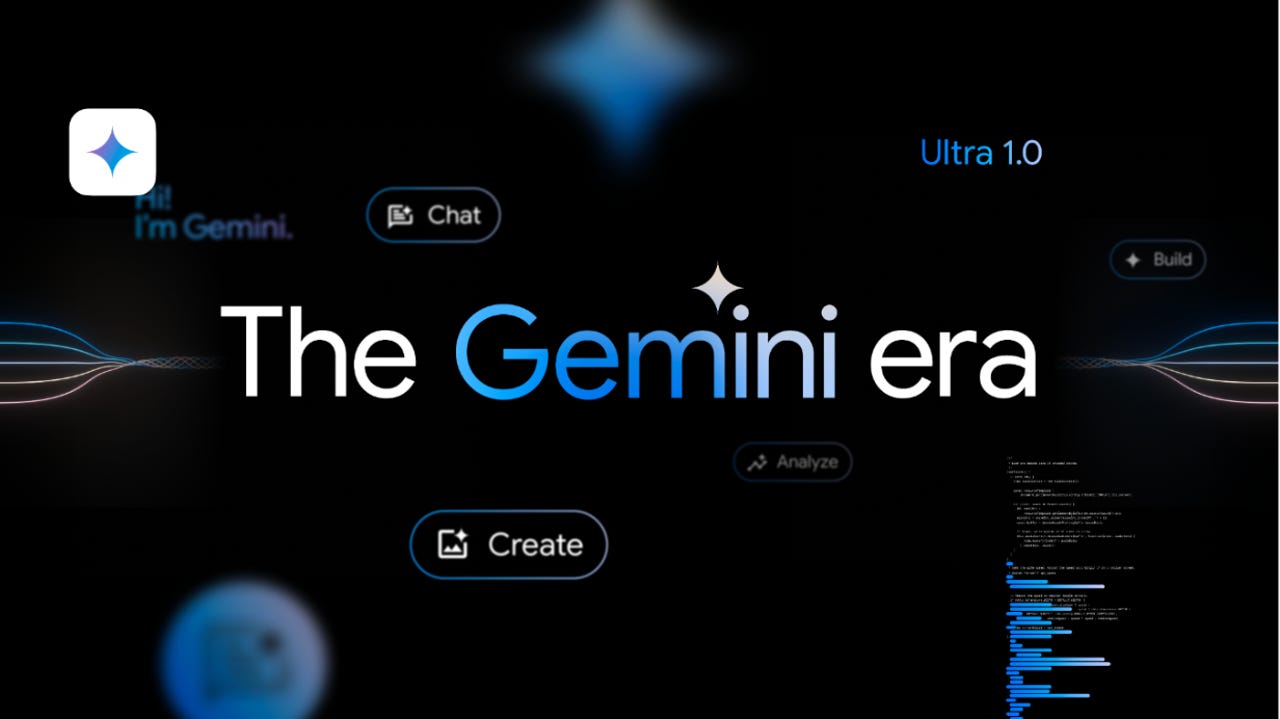
The Gemini Era

When Google Bard first launched almost a year ago, the AI-powered chatbot had some major flaws. Since then, it has grown significantly with two large language model (LLM) upgrades and several updates. Now, Google is ready to leave Bard's name and reputation in the past, rebranding the chatbot as Gemini.

On Thursday, Google unveiled that Bard would now be called Gemini, the name of the LLM powering the AI chatbot, "to reflect the advanced tech at its core," according to Google.

Also: I just tried Google's ImageFX AI image generator, and I'm shocked at how good it is

Gemini is Google's most capable and advanced LLM to date. The model comes in three sizes: Gemini Nano, Gemini Pro, and Gemini Ultra. The versions of Gemini are suitable for different tasks. Gemini Pro currently powers Google Bard.

Now, with the rebranding exercise, the chatbot's name reflects the LLM that powers it — and that dual use of the Gemini brand has the potential to cause confusion. It looks like Google is taking a page out of Microsoft's book, which rebranded Bing Chat to Copilot, and that chatbot now comes in multiple flavors.

Building on the rebrand, Google is rolling out a new Gemini app for Android next week that not only gives users a way to more easily access Bard on mobile for on-the-go queries but also provides an improved Google Assistant experience.

Also: 5 reasons to sign up for Google Labs and how to do it

Android users will be able to download the Gemini app from the Google Play Store. Users can also opt-in through Google Assistant to access Gemini's assistance from the app or via anywhere that Google Assistant would typically be activated, including pressing the power button, corner swiping, or even saying "Hey Google."

For example, if you long press the power button, Gemini will be activated over your screen, where you can chat via voice or enter a prompt.

Many of the Google Assistant features you know and love, such as setting timers, making calls, and controlling smart home devices, will be available within the Gemini app as well, according to the release.

If you are an iOS user and still want to experience Gemini on mobile, you don't need to miss out entirely. Google says it will be rolling out access to Gemini from the Google app in the coming weeks.

Also: Want to work in AI? How to pivot your career in 5 steps

Once the app rolls out, users will be able to tap the Gemini toggle at the top of the Google app to access the chatbot.

Other updates from Google include a brand-new paid subscription tier, Google One AI Premium Plan. This tier grants users access to Gemini Advanced, which is Google's take on a ChatGPT Plus-like service. For $19.99 a month, users get access to Ultra 1.0, 2TB of storage, and all the latest Google advancements.

Artificial Intelligence

Maybe GenAI’s Impact Will Be Even Bigger Than We Thought?

Maybe GenAI’s Impact Will Be Even Bigger Than We Thought? February 8, 2024 by Alex Woodie

(NicoElNino/Shutterstock)

The level of hype around generative AI is off the charts, as we have covered here in Enterprise AI over the past year. The hype is so thick at times, you could cut it with a knife. And yet, there is still the potential that people could be underestimating the impact that GenAI will have on business. At least that’s what the heads of two GenAI software companies are saying.

As the President and Co-founder of Moveworks, Varun Singh has a bird’s eye view of how large language models (LLMs) are impacting the enterprise. The company develops a platform that allows customers to leverage GenAI tech to build chatbots and other types of applications. The company counts more than 100 Fortune 500 companies as customers.

While the GenAI field is moving fast, Singh doesn’t think people have bitten off more than they can chew. “I haven’t seen people trying to do too much, in terms of what’s expected of them,” Singh says. “So far, what we’re seeing is… people are still coming to terms with how powerful these models are.”
LLMs are at the heart of GenAI (Tada Images/Shutterstock)

Moveworks uses LLMs like GPT-4 to create chatbots, such as an HR chatbot that answers questions about company benefits, or an IT service desk chatbot that can answer questions about IT problems. More recently, the company has been moving up the GenAI ladder by helping customers create GenAI co-pilots that can handle more advanced tasks.

How well these GenAI co-pilots are working has been a real eye-opener for Singh, who anticipates a lot of progress in this area in a short amount of time.

“I think right now people are still thinking about LLMs as working as agents, but within application boundaries,” he tells Datanami in a recent interview. “The next level of use cases that are emerging, that we have been doing for a while now, especially with our next generation Moveworks Copilot, is acting as agents across application boundaries, where you don’t have to even mention the agent experience.”

One Moveworks’ Copilot application was able to handle the responsibilities of 36 different human agents, Singh says. Provided with the correct plug-in to enterprise applications or data sources (Moveworks has more than 100 of them), the co-pilot is able to get access to the application, monitor how human agents interact with the app, and then recreate the tasks on its own.

Varun Singh is the president and founder of Moveworks

“It’s completely insane in terms of its ability to discern and do actions across range of different applications and auto selecting the right plugins,” Singh says. “It’s working. And frankly, I don’t think that’s too much at this stage, in terms of how far you can push this technology.”

Moveworks gets down into the weeds with GenAI so its customers don’t have to. Its engineers poke and prod the various LLMs available on the enterprise market and from open source repositories to see where they’ll be a good fit for its customers. “We use GPT-4, but we also develop our own models,” Singh says. “We’re experimenting with Llama2. We’re fine tuning T5 and other open source models.”

GPT-4, for example, demonstrates tremendous capability in language understanding and generation, but it can increase latency and has questions around accuracy, so Moveworks uses its own models in some situations, Singh says. Each GenAI deployment typically involves multiple models, which Moveworks coordinates behind the scenes.

“The most important thing for customers is time to value, and the cost of getting to that value,” Singh says. “They don’t care if it was GPT3 or 4, or as long as the employee experience and the results [are there]. And the results they’re looking for is complete automation of the service desk.”

The potential shown by GenAI is vast, but we’re not even scratching the surface of what it’s fully capable of, Singh says.

“These models are very powerful, but we’re not good thinking deep enough about the utility of these models,” he says. “So the crisis is a little bit on the creativity front.”

Are We Underselling GenAI?

Arvind Jain, the CEO and founder of Glean, has a similar story to tell.

Jain founded Glean in 2019 to create custom knowledge bases that enterprises could search to answer questions. The former Google engineer started working with early language models, like Google’s BERT, to handle the semantic matching of search terms to enterprise lingo. As LLMs got bigger, the capability of the chatbots got even better.

Chatbots are the most visible form of GenAI

“We feel that GenAI’s potential is even larger,” Jain says. “There’s big hype and there’s been some disappointments. But I think right now, given how people feel, I think the impact of GenAI is actually larger than what most people think in the long run.”

Jain explains that the reason for his GenAI optimism is how much better the technology has gotten in just the past five years. As the technology improves, it lowers the barrier to entry for those who can partake of GenAI, while simultaneously raising the quality of what can be built.

“Five years back, it was only companies like us who could actually use these models,” Jain says. “You had to actually have engineering teams. The models were not as end-user ready. They were sort of clunky technologies, difficult to use, that don’t work that well. So then you need engineers to do a lot of work to tune those models and make it work for your use cases.

“But that changed,” he continues. “Now large language models have come to a place where it’s gotten democratized in some sense. Now everybody in the company can actually solve data business problems using these models.”

If you want to build your own GenAI chatbot from scratch, it still takes engineering talent, Jain says, although anybody with the skills of a data scientist should be able to put it together. And if you want to build your own LLM model–well, that piece of tech is really off the table for the vast majority of companies, due to the immense technical skill required, in addition to huge mounds of training data and GPUs to train them.

But now that very powerful LLMs are readily available, engineering outfits like Glean can use them to build shrink-wrapped GenAI applications that are ready for business on day one. The core Glean offering is basically “like Google and ChatGPT inside your company,” Jain says. The company, which has 200 paying customers, also offers a low-code app builder that allows non-technical personnel to build their own GenAI apps.

Arvind Jain is the founder and CEO of Glean

“Companies should think of AI as a technology that they can use, that they can buy, that they can incorporate into their business processes, into their products without having to worry about ‘Hey, do I need to build talent to start building models,’” Jain says. “Very few companies need to actually build and train models.”

For every OpenAI, Google, or Meta that builds their own LLM from scratch, there will be many more companies like Glean that hire engineers and use the LLMs to build AI products that enterprises will use, Jain says. However, a handful of large enterprises may decide that they need to build their own GenAI products. Those enterprises will need engineering talent.

“Depending on the context, it’s going to require you to have a engineering team that’s going to be able to effectively use these large language model technology and some RAG-based platform like Glean,” he says. “You would need some engineering to actually incorporate GenAI technologies into your business processes and products.

“Then there are also going to be many situations where you can just go buy a product,” he says. “And for that, you can use the HR team. You don’t need to build an engineering team. You can just buy a product like Glean or like many other products like that and just deploy that and get the value of AI.”

The future is wide open for GenAI, Jain says, particularly for companies who will leverage the technology to build compelling new products. We’re just at the beginning of that transformation, he says. The early returns on GenAI investment are very good already, and the future is wide open.

“I honestly feel like the technology is continuing to surprise people. It’s moving fast. And we’re getting real value from it,” Jain says. “The applications go well beyond chatbot use case. This technology is quite broad.”

This article first appeared on Datanami.

Related

About the author: Alex Woodie

Alex Woodie has written about IT as a technology journalist for more than a decade. He brings extensive experience from the IBM midrange marketplace, including topics such as servers, ERP applications, programming, databases, security, high availability, storage, business intelligence, cloud, and mobile enablement. He resides in the San Diego area.

Arm’s gains are SoftBank’s gains

Arm’s gains are SoftBank’s gains Kyle Wiggers 9 hours

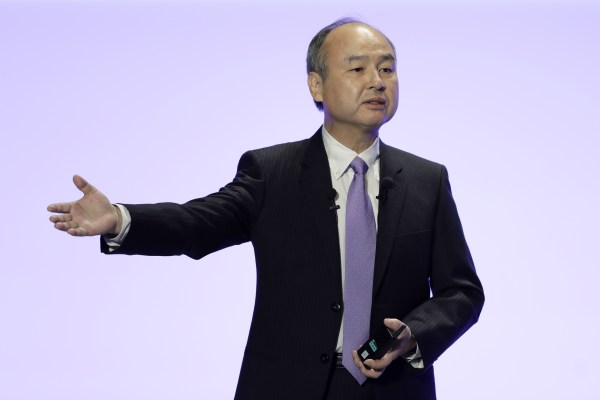
Not so long ago, things were looking bleak for SoftBank, the investment holding company headed by eclectic — and controversial — tech mogul Masayoshi Son. The Vision Fund, SoftBank’s venture arm, posted a $6.2 billion loss in Q2 2023, tied to WeWork and other unfortunate bets.

But — thanks in no small part to chip design house Arm — SoftBank’s fortunes appear to be turning around. While consensus remains mixed on the Vision Fund’s long-term prospects, it’s on the upswing for now — and what an upswing it is.

SoftBank took Arm public in September and still owns about 930 million shares, or 90%, of the chip company’s stock. Arm had a blockbuster quarter, blowing past analysts’ expectations for both revenue and earnings. The company reported adjusted earnings per share of 29 cents, topping the average analyst estimate of 25 cents, according to LSEG (via CNBC), while the company’s revenue rose 14% to $824 million, beating the $761 million average estimate.

Arm projects revenue growth into the next quarter will be even stronger: 38%.

Investors rewarded Arm’s performance, driving the company’s stock price up as high as 57.4% on Wednesday. The chip company added about $38 billion to its market cap, more than $34 billion of which accrued to SoftBank. As CNBC pointed out, SoftBank made more in Arm’s trading than the total amount it lost on now-bankrupt WeWork ($14 billion).

The AI boom drove much of Arm’s recent business.

Arm, based in Cambridge, makes most of its money licensing the chips it designs to customers and charging royalties for each chip sold that uses its technologies. Arm’s bread-and-butter work remains mobile chips for devices like smartphones, tablets and smartwatches; 35% of overall units shipped this quarter were smartphone-bound, according to Arm finance chief Jason Child. But an increasing share of the billions of chips Arm’s customers produce each quarter is hardware designed to accelerate AI workloads.

Both Microsoft and Amazon, among others, are deploying custom-designed Arm chips to run AI models. So are countless startups in the expanding market for tailored AI chips.

While the bulk of Arm’s AI chip sales are indirect at present, often paired with GPUs in data centers, the company expects direct sales to increase as consumers buy new laptops and other devices with chip-accelerated AI features. In another boon for Arm, AI-supporting chips will command higher royalty revenues. Arm charges roughly double the royalty rate for its latest processor architecture (v9) versus the previous generation.

All this is music to SoftBank’s ears, I’d guess — particularly at a time when tempestuous U.S.-China relations have put a damper on the holding company’s investments in key Asian economies.

Buoyed by Arm, SoftBank’s Vision Fund this afternoon posted its first quarterly profit after four straight losses and its biggest gain in nearly three years: $4 billion. U.S. shares in SoftBank were up 17% following the company’s earnings report, largely on news of Arm’s cheery quarter.

The question now is what SoftBank, which is currently restricted from selling Arm shares as part of its agreement to take the company public, does in March, when it’s permitted to begin selling Arm shares again. SoftBank could fuel a buyback of its own shares by selling Arm stock — or decide to sit on that stock instead.

It’ll depend, one imagines, on whether the current enthusiasm for AI maintains.

Arm after the IPO

SoftBank expects $24 billion in losses from Vision Fund, WeWork and OneWeb investments

Apple’s new AI model edits photos according to text prompts from users

A photo of an MGIE demo

A photo of an MGIE demo on Hugging Face.

Apple just introduced an open-source AI model that executes text-based image editing commands. The model, named MLLM-Guided Image Editing (MGIE) was developed in collaboration with the University of California, Santa Barbara.

MGIE can perform various image editing tasks, like cropping, resizing, and rotating; as well as adjustments to brightness, color balance, and contrast — all by following text prompts from users. The ins and outs of MGIE's capabilities and performance were outlined in a conference paper published this week.

Also: Microsoft upgrades Copilot AI with inline image editing and better suggested prompts

The report discusses how MGIE shows significant improvements in image editing performance across different metrics and maintains competitive inference efficiency. The technology was used to perform Photoshop-style modifications, photo optimization, and local editing.

The paper explained MGIE demonstrated superiority over existing techniques, suggesting a promising direction for future image editing tools that would be more accessible and intuitive to use. MGIE isn't widely available to the public as an official development from Apple, but users can access it through GitHub for technical exploration or try its web demo on Hugging Face.

A screenshot of another MGIE demo on Hugging Face.

The development of MGIE could be an effort to catch up to what Microsoft, Google, and Meta have done in the past two years. Though these other tech giants have released refined AI-powered chatbots and even some image generators, Apple's absence in the generative AI market has been intriguing.

Also: 3 AI features iOS 18 needs to catch up with Android

The company appears to be working on catching up: In 2023 alone, Apple acquired as many as 32 AI startups, many more than Google's 21 acquisitions, Meta's 18, and Microsoft's 17. Apple keeps these acquisitions and generative AI advancements under wraps, leaving us to only be able to speculate as to when the company will release them publicly and in which devices and platforms they will be included.

Apple is known for acquiring smaller companies to take over their technology and talent, and Tim Cook, Apple CEO, said in 2021 that the company acquires a startup every three to four weeks, according to the BBC, but it reportedly slowed its pace in 2022 and only acquired two companies that year.

Featured

NIST Launches AI Safety Institute and 200-Member Consortium

NIST Launches AI Safety Institute and 200-Member Consortium February 8, 2024 by Alex Woodie

(VideoFlow/Shutterstock)

The U.S. Government made two big announcements this week to help drive development of safe AI, including the creation of the U.S. Artificial Intelligence Safety Institute, or AISI, on Wednesday and the creation of a supporting group called the Artificial Intelligence Safety Institute Consortium today.

The new AI Safety Institute, or AISI, was established to help write the new AI rules and regulations that President Joe Biden ordered with its landmark executive order signed in late October. It will operate under the auspice of the National Institute of Standards and Technology (NIST) and will be led by Elizabeth Kelly, who was named the AISI director yesterday by the Under Secretary of Commerce for Standards and Technology and NIST Director Laurie E. Locascio. Elham Tabassi will serve as chief technology officer.

“The Safety Institute’s ambitious mandate to develop guidelines, evaluate models, and pursue fundamental research will be vital to addressing the risks and seizing the opportunities of AI,” Kelly, a special assistant to the president for economic policy, stated in a press release. “I am thrilled to work with the talented NIST team and the broader AI community to advance our scientific understanding and foster AI safety. While our first priority will be executing the tasks assigned to NIST in President Biden’s executive order, I look forward to building the institute as a long-term asset for the country and the world.”

The NIST followed the creation of the AISI with today’s launch of the Artificial Intelligence Safety Institute Consortium, or AISIC. According to the NIST’s guidelines, the new group is tasked with bringing together AI creators, users, academics, government and industry researchers to “establish the foundations for a new measurement science in AI safety,” according to the NIST’s press release unveiling the AISIC.

The AISIC launched with 200 members, including many of the IT giants developing AI technology, like Anthropic, Cohere, Databricks, Google, Huggingface, IBM, Meta, Microsoft, OpenAI, Nvidia, SAS, and Salesforce, among others. You can view the full list here.

The NIST lists several goals for the AISIC, including: creating a “sharing space” for AI stakeholders; engage in “collaborative and interdisciplinary research and development,” understanding AI’s impact on society and the economy; create evaluation requirements to understand “AI’s impacts on society and the US economy”; recommend approaches to facilitate “the cooperative development and transfer of technology and data”; help federal agencies communicate better; and create tests for AI measurements.

Elham Tabassi, who led the development of the AI Risk Management Framework (RMF), was named CTO of the AI Safety Institute

“NIST has been bringing together diverse teams like this for a long time. We have learned how to ensure that all voices are heard and that we can leverage our dedicated teams of experts,” Locascio said at a press briefing today. “AI is moving the world into very new territory. And like every new technology, or every new application of technology, we need to know how to measure its capabilities, its limitations, its impacts. That is why NIST brings together these incredible collaborations of representatives from industry, academia, civil society and the government, all coming together to tackle challenges that are of national importance.”

One of the AISIC members, BABL AI, applauded the creation of the group. “As an organization that audits AI and algorithmic systems for bias, safety, ethical risk, and effective governance, we believe that the Institute’s task of development a measurement science for evaluating these systems aligns with our mission to promote human flourishing in the age of AI,” BABL AI CEO Shea Brown stated in a press release.

Lena Smart, the CISCO for MongoDB, another AISIC member, is also supportive of the initiative. “New technology like generative AI can have an immense benefit to society, but we must ensure AI systems are built and deployed using standards that help ensure they operate safely and without harm across populations,” Smart said in a press release. “By supporting the USAISIC as a founding member, MongoDB’s goal is to use scientific rigor, our industry expertise, and a human-centered approach to guide organizations on safely testing and deploying trustworthy AI systems without stifling innovation.”

AI security, privacy, and ethical concerns were simmering on the backburner until November 2022, when OpenAI unveiled ChatGPT to the world. Since then, the field of AI has exploded, and its potential negatives have become the subject of intense debate, with some prominent voices declaring AI a threat to the future of humans.

Governments have responded by accelerating plans to regulate AI. European rule makers in December approved rules for the AI Act, which is on pace to go into law next year. In the United States, President Joe Biden signed an executive order in late October, signifying the creation of new rules and regulations that US companies must follow with AI tech.

Related

About the author: Alex Woodie

Alex Woodie has written about IT as a technology journalist for more than a decade. He brings extensive experience from the IBM midrange marketplace, including topics such as servers, ERP applications, programming, databases, security, high availability, storage, business intelligence, cloud, and mobile enablement. He resides in the San Diego area.

What is spatial computing and how does it work?

Apple Vision Pro with Energy Yellow ZDNET

AR + VR

  • I replaced my boring workouts with Meta Quest's Supernatural app, and can't imagine going back
  • This Finnish startup's new VR headset rivals Apple's Vision Pro — and business users will love it
  • Meta's $500 Quest 3 is the mainstream VR headset I've been waiting for, and it delivers
  • I tried Apple Vision Pro and it's far ahead of where I expected
  • The best VR headsets right now (and they're not just from Meta)

AI Companies Will Be Required to Report Safety Tests to U.S. Government

AI Companies Will Be Required to Report Safety Tests to U.S. Government February 8, 2024 by Ali Azhar

The Biden Administration has decided to apply new AI regulations, where all developers of major AI systems will be required to disclose their safety test results to the government.

As part of these new rules, tech companies will be required to let the government know when they train an AI model using a significant amount of computing power. The new rules will give the U.S. government access to sensitive data from companies like Google, Amazon Web Services, and OpenAI.

The National Institute of Standards and Technology is being tasked to develop standards to ensure AI tools are safe and secure before public release. In addition, the Commerce Department will issue guidance to watermark AI-generated content to clearly distinguish between authentic and artificial content.

Ben Buchanan, the White House special adviser on AI, said in an interview that the government wants "to know AI systems are safe before they’re released to the public — the president has been very clear that companies need to meet that bar.”

Artificial intelligence has emerged as a leading economic and national security concern for the U.S. government. This is not surprising given the hype surrounding generative AI, and the investments and uncertainties it has created in the market.

The President signed an ambitious executive order three months ago to manage the fast-evolving technology. The proposed rules in the executive order include guidance for the development of AI, including established standards for security.

The White House AI Council met on Monday to review the progress made by the executive order. This included the top officials from a wide range of federal departments and agencies. The council released a statement that “substantial progress” has been made in achieving the mandate to protect Americans from the potential harms of AI systems. The Biden government is also actively working with its international allies, including the European Union, to establish cross-border rules and regulations for managing the technology.

With the new regulations, U.S. cloud companies will be required to determine whether their foreign entities are accessing U.S. data centers to train AI models. This move is aimed at preventing non-state actors, such as China, from accessing U.S. cloud servers to train their models.

(dencg/Shutterstock)

The Biden government published a “Know Your Customer (KYC)” proposal on Monday. This proposal would require cloud computing companies to verify the identity of foreigners who sign up or maintain accounts that use U.S. cloud computing. This move is part of a widening tech conflict between Washinton and Beijing.

The new regulations could put extra strain on U.S. tech companies, such as Amazon and Google, who would need to develop a process to collect details about their foreign customers' names, and IP addresses, and report any suspicious activity to the federal government. The tech companies would also need to certify compliance annually.

While the self-reporting regulations can provide some protection for U.S. interests and encourage AI developers to be more cautious, it is still unclear how the government will tackle those who choose not to report accurately or at all. There are also legal and ethical concerns about gaining access to sensitive data.

Related Items

AI Governance Needs Emerging Quickly

Trust Me, I’m Smart: HPC and Government Regulation in the Coming AI Age

AI Safety Summit 2023 – Understanding Global AI Risks

Related