This Nilekani-backed NPO Aims to Make India the Global AI Use Case Capital

nilekani

Founded in 2015 by Nandan Nilekani, Rohini Nilekani, and Shankar Maruwada, EkStep Foundation focuses on building digital public goods and delivering large-scale impact for billions of people.

Working towards increasing access to learning opportunities for millions of Indian children, the company has developed Sunbird, a digital public good which powers DIKSHA, a national platform for school education led by the Ministry of Education in India.

However, now the foundation wants to leverage AI for the betterment of Indian citizens.

In June last year, the People+AI initiative was born out of the EkStep Foundation. It’s a community-driven effort that aims to harness AI capabilities to help a billion people. It brings together a diverse group of individuals, innovators, doers and tinkerers to find, test, and scale AI capabilities to address societal problems at scale.

Building AI use case repository

Tanuj Bhojwani, who heads the People+AI initiative, told AIM that the foundation had been exploring the benefits of AI for quite some time. However, it was only in the past year that they decided to establish a specialised unit focused on extensively exploring AI use cases.

He believes that in a decade, India is going to be the AI use case capital of the world because of its huge population, diversity, languages and the need for specialised AI tools, be it in healthcare, education or any other field.

“However, the biggest stumbling block right now is the lack of understanding regarding the potential use cases of AI. While building chatbots is undoubtedly crucial, there is a significant amount of work that still needs to be undertaken, especially in the context of India,” Bhojwani said.

Hence, People+AI is building a use case repository, which is an ongoing project focused on creating a structured library for AI use cases. This initiative involves defining a contribution model and designing a user experience to actively encourage and assist contributors.

“Our goal is to document and catalogue AI use cases that are particularly relevant and unique to India. Emphasis will be placed on identifying cases that are distinctive and specifically applicable to the Indian context,” Bhojwani added.

Building AI language tools

India is known for its linguistic diversity with over a thousand different languages and dialects spoken across the continent. EkStep Foundation has funded AI4 Bharat, an initiative led by the Indian Institute of Technology (IIT) Madras, focused on building open-source language AI solutions for Indian languages.

AI4Bharat is actively creating datasets for various Indic languages to train AI models. In many cases, the data collection process often requires visiting remote locations to record local dialects. To facilitate this, there is a requirement for various tools and resources.

People+AI is involved with stakeholders to determine if better tools and resources can be developed. “For this, we are collaborating and talking to different organisations, some in Africa, because they are also facing similar problems,” Bhojwani said.

A leaderboard for IndicLLMs

Moreover, People+AI is actively involved in developing a benchmarking leaderboard for Indic large language models (LLMs).

Several Indic LLMs and SLMs have emerged in the past few months, such as Tech Mahindra’s HindiLLM with 539 million parameters and Sarvam AI’s OpenHathi, a 7 billion parameters model trained on Hindi, English, and Hinglish.

However, there is no means to determine which of the two models mentioned above works better for certain use cases, say healthcare, for example.

“A Malayalam-speaking nurse is going to speak in English when referring to medical terms, because such terms may not be commonly expressed in Malayalam. In such scenarios, a Malayalam language model (LLM) might not be effective. Instead, a model trained on both Malayalam and English medical datasets would be more beneficial,” Bhojwani said.

The objective is to establish a leaderboard to determine the effectiveness of models for various Indian languages. The leaderboard will feature default rankings and provide an option for users to “upload their own data”.

Hence, there is a growing need for an Indian use case-focussed benchmark and for this, People+AI is talking to different stakeholders in the Indian AI ecosystem such as AI4Bharat, Indian Institute of Science (IISc) as well as folks from BharatGPT.

However, Bhojwani notes the project is still in its very initial stage.

Democratising AI computing in India

If India is going to be the AI use case capital of the world, a substantial compute infrastructure is imperative. People+AI is actively working on developing an open compute infrastructure network to meet the rising demand for compute while promoting market competitiveness.

“One of the ideas is can we decentralise computing infrastructure and create an open network where compute providers and customers who need this infrastructure can interact and discover each other,” Tanvi Lall, director of strategy at People+AI, told AIM.

The idea here, according to Lall, is to help a small business based in Tier 2 or Tier 3 cities access computing infrastructure for training or inferencing at a lower cost compared to leveraging services from the likes of AWS, Google or Azure, which could prove to be costly.

People+AI is already talking to Indian computing service providers like NeevCloud and Vigyan Labs and the idea is to create a network of micro-data centres with interoperable standards, allowing small businesses and startups to easily plug and play, based on their specific requirements.

The post This Nilekani-backed NPO Aims to Make India the Global AI Use Case Capital appeared first on Analytics India Magazine.

Meet the New Indic LLM, MahaMarathi 7B

Joining the league of indic LLMs like Telugu, Malayalam, Tamil and Oriya Llama, is MahaMarathi 7B. Boasting 7 billion parameters, the Marathi LLM is built on Meta Llama-2 and Mistral AI framework.

With computing resources and data provided by Microsoft for Startups funded company CourtEasy.ai, this open-source LLM is domain-adapted, continually pre-trained, and instruction fine-tuned using the Meta Llama-2 and Mistral AI framework.

The brains behind this research include Dr. Aakash Patil, postdoctoral researcher at Stanford University, Mrunmayee Shende, cofounder of CourtEasy.ai, and Niraj Singh, ML engineer at Inbound Health.

To democratise ML research, the team has released the initial version of the pre-trained base model on Hugging Face, inviting developers, startups, and public and private organisations to innovate by developing fine-tuned models for various use cases.

Marathi’s unique linguistic characteristics, complexity, and cultural context are addressed by MahaMarathi 7B, making it suitable for handling complex conversations and instructions. The language model is available for free on Hugging Face, promoting broader access and encouraging applications in various fields, including business and e-governance.

Marathi, spoken by over 83 million people predominantly in Maharashtra, is the 13th most spoken language globally and the third most common in India. Acknowledging Maharashtra’s significant economic contribution, with Marathi businesses and consumers contributing over 15% to India’s GDP, the MahaMarathi 7B aims to catalyse innovation in the region. The creators envision the potential impact of this Marathi LLM on diverse sectors such as skill training, education, healthcare, agriculture, environment, urban planning, and traffic management.

The release of the Marathi LLM is a step towards making AI more accessible and applicable to non-English languages. The team plans to release instruction-tuned and preference-optimised models in the coming months.

The post Meet the New Indic LLM, MahaMarathi 7B appeared first on Analytics India Magazine.

This startup is using AI to discover new materials

This startup is using AI to discover new materials Kyle Wiggers 11 hours

While the world fixates on text-, image- and movie-generating AI, a startup headed by a former DeepMind senior researcher is developing GenAI tech to support the manufacturing of new physical materials.

Orbital Materials — founded by Jonathan Godwin, who previously was involved with DeepMind’s material research efforts — is creating an AI-powered platform that can be used to discover materials ranging from batteries to carbon dioxide-capturing cells.

Godwin says he was inspired to found Orbital Materials by seeing how the techniques underpinning AI systems like AlphaFold, DeepMind’s AI that can predict a protein’s 3D structure from its amino acid sequence, could be applied to the materials sciences.

“Traditional methods of discovering new materials have long relied on time-consuming trial and error processes in the lab, often resulting in years of experimentation before success is achieved,” Godwin told TechCrunch in an email interview. “I felt that a new type of organization — one with AI experts as well as materials-scientists — was needed to bring materials out of the computer into the real world.”

AI-assisted or no, crafting a new material isn’t usually a very intuitive process.

Achieving certain properties — say, lightweightness and rigidity — requires identifying the corresponding physical and chemical structures, as well as figuring out the processes (e.g. melting, evaporating) to reliable create the structures. The material, once devised, then must be stress-tested in different conditions — extreme temperatures, for example — depending on its intended application.

AI can’t solve for all the challenges inherent in materials design. (There’s no substitute for real-world experimentation, for one.) But it can save time — and money — by leaning on computations to map out which properties and processes might yield which types of materials.

“Technical decision-makers at chemistry and materials companies struggle to develop new products because traditional methods of discovering new advanced materials are too slow and expensive to meet this demand,” Godwin said. “[Yet] demand for new advanced materials … is growing hugely as our economies become electrified and de-carbonized.”

Orbital Materials isn’t the first to apply AI to materials R&D.

Osmium AI, led by an ex-Googler and backed by Y Combinator, enables industrial customers to predict the physical properties of new materials, then refine and optimize those new materials leveraging AI. Several academic papers over the past decade propose ways of speeding up material design workflows through AI in tandem with vast databases of molecules. DeepMind itself is investigating AI-originated materials, last year announcing that it devised an algorithm to discover millions of crystals that could someday power commercial technologies.

But what sets Orbital Materials apart is its proprietary AI model for materials science, Godwin claims.

“We’ve taken a lot of inspiration from the successes of large language models and AlphaFold in building our data sets,” Godwin said. “In these models, the really important thing is to get lots of different types of data: models like ChatGPT are trained on code, news articles, scientific text and encyclopedias. This diversity is one of the things that gives the models their remarkable capabilities.”

Orbital’s model, called Linus, serves as the backbone of the startup’s lab in New Jersey, where it’s driving materials and chemical research and development. Linus was trained on a large data set of simulations and materials, Godwin says — from batteries and semiconductors to catalysts and organic molecules.

Scientists using Linus enter natural language instructions — e.g. “a material that has a good absorption for carbon dioxide” — and the system generates a 3D molecular structure that meets the criteria. Starting with a random cloud of atoms, Linus iteratively refines the structure until landing on something that best satisfies the instructions.

“[We’re] taking a full-stack AI approach to developing a pipeline of materials in house,” Godwin continued.

Like all GenAI, Linus isn’t perfect — it sometimes generates materials that aren’t physically possible to manufacture. But Godwin claims it has successfully developed at least one — a cheap, more reliable filter for capturing carbon dioxide from the air. Orbital plans to announce more details this year.

Orbital, based in London with a team of 13 people, doesn’t plan to manufacture the filter itself — or any other materials for that matter. Rather, the goal is to bring materials to the proof of concept or pilot demonstration phase and then seek outside manufacturers as partners.

To help get there, Orbital recently raised $16 million in a Series A round led by Radical Ventures with participation from Toyota Ventures. Bringing the startup’s total raised to ~$21 million, Godwin says that the new capital will be put toward expanding Orbital’s data science and wet lab teams.

“Just like AlphaFold is enabling new drugs to be discovered and brought to market faster, Orbital Materials’ technology is enabling new advanced materials to be designed and commercialized at unprecedented speed,” Godwin said.

Can enterprise identities fix Gen AI’s flaws? This IAM startup thinks so

Abstract image of human eye with retinal circuit on a black background.

Artificial intelligence (AI) scientists are increasingly finding ways to break the security of generative AI programs, such as ChatGPT, so it was only a matter of time before someone applied the same cybersecurity techniques of vetting users to vetting sources of data.

On Wednesday, startup IndyKite of San Francisco unveiled its bid to verify what goes into Gen AI as the grist of its predictions.

The software "helps to ensure 'baked-in' trustworthiness of leveraged data in any business or analytics model, by employing an identity-centric approach to data where trust is paramount," said IndyKite.

Also: ChatGPT can leak training data, violate privacy, says Google's DeepMind

Three-year-old IndyKite has the pedigree of the identity management area of cybersecurity best associated with Okta, more formally known as "identity and access management," or IAM.

The IAM field has broadened in recent years to take on challenges beyond just securing enterprise networks and applications. For example, Google has filed patents pertaining to the application of IAM to Web 3, the blockchain-based distributed systems governing everything from the Internet of Things to cryptocurrencies. The technology is designed to vet access to sensitive data such as consumer medical histories without the data being copied from one database to another.

Also: Generative AI can easily be made malicious despite guardrails, say scholars

While details on the IndyKite system are thus far limited, it's easy to see how one can extend access to consumer data via identity to access to data sources for Gen AI.

Generative AI such as OpenAI's ChatGPT has been the focus of controversy because of the way that the program is trained on vast data sets compromising multiple hundreds of gigabytes worth of data.

The data sets are the subject of multiple lawsuits by parties including The New York Times, alleging infringement of copyright.

OpenAI has said it will indemnify enterprise users of its software against suits.

In addition to infringement issues, creators of Gen AI are dealing with questions of where authoritative answers will come from. The approach known as "retrieval-augmented generation" seeks to connect large language models such as GPT-4 with databases as an oracle of truth. The RAG approach, however, presents its own challenges of dealing with data drift, which can contribute to a neural network model's bias.

Also: Hybrid AI and apps will be in focus in 2024, says Goldman Sachs CIO

In theory, all those issues could be dealt with by methods that guarantee the provenance of data before it is ingested in training the programs.

IndyKite founder Lasse Andresen is a serial entrepreneur who previously founded ForgeRock, a competitor to Okta in identity management. ForgeRock was sold in August to private equity firm Thoma Bravo for $1.8 billion.

The IndyKite software leverages the popular Neo4j graph database management software, which builds a knowledge graph of the discovered relationships in an enterprise. "IndyKite ensures accurate and rich information across the corporate knowledge graph using Neo4J as a data backend," states IndyKite.

IndyKite has received a total of $10.5 million in seed financing from Molten Ventures, Alliance Ventures, and SpeedInvest, according to Crunchbase.

Featured

upGrad is Using AI to Translate Learning Materials into Indian Languages

Leading education company upGrad is harnessing AI to translate popular learning materials like bootcamps and certifications into Indian languages.

Presently, more than 40% of upGrad’s learners in India hail from Tier 2 cities and beyond, where local languages are prevalent. In response to this demographic insight, the company aims to translate its offerings into Hindi, Tamil, Telugu, Kannada, and Bengali in the initial phase.

To enhance accessibility and effectiveness, upGrad will integrate a blend of pedagogy and human interventions. Local language-speaking counsellors and buddies will be deployed to guide learners through the educational journey.

“Considering that only 7 to 8% of graduates in India are deemed employable, our objective is to substantially elevate this figure by providing millions with some initial support or springboard to get closer to their career aspirations,” said upGrad president Asheesh Sharma.

Sharma highlighted the company’s investment in AI, stating that they have been using AI in operations for a while and are now integrating it further into the curriculum and teaching methods. This strategic move aligns with the company’s growth and transformative goals for the fiscal year 2025.

The focus in Phase 1 will cover domains like engineering, data science, AI, cloud computing, DevOps, UI/UX, and agile project management, with Phase 2 expanding into areas such as cybersecurity, blockchain, product management, business analysis, and ITIL, along with foreign languages like Spanish and Chinese.

With over five lakh enrolled learners, the demand for upGrad’s courses has been notable in key cities such as Bengaluru, New Delhi, Mumbai, Hyderabad, Odisha, Pune, Chennai, and Kolkata. To address inquiries effectively, the company will leverage an in-house tech tool, aligning with the Government of India’s initiative to connect culturally and foster cognitive development among the youth.

The post upGrad is Using AI to Translate Learning Materials into Indian Languages appeared first on Analytics India Magazine.

Google Challenges Meta’s Llama 2 with Lightweight Open Source LLM, Gemma

Google has unveiled Gemma, a new family of open models, leveraging the research and technology behind the existing Gemini models. The Gemma open models are released in two sizes, Gemma 2B and Gemma 7B, each offering pre-trained and instruction-tuned variants.

Users can start working with Gemma today using free access in Kaggle and a free tier for Colab notebooks. Additionally, first-time Google Cloud users can avail themselves of $300 in credits. Researchers can also apply for Google Cloud credits of up to $500,000 to accelerate their projects.

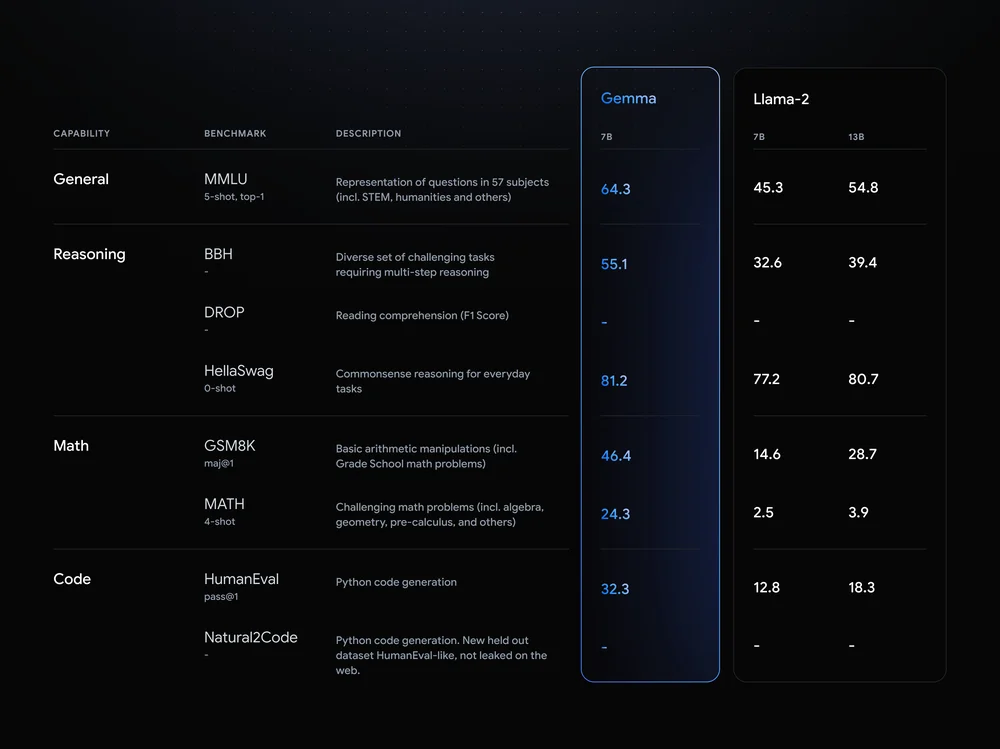
Gemma outperforms Llama 2 on several benchmarks, including MMLU, HellaSwag, and HumanEval.

To support developer innovation and responsible use, Google is also providing a Responsible Generative AI Toolkit alongside the models. This toolkit includes essential tools for creating safer AI applications with Gemma, offering guidance and support for developers.

To facilitate widespread adoption, Gemma is compatible with major frameworks, including JAX, PyTorch, and TensorFlow through native Keras 3.0. The release includes ready-to-use Colab and Kaggle notebooks, integration with popular tools such as Hugging Face, MaxText, NVIDIA NeMo, and TensorRT-LLM.

Gemma models can run on various platforms, from laptops and workstations to Google Cloud, with optimisation for industry-leading performance on NVIDIA GPUs and Google Cloud TPUs.

This development comes after Google recently introduced Gemini 1.5 with a 1 million token context window — the largest ever seen in natural language processing models. In contrast, GPT-4 Turbo has a 128K context window, and Claude 2.1 has a 200K context window.

The post Google Challenges Meta’s Llama 2 with Lightweight Open Source LLM, Gemma appeared first on Analytics India Magazine.

The Right Way to Access Dictionaries in Python

The Right Way to Access Dictionaries in Python
Image by Author

When working with data, especially if using our beloved Python language, the dictionary stands out as a fundamental data structure, ready to uncover its data to those who know how to unlock it.

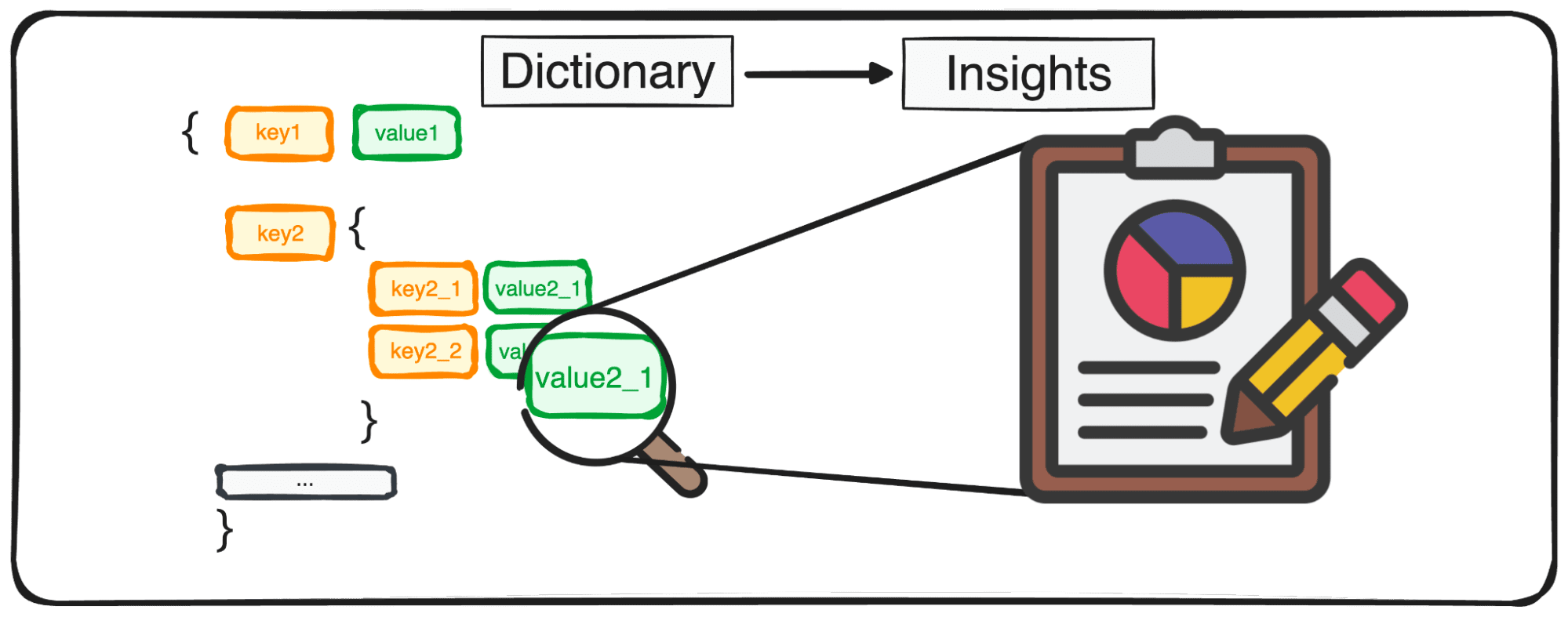
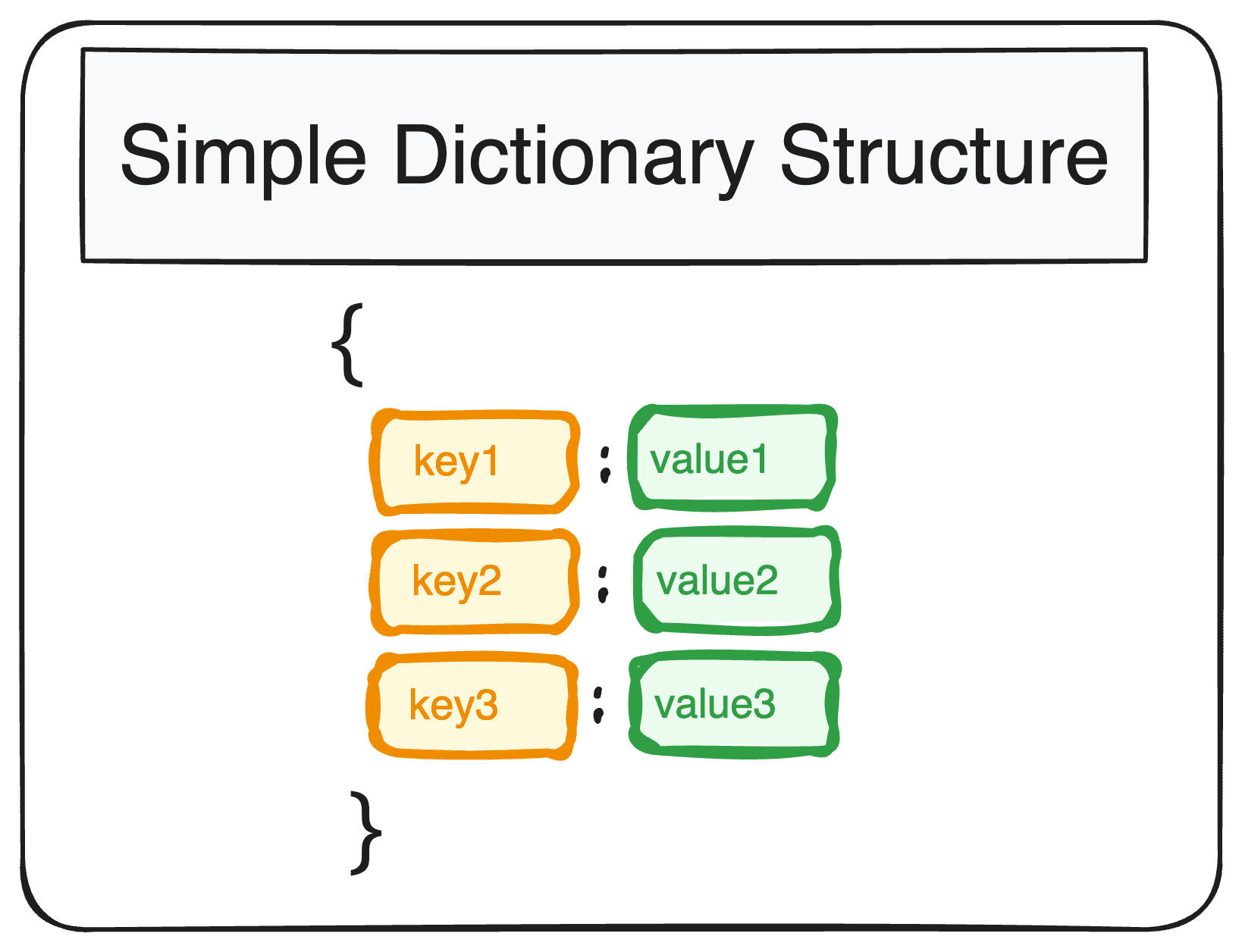
A dictionary in Python is a collection that is both unordered and mutable, designed to store data values like a map. Unlike other Data Types that hold only single values as elements, Dictionary holds pairs of keys and values separated by colons, a “:” element.

This Key-value pairs structure provides a way to store data so that it can be efficiently retrieved by key rather than position.

However, most times an unwanted KeyError when looking for a key can break our whole execution. This is why this guide attempts to shed some light and explain some effective ways to access dictionaries avoiding the break of our execution.

Understanding the Python Dictionary

Imagine a dictionary as a dynamic storage system, where each item you wish to store has a unique identifier or 'key' that leads you directly to it.

The Right Way to Access Dictionaries in Python
Image by Author

In Python, dictionaries are declared with curly brackets {}, with keys and their corresponding values separated by colons “:”, and each pair separated by commas.

Here's a simple representation:

# Creating a simple dictionary with keys and values  salaries = {     'Data Scientist': 100000,     'Data Analyst': 80000,     'Data Engineer': 120000}    print(salaries)

Creating a dictionary is just the beginning. The true utility of dictionaries is realized when retrieving and manipulating this stored data.

The Common Pitfall

A common approach to accessing a value in a dictionary is by using the key name within square brackets:

# Accessing a value using the key  print(salaries['Data Scientist'])  # Outputs: 100000    print(salaries['Professor'])  # This will raise a KeyError, as 'Professor' key doesn't exist

This method seems straightforward until you encounter a key that doesn't exist within the dictionary, leading to a KeyError.

This is a common issue that can complicate larger projects.

The Safer Approaches

To avoid KeyError, you might consider using if statements or try-except blocks to handle missing keys.

These methods, while functional, can become cumbersome with more complex code. Fortunately, Python offers more elegant solutions, mainly two:

  • the get() method
  • the setdefault() method

Embracing the get() Method

The get() method is a more efficient way to retrieve values from a dictionary. It requires the key you're searching for and allows an optional second parameter for a default value if the key is not found.

# Using get() to safely access a value  salary = salaries.get('Data Scientist', 'Key not found')  print(salary)  # Outputs: 30    # Using get() with a default value if the key doesn't exist  salary = salaries.get('Professor', 'Key not found')  print(salary)  # Outputs: 30

This is the most straightforward way to access a dictionary while ensuring there won’t be a KeyError. Having a default alternative is a safe way to make sure everything is in order.

However, this method does not alter our dictionary, and sometimes, we require the dictionary to store this new parameter.

This leads us to the second approach.

Leveraging the setdefault() Method

For scenarios where you not only want to retrieve a value safely but also update the dictionary with new keys, setdefault() becomes invaluable.

This method checks for the existence of a key and if absent, adds the key with the specified default value, effectively modifying the original dictionary.

# Using setdefault() to get a value and set it if not present  salary = salaries.setdefault('Professor', 70000)  print(salary)  # Outputs: 70000 since 'Professor' was not in the dictionary    # Examining the dictionary after using setdefault()  print(salaries) # Outputs: {'Data Scientist': 100000, 'Data Analyst': 80000, 'Data Engineer': 120000, 'Professor': 70000}

Examining playersHeight after using setdefault() will show the newly added keys with their default values, altering the original dictionary structure.

Final Recommendations

The choice between get() and setdefault() depends on your specific needs. Use get() when you simply need to retrieve data without altering the original dictionary. Opt for setdefault() when your task requires adding new entries to the dictionary.

Breaking old habits may require some effort, but the transition to using get() and setdefault() can significantly enhance the robustness and readability of your Python code.

As you integrate these methods into your programming practice, you'll quickly appreciate their efficiency and the seamless way they handle potential errors, making them indispensable tools in your Python arsenal.

The pivotal role of get() and setdefault() emerge as great ways to handle such formats and access our dictionaries.

I hope this guide was useful, and next time you are dealing with dictionaries, you can do it in more effectively.

You can go check the corresponding Jupyter Notebook in the following GitHub repo.

Josep Ferrer is an analytics engineer from Barcelona. He graduated in physics engineering and is currently working in the Data Science field applied to human mobility. He is a part-time content creator focused on data science and technology. You can contact him on LinkedIn, Twitter or Medium.

More On This Topic

  • Do You Read Excel Files with Python? There is a 1000x Faster Way
  • Predict Customer Churn (the right way) using PyCaret
  • Converting JSONs to Pandas DataFrames: Parsing Them the Right Way
  • 15 Trending MLOps Talks You can Access for Free at ODSC East 2022
  • Hone Your Data Skills With Free Access to DataCamp
  • Data access is severely lacking in most companies, and 71% believe…

Google DeepMind forms a new org focused on AI safety

Google DeepMind forms a new org focused on AI safety Kyle Wiggers 8 hours

If you ask Gemini, Google’s flagship GenAI model, to write deceptive content about the upcoming U.S. presidential election, it will, given the right prompt. Ask about a future Super Bowl game and it’ll invent a play-by-play. Or ask about the Titan submersible implosion and it’ll serve up disinformation, complete with convincing-looking but untrue citations.

It’s a bad look for Google needless to say — and provoking the ire of policymakers, who’ve signaled their displeasure at the ease with which GenAI tools can be harnessed for disinformation and to generally mislead.

So in response, Google — thousands of jobs lighter than it was last fiscal quarter — is funneling investments toward AI safety. At least, that’s the official story.

This morning, Google DeepMind, the AI R&D division behind Gemini and many of Google’s more recent GenAI projects, announced the formation of a new organization, AI Safety and Alignment — made up of existing teams working on AI safety but also broadened to encompass new, specialized cohorts of GenAI researchers and engineers.

Beyond the job listings on DeepMind’s site, Google wouldn’t say how many hires would result from the formation of the new organization. But it did reveal that AI Safety and Alignment will include a new team focused on safety around artificial general intelligence (AGI), or hypothetical systems that can perform any task a human can.

Similar in mission to the Superalignment division rival OpenAI formed last July, the new team within AI Safety and Alignment will work alongside DeepMind’s existing AI-safety-centered research team in London, Scalable Alignment — which is also exploring solutions to the technical challenge of controlling yet-to-be-realized superintelligent AI.

Why have two groups working on the same problem? Valid question — and one that calls for speculation given Google’s reluctance to reveal much in detail at this juncture. But it seems notable that the new team — the one within AI Safety and Alignment — is stateside as opposed to across the pond, proximate to Google HQ at a time when the company’s moving aggressively to maintain pace with AI rivals while attempting to project a responsible, measured approach to AI.

The AI Safety and Alignment organization’s other teams are responsible for developing and incorporating concrete safeguards into Google’s Gemini models, current and in-development. Safety is a broad purview. But a few of the organization’s near-term focuses will be preventing bad medical advice, ensuring child safety and “preventing the amplification of bias and other injustices.”

Anca Dragan, formerly a Waymo staff research scientist and a UC Berkeley professor of computer science, will lead the team.

“Our work [at the AI Safety and Alignment organization] aims to enable models to better and more robustly understand human preferences and values,” Dragan told TechCrunch via email, “to know what they don’t know, to work with people to understand their needs and to elicit informed oversight, to be more robust against adversarial attacks and to account for the plurality and dynamic nature of human values and viewpoints.”

Dragan’s consulting work with Waymo on AI safety systems might raise eyebrows, considering the Google autonomous car venture’s rocky driving record as of late.

So might her decision to split time between DeepMind and UC Berkeley, where she heads a lab focusing on algorithms for human-AI and -robot interaction. One might assume issues as grave as AGI safety — and the longer-term risks the AI Safety and Alignment organization intends to study, including preventing AI in “aiding terrorism” and “destabilizing society” — require a director’s full-time attention.

Dragan insists, however, that her UC Berkeley lab’s and DeepMind’s research are both interrelated and complementary.

“My lab and I have been working on … value alignment in anticipation of advancing AI capabilities, [and] my own Ph.D. was in robots inferring human goals and being transparent about their own goals to humans, which is where my interest in this area started,” she said. “I think the reason [DeepMind CEO] Demis Hassabis and [chief AGI scientist] Shane Legg were excited to bring me on was in part this research experience and in part my attitude that addressing present-day concerns and catastrophic risks are not mutually exclusive — that on the technical side mitigations often blur together, and work contributing to the long term improves the present day, and vice versa.”

To say Dragan has her work cut out for her is an understatement.

Skepticism of GenAI tools is at an all-time high — particularly where it relates to deepfakes and misinformation. In a poll from YouGov, 85% of Americans said that they were very concerned or somewhat concerned about the spread of misleading video and audio deepfakes. A separate survey from The Associated Press-NORC Center for Public Affairs Research found that nearly 60% of adults think AI tools will increase the volume of false and misleading information during the 2024 U.S. election cycle.

Enterprises, too — the big fish Google and its rivals hope to lure with GenAI innovations — are wary of the tech’s shortcomings and their implications.

Intel subsidiary Cnvrg.io recently conducted a survey of companies in the process of piloting or deploying GenAI apps. It found that around a fourth of the respondents had reservations about GenAI compliance and privacy, reliability, the high cost of implementation and a lack of technical skills needed to use the tools to their fullest.

In a separate poll from Riskonnect, a risk management software provider, over half of execs said that they were worried about employees making decisions based on inaccurate information from GenAI apps.

They’re not unjustified in those concerns. Last week, The Wall Street Journal reported that Microsoft’s Copilot suite, powered by GenAI models similar architecturally to Gemini, often makes mistakes in meeting summaries and spreadsheet formulas. To blame is hallucination — the umbrella term for GenAI’s fabricating tendencies — and many experts believe it can never be fully solved.

Recognizing the intractability of the AI safety challenge, Dragan makes no promise of a perfect model — saying only that DeepMind intends to invest more resources into this area going forward and commit to a framework for evaluating GenAI model safety risk “soon.”

“I think the key is to … [account] for remaining human cognitive biases in the data we use to train, good uncertainty estimates to know where gaps are, adding inference-time monitoring that can catch failures and confirmation dialogues for consequential decisions and tracking where [a] model’s capabilities are to engage in potentially dangerous behavior,” she said. “But that still leaves the open problem of how to be confident that a model won’t misbehave some small fraction of the time that’s hard to empirically find, but may turn up at deployment time.”

I’m not convinced customers, the public and regulators will be so understanding. It’ll depend, I suppose, on just how egregious those misbehaviors are — and who exactly’s harmed by them.

“Our users should hopefully experience a more and more helpful and safe model over time,” Dragan said. Indeed.

Google Challenges Meta’s Llama with Lightweight Open Source LLM, Gemma

Google has unveiled Gemma, a new family of open models, leveraging the research and technology behind the existing Gemini models. The Gemma open models are released in two sizes, Gemma 2B and Gemma 7B, each offering pre-trained and instruction-tuned variants.

Users can start working with Gemma today using free access in Kaggle and a free tier for Colab notebooks. Additionally, first-time Google Cloud users can avail themselves of $300 in credits. Researchers can also apply for Google Cloud credits of up to $500,000 to accelerate their projects.

Gemma outperforms Llama 2 on several benchmarks, including MMLU, HellaSwag, and HumanEval.

To support developer innovation and responsible use, Google is also providing a Responsible Generative AI Toolkit alongside the models. This toolkit includes essential tools for creating safer AI applications with Gemma, offering guidance and support for developers.

To facilitate widespread adoption, Gemma is compatible with major frameworks, including JAX, PyTorch, and TensorFlow through native Keras 3.0. The release includes ready-to-use Colab and Kaggle notebooks, integration with popular tools such as Hugging Face, MaxText, NVIDIA NeMo, and TensorRT-LLM.

Gemma models can run on various platforms, from laptops and workstations to Google Cloud, with optimisation for industry-leading performance on NVIDIA GPUs and Google Cloud TPUs.

This development comes after Google recently introduced Gemini 1.5 with a 1 million token context window — the largest ever seen in natural language processing models. In contrast, GPT-4 Turbo has a 128K context window, and Claude 2.1 has a 200K context window.

The post Google Challenges Meta’s Llama with Lightweight Open Source LLM, Gemma appeared first on Analytics India Magazine.

Did Google Gemini 1.5 Really Kill RAG? 

Google’s recent release, Gemini 1.5, with a 1M context length window, has sparked a new debate about whether RAG (Retrieval Augmented Generation) is still relevant or not. LLMs commonly struggle with hallucination. To address this challenge, two solutions were introduced, one involving an increased context window and the other utilising RAG.

Lately, several developers have been experimenting with Gemini 1.5. “I uploaded the Great Gatsby with two alterations (mentioning an ‘iPhone-in-a-box’ and a ‘laser lawnmower’). Gemini nails it (& finds one more thing). Claude does but hallucinates. RAG doesn’t work,” Ethan Mollick, a professor at Wharton, wrote on X.

Another X user, Mckay Wrigley, fed an entire biology textbook into Gemini 1.5 Pro, which consisted of 491,002 tokens. He asked it three extremely specific questions, and it provided each answer 100% correctly.

“Gemini 1.5 Pro is still underhyped. I uploaded an entire codebase directly from GitHub, and all of the issues, including Vercel AI SDK. Not only was it able to understand the codebase, but it also identified the most urgent issue and implemented a fix. This changes everything,” wrote Sully Omar, co-founder and chief at Cognosys.

The three examples above prove that Gemini 1.5, with its extensive context window, successfully retrieves crucial information within the document. However, this doesn’t portray the limitation of RAG.

Comparing Apples and Oranges

Many are still confused about the distinction between RAG and the context window. The context window limits the model to information within a given text span, while RAG extends the model’s capabilities to external sources, vastly widening the scope of accessible information.

Taking notice of the hype on the internet, Oriol Vinyals, VP of Research and Deep Learning team lead at Google DeepMind, voiced his opinion, saying, “RAG (retrieval-augmented generation) isn’t done for, even though we can handle 1M or more tokens in context now. In fact, RAG has some nice properties that can enhance (and be enhanced by) long context.”

“RAG allows you to find relevant information, but the way the model accesses it may be too restrictive due to compression. Long context may help bridge that gap, similar to how L1/L2 cache & main memory work together in modern CPUs,” he added.

A larger context window allows LLMs to consider more text and thus generates more accurate and coherent responses, particularly for complex and long sentences. However this doesn’t mean that the model won’t hallucinate.

According to a paper titled ‘Lost in the Middle: How Language Models Use Long Contexts,’ published by researchers from Stanford University, UC Berkeley, and Samaya AI, LLMs exhibit high information retrieval accuracy at the document’s start and end. However, this accuracy declines in the middle, especially with increased input processing.

RAG Survives the Day

“The worst take that I have seen these past few days is that long context models like Gemini 1.5 will replace RAG,” wrote Elvis Saravia, co-founder at DAIR.AI explaining that long-context LLMs work great with static information (books, video recordings, PDFs, etc.) but they are yet to be battle-tested on highly evolving information and knowledge.

He further added that to tackle these types of problems, one could potentially combine RAG and long-context LLMs to build a robust system that effectively and efficiently retrieves and performs large-scale analysis of key historical information.

“We will make progress towards addressing some of the challenges like “lost in the middle” and handling more complex structured and dynamic data but we still have a long way to go,” he said. Saravia added that different families of LLMs will help solve different types of problems. “We need to move on from this idea that there will be one LLM that will rule all.”

Without a doubt, Gemini 1.5 outperforms Claude 2.1 and GPT-4 Turbo as it can assimilate entire code bases, process over 100 papers, and various documents, but it surely hasn’t killed RAG.

The post Did Google Gemini 1.5 Really Kill RAG? appeared first on Analytics India Magazine.