MachineCon GCC Summit 2024 – Shaping the Future of Global Capability Centers in India

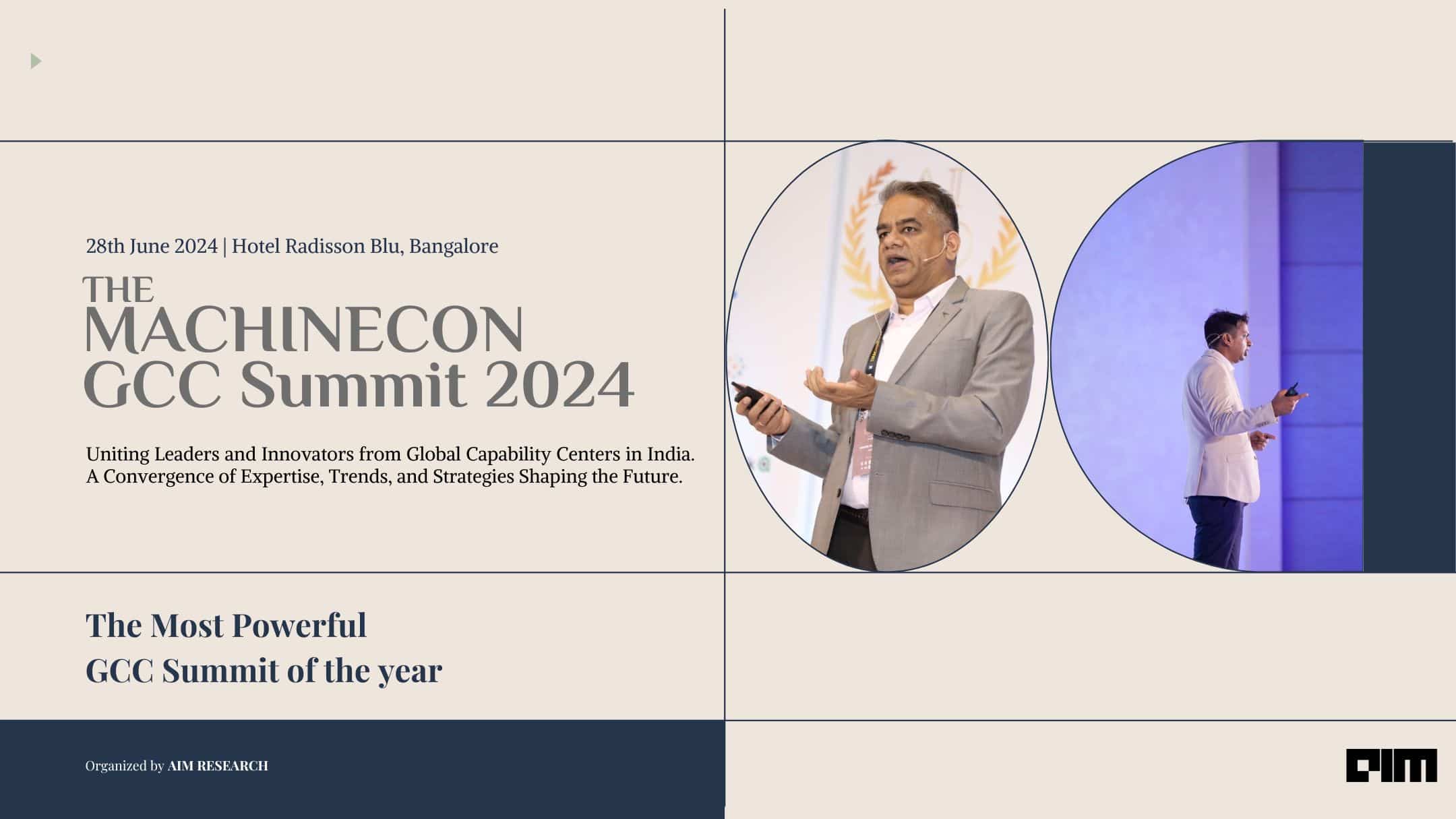
In an era where technological advancements and ethical considerations in artificial intelligence (AI) are pivotal, the MachineCon GCC Summit 2024 emerges as a beacon for leaders and innovators. Scheduled for June 28th, 2024, at Hotel Radisson Blu in Bangalore, this summit is a confluence of expertise, trends, and strategies shaping the future of Global Capability Centers (GCCs) worldwide.

The 5th edition of this influential summit zeroes in on themes of paramount importance—ethical AI, global collaboration, and strategic expansion into emerging markets. With Bangalore, the leading city for GCCs in India, playing host, the summit promises to unite a diverse group of leaders to navigate the complex landscape of technology and innovation.

Ethical AI and Machine Learning: A Balanced Approach

At the heart of MachineCon 2024 is the commitment to ethical considerations in AI and machine learning. The summit is poised to tackle the delicate balance between pushing the boundaries of innovation and ensuring technology’s societal impact is fair, transparent, and positive. As GCCs increasingly integrate advanced technologies, the focus on ethics ensures that these integrations are not just about achieving business objectives but also about contributing positively to society.

Cross-Border Collaboration: Breaking Geographical Boundaries

Recognizing that today’s digital and business challenges do not recognize geographical boundaries, MachineCon 2024 emphasizes the importance of cross-border collaboration. The summit serves as a platform for discussing how GCCs can work together across borders, leveraging collective strengths to address global challenges and opportunities.

Strategic Expansion into Emerging Markets

The summit will delve into strategies for GCCs looking to expand into emerging markets. Understanding cultural nuances, regulatory requirements, and the socio-economic landscape of these regions is crucial. The discussions will provide insights into navigating these new markets thoughtfully, ensuring GCCs not only find new growth avenues but also act as catalysts for positive change.

Elevating Excellence: The GCC Excellence Awards

A highlight of the MachineCon GCC Summit 2024 is the GCC Excellence Awards, celebrating remarkable achievements within the GCC landscape. These awards acknowledge entities that redefine excellence through innovation, leadership, and substantial contributions to the global business narrative. With categories ranging from process optimization to talent development, digital transformation, and emerging technologies, the awards are a platform for GCCs to be recognized for their pioneering achievements.

Fostering Excellence Without Barriers

AIM proudly hosts the GCC Excellence Awards, offering participation at no cost to ensure that all eligible entities have the opportunity to be recognized. This initiative underscores a commitment to fostering a vibrant ecosystem where excellence and innovation are celebrated across the board. The awards span multiple categories, reflecting the multifaceted roles of GCCs in driving forward the global business landscape.

The State of GCCs in India: A Robust Landscape

India’s role as a global leader in hosting GCCs is undeniable. With over 1,600 GCCs employing more than 2 million professionals, the landscape is ripe for innovation and growth. Bengaluru, leading the charge with 47% of these centers, showcases the city’s strategic importance. The significant cost savings, coupled with a critical role in digital transformation initiatives, underline the strategic importance of GCCs beyond mere cost considerations.

Key Themes and Discussions

The MachineCon GCC Summit 2024 will cover a wide range of topics, from navigating through uncertainty and leveraging innovation at scale to addressing the future of work and talent in GCCs. These discussions will reflect broader industry trends, focusing on resilience, adaptation, and the crucial role of GCCs in driving global competitiveness.

A Gathering of Visionaries

The summit boasts a lineup of esteemed speakers and GCC leaders, including names from Shell R&D, Kellanova, Roche Information Solutions India, and Deutsche Bank Group, among others. These leaders will share their insights, experiences, and visions for the future, making MachineCon an invaluable experience for all attendees.

Sponsorship and Awards: Celebrating Excellence

MachineCon 2024 also presents a unique opportunity for organizations to partner and sponsor, aligning themselves with innovation and excellence. The GCC Excellence Awards, a highlight of the event, will honor achievements in innovation, leadership, and excellence, showcasing the pivotal role of GCCs in the global business landscape.

Invitation to Innovation

MachineCon GCC Summit 2024 is an invite-only conference, anticipated to attract over 200 senior executives representing the GCC ecosystem of India. With limited passes available, early registration is encouraged to secure a spot at this groundbreaking event.

As we look forward to MachineCon GCC Summit 2024, it’s clear that the event is more than just a conference. It’s a forward-thinking journey that promises to chart the future of GCCs with a focus on ethical AI, global collaboration, and strategic expansion. Join us in Bangalore to be part of shaping the future of Global Capability Centers.

The post MachineCon GCC Summit 2024 – Shaping the Future of Global Capability Centers in India appeared first on Analytics India Magazine.

Qualcomm Announces AI Hub Which Allows Developers to Build On-Device Models

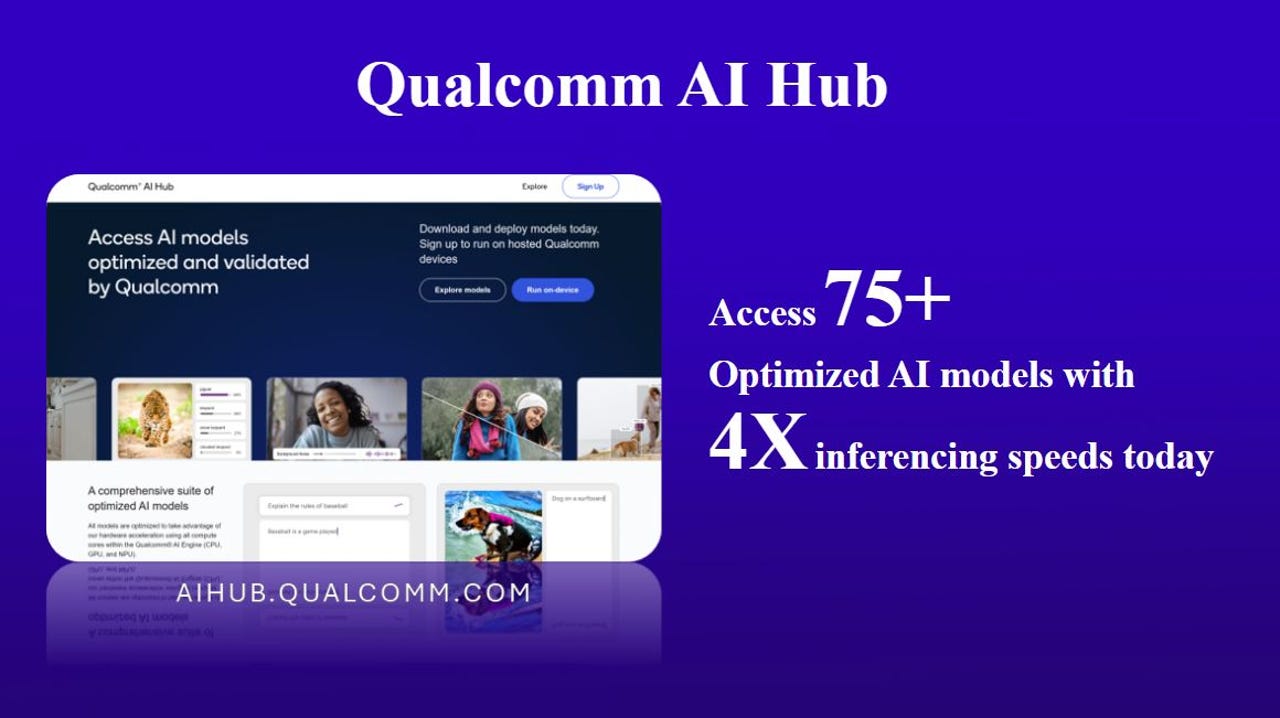
Qualcomm Technologies, Inc., at the Mobile World Congress (MWC) Barcelona, unveiled a new tools that will allow developers run AI models on their devices. Qualcomm AI Hub offers 75+ optimized AI models for Snapdragon and Qualcomm platforms, reducing time-to-market for developers and unlocking the benefits of on-device AI for their apps.

These models are also available on Hugging Face and GitHub. Developers will be able run the models themselves with a few lines of code on cloud-hosted devices powered by Qualcomm platforms.

“With Snapdragon 8 Gen 3 for smartphones and Snapdragon X Elite for PCs, we sparked commercialisation of on-device AI at scale. Now with the Qualcomm AI Hub, we will empower developers to fully harness the potential of these cutting-edge technologies and create captivating AI-enabled apps,” said Durga Malladi, senior vice president and general manager, technology planning and edge solutions, Qualcomm Technologies, Inc.

“The Qualcomm AI Hub provides developers with a comprehensive AI model library to quickly and easily integrate pre-optimized AI models into their applications, leading to faster, more reliable and private user experiences,” Malladi added.

Moreover, Qualcomm AI Research demonstrated a large multimodal model and customisation of large vision models running on Android smartphones and Windows PCs.

For the first time running on an Android smartphone, Qualcomm AI Research also demonstrated how a Large Language and Vision Assistant (LLaVA), a 7+ billion parameter large multimodal model (LMM) that can accept multiple types of data inputs, including text and images, and generate multi-turn conversations with an AI assistant about an image, can run on an Android phone.

This LMM runs at a responsive token rate on device, which results in enhanced privacy, reliability, personalization, and cost. LMMs with language understanding and visual comprehension enable many use cases, such as identifying and discussing complex visual patterns, objects, and scenes.

The company also unveiled the Qualcomm® FastConnect™ 7900 Mobile Connectivity system, the first to deliver AI-optimised performance and integrate Wi-Fi 7, Bluetooth, and Ultra Wideband technologies in a single chip. Utilising AI, FastConnect 7900 adapts to specific use cases and environments, delivering meaningful optimizations across power consumption, network latency and throughput.

FastConnect 7900 integrates Ultra Wideband technology, Wi-Fi Ranging, and Bluetooth Channel Sounding to create a powerful suite of proximity technologies that enable security rich device discovery, access, and control.

The post Qualcomm Announces AI Hub Which Allows Developers to Build On-Device Models appeared first on Analytics India Magazine.

Qualcomm’s new AI Hub is a dream tool for developers building on-device models

image-qualcomm-ai-hub-1

Last year, we saw a surge of interest and developments in generative AI applications. Now we are in the next era of the technology — with on-device AI becoming more prevalent across our personal devices. At Mobile World Congress, Qualcomm unveiled a tool that simplifies how developers can access and download AI models right to their test devices.

Also: What to expect from MWC 2024: Transparent laptops, AI phones, smart rings, more

The new Qualcomm AI Hub contains a library of over 75 generative AI models that developers can easily download onto Qualcomm-powered devices, with new models continually being added over time.

The library contains some of the most popular models in the industry such as Whisper, OpenAI's automatic speech recognition (ASR) system, and Stable DIffusion, Stability AI's text-to-image model. The Qualcomm AI Hub automatically applies hardware-aware optimizations to the models for superior on-device AI performance.

Furthermore, the models are refined to make the best use of all the cores found within the Qualcomm AI Engine, including the NPU, CPU, and GPU, resulting in better power efficiency, lower memory utilization, and up to four times inferencing speeds, according to the company's Monday release.

The advantage of on-device AI, in addition to overall increased application performance, is that by forgoing any friction with the cloud, there is increased privacy, which is especially important when creating models that use databases with confidential or proprietary data.

Also: Instant evolution: If AI can design a robot in 26 seconds, what else can it do?

"The Qualcomm AI Hub provides developers with a comprehensive AI model library to quickly and easily integrate pre-optimized AI models into their applications, leading to faster, more reliable and private user experiences," said Durga Malladi, Qualcomm SVP of technology planning and edge solutions.

Qualcomm shares that the optimized models are available today both on the Qualcomm AI Hub, GitHub, and Hugging Face. Developers can sign up for access starting today.

What is Multitenancy in Vector Databases?

When you upload and manage your data on GitHub that no one else can see unless you make it public, you share physical infrastructure with other users. That's because GitHub uses multitenancy as a cost-effective and easier-to-manage alternative to assigning a separate database to each user.

However, sharing the same infrastructure becomes a security risk when all users can view each other's data. Multitenancy addresses this issue by logically partitioning user data while allowing them to run on the same resources.

This article explores multitenancy in vector databases, its benefits, limitations, and real-world use cases.

How Does Multitenancy Work in Vector Databases?

Multitenancy is an approach where multiple tenants, i.e., users, share the same database but store their data in an isolated environment.

An isolated environment is created using unique credentials for each tenant to secure their data. As a result, each tenant can store, manage, and alter their data in their isolated environment. However, the company has the access to manage and control tenant resources and limitations.

Sample illustration of a two-tenant collection with isolated access to the same database. Image Source: Qdrant

Vector databases use indexing as a search technique that organizes vectors based on similarity. The indexing strategy impacts the tenant data partitioning. Currently, two indexing strategies are used in multitenant vector databases.

Let’s discuss both indexing strategies in multitenant vector databases:

  1. Shared Indexing: All tenants share the same index with unique credentials partitioning the data. This method is memory efficient. However, it requires robust security and access control mechanisms to protect tenant data.
  2. Per-tenant Indexing: Every tenant has a separate index in per-tenant indexing. This allows complete access control and improved search performance. However, this method is resource-intensive.

Some vector databases like Qdrant and Milvus offer multitenant architecture to allow added customization and scalability for users with both indexing strategies.

Benefits of Multitenancy in Vector Databases

Multitenancy in vector databases offers numerous benefits for companies that require isolated database instances for several users. Some of the benefits include:

1. Cost reduction

Using fewer resources for more users results in reduced infrastructure costs.

2. Scalability

Multitenancy allows need-based resource sharing. This means tenants with more storage requirements get more resources and vice versa.

3. Customization

A separate environment allows tenants to configure it based on their needs, including database schema, plugins, metrics, and dashboards. Configurations are private to tenants, and tenants can change them as their requirements change.

4. Manageability

A single database for all tenants allows centralized resource management, configuration, and monitoring instead of monitoring all tenants separately. While a company can manage all tenants in a single place, tenants have the control to manage their data within their isolated environments.

Limitations of Multitenancy in Vector Databases

Like any other architectural approach, multitenancy has some limitations. Considering these limitations is important for careful decision-making. The most common limitations include:

1. Additional Complexities

Managing multiple tenants on a single resource requires added configuration. This includes tenant onboarding, access control, user authentication, and authorization. Lack of knowledge and support could lead to unwanted outcomes like accidental data sharing or resource overhead.

To address this, careful planning and database support ensures a secure user environment.

2. Security Concerns

Malicious access, accidental misconfigurations, or vulnerabilities in underlying infrastructure can lead to shared data among tenants. As guardrails, implementing careful design, conducting regular audits, and incorporating multi-layer security measures can strengthen overall security.

3. Performance Bottlenecks

Higher usage of resources by a tenant can slow down the performance of others. Shared indexing specifically affects search performance due to runtime permission checks to match the access list. Resource management and control, regular updates, and tenant education are important to mitigate performance issues.

4. System Outage

Scheduled maintenance, hardware failure, and software bugs affect all tenants when they share a similar infrastructure. This leads to data, reputation, and financial losses. Regular risk assessment, infrastructure quality assurance, and timely backup can minimize the negative impact of system outages.

Use cases of Multitenancy

Multitanency is useful in various applications, from e-commerce recommendation systems to training large machine learning (ML) models in companies. A few of the most common use cases include:

1. Recommendation Systems

Imagine an e-commerce platform where users can sign up and save their shopping preferences. A multitenant setup will allow personalized product recommendations to each user.

On the e-commerce platform, all tenants can set their criteria, so the recommendation system sends personalized product recommendations to end users.

2. Enterprise Applications

Large software applications serving multiple employees and customers use the same database for all users. All users can upload and manage their data while protecting it from others. For instance, Dropbox and HubSpot allow all users to share the same resources but keep their data protected from each other.

3. Anomaly and Fraud Detection

Multitenancy allows the development of robust fraud detection systems while keeping individual data secure. Companies train fraud detection models on their anonymized data and send only the trained model over the centralized database. This allows them to keep their data secure while contributing to developing fraud detection systems.

For example, credit card fraud detection systems use ML for enhanced privacy and efficiency.

When to Use and When Not to Use Multitenancy

Multiple factors contribute to the decision to switch to multitenancy, including tenant performance, isolation requirements, and security concerns. Let’s discuss when and when not to use multitenancy in detail below.

When to Use Multitenancy

The following indicators make multitenancy a good fit:

  1. Multiple tenants need separate environments.
  2. Tenants can accept performance tradeoffs.
  3. Cost reduction is your priority.
  4. Centralized tenant management improves your operations.

When Not to Use Multitenancy

Limitations of multitenancy keep it from making a good fit for all situations. A multitenant vector database isn’t a good fit for you if you’ve the following requirements:

  1. Tenants own highly sensitive data with strict security requirements.
  2. A limited number of tenants with slow growth.
  3. Tenants require dedicated environments and can’t tolerate performance degradation.
  4. Limited multitenant expertise and capability to handle increasing complexity.

Multitenancy introduces additional scalability and manageability to the vector databases. If configured correctly, multitenancy saves significant costs and resources for an organization.

Interested in more AI-related content? Keep in touch with unite.ai.

60% of GPT-3.5 Outputs Are Plagiarised: Report

A report from plagiarism detector Copyleaks has revealed that 60% of OpenAI’s GPT-3.5 outputs contain some form of plagiarism. The company used a proprietary scoring method considering identical text, minor alterations, paraphrasing, and more to assign a “similarity score.”

Copyleaks specializes in AI-based text analysis and offers plagiarism detection tools to businesses and schools. The company has been in the game well before ChatGPT. Although GPT-3.5 was the star behind ChatGPT’s debut, OpenAI has since upgraded to the more advanced GPT-4.

According to their latest findings, GPT-3.5 exhibited 45.7% identical text, 27.4% minor changes, and 46.5% paraphrased text. A score of 0% implies complete originality, while 100% suggests no original content, as per the report.

Copyleaks subjected GPT-3.5 to various tests, generating around a thousand outputs, each approximately 400 words, across 26 subjects. The results with the highest similarity score belonged to computer science (100%), followed by physics (92%) and psychology (88%). On the flip side, theatre (0.9%), humanities (2.8%), and English language (5.4%) registered the lowest similarity scores.

“Our models were designed and trained to learn concepts in order to help them solve new problems,” OpenAI spokesperson Lindsey Held told Axios. “We have measures in place to limit inadvertent memorization, and our terms of use prohibit the intentional use of our models to regurgitate content.”

Plagiarism goes beyond cutting and pasting entire sentences and paragraphs. The New York Times filed a lawsuit against OpenAI, stating that OpenAI’s AI systems’ “wide-scale copying” constitutes copyright infringement. OpenAI responded to the lawsuit, arguing that “regurgitation” is a “rare bug” and also accusing The New York Times of “manipulating prompts.”

But content creators in general, from authors to visual artists, have been trying to argue in court that the underlying technology, generative AI, is trained on their copyrighted work; hence, it ends up spitting out exact copies. But as of now, the laws have managed to work out for the companies instead of the other party. A glimpse of hope is visible with the NYT case but the matter remains pending.

The post 60% of GPT-3.5 Outputs Are Plagiarised: Report appeared first on Analytics India Magazine.

Fractal Introduces Kalaido, New Indic Text to Image Diffusion Model 

AI and analytics MNC Fractal Analytics has unveiled India’s first Indian languages-based text-to-image diffusion model Kalaido.ai.

Trained on a public dataset of 70 million images, besides English, Kalaido.ai can take inputs in 17 Indian languages including Hindi, Kannada, Tamil, Telugu and Sanskrit.

The model claims to surpass “global competitors by 40% in rich detail image production while reducing iteration time by 2X as it also improves prompt description, among others. While not open-sourcing its code, the beta version will be free-to-use, targeting industries like advertising, graphic design, social media marketing, and edtech.

Kalaido‘s efficient training approach minimises steps, saving time, GPU costs, and reducing carbon footprint. It has shown cost reduction for brands, such as a 79% cut for a soup brand’s image generation.

User Stories

In the edtech sector, Kalaido generated nine hour long course content with only two hours of actual shooting, with the remaining content being created through images.

Fractal exercises caution to prevent misuse, watermarking images, and incorporating AI capabilities to decline to process harmful text prompts. The model can be fine tuned on specific data as per client needs. Similarly, for another MNC, Kalaido was used in conjunction with a neuroscience-based prompt strategy, resulting in a 100-word prompt for the text-to-image model, aligning with brand guidelines.

The company entered the generative AI space last June by introducing Flyfish, a new 360-degree generative AI platform for digital sales. This platform enables brands to deliver personalised, data-driven shopping experiences through intuitive sales advisors. By analysing customer buying patterns, purchase history, and preferences, brands can swiftly create AI Sales Advisors by integrating product catalogs with customer data.

Three days ago, London-based AI research lab Stability AI came up with Stable Diffusion 3 in early preview, its most capable text-to-image model with greatly improved performance in multi-subject prompts, image quality, and spelling abilities. The Stable Diffusion 3 suite of models currently ranges from 800M to 8B parameters.

The post Fractal Introduces Kalaido, New Indic Text to Image Diffusion Model appeared first on Analytics India Magazine.

Is AI Disconnected from Reality?

Ali Alkhatib was frustrated that the tech reality he was experiencing and could see was not being put out there adequately. The researcher, working at the intersection of AI and society, has been closely studying digital culture for a decade.

The former director for the Center for Applied Data Ethics at the University of San Francisco has been pointing out the problems in technology – from how gig work disempowers workers to the power that AI wields in getting them increasingly unhinged from reality.

“We allow these systems to make decisions without anyone thinking about what the consequences are, which have dysfunctions totally unaccountable to people,” stated Alkhatib in an exclusive interview with AIM. He believes that in today’s age where AI is present in our daily lives, the main principle is to drag back into our discourse that these systems are fundamentally an organisation of society.

“If a [technological] process will yield airstrikes on people, cause life altering harm or keep them from opportunities, those are the decisions we absolutely can’t tolerate. If a company wants to get into the business of selling those decisions, then as a society, we need to stop that from happening,” said the researcher.

Naturally, that drifts into an admittedly less technological and more anti-authoritarian way of thinking about AI and other technologies. He clarified that he likes algorithmic systems to organise things in his life. “I’m not a person who fundamentally rejects everything technological by any means,” he mentioned.

But he urges that “if the technology is going to cause harm, we need to be able to just say no, regardless of whatever set of knowledge or data it operates on”.

Events of the Past

Alkhatib’s research is a result of the question he has long pondered upon: How do people respond to the feeling of systematic oppression when they start to realise it?

The cultural anthropologist explained that, “We have encountered these problems in the past and we can deal with them again.” Through his work, Alkhatib wants to give people some idea of the systemic power dynamic that’s going on and help them understand that this is not about independent things.

He recalled that a decade ago, gig workers, who were frustrated with these systems, realised they’re not doing anything wrong. “The system was functionally designed to ensure that they can’t possibly profit because Uber needs to profit and earn every penny. Seeing this, gig workers started doing bizarre and interesting things with their apps to trick the system into doing what they want,” he recollected.

“Similarly, today YouTubers and TikTokers use slang to avoid the content monetization system from catching them. They use clickbait thumbnails to appeal to the algorithm not to people, because there is that recognition that if the algorithm likes their content they can pass through that system relatively unscathed,” he explained.

Elaborating on the flaws in the reward system, he explained, “Everybody wants a 15-second bit meticulously designed for the algorithm, and I can’t blame people because they’re responding to the social system that rewards those bits at the exclusion of the quality of the whole song. Such moments of absurdity are not the result of a person but the system being stupid.”

Communicate, Not Generate

The latest human-mimicking technology already has and continues to seep deeper in our lives. “Generative AI is going to become a tool that managers use to push human-like work of worse quality, more quickly, for less money,” Alkhatib predicted.

“They will always be able to threaten the prospect of using generative AI to do your job wrong and untrue,” he added.

“As people become more sensitive to the inauthenticity of algorithmically generated content,” he hopes that people look into the gaping hole that AI can produce words, but doesn’t say anything.

Last week, ChatGPT creator, OpenAI’s chief Sam Altman said that 100 billion words are being produced each day. “Generating words is nothing like people communicating,” pointed out Alkhatib.

He went on to quote linguist Emily Bender: If somebody couldn’t even be bothered to say it or write it. Why should I be bothered to read it? “That wasn’t my thought, but I liked the sentiment,” he added.

Alkhatib hopes that there’s a popular push against generative AI or at least towards people claiming authorial sort of ownership of the things that they put out into the world. We need to not value garbage produced at mass.

Pay More Attention

As per the researcher, there are two important things: One is to recognise that the technology you have an okay or even good experience with might be harmful to other people. The next thing is to get them to think that the decisions people close to them made in the past are now being made by technological platforms.

For instance, he stated that Google not just knows about your schedule as a map guide, they’re in your social, cultural and political life.

“Even in your culinary life, since you search for restaurants, recipes, etc. Google benefits from that because they accumulate the power to decide what places to show and where to send you,” Alkhatib noted.

He believes that the ability to pull away from a system when it starts to do stupid stuff is the fundamental bedrock of having a productive relationship with it. “We’ve already gone so far beyond the line of what’s reasonable or acceptable that we can’t even see it anymore,” he said.

The post Is AI Disconnected from Reality? appeared first on Analytics India Magazine.

‘How much do you love your wife?’ asked the Apple Vision Pro salesman

tryvisionprobabygettyimages-1973655666

I thought I was braced for anything and everything.

A couple of weeks ago, I'd gone to an Apple store and been told that the Vision Pro was not merely visionary, but primarily a work tool.

It'll "blow your mind," I was told.

Also: Apple Vision Pro review: Fascinating, flawed, and needs to fix 5 things

How many times in your life have you been offered that promise? And how many times have you resisted seeing if it's true?

I couldn't, of course, so I made an appointment to have my mind blown, my reality altered and my pocket picked.

The booking process was simple. When I arrived at the very busy Apple store, the saleswoman who greeted me thanked me for wearing green pants. "You'll be easy to find," she said.

Spatial computing isn't for Zuckers

Soon I was in the hands of a Vision Pro expert who would guide me toward the future. Naturally, he wanted to know why I wanted to try the new device.

I explained that I wanted to see if Mark Zuckerberg was right in suggesting it was an inferior product to the Meta Quest.

The Apple salesman laughed. "The Quest?," he said. "This is nothing like the Quest. This is spatial computing."

It's interesting how Apple embraces a terminology and all its employees are encouraged to repeat it. I wonder how many customers find it truly persuasive.

Still, the salesman tested the prescription lenses on my glasses and prepared Zeiss inserts that would work with the Vision Pro. And work they did.

Also: I bought custom lenses for my headset, but not every eyeglass wearer needs them. Do you?

Soon, I was placing the Vision Pro on my head. Even sooner than that I was uttering an involuntary "Whoa."

I can quite understand why so many believe the Vision Pro is the future. You put it on and you're instantly somewhere else, even though you can also see that you're also still in the Apple store with the vividly enthusiastic salesman.

Yet the world around you — and inside your head — is fundamentally altered. You have a new perspective, there before your eyes.

An initial couple of questions emerged: When was the last time a product made me utter "Whoa?" And: Will the world ever look the same again?

Yes, it just works

The salesman then took me through the gestures, which were startlingly simple. And, oddly, worked hitchlessly.

Pinching my fingers — keep the gesture horizontal — instantly became as natural as swiping up on my iPhone. Zooming in and out recalled my (non-existent) career clutching the baton before the London Philharmonic.

Yes, you too can be the conductor of your brave new world.

Also: I tried Apple Vision Pro for a weekend and here are my 3 biggest takeaways

The whole thing reminded me of an Apple essence: It just works. I hadn't imagined it would translate so effortlessly into such a complex product.

Moreover, the eye-tracking was also blindingly simple and accurate.

A few years ago, I was invited by a company called Eyefluence to experience its eye-tracking via an HTC Vive. After a glass of Sauvignon Blanc, you understand. (Eyefluence was subsequently bought by Google.)

Even then, I'd been startled by the sheer otherworldliness of the experience. With the Vision Pro, you can simply do things with your eyes that you never thought possible.

Also: Are VR headsets safe for kids and teenagers? Here's what the experts say

This, I suspect, is why some see it as a completely different future. When your body can suddenly do things you never imagined it could do, you experience a peculiar mixture of enhanced power and marginal contempt for your life until this moment.

The salesman then took me through some of the Vision Pro's capabilities.

Photos — all taken on an iPhone 15 Pro, naturally — suddenly took on a three-dimensional quality. Yet the people in them oddly resembled effigies at Madame Tussaud's. Their skin took on a waxy quality that was a touch disturbing.

Panorama images, though, were spectacular. You turn your head and the image is all around you, enveloping you in its environment.

Movies took on an IMAX quality. But wait, why did the salesman play me a Super Mario cartoon, rather than, say, Succession or Ted Lasso? Perhaps he thought my green pants were childlike.

Also: The 3 biggest risks from generative AI — and how to deal with them

I had to stop him for a moment, though.

I'd been told in my previous visit to an Apple store that this was a work device, yet here he was eliciting a succession of whoa's — not an expression I use too often at work, other than in the meaning of "please stop."

The Vision Pro, you see, is heavy. It also created — for me, at least — a hot head. I'm not sure I could work with it for more than a short time.

The salesman replied: "I use it for work eight or nine hours at a time." He said he didn't find it heavy, but did use an extra strap over the top of his head for support.

Which led me to a digression about AI. If the Vision Pro was the future, wasn't he worried about AI's domination of it?

Also: 7 reasons why people are returning Apple Vision Pro

"I was worried about AI, when ChatGPT first came out," he said. "But now I feel it's just a product of things we do and think, so I think it's alright."

Another couple of questions emerged: Has the tech industry now constructed all the pillars of life for the next, perhaps, 50 years? And: Have we been seduced, step by step, into separating ourselves from the physical world?

How much do I love my what?

Soon, though, we were back in the land of entertainment and immersive videos.

It was fine watching former BlackBerry spokesperson Alicia Keys singing with her band, but when the salesman suddenly switched to a video that placed me at the top of a cliff with a sheer three-hundred-foot drop, I experienced a different kind of whoa.

Vertigwhoa.

I don't really suffer from severe vertigo, but this was a touch much for my head's own spatial computing system.

Still, I couldn't fail to feel a sense of faint wonder at this 20-minute trip into the wonderland of the alleged future. I couldn't help but wonder, though, that I could only watch movies alone with this device.

"I usually watch movies with my wife," I explained. "You can't really do that with this thing, can you?"

Also: The day reality became unbearable: A peek beyond Apple's headset

"How much do you love your wife?" he replied.

He went on to explain that there is, indeed, a sharing facility with the Vision Pro. It's just that one's wife would have to have her own Vision Pro. So that would be a smooth $8,000 investment for an evening in the future.

Yes, the future — as currently known — involves both you and your wife sitting with masks on and watching a movie together.

"I love my wife very much," I said. "So I know that if I came home with two Vision Pros, she'd suggest I seek treatment."

The salesman laughed, but I had another thought: "Also, we like to cuddle when we watch movies and if we both had these masks on that wouldn't be so easy. We'd bang goggles, right?"

Finally, I'd stumped him. Finally, I realized the future was, as yet, not fully formed. He was, akin to so many Apple salespeople, a very polished performer but this clearly hadn't been covered in his training.

Also: I've tried Vision Pro and other top XR headsets and here's the one most people should buy

And then I thought back to the images he'd shown me from the photo app. Here was a man, all alone in Iceland. Here was a man, all alone in Oregon.

These were curious choices and somehow enhanced the idea of the potential isolationism of the product.

If you haven't tried a Vision Pro demo, I'd highly recommend it. It's a mesmerizing peek into the future.

But perhaps the biggest question I ended up asking myself was: What will I become if I commit myself to this new world?

AR + VR

The World is Built on NVIDIA GPUs. 

When Jensen Huang told AIM that the world we live in is built on NVIDIA GPUs, he wasn’t exaggerating. The company controls about 80% of the market for accelerators in the AI data centres operated by AWS, Google Cloud and Microsoft Azure.

Recently, it touched a $2 trillion market value and added $277 billion in stock market value on Thursday—Wall Street’s largest one-day gain in history.

Putting the country on their back pic.twitter.com/KcbgydWMlf

— Morning Brew ☕ (@MorningBrew) February 23, 2024

The company reported revenue of $22.1 billion, up 22% sequentially and a remarkable 265% year-on-year—well above the outlook of $20 billion—during the latest earnings call. “The world has reached the tipping point of a new computing era,” said Colette Kress, chief financial officer of NVIDIA, during the earnings call.

“Almost every single time you interact with ChatGPT, we’re inferencing. Every time you use Midjourney, we’re inferencing. Every time you see amazing — these Sora videos that are being generated or Runway, the videos that they’re editing, Firefly, NVIDIA is doing inferencing,” said Huang, at the recent earnings call. He said that its AI supercomputers are essentially AI generation factories of this industrial revolution.

There is NO Stopping for NVIDIA

From Huang personally delivering the first DGX-1 AI supercomputer to OpenAI in 2016, NVIDIA has come a long way. Today generative AI startups like Anthropic, Inflection, and xAI are among the examples that heavily rely on NVIDIA GPUs, specifically RTX 5000 and H100s, to keep their generative AI services running.

Some pics from when Jensen delivered the first @Nvidia AI system to @OpenAI pic.twitter.com/gj4995BKSn

— Elon Musk (@elonmusk) February 18, 2024

Earlier this year, Meta’s chief, Mark Zuckerberg, recently revealed that the company is currently training Llama 3 and plans to purchase 350K NVIDIA H100s by the end of this year. Additionally, the social media giant has set its sights on developing open-source AGI.

NVIDIA reportedly invested in more than 30 AI startups, “It’s a privilege for us to be investing in them, not the other way around. These are some of the brightest minds in the world,” said Huang, humbly.

“Exciting companies like Adept, AI21, Character.ai, Cohere, Mistral, Perplexity, and Runway are building platforms to serve enterprises and creators,” said Kress, adding emerging new startups are creating LLMs to serve the specific languages, cultures, and customs of many regions worldwide.

NVIDIA is making significant investments in healthcare and drug discovery. Recursion Pharmaceuticals in which NVIDIA invested $50 million is now offering its proprietary AI model through BioNeMo for the drug discovery ecosystem.

In the enterprise segment, NVIDIA is working with “leading AI and enterprise software platforms as well, including Adobe, Databricks, Getty Images, SAP and Snowflake,” said Kress.

Eyes India

Last year, NVIDIA promised India would receive tens of thousands of GPUs and partnered with Reliance and Tata, alongside the government collaboration, which plans to establish a cluster of 25,000 GPUs for startups.

“India will be one of the first countries in the world [to get them],” Huang said, confirming that these would be faster than anything the world has ever seen.

NVIDIA is also helping in upskilling the talent in the country. The company partnered with Infosys to train 50K on generative AI. It also partnered with TCS to upskill over 6 lakh employees in generative AI. Meanwhile, Wipro partnered with NVIDIA to help healthcare companies accelerate the adoption of generative AI.

“India has lots of data,” said Jensen, touching upon the diversity of languages and dialects. He said, “There’s no reason for India to export data to Western companies.

However, last year, he mentioned India does lack infrastructure – “not the roads and bridges kind”, but AI infrastructure. He said with NVIDIA supercomputers coming in, that has also been taken care of.

India is now looking to challenge global hyperscalers as well. Mumbai-based data centre giant Yotta plans to deploy 32,000 NVIDIA H100 and H200 GPUs by 2025 worth about $1 billion. Roughly 16,384 GPUs by mid-2024 and 32,768 GPUs by the end of 2025.

Older players, like the NSE-listed E2E Networks, have also been extending their footprint in the country, with Adani also expanding rapidly. Indian SaaS company Zoho is also utilising NVIDIA GPUs to build its own LLM to add genAI capabilities across its suite, in an attempt to reduce the reliance on hyperscalers.

AI Forum for India. Our Discord Community for AI Ecosystem, in collaboration with NVIDIA. Join Today >>

What’s Next?

Last year, NVIDIA faced GPU demand challenges, but this year, it has improved the supply chain, according to Huang. “Our supply is improving, overall,” he said, adding that their supply chain is just doing an incredible job for them from wafers and packaging to memories, power regulators, transceivers, networking, and cables. There is still a shortage, but NVIDIA has ramped up H200 production.

NVIDIA plans to launch Blackwell, a new GPU range that promises improved AI compute performance compared to the current Hopper architecture, potentially reducing the need for multiple GPUs

Additionally, the company plans to build the next generation of modern data centres, what it refers to as AI factories, purpose-built to refine raw data and produce valuable intelligence. “Every car company in the future will have a factory that builds the cars—the actual goods, the atoms—and a factory that builds the AI for the cars, the electrons,” said Huang.

Huang is further targeting to build sovereign AI infrastructure worldwide. “What is being experienced here in the United States, in the West, will surely be replicated around the world, and these AI generation factories are going to be in every industry, every company, every region,” said Huang.

NVIDIA is set to host its flagship GTC conference at the San Jose Convention Center from March 18-21, 2024. More than 300,000 people are expected to attend this event (both in-person as well virtually). “I am going to tell everybody about a whole bunch of new things we’ve been working on the next generation of AI,” said Huang.

The post The World is Built on NVIDIA GPUs. appeared first on Analytics India Magazine.

9 Latest Videos by OpenAI’s Sora That Will Amaze You

A week ago, the world was amazed by the incredibly realistic videos generated by OpenAI’s latest text-to-video model Sora. While a lot of physics debate stemmed from the release of the model, the output remains nevertheless inimitable.

With a limited number of videos that circulated then, many more have been released in the last few days, and the results are probably even more impressive than the first set. Here are 9 new videos created using Sora.

Glass Turtle

Bringing the beach shore vibe with a spin of creativity, the below video was created with the prompt “A tortoise whose body is made of glass, with cracks that have been repaired using kintsugi.”

Incandescent Bulb Hermit Crab

Playing with the imagination of a hermit crab acquiring any shell that fits it, the below video was created with the prompt “night time footage of a hermit crab using an incandescent lightbulb as its shell.”

Samoyed Chef Puppies

Sora’s cute depictions of dogs and cats continue with prompts that play with our ‘awww’ nerves. The below video of Samoyed puppies attempting to become chefs is quite a treat. The prompt used :cinematic trailer for a group of samoyed puppies learning to become chefs.

Scuba Diver

What could easily be mistaken for a National Geographic underwater footage, the below video of a scuba diver discovering a futuristic shipwreck is one of the best videos created by Sora. The prompt used : a scuba diver discovers a hidden futuristic shipwreck, with cybernetic marine life and advanced alien technology.

Adventurous Puppies

Recently, movie mogul and producer Tyler Perry halted his $800M studio expansion after seeing Sora’s output. He sure has a reason to worry. Sora’s below video on adventurous puppies sure gives the animation industry a run for its money. Prompt used : Cinematic trailer for a group of adventurous puppies exploring ruins in the sky.

Papercraft World

Continuing on the various animation styles that Sora can generate, the model was put to test by making it generate papercraft style of video. Prompt used: In a beautifully rendered papercraft world, a steamboat travels across a vast ocean with wispy clouds in the sky. Vast grassy hills lie in the distant background, and some sealife is visible near the papercraft ocean’s surface.

Best Friends

Conjuring an unlikely friendship between a bear and a bird, the below video showcases the two animals in a scenic location. Prompt used : a red panda and a toucan are best friends taking a stroll through Santorini during the blue hour.

White Dragon

Sora’s capability to generate minute and intrinsic details based on the input prompt is exceptional. The model’s capability is easily visible in the below video. Prompt used : Close-up of a majestic white dragon with pearlescent, silver-edged scales, icy blue eyes, elegant ivory horns, and misty breath. Focus on detailed facial features and textured scales, set against a softly blurred background.

Base Jumping and a Macaw

Sora certainly generates output that is accurate to the details given, but it also has the ability to generate an output that enhances the input prompt without specifying additional details. In the below video, a panoramic view of the scenery is added without instructing it to.

Prompt used: a man base jumping over tropical Hawaii waters. His pet macaw flies alongside him.

The post 9 Latest Videos by OpenAI’s Sora That Will Amaze You appeared first on Analytics India Magazine.