5 Data Science Communities to Advance Your Career

5 Data Science Communities to Advance Your Career
Image by Editor

There seem a new Data Science breakthroughs every day, and it feels important for our career. With so many things happening, it’s pretty clear we need to be on top of our games every day, yet it’s hard to do that.

Sure, We can learn all these skills ourselves. but it’s hard to understand everything that comes out and what to focus on. This is where communities shine, helping us be informed of new knowledge necessary to our careers.

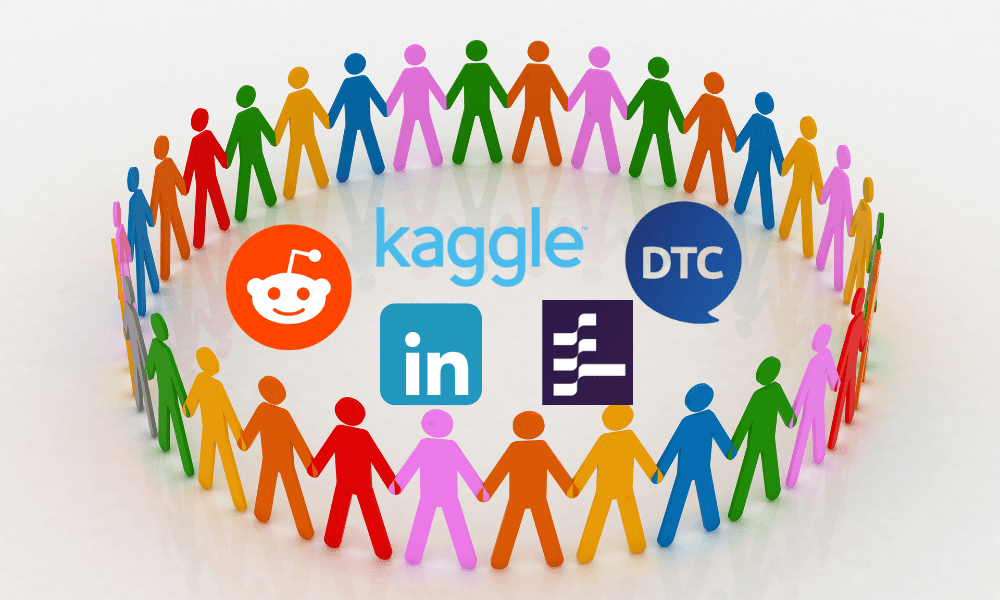
Many smaller and bigger data science communities could help improve our careers. But, if you only have time to spend in five different communities, these are the ones you should focus on.

Let’s get started.

1. Reddit

Let's start with the one that seems casual, which is Reddit.

Yes, Reddit is a social network forum famous for memes and random discussions about life. However, it is still a social media platform with a bulletin board structure that leads to many casual discussions. One of them is for data science.

Reddit is actually bustling with activities for any data science enthusiast and professional alike. What’s important is to find the specific communities within Reddit that could facilitate our learning.

For that, I recommend joining the r/datascience community, which boasts 1.4 million members and has new daily discussions. Almost every day, there would be a discussion regarding the data science topics. From casual questions to advanced career moves, the community is lively to have discussions with everyone.

Additionally, r/machinelearning is a great community to join if you want to discuss machine learning specific topics with over 2.9 million other members.

2. Kaggle

The next community you should join is Kaggle.

I am sure many of you who have started learning data science have heard about it. But, if you have never heard about Kaggle, it’s a platform to share and publish datasets, explore and build machine learning models with the notebook, and share all our data works. It’s also the hub for data science competition, as many companies hold online competitions on this platform.

Kaggle's premise is to share our data science works with the public, so it has become a central place for many data people to communicate. I have already gotten so much help from the community there for my personal and professional work that I feel it’s one of the best communities out there.

It’s because many helpful information and breakthroughs are implemented there, which is a great way to learn new skills for advancing your career. Moreover, many professionals and experts contribute a lot to the community for free.

The Kaggle community is open to any level of your data career. Whether you are a beginner professional or a competition champion, the Kaggle community is there to help you.

3. LinkedIn

For some people, LinkedIn is the place for looking for a new job or a learning platform. However, it’s still social media as a core.

LinkedIn allows its users to create community groups where like-minded people can post and share their thoughts. One of the biggest LinkedIn Data Science community groups is the Data Science Community (moderated) by Robbert van Vlijmen, which has more than 500.000 members.

The members often share useful learning material and provide a place where you can ask any questions, regardless of your professional level. So, don’t feel pressured if you think the discussion seems too hard to follow.

Another LinkedIn group I recommended joining is the KDnuggets Data Science & Machine Learning (Moderated). With more than 150.000 members inside, there is a daily post from the members that would help you learn, including the newest article from KDNuggets, which you can discuss inside.

5 Data Science Communities to Advance Your Career
KDNuggets LinkedIn group community (Image by Author)

Several other communities with a lot of members that still related to data science, including:

  • Artificial Intelligence, Machine Learning, Data Science & Robotics (2.8M+ members)
  • Machine Learning Community (Moderated) (1.4M+ members)
  • Artificial Intelligence, Deep Learning, Machine Learning (1.5M+ members)

4. DataTalks.club

The DataTalks.Club is a community for data enthusiasts by Alexey Grigorev.

It’s a community designed to discuss any data topic, from data analytics, machine learning, and data engineering to data science. Whatever data questions you have, the community is ready to answer them.

However, the best part about this community is that you can discuss any career-related issues, such as deciding your next step or what to learn. If you want to engage with the community, joining the DataTalks Slack channel is an excellent way to discuss further.

The community also has an abundant event that you can join. You can join the community learning free from minor one-time events to free boot camps. These free boot camps are certainly famous as they give you free, company-level skills that you might need to pay a lot of money for elsewhere.

Additionally, there are podcasts and book discussions from which you can learn from. The point is that this community is actively trying to make you a better person in your data career.

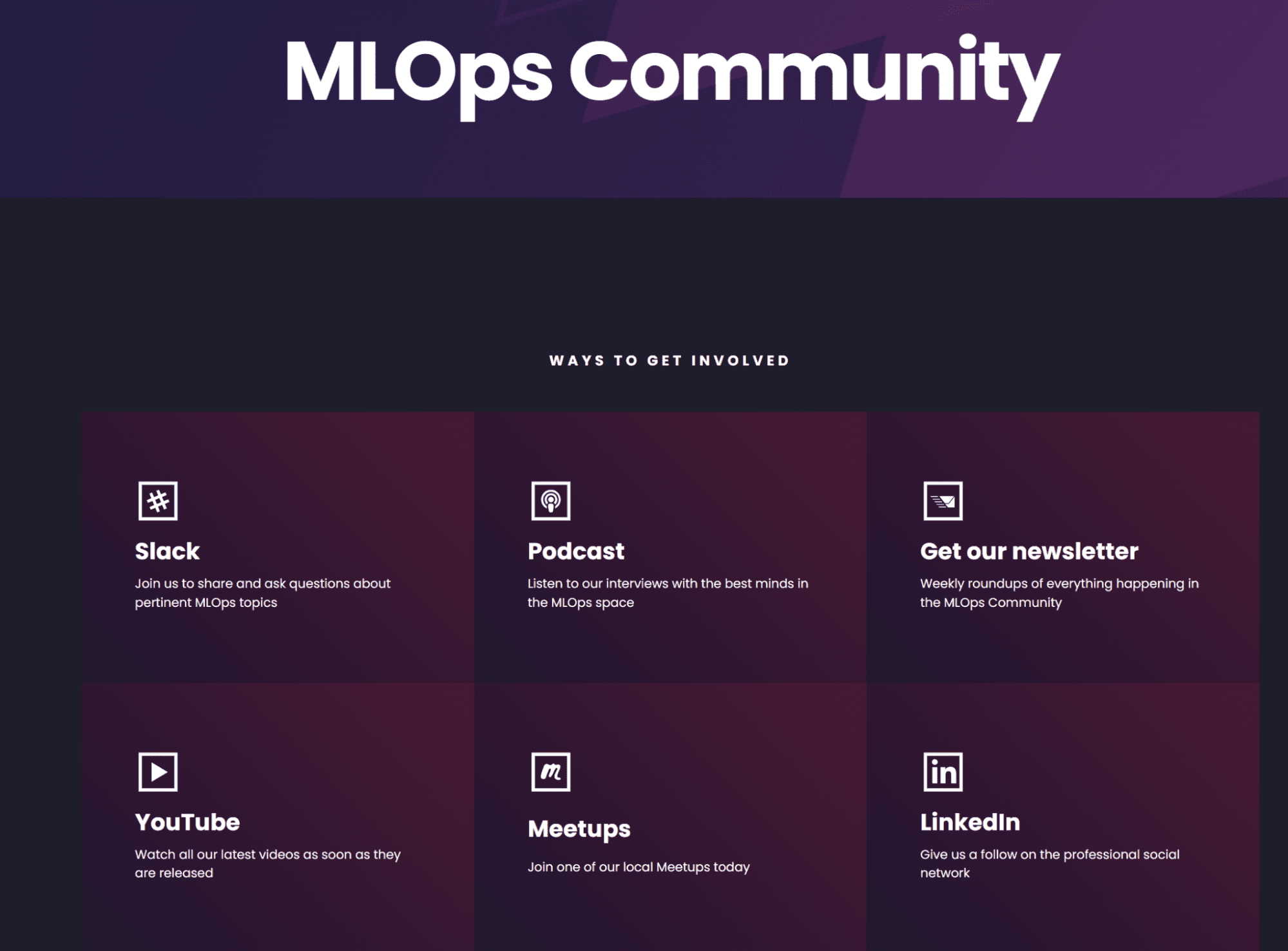
5. MLOps Community

The last community I recommend to advance your career is the MLOps Community.
5 Data Science Communities to Advance Your Career
MLOps community (Image by Author)

So, hear me out. The community may not necessarily be specific to data science, as MLOps is part of the data science. However, a successful data science project is where we could provide continuous value to the business, and MLOps provides that.

That’s why I recommend the MLOps community as a place that could help you in your future career. I state this as well because MLOps is becoming a skill that many data science jobs try to look for.

The community, especially the slack, is active with many conversations about MLOps and sometimes a general discussion. Nevertheless, I gained many insight there, and you should also be.

Conclusion

The Data Science community plays a significant role in advancing our careers. By interacting and learning from others, we can understand many new things we previously couldn’t achieve. There are many data science communities out there, but here are five communities you should join:

  1. Reddit
  2. Kaggle
  3. LinkedIn
  4. DataTalks
  5. MLOps Community

I hope it helps! Share your thoughts on the communities listed here, and add your comment below.

Cornellius Yudha Wijaya is a data science assistant manager and data writer. While working full-time at Allianz Indonesia, he loves to share Python and Data tips via social media and writing media.

More On This Topic

  • Advance your data science career to the next level
  • Advance your Career with the 3rd Best Online Master's in Data…
  • Top 8 Data Science Slack Communities to Join in 2023
  • 7 Free Harvard University Courses to Advance Your Skills
  • 5 Advance Projects for Data Science Portfolio
  • Inside DeepMind’s New Efforts to Use Deep Learning to Advance Mathematics

AI leaders urged to integrate local data models for diversity’s sake

global-data-gettyimages-1337196402

Tech giants currently pushing out generative artificial intelligence (GenAI) tools are urged to incorporate regional and local data models to ensure their products better reflect a diverse global population.

Integrating the Southeast Asian Languages in One Network (SEA-LION) large language model (LLM), for instance, will help these GenAI tools generate more accurate responses, according to Laurence Liew, director of AI innovation at AI Singapore.

Also: How Lenovo works on dismantling AI bias while building laptops

He related a test in which his team had input a question specific to a recent Asian election, asking SEA-LION and a more popular global public GenAI platform to predict the outcome. As it turned out, the former generated a more accurate result, he said.

The current iteration of SEA-LION runs on two base models: a 3-billion-parameter model and a 7-billion-parameter model. Its training data is composed of 981 billion language tokens, which AI Singapore defines as fragments of words created from breaking down text during the tokenization process. These fragments include 623 billion English tokens, 128 billion Southeast Asia tokens, and 91 billion Chinese tokens.

Liew said that most public GenAI tools today are non-Asian focused and, hence, may have inherent data bias. LLMs such as SEA-LION are more "culturally sensitive", which he said will ensure GenAI-generated responses better reflect the region's societal mix.

Asian countries such as Thailand and India also have developed their own LLMs.

Noting that SEA-LION is open source, Liew added that AI Singapore hopes the likes of Microsoft and Google can incorporate such regional and local LLMs for organizations that operate in this region.

Launched in May 2017, AI Singapore is a government-wide collaboration that gathers all Singapore-based research institutions, startups, and companies that develop AI products. The national program aims to drive the country's AI capabilities and is supported by several government agencies, including the Smart Nation and Digital Government Office and Economic Development Board.

Also: Why open-source generative AI models are still a step behind GPT-4

Liew further highlighted growing interest among businesses in adopting GenAI products. He pointed to the multiple discussions his team has had with Microsoft, which had noted a flood of requests from enterprise customers for "thousands of seats" to roll out Copilot.

Not every organization, though, feels it has the IT infrastructure to support its GenAI adoption.

Just 30% feel their company has the IT assets that are essential to deploy GenAI, according to a study commissioned by Telstra International. Conducted by MIT Technology Review Insights, the study polled 300 C-level executives and business leaders, with 66% from Asia-Pacific markets — including Australia, Singapore, South Korea, Japan, and India — and 17% each from Europe and the Americas. The survey was conducted between November and December 2023.

Also: Singapore looks to accelerate AI development with investment in compute and talent

Some 67% of early GenAI adopters felt their hardware was "modestly conducive" for rapid adoption. About half said likewise for their storage infrastructure.

While 76% said they had worked with GenAI in some way last year, only 9% said their organization had adopted it widely. Most cited automation of low-value tasks as the key reason for doing so, while others pointed to customer service, strategic analysis, and product innovation.

Some 60% acknowledged that GenAI would substantially disrupt their industry over the next five years, with 78% treating the technology as a competitive opportunity. Only 8% viewed it as a threat. Some 65% said their organization was actively looking at new and innovative ways to use GenAI to extract value from data.

Also: Generative AI should be more inclusive as it evolves, according to OpenAI's CEO

Asked about barriers to adoption, 77% pointed to regulatory, compliance, and data privacy considerations, while 56% highlighted budget as a constraint.

Respondents also noted a shortage of the necessary skills, with machine learning engineers, AI data scientists, and translators among the top talent needed.

"As the world becomes increasingly digitized and human-to-machine interactions flourish, being able to process data to drive informed real-time or near real-time business decisions is paramount," said Geraldine Kor, Telstra International's South Asia managing director and head of global enterprise.

"However, building end-to-end capabilities to handle large datasets, accurately contextualize the data for business value, and ensure the responsible and ethical application of AI is extremely challenging," said Kor, who discussed the survey findings at a media briefing Monday that included Liew as a guest.

Also: Move over Gemini, open-source AI has video tricks of its own

In addition, organizations continue to operate in a global climate that is fraught with geopolitical issues and an uncertain economic landscape. This will impact their decisions on how to invest their IT spend and whether this should include GenAI, Kor said. She recommends that companies start by identifying one specific function to which to apply GenAI.

"Singapore, like most countries, is still in the early stages of adopting GenAI, with the technology only recently becoming available in productivity suites suitable for a wider audience," Liew said. "The requirements for effective implementation of GenAI include access to real datasets, AI engineers, and computer infrastructure."

Companies also face a dilemma in acquiring the necessary hardware, he noted. "Choices include outright purchase and pay-as-you-go outsourcing, both of which carry their own risks. Additionally, data quality, storage, and talent remain bottlenecks for effective deployment," he said.

Also: The best AI chatbots: ChatGPT isn't the only one worth trying

He added that AI Singapore is looking to plug some of these gaps with initiatives such as the AI Apprenticeship Programme and LLM Application Developer Programme.

Singapore in January also published a handbook to help local companies, including small and midsize businesses, navigate their adoption of GenAI and acquire the necessary skill sets to support such initiatives.

Artificial Intelligence

Competition in AI video generation heats up as Deepmind alums unveil Haiper

Competition in AI video generation heats up as Deepmind alums unveil Haiper Ivan Mehta 10 hours

AI-powered video generation is a hot market on the back of OpenAI’s releasing Sora model last month. Two Deepmind alums Yishu Miao and Ziyu Wang have publicly released their video generation tool Haiper with its own AI model underneath.

Miao, who was previously working at TikTok in the Global Trust & Safety team, and Wang, who has worked as a research scientist for both Deepmind and Google started working on the company in 2021 and formally incorporated it in 2022.

The pair has expertise in machine learning and started working on the problem of 3D reconstruction using neural networks. After training on video data, Miao mentioned to TechCrunch on a call that they found out that video generation was a more fascinating problem than 3D reconstruction. That’s why Haiper ended up focusing on video generation roughly six months ago.

Haiper has raised $13.8 million in a seed round led by Octopus Ventures with participation from 5Y Capital. Before that, angels like Geoffrey Hinton and Nando de Freitas helped the company raise a $5.4 million pre-seed round in April 2022.

Video generation service

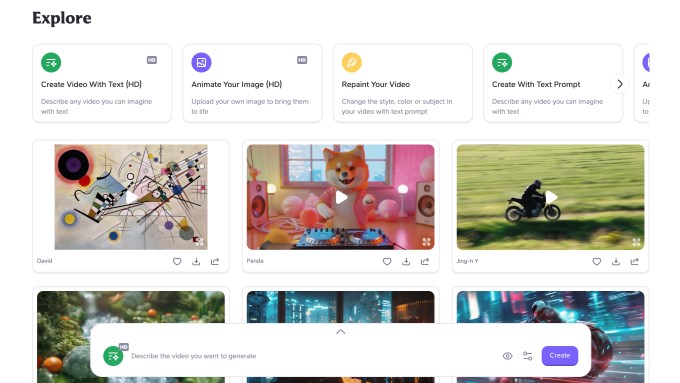
Users can go to Haiper’s site and start generating videos for free by typing in text prompts. However, there are certain limitations. You can only generate a two-second long HD video and slightly lower-quality video of up to four seconds.

Haiper's consumer facing website.

Image Credits: Haiper

The site also has features like animating your image and repainting your video in a different style. Plus, the company is working to introduce capabilities like the ability to extend a video.

Miao said that the company aims to keep these features free in order to build a community. He noted that it is “too early” in the startup’s journey to think about building a subscription product around video generation. However, it has collaborated with companies like JD.com to explore commercial use cases.

We used one of the original Sora prompts to generate a sample video: “Several giant wooly mammoths approach treading through a snowy meadow, their long wooly fur lightly blows in the wind as they walk, snow-covered trees and dramatic snow-capped mountains in the distance, mid-afternoon light with wispy clouds and a sun high in the distance creates a warm glow, the low camera view is stunning capturing the large furry mammal with beautiful photography, depth of field”

Building a core video model

While Haiper is currently focusing on its consumer-facing website, it wants to build a core video generation model that could be offered to others. The company hasn’t made any details about the model public.

Miao said that it has privately reached out to a bunch of developers to try its closed API. He expects that developer feedback is very important with the company iterating on the model rapidly. Haiper has also thought about open-sourcing its models down the line to let people explore different use cases.

The CEO believes that currently, it’s important to solve the uncanny valley problem — a phenomenon that evokes eerie feelings when people see AI-generated human-like figures — in video generation.

“We are not working in solving problems in content and style area, but we are trying work on fundamental issues like how AI-generated humans look while walking or snow falling,” he said.

The company currently has around 20 employees and is actively hiring for multiple roles across engineering and marketing.

Competition ahead

OpenAI’s recently released Sora is probably the most popular competitor for Haiper at the moment. However, there are other players like Google and Nvidia-backed Runway, which has raised over $230 million in funding. Google and Meta also have their own video generation models. Last year, Stability AI announced Stable Diffusion Video model in research preview.

Rebecca Hunt, a partner at Octopus Venture believes that in the next three years, Haiper will have to build a strong video generation model to achieve differentiation in this market.

“There are realistically only a handful of people positioned to achieve this; this is one of the reasons we wanted to back the Haiper team. Once the models get to a point that transcends the uncanny valley and reflects the real world and all its physics there will be a period where the applications are infinite,” she told TechCrunch over email.

While investors are looking to invest in AI-powered video generation startups, they also think the technology still has a lot of room for improvement.

“It feels like AI video is at GPT-2 level. We’ve made big strides in the last year, but there’s still a way to go before everyday consumers are using these products on a daily basis. When will the ‘ChatGPT moment’ arrive for video?” a16z’s Justine Moore wrote last year.

L&T and Intel Partner to Advance Edge-AI Solutions to Enhance Smart Cities

In a significant move to enhance smart city infrastructure and intelligent transportation systems, L&T, a leading global digital engineering and R&D services company, has announced a collaboration with Intel Corporation.

This partnership is set to develop and deploy scalable edge-AI solutions across various domains, including Cellular Vehicle-to-Everything (CV2X) applications, leveraging LTTS’s expertise in connected vehicles and smart transportation systems alongside Intel’s cutting-edge Edge Platform.

The collaboration aims to harness the power of Intel’s Edge Platform, equipped with built-in AI runtime and OpenVINO™ inference for real-time AI inferencing optimisation. This technology will enable LTTS to enhance traffic management and emergency safety measures in smart cities and transportation sectors, addressing the critical need for advanced networking and AI analytics at the edge with low latency, locality, and cost-effectiveness.

Abhishek Sinha, Chief Operating Officer and Board Member at L&T Technology Services, expressed enthusiasm about the partnership, stating, “LTTS is delighted to collaborate with Intel on launching their new Edge Platform, which promises to democratise access to edge-AI solutions. With deep-rooted hardware optimisation at its core, our enterprise customers can trust Intel’s Edge Platform to propel them into a future of unparalleled performance and possibilities.”

Intel’s Edge Platform heralded as a game-changer, offers a comprehensive ecosystem with modular building blocks and premium service and support offerings, designed to scale infrastructure across various industries horizontally.

Pallavi Mahajan, Intel Corporate Vice President And General Manager of Network and Edge Group Software highlighted the benefits of this collaboration for industries such as transportation and smart cities. She noted, “The collaboration with LTTS on Intel’s Edge Platform will simplify the exchange of critical information and streamline infrastructure management to improve results and lower TCO for customers.”

This partnership underscores LTTS’s commitment to advancing smart cities and road infrastructure, setting the stage for developing intelligent transportation systems that promise enhanced road safety, accident prevention, and improved mobility for the future.

The post L&T and Intel Partner to Advance Edge-AI Solutions to Enhance Smart Cities appeared first on Analytics India Magazine.

Meet the Real-time NoSQL Database Leading India’s Explosive UPI Growth

According to the National Payments Corporation of India, UPI recorded a staggering 12.02 billion transactions in December 2023 – its highest to date. The country has become an undisputed global leader riding on the sheer volume of daily and monthly payments made as UPI transactions grew 147% catapulting from INR 92 crore in 2017 to INR 8,375 crore in 2023.

One of the major players contributing to this growth is the real-time NoSQL database company Aerospike.

“We’ve found that Aerospike can effectively handle the scale associated with such high transaction volumes. It’s exciting not just because we’re addressing a technical challenge we’re designed for, but also because we’re actively participating in the rapid growth observed in India’s payment space,” Srini V Srinivasan, co-founder and chief technology officer, Aerospike, told AIM in a recent conversation.

Founded over 14 years ago by Brian Bulkowski and Srini, the company’s primary customers are from adtech, telco, payments, financial services, gaming, e-commerce, and cybersecurity firms. Some prominent names associated with Aerospike are Yahoo, NFL, Airtel, Flipkart, PayPal, Adobe, Nokia, Dream11, are some of them.

The company has its headquarters in Bengaluru and Mountain View, US, and Srini believes that its entry into India wasn’t just strategic – it was timely. Aerospike entered the Indian market during the early stages of internet companies, Snapdeal and InMobi being among its first customers, and later with companies like Airtel and Flipkart.

“India has proven to be an incredible market for us, driven by the dynamic growth of the internet, the telecom sector, and the government’s initiatives in financial services. The emphasis on scalable systems aligns perfectly with Aerospike’s strengths. The robust competition among companies and the government’s focus on initiatives like universal financial inclusion and UPI have created a conducive environment for our solutions,” added Srini.

The company initially focused on providing solutions for adtech, banking, financial services, and payments, where identity resolution plays a crucial role. Recognising the increasing complexity in identity resolution, it expanded its offerings to include the document model (JSON) and an SQL interface via Starburst.

“Our focus has been addressing a crucial challenge faced by large-scale, consumer-oriented internet companies, which revolves around maintaining real-time systems while delivering a consistently high-quality user experience,” said Srini.

What Makes Aerospike a Customer Favourite

There are several factors that make Aerospike the preferred choice for these customers. “Firstly, we can leverage SSDs (Single Shot MultiBox Detector) for real-time data, reducing server footprint and offering a more sustainable and cost-effective solution, with transaction costs 5 to 10 times lower than other in-memory systems,” said Srini.

Secondly, its distributed database system capabilities are robust in the face of failures. This means that even if a node fails or a network issue occurs, the system continues to operate, providing a consistent and positive user experience. Lastly, it also provides a true database that is strongly consistent, maximising performance while ensuring this level of consistency support for applications.

Moving ahead, its customers are more interested in improving efficiency in an environment-friendly manner.

“When we started the company, we prioritised building highly efficient systems at scale, with a significantly reduced footprint and cost. This efficiency extends to easy power management. Lately, our focus has shifted to sustainability, particularly in terms of minimising power usage per user and per transaction while reducing our carbon footprint,” added Srini.

Another important point which Srini noted is that clients are actively tapping into the generative AI space and Aerospike is helping it with its support for graph and the upcoming vector database work.

Fuelling GenAI Applications

Being a high-performance database system, the company doesn’t directly build AI/ML applications. Instead, its customers employ Aerospike for various classical AI use cases, such as fraud detection, risk analysis, cyber threat analysis, and recommendation engines.

Over the years, it has enhanced its platform with features supporting predictive AI, including robust indexing, secondary indexing capabilities with scans, and parallel access to the database. These features facilitate efficient training of data models and quick data processing, making Aerospike a reliable database for storing real-time activities at the edge.

However, with customer-driven demand, the company ventured into graph databases with Aerospike Graph, based on Gremlin query language, putting established players like Neo4j and TigerGraph under immense pressure.

The trend among customers developing custom identity solutions using Apache TinkerPop with Aerospike as the storage layer prompted Aerospike to officially implement a graph solution. After evaluating the potential and witnessing customers scale to petabytes while maintaining low access times, the company introduced Aerospike Graph, inspired by a large customer’s success in the payment systems business.

“Moving forward, we are actively participating in this wave of generative AI innovation by adding support for vector and graph features. The vector database serves as a relationship management system, enabling enterprises to keep their data while utilising Aerospike to generate vectors,” said Srini.

The company plans to integrate tools like LangChain and other cloud-based AI/ML modelling environments to allow users to seamlessly build LLM-based applications.

Read more: Why Graph Databases Remain Untapped

The post Meet the Real-time NoSQL Database Leading India’s Explosive UPI Growth appeared first on Analytics India Magazine.

5 Free University Courses to Learn Databases and SQL

5 Free University Courses to Learn Databases and SQL
Image by Editor

As a data professional, you should learn and continue to work on your databases and SQL skills. Here’s why.

Querying databases with SQL to answer a set of business questions might suffice for certain projects. However, to build robust systems and applications, you should be familiar with database internals, data models, database design, and the like.

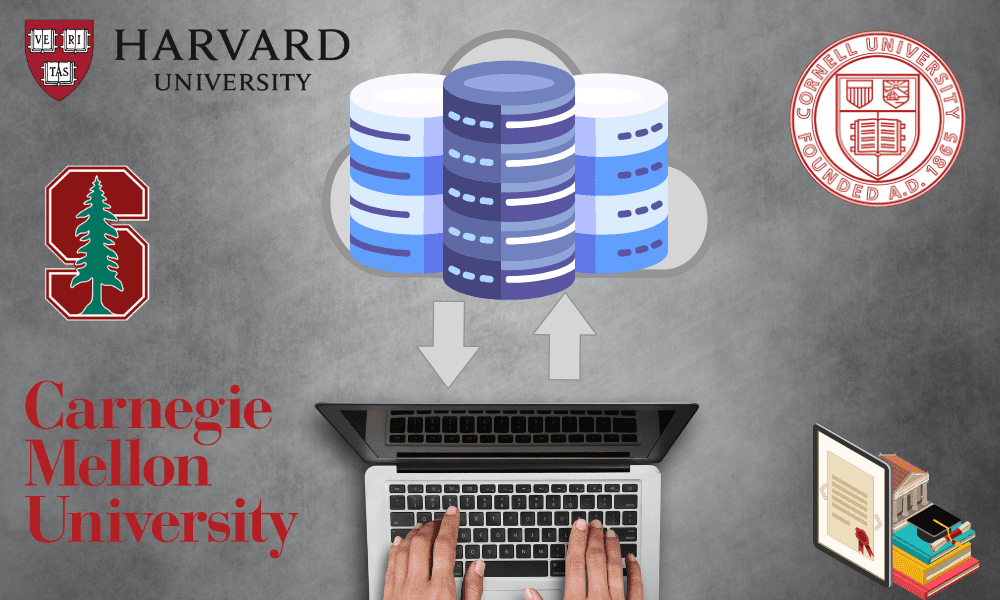
While you can learn and practice SQL on your own, learning database concepts might be easier with a structured curriculum to follow. To make this easier for you, we’ve curated this list of free databases and SQL courses from some of the best universities from around the world.

1. Introduction to Databases — Cornell

The Introduction to Databases course taught by Prof. Trummer at Cornell University covers several important topics: from the basics of SQL to NoSQL and NewSQL systems. Here’s an overview of the topics:

  • SQL
  • Storing and indexing
  • Relational data processing
  • Transaction processing
  • Database design
  • Distributed data processing
  • Beyond relational data

Course link: Database Systems — Cornell University Course (SQL, NoSQL, Large-Scale Data Analysis) and Part 2 of the course.

2. Introduction to Databases with SQL — Harvard

Introduction to Databases with SQL or CS50 SQL taught at Harvard University is an excellent resource to get comfortable with SQL and relational database fundamentals.

The course has seven weeks of curriculum on working with relational databases with the following modules:

  • Querying
  • Relating
  • Designing
  • Writing
  • Viewing
  • Optimizing
  • Scaling

Course link: CS50's Introduction to Databases with SQL

3. Databases Course Series — Stanford

The Databases course by Prof. Jennifer Widom at Stanford is now available as a series of five self-paced courses on edX, which you can audit for free.

If you are new to databases, consider taking the first course covering the basics of relational databases before you proceed to the courses on more advanced topics. Let's look at the individual courses and what they cover.

Databases: Relational Databases and SQL covers SQL and relational models. It's recommended that you take this first course before proceeding to the next courses in this series.

Databases: Advanced Topics in SQL covers:

  • Query performance
  • Transaction and concurrency control
  • Database constraints
  • Database triggers
  • Creating and updating database views

Databases: OLAP and Recursion covers the following topics:

  • OLAP cube
  • Star schema
  • OLAP features
  • SQL queries with recursive relations

Databases: Modeling and Theory will teach you:

  • Relation algebra
  • Normal forms
  • Recursive relations
  • UML

The final course Databases: Semistructured Data covers working with JSON and XML. It also covers the basics of XPath and XSLT.

Courses link:

  1. Databases: Relational Databases and SQL
  2. Databases: Advanced Topics in SQL
  3. Databases: OLAP and Recursion
  4. Databases: Modeling and Theory
  5. Databases: Semistructured Data

4. Intro to Database Systems — CMU

If you want to dive deep into database internals, Intro to Database systems and Advanced Database Systems at Carnegie Mellon University are a great set of resources.

The Intro to Database Systems course covers the following broad topics:

  • Relational model and algebra
  • Database storage and compression
  • Database memory and disk I/O management
  • Data structures such as hash tables and B+trees
  • Index concurrency control
  • Query execution
  • Query planning and optimization
  • Sorting, aggregation, and join algorithms
  • Database logging
  • Distributed database systems

Course link: Intro to Database Systems

5. Advanced Database Systems — CMU

If you are interested in specializing in database engineering, data engineering or a related field it's helpful to understand the internals of modern OLAP databases. The Advanced Database Systems course covers just that.

This course is a deep dive into database internals: from the components that make up OLAP systems to the internals of modern analytical data warehouses such as Google BigQuery and Snowflake, this course covers white breadth of topics including:

  • Modern OLAP databases
  • Storage models and data layout
  • Query execution and scheduling
  • Vectorized execution
  • Advanced algorithms
  • Databases internals of Google BigQuery, Amazon RedShift, Databricks, Snowflake, and more

Course link: Advanced Database Systems

Wrapping Up

When you start your career, the database systems course you take at the university generally will prove to be one of the most helpful! But even if you can’t go to college to get a computer science degree, these courses should teach you almost everything you’d ever want to learn about databases.

Whether you’re interested in learning SQL and just enough about relational database design. Or if you’d like to go on a deep dive into database internals, these courses offer it all. So happy learning!

Bala Priya C is a developer and technical writer from India. She likes working at the intersection of math, programming, data science, and content creation. Her areas of interest and expertise include DevOps, data science, and natural language processing. She enjoys reading, writing, coding, and coffee! Currently, she's working on learning and sharing her knowledge with the developer community by authoring tutorials, how-to guides, opinion pieces, and more.

More On This Topic

  • 5 Free University Courses to Learn Python
  • 5 Free University Courses to Learn Data Science
  • Introduction to Databases with SQL: Free Harvard Course
  • 5 Free University Courses on Data Analytics
  • 7 Free Harvard University Courses to Advance Your Skills
  • 5 Free University Courses to Ace Coding Interviews

World Economic Forum Partners with Karnataka to Establish AI Centre

The Karnataka state government has taken a significant step towards becoming a global hub for artificial intelligence by signing a Letter of Intent with the World Economic Forum (WEF) on February 29 to establish a state-of-the-art AI centre in the state.

This initiative marks a strategic move to integrate Karnataka into the WEF’s Center for the Fourth Industrial Revolution (C4IR) Network, a global platform focused on inclusive technology governance and responsible digital transformation.

As stated by the office of Karnataka’s IT-BT minister, Priyank Kharge, the new AI centre in Karnataka will be the WEF’s sole dedicated hub for AI in India. “The centre’s primary focus will be to position Karnataka as a prominent global hub for Artificial Intelligence,” the minister’s office stated.

The centre is expected to play a crucial role in fostering industry-academia networks, facilitating the exchange of technological trends, encouraging research collaboration, and addressing global challenges.

In addition to promoting research and development, the centre aims to support and nurture AI startups in Karnataka by providing a globally connected platform for collaboration and networking within the AI domain.

Minister Kharge emphasised the state’s commitment to AI as a key driver for the growth of the digital economy, investments, and jobs. “Bengaluru has earned recognition as one of the top five cities globally for Artificial Intelligence. With our skilled talent pool and thriving innovation ecosystem, our state hosts numerous companies and startups dedicated to deep tech and AI,” Kharge said.

Jeremy Jurgens, managing director of the WEF, expressed his enthusiasm for the collaboration, stating, “We are delighted to collaborate with Karnataka on the Centre for Artificial Intelligence. Bengaluru has been at the forefront of innovation, and we hope to support its leadership to demonstrate the potential of AI for economic growth and social prosperity.”

The establishment of the AI centre is poised to enhance Karnataka’s stature as a leader in the field of AI, contributing to the worldwide discourse on the ethical and practical dimensions of AI while also boosting the local economy through innovation and job creation.

The post World Economic Forum Partners with Karnataka to Establish AI Centre appeared first on Analytics India Magazine.

How This Bengaluru-based AI Startup is Helping Reduce Carbon Footprint

As AI becomes increasingly pervasive in various applications across industries, many experts, including Jesse Dodge, a research scientist at the Allen Institute for AI, have raised concerns about its growing environmental impact.

The training and running of these AI systems, driven by the substantial computing power and electricity they require, contributes to their carbon footprint. However, experts emphasise that the broader environmental impact of AI extends beyond its direct emissions.

Dodge also pointed out a lack of transparency from many AI companies, adding further complexity to understanding their models’ overall environmental impact, especially when analysed solely from an emissions perspective.

Not all is lost, though. Bengaluru-based Sentra World aims to capitalise on the very same technology to fight the prevailing issue. The company’s analytics platform uses natural language processing to simplify the measurement of CO₂ emissions, adhering to established frameworks like the greenhouse gas protocol.

“Our objective at Sentra World is to decarbonise industrial manufacturing. To ensure global temperature increase doesn’t surpass 1.5°C, we aim to reduce emissions in this sector by at least 50%,” explained CEO and co-founder Harsh Choudhry.

Choudhry, a seasoned professional with nearly 17 years dedicated to sustainability and climate change, started the conversation by emphasising the urgency of addressing climate change. He highlighted that 60% of greenhouse gas emissions stem from industrial manufacturing, making it a critical sector for decarbonisation.

Their flagship product, Calculus, provides detailed emissions calculations across various scopes, utilising sector-specific tools for accurate measurement and reporting. Sentra.Network, another key offering, uses blockchain technology to trace carbon emissions along supply chains, offering a green rating to suppliers and enhancing data trust.

The Tech Stack

“Calculus is our brain, where all emission calculations occur. We’ve mapped specific industrial processes, offering a granular understanding of emissions.

Additionally, we assist companies in getting certified on emission levels and connecting with suppliers to address the full scope of emissions,” said Vikas Upadhyay, the company’s CTO, shedding light on Calculus.

When quizzed about the technical aspects of SentraWorld’s platform, Upadhyay detailed the use of AI in data transformation and validation. “In our first product, Calculus, AI plays a pivotal role as it helps transform diverse data from sources like IoT devices, SAP, ERP systems, Excel files, PDFs, and screenshots into our format,” he explained.

The AI-driven transformation involves natural language processing and matching to ensure compatibility with their tech stack, emphasising the role of AI during data ingestion.

Upadhyay highlighted the importance of trust in reported numbers: “The biggest challenge in this industry is data trust and authenticity. Greenwashing is prevalent, and we address this using AI and blockchain.”

This involves scrutinising numbers and using blockchain to trace emissions along the supply chain, enhancing data authenticity and trust, a feature embedded in their product called Network.

The representative further elaborates on the application of AI in their upcoming product, Reduce, stating, “We’re building a database of projects for carbon reduction, simulating the best solutions for customers based on cost and targets.”

The focus on transparency and certification continues with the mention of blockchain applications and generative AI for report writing, offering customers efficiency and accuracy.

The company was announced as a part of Google’s accelerator programme in 2023 and employs their expertise in blockchain and AI-related technologies like NLP and OCR.

Climate Regulation Enabling Bottom Line

Founded in early 2023 by former McKinsey partners and with a lean team of 30 members, Sentra collaborates with ten industrial giants in India and the Middle East, featuring prominent partners such as Emirates Steel, Jindal Shadeed, Kalyani Steel, and Starwire.

Furthermore, they are engaged in discussions with renowned entities like Volvo and Mahindra on similar topics.

While they compete with big techs like Microsoft and IBM, and others like Sphera, Enableon, and Indian startups like StepChange and Uptap, the distinction they believe lies in their sector-specific vertical approach and a focus on creating business value.

“Everything we do helps companies, not just lower emissions, but create business value,” said Choudhry.The executives articulated a strategic vision to address climate challenges in large enterprises, presenting a three-fold approach.

“See, there are three ways to create value from this, i.e. growing your top line, bottom line and financing,” Choudhry emphasised. They began by discussing top-line growth, acknowledging the impact of climate regulations, such as CBAM, on India’s metal exports to the EU. The leaders proposed leveraging their platform, stating, “Through our platform, it doesn’t become a hindrance, but it becomes a competitive advantage.”

Continuing the conversation, the executives explored strategies for enhancing the bottom line. They highlighted the automotive sector’s inclination towards low CO₂ footprint products, stating, “The automotive sector is a big absorber of anything that has a low CO₂ footprint.”

Early insights indicated potential premiums of up to 20%, showcasing a market demand for transparency in sustainability. In the context of financing, the leaders underscored the need for massive investments in sectors like steel and cement to meet India’s infrastructure growth.

They pointed out the impact of sustainability goals on debt financing: “The moment you add a sustainability or decarbonisation target to it, you can get a discount of somewhere between 25 to 50 basis points on that interest rate,” said Choudhry highlighting real-world cases of successful reductions in interest rates, including UPL’s $700 million deal in 2021 and JSW’s $500 million deal in 2022.

The post How This Bengaluru-based AI Startup is Helping Reduce Carbon Footprint appeared first on Analytics India Magazine.

IT Minister Rajeev Chandrasekhar Announces Bharat Semiconductor Research Centre

In a significant move towards bolstering India’s position in the global semiconductor industry, the government is set to launch the Bharat Semiconductor Research Centre, a collaborative effort involving academia, the government, the private sector, and startups. Union Minister of State for Electronics and IT, Rajeev Chandrasekhar, announced during a virtual address at the All India Research Scholars’ Summit (AIRSS) 2024 at the Indian Institute of Technology Madras (IIT) on Monday.

“The crowning development, in the context of this research summit, is going to be the soon-to-be-announced Bharat Semiconductor Research Centre, which will be a global standard academia-government-private sector-start-up partnered institution,” Chandrasekhar stated. The Centre aims to initially co-locate with the Semiconductor Complex Limited, eventually evolving into an independent entity to compete and cooperate with leading global semiconductor research organisations.

Chandrasekhar highlighted the Centre’s ambition to establish itself alongside prestigious institutions such as IMEC, MIT Microelectronics in the USA, and the Industrial Technology Research Institute (ITRI) in Taiwan. He emphasised the Centre’s role in fostering a vibrant ecosystem, engaging top universities and colleges in India to collaborate on various research areas, from materials science to system innovation.

Reflecting on the rapid growth of India’s semiconductor ecosystem, which began just two years ago, the minister noted, “In January 2022, from the prism of the semiconductor ecosystem, we had a limited or non-existent footprint in what was turning out to be one of the most critical and crucial sectors in terms of the overall resilience of the global economy.” He credited Prime Minister Narendra Modi’s vision for transforming India into a semiconductor nation for the ecosystem’s vibrant and fast-paced development.

Chandrasekhar also pointed out the significant strides made in design innovation for chips and devices, stating that India has “made up for 75 years of lost opportunities.” The burgeoning product ecosystem in the automotive, industrial, telecom, and computing sectors is leveraging India’s advancements in design innovation. Furthermore, the minister highlighted the arrival of process and manufacturing know-how and technologies in India, with proposals from global companies like Tower Semiconductor, Powerchip Semiconductor Manufacturing Corporation of Taiwan, and Micron to set up characterisation, testing, and manufacturing units in the country.

Establishing the Bharat Semiconductor Research Centre marks a pivotal step in India’s journey towards becoming a key player in the global semiconductor industry, promising to accelerate innovation and foster collaboration across sectors.

The post IT Minister Rajeev Chandrasekhar Announces Bharat Semiconductor Research Centre appeared first on Analytics India Magazine.

Multiverse raises $27M for quantum software targeting LLM leviathans

Multiverse raises $27M for quantum software targeting LLM leviathans Ingrid Lunden @ingridlunden / 9 hours

We’re still years away from seeing physical quantum computers break into the market with any scale and reliability, but don’t give up on deep tech. The market for high-level quantum computer science — which applies quantum principles to manage complex computations in areas like finance and artificial intelligence — appears to be quickening its pace.

In the latest development, a startup out of San Sebastian, Spain, called Multiverse Computing is announcing that it has raised €25 million (or $27 million) in an equity funding round led by Columbus Venture Partners. The funding, which values the startup at €100 million ($108 million), will be used in two main areas. The startup plans to continue building out its existing business working with startups in verticals like manufacturing and finance; and it wants to forge new efforts to work more closely with AI companies building and operating large language models.

In both cases, the pitch is the same, CEO Enrique Lizaso-Olmos: “optimization.”

In other words, as computing becomes more advanced, it can be more costly and in some cases too complex to execute consistently. Multiverse’s pitch is that its software platform Singularity — designed to apply across a wide range of industries like finance, manufacturing, energy, cybersecurity and defense — can be used to run and optimize complicated modelling and predictive applications more efficiently.

In AI, the focus is more squarely on applying the platform to compress Large Language Models, with a new product called CompactifAI honing in on the calculations that are constantly being made when building and querying LLMs, to cut out more noise and speed up the work (and thus reliability) when producing results.

The company claims that it can compress LLMs “with quantum-inspired tensor networks” by more than 80% with the software, while still producing accurate results. If true, that could have large implications for how companies buy and use processors, addressing one of the big bottlenecks in the industry to date.

Lizaso-Olmos cuts a polymath figure, starting out his career more than 30 years ago by first qualifying as a medical doctor, then taking a second degree in mathematics, and then a third in computer engineering with a Phd that somewhat tied these things together, a PhD in biostatistics. He then picked up an MBA, he said. Over the course of all that he picked up like-minded thinkers and friends, and some of them — namely Roman Orus and Samuel Mugel — were interested in the concept of quantum software and were already making names for themselves through academic work around the subject.

“Multiverse started in a WhatsApp group,” he jokes. The year was 2017, and for the thought experiment, a few of them thought it “would be fun” to write a scientific paper about what you could do with quantum in finance.

The paper ended up getting accepted for a conference taking place at the university in Toronto, so they went along to that. Arriving, Lizaso-Olmos saw that the paper was getting shared around and discussed and suddenly it looked like people might use it as inspiration for enterprising ambitions. That was when Lizaso-Olmos’s MBA-radar kicked in and he pulled his two friends together for a serious IRL chat.

And that is how they, along with Alfonso Rubio, started Multiverse Computing.

That initial exploration of quantum and financial technology that was the subject of that paper became the company’s first commercial application, and where it picked up its first traction. Since then it has widened out into other sectors and counts Moody’s Analytics, Bosch, BASF, Iberdrola, Credit Agricole and BBVA among its customers, and Lizaso-Olmos says that together, industrial and energy clients, who like the greener aspects of more efficient computing, today actually account for more of the company’s business than finance.

Alongside Columbus, previous backer Quantonation Ventures also participated alongside new backers like the European Innovation Council Fund, Redstone QAI Quantum Fund, and Indi Partners.

“Multiverse’s exceptional team will soon apply their unparalleled capability to deliver quantum and quantum-inspired software solutions also within the life sciences and biotechnology markets, where Columbus Venture Partners will help to identify unmet market needs and high-profile industrial partners,” Javier Garcia, a partner at Columbus Venture Partners, in a statement.

While the pitch to verticals seems to have connected with customers, what remains to be seen is how its ambition to go one level higher, to target deep tech and AI companies themselves, might play out for Multiverse. Others competing in the same space include the Alphabet spinout Sandbox AQ, Quantum Motion, and Classiq.