Indian Govt Endorses IndiaAI Mission with ₹10,371 Crore Funding

PM Modi Calls for Global Collaboration for AI in Education at G20 Meeting

The Indian Cabinet has approved a significant initiative to bolster the country’s artificial intelligence (AI) capabilities by establishing a Public AI Compute Infrastructure with over 10,000 GPUs. This move is part of the comprehensive IndiaAI Mission, which has been greenlit with a budget of ₹10,371.92 crore (approximately $1.25 billion).

The mission, chaired by Prime Minister Narendra Modi, is designed to catalyse AI innovation and position India as a global AI hub. The infrastructure will be developed through public-private partnerships and aims to meet the growing demands of India’s burgeoning AI startups and research ecosystem.

Union Minister of State for Electronics and IT, Shri Rajeev Chandrasekhar, expressed his gratitude for the approval, stating, “I am grateful and thankful to the Hon’ble PM for the approval of more than 10,000 crores for the India AI program, which will catalyse India’s AI ecosystem and position it as a force shaping the future of AI for India and for the world”.

The mission includes several key components such as the IndiaAI Innovation Centre, which will focus on developing indigenous Large Multimodal Models (LMMs), and the IndiaAI Datasets Platform, which will provide access to quality non-personal datasets for AI innovation. Additionally, the IndiaAI FutureSkills program aims to increase AI courses at various academic levels to mitigate barriers to entry into AI programs.

The IndiaAI Startup Financing pillar will support deep-tech AI startups by providing streamlined access to funding, from product development to commercialisation. Moreover, the Safe & Trusted AI pillar will implement responsible AI projects, including the development of indigenous tools and frameworks to ensure ethical AI development and deployment.

This ambitious mission is expected to drive innovation, create job opportunities, and enhance India’s technological autonomy on the global stage. It aligns with Prime Minister Narendra Modi’s vision to harness AI for the country’s digital economy and use it for social good

The post Indian Govt Endorses IndiaAI Mission with ₹10,371 Crore Funding appeared first on Analytics India Magazine.

5 ways college students can use Copilot for Microsoft 365, starting next month

Microsoft Copilot

One of the biggest fears regarding generative AI is how it can negatively impact students' education by facilitating cheating. However, when used properly, generative AI can be a powerful tool that can promote learning, understanding, and retention of material — and Microsoft is sharing some ways students can take advantage of these benefits.

Also: The best AI chatbots of 2024: ChatGPT and alternatives

On Wednesday, Microsoft held its worldwide digital event, Reimagine Education, which focused on the innovative ways schools are using technology. Much of the event concentrated on the hot trend of generative AI. Microsoft even took the opportunity to share that, starting April 1, it will make Copilot for Microsoft 365 available for purchase by higher education institutions as an addon for their students aged 18+.

To help prepare educators and students to make the best use of generative AI, Microsoft shared a Microsoft Education AI Toolkit, an AI in Education Report, and a selection of ways students can leverage AI within their Microsoft 365 workflows. You can find the roundup below.

1. Don't miss a thing in Microsoft Teams

With Copilot in Microsoft Teams, students can get quick summaries of chats, remote classes, meetings, or calls they are part of. This capability makes it easier for students to stay up to date, revisit important information, and divert their attention to other more important tasks. They can also get assistance in composing replies, which can save students time and help them communicate their thoughts more effectively with peers and faculty.

Also: How ChatGPT (and other AI chatbots) can help you write an essay

2. Access writing assistance in Microsoft Word

Even though Copilot in Microsoft Word can generate text from scratch, its value for students lies beyond that capability. Students can boost their comprehension of documents by highlighting the sections they do not understand. Then, Copilot can provide further insights about the section, generate a summary, or convert it to a visual element, such as a table. Copilot can also edit text more thoroughly than traditional spellchecks, editing for syntax, conciseness, and more.

3. Never miss an email in Outlook

As a student, checking your inbox can suck up a lot of time that could be better allocated to other tasks, such as studying, doing assignments, or reviewing materials. That's where Copilot in Outlook can provide a boon, helping to summarize long email threads into short summaries. Copilot can also help students create and edit emails, so written messages take less time and are better communicated.

4. Create presentations from a prompt in Microsoft PowerPoint

Presentations can be daunting for students because speaking in front of people isn't everyone's cup of tea. Therefore, the best way students can prepare is by familiarizing themselves with the material and rehearsing what they plan on saying to their audience. However, time that could be used to practice is often spent creating a slide deck to include visually pleasing text and images. With Copilot in PowerPoint, creating a slide deck is easier than ever. Copilot can draft an entire presentation from a single prompt. It can also restructure your presentation into different sections for a better flow.

Also: OpenAI robots and MWC tech lead ZDNET's Innovation Index

5. Interact with data with Copilot in Excel

Working with Microsoft Excel is a skill gained with time and lots of practice. Copilot in Excel helps close that skills gap by identifying insights, visualizing data, and answering questions. A student building an Excel spreadsheet can also access Copilot for help sorting, filtering, and creating data, which helps them spend less time formatting and more time understanding.

Artificial Intelligence

Top 10 Alternatives to OpenAI’s Sora

As LLMs advance, video-generation capabilities emerge as the next frontier. OpenAI’s Sora has truly impressed with its hyper-realistic video generation skills. Here, we present some compelling alternatives that you can use and experiment with.

RunwayML Gen 2

RunwayML Gen 2 allows users to create entire worlds, animations, and stories simply by providing text descriptions. Users can also experiment with reference images, utilising various prompting modes and advanced settings to fine-tune their creative process.

The recent addition of the Multi-Motion Brush enhances control over motion within generated videos. Gen-2 is accessible on both the Runway web platform and their mobile app, providing flexibility for creative endeavours on the go.

Users can preview and download generated videos, selecting the one that aligns with their vision. However, considerations include cost implications, with Gen-2 operating on a credit system, and each second of video generation priced at $.05.

Pika

Pika Labs is an AI text-to-video tool that enables users to create videos and animations from simple text prompts. Pika can generate videos in various styles, ranging from cartoons and anime to cinematic formats. Not confined solely to text-to-video conversion, Pika can also transform images into videos and perform video-to-video conversions.

Recently, Pika introduced a lip-sync feature, allowing users to add voice to characters, with Pika seamlessly syncing words to their movements. Additional features include ‘modify region’ and ‘expand canvas’.

Lumiere

Lumiere is the closest competitor to Sora from Google DeepMind, as it, too, creates realistic and coherent videos directly from textual descriptions, with a duration of up to five seconds.

In contrast to many text-to-video models that generate videos frame-by-frame, Lumiere employs a Space-Time Diffusion Model. This approach allows Lumiere to generate the entire video’s duration in one go, ensuring better coherence and consistency throughout.

Lumiere stands out with unique features, including image-to-video generation, stylised generation, cinemagraphs, and inpainting, setting it apart from other models in terms of versatility and customisation options.

Imagen Video

Imagen Video from Google is a text-conditional video generation system based on a cascade of video diffusion models. This model can produce 1280×768 videos at 24 frames per second. Not only does the model create top-notch videos, but it also offers a high level of control and a broad understanding of the world.

It can produce a variety of videos and text animations in different artistic styles, showcasing a solid grasp of 3D objects.

Emu Video

Meta’s Emu Video allows you to create short videos based on text descriptions. It utilises a diffusion model approach. This means it starts with a noisy image and progressively refines it based on the text prompt until it generates the final video frame by frame

It employs a two-step process: First, an image is generated based on the text prompt. Then, using that image and the prompt again, the model creates a multi-frame video

This model produces visually striking 512×512 four-second videos at 16 frames per second, outperforming models like Make-a-Video, Imagen-Vide, Cog Video, Gen2 and Pika.

CogVideo

A team of researchers from the University of Tsinghua in Beijing has introduced CogVideo, a large-scale pretrained text-to-video generative model. CogVideo employs a multi-frame-rate hierarchical training strategy and builds upon a pre-trained text-to-image model known as CogView2.

VideoPoet

VideoPoet is an LLM developed by Google Research specifically for video generation. It can generate two-second videos based on various input formats, including text descriptions, existing images, videos, and audio clips.

VideoPoet offers some level of control over the generation process. You can experiment with different text prompts, reference images, or adjust specific settings to refine the final video output. Moreover, it offers features such as zero-shot stylization and applying visual effects.

Stable Video Diffusion

Stable Video Diffusion from Stability AI is an open-source tool that transforms text and image inputs into vivid scenes, elevating concepts into live-action cinematic creations. It comes with two image-to-video models that can create 14 and 25 frames, offering customisable frame rates from 3 to 30 frames per second.

Make A Video

Developed by Meta AI, Make-A-Video translates progress in Text-to-Image (T2I) generation to Text-to-Video (T2V) without requiring text-video data. It learns visual and multimodal representations from paired text-image data and motion from unsupervised video footage.

Magic VideoV2

ByteDance’s Magic Video 2, also known as MagicVideo, is an efficient video-generation framework based on latent diffusion models. MagicVideo-V2 integrates text-to-image, image-to-video, video-to-video, and video frame interpolation, providing a new strategy for generating smooth and highly aesthetic videos.

The post Top 10 Alternatives to OpenAI’s Sora appeared first on Analytics India Magazine.

This Bengaluru-based AI Startup is Helping Enterprise Productionize Generative AI Apps Reliably

Just eleven months ago, Ayush Garg announced the launch of Portkey.ai, a platform he co-founded with Rohit Agarwal after they left Pepper Content. The company offers a unified interface of tools for model selection, load balancing, and prompt engineering within a single platform.

Portkey is quick to keep up with the models being announced every week and has already integrated Claude 3 and even models hosted on Groq’s LPU. It has raised $3 million, being used to make their product ready for market. “Today we process 3 billion tokens and about 15-20 million API calls,” Garg said at DevPalooza 3.0. The event hosted founders and experts, who spoke in detail about their work in the field to a crowd of tech and AI enthusiasts last Saturday.

LLMOps is a rapidly growing ecosystem fueled by the rise of LLMs. It is a response to companies figuring out the best means to adopt AI features to their existing products. Until last year, companies were early in their adoption of AI. But now, about 42% companies are still exploring AI use cases like virtual assistants, voice searches or AI stats, chatbots, etc on their platform to find the best integration tools.

“While this was the case last year, we’re finding that more companies are moving from the Proof-of-Concept (POC) stage and are going into production,” Garg explained in an interview with AIM. This is where tools like Portkey are most useful. Features like load balancing, for example, become a requirement where Portkey would stand like a traffic cop reducing the risk of downtime and performance issues often encountered in production.

Companies in the LLMOps space

The ecosystem is thriving with each company focusing on building different functions. Fiddler.ai, another LLMOps platform, focuses on AI observability, while Deepchecks is a pioneer in ensuring that the responses the customer receives from these LLMs are of the highest quality and accuracy.

“We’ve differentiated from the others in this space by being a one-stop solution for multiple hurdles that companies face. I’d like to believe that Portkey is an enterprise-ready solution,” Garg explained.

The Architecture

This LLMOps architecture facilitates a smooth transition from a proof of concept to a production-ready application. Garg describes Portkey as a full-stack LLMOps platform that offers all the tools necessary for this progression.

It allows for managing various AI models through an API gateway, which is the core component of their high-scale system. Garg noted, “This API gateway is a unified, and it has request-response transformers,” which means it can handle different AI models, allowing users to switch between them without rewriting much of their code.

Portkey’s system also includes security features, like pre-inference and post-inference guardrails, ensuring sensitive data like emails and phone numbers aren’t exposed. The gateway itself can also connect to observability services, making it easier to monitor and evaluate AI performance.

Data management is another key aspect, Garg explained that, “This is also the key difference between our enterprise and startup customers.” While startups typically use Portkey.ai’s cloud-hosted versions, enterprises often require SOC2, ISO, GDPR, and HIPAA certifications or opt for private VPC deployments tailored to their specific cloud infrastructure.

Portkey has open-sourced its API gateway for those who need it. The extended architecture under the paywall is used by over 1,000 organisations, including Postman, Springworks, and 500 other companies.

The LLMOps space is adapting to the challenges of operationalising large language models in an enterprise-friendly manner. Portkey, while taking care of the entire process with only nine people in the company, is looking to make good use of the funding to scale the operation.

The post This Bengaluru-based AI Startup is Helping Enterprise Productionize Generative AI Apps Reliably appeared first on Analytics India Magazine.

Microsoft confirms next Windows, Surface, and AI event. Here’s what to expect

Microsoft front of building in NYC

It's been two years since Microsoft launched the Surface Pro 9 or Surface Laptop 5. Now the company appears ready to launch succeeding models with an event at the end of the month.

Microsoft has confirmed plans, via a new webpage, to hold an event on March 21 at 9:00 a.m. PDT titled, "Advancing the new era of work with Copilot." It will be a digital event, meaning there will be no in-person component with the press or public.

Also: Surface vs. MacBook: Can Microsoft's new Arm-based AI PCs compete with Apple?

The only additional detail Microsoft shared on the webpage is a brief description that reads, "Tune in here for the latest in scaling AI in your environment with Copilot, Windows, and Surface."

As the title and description suggest, ZDNET expects a large focus on generative AI at the event, where the company will unveil its latest AI updates to Windows 11 and Copilot, likely tied to the launch of new Surface hardware.

The real stars of the show, however, will be the highly anticipated Surface Pro 10 and Surface Laptop 6. These launches will mark Microsoft's first laptops in the era of the AI PC. The laptops will be marketed as AI PCs because they feature hardware to better support new generative AI tools and features.

Review: M3 MacBook Air: Apple's AI computer for the masses has arrived

More specifically, you can expect the Surface Pro 10 and Surface Laptop 6 to have next-generation processors to more robustly support running AI applications and circumvent the need to send data to cloud-based AI servers, a major feature of AI PCs. Reports reveal that the new laptops will first feature the latest Intel Core Ultra processors and then Snapdragon X Elite-based processors in a second shipment wave. These upgrades should give the laptops a performance advantage over their predecessors.

Since this will be a digital event, the public will be able to tune in live, likely via Microsoft's website and a YouTube link that will be shared closer to the event. ZDNET will be covering the event, so make sure to tune in for all of the latest announcements, roundups, and analyses.

More Microsoft

Analytics with Her: Saarthee’s Women Leaders Break Barriers to Drive Positive Change

The inclusion of women in the technology and analytics fields has historically been low, with women primarily underrepresented in both the workforce and leadership positions. This lack of diversity can have negative implications for the technology industry and society as a whole. Not having enough female role-models in the boardrooms and computer labs creates a psychological bias and a mentorship gap that further worsens the situation creating an endless loop that is difficult to break.

Saarthee Founder & CEO and 2023 Women to Watch in Women in Cable and Telecom (WICT) Philadelphia-Shikha Miglani said, “From an early age, girls are taught to play safe, be likeable, have limited ambition and blend in. When we grow up, we overcome these strong psychological biases where we need to take risks, be tough when the situation calls, and be insanely ambitious and intellectually superior – everything we are expected not to be. While the men were learning to kickbox from day one, we suddenly find ourselves in a boxing ring trying to build endurance.”

Shikha saw these conflicting messages and the evolving situation for girls, including for her three-year-old daughter, and decided to start the clothing store, Girl of Substance. Shikha is also the founder and CEO of Saarthee. As she raised her daughter and navigated the challenges with the evolving opportunities, she constantly observed and applied her learnings to Saarthee.

It started with having open candid conversations at her workplace. Shikha believes that the key to addressing systemic gender biases lies in formulating the right policies and creating mentorship programs. It also lies in the inspirational encounters that come from strong female leaders in life, media, and workplaces that pave the path and ignite the spirits.

Saarthee believes that promoting and encouraging women into leadership roles is crucial for the growth and success, not just of the company, but the overall growth of society. Industries that cross domains, such as tech and data, will benefit most from the increased visibility of women in leadership positions and playing a vital role in helping companies develop more inclusive products and services.

This will also inevitably lead to a much more diverse, vibrant, and inclusive workplace culture that drives better customer experiences, higher employee satisfaction, and increased profitability. Organisations are now recognising that women not only bring a unique perspective and fresh ideas, but they also provide the much-needed EQ (emotional quotient) along with the IQ required for successful innovation and leadership.

Moreover, stronger gender diversity within a team has been shown to improve problem-solving, creativity, and decision-making ability of employees leading to greater business success.

Saarthee works passionately towards empowering women in tech and analytics. Nurturing this diversity and inclusivity allows them to tap into the full potential of its workforce leading to greater innovation and growth. With a strong presence of women in leadership positions, Saarthee is proud to lead by example and is committed to enhancing female participation in the industry.

“We also expect women at Saarthee to make themselves capable and start taking responsibility for their actions as well. This is because rights and responsibilities go hand-in-hand,” Shikha said. This has enabled them to take on more responsibilities and helped fuel their careers.

Speaking about her journey at Saarthee, Shikha said, “Saarthee has taught me to be in touch with my own strengths and instincts as a woman. I do not have to be a man to be a strong and powerful leader. When you combine intellect with empathy, it transforms the most challenging situations at the workplace and beyond. It has been a journey of rediscovering myself.”

“My advice to women would be: forge meaningful friendships across genders and you will never feel alone,” she added.

“Saarthee has been fortunate to have two feminist leaders. My co-founder and chief coach at Saarthee, Mrinal Prasad, is a huge inspiration and a role-model for men who support and promote gender equality at the workplace,” she said.

Co-founder Mrinal said, “By trusting the expertise of women and giving them leadership roles, we are fostering an inclusive culture at Saarthee that values and supports diversity in the workplace.” He added that women are being heard at different forums across the organisation, providing them with a platform to share their opinions, ideas, and feedback, and building a community where heart-to-heart communication can flourish and a safe forum can be created.

By having women in top leadership positions, Saarthee is demonstrating its commitment to gender equality and creating role models for other women in the organisation.

It is evident that Saarthee’s initiatives towards increasing the participation of women in tech and analytics are commendable. By providing an environment that supports and encourages the growth and development of women, the company is breaking down barriers and driving positive change in their industry.

One of their priorities is to ensure a supportive and safe work environment as a required policy to address and eliminate any inadvertent bias and discrimination. They also believe in providing equal pay and benefits for all employees and ensuring that women have access to the same opportunities as their male counterparts.

While the world celebrates International Women’s Day on March 8, Saarthee lives and breathes the spirit of the day – every single day.

Saarthee’s emerging leaders and associates shared their thoughts on being gender-equal at the workplace. Here are some excerpts:

Anshu Miglani, Vice-President (Consulting), Saarthee UK, said: “Women in leadership positions, be it at Saarthee or elsewhere, are shining role models and inspiration for many. Empowered women empower other women and allow them to believe in themselves without the fear of failure. Together, we rise and so does the company and the nation.”

Mario Monzo, Principal Consultant, Saarthee USA, said: “Working at Saarthee under a driven, intelligent, and innovative woman leader has been a great experience. Shikha provides the kind of leadership that encourages growth and both personal and professional fulfilment. It has been a great experience working for a woman-owned organisation that sets great standards.

Charu Malik, Senior HRM at Saarthee, reflects on her professional journey and how working with diverse female colleagues and leaders has been invaluable to her. She says that she was drawn to join Saarthee due to her admiration for the co-founder, Shikha, who promotes a culture of women empowerment, inclusivity, and empathy that fosters gender equality. “During my two years at Saarthee, I have been profoundly impacted by an environment that challenges me to push boundaries every day, unleashing my hidden talents and strengths,” she said.

Roshni K, currently overseeing the Operations at Saarthee, shares her incredible experience working at Saarthee for over five years. She describes it as a workplace that promotes inclusivity and support for women. “I feel valued and appreciated as a member of the team, and I know that I am making a positive impact in the industry,” she said. She acknowledged the opportunity to grow and develop her skills and appreciated the sense of community and belonging that comes from working at a place that strives to empower its women.

Riddhima, Analytics Delivery Lead, who moved Onsite (Philadelphia, US) and has been associated with Saarthee for over eight years, feels her association with Saarthee has helped her evolve into a strong leader, and has taught her the importance of supporting fellow women, helping them realise their true potential. “Working at this company gave me the opportunity to witness the incredible impact that women can have in leadership roles. I am proud to have been part of a team that valued and celebrated the contributions of women,” she said.

Roli Saxena, Saarthee’s Delivery Lead, appreciated the opportunities provided to take on challenging assignments and participate in organisational decisions, emphasising the need to redefine women’s leadership beyond stereotypes. “I have been given the opportunity to take high visibility, more challenging assignments and be part of organisational decisions. It helps me experiment with new ways of exercising leadership. Becoming a woman leader is more than being put in a leadership role – we need to address how women are seen and the qualities that are associated with a leader,” she said.

Anshul Jain, a Senior Lead associated with Saarthee for over five years, feels that Saarthee is the best place to learn and grow for any individual. She acknowledges that the support received from the co-founder has really helped her grow in her career. “I will always be grateful for the mentorship and guidance I received from the women leaders at this company. They are incredibly supportive and give me the confidence I need to take on new challenges,” she said.

Garima Chopra, the Analytics Delivery Lead, said, “As a part of the women’s leadership at Saarthee, I have had the chance to contribute to vital decision-making and policy structuring. There is a disproportionate distribution of female leaders in the tech industry, but at Saarthee this is different.” Garima added that having a woman founder enables Saarthee to provide them with an equal platform to showcase their metal without gender biases.

Priya Verma, with over eight years at Saarthee, praised the company’s nurturing environment, characterised by support, cooperation, and opportunities for growth and development. “Saarthee has given me numerous opportunities for growth and development and provided an exceptional work environment where I have had the privilege of learning and growing. In addition to meaningful work, engaging team-building activities, and opportunities to acquire new skills, I have found that the founders and other members of the team are always available to offer both professional and personal support,” she said.

Kiran Jangir, Assistant Manager said: “Saarthee enables you to grow and take on greater responsibilities based on your skill. I can proudly say that Saarthee is the best place to work for women and for all. It will give you every chance to stand out and prove yourself.”

Shaurya Gupta, another Senior Lead highlights: “I was heard and trusted from Day 1, which motivated me to put my best foot forward in all the projects that I have worked on. Saarthee is an amazing workplace for women as it provides equal opportunities to fully explore one’s potential. It empowers one to challenge themselves and explore unknown territories.”

Scott Morris, Associate & Principal Consultant, Saarthee USA, said, “The value female leadership brings to the table is on full display at Saarthee, which embraces gender equity from founders and executives to engagement leads and analysts. It has almost become a religion starting at the top with Shikha, the CEO and powerful guiding light leading a team of true experts that helps top companies to new heights by optimising the value of their data.”

The post Analytics with Her: Saarthee’s Women Leaders Break Barriers to Drive Positive Change appeared first on Analytics India Magazine.

Analytics India Salary Study 2024

The world of data analytics continues to evolve rapidly, with professionals playing a pivotal role in deciphering vast amounts of information to drive strategic decisions. As the demand for skilled data analysts surges, understanding compensation trends becomes paramount for both employers and employees alike. The AIM-Research Data Analytics Salary Study for 2024 provides a comprehensive analysis of compensation trends within the data analytics industry. It covers median salaries across various dimensions, including year-on-year comparisons, sectors, job roles, company types, cities, educational qualifications, and work models. In a nod to the burgeoning field of generative AI, the report goes beyond traditional data analytics roles to examine the median salaries of generative AI professionals. By analyzing compensation trends across years of experience and job roles within this specialized domain, the study provides valuable insights into the emerging field of artificial intelligence. In summary, the AIM-Research Data Analytics Salary Study for 2024 presents an exhaustive examination of compensation trends in the data analytics industry. Its findings furnish stakeholders with indispensable insights essential for effectively maneuvering through the dynamic terrain of talent acquisition and retention within this rapidly evolving field.

Read past year’s reports:

2023 | 2022 | 2021 | 2020 | 2019 | 2018 | 2017 | 2016 | 2015

Key Highlights

  • The data for 2024 indicates a stabilization in median salaries, with only a marginal 1% decrease compared to the previous year.
  • Experienced professionals saw a notable salary decrease in 2024, indicating that longevity in a career doesn’t always ensure continuous salary growth.
  • Pharma & Healthcare: Shows consistent growth, with salaries ranging from 7.8 LPA to 19.8 LPA across experience levels.
  • Chennai, Pune, and Hyderabad demonstrate similar median salaries, ranging from 14.7 LPA to 14.8 LPA.
  • Professionals working under a hybrid work model enjoy the highest median salary at 16.1 LPA.
  • The overall median salary difference between data analytics professionals and generative AI professionals is INR 50,000.

Read the complete report here:

The post Analytics India Salary Study 2024 appeared first on Analytics India Magazine.

OpenAI robots and MWC tech lead ZDNET’s Innovation Index

ZDNET Innovation Index

Welcome to the first installment of ZDNET's poll on the weekly trends that are leading the world of innovation. We've dubbed this as the Innovation Index and you can always find the latest version at that link.

While sports have their top 25 rankings of teams, we're going to be even more selective and narrow down to the top four trends of the week. We're looking for the most innovative things happening in the tech industry each week and the trends that will have the biggest impact on work and life.

Similar to the college sports rankings that are voted on by sportswriters, the ZDNET Innovation Index is voted on by a panel of journalists and industry analysts. For the first vote, we stuck to ZDNET staff journalists and our network of contributors, since we have a great diversity of voices and perspectives. But we're going to be expanding the panel to include outside voices as well. The way the poll is conducted is that ZDNET's editorial leaders narrow down the top 10 trends of the week and then send that list to our panel to vote on and rank the top four.

With that preamble out of the way, let's dive into the results of the first poll.

These were the top trends over the past week:

  1. OpenAI is now working on AI models for humanoid robots
  2. Rollable phones could be the next mobile innovation
  3. Telcos are prepping to roll out 5.5G (a.k.a. 5G Advanced)
  4. Wearables led the charge at Mobile World Congress 2024

It won't surprise anyone that AI is at the top of the list since generative AI has dominated the narrative in the tech industry since November 2022 when ChatGPT was first unleashed on the world. And humanoid robots powered by ChatGPT may have a terrifying sci-fi sound to it — full metal hallucinations? — the facts are a little more pedestrian. OpenAI is partnering with a startup named Figure that is relying on Microsoft and OpenAI to help with the software it's building to make industrial robots for the auto industry in order to handle tasks that are unsafe, monotonous, or challenging for human workers.

The other three trends on this week's list all have connections to Mobile World Congress, the world's biggest event of the year for smartphones, wearables, and mobile connectivity — and it was back in full force this year in Barcelona, Spain. ZDNET's Kerry Wan highlighted the fact that a rollable phone at MWC made the foldables he's been testing over the past couple years look a step behind. We also saw the next stage of 5G, known as 5G Advanced or 5.5G, is preparing to deploy and the biggest impact will likely be on organizations. And the biggest surprise of MWC was the fact that wearables may have actually overshadowed phones, led by the new details revealed about the upcoming Samsung Galaxy Ring.

Check out the Innovation Index page for more links to related stories on all four topics, and check back next Thursday for the latest iteration of the top trends.

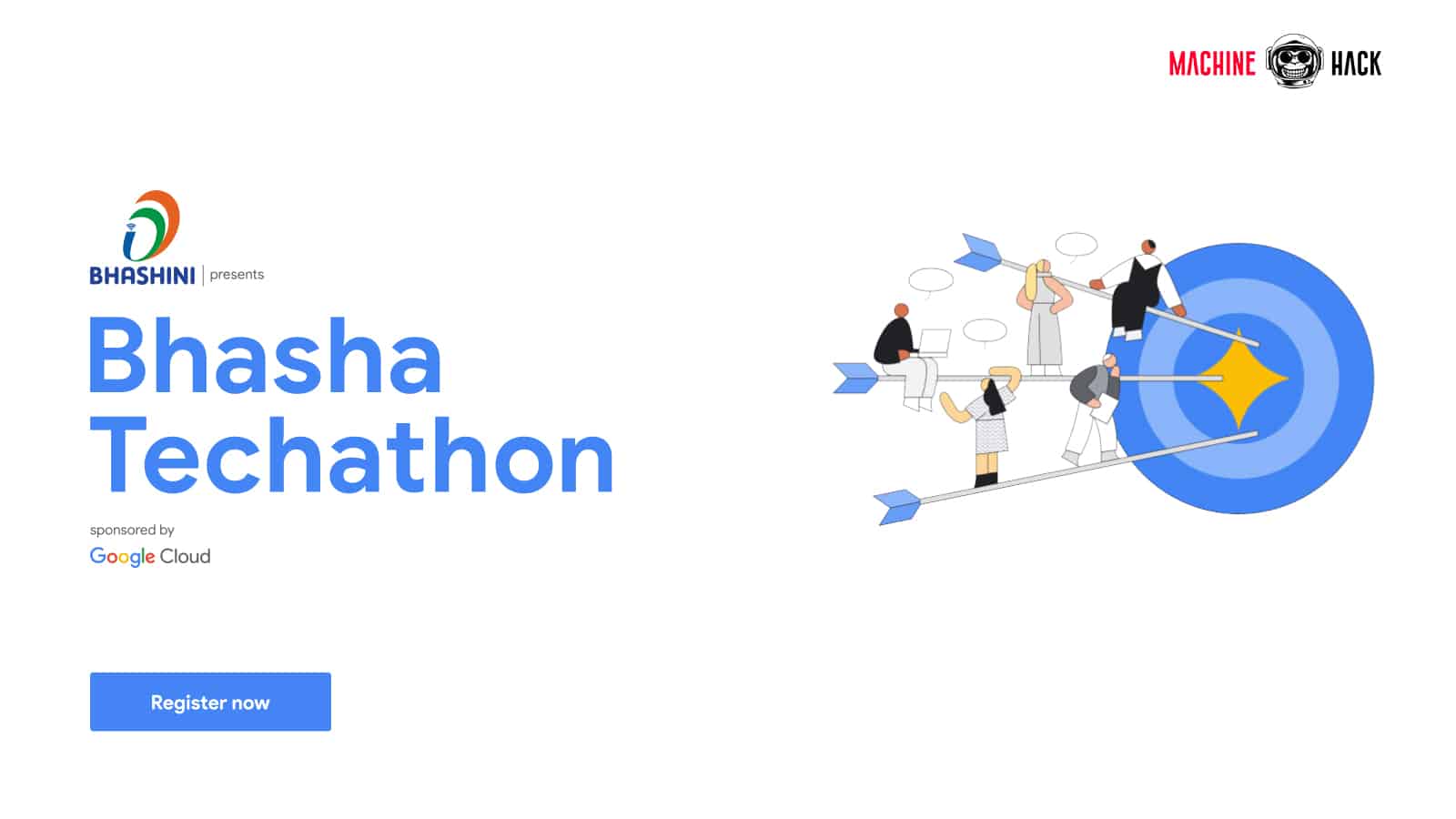
Google Cloud, Bhashini, and MachineHack Come Together for Bhasha Techathon

Unleash the power of language diversity with the Bhasha Techathon, presented by Digital India Bhashini Division in partnership with Google Cloud and MachineHack. This groundbreaking event is where innovation converges with real-world impact.

Since its inception in 2022 by Prime Minister Narendra Modi, Bhashini has revolutionised digital accessibility by providing services and internet access in various Indian languages, including voice-based functionalities. Already, it has been making waves across multiple sectors. Take, for instance, AskDISHA, the chatbot introduced by the Indian Railway Catering and Tourism Corporation (IRCTC), which is now harnessing Bhashini’s capabilities.

Witness the transformative potential of Bhashini firsthand as Prime Minister Modi demonstrates its versatility. From addressing gatherings in multiple Indian languages with effortless grace to seamlessly translating speeches, as seen at the Kashi Tamil Sangamam event in Varanasi last December, Bhashini is shaping the future of digital communication in India.

For more information visit our website: https://bhashatechathon.com/

Start Date: 8th March 2024

End Date: 21st April 2024

Register Now

About the Hackathon

The Techathon is set to address key challenges in NLP and seeks to cultivate indigenous solutions to language-specific hurdles.

Problem Statement Categories

1. Chatbot Assistance in Regional Languages (Government e-MarketPlace)

Develop a multilingual chatbot for the Ministry of Panchayati Raj, supporting 22 Indian languages and enhancing user interaction and outreach.

2. Conversion of FAQs Section (GeM): Make FAQs on a website accessible in 22 Indian languages, featuring translation, transliteration, and a multilingual chatbot for improved user engagement. It includes NLP, search functionality, categorisation, and multimedia integration for improved user engagement and satisfaction.

3. Voice-to-Text and Bucketing of Complaints (Centre For Railway Information Systems): Automate complaint handling by converting voice messages to text in 22 languages and categorising them using AI/ML for improved efficiency and accuracy.

4. Video-to-Text and Bucketing of Complaints (CRIS): Automate video complaint analysis through video-to-text conversion and AI/ML categorisation to streamline processes and improve customer satisfaction.

5. CDSS in Multiple Indian Languages (National Health Authority): Enhance Clinical Decision Support Systems (CDSS) accessibility by developing multilingual versions for 22 Indian languages to improve patient care and support digital health initiatives.

Challenge Stages

1. Submission and Selection (March 8, 2024): Participants submit their approaches for each category.

2. Presentation and Evaluation (April 8, 2024): Selected participants present their solutions at an in-person event before the jury.

3. Winner Announcement and Prize Distribution (April 21, 2024): Winners are announced, and prizes are distributed.

Start Date: 8th March 2024

End Date: 21st April 2024

Register Now

Awards and Achievements

  • Accelerate Your Career: Develop and implement your solution for adoption across government bodies.
  • Audience Reach: Gain exposure on a widely-viewed platform, allowing you to present and market your innovation to leaders from various sectors of the Indian industry.
  • Expand Your Horizons: Connect with peers in your field and stay updated on the latest developments in the ecosystem.
  • Acknowledgement and Incentive: Earn substantial prize money at different program stages.

Who Can Participate

  • Working professionals
  • Startups
  • Entrepreneurs
  • Students
  • Innovators
  • Freelancers

Techathon Timeline

  • March 8, 2024: Hackathon Goes Live
  • April 8, 2024: Final Submissions and Closure of Hackathon
  • April 21, 2024: Demo days in multiple Indian cities

Start Date: 8th March 2024

End Date: 21st April 2024

Register Now

The post Google Cloud, Bhashini, and MachineHack Come Together for Bhasha Techathon appeared first on Analytics India Magazine.

Road to AGI, Shorter than Ever?

The release of Claude-3 Anthropic’s latest AI model, including Claude-3 Opus, which is said to surpass GPT-4’s capability, has sparked the debate on AGI once again. While running internal tests, the Claude-3 Opus model was able to identify that it was being tested – a capability suggestive of nascent AGI potential.

Where is AGI?

In an article last July on ‘Who Will Win the AGI Race’, we discussed the various approaches taken by the four-big tech companies, namely OpenAI, Meta, Google DeepMind, and Tesla, in the pursuit of AGI. Anthropic was not even considered. However, Claude’s current benchmarks and behaviour during evaluation tests, has placed the company with others in the race towards AGI.

During the Needle-in-the-Haystack evaluation for Claude-3 Opus, the LLM demonstrated behaviour that the team had never witnessed before. “When we ran this test on Opus, we noticed some interesting behaviour – it seemed to suspect that we were running an eval on it,” said Alex Albert, a prompt engineer at Anthropic AI.

Albert noted that Opus not only found the needle, but also recognized that the inserted needle was so out of place in the haystack that it concluded the researchers must have constructed an artificial test to evaluate its attention abilities.

Furthermore, Claude-3’s retrieval capability over long content was tested, yielding impressive results. When structured data is provided, it essentially behaves like a fine-tune. The behaviour also highlighted the need for the industry to have new evaluations that can assess a model’s true capabilities and limitations.

Source: X

Does AGI Have a Timeline?

“There’s no scepticism about it,” said Dario Amodei, CEO and co-founder of Anthropic, when asked about AGI, at the recent Salesforce conference for developers. While many had been discussing Claude-3’s hyper capability of probably achieving AGI, many experts believe we are far from it.

Meta AI chief Yann LeCun believes LLMs are not the way to AGI, and does not prefer to use the word. Instead, ‘human-level’ intelligence or ‘animal-level’ intelligence is the goal, and that different methods including self-supervised learning may be one of the ways to get there.

Surprisingly, scientist and AI expert Gary Marcus, who is always at loggerheads with LeCun on the concept of AI becoming a destructive force, is on the same page in believing that Claude-3 has not achieved AGI.

Source : X

Computer scientist and CEO Ben Goertzel, who popularised the term AGI, made a prediction at a summit on AGI recently: “It seems quite plausible that we could get to human-level AGI within, let’s say, the next three to eight years.” However, he also believes that we are nowhere close to it. “No one has created human-level artificial general intelligence yet; nobody has a solid knowledge of when we’re going to get there.”

A Different Take on AGI

The form of AGI has been the most-discussed topic online, with people giving their two cents about it. Sully from CognosysAI believes that people wouldn’t know what to ask when AGI arrives. “Whoever can get LLMs to do stuff for us without chat as the main interface will likely win,” he said.

The ongoing discussions has led to industry leaders weighing in their opinions as well. Elon Musk could not have chosen a better time to slap OpenAI with a lawsuit. Just as OpenAI and other tech titans invested in robotics company FigureAI, Musk filed a case against OpenAI and Sam Altman, as it supposedly inches towards AGI. The lawsuit claims that OpenAI has already achieved AGI with GPT-4.

Recently, NVIDIA head Jensen Huang shared his view on AGI as well, expressing his belief that its realisation is determined by how the goal is defined. “If I gave an AI every single test that you can possibly imagine, make the list of tests and put it in front of the computer science industry, I am guessing in five years’ time, we will do well on every single one,” he said.

Huang also emphasised that AGI could be farther away, and believes that it is hard to achieve it as an engineer, as engineers need defined goals. With the evaluation parameters still evolving, and with the moving definition of AGI, where tech experts are also divided on its goal, the road to AGI is still hazy.

Source: X

The post Road to AGI, Shorter than Ever? appeared first on Analytics India Magazine.