Data Science Hiring Process at Thoughtworks

Last year, global technology consultancy company Thoughtworks, in collaboration with Microsoft Research, AI4Bharat, and OpenNyAI, created Jugalbandi, a conversation AI chatbot. It offers personalised assistance by comprehending user queries in multiple languages and covers 171 government programs, aiming to improve information accessibility for rural communities in India.

The chatbot operates using Microsoft Azure OpenAI Service’s GPT and Bhashini’s translation models. It has also developed data resources and modelling to support speech-to-text capabilities in multiple Indian languages, improving accessibility to digital services like healthcare and payments for non-English speakers.

Beyond specialising in Indic language support, the company has also come up with a fraud-detection platform for India’s payment gateway authority, and an AI/ML platform for the Indian government’s Aadhaar program.

Karrtik Iyer, principal data scientist, at Thoughtworks, told AIM that the company is currently expanding its generative AI bandwidth by hiring for the positions of lead consultant and senior consultant.

Ideal candidates should have a skill-set encompassing R, Python, or equivalent statistical/data analysis tools, along with a solid understanding of specialised areas in AI such as NLP, computer vision, and generative AI.

Inside Thoughtworks’ Data Science Team

“Our Data & AI organisation comprises over 500 members organised across service offerings, verticals, and regions for contextualised and value-driven solutions with a focus on regional nuances,” Iyer told AIM. Iyer, a seasoned industry leader, has been with the company for over eight years now,

He further added that the company tackles complex challenges through its data science team, specialising in NLP, speech, voice, and areas like reinforcement learning and computer vision. Generative AI finds applications in the company’s projects, including speech-to-text for Indian languages, fraud detection platforms, enhancing conversational AI, and even creating innovative whisky flavours for a Swedish whisky company called Mackmyra.

Thoughtworks champions open-source solutions and actively participates in the Digital Public Goods Alliance. “We prefer open-source solutions to encourage collaboration, facilitate knowledge-sharing, and contribute to the use of technology for the greater good without proprietary restrictions,” added Iyer.

Bahmni, an open-source hospital information system nurtured by the company for over a decade, received the prestigious ‘Best Open Source Creation’ award at the UNDP Future of Government Awards.

Recently, the company collaborated with the Ekstep Organisation to develop data resources and modelling for multiple Indian languages. Furthermore, the company also established a generative AI-powered platform for India’s payment gateway authority NPCI. This platform not only hosts data but also offers fraud detection services, ensuring secure transactions across different product lines.

In the government services sector, it is developing an AI/ML platform for the government’s Aadhaar program to manage encrypted biometric data, thereby enhancing security and privacy.

Besides liaising with the government, Thoughtworks has built a reinforcement learning-based personalisation engine for Marimekko, a Finnish online fashion store. This engine optimised digital experiences and customer engagement.

Similarly, it also developed a pricing platform for one of the largest global consultancies focused on low-latency, real-time data processing to enable dynamic pricing models. In the pharmaceutical sector, Thoughtworks built an AI decision engine that provides smart omnichannel recommendations, facilitating engagement with doctors and influencing prescription habits.

Interview Process

The current working situation in India follows a hybrid model, incorporating both in-person and remote elements. Candidates applying at Thoughtworks need to go through a thorough interview process to evaluate skills based on specific role requirements, cultural alignment, and leadership capabilities.

All interviews are currently conducted virtually, with each round assessing defined attributes such as technical depth, and leadership and collaboration skills. “The process typically involves two to three technical rounds, followed by a final interview focusing on leadership and cultural alignment,” said Iyer.

Skills Needed

“We prefer if candidates have experience in key technical skills, including proficiency in R, Python, or equivalent statistical and data analysis tools,” Iyer commented, talking about the hiring process for data scientists.

Additionally, it looks for individuals with expertise in specialised AI areas like NLP, computer vision, and generative AI, along with experience in deep learning, classic ML implementation, and MLops.

Candidates should demonstrate their ability to develop and implement ML models and algorithms, solve business problems using advanced statistical techniques, and address ethical concerns in data science, including privacy, bias, and fairness.

Expectations

Iyer further shared with AIM that the candidates joining Thoughtworks’ data science team can expect to be involved in a variety of projects where they will apply their extensive technical expertise to address intricate business challenges.

Upon joining Thoughtworks’ Data and AI service line, candidates can expect to be surrounded by a community of like-minded data experts, fostering knowledge growth.

In their role at Thoughtworks, data scientists leverage expertise in statistics, modelling, machine learning algorithms, and data mining techniques. They enhance the visibility of business value and data insights, facilitating effective decision-making.

In this dynamic and multifaceted role, primary responsibilities include developing strategies, productising solutions, and articulating business impacts. Integral to this position is collaborative engagement with cross-functional teams and effective communication with both technical and non-technical stakeholders.

Mistakes to Avoid

Iyer noted that the most common mistake observed in candidates during data science interviews is their difficulty in showcasing a clear understanding of the given problem statement and its appropriate addressing in the pairing interview. Thoughtworks uses pair programming, a collaborative software development technique where two programmers work together on a problem statement or codebase.

“In the pair interview, the candidate assumes the role of the driver, actively solving the problem, while the interviewee acts as an observer or navigator,” he added.

Secondly, another common error is when candidates attempt to impose deep learning-led solutions in situations where traditional approaches might be more effective and simpler to explain. This tendency to force-fit solutions can hinder effective problem-solving.

Work Culture

Thoughtworks is distinguished by its people-centric work culture, emphasising inclusivity, diversity, and the promotion of an authentic and whole self in the workplace.

“Our culture encourages mutual support, values honesty and transparency, and fosters a focus on purpose-driven goals,” commented Iyer. The company offers competitive benefits, including progressive parental leave policies, health and wellness perks, and learning and development allowances.

The company embraces a tech-agnostic stance, selecting a tech stack tailored to each client’s needs, providing diverse learning experiences with every project. Community plays a pivotal role at Thoughtworks, offering employees opportunities to learn and enhance their skills through events and internal meetups.

“If you’re seeking to expand your knowledge and expertise in data, work on impactful projects for our clients, and be a part of an organisation where you can feel empowered, Thoughtworks is the place for you,” Iyer concluded.

Click here to learn more about the open positions.

The post Data Science Hiring Process at Thoughtworks appeared first on Analytics India Magazine.

The Mother of LLMs

Meet the Mother of LLMs_ (1)

Like the legendary Mother of Dragons from Game of Thrones, Daenerys Targaryen, Qwen rises from the much-ignored Chinese AI models to become a force to reckon with. Born from the visionary minds at the tech giant Alibaba, Qwen embodies the spirit of liberation and empowerment.

Abacus AI recently open-sourced the best uncensored models online to attest to the claim. Liberated-Qwen1.5-72B, as touted by Bindu Reddy, the company’s founder, is the most performant uncensored model in the world. As the name reveals, the model is built on top of Qwen1.5, an open-source model built by Alibaba.

Qwen1.5-72B model has surpassed Claude 2.1 and GPT-3.5-Turbo-0613 on several benchmarks since its launch. Notably, Qwen (abbr. Tongyi Qianwen) is the organisation building LLMs, large multimodal models (LMMs), and other AGI-related projects. It also develops vision and audio language models based on the Qwen language model.

Reddy said, “Qwen-liberated inches out of the best open-source model on the HumanEval leaderboard, which is Qwen1.5 chat.” An even more fascinating part about Qwen1.5 is that it is just a beta version of the much-awaited Qwen2, which Alibaba said is expected to arrive soon.

Topping the charts

If there is a true testament to an LLM’s capability, it is the Hugging Face Open LLM Leaderboard. Currently, the top model on the charts is also from Abacus AI. Smaug-72B, developed by fine-tuning the Korean AI company Moreh’s LLM called MoMo, performs on top of every other model, either built on top of Mistral or Meta’s Llama models.

MoMo 72B is built on top of another open-source model from Qwen, the Qwen72B. Developed by Alibaba, it is an open-source model with 3 trillion tokens and a 32K context length that comes in different sizes. Ever since it was released in December last year, it has been outperforming every model globally.

Moreover, Qwen has also reached Qwen-Agent, a framework built for developing LLM applications using the capabilities of Qwen1.5. The features include Function Calling, Code Interpreter, RAG, and a Chrome Extension.

Junghwan Lim, head of the AI group at Moreh, told AIM that Chinese open-source models have been performing well on several benchmarks, and the companies are continually improving them with each release. “I admire their efforts in providing various artefacts based on their new model, including Int4 and Int8 quantisation,” said Lim.

The company also added a smaller language model, Qwen-1.8B, touting it as a gift to the research community. It has a 2k context length and requires only 3GB of GPU memory. Both models would be available on Alibaba Cloud for its customers and as open source.

“The amusing part for me is their effort on multilingual understanding and human preference alignment,” Lim added. “These days, when demand for local LLM is growing rapidly, opening the base model and all the smaller models has made great contributions to the community, and the countries just started the ‘AI race’,” he added.

The ‘Qwenching’ effect

As mentioned earlier, Qwen models were launched to save Alibaba’s cloud business, which had been crumbling since October last year. Though the models are currently available on Alibaba Cloud, their capabilities are highlighted with appreciation from the open-source community.

“Instead, we will focus on developing a sustainable growth model based on emerging AI-driven demand for networked and highly scaled cloud computing services,” Joe Tsai, CEO of Alibaba, said in the company’s investor call in November.

Speaking of Meta, the company plans to release Llama 3 as soon as possible. It is the right time to adopt the impressive open-source LLMs from China, and Qwen has proved its prowess. Meanwhile, competition within China is also increasing in the open-source community, with models such as DeepSeek and Yi-34B ranking at the top of the charts.

But for now, Qwen has secured its spot on the top.

The Winter is Coming

Google has Gemma. Microsoft has Phi-2 and Orca. Meanwhile, Amazon remains tightlipped about making smaller models. Though it uses LLMs from other companies such as Meta and Anthropic, relying on them for a longer time would not be a thoughtful strategy for the company to compete against the tech giants – most importantly Qwen1.5.

Reminiscent of the ominous warning from Game of Thrones, “Winter is Coming” aptly describes the ascent of the Chinese Qwen model in its challenge against the established titans Microsoft, Meta, Google, and Amazon. Much like how Emad Mostaque, the founder of Stability AI, said in November that Chinese open models will overtake GPT-4 shortly – he was talking about Qwen.

The post The Mother of LLMs appeared first on Analytics India Magazine.

Elon Musk’s xAI to Open Source Grok This Week

Elon Musk’s xAI to Open Source Grok This Week

Amid the lawsuit against OpenAI about turning into a for-profit and closed company, Elon Musk has announced that he is going to open source Grok this week.

This week, @xAI will open source Grok

— Elon Musk (@elonmusk) March 11, 2024

“OpenAI, once a carefully crafted non-profit structure, was replaced by a purely profit-driven CEO and a Board with inferior technical expertise in AGI and AI public policy. The board now has an observer seat reserved solely for Microsoft,” said Tesla CEO Musk.

In the last podcast with Lex Fridman, Elon Musk suggested that he likes the idea of open source AI. “I am generally in favour of open sourcing, like biassed towards open sourcing.”

Musk further adds that the whole idea of him founding OpenAI was about open sourcing AI. He highlighted his discussion with Larry Page, the former CEO of Google, who was Musk’s friend then. “I sat in his house and talked about AI safety, and Larry did not care about AI safety at all.”

“The ‘open’ in OpenAI is all about open source,” said Musk, highlighting that the company has become a closed source for maximum profit company, which according to him is “not good karma.”

Comparing the current stance of OpenAI with its original mission, Musk in an interview said, “I mean, this would be like, let’s say you funded an organisation to save the Amazon rainforest, and instead, they became a lumber company and chopped down the forest and sold it for money.”

The post Elon Musk’s xAI to Open Source Grok This Week appeared first on Analytics India Magazine.

Corover.ai Launches CoroAssist, Information Retrieval Copilot Powered by BharatGPT

CoroAssist

CoRover.ai, the company building the BharatGPT platform, has launched CoroAssist, a secure generative AI Information Retrieval System poised to transform how enterprises access crucial data.

CoroAssist harnesses the power of CoRover.ai’s BharatGPT LLM, and a state-of-the-art LLM-based RAG framework. CoroAssist’s mission is to boost efficiency, transparency, and decision-making within enterprise ecosystems.

By swiftly delivering accurate, role-based information from diverse sources such as websites, documents, videos, ERP/CRM systems, and APIs, CoroAssist aims to mitigate reputational, compliance, and financial risks while ensuring overall success across sectors like banking, healthcare, education, and compliance/governance.

  • Real-Time AI-Powered RAG Framework: Leveraging cutting-edge LLM-based RAG framework for pulling real-time information from relevant, reliable, and up-to-date sources.
  • Transparent Source References: Ensuring trust, credibility, and transparency by providing proper source references, fostering trust and credibility within the enterprise.
  • Multi-lingual, Multi-Channel, and Multi-Format Virtual Assistant: Offering versatility in language, channels, and formats for enhanced accessibility and convenience, accommodating diverse preferences and needs.
  • Secure, Reliable, and Scalable Deployment: Commitment to security, reliability, and scalability, ensuring a robust and dependable system for enterprise-wide deployment.
  • Grounded, Responsible, and Less Hallucinated Responses: Providing contextual answers rooted in responsibility to minimise misleading or inaccurate information.

Ankush Sabharwal, the CEO and founder of Corover.ai, said, “CoroAssist is the culmination of our team’s hard work and dedication. I would like to extend my heartfelt thanks to each member of our team for their relentless efforts in bringing this groundbreaking solution to life.”

Recently, CoRover.ai also introduced AI Realtor, the world’s first Video Bot designed exclusively for the real estate industry. AI REALTOR streamlines the home-buying process, making it smarter, faster, and more efficient.

AI REALTOR introduces a conversational element to property searches. Users can engage in a chat-like interaction with this virtual real estate assistant. Notably, it offers immersive virtual property tours, providing a realistic virtual experience of potential homes.

The post Corover.ai Launches CoroAssist, Information Retrieval Copilot Powered by BharatGPT appeared first on Analytics India Magazine.

Google Integrates Gemini in Sheets

Google Integrates Gemini in Sheets

Google Sheets users now have a powerful new tool at their disposal with the introduction of the Gemini in Sheets side panel for data analysis conducted within the platform.

This integration brings forth a suite of powerful tools directly accessible from within the familiar Sheets interface on the top right corner, promising enhanced efficiency and productivity for users across various industries.

With a simple click on the “Ask Gemini” option, users can unlock a treasure trove of functionalities aimed at simplifying complex data-related challenges.

1. Access Collaborate with Gemini
→ Open Google Sheets and click on the button to the left of your profile picture.
→ Collaborate with Gemini opens and automatically summarizes your spreadsheet
→ Click on the arrow to bring up the suggestions
Important:
If you don't see… pic.twitter.com/hO6S8vIgKc

— Paul Couvert (@itsPaulAi) March 8, 2024

Key features of Gemini in Sheets include the ability to generate content tailored to user needs. Whether it’s summarising spreadsheets, creating tables, formulating custom formulas, or explaining data in a simplified manner, Gemini is equipped to handle diverse data analysis requirements.

Gemini offers a plethora of features aimed at simplifying data analysis tasks. Users can select from suggested prompts or write their own to generate content tailored to their needs. The generated content can include summaries of spreadsheets, tables, formulas, or explanations of data from Drive and Gmail.

Once content is generated, users can interact with it in various ways. They can view more or less of the suggested content, refresh for new suggestions, or insert the content directly into their spreadsheet. Gemini also encourages user feedback to improve its accuracy and effectiveness. Users can rate suggestions as “Good” or “Bad” and provide additional context or feedback to help refine future AI-assisted features.

In terms of privacy and security, users can rest assured knowing that Gemini offers the option to clear history at any time. This feature ensures that any generated text or images not imported into the spreadsheet are promptly removed from the system, safeguarding sensitive data.

Currently only invite-only on the Google Workspace Labs, Gemini will soon be launched in several countries, firstly rolling out in computers. Last year in June, Google introduced generative AI in Sheets on Duet AI for organising and managing spreadsheets.

The post Google Integrates Gemini in Sheets appeared first on Analytics India Magazine.

The women in AI making a difference

The women in AI making a difference

TechCrunch highlights notable women in the field of AI

Kyle Wiggers Dominic-Madori Davis 7 hours

To give AI-focused women academics and others their well-deserved — and overdue — time in the spotlight, TechCrunch is launching a series of interviews focusing on remarkable women who’ve contributed to the AI revolution. We’ll publish several pieces throughout the year as the AI boom continues, highlighting key work that often goes unrecognized. Read more profiles here.

As a reader, if you see a name we’ve missed and feel should be on the list, please email us and we’ll seek to add them. Here are some key people you should know:

  • Irene Solaiman, head of global policy at Hugging Face
  • Eva Maydell, member of European Parliament and EU AI Act advisor
  • Lee Tiedrich, AI expert at the Global Partnership on AI
  • Rashida Richardson, senior counsel at Mastercard focusing on AI and privacy
  • Krystal Kauffman, research fellow at the Distributed AI Research Institute
  • Amba Kak creates policy recommendations to address AI concerns
  • Miranda Bogen is creating solutions to help govern AI
  • Mutale Nkonde’s nonprofit is working to make AI less biased
  • Sarah Kreps, professor of government at Cornell
  • Sandra Watcher, professor of data ethics at Oxford
  • Claire Leibowicz, AI and media integrity expert at PAI
  • Heidy Khlaaf, safety engineering director at Trail of Bits

The gender gap in AI

In a New York Times piece late last year, the Gray Lady broke down how the current boom in AI came to be — highlighting many of the usual suspects like Sam Altman, Elon Musk and Larry Page. The journalism went viral — not for what was reported, but instead for what it failed to mention: women.

The Times’ list featured 12 men — most of them leaders of AI or tech companies. Many had no training or education, formal or otherwise, in AI.

Contrary to the Times’ suggestion, the AI craze didn’t start with Musk sitting adjacent to Page at a mansion in the Bay. It began long before that, with academics, regulators, ethicists and hobbyists working tirelessly in relative obscurity to build the foundations for the AI and GenAI systems we have today.

Elaine Rich, a retired computer scientist formerly at the University of Texas at Austin, published one of the first textbooks on AI in 1983, and later went on to become the director of a corporate AI lab in 1988. Harvard professor Cynthia Dwork made waves decades ago in the fields of AI fairness, differential privacy and distributed computing. And Cynthia Breazeal, a roboticist and professor at MIT and the co-founder of Jibo, the robotics startup, worked to develop one of the earliest “social robots,” Kismet, in the late ’90s and early 2000s.

Despite the many ways in which women have advanced AI tech, they make up a tiny sliver of the global AI workforce. According to a 2021 Stanford study, just 16% of tenure-track faculty focused on AI are women. In a separate study released the same year by the World Economic Forum, the co-authors find that women only hold 26% of analytics-related and AI positions.

In worse news, the gender gap in AI is widening — not narrowing.

Nesta, the U.K.’s innovation agency for social good, conducted a 2019 analysis that concluded that the proportion of AI academic papers co-authored by at least one woman hadn’t improved since the 1990s. As of 2019, just 13.8% of the AI research papers on Arxiv.org, a repository for preprint scientific papers, were authored or co-authored by women, with the numbers steadily decreasing over the preceding decade.

Reasons for disparity

The reasons for the disparity are many. But a Deloitte survey of women in AI highlights a few of the more prominent (and obvious) ones, including judgment from male peers and discrimination as a result of not fitting into established male-dominated molds in AI.

It starts in college: 78% of women responding to the Deloitte survey said they didn’t have a chance to intern in AI or machine learning while they were undergraduates. Over half (58%) said they ended up leaving at least one employer because of how men and women were treated differently, while 73% considered leaving the tech industry altogether due to unequal pay and an inability to advance in their careers.

The lack of women is hurting the AI field.

Nesta’s analysis found that women are more likely than men to consider societal, ethical and political implications in their work on AI — which isn’t surprising considering women live in a world where they’re belittled on the basis of their gender, products in the market have been designed for men and women with children are often expected to balance work with their role as primary caregivers.

With any luck, TechCrunch’s humble contribution — a series on accomplished women in AI — will help move the needle in the right direction. But there’s clearly a lot of work to be done.

The women we profile share many suggestions for those who wish to grow and evolve the AI field for the better. But a common thread runs throughout: strong mentorship, commitment and leading by example. Organizations can affect change by enacting policies — hiring, education or otherwise — that elevate women already in, or looking to break into, the AI industry. And decision-makers in positions of power can wield that power to push for more diverse, supportive workplaces for women.

Change won’t happen overnight. But every revolution begins with a small step.

Women in AI: Heidy Khlaaf, safety engineering director at Trail of Bits

Women in AI: Heidy Khlaaf, safety engineering director at Trail of Bits Kyle Wiggers 9 hours

To give AI-focused women academics and others their well-deserved — and overdue — time in the spotlight, TechCrunch is launching a series of interviews focusing on remarkable women who’ve contributed to the AI revolution. We’ll publish several pieces throughout the year as the AI boom continues, highlighting key work that often goes unrecognized. Read more profiles here.

Heidy Khlaaf is an engineering director at the cybersecurity firm Trail of Bits. She specializes in evaluating software and AI implementations within “safety critical” systems, like nuclear power plants and autonomous vehicles.

Khlaaf received her computer science Ph.D. from the University College London and her BS in computer science and philosophy from Florida State University. She’s led safety and security audits, provided consultations and reviews of assurance cases and contributed to the creation of standards and guidelines for safety- and security -related applications and their development.

Q&A

Briefly, how did you get your start in AI? What attracted you to the field?

I was drawn to robotics at a very young age, and started programming at the age of 15 as I was fascinated with the prospects of using robotics and AI (as they’re inexplicably linked) to automate workloads where they’re most needed. Like in manufacturing, I saw robotics being used to help the elderly — and automate dangerous manual labour in our society. I did however receive my Ph.D. in a different sub-field of computer science, because I believe that having a strong theoretical foundation in computer science allows you to make educated and scientific decisions into where AI may or may not be suitable, and where pitfalls may be.

What work are you most proud of (in the AI field)?

Using my strong expertise and background in safety engineering and safety-critical systems to provide context and criticism where needed on the new field of AI “safety.” Although the field of AI safety has attempted to adapt and cite well-established safety and security techniques, various terminology has been misconstrued in its use and meaning. There is a lack of consistent or intentional definitions that do compromise the integrity of the safety techniques the AI community is currently using. I’m particularly proud of “Toward Comprehensive Risk Assessments and Assurance of AI-Based Systems” and “A Hazard Analysis Framework for Code Synthesis Large Language Models” where I deconstruct false narratives about safety and AI evaluations, and provide concrete steps on bridging the safety gap within AI.

How do you navigate the challenges of the male-dominated tech industry, and, by extension, the male-dominated AI industry?

Acknowledgment of how little the status quo has changed is not something we discuss often, but I believe is actually important for myself and other technical women to understand our position within the industry and hold a realistic view on the changes required. Retention rates and the ratio of women holding leadership positions has remained largely the same since I joined the field, and that’s over a decade ago. And as TechCrunch has aptly pointed out, despite tremendous breakthroughs and contributions by women within AI, we remain sidelined from conversations that we ourselves have defined. Recognizing this lack of progress helped me understand that building a strong personal community is much more valuable as a source of support rather than relying on DEI initiatives that unfortunately have not moved the needle, given that bias and skepticism towards technical women is still quite pervasive in tech.

What advice would you give to women seeking to enter the AI field?

Not to appeal to authority and to find a line of work that you truly believe in, even if it contradicts popular narratives. Given the power AI labs hold politically and economically at the moment, there is an instinct to take anything AI “thought leaders” state as fact, when it is often the case that many AI claims are marketing speak that overstate the abilities of AI to benefit a bottom line. Yet, I see significant hesitancy, especially among junior women in the field, to vocalise skepticism against claims made by their male peers that cannot be substantiated. Imposter syndrome has a strong hold on women within tech, and leads many to doubt their own scientific integrity. But it is more important than ever to challenge claims that exaggerate the capabilities of AI, especially those that are not falsifiable under the scientific method.

What are some of the most pressing issues facing AI as it evolves?

Regardless of the advancements we’ll observe in AI, they will never be the singular solution, technologically or socially, to our issues. Currently there is a trend to shoehorn AI into every possible system, regardless of its effectiveness (or lack thereof) across numerous domains. AI should augment human capabilities rather than replace them, and we are witnessing a complete disregard of AI’s pitfalls and failure modes that are leading to real tangible harm. Just recently, an AI system ShotSpotter recently led to an officer firing at a child.

What are some issues AI users should be aware of?

How truly unreliable AI is. AI algorithms are notoriously flawed with high error rates observed across applications that require precision, accuracy and safety-criticality. The way AI systems are trained embed human bias and discrimination within their outputs that become “de facto” and automated. And this is because the nature of AI systems is to provide outcomes based on statistical and probabilistic inferences and correlations from historical data, and not any type of reasoning, factual evidence or “causation.”

What is the best way to responsibly build AI?

To ensure that AI is developed in a way that protects people’s rights and safety through constructing verifiable claims and hold AI developers accountable to them. These claims should also be scoped to a regulatory, safety, ethical or technical application and must not be falsifiable. Otherwise, there is a significant lack of scientific integrity to appropriately evaluate these systems. Independent regulators should also be assessing AI systems against these claims as currently required for many products and systems in other industries — for example, those evaluated by the FDA. AI systems should not be exempt from standard auditing processes that are well-established to ensure public and consumer protection.

How can investors better push for responsible AI?

Investors should engage with and fund organisations that are seeking to establish and advance auditing practices for AI. Most funding is currently invested in AI labs themselves, with the belief that their safety teams are sufficient for the advancement of AI evaluations. However, independent auditors and regulators are key to public trust. Independence allows the public to trust in the accuracy and integrity of assessments and the integrity of regulatory outcomes.

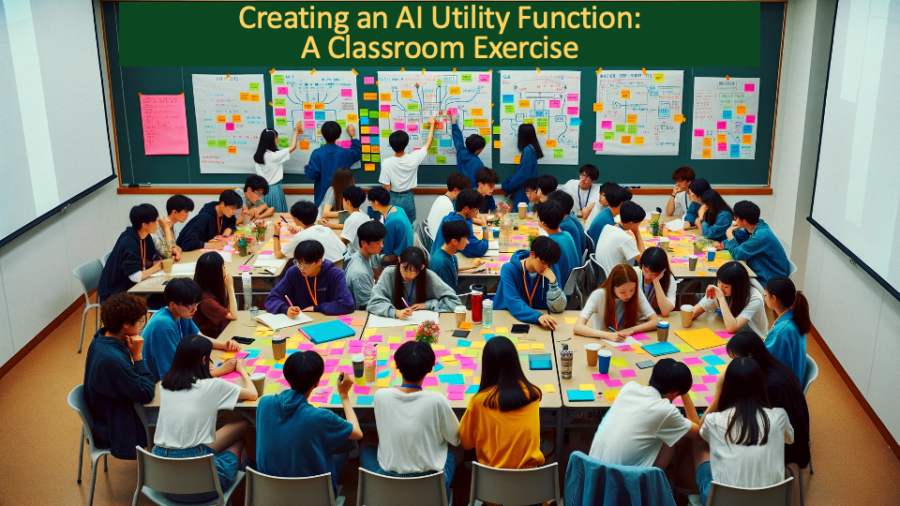
Creating an AI Utility Function: A Classroom Exercise

Slide1-1

During a recent discussion with high school juniors and seniors, my goal was to enhance their awareness and understanding of Big (intrusive) Data and AI by focusing on two main areas.

  • Firstly, I wanted students to understand how AI works so they did not fear it as a tool. AI will be an important tool no matter what profession they choose.
  • Secondly, I wanted to make the students aware of their roles, responsibilities, and rights in ensuring the meaningful, relevant, responsible, and ethical design, development, deployment, and management of AI.

The bottom line is that I wanted to turn them into citizens of data science. And to accomplish that, I created a simple exercise where they got to play the role of the AI Utility Function. Let’s dive in.

What is AI? A Quick Review

Artificial Intelligence is a set of algorithms that seek to optimize actions by mapping probabilistic outcomes to utility value within a constantly changing environment…with minimal human intervention.

The students were intrigued by AI and eager to learn about its workings. They recognized that mastering AI is essential for a future where it will impact their personal and professional lives. During our discussion, I emphasized several critical concepts related to AI, including:

  • Start with User Intent and Desired Outcomes: We start by understanding the user’s intent and desired outcomes—the ‘why’ behind the AI system. Training an AI model requires a holistic assessment of the ‘why’ before we start the training process.
  • Human-Centric Control: Humans are the architects of the AI Utility Function and the associated variables, metrics, and desired outcomes that the AI model uses to learn and make decisions.
  • Limited Autonomy: AI models will only do what they are trained to do. They do not have free will (at least not yet). The AI model’s actions will be guided by the user’s intent, desired outcomes, and the KPIs/metrics that measure outcomes’ effectiveness.
  • Continuous Learning and Adaptation: An essential aspect of AI behavior is its ability to learn from feedback and adapt over time. This process involves analyzing the outcomes of the AI’s actions and adjusting the weights of the variables and metrics to enhance accuracy and effectiveness. Continuous learning enables the AI model to become more aligned with its objectives and responsive to changes, ensuring it remains effective in dynamic environments.

An AI Utility Function consists of variables, metrics, and associated weights that guide the AI model’s decisions, map probabilistic outcomes to utility values, and measure decision effectiveness to continuously learn and adapt (Figure 1).

Slide2-1

Figure 1: AI Utility Function

The AI Utility Function acts as the AI decision-making guide, assigning scores to possible actions based on their effectiveness in reaching a desired outcome. It assesses outcomes and directs the AI to take the action with the highest score, ensuring the AI’s decisions align with its objectives. For instance, it would rate movie suggestions to align with your tastes, continuously updating its choices with new data to consistently aim for the best outcome.

We must balance different and sometimes opposing factors to create AI models that make well-rounded decisions. For example, a business-focused AI should weigh immediate profits against the need to keep customers happy over the long term. By considering a range of variables and metrics, the AI model can judge outcomes more thoroughly, like ensuring product recommendations consider customer preferences, inventory, and supplier stability, not just potential sales.

To define a healthy AI utility function, one must think more broadly about the dimensions of variables and metrics against which to measure decision and outcomes effectiveness, including:

  • Financial Value Creation: ROI, Return on Capital, NPV, Shareholder Value, Available Capital, Debt-Equity
  • Operational Value Creation: Operational reliability, predictability, repeatability, stability, safety, sustainability
  • Customer Value Creation: Customer satisfaction, fair value, LTR, NPS, quality, safety, social sentiment
  • Employee Value Creation: Productivity, satisfaction, LTR, leadership, mentoring, influencer
  • Partner/Ecosystem Value Creation: Financial health, reliability, quality, importance, supply risks, stability, ESG
  • Societal Value Creation: Quality of life, clean air and water, diversity, job, housing, healthcare, and education equality
  • Environment Value Creation: Energy efficiency, recycling, sustainability, reducing carbon footprint
  • Ethical Value Creation: Doing good, giving back, mentoring, equity, harmony, devotion, ethics

It’s also vital for the AI Utility Function to focus on leading indicators that predict future trends rather than lagging indicators that reflect on past results. Emphasizing forward-looking indicators equips the AI to take actions that shape future success instead of only responding to what has already happened.

AI Utility Function Exercise

Scenario: You are trying to decide where to eat tonight.

Step 1: As a team, brainstorm the factors one “might” want to consider in deciding where to eat tonight. Capture as many ideas as quickly as possible; don’t try to judge their “worthiness” as you generate them. Your result might look like Figure 2.

Slide3-1

Figure 2: Factors that “might” influence where you go eat tonight

Step 2: Let’s play the role of the AI Utility Function by 1) understanding the user’s intent and 2) prioritizing or weighing the variables and metrics that might be most relevant given our intent. Let’s say our dinner intent is to grab something “quick and convenient.” Given this intent, the variables and metrics we might want to weigh more heavily are highlighted in red in Figure 3.

Slide4

Figure 3: Intent: Quick, Cheap, and “Good Enough”

Step 3: Let’s change our intent to focus on finding a dining experience that meets our significant other’s date night expectations. To achieve this fine dining goal, we must modify the AI Utility Function to give more weight to the variables and metrics highlighted in red in Figure 4.

Slide5

Figure 4: Intent: Fine Dining, Data Night Experience

You should notice that many of these variables and metrics conflict with each other—chef reputation versus affordability, speed of service versus quality of service, noise level versus family-friendly. As humans, we are always forced to make these trade-off decisions, even on simple decisions as to when to cross the street or what cereal to grab on Saturday morning (Cap’n Crunch is my preference).

We must force our AI models to make these same trade-off decisions. We must build decision conflict into the AI Utility Function and force it to make the required trade-off decisions as it seeks to deliver more relevant recommendations given our intent.

Creating an AI Utility Function Summary

Hopefully, this exercise helped the students understand that AI is not just a tool of convenience or a precursor of a dystopian future; it’s a sophisticated tool shaped by human hands and minds to help guide our decisions based on our intentions and desired outcomes. The real power lies not within AI itself but within the individuals who craft its purpose and guide its development—us. We have the collective responsibility to steer AI towards outcomes that are more relevant, meaningful, responsible, and aligned with our ethical compass. In doing so, we empower the next generation to master AI and contribute to its evolution as a force for good.

Finally, although I was the one teaching, I found the students’ insights, questions, and concerns enlightening. This was clearly a valuable learning experience for me!

Women in AI: Claire Leibowicz, AI and media integrity expert at PAI

Women in AI: Claire Leibowicz, AI and media integrity expert at PAI Kyle Wiggers 8 hours

To give AI-focused women academics and others their well-deserved — and overdue — time in the spotlight, TechCrunch is launching a series of interviews focusing on remarkable women who’ve contributed to the AI revolution. We’ll publish several pieces throughout the year as the AI boom continues, highlighting key work that often goes unrecognized. Read more profiles here.

Claire Leibowicz is the head of the AI and media integrity program at the Partnership on AI (PAI), the industry group backed by Amazon, Meta, Google, Microsoft and others committed to the “responsible” deployment of AI tech. She also oversees PAI’s AI and media integrity steering committee.

In 2021, Leibowicz was a journalism fellow at Tablet Magazine, and in 2022, she was a fellow at The Rockefeller Foundation’s Bellagio Center focused on AI governance. Leibowicz — who holds a BA in psychology and computer science from Harvard and a master’s degree from Oxford — has advised companies, governments and nonprofit organizations on AI governance, generative media and digital information.

Q&A

Briefly, how did you get your start in AI? What attracted you to the field?

It may seem paradoxical, but I came to the AI field from an interest in human behavior. I grew up in New York, and I was always captivated by the many ways people there interact and how such a diverse society takes shape. I was curious about huge questions that affect truth and justice, like how do we choose to trust others? What prompts intergroup conflict? Why do people believe certain things to be true and not others? I started out exploring these questions in my academic life through cognitive science research, and I quickly realized that technology was affecting the answers to these questions. I also found it intriguing how artificial intelligence could be a metaphor for human intelligence.

That brought me into computer science classrooms where faculty — I have to shout out Professor Barbara Grosz, who is a trailblazer in natural language processing, and Professor Jim Waldo, who blended his philosophy and computer science background — underscored the importance of filling their classrooms with non-computer science and -engineering majors to focus on the social impact of technologies, including AI. And this was before “AI ethics” was a distinct and popular field. They made clear that, while technical understanding is beneficial, technology affects vast realms including geopolitics, economics, social engagement and more, thereby requiring people from many disciplinary backgrounds to weigh in on seemingly technological questions.

Whether you’re an educator thinking about how generative AI tools affect pedagogy, a museum curator experimenting with a predictive route for an exhibit or a doctor investigating new image detection methods for reading lab reports, AI can impact your field. This reality, that AI touches many domains, intrigued me: there was intellectual variety inherent to working in the AI field, and this brought with it a chance to impact many facets of society.

What work are you most proud of (in the AI field)?

I’m proud of the work in AI that brings disparate perspectives together in a surprising and action-oriented way — that not only accommodates, but encourages, disagreement. I joined the PAI as the organization’s second staff member six years ago, and sensed right away the organization was trailblazing in its commitment to diverse perspectives. PAI saw such work as a vital prerequisite to AI governance that mitigates harm and leads to practical adoption and impact in the AI field. This has proven true, and I have been heartened to help shape PAI’s embrace of multidisciplinarity and watch the institution grow alongside the AI field.

Our work on synthetic media over the past six years started well before generative AI became part of the public consciousness, and exemplifies the possibilities of multistakeholder AI governance. In 2020, we worked with nine different organizations from civil society, industry and media to shape Facebook’s Deepfake Detection Challenge, a machine learning competition for building models to detect AI-generated media. These outside perspectives helped shape the fairness and goals of the winning models — showing how human rights experts and journalists can contribute to a seemingly technical question like deepfake detection. Last year, we published a normative set of guidance on responsible synthetic media — PAI’s Responsible Practices for Synthetic Media — that now has 18 supporters from extremely different backgrounds, ranging from OpenAI to TikTok to Code for Africa, Bumble, BBC and WITNESS. Being able to put pen to paper on actionable guidance that is informed by technical and social realities is one thing, but it’s another to actually get institutional support. In this case, institutions committed to providing transparency reports about how they navigate the synthetic media field. AI projects that feature tangible guidance, and show how to implement that guidance across institutions, are some of the most meaningful to me.

How do you navigate the challenges of the male-dominated tech industry, and, by extension, the male-dominated AI industry?

I have had both wonderful male and female mentors throughout my career. Finding people who simultaneously support and challenge me is key to any growth I have experienced. I find that focusing on shared interests and discussing the questions that animate the field of AI can bring people with different backgrounds and perspectives together. Interestingly, PAI’s team is made up of more than half women, and many of the organizations working on AI and society or responsible AI questions have many women on staff. This is often in contrast to those working on engineering and AI research teams, and is a step in the right direction for representation in the AI ecosystem.

What advice would you give to women seeking to enter the AI field?

As I touched on in the previous question, some of the primarily male-dominated spaces within AI that I have encountered have also been those that are the most technical. While we should not prioritize technical acumen over other forms of literacy in the AI field, I have found that having technical training has been a boon to both my confidence, and effectiveness, in such spaces. We need equal representation in technical roles and an openness to the expertise of folks who are experts in other fields like civil rights and politics that have more balanced representation. At the same time, equipping more women with technical literacy is key to balancing representation in the AI field.

I have also found it enormously meaningful to connect with women in the AI field who have navigated balancing family and professional life. Finding role models to talk to about big questions related to career and parenthood — and some of the unique challenges women still face at work — has made me feel better equipped to handle some those challenges as they arise.

What are some of the most pressing issues facing AI as it evolves?

The questions of truth and trust online — and offline — become increasingly tricky as AI evolves. As content ranging from images to videos to text can be AI-generated or modified, is seeing still believing? How can we rely on evidence if documents can easily and realistically be doctored? Can we have human-only spaces online if it’s extremely easy to imitate a real person? How do we navigate the tradeoffs that AI presents between free expression and the possibility that AI systems can cause harm? More broadly, how do we ensure the information environment is not only shaped by a select few companies and those working for them but incorporates the perspectives of stakeholders from around the world, including the public?

Alongside these specific questions, PAI has been involved in other facets of AI and society, including how we consider fairness and bias in an era of algorithmic decision making, how labor impacts and is impacted by AI, how to navigate responsible deployment of AI systems and even how to make AI systems more reflective of myriad perspectives. At a structural level, we must consider how AI governance can navigate vast tradeoffs by incorporating varied perspectives.

What are some issues AI users should be aware of?

First, AI users should know that if something sounds too good to be true, it probably is.

The generative AI boom over the past year has, of course, reflected enormous ingenuity and innovation, but it has also led to public messaging around AI that is often hyperbolic and inaccurate.

AI users should also understand that AI is not revolutionary, but exacerbating and augmenting existing problems and opportunities. This does not mean they should take AI less seriously, but rather use this knowledge as a helpful foundation for navigating an increasingly AI-infused world. For example, if you are concerned about the fact that people could mis-contextualize a video before an election by changing the caption, you should be concerned about the speed and scale at which they can mislead using deepfake technology. If you are concerned about the use of surveillance in the workplace, you should also consider how AI will make such surveillance easier and more pervasive. Maintaining a healthy skepticism about the novelty of AI problems, while also being honest about what is distinct about the current moment, is a helpful frame for users to bring to their encounters with AI.

What is the best way to responsibly build AI?

Responsibly building AI requires us to broaden our notion of who plays a role in “building” AI. Of course, influencing technology companies and social media platforms is a key way to affect the impact of AI systems, and these institutions are vital to responsibly building technology. At the same time, we must acknowledge how diverse institutions from across civil society, industry, media, academia and the public must continue to be involved to build responsible AI that serves the public interest.

Take, for example, the responsible development and deployment of synthetic media.

While technology companies might be concerned about their responsibility when navigating how a synthetic video can influence users before an election, journalists may be worried about imposters creating synthetic videos that purport to come from their trusted news brand. Human rights defenders might consider responsibility related to how AI-generated media reduces the impact of videos as evidence of abuses. And artists might be excited by the opportunity to express themselves through generative media, while also being concerned about how their creations might be leveraged without their consent to train AI models that produce new media. These diverse considerations show how vital it is to involve different stakeholders in initiatives and efforts to responsibly build AI, and how myriad institutions are affected by — and affecting — the way AI is integrated into society.

How can investors better push for responsible AI?

Years ago, I heard DJ Patil, the former chief data scientist in the White House, describe a revision to the pervasive “move fast and break things” mantra of the early social media era that has stuck with me. He suggested the field “move purposefully and fix things.”

I loved this because it didn’t imply stagnation or an abandonment of innovation, but intentionality and the possibility that one could innovate while embracing responsibility. Investors should help induce this mentality — allowing more time and space for their portfolio companies to bake in responsible AI practices without stifling progress. Oftentimes, institutions describe limited time and tight deadlines as the limiting factor for doing the “right” thing, and investors can be a major catalyst for changing this dynamic.

The more I have worked in AI, the more I have found myself grappling with deeply humanistic questions. And these questions require all of us to answer them.

The women in AI making a difference

The women in AI making a difference

TechCrunch highlights notable women in the field of AI

Kyle Wiggers Dominic-Madori Davis 9 hours

To give AI-focused women academics and others their well-deserved — and overdue — time in the spotlight, TechCrunch is launching a series of interviews focusing on remarkable women who’ve contributed to the AI revolution. We’ll publish several pieces throughout the year as the AI boom continues, highlighting key work that often goes unrecognized. Read more profiles here.

As a reader, if you see a name we’ve missed and feel should be on the list, please email us and we’ll seek to add them. Here are some key people you should know:

  • Irene Solaiman, head of global policy at Hugging Face
  • Eva Maydell, member of European Parliament and EU AI Act advisor
  • Lee Tiedrich, AI expert at the Global Partnership on AI
  • Rashida Richardson, senior counsel at Mastercard focusing on AI and privacy
  • Krystal Kauffman, research fellow at the Distributed AI Research Institute
  • Amba Kak creates policy recommendations to address AI concerns
  • Miranda Bogen is creating solutions to help govern AI
  • Mutale Nkonde’s nonprofit is working to make AI less biased
  • Sarah Kreps, professor of government at Cornell
  • Sandra Watcher, professor of data ethics at Oxford

The gender gap in AI

In a New York Times piece late last year, the Gray Lady broke down how the current boom in AI came to be — highlighting many of the usual suspects like Sam Altman, Elon Musk and Larry Page. The journalism went viral — not for what was reported, but instead for what it failed to mention: women.

The Times’ list featured 12 men — most of them leaders of AI or tech companies. Many had no training or education, formal or otherwise, in AI.

Contrary to the Times’ suggestion, the AI craze didn’t start with Musk sitting adjacent to Page at a mansion in the Bay. It began long before that, with academics, regulators, ethicists and hobbyists working tirelessly in relative obscurity to build the foundations for the AI and GenAI systems we have today.

Elaine Rich, a retired computer scientist formerly at the University of Texas at Austin, published one of the first textbooks on AI in 1983, and later went on to become the director of a corporate AI lab in 1988. Harvard professor Cynthia Dwork made waves decades ago in the fields of AI fairness, differential privacy and distributed computing. And Cynthia Breazeal, a roboticist and professor at MIT and the co-founder of Jibo, the robotics startup, worked to develop one of the earliest “social robots,” Kismet, in the late ’90s and early 2000s.

Despite the many ways in which women have advanced AI tech, they make up a tiny sliver of the global AI workforce. According to a 2021 Stanford study, just 16% of tenure-track faculty focused on AI are women. In a separate study released the same year by the World Economic Forum, the co-authors find that women only hold 26% of analytics-related and AI positions.

In worse news, the gender gap in AI is widening — not narrowing.

Nesta, the U.K.’s innovation agency for social good, conducted a 2019 analysis that concluded that the proportion of AI academic papers co-authored by at least one woman hadn’t improved since the 1990s. As of 2019, just 13.8% of the AI research papers on Arxiv.org, a repository for preprint scientific papers, were authored or co-authored by women, with the numbers steadily decreasing over the preceding decade.

Reasons for disparity

The reasons for the disparity are many. But a Deloitte survey of women in AI highlights a few of the more prominent (and obvious) ones, including judgment from male peers and discrimination as a result of not fitting into established male-dominated molds in AI.

It starts in college: 78% of women responding to the Deloitte survey said they didn’t have a chance to intern in AI or machine learning while they were undergraduates. Over half (58%) said they ended up leaving at least one employer because of how men and women were treated differently, while 73% considered leaving the tech industry altogether due to unequal pay and an inability to advance in their careers.

The lack of women is hurting the AI field.

Nesta’s analysis found that women are more likely than men to consider societal, ethical and political implications in their work on AI — which isn’t surprising considering women live in a world where they’re belittled on the basis of their gender, products in the market have been designed for men and women with children are often expected to balance work with their role as primary caregivers.

With any luck, TechCrunch’s humble contribution — a series on accomplished women in AI — will help move the needle in the right direction. But there’s clearly a lot of work to be done.

The women we profile share many suggestions for those who wish to grow and evolve the AI field for the better. But a common thread runs throughout: strong mentorship, commitment and leading by example. Organizations can affect change by enacting policies — hiring, education or otherwise — that elevate women already in, or looking to break into, the AI industry. And decision-makers in positions of power can wield that power to push for more diverse, supportive workplaces for women.

Change won’t happen overnight. But every revolution begins with a small step.