Staqu Unveils Trinetra-2: Crime GPT Tool with UP Police

In a major leap forward for law enforcement technology, Staqu Technologies today launched Crime GPT, an advanced AI tool that allows police to rapidly access information on criminals from a massive digitised database. The new platform was unveiled in collaboration with the Uttar Pradesh Police as part of Staqu’s Trinetra 2.0 security initiative.

Crime GPT harnesses generative AI to deliver customised insights on over 900,000 criminals through written or voice prompts. By querying details like criminal histories, gang affiliations, and audio/video evidence, the tool aims to accelerate investigations and make communities safer.

The Crime GPT platform integrates Staqu’s AI capabilities with UP Police’s digitised records on 900,000 criminals. Key features include:

– Facial recognition

– Speaker identification

– Voice recognition

– Criminal network analysis

“Crime GPT aligns with our vision for a robust, tech-driven security infrastructure,” said Atul Rai, Staqu‘s CEO. “Partnering with UP Police allows us to empower law enforcement through tailored AI that can analyse any data – from CCTV footage to audio files.”

Uttar Pradesh DGP Prashant Kumar also hailed Crime GPT as a gamechanger, stating it will “help in faster retrieval of information” and “collate data across enforcement agencies” to expedite criminal cases.

The tool marks a new frontier in generative AI specifically designed for police use. As Staqu’s security collaborations expand nationwide, Crime GPT exemplifies how advanced technologies can revolutionise public safety and investigations.

The post Staqu Unveils Trinetra-2: Crime GPT Tool with UP Police appeared first on Analytics India Magazine.

5 Top Data Science Alternative Career Paths

5 Top Data Science Alternative Career Paths
Image by Editor

Data science is still the job of the year, especially with all the hype in generative AI. However, it’s common that the demand for data science jobs is way lower than that of applicants; significantly, many employers still prefer senior data scientists over juniors. That’s why many students learning data science find it hard to find a job.

However, it doesn’t mean what you learn will go to waste. There are still many alternative career paths for those who know data science. For both beginners and professionals, there are various jobs where you can implement your data science skill set.

So, what are these alternative career paths? Here are five different jobs you should consider.

1. Machine Learning Engineer

The first alternative career you can branch off from data science is machine learning engineer. People sometimes mistake these two occupations for being the same, but they are different.

Machine Learning engineers focus more on the technical aspects of machine learning deployment into production, such as how the structure should be designed or how the production should be scaled. On the other hand, data scientists focus on extracting insight from the data and providing solutions to solve the business problem.

Both share the same foundation in data analysis and machine learning, but the differences separate these career paths. If you feel that a Machine Learning Engineer position is for you, you should focus on learning more about software engineering practice and MLOps to switch to these careers.

The article How to Become a Machine Learning Engineer by Nisha Arya could also help you kickstart that career path.

2. Data Engineer

The next job is a Data Engineer. In the current data-driven era, Data Engineer has become an important position to provide stable data stream with high quality. In the company, a Data Engineer would support many Data Scientist jobs.

Data Engineer works are focused on the backend infrastructure to support any data tasks and maintain the architecture for data management and storage. Data Engineer also focus on building the data pipelines as per requirements, including collection, transformation, and delivery.

The Data Engineer and Data Scientist work with data, but the Data Engineer focuses more on the data infrastructure. This means you must be adept in additional skills, including SQL, database management, and big data technologies.

To learn more about the Data Engineer career, read the article Free Data Engineering Course for Beginners by Bala Priya C.

3. Business Intelligence

Business intelligence (BI) is an alternative career path for those who still love to gain insight from the data but are more interested in analyzing historical data to inform the business. It’s an important position for any business as a company needs to know its current situation from the data.

BI focuses more on descriptive analytics, where business leaders and stakeholders use data insight to develop actionable initiatives. The insights would be based on current and historical data in the form of KPI and business metrics so the business could make an informed decision. To facilitate the analysis, BI uses tools to create dashboards and reports for the business. This makes BI different from data scientists because the latter job focuses on providing future predictions using advanced statistical analysis.

Many BI positions require skills such as basic statistics, SQL, and Data Visualization tools such as Power BI. These are skills that people have to learn when they try to become data scientists, so BI would be a suitable alternative career path for those who love analyzing data.

If you want to improve your skills for a BI position, the article Big Data Analytics: Why Is It So Crucial For Business Intelligence? by Nahla Davies would give you that edge.

4. Data Product Manager

A Data Product Manager might be perfect if you want to move into a position with less technicality but still related to data science. This is a position that prefers skillset for a strategy to create a roadmap for the data-centric products or services

The Data Product Manager job focuses more on understanding the current market trends and guiding the data product development to meet the customer needs. The position should also understand how to position the product or services as a company asset. At the same time, the Data Product Manager should have the technical knowledge to communicate with the technical people and manage the strategy for product development.

Typically, a data product manager should have skills that include business understanding, data technology understanding, and customer experience design. These skills are necessary if the Data Product Manager wants to succeed in this position. You can read the article here to understand more about Data Product Manager.

5. Data Analyst

The last career path you should consider is the Data Analyst. The data analysts usually work with the raw data to provide answers to specific questions that are required by the business. It contrasts with the works of BI as although they have overlapping skills, BI usually uses tools to create dashboards and reports to track the KPI and business metrics continuously. In contrast, data analysts typically work on a project basis.

Data analysts often work in each department to provide detailed ad-hoc analysis for the specific project and perform statistical analysis to gain insight from the data. Data analysts can use SQL, programming language (Python/R), and data visualization tools, which are skills that data science has learned.

If this is an alternative career path, you could attend a Free Data Analyst Bootcamp for Beginners, as explained by Bala Priya C.

Conclusion

If the data science path is not for you, there are still many alternative careers you could try on. You don’t need to waste the skill you have learned, so here are the top five data science alternative career paths you should consider:

  1. Machine Learning Engineer
  2. Data Engineer
  3. Business Intelligence
  4. Data Product Manager
  5. Data Analyst

I hope it helps! Share your thoughts on the communities listed here, and add your comment below.

Cornellius Yudha Wijaya is a data science assistant manager and data writer. While working full-time at Allianz Indonesia, he loves to share Python and Data tips via social media and writing media.

More On This Topic

  • How to build a model to find the most impactful paths in user journeys
  • Alternative Feature Selection Methods in Machine Learning
  • OpenChatKit: Open-Source ChatGPT Alternative
  • 8 Open-Source Alternative to ChatGPT and Bard
  • ChatGLM-6B: A Lightweight, Open-Source ChatGPT Alternative
  • MiniGPT-4: A Lightweight Alternative to GPT-4 for Enhanced…

These 61 robotics companies are hiring

These 61 robotics companies are hiring Brian Heater @bheater / 8 hours

It’s extremely heartening to see our little list effectively double since the last time we did one of these. While it’s true that layoffs continue to plague the tech industry at large, there are few better fields to be expert in at the moment than Robotics and AI.

With more than 60 entries this week, there are plenty of jobs and companies to choose from, across a broad range of different segments from mail sorting to surgery to space.

To everyone who lost a job, recently graduated or is just looking for something new, here’s to finding your next big thing.

ACK Robotics (10 roles)
Advanced Construction Robotics (3 roles)
Aescape (7 roles)
Aigen (16 roles)
Ambi Robotics (2 roles)
ANYbotics (24 roles)
Astrobotic (40 roles)
Aurora (63 roles)
Austrian Institute of Technology (1 role)
Avidbots (12 roles)
Baubot (12 roles)
Bloomfield Robotics (5 roles)
Bridge Appliances Inc (2 roles)
Carnegie Robotics (3 roles)
Chef Robotics (9 roles)
Collaborative Robotics (8 roles)
Covariant (14 roles)
Crimson Tech (3 roles)
Cyvl.ai (3 roles)
Dexterity (39 roles)
Edge Case Research (3 roles)
Exotec (176 roles)
Formic (7 roles)
Formlogic (10 roles)
Four Growers (4 roles)
Foxglove (2 roles)
Gather AI (5 roles)
GrayMatter Robotics (8 roles)
Hellbender (6 roles)
Honeywell (10 roles)
Identified Technology (5 roles)
Kef Robotics (3 roles)
Kewazo (2 roles)
Matic Robotics (12 roles)
Medra AI (2 roles)
Mine Vision Systems (2 roles)
Motional (19 roles)
National Robotics Engineering Center (3 roles)
Near Earth Autonomy (7 roles)
Neya Systems (6 roles)
Nimble Robotics (9 roles)
Onward Robotics (3 roles)
Point One Navigation (5 roles)
Pudu Robotics (2 roles)
Reframe Systems (3 roles)
Roboto AI (1 role)
Robust AI (12 roles)
Sanctuary AI (12 roles)
Scythe Robotics (7 roles)
Seegrid (10 roles)
ST Engineering Aethon (4 roles)
Stack AV (40 roles)
Standard Bots (8 roles)
Stratom Inc (7 roles)
Symbotic (95 roles)
The AI Institute (18 roles)
Titan Robotics (3 roles)
Vayu Robotics (4 roles)
Vecna Robotics (5 roles)
Vention (19 roles)
Volley Automation (6 roles)

AI4Bharat Rolls Out IndicLLMSuite for Building LLMs in Indian Languages

Even though India’s contribution to Indic LLMs has skyrocketed in the last year, the lack of open-source pipelines for low and mid-resource languages hinders their representation in LLM training datasets.

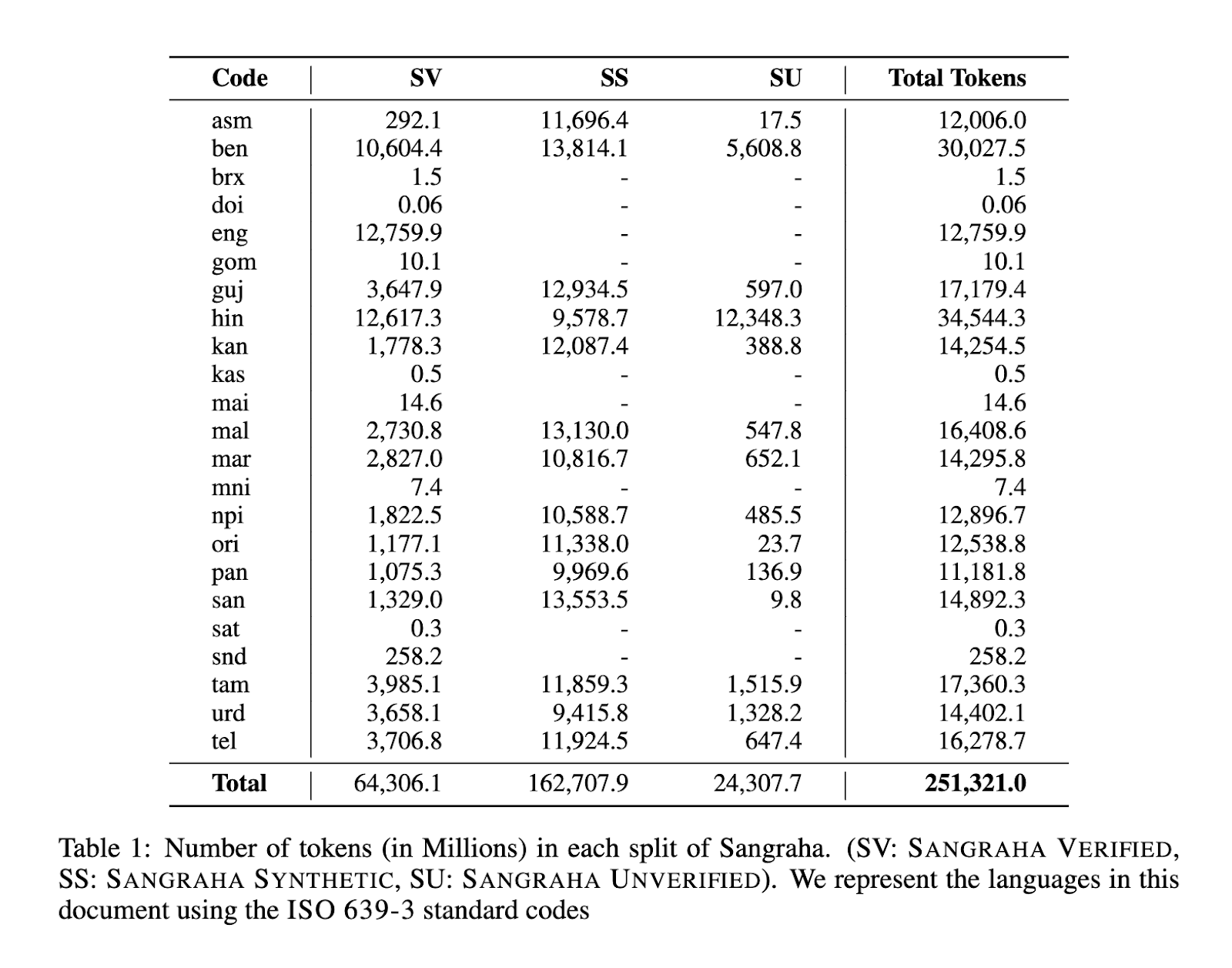
To address this, AI4Bharat has created IndicLLMSuite, a collection of resources for Indic LLMs covering 22 languages with 251 billion tokens and 74.8 million instruction-response pairs. Let’s take a look at some of the kit’s key resources.

Sangraha

This includes data for pre-training data containing 251B tokens summed up over 22 languages, extracted from curated URLs, existing multilingual corpora, and large-scale translations.

Setu

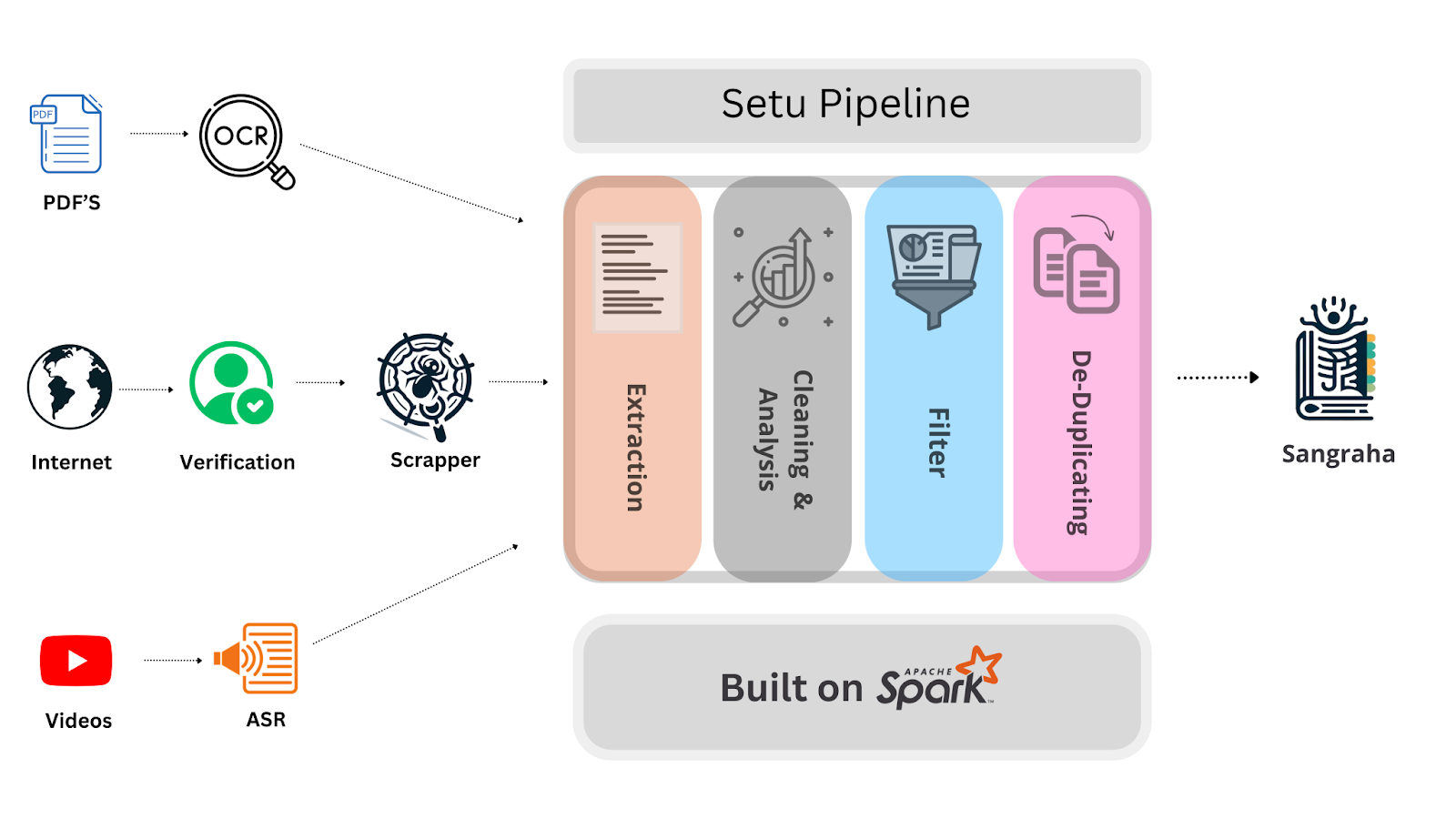
This is a Spark-based distributed pipeline customized for Indian languages for extracting content from websites, PDFs, and videos. It has in-built stages for cleaning, filtering, toxicity removal, and deduplication.

IndicAlign-Instruct

It offers a varied set of 74.7 million prompt-response pairs in 20 languages.

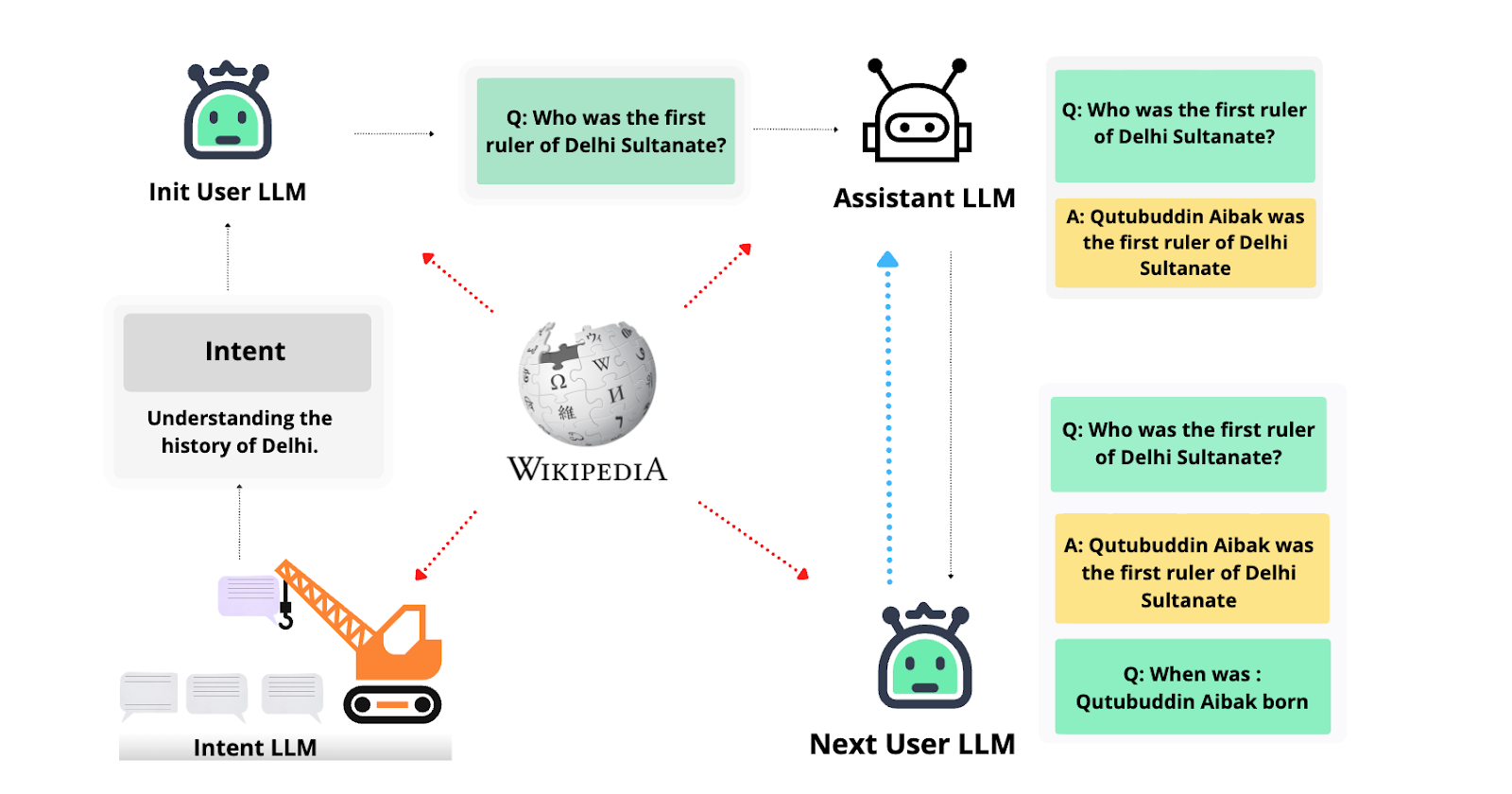
These pairs are gathered using four methods, including compiling existing Instruction Fine-Tuning (IFT) datasets, translating English datasets into 14 Indian languages with an open-source translation model, generating discussions from India-centric Wikipedia articles using open-source LLMs, and setting up a crowdsourcing platform named Anudesh for prompt collection. The team has also introduced a new IFT dataset to teach language and grammar to the model, drawing from IndoWordNet, a resource-rich vocabulary.

IndicAlign – Toxic

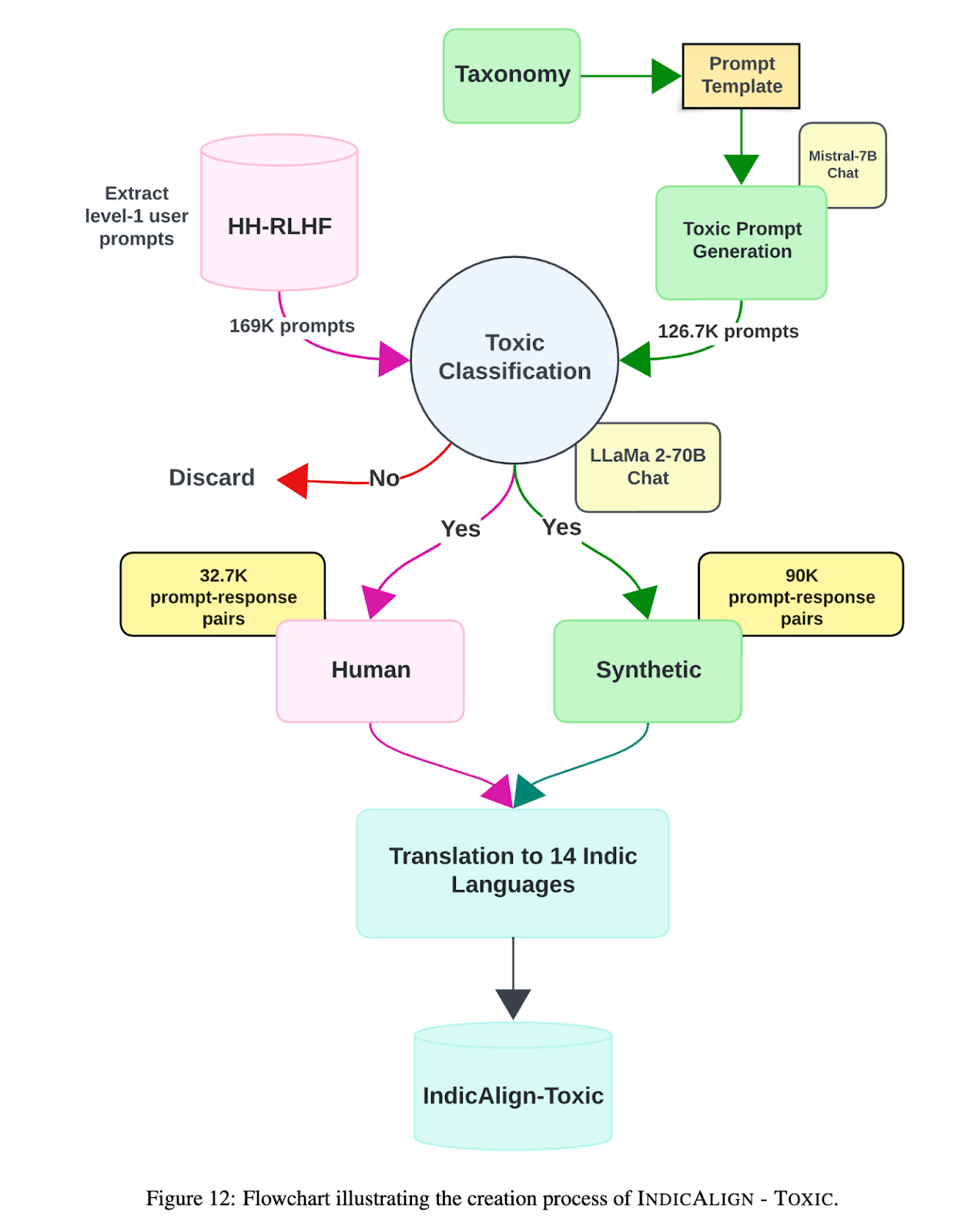
Finally, we have IndicAlign – Toxic, which consists of 123K pairs of toxic prompts and non-toxic responses generated using open-source English LLMs and translated to 14 Indian languages for safety alignment of Indic LLMs.

You can access the data and codes here.

Earlier this month, Sarvam AI, along with AI4Bharat and IIT Madras, unveiled IndicVoices, a comprehensive speech dataset adhering to an inclusive diversity wishlist with fair representation of demographics, domains, languages, and applications. The IndicVoices dataset comprises 7348 hours of natural and spontaneous speech from 16237 speakers across 145 Indian districts and 22 languages.

The post AI4Bharat Rolls Out IndicLLMSuite for Building LLMs in Indian Languages appeared first on Analytics India Magazine.

Meet the Creators of महामराठी 

According to the 2011 census, India is home to about 83 million native Marathi speakers, especially in Maharashtra. This makes Marathi the third most-spoken Indian language after Hindi and Bengali. The state, a major hub for startups and major tech firms, accounts for 12.92% of India’s GDP and has a per capita income higher than the national average.

Understanding this importance, a team of US-based Indian researchers—Aakash Patil, a postdoctoral researcher at Stanford University, Mrunmayee Shende, cofounder of CourtEasy AI and Niraj Kumar Singh, an ML engineer at Inbound Health—came up with MahaMarathi 7B. Joining the league of indic LLMs like Telugu, Malayalam, Tamil, and Odia Llama, MahaMarathi has been built on seven billion parameters. It is domain-adapted, continually pre-trained, and instruction fine-tuned using the Llama-2 and Mistral AI framework.

The Inception

“When GPT-4 came out, we realised the importance of doing something for Indian languages. Although it wasn’t our primary focus initially, the release of newer models like Meta’s Llama motivated us to build on top of them. The idea for MahaMarathi started in June last year, initially just as a concept,” Patil told AIM, sharing the inception story of the model.

He said that MahaMarathi would not have been possible without the help of Microsoft for Startups backed legal tech startup CourtEasy AI, which provided them with all the computing resources and data to train the model. The model was trained on NVIDIA A1 100 GPUs, procured by the startup under the program.

“Why Marathi? It is our mother tongue, and we have spoken it since childhood, so we thought we could contribute to the Indic LLM space,” added Shende. All of them were born and raised in Maharashtra. Patil is from Akola, Shende is from Satara, and Singh is from Nagpur.

“Our shared passion for Marathi and the desire to bridge technological gaps motivated us to work on this project,” commented Patil, adding to what Shende said.

Challenges Galore

The making of MahaMarathi was not a cakewalk, as the team was hindered by computing power and data availability challenges. Even though Patil had access to powerful supercomputers because of his research, he could not use them for personal projects.

However, things started to change around June last year when he discovered Shende and Singh share his vision of building an indigenous Marathi LLM.

Shende’s CourtEasy AI primarily operates in the legal sector, developing AI tools for lawyers, paralegals, and law firms in India. “Initially focusing on English, we soon recognised the necessity of including Indian languages, as numerous cases in lower courts are conducted in these languages,” said the co-founder.

So, Shende had been collecting data for quite some time, and by the end of December, she had amassed a significant corpus.

Datasets and Training Method

The researchers compiled a large corpus of about five million words in Marathi for their language dataset. This corpus, sourced over six months from publicly available content on websites, blogs, media, and news outlets, formed the basis for the initial pre-training of their model.

The team developed a new tokeniser for the Marathi language to manage this large corpus. After creating the tokeniser and expanding the vocabulary size, they pre-trained the model for next-token prediction tasks.

During pre-training, after achieving satisfactory results in next-token and next-sequence prediction, the team shifted their focus to fine-tuning. For this phase, they used datasets from Stanford Alpaca and Microsoft Orca, which were translated into Marathi and then cleaned to ensure accurate and contextually appropriate translations.

Satisfied with the model’s sequence prediction and context generation capability, they further refined the fine-tuning process using various datasets, including translations done with IndicTrans by AI4Bharat. IndicTrans is notable as the first open-source transformer-based multilingual NMT model supporting high-quality translations across all 22 scheduled Indic languages.

When asked about the primary databases used, Patil explained that they stored the tokenized data on a hard disk, while MongoDB Atlas was used to store the fine-tuned pairs, which amounted to approximately 60,000. Since vectorised databases are unsuitable for storing large corpora, the team primarily relied on Amazon S3 due to its extensive storage capacity.

The researchers chose not to use alternatives like the BLOOM family of open-source models or other multilingual models. Instead, they opted for a combination of the Mistral AI framework and Llama 2 architecture. This approach involved enhancing the Llama architecture by initialising Transformer layers with Mistral’s weights and modifying the MergeSkate library to improve efficiency and multilingual support.

What’s Next?

In the last three weeks since the release, the feedback has been overwhelmingly positive for MahaMarathi, especially from the Marathi community in the Bay Area and large enterprises, Intel being one of them, as Shende explained.

Depending on the feedback for the base model, the trio will also release SFT and DPO models. However, the team also noticed a need to educate the public on using pre-trained models and fine-tuning. They plan to release collaborative notebooks to assist smaller businesses and medium-scale enterprises in integrating AI into their operations.

Join Rising 2024, the largest summit on Diversity and Inclusion in India, taking place on April 4-5 in Bangalore. Grab your passes now.

The post Meet the Creators of महामराठी appeared first on Analytics India Magazine.

GenAI is Going to Change India’s Agriculture Forever

India’s agricultural sector, which employs about 65% of India’s population, has been grappling with a significant knowledge gap, hampering the transfer of modern farming practices and technologies to millions of farmers across the country, according to experts and recent reports.

The lack of effective communication channels, underfunded extension services, and disconnect between research institutions and the farming community have resulted in limited dissemination of new agricultural knowledge, especially in remote rural areas.

“There are wide knowledge gaps among Indian farmers regarding organic farming methods, climate-resilient agriculture practices, precision agriculture techniques, and even basic good agricultural practices like safe pesticide usage,” said Ramesh Kumar, an agricultural economist at the Indian Council of Agricultural Research (ICAR).

The knowledge deficit spans various areas critical to improving agricultural productivity and sustainability. For instance, a 2021 report by the Council on Energy, Environment and Water (CEEW) emphasised the need for robust knowledge exchange and capacity-building programs to enable the successful adoption of sustainable agricultural practices nationwide.

Experts warn that bridging this knowledge gap is crucial for India to enhance its food security, improve farmer livelihoods, and meet sustainability goals.

GenAI to the Rescue

Microsoft and Reliance Jio-backed KissanAI, with its multilingual AI agriculture assistant, is pioneering efforts to bridge the knowledge gap. The platform offers personalised, voice-based assistance in multiple Indian languages, making it accessible to farmers across the country. This initiative is crucial in a country where diverse languages and dialects can often hinder dissemination of critical agricultural knowledge.

This initiative is crucial for translating traditional agricultural knowledge into accessible formats for farmers, especially in their native languages, thus bridging the knowledge gap in the sector.

Desai added, “There is a wealth of knowledge traditionally stored in pen-and-paper format, drawings, or manuals that we aim to bring online, convert into AI, and make accessible.”

KissanAI recently unveiled Dhenu 1.0, India’s first agricultural LLM. Dhenu’s uniqueness lies in its tailored approach to Indian agriculture, unlike generic LLMs, the bilingual model can process 300,000 instruction sets in English and Hindi, containing data on Indian agricultural practices backed by local methods.

Jugalbandi, an AI chatbot powered by OpenAI’s GPT models through Microsoft’s Azure OpenAI Service, is assisting farmers and villagers in rural India to access information about various government schemes beneficial to them. The chatbot, accessible via WhatsApp, retrieves relevant program details typically documented in English and delivers them in the user’s native language from among 10 of the 22 official Indian languages.

Similarly, Wadhwani AI, a non-profit institute dedicated to developing AI solutions for social good, is exploring the use of generative AI to power Kissan (farmer) call centers. Alpan Raval, the chief scientist for AI/ML at Wadhwani AI, stated that they are building a Kissan call center support system using generative AI to assist farmers with their queries.

Their approach involves augmenting human experts’ knowledge by utilising models that provide automated responses based on a knowledge base created from current government reports and documents, with a speech interface enabling conversational AI interactions.

Other players in the sector are also tapping into generative AI capabilities. Digital Green, a global development organisation, has partnered with the generative AI startup Gooey.AI to introduce Farmer.CHAT, is an innovative solution aimed at addressing the challenges faced by farmers related to climate change and water security issues.

Additionally, Odisha’s Department for Agriculture and Farmer’s Empowerment launched Ama KrushAI. This interactive chatbot provides farmers with valuable guidance on optimal agronomic practices, government schemes, and loan products offered by over 40 commercial and cooperative banks.

What are Existing Agritech Startups Doing?

Other companies like Intello Labs, Cropin, Fasal, DeHaat utilise AI to provide farmers with real-time insights into crop health, market prices, and supply chain management, empowering them to make informed decisions, improve crop quality, and increase their income.

These organisations, deeply rooted in the agricultural ecosystem for an extended period, possess domain-specific expertise and curated data sets. When combined with the rapid advancements in genAI technologies witnessed today, their capabilities could be amplified manifold.

Currently, Cropin and Fasal, through their AI-driven solutions, are redefining precision farming and resource management.

Cropin offers a suite of 22 AI models that provide predictive insights for various aspects of farming, including crop detection, yield estimation, irrigation scheduling, and pest and disease prediction. Fasal, on the other hand, utilises on-farm sensors to monitor micro and macro climatic conditions, delivering farm-specific, crop-specific, and crop-stage-specific actionable recommendations.

Additionally, companies like Iron Ox use robotics and AI to create fully autonomous greenhouses, where every aspect of the plant’s environment is controlled and optimised.

The Indian agricultural sector is witnessing a surge in adoption of generative AI technologies. This convergence of generative AI capabilities with domain expertise and localised data is poised to revolutionise agricultural knowledge dissemination and enable sustainable practices.

The post GenAI is Going to Change India’s Agriculture Forever appeared first on Analytics India Magazine.

Now You Can Use Claude 3 in Google Sheets

Google Integrates Gemini in Sheets

Google Sheets users can now use Claude 3, Anthropic’s latest LLM, surpassing GPT-4 on prominent benchmarks, including near-instant results and strong reasoning capabilities. With Claude 3, users can streamline their workflow by creating prompt templates within their spreadsheets and filling them with customised data.

How to use Claude 3 in Google Sheets

X user Moritz Krembshared how to use Claude 3 on sheets. First, users need to install the Claude For Sheets extension, available on the Google Workspace Marketplace. Once installed, they get an API key from the Anthropic Console. With the API key in hand, you have to call Claude using the formula: =Claude(prompt, model)

Once configured, Claude 3 offers a range of possibilities for enhancing productivity and efficiency. A primary feature is its ability to generate personalised content based on user-defined prompts and input data. For example, if you want to craft personalised cold emails tailored to specific customers, you can integrate customer data such as names, industries, and products.

With the ability to automate repetitive tasks and generate tailored content swiftly, Claude 3 empowers users to focus their time and energy on high-value activities, improving productivity.

The Claude 3 model series debuts with a 200,000-token context window, a jump from 100,000 tokens in the second version of Claude. However, these models are flexible in accommodating inputs surpassing one million tokens for selected customers.

Opus is the flagship model of the Claude 3 family. Meanwhile, Claude 3 Sonnet (
available for free now) is designed for enterprise workloads, and Claude 3 Haiku stands out as the fastest and most compact model, ensuring near-instant responsiveness.

Yesterday, Amazon announced that Claude 3 Haiku is now available on Amazon Bedrock.

The post Now You Can Use Claude 3 in Google Sheets appeared first on Analytics India Magazine.

Databricks Invests in Mistral AI, Integrates AI Models for Its Customers

Databricks Invests in Mistral AI

Fostering innovation through open source in generative AI development, Databricks has announced its collaboration with Mistral AI by announcing a strategic partnership and participation in Mistral AI’s Series A funding round.

This partnership signifies a significant step towards democratising AI, as Mistral AI’s open models are now seamlessly integrated within the Databricks Data Intelligence Platform, which includes the integration of Mistral AI’s models, including Mistral 7B and Mixtral 8×7 providing customers with enhanced capabilities for generative AI applications.

Arthur Mensch, Founder and CEO of Mistral AI, expressed his enthusiasm for the alliance, stating, “We are delighted to forge this strategic alliance with Databricks, reaffirming our shared commitment to the portability, openness, and accessibility of generative artificial intelligence for all.”

“Since the start of this year, we have already seen close to 1000 enterprises leverage Mistral models on the Databricks platform, making millions of model inferences,” reads the blog.

Already, numerous enterprises have reported tangible benefits from utilising Mistral AI’s models on the Databricks platform. James Lin, Head of AI/ML Innovation at Experian, noted the superior performance and rapid prototyping facilitated by Mixtral 8x7B, while Luv Luhadia from Celebal Technologies highlighted the enhanced accuracy achieved in their consumer chatbot application.

With Mistral AI’s models now accessible through the Databricks Marketplace, customers can easily discover, deploy, and customise these models to suit their specific needs. The integration also extends to Mosaic AI Model Serving, enabling efficient and secure model deployment and inference across clouds and providers.

Furthermore, customers can leverage the Mosaic AI Playground within the Databricks console for interactive experimentation with Mistral models, enhancing their understanding of model behaviour and performance characteristics.

In other news, a recent report unveiled that SoftBank ventures is also planning to invest in Mistral AI.

The post Databricks Invests in Mistral AI, Integrates AI Models for Its Customers appeared first on Analytics India Magazine.

Devin is Just Canva for Developers

Devin, the world’s first AI software engineer, is democratising coding like never before, bringing ease and efficiency to developers, similar to how Canva simplified design for non-designers.

“Devin feels UI/UX first, not GenAI first,” said Andrew Kean Gao, an avid developer who got early access to play around with the world’s first AI software engineer. He said that AI is a core component, but the surrounding infra they built is the star of the show.

Within just a couple of days of its release, Devin AI has captured developers’ minds and social media feeds worldwide, thanks to an impressive demo released by founder and CEO Scott Wu.

Built on advanced reasoning and planning capabilities, Devin aims to handle entire projects independently, offering greater value to users by streamlining the development process from start to finish. The tool can successfully plan and execute complex projects that require ‘thousands of decisions.’ “Devin can recall relevant context at every step, learn over time, and fix mistakes.”

Devin gets the job done.

The progression from GitHub Copilot to AutoGPT and now Devin shows developers are keen to replace the tedious parts of their jobs with AI.

What sets the AI software engineer apart is that it doesn’t derail like the autonomous systems so far. Silas Alberti, a computer scientist and co-founder of another stealth AI startup who tried out Devin, confirmed this and said, “Using a tool like Devin effectively seems like a skill of its own, and it might be a very valuable skill to practise.”

Devin vs GitHub Copilot

This software assistant is a huge leap from AutoGPT and other AI agents and is largely different from the code completion tools of GitHub Copilot. AutoGPT was an experimental open-source project that creates AI agents that break down high-level tasks like Devin. However, its performance was inconsistent, especially with complex tasks.

After the hype of AutoGPT and similar autonomous agents, Devin’s performance elicited excitement and scepticism from developers. The current SWE-bench benchmark correctly resolves 13.86% of issues unassisted, far exceeding the previous state-of-the-art of 1.96%.

Brian Atwood, CEO of Sindarin, a conversational speech AI, noted that Devin’s performance is being compared to LLMs. He explained that the agentic assistant with access to a command-line interface and internet browsing will outperform one-shot GPT-4 inference. This assumption of Devin using GPTs is not confirmed by the team, but to get a proper baseline, Atwood then asked, “Someone hack together a gpt-4 dev loop agent.”

GitHub Copilot, on the other hand, is a popular AI-powered code completion tool that provides suggestions and code snippets based on the context of the user’s code. It assists developers in writing code faster and more efficiently but does not autonomously complete entire projects.

However, the question remains: will Devin live up to its claims and deliver a truly autonomous software development experience? If it does, it could significantly impact the user base of tools like GitHub Copilot. A user on HackerNews who goes by the name observationist said, “AI should be able to make a good employee able to do 100x the output at the same level of quality, and AI only gets more efficient and capable from here on out.” Developers who currently rely on Copilot for code completion and suggestions may find themselves turning to Devin AI for end-to-end project management and execution.

But the transition may not be straightforward. Copilot’s seamless integration with popular IDEs and ability to learn from a developer’s coding style has made it a favourite among many. “You will need human intervention at some point and at that point you’re building a full-fledged web IDE,” commented breadsniffer, a user on HackerNews. Devin will need to offer a similarly smooth user experience and prove its reliability in real-world scenarios to win over developers.

Moreover, the cost of using Devin could be a determining factor in its adoption. If the pricing model is not competitive with existing tools like Copilot, developers may hesitate to make the switch. “Devin uses GPT-4, which can get expensive very quickly. Yes, it can get even more expensive than a human,” Bindu Reddy, CEO of Abacus.AI, speculated on X.

As the AI-assisted software development landscape continues to evolve, it will be interesting to see how tools like GitHub Copilot and Devin AI coexist and complement each other. Dawid van Straaten, the technical director at ConfigureTerminal said, “GitHub Copilot would still be my preferred way to generate small boilerplate pieces of code,” While Devin may take on the heavy lifting of project management and execution, Copilot could still play a crucial role in helping developers write cleaner, more efficient code.

Andrej Karpathy, the former senior director at Tesla who is bullish on software engineering automation, responded to Devin’s release and said, “Software engineering is on track to change substantially. And it will look a lot more like supervising the automation while pitching in high-level commands, ideas, or progression strategies in English.”

Ultimately, Devin’s success will depend on its ability to deliver on its promises and provide tangible benefits to developers. Karpathy stressed that it could become a game-changer in the industry if it can significantly reduce the time and effort required to complete complex software projects while maintaining code quality and performance.

The post Devin is Just Canva for Developers appeared first on Analytics India Magazine.

Devin is Just Canva for Developers

Devin, the world’s first AI software engineer, is democratising coding like never before, bringing ease and efficiency to developers, similar to how Canva simplified design for non-designers.

“Devin feels UI/UX first, not GenAI first,” said Andrew Kean Gao, an avid developer who got early access to play around with the world’s first AI software engineer. He said that AI is a core component, but the surrounding infra they built is the star of the show.

Within just a couple of days of its release, Devin AI has captured developers’ minds and social media feeds worldwide, thanks to an impressive demo released by founder and CEO Scott Wu.

Built on advanced reasoning and planning capabilities, Devin aims to handle entire projects independently, offering greater value to users by streamlining the development process from start to finish. The tool can successfully plan and execute complex projects that require ‘thousands of decisions.’ “Devin can recall relevant context at every step, learn over time, and fix mistakes.”

Devin gets the job done.

The progression from GitHub Copilot to AutoGPT and now Devin shows developers are keen to replace the tedious parts of their jobs with AI.

What sets the AI software engineer apart is that it doesn’t derail like the autonomous systems so far. Silas Alberti, a computer scientist and co-founder of another stealth AI startup who tried out Devin, confirmed this and said, “Using a tool like Devin effectively seems like a skill of its own, and it might be a very valuable skill to practise.”

Devin vs GitHub Copilot

This software assistant is a huge leap from AutoGPT and other AI agents and is largely different from the code completion tools of GitHub Copilot. AutoGPT was an experimental open-source project that creates AI agents that break down high-level tasks like Devin. However, its performance was inconsistent, especially with complex tasks.

After the hype of AutoGPT and similar autonomous agents, Devin’s performance elicited excitement and scepticism from developers. The current SWE-bench benchmark correctly resolves 13.86% of issues unassisted, far exceeding the previous state-of-the-art of 1.96%.

Brian Atwood, CEO of Sindarin, a conversational speech AI, noted that Devin’s performance is being compared to LLMs. He explained that the agentic assistant with access to a command-line interface and internet browsing will outperform one-shot GPT-4 inference. This assumption of Devin using GPTs is not confirmed by the team, but to get a proper baseline, Atwood then asked, “Someone hack together a gpt-4 dev loop agent.”

GitHub Copilot, on the other hand, is a popular AI-powered code completion tool that provides suggestions and code snippets based on the context of the user’s code. It assists developers in writing code faster and more efficiently but does not autonomously complete entire projects.

However, the question remains: will Devin live up to its claims and deliver a truly autonomous software development experience? If it does, it could significantly impact the user base of tools like GitHub Copilot. A user on HackerNews who goes by the name observationist said, “AI should be able to make a good employee able to do 100x the output at the same level of quality, and AI only gets more efficient and capable from here on out.” Developers who currently rely on Copilot for code completion and suggestions may find themselves turning to Devin AI for end-to-end project management and execution.

But the transition may not be straightforward. Copilot’s seamless integration with popular IDEs and ability to learn from a developer’s coding style has made it a favourite among many. “You will need human intervention at some point and at that point you’re building a full-fledged web IDE,” commented breadsniffer, a user on HackerNews. Devin will need to offer a similarly smooth user experience and prove its reliability in real-world scenarios to win over developers.

Moreover, the cost of using Devin could be a determining factor in its adoption. If the pricing model is not competitive with existing tools like Copilot, developers may hesitate to make the switch. “Devin uses GPT-4, which can get expensive very quickly. Yes, it can get even more expensive than a human,” Bindu Reddy, CEO of Abacus.AI, speculated on X.

As the AI-assisted software development landscape continues to evolve, it will be interesting to see how tools like GitHub Copilot and Devin AI coexist and complement each other. Dawid van Straaten, the technical director at ConfigureTerminal said, “GitHub Copilot would still be my preferred way to generate small boilerplate pieces of code,” While Devin may take on the heavy lifting of project management and execution, Copilot could still play a crucial role in helping developers write cleaner, more efficient code.

Andrej Karpathy, the former senior director at Tesla who is bullish on software engineering automation, responded to Devin’s release and said, “Software engineering is on track to change substantially. And it will look a lot more like supervising the automation while pitching in high-level commands, ideas, or progression strategies in English.”

Ultimately, Devin’s success will depend on its ability to deliver on its promises and provide tangible benefits to developers. Karpathy stressed that it could become a game-changer in the industry if it can significantly reduce the time and effort required to complete complex software projects while maintaining code quality and performance.

The post Devin is Just Canva for Developers appeared first on Analytics India Magazine.