Microsoft’s Surface and Windows AI event is tomorrow. Here’s what to expect

Microsoft front of building in NYC

It's been two years since Microsoft launched the Surface Pro 9 or Surface Laptop 5. Finally, the company appears ready to launch succeeding models at this week's event.

Microsoft's Surface and Windows AI event will be held on March 21 at 9:00 a.m. PDT/ 12:00 p.m. ET. The event's webpage describes the event as, "Advancing the new era of work with Copilot," hinting that the event's focus will be on enterprise offerings. It will be a digital event, meaning there will be no in-person component with the press or public.

Also: 3 ways we tried to outwit AI last week: Legislation, preparation, intervention

The only additional detail Microsoft shared on the webpage is this brief description: "Tune in here for the latest in scaling AI in your environment with Copilot, Windows, and Surface."

As the title and description suggest, ZDNET expects a large focus on generative AI at the event, where the company will unveil its latest AI updates to Windows 11 and Copilot, likely tied to the launch of new Surface hardware.

The real stars of the show, however, will be the highly anticipated Surface Pro 10 and Surface Laptop 6. These launches will mark Microsoft's first laptops in the era of the AI PC. The laptops will be marketed as AI PCs because they feature hardware to better support new generative AI tools and features.

You can expect the Surface Pro 10 and Surface Laptop 6 to have next-generation processors to more robustly support running AI applications and circumvent the need to send data to cloud-based AI servers, a major feature of AI PCs. Reports reveal that the new laptops will first feature the latest Intel Core Ultra processors and then Snapdragon X Elite-based processors in a second shipment wave. These upgrades should give the laptops a performance advantage over their predecessors.

Also: My 4 favorite Android note-taking apps for staying organized and on track

Since this will be a digital event, the public will be able to tune in live. Microsoft has yet to share the live stream links, but it is a safe bet to assume the event will be streamed on the event's webpage. ZDNET will be covering the event, so make sure to tune in for all of the latest announcements, roundups, and analyses.

More Microsoft

GitHub’s latest AI tool can automatically fix code vulnerabilities

GitHub’s latest AI tool can automatically fix code vulnerabilities Frederic Lardinois @fredericl / 7 hours

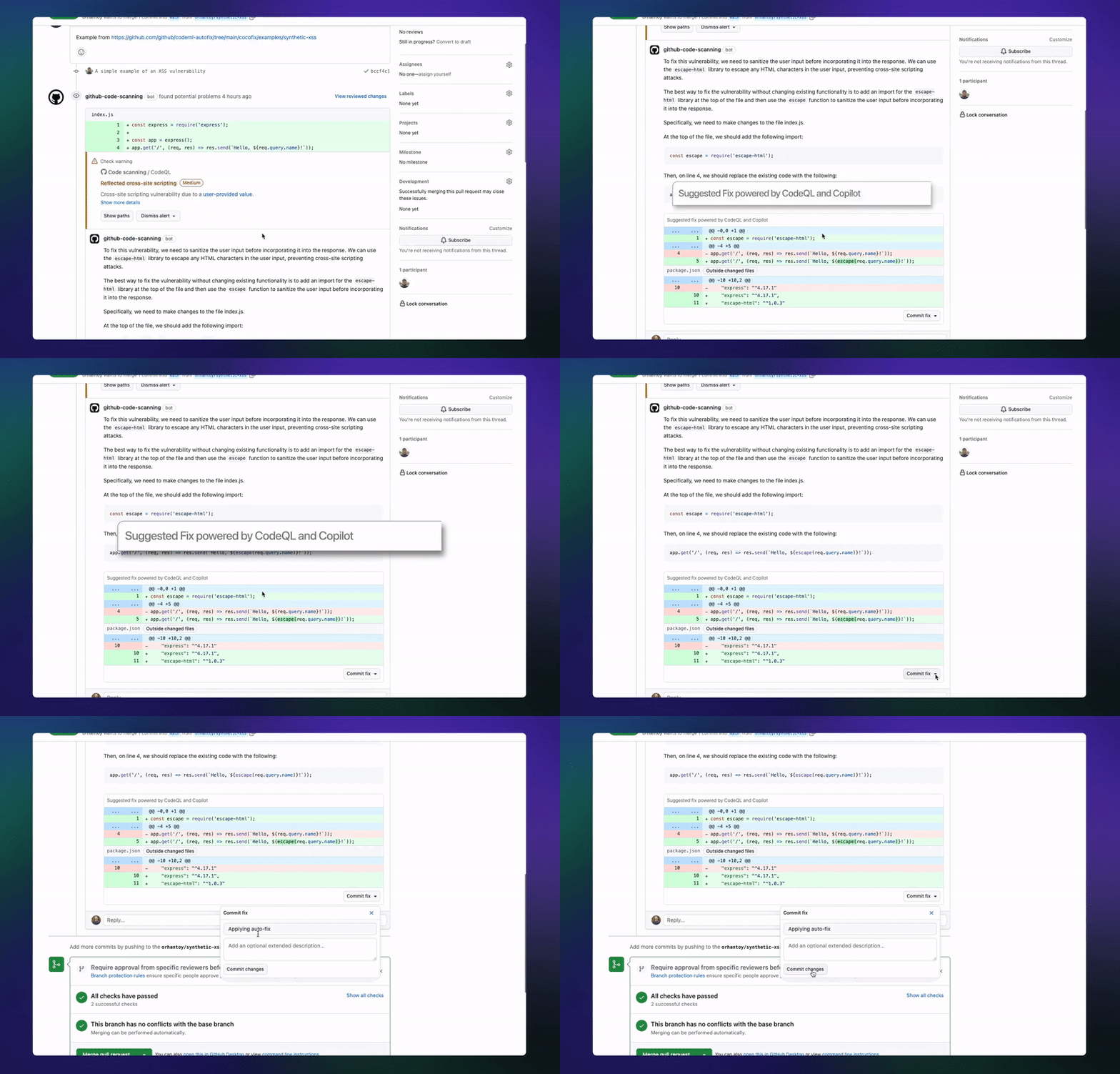
It’s a bad day for bugs. Earlier today, Sentry announced its AI Autofix feature for debugging production code and now, a few hours later, GitHub is launching the first beta of its code scanning autofix feature for finding and fixing security vulnerabilities during the coding process. This new feature combines the real-time capabilities of GitHub’s Copilot with CodeQL, the company’s semantic code analysis engine. The company first previewed this capability last November.

GitHub promises that this new system can remediate more than two-thirds of the vulnerabilities it finds — often without the developers having to edit any code themselves. The company also promises that code scanning autofix will cover more than 90% of alert types in the languages it supports, which are currently JavaScript, Typescript, Java, and Python.

This new feature is now available for all GitHub Advanced Security (GHAS) customers.

Code-scanning autofix in GitHub Copilot.

Code-scanning autofix in GitHub Copilot.

“Just as GitHub Copilot relieves developers of tedious and repetitive tasks, code scanning autofix will help development teams reclaim time formerly spent on remediation,” GitHub writes in today’s announcement. “Security teams will also benefit from a reduced volume of everyday vulnerabilities, so they can focus on strategies to protect the business while keeping up with an accelerated pace of development.”

Image Credits: GitHub

In the background, this new feature uses the CodeQL engine, GitHub’s semantic analysis engine to find vulnerabilities in code, even before it has been executed. The company made a first generation of CodeQL available to the public in late 2019 after it acquired the code analysis startup Semmle, where CodeQL was incubated. Over the years it made a number of improvements to CodeQL, but one thing that never changed was the CodeQL was only available for free for researchers and open-source developers.

Now, CodeQL is at the center of this new tool, though GitHub also notes that it uses “a combination of heuristics and GitHub Copilot APIs” to suggest its fixes. To generate the fixes and their explanations, GitHub uses OpenAI’s GPT-4 model. And while GitHub is clearly confident enough to suggest that the vast majority of autofix suggestions will be correct, the company does not that “a small percentage of suggested fixes will reflect a significant misunderstanding of the codebase or the vulnerability.”

GitHub acquires code analysis tool Semmle

Collection of Guides on Mastering SQL, Python, Data Cleaning, Data Wrangling, and Exploratory Data Analysis

Collection of Guides on Mastering SQL, Python, Data Cleaning, Data Wrangling, and Exploratory Data Analysis
Image by Author

Data plays a crucial role in driving informed decision-making and enabling Artificial Intelligence based applications. As a result, there is a growing demand for skilled data professionals across various industries. If you are new to data science, this extensive collection of guides is designed to help you develop the essential skills required to extract insights from vast amounts of data.

7 Steps to Mastering SQL for Data Science

Link: 7 Steps to Mastering SQL for Data Science

Collection of Guides on Mastering SQL, Python, Data Cleaning, Data Wrangling, and Exploratory Data Analysis

It is a step-by-step approach to mastering SQL, covering the basics of SQL commands, aggregations, grouping, sorting, joins, subqueries, and window functions.

The guide also highlights the significance of using SQL to solve real-world business problems by translating requirements into technical analyses. For practicing and preparation for data science interviews, it recommends practicing SQL through online platforms like HackerRank and PGExercises.

7 Steps to Mastering Python for Data Science

Link: 7 Steps to Mastering Python for Data Science

Collection of Guides on Mastering SQL, Python, Data Cleaning, Data Wrangling, and Exploratory Data Analysis

This guide provides a step-by-step roadmap for learning Python programming and developing the necessary skills for a career in data science and analytics. It starts with learning the fundamentals of Python through online courses and coding challenges. Then, it covers Python libraries for data analysis, machine learning, and web scraping.

The career guide highlights the importance of practicing coding through projects and building an online portfolio to showcase your skills. It also offers free and paid resource recommendations for each step.

7 Steps to Mastering Data Cleaning and Preprocessing Techniques

Link: 7 Steps to Mastering Data Cleaning and Preprocessing Techniques

Collection of Guides on Mastering SQL, Python, Data Cleaning, Data Wrangling, and Exploratory Data Analysis

A step-by-step guide to mastering data cleaning and preprocessing techniques, which is an essential part of any data science projects. The guide covers various topics, including exploratory data analysis, handling missing values, dealing with duplicates and outliers, encoding categorical features, splitting data into training and test sets, feature scaling, and addressing imbalanced data in classification problems.

You will learn the importance of understanding the problem statement and the data with the help of example codes for the various preprocessing tasks using Python libraries such as Pandas and scikit-learn.

7 Steps to Mastering Data Wrangling with Pandas and Python

Link: 7 Steps to Mastering Data Wrangling with Pandas and Python

Collection of Guides on Mastering SQL, Python, Data Cleaning, Data Wrangling, and Exploratory Data Analysis

It is a comprehensive learning path for mastering data wrangling with pandas. The guide covers prerequisites like learning Python fundamentals, SQL, and web scraping, followed by steps to load data from various sources, select and filter dataframes, explore and clean datasets, perform transformations and aggregations, join dataframes and create pivot tables. Finally, it suggests building an interactive data dashboard using Streamlit to showcase data analysis skills and create a portfolio of projects, essential for aspiring data analysts seeking job opportunities.

7 Steps to Mastering Exploratory Data Analysis

Link: 7 Steps to Mastering Exploratory Data Analysis

Collection of Guides on Mastering SQL, Python, Data Cleaning, Data Wrangling, and Exploratory Data Analysis

The guide outlines the 7 key steps for performing effective Exploratory Data Analysis (EDA) using Python. These steps include data collection, generating statistical summary, preparing data through cleaning and transformations, visualizing data to identify patterns and outliers, conducting univariate, bivariate, and multivariate analysis of variables, analyzing time series data, and dealing with missing values and outliers. EDA is a crucial phase in data analysis, enabling professionals to understand data quality, structure, and relationships, ensuring accurate and insightful analysis in subsequent stages.

Conclusion

To begin your journey in data science, it's recommended to start with mastering SQL. This will allow you to work efficiently with databases. Once you're comfortable with SQL, you can dive into Python programming, which comes with powerful libraries for data analysis. Learning essential techniques like data cleaning is important, as it will help you maintain high-quality datasets.

Then, gain expertise in data wrangling with pandas to reshape and prepare your data. Most importantly, master exploratory data analysis to thoroughly understand datasets and uncover insights.

After following these guidelines, the next step is to work on a project and gain experience. You can start with a simple project and then move on to more complex ones. Write about it on Medium and learn about the latest techniques to improve your skills.

Abid Ali Awan (@1abidaliawan) is a certified data scientist professional who loves building machine learning models. Currently, he is focusing on content creation and writing technical blogs on machine learning and data science technologies. Abid holds a Master's degree in technology management and a bachelor's degree in telecommunication engineering. His vision is to build an AI product using a graph neural network for students struggling with mental illness.

More On This Topic

  • 7 Steps to Mastering Data Wrangling with Pandas and Python
  • 7 Steps to Mastering Exploratory Data Analysis
  • Data Cleaning in SQL: How To Prepare Messy Data for Analysis
  • Mastering the Art of Data Cleaning in Python
  • 7 Steps to Mastering Data Cleaning and Preprocessing Techniques
  • Exploratory Data Analysis Techniques for Unstructured Data

Mustafa Suleyman, Microsoft’s New Best Friend 

Microsoft’s Satya Nadella now has a new best friend, Mustafa Suleyman, and it ain’t Sam Altman anymore. A new drama is unfolding in the heart of Silicon Valley as Inflection AI co-founder joins the big tech to run their AI show internally, leaving the startup stranded.

(Source: X)

In a long-overdue move for Nadella in the well-orchestrated 4D chess, he brought in InflectionAI co-founders Suleyman and Karén Simonyan to lead the newly formed Microsoft AI division and focus on “consumer AI”. Suleyman is joining as the CEO, a position Nadella had offered to Sam Altman in November 2023, when OpenAI fired him. Simonyan joins as the chief scientist.

Unlike its competitors, Microsoft has historically relied on partnerships and acquisitions to bolster its presence in the AI space.

While companies like Google, Apple, and NVIDIA have invested heavily in internal research teams, yielding proprietary products such as DeepMind’s Gemini and Gemma, MM1, and NVIDIA’s groundbreaking developments showcased at GTC 2024, Microsoft’s approach has been more decentralised.

The lack of significant proprietary products emerging from Microsoft’s internal teams may have presented challenges for Nadella in meeting the expectations of stakeholders and customers.

(Source: X)

Despite its extensive startup investment portfolio, Microsoft’s radio silence on products could have hindered its ability to compete effectively in the market. While Microsoft Copilot (formerly Bing Chat) is one of the company’s most popular products, it combines the company’s Prometheus model and OpenAI’s GPT-4 LLM.

The Caring ‘Microsoft’

Nadella’s plan for a separate division focusing solely on AI is not new. He has always been looking for the “perfect” candidate to lead it. When Altman was fired in November last year, he swooped in to hire him as the CEO of this new AI division along with Greg Brockman. Now, he has basically brought Mustafa in his position.

OpenAI is Microsoft’s first kid with the first investment going back to 2019. According to informed sources, only a fraction of Microsoft’s $10 billion investment in OpenAI has been directly given to the startup. Instead, a significant portion of the funding, distributed in instalments, is tied to cloud computing purchases rather than cash.

The company was the lead investor in Inflection AI’s last funding round in June 2023 where it raised $1.3 billion to develop “more personal AI”. Similarly, it has invested in SF-based AdeptAI, which is barely a year old now.

The most recent addition to Microsoft’s portfolio is the multi-year partnership with French AI startup Mistral AI, which focuses on three core areas: supercomputing infrastructure, scale to market, and AI research and development. Through partnerships with major giants like Databricks to Snowflake, Mistral has threatened the OG influential startups like OpenAI, Anthropic and so on.

Not just startups, Microsoft even became Meta’s “preferred partner” for serving Llama 2.

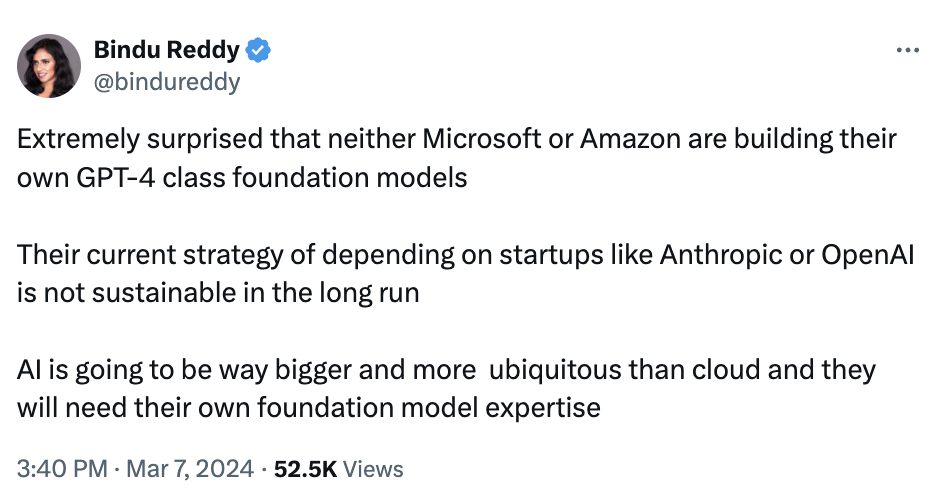
So, Microsoft’s Azure platform is now “diversifying” its offerings beyond what it previously provided in partnership with OpenAI, as suggested by Bindu Reddy, the founder of AbacusAI. Previously, Azure had collaborated with OpenAI to provide access to GPT models. Now, with deals like the one with Mistral and the pivot of Inflection AI, Azure is expanding its AI offerings independently.

This suggests that Microsoft and OpenAI may eventually become competitors rather than collaborators in the future.

Alongside the co-founders, many Inflection employees are also joining the AI division of Microsoft. Many are considering this move by MSFT to be both “genius and evil” because instead of acquiring the startup outright, the company poached the crème de la crème talent from these startups, which is often considered the key to their success.

Source: Bojan Tunguz on X

On one hand, it allows Microsoft to gain access to top talent and innovative ideas without facing the regulatory scrutiny associated with large acquisitions. On the other hand, it can be viewed as unfair competition, detrimental to the ecosystem of smaller AI startups.

Is Suleyman the Right Fit?

Regarded as one of the sharpest minds in Silicon Valley, former DeepMind co-founder Suleyman’s act of abandoning his four-billion dollar startup did not sit well with many in the tech ecosystem. “Not a good sign for Inflection.ai that the co-founders CEO and chief scientist jump ship to Microsoft,” said Yann LeCun, chief AI scientist at Meta. Clem Delangue, CEO and cofounder at HuggingFace, opined the same.

Suleyman has had a controversial history. He founded Google DeepMind with childhood friend Demis Hassabis and ML researcher Shane Legg in 2010. However, reports emerged that numerous current and former employees of DeepMind accused him of bullying, yelling at employees in meetings, using profanity-laden language, and making derogatory remarks.

Additionally, he allegedly assigned unrelated tasks and insisted on using private messaging platforms for work communication to evade corporate oversight. In response to the allegations, Suleyman was placed on a leave of absence. However, in a surprising turn of events, Google later appointed Suleyman as VP of AI Policy until him leaving in 2022 to form Inflection.

Source: Pedro Domingos on X

Less than a month ago, the startup launchedInflection-2.5, a model that competes with all the world’s leading LLMs, including GPT-4 and Gemini. Inflection-2.5 approaches the performance level of GPT-4 but uses only 40% of the computing resources for training. Its chatbot Pi is based on this model.

Inflection is currently in the hands of Reid Hoffman, the co-founder and investor, as the only one remaining with the new CEO, Sean White.

The post Mustafa Suleyman, Microsoft’s New Best Friend appeared first on Analytics India Magazine.

Cropin and AWS Partner To Develop AI-Solutions to Address Global Hunger

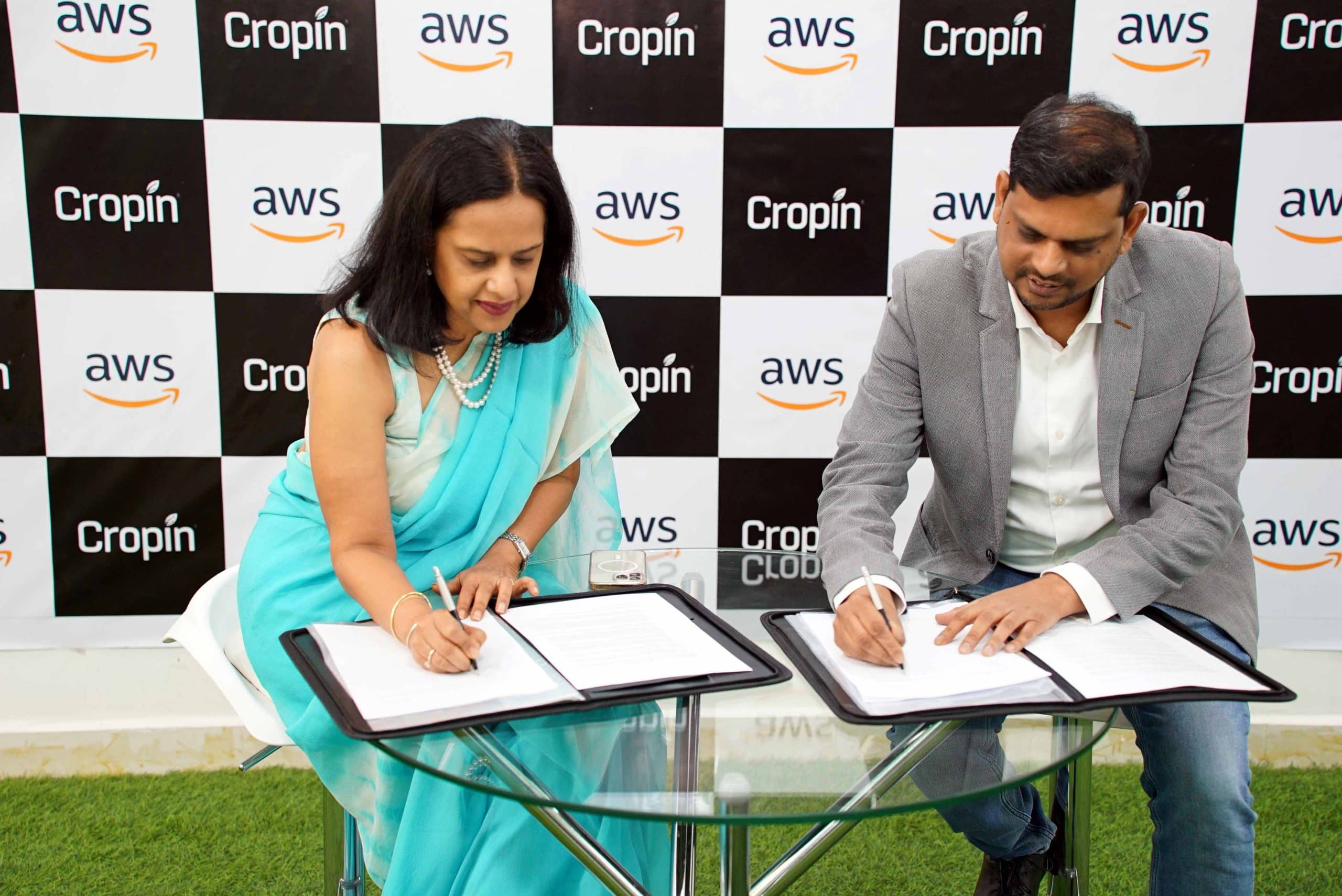
Bengaluru-based agritech startup Cropin Technology and Amazon Web Services (AWS) India Private Limited have signed a Memorandum of Understanding (MoU) focused on enabling Cropin to build an AI-powered solution to address the pressing issue of global hunger and food insecurity.

This initiative aims to help Cropin develop core data architecture, analytics, modeling, and simulation components that can aggregate global farmland data and broader climate intelligence within a single solution.

The solution will provide decision intelligence to governments, development agencies, and agri-businesses, and help them ensure food security for vulnerable populations.

It will also integrate satellite imagery with in-situ field images and remote data to improve agricultural analytics through scalable models.

These models will provide both micro (plot) and macro (regional/ global) insights and will be further analyzed by identifying patterns and anomalies in the production and quality of major crops across global regions.

Cropin’s AI, model building, data processing, and reporting will leverage AWS services such as Amazon Bedrock, a fully managed service that offers a choice of high-performing foundation models from leading AI companies; Amazon Q, a generative AI-powered assistant; Amazon QuickSight, which offers unified business intelligence at hyperscale; and AWS’s HPC infrastructure.

AWS will explore providing technical expertise to Cropin on its advanced compute services (HPC, ML/ Gen AI, IoT, geospatial), as well as industry insights from its agriculture, and sustainability specialists, to power Cropin’s platform.

The insights generated through the workloads will be integrated into Cropin’s open-source dashboard. They can be disseminated via a WhatsApp or an SMS-based alerting system for stakeholders, including farmers, field officers, governments, development agencies, and agribusinesses.

AWS will further support Cropin by exploring collaboration opportunities with research organisations and academic institutions such as Harvard Data Science Initiative (HDSI), to drive research and development in food security, climate-resilient agriculture, and food sustainability.

Recent estimates from the Food and Agriculture Organization (FAO) of the United Nations reveal a stark reality: between 691 and 783 million people faced hunger in 2022, reversing decades of progress. This figure represents an alarming increase of 122 million people compared to 2019, before the pandemic.

While technology alone cannot solve hunger, it is a crucial tool for strategic decision-making. It enables governments and organizations analyse insights emerging from models and simulations of systems as diverse as agriculture, trade, and climate, in order to develop and test holistic strategies to address food insecurity.

“Our work with Cropin showcases the power of advanced compute capabilities on the cloud to drive social and environmental impact. AWS’s generative AI, simulation, and data analytics technologies can help organisations like Cropin surface actionable and relevant insights from diverse data sets, and scale their solution globally to empower decision makers to reduce food insecurity,” said Shalini Kapoor, Director and Chief Technologist, AWS India Private Limited.

The post Cropin and AWS Partner To Develop AI-Solutions to Address Global Hunger appeared first on Analytics India Magazine.

Google hit with $270M fine in France as authority finds news publishers’ data was used for Gemini

Google hit with $270M fine in France as authority finds news publishers’ data was used for Gemini Natasha Lomas Romain Dillet 7 hours
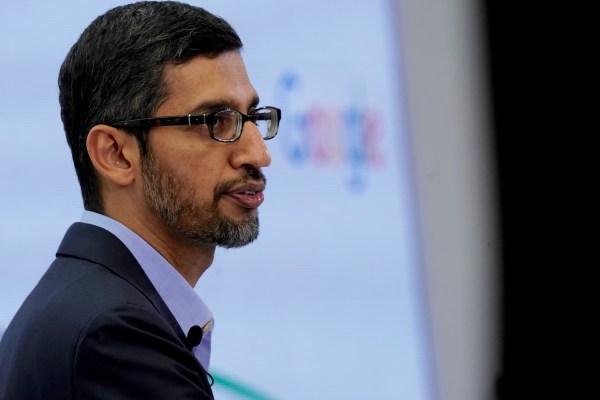
In a never-ending saga between Google and France’s competition authority over copyright protections for news snippets, the Autorité de la Concurrence announced a €250 million fine against the tech giant Wednesday (around $270 million at today’s exchange rate).

According to the competition watchdog, Google disregarded some of its previous commitments with news publishers. But the decision is especially notable because it drops something else that’s bang up-to-date – by latching onto Google’s use of news publishers’ content to train its generative AI model Bard/Gemini.

The competition authority has found fault with Google for failing to notify news publishers of this GenAI use of their copyrighted content. This is in light of earlier commitments Google made which are aimed at ensuring it undertakes fair payment talks with publishers over reuse of their content.

Copyright and competition wrongs

In 2019, the European Union passed a pan-EU digital copyright reform that extended copyright protections to news headlines and snippets. News aggregators, such as Google News, Discover and the “Top Stories” feature box on search results pages, had previously scraped and displayed these news stories on their products without any financial compensation.

Google originally sought to evade the law by switching off Google News in France. But the competition authority quickly stepped in – finding its unilateral action an abuse of a dominant market position that risked harm to publishers. The intervention essentially forced Google to cut deals with local publishers over content reuse. But in 2021, Google was hit with a $592M fine after the competition authority found major breaches in its negotiations with local publishers and agencies.

The tech giant called the sanction “disproportionate” and said it would appeal. But it subsequently sought to settle the dispute – offering a series of pledges and withdrawing its appeal. The commitments, which were accepted by the French Autorité, include passing key information to publishers and negotiating in a fair way.

Google has signed copyright agreements with hundreds of publishers in France – which fall under the remit of its agreement with the Autorité. So its business in this area is very tightly regulated.

No appeal

Google has agreed not to contest the Autorité’s latest findings – in exchange for a fast-tracked process and making a monetary payment.

However, its managing director for news and publishing partnerships, Sulina Connal, struck a peeved tone – writing in a lengthy blog post that “the fine is not proportionate to issues raised” by the authority.

The blog post suggests Google really wants to draw a line under the saga this time, with Connal also writing: “We’ve settled because it’s time to move on and, as our many agreements with publishers show, we want to focus on the larger goal of sustainable approaches to connecting people with quality content and on working constructively with French publishers.”

With generative AI in the frame, and the competitive scramble to launch tools, Google’s calculus on approaching the content reuse issue looks different.

GenAI training in the frame

Today’s enforcement by France’s competition authority shows it honed in on Google’s use of content from news publishers and agencies for training purposes for its AI foundation model and its related AI chatbot service Bard (now called Gemini).

It found Google used content from publishers and press agencies for training Bard, its generative AI tool which launched in July 2023, “ without notifying the copyright holders or the Authority,” per its press release.

On this point, Google’s defense is twofold. In its blog post it writes that the competition authority “does not challenge the way web content is used to improve newer products like generative AI, which is already addressed in Article 4 of the EUCD” [EU Copyright Directive].

Article 4 of the Copyright Directive sets out an “exception or limitation for text and data mining” – specifically for “reproductions and extractions of lawfully accessible works and other subject matter for the purposes of text and data mining”.

However in its press release the Autorité argues it has not yet been determined whether the exemption applies here. (It’s worth noting the relevant clause refers to “lawfully accessible works” – while Google is under a legally binding commitment to the competition authority to notify copyright holders about uses of their protected works and apparently failed to do so in this case.)

“When it comes to declaring whether using news content to train an artificial intelligence service falls under neighboring rights and protection, this question has not been answered just yet,” the competition authority wrote. “However, the Autorité considers that Google has breached its commitment #1 by failing to inform publishers that their content had been used to train Bard.”

Google’s blog post also makes passing mention of the EU AI Act – suggesting it’s of relevance. However the legislation is not yet in force as it’s pending final adoption by the European Council.

The incoming AI legislation will also say developers must abide by the bloc’s copyright rules. And it introduces transparency requirements with that goal in mind — requiring them to put in place a policy to respect EU copyright law; and make publicly available a “sufficiently detailed summary” of the content used for training general purpose AI models (such as Gemini/Bard).

This incoming requirement on model makers to publish a training data summary may, in the future, make it easier for news publishers whose protected content has been ingested for GenAI training to obtain fair remuneration under EU copyright law.

No technical opt out

The Autorité also points out that Google failed to provide, until at least September 28, 2023, a technical solution to allow publishers and press agencies to opt out of their content being used to train Bard without such a decision affecting the display of their content on other Google services.

“Until this date, publishers and news agencies that wanted to opt out of this use case had to insert an instruction that blocks all content indexation from Google, including for Search, Discover and Google News services. Those services are specifically part of the negotiation for revenue related to neighboring rights,” it wrote, adding: “In the future, the Autorité will carefully look at the effectiveness of Google’s opt-out processes.”

In more technical terms, between July and September 2023, news publishers could insert a “noindex” tag to the robots.txt file to make sure that their content wasn’t used to train Google’s AI model. This robots.txt file is placed at the root folder of web servers and contains various instructions for search engines. Google’s web crawler looks at the instructions in those files to index websites.

But a “noindex” tag means that your website disappears from Google altogether. In September 2023, Google added more granularity and created a “Google-Extended” rule that is different from the “noindex” rule. By opting out of the Google-Extended instruction, web publishers indicate that they don’t want to help improve Gemini’s current and future models.

Other shortcomings

The Autorité is also sanctioning Google for a raft of other issues related to how it negotiates with French news publishers, finding it failed to provide them with all the information needed to ensure fair bargaining of remuneration for their content.

In its press release, it wrote that Google’s information to publishers about its methodology for calculating how much they should be paid was “particularly opaque.”

It also found Google failed to meet non-discrimination criteria, aimed at ensuring publishers get equal treatment. And it called out a decision by Google to impose a “minimum threshold” for remuneration – i.e. below which it would not make any pay-outs to publishers – with the Autorité describing this as introducing discrimination between publishers “in its very principle”. Below a certain threshold all publishers are “arbitrarily allocated zero remuneration, regardless of their respective situation”, its press release also noted.

Additionally, the Autorité found fault with Google’s calculations regarding so-called “indirect income”, saying the “package” it proposed was not in accordance with previous decisions or the appeal judgment of the Court of Justice, from October 2020.

It also said Google failed to act on its commitment to update remuneration contracts in line with its pledges.

Where is Ilya?

Ever since Sam Altman’s dramatic exit and comeback as a board member, we’ve all been wondering where Ilya Sutskever is and what the chief scientist at OpenAI’s been upto?

The internet is filled with memes where he’s hilariously portrayed as OpenAI’s ‘hostage’.

Found Ilya in the OpenAI basement; he is AGI now . pic.twitter.com/egqd8jX5gY

— AshutoshShrivastava (@ai_for_success) March 19, 2024

The rule is clear: Do not bring up Sutskever with Altman, as it makes him uncomfortable. However, in a recent interview with Lex Fridman, Altman confirmed that Sutskever was fine and alive and said that he loves him dearly despite what transpired between them last year.

“I love Ilya. I have tremendous respect for him. I don’t have anything I can say about his plans right now. That’s a question for him,” said Altman, adding that he really hopes they work together for the remainder of his career.

According to Altman, Sutskever can sometimes be silly (in a good way). “I was at a dinner party with him recently, and he was playing with a puppy. He was in a very silly mood, which was very endearing,” shared Altman. “I was thinking, oh man, this is not the side of Ilya that the world sees the most.”

It’s no wonder that in the OpenAI office hangs an artwork of the company’s logo, painted by the chief scientist himself. The logo symbolises ‘AI That Loves Humanity’, which indirectly shows how much Sutskever loves the company, and the future of AGI.

Mira Murati explaining @ilyasut's painting in #OpenAI office: "My guess is that it is AI That Loves Humatity". It looks like a scene from a sci-fi movie at the end of which AI takes over the world with Ilya's help and we discover the painting has a completely different meaning. pic.twitter.com/iIkro7UUo9

— Orhan Metin (@orhan_metin) February 21, 2024

Altman said he has been working closely with Sutskevaer to understand what AGI would mean for humanity. “Ilya is a credit to humanity in terms of how much he thinks and worries about ensuring we get this right,” he said.

AGI Concerns?

Last year, reports surfaced that Sutskever was concerned about AGI safety and the rapid pace at which OpenAI was advancing. Altman confirmed this, saying, “One of the many things I admire about Ilya is his serious approach to AGI and broader safety concerns, including the societal impact.”

Sutskever was last seen active on X in December, when he announced that he was working on aligning superhuman AI systems, which will be capable of complex and creative behaviors that humans cannot fully understand.

Many in the tech community believed that Sutskever glimpsed what could be considered AGI. This possibility is associated with Q*.

Recently, xAI chief Elon Musk sued OpenAI, partly because he believes OpenAI’s Q* model has a strong claim on being AGI. Q* is OpenAI’s secret breakthrough leaked during Altman’s ousting in November.

Altman, however, rubbished the claims. “Ilya has not seen AGI. None of us have seen AGI. We’ve not built AGI.” He said that OpenAI is not a good company for keeping secrets and has been plagued by a lot of leaks, Q* being one of them. He added that OpenAI was ‘not ready to talk’ about Q* yet.

What Next For Ilya

Although Altman has assured that Sutskever is currently employed at OpenAI, a report suggests that Sutskever’s future is uncertain and that has recently become ‘invisible’ within the organisation.

Meanwhile, Musk is open to bringing him on board at his AI startup xAI. On December 9, an individual posted on X suggesting that Sutskever should join Tesla. Musk, a former board member at OpenAI, responded to the post saying, “Or xAI”.

xAI recently open-sourced Grok, taking a dig at OpenAI.

Musk calls Sutskever the ‘lynch pin’ of OpenAI and is even said to have fought with Larry Page in trying to poach him from Google and bringing him to OpenAI.

Interestingly, Sutskever has three years of experience as a research scientist at the Google Brain Team. Another possibility is that he moves to Google DeepMind, which aligns with his strong focus on responsible AI. He could assist them in overcoming the challenges Google is facing with Gemini.

Wherever Ilya is hiding these days, you can bet AGI’s having an identity crisis without him! “Ilya is the AGI”

The post Where is Ilya? appeared first on Analytics India Magazine.

A Free Data Science Learning Roadmap: For All Levels with IBM

A Free Data Science Learning Roadmap: For All Levels with IBM
Image by Editor

The 2024 goals continue and I hope that all the people who wrote down learning data science as one of their goals come across this article. You can learn data science in many different ways, from YouTube videos to going back to University.

However, if you do not have the finances to go back to university or you need more structure than YouTube can provide — I understand.

if you are someone who likes to experience their learning journey on one platform, and it follows a curriculum and is organized — continue reading this blog.

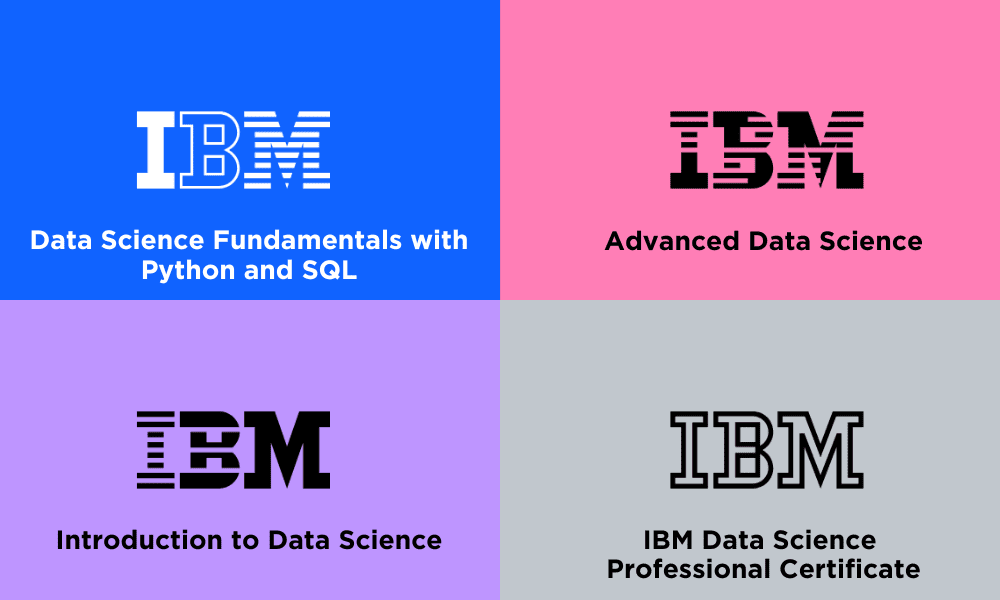
Here are 4 different learning roadmaps, for 4 different levels:

Introduction to Data Science

Level: Beginner

Link: Intro to Data Science Specialization

If you are looking to start a career in data science or want to transition from your current career into data science — the first thing you need to do is look into the foundations of data science to understand what it’s all about.

With this, you will develop the mindset to work like a data scientist and understand the different methodologies you can use to tackle different types of data science problems, with a 4-course series:

  • What is Data Science?
  • Tools for Data Science
  • Data Science Methodology
  • Databases and SQL for Data Science with Python

You will be able to complete this course in 1 month if you commit 10 hours a week.

Data Science Fundamentals with Python and SQL

Link: Data Science Fundamentals with Python and SQL Specialization

Level: Beginner/Intermediate

When you feel like you have a very good understanding of what data science is, what it entails and where it can take you. Your next step is to dive a bit deeper into the fundamentals of data science with Python and SQL.

In this 5 course specialized series, you will learn and develop hands-on experience with Jupyter, Python, and SQL as well as perform Statistical Analysis on real data sets:

  • Tools for Data Science
  • Python for Data Science, AI & Development
  • Python Project for Data Science
  • Statistics for Data Science with Python
  • Databases and SQL for Data Science with Python

IBM Data Science Professional Certificate

Link: IBM Data Science Professional Certificate

Level: Intermediate/Expert

You are now ready to start your data science professional certificate journey.

A 10-course series, where you will prepare for a career as a data scientist, by developing in-demand skills and hands-on experience, such as applying your new skills to real-world projects to get you job-ready.

The courses include:

  • What is Data Science?
  • Tools for Data Science
  • Data Science Methodology
  • Python for Data Science, AI & Development
  • Python Project for Data Science
  • Databases and SQL for Data Science with Python
  • Data Analysis with Python
  • Data Visualization with Python
  • Machine Learning with Python
  • Applied Data Science Capstone

You will be able to complete this course in 5 months if you commit 10 hours a week.

Advanced Data Science

Link: Advanced Data Science with IBM Specialization

Level: Expert

You have gone through the beginner courses, you have refined your Python and SQL skills, you dived deeper into data science with Python projects, data analysis, machine learning and more. But you want a bit more.

This advanced data science specialization course will make you an expert in data science, machine learning and artificial intelligence. Consisting of four courses:

  • Fundamentals of Scalable Data Science
  • Advanced Machine Learning and Signal Processing
  • Applied AI with DeepLearning
  • Advanced Data Science Capstone

Become an IBM-approved Expert!

Wrapping it up

And that’s it — 4 different data science learning routes for 4 different levels. If you are starting from the beginning, then I would recommend taking all of them so that you can have everything under your belt.

You have a simple data science learning roadmap all in one place — on one platform!

Nisha Arya is a data scientist, freelance technical writer, and an editor and community manager for KDnuggets. She is particularly interested in providing data science career advice or tutorials and theory-based knowledge around data science. Nisha covers a wide range of topics and wishes to explore the different ways artificial intelligence can benefit the longevity of human life. A keen learner, Nisha seeks to broaden her tech knowledge and writing skills, while helping guide others.

More On This Topic

  • Free Amazon Courses to Learn Generative AI: For All Levels
  • KDnuggets News, December 14: 3 Free Machine Learning Courses for…
  • Large Language Models Explained in 3 Levels of Difficulty
  • 311 Call Centre Performance: Rating Service Levels
  • Learning Data Science and Machine Learning: First Steps After The Roadmap
  • KDnuggets News, August 31: The Complete Data Science Study Roadmap…

You Can’t Fool VCs with AI Anymore

You Can’t Fool VCs with AI Anymore

The recent Instoried debacle gives away the sense and nature of AI investments globally. The company started seven years ago with the motivation of adding empathy to users’ content and pitched the idea of AI. Cut to present, there is almost no sign of the company, which according to the now-deleted LinkedIn profile claimed to have created ChatGPT way back in 2019.

Sharmin Ali, the founder and CEO of Instoried, is reportedly miffed with the investors and is threatening to file a defamation lawsuit against them.

The once-promising startup that could have been riding the AI wave is now nowhere to be found. But more importantly, it shows that VCs are starting to get AI right and the story serves as a wake up call to the ones who still don’t.

The Implosion of the AI Wave

Ali’s investors have been sending her emails (which she claims are ‘ruthless’) since November last year seeking to know about her whereabouts. They have accused Ali of making far ambitious projections of what their investments could be turned into using her startup. According to the reports, Instoried was running fine until the AI buzzword came about with ChatGPT.

With a commitment of $200 million, Ali said that Instoried would be a unicorn soon, which was categorised by Mumbai Angels as a ‘soonicorn’. Today, most of the employees have left the company and the websites stand inaccessible.

There can be numerous such cases, if the investors are not cautious. Now, the risk is greater since everyone is building an AI startup, or at least calling it an AI startup.

The problem with investors all this while has been the lack of understanding of AI – something that’s slowly changing. The post that perfectly encapsulates this scenario is the recent one by Oliver Molander, where he spoke about how a lot of ‘AI-first investors’ have not even heard of much, apart from LLMs and generative AI.

The recent implosion of Inflection AI, where the two-years-old startup that raised billions of dollars and is now witnessing mass exodus with two of its co-founders and several employees joining Microsoft, is another testament to over-ambition in VCs. “They didn’t have revenue, PMF, or anything else to justify their valuation. They just had the right idea at the right wave,” said Manish R Jain on X.

The Wary Investors

In his recent post on X, Paul Graham stated, “There is no such thing as value investing in venture capital. The steep power law distribution of returns means you want to be in the best startups at whatever the price happens to be.” Here, Graham is making the argument that in VC investments, where the returns on successful investments follow a steep power law distribution, traditional “value investing” strategies, which focus on buying undervalued assets, don’t apply.

Instead, he suggests that VCs should invest in the best startups regardless of their current valuation. Essentially, he’s emphasising the importance of prioritising quality over price when it comes to investing in startups. “What’s the difference between a high valuation and a low one for a comparable company? 5x? If you use that as a selection criterion in a domain where the difference between a big success and a small one is 100x, you’re innumerate,” he added.

Gabriel from Boromir Capital posted on X: “AI is going to get us another three decades of 3% growth and that’s it. relax. finish your CS degree. invest in a diversified mix of assets. find true love and start a family (sic).” Investors are now wary of investing in AI startups as most of the AI companies, though are generating revenue, are not profitable yet.

The Indian investors

Shark Tank India, the show famous for a lot of weird AI investments and several missed opportunities, recently hosted Model Verse for a pitch. Srijan Mehrotra pitched the customisable AI model generator at ₹25 lakh for 10% equity.

Interestingly, Anupam Mittal asked all the right questions, from the API to the architecture used by the company, or if the company could be consumed by OpenAI. Model Verse eventually got the exact funding it asked for from Mittal, Ritesh Agarwal, and Amit Jain.

Interestingly, upliance.ai, India’s AI-powered home appliance company did not get any funding from the investors on the show. But later, it secured a ₹34 crore seed round at a valuation of ₹143 crore. The funding was led by Khosla Ventures, renowned for investing in AI startups like OpenAI, Rabbit, and Sarvam.

India’s first ‘AI-powered’ car by AI Cars also did not receive any funding from the Sharks, but seemingly for the right reasons as the concept of the car appeared far-fetched and over-ambitious.

In a world where everyone claims to be on the AI bandwagon, VCs are sharpening their wits and wallets. Remember, in the land of startups, separating the unicorns from the “soonicorns” requires more than just a sprinkle of AI magic—it takes a discerning eye and a healthy dose of scepticism.

The post You Can’t Fool VCs with AI Anymore appeared first on Analytics India Magazine.

Cloudera Integrates NVIDIA Microservices to Boost Enterprise Gen AI Adoption

Cloudera today announced a major expansion of its collaboration with NVIDIA to accelerate the deployment of generative AI applications. By integrating NVIDIA’s AI microservices into its Cloudera Data Platform (CDP), the company aims to help businesses quickly build and scale customised LLMs on their own data.

The partnership will see Cloudera leverage NVIDIA AI Enterprise, which includes NVIDIA Inference Manager (NIM) microservices, to unlock insights from the over 25 exabytes of data secured in CDP. This wealth of enterprise information will feed into Cloudera Machine Learning, the company’s end-to-end AI workflow service, to power a new wave of generative AI innovation.

“Enterprise data, combined with a comprehensive full-stack platform optimised for large language models, plays a critical role in advancing an organisation’s generative AI applications from pilot to production,” said Priyank Patel, Vice President of AI/ML Products at Cloudera. “Cloudera is integrating NVIDIA NIM and CUDA-X microservices to power Cloudera Machine Learning, helping customers turn AI hype into business reality.”

Bridging the Gap Between Models and Data

A key challenge in enterprise AI is connecting foundation models with relevant business data to generate accurate, contextual outputs. NVIDIA’s NIM and NeMo Retriever microservices aim to bridge that gap by enabling developers to link LLMs with structured and unstructured enterprise data, from text documents to images and visualisations.

Cloudera Machine Learning will offer integrated NIM model-serving capabilities to boost inference performance and achieve fault tolerance, low latency, and auto-scaling across hybrid and multi-cloud environments. The addition of NeMo Retriever will simplify the development of retrieval-augmented generation (RAG) applications, which enhance the accuracy of generative AI by retrieving relevant data on the fly.

“Enterprises are eager to leverage their massive volumes of data for generative AI to build custom copilots and productivity tools,” said Justin Boitano, Vice President of Enterprise Products at NVIDIA. “The integration of NVIDIA NIM microservices into the Cloudera Data Platform offers developers a way to more easily and flexibly deploy LLMs to drive business transformation.”

Empowering the Enterprise

By streamlining the path from data to generative AI deployment, Cloudera and NVIDIA aim to accelerate enterprise adoption of transformative applications like coding assistants, chatbots, document summarisers, and semantic search tools. The partnership builds on the companies’ previous collaboration to harness GPU acceleration through the integration of NVIDIA RAPIDS into CDP.

Patel emphasised the business benefits of the expanded partnership, noting, “In addition to delivering powerful generative AI capabilities and performance to customers, the results of this integration will empower enterprises to make more accurate and timely decisions while also mitigating inaccuracies, hallucinations, and errors in predictions – all critical factors for navigating today’s data landscape.”

Cloudera will showcase its new generative AI capabilities at NVIDIA GTC, running from March 18-21 in San Jose, California. As leading enterprises explore the potential of foundation models to revolutionise their operations, Cloudera and NVIDIA are betting their collaboration can position customers at the forefront of the emerging era of enterprise AI.

The post Cloudera Integrates NVIDIA Microservices to Boost Enterprise Gen AI Adoption appeared first on Analytics India Magazine.