Google Cloud/Cloud Security Alliance Report: IT and Security Pros Are ‘Cautiously Optimistic’ About AI

The C-suite is more familiar with AI technologies than their IT and security staff, according to a report from the Cloud Security Alliance commissioned by Google Cloud. The report, published on April 3, addressed whether IT and security professionals fear AI will replace their jobs, the benefits and challenges of the increase in generative AI and more.

Of the IT and security professionals surveyed, 63% believe AI will improve security within their organization. Another 24% are neutral on AI’s impact on security measures, while 12% do not believe AI will improve security within their organization. Of the people surveyed, only a very few (12%) predict AI will replace their jobs.

The survey used to create the report was conducted internationally, with responses from 2,486 IT and security professionals and C-suite leaders from organizations across the Americas, APAC and EMEA in November 2023.

Cybersecurity professionals not in leadership are less clear than the C-suite on possible use cases for AI in cybersecurity, with just 14% of staff (compared to 51% of C-levels) saying they are “very clear.”

“The disconnect between the C-suite and staff in understanding and implementing AI highlights the need for a strategic, unified approach to successfully integrate this technology,” said Caleb Sima, chair of Cloud Security Alliance’s AI Safety Initiative, in a press release.

Some questions in the report specified that the answers should relate to generative AI, while other questions used the term “AI” broadly.

The AI knowledge gap in security

C-level professionals face pressure from the top down that may have led them to be more aware of use cases for AI than security professionals.

Many (82%) C-suite professionals say their executive leadership and boards of directors are pushing for AI adoption. However, the report states that this approach might cause implementation problems down the line.

“This may highlight a lack of appreciation for the difficulty and knowledge needed to adopt and implement such a unique and disruptive technology (e.g., prompt engineering),” wrote lead author Hillary Baron, senior technical director of research and analytics at the Cloud Security Alliance, and a team of contributors.

There are a few reasons why this knowledge gap might exist:

  • Cybersecurity professionals may not be as informed of the way AI can affect overall strategy.
  • Leaders may underestimate how difficult it could be to implement AI strategies within existing cybersecurity practices.

The report authors note that some data (Figure A) indicates respondents are about as familiar with generative AI and large language models as they are with older terms like natural language processing and deep learning.

Figure A
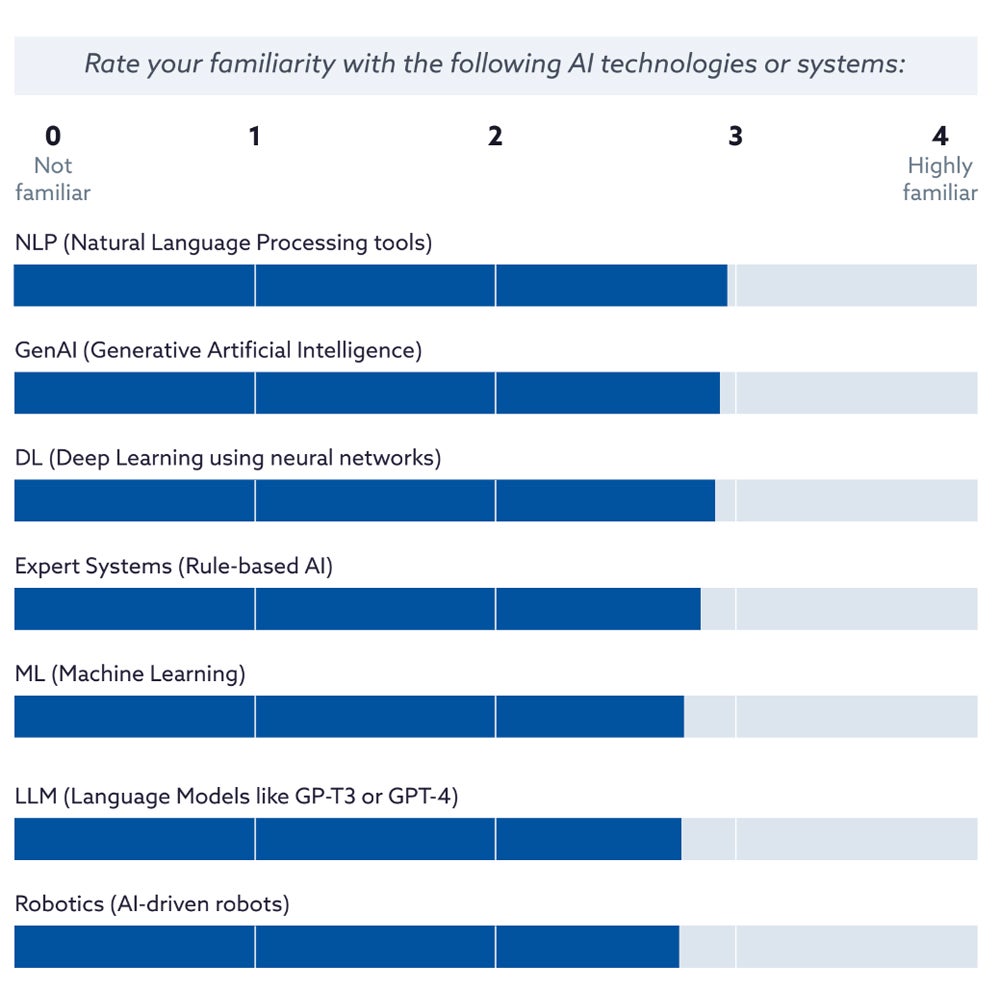
Infographic showing responses to the instruction “Rate your familiarity with the following AI technologies or systems.”
Responses to the instruction “Rate your familiarity with the following AI technologies or systems.” Image: Cloud Security Alliance

The report authors note that the predominance of familiarity with older terms such as natural language processing and deep learning might indicate a conflation between generative AI and popular tools like ChatGPT.

“It’s the difference between being familiar with consumer-grade GenAI tools vs professional/enterprise level which is more important in terms of adoption and implementation,” said Baron in an email to TechRepublic. “That is something we’re seeing generally across the board with security professionals at all levels.”

Will AI replace cybersecurity jobs?

A small group (12%) of security professionals think AI will completely replace their jobs over the next five years. Others are more optimistic:

  • 30% think AI will help enhance parts of their skillset.
  • 28% predict AI will support them overall in their current role.
  • 24% think AI will replace a large part of their role.
  • 5% expect AI will not impact their role at all.

Organizations’ goals for AI reflect this, with 36% seeking the outcome of AI enhancing security teams’ skills and knowledge.

The report points out an interesting discrepancy: although enhancing skills and knowledge is a highly desired outcome, talent comes at the bottom of the list of challenges. This might mean that immediate tasks such as identifying threats take priority in day-to-day operations, while talent is a longer-term concern.

Benefits and challenges of AI in cybersecurity

The group was divided on whether AI would be more beneficial for defenders or attackers:

  • 34% see AI more beneficial for security teams.
  • 31% view it as equally advantageous for both defenders and attackers.
  • 25% see it as more beneficial for attackers.

Professionals who are concerned about the use of AI in security cite the following reasons:

  • Poor data quality leading to unintended bias and other issues (38%).
  • Lack of transparency (36%).
  • Skills/expertise gaps when it comes to managing complex AI systems (33%).
  • Data poisoning (28%).

Hallucinations, privacy, data leakage or loss, accuracy and misuse were other options for what people might be concerned about; all of these options received under 25% of the votes in the survey, where respondents were invited to select their top three concerns.

SEE: The UK National Cyber Security Centre found generative AI may enhance attackers’ arsenals. (TechRepublic)

Over half (51%) of respondents said “yes” to the question of whether they are concerned about the potential risks of over-reliance on AI for cybersecurity; another 28% were neutral.

Planned uses for generative AI in cybersecurity

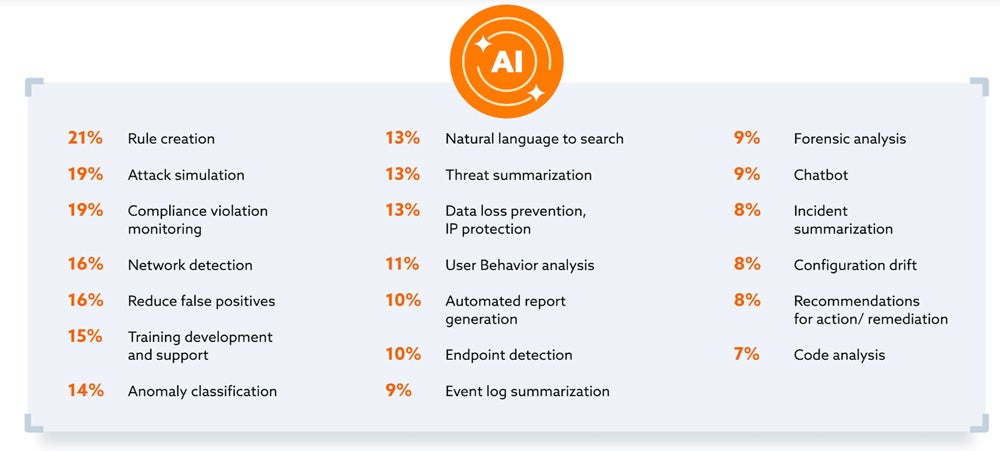
Of the organizations planning to use generative AI for cybersecurity, there is a very wide spread of intended uses (Figure B). Common uses include:

  • Rule creation.
  • Attack simulation.
  • Compliance violation monitoring.
  • Network detection.
  • Reducing false positives.

Figure B

Infographic showing responses to the question How does your organization plan to use Generative AI for cybersecurity? (Select top 3 use cases).
Responses to the question How does your organization plan to use Generative AI for cybersecurity? (Select top 3 use cases). Image: Cloud Security Alliance

How organizations are structuring their teams in the age of AI

Of the people surveyed, 74% say their organizations plan to create new teams to oversee the secure use of AI within the next five years. How those teams are structured can vary.

Today, some organizations working on AI deployment put it in the hands of their security team (24%). Other organizations give primary responsibility for AI deployment to the IT department (21%), the data science/analytics team (16%), a dedicated AI/ML team (13%) or senior management/leadership (9%). In rarer cases, DevOps (8%), cross-functional teams (6%) or a team that did not fit in any of the categories (listed as “other” at 1%) took responsibility.

SEE: Hiring kit: prompt engineer (TechRepublic Premium)

“It’s evident that AI in cybersecurity is not just transforming existing roles but also paving the way for new specialized positions,” wrote lead author Hillary Baron and the team of contributors.

What kind of positions? Generative AI governance is a growing sub-field, Baron told TechRepublic, as is AI-focused training and upskilling.

“In general, we’re also starting to see job postings that include more AI-specific roles like prompt engineers, AI security architects, and security engineers,” said Baron.

OnePlus went ahead and built its own version of Google Magic Eraser

OnePlus went ahead and built its own version of Google Magic Eraser Brian Heater @bheater / 12 hours

OnePlus has always marched to the beat of its own drummer — for better and worse. Take, for example, the company’s latest foray into mobile artificial intelligence, the AI Eraser. Before you ask, no, this is not simply a rebadged version of Google’s longstanding and very good Magic Eraser.

Nope, OnePlus went ahead and built its own version in a bid to show the world that it has AI ambitions of its own. It’s likely the Oppo-owned company has been working on AI Eraser for some time now — though the world has known about Google’s version since the Pixel 6 event back in March 2021 (Magic Editor, meanwhile, debuted a year back at I/O 2023).

From the sound of its press material, the company went and built this thing ground-up, starting with its own first-party large language models.

“AI Eraser is the result of a substantial R&D investment from OnePlus,” the company notes in its press material. “The proprietary LLM behind the new feature has been trained on a vast dataset that allows it to comprehend complex scenes. Through this advanced visual understanding, AI Eraser is able to intelligently substitute unwanted objects with contextually appropriate elements that naturally elevate the photo’s appeal, empowering users with the ability to make high-quality photo edits anywhere and at any time.”

An AI-powered eraser is an undeniably handy feature, but it’s also one that Google knocked out of the park immediately. It’s probably not the best use of one’s R&D resources to go head to head on that feature — especially a feature that is currently available across iOS and Android devices via Google Photos.

More than anything, this appears to be OnePlus’s attempt to plant its flag into what has very much shaped up to be the year of the smartphone. Hopefully next time, it will use those resources to build something that truly differentiates itself from existing properties.

AI is rolling out to OnePlus devices this month, starting with OnePlus 12, OnePlus 12R, OnePlus 11, OnePlus Open and OnePlus Nord CE 4. It will not, however, be coming to the R12-D12.

These AI startups stood out the most in Y Combinator’s Winter 2024 batch

These AI startups stood out the most in Y Combinator’s Winter 2024 batch Kyle Wiggers 8 hours

Despite an overall decline in startup investing, funding for AI surged in the past year. Capital toward generative AI ventures alone nearly octupled from 2022 to 2023, reaching $25.2 billion toward the tail end of December.

So it’s not exactly surprising that AI startups dominated at Y Combinator’s Winter 2024 Demo Day.

The Y Combinator Winter 2024 cohort has 86 AI startups, according to YC’s official startup directory — nearly double the number from the Winter 2023 batch and close to triple the number from Winter 2021. Call it a bubble or overhyped, but clearly, AI is the tech of the moment.

As we did last year, we went through the newest Y Combinator cohort — the cohort presenting during this week’s Demo Day — and picked out some of the more interesting AI startups. Each made the cut for different reasons. But at a baseline, they stood out among the rest, whether for their technology, addressable market or founders’ backgrounds.

Hazel

August Chen (ex-Palantir) and Elton Lossner (ex-Boston Consulting Group) assert that the government contracting process is hopelessly broken.

Contracts are posted to thousands of different websites and can include hundreds of pages of overlapping regulations. (The U.S. federal government alone signs an estimated over 11 million contracts a year.) Responding to these bids can take the equivalent of whole business divisions, supported by outside consultants and law firms.

Chen’s and Lossner’s solution is AI to automate the government contracting discovery, drafting and compliance process. The pair — who met in college — call it Hazel.

Hazel

Image Credits: Hazel

Using Hazel, users can get matched to a potential contract, generate a draft response based on the RFP and their company’s info, create a checklist of to-dos and automatically run compliance checks.

Given AI’s tendency to hallucinate, I’m a bit skeptical that Hazel’s generated responses and checks will be consistently accurate. But, if they’re even close, they could save an enormous amount of time and effort, enabling smaller firms a shot at the hundreds of billions of dollars’ worth of government contracts issued each year.

Andy AI

Home nurses deal with a lot of paperwork. Tiantian Zha knows this well — she previously worked at Verily, Google parent company Alphabet‘s life sciences division, where she was involved in moonshots ranging from personalized medicine to reducing mosquito-borne diseases.

In the course of her work, Zha found that documentation was a major time sink for at-home nurses. It’s a widespread issue — according to one study, nurses spend over a third of their time on documentation, cutting into time spent on patient care and contributing to burnout.

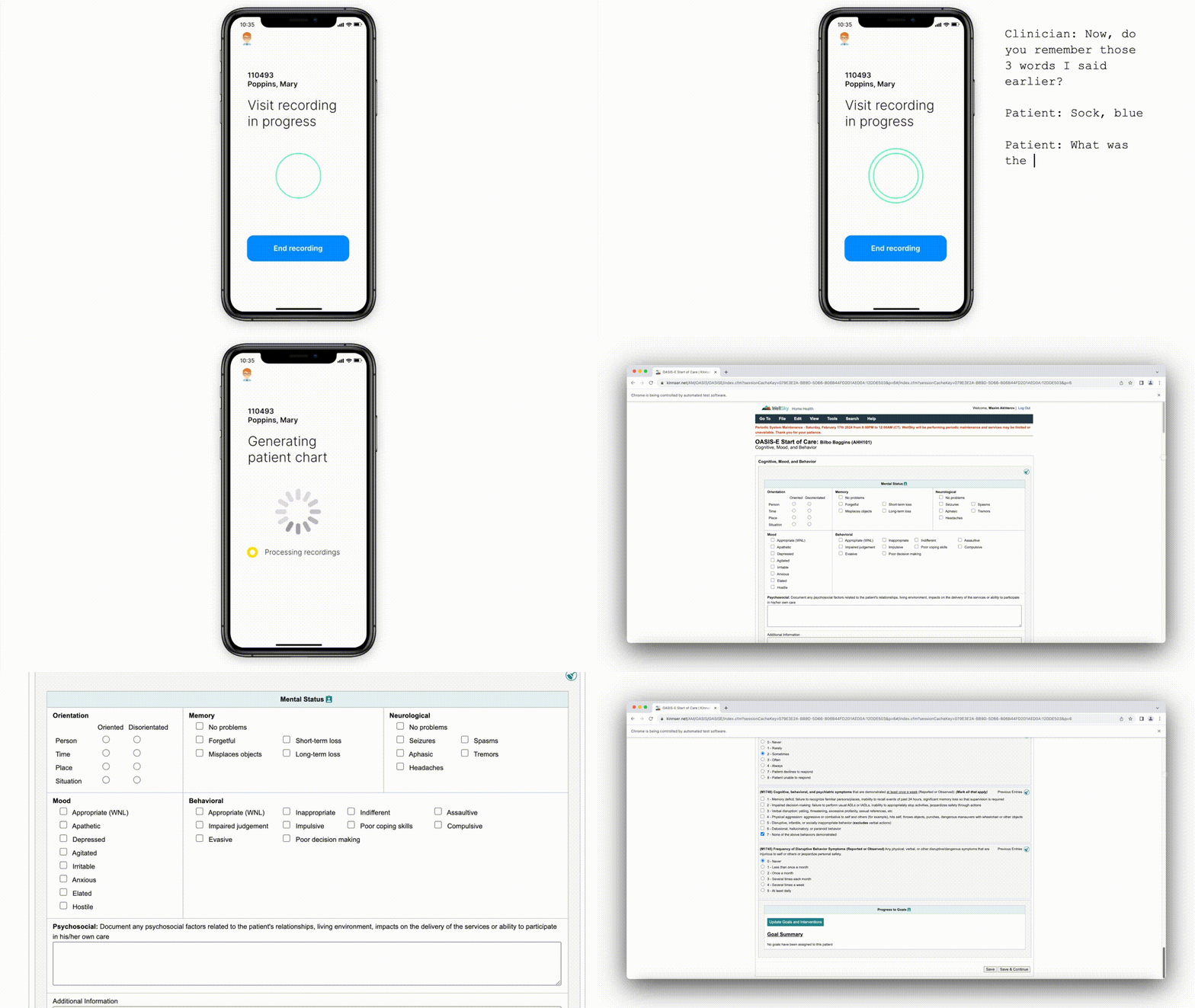
To help ease the documentation burden for nurses, Zha co-founded Andy AI with Max Akhterov, a former Apple staff engineer. Andy is essentially an AI-powered scribe, capturing and transcribing the spoken details of a patient visit and generating electronic health records.

Andy AI

Image Credits: Andy AI

As with any AI-powered transcription tool, there’s risk of bias — i.e. the tool not working well for some nurses and patients depending on their accents and words choices And, from a competitive standpoint, Andy isn’t exactly the first of its kind to market — rivals include DeepScribe, Heidi Health, Nabla and Amazon’s AWS HealthScribe.

But as healthcare increasingly shifts to home, the demand for apps like Andy AI seems poised to increase.

Precip

If your experience with weather apps is anything like this reporter’s, you’ve been caught in a rainstorm after blindly believing predictions of clear blue skies.

But it doesn’t have to be this way.

At least, that’s the premise of Precip, an AI-powered weather forecasting platform. Jesse Vollmar had the idea after founding FarmLogs, a startup that sold crop management software. He teamed up with Sam Pierce Lolla and Michael Asher, previously FarmLogs’ lead data scientist, to make Precip a reality.

Precip

Image Credits: Precip

Precip delivers analytics on precipitation, for example estimating the amount of rainfall in a given geographic area over the past several hours to days. Vollmar makes the claim that Precip can generate “high-precision” metrics for any location in the U.S. down to the kilometer (or two), forecasting conditions up to seven days ahead.

So what’s the value of precipitations metrics and alerts? Well, Vollmar says that farmers can use them to track crop growth, construction crews can reference them to schedule crews and utilities can tap them to anticipate service disruptions. One transportation customer checks Precip daily to avoid bad driving conditions, Vollmar claims.

Of course, there’s no shortage of weather prediction apps. But AI like Precip’s promises to make forecasts more accurate — if the AI is worth its salt, indeed.

Maia

Claire Wiley launched a couples coaching programming while studying for her MBA at Wharton. The experience led her to investigate a more tech-forward approach to relationships and therapy, which culminated in Maia.

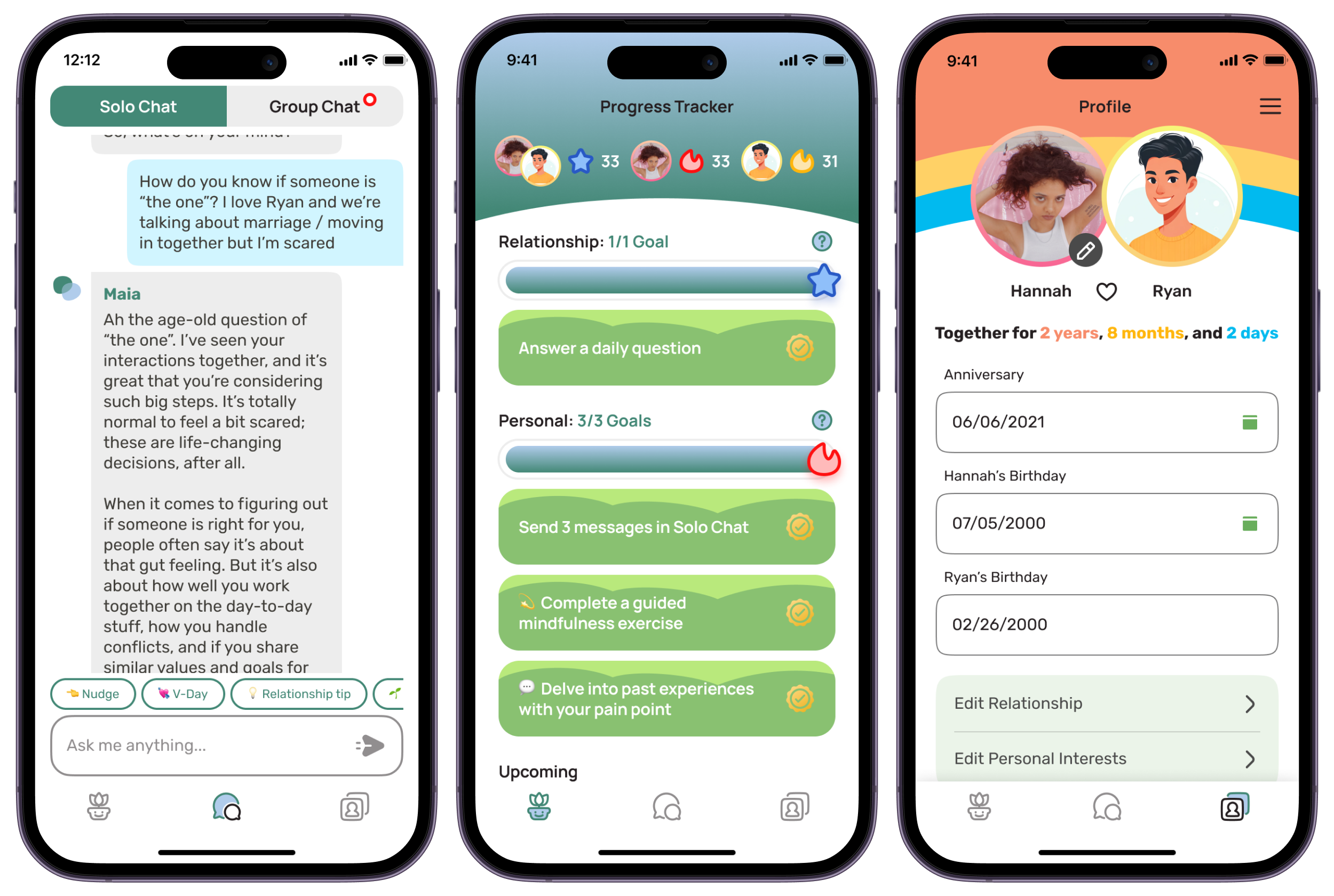
Maia — which Wiley co-founded with Ralph Ma, a former Google Research scientist — aims to empower couples to build stronger relationships through AI-powered guidance. In Maia’s apps for Android and iOS, couples message each other in a group chat and answer daily questions like what they view as challenges to overcome, past pain points and lists of things that they’re thankful for.

Maia

Image Credits: Maia

Maia plans to make money by charging for premium features such as programs crafted by therapists and unlimited messaging. (Maia normally caps texts between partners — a frustratingly arbitrary limitation if you ask me, but so it goes.)

Wiley and Ma, both of whom come from divorced households, say that they worked with a relationship expert to craft the Maia experience. The questions in my mind, though, are (1) how sound Maia’s relationship science and (2) can it stand out in the exceptionally crowded field of couples’ apps? We’ll have to wait to see.

Datacurve

The AI models at the heart of generative AI apps like ChatGPT are trained on enormous data sets, mixes of public and proprietary data from around the web including ebooks, social media posts and personal blogs. But some of this data is legally and ethically problematic — not to mention flawed in other ways.

The distinct lack of data curation is the problem, if you ask Serena Ge and Charley Lee.

Ge and Lee co-founded Datacurve, which provides “expert-quality” data for training generative AI models. It’s specifically code data, which Ge and Lee say is especially hard to obtain thanks to the expertise necessary to label it for AI training and restrictive usage licenses.

Datacurve

Image Credits: Datacurve

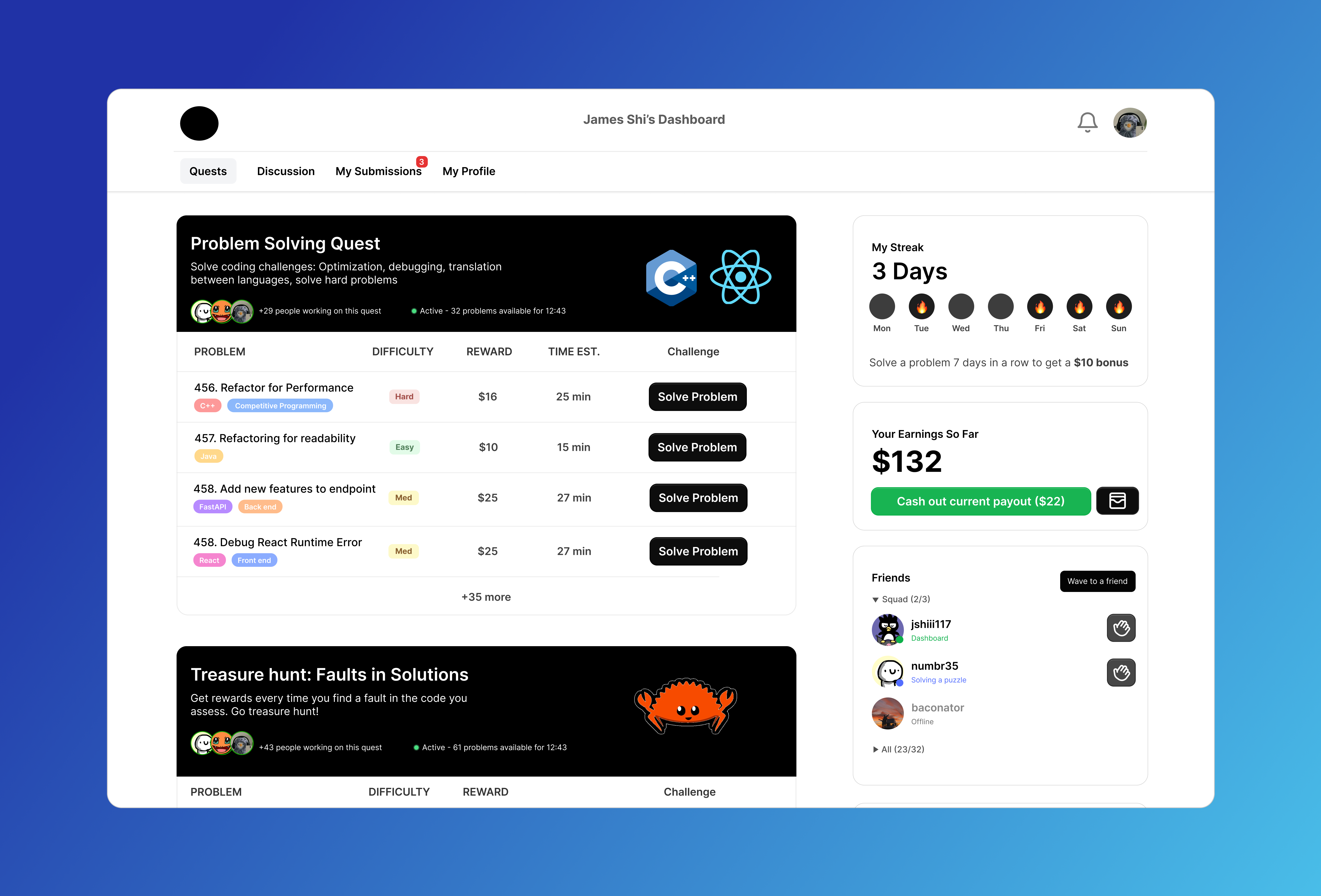
Datacurve hosts a gamified annotation platform that pays engineers to solve coding challenges, which contributes to Datacurve’s for-sale training data sets. Those data sets, speaking of, can be used to train models for code optimization, code generation, debugging, UI design and more, Ge and Lee say.

It’s an interesting idea to be sure. But Datacurve’s success will depend on just how well-curated its data sets are — and whether it’s able to incentivize enough devs to continue building on and improving them.

Stability AI Unveils Stable Audio 2.0: Empowering Creators with Advanced AI-Generated Audio

Stability AI has once again pushed the boundaries of innovation with the release of Stable Audio 2.0. This cutting-edge model builds upon the success of its predecessor, introducing a host of groundbreaking features that promise to revolutionize the way artists and musicians create and manipulate audio content.

Stable Audio 2.0 represents a significant milestone in the evolution of AI-generated audio, setting a new standard for quality, versatility, and creative potential. With its ability to generate full-length tracks, transform audio samples using natural language prompts, and produce a wide array of sound effects, this model opens up a world of possibilities for content creators across various industries.

As the demand for innovative audio solutions continues to grow, Stability AI's latest offering is poised to become an indispensable tool for professionals seeking to enhance their creative output and streamline their workflow. By harnessing the power of advanced AI technology, Stable Audio 2.0 empowers users to explore uncharted territories in music composition, sound design, and audio post-production.

Audio-to-Audio Feature DemoAudio-to-Audio Feature Demo
Watch this video on YouTube

What Are the Key Features of Stable Audio 2.0

Stable Audio 2.0 boasts an impressive array of features that could redefine the landscape of AI-generated audio. From full-length track generation to audio-to-audio transformation, enhanced sound effect production, and style transfer, this model provides creators with a comprehensive toolkit to bring their auditory visions to life.

Full-length track generation

Stable Audio 2.0 sets itself apart from other AI-generated audio models with its ability to create full-length tracks up to three minutes long. These compositions are not merely extended snippets, but rather structured pieces that include distinct sections such as an intro, development, and outro. This feature allows users to generate complete musical works with a coherent narrative and progression, elevating the potential for AI-assisted music creation.

Moreover, the model incorporates stereo sound effects, adding depth and dimension to the generated audio. This inclusion of spatial elements further enhances the realism and immersive quality of the tracks, making them suitable for a wide range of applications, from background music in videos to standalone musical compositions.

Audio-to-audio generation

One of the most exciting additions to Stable Audio 2.0 is the audio-to-audio generation capability. Users can now upload their own audio samples and transform them using natural language prompts. This feature opens up a world of creative possibilities, allowing artists and musicians to experiment with sound manipulation and regeneration in ways that were previously unimaginable.

By leveraging the power of AI, users can easily modify existing audio assets to fit their specific needs or artistic vision. Whether it's changing the timbre of an instrument, altering the mood of a piece, or creating entirely new sounds based on existing samples, Stable Audio 2.0 provides an intuitive way to explore audio transformation.

Enhanced sound effect production

In addition to its music generation capabilities, Stable Audio 2.0 excels in the creation of diverse sound effects. From subtle background noises like the rustling of leaves or the hum of machinery to more immersive and complex soundscapes like bustling city streets or natural environments, the model can generate a wide array of audio elements.

This enhanced sound effect production feature is particularly valuable for content creators working in film, television, video games, and multimedia projects. With Stable Audio 2.0, users can quickly and easily generate high-quality sound effects that would otherwise require extensive foley work or costly licensed assets.

Style transfer

Stable Audio 2.0 introduces a style transfer feature that allows users to seamlessly modify the aesthetic and tonal qualities of generated or uploaded audio. This capability enables creators to tailor the audio output to match the specific themes, genres, or emotional undertones of their projects.

By applying style transfer, users can experiment with different musical styles, blend genres, or create entirely new sonic palettes. This feature is particularly useful for creating cohesive soundtracks, adapting music to fit specific visual content, or exploring creative mashups and remixes.

Technological Advancements of Stable Audio 2.0

Under the hood, Stable Audio 2.0 is powered by cutting-edge AI technology that enables its impressive performance and high-quality output. The model's architecture has been carefully designed to handle the unique challenges of generating coherent, full-length audio compositions while maintaining fine-grained control over the details.

Latent diffusion model architecture

At the core of Stable Audio 2.0 lies a latent diffusion model architecture that has been optimized for audio generation. This architecture consists of two key components: a highly compressed autoencoder and a diffusion transformer (DiT).

The autoencoder is responsible for efficiently compressing raw audio waveforms into compact representations. This compression allows the model to capture the essential features of the audio while filtering out less important details, resulting in more coherent and structured generated output.

The diffusion transformer, similar to the one employed in Stability AI's groundbreaking Stable Diffusion 3 model, replaces the traditional U-Net architecture used in previous versions. The DiT is particularly adept at handling long sequences of data, making it well-suited for processing and generating extended audio compositions.

Improved performance and quality

The combination of the highly compressed autoencoder and the diffusion transformer enables Stable Audio 2.0 to achieve remarkable improvements in both performance and output quality compared to its predecessor.

The autoencoder's efficient compression allows the model to process and generate audio at a faster rate, reducing the computational resources required and making it more accessible to a wider range of users. At the same time, the diffusion transformer's ability to recognize and reproduce large-scale structures ensures that the generated audio maintains a high level of coherence and musical integrity.

These technological advancements culminate in a model that can generate stunningly realistic and emotionally resonant audio, whether it's a full-length musical composition, a complex soundscape, or a subtle sound effect. Stable Audio 2.0's architecture lays the foundation for future innovations in AI-generated audio, paving the way for even more sophisticated and expressive tools for creators.

Creator Rights with Stable Audio 2.0

As AI-generated audio continues to advance and become more accessible, it is crucial to address the ethical implications and ensure that the rights of creators are protected. Stability AI has taken proactive steps to prioritize ethical development and fair compensation for artists whose work contributes to the training of Stable Audio 2.0.

Stable Audio 2.0 was trained exclusively on a licensed dataset from AudioSparx, a reputable source of high-quality audio content. This dataset consists of over 800,000 audio files, including music, sound effects, and single-instrument stems, along with corresponding text metadata. By using a licensed dataset, Stability AI ensures that the model is built upon a foundation of legally obtained and appropriately attributed audio data.

Recognizing the importance of creator autonomy, Stability AI provided all artists whose work is included in the AudioSparx dataset with the opportunity to opt-out of having their audio used in the training of Stable Audio 2.0. This opt-out mechanism allows creators to maintain control over how their work is utilized and ensures that only those who are comfortable with their audio being used for AI training are included in the dataset.

Stability AI is committed to ensuring that creators whose work contributes to the development of Stable Audio 2.0 are fairly compensated for their efforts. By licensing the AudioSparx dataset and providing opt-out options, the company demonstrates its dedication to establishing a sustainable and equitable ecosystem for AI-generated audio, where creators are respected and rewarded for their contributions.

To further protect the rights of creators and prevent copyright infringement, Stability AI has partnered with Audible Magic, a leading provider of content recognition technology. By integrating Audible Magic's advanced content recognition (ACR) system into the audio upload process, Stable Audio 2.0 can identify and flag any potentially infringing content, ensuring that only original or properly licensed audio is used within the platform.

Through these ethical considerations and creator-centric initiatives, Stability AI sets a strong precedent for responsible AI development in the audio domain. By prioritizing the rights of creators and establishing clear guidelines for data usage and compensation, the company fosters a collaborative and sustainable environment where AI and human creativity can coexist and thrive.

Shaping the Future of Audio Creation with Stability AI

Stable Audio 2.0 marks a significant milestone in AI-generated audio, empowering creators with a comprehensive suite of tools to explore new frontiers in music, sound design, and audio production. With its cutting-edge latent diffusion model architecture, impressive performance, and commitment to ethical considerations and creator rights, Stability AI is at the forefront of shaping the future of audio creation. As this technology continues to evolve, it is clear that AI-generated audio will play an increasingly pivotal role in the creative landscape, providing artists and musicians with the tools they need to push the boundaries of their craft and redefine what is possible in the world of sound.

Brave is launching its AI assistant on iPhone and iPad

Brave is launching its AI assistant on iPhone and iPad Aisha Malik 7 hours

Brave announced on Wednesday that it’s bringing its AI assistant, called Leo, to iPhone and iPad users. The AI assistant allows people to ask questions, summarize pages, create content and more. The iOS rollout follows the launch of the AI assistant on Android and desktop.

The iOS launch of Leo brings voice-to-text capability, which isn’t available in the Android version of the AI assistant. With this feature, users can say things out loud and have it converted to text, getting rid of the need to type out queries or questions. Brave says this additional capability makes it easier to interact with the AI.

In addition to summarizing pages or videos, Leo can answer questions about content it reads, generate long-form written reports, translate or rewrite pages, create transcriptions of video or audio content, and write code. By giving access to a built-in AI assistant, Brave is hoping users won’t turn to ChatGPT or other similar services.

Leo includes access to Mixtral 8x7B, Anthropic’s Claude Instant and Meta’s Llama 2 13B. Brave set Mixtral 8x7B as the default LLM for Leo, but users have the option to select another LLMs or upgrade to Leo Premium for higher rate limits for $14.99 per month.

Brave isn’t the only browser company to launch an AI assistant; Opera launched an AI assistant called Aria last year. The product was built in collaboration with OpenAI and has a chatbot-like interface that lets people ask questions and receive instant responses.

Brave Leo for iOS is now available to all iOS users who have updated to version 1.63. To access Leo, open the browser, start typing in the address bar and then select “Ask Leo.” Leo is an opt-in feature and can be disabled via the app’s settings.

Brave’s Leo AI assistant is now available to Android users

GPU Data Centers Strain Power Grids: Balancing AI Innovation and Energy Consumption

Explore the impact of AI on data center energy consumption, GPU data centers, and energy-efficient computing solutions for sustainability.

In today's era of rapid technological advancement, Artificial Intelligence (AI) applications have become ubiquitous, profoundly impacting various aspects of human life, from natural language processing to autonomous vehicles. However, this progress has significantly increased the energy demands of data centers powering these AI workloads.

Extensive AI tasks have transformed data centers from mere storage and processing hubs into facilities for training neural networks, running simulations, and supporting real-time inference. As AI algorithms advance, the demand for computational power increases, straining existing infrastructure and posing challenges in power management and energy efficiency.

The exponential growth in AI applications strains cooling systems, which struggle to dissipate the heat generated by high-performance GPUs while electricity usage increases. Therefore, achieving a balance between technological progress and environmental responsibility is essential. As AI innovation accelerates, we must ensure that each advancement contributes to scientific growth and a sustainable future.

The Dual Influence of AI on Data Center Power and Sustainability

According to the International Energy Agency (IEA), data centers consumed approximately 460 terawatt-hours (TWh) of electricity globally in 2022 and are expected to surpass 1,000 TWh by 2026. This increase poses challenges for energy grids, highlighting the need for efficiency improvements and regulatory measures.

Recently, AI has been transforming data centers and changing how they operate. Traditionally, data centers dealt with predictable workloads, but now they handle dynamic tasks like machine learning training and real-time analytics. This requires flexibility and scalability. AI gains efficiency by predicting loads, optimizing resources, and reducing energy waste. It also helps discover new materials, optimize renewable energy, and manage energy storage systems.

To maintain the right balance, data centers must utilize AI’s potential while minimizing its energy impact. Collaboration among stakeholders is required for creating a sustainable future where AI innovation and responsible energy use go hand in hand.

The Rise of GPU Data Centers in AI Innovation

In an AI-driven era, GPU data centers play a significant role in driving progress across various industries. These specialized facilities are equipped with high-performance GPUs that excel at accelerating AI workloads through parallel processing.

Unlike traditional CPUs, GPUs have thousands of cores that simultaneously handle complex calculations. This makes them ideal for computationally intensive tasks like deep learning and neural network training. Their extraordinary parallel processing power ensures exceptional speed when training AI models on large datasets. Additionally, GPUs are adept at executing matrix operations, a fundamental requirement for many AI algorithms due to their optimized architecture for parallel matrix computations.

As AI models become more complex, GPUs offer scalability by efficiently distributing computations across their cores, ensuring effective training processes. The exponential growth of AI applications is evident, with a significant portion of data center revenue attributed to AI-related activities. Given this growth in AI adoption, robust hardware solutions like GPUs are essential to meet the escalating computational demands. GPUs play a pivotal role in model training and inference, using their parallel processing capabilities for real-time predictions and analyses.

GPU data centers are driving transformative changes across industries. In healthcare, GPUs enhance medical imaging processes, expedite drug discovery tasks, and facilitate personalized medicine initiatives.

Similarly, GPUs power risk modelling, fraud detection algorithms, and high-frequency financial trading strategies to optimize decision-making processes. Furthermore, GPUs enable real-time perception, decision-making, and navigation in autonomous vehicles, emphasizing advancements in self-driving technology.

Furthermore, the proliferation of generative AI applications adds another layer of complexity to the energy equation. Models such as Generative Adversarial Networks (GANs), utilized for content creation and design, demand extensive training cycles, driving up energy usage in data centers. The Boston Consulting Group (BCG) projects a tripling of data center electricity consumption by 2030, with generative AI applications playing a significant role in this surge.

The responsible deployment of AI technologies is important to mitigating the environmental impact of data center operations. While generative AI offers creative potential, organizations must prioritize energy efficiency and sustainability. This entails exploring optimization strategies and implementing measures to reduce energy consumption without compromising innovation.

Energy-Efficient Computing for AI

GPUs are powerful tools that save energy. They process tasks faster, which reduces overall power usage. Compared to regular CPUs, GPUs perform better per watt, especially in large-scale AI projects. These GPUs work together efficiently, minimizing energy consumption.

Specialized GPU libraries enhance energy efficiency by optimizing common AI tasks. They use GPUs' parallel architecture, ensuring high performance without wasting energy. Although GPUs have a higher initial cost, their long-term benefits outweigh this expense. GPUs' energy efficiency positively impacts the total cost of Ownership (TCO), including hardware and operational costs.

Additionally, GPU-based systems can scale up without significantly increasing energy use. Cloud providers offer pay-as-you-go GPU instances, allowing researchers to access these resources as needed while keeping costs low. This flexibility optimizes both performance and expenses in AI work.

Collaborative Efforts and Industry Responses

Collaborative efforts and industry responses are key to handling energy consumption challenges in data centers, particularly those related to AI workloads and grid stability.

Industry bodies like the Green Grid and the EPA promote energy-efficient practices, with initiatives like the Energy Star certification driving adherence to standards.

Likewise, leading data center operators, including Google and Microsoft, invest in renewable energy sources and collaborate with utilities to integrate clean energy into their grids.

Moreover, efforts to improve cooling systems and repurpose waste heat are ongoing and supported by initiatives like Facebook's Open Compute Project.

In AI innovation, collaborative efforts through demand response programs are important in efficiently managing energy consumption during peak hours. Simultaneously, these initiatives promote edge computing and distributed AI processing, reducing reliance on long-distance data transmission and saving energy.

Future Insights

In the coming years, AI applications will experience significant growth across sectors like healthcare, finance, and transportation. As AI models become more complex and scalable, the demand for data center resources will rise accordingly. To address this, collaborative efforts among researchers, industry leaders, and policymakers are important for driving innovation in energy-efficient hardware and software solutions.

In addition, continued innovation in energy-efficient computing is essential to tackle the challenges of increasing data center demand. Prioritizing energy efficiency in data center operations and investing in AI-specific hardware, such as AI accelerators, will shape the future of sustainable data centers.

Moreover, balancing AI advancement with sustainable energy practices is vital. Responsible AI deployment requires collective action to minimize the environmental impact. By aligning AI progress with environmental stewardship, we can create a greener digital ecosystem that benefits society and the planet.

The Bottom Line

In conclusion, as AI continues to drive innovation across industries, the escalating energy demands of data centers pose significant challenges. However, collaborative efforts between stakeholders, investments in energy-efficient computing solutions like GPUs, and a commitment to sustainable practices offer promising pathways forward.

By prioritizing energy efficiency, embracing responsible AI deployment, and promoting collective actions, we can reasonably balance technological advancement and environmental stewardship, ensuring a sustainable digital future for future generations.

BMW & Tata Tech Partner to Setup Automotive Software Hub in India

In a significant move to bolster its automotive software capabilities, German luxury carmaker BMW Group announced that it will form a 50-50 joint venture with Indian engineering giant Tata Technologies.

The new joint venture aims to establish a major software and IT development hub in India with Pune, Bengaluru and Chennai locations. Its primary focus will be developing cutting-edge software solutions for BMW’s future vehicles.

“Our collaboration with Tata Technologies will accelerate our progress in the software-defined vehicle (SDV) field,” said Christoph Grote, BMW’s Senior VP of Software and E/E Architecture. “India has a vast talent pool with outstanding software engineering skills who can contribute to shaping premium automotive experiences like highly automated driving.”

The joint venture will commence operations with 100 experienced software professionals from Tata Technologies. However, it has ambitious growth plans to rapidly scale up to over 1,000 employees in the next few years as software becomes increasingly critical for vehicles.

“We’re excited to bring our expertise to the forefront, aiding BMW in engineering premium products and propelling its digital transformation journey,” said Warren Harris, CEO and Managing Director of Tata Technologies.

Automotive Software Focus

The joint venture will focus on developing advanced automotive software solutions, including automated driving systems, infotainment platforms, and digital services for SDVs.

The business IT side will work on digitalising and automating BMW’s product development, production, and sales processes.

“In the evolving landscape, the shift towards software-defined vehicles represents a pivotal change in automotive methodologies,” said Nachiket Paranjpe, President of Automotive Sales at Tata Technologies. “We will leverage our deep domain knowledge to engineer exceptional vehicle experiences.”

Leveraging India’s Software Talent

The partnership will leverage India’s large pool of skilled software engineers and Tata Technologies’ digital engineering capabilities to expand BMW’s global software development footprint.

“BMW’s expansion of international software hubs has proved successful. I’m pleased we found a strong tech partner in Tata to grow our presence in India,” said Alexander Buresch, BMW’s CIO.

BMW already has manufacturing operations in India, sourcing engines from Force Motors and motorcycles from TVS Motor Company. Tata Technologies, a Tata Motors subsidiary, provides engineering services to major automakers like Honda, Ford and Airbus.

The joint venture is subject to regulatory approvals. Financial terms were not disclosed.

The post BMW & Tata Tech Partner to Setup Automotive Software Hub in India appeared first on Analytics India Magazine.

HCLTech Launches Strategic Initiative with Google Cloud to Scale Gemini 

HCLTech announced an expanded alliance with Google Cloud to create industry solutions and drive business value with Gemini, its multimodal large language AI model.

HCLTech will enable 25,000 engineers on Google Cloud’s latest GenAI technology to better support clients at every stage of their AI projects, including the development of new use cases and capabilities for HCLTech platforms and product offerings, and initially focusing on bringing gen AI capabilities to clients in manufacturing, healthcare, and telecom.

The IT giant recently launched HCLTech AI Force, a pre-built GenAI platform that optimizes engineering lifecycle processes from planning through development, testing and maintenance.

HCLTech will now enhance the HCLTech AI Force platform with Gemini’s advanced code completion and summarisation capabilities, which will allow engineers to generate code, remediate issues and accelerate the delivery time and quality of software projects for clients.

It will also use Gemini models to strengthen and expand the portfolio of industry solutions built out of its dedicated Cloud Native Labs and AI Labs, which focus on accelerating client innovation and are staffed by leading AI experts and engineers. Both labs will enable clients to better scope, manage and refine gen AI projects on Google Cloud’s infrastructure.

“HCLTech and Google Cloud have a long-standing strategic partnership. This collaboration will bring to market HCLTech’s innovative GenAI solutions using Google’s most capable and scalable Gemini models. We believe this helps us to bring even more value to global enterprises through HCLTech’s differentiated portfolio,” said C Vijayakumar, CEO and managing director, HCLTech.

The post HCLTech Launches Strategic Initiative with Google Cloud to Scale Gemini appeared first on Analytics India Magazine.

Women in AI: Kathi Vidal at the USPTO has been working on AI since the early 1990s

Women in AI: Kathi Vidal at the USPTO has been working on AI since the early 1990s Kyle Wiggers 9 hours

To give AI-focused women academics and others their well-deserved — and overdue — time in the spotlight, TechCrunch is launching a series of interviews focusing on remarkable women who’ve contributed to the AI revolution. We’ll publish several pieces throughout the year as the AI boom continues, highlighting key work that often goes unrecognized. Read more profiles here.

Kathi Vidal is an American intellectual property lawyer and former engineer who serves as Director of the United States Patent and Trademark Office (USPTO).

Vidal began her career as an engineer for General Electric and Lockheed Martin, working in the areas of AI, software engineering and circuitry. She has a Bachelor’s degree in electrical engineering from Binghamton University, a Master’s in electrical engineering from Syracuse University and a JD from the University of Pennsylvania Law School.

Q&A

Briefly, how did you get your start in AI? What attracted you to the field?

When I started college at 16, I was interested in scientific problem solving. I had an oscilloscope that I purchased at a garage sale that I was constantly tinkering with, and I loved working on my Dodge Dart! This early fascination led me to GE’s Edison Engineering Program as one of two women selected into the program. We engaged in weekly technical problem-solving across engineering and scientific disciplines on top of rotational work assignments in different technical fields. When I was approached to work on a three-person team working in the field of artificial intelligence, I jumped at it. The ability to engage in new, groundbreaking work in the early 1990s that could be applied across scientific and engineering disciplines to come up with ways to more creatively innovate was thrilling. I saw it as a way of getting away from the rigidity of current design principles and to more closely emulate the nuances humans bring to problem-solving.

What work are you most proud of (in the AI field)?

It would be a tie between my current work on U.S. government AI policies at the intersection of AI and innovation and my work developing the first AI fault diagnostic system for aircraft. As to the latter, I worked across neural networks, fuzzy logic and expert systems to build a resilient, self-learning system in the early 1990s. Though I left for law school before the system was deployed, I was excited to create something new in the relatively nascent AI space (compared to where AI is today) and to work with the Ph.D.s at GE Research to share learnings across our projects. I was so excited about AI that I ended up writing my Master’s thesis on my work.

How do you navigate the challenges of the male-dominated tech industry, and, by extension, the male-dominated AI industry?

Candidly, in the 1990s, the way I navigated the challenges in the engineering field was by conforming (without realizing I was conforming). It was a different time, and it probably goes without saying that most leadership positions in engineering and in law firms were more male-dominated than they are today. It was suggested to me by some of my male colleagues that I needed to learn how to laugh less. But I found joy in life and what I was doing! I remember speaking in front of a room full of women at a women’s conference we created in the mid-2000s (before women’s conferences became the norm). When I finished speaking, a number of audience members came up to congratulate me on my speech and tell me that they had never seen me so lively and animated. And I was speaking about patent law. It was then that I had a “aha” moment — being appreciated for being authentic was how I felt included and successful at my job.

Since that time, I’ve been deliberate about being authentic and creating inclusive environments where women can thrive. For example, I’ve revamped hiring and promotion practices in organizations where I’ve served. Most recently at USPTO, our agency saw a nearly 5% increase in diversity among our leadership ranks within one year due to these changes. I’ve worked to champion policies that open the doors for more women to participate in innovation, recognizing that while more than 40% of those who use our free legal services to file patent applications identify as women, only 13% of patented inventors are women — so we’re working hard to close that gap. Along with U.S. Secretary of Commerce Gina Raimondo, I founded the Women’s Entrepreneurship initiative across the U.S. Commerce Department to empower more women business leaders and arm them with the information and assistance they need to be successful, and I proudly advance policies to uplift not only women but other communities that have been historically underrepresented in our innovation ecosystem through my work helping lead the Council for Inclusive Innovation and the Economic Development Administration’s National Advisory Council on Innovation and Entrepreneurship. I also spend time mentoring others in my free time, sharing lessons learned and developing the next generation of leaders and advocates. I obviously can’t do any of this work alone – it’s all through and with like-minded women and men.

What advice would you give to women seeking to enter the AI field?

First, we need you, so keep going. It’s important to have women involved in shaping AI models of the future in order to mitigate bias or safety risks. And there are so many trailblazers out there — Fei-Fei Li at Stanford and Elham Tabassi at the National Institute of Standards and Technology (NIST), to name a couple. I’m honored to work alongside incredible leaders at the forefront of AI — Secretary Raimondo and Zoë Baird at the Department of Commerce, NIST Director Laurie Locascio, Copyright Office Director Shira Perlmutter and the new lead of the AI Safety Institute Elizabeth Kelly. It’s imperative that we all work together, throughout government and the private sector, to create the future, or it will be created for us. And it may not be the future we believe in or will want.

Second, find your tailwind and persist. Make the ask and put your goals out there to attract others to support you on your journey. Don’t take “no” personally. See “no” and resistance as a headwind. Find your tailwind and those mentors and sponsors who are bought into you, your success and what you can contribute in this terribly important field.

What are some of the most pressing issues facing AI as it evolves?

The U.S. is fortunate to lead the world in innovation by AI developers, and we therefore also have the responsibility to lead on policies that make AI safe and trustworthy and further our values. We are pursuing this in collaboration with other countries in several multilateral venues and bilaterally. USPTO has a long history of this kind of collaboration and leadership. To ensure American values are embedded into AI policy, our AI and Emerging Technology Partnership that we began in 2022 supports the Biden Administration’s whole-of-government approach to AI, including the National AI Initiative, to advance U.S. leadership in AI. Most recently, we published guidance clarifying the level of human contribution needed for patenting AI-enabled inventions, promoting human ingenuity and incentivizing investment for AI-enabled innovations while not hindering future innovation by unnecessarily locking up innovation or stifling competition. To our knowledge, it’s the first such guidance in the world. We must achieve the same goals and balance when it comes to our creative sector, and we’re working with stakeholders and the Copyright Office to do so.

While we at USPTO are focused on harnessing AI to democratize and scale innovation, as well as policy at the intersection of AI and intellectual property, we’re also working with NIST and the National Telecommunications and Information Administration on other pressing issues including the safe, secure and trustworthy development and use of AI and mechanisms that can create earned trust in AI.

What are some issues AI users should be aware of?

As President Biden stated in his executive order on AI, responsible AI use has the potential to help solve urgent challenges and make our world more prosperous, productive, innovative and secure, while irresponsible use could exacerbate societal harms “such as fraud, discrimination, bias and disinformation; displace and disempower workers; stifle competition; and pose risks to national security.” AI users need to be thoughtful and deliberate in their use of AI so they do not perpetuate those harms. One key way is to stay abreast of the work NIST is doing through its AI Risk Management Framework and its US AI Safety Institute.

What is the best way to responsibly build AI?

Together. To responsibly build AI, we need not only government intervention and policies, but also industry leadership. President Biden recognized this when he convened private AI companies and secured their voluntary commitments to manage the risks posed by AI. We in U.S. government also need your feedback as we do our work. We’re regularly seeking your input through public engagements as well as requests for information or comments we issue in the Federal Register. For example, through our AI and Emerging Technology Partnership, we sought your comments before designing our Inventorship Guidance for AI-Assisted Inventions. We’re using your comments in response to the Copyright Office’s request for information related to the intersection of copyright and AI to advise the Biden Administration on national and international strategies. NIST asked for your input and information to support safe, secure and trustworthy development and use of AI and NTIA asked for your feedback on AI accountability. And we at USPTO will soon issue another request for comment to explore ways in which our patent laws may need to evolve to account for the way AI may influence other patentability factors or may create a minefield of “prior art,” making it harder to patent. The best thing you can do it stay tuned to the Administration’s work on AI, including NIST’s, USPTO’s, NTIA’s and the Department of Commerce at large, and to provide your feedback so we can build responsible AI together.

How can investors better push for responsible AI?

Investors should do what they do best — invest in the work. Progress in responsible AI can’t come out of thin air; we need companies in this space doing the hard work to bring about the responsible AI companies of tomorrow. We need investors to ask the right questions, to push for responsible development, and to use their money to support the responsible AI of the future. Further, they should impress upon companies they invest in the need to prioritize IP protection, cybersecurity and not accepting investments from suspicious sources. All three are necessary to ensure control over the work and to ensure that work creates jobs and bolsters national security.

Google Researchers Prove that Bigger Models are Not Always Better

Google Switch Transformer

In a study published on Monday, researchers from Google Research and Johns Hopkins University have shed new light on the efficiency of artificial intelligence (AI) models in image generation tasks. The findings, which challenge the common belief that bigger is always better, could have significant implications for the development of more efficient AI systems.

The study, led by researchers Kangfu Mei and Zhengzhong Tu focused on the scaling properties of latent diffusion models (LDMs) and their sampling efficiency. LDMs are a type of AI model used for generating high-quality images from textual descriptions.

You can read the paper here.

To investigate the relationship between model size and performance, the researchers trained a suite of 12 text-to-image LDMs with varying numbers of parameters, ranging from 39 million to a staggering 5 billion. These models were then evaluated on a variety of tasks, including text-to-image generation, super-resolution, and subject-driven synthesis.

Surprisingly, the study revealed that smaller models can outperform their larger counterparts when operating under a given inference budget. In other words, when computational resources are limited, more compact models may be able to generate higher-quality images than larger, more resource-intensive models.

The researchers also found that the sampling efficiency of smaller models remains consistent across various diffusion samplers and even in distilled models, which are compressed versions of the original models. This suggests that the advantages of smaller models are not limited to specific sampling techniques or model compression methods.

However, the study also noted that larger models still excel in generating fine-grained details when computational constraints are relaxed. This indicates that while smaller models may be more efficient, there are still situations where the use of larger models is justified.

The implications of this research are far-reaching, as it opens up new possibilities for developing more efficient AI systems for image generation. By understanding the scaling properties of LDMs and the trade-offs between model size and performance, researchers and developers can create AI models that strike a balance between efficiency and quality.

These findings align with the recent trend in the AI community, where smaller language models like LLaMa and Falcon are outperforming their larger counterparts in various tasks. The push for building open-source, smaller, and more efficient models aims to democratise the AI landscape, allowing developers to build their own AI systems that can run on individual devices without the need for heavy computational resources.

The post Google Researchers Prove that Bigger Models are Not Always Better appeared first on Analytics India Magazine.