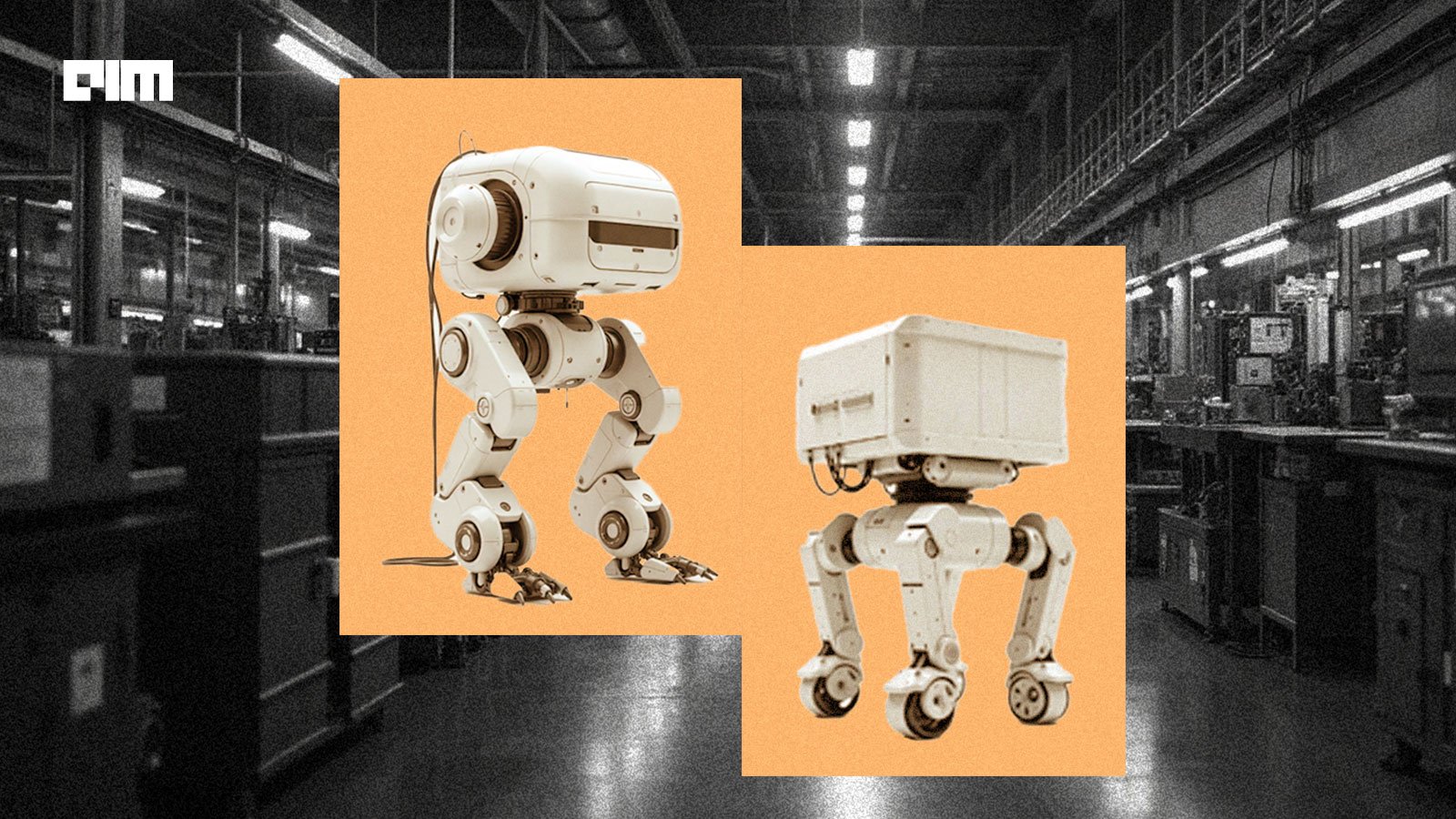

Robotics is an extended recreation that has everybody hooked on fantasies of humanoids strolling, speaking, and searching similar to us. However the actual revolution in robotics is going on the place you won’t anticipate it: on manufacturing unit flooring, in warehouses, and behind the scenes of world provide chains.
As companies worldwide grapple with labour shortages and the necessity for extra resilient operations, industrial robots are stepping up. These aren’t humanoid machines designed to imitate our look; they’re purpose-built, clever techniques geared up with AI, superior imaginative and prescient, and mobility.
These good machines usually are not solely boosting precision and effectivity however are additionally addressing crucial labour shortages and enhancing provide chain resilience. In contrast to their humanoid counterparts, that are nonetheless navigating developmental challenges, industrial robots have already confirmed their price in real-world purposes.
They’re seamlessly integrating into manufacturing traces, collaborating with human employees, and adapting to dynamic environments.
The Rise of the Invisible Workforce
The vast majority of industrial robots at the moment bear little resemblance to people. As an alternative, they embody articulated robotic arms, Selective Compliance Articulated Robotic Arm (SCARA) robots, collaborative robots (cobots), and autonomous cell robots (AMRs). These are purpose-built techniques that prioritise operate over kind, a key motive they’re seeing widespread adoption throughout industries.
In line with current projections, the worldwide industrial robotics market is about to develop from $87.1 billion in 2024 to $162.7 billion by 2030. Collaborative robots are outpacing different segments, rising at a projected CAGR of over 31.6% from 2025 to 2030. The Worldwide Federation of Robotics famous that low-cost robotics presents options for potential prospects who discover a high-performance robotic outsized for his or her wants.
Robotic density is rising sharply, with nations like South Korea exceeding 1,000 robots per 10,000 manufacturing employees in 2024. China, the most important shopper of commercial robots, put in round 276,288 items in 2023 alone. India, whereas nonetheless within the early levels, noticed a 59% rise in installations. These developments level to a big world shift in how labour and automation intersect.
AI, Imaginative and prescient and Motion Are Recreation Changers
Trendy robots are more and more powered by AI, superior imaginative and prescient techniques, and mobility tech. Cobots can now ‘see’ utilizing machine imaginative and prescient and navigate unpredictable environments utilizing simultaneous localisation and mapping (SLAM) methods. AI algorithms permit these robots to deal with variability and even be taught new duties via bodily simulation, a course of generally referred to as “Bodily AI.”
Sensors additionally play a crucial position. A brand new era of 3D ultrasonic sensors referred to as ADAR (Acoustic Detection and Ranging) presents robots real-time environmental consciousness, developed by the Norwegian robotics firm, Sonair. These applied sciences are enabling robots to work safely alongside people and adapt to dynamic manufacturing settings.
These good machines usually are not solely seeing but in addition reasoning. For instance, NVIDIA’s Isaac platform permits robots to coach in digital environments, reducing real-world testing prices and dashing deployment. This shift from hard-coded actions to experience-based studying is reworking how industries method automation initiatives, from design to scale-up.
From Warehouses to Working Rooms
Past manufacturing, robots are getting into numerous areas. In warehouses, AMRs transfer items autonomously. Firms like GreyOrange and Unbox Robotics present robotic options which can be optimising parcel sortation and order fulfilment in e-commerce.
Healthcare is one other frontier the place robotics has taken a leap. Surgical arms like KUKA’s LBR Med carry out precision procedures. Hospitals use AMRs to ship treatment and handle logistics. Cobots assist in lab automation, particularly in sterile environments the place human error may be pricey.
In India, the primary indigenously developed robotic surgical system, ‘SSi Mantra’, not too long ago obtained regulatory approval from the Central Medication Normal Management Organisation (CDSCO) for telesurgery and teleproctoring. The system carried out its first surgical procedures in January this yr.
In Romania, Ford’s engine plant built-in cobots to handle greasing and inspection, relieving employees from repetitive duties. At GE Healthcare within the US, AMRs enabled the consolidation of 4 restore centres into one, reducing ground house.
Again in India, Bajaj Auto standardised cobots throughout meeting traces, enabling ergonomic work environments, particularly for feminine workers. These examples present robots aren’t changing people outright; they’re taking over duties that enhance workflow and office security.
The Funding is Industrial, Not Sci-Fi
Buyers are betting huge on this shift. In 2024 alone, world VC funding in robotics nearly reached $7.5 billion, with funding flowing into logistics and industrial robotics quite than humanoids. India’s GreyOrange raised $135 million, whereas ATI Motors secured $20 million to scale its AMRs.
These investments aren’t simply speculative. Firms like Normal Bots are delivering high-performance cobots at half the value of rivals, whereas ABB and Fuji Computerized Numerical Management (FANUC) proceed to develop robots that serve the automotive, electronics, and even meals industries.
ABB even introduced plans to spin off its robotics division, ABB Robotics, right into a individually listed firm with buying and selling anticipated to start independently within the second quarter of 2026.
Authorities assist, significantly in China via its ‘Made in China 2025’ technique, can be fuelling fast innovation and home adoption. India is catching up with initiatives like ‘Make in India’ and a draft Nationwide Technique on Robotics. Nevertheless, world disparities in coverage assist recommend uneven robotics adoption, particularly in rising economies.
The way forward for robotics isn’t formed by faces, voices, or strolling androids. It’s being outlined by precision arms, rolling carts with sensors, and code that teaches machines to work smarter. As industries adapt to shifting workforces and financial calls for, robots that don’t look human are taking centre stage, with simply features greater than faces.
The submit Faceless Robots are Taking Over the Way forward for Work appeared first on Analytics India Journal.