OpenAI’s ChatGPT is Increasingly Integrated into Cybersecurity Products

ChatGPT

The details of OpenAI’s ChatGPT integrated into cybersecurity products are discussed in this section

In the past few months, several cybersecurity businesses have disclosed that they began using ChatGPT in Cybersecurity or plan to do so, and some researchers have discovered practical applications for the chatbot.

One of the first companies to announce that ChatGPT is Integrated into Cybersecurity Products, specifically GPT-3, company Orca. The objective is to enhance the cloud security risk remediation procedures offered to customers.

Armo, a Kubernetes security company, has incorporated ChatGPT’s generative AI into its platform to make it simpler for users to create OPA-based security policies.

An OpenAI’s ChatGPT integration for the LogPoint SOAR (security orchestration, automation, and response) solution in a lab setting was recently announced by Logpoint.

AlertEnterprise, a software company that specializes in cyber-physical security convergence, has launched a ChatGPT-powered chatbot. Information on physical access, identity access management, visitor management, door reader analytics, Cybersecurity products, and safety reporting can all be quickly accessed by users. The chatbot allows users to inquire about things like “how many badges for new employees did we issue last month?” or “Show me when employee training for restricted area access expires.”

Accenture Security has been looking into ChatGPT’s ability to automate some tasks related to cyber defense.

Coro and Trellix, two cybersecurity companies, are also looking into incorporating ChatGPT into their products.

The outcomes of tests that were carried out with ChatGPT by some members of the cybersecurity community have been made public. HackerSploit, a training provider, demonstrated, for instance, how to use it for penetration testing and software vulnerability detection.

Some experiments on the detection of indicator of compromise (IoC) were carried out by a Kaspersky researcher, and some of the results were promising. The tests looked for IoCs in systems, code obfuscation, and comparing signature-based rule sets with ChatGPT output to find gaps, and similarities between malware binaries.

The post OpenAI’s ChatGPT is Increasingly Integrated into Cybersecurity Products appeared first on Analytics Insight.

CEO of OpenAI Disagrees with the Prediction that AI will Overpower

CEO of OpenAI

With this rapid advancement in AI, it can rule. Well, on the prediction that AI will, the CEO of OpenAI has some more opinions on the same

In a world of OpenAI’s ChatGPT, the expansion of Artificial Intelligence is a boon but it is scary at the same time. The bigger question is whether Will AI overpower the world or not! There is a Prediction that AI will overpower, but the CEO of OpenAI has more opinions on it. One inevitable dilemma for mankind arises as the tech sector advances ever more stunning artificial intelligence technology: Is this good news or the terrible news?

A small but influential group in Silicon Valley holds the view that if artificial intelligence (AI) is not handled properly, humanity could be wiped out within a few decades. Another group believes that the future of AI will be fantastic, bringing about untold potential capacities, abundance, and nirvana.

This week, I explore the segment of the IT sector that thinks it must act quickly to save the world from a killer in a feature for Bloomberg Businessweek. Sam Bankman-Fried, Elon Musk, Peter Thiel, and-believe it or not-Harry Potter all appear in the narrative, which explores the union of the charitable doctrine known as effective altruism with AI doomers.

Also, it has a seedy underside with claims of sexual assault and hints of a doomsday religion. Silicon Valley has recently become embroiled in a savage fight as a result of its fixation with the enormous stakes that future AI will have.

And that rift is currently being played out online between two individuals: AI theorist Eliezer Yudkowsky and Sam Altman, CEO of OpenAI. Yudkowsky has been raising the alarm about how artificial general intelligence is likely to be “unaligned” with human values and may opt to exterminate humans since the early 2000s. He exerted much effort to persuade Musk to take the problem seriously by urging others to prioritize preventing an AI apocalypse.

To develop safer AI, Musk, and Altman co-founded OpenAI as a nonprofit organization in 2015.

By switching to a for-profit business model, OpenAI has produced AI technology that is bigger, quicker, and more sophisticated. Altman has applauded the development of artificial general intelligence or AGI, and the business has attracted billions in funding.

As we progress towards AGI-level systems, there will be unsettling moments and big disruptions, but the benefits could be so incredible that it will be well worth conquering the significant obstacles along the way, he wrote in a tweet in December.

The post CEO of OpenAI Disagrees with the Prediction that AI will Overpower appeared first on Analytics Insight.
India-Based Social Media App Koo Integrates OpenAI’s ChatGPT

India-Based Social Media App

Here are the specifics on how the India-based social media app Koo incorporates OpenAI’s ChatGPT

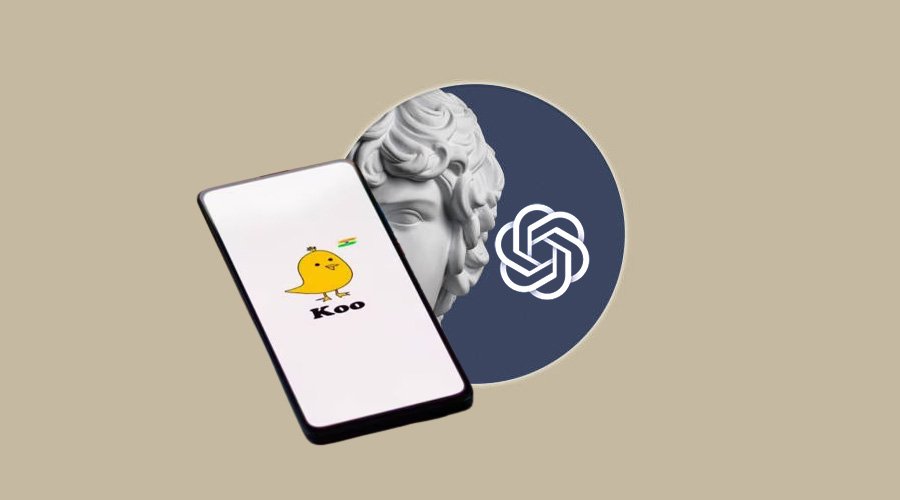
The co-founder of Koo told Reuters that the India-Based Social Media App Koo Integrates OpenAI’s ChatGPT to make it easier for users to create posts.

ChatGPT, an artificial intelligence bot that responds to prompts to produce prose, has sparked a generative AI craze in the tech industry.

In an interview, Koo co-founder Mayank Bidawatka stated that Koo users will be able to use OpenAI’s ChatGPT directly within the social media app to draft posts about politics, pop culture, or current events.

He stated, “This will assist creators in getting inspiration for what to create.” They could write down their thoughts and ask (ChatGPT) for the latest local news.

Microsoft and Alphabet’s Google each unveiled their own generative AI chatbots a month ago. These chatbots can synthesize information from across the internet in response to searches. A chatbot that was trained to have a fun and friendly tone was also introduced by Snap Inc, the company that owns the photo messaging app Snapchat.

Koo, according to Bidawatka, will be the first platform to incorporate the technology into the capability to write posts. The voice command feature of Koo or typing their prompts into the ChatGPT tool are both options available to users.

He also said that the ChatGPT integration could help increase the percentage of Koo users who actively create content on the app, which is around 20%.

The feature will initially be made available to users with verified Koo accounts before being made available to all users.

In a demo to Reuters, the device drafted a post utilizing a statement from Albert Einstein and included three related hashtags. Koo will also look into adding labels to show if a post was made with ChatGPT help.

The post India-Based Social Media App Koo Integrates OpenAI’s ChatGPT appeared first on Analytics Insight.

OpenAI Releases Powerful ChatGPT Successor GPT-4

OpenAI releases GPT-4

OpenAI releases GPT-4, the company takes pride in introducing ChatGPT successor, GPT-4

OpenAI releases GPT-4 the newest edition of ChatGPT, the highly popular chatbot with a rapidly expanding user base. It is powered by OpenAI’s latest artificial intelligence (AI) software, and it is unveiled today. The business described the new GPT-4 large language model as offering a “multimodal system,” which can process not only text but also images, video, or audio. This makes it different from earlier iterations. It turns out that GPT-4 has been hiding in plain sight. Today, Microsoft announced that the chatbot technology it co-developed with OpenAI, Bing Chat, is powered by GPT-4. Stripe is one of the early users and uses GPT-4 to scan business websites and send a summary to customer care workers. ChatGPT successor GPT-4 was integrated into a new subscription tier for language learning by Duolingo created by Morgan Stanley.

GPT-4 performs at “human level” on a variety of professional and academic benchmarks, can create text, and can accept both text and image inputs, an upgrade above GPT-3.5, which only accepted text. For instance, GPT-4 completes a mock bar exam with a score in the top 10% of test takers, but GPT-3.5 received a score in the bottom 10%. According to the business, OpenAI spent six months “iteratively aligning” GPT-4 utilizing lessons from ChatGPT and an internal adversarial testing program. This process produced “best-ever results” on factuality, steerability, and refusing to cross guardrails. Similar to earlier GPT models, GPT-4 was trained using data that was both publicly accessible and licensed by OpenAI.

The aforementioned steerability tooling could potentially be a more significant improvement in GPT-4. Developers can specify style and task by expressing precise instructions using the new “system” messages API feature that OpenAI is implementing with GPT-4. System messages, which will also come to ChatGPT in the future, are essentially instructions that set the tone and establish boundaries for the AI’s future interactions.

The post OpenAI Releases Powerful ChatGPT Successor GPT-4 appeared first on Analytics Insight.
OpenAI’s Latest Version GPT-4 Officially Enters the Classrooms

Latest Version of GPT-4

The latest version of OpenAI’s GPT-4 is now officially entering the classrooms as the khan academy develops

Khan Academy is a non-profit organisation whose mission is to provide anyone, anywhere with a free, world-class education. They provide thousands of math, science, and humanities lessons to students of all ages. However, each student has a unique understanding of concepts and skills, and their needs differ. The COVID-19 pandemic exacerbated this disparity. To address this issue, Khan Academy has created Khanmigo, an AI-powered virtual tutor and classroom assistant powered by GPT-4, the most recent OpenAI’s latest version.

According to the US-based online education platform, the new latest version of GPT-4-based AI Khanmigo has been in testing since 2022. Early testing by Khan Academy shows that GPT-4 can help students contextualise the relevance of what they are studying and learn specific points of computer programming.

Furthermore, the non-profit is investigating how teachers could use GPT-4 to quickly and easily tailor learning for each student and create instructional materials for lessons. Overall, Khan Academy believes that GPT-4 is breaking new ground in education by providing transformative technology that could accelerate its roadmap of incorporating more tutor-like capabilities into its platform over the next few years.

The GPT-4 Has Been Announced

OpenAI announced ChatGPT, the next major step in the evolution of its popular conversational AI. GPT-4 is said to provide ‘human-level performance,’ according to the company. GPT-4, according to OpenAI, can solve difficult problems with greater accuracy. Because of GPT-4’s broad general knowledge and problem-solving abilities, this is possible.

The GPT-4 can also take images as input and generate captions, classifications, and analyses from them. This also implies that you will be able to share images with GPT-4, and it will respond based on the images.

In addition, the GPT-4 will be able to handle much longer text than the GPT-3.5. Over 25,000 words of text will be able to be used and analysed by the AI.

The post OpenAI’s Latest Version GPT-4 Officially Enters the Classrooms appeared first on Analytics Insight.

Top 5 Ways GPT-4 can Outsmart OpenAI’s ChatGPT

GPT-4

The new GPT-4 is released and here are the top 5 ways GPT-4 can outsmart OpenAI’s ChatGPT

OpenAI’s new GPT-4 AI model has made its major premiere and is now powering everything from a virtual volunteer for the vision impaired to an enhanced language learning bot in Duolingo. So, what distinguishes GPT-4 from earlier releases like ChatGPT and GPT-3.5? Here are the top 5 ways GPT-4 can outsmart OpenAI’s ChatGPT.

  1. GPT-4 Can See and Understand Images

Images may be provided to GPT-4, and it will analyze them to uncover pertinent data. Of course, you could just ask it to describe what’s in the image, but more significantly, its comprehension extends beyond that. But, the collaboration with Be My Eyes, an app used by blind and low-vision people to let volunteers describe what their phone sees, is more telling. The example given by OpenAI has it describing the joke in a picture of a ridiculously enormous iPhone connection.

  1. GPT-4 is Harder to Trick

Users kindly provided OpenAI with malicious prompts throughout the past year or so, which were used to train GPT-4. Taking these factors into consideration, the new model performs far better than its forerunners in terms of “factuality, steerability, and refusing to wander outside of guardrails.”

  1. GPT-4 Has a Longer Memory

The maximum token count for GPT-4 is 32,768; if you’re wondering why the figure appears familiar, it’s because it’s 215. This equates to around 64,000 words or 50 pages of text, which is sufficient for a whole play or short narrative.

  1. GPT-4 is More Multilingual

GPT-4 makes a step towards achieving this by proving that it can answer thousands of multiple-choice questions with high accuracy across 26 languages, from Italian to Ukrainian to Korean. The Romance and Germanic languages are where it excels, but it generalizes well to others.

  1. GPT-4 Has Different “Personalities”

Users will be able to alter the “basic ChatGPT personality with a set verbosity, tone, and style” in GPT-4 to something better suited to their requirements. GPT-4 integrates steerability more naturally than GPT-3.5. The crew quickly adds, “Within boundaries,” seeing this as the simplest method to persuade the model to deviate from character.

The post Top 5 Ways GPT-4 can Outsmart OpenAI’s ChatGPT appeared first on Analytics Insight.
Top tech news: ChatGPT 4 is now available, and it possesses these ten almost human-like capabilities. Alphabet announced plans to cut approximately 12,000 jobs worldwide.

Tech news

According to OpenAI, there may be subtle differences between GPT-3.5 and GPT-4.

Good morning tech fam, here are some quick tech updates for you to catch on to!

What’s New Today: Alphabet, the parent company of Google, announced plans to cut approximately 12,000 jobs worldwide.

Fast-Track Insights: The crypto industry may move toward decentralization as a result of bank chaos in the US.

It is anticipated that GPT-4, the underlying technology of ChatGPT Plus (also known as ChatGPT 4) will be superior to and more sophisticated than its predecessor, the GPT-3/GPT-3.5 language models. This comes a few months after OpenAI released ChatGPT, which is powered by GPT-3, for public testing. According to the company, GPT-4 is a “large multimodal model” that can even analyze image inputs and demonstrates “human-level performance” on a variety of professional and academic benchmarks. Currently, ChatGPT Plus subscribers can test its capabilities, and developers who want to incorporate the multimodal model into their tools can join the API waitlist.

In support of those laid off by Google worldwide, 250 Google employees in Zurich walked out of their workplaces. The employees are asking the business not to make any more layoffs. Alphabet, the parent company of Google, announced plans to lay off approximately 12,000 employees worldwide in the middle of January. Although affected Google employees in the United States and Canada have already been informed, it is still unknown how many will be fired elsewhere. The walkout at Google Zurich is a show of support for coworkers whose employment has already been terminated and a protest against these massive layoffs.

Despite the excitement surrounding AI technologies likeOpenAI’s ChatGPT, whose fourth-generation large language model GPT-4 is expected to be released next week, the discussion regarding the technology’s potential impact on the current job market appears to be going unnoticed.

The advocates of automation, artificial intelligence, and any other type of technology are continuing to assert that they will not replace the human workforce; rather, they will create more jobs and opportunities. However, the opponents appear to disagree. AI experts predict a future in theChatGPT.

According to the United Nations, only the position of elevator operator had been replaced by technology out of the 270 jobs listed in the 1950 US Census. However, the fear of being replaced by cutting-edge technologies is also growing as the world becomes increasingly technological. Read more

Silver gate Capital, Silicon Valley Bank, and Signature Bank all went out of business or were closed last week, causing crypto users and businesses alike to rush to move their assets. According to Standard DAO CEO Aaron Rafferty, “Silver gate and Signature serve as the major on- and off-ramps for the crypto space with their SEN and Signet products, respectively.” The tie for SVB was inclining further toward the side of significant startup and VC capital for the space with associations like Light speed, Y Combinator.”

The covering of these banks likewise has greater ramifications on the crypto business since some of them were offering types of assistance to the business, Mina Tadrus, President of the quant speculation the board firm Tadrus Capital LLC and general accomplice of Tadrus Capital Asset, said. ” Cryptocurrency traders and businesses were able to deposit, transfer, and convert fiat currency into digital assets like Bitcoin, Ethereum, and other cryptocurrencies thanks to these banks.

The post Top tech news: ChatGPT 4 is now available, and it possesses these ten almost human-like capabilities. Alphabet announced plans to cut approximately 12,000 jobs worldwide. appeared first on Analytics Insight.

Crypto Prepares for the Implications of GPT-4

 Implications of GPT-4

Crypto braces and prepares for the implications of OpenAI’s newly launched GPT-4

OpenAI founder Sam Altman released OpenAI’s new GPT-4 an upgrade to its third-generation artificial intelligence engine that will have ramifications for the entire crypto industry. The previous version, GPT-3, served as the foundation for the viral hit ChatGPT, which has millions of users and has received extensive media coverage. Altman was also able to raise a staggering $10 billion from Microsoft, valuing OpenAI as the world’s largest AI company, thanks to GPT-3.

The launch of implications of GPT-4 was immediately heralded by the crypto industry, which is computer enthusiast by trade. NFT fans began experimenting with its art tools almost immediately. Others, on the other hand, expressed concern about threats to blockchains and protocols with limited security testing, such as decentralized finance protocols.

Crypto Flash Loans Vulnerable to GPT-4 Exploitation

Many pointed to Euler Finance, a new DeFi platform, which was hacked for $197 million this week. An attacker who manipulated so-called “flash loans” caused Euler to lose its reserves.

An attacker who obtains a flash loan trades and repays the loan all within a single block on Ethereum’s blockchain.

Flash loans enable any market participant to earn large sums of money with a small amount of capital. To leverage up to capitalize on a large trade, the attacker only needs to post a small amount of collateral.

Worse, flash loan-based attacks reward patient, diligent attackers who meticulously plan their entire attack before carrying it out. This favors AI and Big Data tools that can sift through massive amounts of data and recommend flash loan attacks whose entire sequence of events can be carried out within a single on-chain block.

When a flash loan attack begins, the profit is frequently guaranteed. The Euler Finance attacker, for example, used malicious code to generate artificially overvalued collateral and withdraw the real proceeds of a liquidation using that collateral.

In any case, the entire crypto community will be looking for any immediate effects of OpenAI’s new GPT-4 on the digital asset ecosystem. Although permissionless financial exchanges, such as DEXs and other DeFi tools, face the most immediate threats, the new AI will undoubtedly have an impact on NFTs, blockchain experiments, coding tools, security research, and other cryptographic initiatives.

The post Crypto Prepares for the Implications of GPT-4 appeared first on Analytics Insight.
ChatGPT Successor GPT-4 is Here! How Powerful is it?

ChatGPT

The ChatGPT successor GPT-4 launched by Open AI, its latest model for image and text understanding

The San Francisco-based tech organization guarantees that GPT-4 is the most recent achievement in its work to increase profound learning. GPT-4 has been profoundly expected since the outcome of ChatGPT. ChatGPT can imitate other writing styles and respond to questions in a manner that is comparable to that of a human.

With numerous new features, GPT-4 is a larger model that outperforms ChatGPT’s GPT-3.5. GPT-4 is more astute and more imaginative than ChatGPT and presently it can deal with additional words, acknowledge pictures as contributions to produce subtitles, and that’s only the tip of the iceberg!

GPT-4 can comprehend both text and images. It can caption, understand, and identify objects in relatively complicated images. Additionally, OpenAI is introducing “system” messages, a brand-new API feature that enables developers to specify a specific style and task by providing clear instructions. It has performed well in low-resource languages and has been tested on a variety of benchmarks, including simulated human exams.

Still ‘Flawed’, Even Though More Creative?

Similar to its predecessors, GPT-4 carries several limitations and potential dangers. OpenAI acknowledges that it still has biases, the potential to produce misleading data, and the potential for error. It might “hallucinate” the facts, not be able to solve difficult problems like humans, and believe false statements to be true. Additionally, the model only has a limited understanding of events that occurred after September 2021, which may result in straightforward erroneous reasoning.

Despite these drawbacks and dangers, OpenAI has enhanced the model’s safety and dependability. To improve its capacity to reject dangerous requests, the company has collaborated with experts to conduct an adversarial test of the model and gathered additional data.

However, it is still possible to produce content that violates usage rules, so use language model outputs with caution, especially in high-stakes situations.

How Does It Work?

The most recent and cutting-edge language model, GPT-4, has already been implemented by Microsoft’s Bing search engine and some third-party applications. Be My Eyes is testing its ability to process visual inputs by implementing a new Virtual Volunteer feature to respond to questions about images sent to it. GPT-4 has also begun to be used in a variety of ways by other businesses.

It has been incorporated into a brand-new tier of language learning subscriptions by Duolingo, and Stripe uses it to scan business websites, improve user experience, and combat fraud. Morgan Stanley likewise utilizes GPT-4 to coordinate its tremendous information base and recover pertinent data for its monetary examiners.

In addition to these early adopters, Khan Academy is conducting a limited pilot program to investigate the potential of GPT-4. The AI model is also being used by the Icelandic government to keep its language.

The post ChatGPT Successor GPT-4 is Here! How Powerful is it? appeared first on Analytics Insight.

How to Use OpenAI’s New GPT-4 Right Now?

Use OpenAI's New GPT-4

This article contains comprehensive information on the use of OpenAI’s New GPT-4 in 2023

GPT-4 was officially announced on March 13, as was confirmed ahead of time by Microsoft, even though the exact day was unknown. As of now, however, it will only be available in the ChatGPT Plus paid subscription. The current free version of ChatGPT will still be based on GPT-3.5.

GPT-4 will also be available as an API “for developers to build applications and services.” Some of the companies that have already integrated GPT-4 include Duolingo, Be My Eyes, Stripe, and Khan Academy. The first public demonstration of GPT-4 was also live-streamed on YouTube, showing off some of its new capabilities.

How to Use GPT-4?

The easiest way to get started with GPT-4 today is to try it out as part of Bing Chat. Microsoft revealed that it’s been using GPT-4 in Bing Chat, which is free to use. Some GPT-4 features are missing from Bing Chat, however, such as visual input. But you’ll still have access to that expanded LLM (large language model) and the advanced intelligence that comes with it. It should be noted that while Bing Chat is free, it is limited to 15 chats per session and 150 sessions per day.

The only other way to access GPT-4 right now is to upgrade to ChatGPT Plus. To jump up to the $20 paid subscription, just click on “Upgrade to Plus” in the sidebar in ChatGPT. Once you’ve entered your credit card information, you’ll be able to toggle between GPT-4 and older versions of the LLM. You can even double-check that you’re getting GPT-4 responses since they use a black logo instead of the green logo used for older models.

From there, using GPT-4 is identical to using ChatGPT Plus with GPT-3.5. It’s more capable than ChatGPT and allows you to do things like fine-tune a dataset to get tailored results that match your needs.

What’s New in GPT-4?

GPT-4 is a new language model created by OpenAI that can generate text that is similar to human speech. It advances the technology used by ChatGPT, which is currently based on GPT-3.5. GPT is the acronym for Generative Pre-Trained Transformer, a deep learning technology that uses artificial neural networks to write like a human.

According to OpenAI, this next-generation language model is more advanced in three key areas: creativity, visual input, and longer context. In terms of creativity, OpenAI says GPT-4 is much better at both creating and collaborating with users on creative projects. Examples of these include music, screenplays, technical writing, and even “learning a user’s writing style.”

The longer context plays into this as well. GPT-4 can now process up to 25,000 words of text from the user. You can even just send GPT-4 a web link and ask it to interact with the text from that page. OpenAI says this can be helpful for the creation of long-form content, as well as “extended conversations.”

GPT-4 can also now receive images as a basis for interaction. In the example provided on the GPT-4 website, the chatbot is given an image of a few baking ingredients and is asked what can be made with them. It is not currently known if video can also be used in this same way.

OpenAI says it’s been trained with human feedback to make these strides, claiming to have worked with “over 50 experts for early feedback in domains including AI safety and security.”

As the first users have flocked to get their hands on it, we’re starting to learn what it’s capable of. One user made GPT-4 create a working version of Pong in just sixty seconds, using a mix of HTML and JavaScript.

Limitations

While discussing the new capabilities of GPT-4, OpenAI also notes some of the limitations of the new language model. Like previous versions of GPT, OpenAI says the latest model still has problems with “social biases, hallucinations, and adversarial prompts.” In other words, it’s not perfect, but OpenAI says these are all issues the company is working to address.

The post How to Use OpenAI’s New GPT-4 Right Now? appeared first on Analytics Insight.