Zoom Collaborates with OpenAI to Bolster its AI-Driven Features

Zoom collaborates with Open AI

Zoom collaborates with OpenAI and brings generative AI to Zoom IQ

Zoom, a platform for video conferences, has announced a partnership with OpenAI, the company behind the AI chatbot ChatGPT, to add AI-driven capabilities to the service. Zoom IQ, Zoom IQ’s AI assistant, can summarise chat threads, organize ideas, write chat content, create meeting agendas, and more. Zoom collaborates with Open AI to incorporate new features into Zoom IQ. This strategy entails using various AI models, including those it has created internally, those created by top AI firms like Open AI, and their models for a select few customers.

According to Smita Hashim, chief product officer of Zoom, this strategy would enable the business to use “generative AI as a driving factor in making our customers’ businesses more productive.” Zoom could offer “the maximum value for our customers’ different needs” by incorporating a variety of model kinds, she continued. The models are also adaptable, allowing for more excellent performance by being customized to a particular company’s terminology and scenarios.

Zoom also disclosed it was enhancing Zoom IQ’s generative AI capabilities in addition to the new cooperation with OpenAI. Customers can access bright meeting recordings using the tool, while Zoom IQ for Sales, which debuted in April 2022, already uses AI to gather insights from client contacts to improve sales results.

Zoom IQ Chat Compose assists users in creating messages based on the chat’s conversational context and may be tweaked to change the message’s tone and suggested responses. Similarly, Zoom IQ Email Compose draughts email suggestions based on the conversational context from earlier Zoom Meetings, Zoom Phone conversations, and email threads. Initial access to this capability will be through Zoom IQ for Sales. Users can easily share meeting summaries and post-meeting action items via a team chat, a Zoom Calendar invite, or an email using the Zoom IQ Meeting Summary.

The post Zoom Collaborates with OpenAI to Bolster its AI-Driven Features appeared first on Analytics Insight.

Microsoft Unveils Security Copilot with OpenAI’s GPT-4

Microsoft

Microsoft unveils security Copilot with OpenAI’s GPT-4 to help security professionals

Microsoft unveils Security Copilot, their most recent advancement in cybersecurity, at the Microsoft Safe event. With the use of this tool, security professionals will be better able to recognize possible risks and take appropriate action while also getting a better picture of the broader threat environment.

Security Copilot acts as a simple-to-use AI helper for security professionals by fusing Microsoft’s extensive threat intelligence with industry-leading knowledge and the strength of OpenAI’s GPT-4 generative AI.

Microsoft just released Microsoft 365 Copilot, which aims to provide its well-known software programs, including Word, Excel, PowerPoint, and more, with AI-powered functionality.

The first security product that combines the power of AI with a sophisticated broad language model is called Copilot (LLM). And it’s not just any LLM; it’s one that was created especially for security-related objectives and incorporates an expanding range of security-related skills and knowledge.

It is already integrated with Microsoft’s end-to-end security solutions, and it will soon be available across an expanding ecosystem of third-party products. Your data also remains under your control since, in our opinion, security should be created with privacy at its heart. It is safeguarded by the most thorough business compliance and security standards, and it is not utilized to train the fundamental AI models.

Microsoft’s Security Copilot is built to constantly learn and develop, ensuring that security teams have access to the most recent information about attackers and their techniques. The software gives users access to cutting-edge OpenAI models for difficult security applications and activities. Both the organization’s security information and Microsoft’s thorough threat analysis improve threat visibility.

Even small security teams now have access to the expertise and resources of bigger enterprises thanks to Security Copilot. In addition to addressing cybersecurity skills shortages, Security Copilot improves processes, threat actor profiling, and event reporting.

When it comes to helping companies adopt AI to strengthen their cybersecurity defenses, Microsoft has a distinct advantage. A staggering 65 trillion danger signals are received daily by Microsoft Security, which is actively tracking over 50 ransomware gangs and 250 nation-state cybercriminal organizations.

The post Microsoft Unveils Security Copilot with OpenAI’s GPT-4 appeared first on Analytics Insight.

OpenAI ChatGPT Replaced by GPT-4: How it Differs?

ChatGPT

OpenAI ChatGPT replaced by GPT-4 as the new language model that will power the future of ChatGPT

The ChatGPT chatbot’s creator, OpenAI, has released a new version of it that will replace the one that was previously available. The latter is the new large language model (LLM), also known as GPT-4, that will power the upcoming version of ChatGPT for both individuals and companies. The much anticipated new launch makes ChatGPT more potent, adaptable, precise, and secure than before, making it one of the most crucial technologies to watch right now.

On that point, let’s look at the components of GPT-4, how it varies from the previous ChatGPT, how to use it now, businesses that are already utilizing it, and everything else you need to know about it.

What is GPT-4?

A large language model (LLM) by the name of GPT-3.5 was the engine behind ChatGPT’s introduction in November of last year. The latter refers to a sizable database and a collection of algorithms that were trained to utilize billions of data points collected by OpenAI through its own tools and research projects as well as across the internet. These algorithms were used to power the ChatGPT chatbot that was previously known.

The most recent iteration of this LLM is GPT-4. As a result, it is not a replacement for ChatGPT but rather for GPT-3.5, the previous LLM that underpinned ChatGPT. OpenAI claims that it is substantially more effective, accurate, quick, safe, and competent than GPT-3.5, making ChatGPT even better equipped to produce correct written material while preventing mistakes and embarrassing situations.

Four Major Differences Between ChatGPT and GPT-4

The primary database that powers ChatGPT, GPT-3.5, has been enhanced in four distinct ways by GPT-4. This is a list of them.

  1. Processing Images in Queries

The capability to comprehend photos as a component of user inquiries is a significant benefit GPT-4 has over the previous iteration of ChatGPT. For instance, you can now upload a bill image from your phone and instruct GPT-4 to split computations according to what is stated in the bill. Before now, the previous ChatGPT could only read written inputs, thus the new ChatGPT will be far more versatile thanks to the ability to ask questions based solely on photos.

  1. Using Indian Languages in its Database

Five Indian languages—Bangla, Urdu, Punjabi, Marathi, and Telugu—were among the 26 languages that OpenAI tested and trained GPT-4 on, the company revealed in its GPT-4 research section. Although these languages were probably chosen at random, the findings imply that GPT-4 will also be able to grasp regional tongues. This will provide the new ChatGPT the ability to comprehend and reply in regional Indian languages, enhancing the potential uses of chatbots by Indian businesses in the future.

  1. Creating Long-Form Text Content

One of the primary differences between GPT-4 and GPT-3.5 in the previous ChatGPT is its increased memory, which is 8 times larger. GPT-4 can therefore retain and comprehend far longer and more complicated inputs, resulting in the production of long-form text content in answers. Up until now, ChatGPT through GPT-3.5 has mostly been limited to producing just shorter answers of about 250–300 words; GPT-4 will outperform this and provide more output.

  1. More Powerful and Accurate than Before

According to OpenAI’s presentation, GPT-4 on ChatGPT is “40% more likely to generate factual replies” and is “82% less likely to reply to requests for forbidden content” than GPT-3.5. This is conceivable because GPT-4 has more than 1 trillion data points in its database and incorporates all the information and comments produced so far by ChatGPT in addition to more of its data. GPT-4 will consequently be more effective and precise than previously because of the increased memory that it has for each query.

For example, it achieved a score in the 99th percentile on a Biology Olympiad and the 90th percentile on a US legal test. ChatGPT through GPT-3.5, in contrast, could only provide results in the 10th and 31st percentiles, respectively.

How to Use it Right Now?

Sadly, GPT-4 is now only accessible to paid customers of OpenAI’s ChatGPT Plus service. For the time being, the free version of ChatGPT, which is still accessible from this page, will run on GPT-3.5, and OpenAI has not provided a timetable or strategy for when it would grant users free access to GPT-4.

But, if you still wish to use GPT-4, you can do so by purchasing a subscription plan for the ChatGPT Plus that uses GPT-4. The latter costs $20 per month, or around 1,650 rupees, every month.

Who is Using GPT-4 Right Now?

Microsoft already uses GPT-4 for their Bing search engine, as was previously mentioned. In addition, OpenAI listed several businesses doing early GPT-4 experiments. These include the Icelandic government, the global investment banking giant Morgan Stanley, the edtech platform Khan Academy, the image-to-text service Be My Eyes, the fintech service Stripe, and the language translation service Duolingo.

Indian businesses have reportedly indicated an interest in employing GPT-4 in their chatbot services, according to a Mint story. GPT-4 will be included in the enterprise chatbots that Jio Haptik, a platform owned by Reliance Jio, and Yellow.ai, another platform, create for enterprises in India and throughout the world.

The post OpenAI ChatGPT Replaced by GPT-4: How it Differs? appeared first on Analytics Insight.

Top Tech News: Google denies using ChatGPT as a model to train its AI chatbot Bard. Despite negative asset class perceptions, cryptos gained in the first quarter.

Top tech news

Google has denied using Microsoft-owned OpenAI’s ChatGPT to train its AI chatbot Bard. Read more tech news

Good morning tech fam, here are some quick tech updates for you to catch on to!

What’s New Today: Microsoft’s GitHub fires 142 India employees, firing all technical staff.

Fast-Track Insights: Despite negative asset class perceptions, cryptos gained in the first quarter.

Google has denied that it is training its AI chatbot Bard using Microsoft-owned OpenAI’s ChatGPT. A report in The Data guaranteed that OpenAI’s prosperity “has constrained the two simulated intelligence research groups inside Google’s parent, Letter set, to conquer long periods of extreme contention to cooperate”. he reports, citing sources, claims that software engineers from Google’s Brain AI group are collaborating with employees from DeepMind, a subsidiary of Alphabet, to create software that will compete with OpenAI.

People who were aware of the development disclosed on Tuesday that Microsoft-owned GitHub had laid off 142 employees in India, including the entire staff of its engineering division. The people affected by the decision were spread out among the company’s offices in Bengaluru, Hyderabad, and Delhi. A spokesperson for GitHub stated when contacted that the decision was a component of the plan for the company’s reorganization. The spokesperson stated, “Workforce reductions were made on Tuesday as part of the reorganization plan shared in February as part of difficult but necessary decisions and realignments to both protect the health of our business in the short term and grant us the capacity to invest in our long-term strategy moving forward.”

The generative pre-trained transformer (GPT) is receiving a lot of attention right now. It is a cost-free chatbot that can respond to almost any question. It was developed by OpenAI and will be made available to the public for testing in November 2022 and already regarded as the best AI chatbot ever. Medical imaging analysis and high-resolution weather forecasts are just two examples of the many applications of machine learning that have emerged in recent years. It is abundantly clear that generative AI tools like ChatGPT and DALL-E can alter how a variety of tasks are carried out. Read more

The top-performing advanced resources (among those with market capitalizations of $1 at least billion) were the tokens related to Stacks (STX), Aptos (Able), and Permanent X (IMX), which expanded 443%, 268%, and 213%, individually. The most successful decentralized finance (DeFi) tokens were Liquity’s LQTY, Trader Joe’s JOE, and Injective Protocol’s INJ, which all increased by at least 237 percent.

The post Top Tech News: Google denies using ChatGPT as a model to train its AI chatbot Bard. Despite negative asset class perceptions, cryptos gained in the first quarter. appeared first on Analytics Insight.
Google Denies Copying OpenAI’s ChatGPT to Train its Bard AI

Google

Tech giant Google denies copying OpenAI’s ChatGPT to train its AI chatbot called Bard AI

Google has refuted claims that it used OpenAI’s ChatGPT, which is owned by Microsoft, to train Bard, its AI chatbot.

According to a report in The Information, the two AI research teams at Google’s parent company, Alphabet, had been fiercely competing for years until being driven by OpenAI’s success in collaborating.

The article cites sources as saying that personnel at DeepMind, an Alphabet subsidiary firm, are collaborating with software developers at Google’s Brain AI branch to create software that will compete with OpenAI.

The combined project, referred to as Gemini internally, started recently following Google’s failure with Bard AI, its initial attempt to take on OpenAI’s chatbot, according to the article.

The Verge was informed by a Google representative that “Bard is not trained on any data from ShareGPT or ChatGPT.”

In the meantime, Google has said that it will allow users to interact with its ChatGPT rival “Bard” as part of an early experiment.

The US and the UK already have early access to Bard, and the business promised to add more nations and languages as time goes on.

Bard is built on a large language model (LLM), especially a lightweight and optimized version of LaMDA, which the tech giant stated will be upgraded with newer, more competent models in the future. It is similar to OpenAI’s ChatGPT and Microsoft’s Bing chatbot.

Users can communicate with Bard by posing queries and then clarifying their answers with further queries.

The post Google Denies Copying OpenAI’s ChatGPT to Train its Bard AI appeared first on Analytics Insight.

Top 5 Ways ChatGPT-4 is Smarter Than We Think

ChatGPT-4

In this article, we have discussed the top 5 ways of ChatGPT-4 that are smarter than we think

After the introduction of ChatGPT, Open AI launched another tool called ChatGPT-4. GPT-4, like ChatGPT people crushing over it. We knew ChatGPT was smart, but GPT-4 is smarter, and here is how. The article mentions the Top 5 ways chatGPT-4 is smarter than we think.

  1. Good at Coding

The ability of ChatGPT-4 to produce code from your spoken commands is pretty impressive.

Moreover, ChatGPT is not the ideal programming buddy.

Whether you’re using JavaScript, HTML, or CSS to code, the chatbot sometimes falls into a hole that needs to be dug out.

  1. Language Translation

Languages such as English, Spanish, French, German, Italian, Portuguese, Chinese (simplified and traditional), Japanese, Korean, Arabic, Russian, Dutch, Polish, Swedish, Finnish, Norwegian, and Danish are among those that ChatGPT-4 claims to be able to translate.

Nonetheless, it acknowledges that because of the machine-learning process used in their creation, their translations are not flawless.

  1. Analyzing Text Better

GPT-4 is capable of more than just text analysis.

The main distinction with this new technology is that it can also function with submitted photos.

One incredible use case was when OpenAI showed how a design could be swiftly transformed into a functioning website.

  1. Giving More Accurate Replies

ChatGPT-4 can now produce responses up to 25,000 words long, a major improvement over the 4,000 words of the previous version.

Additionally, it can offer thorough directions for odd tasks like cleaning a piranha’s aquarium or obtaining strawberry DNA.

  1. Changing Operations Across a Variety of Industries

GPT-4 has the power to fundamentally alter how people operate in a variety of industries.

For instance, the tool will be used by DoNotPay, a chatbot for legal services, to build “one-click lawsuits” against robocalls.

The new technology allows for the quick and easy generation of a 1,000-word lawsuit from a call’s transcript.

The post Top 5 Ways ChatGPT-4 is Smarter Than We Think appeared first on Analytics Insight.
After Italy, OpenAI’s ChatGPT May Face a Potential Block in Germany

OpenAI’s ChatGPTHere is the information regarding that OpenAI’s ChatGPT may face a block in Germany after Italy

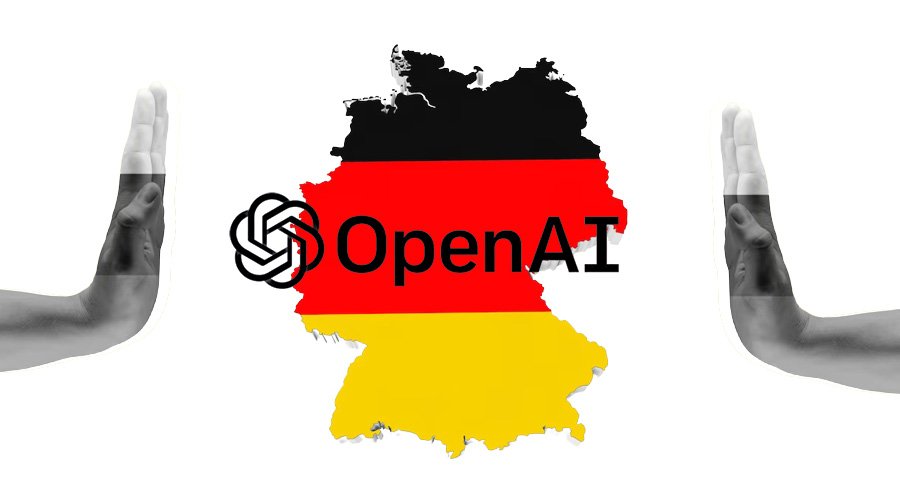
Due to concerns about data security, the German commissioner for data protection has warned that Chat-GPT may be blocked in Germany, just like it was blocked in Italy. The remarks were made by the commissioner in an interview that was published on Monday in the Handelsblatt newspaper.

Ulrich Kelber, the German information assurance official, recognized that on a basic level, Germany could make a move like Italy’s and block OpenAI’s ChatGPT. He made it clear that the state would be responsible for making such a decision, but he didn’t say if there were any current plans to do so.

Kelber disclosed that Germany has requested additional information regarding Italy’s temporary ban, which led OpenAI, supported by Microsoft (MSFT.O), to shut down ChatGPT in the nation.

It is important to recall that OpenAI’s chatbot ChatGPT is largely to blame for bringing artificial intelligence (AI) into the mainstream narrative in recent months. Microsoft co-founder and billionaire Bill Gates has referred to ChatGPT as the most “revolutionary” technology in around 40 yrs.

However, despite ChatGPT’s worldwide rise in popularity, AI technology has recently suffered a significant setback. On Friday, ChatGPT was outlawed in Italy. This is the first known instance of an artificial intelligence tool being blocked by a government.

The New York Times reports that Italy’s data protection authority has accused ChatGPT’s creator, OpenAI, of stealing user data. In addition, the Italian government has stated that ChatGPT lacks an age verification system to safeguard minors from illicit content exposure.

This makes Italy the first nation to ban ChatGPT due to privacy concerns. OpenAI, on the other hand, has made the deliberate decision to remain inaccessible in China, Russia, North Korea, and Iran.

Following the boycott, ChatGPT organizer Sam Altman said Italy is one of his #1 nations and added, “We obviously concede to the Italian government and have stopped offering ChatGPT in Italy (however we assume we are keeping all protection regulations). One of my favorite countries is Italy, and I hope to return there soon!”

The post After Italy, OpenAI’s ChatGPT May Face a Potential Block in Germany appeared first on Analytics Insight.

OpenAI’s CEO Doesn’t Mind Google Using ChatGPT to Train Bard

OpenAI’s CEOOpenAI’s CEO Sam Altman doesn’t mind Google using ChatGPT to train its AI chatbot Bard

When it was launched, Google’s AI chatbot Bard didn’t exactly have a clean landing. Bard was introduced to compete with ChatGPT, but soon after its inception, it came under fire for being inaccurate and for a factual mistake in its introductory campaign. At about the same time, news of Google’s press conference gaffe in Paris started to circulate. The business was mortified when a demo phone mysteriously vanished, raising suspicions that the event lacked preparation. Also, it was recently revealed that Google was training Bard using the data from ChatGPT. Google has categorically denied these rumors. Sam Altman, OpenAI’s CEO, claims that he is not offended by Google’s usage of ChatGPT data.

Sam Altman on Google Using ChatGPT Data

Sam Altman stated, “I’m not that furious with Google for training on ChatGPT output, but the spin is frustrating,” in a tweet.

When Google Denied Training Bard on ChatGPT Data

According to a report by The Information, Google trained Bard using ChatGPT’s data, which it acquired via the website ShareGPT. But the tech giant denied these claims in a response to The Verge. According to spokesman Chris Pappas, “Bard is not trained on any data from ShareGPT or ChatGPT.”

The Information’s report also covered how Jacob Devlin, a former Google AI developer, left the organization to work for OpenAI. According to reports, the former Google employee “warned Google to not utilize ChatGPT’s data as it would violate OpenAI’s service restrictions.” Also, a source informed The Information that following the former employee’s ‘warnings,’ Google ceased utilizing ChatGPT’s data.

Google CEO Sundar Pichai also addressed reports that Google was in a “code red” state following ChatGPT’s arrival. He said that he was never one to declare a “code red” event. He did, however, add that it’s possible that other employees of the business “send emails claiming there is a code red.”

The post OpenAI’s CEO Doesn’t Mind Google Using ChatGPT to Train Bard appeared first on Analytics Insight.

OpenAI, the Creator of ChatGPT, May Face its First Ever Defamation Case

ChatGPT may face Defamation case

ChatGPT may face Defamation case by a provincial Australian mayor if it does not retract false claims

ChatGPT may face Defamation case, a regional Australian mayor claimed he may sue OpenAI if it does not retract ChatGPT’s erroneous allegations that he had served time in prison for bribery. According to Reuters, Hood was found not guilty of the alleged crime by his attorneys. In actuality, he wasn’t employed by Note Printing Australia, the subsidiary. He was the one who informed the authorities of the bribery of foreign officials to obtain contracts for money production. On March 21, the lawyers sent OpenAI, the company that created ChatGPT, a letter of concern. The lawyers warned the business in this letter that if the mistakes regarding their client were not corrected within 28 days, they risked being sued for defamation.

OpenAI’s ChatGPT may face defamation for the first time if Hood decides to move forward with it. “It would potentially be a landmark moment in the sense that it’s extending this defamation legislation to a new area of artificial intelligence and publication in the IT realm,” James Naughton, a partner at Hood’s law company Gordon Legal, said in a statement to Reuters.

The development of Artificial Intelligence systems that can exceed ChatGPT has been urged to stop immediately until a set of rules for AI are in place by several prominent figures in the IT sector, including billionaire Elon Musk and Apple co-founder Steve Wozniak. William Gates, though, disagrees.

He contends that it would be more effective to concentrate on finding the best ways to leverage the developments in AI technology than halting the growth of AI systems. He emphasized the advantages of AI as well, namely, its capacity to lessen societal injustices. He also emphasized the necessity to recognize and deal with any potential hazards related to the technology.

The post OpenAI, the Creator of ChatGPT, May Face its First Ever Defamation Case appeared first on Analytics Insight.
Canada Opens Probe into OpenAI, the Creator of AI Chatbot ChatGPT

Canada Opens Probe into OpenAI

Canada opens probe into OpenAI, the creator of AI chatbot ChatGPT following a complaint

Canada declared that it has started a probe into ChatGPT, the popular AI chatbot created by the US-based software company OpenAI.

According to the agency, a “complaint claiming the acquisition, use, and dissemination of personal information without authorization” prompted the Office of the Privacy Commissioner to launch an inquiry into OpenAI.

OpenAI’s AI chatbot, which was introduced in November, analyses web data to deliver in-depth responses to users’ questions.

When ChatGPT was introduced last year, it created a sensation throughout the world because of its capacity to produce essays, songs, examinations, and even news pieces from brief suggestions.

But detractors have long complained that it was unclear from whence ChatGPT and its rivals obtained their data or how they handled it.

Philippe Dufresne, the Canadian privacy commissioner, stated that one of his main areas of interest is “keeping up with and staying ahead of fast-moving technological advancements.”

ChatGPT, which has financial backing from IT behemoth Microsoft and has already integrated the tool into a number of its services, is occasionally positioned as a possible rival to Google’s search engine.

The Canadian regulator’s action is in response to mounting requests for increased oversight of AI-powered technologies.

Recently, hundreds of international experts and billionaire Elon Musk, who founded OpenAI but is no longer on the board, called for a six-month pause in research on AI systems more potent than GPT-4, the most recent version of the software on which ChatGPT is based. They cited “profound risks to society and humanity.”

With worries over data use, Italy also became the first nation in the West to restrict ChatGPT.

Recently, the European police organization Europol issued a warning that fraud and other cybercrimes are about to become easier for criminals to perpetrate thanks to artificial intelligence tools like conversational bots.

The post Canada Opens Probe into OpenAI, the Creator of AI Chatbot ChatGPT appeared first on Analytics Insight.