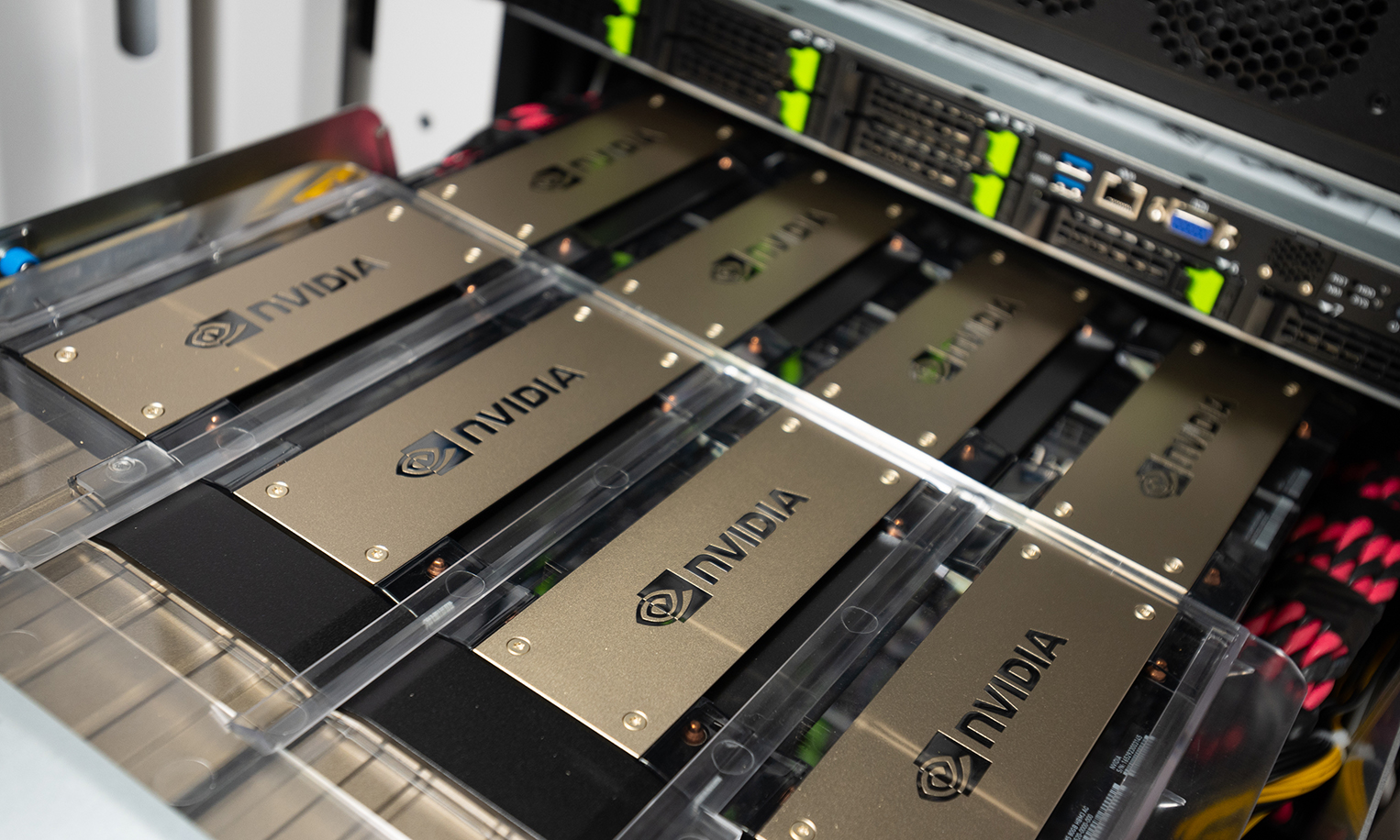
HPE and NVIDIA Collaborate on GenAI

The HPE Discover 2024 conference is currently in full swing, and the keynote address from Hewlett-Packard Enterprise (HPE) CEO Antonio Neri on Tuesday, June 18, was an unforgettable event. Other than being the first business keynote hosted at the Sphere near Las Vegas, Nevada, the keynote also unveiled an exciting new collaboration between NVIDIA and HPE.

Specifically, this partnership has culminated in the NVIDIA AI Computing by HPE portfolio of co-developed AI solutions to help enterprises accelerate the adoption of generative AI. By tightly integrating their technologies, NVIDIA’s leading AI technologies will be combined with the HPE partner network to bring the power of AI to enterprise customers on a massive scale.

A Keynote to Remember

The keynote itself from Neri was exciting in its own right, as it took full advantage of the enormous dome-like screen at the Sphere event center. Beginning with a host of gorgeous video clips of the natural world, Neri eventually walked onstage to thunderous applause. His first words set the tone for the rest of the speech:

“Big moments require big venues,” Neri said. “Welcome to my living room.”

The Sphere seems an appropriate venue for such a massive announcement. Credit: HPE

After an introductory talk discussing HPE’s history, Neri spoke on the “potential and promise of AI and catapult the enterprise of today and tomorrow to new heights.” This eventually led to Neri stating that NVIDIA has long been a “visionary partner who shares our purpose and commitment to innovation.” Following a list of past HPE-NVIDIA collaborations, Neri announced NVIDIA AI Computing by HPE and brought Jensen Huang onto the stage.

In his trademark black leather jacket, Huang oozed enthusiasm as he jogged onstage and almost immediately shouted “Go HP!” When looking at the collaboration, his excitement is understandable.

The NVIDIA AI Computing by HPE portfolio is packed full of useful tools, but one of the more key offerings is the HPE Private Cloud AI. Hailed by HPE as a “turnkey solution for every industry,” this cloud-based tool combines NVIDIA AI computing, networking, and software with HPE’s AI storage, compute, and the HPE GreenLake cloud platform.

The company offers support for inference, fine-tuning, and RAG AI workloads that utilize proprietary data. Potential buyers can expect enterprise control for data privacy, security, transparency, and governance requirements. The cloud experience has ITOps and AIOps capabilities to increase productivity, and the tool offers a fast path to consume energy flexibly to allow companies to meet future AI opportunities.

HPE Private Cloud AI provides a fully integrated AI infrastructure stack that includes NVIDIA Spectrum-X Ethernet networking, HPE GreenLake for file storage, and HPE ProLiant servers with support for NVIDIA L40S, NVIDIA H100 NVL Tensor Core GPUs, and the NVIDIA GH200 NVL2 platform to deliver optimal performance for the AI and data software stack.

Additionally, HPE is adding support for NVIDIA’s latest GPUs, CPUs, and Superchips. The HPE Cray XD670 supports eight NVIDIA H200 NVL Tensor Core GPUs, ideal for large language model (LLM) builders. The HPE ProLiant DL384 Gen12 server with NVIDIA GH200 NVL2 is tailored for LLM consumers using larger models or retrieval-augmented generation (RAG). The HPE ProLiant DL380a Gen12 server supports up to eight H200 GPUs, providing flexibility for scaling generative AI workloads. Additionally, HPE plans to support NVIDIA's upcoming GB200 NVL72/NVL2, Blackwell, Rubin, and Vera architectures.

Observability and AIOps are also provided to all HPE products and services through the integration of OpsRamp's IT operations with HPE GreenLake cloud. The whole NVIDIA accelerated computing stack, comprising NVIDIA NIM and AI software, NVIDIA Tensor Core GPUs and AI clusters, NVIDIA Quantum InfiniBand and NVIDIA Spectrum Ethernet switches, is now observable with OpsRamp. IT managers may monitor their workloads and AI infrastructure in hybrid and multi-cloud settings by gaining insights to spot irregularities.

Partners will begin quoting customers for HPE Private Cloud AI on July 8 and shipping begins in September.

Comparisons to the Dell Collaboration

Those who keep abreast of NVIDIA news may see some similarities between this partnership and a recently announced collaboration between NVIDIA and Dell. Both involve partnerships between enterprise infrastructure companies and NVIDIA to deliver integrated and optimized generative AI solutions for enterprises.

Credit: Dell Technologies and NVIDIA

Dell and NVIDIA’s partnership is meant to expand upon the Dell Generative AI Solutions portfolio, which includes the Dell AI Factory with NVIDIA. This is an integrated, end-to-end AI enterprise solution that combines Dell’s compute, storage, software, and services with NVIDIA’s AI infrastructure and software suite to support the full generative AI lifecycle. It is also available via traditional channels as well as Dell Apex.

This is one key difference between Dell AI Factory and HPE Private Cloud AI, as HPE is partnering with system integrators while Dell is leveraging its traditional channels.

Dell is also working to support new NVIDIA GPU models. The NVIDIA B200 Tensor Core GPU, which is anticipated to provide up to 15 times better AI inference performance and a reduced total cost of ownership, is one of the new NVIDIA GPU models that Dell PowerEdge XE9680 servers will support. Other GPUs based on the NVIDIA Blackwell architecture, H200 Tensor Core GPUs, and the NVIDIA Quantum-2 InfiniBand and Spectrum-X Ethernet networking platforms will also be supported by the Dell PowerEdge servers.

NVIDIA has established itself as the “kingmaker” in the AI industry, and its decision to deeply integrate its stack with these partners is a powerful endorsement. Collaborations such as these will be vital for enterprises to truly unlock the AI’s transformative potential.

Google Pay Will Thrive Only in India

Google recently announced that it will discontinue its standalone payments app, GPay, in the US starting June 4, 2024. However, users in India will see no changes, as Google continues to cater to the country’s specific needs.

The reason behind Google’s decision remains unknown, though industry speculation indicates that the goal may be to enhance user experience through streamlined operations and potentially reduce development costs.

Moreover, the US already has well-established card-based payment systems that are deeply ingrained in consumer habits and banking infrastructure.

Google Pay’s India Picture

Globally, more than 180 countries use Google Pay for online and in-store shopping. As per AltIndex.com data, GPay is more popular for payments in India and Poland than in the US or the UK. In India, eight out of ten consumers use GPay, which is three times more than in the US.

Source: X

Over the past five years, more than one billion people in India have started using mobile POS payments, bringing the total number of users to 1.6 billion in 2023. As one of the top five service providers in the market, Google Pay has played a significant role in the growth.

Source: AltIndex

UPI Fever in India Continues

In April 2024, addressing the ‘Viksit Bharat Ambassador’ event at GITA in Visakhapatnam, Finance Minister Nirmala Sitharaman mentioned that India recorded about 131 billion UPI transactions with a total value of ₹200 trillion in FY24.

As per the National Payments Corporation of India (NPCI) data, about 83.7 crore transactions worth ₹139 trillion were conducted through UPI in FY23.

As things stand, PhonePe (47%) and Google Pay (36.64%) have a nearly 84% share of the UPI market by volume (number of transactions), according to NPCI data. Paytm Payments Bank, which is a distant third, saw its market share fall after the Reserve Bank of India (RBI) imposed restrictions on it in January. The next two, Cred and Amazon Pay have a market share of less than 1% each.

US Always Has a UPI Problem

UPI has emerged as a transformative service in India’s financial landscape but the US faces significant hurdles in adopting a similar system.

The primary challenge lies in the dominance of card networks like Visa and Mastercard in the US. These companies wield substantial lobbying power, influencing policies to protect their market share and revenue.

For instance, when countries including India and Indonesia sought to develop domestic payment systems that could potentially compete with these global giants, US trade officials intervened to protect the interests of Visa and Mastercard.

Earlier in 2020, the US attempted to build an instant payment system with FedNow. It is very basic and can be compared to the RTGS system in India which was introduced in 2004. Moreover, FedNow’s model includes potential transaction fees for consumers which contrasts with UPI’s fee-free structure.

Additionally, cultural and market differences play an important role. Unlike India, where digital and card-based payment systems were not widely adopted initially, the US has a highly developed financial infrastructure with widespread debit and credit card usage. This makes it more challenging to introduce a new system that disrupts existing revenue models and consumer behaviours.

Expansion Continues

Though the US paints a not-so promising picture with GPay, UPI is increasingly being implemented in other countries. In March 2024, NPCI with RBI’s approval, launched NPCI International Payments Limited (NIPL) to expand usage of RuPay and UPI beyond India. This initiative enables Indian travellers to utilise RuPay cards and UPI for transactions in other countries.

Currently, UPI is operational in six countries including Bhutan, Mauritius, Singapore, Sri Lanka, UAE, and France.

When travelling to any of these countries or needing to make payments to merchants based there, one can just activate UPI international on PhonePe, Google Pay, or the BHIM app.

In a recent update, NIPL announced that Indian tourists can now buy tickets for the Eiffel Tower and pay via UPI. It has partnered with Lyra Network, a French leader in securing. It collaborated with Lyra Network, a French company specialising in secure e-commerce and payments, to introduce a UPI payment system in France, beginning with the Eiffel Tower.

Former OpenAI Chief Scientist Ilya Sutskever Starts His Own Company, Safe Superintelligence

Ilya Sutskever, former chief scientist at OpenAI, has announced the launch of his new company, Safe Superintelligence Inc. (SSI). “I am starting a new company,” he posted on X.

I am starting a new company: https://t.co/BG3K3SI3A1

— Ilya Sutskever (@ilyasut) June 19, 2024

The company, headquartered in Palo Alto with offices in Tel Aviv, is led by Sutskever, entrepreneur and investor Daniel Gross, and former OpenAI employee Daniel Levy. Gross previously co-founded the AI startup Cue, which Apple acquired in 2013 for $40-60 million.

SSI has established the world’s first lab dedicated solely to developing safe superintelligence. The company’s mission is clear: to build a safe superintelligence.

“We will pursue safe superintelligence in a straight shot, with one focus, one goal, and one product. We will do it through revolutionary breakthroughs produced by a small cracked team,” said Sutskevar.

The company emphasises that safety and capabilities will be addressed simultaneously as technical problems requiring revolutionary engineering and scientific breakthroughs. SSI aims to advance capabilities rapidly while ensuring that safety remains paramount.

With a business model insulated from short-term commercial pressures, SSI is designed to maintain focus on safety, security, and progress, allowing for efficient scaling without distractions from management overhead or product cycles.

SSI is currently recruiting top engineers and researchers to join their lean team dedicated to this singular mission. The company’s commitment to SSI aligns all aspects of their operations, from team composition to investor relations.

Safe Superintelligence Inc. invites those interested in addressing what they deem the most important technical challenge of our time to join their efforts.

Sutskever left OpenAI last month, where he was succeeded by Jakub Pachocki. Last year, reports surfaced that Sutskever was concerned about AGI safety and the rapid pace at which OpenAI was advancing, leading to tensions with OpenAI chief Sam Altman.

On November 17, 2023, Sutskever and other board members fired Altman. However, by November 21, 2023, the board’s decision was reversed, and Altman was reinstated as CEO. Sutskever publicly expressed regret for his role in the coup, stating that he never intended to harm OpenAI and deeply regretted his participation in the board’s actions.

This Week in AI: Generative AI is spamming up academic journals

Hiya, folks, and welcome to TechCrunch’s regular AI newsletter. This week in AI, generative AI is beginning to spam up academic publishing — a discouraging new development on the disinformation front. In a post on Retraction Watch, a blog that tracks recent retractions of academic studies, assistant professors of philosophy Tomasz Żuradzk and Leszek Wroński […]

© 2024 TechCrunch. All rights reserved. For personal use only.

NVIDIA Showcases Advancements in Visual GenAI at 2024 CVPR

NVIDIA, a global leader in GPU and AI technology, is making rapid advancements in the field of visual generative AI. The company’s researchers are exploring new technologies to create and interpret visual content, such as images, videos, and 3D models.

Using machine learning models and advanced image processing techniques, GenAI can generate new visual data that is indistinguishable from content created by humans. NVIDIA is showcasing more than 50 of its visual GenAI projects at the 2024 Computer Vision and Pattern Recognition (CVPR) conference, taking place in Seattle, WA, from June 17th to 21st.

CVPR, organized by the IEEE (Institute of Electrical and Electronics Engineers), is regarded as one of the most significant and prestigious conferences in the fields of computer vision and pattern recognition.

NVIDIA’s visual GenAI research covers a wide range of applications including domain-specific innovations for industries including healthcare, autonomous vehicles, and robotics. Two of NVIDIA’s projects, one focusing on the training dynamics of diffusion models and the other on high-definition mapping for autonomous vehicles, have been chosen as finalists for CVPR’s Best Paper Awards.

“Artificial intelligence, and generative AI in particular, represents a pivotal technological advancement,” said Jan Kautz, vice president of learning and perception research at NVIDIA. “At CVPR, NVIDIA Research is sharing how we’re pushing the boundaries of what’s possible — from powerful image generation models that could supercharge professional creators to autonomous driving software that could help enable next-generation self-driving cars.”

Building on last year’s win in 3D Occupancy Prediction, NVIDIA won this year's CVPR Autonomous Grand Challenge for End-to-End Driving, outperforming more than 450 entries from around the globe. This milestone demonstrates NVIDIA’s pioneering work in using AI for developing autonomous self-driving vehicle models. The achievements of NVIDIA in this project earned it a CVPR Innovation Award.

At CVPR, NVIDIA also introduced NVIDIA Omniverse Cloud Sensor RTX, a set of microservices that enable physically accurate sensor simulation to accelerate the development of fully autonomous machines of every kind.

One of NVIDIA’s standout papers, JeDI, was also showcased at the event. This paper proposes a new technique that allows users to easily personalize the output of diffusion models in just a few seconds using reference images. Researchers from Johns Hopkins University, Toyota Technological Institute, and NVIDIA collaborated on this paper to develop a model that significantly outperforms existing fine-tuning models. This breakthrough can help users create specific character depictions or product visuals.

NVIDIA researchers also presented the FoundationPose, a unified foundation model for object pose estimation and tracking. This model can use a small set of reference images or a 3D representation of an object to understand its shape and to predict how the object moves and rotates in 3D, without the need for fine-tuning. The findings of this research could play a key role in further advancements in autonomous robots and augmented reality applications.

Developed by researchers from the University of Illinois Urbana-Champaign and NVIDIA, NeRFDeformer was also showcased at the CVPR. The NeRFDeformer uses a novel method to edit the 3D scene captured by a Neural Radiance Field (NeRF) using a single 2D snapshot, rather than having to manually redefine how the scene has transformed or recreate the NeRF from scratch. This advancement holds significant potential for applications that rely on dynamic 3D modeling.

In collaboration with the Massachusetts Institute of Technology (MIT), NVIDIA also introduced VILA, a state-of-the-art visual language model (VLM) that can understand and process both images and text. VILA significantly improves upon existing VLMs by addressing several limitations including slow inference speeds, lack of in-context learning, and use of only single images.

As many as a dozen papers by NVIDIA at the CVPR focused on autonomous vehicle research. Some of the other prominent papers presented by NVIDIA at 2024 CVPR included the largest-ever indoor synthetic dataset for the AI City Challenge. This will help in the development of smart city solutions and industrial automation.

Related Items

Google Extends Vertex with More GenAI Features

DataRobot ‘Guard Models’ Keep GenAI on the Straight and Narrow

Anthropic Launches Tool Use, Making It Easier To Create Custom AI Assistants

‘Amber’ is Here to Take on ‘Bash Scripting’

In the world of shell scripting, Bash has long been the go-to language for automating tasks and glueing together various command-line tools. However, Bash’s quirks and limitations have left many developers yearning for a more modern and expressive alternative.

Enter Amber, a new programming language that compiles to Bash, bringing the power of high-level programming to the realm of shell scripting.

“Amber is not a wrapper of Bash as implementing new data types and error handling won’t be possible using a wrapper“ said X in an exclusive interaction with AIM.

High-Level Scripting Language

Though Amber operates similar to Bash, it is designed for frequent command execution.

“Amber provides built-in error handling capabilities, making it easier to write robust scripts,” said Karaś.

The new programming language is designed specifically for the scripting style where executing external commands and manipulating their results is integral.

In Python, executing a command and capturing its output requires several lines of code and explicit error handling. Amber, on the other hand, provides a concise and intuitive syntax for command execution, along with built-in error handling capabilities.

One of the standout features of Amber is its focus on runtime safety. Almost all operations available in the Amber language are safe.

The exceptions are commands that refer to the Bash shell, which can fail, and failing functions that can fail at any time through error propagation or by explicitly using the fail keyword.”

Amber requires developers to handle errors whenever a command or failing function is called. This can be done by propagating the error upwards, handling it in a dedicated failed block, or marking the command as unsafe if the developer is certain it will succeed.

“This approach ensures that scripts written in Amber are more robust and less prone to unexpected failures,” Karaś emphasised.

Long Way to Go

One concern among potential Amber users is the performance impact compared to vanilla Bash. As there’s no way to handle float values in Bash, Amber has to rely on bc a calculator for Bash, which means that Amber requires running an external program every time to perform an arithmetic operation.

The team behind Amber is planning to create a new type of data called Int that will use Bash’s built-in ability to do math with whole numbers (integers). As Bash can’t handle decimals, they will also look into better ways to deal with Num, which is the data type Amber uses for numbers with decimals.

Meanwhile, Amber’s syntax has raised some eyebrows, particularly the use of > instead of # for comments. Karaś clarified the reasoning behind this choice, stating, “Amber is a language designed to resemble the syntax of ECMAScript, where comments start with //

The idea behind this choice is to give users the feeling of writing in a language that looks familiar. This decision aligns with Amber’s goal of providing a modern and intuitive programming experience for Bash scripting.

A Reddit user asked why Amber is not directly compatible with POSIX shell, which is a standardised command-line interface and scripting language that ensures compatibility and portability across different Unix and Unix-like operating systems, especially in the era of the minimal container images where POSIX shell can have the lightest posix-compliant shell possible.

“We are considering creating a compilation flag for maximum compatibility, such as --output=sh,” Karaś explained. “Amber would then return errors when syntax unavailable for the given format is used. This idea is being developed and may evolve into a better solution.”

Karaś also touched on Amber’s ability to handle spaces in file names, a common pain point in Bash scripting. He assured us that Amber’s outputted code will soon be Shellcheck verified, ensuring proper handling of file paths and other string interpolations.

As promising as Amber’s potential seems, one must remember that it is still in the alpha stage, and it is not recommended for use on production servers. Improvements are still being made and developers are currently working on a standard library so as to not worry about interpolating file path to open a file.

GPT-4 Proves AI’s Advancements By Passing The Turing Test 

In the digital age, our interactions with AI have become increasingly frequent and often go unnoticed. This has led researchers to investigate the extent to which AI can impersonate human-like intelligence, prompting them to conduct a modern-day Turing test.

The Turing test, initially proposed as “the imitation game” by computer scientist Alan Turing in 1950, evaluates a machine’s ability to exhibit intelligence that is indistinguishable from a human. For a machine to pass this test, it must be able to engage in conversation with a person and successfully convince them into believing it is human.

In this study, researchers recruited 500 participants to converse with four different respondents, including a human, the 1960s-era AI program ELIZA, and two advanced AI models, GPT-3.5 and GPT-4.

The results of the study, published on May 9 to the preprint arXiv server, revealed that participants identified GPT-4 as human 54% of the time.

The Chatbot of the 1960s

In contrast, ELIZA, a system pre-programmed with responses but lacking a large language model (LLM) or neural network architecture, was perceived as human in only 22% of the interactions. GPT-3.5 scored 50%, while the human participant was correctly identified as human 67% of the time.

“Machines can confabulate, mashing together plausible ex-post-facto justifications for things, as humans do,” said Nell Watson, an AI researcher at the Institute of Electrical and Electronics Engineers (IEEE).

“They can be subject to cognitive biases, bamboozled and manipulated, and are becoming increasingly deceptive. All these elements mean human-like foibles and quirks are being expressed in AI systems, which makes them more human-like than previous approaches that had little more than a list of canned responses.”

The First Step Towards Human-Like AI Conversations

Watson added that the study represented a challenge for future human-machine interaction and that we will become increasingly paranoid about the true nature of interactions, especially in sensitive matters. She added the study highlights how AI has changed during the GPT era.

“ELIZA was limited to canned responses, which greatly limited its capabilities. It might fool someone for five minutes, but soon the limitations would become clear,” she said.

“Language models are endlessly flexible, able to synthesize responses to a broad range of topics, speak in particular languages or sociolects and portray themselves with character-driven personality and values. It’s an enormous step forward from something hand-programmed by a human being, no matter how cleverly and carefully.”

Industrial AI: A Critical Tool for Complex Energy Systems

From oil and gas to power and utilities, energy companies around the globe have seen their businesses become more complex as the world works to navigate the energy transition. To better manage those changes, many have turned to a wide range of digital tools, including artificial intelligence (AI).

When it comes to the energy industries, however, not all AI is the same.

Asset-intensive companies – especially energy companies – are turning to what’s considered “industrial AI.” Industrial AI is built for the intricacies of complex energy systems and is equipped with specific guardrails designed to ensure it behaves in predictable ways. Industrial AI doesn’t take unexpected actions that might damage equipment or put workers and the community at risk.

For companies that properly apply industrial AI, the benefits are often significant.

Optimizing sustainability efforts

While there are many areas where AI can benefit the energy industries, one of the most important is helping companies embrace the energy transition.

In recent years, AI has been used to help utilities forecast renewable energy production, allowing operators to plan for when and how to switch to traditional generation sources if renewable production fluctuates as the weather changes. AI forecasting allows operators to better balance the grid and ensure operations remain stable while also bringing new renewable generation sources online.

The energy industry is also using AI to replace outdated and manual processes for emission monitoring, instead using automation to identify, and remediate, areas of excess emissions or leaks across plants. AI can also be used to help model and select new sustainability pathways, like hydrogen & carbon capture, as the energy industry accelerates progress toward net zero goals. By helping to make accurate predictions of the technical and economic feasibility of a new sustainability project, AI has proven to be a useful tool to mitigate risk and lower CAPEX & OPEX.

Tracking equipment health

Industrial AI can even help companies more precisely understand the condition of their assets and adjust operations to ensure they don’t over-stress equipment or undergo an unexpected breakdown.

Electrical grid operators use AI tools to track the condition of transformers, which typically degrade over time due to partial discharge and other issues. Overloading transformers can accelerate that process, so utilities use AI tools to monitor the status and health of each transformer. This allows operators to efficiently schedule maintenance, extending the life of equipment while also avoiding potentially costly breakdowns. If energy systems do break down, utility operators could turn to industrial AI tools to automatically optimize repair crew schedules based on different criteria.

In the example of an oil & gas company, predictive & prescriptive maintenance backed by AI uses vast amounts of data to monitor critical assets at refineries. It learns patterns of behavior and alerts the organization to impending failure, which could also release excess emissions into the atmosphere, so they can remediate the situation before it happens.

Why guardrails are critical for industrial AI

Certainly, it’s easy to find ways industrial AI can improve or optimize operations for energy companies, from reliably automating systems to identifying the most efficient way to pursue new sustainability pathways.

As they take on those challenges, however, it is critical industrial AI systems have built-in guardrails that ensure they don’t produce confusing or incorrect results that might damage assets. One of the clearest examples of why those guardrails are needed can be found in advanced process control (APC) technology. Traditional APC systems are built around static models, continuously applying the same solutions until an operator manually changes it. Industrial AI allows systems to dynamically optimize processes as conditions change, resulting in significantly improved outcomes.

Allowing AI systems to make those changes automatically, however, opens the door to significant risks if the algorithm makes the wrong decision. By building guardrails into the system – such as mandating operator intervention in some situations or restricting an algorithm’s possible responses – operators can trust that the AI won’t accidentally trigger a runaway process that could damage equipment or lead to other problems.

In other cases, those guardrails play a key role in ensuring plant operations run efficiently. Without guardrails, AI models could inadvertently violate laws of physics when optimizing poor-performing processes. Thus, the AI would propose infeasible solutions that are not optimal and potentially cause large production losses.

As they look ahead, energy companies are facing a period of unprecedented uncertainty. How the world will adapt to the energy transition, what the energy mix of the future will look like and how decarbonization efforts will go forward are all – to some degree – open questions.

Industrial AI represents a powerful tool that can help companies make sense of those questions. It will take careful management and planning, but when properly applied, AI will be key in making the energy economy of the future a reality.

Heiko Claussen is Senior Vice President at Aspen Technology, leading the AI Shared Services group. As part of the Technology organization, Heiko is responsible for Industry 4.0 strategy, AI research, and shared services to foster synergies and innovation throughout the company. Prior to Aspen Technology, he was Head of Autonomous Machines and Principal Key Expert of AI at Siemens and led initiatives to enable autonomous machine applications for factory automation. During his 15-year tenure at Siemens, Heiko worked in many areas related to AI and digitization, including remote monitoring, machine learning, robotics, pattern recognition and statistical signal processing. Heiko is a recipient of numerous technical awards and recognitions.

He has been named Inventor of the Year twice at Siemens – in 2016 for the development of a virtual sensor to monitor the flame status of gas turbines, and in 2019 for the development of a neural net accelerator for industrial control systems. He is also the author of over 100 registered inventions with 67 granted/published patents. Heiko holds a Ph.D. degree in Electrical Engineering from the University of Southampton, UK; a master’s degree in Electrical Engineering from the University of Ulster, UK; and a Dipl.-Ing degree in Electrical Engineering from the University of Applied Sciences Kempten, Germany.

E2E Networks Receives Cloud Service Provider Empanelment from MeitY

E2E Networks has announced receiving Cloud Service Provider (CSP) empanelment from India’s Ministry of Electronic and Information Technology (MeitY).

MeitY empanelment is a crucial requirement for the procurement of Cloud Services by Public Sector Units (PSUs), nationalised banks, financial institutions, and various government agencies, autonomous institutions, statutory bodies under the Government of India, as well as state, union territory, and local governments across India.

Founded in 2009, E2E Networks has been a dominant player in the cloud services market, offering advanced cloud GPUs, high-end compute services and containers, storage services such as Block and Object storage, DBaaS (Database As a Service), and Networking services at market-beating prices to startups, businesses and educational institutions. Now, it has completed MeitY’s STQC (Standardisation Testing and Quality Certification) audit.

MeitY provides guidelines for CSPs to empanel (or, register) their services with the Government of India. Once empaneled, CSPs can do business as per the Guidelines for Procurement of Cloud Services. An independent auditor appointed by the government, the STQC Directorate, has performed the audit and MeitY has issued a letter confirming E2E Networks’s empanelment.

“Today’s announcement of MeiTY empanelment presents a plethora of opportunities for us to assist India’s government agencies and public sector organizations in expediting their digital transformation, as over 3,000 customers have already reaped the benefits of E2E Cloud Infrastructure. We are dedicated to the expansion of our team in order to accommodate the substantial growth of our public sector business,” Tarun Dua, Managing Director of E2E Networks, said.

The NSE-listed cloud infrastructure provider also offers Graphics Processing Units (GPUs) to Indian customers at an affordable price. In an earlier interaction with AIM, Dua said that around 10-15% of the 100 startup unicorns in India were born in the E2E cloud.

Beginner’s Guide to Machine Learning Testing With DeepChecks

Beginner’s Guide to Machine Learning Testing With DeepChecks cover image
Image by Author | Canva

DeepChecks is a Python package that provides a wide variety of built-in checks to test for issues with model performance, data distribution, data integrity, and more.

In this tutorial, we will learn about DeepChecks and use it to validate the dataset and test the trained machine learning model to generate a comprehensive report. We will also learn to test models on specific tests instead of generating full reports.

Why do we need Machine Learning Testing?

Machine learning testing is essential for ensuring the reliability, fairness, and security of AI models. It helps verify model performance, detect biases, enhance security against adversarial attacks especially in Large Language Models (LLMs), ensure regulatory compliance, and enable continuous improvement. Tools like Deepchecks provide a comprehensive testing solution that addresses all aspects of AI and ML validation from research to production, making them invaluable for developing robust, trustworthy AI systems.

Getting Started with DeepChecks

In this getting started guide, we will load the dataset and perform a data integrity test. This critical step ensures that our dataset is reliable and accurate, paving the way for successful model training.

  1. We will start by installing the DeepChecks Python package using the `pip` command.
!pip install deepchecks --upgrade
  1. Import essential Python packages.
  2. Load the dataset using the pandas library, which consists of 569 samples and 30 features. The Cancer classification dataset is derived from digitized images of fine needle aspirates (FNAs) of breast masses, where each feature represents a characteristic of the cell nuclei present in the image. These features enable us to predict whether the cancer is benign or malignant.
  3. Split the dataset into training and testing using the target column 'benign_0__mal_1'.
import pandas as pd  from sklearn.model_selection import train_test_split    # Load Data  cancer_data = pd.read_csv("/kaggle/input/cancer-classification/cancer_classification.csv")  label_col = 'benign_0__mal_1'  df_train, df_test = train_test_split(cancer_data, stratify=cancer_data[label_col], random_state=0)
  1. Create the DeepChecks dataset by providing additional metadata. Since our dataset has no categorical features, we leave the argument empty.
from deepchecks.tabular import Dataset    ds_train = Dataset(df_train, label=label_col, cat_features=[])  ds_test =  Dataset(df_test,  label=label_col, cat_features=[])
  1. Run the data integrity test on the train dataset.
from deepchecks.tabular.suites import data_integrity    integ_suite = data_integrity()  integ_suite.run(ds_train)

It will take a few second to generate the report.

The data integrity report contains test results on:

  • Feature-Feature Correlation
  • Feature-Label Correlation
  • Single Value in Column
  • Special Characters
  • Mixed Nulls
  • Mixed Data Types
  • String Mismatch
  • Data Duplicates
  • String Length Out Of Bounds
  • Conflicting Labels
  • Outlier Sample Detection

data validation report

Machine Learning Model Testing

Let’s train our model and then run a model evaluation suite to learn more about model performance.

  1. Load the essential Python packages.
  2. Build three machine learning models (Logistic Regression, Random Forest Classifier, and Gaussian NB).
  3. Ensemble them using the voting classifier.
  4. Fit the ensemble model on the training dataset.
from sklearn.linear_model import LogisticRegression  from sklearn.naive_bayes import GaussianNB  from sklearn.ensemble import RandomForestClassifier  from sklearn.ensemble import VotingClassifier    # Train Model  clf1 = LogisticRegression(random_state=1,max_iter=10000)  clf2 = RandomForestClassifier(n_estimators=50, random_state=1)  clf3 = GaussianNB()    V_clf = VotingClassifier(      estimators=[('lr', clf1), ('rf', clf2), ('gnb', clf3)],      voting='hard')    V_clf.fit(df_train.drop(label_col, axis=1), df_train[label_col]);
  1. Once the training phase is completed, run the DeepChecks model evaluation suite using the training and testing datasets and the model.
from deepchecks.tabular.suites import model_evaluation    evaluation_suite = model_evaluation()  suite_result = evaluation_suite.run(ds_train, ds_test, V_clf)  suite_result.show()

The model evaluation report contains the test results on:

  • Unused Features — Train Dataset
  • Unused Features — Test Dataset
  • Train Test Performance
  • Prediction Drift
  • Simple Model Comparison
  • Model Inference Time — Train Dataset
  • Model Inference Time — Test Dataset
  • Confusion Matrix Report — Train Dataset
  • Confusion Matrix Report — Test Dataset

There are other tests available in the suite that didn't run due to the ensemble type of model. If you ran a simple model like logistic regression, you might have gotten a full report.

model evaluation report DeepChecks

  1. If you want to use a model evaluation report in a structured format, you can always use the `.to_json()` function to convert your report into the JSON format.
suite_result.to_json()

model evaluation report to JSON output

  1. Moreover, you can also save this interactive report as a web page using the .save_as_html() function.

Running the Single Check

If you don't want to run the entire suite of model evaluation tests, you can also test your model on a single check.

For example, you can check label drift by providing the training and testing dataset.

from deepchecks.tabular.checks import LabelDrift  check = LabelDrift()  result = check.run(ds_train, ds_test)  result

As a result, you will get a distribution plot and drift score.

Running the Single Check: Label drift

You can even extract the value and methodology of the drift score.

result.value
{'Drift score': 0.0, 'Method': "Cramer's V"}

Conclusion

The next step in your learning journey is to automate the machine learning testing process and track performance. You can do that with GitHub Actions by following the Deepchecks In CI/CD guide.

In this beginner-friendly, we have learned to generate data validation and machine learning evaluation reports using DeepChecks. If you are having trouble running the code, I suggest you have a look at the Machine Learning Testing With DeepChecks Kaggle Notebook and run it yourself.

Abid Ali Awan (@1abidaliawan) is a certified data scientist professional who loves building machine learning models. Currently, he is focusing on content creation and writing technical blogs on machine learning and data science technologies. Abid holds a Master's degree in technology management and a bachelor's degree in telecommunication engineering. His vision is to build an AI product using a graph neural network for students struggling with mental illness.

More On This Topic

  • Hypothesis Testing and A/B Testing
  • A/B Testing: A Comprehensive Guide
  • A Beginner's Guide to End to End Machine Learning
  • Essential Machine Learning Algorithms: A Beginner's Guide
  • A Beginner's Guide to the Top 10 Machine Learning Algorithms
  • Beginner’s Guide to Machine Learning with Python