Google’s Next ‘Attention is All You Need’ Moment

Google Research has published a paper arguing that many of today’s assumptions about deep learning are incomplete or misleading.

The authors introduced a new framework called Nested Learning (NL), which reframes how neural networks store information, learn from data and adapt over time. They claim this approach may explain why current AI systems hit limits and how future models could move beyond them.

Deep learning models are usually described as layers stacked on top of each other, each performing its own transformation. Google’s researchers argue that this picture hides what is actually happening inside these systems.

According to the paper, a neural network is better viewed as a collection of multiple optimisation processes, each with its own internal memory, learning behaviour and update rate.

They write that NL “coherently represents a model with a set of nested, multi-level, and/or parallel optimisation problems” each receiving and compressing its own flow of context. In other words, instead of one big learner, a model is a system of smaller learners operating at different speeds and levels.

The paper has already sparked strong reactions in the AI community.

“Al is constantly improving and the speed is accelerating. Google just dropped “Attention Is All You Need (V2)” — and it might finally fix catastrophic forgetting,” posted Pawel Czech, founder of lablab.ai on X.

Why Transformers Hit a Wall

Transformers can process vast data and generate strong outputs, but the paper says they hit a core limit because they stop learning once pre-training ends. After training, their long-term memory becomes fixed in their weights, and new information can’t be absorbed unless the model is retrained.

This is in line with what Safe Superintelligence Inc. (SSI) co-founder Ilya Sutskever said in his recent podcast with Dwarkesh Patel, where he argued that the traditional scaling recipe is approaching its limits. “At some point, pre-training will run out of data. The data is very clearly finite,” he said. He added that while increasing compute would certainly help, it would not fundamentally solve the bottleneck.

This is why, in his view, the industry is transitioning into a new phase.
“So it’s back to the age of research again, just with big computers,” Sutskever said.

Coming back to Google’s paper, the authors compared the limitation of pre-training to anterograde amnesia, a condition in which a person cannot form new long-term memories after a certain event or injury. In the same way, the model operates only with what fits inside its context window and whatever information was stored in its weights before training ended. Anything learned during a conversation or new task disappears as soon as the context resets.

The researchers argue that this creates a rigid system that cannot adapt or continually learn, regardless of how many layers or parameters are added.

But, theory is only one part of the story. Mohammed Arsalan, generative AI consultant at T-Systems ICT India, told AIM that Nested Learning can run on today’s infrastructure, but it won’t be plug-and-play. “It will need extra engineering effort and smarter compute management,” he said, adding that the multi-level update frequencies make it more complex than standard training.

Self-Modifying Models and HOPE

Building on NL, the team introduces a self-modifying sequence model that “learns how to modify itself by learning its own update algorithm.” They then combine this idea with a Continuum Memory System, which assigns different MLP blocks to different update frequencies.

The resulting architecture, HOPE, updates parts of itself at different rates and incorporates a deeper memory structure compared to Transformers. HOPE’s performance on common-sense reasoning and language modelling benchmarks shows improvements over Transformer++, RetNet, DeltaNet and Titans at certain scales.

“The HOPE model is still [in the] proof-of-concept stage, so while it doesn’t need a completely new stack, real-world deployment will definitely require upgrades to handle the continuum memory systems efficiently,” said Arsalan. According to him, it will take around two-three years to become practical.

Similarly, Adithya S Kolavi, research fellow at Microsoft, told AIM that in terms of infrastructure, it should fit into current training stacks with new scheduling logic added on top. “Something like an integration into the Hugging Face trainer, or TRL, seems realistic since inference itself does not change,” he said.

Haiyu Wu, PhD, research scientist at Altos Labs, said in a post on X that the Nested Learning paper “elegantly reformulates the training paradigm” and highlights two core ideas. The first is treating the optimiser’s momentum as its own learning task — one that adapts based on a “local surprise signal,” or the gap between the learned momentum and the actual gradient.

Second, he explained that using different weight-update frequencies allows the model to build both long-term and short-term memory, a structure inspired by how the human brain functions.

Whether NL becomes practical soon or not, it marks an important step in exploring new directions for AI systems, especially as the field looks beyond scaling and begins searching for more adaptive, memory-rich architectures.

The post Google’s Next ‘Attention is All You Need’ Moment appeared first on Analytics India Magazine.

Skyflow Launches DPDP Data Privacy Vault to Help Indian Enterprises Meet New Rules

Skyflow has introduced a new DPDP Data Privacy Vault Platform for Indian enterprises as the country begins implementing the Digital Personal Data Protection (DPDP) Act. The company says the platform is built to help organisations protect personal data, govern its use, and adopt AI within the law’s technical requirements.

The DPDP Rules, notified on November 13, 2025, give companies 18 months to comply. Penalties can go up to ₹250 crore per violation, placing pressure on enterprises to overhaul data protection systems.

Skyflow says its new platform centralises and isolates sensitive personal data to address what it calls “personal data sprawl,” a growing problem as data moves across apps, logs, data lakes, SaaS tools and AI workflows.

A 2024 Protiviti–CII survey found that only 24% of Indian organisations felt prepared for new privacy challenges.

The platform introduces controls such as polymorphic encryption, format-preserving tokenisation, masking and obfuscation to secure data across its lifecycle. It also includes purpose-based access controls, retention governance, audit-ready logs, and tools to enforce consent updates and data principal rights.

Skyflow says the system also supports analytics and AI model training through entity-preserving tokens without exposing raw personal data.

“India has 1.4 billion people and will soon have 1.4 trillion agents with AI,” said Anshu Sharma, CEO and co-founder of Skyflow. “Protecting the personal data of 1.4 billion people requires purpose-built infrastructure and architecture, not incremental fixes.”

Industry leaders say the DPDP rules will push companies to rethink data governance. “The notification of the DPDP Rules marks a pivotal moment in India’s data privacy and governance landscape,” said Murali Rao, senior partner and leader, cybersecurity consulting, EY India. He added that organisations must operationalise privacy vaults and dynamic access controls to manage personal data with accountability.

Early adopters say the vault model is helping both compliance and trust.

“Skyflow enables us to meet compliance requirements while ensuring our customers’ personal data is handled with the highest standards of security,” said Ashutosh Sharma, GM strategy and product ops at Urbanic.

With the compliance window now active, Skyflow says organisations that shift to a privacy vault architecture will be better positioned to participate in India’s expanding AI economy.

The post Skyflow Launches DPDP Data Privacy Vault to Help Indian Enterprises Meet New Rules appeared first on Analytics India Magazine.

Why Nano GCCs are the Future of Global Capability Centres

The future of global capability centres (GCCs) is no longer anchored in scale, but in specialisation, resilience and the ability to build high-density talent hubs that directly power an enterprise’s most mission-critical work. This shift has led to the establishment of nano GCCs, a new construct that is rapidly gaining momentum.

Nano GCCs are capability-rich, leadership-heavy hubs, typically housing 50 to 150 skilled experts who work on advanced domains that demand precision, confidentiality, regulatory alignment and higher intellectual capital. These units are emerging as an alternative to the traditional large-format centres that have so far defined India’s GCC landscape.

This new form factor represents the evolution of a model that has matured beyond its cost-first origins. “India has long lost its value as a cost arbitrage centre,” said Pancham Taneja, country head at Delta Capita, at the MachineCon GCC Summit 2025, held from November 29 to December 1 in Goa.Taneja said that the differentiation today comes from capability density, speed of execution, and the ability to run sensitive, high-impact work within India’s talent ecosystem.

Nano GCCs embody this trajectory by functioning as tightly curated centres of excellence in fields such as chip design, cyber and identity security, automotive functional safety, AI governance, telecom RAN and 5G security, risk and model validation, and clinical data science. In these domains, expertise matters far more than volume and governance is as critical as delivery.

The Need for Nano GCCs

This shift toward smaller and more sovereign teams is driven by global forces that are reshaping how enterprises operate in an age marked by AI acceleration, geopolitical unpredictability and rising regulatory scrutiny. As the world moves from globalisation to what many now call “multi-local resilience”, organisations no longer want single, monolithic offshore centres. They seek distributed, risk-diverse capability hubs that can operate as autonomous, compliant and secure units, especially for data-sensitive or regulation-controlled work.

Nano GCCs meet this need by offering the agility and governance intensity that large centres often struggle to maintain. They provide environments that can accelerate innovation while reducing operational exposure.

This transition is reinforced by the impact of AI on talent models. As automation absorbs repetitive and transactional work, enterprises are asking not “how many people do we have?” but “how skilled can our people be?” The answer increasingly points to smaller, high-calibre teams capable of orchestrating AI, validating AI systems, and embedding responsible and compliant AI practices across the enterprise.

In this context, nano GCCs are strategically positioned to become the command centres for AI governance and AI-powered transformation as they allow leaders to maintain tight oversight of data flows, model risk, regulatory compliance, and safety frameworks. “The GCCs of the future will be the governance and predictability backbone of the enterprise,” Taneja explained.

Tier 2 Destinations for Nano GCCs

Nano GCCs, with their scale of control and concentration of expertise, are uniquely suited to carry this mantle. Tier 2 destinations such as Mangaluru, Mysuru, Coimbatore, Vizag, Kochi and Jaipur are emerging as credible, talent-rich, low-attrition hubs that support companies seeking diversification and continuity without the pressure of metro-level attrition or competition.

As Nano GCCs do not require thousands of hires, these cities offer the perfect environment for building deeply specialised teams, enabling companies to assemble the apt 100 people, rather than chase the next 1,000.

In compliance-heavy sectors like BFSI, healthcare, automotive, aerospace and telecom, sensitive operations must be run in secure pods, and outsourcing is either risky or prohibited. The nano GCC model allows enterprises to create restricted-capability pods with tight command structures, controlled knowledge systems, and leadership visibility that cannot be achieved at scale.

This is especially important as regulators across the US, EU and APAC increasingly demand transparency, traceability and accountability in how global operations are run, particularly when AI, data, risk and safety are involved.

With compact teams, high governance intensity and controlled operating models, Nano GCCs ensure compliance is baked into the centre’s architecture.

The advantages they offer are striking. High talent density results in higher innovation velocity, distributed design reduces geopolitical and operational risk, specialised teams allow faster capability incubation, tight leadership bandwidth ensures stronger culture and accountability, and the distributed model enhances global resilience by preventing any single location from becoming a point of failure.

Perhaps the most powerful aspect of nano GCCs is their ability to scale capability without scaling cost or complexity, offering global enterprises a future-ready operating system that is lean, intelligent and governance-aligned.

In many ways, Taneja believes the nano GCC is the perfect response to the pressures and possibilities of the next decade—agile, valuable and structured enough to remain compliant in an increasingly regulated world.

He said that as large enterprises rethink their global footprints, the next phase of the GCC story will not be defined by mega campuses alone. A constellation of small, powerful nodes distributed across India, each driving a specific, high-value capability with intensity and precision, will define the next phase, he added.

These centres will serve as the strategic backbone of global operations and innovation, enabling companies to build resilient, domain-rich, governance-anchored networks, rather than depend on monolithic structures.

Ultimately, nano GCCs represent the shift from efficiency to expertise, from volume to value, and from scale to specialisation.

The post Why Nano GCCs are the Future of Global Capability Centres appeared first on Analytics India Magazine.

AI Redefining Compliance Verification for India’s Gig Economy

India’s gig and quick-commerce sectors have surged to nearly 12 million workers in FY 2024–25, up from 7.7 million in 2020–21. It is expected to double by 2030, according to industry estimates. With blue-collar gig hiring rising 92% in 2024, delivery and mobility platforms are onboarding workers faster than their compliance teams can process them.

The rapid hiring cycle has raised concerns about safety, fraud, and identity-based risks, pushing companies toward AI-led verification that can validate identities, detect anomalies, and monitor compliance in real time. However, adoption remains uneven, creating significant vulnerabilities in a workforce that underpins India’s hyperlocal economy.

Companies like Melento (formerly SignDesk), Ongrid and Unstop are showcasing how AI is changing compliance and verification workflows and why digital maturity remains a bigger challenge.

The Push to AI-Native Compliance

Melento, a compliance-focused platform that processes over 50 million documents annually across banks, NBFCs, and large corporations, has seen AI reshape its contract management engine.

The company’s founder and CEO, Krupesh Bhat, said AI now performs the first layer of contract reviews. “It helps identify the template and runs the first review based on the playbook that’s created. It does redlining, highlights risks in contracts, and even tracks milestones and deliverables,” he said.

Bhat added that AI can automate complex actions, such as alerting teams, processing payments, or generating legal notices. Yet the hesitation does not come from the fear of AI. “Clients don’t fear AI, they just want clarity on its purpose, boundaries and oversight,” he said.

The regulatory landscape contributes to that uncertainty. There is still no consistent rulebook for gig-worker compliance, and state-wise enforcement is fragmented. Instead, the sector is informally guided by emerging principles such as algorithmic accountability, fairness in worker classification, transparent decision-making and minimal data use.

Melento is already reorienting itself for this shift. “We are transforming into more of an AI-native product company,”Bhat said. “AI allows us to launch new products and new features quickly. On a net headcount basis, I may not be able to reduce the number of people, but I’ll be able to offer more services and solutions in the market.”

Adoption Bottleneck

While AI tools are becoming stronger, Bhat said adoption depends entirely on an organisation’s existing processes. “Many internal processes still rely on email and spreadsheets. They negotiate contracts manually and lack a contract repository. AI is two steps ahead of where many companies are in their automation journey,” he noted.

The gap is particularly evident in the gig economy, where many partners are small vendors or franchise operators with limited digital infrastructure. This mismatch between AI capability and operational readiness remains India’s most significant compliance risk.

Beyond compliance platforms, AI is now handling hiring at scale. At Unstop, which works extensively with campus and early-talent applicants, AI now powers nearly 80% of the screening workflow, from assessments to document verification and fraud detection.

Ankit Agarwal, Founder and CEO of Unstop, said hiring volumes have grown three to five times, making AI unavoidable. “It flags anomalies in resumes, identity mismatches, and other risks with over 92% accuracy, he said. “AI automates the first layer of verification, cutting manual review time by 70% and ensuring every candidate goes through a uniform, skills-first evaluation.”

To strengthen fairness, Unstop trains its models on anonymised, balanced datasets across demographics and income groups. “Bias prevention starts with data hygiene,” Agarwal said. The platform uses human-in-the-loop validation for every risk flag, conducts monthly audits and routes a case for manual review if AI confidence drops below 85%.

Selective Automation

At Ongrid, a background verification company, AI is applied more selectively, often as a complement to human oversight. Its chief technology officer, Ajay Rao, said AI helps accelerate parts of the process. “AI helps flag potential discrepancies and speeds up verification, but human review is still critical, especially when dealing with sensitive PII and legal compliance,” he said.

Rao added that generative AI models are increasingly useful for extracting structured data from documents, analysing risk patterns and identifying missing information.

Cost, Infrastructure Remains a Barrier

Meanwhile, Melento’s Bhat highlighted a persistent challenge. “The trust associated with AI is one of the main hurdles. Even though we don’t use customer data to train our models, some clients worry about data privacy,” he said.
Another challenge is the cost of AI systems. For many Indian companies, it’s easier to hire entry-level staff than pay for AI tools. “AI is expensive, usage-based and still requires complementary digital tools,” Bhat explained.

Advanced AI systems, especially LLM-driven workflows, require strong infrastructure, reliable data flows and dedicated compliance governance. For companies operating on thin margins, these overheads can outweigh the benefits, slowing adoption even when risks are high.

Melento’s has built its internal AI playbook around explainability, human oversight, and auditability. Every reviewer action or AI decision is logged, traceable, and reviewable, a requirement that many clients insist on before giving a go-ahead for AI deployment.

Growing Marketing and Widening Gaps

India’s identity-verification and background-check industry is expanding rapidly, supported by the rise of gig platforms, BFSI and shared-services firms.

The country’s identity verification market size reached $451.1 million in 2024. IMARC Group, a leading market research company, expects the market to reach $1.72 billion by 2033, with a growth rate (CAGR) of 16% from 2025-2033.

Industry analyses also indicate rising identity-related discrepancies in logistics and delivery-led sectors. These trends have intensified demand for AI-assisted verification, particularly in high-velocity environments where human teams struggle to keep pace with scale.

Despite the barriers, the advantages are driving adoption. “AI is transformative when combined with human expertise. It allows our teams to focus on higher-value tasks while AI handles routine data processing,” Rao said.

As India’s gig economy continues to expand, the pressure to build faster, safer and more transparent verification systems will only grow. AI may not replace compliance teams, but it is rapidly becoming their most critical tool, especially in a labour market where trust, speed and scale are inseparable.

The post AI Redefining Compliance Verification for India’s Gig Economy appeared first on Analytics India Magazine.

India Could Become the World’s Mobile R&D Hub — HMD Global Explains Why

As global manufacturers de-risk from China and search for new technology hubs, India looks like one of the world’s most powerful centres for smartphone R&D.

As per a PIB report, India has grown from having only two mobile manufacturing units in 2014 to over 300 units today.

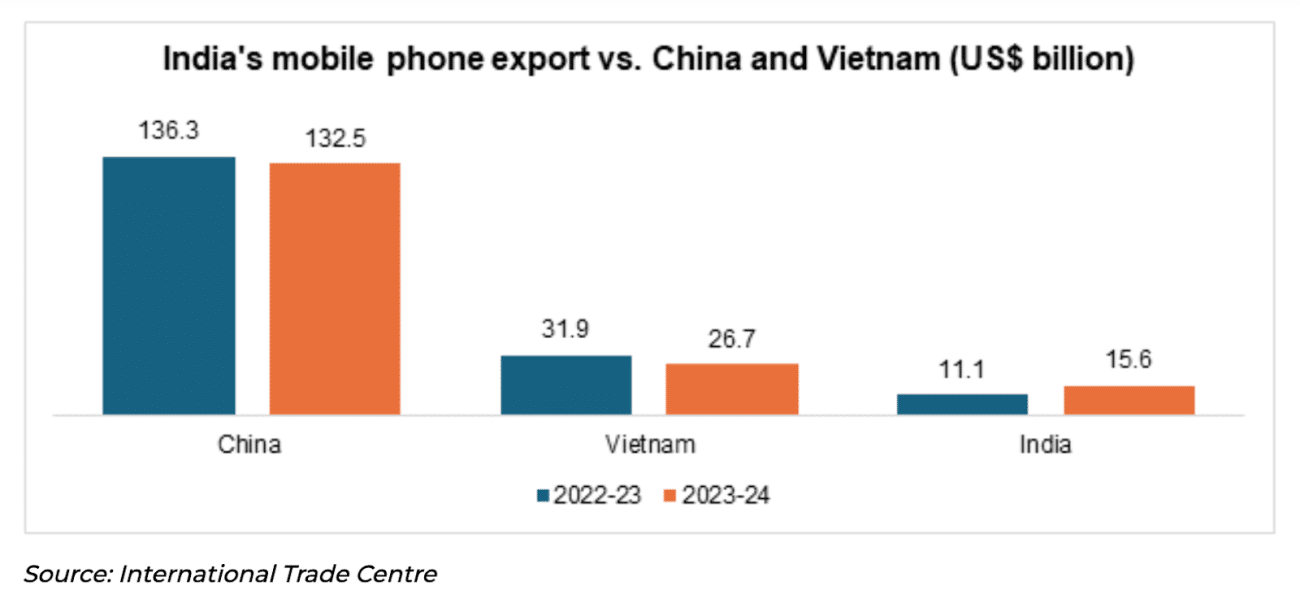
The country, though, faces stiff competition from China and Vietnam, both of which have cemented their positions as global electronics export powerhouses.

As per reports, in 2023-24, China and Vietnam saw export declines of 2.78% and 17.6%, respectively, while India’s exports grew by over 40%.

According to the International Trade Centre, as reported, China’s mobile phone exports dropped by $3.8 billion, and Vietnam’s fell by $5.6 billion.

In contrast, India gained $4.5 billion in exports, capturing nearly half of the combined decline from both China and Vietnam.

The gap underscores the scale at which these nations operate, and also the significant headroom India has to expand its electronics exports by strengthening and optimising domestic manufacturing and supply-chain capabilities.

Talking to AIM, Karn Chauhan, senior analyst at Counterpoint Research, mentioned that under the companies’ China+One strategy, one in five smartphones in the world is now made in India, and production is up by 11% in H1 2025.

Meanwhile, the ‘Make in India’ initiative has enabled the domestic production of critical components and sub-assemblies such as chargers, battery packs, mechanics of all types, USB cables, and more complex components like Lithium Ion Cells, speaker and microphones, display assemblies and camera modules.

The ecosystem is also expanding beyond assembly into components. Suppliers like Salcomp and TXD are operating in India, and new entrants are arriving—Foxconn-backed Yuzhan Technologies has begun pilot display production, while several China–India joint ventures, such as Bhagwati–Huaqin, Dixon–Longcheer, and Dixon–QTech are taking shape despite Press Note 3 restrictions. PN3 imposes restrictions on Foreign Direct Investment (FDI) from countries that share a land border with India, requiring prior government approval for any such investment.

“The country already assembles almost all phones sold domestically and is expanding into exports, which grew 25% year-on-year in Q3 2025. Apple entering India’s top five OEMs for the first time underscores this momentum,” Chauhan mentioned.

Furthermore, the electronic components manufacturing scheme is expected to deepen local capabilities in PCBs, displays, camera modules and enclosures, enabling Indian assemblers to secure stronger ecosystem partners.

However, the shift will be gradual, not immediate.

Chauhan added, “India still needs time to build end-to-end component maturity. China and Vietnam will continue to play key roles. Vietnam remains a major export hub for Samsung, and China will stay essential for deep components, tooling, and ecosystem scale during this transition.”

How HMD Gcc is Driving the Narrative

At HMD Global, this change is already underway. What began as an India engineering team supporting global markets, has evolved into a full-stack capability for product design, testing, AI development, and device innovation, built in India, for the world. The company constitutes the mobile phone business that the Nokia Corporation sold to Microsoft in 2014, was then bought back in 2016 by former executives, who formed HMD Global.

Ravi Kunwar, CEO and VP of HMD, India and APAC, told AIM that the company does R&D here for many markets, including Australia, Vietnam, Indonesia and more. “Some of these phones are not even sold in India, but all the testing happens here,” Kunwar said, adding that this is not a back-office operation, but core product development.

As a GCC in India, HMD is leveraging depth of STEM talent, speed of execution, and the ability to test products across complex real-world conditions.

Kunwar emphasised that “Make in India” is crucial for HMD, as it enables both global competitiveness and deeper localisation. “Making a product in India allows us to be globally competitive,” he said, referring to the PLI scheme. HMD’s 95% products are now locally manufactured, enabling cost-competitive, high-quality exports to markets like the Middle East and Africa.

He added that the Component Link Policy “goes beyond assembling and manufacturing by focusing on the localisation of each and every component,” with Phase Two incentives further strengthening HMD’s supply chain.

“India today has some of the best engineers globally, especially in hardware, AI and system design. The diversity of our market makes India the perfect testbed for global hardware,” Kunwar noted.

Beyond testing, India now leads complete device development cycles, from industrial design and prototyping to software tuning and field performance validation.

The result being two of HMD’s fastest-growing devices globally, the HMD Vibe 5G and HMD Touch 4G, were conceptualised, designed and engineered in India. “Both these devices are now being taken to global markets, fully designed in India,” Kunwar confirmed.

Very few nations outside China, the US, South Korea, and parts of Europe can claim full-cycle smartphone creation capabilities.

A new AI philosophy: “Before A is H”

As the global smartphone industry pivots from hardware-first to AI-first, Kunwar said that the company is building an India-led philosophy around meaningful, accessible innovation.

“Before A is H,” Kunwar quipped, as he elaborated: “Before Artificial Intelligence, we think Human Intelligence. AI must be useful and grounded. Not gimmicky.”

This thinking is driving a wave of device intelligence that doesn’t require flagship hardware or premium pricing. Instead, the focus is on real user problems such as battery life, accessibility, rural connectivity, and security enhanced by AI models optimised for modest compute environments.

And India, with its vast mid-market user base and affordability-driven innovation culture, is the natural birthplace for this shift.

The global shift away from single-source manufacturing has created a once-in-a-generation opening for India. But what’s more significant is that India is no longer just a low-cost manufacturing destination. It is becoming a source of intellectual property and product innovation.

“It’s not just assembly anymore; India is increasingly influencing the product roadmap itself,” Kunwar noted.

From 5G testing to AI camera tuning to device certification, HMD’s India operations now support markets across Southeast Asia, Australia and Oceania, Middle East and Africa.

For many of these global launches, the devices themselves may not come to India, as Kunwar added, but every unit sold overseas has Indian engineering behind it.

Hardware + AI

Smartphone players worldwide are re-architecting their organisations to bring hardware and AI development closer together. India has become the natural location for this convergence.

Reasons being that India offers a strong advantage with its deep AI and data-science talent pool, a growing semiconductor and electronics ecosystem, cost-competitive engineering, a large 5G-ready consumer base, and supportive policies like production linked incentive scheme ( PLI) and component incentives.

Kunwar added that this combination is transformative, stating, “India is one of the few ecosystems where hardware and AI can be co-developed at scale. This changes the game for global smartphone R&D.”

HMD’s trajectory also reflects India’s importance as a hub where global devices are designed, AI frameworks are developed, hardware and durability testing is conducted, and feature innovations for emerging markets are driven.

Meanwhile, Kunwar also hinted that the company will be bringing innovations in the ₹1,000-and-below segment “very shortly”. This is significant, as the feature phone segment remains large, with 55–60 million handsets sold annually, most priced below ₹1,000.

These upcoming devices will focus on delivering real value to consumers, including enabling UPI transactions on low-cost phones, larger batteries to cope with power outages in rural areas, and protection against dust and water splashes.

On AI, Kunwar clarified that a UPI feature on an ₹800–₹900 phone is “more than AI”, because the use case of someone doing a seamless transaction is more valuable.

He added that by 2026, AI-enabled features are expected to appear in phones priced between ₹3,000 and ₹4,000, with innovation also continuing in the smartphone space.

The post India Could Become the World’s Mobile R&D Hub — HMD Global Explains Why appeared first on Analytics India Magazine.

AI Redefining Compliance Verification for India’s Gig Economy

India’s gig and quick-commerce sectors have surged to nearly 12 million workers in FY 2024–25, up from 7.7 million in 2020–21. It is expected to double by 2030, according to industry estimates. With blue-collar gig hiring rising 92% in 2024, delivery and mobility platforms are onboarding workers faster than their compliance teams can process them.

The rapid hiring cycle has raised concerns about safety, fraud, and identity-based risks, pushing companies toward AI-led verification that can validate identities, detect anomalies, and monitor compliance in real time. However, adoption remains uneven, creating significant vulnerabilities in a workforce that underpins India’s hyperlocal economy.

Companies like Melento (formerly SignDesk), Ongrid and Unstop are showcasing how AI is changing compliance and verification workflows and why digital maturity remains a bigger challenge.

The Push to AI-Native Compliance

Melento, a compliance-focused platform that processes over 50 million documents annually across banks, NBFCs, and large corporations, has seen AI reshape its contract management engine.

The company’s founder and CEO, Krupesh Bhat, said AI now performs the first layer of contract reviews. “It helps identify the template and runs the first review based on the playbook that’s created. It does redlining, highlights risks in contracts, and even tracks milestones and deliverables,” he said.

Bhat added that AI can automate complex actions, such as alerting teams, processing payments, or generating legal notices. Yet the hesitation does not come from the fear of AI. “Clients don’t fear AI, they just want clarity on its purpose, boundaries and oversight,” he said.

The regulatory landscape contributes to that uncertainty. There is still no consistent rulebook for gig-worker compliance, and state-wise enforcement is fragmented. Instead, the sector is informally guided by emerging principles such as algorithmic accountability, fairness in worker classification, transparent decision-making and minimal data use.

Melento is already reorienting itself for this shift. “We are transforming into more of an AI-native product company,”Bhat said. “AI allows us to launch new products and new features quickly. On a net headcount basis, I may not be able to reduce the number of people, but I’ll be able to offer more services and solutions in the market.”

Adoption Bottleneck

While AI tools are becoming stronger, Bhat said adoption depends entirely on an organisation’s existing processes. “Many internal processes still rely on email and spreadsheets. They negotiate contracts manually and lack a contract repository. AI is two steps ahead of where many companies are in their automation journey,” he noted.

The gap is particularly evident in the gig economy, where many partners are small vendors or franchise operators with limited digital infrastructure. This mismatch between AI capability and operational readiness remains India’s most significant compliance risk.

Beyond compliance platforms, AI is now handling hiring at scale. At Unstop, which works extensively with campus and early-talent applicants, AI now powers nearly 80% of the screening workflow, from assessments to document verification and fraud detection.

Ankit Agarwal, Founder and CEO of Unstop, said hiring volumes have grown three to five times, making AI unavoidable. “It flags anomalies in resumes, identity mismatches, and other risks with over 92% accuracy, he said. “AI automates the first layer of verification, cutting manual review time by 70% and ensuring every candidate goes through a uniform, skills-first evaluation.”

To strengthen fairness, Unstop trains its models on anonymised, balanced datasets across demographics and income groups. “Bias prevention starts with data hygiene,” Agarwal said. The platform uses human-in-the-loop validation for every risk flag, conducts monthly audits and routes a case for manual review if AI confidence drops below 85%.

Selective Automation

At Ongrid, a background verification company, AI is applied more selectively, often as a complement to human oversight. Its chief technology officer, Ajay Rao, said AI helps accelerate parts of the process. “AI helps flag potential discrepancies and speeds up verification, but human review is still critical, especially when dealing with sensitive PII and legal compliance,” he said.

Rao added that generative AI models are increasingly useful for extracting structured data from documents, analysing risk patterns and identifying missing information.

Cost, Infrastructure Remains a Barrier

Meanwhile, Melento’s Bhat highlighted a persistent challenge. “The trust associated with AI is one of the main hurdles. Even though we don’t use customer data to train our models, some clients worry about data privacy,” he said.
Another challenge is the cost of AI systems. For many Indian companies, it’s easier to hire entry-level staff than pay for AI tools. “AI is expensive, usage-based and still requires complementary digital tools,” Bhat explained.

Advanced AI systems, especially LLM-driven workflows, require strong infrastructure, reliable data flows and dedicated compliance governance. For companies operating on thin margins, these overheads can outweigh the benefits, slowing adoption even when risks are high.

Melento’s has built its internal AI playbook around explainability, human oversight, and auditability. Every reviewer action or AI decision is logged, traceable, and reviewable, a requirement that many clients insist on before giving a go-ahead for AI deployment.

Growing Marketing and Widening Gaps

India’s identity-verification and background-check industry is expanding rapidly, supported by the rise of gig platforms, BFSI and shared-services firms.

The country’s identity verification market size reached $451.1 million in 2024. IMARC Group, a leading market research company, expects the market to reach $1.72 billion by 2033, with a growth rate (CAGR) of 16% from 2025-2033.

Industry analyses also indicate rising identity-related discrepancies in logistics and delivery-led sectors. These trends have intensified demand for AI-assisted verification, particularly in high-velocity environments where human teams struggle to keep pace with scale.

Despite the barriers, the advantages are driving adoption. “AI is transformative when combined with human expertise. It allows our teams to focus on higher-value tasks while AI handles routine data processing,” Rao said.

As India’s gig economy continues to expand, the pressure to build faster, safer and more transparent verification systems will only grow. AI may not replace compliance teams, but it is rapidly becoming their most critical tool, especially in a labour market where trust, speed and scale are inseparable.

The post AI Redefining Compliance Verification for India’s Gig Economy appeared first on Analytics India Magazine.

AI Redefining Compliance Verification for India’s Gig Economy

India’s gig and quick-commerce sectors have surged to nearly 12 million workers in FY 2024–25, up from 7.7 million in 2020–21. It is expected to double by 2030, according to industry estimates. With blue-collar gig hiring rising 92% in 2024, delivery and mobility platforms are onboarding workers faster than their compliance teams can process them.

The rapid hiring cycle has raised concerns about safety, fraud, and identity-based risks, pushing companies toward AI-led verification that can validate identities, detect anomalies, and monitor compliance in real time. However, adoption remains uneven, creating significant vulnerabilities in a workforce that underpins India’s hyperlocal economy.

Companies like Melento (formerly SignDesk), Ongrid and Unstop are showcasing how AI is changing compliance and verification workflows and why digital maturity remains a bigger challenge.

The Push to AI-Native Compliance

Melento, a compliance-focused platform that processes over 50 million documents annually across banks, NBFCs, and large corporations, has seen AI reshape its contract management engine.

The company’s founder and CEO, Krupesh Bhat, said AI now performs the first layer of contract reviews. “It helps identify the template and runs the first review based on the playbook that’s created. It does redlining, highlights risks in contracts, and even tracks milestones and deliverables,” he said.

Bhat added that AI can automate complex actions, such as alerting teams, processing payments, or generating legal notices. Yet the hesitation does not come from the fear of AI. “Clients don’t fear AI, they just want clarity on its purpose, boundaries and oversight,” he said.

The regulatory landscape contributes to that uncertainty. There is still no consistent rulebook for gig-worker compliance, and state-wise enforcement is fragmented. Instead, the sector is informally guided by emerging principles such as algorithmic accountability, fairness in worker classification, transparent decision-making and minimal data use.

Melento is already reorienting itself for this shift. “We are transforming into more of an AI-native product company,”Bhat said. “AI allows us to launch new products and new features quickly. On a net headcount basis, I may not be able to reduce the number of people, but I’ll be able to offer more services and solutions in the market.”

Adoption Bottleneck

While AI tools are becoming stronger, Bhat said adoption depends entirely on an organisation’s existing processes. “Many internal processes still rely on email and spreadsheets. They negotiate contracts manually and lack a contract repository. AI is two steps ahead of where many companies are in their automation journey,” he noted.

The gap is particularly evident in the gig economy, where many partners are small vendors or franchise operators with limited digital infrastructure. This mismatch between AI capability and operational readiness remains India’s most significant compliance risk.

Beyond compliance platforms, AI is now handling hiring at scale. At Unstop, which works extensively with campus and early-talent applicants, AI now powers nearly 80% of the screening workflow, from assessments to document verification and fraud detection.

Ankit Agarwal, Founder and CEO of Unstop, said hiring volumes have grown three to five times, making AI unavoidable. “It flags anomalies in resumes, identity mismatches, and other risks with over 92% accuracy, he said. “AI automates the first layer of verification, cutting manual review time by 70% and ensuring every candidate goes through a uniform, skills-first evaluation.”

To strengthen fairness, Unstop trains its models on anonymised, balanced datasets across demographics and income groups. “Bias prevention starts with data hygiene,” Agarwal said. The platform uses human-in-the-loop validation for every risk flag, conducts monthly audits and routes a case for manual review if AI confidence drops below 85%.

Selective Automation

At Ongrid, a background verification company, AI is applied more selectively, often as a complement to human oversight. Its chief technology officer, Ajay Rao, said AI helps accelerate parts of the process. “AI helps flag potential discrepancies and speeds up verification, but human review is still critical, especially when dealing with sensitive PII and legal compliance,” he said.

Rao added that generative AI models are increasingly useful for extracting structured data from documents, analysing risk patterns and identifying missing information.

Cost, Infrastructure Remains a Barrier

Meanwhile, Melento’s Bhat highlighted a persistent challenge. “The trust associated with AI is one of the main hurdles. Even though we don’t use customer data to train our models, some clients worry about data privacy,” he said.
Another challenge is the cost of AI systems. For many Indian companies, it’s easier to hire entry-level staff than pay for AI tools. “AI is expensive, usage-based and still requires complementary digital tools,” Bhat explained.

Advanced AI systems, especially LLM-driven workflows, require strong infrastructure, reliable data flows and dedicated compliance governance. For companies operating on thin margins, these overheads can outweigh the benefits, slowing adoption even when risks are high.

Melento’s has built its internal AI playbook around explainability, human oversight, and auditability. Every reviewer action or AI decision is logged, traceable, and reviewable, a requirement that many clients insist on before giving a go-ahead for AI deployment.

Growing Marketing and Widening Gaps

India’s identity-verification and background-check industry is expanding rapidly, supported by the rise of gig platforms, BFSI and shared-services firms.

The country’s identity verification market size reached $451.1 million in 2024. IMARC Group, a leading market research company, expects the market to reach $1.72 billion by 2033, with a growth rate (CAGR) of 16% from 2025-2033.

Industry analyses also indicate rising identity-related discrepancies in logistics and delivery-led sectors. These trends have intensified demand for AI-assisted verification, particularly in high-velocity environments where human teams struggle to keep pace with scale.

Despite the barriers, the advantages are driving adoption. “AI is transformative when combined with human expertise. It allows our teams to focus on higher-value tasks while AI handles routine data processing,” Rao said.

As India’s gig economy continues to expand, the pressure to build faster, safer and more transparent verification systems will only grow. AI may not replace compliance teams, but it is rapidly becoming their most critical tool, especially in a labour market where trust, speed and scale are inseparable.

The post AI Redefining Compliance Verification for India’s Gig Economy appeared first on Analytics India Magazine.

AI Redefining Compliance Verification for India’s Gig Economy

India’s gig and quick-commerce sectors have surged to nearly 12 million workers in FY 2024–25, up from 7.7 million in 2020–21. It is expected to double by 2030, according to industry estimates. With blue-collar gig hiring rising 92% in 2024, delivery and mobility platforms are onboarding workers faster than their compliance teams can process them.

The rapid hiring cycle has raised concerns about safety, fraud, and identity-based risks, pushing companies toward AI-led verification that can validate identities, detect anomalies, and monitor compliance in real time. However, adoption remains uneven, creating significant vulnerabilities in a workforce that underpins India’s hyperlocal economy.

Companies like Melento (formerly SignDesk), Ongrid and Unstop are showcasing how AI is changing compliance and verification workflows and why digital maturity remains a bigger challenge.

The Push to AI-Native Compliance

Melento, a compliance-focused platform that processes over 50 million documents annually across banks, NBFCs, and large corporations, has seen AI reshape its contract management engine.

The company’s founder and CEO, Krupesh Bhat, said AI now performs the first layer of contract reviews. “It helps identify the template and runs the first review based on the playbook that’s created. It does redlining, highlights risks in contracts, and even tracks milestones and deliverables,” he said.

Bhat added that AI can automate complex actions, such as alerting teams, processing payments, or generating legal notices. Yet the hesitation does not come from the fear of AI. “Clients don’t fear AI, they just want clarity on its purpose, boundaries and oversight,” he said.

The regulatory landscape contributes to that uncertainty. There is still no consistent rulebook for gig-worker compliance, and state-wise enforcement is fragmented. Instead, the sector is informally guided by emerging principles such as algorithmic accountability, fairness in worker classification, transparent decision-making and minimal data use.

Melento is already reorienting itself for this shift. “We are transforming into more of an AI-native product company,”Bhat said. “AI allows us to launch new products and new features quickly. On a net headcount basis, I may not be able to reduce the number of people, but I’ll be able to offer more services and solutions in the market.”

Adoption Bottleneck

While AI tools are becoming stronger, Bhat said adoption depends entirely on an organisation’s existing processes. “Many internal processes still rely on email and spreadsheets. They negotiate contracts manually and lack a contract repository. AI is two steps ahead of where many companies are in their automation journey,” he noted.

The gap is particularly evident in the gig economy, where many partners are small vendors or franchise operators with limited digital infrastructure. This mismatch between AI capability and operational readiness remains India’s most significant compliance risk.

Beyond compliance platforms, AI is now handling hiring at scale. At Unstop, which works extensively with campus and early-talent applicants, AI now powers nearly 80% of the screening workflow, from assessments to document verification and fraud detection.

Ankit Agarwal, Founder and CEO of Unstop, said hiring volumes have grown three to five times, making AI unavoidable. “It flags anomalies in resumes, identity mismatches, and other risks with over 92% accuracy, he said. “AI automates the first layer of verification, cutting manual review time by 70% and ensuring every candidate goes through a uniform, skills-first evaluation.”

To strengthen fairness, Unstop trains its models on anonymised, balanced datasets across demographics and income groups. “Bias prevention starts with data hygiene,” Agarwal said. The platform uses human-in-the-loop validation for every risk flag, conducts monthly audits and routes a case for manual review if AI confidence drops below 85%.

Selective Automation

At Ongrid, a background verification company, AI is applied more selectively, often as a complement to human oversight. Its chief technology officer, Ajay Rao, said AI helps accelerate parts of the process. “AI helps flag potential discrepancies and speeds up verification, but human review is still critical, especially when dealing with sensitive PII and legal compliance,” he said.

Rao added that generative AI models are increasingly useful for extracting structured data from documents, analysing risk patterns and identifying missing information.

Cost, Infrastructure Remains a Barrier

Meanwhile, Melento’s Bhat highlighted a persistent challenge. “The trust associated with AI is one of the main hurdles. Even though we don’t use customer data to train our models, some clients worry about data privacy,” he said.
Another challenge is the cost of AI systems. For many Indian companies, it’s easier to hire entry-level staff than pay for AI tools. “AI is expensive, usage-based and still requires complementary digital tools,” Bhat explained.

Advanced AI systems, especially LLM-driven workflows, require strong infrastructure, reliable data flows and dedicated compliance governance. For companies operating on thin margins, these overheads can outweigh the benefits, slowing adoption even when risks are high.

Melento’s has built its internal AI playbook around explainability, human oversight, and auditability. Every reviewer action or AI decision is logged, traceable, and reviewable, a requirement that many clients insist on before giving a go-ahead for AI deployment.

Growing Marketing and Widening Gaps

India’s identity-verification and background-check industry is expanding rapidly, supported by the rise of gig platforms, BFSI and shared-services firms.

The country’s identity verification market size reached $451.1 million in 2024. IMARC Group, a leading market research company, expects the market to reach $1.72 billion by 2033, with a growth rate (CAGR) of 16% from 2025-2033.

Industry analyses also indicate rising identity-related discrepancies in logistics and delivery-led sectors. These trends have intensified demand for AI-assisted verification, particularly in high-velocity environments where human teams struggle to keep pace with scale.

Despite the barriers, the advantages are driving adoption. “AI is transformative when combined with human expertise. It allows our teams to focus on higher-value tasks while AI handles routine data processing,” Rao said.

As India’s gig economy continues to expand, the pressure to build faster, safer and more transparent verification systems will only grow. AI may not replace compliance teams, but it is rapidly becoming their most critical tool, especially in a labour market where trust, speed and scale are inseparable.

The post AI Redefining Compliance Verification for India’s Gig Economy appeared first on Analytics India Magazine.

AI Redefining Compliance Verification for India’s Gig Economy

India’s gig and quick-commerce sectors have surged to nearly 12 million workers in FY 2024–25, up from 7.7 million in 2020–21. It is expected to double by 2030, according to industry estimates. With blue-collar gig hiring rising 92% in 2024, delivery and mobility platforms are onboarding workers faster than their compliance teams can process them.

The rapid hiring cycle has raised concerns about safety, fraud, and identity-based risks, pushing companies toward AI-led verification that can validate identities, detect anomalies, and monitor compliance in real time. However, adoption remains uneven, creating significant vulnerabilities in a workforce that underpins India’s hyperlocal economy.

Companies like Melento (formerly SignDesk), Ongrid and Unstop are showcasing how AI is changing compliance and verification workflows and why digital maturity remains a bigger challenge.

The Push to AI-Native Compliance

Melento, a compliance-focused platform that processes over 50 million documents annually across banks, NBFCs, and large corporations, has seen AI reshape its contract management engine.

The company’s founder and CEO, Krupesh Bhat, said AI now performs the first layer of contract reviews. “It helps identify the template and runs the first review based on the playbook that’s created. It does redlining, highlights risks in contracts, and even tracks milestones and deliverables,” he said.

Bhat added that AI can automate complex actions, such as alerting teams, processing payments, or generating legal notices. Yet the hesitation does not come from the fear of AI. “Clients don’t fear AI, they just want clarity on its purpose, boundaries and oversight,” he said.

The regulatory landscape contributes to that uncertainty. There is still no consistent rulebook for gig-worker compliance, and state-wise enforcement is fragmented. Instead, the sector is informally guided by emerging principles such as algorithmic accountability, fairness in worker classification, transparent decision-making and minimal data use.

Melento is already reorienting itself for this shift. “We are transforming into more of an AI-native product company,”Bhat said. “AI allows us to launch new products and new features quickly. On a net headcount basis, I may not be able to reduce the number of people, but I’ll be able to offer more services and solutions in the market.”

Adoption Bottleneck

While AI tools are becoming stronger, Bhat said adoption depends entirely on an organisation’s existing processes. “Many internal processes still rely on email and spreadsheets. They negotiate contracts manually and lack a contract repository. AI is two steps ahead of where many companies are in their automation journey,” he noted.

The gap is particularly evident in the gig economy, where many partners are small vendors or franchise operators with limited digital infrastructure. This mismatch between AI capability and operational readiness remains India’s most significant compliance risk.

Beyond compliance platforms, AI is now handling hiring at scale. At Unstop, which works extensively with campus and early-talent applicants, AI now powers nearly 80% of the screening workflow, from assessments to document verification and fraud detection.

Ankit Agarwal, Founder and CEO of Unstop, said hiring volumes have grown three to five times, making AI unavoidable. “It flags anomalies in resumes, identity mismatches, and other risks with over 92% accuracy, he said. “AI automates the first layer of verification, cutting manual review time by 70% and ensuring every candidate goes through a uniform, skills-first evaluation.”

To strengthen fairness, Unstop trains its models on anonymised, balanced datasets across demographics and income groups. “Bias prevention starts with data hygiene,” Agarwal said. The platform uses human-in-the-loop validation for every risk flag, conducts monthly audits and routes a case for manual review if AI confidence drops below 85%.

Selective Automation

At Ongrid, a background verification company, AI is applied more selectively, often as a complement to human oversight. Its chief technology officer, Ajay Rao, said AI helps accelerate parts of the process. “AI helps flag potential discrepancies and speeds up verification, but human review is still critical, especially when dealing with sensitive PII and legal compliance,” he said.

Rao added that generative AI models are increasingly useful for extracting structured data from documents, analysing risk patterns and identifying missing information.

Cost, Infrastructure Remains a Barrier

Meanwhile, Melento’s Bhat highlighted a persistent challenge. “The trust associated with AI is one of the main hurdles. Even though we don’t use customer data to train our models, some clients worry about data privacy,” he said.
Another challenge is the cost of AI systems. For many Indian companies, it’s easier to hire entry-level staff than pay for AI tools. “AI is expensive, usage-based and still requires complementary digital tools,” Bhat explained.

Advanced AI systems, especially LLM-driven workflows, require strong infrastructure, reliable data flows and dedicated compliance governance. For companies operating on thin margins, these overheads can outweigh the benefits, slowing adoption even when risks are high.

Melento’s has built its internal AI playbook around explainability, human oversight, and auditability. Every reviewer action or AI decision is logged, traceable, and reviewable, a requirement that many clients insist on before giving a go-ahead for AI deployment.

Growing Marketing and Widening Gaps

India’s identity-verification and background-check industry is expanding rapidly, supported by the rise of gig platforms, BFSI and shared-services firms.

The country’s identity verification market size reached $451.1 million in 2024. IMARC Group, a leading market research company, expects the market to reach $1.72 billion by 2033, with a growth rate (CAGR) of 16% from 2025-2033.

Industry analyses also indicate rising identity-related discrepancies in logistics and delivery-led sectors. These trends have intensified demand for AI-assisted verification, particularly in high-velocity environments where human teams struggle to keep pace with scale.

Despite the barriers, the advantages are driving adoption. “AI is transformative when combined with human expertise. It allows our teams to focus on higher-value tasks while AI handles routine data processing,” Rao said.

As India’s gig economy continues to expand, the pressure to build faster, safer and more transparent verification systems will only grow. AI may not replace compliance teams, but it is rapidly becoming their most critical tool, especially in a labour market where trust, speed and scale are inseparable.

The post AI Redefining Compliance Verification for India’s Gig Economy appeared first on Analytics India Magazine.

AI Redefining Compliance Verification for India’s Gig Economy

India’s gig and quick-commerce sectors have surged to nearly 12 million workers in FY 2024–25, up from 7.7 million in 2020–21. It is expected to double by 2030, according to industry estimates. With blue-collar gig hiring rising 92% in 2024, delivery and mobility platforms are onboarding workers faster than their compliance teams can process them.

The rapid hiring cycle has raised concerns about safety, fraud, and identity-based risks, pushing companies toward AI-led verification that can validate identities, detect anomalies, and monitor compliance in real time. However, adoption remains uneven, creating significant vulnerabilities in a workforce that underpins India’s hyperlocal economy.

Companies like Melento (formerly SignDesk), Ongrid and Unstop are showcasing how AI is changing compliance and verification workflows and why digital maturity remains a bigger challenge.

The Push to AI-Native Compliance

Melento, a compliance-focused platform that processes over 50 million documents annually across banks, NBFCs, and large corporations, has seen AI reshape its contract management engine.

The company’s founder and CEO, Krupesh Bhat, said AI now performs the first layer of contract reviews. “It helps identify the template and runs the first review based on the playbook that’s created. It does redlining, highlights risks in contracts, and even tracks milestones and deliverables,” he said.

Bhat added that AI can automate complex actions, such as alerting teams, processing payments, or generating legal notices. Yet the hesitation does not come from the fear of AI. “Clients don’t fear AI, they just want clarity on its purpose, boundaries and oversight,” he said.

The regulatory landscape contributes to that uncertainty. There is still no consistent rulebook for gig-worker compliance, and state-wise enforcement is fragmented. Instead, the sector is informally guided by emerging principles such as algorithmic accountability, fairness in worker classification, transparent decision-making and minimal data use.

Melento is already reorienting itself for this shift. “We are transforming into more of an AI-native product company,”Bhat said. “AI allows us to launch new products and new features quickly. On a net headcount basis, I may not be able to reduce the number of people, but I’ll be able to offer more services and solutions in the market.”

Adoption Bottleneck

While AI tools are becoming stronger, Bhat said adoption depends entirely on an organisation’s existing processes. “Many internal processes still rely on email and spreadsheets. They negotiate contracts manually and lack a contract repository. AI is two steps ahead of where many companies are in their automation journey,” he noted.

The gap is particularly evident in the gig economy, where many partners are small vendors or franchise operators with limited digital infrastructure. This mismatch between AI capability and operational readiness remains India’s most significant compliance risk.

Beyond compliance platforms, AI is now handling hiring at scale. At Unstop, which works extensively with campus and early-talent applicants, AI now powers nearly 80% of the screening workflow, from assessments to document verification and fraud detection.

Ankit Agarwal, Founder and CEO of Unstop, said hiring volumes have grown three to five times, making AI unavoidable. “It flags anomalies in resumes, identity mismatches, and other risks with over 92% accuracy, he said. “AI automates the first layer of verification, cutting manual review time by 70% and ensuring every candidate goes through a uniform, skills-first evaluation.”

To strengthen fairness, Unstop trains its models on anonymised, balanced datasets across demographics and income groups. “Bias prevention starts with data hygiene,” Agarwal said. The platform uses human-in-the-loop validation for every risk flag, conducts monthly audits and routes a case for manual review if AI confidence drops below 85%.

Selective Automation

At Ongrid, a background verification company, AI is applied more selectively, often as a complement to human oversight. Its chief technology officer, Ajay Rao, said AI helps accelerate parts of the process. “AI helps flag potential discrepancies and speeds up verification, but human review is still critical, especially when dealing with sensitive PII and legal compliance,” he said.

Rao added that generative AI models are increasingly useful for extracting structured data from documents, analysing risk patterns and identifying missing information.

Cost, Infrastructure Remains a Barrier

Meanwhile, Melento’s Bhat highlighted a persistent challenge. “The trust associated with AI is one of the main hurdles. Even though we don’t use customer data to train our models, some clients worry about data privacy,” he said.
Another challenge is the cost of AI systems. For many Indian companies, it’s easier to hire entry-level staff than pay for AI tools. “AI is expensive, usage-based and still requires complementary digital tools,” Bhat explained.

Advanced AI systems, especially LLM-driven workflows, require strong infrastructure, reliable data flows and dedicated compliance governance. For companies operating on thin margins, these overheads can outweigh the benefits, slowing adoption even when risks are high.

Melento’s has built its internal AI playbook around explainability, human oversight, and auditability. Every reviewer action or AI decision is logged, traceable, and reviewable, a requirement that many clients insist on before giving a go-ahead for AI deployment.

Growing Marketing and Widening Gaps

India’s identity-verification and background-check industry is expanding rapidly, supported by the rise of gig platforms, BFSI and shared-services firms.

The country’s identity verification market size reached $451.1 million in 2024. IMARC Group, a leading market research company, expects the market to reach $1.72 billion by 2033, with a growth rate (CAGR) of 16% from 2025-2033.

Industry analyses also indicate rising identity-related discrepancies in logistics and delivery-led sectors. These trends have intensified demand for AI-assisted verification, particularly in high-velocity environments where human teams struggle to keep pace with scale.

Despite the barriers, the advantages are driving adoption. “AI is transformative when combined with human expertise. It allows our teams to focus on higher-value tasks while AI handles routine data processing,” Rao said.

As India’s gig economy continues to expand, the pressure to build faster, safer and more transparent verification systems will only grow. AI may not replace compliance teams, but it is rapidly becoming their most critical tool, especially in a labour market where trust, speed and scale are inseparable.

The post AI Redefining Compliance Verification for India’s Gig Economy appeared first on Analytics India Magazine.