Starcloud Becomes First to Train LLMs in Space Using NVIDIA H100

NVIDIA-backed startup Starcloud has successfully trained and run LLMs from space for the first time, a step toward orbital data centres as demand for computing power and energy grows on Earth.

The Washington-based company’s Starcloud-1 satellite, launched last month with an NVIDIA H100 GPU, has completed training of Andrej Karpathy’s nano-GPT on the complete works of Shakespeare and run inference on Google DeepMind’s open Gemma model.

“We just trained the first LLM in space using an NVIDIA H100 on Starcloud-1! We are also the first to run a version of Google’s Gemini in space!” wrote Philip Johnston, founder and CEO of Starcloud, in a post on LinkedIn.

“This is a significant step on the road to moving almost all compute to space, to stop draining the energy resources of Earth and to start utilising the near limitless energy of our Sun!” he added.

In a post on X, Starcloud CTO Adi Oltean said that getting the H100 operational in space required “a lot of innovation and hard work” from the company’s engineering team. He added that the team executed inference on a preloaded Gemma model and aims to test more models in the future.

Founded in 2024, Starcloud argues that orbital compute could ease mounting environmental pressures linked to traditional data centres, whose electricity consumption is expected to more than double by 2030, according to the International Energy Agency.

Facilities on Earth also face water scarcity and rising emissions, while orbital platforms can harness uninterrupted solar energy and avoid cooling challenges.

The startup, part of NVIDIA ’s Inception program and an alumnus of Y Combinator and the Google for Startups Cloud AI Accelerator, plans to build a 5-gigawatt space-based data centre powered entirely by solar panels spanning four kilometres in width and height. Such a system would outperform the largest US power plant while being cheaper and more compact than an equivalent terrestrial solar farm, according to the company’s white paper.

A New Era of Solar-Powered Intelligence in Orbit

Besides Starcloud, Google, SpaceX and Jeff Bezos’ Blue Origin are also pursuing space-based data centres.

Google recently announced Project Suncatcher, which explores placing AI data centres in orbit. The initiative involves satellites equipped with custom tensor processing units and linked through high-throughput free-space optical connections to form a distributed compute cluster above Earth.

Google CEO Sundar Pichai described space-based data centres as a “moonshot” in a recent interview. He said the company aims to harness uninterrupted solar energy near the sun, with early tests using small machine racks on satellites planned for 2027 and potential mainstream adoption within a decade.

Elon Musk, meanwhile, announced in November 2025 that SpaceX would build orbital data centres using next-generation Starlink satellites, calling them the lowest-cost AI compute option within five years. He said Starlink V3 satellites could scale to become the backbone of orbital compute infrastructure.

According to a recent report, SpaceX is preparing for an initial public offering in 2026 to raise more than $25 billion at a valuation exceeding $1 trillion. According to Bloomberg News, SpaceX plans to use the IPO proceeds to build space-based data centres and purchase the chips needed to run them. Musk discussed the idea during a recent event with Baron Capital.“

Starship should be able to deliver around 300 GW per year of solar-powered AI satellites to orbit, maybe 500 GW. The ‘per year’ part is what makes this such a big deal,” he said in a post on X on November 20. “Average US electricity consumption is around 500 GW, so at 300 GW/year, AI in space would exceed the entire US economy just in intelligence processing every 2 years.”

The post Starcloud Becomes First to Train LLMs in Space Using NVIDIA H100 appeared first on Analytics India Magazine.

Adobe Brings Photoshop, Express and Acrobat to ChatGPT

Adobe on December 10 announced that it has launched Photoshop, Adobe Express and Adobe Acrobat inside ChatGPT, giving the platform’s 800 million weekly users the ability to edit images, create designs and work with documents through simple conversational instructions.

The tools are available free to ChatGPT users on desktop, web and iOS. Adobe Express is available on Android, with Photoshop and Acrobat for Android launching soon.

Adobe said the integration brings its leading creative and productivity apps to a platform widely used for everyday tasks, allowing users to enhance photos, design invitations, and transform documents without leaving ChatGPT.

“We’re thrilled to bring Photoshop, Adobe Express and Acrobat directly into ChatGPT, combining our creative innovations with the ease of ChatGPT to make creativity accessible for everyone,” said David Wadhwani, president of digital media at Adobe. “Now hundreds of millions of people can edit with Photoshop simply by using their own words, right inside a platform that’s already part of their day-to-day.”

Users can access these tools by typing the name of the Adobe app along with an instruction. For instance, typing “Adobe Photoshop, help me blur the background of this image” will open Photoshop inside the chat and guide them through the process.

Photoshop inside ChatGPT allows adjustments to parts of an image, control of brightness, contrast and exposure, and use of effects. Adobe Express enables users to browse templates, update text and images and add animations. Acrobat lets people edit PDFs, extract text or tables, merge files, compress documents and redact sensitive details.

The rollout builds on Adobe’s recent work in conversational AI, including the launch of Acrobat Studio earlier this year and AI Assistants for Photoshop and Adobe Express. Adobe also previewed an AI Assistant for Adobe Firefly that will help creators move ideas across multiple Adobe apps.

The post Adobe Brings Photoshop, Express and Acrobat to ChatGPT appeared first on Analytics India Magazine.

Mphasis Appoints Punit Sood as Independent Director

Mphasis has appointed Punit Sood as an independent director on its board for a five-year term, effective December 11, 2025, the company said in a statement.

It informed that the appointment is based on the recommendations of the internal Nomination and Remuneration Committee and is subject to shareholders’ approval.

The company also said that Jan Kathleen Hier will conclude her tenure as independent director and chairperson of the company effective Wednesday, upon the completion of her second and final term.

Sood currently serves as an independent director on the boards of ICICI Bank and National Payments Corporation of India. He brings more than 36 years of leadership experience across financial services and technology, the company said.

His career includes senior roles at global organisations such as Citibank, GE Capital, United Technologies, JPMorgan Chase, and NatWest.

Sood has held CIO roles across geographies and has led global capability centre (GCC) strategies for NatWest, JPMorgan Chase and Citibank.

He chaired the NASSCOM GCC Council during 2021–23 and served as a member for the 2023–25 term. Sood also serves as an external expert with Boston Consulting Group, advising on global capability centre strategy.

Mphasis CEO and managing director Nitin Rakesh said, “His (Sood’s) insights on leadership will enrich our strategic thinking as we continue to navigate the ever-changing business landscape.”

The post Mphasis Appoints Punit Sood as Independent Director appeared first on Analytics India Magazine.

Virtusa Acquires SmartSoC Solutions, Supplements Cloud Services with Semiconductor Chip Design

Virtusa Corporation, an IT services company specialising in AI, cloud, and data analytics, has acquired Bengaluru-based SmartSoC Solutions, a leader in semiconductor engineering and integrated circuit (IC) design services.

It marks Virtusa’s expansion into the semiconductor design industry by completing its full-stack, end-to-end service capabilities, spanning the entire digital technology ecosystem from the chip to the network, cloud, and application layer, the company said in a statement.

The deal gives Virtusa full-stack capabilities in silicon design, verification and embedded systems engineering, at a time when demand for advanced silicon is rising sharply due to the growth of AI and large-scale data centres.

Virtusa CEO Nitesh Banga described the acquisition as “transformational,” saying it immediately positions the company as a meaningful player in high-growth semiconductor services. “It completes our vision for a full-stack offering that can serve clients from the foundational silicon layer all the way to the customer application,” he said in the statement.

Banga added that as AI models become more complex and data centre expansion accelerates globally, in-house chip design capability will be crucial for engineering partners.

SmartSoC, founded in 2016 and headquartered in Bengaluru, is a fast-growing semiconductor engineering and IC design services firm with capabilities across silicon design, verification, and embedded systems.

With this acquisition, Virtusa will onboard more than 1,400 engineers specialised in VLSI, physical design, and embedded software. The deal also significantly expands Virtusa’s India delivery footprint through SmartSoC’s centres in Bengaluru, Hubli, and Hyderabad, including a large tier 2 delivery centre in Hubli that strengthens the company’s cost-effective engineering capacity.

SmartSoC’s leadership team, led by founder and CEO Bharath Desareddy, will stay on and continue managing delivery operations and client engagements. All existing project structures, service contracts and commitments will continue as they are.

Desareddy said the combination creates a “unique market proposition” by bringing together SmartSoC’s specialised semiconductor engineering expertise with Virtusa’s global scale and enterprise client base. “This allows us to accelerate our growth, broaden our services and deliver immediate value to global semiconductor and technology companies,” he added.

The acquisition comes during a period of rapid expansion in the semiconductor and systems engineering market, fuelled by the proliferation of smart devices and soaring investments in AI and edge computing infrastructure. Virtusa’s entry into this segment strengthens its ability to help clients reduce time-to-market for next-generation, power-efficient products and positions the company at the centre of emerging chip innovation.

The post Virtusa Acquires SmartSoC Solutions, Supplements Cloud Services with Semiconductor Chip Design appeared first on Analytics India Magazine.

From Deck-Makers to Decision Partners: AI Is Remaking Consulting

The consulting industry is undergoing a structural shift as artificial intelligence automates the junior-level research and analysis work that once supported its pyramid-shaped staffing model.

According to a global survey by McKinsey & Company, The State of AI in 2025, 88% of organisations now report using AI in at least one business function.

Meanwhile, a Harvard Business Review (HBR) commentary argued that this trend is reducing the need for large analyst pools, the backbone of the traditional consulting pyramid, prompting firms to rethink how they deliver value.

At a recent seminar on consulting in the age of AI, Bhaskar Ghosh, chief strategy and innovation officer at Accenture, said the sector is entering what he calls the “intelligent age,” where systems can sense, decide, act and learn autonomously. This, he argued, requires consulting to “redefine itself” by shifting from advice-driven work to measurable outcomes.

“AI is real, AI needs to create value; consulting must redefine itself,” he said, adding that the goal should be “problem solving with human creativity, plus machine efficiency.”

His view was echoed by Kartikeya Bolar Pramoda, associate professor at TA Pai Management Institute (TAPMI), Manipal, specialising in information systems and analytics. Pramoda believes that the future belongs to firms “bold enough to redesign their models, elevate their people, and harness AI as an amplifier of human judgement.”

Industry practitioners say this reflects shifting client expectations.

According to Gaurav Gupta, head of R&D at consulting firm Kotter, traditional reasons companies hire consultants (access to information, benchmark knowledge, analytics, and external validation) are becoming less valuable as AI makes information abundant.

“What is continuing to be extremely useful is deep expertise,” he said, arguing that specialised skills and insights drawn from hard-earned experience are “not easy to emulate through automation.”

But the transition is exposing uneven effects across consulting careers.

Shivaraj KM, principal analyst with ISG (Information Services Group), said efficiency gains are already visible at the bottom of the talent structure, especially in roles tied to research, client-delivery support, and marketing.

While “AI has had little effect at mid-senior roles,” he warned firms are likely to operate with fewer entry-level staff as judgment-based work remains concentrated higher up.

“It is not the death of the industry,” he said, “just learning to work in the new environments of GenAI.”

Why This Shift

The pressure on consulting’s traditional model comes from multiple trends converging. First, AI tools, especially generative AI and “agentic” systems, are now mature enough to perform tasks historically done by junior analysts, like data gathering, summarising, modelling, and initial diagnostics.

Second, the expectations of clients, the buyers of consulting, are changing.

With internal capabilities growing and AI tools broadly accessible, many companies expect faster turnaround, tangible execution support, and real business outcomes rather than long drawn-out advisory reports.

As Gupta noted, the value proposition is shifting away from information scarcity to “deep expertise” and execution capacity.

How Firms Are Responding

In response to these shifts, many consulting firms are retooling their structures, talent pipelines, and delivery models.

According to Ben Appleton, founder of Strat-Bridge, a specialist executive search partner and a consulting company, firms are increasingly adopting cross-functional teams or “pods” combining domain specialists, AI-fluent consultants, and senior strategic advisors.

These teams, smaller than traditional consulting squads, lean heavily on AI to do groundwork: data extraction, summarisation, modelling, initial insights.

Human consultants are then freed to do what machines cannot: interpret ambiguous problems, apply judgment, navigate organisational complexity, and build trust with clients.

The result is that consulting engagements are shifting from slide-heavy decks to outcome-oriented delivery, execution, implementation support, and ongoing advisory.

This shift echoes what Ghosh called “new consulting”: a model defined by value creation, agility, and human-machine collaboration.

Such firms are also rethinking hiring and training. Instead of recruiting large batches of generalist analysts, many are raising the bar for domain depth, sector experience, and “AI fluency”, the ability to work with AI tools, interpret machine outputs, and combine them with human insight.

The Risks

But this transition is not without friction.

Despite widespread AI adoption, meaningful returns remain elusive.

As the McKinsey survey noted, only a minority of firms report strong financial impact from their AI investments. Many remain in pilot or experimental phases, and benefits often lag expectations.

For consulting firms, this means that scaling AI inside delivery models, while also preserving trust, intellectual property, confidentiality, and strategic depth, is a complicated balancing act.

There is also the human dimension. Many early-career consultants, who once formed the bulk of consulting firms’ workforce, face uncertain futures.

As Shivaraj’s observation suggested, efficiency gains are hitting the bottom of the pyramid first. The job is not vanishing, but its shape and scale are changing dramatically.

The post From Deck-Makers to Decision Partners: AI Is Remaking Consulting appeared first on Analytics India Magazine.

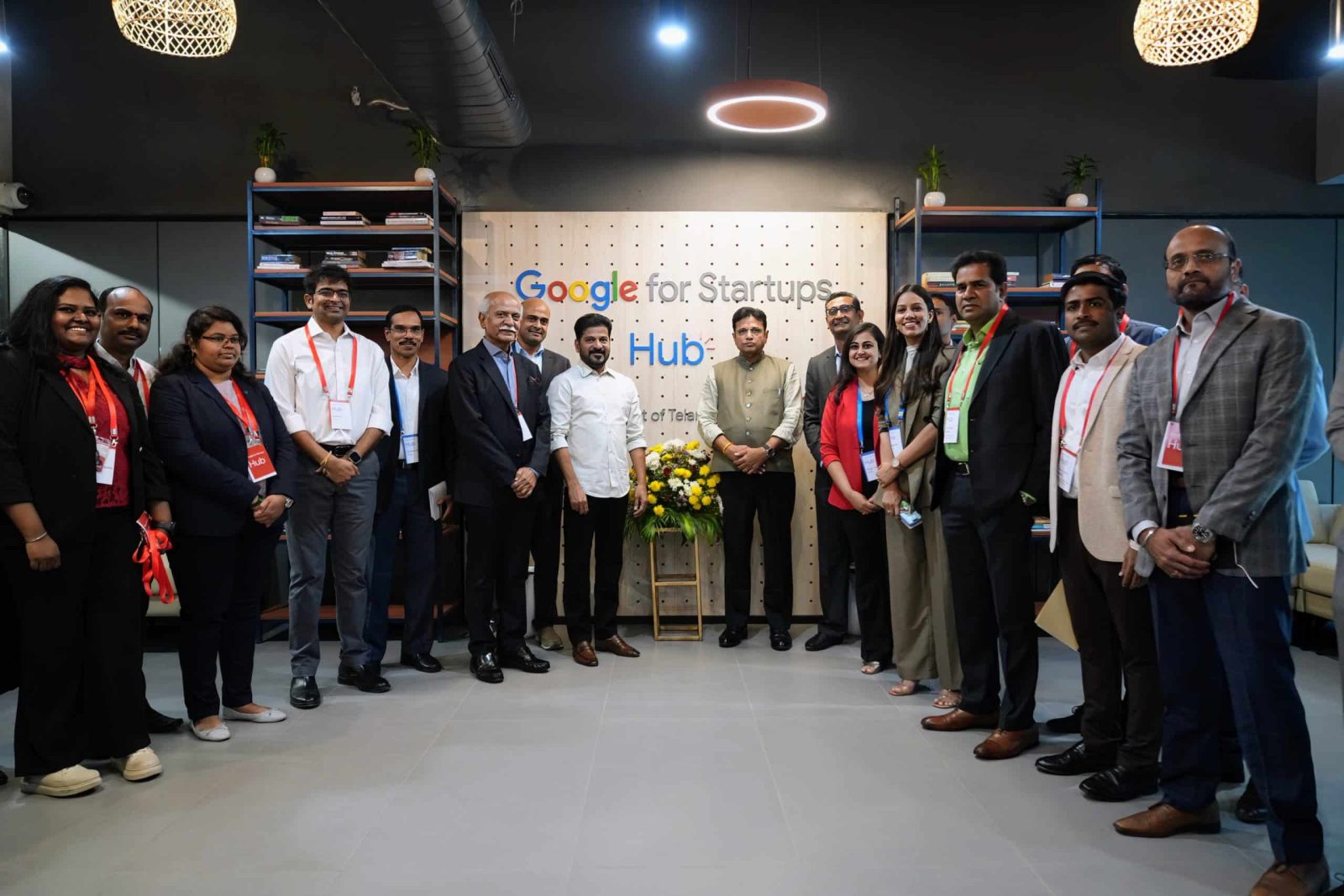
Google, Telangana Govt Launch ‘Google for Startups Hub’ in Hyderabad

Google and the Telangana government have launched the Google for Startups Hub at T-Hub in Hyderabad, which includes a dedicated space to support the growing startup ecosystem.

Google will engage with regional startups from Telangana through a dedicated Hub, providing free year-long coworking spaces for selected AI-focused startups and access to curated venture investors.

D Sridhar Babu, Telangana’s IT minister, said, “With this launch, we’re further expanding our innovation ecosystem, one designed not only to help startups build great technology products but to strengthen their entire capacity to innovate.”

As part of the global Google for Startups network, the Hub will assist startups from incubation through innovation, offering physical infrastructure, mentoring, AI expertise, and international visibility, while also featuring networking areas and event spaces where founders, tech builders, investors, and ecosystem partners can connect.

Through the Hub, founders will get access to Google experts in AI/ML, product development, and UX, who will lead tailored sessions for startups and student founders.

The initiative also supports women entrepreneurs and tier-2 innovators while fostering a collaborative community of startups, alumni, and investors to accelerate learning and experimentation.

“By working closely with Google, we are ensuring that we are ahead of our innovation curve and founders and innovators from across Telangana, including Tier-2 and Tier-3 cities, can access world-class resources without leaving the state,” said Sanjay Kumar, special chief secretary for the state’s IT department.

Collaborating with the Telangana government enables Google to deliver comprehensive support to this ecosystem, including AI capabilities on Google Cloud, as well as Android, Play, Ads, and its wider developer and startup programmes, as per Preeti Lobana, country manager at Google India.

The post Google, Telangana Govt Launch ‘Google for Startups Hub’ in Hyderabad appeared first on Analytics India Magazine.

Intel Moves Closer to Acquiring AI Chip Startup SambaNova, Signs Term Sheet: Report 

Intel has moved forward in its plan to acquire AI chipmaker SambaNova Systems by signing a term sheet with the Palo Alto–based startup, WIRED reported.

The preliminary document is non-binding, and the deal remains subject to regulatory review, due diligence and financial scrutiny—processes that could take weeks or months to conclude.

While negotiations are advancing, the specific terms remain undisclosed, the report added.

Intel’s interest in the company was first revealed in October, when Bloomberg reported that early discussions were underway and that SambaNova could be valued below its 2021 peak of $5 billion.

The potential acquisition raises governance questions because Intel CEO Lip-Bu Tan is also the chairman of SambaNova. Intel Capital, now being spun out as an independent fund, is also an investor in the startup.

SoftBank, another major SambaNova backer, made a substantial investment in Intel earlier this year, deepening the web of cross-holdings.

SambaNova, founded in 2017 by Stanford professors Kunle Olukotun and Christopher Ré, along with former Oracle executive Rodrigo Liang, builds hardware and systems for AI inference workloads. The company has raised more than $1.14 billion to date, including major rounds led by BlackRock, GV, Intel Capital and SoftBank’s Vision Fund 2.

Its valuation, however, has fluctuated after hitting $5 billion in 2021. Recent disclosures suggest investors have marked down their holdings, with BlackRock reportedly cutting its valuation by 17% over the past year, according to The Information.

The downturn may have made SambaNova a more attractive target for Intel, which has struggled to keep pace with NVIDIA and other rivals in AI chip performance.

Intel has also received an $8.9 billion boost from the US government in August to expand domestic manufacturing.

Since taking over earlier this year, Tan has set out an AI-first strategy that includes reducing debt, selling non-core units, and improving Intel’s position in advanced semiconductor technology.

The post Intel Moves Closer to Acquiring AI Chip Startup SambaNova, Signs Term Sheet: Report appeared first on Analytics India Magazine.

Marvell Launches Strategic Initiative to Accelerate AEC Ecosystem and Hyperscaler Adoption

BSC Leads National AI Project to Transform Air Quality Assessment in Spain

Dec. 9, 2025 — The Barcelona Supercomputing Center – Centro Nacional de Supercomputación (BSC-CNS) will…

Why CRED Turned to OpenAI for Cleo

CREDCRED

CRED’s tryst with AI has been years in the making. Ever since the fintech company integrated AI in its CRED Protect feature four years ago to detect fraud and billing errors in credit card statements, the team has steadily stitched a nest of predictive analysis and real-time insights to offer a more premium customer experience.

The result was the Svalbard suite of features released earlier this year. But as its product lines grew, the challenge was no longer scale alone.

For an organisation to turn AI-native, it takes much more than just augmenting customer journeys with embedded AI. And Swamy Seetharaman, CRED co-founder and its head of engineering, knows that.

AI is becoming central to CRED’s functioning, and the executive pitches for AI to make every team member 10x more effective by giving them clarity, judgement, and context that helps with execution.

“With AI, this is no longer an abstract ambition; it is simply how we work,” Seetharaman told AIM. And OpenAI is helping the team shape its customer approach and product experience with its models.

Building Cleo with OpenAI

AI now sits horizontally across many of CRED’s workflows. Seetharaman said repetitive tasks are automated, context is easier to assemble, and teams move ideas into production faster. He frames AI as a steady reasoning layer that reduces friction and closes gaps—essential for growing companies like CRED, which boosted its revenue by 71% in FY24 to Rs 2,397 crore on the back of member engagement and monetisation.

The company developed Cleo as an AI companion to handle simple customer conversations and alleviate customer-facing teams. Built on OpenAI models, including GPT-4.0, GPT-5 and o3, Cleo interprets free-form messages, maps them to standard operating procedures with more than 97% accuracy, and executes them using APIs.

The turning point, Seetharaman said, came when it began handling multimodal voice and text conversations with multiple intents in one thread. This is where traditional bots struggle to push beyond scripted replies.

It began to diagnose, act, validate, and adapt in real time. “This shift, from answering questions to diagnosing, acting, validating, and adapting in real time, transformed Cleo to operate like a true concierge,” he said.

The impact shows up in numbers. According to the company, there has been a 31% decline in session drop-offs, a 14% rise in CSAT (customer satisfaction score), and more multi-intent conversations resolved in a single flow.

CRED also tracks repeat impressions, clarity of responses, and how often users need to add context again. All these markers improved as Cleo’s tone and helped its language flow naturally and more in tune with the company.

Being AI-First

While OpenAI models run customer-facing support, CRED has tapped into Anthropic’s Claude to strengthen its internal processes. Seetharaman described the approach as treating AI as a toolkit. They are picking the right model for the right task.

“Claude strengthens our engineering muscle and helps us ship features faster with higher reliability. We are building internal copilots on Claude that support developers with safer code generation, structured reasoning, and automation workflows,” he explained.

In a blog, Anthropic wrote how developers at CRED now rely on Claude Code to identify incremental solutions for writing, testing, and committing code across both new and existing projects. The team also uses the tool to generate documentation for existing codebases, in addition to breaking down complex problems into manageable steps.

Read: How CRED’s Use of Claude Code Signals the Future of Software Development

CRED rebuilt its customer success stack with three systems: Stark, Thea, and Cleo. Seetharaman describes Stark as a tool that turns complex SOP creation into plain English workflows, optimising manual tasks.

Thea supports agents by giving them full conversation context, insights, and recommended actions. This matters as the company works with more than 20,000 APIs, and Thea saves agents from hunting for information across tools.

Cleo then understands member intent across informational, transactional, and personalised cases, and handles multiple needs within a single flow.

As these AI systems learn with each interaction, they enable CRED to track customer behaviour more closely. “When a conversation moves from AI to a human, the handoff becomes a source of insight that helps us identify new intents and onboard emerging use cases much faster,” Seetharaman explained.

The shift to an AI native organisation runs deeper than customer support. CRED is building foundational platforms that handle access, governance, security, privacy, compliance, and evaluations at scale.

Read: Kunal Shah On Why India Should Treat AI like WhatsApp and LED Bulbs

Looking ahead, CRED plans to integrate Cleo across all business lines. It is also developing tools that detect data dead ends and feed those cases back into the knowledge base. The focus is on raising accuracy and reducing blind spots in real time.

“For us, incorporating OpenAI’s technology has been a true unlock across two of our values: compounding and being fast and right,” Seetharaman said. The early signals have been strong. The next steps are about scaling that impact.

The post Why CRED Turned to OpenAI for Cleo appeared first on Analytics India Magazine.