Digital India Act Expectations & Concerns 

The draft of the Digital India Bill is set to undergo public consultation this month.

The need for a new regulatory landscape arises from India’s digital revolution—which has rendered the current regulation outdated. The existing IT Act has limitations in terms of recognising electronic records, transactions, and electronic signatures. While the internet, devices, and information technology have empowered citizens, they have also brought challenges such as user harm, ambiguity in user rights, security concerns, women and child safety issues, information wars, radicalisation, hate speech circulation, misinformation, fake news, and unfair trade practices.

In response to the evolving nature of cybercrime, the new bill may introduce provisions for criminal offenses, including possession and distribution of child sexual abuse material, improper use of government-issued identity cards, and misinformation. The goal is to establish clear guidelines and deterrence measures for such cases. Instead of making amendments, the Digital India Act seeks to replace the outdated Information Technology Act, 2000 in its entirety.

Here’s what you can expect:

Data Privacy & Data Localisation

The local ecosystem also has certain expectations and tussles over certain sections of the Act, like data localisation. India’s largest telecommunication companies, Reliance Jio and Bharti Airtel, along with digital payments major Paytm, had opposed the government’s proposal to allow the transfer of personal data of Indians to “trusted geographies.” arguing that Indian user data should be stored within the country rather than being transferred abroad.

The disagreement arose after the government put out the draft of the Digital Personal Data Protection Bill, 2022, which introduced the concept of “trusted geographies” where personal data may be transferred from India.

They raised concerns about law enforcement agencies accessing Indian citizens’ data processed overseas, citing risks of data breaches and misuse.

The government, however, supports cross-border data flow for user choice and diversity and aims to protect privacy rights and create a less compliance-intensive environment for startups.The government’s objective is to safeguard privacy rights by implementing the Digital Personal Data Protection Bill and establish trust corridors with other countries. No country blacklist will be created, and economic groupings like OECD or ASEAN will determine trusted geographies. The government seeks a balance between privacy, economic growth, and global technological advancements.

MoS, Chandrasekhar also encouraged data centers to view cross-border data flow from a broader perspective, suggesting that if India becomes a trusted location for data storage, it will attract expansion of the Indian cloud and data center businesses.

In contrast to its move for extreme data localisation a few years ago, as it blocked several apps.

A New Framework for AI Policy

During the consultation in Mumbai, a stakeholder expressed the need for model clauses or a separate law to regulate AI, highlighting that a code of ethics alone would not be sufficient for India given its rapid advancements in the field. The stakeholder suggested the adoption of something similar to the standard contractual clauses in the GDPR. This is important due to concerns surrounding deep fakes, misinformation, and the potential impact on innovation if the government eliminates safe harbor provisions without clear AI regulations.

Despite the government’s reluctance to address AI regulation during the consultation, stakeholders are eagerly awaiting the draft Bill expected to be released soon. In response to the query, Union Minister Chandrasekhar mentioned that the Digital India Act includes a dedicated chapter focusing on emerging technologies, including AI.

The DIA presentation put out by Meity also suggested that the upcoming Act recognises the importance of regulating artificial intelligence due to its widespread use in critical sectors such as healthcare, banking, and aviation. It proposes to subject AI development and deployment to rigorous requirements, which may impact the regulation and safeguarding of emerging technologies like machine learning, Web 3.0, wearable technology, autonomous systems, blockchain, and virtual reality.

In June, MoS Chandrasekhar stated that the Draft DIA aims to regulate these emerging technologies. The act seeks to protect digital citizens and harmonise laws in India.

“Our approach towards AI regulation is fairly simple. We will regulate AI as we will regulate Web3 or any emerging technologies to ensure that they do not harm digital nagriks (citizens),” Chandrasekhar said

However, drafting an effective AI policy poses several challenges. According to Mariagrazia Squicciarini, the Chief of Executive Office and Director of AI at UNESCO, one challenge is the different terminology used by companies implementing AI, which makes it difficult to translate into policy language. Additionally, implementing AI policies requires coordination across different government departments, which often operate in silos. Coordinating and aligning the efforts of multiple ministries can be complex and time-consuming.

To address these challenges, Squicciarini suggests leveraging existing initiatives and sharing best practices rather than reinventing the wheel. Collaboration among countries within the same region can be particularly beneficial, as they often share commonalities. By learning from one another and sharing experiences, countries can save time, reduce costs, and enhance the efficiency of their AI policy implementation.

Furthermore, Squicciarini believes that involving younger generations is crucial. The increasing demand for solutions from young people and their active participation in initiatives, including ethical considerations of AI, can bring valuable perspectives to the table.

It will be interesting to see how the new Digital India Act would address and tackle the issues arising from the rapidly changing digital landscape and foster growth.

Industry Consultation:

The draft of the new Digital India Act (DIA) was delayed to gather feedback and address various issues, including fact-checking, misinformation, and establishing a comprehensive framework for emerging technologies. Previous consultations during the pre-drafting stage led to provisions targeting the influence of Big Tech companies like Google, Apple, and Meta to prevent potential misuse of market dominance. The Ministry of Electronics and Information Technology is considering implementing strict “no-go areas” for companies using AI and machine learning, particularly in consumer-facing businesses. These areas would protect users from potential harm and ensure companies inform users about data usage and processing through proprietary algorithms, with violations attracting severe penalties. The proposed regulations also aim to require companies to disclose their data processing practices.

The government’s efforts align with GDPR regulations, which require user consent for data processing, anonymisation of collected data to protect privacy, data breach notifications, and secure data transfer across borders. However, concerns have been raised about certain aspects of the rules that may infringe on user privacy and contradict the principle of “data minimisation” outlined in the data protection law.

The government’s proposal to retain user information for 180 days, even after account deletion, has also drawn criticism. In response, experts like Gurshabad Grover have expressed concerns about potential privacy violations.

The government intends to address these concerns by passing the Digital Personal Data Protection Bill alongside the DIA, which aims to provide solutions and establish a balance between individuals’ right to protect their personal data and lawful data processing. This approach draws comparisons to the EU’s GDPR and has been recommended by experts like Squicciarini, who emphasised the need for a harmonised policy that can have a global impact.

The post Digital India Act Expectations & Concerns appeared first on Analytics India Magazine.

I Used ChatGPT (Every Day) for 5 Months. Here Are Some Hidden Gems That Will Change Your Life

I Used ChatGPT (Every Day) for 5 Months. Here Are Some Hidden Gems That Will Change Your Life
Image licensed from Shutterstock

As ChatGPT gains more popularity, many have become accustomed to its standard functions and are using ChatGPT in various ways. However, what many don’t realize is that this AI has a bunch of advanced capabilities beyond just writing texts and code.

ChatGPT has many features that can be applied to both your personal and professional life.

In this article, I’ll share with you some less-known and non-standard features of ChatGPT. By exploring these hidden gems, you can unlock the full potential of this remarkable AI and leverage it for your benefit.

So without further ado, let’s dive in!

1. Summarize videos, articles, papers, and posts

One of the best things about ChatGPT is the time it saves me when reading online content.

In the past, I had to skim through loads of boring scientific articles in order to find certain information, but now ChatGPT can do that for me in seconds. Plus, it can even translate stuff into another language in less than a minute.

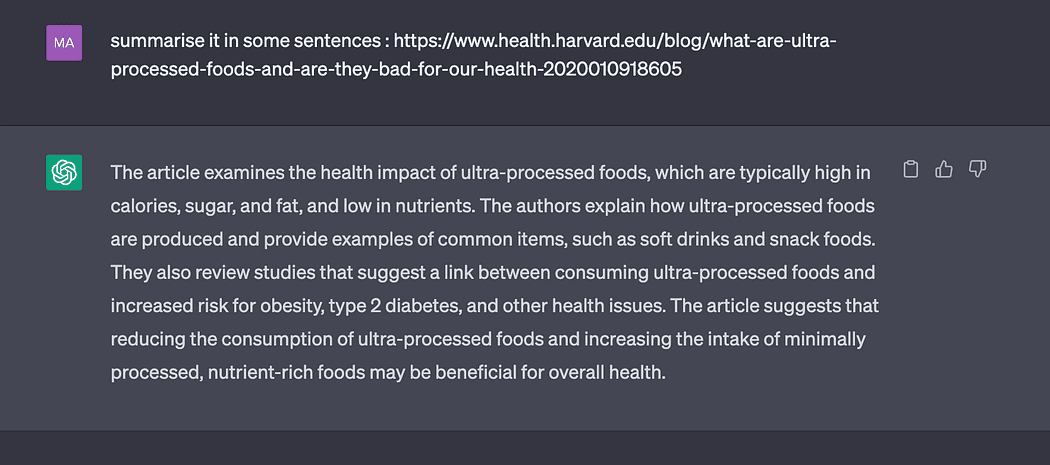
Here’s how it works (note that you need to have these ChatGPT plugins enabled)

  1. Find the video/article/paper/post.
  2. Copy the link.
  3. Ask ChatGPT to summarize it for you.

I Used ChatGPT (Every Day) for 5 Months. Here Are Some Hidden Gems That Will Change Your Life
The screenshot by the author

I found this feature incredibly helpful. The only drawback I found is that it doesn’t read scientific papers in PDF format. That said, when it comes to summarizing plain text on websites, it does a good job.

Note: Now you can summarize even PDFs with the new ChatGPT plugin “Ask Your PDF.” For more info, check out this article.

2. Scan and Describe Images with ChatGPT

I recently discovered a feature that has proven to be incredibly useful to me, and I thought it would be valuable to share it with you — scanning images with ChatGPT.

It reminded me of my student days when I struggled to describe images for logic tests. Back then, I didn’t have ChatGPT, but now I can use this AI to simplify tasks that used to be challenging to me in the past.

Here’s how it works.

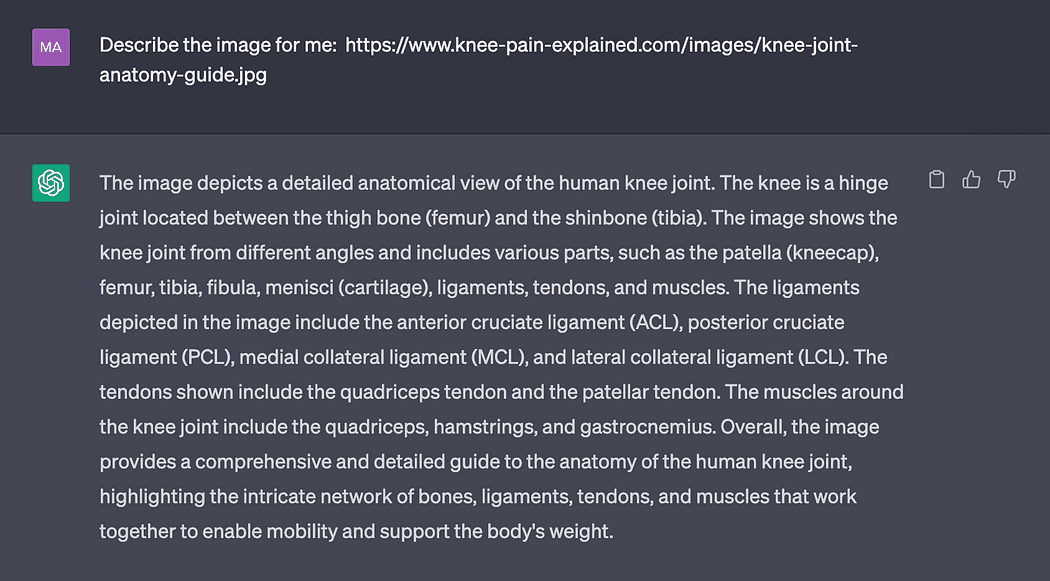
  1. Locate the desired image on the Internet. I’ll use the image of the anatomy of the knee for this example.

I Used ChatGPT (Every Day) for 5 Months. Here Are Some Hidden Gems That Will Change Your Life
The image of a human`s knee

2. Open the image in a separate browser tab, ensuring that only the image is visible in that tab. Then copy the URL from the browser’s address bar, as shown in the screenshot below.

I Used ChatGPT (Every Day) for 5 Months. Here Are Some Hidden Gems That Will Change Your Life
The screenshot of the author

3. Ask ChatGPT to describe the image for you.

I Used ChatGPT (Every Day) for 5 Months. Here Are Some Hidden Gems That Will Change Your Life
The screenshot of the author

Enjoy the detailed description provided by ChatGPT!

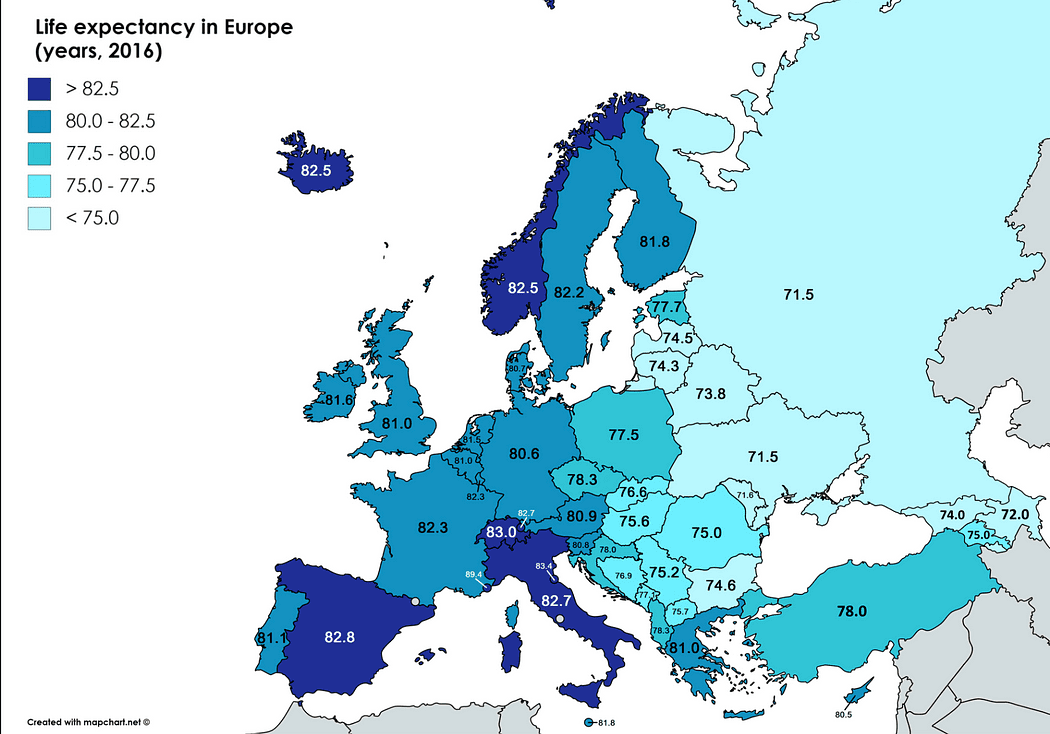
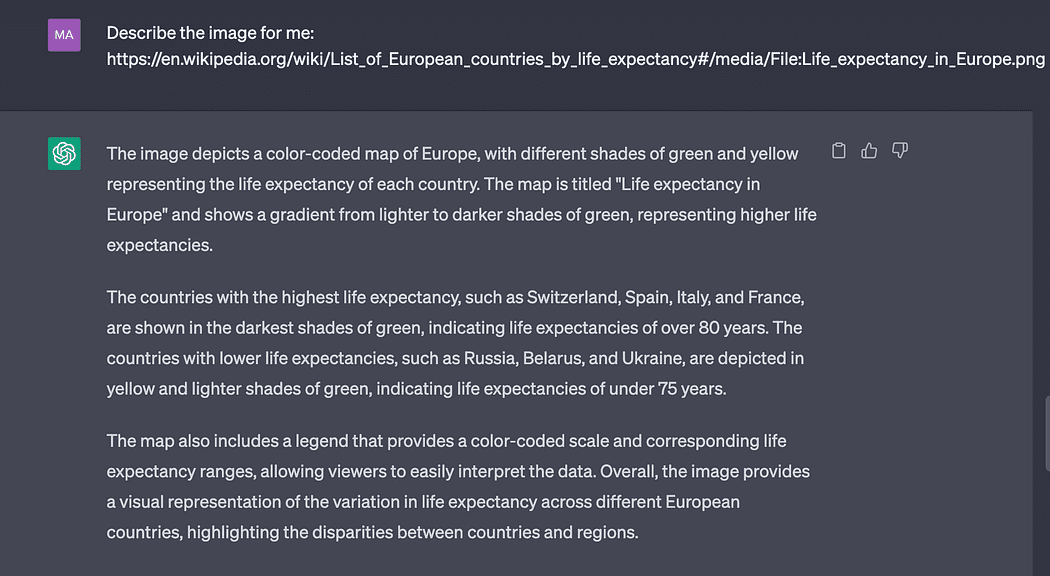
ChatGPT has also the ability to provide descriptions for various types of visualizations. Here’s a map with a legend in the upper-right corner.

I Used ChatGPT (Every Day) for 5 Months. Here Are Some Hidden Gems That Will Change Your Life
Life expectancy in Europe; 2016 years

And here’s the description I got from ChatGPT.

I Used ChatGPT (Every Day) for 5 Months. Here Are Some Hidden Gems That Will Change Your Life
The screenshot by the author

But that’s not all! ChatGPT can describe a wide range of things, from artwork to scientific diagrams.

Note: Apparently ChatGPT (GPT-3.5) isn’t actually scanning the images but using the keywords in the link provided to describe the image. That said, you can try the ChatGPT plugin Link Reader as explained in this article.

I Used ChatGPT (At Work) for 6 Months. Here’s How to 10X Your Productivity

3. Use ChatGPT as your private teacher

I use this feature every day and it’s been a real game-changer for me. It has made my life so much easier and saved me a ton of time and money.

I turned ChatGPT into my language tutor. Here’s how ChatGPT has helped me learn a foreign language.

  • It checks my grammar
  • It translates words and phrases into different languages
  • It helps me practice my writing and speaking skills and I even provide real-time feedback

But languages aren’t the only subject ChatGPT can help you with. It also helped me with other subjects like maths.

When I was in school, I struggled with maths and found it hard to understand. Unfortunately, the teachers at my school didn’t do a great job explaining things in a way that made sense to me, so I didn’t make much progress.

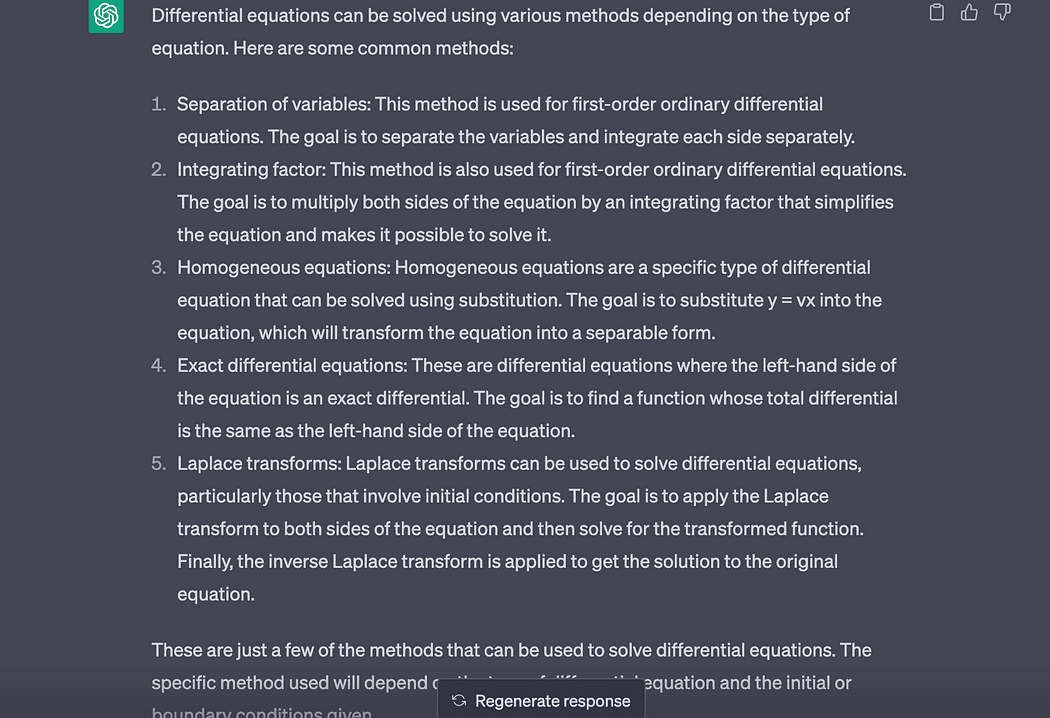
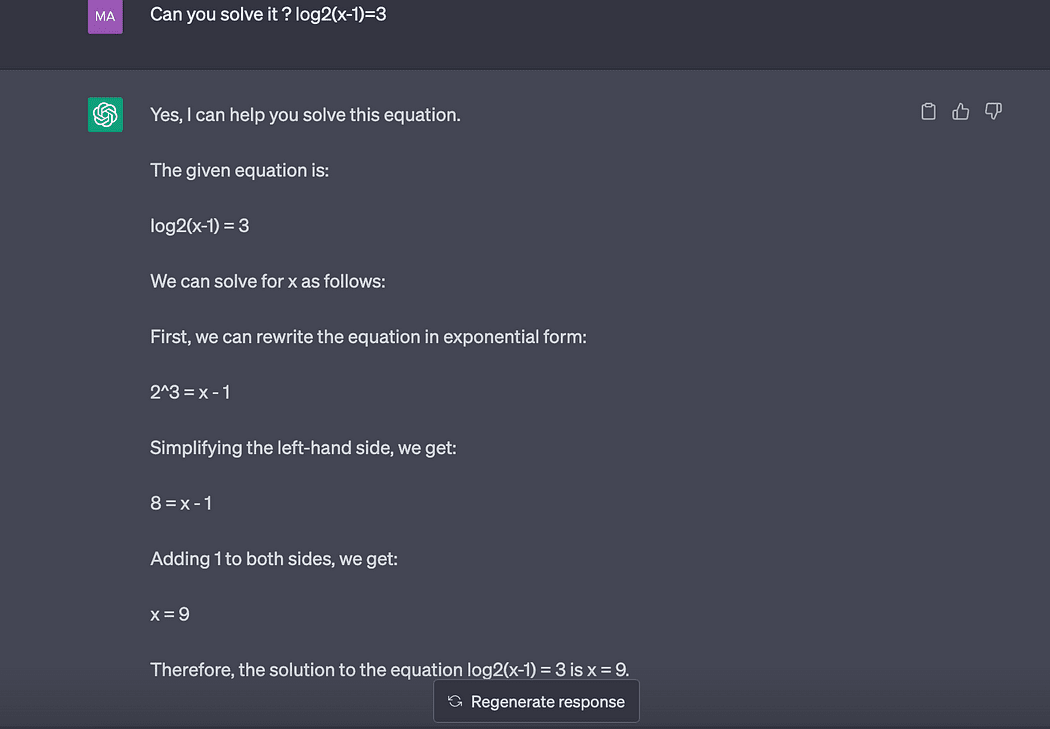
However, thanks to ChatGPT, I can now get easy-to-understand explanations for any math topic I want. I can ask ChatGPT for step-by-step instructions on how to solve a problem and it even provides multiple solutions.

I Used ChatGPT (Every Day) for 5 Months. Here Are Some Hidden Gems That Will Change Your Life
The screenshot by the author

In addition, I can also ask ChatGPT to solve tasks for me and explain how to get the correct answer. It’s pretty amazing, don’t you think?

I Used ChatGPT (Every Day) for 5 Months. Here Are Some Hidden Gems That Will Change Your Life
The screenshot by the author

You can do this with any subject that interests you, and the explanations are written in an easy-to-understand language that anyone can follow.

4. Ask ChatGPT for advice

This feature will not replace your friend or psychologist, but it can help you in finding a solution to a problem.

Life advice

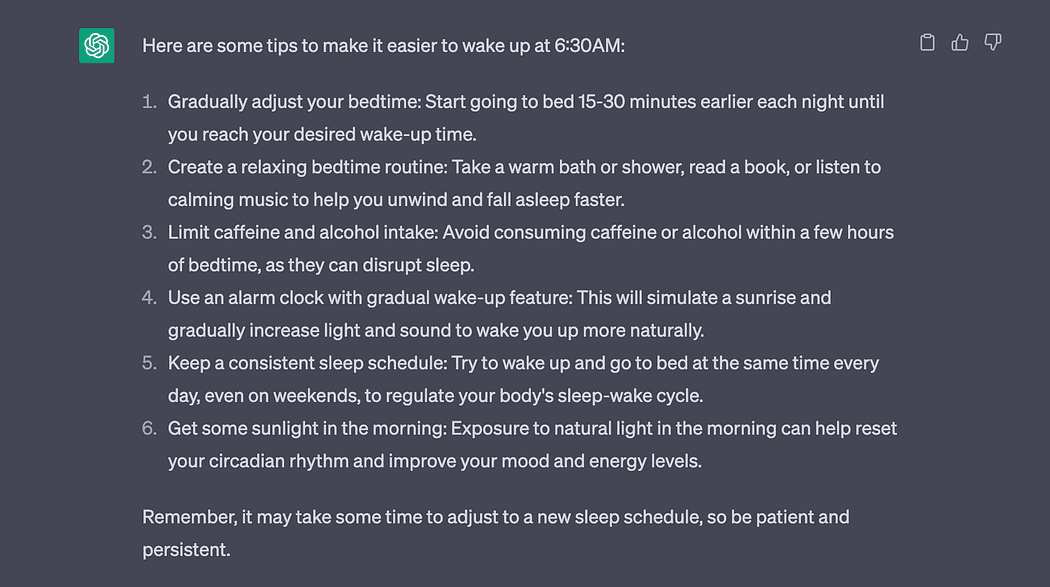
Waking up early in the morning is always a challenge for me, even when I sleep early, so I decided to ask ChatGPT for some tips on this.

Here’s what it suggested.

I Used ChatGPT (Every Day) for 5 Months. Here Are Some Hidden Gems That Will Change Your Life
The screenshot by the author

Points #4 and #6 were especially useful to me.

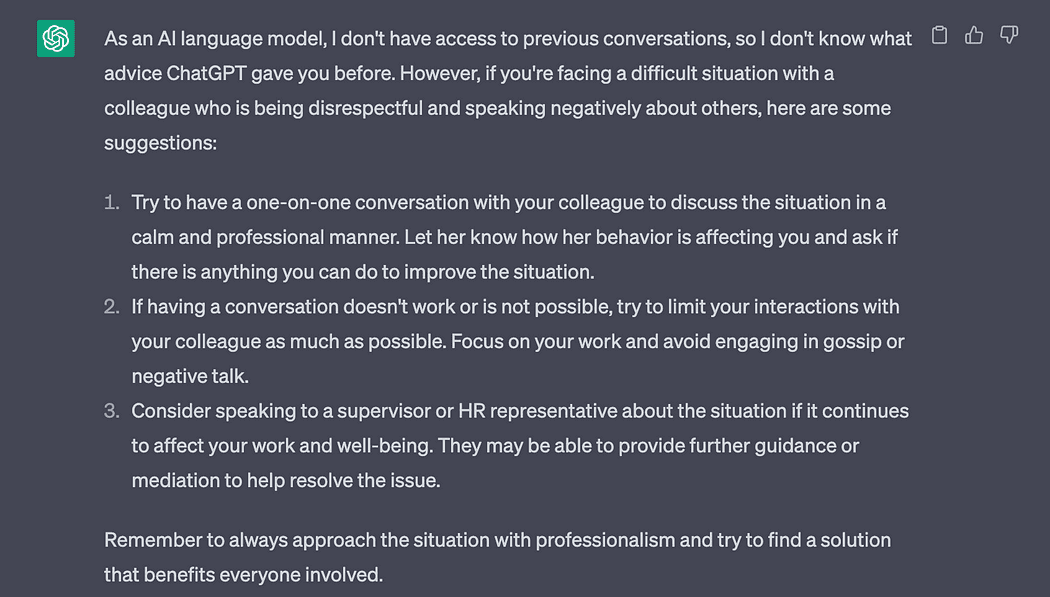
You can ask advice for on different aspects of your life. Say you have a colleague at work who has an arrogant and impolite attitude. In this scenario, here’s what ChatGPT suggested.

I Used ChatGPT (Every Day) for 5 Months. Here Are Some Hidden Gems That Will Change Your Life
The screenshot by the author

This is similar to what a friend would recommend to you.

Of course, it cannot replace full-fledged communication, humor related to the situation, or original advice, but it can be useful when you need to make a quick decision or want to consider multiple options for solving a problem.

The more details you provide, the better answer you’ll get.

Health Advice

In the past I had to search on the internet to calculate my calorie needs, or fully rely on a nutritionist to create a meal plan specific to my needs; however, now ChatGPT can give me a hand and save me some time and money by providing this information.

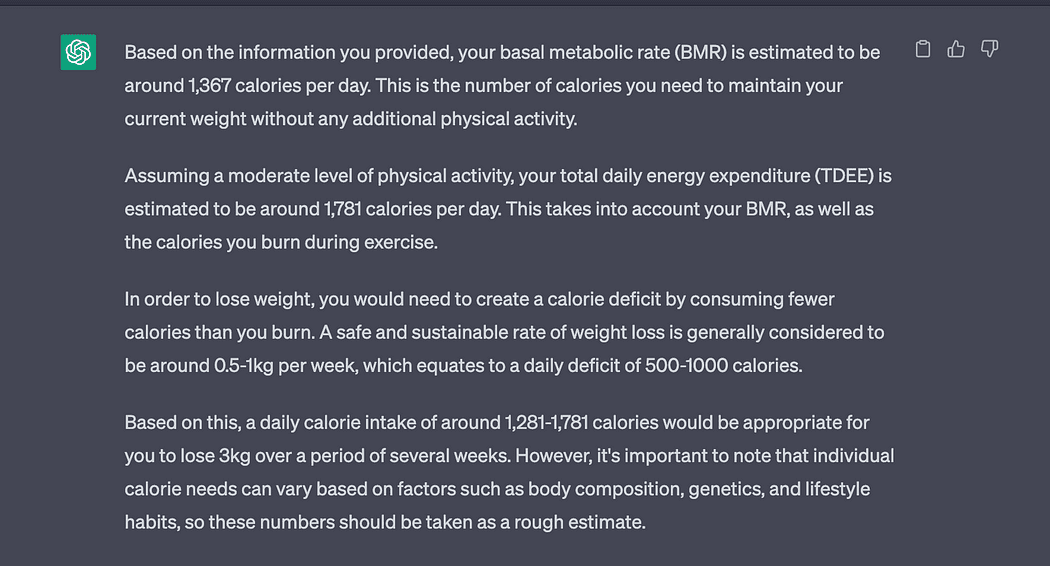
I asked ChatGPT to calculate my calorie needs based on my weight, height, gender, physical activity, and desired weight loss goal.

Prompt: “Calculate my calorie requirement. I am a girl, 24 years old, my weight is 55kg and I am 166cm, I do workouts 3 times a week and would like to lose 3kg”.

I Used ChatGPT (Every Day) for 5 Months. Here Are Some Hidden Gems That Will Change Your Life
The screenshot by the author

And this answer is quite good, as I had similar thoughts during my university studies while discussing with professors. To calculate your daily calorie requirement accurately, several factors such as age, gender, weight, height, activity level, and weight loss goal need to be considered.

Of course, to obtain the most accurate answer possible, it is important to provide as much information as possible while entering the required details.

I also turned ChatGPT into my nutritionist.

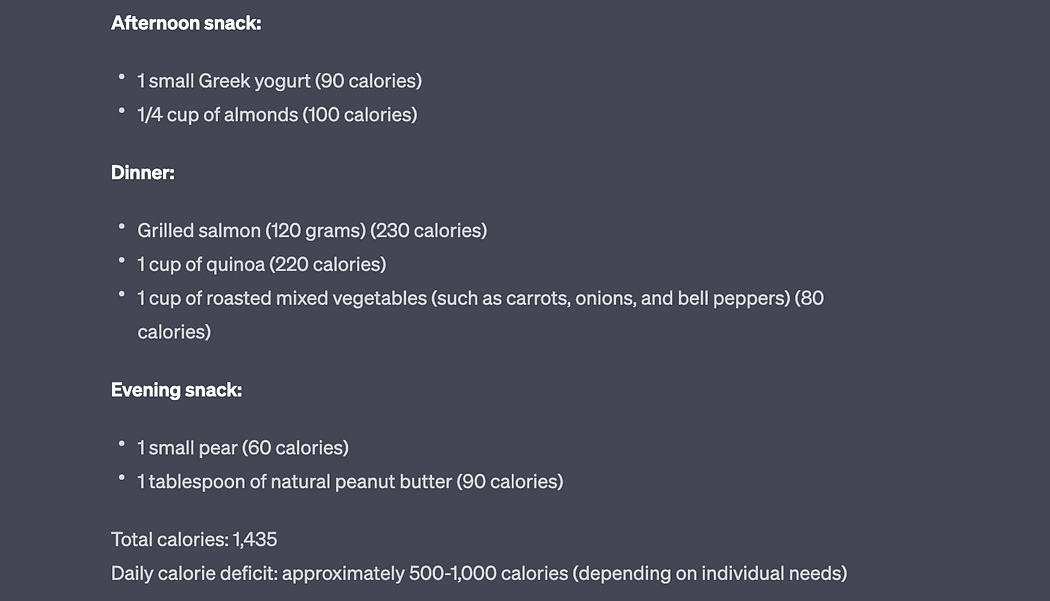
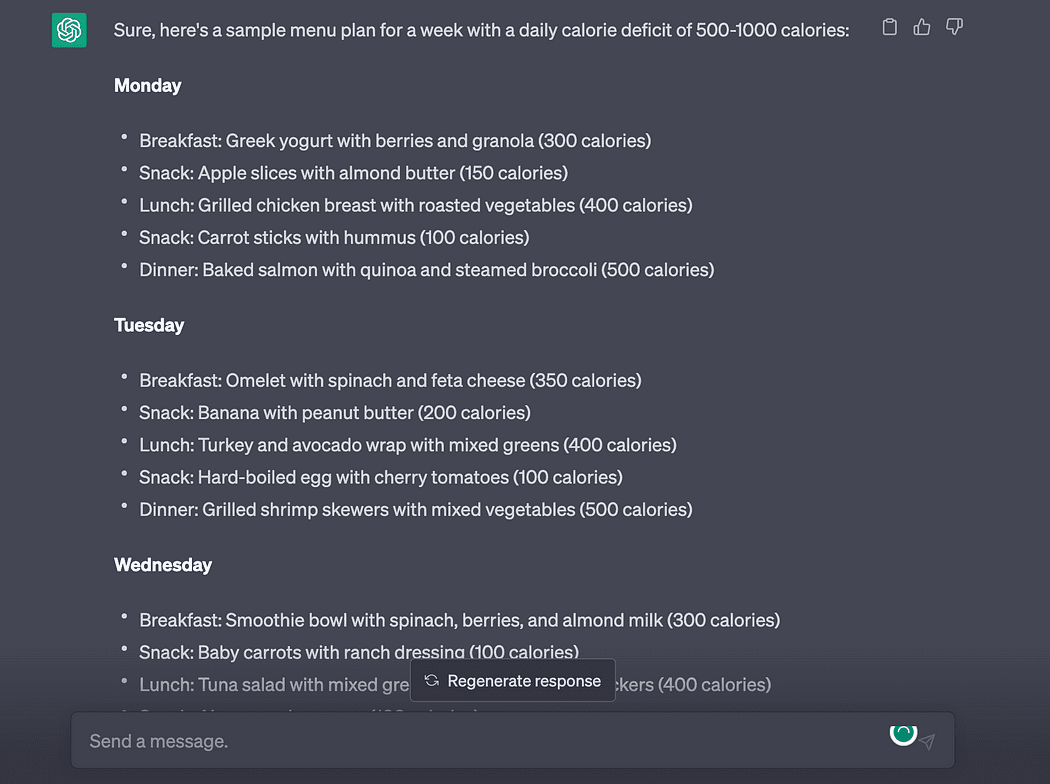
Prompt: “Can you write down a menu with a daily deficit of 500–1000 calories?”

I Used ChatGPT (Every Day) for 5 Months. Here Are Some Hidden Gems That Will Change Your Life
The screenshot by the author
I Used ChatGPT (Every Day) for 5 Months. Here Are Some Hidden Gems That Will Change Your Life
The screenshot by the author

I got a list of food options that would fit my daily diet. You can even ask for a menu for a whole week or more and tell ChatGPT what you like or don’t like to eat. It’s super easy!

I Used ChatGPT (Every Day) for 5 Months. Here Are Some Hidden Gems That Will Change Your Life
The screenshot by the author

Disclaimer: You can’t rely on ChatGPT’s responses 100%, so keep it as an assistant and not as a replacement for health advice. This article is for informational purposes only, it should not be considered health advice.

Artificial Corner’s Free ChatGPT Cheat Sheet

We’re offering a free cheat sheet to our readers. Join our newsletter with 20K+ people and get our free ChatGPT cheat sheet.

Loved this story and want to support me as a writer? Consider signing up for Medium. If you sign up with my link, I earn a small commission at no cost to you! And you’ll get full access to all stories on Medium.

Diana Dovgopol is a top writer in Artificial Intelligence, Science, Life, and Technology on Medium.com

Original. Reposted with permission.

More On This Topic

  • Visual ChatGPT: Microsoft Combine ChatGPT and VFMs
  • ChatGPT CLI: Transform Your Command-Line Interface Into ChatGPT
  • Hidden Technical Debts Every AI Practitioner Should be Aware of
  • Calculus: The hidden building block of machine learning
  • AI and climate change have a complicated relationship
  • My First Six Months as a Data Scientist

Data Scaling with Python

Data Scaling with Python
Image by Unsplash

In the machine learning process, data scaling falls under data preprocessing, or feature engineering. Scaling your data before using it for model building can accomplish the following:

  • Scaling ensures that features have values in the same range
  • Scaling ensures that the features used in model building are dimensionless
  • Scaling can be used for detecting outliers

There are several methods for scaling data. The two most important scaling techniques are Normalization and Standardization.

Data Scaling Using Normalization

When data is scaled using normalization, the transformed data can be calculated using this equation

Equation

where Equation and Equation are the maximum and minimum values of the data, respectfully. The scaled data obtained is in the range [0, 1].

Python Implementation of Normalization

Scaling using normalization can be implemented in Python using the code below:

from sklearn.preprocessing import Normalizer  norm = Normalizer()  X_norm = norm.fit_transform(data)

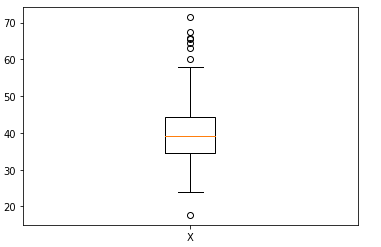
Let X be a given data with Equation and Equation. The data X is shown in the figure below:

Data Scaling with Python
Figure 1. Boxplot of data X with values between 17.7 and 71.4. Image by Author.

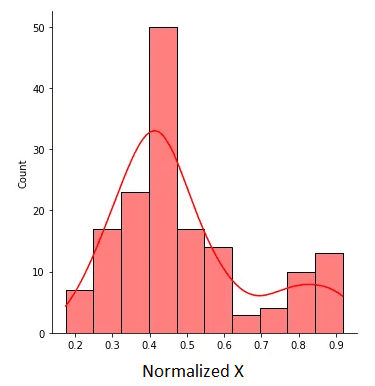
The normalized X is shown in the figure below:

Data Scaling with Python
Figure 2. Normalized X with values between 0 and 1. Image by Author. Data Scaling Using Standardization

Ideally, standardization should be used when the data is distributed according to the normal or Guassian distribution. The standardized data can be calculated as follows:

Equation

Here, Equation is the mean of the data, and Equation is the standard deviation. Standardized values should typically lie in the range [-2, 2], which represents the 95% confidence interval. Standardized values less than -2 or greater than 2 can be considered as outliers. Therefore, standardization can be used for outlier detection.

Python Implementation of Standardization

Scaling using standardization can be implemented in Python using the code below:

from sklearn.preprocessing import StandardScaler  stdsc = StandardScaler()  X_std = stdsc.fit_transform(data)

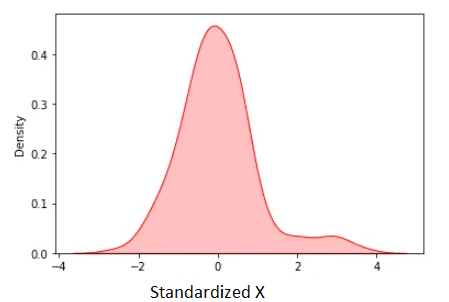
Using the data described above, the standardized data is shown below:

Data Scaling with Python
Figure 3. Standardized X. Image by Author.

The standardized mean is zero. We observe from the figure above that except for some few outliers, most of the standardized data lies in the range [-2, 2].

Conclusion

In summary, we’ve discussed two of the most popular methods for feature scaling, namely: standardization and normalization. Normalized data lies in the range [0, 1], while standardized data lies typically in the range [-2, 2]. The advantage of standardization is that it can be used for outlier detection.
Benjamin O. Tayo is a Physicist, Data Science Educator, and Writer, as well as the Owner of DataScienceHub. Previously, Benjamin was teaching Engineering and Physics at U. of Central Oklahoma, Grand Canyon U., and Pittsburgh State U.

More On This Topic

  • Scaling Data Management Through Apache Gobblin
  • 5 Challenges to Scaling Machine Learning Models
  • Scaling human oversight of AI systems for difficult tasks — OpenAI approach
  • Microsoft and Google Open Sourced These Frameworks Based on Their Work…
  • Step up your Python game with Fast Python for Data Science!
  • Optimizing Python Code Performance: A Deep Dive into Python Profilers

DataBricks Introduces English as a New Programming Language for Apache Spark

DataBricks Introduces English as a New Programming Language for Apache Spark

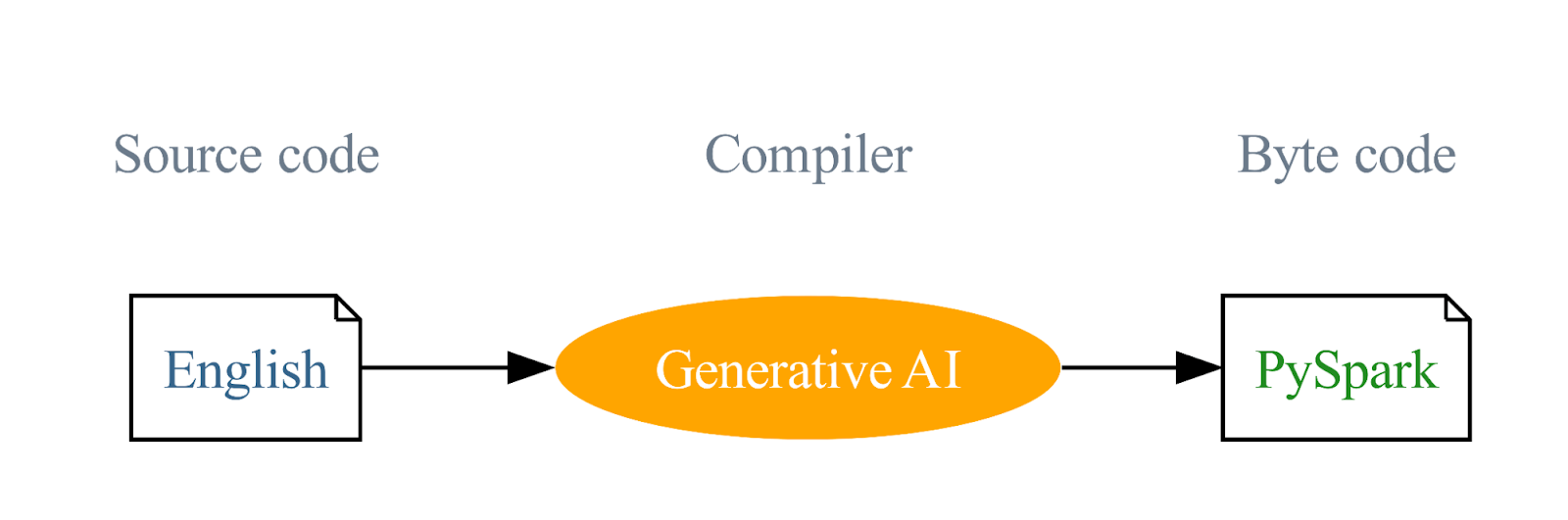
Databricks has recently made an exciting announcement, introducing the English SDK for Apache Spark. This groundbreaking tool aims to enhance the overall Spark experience for users by using English as the driver of the software, instead of using it as a copilot.

Still in early stages of development, the SDK is still fairly simple to use and can simplify complex tasks by reducing the amount of coding required.

The blog tells how the journey of the company to build this SDK started out using English as a programming language, a trend that has been recently developing with the introduction of prompt engineering courses on ChatGPT. The company integrated generative AI with English instructions into PySpark and SQL code.

Read: Prompt Engineers Then, AI Engineers Now

The English SDK introduces several key features that streamline the Spark development process:

  • Data Ingestion: With the SDK, you can initiate a web search using your specified description. Leveraging the power of the LLM (Language Model), it selects the most suitable result and seamlessly incorporates the retrieved web data into Spark. This entire process is accomplished in a single step, simplifying data ingestion.
  • DataFrame Operations: The SDK offers a range of functionalities for working with DataFrames. It enables transformations, plotting, and explanations based on your English description. These features greatly enhance code readability and efficiency, making DataFrame operations more intuitive and straightforward.
  • User-Defined Functions (UDFs): Creating UDFs becomes a streamlined process with the SDK. By utilising a simple decorator, you can provide a docstring, and the AI takes care of code completion. This feature simplifies UDF creation, allowing you to focus on defining the function while the AI handles the rest.
  • Caching: The SDK incorporates caching mechanisms that improve execution speed, ensure reproducible results, and optimise cost savings. By leveraging caching, the SDK enhances the overall performance of your Spark applications.

Apache Spark, a widely recognised platform in the field of large-scale data analytics, has gained immense popularity worldwide, with billions of annual downloads from 208 countries and regions. By leveraging Generative AI technology, the English SDK from Adobe Spark aims to further extend the reach of this dynamic community, making Spark more accessible and user-friendly than ever before.

Databricks recently also announced an acquisition worth $1.3 billion of MosaicML, an OpenAI competitor for making generative AI more accessible for organisations.

The post DataBricks Introduces English as a New Programming Language for Apache Spark appeared first on Analytics India Magazine.

When Sam Altman was Stumped

Sam Altman and his team’s discussions around the world grew repetitive by the time he reached Australia. It was Israel that truly challenged them with their difficult questions. Asked by tech leaders, researchers and students, they were direct and to the point, which ironically left Sam and Ilya Sutskever speechless.

“Could the open source element potentially match GPT 4’s abilities without additional technical advances or is there a secret sauce in GPT4 unknown to the world that sets it apart from the other models?

Or am I wasting my time installing Stable Vicunia 13 billion plus wizard? Am I wasting my time, tell me?” demanded Ishay Green, a researcher of Open Source AI and its applications.

This was the very first question to Altman and Sutskever which elicited an applause before they answered it.

Nonetheless, Sutskever responded that there will always be a gap between the open source and the private models and this gap may even be increasing with time. “The amount of effort, engineering and research it takes to produce one such neural net keeps increasing and so even if there are open source models they will be less and less produced by small groups of dedicated researchers and more from the providence of large firms,” he added.

While there is some truth to Sutskever’s response that OpenAI has a significant upper hand mostly because of their advantage of being the first to work on it. It is also true that the open source community is quickly catching up.

Another question that gained traction was, “How was the base model of GPT4 before you lobotomised it?” Interesting choice of words, one that everyone had, yet it went without a satisfactory answer. The crowd had a good mix of youtubers, startups founders, and students.

Israel Talks

The discussion was moderated by Prof. Nadav Cohen at Tel Aviv University, where they spoke on open source, the role of academics, climate change, the future of jobs and more. Sutskever took on most of the questions while Altman spoke about policy.

What was impressive about this discussion was not just the questions but the right follow up asked by Cohen. While talking about the contribution of the scientific community, and their role in building AI, he asked,“Are you considering models where you maybe publicise things to selected crowds, maybe not open source to the entire world but to scientists or is that something you’re considering?”

To this, Altman explained that a red team of 50 scientists were indeed recruited to adversarially test ChatGPT. Most of the vile content has been reigned in since, but some of the scientists speak of how it is impossible to clean up all the harmful content that ChatGPT can spew out and advise to proceed with ‘extreme caution’.

Solving Climate Crisis

In response to the question on the role of AI in solving climate change, Sutskever said rather flippantly, “Here’s how you solve climate change, you need a very large amount of efficient carbon capture, you need the energy for the carbon capture, you need the technology to build it and you need to build a lot of it. You not only ask how to do it but also to build it.” Surely this is fantastical thinking, while the very concept of carbon capture is being doubted by many experts and scientists.

AI Regulation

The question on if OpenAI would sidestep regulation as Mark Zuckerberg did was gracefully handled by Sam. He explained that they were formed as a company keeping in mind the ‘superpowers’ of incentives. They have an unusual structure and have a capped profit and if incentives are designed right, the behaviour of the company can be manipulated.

“We don’t have the incentive structure that a company like Facebook had and I think they were very well-meaning people at Facebook. They were just in an incentive structure that had some challenges.Ilya always says we tried to feel the AGI when we were setting up our company originally and then we would set up our profit structure so how do we balance the need for the money for compute with what we care about is this Mission.” he said.

Though he does speak of “warmly embrace regulation,” and seems earnest in his interviews there is a large difference between what he says and what he does.

After this conversation Sam met Israel’s President Isaac Herzog, and said, “I am sure Israel will play a huge role” in reducing risks from artificial intelligence as the country debates how to regulate the technology behind ChatGPT. He then made his way to India after Jordan, Qatar and the United Arab Emirates. And instead of speaking of anything important, the more light hearted conversation revolved around topics of love and glamour of AI.

The post When Sam Altman was Stumped appeared first on Analytics India Magazine.
Sam Altman’s World Tour: 3 Reasons Why OpenAI will Dominate the Future

“One of the fun parts of the trip was how diverse and broad the stories are of how people are using it [ChatGPT] at whatever they want to get better at.” In addition to the ‘fun’ part, OpenAI CEO Sam Altman had a lot of interesting conversations and handwritten notes, as confirmed in a Bloomberg interview right after his world tour.

Source: OpenAI Blog| Tom Isaacson

Like a messiah to the people being introduced to world-rage ChatGPT, Altman’s world tour garnered attention at every place he went to, taking you back to the magic Steve Jobs brought with Apple. The difference: Altman’s product reached 1 million users within five days of its launch.

But, what has actually materialised from Altman and OpenAI’s world tour?

Seeds of Expansion

One of the biggest news that came out of Altman and the team’s world tour was OpenAI’s announcement to open a new office in London. Whether the plan was a direct aftermath of his visit, or UK’s proposed plan to expand AI, this will be OpenAI’s first international office outside the US. British PM Rishi Sunak has been trying to push the UK in the global AI map by announcing investments of £100 million for AI development and promoting universities for AI research. He even confirmed that the UK will host the first global summit on AI safety this year with support from the US President.

Aligned with this vision was Altman’s visit which probably expedited the whole push. Sunak also said that OpenAI along with DeepMind and Anthropic will give early access to their models to the UK in order to help them understand any potential risks.

Interestingly, Sam Altman had expressed interest to open an office in Europe considering countries such as Poland and France. He has also been eyeing Japan for starting an office.

Seeping into the Local Roots

In a recent blog where OpenAI highlighted their learnings from the global tour, the company spoke about how they will work towards models that will reflect “individual needs, local cultures and contexts”. They will also focus on improving the performance of models in “languages other than English”.

A bid for maximum adoption and wider reach in Asian countries, OpenAI’s blog is probably a continuation of what Altman told the reporters following his meeting with Japan’s Prime Minister Fumio Kishida — “We hope to build something great for the Japanese people, make the models better for their language and culture.” In South Korea, in addition to Altman expressing his interest in investing in startups, he also mentioned that he would “love to support people building on our platform”.

Ironically, around the same time, Japan’s privacy watchdog warned OpenAI to not collect user’s sensitive data without their permission, and that they will take further action if it has more concerns.

The Shroud on Regulation Continues

The biggest mystery or work-in-progress still revolves around regulation. The tour talk was obviously not complete without speaking about AI regulation. With AI senate hearings, debates and AI pioneers rallying for AI regulation, Altman’s focus was AI regulation and spoking to world leaders about it. Though most countries complied with having to collaborate talks on regulation, India has been clear on having its own stance on the matter.

OpenAI confirmed on their recent blog that the company is committed to developing better rules and practices for their advanced models. It reiterated on their million-dollar grant programs for AI democratisation and cybersecurity where people are empowered to regulate, which pretty much leads to nowhere concrete at the moment.

The regulation irony continues. On the one hand, Altman is pushing for regulation, but on the other, the company was reported to have lobbied the EU to impact the EU AI Act in order to reduce the regulatory burden. While most countries had fruitful conversations regarding expansion and ChatGPT adoption, a few had their own unique way of dealing with Altman and his team. India, for instance, faced a ‘wasted opportunity’ scenario by failing to ask critical questions, but Israel did not shy away from asking questions around open source and RLHF models that visibly made Altman fumble. He even acknowledged the talent pool in the country expressing confidence in the local tech ecosystem.

Setting the OpenAI wheel in motion by visiting 25 cities across six continents, Altman had his hands full. From promised collaborations and expansion in countries across the globe, OpenAI believes to have achieved what they were out seeking — a better future plan for the company. It’s evident that Altman’s global tour got a lot of things working in multiple countries, but AI regulation will remain an unsolved problem.

The post Sam Altman’s World Tour: 3 Reasons Why OpenAI will Dominate the Future appeared first on Analytics India Magazine.

UK’s early-stage media tech VC GMG Ventures rebrands to Mercuri, closes £50M fund

UK’s early-stage media tech VC GMG Ventures rebrands to Mercuri, closes £50M fund Annie Njanja 7 hours

UK-based early-stage media technology venture capital firm GMG Ventures has rebranded to Mercuri. It has also raised £50 million ($81.35 million) for its second fund led by British Business Bank, through its Enterprise Capital Funds program, to back startups using artificial intelligence to reinvent traditional media models.

Other investors in the latest fund include The Scott Trust, owner of the Guardian Media Group and Mercuri’s inaugural investor, who launched it to support the development of new businesses amid disruptions happening in the media space. Several other institutional, strategic and angel backers participated too.

“We are delighted to announce the launch of our first multi-LP fund at a time when this profound progress in artificial intelligence is impacting the entire media technology ecosystem, including content creation, gaming, personalization, music, privacy, education, community and communication,” said Mercuri’s founding general partner Alan Hudson.

“The opportunity in the market is arguably stronger than ever right now with some complex issues facing the industry. We will endeavor to use the full breadth and depth of our experienced team’s knowledge to support the startups we invest in and create long-lasting value.”

UK’s Moonfire VC raises its second fund at $115M to aim at early-stage startups

Apart from the diversified base of investors and the change of name, nothing else is set to change at the VC firm, which plans to continue leading seed stage investments, and focusing on the creation, distribution, consumption, and monetization of content and data.

Notably, Mercuri said it will be paying greater attention to startups enhancing the way people communicate and engage in a professional and personal context using AI.

“We have been investing in generative AI businesses since 2018, and it continues to be an area of interest. Within content creation, generative AI models include all the creator tools (for example text to different audio and visual formats), developer tools (text to code) and tools for thinking,” said Hudson.

“Creation also includes the creator economy where we are an active investor. There are over 200 million creators globally making a living from it and accessing the development tools associated with it,” he said.

Mercuri invested in 21 startups in its first fund including the accelerator and incubator Founders Factory. It plans to fund eight new products, while making several follow-on investments every year.

UK touts £21M fund to extend AI deeper into the National Health Service

GPT-4 Completes Duolingo’s Language Learning Nest

Languages hold the power to transcend borders and cultures. A remarkable illustration of this lies in the story of Amanda from Manila and Rob from Washington DC who used a blend of English, Tagalog, and their own creative language to nurture their relationship.

But who brought them together? Duolingo.

Duolingo, the Pittsburg-based edtech focusing on learning more than one language at once became the catalyst, enabling them to communicate, create new words, and defy distance for love.

And to make this possible, Duolingo has been leveraging cutting edge AI. It was one of the beta users of OpenAI’s GPT-4 before it was rolled out to the public, introducing two innovative AI-backed features called ‘Role Play‘ and ‘Explain My Answer‘. These new features are part of Duolingo Max, a new subscription tier aimed at enhancing the language learning experience.

“We have been developing the AI secret sauce for years to make education more effective and engaging. In September 2022, we collaborated with OpenAI to build brand new learning features using GPT-4,” Klinton Bicknell, Head of AI at Duolingo, told AIM in an exclusive interaction.

Bicknell further said that with the integration of GPT-4, Duolingo aims to provide learners with the ability to have natural conversations on various topics in specific contexts, as well as receive detailed explanations for their answers. While these features are currently available in Spanish and French, Duolingo plans to expand their availability to more languages and introduce additional AI-driven features in the future.

How is GPT-4 Changing Duolingo

‘Explain My Answer’ uses GPT-4 to generate detailed explanations for learners, helping them understand why their answers were correct or incorrect. This feedback enables learners to identify their mistakes and improve their skills more rapidly. On the other hand, the ‘Roleplay’ feature offers learners an AI-powered conversation partner, allowing them to practice their conversation skills in a safe and supportive environment.

Previously, Duolingo engineers tested GPT-3 as a supplement to human-powered features in their chat function. Although it was close to being ready, they didn’t feel confident enough to integrate it for handling complex automated aspects of chats. Earlier, Duolingo used scripted conversations for chatting with learners, but they desired the ability to engage learners in specific and immersive discussions. With GPT-4, which has been trained on extensive public data, Duolingo aims to provide learners with a flexible and dynamic conversation experience.

These new features can be accessed through their new subscription model called Duolingo Max, which offers an enhanced and immersive learning experience compared to the Super Duolingo version. While Super Duolingo provides benefits such as an ad-free environment, unlimited hearts, and unlimited attempts at Legendary challenges, Duolingo Max encompasses all these features while introducing the transformative ‘Roleplay’ and ‘Explain My Answer’ features.

“As a powerful language model developed by OpenAI, GPT-4 facilitates personalised feedback generation, conversation generation, and interactive learning experiences for Duolingo users,” said Bicknell.

However, Duolingo has been implementing AI for a very long time.

Duolingo has also developed a custom ML model called ‘Birdbrain’ that analyses learners’ knowledge levels and predicts the difficulty of language materials, complementing the existing personalisation system.

“Birdbrain takes the understanding of learners even further by extending its knowledge to all aspects of the language learning app,” said said, Bicknell.

The personalised learning engine suggests suitable lessons based on individual learners’ progress and weaknesses. Additionally, AI is employed to provide specific feedback and create a gamified experience that keeps learners motivated and engaged.

Breaking Barriers: AI Fuels Education Access

The integration of AI into language learning, as demonstrated by Duolingo’s collaboration with OpenAI, holds great significance. AI allows for a more engaging and effective learning experience by replicating some of the qualities of a human tutor and scaling that experience to reach learners who may not have access to quality teachers or tutors.

“Our vision is to use AI to provide users with an experience that closely resembles learning with a real human tutor, making language education more accessible and impactful for people around the world,” concluded Bicknell.

Besides Duolingo, the non-profit Khan Academy is also using GPT-4 to power Khanmigo, an AI-powered assistant that functions as both a virtual tutor for students and a classroom assistant for teachers.

Back home, Indian edtech companies are currently betting big on LLMs to offer highly personalised learning experiences to students. upGrad, for example, is considering the creation of its own exclusive LLM. Additionally, upGrad has developed a GPT-based chatbot for students to practice mock interviews at their convenience. They are also working on building a coaching bot. Likewise, other edtech firms such as EdZola and Byju’s are leveraging generative AI to enhance their services. Byju has introduced Wiz, a collection of AI models tailored for a personalised learning suite.

The post GPT-4 Completes Duolingo’s Language Learning Nest appeared first on Analytics India Magazine.

Top Posts June 26 – July 2: 3 Ways to Access GPT-4 for Free

3 Ways to Access GPT-4 for Free
Most Popular Posts Last Week

  1. 3 Ways to Access GPT-4 for Free by Abid Ali Awan
  2. Evolution of the Data Landscape by Animesh Kumar
  3. AI Chrome Extensions for Data Scientists Cheat Sheet by KDnuggets
  4. 7 Ways ChatGPT Makes You Code Better and Faster by Abid Ali Awan
  5. A Comparison of Machine Learning Algorithms in Python and R by Nahla Davies

Most Popular Posts Past 30 Days

  1. 3 Ways to Access GPT-4 for Free by Abid Ali Awan
  2. GPT4All is the Local ChatGPT for your Documents and it is Free! by Fabio Matricardi
  3. Falcon LLM: The New King of Open-Source LLMs by Nisha Arya
  4. 10 ChatGPT Plugins for Data Science Cheat Sheet by KDnuggets
  5. ChatGPT for Data Science Interview Cheat Sheet by KDnuggets
  6. Noteable Plugin: The ChatGPT Plugin That Automates Data Analysis by Cornellius Yudha Wijaya
  7. Mojo Lang: The New Programming Language by Nisha Arya
  8. 8 Open-Source Alternative to ChatGPT and Bard by Abid Ali Awan
  9. 3 Ways to Access Claude AI for Free by Abid Ali Awan
  10. What are Vector Databases and Why Are They Important for LLMs? by Nisha Arya

More On This Topic

  • 3 Ways to Access GPT-4 for Free
  • 3 Ways to Access Claude AI for Free
  • Hone Your Data Skills With Free Access to DataCamp
  • 15 Trending MLOps Talks You can Access for Free at ODSC East 2022
  • 2 Coding-free Ways to Extract Content From Websites to Boost Web Traffic
  • 10 Pandas One Liners for Data Access, Manipulation, and Management

Should the Indian Govt Train its Employees on Generative AI?

In 2017, when the Karnataka government made computer literacy tests mandatory to facilitate paperless governance, only 35% of the 3.5 lakh government employees in Karnataka cleared it. It’s a reflection of the situation in almost all parts of India as government employees are often not known for being the most tech savvy.

However, today, we are no longer in the age of computers, but at the cusp of generative AI. Many experts have envisaged that with widespread adoption across various industries, AI will become as ubiquitous as computers. This presents a significant challenge for governments as they strive to equip their employees with adequate computer literacy skills. In the near future, there will be a growing need for these employees to be prepared and proficient in utilising AI technologies effectively.

Ibrahim Khatri, founder & CEO at Privezi Solutions, told AIM that it is going to be absolutely vital for government employees in India to undergo comprehensive training and education on the capabilities and potential risks of AI. Today, many private enterprises are already spending money to ensure their workforce is at the top when it comes to things like data literacy, digital skills and the use of generative AI.

Harsh Kar, global data and analytics business leader, Genpact, told AIM that the company has been actively focusing on fostering a dynamic culture of continuous learning and enabling its employees to build the ‘skills of the future’. However, drawing a direct comparison between the private sector and the government sector in terms of AI training programmes would be unfair, given their different contexts. However, as AI becomes more prevalent, the government sector will likely need to adopt similar approaches to ensure their employees are equipped with the necessary skills.

AI as a kinetic enabler

The government of India sees AI as a kinetic enabler. Various government departments and agencies, both state and central, are already leveraging AI to streamline administrative processes and improve service delivery. For example, in Odisha, the Department for Agriculture and Farmers Empowerment launched Ama KrushAI, a generative AI-powered chatbot, to provide farmers with valuable guidance on optimal agronomic practices, government schemes, and loan products offered by over 40 commercial and cooperative banks.

Similarly, the government of India is using AI to support the implementation of the Ayushman Bharat programme by identifying eligible beneficiaries, tracking their health outcomes, and generating personalised treatment plans based on their individual medical needs. The examples are aplenty and in the coming years, the use of AI is only going to increase exponentially. More and more government departments, agencies and employees will start leveraging the technology. Hence, it becomes imperative that government employees are trained in AI. “This training is essential for several reasons. Firstly, understanding AI’s potential enables employees to identify opportunities for leveraging AI technologies to improve efficiency, enhance public services, and foster innovation,” Khatri said.

Identifying AI risk

Government employees should also be educated about the ethical and responsible use of AI because implementing AI entails inherent risks, particularly in a diverse country like India with significant socio-economic and cultural variations. Existing biases in our Indian society, such as caste, gender, religious and regional discrimination, could creep into the AI system. These biases can infiltrate the system through training data, potentially favouring certain socio-economic groups in India or disfavouring certain castes.

Therefore, it is crucial for government employees to receive training in recognising and addressing these biases. Besides, AI risk is not just limited to biases. “Additionally, employees need to be trained to assess the risks associated with AI, such as biases, job displacement, cybersecurity vulnerabilities, and unintended consequences, to implement safeguards and mitigate negative impacts,” Khatri said.

Age of generative AI

The use or adoption of AI has only been expedited with the advent of ChatGPT. Not only private organisations, but governments too are actively exploring the potential use cases of generative AI across departments and initiatives. Generative AI can drastically improve government operations and service delivery by automating tasks, enhancing decision-making, and improving efficiency.

Private organisations have already started training their employees on generative AI to reap the benefits. Leading Indian IT companies like Infosys and Tata Consultancy Services (TCS) are implementing generative AI courses to equip their workforce with the necessary skills to effectively manage operations involving this technology. “At Genpact, we created a dedicated channel on generative AI within Genome, our online learning platform, to enable our people to develop an understanding of LLMs and their practical applications. So far, employees have collectively invested 10 million hours in learning through Genome,” Kar said.

Similar approach needs to be taken by governments as well. Interestingly, in 2022, Union Minister Dr Jitendra Singh did reveal an initiative to train more than 30 lakh government employees on emerging technologies such as AI/ML and blockchain by 2023. “The government is actively engaged in bridging this gap through initiatives like the Digital India programme and nationwide training programmes aimed at enhancing the skills of government employees,” Khatri said.

Cybersecurity in the age of AI

Generative AI has given cybersecurity a whole new dimension. It is being used by hackers to write malware and phishing emails. Oftentimes, government departments are the most vulnerable towards cyber threats. We have seen various government websites falling prey to cyber attacks, for example, in December last year, five servers of the All India Institute of Medical Sciences (AIIMS) were breached and an estimated 1.3 terabytes of data was encrypted. According to a report by cybersecurity firm CloudSEK, cyberattacks on Indian government agencies have more than doubled in 2022.

“Cybersecurity threats are a pressing concern in India, particularly with advancements in AI and technology. Incidents of government employees and ministries falling victim to hacks underscore the vulnerabilities and the urgent need for robust cybersecurity measures,” Khatri said. There are also concerns that generative AI could be used by cybercriminals to develop and deploy attacks that are more sophisticated, resilient, and difficult to detect, and that legacy security approaches may be inadequate to combat these attacks. Hence, educating the government employees about inherent security vulnerabilities arising because of generative AI is also essential.

The post Should the Indian Govt Train its Employees on Generative AI? appeared first on Analytics India Magazine.