What happens if a superintelligent AI goes rogue? OpenAI doesn’t want to find out

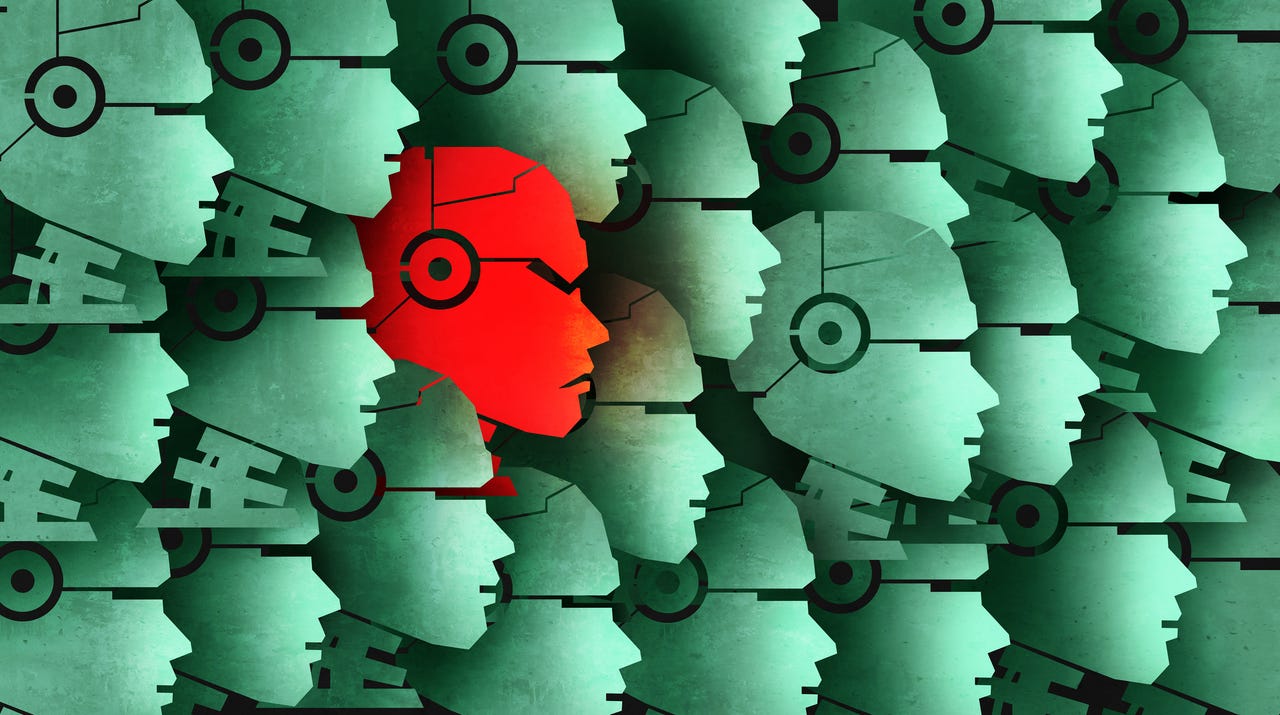
rogue AI concept

What would happen if a superintelligent AI smarter than the most intelligent humans were to one day go rogue? A new team at OpenAI is out to make sure we never find out.

In an announcement this week, OpenAI said it's building a team to "steer and control AI systems much smarter than us."

Also: Ahead of AI, this other technology wave is sweeping in fast

The artificial intelligence laboratory went on to say that superintelligence, which could arrive within the next decade, would be the most impactful technology ever created and could help solve the world's most important problems. But it followed that up with a rather dire warning that it "could also be very dangerous, and could lead to the disempowerment of humanity or even human extinction."

As it stands, the company says, humans can keep artificial intelligence in check because they're smarter. But what happens when AI passes humans?

That's where the new team, led by the research lab's current chief scientist and the current head of alignment, comes in. In addition to that leadership, the team will consist of OpenAI's top researchers and engineers, plus 20% of its current compute power.

Also: ChatGPT browsing feature deactivated only a week after roll out — here's why

The end goal would be to create a "roughly human-level automated alignment researcher," or an AI system that achieves a set goal and doesn't go outside set parameters. The team plans to accomplish this in three steps:

  • Develop an understanding of how AI analyzes other AI without human interaction
  • Use AI to search for any problem areas or exploits
  • Deliberately mistrain some AI to see if that gets detected

In short, a team of humans at OpenAI is using AI to help them train AI to keep super smart AI under control. And they think they'll have it worked out in four years. They admit it's an ambitious goal, and success isn't guaranteed, but they're confident in their work.

9 Text-to-Video Tools for Everyone

With the market crowded with AI tools, everyone can try their hand at making and editing videos. There are sophisticated features to play with as well. AI softwares makes it possible to convert text into video, a variety of editing possibilities, generating avatars, and more—all surprisingly fast. Here is a list of tools for everyone to make videos from text prompts!

RunwayML

Apart from text to video features, Runway ML offers Video Inpainting, Frame Interpolation and Custom AI Training features.

When used as an editorial tool, Runway ML might not meet expectations in terms of providing comprehensive features because their templates are similar to that of Canva. It lacks fundamental editorial functionalities like VST, split edit, and ripple trim.

Though the editor feature itself is quite basic – likely derived from existing open-source tools or codecs, their fast performance and ability to export mattes and ProRes files proves Runway ML to be a powerful tool. It also encompasses various AI capabilities aimed at enhancing speed and includes an inpainting feature, although its effectiveness in that regard is yet to be fully explored.

Synthesia

Synthesia is another text to video software that is simple and convenient and can create high-quality professional videos. With its lifelike voiceovers and extensive library of avatars and languages, you can produce videos from text, and youtube is beginning to be populated with them. Founded in 2017, they have been bundling this tech for 3 years before we went live with our first product in 2020.

They use a series of neural networks to make a custom avatar and require around 15 min of footage to train their models. All the avatars in our studios are made in this way, so all of them are captures of real humans. The tool is user-friendly for folks new at video editing and allows customisation of lifelike voiceovers, avatars and languages. Their videos already seem to be popular on Youtube!

Adobe Firefly

A veteran in the field, Adobe has recently been in the thick of copyright cases. With Firefly, Adobe is trying to avoid the same fate with their Content Authenticity Initiative. Firefly AI Art can create visuals, vectors, movies, and 3D models from text. Users can modify a video’s ambiance, lighting, and weather easily. It also allows the generation of custom marketing and social media materials with minimal text input, such as posters, banners, and social media posts.

Their upcoming features are designed specifically for professionals. They include the ability to transform text into editable vectors, generate patterns using text prompts, personalize Firefly’s output by training it on your own images, and generate images from 3D elements and more.

Modelscope

The development community at Hugging Face made ModelScope, a Text To Video Synthesis. This tool uses machine learning and allows users to create movies from text using a special deep learning model. It’s designed to be user-friendly, even for people who have little knowledge of machine learning. Users can access ModelScope Text To Video Synthesis and other machine learning applications, models, datasets, and information on the Hugging Face Space platform.

They’re adding updates on a daily basis with better video animations, smoother and more coherent. The videos however still have the ‘shutterstock’.

Yeptic.ai

Yepic Studio, an AI-powered video production tool, allows users to create and translate engaging talking head-type videos within minutes, without the need for professional cameras, performers, or studios. The quality of the videos are still basic but look promising. They have a lip sync translation in eight languages and live dubbing in five languages. Users can try their library of avatars and the talking photo feature that transforms images into avatars.

Yepic Studio can incorporate content into videos, supporting 68 different languages. The VidVoice feature helps users overcome language barriers by providing real-time and dynamic dubbing to video content.

Aug X Labs

It is another company that uses AI technology to create videos using text prompts. Podcasters, radio presenters, comedians, and musicians, to add engaging visuals to their work with this platform. They can just submit their audio or video recordings to Augie, their virtual assistant which makes from the given prompts, no technical skills needed. They also have an open invitation for creators from anywhere to join their beta program and start creating films.

Veed.io

Originally intended to be a video editing platform they quickly added a range of features including recording a video, subtitle and transcription and now they’ve recently expanded their AI suite. They now plan to launch AI avatars and improve their existing features. Veed is subscription based with well stocked media files, and well designed tools, even in the free version. The text-to-video feature works like the others but using their stock image and video files. And like always, the free version is not as sophisticated as the paid ones.

Make-a-video

Make-A-Video is yet another AI-powered platform that allows users to create professional-quality videos based on text instructions. The platform can even learn from videos without labels, making it even more versatile. Make-A-Video also can add transitions between still photos to make them appear like they’re moving. Furthermore, users have the flexibility to customize your movie in various ways.

Phenaki

Phenaki addresses the challenges of generating videos from text, such as computational cost, limited high-quality data, and varying video lengths. It uses a novel approach that compresses videos into smaller tokens using causal attention, allowing it to handle videos of different lengths. By training on a combination of image-text pairs and video-text examples, Phenaki achieves generalisation beyond available video datasets. Compared to previous methods, Users can generate videos of any length based on a sequence of prompts or a story in various subjects.

The post 9 Text-to-Video Tools for Everyone appeared first on Analytics India Magazine.

UP Police to Leverage AI-powered Criminal Data Creation System

The Uttar Pradesh police department’s Special Task Force (STF) has commenced the procurement process for an AI-powered Criminal Data Creation and Retrieval System, enhancing their capabilities in handling criminal data efficiently and effectively, according to media reports.

The technology will help law enforcement agencies in the State to identify criminals by providing tools for matching face and voice.

By utilising this technique, the STF will maintain comprehensive profiles of individuals with a history of criminal activities.

The Uttar Pradesh government anticipates that the implementation of this new system will expedite the disclosure of incidents and aid in the swift apprehension of the responsible criminals.

It’s noteworthy that this is not the first time Indian police is leveraging technology to fight crime. In Telangana, the state Police have introduced DOPAMS (Drug Offenders Profiling, Analysis & Monitoring System) – a software that helps the police build, update, and search profiles of known drug offenders.

The software helps the investigating officers to identify offenders based on the drug they deal in and the areas they operate in. DOPAMS helps the police identify the hot spots and monitor the cultivation and supply of drugs. It also maintains a database which is regularly updated with data from across the state. Hence, it facilitates centralised monitoring of all drug-related cases reported across the state.

Previously, Delhi Police has used Facial recognition technology (FRT) to nab rioters in the capital city. Delhi Police used FRT in over 750 cases relating specifically to the north Delhi riots, which took place in February 2020. The tech has been used by Delhi Police to identify rioters in the 2021 Red Fort riot, which took place amid the farmers’ protest and the Jahangirpuri violence.

The post UP Police to Leverage AI-powered Criminal Data Creation System appeared first on Analytics India Magazine.
OpenAI Launches Alignment Initiative Aimed at Mitigating ‘Superintelligent’ AI

OpenAI Launches Alignment Initiative Aimed at Mitigating ‘Superintelligent’ AI July 6, 2023 by Jaime Hampton

(thinkhubstudio/Shutterstock)

What if artificial intelligence one day surpassed the intelligence of humans? This “superintelligence” is what OpenAI is anticipating – possibly within this decade – and the company has assembled a new team focused on aligning it with humanity’s best interests.

“How do we ensure AI systems much smarter than humans follow human intent?” asks an OpenAI blog post announcing the new team, called Superalignment, which will be co-led by the post’s authors Ilya Sutskever and Jan Leike.

The company said it is focusing on mitigating a superintelligent AI system rather than artificial general intelligence (AGI) in order to “stress a much higher capability level.” Sutskever and Leike say there is no current method of controlling a superintelligent AI and that existing alignment strategies like reinforcement learning from human feedback will not apply to systems that surpass our own abilities.

The company says it is assembling a team of top machine learning researchers and engineers to work on the superintelligence alignment problem: “Our chief basic research bet is our new Superalignment team, but getting this right is critical to achieving our mission and we expect many teams to contribute, from developing new methods to scaling them up to deployment,” the authors wrote.

(Source: OpenAI)

Sutskever is a co-founder and chief scientist at OpenAI. Leike lead the alignment team at OpenAI, where the approach to alignment research focused on three pillars: training AI systems using human feedback, training AI systems to assist human evaluation, and training AI systems to do alignment research. Leike said in a tweet that most of the previous alignment team has joined the new Superalignment team.

OpenAI is also dedicating 20% of the compute it has secured to date over the next four years to this pursuit. In another tweet, Leike said that “20% of compute is not a small amount” and he is “impressed that OpenAI is willing to allocate resources at this scale.”

“It’s the largest investment in alignment ever made, and it’s probably more than humanity has spent on alignment research in total so far,” Leike wrote.

The Superalignment team is tasked with the ambitious goal of solving the core technical challenges of superintelligence alignment in four years. The blog post outlines how the team’s work will revolve around improving the safety of current models like ChatGPT, understanding and mitigating AI risks such as misuse, economic disruption, disinformation, bias and discrimination, and addiction and overreliance.

The authors also express that sociotechnical problems – or issues related to humans and machines working together – will also be an area of attention. OpenAI says it is actively engaging with interdisciplinary experts to “make sure our technical solutions consider broader human and societal concerns.”

The team has outlined its first goal: to build a roughly human-level automated alignment researcher. “We can then use vast amounts of compute to scale our efforts, and iteratively align superintelligence.”

To do this, the researchers will need to develop a scalable training method, validate the resulting model, and stress test the entire alignment pipeline, the team wrote. Stress testing would involve providing a training signal on tasks that are difficult for humans to evaluate so that AI systems can be used to evaluate other AI systems. It would also involve automating the search for and interpretation of problematic behavior.

“Finally, we can test our entire pipeline by deliberately training misaligned models, and confirming that our techniques detect the worst kinds of misalignments (adversarial testing),” the authors wrote.

“How will you tell if you're failing, or not making progress fast enough?” Eliezer Yudkowsky asked Leike in response to this news. Yudkowsky is a controversial AI researcher known for his view that the AI alignment problem cannot be solved.

“We’ll stare at the empirical data as it’s coming in,” Leike answered. “We can measure progress locally on various parts of our research roadmap (e.g. for scalable oversight) We can see how well alignment of GPT-5 will go. We'll monitor closely how quickly the tech develops.”

Related

Unraveling the Power of Chain-of-Thought Prompting in Large Language Models

This article delves into the concept of Chain-of-Thought (CoT) prompting, a technique that enhances the reasoning capabilities of large language models (LLMs). It discusses the principles behind CoT prompting, its application, and its impact on the performance of LLMs.

ChatGPT sees its first monthly drop in traffic since launch

A laptop keyboard and ChatGPT on AppStore displayed on a phone screen are seen in this illustration photo taken in Krakow, Poland on June 8, 2023. (Photo by Jakub Porzycki/NurPhoto via Getty Images)

OpenAI launched ChatGPT in November 2022 and immediately experienced revolutionary growth that triggered a worldwide chain of innovation in artificial intelligence. The AI chatbot set a record for the fastest-growing user base, reaching 100 million active users by January, just two months after launch.

Also: 7 advanced ChatGPT prompt-writing tips you need to know

Growth remained steady since then, with a user base that reached almost 200 million active users by May of 2023. But the popular ChatGPT saw its first decline in monthly traffic and unique visitors in June, as explained by a report from Similarweb.

The monthly visits from desktop and mobile web worldwide, combined.

According to the analytics firm's report, worldwide desktop and mobile web traffic dropped by 9.7% from May to June, and 10.3% in the US alone. Users are also spending less time on the site overall, as the amount of time visitors spent on chat.openai.com was down 8.5%, according to the reports.

The decline, according to David F. Carr, senior insights manager at Similarweb, is an indication of a drop in interest in ChatGPT and that the novelty of AI chat has worn off. "Chatbots will have to prove their worth, rather than taking it for granted, from here on out," Carr wrote in the report.

Also: Ahead of AI, this other technology wave is sweeping in fast

As ChatGPT's popularity exploded, so did speculation that AI chatbots and generative AI tools like ChatGPT could one day replace search engines. But Google gets around 84 billion monthly visitors compared to ChatGPT's current 1.8 billion which was last reported in April. For reference, Bing, which only holds about 3% of the search engine market share compared to Google's 93%, has over 1.1 billion recorded users.

Also: The best AI chatbots

OpenAI added the ChatGPT Plus subscription to its business model after Sam Altman described the free ChatGPT platform as rendering "eye-watering" compute costs, and other companies have used the company's technology to their benefit.

Microsoft partnered with OpenAI to integrate GPT-4 into Bing Chat and use it to create a smarter, AI-powered search engine in a chatbot format. Traffic to the OpenAI developer site was up 3.1% from May to June, according to the same analytics report from Similarweb.

Artificial Intelligence

Why Every Company Should Use AI Image Generators

Artificial intelligence (AI) has been making waves across various industries, revolutionizing traditional practices and introducing innovative solutions. One such innovation is AI image generators. These tools have the potential to transform the way businesses operate, offering a new approach to generating visual content.

Understanding AI Image Generators

AI image generators leverage advanced machine learning techniques to create unique and customizable images. They work by taking a user's input, often in the form of text prompts, and generating an image that corresponds to that input. This process involves complex algorithms and machine learning models that have been trained on vast datasets of images.

There are a variety of AI image generators available, including Unite.AI's own Images.AI, each with their own unique features and capabilities.

These tools are designed to be user-friendly, with no need for the user to understand the complex algorithms at work behind the scenes. Users simply enter a search term or a brief description, and the AI generates a unique piece of art or a specific image based on that input.

Benefits of AI Image Generators

AI image generators offer a plethora of benefits that can revolutionize the way companies approach visual content creation. Here are some key advantages:

  1. Cost and Time Efficiency: Traditional methods of image creation often involve hiring professional graphic designers and waiting for them to produce the desired visuals. This process can be time-consuming and costly. AI image generators, on the other hand, can produce high-quality images in a fraction of the time and at a significantly lower cost. This efficiency can be a game-changer for businesses, especially startups and small businesses with limited resources.
  2. Infinite Creativity and Customization: AI image generators can create a virtually infinite number of unique images based on user prompts. This allows for a high degree of customization, enabling businesses to create bespoke visuals that align perfectly with their brand identity and marketing objectives. Furthermore, the AI's ability to generate images from text descriptions opens up a world of creative possibilities that would be difficult to achieve with traditional design methods.
  3. Scalability: As businesses grow, their need for visual content can increase exponentially. AI image generators can easily scale to meet these demands, generating thousands of images in the time it would take a human designer to produce a handful. This scalability can be particularly beneficial for e-commerce businesses that need to generate product images for large inventories.
  4. Consistency: Maintaining a consistent visual identity across all marketing channels can be a challenge, especially for businesses that produce a high volume of content. AI image generators can help ensure consistency by applying the same design parameters across all images. This can help reinforce brand identity and make marketing materials more recognizable to consumers.
  5. Accessibility and Ease of Use: One of the greatest benefits of AI image generators is their accessibility. These tools are designed to be user-friendly, requiring no design skills or technical expertise. This means that anyone in a company, from the marketing team to the CEO, can generate images as needed. This democratization of design can foster creativity and innovation throughout the organization.

Use Cases Across Industries

AI image generators have a wide range of applications across various industries. Here are some notable examples:

  1. Marketing and Advertising: In an industry where visual appeal is paramount, AI image generators can be a game-changer. They can be used to create unique visuals for social media posts, digital ads, and marketing collateral. The ability to generate a high volume of images quickly also makes A/B testing more feasible, allowing marketers to optimize their campaigns based on consumer response.
  2. E-commerce: For online retailers, product images play a crucial role in influencing consumer purchasing decisions. AI image generators can create high-quality product images, including different angles and variations, without the need for physical photoshoots. This can save time and resources, especially for businesses with large product catalogs.
  3. Entertainment and Media: In the world of entertainment, AI image generators can be used to create concept art, character designs, and even entire scenes. This can streamline the creative process for filmmakers, game designers, and other creatives, allowing them to visualize their ideas quickly and efficiently.
  4. Healthcare: In the healthcare industry, AI image generators can be used to create medical illustrations and data visualizations. This can aid in patient education, research, and diagnosis. For example, an AI could generate images illustrating the progression of a disease or the effects of a particular treatment.
  5. Real Estate: In real estate, AI image generators can be used for virtual staging, property visualization, and even planning and designing new construction projects. This can help potential buyers or investors to visualize properties, enhancing their understanding and interest.

These are just a few examples of the many ways AI image generators can be applied across industries. As the technology continues to evolve, we can expect to see even more innovative uses emerge.

Addressing Potential Concerns

While AI image generators offer numerous benefits, it's also important to address potential concerns and challenges associated with their use. Here are some key considerations:

  1. Ethical Considerations: The use of AI in any capacity brings with it a host of ethical considerations. In the case of AI image generators, one of the primary concerns is the potential for misuse. For instance, the technology could be used to create deepfakes or other deceptive imagery. It's crucial for companies to implement safeguards and ethical guidelines to prevent such misuse.
  2. Quality Control: While AI image generators can produce a high volume of images quickly, maintaining a consistent level of quality can be a challenge. AI-generated images may not always meet the standards of professional design, particularly when it comes to complex or nuanced visuals. Companies should have quality control measures in place to ensure that the images produced meet their standards.
  3. Copyright Issues: AI image generators often rely on large datasets of existing images for training. This raises potential copyright issues, particularly if the AI inadvertently creates images that are similar to copyrighted works. Companies should be aware of these issues and take steps to ensure that their use of AI image generators complies with copyright laws.
  4. Human Oversight: Despite the capabilities of AI image generators, human oversight remains essential. AI can generate images based on input prompts, but it doesn't understand the context or the subtleties of human communication in the way a human designer would. Therefore, human oversight is necessary to ensure that the images produced are appropriate and effective for their intended use.

How to Implement AI Image Generators in Your Company

Implementing AI image generators in your company can be a game-changer, but it requires careful planning and consideration. Here are some steps to guide you through the process:

  1. Identify Your Needs: The first step is to identify your company's specific needs. What kind of images do you need to generate? How many images do you need, and how often? Understanding your needs will help you choose the right AI image generator and use it effectively.
  2. Choose the Right Tool: There are many AI image generators available, each with its own strengths and weaknesses. For instance, Unite.AI's own Images.AI is a powerful and user-friendly option. When choosing a tool, consider factors such as ease of use, customization options, and the quality of the images produced.
  3. Train Your Team: While AI image generators are designed to be user-friendly, there may still be a learning curve. Provide training for your team to ensure they understand how to use the tool effectively. This could involve tutorials, workshops, or even bringing in an expert for a training session.
  4. Implement Safeguards: As discussed in the previous section, there are potential concerns associated with the use of AI image generators. Implement safeguards to address these concerns. This could include quality control measures, ethical guidelines, and procedures to ensure compliance with copyright laws.
  5. Evaluate and Adjust: Once you've implemented an AI image generator, it's important to evaluate its effectiveness and make adjustments as needed. This could involve tracking metrics such as the time saved, the quality of the images produced, and the feedback from your team.

Implementing AI image generators in your company can offer numerous benefits, from increased efficiency to enhanced creativity. However, it's important to approach this process with care, considering both the potential advantages and the challenges.

Harnessing AI Image Generators

AI image generators represent a significant leap forward in the realm of visual content creation. They offer a host of benefits, including cost and time efficiency, infinite creativity, scalability, consistency, and ease of use. These advantages make them a valuable tool for businesses across a wide range of industries, from marketing and advertising to healthcare and real estate.

However, as with any technology, it's important to approach AI image generators with a balanced perspective. While they offer numerous benefits, they also present potential challenges, including ethical considerations, quality control issues, and copyright concerns. It's crucial for businesses to address these challenges proactively, implementing safeguards and maintaining human oversight to ensure responsible use of the technology.

Every company should consider using AI image generators. They offer a powerful way to generate visual content, providing businesses with a competitive edge in today's digital landscape. However, as with any tool, they should be used responsibly, with a clear understanding of both their potential and their limitations. As we continue to explore the possibilities of AI, it's exciting to imagine what the future holds for AI image generators and the businesses that harness their power.

Data Protection Bill approved by Cabinet

The Union Cabinet on Wednesday approved the Digital Personal Data Protection Bill, 2022, reported Indian Express.

The Digital Personal Data Protection Bill, 2022, which was initially proposed in November, is anticipated to be presented during the Monsoon Session of Parliament starting on July 20. Before reaching this stage, the bill underwent multiple rounds of public feedback and discussions between different ministries. As a result, a second draft of the bill was prepared, bringing it closer to the legislative process.

The Cabinet’s approval of the bill comes at a time when cyberattacks and data breaches are on the rise. Recent incidents, like the alleged breach of the CoWIN vaccination portal, have raised concerns about the potential exposure of sensitive data belonging to hundreds of thousands of Indians.

The government prioritizes the safety of children as a top concern. Considering the changing landscape of cybercrime, the new bill may include measures to address criminal offenses related to child protection. These measures could involve addressing issues such as the possession and distribution of child sexual abuse material, misuse of government-issued identity cards, and the spread of misinformation.

The IT ministry has decided to retain the definition for children as anyone under the age of 18 in the face of sustained pushback from industry experts, Economic Times said in their report.

The bill suggests six categories of penalties for non-compliance, with fines ranging from Rs 250 crore for neglecting to implement adequate security measures, Rs 200 crore for failing to notify the Board and affected users in case of a personal data breach, to Rs 200 crore for not meeting additional obligations concerning children, The Print added in their report.

The post Data Protection Bill approved by Cabinet appeared first on Analytics India Magazine.