Foxconn Pulls Out of Rs 1.54 Lakh Cr Semiconductor Venture With Vedanta

According to a report by Reuters, Taiwanese electronics giant Foxconn is pulling out of a joint venture with Indian conglomerate Vedanta Ltd that was set up to produce semiconductors in India’s Gujarat.

Vedanta Chairman Anil Agarwal had announced a joint venture with Foxconn to establish a semiconductor and display manufacturing unit in Gujarat, India, with an investment of INR 1.54 lakh crore, in an attempt to tap into to tap into the country’s plans to become an electronics major.

Foxconn in a statement earlier said that it is pulling from the deal, allowing Vedanta to take over the entity in its entirety. “Foxconn is working to remove the Foxconn name from what now is a fully-owned entity of Vedanta,” the electronics manufacturer said.

Vedanta was facing challenges in securing financial backing for the project. Vedanta Chairman Anil Agarwal’s representatives had met with potential financiers from the Middle East, Singapore, and the US but were unsuccessful in securing a deal. The conglomerate had previously discussed raising a debt of $2.5 billion to $3 billion from Indian banks for the manufacturing units. It is speculated that Vedanta’s inability to secure domestic funding led them to seek external investment.

Several factors contributed to the project’s difficulties, including Foxconn’s lack of technical expertise, unfulfilled promises by Foxconn, concerns about Foxconn’s ties to China, and a lack of clarity on how Vedanta and Foxconn would obtain the required technical capabilities.

The partnership agreement stated that Vedanta would hold 60% equity while Foxconn would hold 40%. While the Indian government has partnered with organizations like IMEC for technological support, the technology obtained may still require several more years of development.

The situation presented an uncertain future for the Vedanta-Foxconn venture and now the complete project has fallen through.

Foxconn’s track record of announcing projects that are either incomplete or undisclosed had raised doubts as well.

The post Foxconn Pulls Out of Rs 1.54 Lakh Cr Semiconductor Venture With Vedanta appeared first on Analytics India Magazine.

Generative AI is coming for your job. Here are 4 reasons to get excited

robot hand on laptop

Any discussion on the impact of generative AI usually comes with a debate about the potential loss of jobs.

But while some estimates suggest AI could lead to the automation of more than 25% of jobs, the research also suggests that fast-emerging technologies could lead to new opportunities for employees.

Four business leaders talk about how they think generative AI will help change the workplace for the better.

1. It can do things we find boring

Alex Hibbitt, engineering director at albelli-Photobox Group, says his positive perceptions about generative AI are closely related to the impact of emerging technology in site-reliability engineering.

"If we look at the machine learning and AI pieces that Amazon as a platform has added over the years, it's made my job a lot easier," he says.

He gives an example: Hibbitt's team traditionally had to manually manage auto scaling, which is a method for dynamically adjusting the resources used in cloud computing.

Also: 5 ways to explore the use of generative AI at work

Today, he says AWS Auto Scaling monitors applications and automatically adjusts capacity to provide predictable performance: "Automation made that activity so much easier."

Hibbitt says the key thing for professionals to recognize is that humans are bad at doing boring tasks. AI, on the other hand, excels when asked to do repetitive work.

"That's where I think the value will come from within the software-engineering community," he says. "Generative AI can help with the grunt work that we hate doing, but we need to do as part of the job."

Of course, these are early days for AI. So, what happens when generative AI broadens its capabilities and gets a taste for the more creative areas of work? The answer, says Hibbitt, is still a long way in the future.

"Whether AI can ever replace humans, it's hard to know — getting all that context and being able to focus it down is a hard thing to do. I don't think AI is there for that piece of work yet. So, I wouldn't, as an engineer, fear that my job is going to be shipped off to AI."

2. It creates a pathway to productivity

Robyn Furby, technology adoption manager at NFU Mutual, says there's a wide spectrum of perceptions about the introduction of generative AI.

"You've got the full adoption curve," she says. "You've got people who are excited, you've got people who are nervous, and you've got people who don't even understand what it is."

For those who are still unsure about the benefits of generative AI, Furby says there's reason for optimism.

Also: These are my 5 favorite AI tools for work

Yes, the fast-emerging technology could replace some workplace activities, but it's up to us to make sure its exploitation is focused on removing repetitive tasks, such as scanning spreadsheets for data-entry errors.

"I think we should be excited because it has potential to allow us to do more of the high-value things in our work, and less of the stuff that doesn't need valuable thought processes," she says.

Furby says it's important to recognize that the introduction of generative AI should not be seen as an endpoint, but as a pathway to increased productivity.

"Don't get it to write your emails, proposals or blog posts. Get it to give you some information and help your own creative process to get started. If you use generative AI in that way, it boosts your productivity rather than replacing you."

3. It provides time for interesting activities

Simon Langthorne, head of customer relationship management at Virgin Atlantic, says the airline is currently beta testing Adobe's AI-based product Firefly, which could help staff create personalized content for customers quickly and effectively.

These early forays into generative AI have left him feeling positive: "I think it's more excitement than worrying about the impact of AI, to be honest."

Also: How to write better AI prompts

Langthorne's positivity is connected to the sense of opportunity. He says every business faces constraints in terms of human resources, time, and budgets.

AI's ability to pick up large chunks of the work associated with everyday activities could free up internal staff to focus on more innovative and interesting projects.

"I think that's always a challenge in terms of how you become more efficient in the things that you can do, and how you can approach more topics and scale at speed. And I think that's where the excitement is – generative AI could help us."

For all his enthusiasm for emerging technology, Langthorne doesn't want to dismiss the concerns of people who are worried about the rise of generative systems, such as ChatGPT.

Also: Want to build your own AI chatbot? Say hello to open-source HuggingChat

"Could AI create efficiencies that lead to people's jobs being lost? I can understand that it's a concern, but I look at it more from the opportunity side in terms of how much we can do from a business perspective as individuals and collectively as teams."

4. It opens up new areas of innovation

Like some of his digital leadership peers, Wulstan Reeve, head of data marketplace at Legal & General Investment Management (LGIM), says generative AI will commoditize workplace activities that currently consume time and money.

Reeve suggests many of these tasks could be completed incredibly cheaply with the assistance of emerging technology in the not-too-distant future.

Yet he says a boost to existing work processes is not the only potential gain: "I think it will open up brand-new things that, actually, we couldn't really do before."

Also: 7 advanced ChatGPT prompt-writing tips you need to know

Reeve says LGIM is already conducting experiments into the use of AI within the business.

However, the finance firm and its staff must proceed carefully when it comes to emerging technology because of the regulation-heavy nature of the finance sector.

"The variety of use cases that can leverage generative AI is enormous. I don't think we societally have really got to grips with just how big it could be," he says.

"I think its use case could be widened. ChatGPT won't be the last of these evolutions, and there'll be some rapid, hot-on-the-heels-type developments that we'll see. But I do think the use of generative AI is going to be totally game-changing."

Also: Human or bot? This Turing test game puts your AI-spotting skills to the test

Reeve says it's the duty of all professionals to pay attention to these ongoing developments, but this interest must take place alongside a consideration of how new systems can be used and exploited in an ethical manner.

"I think looking at generative AI across all the spectrum of value levers will be interesting," he says. "But doing it considerately from all the different dimensions in terms of society will be crucial, too."

Featured

NVIDIA and Run:ai Streamlines AI Application Deployment Across Multi-Cloud Environments

NVIDIA with Run:ai, will be providing a consistent, full-stack solution that allows developers to build and test their AI applications on GPU-powered on-premises or on-cloud instances.

Once an AI application is developed and validated on a GPU-powered NVIDIA platform, it can be deployed on any other GPU-powered platform without requiring extensive code changes. This flexibility enables organizations to deploy AI applications seamlessly across hybrid and multi-cloud environments, saving time and effort while maintaining consistent performance.

NVIDIA recognizes that MLOps teams and developers face the complexity of adapting AI applications to run seamlessly across various target platforms due to changing technology stacks. NVIDIA empowers organizations to harness the full potential of AI without the burden of extensive code modifications.

Run:ai, an industry leader in compute orchestration for AI workloads, has certified NVIDIA AI Enterprise, an end-to-end, secure, cloud-native suite of AI software, on its Atlas platform.

Run:ai Atlas includes GPU Orchestration capabilities to help researchers consume GPUs more efficiently. They do this by automating the orchestration of AI workloads and the management and virtualization of hardware resources across teams and clusters.

Run:ai can be installed on any Kubernetes cluster, to provide efficient scheduling and monitoring capabilities to your AI infrastructure. With the NVIDIA Cloud Native Stack VMI, you can add cloud instances to a Kubernetes cluster so that they become GPU-powered worker nodes of the cluster.

Customers can purchase NVIDIA AI Enterprise through an NVIDIA Partner to obtain enterprise support for NVIDIA VMI and GPU Operator.

The post NVIDIA and Run:ai Streamlines AI Application Deployment Across Multi-Cloud Environments appeared first on Analytics India Magazine.

Here Are the AI Tools I Use Along With My Skills to Make $10,000 Monthly — No BS

Here Are the AI Tools I Use Along With My Skills to Make $10,000 Monthly — No BS
Source: Pexels

Honestly, I’ve been raking in over $10,000 every month by putting my skills + AI to work together. By day, I’m a pro programmer, but during my off hours, I’m freelancing for different companies and churning out content on Medium and elsewhere.

When you add it all up, it’s a sweet sum that exceeds $10,000 monthly. No doubt about it, I’ve been immersed in the programming and content writing world for more than 3 years now, and that’s where my expertise lies.

Here’s the thing: you’ve got skills too, or some expertise hiding up your sleeve. And guess what? I’m here to help you tap into the mix of your skills with the power of AI and boost your earnings.

With that said, here are some of the AI tools that I used to complete my tedious, long working hour work in minutes.

Exciting stuff, right? So let’s get right in and start having a blast.

1. Canva Here Are the AI Tools I Use Along With My Skills to Make $10,000 Monthly — No BS
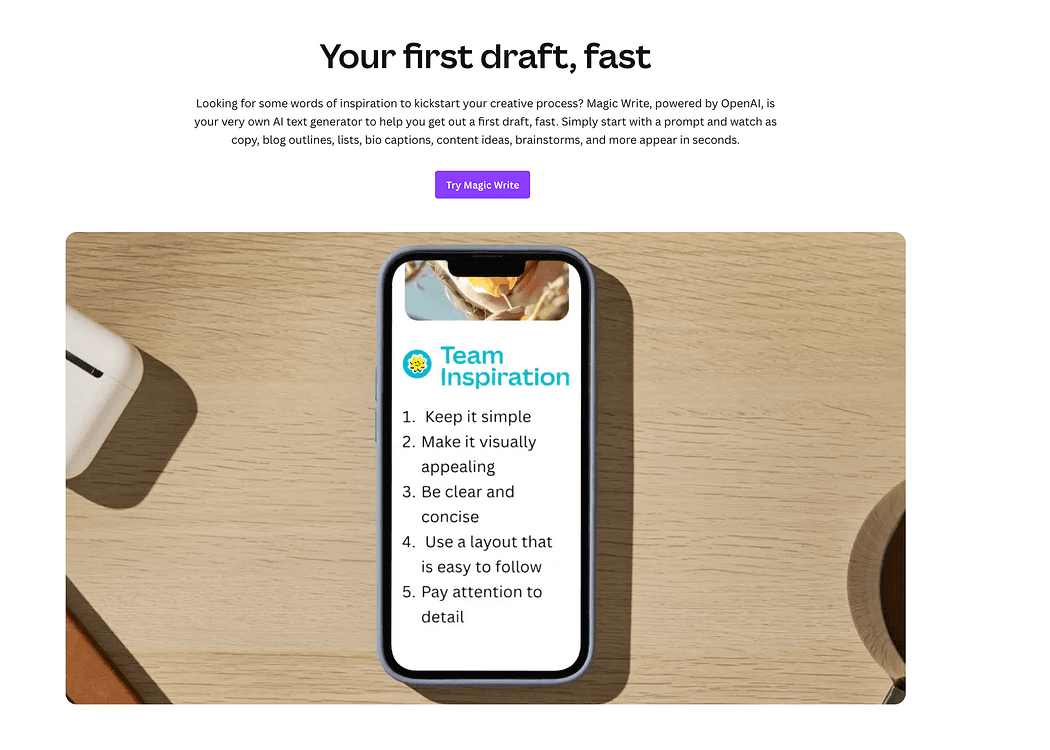
Previously, I used Canva for a wide range of tasks like creating social media posts, invoices, resumes, websites, presentations, videos, logos, and more. However, with the emergence of AI technology, Canva has taken a significant leap forward by integrating several AI features into its platform.

Let me share some of the remarkable AI features offered by Canva:

  • Magic Write in Canva Doc: This particular feature enables users to effortlessly generate written content. It assists in composing text for various purposes quickly and easily.
  • Magic Design: With this feature, users can witness the magic of AI in action. By providing a prompt or idea, Canvas AI algorithms generate stunning designs tailored to your needs. It takes the hassle out of creating visually appealing designs by doing the heavy lifting for you.
  • Magic Eraser: Tired of unwanted elements cluttering your images? This AI-powered feature is here to help. With a few simple clicks, you can magically remove any undesired elements from your images, ensuring a clean and polished look.
  • Magic Edit: Need to add or modify elements in your design? This feature grants you the power to do so effortlessly. Whether you want to incorporate new elements or make adjustments to existing ones, the Canvas AI-powered Magic Edit feature simplifies the process.

These are just a few examples of the AI features that Canva provides. By leveraging these cutting-edge technologies, I’m able to complete my design work in a matter of minutes, saving me time and effort.

If you’d like to delve deeper into these features, you can find more detailed information in this post.

2. ChatGPT Here Are the AI Tools I Use Along With My Skills to Make $10,000 Monthly — No BS
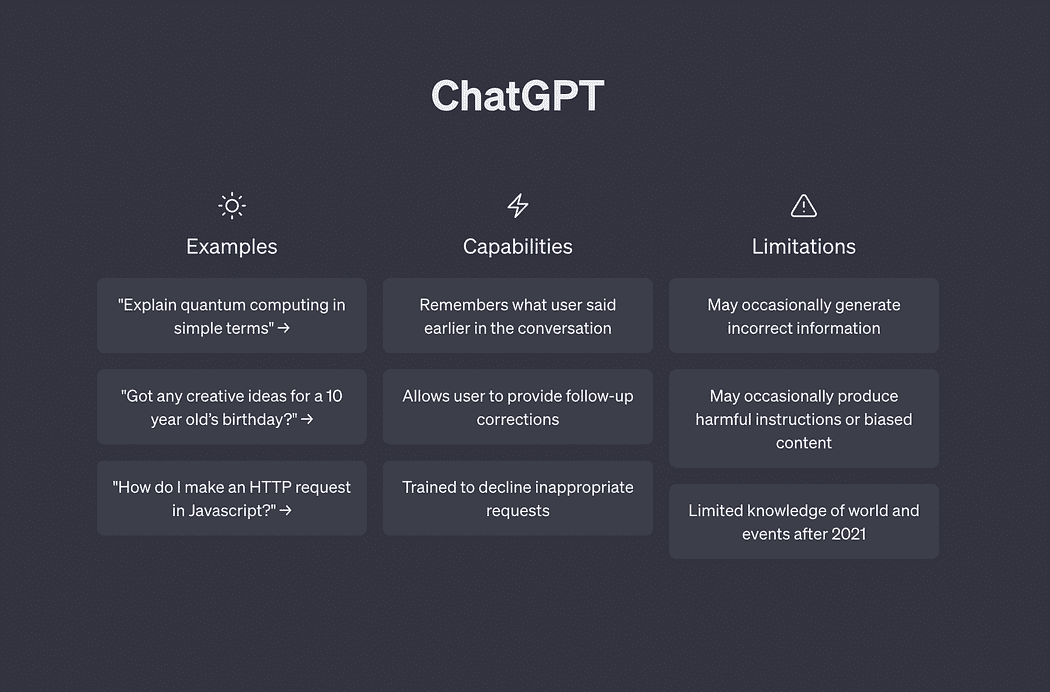
If you’ve been following me, you might be aware that I’ve been using various AI chatbots like Bard, Perplexity, and others for a few months now. However, when it comes to everyday tasks, my top choice is ChatGPT.

ChatGPT has been incredibly helpful in enhancing my skills and supporting me across different domains.

Being a solopreneur, I have a multitude of tasks to handle each day. Recently, I even took on the challenge of learning how to market a product and attract investors. Last week, I created a pitch deck entirely on my own.

This is where ChatGPT comes in handy.

One of the most effective prompts I use with ChatGPT is: “I want you to act as a world-class [profession name] with decades of experience in [what he/she does]. I will ask you for output, and you have to give me unique, expertly written work.”

By using this prompt, ChatGPT assumes the role of an experienced guru, ready to provide me with valuable insights on any topic I inquire about.

Here Are the AI Tools I Use Along With My Skills to Make $10,000 Monthly — No BS

For instance, when I use this prompt, I receive exceptional responses that exceed my expectations. You can tailor the prompt based on your profession and ask ChatGPT anything you desire.

ChatGPT truly feels like having an expert advisor at my disposal, enabling me to seek guidance and expertise whenever I need it. It has become an invaluable tool in my daily routine.

3. Dumme Here Are the AI Tools I Use Along With My Skills to Make $10,000 Monthly — No BS
I have no interest in creating a YouTube channel and earning money from it. Since I have numerous ways to monetize my skills.

However, many of you may still aspire to create your own YouTube channel. But let me tell you, it’s not an easy task, and as time goes by, it becomes even more challenging. And the best way to increase your chances of success, you need to create a series of high-quality shorts that attract subscribers.

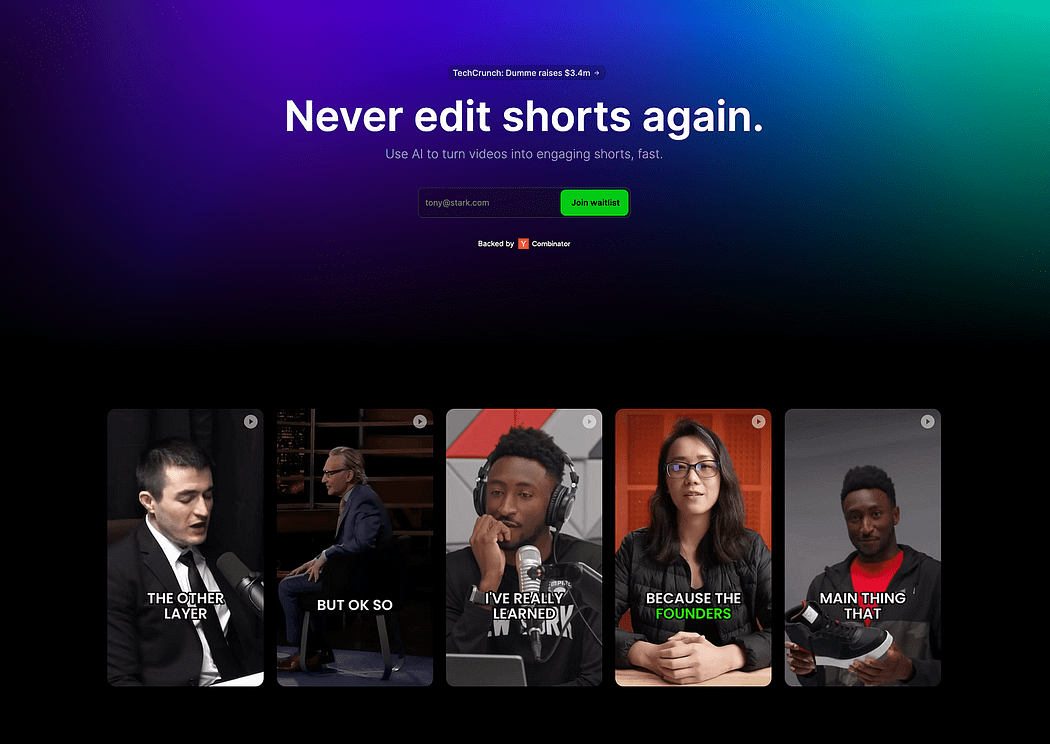
This is where AI tools like Dumme can be of great assistance. Dumme is an AI-powered tool specifically designed to transform your videos into captivating shorts, streamlining the process for you.

All you have to do is upload your existing videos, and this exceptional tool automatically identifies the most exciting moments worth showcasing. It ensures that the overall context and structure of your video are preserved, just as a human would do.

The best part is that Dumme offers this service completely free for creators through the Dumme Creator Program. It’s a fantastic opportunity to leverage AI technology and enhance the appeal of your videos, ultimately helping you gain more subscribers.

4. Folk Here Are the AI Tools I Use Along With My Skills to Make $10,000 Monthly — No BS
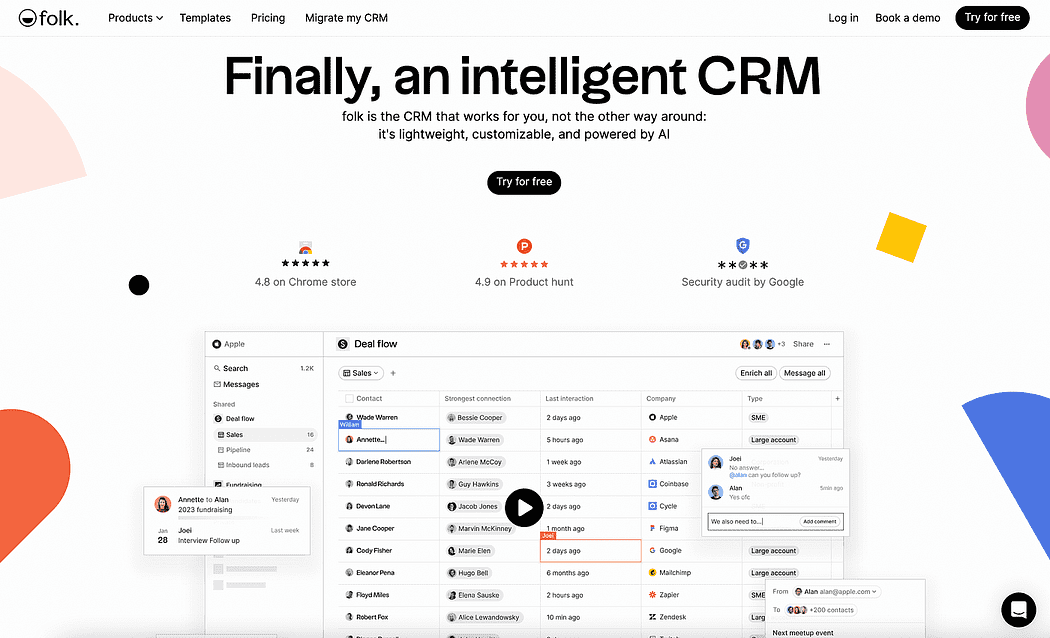
You may not be familiar with CRM, but it’s a simple yet powerful tool for managing customer relationships and interactions. It’s not just for big businesses; even small businesses, creators, and solopreneurs can benefit from it.

CRM allows you to store and manage important customer information, such as contact details and lead management. Specifically, as a creator or solopreneur, you interact with various individuals like clients, customers, collaborators, and prospects. And that’s where CRM helps you effectively organize and manage these contacts.

Also if you want to generate leads for your creative services or products, CRM can be invaluable. You can capture leads from your website, social media, or other channels and store them in the CRM system. This enables you to follow up, nurture leads, and keep track of conversion rates.

As a creator, you often juggle multiple ongoing projects or assignments. CRM can assist you in organizing and tracking tasks, setting deadlines, and collaborating with clients or team members. This ensures that you stay on top of your projects and meet your deliverables.

Additionally, if you have opportunities for collaborations or partnerships or offer different services, CRM can help you manage and track those opportunities.

That’s not all, either. Let me introduce you to Folk, a CRM tool with lots of AI features. It automates tedious tasks and is made to fit your particular working style. Even it improves efficiency by streamlining your process because of its AI capabilities.

However, there’s still more!

To make your life simpler, Folk offers a variety of features. In simple terms, it has you covered for everything from handling your leads and contacts to keeping track of client interactions. It is a complete CRM system that streamlines and improves your company’s operations.

5. Dart Here Are the AI Tools I Use Along With My Skills to Make $10,000 Monthly — No BS

Most people, like us, rely on project management tools to effectively handle our ongoing projects and tasks. And as we know, the market is filled with numerous project management tools, but there’s one tool that’s gaining significant attention: Dart.

What sets Dart apart is that it’s not your average project management tool — it’s powered by AI! They leverage the impressive GPT-4 AI model to assist you with a wide range of project management tasks.

The best part? Dart is completely free for individual use, and you can even invite up to four people to join your team. So whether you’re working independently or collaborating with a small group of friends or colleagues, Dart is definitely worth exploring.

With Dart’s AI-powered capabilities, you can expect advanced features and assistance that go beyond traditional project management tools.

6. Gamma Here Are the AI Tools I Use Along With My Skills to Make $10,000 Monthly — No BS
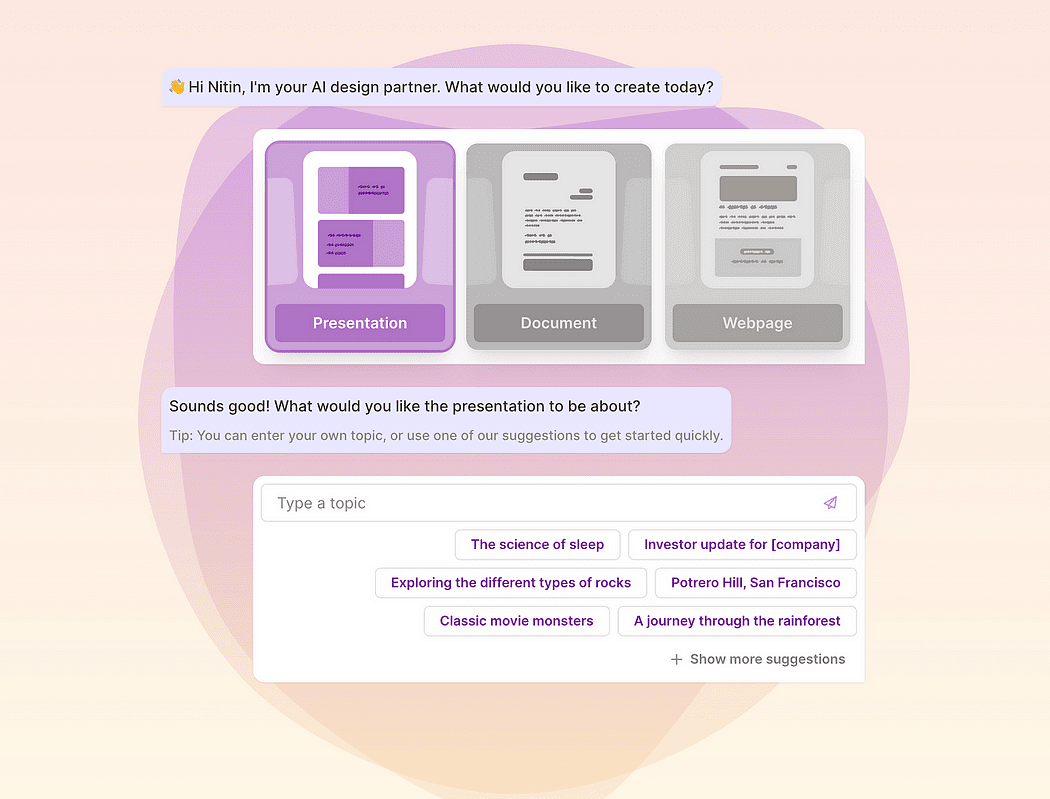
You may have come across several AI tools that assist in creating websites, presentations, and documents. I have also written about many of them in the past.

However, there’s one tool that I consistently rely on for creating all three: Gamma. This versatile tool enables me to easily generate presentations, documents, and web pages.

Similarly, whether you’re a business owner, designer, or content creator, Gamma can be your go-to solution for producing high-quality content in a matter of minutes. All you need to do is enter a topic name or select a template, provide some additional information, and Gamma will take care of the rest.

Notably, Gamma is not limited to presentations and documents; it empowers you to design beautiful web pages as well. The tool offers a range of templates to choose from, ensuring that your content stands out.

The best part is that Gamma is free to use. You can leverage its capabilities without any cost, making it an accessible option for anyone in need of a powerful content creation tool.

7. Numerous AI Here Are the AI Tools I Use Along With My Skills to Make $10,000 Monthly — No BS
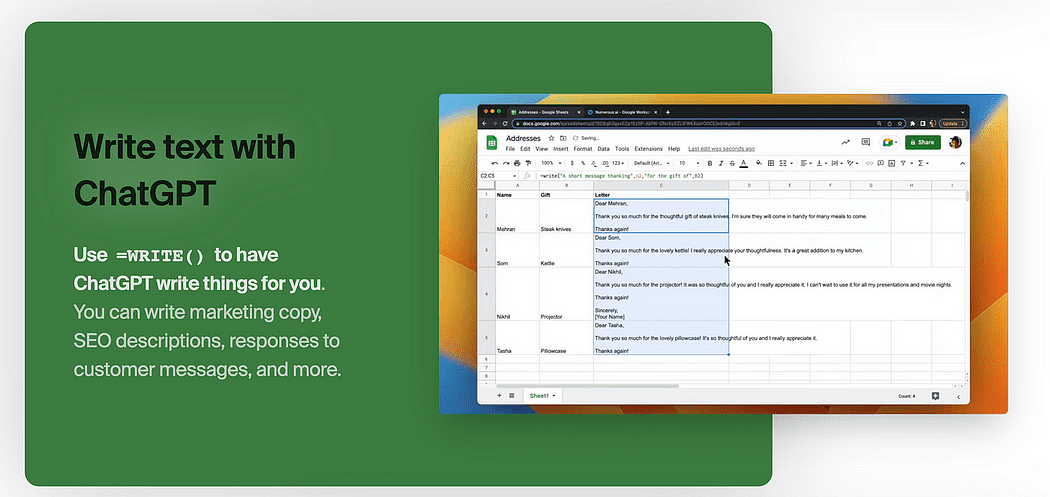
As a solopreneur, I often use Excel on a monthly basis.

Ever since I started my journey as a web developer and content writer, Excel has been a valuable tool for me. I know many of you also use Excel to organize and manipulate data. However, most of us are not familiar with the efficient formulas that Excel offers.

Taking lengthy courses to learn Excel in detail is not feasible for many of us due to time constraints. Moreover, since we don’t use Excel constantly, we tend to forget the formulas we’ve learned.

To overcome such situations, using an AI tool like Numerous AI can be highly beneficial. This tool enables users to generate formulas, format, and clean data, and perform various tasks more quickly and effectively.

But the capabilities of Numerous AI go beyond automating Excel processes.

It can also generate specific sentences based on input data, which proves helpful for creating reports or summarizing large datasets. Moreover, Numerous AI has the ability to predict the sentiment of the text. This feature can be valuable for analyzing customer feedback or social media posts, providing insights into public opinion.

Lastly, Numerous AI can even provide feedback to users, assisting them in enhancing their data analysis and decision-making skills.

8. Flair Here Are the AI Tools I Use Along With My Skills to Make $10,000 Monthly — No BS
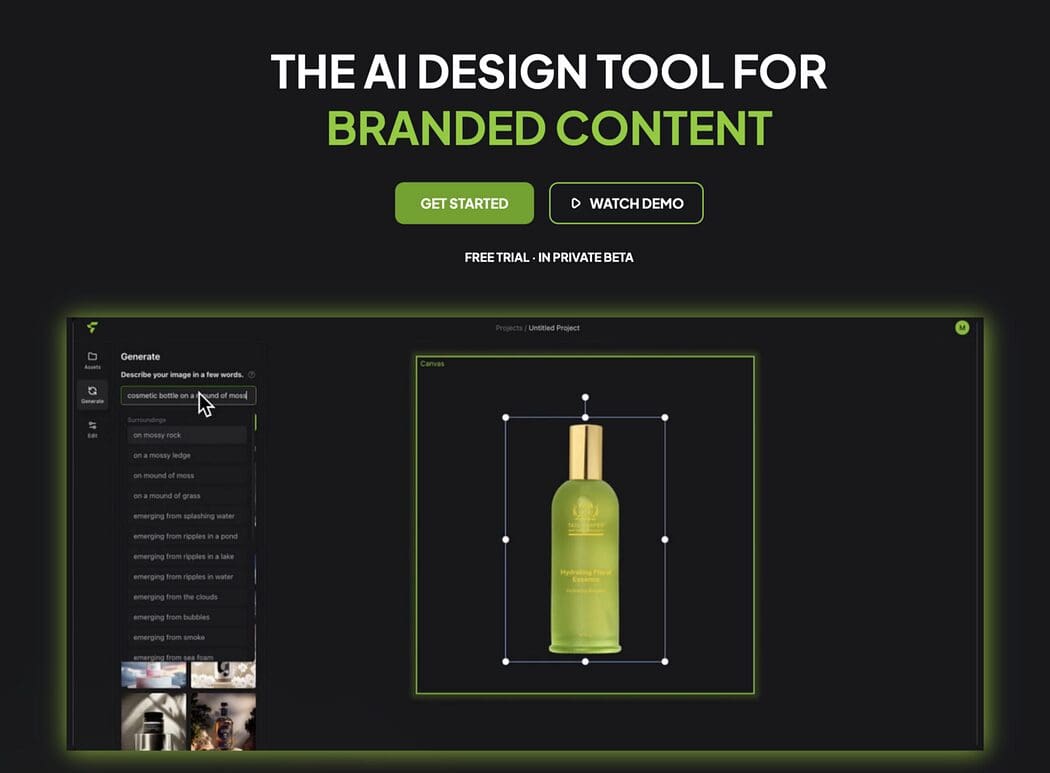
The last tool I rely on frequently is Flair AI.

It’s an amazing tool that empowers you to craft captivating visual content effortlessly. With Flair, you have the freedom to create exactly what you envision.

Here’s how it works: all you need to do is drag your product photos onto the canvas. Then, you can enhance the visuals by adding various elements to depict the desired scene. Tweak and refine until you’re fully satisfied with the result. Once you’re done, you can export the final creation and easily share it with others.

It’s as simple as that!

Nitin Sharma is a dedicated developer, passionate about building startups and creating valuable content to help individuals enhance their expertise and increase their earnings. With a strong background in software development, Nitin has honed his skills and gained extensive experience in the industry. As a solopreneur, he has embarked on an exciting journey of building a startup. With a keen eye for identifying market needs and a talent for developing innovative solutions, he has successfully crafted a vision for his startup that aligns with his passion for empowering individuals. Besides this, Nitin's writing prowess is evident in his contributions to Medium, where he shares insightful content aimed at assisting others in growing their skills and achieving financial success. With a growing audience of over 24,000 followers, Nitin's articles have gained significant recognition and garnered a loyal readership.

Original. Reposted with permission.

More On This Topic

  • 6 Web Scraping Tools That Make Collecting Data A Breeze
  • These Soft Skills Can Make or Break Your Data Science Career
  • How to Make Sure Your Analysis Actually Gets Used
  • Does Data Science Make You Happy?
  • Make Connections With SAS Live Web Learning
  • The Not-so-Sexy SQL Concepts to Make You Stand Out

AIOps above the radar – Using AI to monitor your AI infrastructure

Metaverse smart technology city. Digital futuristic data skyscrapers on technological blue background. Business, science, internet concept

When an enterprise project is low-profile (“below the radar”), then it is not likely to be the target of bad actors. Similarly, if some part of that project’s infrastructure fails or falters, then the consequences of the problem and/or the urgency of providing a solution are usually manageable. But when a high-profile (“above the radar”) enterprise project goes wrong, then we must wrestle with these realities:

  • Reviewing the “who, how, and why” of the failure is not a conversation that anyone wants to have.
  • Resilience should have been a must-have feature of the infrastructure from the start.
  • Rapid remediation (perhaps automated remediation) becomes a hard requirement.
  • Root cause analysis (reactive, descriptive, diagnostic analytics) is exposed as a much less desirable activity when measured against the ROI of prescriptive interventions (optimizing, predictive reactive, early-warning precursor analytics).

What could be of higher profile (more “above the radar”) this year than Artificial Intelligence (AI), including generative AI and ChatGPT deployments in the enterprise? Nearly everyone is talking about it. Nearly every enterprise is already either planning, deploying, or running an AI project on some AI infrastructure. Along with all the goodness that this promises to bring, there is also the badness. Just recently, it was reported that login credentials have been stolen for over 100,000 hacked ChatGPT accounts and have appeared on dark web marketplaces. (REF1) While a rapidly increasing number of organizations are deploying AI in enterprise projects, in cybersecurity operations, and in other enterprise IT applications, AI is also being increasingly used by cyber infrastructure attackers. (REF2)

When I first heard about AIOps, I assumed it was similar to DevOps, MLOps, and DataOps – which are systems approaches to the efficient development and deployment of IT software operations, machine learning operations, and data operations, respectively. In other words, I thought that AIOps must be a similar systems approach to development and deployment of AI operations. I was so convinced of this interpretation that I might even have given a lecture or two on that topic at that time.

As interesting as my interpretation of AIOps might have been (to me, at least), I found the actual meaning of AIOps to be even more interesting. Specifically, AIOps refers to AI for IT operations. If I was responsible for naming it, I might have called it AITOps, sort of like DevSecOps (the practice of integrating security testing into the software development process) or like AIoT – the latter being AI for IoT (Internet of Things) operations.

What is AIOps and why do I now consider it to be so very interesting to a data scientist? Before I answer that, I must admit that my initial reaction to “AI for IT operations” was “oh, this is an I.T. infrastructure function, thus not relevant to a data scientist like me.” How wrong I was!

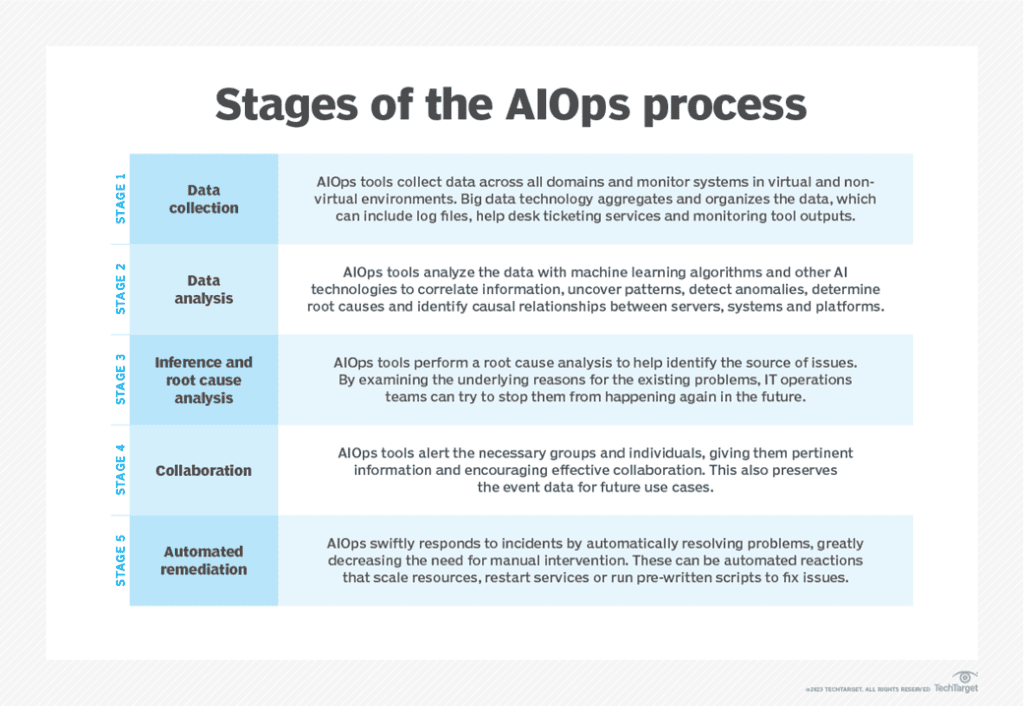
AIOps is a technology-driven approach that combines AI and machine learning (ML) techniques with traditional IT operations to enhance and automate various aspects of IT management and monitoring. Automation – I like that – check! Monitoring – I really like that – double-check!

Both automation and monitoring are data-fueled, data-powered, data-enabled, and generate business value from data – they are all about that data! That’s definitely within my definition of cool data stuff.

AIOps leverages ML and AI to analyze vast amounts of data generated by IT systems, networks, and applications. By sensing, monitoring, capturing, and modeling the patterns in data flows, data scientists are able to provide real-time insights, predictive (precursor) analytics, and automated prescriptive responses to many diverse business operations. So, why would the sphere of data scientists’ activities exclude IT operations? It doesn’t, of course! Why? Because… AIOps can improve the efficiency, reliability, and resilience of IT operations by enabling these use cases: proactive problem detection, faster incident response, and intelligent decision-making. All of those use cases are (generally) analogous to other business use cases powered by data (customers, sales, supply chain, digital assets, HR, finance, etc.) in which data scientists are already engaged.
Further underscoring the interestingness of AIOps to a data scientist is the key fact that AIOps utilizes advanced algorithms and models to process, analyze, interpret, and derive inferences from massive volumes of data from diverse sources, such as log files, monitoring tools, event streams, and performance metrics. In reference to diverse data sources, I have always said that “variety is the spice of discovery”. Exploring high-dimensional (diverse, high-variety) data can lead to deeper insights (the “360 view”), discovery of hidden patterns (non-differentiated in low-dimensional data projections), uncovering proof of causal relationships, and far less modeling bias than using single data sources. Those prospects are very appealing to this data scientist.

By applying AI and ML techniques that can identify patterns, anomalies, associations, correlations, and causal connections within the data, IT teams gain a deeper visibility into the performance and health of their IT infrastructure. AIOps platforms can automatically detect and prioritize critical issues, generate actionable insights, and even predict potential problems before they occur. This enables IT teams to take proactive measures, reduce downtime, and optimize resource allocation.
Furthermore, AIOps helps streamline IT operations by automating routine tasks and workflows. Through intelligent automation, AIOps can handle repetitive and time-consuming activities such as event correlation, root cause analysis, and remediation actions. By leveraging AI-powered automation, organizations can significantly improve their operational efficiency, reduce human error, and allocate resources to more strategic initiatives. AIOps also facilitates collaboration and communication among different IT teams by providing a centralized platform that consolidates data, insights, and workflows, thereby enabling faster decision-making and effective problem resolution.

Automated remediation (including anomaly detection, prescriptive optimizations, and incident response) is a feature of a general concept that I discussed in earlier publications: “Safe Driving in the Self-Driving Enterprise”. (REF 3)

Maybe AIOps really is about AI operations as I thought at the beginning – securing, governing, and monitoring the data flows that power AI is a critical AIOps function. That’s an enterprise-worthy example of using AI to keep an eye on the AI – i.e., monitoring and analyzing the data generated by IT systems, networks, and applications to keep the AI secure, trusted, performant, and optimized. Consequently, AIOps tools, techniques, and applications should employ AI for more than observability / monitoring / alerting / risk management of the IT and network infrastructure. AIOps should also employ the AI to key an eye on the enterprise AI deployments. That includes full-spectrum analytics “above the radar”: descriptive, diagnostic, predictive, and prescriptive – all the flavors of modeling and analytics to fully engage the data science team.

REFERENCES:

(REF 1) https://thehackernews.com/2023/06/over-100000-stolen-chatgpt-account.html

(REF 2) https://www.cnbc.com/2022/09/13/ai-has-bigger-role-in-cybersecurity-but-hackers-may-benefit-the-most.html

(REF 3) https://medium.com/@kirk.borne/safe-driving-in-the-self-driving-enterprise-656fd3bbf378

(REF 4) https://www.techtarget.com/searchitoperations/definition/AIOps (source for graphic)

AIOps above the radar – Using AI to monitor your AI infrastructure

(Source: https://www.techtarget.com/searchitoperations/definition/AIOps)

The best early Amazon Prime Day 2023 robot vacuum deals

prime-day-robot-vacuum-deals

You'll find some of the best robot vacuums on sale for Prime Day this year.

Our lives are busy. When we have limited time available to keep our homes clean and tidy, it isn't long until the clutter builds up and a molehill has turned into a mountain.

This is where modern home appliances shine. Intelligent thermostats can automatically manage our energy consumption and heating requirements; smart lighting can be scheduled, and when it comes to cleaning, robot vacuums can take some of the daily workload off your plate.

Also: Best Prime Day deals

Robot vacuums aren't the holy grail of domestic tasks, of course, but if you purchase the right model, you won't need to worry about keeping your floors swept and mopped. You can schedule them to perform these jobs for you — or to spot clean as and when you need — freeing up a little more time for you to spend how you like.

Below are the best deals we could find on robot vacuums before Amazon Prime Day launches.

The best early Amazon Prime Day robot vacuum deals

More early Prime Day robot vacuum deals available online

Our top Prime Day deals

Want to build your own AI chatbot? Say hello to open-source HuggingChat

Hugging Face logo on phone

In this article, we're going to take a quick look at a ChatGPT-style AI chatbot from a company improbably called Hugging Face. I couldn't look at the product seriously until I got past the name, so I asked its chatbot HuggingChat, "Why is your company called Hugging Face?"

Also: This new AI system can read minds accurately about half the time

Here's what the AI told me:

The name "Hugging Face" comes from our goal to build AI models that can interact meaningfully and positively with humans on a personal level, similar to how one might hug someone they care about.

As you can see from the HuggingChat interface, the company is definitely going for that ChatGPT vibe:

But there are some big differences, the most notable being that it's open source. It's right here on Github.

While HuggingChat will appeal mostly to developers and AI tinkerers, anyone can play with the tool online. One thing I should note: almost all discussion of the online HuggingChat interface says it collects no information and does not require a login. That might have been the case for the very earliest release, but that's no longer the case:

Using the Web version of HuggingChat

I had to set up an account with Hugging Face to gain access to the UI. And since I did not disable sending chat data to the developers for them to review and examine, I'd like to apologize to those developers now for the profanity. I just wanted to see what it would do. What!? I was curious.

One more clarification is necessary. Throughout this article, when I'm talking about the web version of HuggingChat, I'm referring to the version that Hugging Face is providing at hf.co/chat. There are likely hundreds of other web-based versions of HuggingChat, by hundreds of other developers. That's the nature of open source. But for the next few moments, we're talking about the factory store version — the one Hugging Face is making available to show off the tech.

Also: How to use ChatGPT to write code

The web version of HuggingChat uses a large language model (LLM) called OpenAssistant, which is also available on Github. As it turns out, there are a whole bunch of LLMs available on Github — and yeah, we'll come back to that thought in a while, too.

As with ChatGPT and its ilk, you ask HuggingChat questions, and it answers. Unlike ChatGPT, there's a little button right above the query field that says "Search web", which means HuggingChat can reach out to the live web to do its research. For example, with "Search web" turned off, when I asked it, "Why did the submersible Titan sink?" I got back the reply:

I apologize, but without additional context, it's difficult for me to determine which specific submersible Titan you're referring to.

But when I turned on "Search web" and asked the same question, I got back:

Without more information, it's hard for me to say definitively why it supposedly imploded and submerged during operations related to the RMS Titanic wreckage recovery effort off North America's east coast (42°N 49°W / #TitanRover1).

Since the sinking of the submersible is a relatively recent story as I write this article, it shows that the pre-built LLM doesn't have any data on this big news item. However, by choosing to include web search data, you can inform the chatbot's results.

Overall, you're probably not going to use HuggingChat instead of ChatGPT or Bard or Bing. Answers aren't all that complete. They sometimes end in the middle of a sentence, and "continue" doesn't bring them back on track. Most answers aren't formatted, and are presented as one big paragraph. Responsiveness is fairly slow in comparison to ChatGPT. Sometimes, the answers don't have all that much to do with the question.

Also: How (and why) to subscribe to ChatGPT Plus

To be fair, the web version of HuggingChat is a very early release and is mostly intended as a feature demo for the software itself. So, you're probably not going to use it to cheat on your homework assignments. Instead, you're more likely to use it to tinker with your own AI projects.

And that's what we turn to next.

Building your own chatbot

If you're super-geeky, you can build your own chatbot using HuggingChat and a few other tools. To be clear, HuggingChat itself is simply the user interface portion of an overall chatbot. It doesn't contain the AI or the data. It just gets the question into the GPT and displays the answers.

You'll also need a language model. As we discussed, OpenAssistant is one such language model, which can be trained on a variety of datasets.

This is where HuggingChat proves to be particularly interesting for AI geeks. You can use a variety of open-source LLMs, trained on a variety of open-source datasets, to power your own chatbot.

Also: Meet the post-AI developer: More creative, more business-focused

Taken to extremes, one possible application for this technology could be building a chatbot for use inside a corporation, trained on the company's proprietary data, all of which is hosted within the enterprise firewall — never to be available to the internet at all.

In fact, by combining HuggingChat, an inference server, and an LLM, you can run your own chatbot on your own hardware, completely isolated from the internet.

This YouTube video gives a basic tutorial on how to do that in a container. Actually, the video also shows how to split the inference portion of the job from the UI portion of the job, and host part locally and part in the cloud. Basically, once you have the source information to play with, you can build pretty much whatever your imagination can think of — and that your gear can run.

Yeah, it does require a hefty server with some serious GPU horsepower. But that's a small price to pay for your very own chatbot.

Also: Is this the snarkiest AI chatbot so far? I tried HuggingChat and it was weird

Seriously, though, this development is a big thing. ChatGPT is a powerful tool, trained on who knows what data, running who knows what algorithms, and producing answers based on who knows what source information.

If you want something that you control, you can use HuggingChat to build a chatbot where you have visibility into every aspect of its functioning. You can choose to make that chatbot available online to other users and provide transparency to all users. Or you can build a locked-down, special-purpose unit, which is hidden behind a firewall, and accessible only to your own employees.

With HuggingChat, the choice is up to you — and that's cool.

So, do you expect to build your own chatbot? If you could, would you train it on any specific data? Since you now have the freedom to make the chatbot in your own image, what would you do with that power? Let us know in the comments below.

You can follow my day-to-day project updates on social media. Be sure to subscribe to my weekly update newsletter on Substack, and follow me on Twitter at @DavidGewirtz, on Facebook at Facebook.com/DavidGewirtz, on Instagram at Instagram.com/DavidGewirtz, and on YouTube at YouTube.com/DavidGewirtzTV.

Threads becomes fastest-growing app ever, with 100 million users in under a week

Threads app on phone

Threads broke the record to become the fastest-growing app ever, gaining over 100 million users in less than a week. The Twitter rival dethrones ChatGPT, the previous record holder, which, though not exactly an app, earned 100 million users in just two months. Before that, TikTok held the record, reaching the mark in nine months.

Also: I've used social networks since the 80s. Threads is the most annoying one I've tried

Threads, which launched on July 5 for iOS and Android, wields users' Instagram credentials to sign up, making it easier for the existing 1.6 billion users of the photo-sharing app to make the leap. It operates as a separate app from Instagram that users must download and then activate their Threads profile to use it.

Thus far, it's the first Twitter alternative to really take off successfully — at least so far.

Also: Changing this phone setting instantly made the Threads app better for me

"Several Twitter clones have emerged over the years, yet all have failed to achieve mainstream success," says Mark Weinstein, social media and privacy expert and MeWe founder. "By integrating with Instagram and its billions of existing users (far more than Twitter has), Threads may be the first Twitter clone with a real chance of unseating its segment stronghold, albeit while collecting mass data troves on its users, for sale to all targeting bidders."

Though available in 100 countries, Threads doesn't operate in the European Union, so the record-breaking user count doesn't include potential EU users.

Also: Threads working on letting users delete accounts without wiping out Instagram

However, Meta plans to launch Threads in the EU in the future. It is unclear whether the current roadblock refers to the EU's antitrust laws in the works or the Threads app's privacy concerns.

"Similar to Meta's other products like Facebook and Instagram, it appears that Threads will earn revenue via data harvesting and surveillance capitalism," Weinstein adds. "According to Apple's App Privacy Details, Threads will collect a plethora of user data, including locations, contacts, purchases, browsing history, search history, financial info, health & fitness, and more."

Instagram users that join Threads have an identifier to show for it on their profile, along with a counter for the user count. As the app continues to grow its user base, it's worth remembering that signed-up users don't equal active users.

Social Media

GANs, Diffusion Ride Dragon in AI Image Generation

GANs, Diffusion Ride Dragon in AI Image Generation

As soon as we open any social media platform these days, we stumble upon AI generated images of celebrities, cities, or a new feature of Midjourney, increasing its capabilities in all verticals and horizontals. These diffusion models-based image generators were one of the first showcases of the capabilities of generative AI ever since they were released last year with DALL-E.

Now, the capabilities of diffusion models have surpassed everyone’s expectations. Meet DragonDiffusion, a model that enables dragging objects within an image to change its shape and orientation. This allows seamless manipulation of images and objects within them without requirement of any fine-tuning of the existing models – a photoshop user’s dream come true.

How does it work?

The fundamental idea behind DragonDiffusion is the construction of a classifier guidance system that utilises the correspondence of intermediate features within the diffusion model. This guidance system translates editing signals into gradients using a feature correspondence loss, allowing for modifications to the intermediate representation of the diffusion model.

By considering both semantic and geometric alignment through a multi-scale guidance approach, DragonDiffusion facilitates various editing modes for both generated and real images. These modes include object moving, object resizing, object appearance replacement, and content dragging.

To ensure consistency between the original image and the editing result, DragonDiffusion incorporates a cross-branch self-attention mechanism. This mechanism maintains the overall coherence of the image throughout the editing process, ensuring that the edited content seamlessly integrates with the original.

Read: Diffusion Models: From Art to State-of-the-art

Extensive experiments have been conducted to evaluate the performance of DragonDiffusion, and the results are remarkable. It demonstrates the ability to perform a wide range of image editing applications, including object moving, resizing, appearance replacement, and content dragging. DragonDiffusion offers a powerful and user-friendly interface for interacting with diffusion models, harnessing their creative potential.

The success of DragonDiffusion can be attributed to the inherent properties of diffusion models, which exhibit strong correspondence relationships within their intermediate features. While previous approaches such as GANs primarily focused on the correspondence between text and image features, DragonDiffusion capitalises on the stable and fine-grained correspondence between image and image features. This fine-grained image editing scheme opens up new possibilities for precise and intuitive manipulation within diffusion models.

Wait..we have seen this before?

People started questioning the relevance of GANs in the age of diffusion models. But just as this thought could take shape, researchers made a huge breakthrough with DragGAN, allowing editors to drag and change objects’ orientations and shapes in real-time. Ironically, this development made people question the abilities of diffusion model based image generators.

Read: GANs in The Age of Diffusion Models

Similar to DragonDiffusion, this GAN-based method leverages a pre-trained GAN to synthesise images that not only precisely follow user input, but also stay on the manifold of realistic images.

The researchers have introduced a novel approach that distinguishes itself from previous methods by offering a general framework that does not rely on domain-specific modelling or auxiliary networks. This groundbreaking technique involves optimising latent codes to gradually move multiple handle points towards their desired positions. Additionally, a point tracking procedure is employed to accurately trace the trajectory of these handle points.

By leveraging the discriminative characteristics of intermediate feature maps within the GAN, both components of this approach enable precise pixel-level image deformations while maintaining interactive performance.

The researchers have confidently asserted that their approach surpasses the current state-of-the-art in GAN-based manipulation, marking a significant advancement in the field of image editing utilising generative priors. Furthermore, they have expressed their intentions to extend this point-based editing technique to 3D generative models in the near future.

It’s been 7 weeks since DragGAN got announced, and one week since the official implementation got released. This week, we got DragonDiffusion. Basically the DragGAN equivalent but for diffusion models.https://t.co/ZyPklGVUNJ pic.twitter.com/dSXpMEgxqV

— Dreaming Tulpa 🥓👑 (@dreamingtulpa) July 9, 2023

Image generation to a whole new level

It was believed that due to the complexity of the diffusion process, it would be difficult to infuse dragging techniques within them. Now, with DragonDiffusion, diffusion model research is back on track. On the other hand, it is crucial to acknowledge that GANs are also proving to be equally capable in the ecosystem.

The rising popularity of diffusion models can be attributed to their unique strengths and advantages in various image synthesis scenarios. However, it is important to recognize the enduring significance and impact of GAN models, as they have demonstrated their efficacy in producing visually appealing outcomes.

The current landscape witnesses a dynamic interplay between these two approaches, with diffusion models resurfacing and reclaiming their position, showcasing their ability to enhance and complement the image generation domain, along with GANs.

The post GANs, Diffusion Ride Dragon in AI Image Generation appeared first on Analytics India Magazine.

What’s missing from ChatGPT and other LLMs?

Recent developments in artificial intelligence remind me of the automotive industry in the late 19th and early 20th century. In that case, it took the industry several decades to commit to internal combustion engines. And while that picture was still unclear, there were over 250 different car manufacturers, some of whom were producing steam-powered cars. Electric cars were soon developed too but proved infeasible at that point. And every vehicle built was hand-assembled, more or less.

By the late 1920s, the shape of a more mature market had become evident. Ford’s assembly line, inspired by the systematic approach Swift took to butchering and meat packing, was so superior to the old guild-style manufacturing that assembly lines quickly took over.

Those carmakers who couldn’t adapt to assembly line processes simply went under. The number of carmakers declined to 44 by 1929. The Great Depression then forced even more makers to merge or go out of business.

Lots of affordable cars appeared, and buyers snapped them up, even during the Depression. Their utility was too obvious to ignore.

What took even longer to develop was the larger infrastructure market: scaling up oil and gasoline production and distribution for cars, paving roads, building bridges capable of supporting cars, gas and repair stations, and “motor hotels” or motels for those who all of a sudden wanted to take longer and longer driving trips.

Not to mention creating dealership networks, puncture-resistant tires, and national and international road networks. It wasn’t until the 1950s that the US Interstate Highway System was born and funded.

The Timeline Comparison to Today’s Narrow AI

In terms of this timeline, AI, to my mind, is still in the auto industry equivalent of the 1880s. ChatGPT on the automotive industry timeline is akin to the first car with Karl Benz’s internal combustion engine–the Benz Patent Motorwagen.

What’s missing from ChatGPT and other LLMs?

1886 Benz Patent Motorwagen (Wikimedia Commons)

The Motorwagen pointed the way forward, in some ways, but there wouldn’t be a vision of the larger, transformed transportation system for a while yet. And there was a serious issue that would come back to haunt us later on: a rigid, long-term commitment to the internal combustion engine that was, in retrospect, a fateful decision with a huge impact on carbon emissions levels.

In retrospect, we should have given ourselves the flexibility to pivot to electric motors, electric mass transit, and then renewable energy as soon as we could. Electric motors worked, and we could have focused more resources on mobile and fixed battery technology (for mass transit) to boost storage capacity. And we could have refined and decentralized both batteries and nuclear power generation.

But we weren’t focused on energy efficiency or environmental concerns at that point.

In retrospect, our failure to do better by the environment decades ago demonstrated that we ignored the need to make decisions factoring in impacts at an ecosystem level.

We created a crisis of our own making. That’s the kind of crisis we definitely want to avoid when it comes to general rather than just narrow AI.

Today’s AI Motorwagen within the Missing Data-Centric Frame

In a nutshell, the AI that’s getting the most attention today is the equivalent of the three-wheel Benz Motorwagen: statistical machine learning in the form of neural networks and prompt interfaces. These add up to a form of natural language processing (NLP) or image processing and generation and a chatbot interface that together can help automate some recognition and transformation processes with the help of humans in the loop.

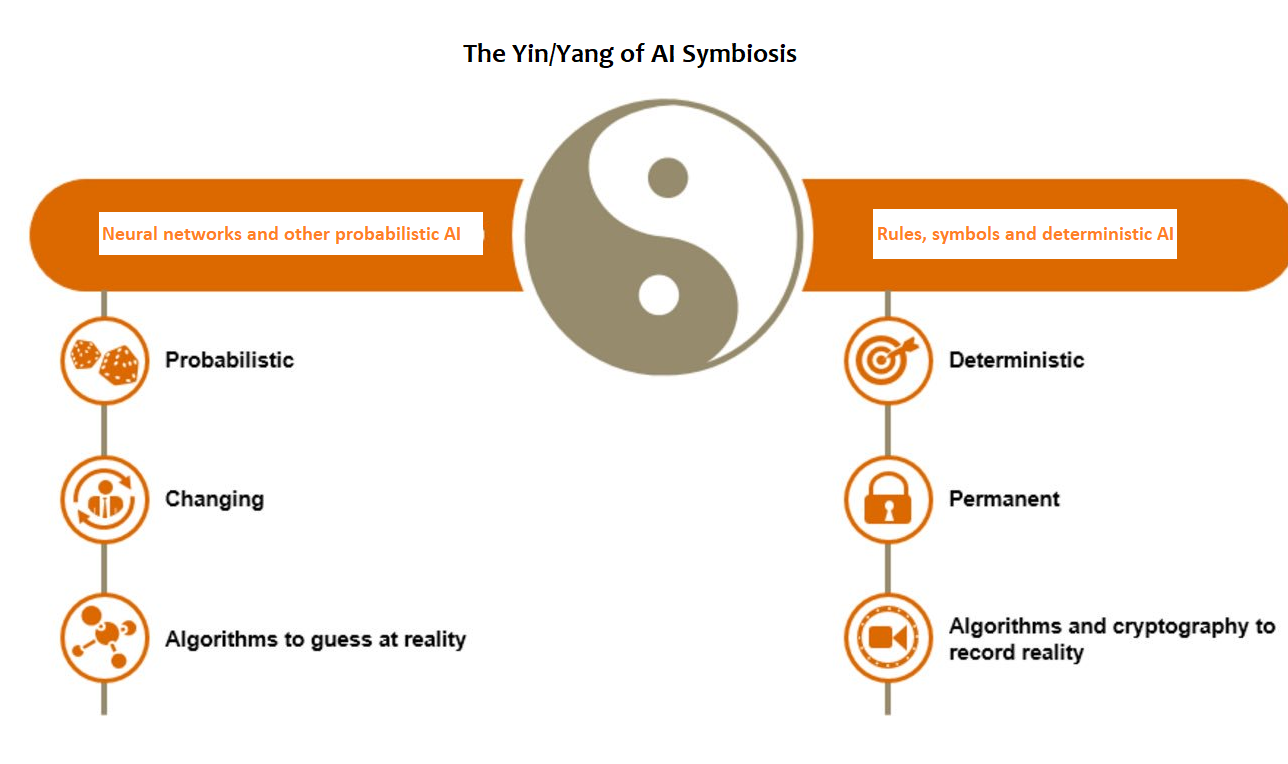
What doesn’t get attention is deterministic rule and reasoning capabilities that can complement what NLP does on the probabilistic side today. These are long-developed capabilities that need to be repurposed within a new, data-centric architecture so that they can be harnessed in conjunction with NLP and prompt interfaces.

There’s a symbiosis implied by such a data-centric architecture:

What’s missing from ChatGPT and other LLMs?

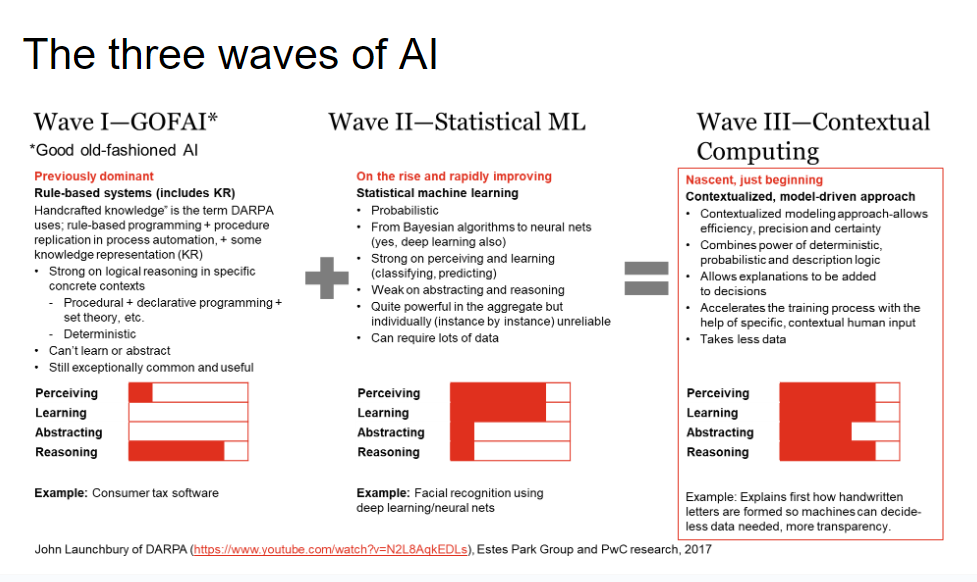
Back in 2017, John Launchbury of the Defense Advanced Research Projects Agency (DARPA) stepped back and described another view of AI symbiosis in terms of three AI waves. The third wave, he pointed out, blends the deterministic – or symbolic – first wave (the 1980s decision science wave, in other words) with the second wave of probabilistic neural nets.

What’s missing from ChatGPT and other LLMs?

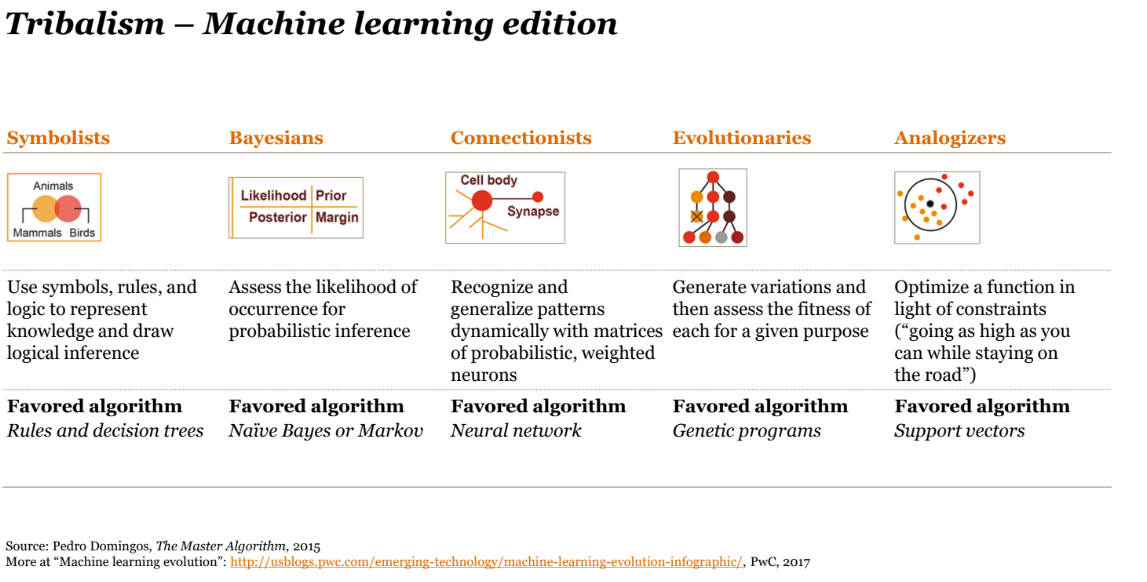
Why We Aren’t in Wave III Yet – Tribalism

Unfortunately, tribalism often gets in the way when it comes to technological development. Tribalism is a big problem and has been for decades. Pedro Domingos, now a Computer Science Emeritus at the University of Washington, published a book in 2015 called the Master Algorithm that described machine learning efforts in terms of five tribes that didn’t work together. His assertion was that artificial general intelligence is needed to harness the collaborative power of those five tribes.

What’s missing from ChatGPT and other LLMs?

Domingos’ book gained some attention when it was published, but most of those involved in AI engineering today are either unaware of its insight about machine learning tribes or aren’t really thinking in terms of the larger AI picture.

A More Complete AI with a Contextualized Data Foundation

The chatbot buzz we’re hearing today doesn’t factor in the totality of all the elements needed to make AI trustworthy, reliable, or real-world responsible in any larger sense. We hear lots of complaints about the lack of these capabilities, and we’re seeing regulatory action ramp up as a result.

Most of all, the buzz doesn’t seem to reflect much strategic interest in the data itself, which after all should provide the foundation for simulated AI worlds. How that data is created and managed will determine the effectiveness of AI governance.

Managing data holistically is critical to truth-telling, verifiable AI. It is data that can be developed and stored in a humanistic way that values data sovereignty. The resulting contextualized data (which enables contextual computing of AI’s third wave) can be organic, efficient, and reusable.

In fact, data and how it’s managed is key to AI at scale. Better data, Stanford computer science professor and entrepreneur Andrew Ng said years ago, beats better algorithms. But I suspect that even Andrew Ng doesn’t know how to develop or future-proof data for the role that it will be playing soon. That’s because he’s been immersed in a single tribe himself.

Intertribal collaboration will help us create powerful, sustainable AI. As such, we have a political challenge ahead of us to win the minds of engineers, scientists, and users.