This new AI tool transforms your doodles into high-quality images

Sketch-to-image tool demo

Sometimes, words can't describe what you are envisioning and the best way to get that idea out is by drawing out the idea on paper. However, if you have ever played Pictionary, you know that quick doodles aren't exactly aesthetic or easy to discern. Stability AI's new AI tool is here to help.

Also: The best AI art generators

Clipdrop by Stability AI launched Stable Doodle, a sketch-to-image AI tool that can transform your quick doodle into a polished image just by using your sketch and a prompt.

The tool uses Stability AI's image-generating technology, Stable Diffusion XL, and combines it with the T21-adapter, which allows for more precise control over AI image generation, according to the release.

Despite employing the use of advanced technology, the tool itself is very user-friendly and fun. The only skill required to get the most out of this technology is very basic drawing skills, and it's available for free use now.

Also: Real-time deepfake detection: How Intel Labs uses AI to fight misinformation

If you want to test it out, all you have to do is visit the Clipdrop by Stability AI website or visit the ClipDrop iOS or Google Play app. Once you arrive on the site, you can use your mouse to doodle whatever you'd like. In my case, I did a very elementary sketch of a puppy.

Then, you can insert the prompt for what you would like the tools to generate. In this prompt, you can include an art style and what you'd like to see. For example, I did "a puppy, anime style." Once you are done with the sketch and prompt, you can click on generate.

My results were some adorable anime illustrations of puppies that kept the basic elements of my sketch including the floppy ears and big eyes. In my experience, the tool was quick, easy, and fun to use.

Also: How to use Stable Diffusion AI to create amazing images

If you choose to use the tool without signing in, you are limited to one sketch-to-image transaction per hour. However, if you sign up for a free account, you can use it unlimitedly.

Disclaimer: Using AI-generated images could lead to copyright violations, so people should be cautious if they're using the images for commercial purposes.

Artificial Intelligence

Tesla to add Apple AirPlay support, but still spurns CarPlay

Tesla Model 3

The interior of the current Tesla Model 3.

Tesla, which has yet to adopt support for Apple CarPlay, is finally preparing to integrate Apple AirPlay into the car's software. This would allow drivers to stream higher quality audio, and potentially video, from their iPhones to their Tesla vehicles.

The news comes in release notes from the Tesla app update 4.23 in Not a Tesla App, which includes Apple AirPlay, App icon, Reset Tesla Profile, Quick links, and Minor fixes. It's presumed the latest Tesla app update will support Apple AirPlay for music and podcasts as well as the potential for video, but Tesla hasn't officially confirmed AirPlay integration.

Also: Bluesky vs. Threads vs. Mastodon: If you leave Twitter, where will you go?

AirPlay is a technology developed by Apple that would allow iPhone users to wirelessly stream from their smartphones (or iPads) to their Tesla vehicles. People can use AirPlay to stream video, mirror their screens, and stream audio on TVs or speakers. AirPlay uses Wi-Fi instead of Bluetooth to stream from one device to another, delivering higher-quality output.

Though most car manufacturers opt for integrating CarPlay, specifically developed for vehicles, Tesla's integration of AirPlay could be viewed as a step towards future integration of CarPlay — a step in the right direction of sorts.

Also: How to add wireless Apple CarPlay to your car

Apple CarPlay is a technology that seamlessly integrates a user's iPhone with their vehicle's infotainment system, extending the smartphone's functionality to the car's display. This gives iPhone users a familiar user interface on their vehicle's display, where they can access their contacts, messages, music, podcasts, and other iPhone apps using their car's touchscreen.

Electric Vehicles

Data access is severely lacking in most companies, and 71% believe synthetic data can help

Sponsored Post

Data access is severely lacking in most companies, and 71% believe synthetic data can help

MOSTLY AI has conducted the first-ever synthetic data survey in the data science AI/ML community. Our goal was to figure out the state of synthetic data in 2023. What still stops companies from successfully adopting and scaling AI/ML? How well is the concept of AI-generated synthetic data understood? What are the exact data challenges AI/ML builders need help with? How does data access work in 2023? How can synthetic data bridge data gaps, and how soon will engineers adopt the technology?

The survey was conducted in the first half of 2023 in cooperation with KDnuggets, the data science, machine learning, AI, and analytics community, and over 300 participants.

Data access and the state of synthetic data in 2023

Data access is severely lacking in most companies, and 71% believe synthetic data can help

TL;DR: On average, only 15% of AI/ML models are in production. Regarding the reason behind the failure of AI/ML projects, 35% cited a lack of AI/ML talent, while 28% blamed a lack of data access. Sixty-one percent of respondents noted it takes months to access quality data, with 71% agreeing that synthetic data is the missing piece of the puzzle required for AI/ML projects to succeed.

The state of synthetic data in 2023 is heavily influenced by the hype around generative AI and the omnipresent boom of AI-powered technologies, thanks to the recent LLM breakthroughs. Here at MOSTLY AI, we have experienced a spike in inbound requests and general inquiries since ChatGPT went mainstream.

People are excited to leverage AI in their day-to-day work and are seeking structured data alternatives via generative AI superpowers. While LLMs are a different beast altogether, with pre-trained models and supervised learning, AI-powered synthetic data generators can provide data access to representative synthetic data that can be readily used as a replacement for original data. Synthetic data offers a privacy-safe way to democratize data access and augment datasets to fit specific purposes. The result is shorter time-to-data, easier data access, and data science task automation.

Synthetic data generators are already helping people who work with structured data, from data scientists to AI/ML engineers. But how well is the category understood, and how far along are we to full-scale adoption?

Tobi Hann, the CEO of MOSTLY AI, says:

Synthetic data platforms are changing how we work with data and also how we develop data-centric AI/ML across all industries. We see the greatest rates of adoption today in areas where a large amount of sensitive and business-critical data is being handled, such as banking, insurance, and healthcare. This year so far has further expansion of interest in the synthetic data domain, and I suspect that, at least in part, this is due to all the attention ChatGPT has brought to the generative AI scene."

However, data access remains an issue for most organizations, and privacy concerns are more pressing than ever. Although the urgency to adopt and scale AI is tangible across industries, data privacy issues and a lack of awareness of privacy-enhancing technologies, such as synthetic data, prevent most companies from capitalizing on the shift toward AI-supported work and services.

Why AI/ML projects fail to materialize

While more and more people embrace AI-powered tools in their tech stack, large-scale deployment of AI/ML models is still a limited privilege. Progress is visible, but moving AI/ML into production is still hard. Yet, companies are scrambling more than ever to make this happen. While projects developing and scaling AI or sophisticated ML were scarce years ago, everyone is now trying to materialize these projects with a new-found sense of urgency. Despite the ambitions, happy endings are still hard to come by.

We asked survey respondents the reason for AI/ML projects' failure to materialize. Of the respondents, 35% cited a lack of AI/ML talent, while 28% blamed a lack of data access. Solving these issues is no easy task, and we wholeheartedly believe AI-generated synthetic data can help on both fronts.

Data access: The greatest bottleneck

Data access is severely lacking in most companies, and 71% believe synthetic data can help

The most shocking data gathered during the survey was this: Only 18% of respondents said that access to quality data is not a problem for them. For 20%, it takes weeks, while for 61% of people asked, it takes months to get data access. No wonder data-centric projects don't take off.

It's easy for OpenAI to train LLMs on publicly available corpora (copyright issues pending, of course), but for the average data team, even their in-house data assets are locked away by internal policies, destroyed by data masking, and only available for specific use cases. If companies are to keep up in the AI race, this needs to change fast. AI/ML talent also needs data access to be able to grow and develop expertise as well as domain knowledge.

Toy datasets only get you so far, especially when you are beginning your data science journey and want to test your assumptions. The development of in-house talent and the rise of citizen data scientists cannot take off without meaningful data democratization efforts, which is also a data access issue.

The missing piece of the AI/ML puzzle

Data access is severely lacking in most companies, and 71% believe synthetic data can help
Synthetic data versions are the easiest assets to help accelerate data access and unlimited data consumption. Among respondents, 71% agreed that synthetic data is the missing puzzle piece for AI/ML projects to succeed. We are well on track to reach Gartner's estimate that by 2030, synthetic data will completely overshadow real data in AI models. It looks like synthetic data is indeed the future of AI.

Data access is severely lacking in most companies, and 71% believe synthetic data can help

Seventy-two percent of the 332 survey respondents plan to use an AI-powered synthetic data generator within the next few years, and almost 40% plan to use one in the next three months, with most people citing data augmentation as their main use case (46%).
Although excitement is high, the survey also highlighted a heightened need for educating the data community about the benefits, limitations, and use cases of synthetic data.

Misconceptions are widespread, even among AI/ML experts

There is still a lot of confusion around the term "synthetic data"; 59% of respondents didn't know the difference between rule-based and AI-generated synthetic data. This suggests that synthetic data companies have a huge responsibility to educate data consumers and learn firsthand what it's like to work with synthetic versions of real datasets and how to do it well. Free, robust synthetic data generators with easy-to-use UIs coupled with API options, like MOSTLY AI's synthetic data platform, are the most likely to succeed in educating the public.

"We have to educate people big time. Since we work with synthetic data day in and day out, we take a lot of related knowledge for granted, and only when conversations get to a deeper level do we realize that sometimes even engineers have fundamental misunderstandings about the way synthetic data generation works and the use cases it is capable of solving. Our number one priority is to get people hands-on with synthetic data technology, so they really learn the capabilities in their day-to-day tasks and might even discover new ways of working with synthetic data that we didn't think about," added Tobi Hann.

Synthetic data potential

When asked about the most frequently used data anonymization tools and techniques, 49% of respondents said that they use data masking to anonymize data. Twenty percent said they simply remove PII from datasets – an approach that is not only unsafe from a privacy perspective but can also destroy data utility needed for high-quality training data. Privacy-enhancing technologies, like homomorphic encryption, AI-generated synthetic data, and others, account for 31%.

There is certainly room to grow and change habits around data anonymization and data prep for the better. MOSTLY AI's team will continue to keep an eye on synthetic data trends, and we'll repeat the survey next year. If you want to stay in the loop on the latest news around synthetic data – be it the latest research results, regulations, or the business side of things – sign up for the monthly Synthetic Data Newsletter!

If you are ready to accelerate data access in your company or would like to try our state-of-the-art data augmentation features, sign up for your free-forever account to get hands-on with MOSTLY AI's easy-to-use and secure synthetic data platform. Our team is available directly from the app to support you to help you make the most of synthetic data generation.

More On This Topic

  • High-Fidelity Synthetic Data for Data Engineers and Data Scientists Alike
  • How To Use Synthetic Data To Overcome Data Shortages For Machine Learning…
  • Synthetic Data Platforms: Unlocking the Power of Generative AI for…
  • 5 Reasons Why You Need Synthetic Data
  • A Community for Synthetic Data is Here and This is Why We Need It
  • How to Democratize AI/ML and Data Science with AI-generated Synthetic Data

These are my 4 favorite AI chatbot apps for Android

AI apps on a phone

ChatGPT developer OpenAI offers a mobile app for its popular chatbot. But for now, the app supports only iOS, which means Android users are out of luck. Well, maybe not because there are a host of third-party AI chat apps available for Android users.

Also: The best AI chatbots

With my four favorites—AI Chatbot Nova, Bing AI, ChatOn, and Genie — you can pose questions and requests, find information, and generate content. Here's how they work.

1. AI Chatbot Nova

Powered by ChatGPT, AI Chatbot Nova is adept at answering a variety of questions as well as generating different types of content. The basic version of Nova is free and quite capable, though it restricts you to only three chats per day. For $4.99 a week or $39.99 a year, the app kicks in unlimited chat messages, more detailed answers, instant responses, a chat history, image-to-text OCR, and access to GPT-4.

Fire up the app, and the Explore screen suggests various categories and questions to get you started. Ask Nova for advice on places to visit, generate a poem or job listing, explain specific scientific theories, or recommend interesting books. Select the question you want to pose and you can then modify it before submitting it.

Select the question you want to pose.

Back at the main screen, tap the Chat icon at the bottom. Tap in the Type here field.

Also: These are my 5 favorite AI tools for work

You can now type any question or query you want or tap the Suggestions button to view suggested topics such as math problems, translation, coding, entertainment, fitness, mindfulness, or mental health.

Tap the Suggestions button to view suggested topics.

Pick a specific topic and you can then modify the question. Submit it to receive the response.

Pick a specific topic.

Next, you can dictate your query to Nova. At the Chat screen, tap in the Type here field and then tap the microphone icon. Speak your question and then wait for the response.

Also: How to access, install, and use AI ChatGPT-4 plugins (and why you should)

You're also able to use text in a photo or other image to generate your query via OCR. At the message field, tap the camera icon. Tap the green shutter icon to snap a photo or tap the photos icon in the lower left and select an existing image from your library. Allow the app to capture the text and then submit the question.

Use text in a photo or other image to generate your query.

After the response appears, you continue to chat with Nova. Tap the Share icon and you can share all of the text or just the last message. Further, tap the Explore icon to access the history of your chats. Select a specific chat to display it or delete it.

Tap the Explore icon to access the history of your chats.

2. Bing AI

Microsoft's free Bing AI chatbot is another solid third-party app for Android users. It's powered by ChatGPT but also works like a traditional search engine with up-to-date information and results. Launch the app and tap the Bing icon to reach the chat screen. Microsoft suggests some questions and topics.

Also: 7 ways you didn't know you can use Bing Chat and other AI chatbots

Here, you choose a conversation style — More Creative, More Balanced, or More Precise. Select one of the suggested questions to get started or type your own query in the Ask me anything field. Depending on your question, Bing uses online sources to generate its response, even citing those sources so you can check them on your own.

Choose a conversation style.

Based on the topic, Bing may suggest follow-up questions. Tap one of those questions to continue the conversation or come up with additional queries of your own.

Tap a follow-up question.

To start a new topic, tap the icon to the left of the Ask me anything field. Next, you can dictate your query by tapping the microphone icon in the Ask me anything field and speaking.

Also: ChatGPT vs Bing Chat vs Google Bard: Which is the best AI chatbot?

You can also create a query from text in a photo or image. For this, tap the icon to the left of the microphone icon. Tap the shutter button to take a photo; otherwise, tap the other icon to access your photo library. The image is then added to the Ask me anything field where you can submit it

Create a query from text in a photo or image.

To rename or delete a chat, tap the ellipsis icon at the top. Select Rename, type a new name for the chat, and then tap the check button. To remove the chat, tap the Delete button.

Rename or delete a chat.

To view and manage your chat history, tap the icon in the upper left. Tap a specific chat to open it. You can then tap the ellipsis icon to rename or delete it.

View and manage your chat history.

3. ChatOn

Similar to Nova, ChatOn is able to generate any type of text from blog posts to articles to songs. But it can also answer an array of questions to provide the information you need. Plus, it kicks in a variety of special features, including text recognition, voice-to-text conversion, text-to-voice technology, and multi-language support.

The basic version is free and more than does the job. For $6.99 a week or $39.99 a year, a Pro edition grants you unlimited chat messages, more detailed answers, instant responses, a chat history, image-to-text OCR, and access to GPT-4. A three-day free trial lets you check out the Pro version before you plunk down any money.

Also: 5 ways to explore generative AI at work

Right off the bat, ChatOn tries to guide you by suggesting various categories and questions. You can request explanations of specific concepts, ask for advice, get travel tips, discuss philosophy, play games, have fun, generate content, and even tell ChatOn to engage in some roleplaying.

Generate content and more.

Choose one of the suggested questions to see how the app responds or use them to fashion your own queries.

Choose one of the suggested questions.

With each response, you can copy and paste the text, listen to it spoken aloud, pin the answer so that it's easily accessible, and share the text with someone else.

Copy and paste the text.

The app also presents specific types of tasks that it can carry out, such as writing job descriptions, creating a script for a video, sending someone a comforting message, solving a math equation, translating text into a different language, and analyzing computer code for bugs. Tap the icon at the bottom for Tasks for Al. Choose the tasks you want to submit. ChatOn will ask for more details and then provide a response.

Tap the icon at the bottom for Tasks for Al.

To speak your question, tap the microphone icon at the bottom of the screen and dictate your words. To use a photo or other image with text as your query, tap the icon next to the message field.

Also: GPT-3.5 vs GPT-4: Is ChatGPT Plus worth its subscription fee?

Choose whether to open the camera to snap a photo or pick an existing image from the gallery. Tap the Recognize button to tell ChatOn to read the text in the image. Edit the text if necessary and then submit it as your query.

Use a photo or other image with text as your query.

4. Genie

Another AI app powered by ChatGPT, Genie is skilled at answering questions and generating content. The free version limits you to 10 chats per day. For $7.99 a week or $44.99 a year (after a free three-day trial), the pro version offers unlimited chats, a higher word limit, and access to GPT-4.

After launching the app, tap the Chat icon at the bottom to ask any question you want. Otherwise, tap the Explorer icon to view a list of suggested categories through which you're able to submit specific queries.

Tap the Chat icon.

Genie's true forte is creating content. From the Explore screen, you can ask it to generate advertisements, emails, social media posts, programming code, poems, stories, music lyrics, and more. Give Genie a topic for the content, and it will come up with an appropriate response.

Give Genie a topic for the content.

Next, you can ask it to summarize an image, web page, or PDF file. To get a summary of an image, tap that option and then either snap a new photo or pick one from your local library or from Google Drive.

Also: ChatGPT productivity hacks: Five ways to use chatbots to make your life easier

For a web page, type or copy and paste the URL in the displayed field. And for a PDF file, select a file from your device or from Google Drive.

Ask Genie to summarize an image, web page, or PDF file.

Finally, tap the Recents icon at the bottom to view recent chats. For any chat, you can delete it or copy and paste your question and the response.

View recent chats.

MLCommons launches a new platform to benchmark AI medical models

MLCommons launches a new platform to benchmark AI medical models Kyle Wiggers 9 hours

With the pandemic acting as an accelerant, the healthcare industry is embracing AI enthusiastically. According to a 2020 survey by Optum, 80% of healthcare organizations have an AI strategy in place, while another 15% are planning to launch one.

Vendors — including Big Tech companies — are rising to meet the demand. Google recently unveiled Med-PaLM 2, an AI model designed to answer medical questions and find insights in medical texts. Elsewhere, startups like Hippocratic and OpenEvidence are developing models to offer actionable advice to clinicians in the field.

But as more models tuned to medical use cases come to market, it’s becoming increasingly challenging to know which models — if any — perform as advertised. Because medical models are often trained with data from limited, narrow clinical settings (e.g. hospitals along the Eastern seaboard), some show biases toward certain patient populations, usually minorities — leading to harmful impacts in the real world.

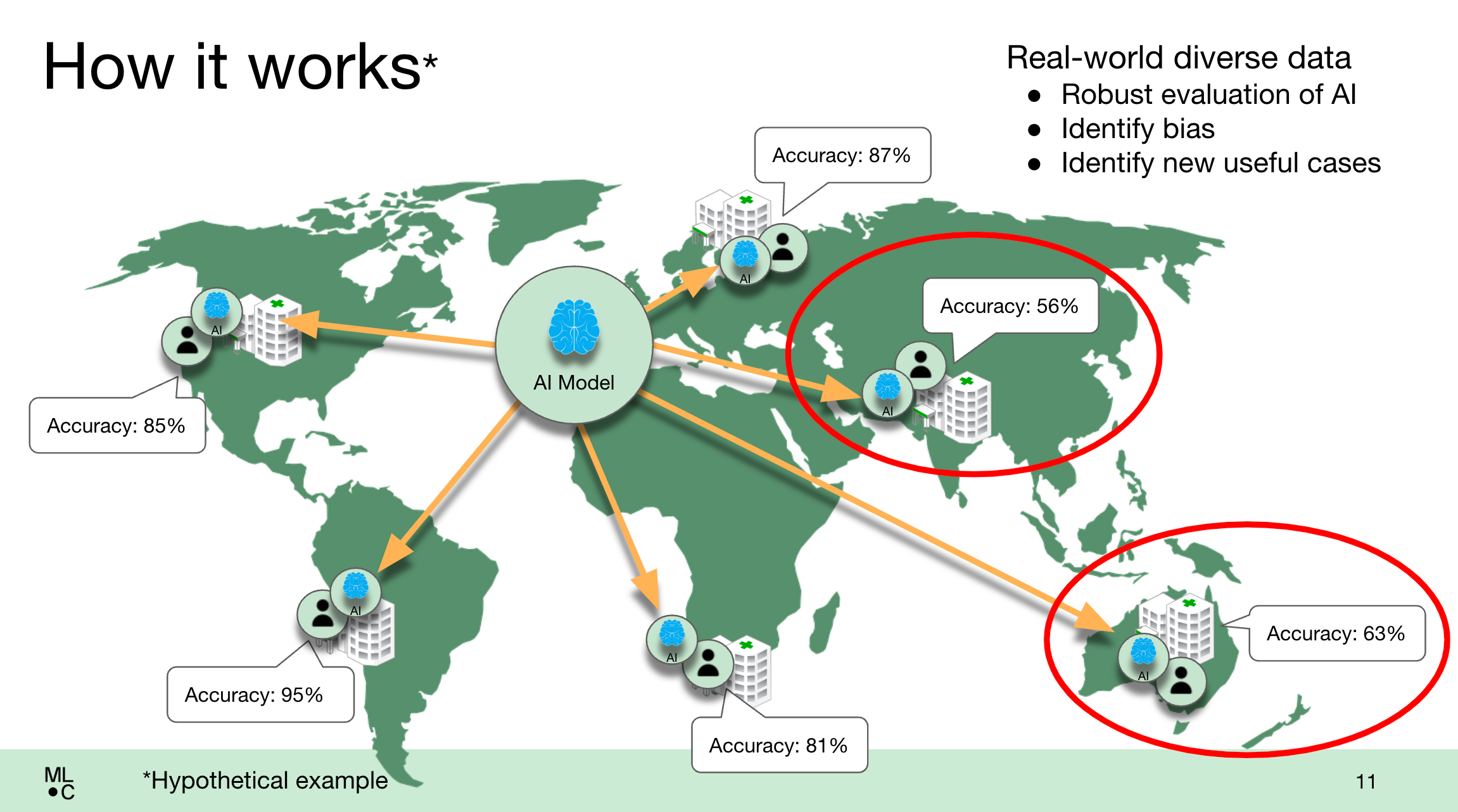
In an effort to establish a reliable, trusted way to benchmark and evaluate medical models, MLCommons, the engineering consortium focused on building tools for AI industry metrics, has architected a new testing platform called MedPerf. MedPerf, MLCommons says, can evaluate AI models on “diverse real-world medical data” while protecting patient privacy.

“Our goal is to use benchmarking as a tool to enhance medical AI,” Alex Karargyris, the co-chair of MLCommons Medical Working Group, which spearheaded MedPerf, said in a press release. “Neutral and scientific testing of models on large and diverse data sets can improve effectiveness, reduce bias, build public trust and support regulatory compliance.”

MedPerf, the result of a two-year collaboration led by the Medical Working Group, was built with input from both industry and academia — over 20 companies and more than 20 academic institutions gave feedback, according to MLCommons. (The Medical Working Group’s members span big corps like Google, Amazon, IBM and Intel as well as universities such as Brigham and Women’s Hospital, Stanford and MIT.)

In contrast to MLCommons’ general-purpose AI benchmarking suites, like MLPerf, MedPerf is designed to be used by the operators and customers of medical models — healthcare organizations — rather than vendors. Hospitals and clinics on the MedPerf platform can assess AI models on demand, employing “federated evaluation” to remotely deploy models and evaluate them on-premises.

MedPerf supports popular machine learning libraries in addition to private models and models available only through an API, like those from Epic and Microsoft’s Azure OpenAI Services.

MLCommons MedPerf

An illustration of how the MedPerf platform works in practice.

In a test of the system earlier this year, MedPerf hosted the NIH-funded Federated Tumor Segmentation (FeTS) Challenge, a large comparison of models for assessing post-op treatment for glioblastoma (an aggressive brain tumor). MedPerf supported the testing of 41 different models this year, running both on-premises and in the cloud, across 32 healthcare sites on six continents.

According to MLCommons, all of the models showed reduced performance at sites with different patient demographics then the ones they were trained on, revealing the biases contained within.

“It’s exciting to see the results of MedPerf’s medical AI pilot studies, where all the models ran on hospital’s systems, leveraging pre-agreed data standards, without sharing any data,” Renato Umeton, director of AI operations at Dana-Farber Cancer Institute and another co-chair of the MLCommons Medical Working Group, said in a statement. “The results reinforce that benchmarks through federated evaluation are a step in the right direction toward more inclusive AI-enabled medicine.”

MLCommons sees MedPerf, which is mostly limited to evaluating radiology scan-analyzing models at present, as a “foundational step” toward its mission to accelerate medical AI through “open, neutral and scientific approaches.” It’s calling on AI researchers to use the platform to validate their own models across healthcare institutions and data owners to register their patient data to increase the robustness of MedPerf’s testing.

But this writer wonders if — assuming MedPerf works as advertised, which isn’t a sure thing — whether the platform truly tackles the intractable issues in AI for healthcare.

A recent revealing report compiled by researchers at Duke University reveals a massive gap between the marketing of AI and the months — sometimes years — of toil it takes to get the tech to work the right way. Often, the report found, the difficulty lies in figuring out how to incorporate the tech into the daily routines of doctors and nurses and the complicated care-delivery and technical systems that surround them.

It’s not a new problem. In 2020, Google released a surprisingly candid whitepaper that detailed the reasons its AI screening tool for diabetic retinopathy fell short in real-life testing. The roadblocks didn’t lie with the models necessarily, but rather the ways in which hospitals deployed their equipment, internet connectivity strength and even how patients responded to the AI-assisted evaluation.

Unsurprisingly, health care practitioners — not organizations — have mixed feelings about AI in healthcare. A poll by Yahoo Finance found that 55% believe the tech isn’t ready for use and only 26% believe it can be trusted.

That’s not to suggest medical model bias isn’t a real problem — it is, and it has consequences. System’s like Epic’s for identifying cases of sepsis, for example, have been found to miss many instances of the disease and frequently issue false alarms. It’s also true that gaining access to diverse, up-to-date medical data outside of free repositories for model testing hasn’t been easy for organizations that aren’t the size of, say, Google or Microsoft.

But it’s unwise to put too much stock into a platform like MedPerf where it concerns people’s health. Benchmarks only tell part of the story, after all. Safely deploying medical models requires ongoing, thorough auditing on the part of vendors and their customers – not to mention researchers. The absence of such testing is nothing short of irresponsible.

Google Unveils SoundStorm for Parallel Audio Generation from Discrete Conditioning Tokens

Will ChatGPT Really be The Google Killer?

Google recently introduced a new model called ‘SoundStorm: Efficient Parallel Audio Generation’ in a recent paper. It presents a novel approach for efficient and high-quality audio generation.

Read the full paper here.

SoundStorm tackles the problem of generating lengthy audio token sequences through two innovative components:

  • An architecture tailored to the unique nature of audio tokens produced by the SoundStream neural codec.
  • A decoding scheme inspired by MaskGIT, a recently introduced method for image generation, specifically designed to operate on audio tokens.

Compared to the autoregressive decoding approach of AudioLM, SoundStorm achieves parallel generation of tokens, resulting in a 100-fold reduction in inference time for long sequences. Moreover, SoundStorm maintains audio quality while offering increased consistency in voice and acoustic conditions.

Furthermore, the paper demonstrates that by combining SoundStorm with the text-to-semantic modeling stage of SPEAR-TTS, it becomes possible to synthesize high-quality, natural dialogues. This allows for control over the spoken content through transcripts, speaker voices using short voice prompts, and speaker turns via transcript annotations. The provided examples serve as evidence of the capabilities of SoundStorm and its integration with SPEAR-TTS in producing convincing dialogues.

What’s Under the Hood

In their previous work on AudioLM, the researchers demonstrated a two-step process for generating audio. The first step involved semantic modeling, where semantic tokens were generated based on previous semantic tokens or a conditioning signal. The second step, known as acoustic modeling, focused on generating acoustic tokens from the semantic tokens.

However, in SoundStorm, the researchers specifically addressed the acoustic modeling step and aimed to replace the slower autoregressive decoding with a faster parallel decoding method.

SoundStorm used a bidirectional attention-based Conformer, which is a model architecture that combines convolutions with a Transformer. This architecture allows for capturing both local and global structures in a sequence of tokens. The model was trained to predict audio tokens produced by SoundStream, given a sequence of semantic tokens generated by AudioLM as input. The SoundStream model employed a method called residual vector quantization (RVQ), where up to Q tokens were used to represent the audio at each time step. The reconstructed audio quality improved progressively as the number of generated tokens per step increased from 1 to Q.

During inference, SoundStorm started with all audio tokens masked out, and then filled in the masked tokens over multiple iterations. It began with the coarse tokens at RVQ level q = 1 and continued with finer tokens, level by level, until reaching level q = Q. This approach enabled fast generation of audio.

Two crucial aspects of SoundStorm contributed to its fast generation capability. Firstly, tokens were predicted in parallel within a single iteration at each RVQ level. Secondly, the model architecture was designed in a way that the computational complexity was only mildly affected by the number of levels, Q. To support this inference scheme, a carefully designed masking scheme was used during training to simulate the iterative process used during inference.

When compared to AudioLM, SoundStorm is significantly faster, being two orders of magnitude quicker, and it also achieves better consistency over time when generating lengthy audio samples. By combining SoundStorm with a text-to-semantic token model similar to SPEAR-TTS, the text-to-speech synthesis can be scaled to handle longer contexts.

Additionally, it becomes possible to generate natural dialogues with multiple speaker turns, giving control over both the voices of the speakers and the content being generated. It’s worth noting that SoundStorm is not limited to speech synthesis alone; for instance, MusicLM uses SoundStorm efficiently to synthesize longer musical outputs.

Why Is This important?

The challenge addressed is the slow inference time associated with generating long sequences of audio tokens using autoregressive decoding methods. Autoregressive decoding, although ensuring high acoustic quality, generates tokens one by one, resulting in computationally expensive inference, especially for longer sequences. SoundStorm proposes a new method that addresses this challenge by introducing an architecture adapted to audio tokens and a decoding scheme inspired by MaskGIT, allowing for parallel generation of tokens. By doing so, SoundStorm significantly reduces the inference time, making audio generation more efficient without compromising the quality or consistency of the generated audio.

Many generative audio models, including AudioLM, uses auto-regressive decoding, which generates tokens one by one. Although this method ensures high acoustic quality, it can be computationally slow, particularly when dealing with long sequences.

The post Google Unveils SoundStorm for Parallel Audio Generation from Discrete Conditioning Tokens appeared first on Analytics India Magazine.

ChatGPT Dethroned: How Claude Became the New AI Leader

ChatGPT Dethroned: How Claude Became the New AI Leader
“The great AI race”. Source: Author with Diffusion model in the style of Tiago Hoisel

We’ve grown accustomed to continuous breakthroughs in AI over the last few months.

But not record-breaking announcements that set the new bar at 10 times the one before, which is precisely what Anthropic has done with its newest version of its chatbot Claude, ChatGPT’s biggest competitor.

It literally puts to shame everyone around.

Now, you’ll soon be turning hours of text and information searches into seconds, evolving Generative AI chatbots from simple conversation agents to truly game-changing tools for your life and those around you.

A Chatbot on Steroids, and Focused on Doing Good

As you know, with GenAI we’ve opened a window for AI to generate stuff, like text or images, which is awesome.

But as with anything in technology, it comes with a trade-off, in that GenAI models lack awareness or judgment of what’s ‘good’ or ‘bad’.

Actually, they’ve achieved the capacity to generate text by imitating data generated by humans that, most often than not, hide debatable biases and dubious content.

Sadly, as these models get better as they grow bigger, the incentive to simply give it any possible text you can find, no matter the content, is particularly enticing.

And that causes huge risks.

The alignment problem

Due to their lack of judgment, base Large Language Models, or base LLMs as they are commonly referred to, are particularly dangerous, as they are very susceptible to learning the biases their training data hides because they reenact those same behaviors.

For instance, if the data is biased toward racism, these LLMs become the living embodiment of it. And same applies to homophobia and any other sort of discrimination you can imagine.

Thus, considering that many people see the Internet as the perfect playground to test their limits of unethicality and immorality, the fact that LLMs have been trained with pretty much all the Internet with no guardrails whatsoever says it all about the potential risks.

Thankfully, models like ChatGPT are an evolution of these base models achieved by aligning their responses to what humans consider as ‘appropriate’.

This was done using a reward mechanism described as Reinforcement Learning for Human Feedback, or RLHF.

Particularly, ChatGPT was filtered through the commanding judgment of OpenAI’s engineers that transformed a very dangerous model into something not only much less biased, but also much more useful and great at following instructions.

Unsurprisingly, these LLMs are generally called Instruction-tuned Language Models.

Of course, OpenAI engineers shouldn’t be in charge of deciding what’s good or bad for the rest of the world, as they also have their fair share of biases (cultural, ethnical, etc.).

At the end of the day, even the most virtuous of humans have biases.

Needless to say, this procedure isn’t perfect.

We’ve seen in several cases where these models, despite their alleged alignment, have acted in a sketchy, almost vile way towards their users, as suffered by many with Bing, forcing Microsoft to limit the context of the interaction to just a few messages before things went sideways.

Considering all of this, when two ex-OpenAI researchers founded Anthropic, they had another idea in mind… they would align their models using AI instead of humans, with the completely revolutionary concept of self-alignment.

From Massachusetts to AI

First, the team drafted a Constitution that included the likes of the Universal Declaration of Human Rights, or Apple’s terms of service.

This way, the model not only was taught to predict the next word in a sentence (like any other language model) but it also had to take into account, in each and every response it gave, a Constitution that determined what it could say or not.

Next, instead of humans, the actual AI is in charge of aligning the model, potentially liberating it from human bias.

But the crucial news that Anthropic has released recently isn’t the concept of aligning their models to something humans can tolerate and utilize with AI, but a recent announcement that has turned Claude into the unwavering dominant player in the GenAI war.

Specifically, it has increased its context window from 9,000 tokens to 100,000. An unprecedented improvement that has incomparable implications.

But what does that mean and what are these implications?

It’s all about tokens

Let me be clear that the importance of this concept of ‘token’ can’t be neglected, as despite what many people may tell you, LLMs don’t predict the next word in a sequence… at least not literally.

When generating their response, LLMs predict the next token, which usually represents between 3 and 4 characters, not the next word.

Naturally, these tokens may represent a word, or words can be composed of several of them (for reference, 100 tokens represent around 75 words).

When running an inference, models like ChatGPT break the text you gave them into parts, and perform a series of matrix calculations, a concept defined as self-attention, that combine all the different tokens in the text to learn how each token impacts the rest.

That way, the model “learns” the meaning and context of the text and, that way, can then proceed to respond.

The issue is that this process is very computationally intensive for the model.

To be precise, the computation requirements are quadratic to the input length, so the longer the text you give it, described as the context window, the more expensive is to run the model both in training and in inference time.

These forced researchers to considerably limit the allowed size of the input given to these models to around a standard proportion between 2,000 to 8,000 tokens, the latter of which is around 6,000 words.

Predictably, constraining the context window has severely crippled the capacity of LLMs to impact our lives, leaving them as a funny tool that can help you with a handful of things.

But why does increasing this context window unlock LLMs' greatest potential?

Well, simple, because it unlocks LLMs' most powerful feature, in-context learning.

Learning without training

Put simply, LLMs have a rare capability that enables them to learn ‘on the go’.

As you know, training LLMs is both expensive and dangerous, specifically because to train them you have to hand them your data, which isn’t the best option if you want to protect your privacy.

Also, new data appears every day, so if you had to fine-tune — further train — your model constantly, the business case for LLMs would be absolutely demolished.

Luckily, LLMs are great at this concept described as in-context learning, which is their capacity to learn without actually modifying the weights of the model.

In other words, they can learn to answer your query by simply giving them the data they need at the same time you’re requesting whatever you need from them… without actually having to train the model.

This concept, also known as zero-shot learning or few-shot learning (depending on how many times it needs to see the data to learn), is the capacity of LLMs to accurately respond to a given request using data they haven’t seen before until that point in time.

Consequently, the bigger the context window, the more data you can give them and, thus, the more complex queries it can answer.

Therefore, although small context windows were okay-ish for chatting and other simpler tasks, they were completely incapable of handling truly powerful tasks… until now.

The Star Wars Saga in Seconds

I’ll get to the point.

As I mentioned earlier, the newest version of Claude, version 1.3, can ingest in one go 100,000 tokens, or around 75,000 words.

But that doesn’t tell you a lot, does it?

Let me give you a better idea of what fits inside 75,000 words.

From Frankenstein to Anakin

The article you’re reading right now is below 2,000 words, which is more than 37.5 times less than what Claude is now capable of ingesting in one sitting.

But what are comparable-size examples? Well, to be more specific, 75,000 words represent:

  • Around the total length of Mary Shelley’s Frankenstein book
  • The entire Harry Potter and the Philosopher’s Stone book, which sits at 76,944 words
  • Any of the Chronicles of Narnia books, as all have smaller word counts
  • And the most impressive number of all, it’s enough to include the dialogs from up to 8 of the Star Wars films… combined

Now, think about a chatbot that can, in a matter of seconds, give you the power to ask it anything you want about any given text.

For instance, I recently saw a video where they gave Claude a five-hour long podcast of John Cormack, and the model was capable of not only summarizing the overall podcast in just a few words, it was capable of pointing out particular stuff said at one precise moment in time over a five-hour long speaking session.

It’s unfathomable to think that not only this model is capable of doing this with a 75,000-word transcript, but the mind-blowing thing is that it’s also working with data it could be seeing for the first time.

Undoubtedly, this is the pinnacle solution for students, lawyers, research scientists, and basically anyone that must go through lots of data simultaneously.

To me, this is a paradigm shift in AI like few we’ve seen.

Undoubtedly, the door to truly disruptive innovation has been opened for LLMs.

It’s incredible how AI has changed in just a few months, and how rapidly is changing every week. And the only thing we know is that it’s changing… one token at a time.

Ignacio de Gregorio Noblejas has more than five years of comprehensive experience in the technology sector, and currently holds a position as a Management Consulting Manager in a top-tier consulting company, where he has developed a robust background in offering strategic guidance on technology adoption and digital transformation initiatives. His expertise is not limited to work in consulting but in his free time he also shares his profound insights with a broader audience. He actively educates and inspires others about the latest advancements in Artificial Intelligence (AI) through his writing on Medium and his weekly newsletter, TheTechOasis, which have an engaged audience of over 11,000 and 3,000 people respectively.

Original. Reposted with permission.

More On This Topic

  • Top 10 Tools for Detecting ChatGPT, GPT-4, Bard, and Claude
  • 3 Ways to Access Claude AI for Free
  • Meet Gorilla: UC Berkeley and Microsoft’s API-Augmented LLM Outperforms…
  • Visual ChatGPT: Microsoft Combine ChatGPT and VFMs
  • ChatGPT CLI: Transform Your Command-Line Interface Into ChatGPT
  • ChatGPT: Everything You Need to Know

Data science vs web development: What’s the difference?

Untitled

If you’ve spent any time in the tech community in the last few years, you’ll have noticed the recent explosion in interest in both data science and web development. Young people interested in a career in tech are increasingly turning to careers as data scientists or web developers.

The importance of web development should be obvious – companies have never been more reliant on their websites and therefore the skills that allow functional, effective, and engaging websites to be built are in high demand.

Similarly, data has started to become the foundation of the modern digital economy. 98% of organizations say that it’s important to increase their data analysis over the next few years, meaning that more and more people who are able to sort through large amounts of data will be needed.

However – with both fields growing at the same time – some people get confused between data science and web development. Although there are some similarities, they require different basic skills and involve different duties. Read on to find out the differences between data scientists and web developers – and discover which career suits you more.

What is Web Development?

Web development is all about using your abilities to design websites that perfectly suit the requirements of a business and its users. This will involve technical skills such as programming – if you’ve ever had to ask ‘what is a .env file’, then it’s likely that you’ve had some experience in web development.

This is called back-end development, which includes using server-side programming languages to manage servers, ensure that data is properly processed, and integrate the right databases for the website – basically, the really technical stuff that makes sure that websites are able to function effectively.

Additionally, web developers often use infographic templates to visually present complex information and data on websites, making it easier for users to understand and navigate.

Free to use image from Unsplash

Web developers also have to use a range of creative skills to make sure that their websites are visually appealing and engaging. This combines with a knowledge of programming languages such as HTML to produce front-end development, which is the term for any website development that deals with the elements of a website that users interact with.

Front-end development will also require you to use programming languages such as CSS to style the website, as well as JavaScript to design the user experience. It isn’t all about technical expertise, however, as you’ll have to work together with designers and marketers to make sure that the website is visually effective and appealing.

Web development is a critical part of bringing websites to life, utilizing technical knowledge, such as the ability to use Python, as well as an awareness of what makes a website appealing to users.

What is Data Science?

While web development has a fairly straightforward definition – it’s anything to do with building a website – data science is a much broader field. Basically, data science is all about collecting and analyzing large datasets in order to allow businesses to make well-informed decisions.

Think of data science like cooking. Raw data is the equivalent of uncooked ingredients – you can’t do much with a load of raw meat, for instance. It’s the data scientist’s job to turn the ingredients into a delicious meal – or transform a load of complex numbers and information into models and simplified datasets that non-specialists can understand and use.

As a data scientist, you’ll have to be comfortable with numbers: a strong understanding of statistics and math will allow you to be able to get to grips effectively with variables such as data distribution. You’ll also use software such as a data integration platform to produce analyses of data for your organization.

Data science vs web development: What’s the difference?

Free to use image from Unsplash

A lot of the time, data science also involves using programming skills to produce algorithms and models that can interpret and transform data effectively. However, it’s not all about numbers and coding – data scientists have to know how to communicate well with people who have no clue how to work with raw data, as well as present information in an engaging and easy-to-understand way.

Just like with web development, data scientists are needed across almost all industries – while you’ll need to have a good understanding of tech and statistics, companies in fields as diverse as marketing, healthcare, and finance are becoming increasingly dependent on leveraging data.

Data science vs web development: Key duties

Now that you can define both data science and web development, it’s time to build a deeper understanding of what these fields look like in practice. Here are the most important duties of a web developer:

  1. Website design

It should be obvious that organizations primarily use web developers in order to design websites for their business. Companies will usually have an idea about what they want their site to look like, as well as what functions they want it to perform, and it would be your job as a web developer to make those wishes come true.

This will mean that you’ll spend a lot of your time programming websites with languages such as HTML, on top of working with designers to ensure that the site looks exactly how your organization wants it to. You might also work on creating content for website alternatives, as these will often require similar skills to website design.

  1. Back-end functionality

Web developers don’t just focus on the parts of a site that users can see – they also make sure that everything is working as it should under the hood. You’ll use your coding abilities to build databases and containers, while also making sure that your websites handle user information safely and securely.

  1. Operational maintenance
Data science vs web development: What’s the difference?

Free to use image from Unsplash

Once a website is operational, it’s up to the web developers to make sure that it continues to perform as it should. You’ll have to respond to feedback and fix any bugs or errors that are affecting user experience. This will include performing regular tests, using a tool such as exploratory testing by Global App Testing.

While the main duties of a web developer are all related to producing an effective website, data scientists have a slightly wider range of responsibilities:

  1. Data analysis and visualization

Regardless of the specific requirements of your organization or industry, if you’re a data scientist you’re going to have to be able to find patterns and trends in large and often complex datasets. You’ll achieve this by using a mixture of statistical techniques, machine learning, and coding.

As well as using analytics to produce insights into your data, you’ll have to be able to transform these numbers – as well as your findings – into an accessible format through the use of visualization techniques.

  1. Predictive modeling

When it comes to some of the more specific responsibilities of data scientists, one of the most common is the development of predictive models. These use data to forecast future trends, allowing businesses to stay one step ahead of the curve.

An example of this might be a marketing company that collects data on how customers interact with their online advertisements. It would be your job to analyze this data and predict how customers with similar profiles will respond to future advertisements.

  1. Communication and collaboration

One of the most important parts of working in data science is the ability to communicate with members of your organization that aren’t able to analyze and interpret data on their own. This means that you’ll have to create different types of data mart for the different departments in your company, allowing them to visualize the data that is relevant to them.

A lot of the time, you’ll have to use reports and presentations to present some really difficult technical concepts to managers or clients with different skill sets – so effective communication is a crucial part of being a data scientist.

Important skills for web developers and data scientists

Data science vs web development: What’s the difference?

Free to use image from Unsplash

If you’re still unsure whether you’d prefer to work in web development or data science, you should consider which set of skills best suit your abilities. Here are the most important skills that employers look for when hiring web developers:

  • Programming proficiency
  • Understanding of web technologies
  • Database knowledge
  • Troubleshooting and resilience
  • Testing skills and experience

Some of these – such as having a strong database knowledge so that you can answer the question “what is a CDN server?” – are specific to web development, while others, such as the ability to troubleshoot effectively, are also applicable to data scientists. However, employers also look for a specific set of skills when hiring data scientists:

  • Statistical ability
  • Communication and presentation skills
  • Data wrangling
  • Data visualization
  • Understanding of different programming languages
  • Experience with machine learning and artificial intelligence

Data science and web development – What’s right for you?

There’s no doubt that both data science and web development are incredibly important and exciting fields for anyone with an interest in a career in tech. More and more organizations are investing in these two fields and hiring more data scientists and web developers.

However, there are clear differences between data science and web development. If you’re a data scientist, you’ll have to analyze and visualize large datasets and communicate these findings to non-specialists. Alternatively, web development is all about using creative thinking and programming skills to build websites for your organization.

You know your skills and abilities better than anyone – using the information in this article, you should now be certain which path is best suited for you.

AI ushers in a new era of mental health monitoring

AI ushers in a new era of mental health monitoring

AI Ushers in a New Era of Mental Health Monitoring

Important Data Points:

  1. AI’s Emergence in Mental Healthcare – AI is a key player in mitigating the $16 trillion global mental health crisis, enhancing care accessibility and personalization, and enabling data-based diagnosis.
  2. AI’s Impact on Mental Health – With a plethora of applications, AI revolutionizes mental healthcare, promoting precision, accessibility, and effectiveness.
  3. AI’s Mental Healthcare Benefits – AI tackles affordability and accessibility challenges, boosts clinical efficiency, fosters a non-judgmental environment for patients, in addition to aiding evidence-based decisions.
  4. Challenges and Solutions in AI Adoption – Despite the many challenges that AI faces in patient engagement, data security, and quality in mental healthcare, many innovative and ethical solutions have come up to enhance its effectiveness.

AI’s Role in Mental Healthcare Transformation – It can be safe to say that AI is driving a significant transformation in mental healthcare, promising more accessible, economical, and effective treatments.

The Emerging Role of Technology and Artificial Intelligence

image-2

As the modern world evolves, mental health has become an alarming concern. The statistics are sobering; approximately 10% of the global population is affected by mental health issues, with a striking 15% of adolescents among them. Suicide has emerged as the fourth leading cause of death for those aged between 15 and 29. The economic consequences are significant. According to a report by the Lancet Commission, compiled by specialists in psychiatry, public health, neuroscience, and advocacy groups, mental illnesses are estimated to cost the global economy around $16 trillion from 2010 to 2030. Vikram Patel, a co-lead author of the report, emphasizes that while a portion of this amount pertains to direct healthcare costs, the majority stems from the loss of productivity and expenditures in social welfare, education, and law enforcement. To put the scale into perspective, the World Health Organization states that the global mental health crisis deepened in 2020, with COVID-19 driving a substantial surge in anxiety and depression cases, increasing by 26% and 28% respectively in just a year from a base of 970 million in 2019. Despite available remedies, barriers such as inadequate access to effective care, stigma, and human rights infringements leave many without help.

In the face of these challenges, technology offers new avenues for mental healthcare delivery. The pandemic has catalyzed a significant shift toward telehealth, which has proven to be of immense significance for mental health services. In the United States, 84% of psychologists who treat anxiety disorders reported an increase in demand for treatment since the onset of the pandemic, according to a survey by the American Psychological Association.

Artificial Intelligence (AI) is emerging as a game-changer in mental health care. With investments in mental health-focused digital startups surpassing $5 billion in 2021 alone, chatbots and AI-driven virtual assistants are gaining popularity by the day. These tools offer availability, access, and the potential for more personalized treatment plans. Furthermore, by analyzing medical records and therapy sessions, AI systems can aid in diagnosing, treating, and even predicting mental health issues.

Empowering Mental Healthcare Through AI Insights

image-3

AI’s footprint in mental healthcare, from diagnosis to treatment and quality control, represents a profound paradigm shift. Let’s unpack this:

Electronic Health Records (EHRs): By harnessing deep learning and NLP, AI dissects EHRs to extract patterns, identify risks, and signal potential deterioration, fostering a tailored care strategy.

Diagnosis and Therapist Assignments: AI empowers healthcare professionals to make informed decisions, leveraging patient histories and behaviors for precise diagnoses and therapy plans.

Medical Image Analysis: Convolutional neural networks in AI offer a nuanced look into MRI and PET scans, enabling early detection and effective treatment.

Clinical Note Insights: NLP models read between the lines of clinical notes, revealing language nuances and symptom changes, which is invaluable for healthcare professionals.

Monitoring Progress and Therapy Quality: AI evaluates therapeutic utterances, enabling constructive adjustments and monitoring treatment effectiveness.

Quality Control in Therapy: AI scrutinizes language in therapy sessions, boosting therapist effectiveness and ensuring quality standards.

Cognitive Behavioral Therapy (CBT) Advocacy: As prescriptions for antidepressants rise, AI shines a spotlight on CBT, indicating higher recovery rates.

Augmenting Patient Engagement and Accessibility: : AI-driven platforms and chatbots streamline patient access and deliver therapeutic interventions, especially critical for marginalized communities. AI platforms like OPTT equip mental health professionals with tools to enhance accessibility to quality mental healthcare by up to 400%.

Real-time Monitoring with Wearables: Integrated AI tools provide real-time physiological data, crucial in managing employee burnout in an organizational setting.

Patient-Therapist Interaction: AI improves interactions by analyzing therapy sessions, ensuring treatments remain on track.

AI’s integration in mental healthcare is poised to advance as it enhances diagnostics, treatment efficacy, accessibility, and monitoring. This is particularly vital at a time when the demands on mental health services are greater than ever. Niche AI firms like Finarb Analytics, Lyra Health, Ginger, etc., are creating incubated solutions and making significant strides in the domain of mental healthcare.

The Impacts and Benefits of Artificial Intelligence

image-4

AI’s integration in mental healthcare offers multifaceted benefits:

Affordability: AI-based mental health apps offer pocket-friendly or even free services, breaking financial barriers often linked to traditional therapy. This is critical in light of the fact that over 150 million people in the WHO European Region alone were living with a mental health condition in 2021, and the financial burden of treatment is a substantial barrier for many.

Accessibility: According to the American Psychological Association, 60% of U.S. counties lack a single psychiatrist. AI-fueled platforms bridge the psychiatrist-patient gap, critical for individuals in health professional shortage areas.

Efficiency: With over 90% accuracy, scientists are leveraging artificial intelligence to identify behavioral indicators of anxiety, pointing towards a promising future for AI in mental health and wellness interventions.

Privacy: A Life Insurance company TermLife2Go survey revealed that 23% of patients withhold information from their doctors due to fear of judgment. AI-powered therapy apps offer a judgment-free zone for patients, enabling free disclosure of sensitive information.

Support for Clinicians: A study reveals that AI could be used to predict a patient’s response to antidepressants with 89% accuracy. Such insights can allow doctors to make more informed decisions and customize treatment plans.

Global Recognition: The WHO/Europe’s “Regional digital health action plan for the WHO European Region 2023–2030” acknowledges the importance of AI in mental health care.

Data-Driven Insights: AI’s ability to analyze vast datasets unveils trends and patterns in mental health, catalyzing preventive strategies.

These innovative applications of AI in mental health care present a groundbreaking shift towards more accessible, affordable, and efficient treatment solutions.

Many Challenges, But Avenues Are Aplenty

image-5

AI’s role in mental healthcare, however, is not without challenges that spark avenues for innovation:

Patient Engagement: While studies, such as a 2019 report in the Journal of Medical Internet Research, show a drop in health app usage over time, this challenge presents an opportunity for continuous improvement and engagement strategies.

Patient Protection: Evolving safety measures in AI prioritize more sophisticated systems capable of accurately identifying and responsibly handling high-risk situations.

Data Quality and Training: The need for robust data collection, curation, and standardization techniques is pressing, catalyzing improvements that bring significant clinical benefits.

Collaboration and Diversification: Diversity in training data highlights the need for inclusivity in AI development, leading to more effective systems serving a wider demographic.

Trust and Partnerships: Building trust is a crucial aspect of AI’s application in mental health. Rock Health’s 2020 report indicates some reluctance among individuals to share health data with tech companies. In this challenge lies an opportunity to build stronger, trust-based relationships between AI service providers and users, and, consequently, more effective AI tools.

Ethical Considerations: Incorporating AI into mental healthcare demands careful consideration of ethical factors. Paramount among these is the assurance of patient privacy, as the data involved is inherently sensitive. Moreover, potential biases in AI algorithms must be rigorously addressed to prevent any skewed or discriminatory outcomes that could negatively influence patient care. Navigating these ethical considerations is integral to fostering trust and ensuring the effectiveness of AI in mental healthcare.

The application of AI in mental healthcare carries with it both challenges and potential benefits, opening the door to significant advancements in mental health support and treatment. There are many complexities, but the potential rewards suggest the endeavor is worthwhile.

A Final Note

image-6

As we enter an era where artificial intelligence significantly influences mental health monitoring, we observe an intriguing amalgamation of progress and complexity. A dramatic increase in funding – a noteworthy $5.5 billion worldwide in 2021 alone – underscores the growing interest and investment in mental health tech, spurred largely by the pandemic-induced rise in mental health issues. A host of AI-focused mental health startups have successfully attracted substantial funding, further proving the industry’s readiness to embrace the potential of AI.

Innovations like emotionally intelligent AI therapists and AI-driven detection capabilities signal a bright future for mental health monitoring. Remarkable strides have been made in predictive AI, as evidenced by the development of machine learning algorithms that can predict the likelihood of severe mental health crises with up to 80% accuracy.

However, this promising landscape is not devoid of challenges. Issues surrounding compliance with regulations such as GDPR and HIPAA, the potential for bias in AI systems due to inadequate and poor-quality databases, and concerns regarding transparency, data privacy, and security persist. These obstacles highlight the complexities involved in integrating AI into existing healthcare systems, necessitating comprehensive training of medical professionals.

Despite these challenges, the undeniable promise of AI propels us toward a future where it plays a pivotal role in providing better mental healthcare. As AI technology evolves, it holds great potential for deeper research, enhancing our understanding of how mental health illnesses develop, spread, and can be prevented. It is crucial to remember that this development is not a one-off endeavor but an ongoing process that must adapt to rapid changes in our world.

In conclusion, the escalating global mental health crisis, accentuated by staggering statistics, underscores the dire need for innovative solutions. Artificial Intelligence has emerged as a groundbreaking tool, with its deep learning and data analytics capabilities offering a new dimension in mental healthcare. From refining diagnoses to optimizing patient-therapist interactions and real-time monitoring through wearables, AI’s multifaceted applications demonstrate promise in enhancing accessibility, affordability, and efficacy in mental health treatment. Moreover, converging these technological advancements with ethical considerations is critical to maximize AI’s potential and cultivate stakeholder trust. Through proactive endeavors and judicious integration of AI, the mental healthcare sector stands on the brink of transformative change.

Written by Devarati Sarkar:

Devarati is the Media and Content Lead at Finarb Analytics Consulting, a dynamic AI and Data Consulting firm recognized for its innovative solutions across numerous fields and domains. Devarati is an alumna of the Heritage Institute of Technology, India, where she earned her Bachelor’s in Technology, specializing in Biotechnology. Following her undergraduate studies, she further expanded her academic knowledge at Regenesys Business School, Johannesburg, South Africa, achieving a Master’s in Business Administration. She has over 5 years of experience in sales, business development, market research, media and PR relations, and content marketing.

Connect with her on LinkedIn: www.linkedin.com/in/devarati-sarkar-263a1a14b

Real-time analytics

Man working with futuristic interface

The modern enterprise is insight-driven, or, at least, aims to be. Historically, those insights were found in a data warehouse or data lake, populated with scheduled feeds and analysts, working feverishly over them. Feeds had plenty of bandwidth, but high latency. Think an 18-wheeler loaded with hard drives, driving from London to Birmingham.

Nowadays, insights need to be immediate and to deliver them, the real-time analytics space is evolving. Not just with historic vendors, but also with newer, more nimble providers moving into the space.

A reference architecture

There are four major sets of requirements to realize data architecture;

  • Capture
  • Transportation
  • Transformation
  • Exploitation

These create different challenges in real time.

Capture

The requirement is now to capture and process streams of data, or to receive and process messages continuously. But how does the data get into streams in the first place?

Change Data Capture enables the sourcing of data for real-time analytics styles, by one of three methods;

  • scanning logs,
  • queries
  • triggers.

The least invasive method is log scanning. Other options have real problems to work around, specifically, contention in the operational systems. Capturing deletes is tricky, and fundamentally, is still a batch process.

Outside the major vendors, CDC providers include;

  • Debezium, an Open Source offering built on Kafka Connect. Connecting to the usual RDMSs, Mongo and Vitesse. It uses log scanning to publish events onto Kafka for transportation.
  • Flow, from Estuary. Also, open source, using a log-based approach. Offering real-time, natively written connectors for “high scale” technology platforms. Supporting destinations like Firebolt SnowFlake, BigQuery and onto queues like Kafka. It’s a viable option for sourcing data.
  • HVR from FiveTran, a managed paid for service, also uses log-based CDC, and its own replication technology, where log access is not allowed.
  • Striim, a complete Cloud SaaS integration platform, with pricing to match. Uses CDC to stream data to any sink on any cloud platform. Striim uses Log-based CDC and an Incremental Batch pattern, via JDBC with incrementing values and timestamps.

The major vendors offer CDC via the following;

  • AWS’ Data Migration Service
  • GCP’s DataStream
  • Azure’s Data Factory

Transportation

Following on from capture, looking away from the major cloud platforms, other options for movement of real-time data include;

  • Apache Kafka, the standard. Open source, highly available and fault tolerant. It has high administration requirements and needs careful planning to configure. It does, however, run well when done so. It is used by major platforms like Twitter, Spotify, and Netflix, along with large financial institutions.
  • RedPanda, a specialized, single binary event streaming platform. It has a Kafka compatible API, but doesn’t require the infrastructure Kafka requires, like Zookeeper or a JVM. A fault tolerant event log, it separates event producers from consumers and natively supports schema registries and http proxies. Unlike Kafka, which requires multiple binaries for similar capability. Also boasting remarkable performance, it can be deployed onto “bare metal” if required. Further, it can be run as a managed service, or on your own cloud or premises.
  • Confluent, wraps around Kafka to create a serverless, scalable high availability streaming platform. Using Kafka Connect to connect from source to destination it can scale out with minimal maintenance.

Major vendors manage transportation via the following;

  • AWS’s Kinesis
  • GCP’s Cloud PubSub
  • Azure’s Synapse Pipelines

Transformation

The T in ETL and ELT, as a capability. Most tools mentioned allow for some transformation, for example CDC platforms HVR and Striim allow Transformation to be built into their pipelines and the Kafkas and Red Pandas allow for simple transformations. Specialist options include;

  • Orbital (formerly Vyne) integrates with streaming and batch sources and uses its open-source taxonomy language to transform data from source to sink. Thus, giving full visibility at run time, of which data was used, where, and when.
  • Apache Beam, an open-source programming model for data pipeline development. It powers Apache Flink, Spark, and Google’s Dataflow. It supports Python, Java and Go. Beam can be used in parallel processing tasks, and can chunk itself into smaller chunks of data which are processed independently.
  • StreamSets, a multi-cloud, multi-platform data transformation and integration platform. This works across multi-cloud,both on, and off premises, for streaming. It uses Kafka, but integrates with most platforms.

Major vendors manage transformation via:

  • AWS’s Glue
  • GCP’s DataFlow
  • Azure’s Synapse Pipelines, HDInsight and DataFactory

Exploitation

Once data is captured, moved and transformed, what now?

Major analytics platforms that work with real-time data include the Apache offerings; such as Druid and Spark, the new emergent leaders; Databricks and SnowFlake, and others, including streaming specialist databases like Materialize, Clickhouse or Firebolt. Each of these boast impressive scalability claims, and most offer multi cloud serverless implementations. Focusing on the specialists;

  • Materialize recognizes streaming data as asynchronous; building views as it gets more information. Updating queries run before. It keeps results of queries and increments results as new data comes in, rather than re-running from scratch each time it’s called. This allows for sub-second answers to complex queries.
  • Clickhouse, a column oriented cloud based OLAP database. Having a column oriented design means data can be read quickly and inexpensively from a performance perspective.
  • Firebolt, another scalable cloud based data lake, built on top of an Amazon S3. It transforms various file formats into its own F3 format, built for speed of retrieval. Boasting an impressive number of comparative case studies, and a healthy ecosystem for connectors, it’s extremely customisable, tunable and manageable.

Finally, major cloud vendors’ own high speed analytics databases include;

  • AWS Redshift
  • GCP’s BigQuery
  • Azure’s Cosmos

The big vendors are often a good place to start, offering a complete end to end capability for real time analytics. However, for those looking further afield for specialist offerings, there are plenty of options. Options which are just as scalable, performant, and compelling as the big players to deliver your real time analytics capability.

With thanks, David Yaffe at Estuary, Marty Pitt at Orbital, and Ottalei Martin.