ChatGPT vs. BARD

ChatGPT vs. BARD

Artificial intelligence (AI) is very much in vogue today owing to its use in a variety of applications. Its most popular use case is OpenAI’s ChatGPT (an AI powered chatbot) that can answer a host of queries. A close ally to ChatGPT is Google’s BARD (Better Accessible and Responsible Development) launched in June 2021.

Now let’s dive deeper to understand which of these large language models is better.

OpenAI’s ChatGPT has been trained using the transformer model. This model can synthesize bulk texts to discover linguistic patterns and is useful for any type of query. Both these models can provide answers to a variety of queries. The key differentiator of course is in the way these models are trained and constructed. The way they utilize natural language processing for generating a human-like response.

ChatGPT Vs. BARD: Key Differences ChatGPT vs. BARD
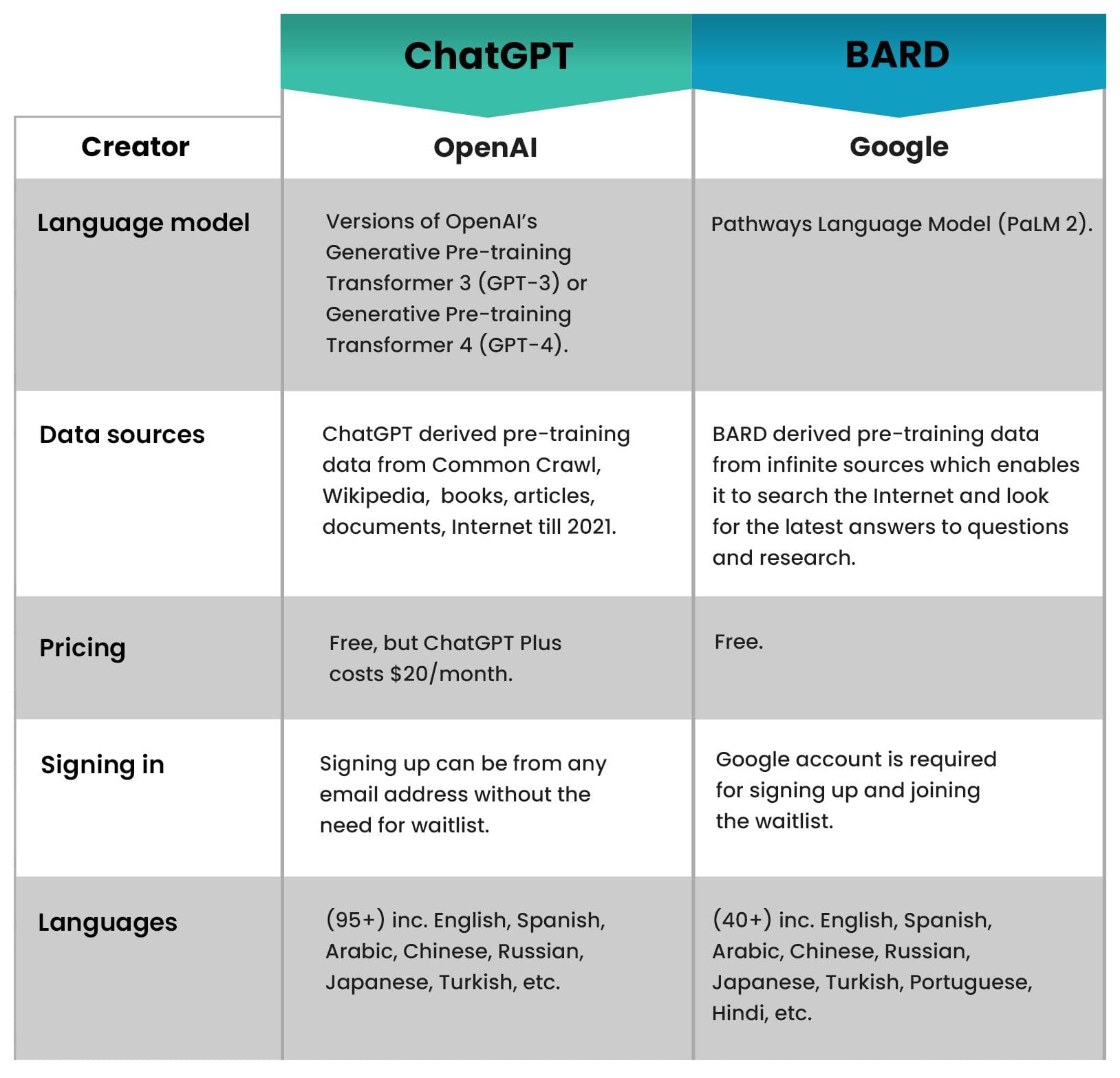
As of date, there are many choices when it comes to selecting an AI chatbot with conversational capabilities. A comparison has been done below to assist one in evaluating the pros and cons of each and choosing the better one.

ChatGPT Vs. BARD: Comparison

OpenAI’s ChatGPT

Pros Cons
Good at generating text like long-form content It cannot access the web browser as its data sources have a cut-off limit of 2021.
Offers a collaborative experience allowing one to share conversations with others. It comes with lengthy and chunky responses making the responses tough to scan.
Comprises of an entire suite of plug-ins offering more use cases with varied apps. Its facts must be checked as its immune to hallucinations and poor reasoning.

Google’s BARD

Pros Cons
Free Internet access powered through Google search Susceptible to hallucinations so output can’t be taken at face value.
Efficient at surfacing information from Google search. Unreliable sources so facts need to be re-checked.
It has a user-friendly interface with human-like responses. It doesn’t have any plug-ins or integrations so the experience is fairly isolated.

ChatGPT Vs. BARD: Use Cases ChatGPT vs. BARD

  1. Customer Service: Good for answering frequently asked questions from customers like shipping & return procedures, products or services, and technical support concerns. Reduces customer support professionals’ workload by improving response time using prompt and precise replies.
  2. Language Translation: Text translations can be done for real time chats, emails, and text documents in various languages. It can also be used to enhance the quality of machine translation systems and assist with multilingual customer service by translating customer’s questions and comments in real-time.
  3. Content Generation: Summaries of long texts like articles or reports can be created. The summary of original text can be created accurately reflecting its main ideas through text evaluation. ChatGPT can be trained to generate text that’s similar in style and grammar to a given piece of information like social media posts, email marketing copy, or other types of content.
  1. Education and Research: ChatGPT can offer individual learning experience to students by evaluating their behaviors. It can assist with research by sifting through materials to identify important facts. Researchers and students requiring access and swift examination of materials may find it fruitful. It can also assist in evaluating students by instantly delivering feedback on drafted assignments.

ChatGPT vs. BARD

  1. Creative Writing: It can evaluate content pieces and offer comments on aspects like writing style, tone, and structure to help writers hone their skills. It can also provide synonyms, related words, or alternative phrasing tips.
  1. Personal AI Assistant: It can assist in managing time and ensuring one never forgets to complete an essential step in a process or misses out on an appointment.
  1. Automated Tasks: It uses Google’s AI for carrying out a variety of tasks instantaneously. This includes making reservations at restaurants or travel arrangements. It can also be used to buy things and locate them by using this chatbot.

Conclusion

Hence, we can see that both ChatGPT and BARD are evolving day-by-day and coming out with their latest versions. Both these LLMs have their pros and cons, but selecting the better LLM will depend on your purpose for using it and getting used to irritants like hallucinations.

Roger has over a decade’s expertise in collecting and providing training datasets in machine learning and artificial intelligence. He has expertise in other related fields like visual search, virtual assistant, chatbot training, and transcription services. He has hands on experience in testing and quality checking outputs and results.

More On This Topic

  • ChatGPT vs Google Bard: A Comparison of the Technical Differences
  • 8 Open-Source Alternative to ChatGPT and Bard
  • Top 10 Tools for Detecting ChatGPT, GPT-4, Bard, and Claude
  • Why Data Scientists Expect Flawed Advice From Google Bard
  • Bard for Data Science Cheat Sheet
  • What is Google AI Bard?

This Indian Space Tech Startup is Building Google Maps for Space

Back in 2003, the Danish brainiac brothers, Lars and Jens Rasmussen, dropped Google Maps for Earth. Now, fast forward two decades, and Digantara, the Peak XV Partners-backed space tech startup from Bengaluru, is working on a similar project but for space situational awareness – in short, the team is building Google Maps for the cosmos.

Unlike traditional players in the space situational areas like US-based Slingshot Aerospace or ExoAnalytic Solutions, Digantara’s system uses data fusion and sensor fusion to gather information from diverse sources, including ground stations and satellite operators.

“In our case, we crowdsource data from existing sources, such as ground stations and other satellite operators, and complement it with our own satellite data to enhance accuracy and efficiency,” Anirudh Sharma, co-founder and chief executive officer at Digantara told AIM in an exclusive conversation.

Making Space Travel Hasslefree

Founded in 2018 by Sharma, Rahul Rawat, COO, and Tanveer Ahmed, CTO, Digantara has customers in three segments namely satellite operators, government agencies, and insurance companies.

Since 1957, numerous satellites have been sent into space by various governmental and commercial entities, contributing to the expansion of the space economy. Yet, a notable challenge persists—there is no standardised method for monitoring space activities comprehensively. This absence of a unified monitoring system creates difficulties in overseeing and coordinating orbital endeavours.

Digantara’s initiative aligns with this pressing need for a comprehensive monitoring system in space. It operates on three key pillars: first, launching satellites and deploying sensors for space activity tracking; second, employing data fusion similar to Google Maps. They create a catalogue of space objects and offer analytical services for different sectors, such as insurance, by providing risk data and verifying space incidents with their space-based sensors.

The “Space Mission Assurance Platform” or “Space MAP” is designed for commercial, defense, and insurance users. It serves as a centralised solution for various space operational products, leveraging a data feedback loop based on multimodal datasets. These data sets involve crowdsourcing information from diverse sources, including government agencies tracking objects in space, private companies launching assets, satellite operators, telescopes, and ground-based radars. The goal is to collect and analyse data from multiple channels to enhance understanding and management of space activities.

“In essence, we offer end-to-end infrastructure for commercial and defense space operations,” he added, emphasising that Digantara provides strategic intelligence for defense entities and assists regulators and governments in enforcing space regulations through comprehensive monitoring and compliance information.

Space is the Limit

Indian space tech industry has experienced significant growth in recent years due to government policy changes and encouragement of private participation. The privatisation of the space sector has attracted diverse investments from various companies, making it challenging to provide a specific investment figure. However, It was only in June 2022 that the IN-SPACe authorised Digantara and Hyderabad-based Dhruva Space to launch their payloads in space.

According to Sharma, valuing investments in the space sector is complex and varied, much like the diversity seen in the IT industry since different types of space companies, such as those focused on rockets or satellite launches, have different investment needs and gestation periods. Despite the variability, a substantial amount of capital is essential due to the high costs associated with space activities.

“While the gestation period varies, all space-related activities need substantial capital, given the inherent expense of space activities,” he added.

However, investors, both domestic and international, are actively investing in the Indian space industry. This trend is evident across various companies, including Digantara, which is backed by the likes venture capital firms like Sequoia Capital.

Nevertheless, Sharma notes that as a space tech company, “Our focus has to be global because space knows no boundaries, leading us to work closely with multiple agencies worldwide, including both space and government entities,” he added.

Digantara successfully secured $10 million in its Series A1 funding round in June 2023, spearheaded by Peak XV Partners, formerly known as Sequoia Capital India and Southeast Asia. This funding also saw continued support from existing investor Kalaari Capital, as well as contributions from Japan-based venture capital firm Global Brain, Campus Fund, and the founders of IIFL Wealth.

Using this capital, Digantara is expanding its team beyond India, focusing on the US and EU markets, after Singapore. Additionally, the funds are being directed towards the development and launch of the initial set of eight space situational awareness satellites. The maiden satellite is expected to launch later this year, followed by the deployment of the remaining seven within a year. Digantara aims to commence its commercial satellite awareness data operations after April of the following year.

The influx of investments into the sector is on the rise, and this momentum is expected to continue. India benefits from decades of experience in the space industry, thanks to the ISRO.

“The current growth in the sector has attracted significant attention from both government and private investors. The overall outlook is positive, and India is poised for continued success in the space industry,” concluded Sharma.

Read more: Meet Indian Space Tech Startup is Building World’s First Multisensor Satellite

The post This Indian Space Tech Startup is Building Google Maps for Space appeared first on Analytics India Magazine.

Why AI’s to be Blamed for Layoffs

Yesterday Stack Overflow announced that they were laying off their staff for the second time this year. Prashanth Chandrasekar, the CEO of Stack Overflow explained these layoffs in his blog saying that the initial restructuring efforts weren’t enough and “we have made the extremely difficult decision to reduce the company’s headcount by 28%.”

This year saw a phenomenal increase in layoffs in the tech industry. January having the most with a constant trickle throughout the year. Human resources took the major hit after which software engineers came next with 22.1% of employees laid off this year.

In the example of Stack Overflow, there have been reports for a while now that claim users preferred ChatGPT over the 15 year old website to help with coding troubles resulting in a drastic drop in traffic. This is the first time that AI has been replaced. Microsoft’s Linkedin also announced their layoffs again yesterday, cutting down their workforce in the engineering, talent and product departments. Dukaan, an e-commerce platform, earlier this year laid off 90% of their support staff and replaced them with AI. The CEO said that their customer support resolution time went down considerably because of this.

The layoffs for each company is a combination of multiple factors but the increased use of AI in the workplace is slowly but surely threatening to replace the human workforce.

AI and Human Resources

True to the report published by Goldman Sachs, the majority of work that can be automated is already being done so by AI. Scaling a business now doesn’t require as much labour anymore and technology will be used as a default. “Lesser hiring means fewer recruiters. Leaner organisations point to small HR departments. Sales, marketing, legal, and accounting teams will shrink as tools become more powerful.” predicts Vin Vashishta.

“AI in HR is not new; its integration has been ongoing, and generative AI’s recent emergence globally has sparked an AI race impacting all organisations profoundly,” Nischae Suri,Managing Director at Cornerstone OnDemand told AIM. Cornerstone is a SaaS platform that provides a comprehensive learning and talent management solution.

The pressure to enhance operations using AI is widespread, affecting HR as well. Currently, 81% of HR leaders have explored or adopted AI solutions, a figure likely to rise.

Suri further added that the potential value of AI for HR is substantial, providing insights into talent performance and aligning employees with relevant learning pathways matching their progression goals. However, concerns arise with the swift acceleration of AI and its implications for employees.

According to Cornerstone OnDemand’s latest Talent Mobility Study, 73% of employees express interest in exploring new roles within their company, and a higher percentage of them preferred using technology to explore these new roles rather than a conversation directly with the manager. So AI in human resource solutions can recommend learning opportunities, analyse career trajectories, and align key skills with organisational requirements.

In line with this the company announced ‘Skills Playground’ a free, AI-powered tool that matches skills to job roles and learning content ontology, with more than 50,000 skills identified, and lets visitors experience AI skills detection firsthand.

This is one of the earliest technologies that streamlines HR roles and processes using AI. IBM also continues to build their Watsonx platform adding features to automate processes like onboarding etc.

Does AI take over jobs?

There is little to show that AI is the reason for layoffs. Right now, gig workers in content creation have seen a direct hit because it is easy to produce good quality AI generated content.

The constant news of layoffs are rarely related to AI. The Stack Overflow layoffs were blamed on the business strain due to macroeconomic factors by its CEO. LinkedIn is likely suffering from poor recruitment – whose fees are its biggest revenue. It still remains that AI is only a tool for humans to employ to make their jobs easier rather than a threat. In the meanwhile however it is unfortunate to have the constant fluctuation in the job market.

Upskilling with online courses and certifications and keeping in line with the industry requirements is gaining popularity with companies as well as job seekers.

It is important to stress that AI is a helpful tool which will reduce the number of jobs that require repetition and can be automated. On the flip side, jobs for developers have increased in demand over the years. Suri sums up saying, “The nature of work might shift, and some tasks may become automated, but new opportunities will arise as well.”

The post Why AI’s to be Blamed for Layoffs appeared first on Analytics India Magazine.

DALL·E 3 is Here with ChatGPT Integration

Sponsored Content DALL·E 3 is Here & Integrated Into ChatGPT-4

If you keep up with technology and AI, you will know that when it comes to generating images, Midjourney has been everybody's pay-to-play go-to. Now it looks like they have some competition. Generative AI is running its race, with OpenAI releasing DALL·E 3 an image generator on the 20th of September, 2023.

Ever written up an amazing blog and wanted an image to resonate with that? Ever had a really cool idea and you wanted it in a visual? Ever been too tired to create your own image and wanted it instantly? And on top of that, you wanted it to be exactly what you imagined. Well, you can do all of that with DALL·E 3.

What is DALL·E 3?

Let’s start from the beginning. DALL·E is a text-to-image model which is developed by OpenAI using deep learning methods. We’ve seen DALL·E 2 be able to generate digital images using natural language processing and now we have DALL·E 3.

DALL·E 3 has come back bigger and better with being able to understand the nooks and cracks, more nuances and detail than ever. Using ‘prompts’ you can now easily translate your ideas into accurate digital images.

DALL·E 2 vs DALL·E 3

So what is the difference between the two? How is DALL·E 3 better?

Understands Context Much Better

The main difference between DALL·E 2 and DALL·E 3 is the model's understanding of context. DALL·E 2 unfortunately had a difficult time fully understanding context even when specifically prompted, it would ignore specific words. DALL·E 3 understands context much better, providing users with the image they want.

Hand in Hand with ChatGPT

DALL·E 3 has specifically been built on ChatGPT. This allows you to use DALL·E 3 and ChatGPT hand in hand to brainstorm your ideas and better refine your prompts. When DALL·E 3 is prompted with an idea, ChatGPT will generate unique, tailored and detailed prompts for DALL·E 3 to bring to life.

If DALL·E 3 generates an image that you’re not fond of, you can ask ChatGPT to make further tweaks to get the image you want.

The Images are Yours!

Images that were created by DALL·E 2 did not belong to the user that created it. With DALL·E 3, the images that you create are all yours! This means that you do not need permission from OpenAI to reprint, sell or merchandise them. Definitely an interesting development.

Mimicking Living Artists

We won’t get into the issues surrounding why mimicking living artists is a problem — we know that you can turn ugly very quickly. Lawsuits, copyright infringement, you get what I’m trying to say here.

An OpenAI representative said that DALL·E 3 has been specifically trained to decline generating images that mimic the style of living artists. Whereas, DALL·E 2 currently can be prompted to mimic the art style of certain artists. To ensure artists are happy, OpenAI has also provided a form in which creators can opt out of having their images used to train future models.

Fake Image Generation

From what we’ve learnt about DALL·E 3, it seems like it's an open playground. However, OpenAI is still very tight about safety around the use of all their generative AI tools. OpenAI has stated that just like DALL·E 2, DALL·E 3 has an implemented keyword and image detection filter which limits users' ability to generate harmful, violent and sexual content. We’ve already seen this happen with Midjourney when it generated fake images of Donald Trump getting arrested.

Have a look at the below image of the difference between DALL·E 2 and DALL·E 3 on their output on generating an image using the prompt ‘An expressive oil painting of a basketball player dunking, depicted as an explosion of a nebula’.

DALL·E 3 is Here & Integrated Into ChatGPT-4
Image by OpenAI
Using DALL·E 3 in ChatGPT Pro

DALL·E 3 has very recently been rolled out to ChatGPT Pro, with availability coming soon to OpenAI APIs and Labs as well.

To use DALL·E 3 from ChatGPT Pro, with the convenience of interacting with the service via the familiar chat interface, simply head over to the ChatGPT website and from the ChatGPT-4 menu option select "DALL·E 3 (Beta)."

DALL·E 3 is Here & Integrated Into ChatGPT
Screenshot from ChatGPT website

At this point, all you have to do is interact with ChatGPT in the same way you would otherwise.

Create an image of a mountainous winter scene, with a cabin and some goats

And here's what DALL·E 3 generates and outputs right inside he ChatGPT interface:

DALL·E 3 is Here & Integrated Into ChatGPT
Image by Author using DALL·E 3 (click to enlarge)

It's that easy. ChatGPT takes care of engineering useful prompts for DALL·E to use, making the system far more approachable than some of the other options out there which require clever prompt engineering to get their best results.

Wrapping Up

And that's DALL·E 3 as it is at the moment. What does this mean for other AI image-generator competitors such as Midjourney and StabilityAI?

Let us know your thoughts in the comments below.

Nisha Arya is a Data Scientist and Freelance Technical Writer. She is particularly interested in providing Data Science career advice or tutorials and theory based knowledge around Data Science. She also wishes to explore the different ways Artificial Intelligence is/can benefit the longevity of human life. A keen learner, seeking to broaden her tech knowledge and writing skills, whilst helping guide others.

More On This Topic

  • I Used ChatGPT (Every Day) for 5 Months. Here Are Some Hidden Gems That…
  • Essential Features of An Efficient Data Integration Solution
  • How AI/ML Technology Integration Will Help Business in Achieving Goals in…
  • How Artificial Intelligence Can Transform Data Integration
  • ETL vs ELT: Data Integration Showdown
  • SQL and Data Integration: ETL and ELT

Reality Defender raises $15M to detect text, video and image deepfakes

Reality Defender raises $15M to detect text, video and image deepfakes Kyle Wiggers 8 hours

Reality Defender, one of several startups developing tools to attempt to detect deepfakes and other AI-generated content, today announced that it raised $15 million in a Series A funding round led by DCVC with participation from Comcast Ventures, Ex/ante, Parameter Ventures and Nat Friedman’s AI Grant.

The proceeds will be put toward doubling Reality Defender’s 23-person team into the next year and improving its AI content detection models, according to co-founder and CEO Ben Colman.

“New methods of deepfaking and content generation will consistently appear, taking the world by surprise both through spectacle and the amount of damage they can cause,” Colman told TechCrunch in an email interview. “By adopting a research-forward mindset, Reality Defender can stay several steps ahead of these new generation methods and models before they appear publicly, being proactive about detection instead of reacting to what just appears today.”

Colman, a former Goldman Sachs VP, launched Reality Defender in 2021 alongside Ali Shahriyari and Gaurav Bharaj. Shahriyari previously worked at Originate, a digital transformation tech consulting firm, and the AI Foundation, a startup building AI-powered animated chatbots. Bharaj was a colleague of Shahriyari’s at the AI Foundation, where he led R&D.

Reality Defender began as a nonprofit. But, according to Colman, the team turned to outside financing once they realized the scope of the deepfakes problem — and the growing commercial demand for deepfake-detecting technologies.

Colman’s not exaggerating about the scope. DeepMedia, a Reality Defender rival working on synthetic media detection tools, estimates that there’s been three times as many video deepfakes and eight times as many voice deepfakes posted online this year compared to the same time period in 2022.

The rise in the volume of deepfakes is attributable in large part to the commoditization of generative AI tools.

Cloning a voice or creating a deepfake image or video — that is, an image or video digitally manipulated to convincingly replace a person’s likeness — used to cost hundreds to thousands of dollars and require data science know-how. But over the last few years, platforms like the voice-synthesizing ElevenLabs and open source models such as Stable Diffusion, which generates images, have enabled malicious actors to mount deepfake campaigns at little to no cost.

Just this month, users on the notorious chat board 4chan leveraged a range of generative AI tools, including Stable Diffusion, to unleash a blitz of racist images online. Meanwhile, trolls have used ElevenLabs to imitate the voices of celebrities, generating audio ranging in content from memes and erotica to virulent hate speech. And state actors aligned with the Chinese Communist Party have generated lifelike AI avatars portraying news anchors, commenting on topics such as gun violence in the U.S.

Some generative AI platforms have implemented filters and other restrictions to combat abuse. But, as in cybersecurity, it’s a cat and mouse game.

“Some of the greatest risk from AI-generated media stems from use and abuse of deepfaked materials on social media,” Colman said. “These platforms have no incentive to scan deepfakes because there’s no legislation requiring them to do so, unlike the legislation forcing them to remove child sexual abuse material and other illegal materials.”

Reality Defender purports to detect a range of deepfakes and AI-generated media, offering an API and web app that analyze videos, audio, text and images for signs of AI-driven modifications. Using “proprietary models” trained on in-house data sets “created to work in the real world and not in the lab,” Colman claims that Reality Defender is able to achieve a higher deepfake accuracy rate than its competitors.

“We train an ensemble of deep learning detection models, each of which focuses on its own methodology,” Colman said. “We learned long ago that not only does the single-model, monomodal approach not work, but neither does testing for accuracy in a lab versus real-world accuracy.”

But can any tool reliably detect deepfakes? That’s an open question.

OpenAI, the AI startup behind the viral AI-powered chatbot ChatGPT, recently pulled its tool to detect AI-generated text, citing its “low rate of accuracy.” And at least one study shows evidence that deepfake video detectors can be fooled if the deepfakes fed into them are edited in a certain way.

There’s also the risk of deepfake detection models amplifying biases.

A 2021 paper from researchers at the University of Southern California found that some of the data sets used to train deepfake detection systems might under-represent people of a certain gender or with specific skin colors. This bias can be amplified in deepfake detectors, the coauthors said, with some detectors showing up to a 10.7% difference in error rate depending on the racial group.

Colman stands behind Reality Defender’s accuracy. And he asserts the company actively works to mitigate biases in its algorithms, incorporating “a wide variety accents, skin colors and other varied data” into its detector training data sets.

“We’re always training, retraining and improving our detector models so they fit new scenarios and use cases, all while accurately representing the real world and not just a small subset of data or individuals,” Colman said.

Call me cynical, but I’m not sure if I buy those claims without a third-party audit to back them up. My skepticism isn’t impacting Reality Defender’s business, though, which Colman tells me is quite robust. Reality Defender’s customer base spans governments “across several continents” as well as “top-tier” financial institutions, media corporations and multinationals.

That’s despite competition from startups like Truepic, Sentinel and Effectiv, as well as deepfake detection tools from incumbents such as Microsoft.

In an effort to maintain its position in the deepfake detection software market, which was valued at $3.86 billion in 2020, according to HSRC, Reality Defender plans to introduce an “explainable AI” tool that’ll let customers scan a document to see color-coded paragraphs of AI-generated text. Also on the horizon is real-time voice deepfake detection for call centers, to be followed b ay real-time video detection tool.

“In short, Reality Defender will protect a company’s bottom line and reputation,” Colman said. “Reality Defender uses AI to fight AI, helping the largest entities, platforms and governments determine whether a piece of media is likely real or likely manipulated. This helps combat against fraud in the finance world, prevent the dissemination of disinformation in media organizations and prevent the spread of irreversible and damaging materials on the governmental level, just to name three out of hundreds of use cases.”

Anthropic Expands Claude’s Services Across 95 Nations 

Meet Silicon Valley's Generative AI Darling

Anthropic recently announced Claude is now available to users in 95 countries worldwide. Launched in July, Claude has rapidly become a go-to solution for millions of users seeking professional and day-to-day task assistance.

This expansion comes as good news for users in supported countries, granting access to both the free version and Claude Pro. This dual offering provides a tailored experience, enhancing productivity and efficiency. Users can streamline their workflow, accomplish tasks more effectively, and achieve their goals using Claude’s intuitive interface and robust features.

Users worldwide can now harness Claude’s vast capabilities, leveraging its expansive memory, a remarkable 100K token context window, and unique file upload feature. These functionalities empower users to analyze data, refine their writing skills, and even engage in conversations with books and research papers.

Notably, Claude excels in data analysis, enabling users to gain valuable insights through advanced algorithms, driving well-informed decision-making processes. Additionally, its file upload feature facilitates seamless collaboration, allowing users to effortlessly share and discuss documents.

This significant development follows Amazon’s recent announcement of a $4 billion investment in Anthropic. Moreover, reports indicate that Anthropic is gearing up for another funding round, with discussions underway with past investors, including Google. The company aims to secure approximately $2 billion in funding. This strategic move solidifies Anthropic as a key player in the competitive landscape, positioning itself as a prime independent rival to OpenAI.

You can find the list of supported countries here.

The post Anthropic Expands Claude’s Services Across 95 Nations appeared first on Analytics India Magazine.

Space Tech Startup Agnikul Cosmos Secures $26.7M in Series-B Funding

Agnikul Cosmos, an Indian space-tech startup affiliated with the Indian Institute of Technology Madras (IIT-Madras), has announced the closure of its Series-B fundraising round, garnering $26.7 million. This round brings Agnikul’s total capital raised to $40 million, signifying a substantial leap for the company.

Prominent venture capital investors joined forces with Agnikul in this round including Celesta Capital, Rocketship.vc, Artha Venture Fund, and Artha Select Fund, as well as Mayfield India. Existing investors such as pi Ventures, Speciale Invest, and Mayfield India also extended their support.

Having demonstrated its key technologies, Agnikul will use the newly acquired capital to scale them further. The company also intends to invest in essential facilities, including mobile launchpads and various test rigs that are crucial for on-demand launches.

Agnikul has a history of groundbreaking achievements, including the development and successful test-firing of ‘Agnilet,’ the world’s first single-piece 3D printed rocket engine, fully conceived and manufactured in India. This feat was accomplished in early 2021 and marked a technological milestone. Notably, the Indian Government granted Agnikul a patent for its innovative engine in 2022.

In addition to its engine achievements, Agnikul inaugurated a facility dedicated to end-to-end 3D printing of rocket engines in the previous year. This factory represents a step towards the large-scale fabrication of launch vehicle engines. Agnikul’s groundbreaking design was further affirmed as it became the first company worldwide to create a rocket engine that can be 3D printed as a single, seamless piece of hardware.

“Doubling our investment isn’t merely a financial move—it’s a ringing endorsement of our faith in Agnikul’s prowess. We’re all in, eager to see—and support—every giant leap they make in reshaping space exploration,” said Anirudh A Damani, Fund Manager, Artha Venture Fund

The post Space Tech Startup Agnikul Cosmos Secures $26.7M in Series-B Funding appeared first on Analytics India Magazine.

Unlocking Reliable Generations through Chain-of-Verification: A Leap in Prompt Engineering

Unlocking Reliable Generations through Chain-of-Verification: A Leap in Prompt Engineering
Image created by Author with Midjourney
Key Takeaways

  • The Chain-of-Thought (CoVe) prompt engineering method is designed to mitigate hallucinations in LLMs, addressing the generation of plausible yet incorrect factual information
  • Through a four-step process, CoVe enables LLMs to draft, verify, and refine responses, fostering a self-verifying mechanism that enhances accuracy, Structured Self-Verification
  • CoVe has demonstrated improved performance in various tasks such as list-based questions and long-form text generation, showcasing its potential in reducing hallucinations and bolstering the correctness of AI-generated text

We study the ability of language models to deliberate on the responses they give in order to correct their mistakes.

Introduction

The relentless pursuit of accuracy and reliability in the realm of Artificial Intelligence (AI) has ushered in groundbreaking techniques in prompt engineering. These techniques play a pivotal role in guiding generative models to provide precise and meaningful responses to a myriad of queries. The recent advent of the Chain-of-Verification (CoVe) method marks a significant milestone in this quest. This innovative technique aims to tackle a notorious issue in large language models (LLMs) — the generation of plausible yet incorrect factual information, colloquially known as hallucinations. By enabling models to deliberate on their responses and undergo a self-verifying process, CoVe sets a promising precedent in enhancing the reliability of generated text.

The burgeoning ecosystem of LLMs, with their capability to process and generate text based on vast corpora of documents, has showcased remarkable proficiency in various tasks. However, a lingering concern remains—the propensity to generate hallucinated information, especially on lesser-known or rare topics. The Chain-of-Verification method emerges as a beacon of hope amidst these challenges, offering a structured approach to minimize hallucinations and improve the accuracy of generated responses.

Understanding Chain-of-Verification

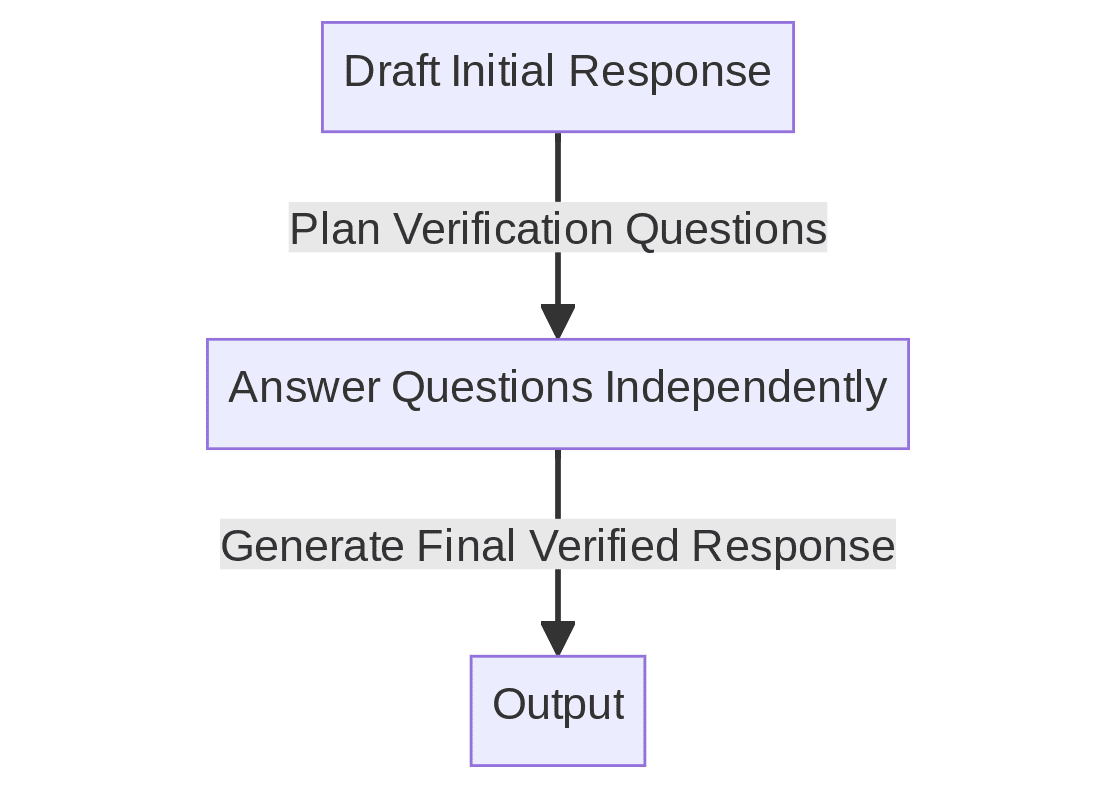
CoVe unfolds a four-step mechanism to mitigate hallucinations in LLMs:

  • Drafting an initial response
  • Planning verification questions to fact-check the draft
  • Answering those questions independently to avoid bias
  • Generating a final verified response based on the answers

This systematic approach not only addresses the concern of hallucinations but also encapsulates a self-verifying process that elevates the correctness of the generated text. The method's efficacy has been demonstrated across a variety of tasks, including list-based questions, closed book QA, and long-form text generation, showcasing a decrease in hallucinations and an improvement in performance.

Implementing Chain-of-Verification

Adopting CoVe involves integrating its four-step process in the workflow of LLMs. For instance, when tasked with generating a list of historical events, an LLM employing CoVe would initially draft a response, plan verification questions to fact-check each event, answer those questions independently, and finally, generate a verified list based on the validation received.

The rigorous verification process intrinsic to CoVe ensures a higher degree of accuracy and reliability in the generated responses. This disciplined approach toward verification not only enriches the quality of information but also fosters a culture of accountability within the AI generation process, marking a significant stride towards achieving more reliable AI-generated text.

Example 1

  • Question: List notable inventions of the 20th century.
  • Initial Draft: Internet, Quantum Mechanics, DNA Structure Discovery
  • Verification Questions: Was the Internet invented in the 20th century? Was Quantum Mechanics developed in the 20th century? Was the structure of DNA discovered in the 20th century?
  • Final Verified Response: Internet, Penicillin Discovery, DNA Structure Discovery

Example 2

  • Question: Provide a list of countries in Africa.
  • Initial Draft: Nigeria, Ethiopia, Egypt, South Africa, Sudan
  • Verification Questions: Is Nigeria in Africa? Is Ethiopia in Africa? Is Egypt in Africa? Is South Africa in Africa? Is Sudan in Africa?
  • Final Verified Response: Nigeria, Ethiopia, Egypt, South Africa, Sudan

Adopting CoVe involves integrating its four-step process in the workflow of LLMs. For instance, when tasked with generating a list of historical events, an LLM employing CoVe would initially draft a response, plan verification questions to fact-check each event, answer those questions independently, and finally, generate a verified list based on the validation received.

Chain-of-Verification process
Figure 1: The Chain-of-Verification simplified process (Image by Author)

The methodology would require in-context examples along with the question to pose the LLM, or an LLM could be finetuned on CoVe examples in order to approach each question in this manner, should it be desired.

Conclusion

The advent of the Chain-of-Verification method is a testament to the strides being made in prompt engineering towards achieving reliable and accurate AI-generated text. By addressing the hallucination issue head-on, CoVe offers a robust solution that elevates the quality of information generated by LLMs. The method's structured approach, coupled with its self-verifying mechanism, embodies a significant leap towards fostering a more reliable and factual AI generation process.

The implementation of CoVe is a clarion call for practitioners and researchers alike to continue exploring and refining techniques in prompt engineering. Embracing such innovative methods will be instrumental in unlocking the full potential of Large Language Models, promising a future where the reliability of AI-generated text is not just an aspiration, but a reality.

Matthew Mayo (@mattmayo13) holds a Master's degree in computer science and a graduate diploma in data mining. As Editor-in-Chief of KDnuggets, Matthew aims to make complex data science concepts accessible. His professional interests include natural language processing, machine learning algorithms, and exploring emerging AI. He is driven by a mission to democratize knowledge in the data science community. Matthew has been coding since he was 6 years old.

More On This Topic

  • Ensuring Reliable Few-Shot Prompt Selection for LLMs
  • Unlocking GPT-4 Summarization with Chain of Density Prompting
  • Automating the Chain of Thought: How AI Can Prompt Itself to Reason
  • The Art of Prompt Engineering: Decoding ChatGPT
  • Mastering Generative AI and Prompt Engineering: A Free eBook
  • Parallel Processing in Prompt Engineering: The Skeleton-of-Thought…

Hamas War Highlights Israel’s Cutting-Edge AI Military Tech

At Tel Aviv University, OpenAI CEO Sam Altman, in June, spoke about how Israel will play a huge role in the AI revolution, and rightly so. There can’t be a better time to showcase that than this – a War.

While International agencies have expressed shock at the intelligence failure, with Former CIA director John Brennan saying that the situation, “raises questions about Israeli intelligence capabilities… and whether their intelligence sources were compromised in some way.”

However, its technological advancement has helped it lower the brunt of this well-planned attack. Over the years, Israeli Defence Forces (IDF), the Mossad, and the Shin Bet (Shabak) have intercepted many such attacks and defused them.

Israel has prioritised knowledge-building on machine learning and algorithm-driven warfare and has invested in AI and its applications in the military because of its geopolitically volatile location.

Of the many interesting tales, the usage of AI to assassinate Iran’s leading nuclear scientists to derail their capacity bolstering stands out.

In an audacious and technologically advanced assassination plot, Israeli intelligence agency Mossad orchestrated the remote-controlled killing of one of Iran’s top nuclear scientists, Mohsen Fakhrizadeh. The operation, which unfolded on Friday, November 27, 2020, near the town of Absard, east of Tehran, sheds light on a new era of covert killings, where a souped-up machine gun controlled by artificial intelligence executed the target from over 1,000 miles away.

Mohsen Fakhrizadeh, a key figure in Iran’s military establishment, had long been on Israel’s hit list for his suspected involvement in the country’s nuclear weapons program. Israel had previously employed various methods to eliminate scientists involved in Iran’s nuclear ambitions, but Fakhrizadeh proved an elusive target.

Fakhrizadeh, though relatively unknown to the world, played a pivotal role in Iran’s nuclear program. He had managed to build an underground network for acquiring sensitive technology and equipment from around the world. His secrecy and meticulous planning made it challenging for international inspectors to understand the true extent of Iran’s nuclear weapons program.

However, the physicist’s commitment to living a normal life despite the persistent threats against him, his love for domestic pleasures, and his insistence on driving his car to Absard made him vulnerable.

The operation marked a significant shift in tactics for Mossad, as the agency had traditionally favoured field operatives for such missions. However, with the help of a high-tech, computerised sharpshooter equipped with artificial intelligence and multiple-camera eyes, Mossad successfully eliminated Fakhrizadeh without a single agent physically present at the scene.

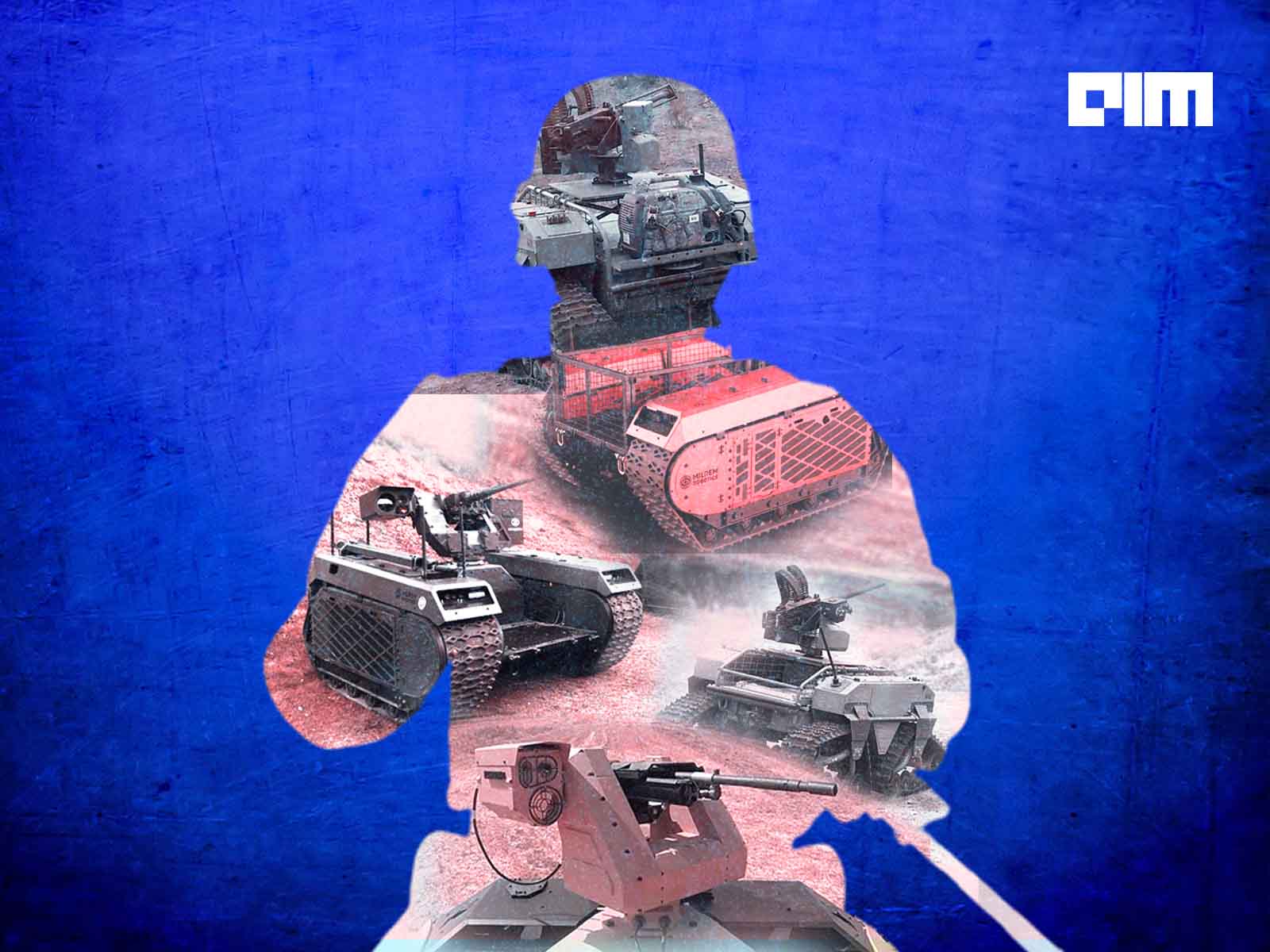
This technologically sophisticated killing machine, capable of firing 600 rounds a minute, adds a new dimension to the world of remote-targeted killings. Unlike drones, which can be shot down and draw attention in the sky, this robot is inconspicuous and can be placed almost anywhere.

The operation’s execution was intricate. Mossad transported a remote-controlled machine gun, weighing about a ton, in parts, and reassembled it in Iran. The machine gun was designed to be mounted on a Zamyad pickup truck, making it inconspicuous and mobile. To ensure accuracy, additional cameras were placed on the truck to provide a comprehensive view of the surroundings.

To ensure that the right target was engaged, a fake disabled car was strategically positioned along Fakhrizadeh’s route, equipped with another camera. This car allowed the command room to positively identify the scientist and initiate the operation.

The assassin’s role was to monitor the situation from an undisclosed location, more than 1,000 miles away, adjusting the machine gun’s sights and firing the lethal shots with the help of artificial intelligence. The delay in communication caused by the distance, coupled with the car’s movement, posed significant challenges, but the AI was programmed to compensate for these factors.

As the convoy carrying Fakhrizadeh neared the designated kill zone, the remote-controlled machine gun fired a burst of bullets, striking the physicist’s car. Fakhrizadeh and his wife were in the vehicle, and though the initial shots may not have hit him, the car swerved and came to a stop. The AI-controlled shooter adjusted the sights and fired another burst, hitting Fakhrizadeh at least once. After the attack, the scientist’s vehicle exploded as part of the cover-up.

This unprecedented operation of Fakhrizadeh’s elimination, concealed behind the curtain of technology, has shaken Iran and further highlighted the vulnerability of high-profile targets in the face of evolving assassination techniques. It challenges traditional notions of intelligence operations and raises questions about the ethical and strategic implications of remote-controlled killing machines.

Shin Bet Using Generative AI

Not just this, Israeli security agency, Shin Bet, recently revealed its usage of generative AI to counteract significant threats, marking a milestone in the integration of AI into national security. Ronen Bar, the director of Shin Bet, made this announcement during the Cyber Week conference at Tel Aviv University. This innovation includes the development of their proprietary generative AI platform, comparable to systems like ChatGPT or Bard.

One of the primary advantages of AI in Shin Bet’s operations is its ability to efficiently analyse vast amounts of surveillance data. By detecting anomalies within this data, AI has become a crucial asset in filtering through overwhelming volumes of intelligence. Director Ronen Bar emphasised that AI has also taken on a secondary role in decision-making, operating as a partner during the process.

AI Tanks & More

Though the country is caught up in an all-out war its advancements in using AI in warfare cannot be taken lightly.

Mark Dubowitz, CEO of the Foundation for Defense of Democracies, emphasised Israel’s commitment to becoming an “AI superpower” and its demonstration of this ambition in the defence sector.

The country’s defence force, IDF, over the 71 years since its establishment has also consistently pioneered cutting-edge technologies to ensure national security and maintain a qualitative edge.

While its Iron Dome—which leverages AI to identify incoming short-range rockets and missiles, ensuring they won’t hit critical assets or civilian areas is vastly discussed, there’s a lot more to the country’s capability.

They are equipped with technology on every frontier, be it air, land or water.

The F-16I “Sufa” represents a highly customized version of the F-16, allowing pilots to respond to threats with unmatched precision and agility.

The “Merkava IV,” Israel’s premier battle tank, combines firepower with versatility, designed for rough terrains. In September, Israel unveiled the “Barak,” a state-of-the-art main battle tank, which integrates artificial intelligence for streamlined operations.

The “Trophy” system safeguards these armoured vehicles against anti-tank missiles, significantly enhancing the survivability of armoured units in the field. While the “Tzefa Shirion,” safeguards against unknown threats, clearing paths in mined areas.

The “Namer,” also known as the “Leopard,” features the “Trophy” missile defence system, enhancing soldiers’ protection in the field.

The IDF’s expertise in surveillance and reconnaissance is exemplified by drones like the “Eitan” and “Skylark I-LE.”Enhancing situational awareness, the “EyeBall” provides a 360-degree image of rooms for soldiers’ safety.

On the offensive front, the “Spike” rocket launcher offers precise targeting at considerable distances.

These innovations underscore Israel’s commitment to cutting-edge military technology, ensuring the safety and security of its citizens, even in the face of evolving threats and challenges caused by intelligence failure.

The post Hamas War Highlights Israel’s Cutting-Edge AI Military Tech appeared first on Analytics India Magazine.

[Exclusive] Gupshup Unwraps Brand-new Generative AI-Powered Features

Tiger Global-backed conversational AI platform, Gupshup.io, has introduced new updates to its conversation engagement platform, aiming to streamline and automate various aspects of customer interaction, including acquisition, qualification, personalised engagement, re-marketing, and customer service.

Some notable additions include audience categorisation, automated retargeting for leads from click-to-chat ads, and the integration of Gupshup ACE LLM for better interactions in AI-driven chat and voice bots.

Valued at $1.4 billion, the unicorn assists clients on diverse channels such as WhatsApp, Instagram, RCS, GBM, and others. Beyond personalised one-way messages, users engage in interactive experiences, ranging from quizzes and contests to completing processes like KYC.

“Our platform integrates with core banking, marketing, e-commerce, and payment systems, alongside APIs for credit scores and identity verification,” said Gaurav Kachhawa, chief product officer at Gupshup, in an exclusive interview with AIM.

Major brands in various sectors, including BFSI and retail, like HSBC, Kotak Mahindra Bank, and Flipkart, as well as Unilever, too use Gupshup.io.

The platform’s Bot Studio and visual journey builder allow business users to create omnichannel bot flows, while the AI-powered Agent Assist dashboard helps agents with consultative selling based on customer interactions for improved resolution and conversion rates.

“The conversational phenomenon has seen a massive boost with the rise of LLMs, and we observe businesses transitioning to two-way interactions, whether for advertising, growth marketing, commerce, or support,” Kachhawa added.

Key Updates

The Campaign Manager facilitates the conversion of messages into two-way interactions through linked journeys and templates, allowing for instant template previews and improved campaign customisation. The platform also features AI-driven tools like Agent Assist, including the beta version of AI Summarise, which generates concise chat summaries to streamline customer support by reducing agent time spent on lengthy chat histories.

Additional features such as Rephrase and Expand help agents craft more professional responses. Click-to-chat ads enable lead acquisition and qualification through chatbot conversations, reducing friction associated with form fills. The Conversational Ads Manager supports building a first-party database and boosts conversions through remarketing within the chat window. Marketers can send retargeting messages up to 72 hours.

“Unlike conventional ads with 1-5% conversion rates, click-to-chat ads redirect users to a brand’s chatbot, capturing their info for personalised interactions,” Kachhawa said. He further added that for ecommerce, it’s about swift re-engagement, be it exclusive deals, cart reminders, or interactive gamification within 72 hours — all done in the same chat window.

The inclusion of Full Funnel Analytics goes beyond traditional metrics, providing brands with insights into chatbot funnel performance and the effectiveness of retargeting campaigns. Metrics cover various aspects, including conversations, messages, users, returning users, and identifying typical drop-off points for optimisation.

The release introduces ACE LLM for Natural Conversations, integrating AI into the no-code journey builder.

Riding the Generative AI Wave

Two months ago, the company launched ACE LLM, a series of domain-specific LLMs tailored for functions like marketing, commerce, support, HR & IT, and industries such as banking, retail, and utilities. These models, based on foundation models like Meta’s Llama 2, OpenAI GPT-3.5 Turbo, and others, are finely tuned for specific industries with enterprise-grade safety controls.

“When domain-specific LLMs are used in an industry or function-specific context, they are far more adept at enabling an enterprise’s chatbot to give answers and insights that are clear, accurate, and devoid of noisy data,” said Kachhawa.

With sizes ranging from seven to 70 billion parameters, ACE LLM supports text generation in over 100 languages. According to Kachhawa, a fine-tuned and customised LLM, such as ACE LLM, addresses various enterprise requirements like ensuring compliance with local data residency regulations by storing data demographic wise, enabling better control over LLM output to prevent hallucinations.

Read more: How is Gupshup Navigating the Chatbot Revolution

The post [Exclusive] Gupshup Unwraps Brand-new Generative AI-Powered Features appeared first on Analytics India Magazine.