A great infographic can convey thousands of stories, and at AIM, we deeply understand this. Many of our infographics are popular on various social media platforms, even now. In our special feature, ‘Top Infographics of 2023 by AIM: Editor’s Pick,’ we present some of the finest infographics crafted by our team this year.
Check out the best infographics of 2023 here:
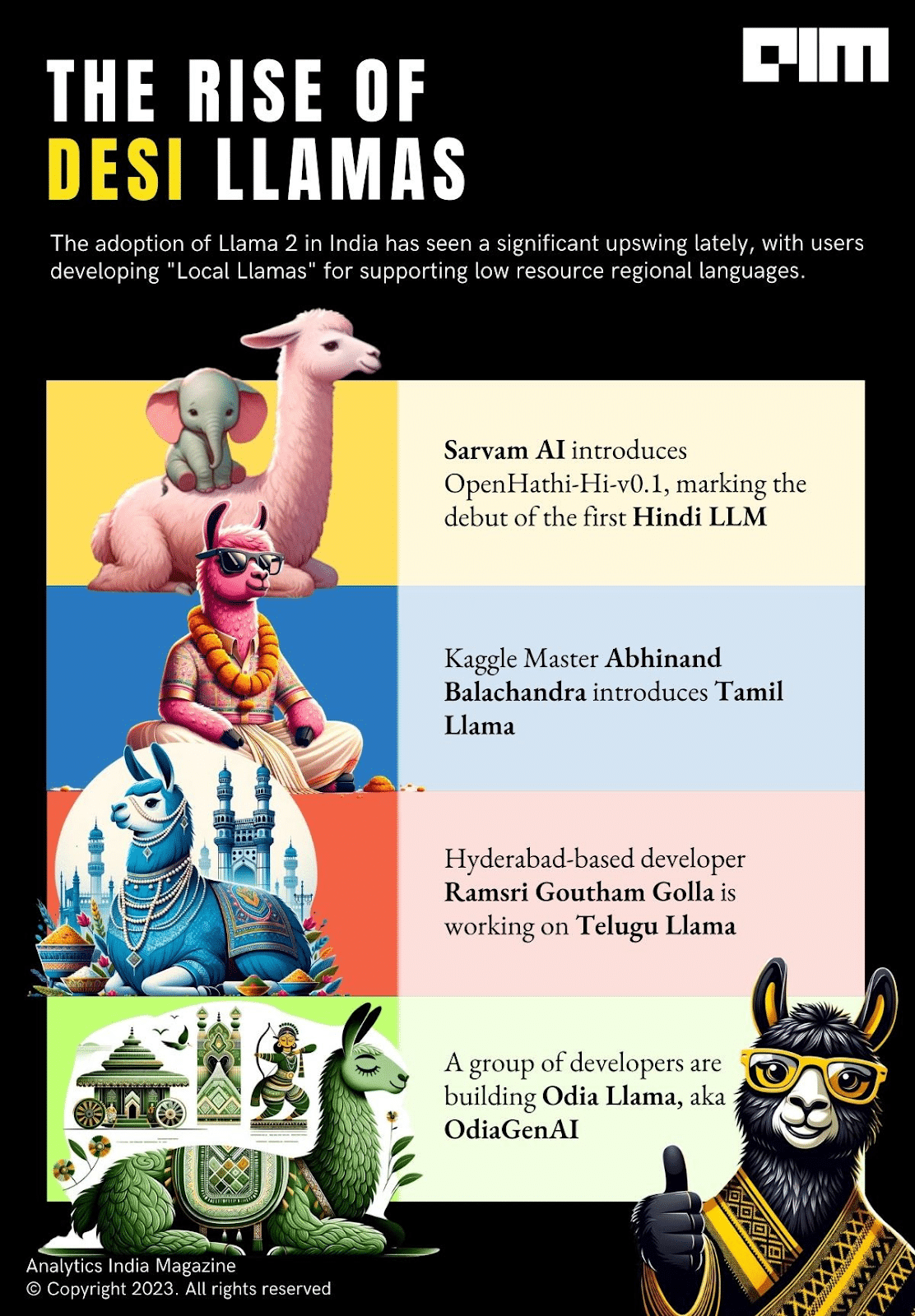
The Rise of Indian Llamas
Llama 2 has been one of the most downloaded open-source language models globally, with close to 757K downloads on HuggingFace. In India, we are witnessing a new wave of Llama 2 adoption, where users are building ‘Local Llamas’ to support low-resource regional languages in the country, besides burgeoning enterprise adoption. Read more here.
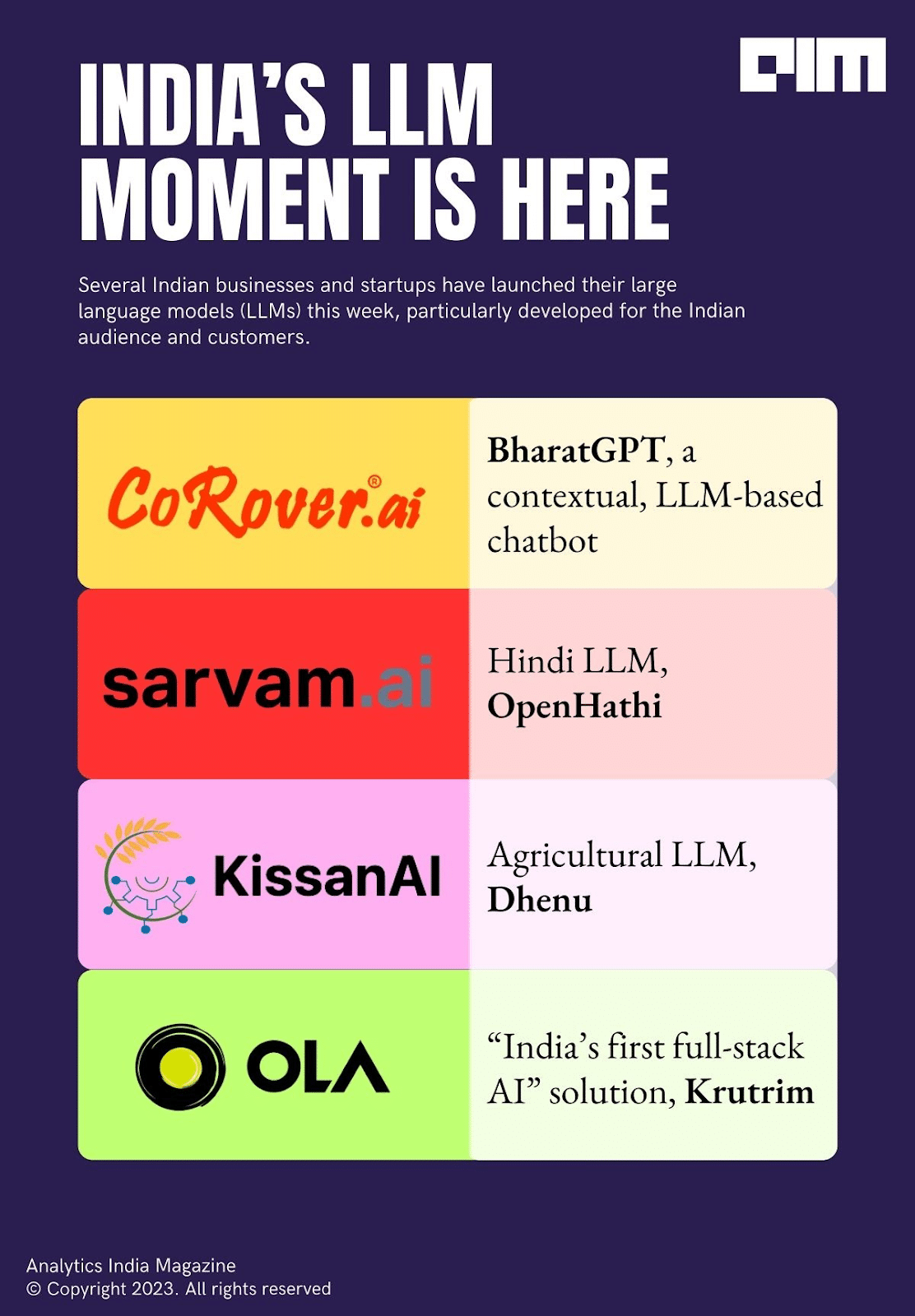
India’s LLM Moment is Here
The last few weeks of December witnessed a slew of announcements from Indian companies and startups launching their large language models (LLMs), including Google-backed CoRover’s BharatGPT, Khosla Ventures-backed Sarvam.ai’s OpenHathi, Microsoft-backed Kissan AI’s Dhenu, and Ola’s Krutrim. Read more here.
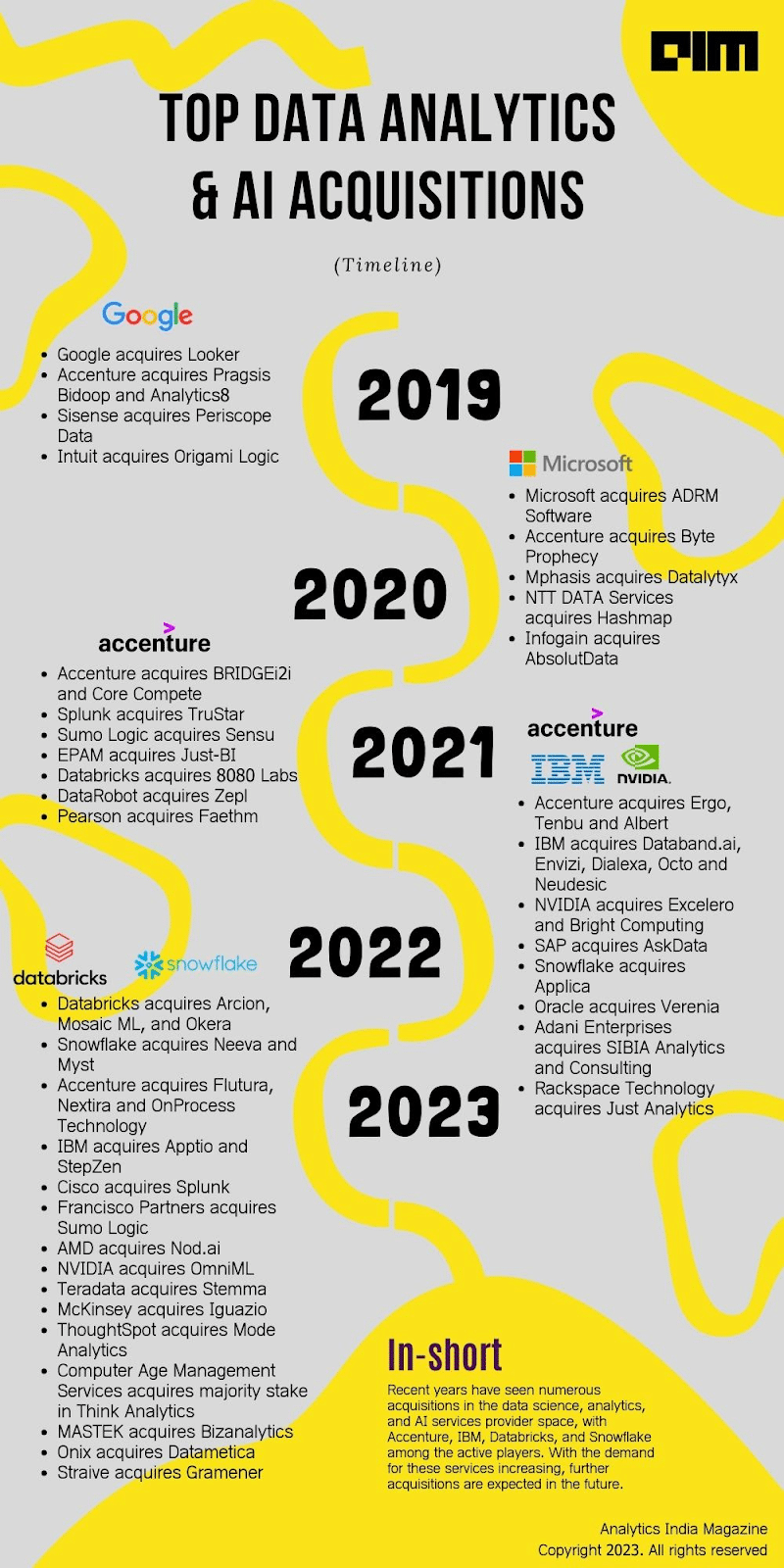
Unprecedented Boom in Data Analytics & AI M&A
As per AIM, this year alone witnessed 25+ acquisitions in data science, analytics, and AI services, much more compared to last year, which saw about 15 major acquisitions. The infographic shows a glimpse of the top acquisitions that took place over the last few years. Read here.
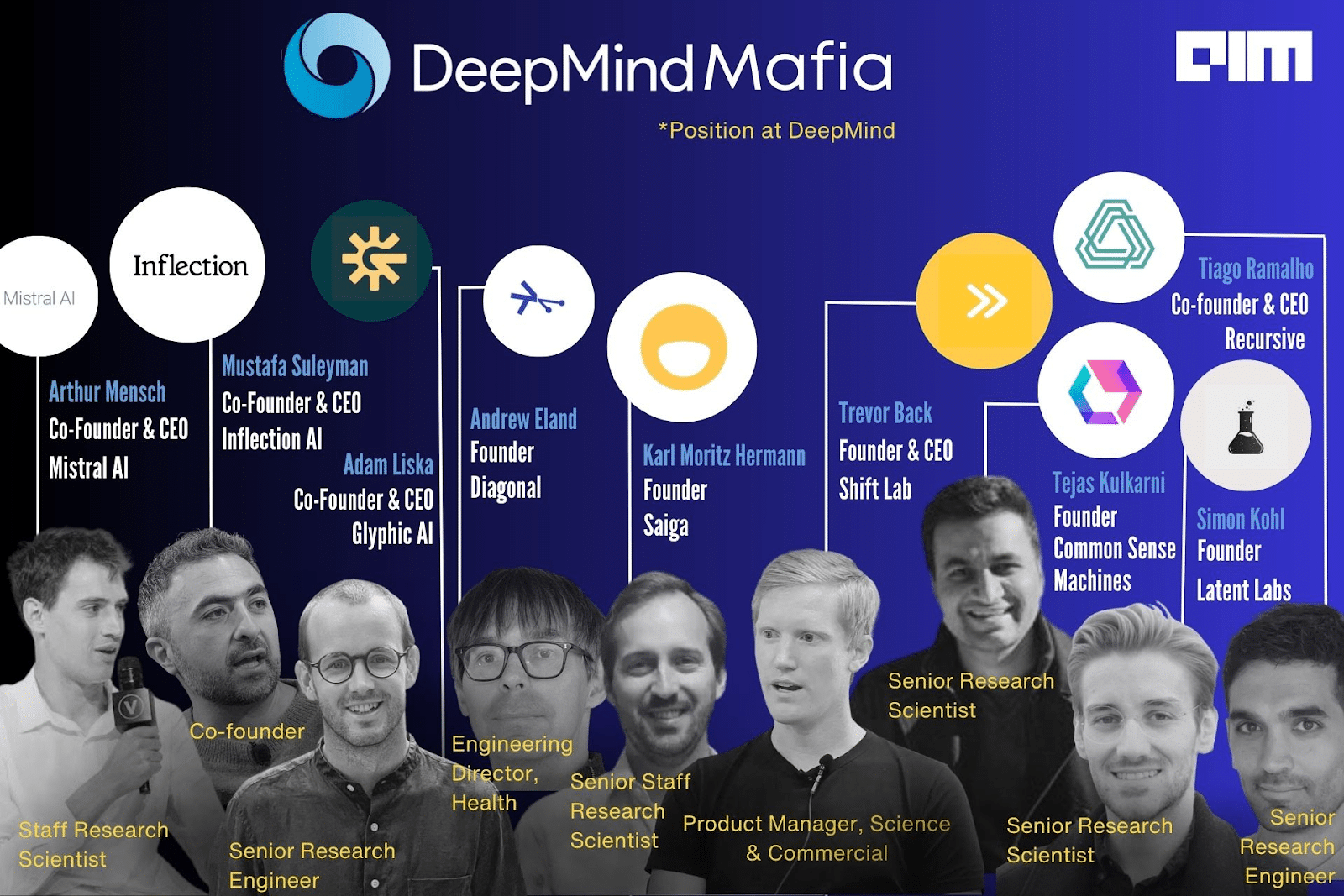
Google DeepMind Mafia
Over the last few years alone, close to 200 former DeepMind employees have built their startups in AI, blockchain, life science, climate tech, energy, and others. In this infographic, we show some of the popular names and companies started by former employees. Read more here.
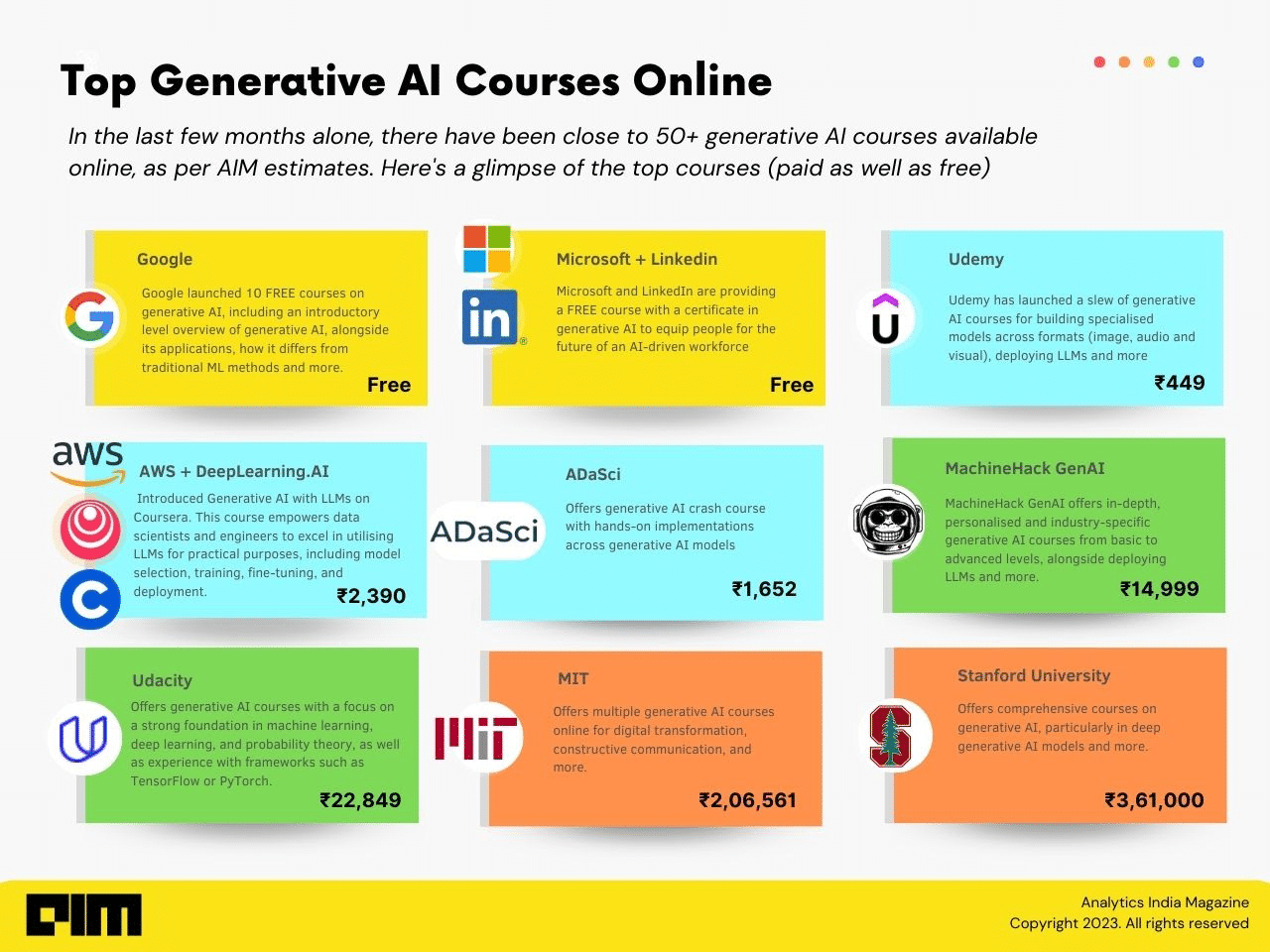
The Rise of Generative AI Courses
This infographic gives us a glimpse of the rise of generative AI courses, which was published on July 11, 2023, showing the list of paid as well as free generative AI courses. Learn more here.
Indian IT Spices Up Generative AI with New Recipes
In this infographic, we showcase various initiatives taken by Indian IT firms, particularly in the area of generative AI. Read the full story here.
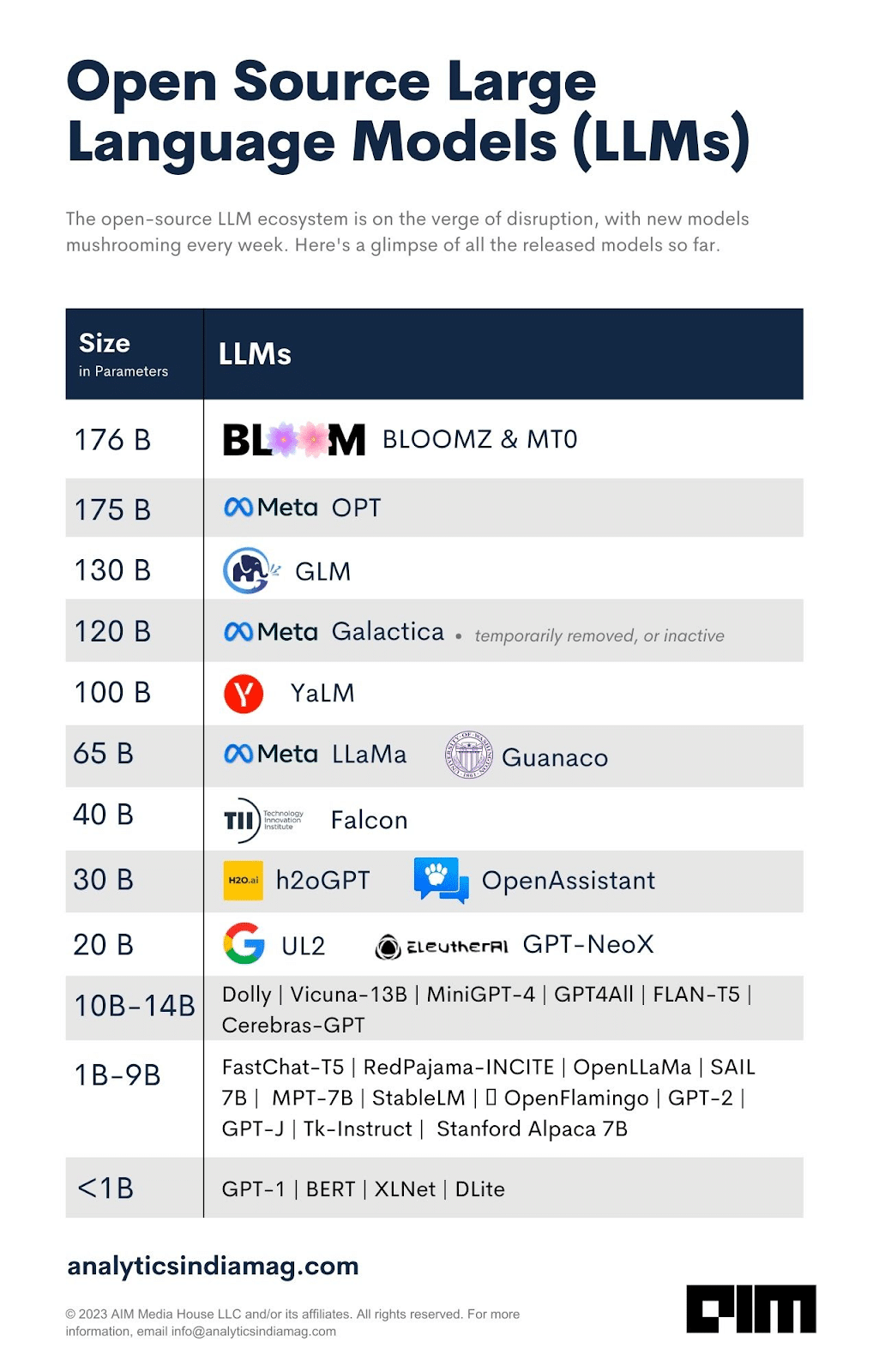
A New Era of Open Source LLMs Begins
In this infographic, we show the rise of new open-source LLMs. Read the full story here.
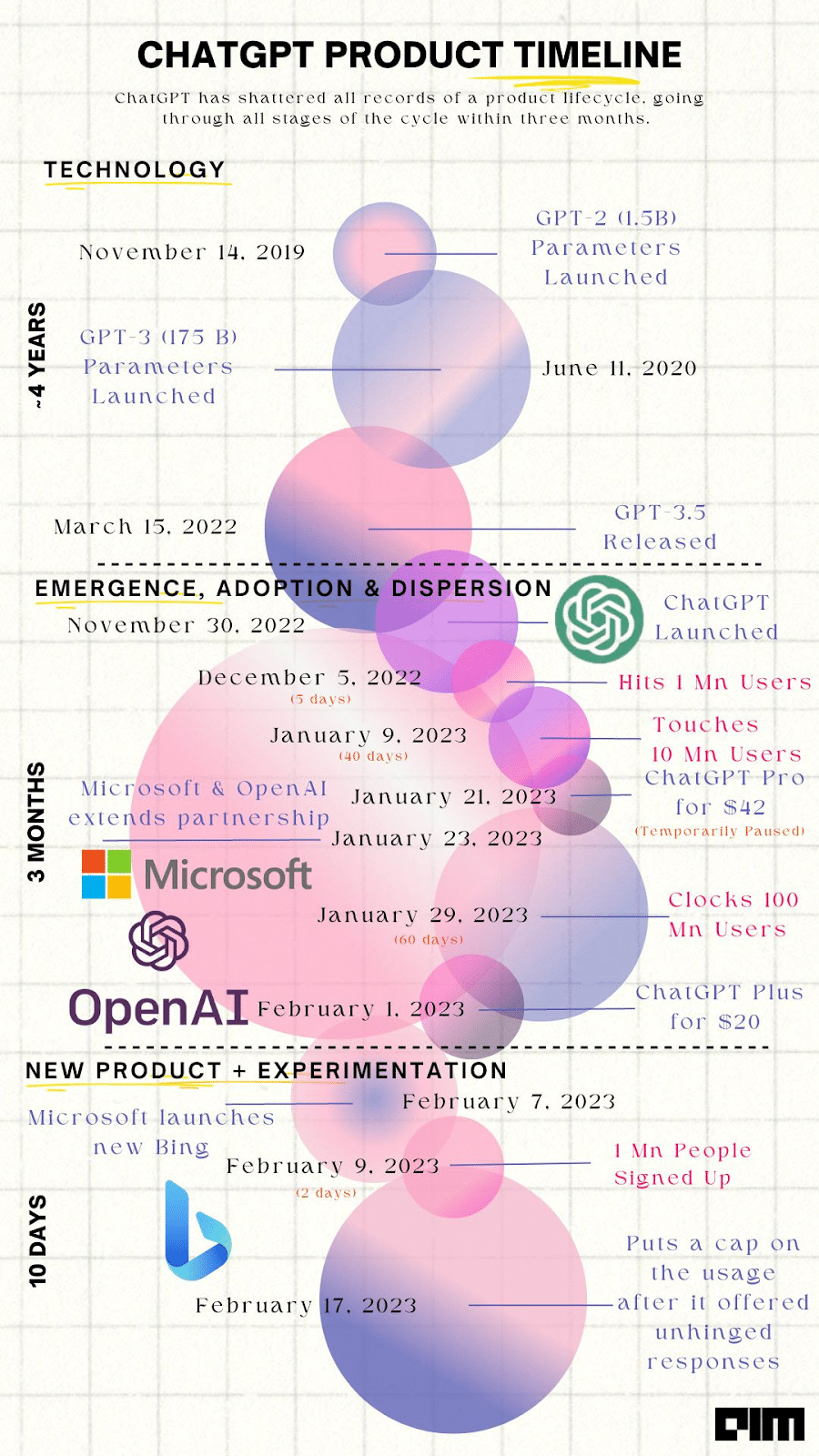
ChatGPT Hype Cycle
OpenAI within three months of releasing ChatGPT shattered the Gartner AI Hype Cycle, which had previously stated that it would take about five to ten years before reaching the final stage of mainstream adoption. Read more here.
The Rise of LLM Chatbots
In this infographic, we highlighted the rise of LLM-based chatbots after the rising popularity of ChatGPT. Read the full story here.
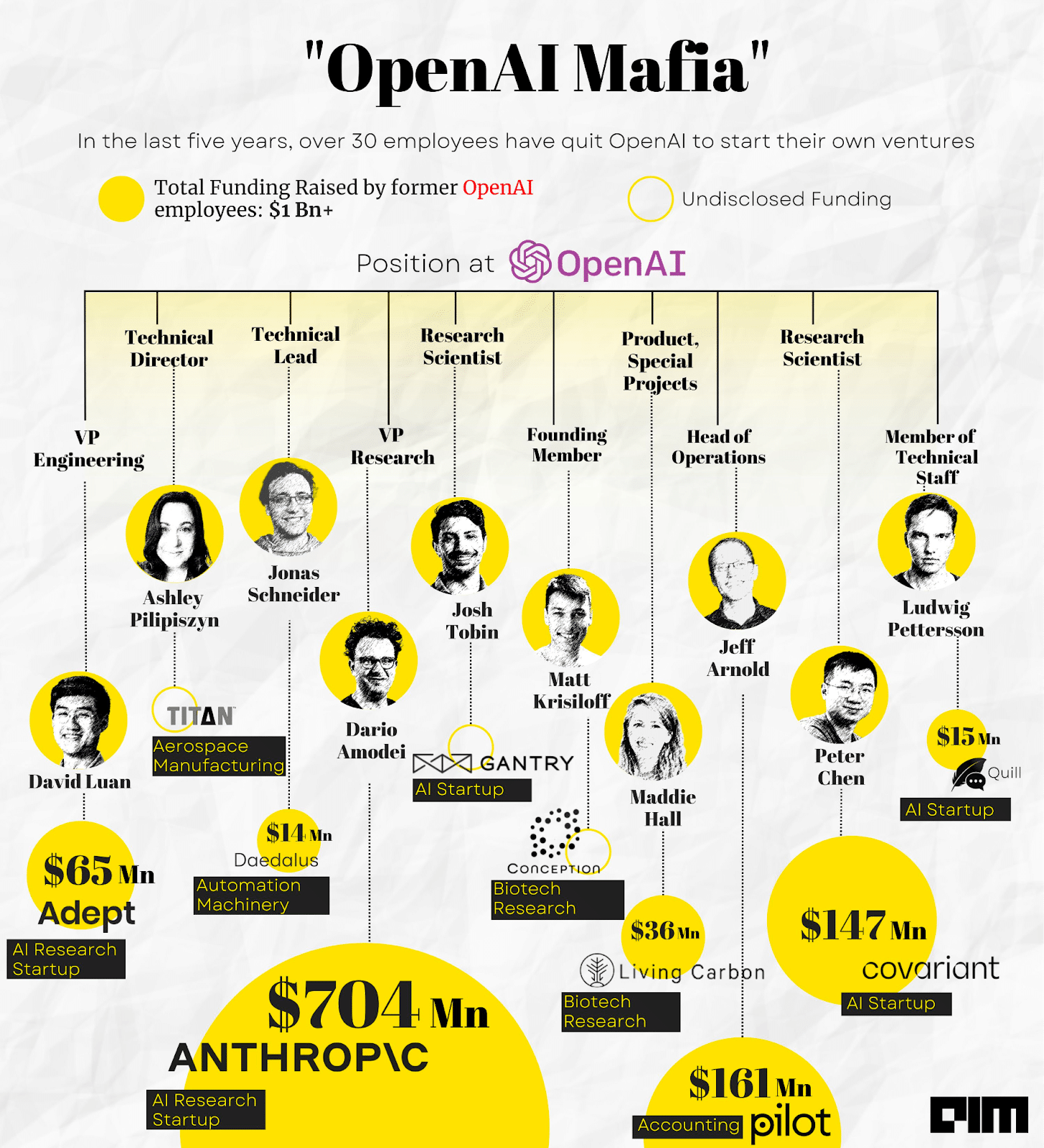
OpenAI Mafia
Besides developing cutting-edge AI models like GPT-4, DALL.E 3, OpenAI has successfully produced tech entrepreneurs, who are now leading cutting-edge projects across industries. This includes Anthropic, Pilot, Covariant, Adept, Living Carbon, Quill (acquired by Twitter), Daedalus, and others. In the last five years, close to 30 employees have left OpenAI to start their own AI ventures – aka ‘OpenAI Mafia,’ a large majority of them belong to senior to mid-leadership roles. Read here.
See you in 2024 with much more visual delight.
The post Top Infographics of 2023 by AIM: Editor’s Pick appeared first on Analytics India Magazine.
Hyderabad-based full-stack space company, Dhruva Space has announced that it is set to commence 2024 with the LEAP-TD mission, scheduled for launch on 01 January aboard the Indian Space Research Organisation’s (ISRO) PSLV-C58. The mission aims to validate Dhruva Space’s flagship P-30 nanosatellite platform, representing a significant stride in satellite innovation and space exploration.
The ‘Launching Expeditions for Aspiring Payloads – Technology Demonstrator’ (LEAP-TD) mission is slated to take off on the POEM platform of ISRO’s PSLV-DL variant, equipped with two solid strap-on boosters. This mission marks the integration of a derivative of the Dhruva Space P-30 satellite platform into ISRO’s PSLV Orbital Experimental Module (POEM), facilitating in-orbit scientific experiments using the spent PS4 stage as an orbital platform.
Dhruva Space’s LEAP-TD mission is geared towards validating the functionality and robustness of the P-30 platform and its subsystems in orbit. These subsystems include the onboard computer, TTC in UHF, Beacon in UHF, Attitude Control System with a Reaction Wheel, and Power Distribution Board. Collaboration with the Indian Institute of Space Science and Technology (IIST), Thiruvananthapuram, for Telemetry, Tracking & Command (TT&C) activities underscores the synergy between industry and academia, encouraged by the Department of Space.
Designed for Low Earth Orbit (LEO) operations, the P-30 nanosatellite platform is the result of extensive research, development, and engineering expertise. This platform is poised to play a pivotal role in upcoming satellite missions of Dhruva Space and its customers. The LEAP initiative will transition into fully-fledged hosted payload solutions for space missions, reflecting Dhruva Space’s readiness to offer hosted payload services globally.
A hosted payload service involves a portion of a satellite, such as a sensor or instrument, owned by an entity other than the primary satellite operator. This hosted portion operates independently but shares the satellite’s power supply, transponders, and, in some cases, ground systems.
Sanjay Nekkanti, Chief Executive Officer of Dhruva Space, expressed excitement about the imminent validation of the P-30 nanosatellite platform. “The LEAP initiative marks a significant moment, underscoring our commitment to delivering full-stack and hosted payload solutions to our customers. This will be further enriched by new pursuits in the fields of Earth Observation, IoT solutions, and more.”
Krishna Teja Penamakuru, Chief Operations Officer at Dhruva Space, emphasised the support received from ISRO, IN-SPACe, NSIL, and VSSC throughout the P-30’s journey. “The P-30 platform represents our team’s dedication and expertise, and we are eager to validate its capabilities in the space environment.”
Nanosatellites, crucial for dynamic Low Earth Orbit missions, require precise attitude control. The P-30 addresses this with a Reaction Wheel from French strategic equipment supplier Comat, with whom Dhruva Space formalised a partnership in February 2023. Ludovic Daudois, Chief Executive Officer of Comat, stated, “We are honored to be part of this milestone, supplying the precision reaction wheels that propel this mission to new heights. This achievement not only marks a significant moment for Dhruva Space but also strengthens the pioneer French-Indian partnership in the space sector. Here’s to a future filled with continued success and exploration!”
The post Dhruva Space to Launch LEAP-TD Mission Aboard ISRO’s PSLV-C58 appeared first on Analytics India Magazine.
The New York Times is pushing harder on its copyright lawsuit against OpenaAI. Since the time the case was announced, the New York Times has accumulated more evidence against OpenAI. This could very well be the first copyright infringement that could hold ground in court. But the outcome is yet to be seen.
The lawsuit, which was filed in Manhattan federal court on Wednesday, 27th December, claims that millions of its copyrighted articles were used without permission to train ChatGPT models.
NYT alleges that this practice not only infringes upon their copyright but also positions these AI models as direct competitors to their own journalistic offerings. While previously it was hard to substantiate these claims, the visual evidence offered by the plaintiffs is damning.
Jason Kint, the CEO of Digital Next posted a thread on X explaining the case and said, “I find this exhibit to be an incredibly powerful illustration for a lawsuit that will go before a jury of Americans. Again, it’s impossible to argue with this.” referring to the above snapshots of the similar text generated by ChatGPT as the articles on the news site.
The Times had previously approached Microsoft and OpenAI in April, raising these concerns and to possibly come up with an ‘amicable’ resolution to reach a commercial agreement and add technological guardrails around the website but that didn’t reach a conclusion.
Following this The New York Times changed their policy in August right before they announced their intention to sue OpenAI. They updated their Terms of Service on August 3rd, restricting the use of its content for AI training.
This includes all forms of content, and explicitly bans automated data collection tools without written permission. Additionally, OpenAI and Microsoft have introduced similar measures for their services, where sites can block crawlers for scraping from their websites, reflecting a broader industry trend towards more controlled use of web-sourced data for AI development.
A stronger case this time
The major issue with filing the copyright cases against AI is the plaintiff’s inability to prove that the original works of the AI models like ChatGPT learn from vast datasets, making it hard to trace the origin of every piece of generated content back to a specific source. This creates a legal gray area, if an AI produces content similar to a copyrighted work, is it infringement or just a coincidence?
This question has been asked multiple times, drawing similarities on human inspiration which can be from any work of art.
In this case, NYT alleges that OpenAI engaged in 4 types of unauthorized copying of its articles, the training datasets, the LLMs encode copies in their parameters, the output of memorized articles in response to queries and the output of articles using browsing plugin.
A thread on some misconceptions about the NYT lawsuit against OpenAI. Morality aside, the legal issues are far from clear cut. Gen AI makes an end run around copyright and IMO this can't be fully resolved by the courts alone. (HT @sayashk @CitpMihir for helpful discussions.)
— Arvind Narayanan (@random_walker) December 29, 2023
This case, given the evidence and the profile of the plaintiff, might not only differ from its predecessors but could also set a significant precedent for future legal challenges in this domain, due to the characteristics of LLMs. They generate content not by retrieving stored data but by mimicking patterns from a vast training corpus, a process termed as “approximate retrieval.” This means the output is not a direct copy, but can closely mirror the style and structure of the texts in the training set.
This is interesting because there is no information in the lawsuit on what prompt was used to get this output. And it would be hard to recreate a similar response in court as one user pointed out.
An alternative and perhaps more collaborative approach could emerge from these challenges. Like the ones we’ve seen with OpenAI and Associated Press, Axel Springer.
Such partnerships could involve licensing agreements, where content creators are compensated for their contributions to AI training datasets. This approach not only addresses copyright concerns but also fosters a symbiotic relationship where both parties benefit – content creators receive compensation and recognition, while AI developers gain access to high-quality, legitimate datasets.
The outcome of the NYT lawsuit against OpenAI could influence the future interactions between AI companies and content creators. Whether this leads to more legal battles or paves the way for collaborative partnerships will depend significantly on how both industries navigate this complex and evolving landscape. Either way, the implications for the future of content creation, particularly in journalism, are profound and worth watching closely.
The post NYT, Doomed to Fail like its Predecessors? appeared first on Analytics India Magazine.
The matter of how much generative AI can help coders is in hot debate. ZDNET's own David Gewirtz has found from his first-hand experiments that OpenAI's ChatGPT "can write pretty good code." At the same time, some studies have found large language models such as GPT-4 are well below those of human coders in their overall level of code quality.
Also: Pinecone's CEO is on a quest to give AI something like knowledge
But the debate over whether AI does or doesn't stack up as a coder may be missing the point, some argue. The essence of coding help via automation, they say, lies in changing the nature of a programmer's job.
"If you ask me what is the big change, what's happened with the world of generative AI is that we have created another abstraction layer on top of AI," said Inbal Shani, chief product officer for GitHub, the developer site owned by Microsoft, in an interview recently with ZDNET.
That abstraction layer, namely, natural language, has initially been used just for code completion. "That's the basic layer that we've seen," she said. The power of the abstraction layer, argues Shani, is that it can broaden out to many more uses of AI beyond code completion.
GitHub introduced its version of code assistance, GitHub Copilot, in June of 2021. This year has been "a transformational year" for AI in programming, said Shani. As Microsoft CEO Satya Nadella announced in October, GitHub has over a million paying customers using Copilot, and over 37,000 organizations using it.
Shani cited prominent Copilot users such as Accenture, which has put hundreds of developers on Copilot. "They've seen that there was a lot of usage to reduce what we call boilerplate code, the repetitive code that developers do not necessarily like to write, but have to because it's part of their foundations."
Accenture has retained 88.5% of the code written by Copilot, said Shani. "So this means that copilot was able to provide a high accuracy — high-fidelity answers to their developers that they choose to keep that code and not need to rewrite it."
By one measure of productivity, the number of pull requests completed on time, when new code is merged with the main source for a project, has increased by 15% as a result of using Copilot at Accenture. Moreover, "They've seen developers more apt to go through the build process," the task of converting code into a running binary.
"Sometimes, developers hold themselves back" from doing builds, she noted. "They say, I don't trust, I need to test again, but using Copilot, it kind of helped build that trust to deploy more code into production."
The prospect of those little changes — more pull requests, more builds, less boilerplate code writing — have immediate qualitative benefits in the way the developer's day changes.
"If we can increase the build rate in a consistent way, then that basically helps developers to spend less time waiting for builds, to have more time back to focus on architecture and so on," said Shani.
"A shocking discovery that happened for me is that developers have less than two hours a day to write code," on average, said Shani. "They need to do many things that are around the software development lifecycle, but not around the coding — they do builds, they write tests, they sit in meetings, they need to engage with other folks, they need to write PRs [pull requests]."
By automating some of those tasks, or parts of them, there's the prospect "we're giving more bandwidth for developers to invest in the other areas."
None of this is yet been thoroughly and rigorously quantified in terms of a productivity increase, conceded Shani. "I think we're In the middle of that," she said of the process of measuring productivity. Copilot and its ilk "have not been adopted for long enough for us to get real, substantial data that we can say, here's how we've changed lives forever."
Definitions are tricky for productivity, she noted. "You can write really crappy code really fast," so, speeding up code via code completion is "not necessarily an indicator of success."
Rather, said Shani, "the work that we have ongoing is, What is really time to value? What is that impact? How do we measure the impact of these tools that we have been adopting along the way? That's still ongoing."
Another important element to measure somehow is "how to define developer happiness," said Shani. "It's very important for developers to be recognized, and right now, the recognition is coming in some companies from measuring how many lines of code am I writing." But the verbosity of a programmer may not be the best indicator of how good a programmer is, she points out.
One of the more profound elements of the new abstraction layer taking shape in AI is a reduction in the need to switch between different tools.
"Usually, if I'm looking for something I don't know how to write, I'll go to some sort of search engine," explained Shani. "Copilot was able to bring all of that into the same environment." The interface, the prompt, "is right there in your IDE [integrated development environment]," so that "you don't need to go to different tools, you don't need to copy-paste, you don't need to do all that; you basically stay where you write your code."
As a result, she said, "Developers are happy because they have less context-switching between tools."
Copilot is finding its way into other areas of the programming team. One big Copilot user, e-commerce firm Shopify, is using Copilot to do coding interviews, to assess new hires, said Shani. It's also using Copilot for onboarding of new programmers, as a "peer programmer" or educator to bring new coders up to speed.
In those instances where Copilot and similar tools don't yet produce the results one desires, a lot may be because of the learning curve of prompt engineering, said Shani. "You still need to know how to ask the right question," she said.
"The more you ask a broader question [at the prompt], the more general the solution you'll get that is not necessarily applicable for your situation," whereas, "the more you know how to ask the right questions, the better you get an answer from Copilot."
Microsoft is working with customers such as Accenture on "that change management," she said, of how to write a "proper prompt," and "how to think about the question you ask Copilot to get the right answer that is applicable."
There's still a lot of fleshing out of Copilot itself that will likely have a major impact on its utility, and its accuracy. The program is gradually gaining the ability to become "personalized" for an individual developer. "An aspect we're working on is how we can help these models to understand your coding style," said Shani, "to understand which of these elements are critical for you as a software developer, to adjust the recommendations we give you."
In February, GitHub will make generally available an enterprise version of Copilot. "This is specifically about more customized models for enterprises that want to have their own flavor of that implementation," said Shani.
Within the enterprise edition, "you're going to have the ability to summarize PRs or add comments to the code using Copilot, or search your documents and get that document you're looking for." There will also be increased emphasis placed on Copilot's handling of testing and stress testing.
Also: Bill Gates predicts a 'massive technology boom' from AI coming soon
The over-arching idea is to "centralize everything with the same kind of AI flow model," said Shani, "across software development, from inception to production."
Advanced Micro Devices, the chip maker, is one of the beta customers for the enterprise edition, specifically for fine-tuning AMD's internal generative AI models. "We have a long waiting list of more customers that want to enter," she noted. "We're taking it through a lot of rigorous testing, and we want to get a lot of feedback from customers that are currently on our beta program before we feel confident to share."
It may sound strange to speak of developer happiness, given that some have suggested automating code via AI can eliminate programming jobs. That's not the case, however, insists Shani. "It's not going to replace developers, not in the next, I would say, five, ten years," she said. "I'm in the camp that says never, because we're just going to evolve as developers."
Shani, who before coming to GitHub a year ago ran the Elastic Containers product at Amazon AWS, has been working with AI for over two decades. She recalls her own personal journey as a coder from Fortran to C++ to Java to Python. "At every point in time, everyone was freaking out: oh, my God, this is going to take away the work of developers."
Also: AI is growing into its role as a development and testing assistant
But, "We've seen more increase in developers because now we have lowered the barrier to be able to write more software."
At the same time, the evolution of AI Copilots is "the same as the industrial revolution that lead to factories that scaled food production to meet demand," as Shani sees it. "That's what's happening now: there's more demand for software, so there's more demand for software developers."
If code generation can be automated accurately, and if the abstraction layer can save on context switching, could Copilot and its ilk truly shorten the development time for projects?
In the book The Mythical Man-Month, programmer Fred Brooks observed how simply adding resources to a large programming project not only did not speed up the project, a good deal of the time it actually made things worse.
It's not yet clear if AI will dramatically help project scheduling and management or reduce the total effort required for a large programming project.
"I don't know if the concept of many months will turn to seconds," said Shani. "Things will still take the right time to mature, but I think that the way to get there will be smoother and more efficient along the way if we can get to that value that we're looking for in a shorter period of time."
For years, there has been speculation about the so-called "citizen developer" and how much they could really build for themselves, and the actual productivity of their work. After all, it's often left to IT department staff to clean up the messes.
The time could be ripe for a blurring of the lines between developers and end-users, a recent report out of Deloitte suggests. It makes more business sense to focus on bringing in citizen developers for ground-level programming, versus seeking superstar software engineers, the report's authors argue, or — as they put it — "instead of transforming from a 1x to a 10x engineer, employees outside the tech division could be going from zero to one."
Also: How AI-assisted code development can make your IT job more complicated
Future applications are likely to be built on English or natural-language commands, versus Python or Java, they predict.
Adding to the growth of citizen developers is the likelihood that all employees will soon be technology employees. AI — and related advanced analytics — represent the future economy and its opportunities. Ninety-eight percent of executives believe that within the next 10 years, every job will be a tech job and tech skills will be crucial in every work sector, according to a recent survey of 650 C-suite executives, 100 hiring managers, and 1,500 office workers by Per Scholas, a nonprofit tech educational provider.
Employees recognize what the future holds and are building their tech skills, the Per Scholas survey shows. These skills are the most pursued upskill with 43% of workers currently learning software, apps, AI, or coding and data science.
Depending on the pace of automation, "more employees should carry out basic technology tasks in the years to come or simply oversee automated digital processes," says Deloitte. As these more basic workloads are shifted to non-core or non-IT employees. "experienced engineers can focus on the highly complex tasks and novel builds on which they're excited to work."
Companies often hope "to hire 10x engineers, those who are 10 times as productive as the average developer," the Deloitte authors point out. "But searching for unicorns in the talent market is rarely a winning strategy."
Also: ZDNET looks back on tech in 2023, and looks ahead to 2024
Automated platforms and generative AI — leveraged within an open and supportive corporate culture — may amplify many human skills, they continue. "10x engineers could become much less rare. Especially as generative AI continues to bolster developer productivity and opens up a future of increased workplace automation, many of today's hindrances may not be relevant in the next five to 10 years." It's all about fostering a superior "developer experience," not just within IT shops, but across the enterprise as well. "As technology itself continues to become more and more central to the business, technology tasks and required talent will likely become central as well. Standardized tools and platforms — as well as advanced low- or no-code tech — may one day enable all employees of a business to become low-level engineers."
Insights from former Finnish PM Sanna Marin on Russia, women’s leadership, and AI Connie Loizos @Cookie / 1 day
Earlier this month, at the Slush tech conference in Helsinki, this editor had the opportunity to sit down with Sanna Marin, the popular former prime minister of Finland who became known internationally for socializing with friends, but whose accomplishments in office are far more significant, including successfully pushing Finland to join NATO to better protect the country from its neighbor Russia after its invasion of Ukraine.
Marin, who opted out of Finnish politics in September, works today at the Tony Blair Institute as a strategic counselor; she is also working on a startup with one of her longtime political advisors. Still, based on the rapturous crowd that Marin drew during our conversation at Slush, it’s easy to imagine her eventual return to the political arena.
She didn’t rule it out during our sit-down. However, we spent much more time talking about what Russia’s aggression means for the rest of the world, why women should more readily trust themselves in positions of power, and the promises and perils of AI — and what lawmakers should do about it. Here are excerpts from that chat, edited lightly for length and clarity.
In late 2019, you took on a job that’s typically the culmination of a long career in public service and you took it on fairly early [at age 34]. What was it like to be thrust into that position?
Well, of course, when you take that kind of position or job, you’re never fully prepared. When you do the work, then you learn what the job is, so it’s a leap of faith. In Finland, we’ve had a few female prime ministers, but if we look globally, the situation isn’t very good. We have 193 countries in the UN and only 13 of them are led by women, so the world isn’t very equal [when it comes to] leadership and it never has been. I only hope that we will see more female leadership in the world in the future.
We’re sitting here in front of a very big audience of tech founders who are trying to knock down walls and also shatter glass ceilings. What’s your advice to them?
My main advice is to trust yourself. Believe in yourself. If you’re in a position where you are able to take a leadership position, then think, ‘Maybe I am capable. Maybe I can do this.’ Especially women, many times they question themselves. Are they ready for that job? Are they good enough? Can they do everything perfectly? Men don’t think like that. They think that ‘Yeah, I’m better. I’m the best one for the job.’ I think women also need that attitude and they need the support and to be encouraged to take risks and leadership positions, because women are good leaders. And if you’re at that point where you can take that position, it’s because you are good and you are capable. So go for it.
You went through a lot as PM. Soon after you were elected, COVID took hold of the world. Last year, Russia invaded Ukraine. You have a very long and complicated relationship with Russia. You’ve got a very long border with Russia. Can you take us back to that day when you heard the news [of the invasion] and what was going through your mind?
I can remember vividly, like it was yesterday, because we knew by then that it was probable that Russia would attack Ukraine. During that [preceding] summer, almost half year earlier and during that whole fall, Russia, for example, slowed energy flows to Europe to lessen different countries’ storage, and thus, Russia could use energy as a weapon against Europe later on. Russia also put many troops near the Ukrainian border, saying it was a drill and they wouldn’t attack. Now we know that was a lie. Many leaders were in contact with Putin, trying to find diplomatic, peaceful routes out of the situation before the full attack started, and he lies to everyone. Now, we have to learn from that. I have said on many stages that Western countries, democratic countries everywhere globally, should stop being naïve. We should wake up to authoritarian regimes and [recognize that’s how] they function and see the world and their logic is very different from the democratic countries. We thought in Russia’s case that because we have close economic and business ties with Russia that those connections could secure peace because it would be so costly and so stupid to start a war. Because it is stupid. It’s illogical, from our perspective. But authoritarian countries don’t think like that. So it didn’t prevent anything.
You’ve talked before of people’s naivete when it comes to dealing with authoritarian governments, including as it relates to tech, where you believe that autonomy is also important. I’ve heard you express concern about Europe’s broad reliance on chips from China, for example. How would you rate Finland’s progress on this front?
Finland is doing quite well compared to many other countries . . . When we look at tech, the most important thing is to invest in education from early childhood to universities [and to invest heavily in] R&D and new innovations . . . We agreed in Finland that we are aiming to raise our R&D funding to up to 4% of our GDP by the year 2030, which is actually a very ambitious goal . . . but I’m an optimist and I want to believe that technology can actually help us in solving the big issues of the future, like climate change, loss of biodiversity, pandemics and other critical problems. So we need technical solutions. We need innovation. And we need to make sure that we also have the platforms and the will to encourage building that. . .
How would you grade the European Commission’s work?
In many ways, the situation in Ukraine has deepened the relationship between Europe and the States and also Great Britain. Europe as a whole has a great role in making sure that we have good rules internationally when it comes to big tech and the development of AI. So we need ethical rules that every country in the world should or have to follow. I can see a lot of risks if the European Commission or other legislative bodies don’t work with the entrepreneurs or private sector businesses because the development of new technologies is so fast, so cooperation is key. And I would like to see more interaction and cooperation between private and public.
We’re already seeing so much good from AI when it comes to healthcare and education. We’re also hearing more and more about risks to humanity. I know you’ve been excited about AI for some time. Have you changed your view about its potential?
Every technology — everything new — comes with risks. There is always a negative side to everything. But there is also a positive side, and that’s why I would like to see more and more interaction between the ones who are creating the technology and the legislative people who are creating the rules for these technologies . . . so we can make sure that there are more positive sides than negative ones.
I love the work-life balance in Finland, and I also love that there’s some aversion to outsize wealth, the very extreme opposite of which we see in the U.S. and especially in the Bay Area, where people tend to value themselves based on how much money they make. I do wonder if that is a gating factor to ambition here or to attracting and retaining entrepreneurs.
It’s very important that you have balance in your life. If you only work, you can work very hard for a certain period of time, but then you will burn out. I think we should encourage ambition but also [ensure people] have free time that they can spend with their family. In fact, we renewed the parental leave system in Finland [when] I led the government to ensure more time is given to fathers to spend with their small children, while also [making it more possible] for mothers to build their careers. I haven’t ever met a father who has said, ‘I really regret spending time with my kid when he or she was small,’ right? Nobody ever says that. That time away from work gives people perspective.
You’re now a political consultant working for the Tony Blair Institute. What do you make of the characterization of TBI as the ‘McKinsey to world leaders’?
Well, [my longtime advisor Tuulia Pitkänen] and I used to do this, working in almost 40 countries globally, advising governments, advising heads of states on different matters. Of course, it varies from country to country whether it’s to do with agriculture, technology or many other things, and my job [at TBI] is to [similarly] advise heads of state and also different governments on certain issues. You know, when you are in that position of leadership, leading a country, nobody really understands that. You cannot read it in a book, you have to experience it. So leaders need that kind of interaction — to speak with people who really know the job and how hard it is and all the factors that you have to consider doing that job. So that’s my job there. But I also do many other things like speaking at different events and interacting with people. I still want to change the world. I haven’t lost my passion about the issues [that compelled me to enter into] politics in the first place. I still have all those passions, but now I have of course more freedom to do other things and I’m open to them.
You were so popular as a prime minister. You’re also still very early in your career. Are you interested in going back into politics at some point?
I haven’t said that I wouldn’t ever go back. Of course, it’s a possibility. Someday, I might find that passion to pursue a political career once again. But for now, I’m doing something else. And I believe you should always close some doors to open new ones. Closing some doors, doing something else, finding new paths has worked well for me so far. So I never have had a five-year or 10-year career plan or any plan of the sort. I believe opportunities come to you, and then you take them or not. You can always choose. But my advice is to not plan too much of your life because life is always a mystery and it’s always unknown and that’s why it’s so interesting.
GitHub makes Copilot Chat generally available, letting devs ask questions about code Kyle Wiggers 10 hours
Earlier this year, GitHub rolled out Copilot Chat, a ChatGPT-like programming-centric chatbot for organizations subscribed to Copilot for Business. Copilot Chat more recently came to individual Copilot customers — those paying $10 per month — in beta. And now, GitHub’s launching Chat in general availability for all users.
As of today, Copilot Chat is available in the sidebar in Microsoft’s IDEs, Visual Studio Code and Visual Studio — included as a part of GitHub Copilot paid tiers and free for verified teachers, students and maintainers of certain open source projects.
“As home to the world’s developers, we’ve brought to market what is now the most widely adopted AI developer tool in history,” Shuyin Zhao, VP of product management at GitHub, told TechCrunch in an email interview. “And code complete was just the beginning.”
Little else about Copilot Chat has changed since the beta.
The chatbot’s still powered by GPT-4, OpenAI’s flagship generative AI model, fine-tuned specifically for dev scenarios. Developers can prompt Copilot Chat in natural language to get real-time guidance, for example asking Copilot Chat to explain concepts, detect vulnerabilities or write unit tests.
Like all generative AI models, the model underpinning Copilot Chat, GPT-4, was trained on publicly available data — some of which is copyrighted or under a restrictive license. Vendors including, GitHub, argue fair use doctrine shields them from copyright claims. But that hasn’t stopped coders from filing class action lawsuits against GitHub, Microsoft (GiHub’s parent company) and OpenAI over what they allege are open source licensing and IP violations.
I asked Zhao whether codebase owners will have a chance to opt out of training, now, in the event that they wish to do so. She said that there’s no new mechanism for this with the broader launch of Copilot Chat and instead suggested that codebase owners make their repositories private to prevent them from being included in future training sets.
I have to imagine codebase owners won’t take too kindly to that suggestion — there are many reasons for keeping copyrighted code public, least of which is crowdsourcing bug hunting. But GitHub’s evidently not willing to budge on training data opt-outs — or not yet, at least.
Generative AI models, including GPT-4, also have a tendency to hallucinate, or confidently make up facts — which is particularly problematic in the coding realm. According to a recent Stanford study, developers who use AI assistants to code tend to produce code that’s less secure compared to those who don’t use AI assistants, in part because the AI assistants introduce buggy or deprecated code snippets.
Zhao said that GPT-4 performs “better” against hallucinations compared to the older model that once powered Copilot and pointed to exploit-mitigating features such as filters for insecure code patterns, which notify Copilot Chat users of vulnerabilities like hardcoded credentials, SQL injections and path injections. But she stressed the importance of close human review of any AI-suggested code.
“GitHub Copilot is powered by OpenAI’s models, which we’ve found to be the best models for the services we offer today,” Zhao said. “We’re in a really strong position to continue empowering developers with the AI tools they need to build better, more secure software at scale — and to have fun while they’re doing it.”
In October, Microsoft CEO Satya Nadella told analysts that Copilot had 1 million paying users and ~37,000 enterprise clients. But it’s incumbent on GitHub to make Copilot even more attractive lest it lose ground to competitors — and, for that matter, lose cash.
According to a Wall Street Journal piece, Copilot loses an average of $20 a month per user, with some customers costing GitHub as much as $80 a month. The high price of running the underlying AI models is reportedly to blame — a problem GenAI coding startup Kite ran into, also, forcing it to shut down early last December.
As GitHub struggles to make Copilot profitable, Amazon continues upgrading CodeWhisperer, perhaps Copilot’s best-resourced rival.
In April, Amazon made CodeWhisperer free of charge to developers without any usage restrictions. That month also saw the launch of CodeWhisperer Professional Tier, which added single sign-on with AWS Identity and Access Management integration as well as higher limits on scanning for security vulnerabilities. An enterprise plan for CodeWhisperer launched in September. And in early November, Amazon “optimized” CodeWhisperer to provide “enhanced” suggestions for app development on MongoDB, the open source database management program.
Aside from CodeWhisperer, Copilot has competition in startups like Magic, Tabnine, Codegen and Laredo, as well as open source models like Meta’s Code Llama and Hugging Face’s and ServiceNow’s StarCoder.
In the rapidly evolving world of artificial intelligence, the size of a language model has often been synonymous with its capability. Large language models (LLMs) like GPT-4 have dominated the AI landscape, showcasing remarkable abilities in natural language understanding and generation. Yet, a subtle but significant shift is underway. Smaller language models, once overshadowed by their larger counterparts, are emerging as potent tools in various AI applications. This change marks a critical point in AI development, challenging the long-held notion that bigger is always better.
The Evolution and Limitations of Large Language Models
The development of AI systems capable of comprehending and generating human-like language has primarily focused on LLMs. These models have excelled in areas such as translation, summarization, and question-answering, often outperforming earlier, smaller models. However, the success of LLMs comes at a price. Their high energy consumption, substantial memory requirements, and considerable computational costs raise concerns. These challenges are compounded by the lagging pace of GPU innovation relative to the growing size of these models, hinting at a possible ceiling for scaling up.
Researchers are increasingly turning their attention to smaller language models, which offer more efficient and versatile alternatives in certain scenarios. For example, a study by Turc et al. (2019) demonstrated that knowledge distilled from LLMs into smaller models yielded similar performance with significantly reduced computational demands. Furthermore, the application of techniques like transfer learning has enabled these models to adapt effectively to specific tasks, achieving comparable or even superior results in fields like sentiment analysis and translation.
Recent advancements have underscored the potential of smaller models. DeepMind's Chinchilla, Meta's LLaMa models, Stanford's Alpaca, and Stability AI's StableLM series are notable examples. These models, despite their smaller size, rival or even surpass the performance of larger models like GPT-3.5 in certain tasks. The Alpaca model, for instance, when fine-tuned on GPT-3.5 query responses, matches its performance at a substantially reduced cost. Such developments suggest that the efficiency and effectiveness of smaller models are gaining ground in the AI arena.
Technological Advancements and Their Implications
Emerging Techniques in Small Language Model Development
Recent research has highlighted several innovative techniques that enhance the performance of smaller language models. Google's UL2R and Flan approaches are prime examples. UL2R, or “Ultra Lightweight 2 Repair,” introduces a mixture-of-denoisers objective in continued pre-training, improving the model's performance across various tasks. Flan, on the other hand, involves fine-tuning models on a wide array of tasks phrased as instructions, enhancing both performance and usability.
Moreover, a paper by Yao Fu et al. has shown that smaller models can excel in specific tasks like mathematical reasoning when appropriately trained and fine-tuned. These findings underscore the potential of smaller models in specialized applications, challenging the generalization abilities of larger models.
The Importance of Efficient Data Utilization
Efficient data utilization has emerged as a key theme in the realm of small language models. The paper “Small Language Models Are Also Few-Shot Learners” by Timo Schick et al. proposes specialized masking techniques combined with imbalanced datasets to boost smaller models' performance. Such strategies highlight the growing emphasis on innovative approaches to maximize the capabilities of small language models.
Advantages of Smaller Language Models
The appeal of smaller language models lies in their efficiency and versatility. They offer faster training and inference times, reduced carbon and water footprints, and are more suitable for deployment on resource-constrained devices like mobile phones. This adaptability is increasingly crucial in an industry that prioritizes AI accessibility and performance across a diverse range of devices.
Industry Innovations and Developments
The industry's shift towards smaller, more efficient models is exemplified by recent developments. Mistral's Mixtral 8x7B, a sparse mixture of experts model, and Microsoft's Phi-2 are breakthroughs in this field. Mixtral 8x7B, despite its smaller size, matches GPT-3.5's quality on some benchmarks. Phi-2 goes a step further, running on mobile phones with just 2.7 billion parameters. These models highlight the industry's growing focus on achieving more with less.
Microsoft's Orca 2 further illustrates this trend. Building on the original Orca model, Orca 2 enhances reasoning capabilities in small language models, pushing the boundaries of AI research.
In summary, the rise of small language models represents a paradigm shift in the AI landscape. As these models continue to evolve and demonstrate their capabilities, they are not only challenging the dominance of larger models but also reshaping our understanding of what is possible in the field of AI.
Motivations for Adopting Small Language Models
The growing interest in small language models (SLMs) is driven by several key factors, primarily efficiency, cost, and customizability. These aspects position SLMs as attractive alternatives to their larger counterparts in various applications.
Efficiency: A Key Driver
SLMs, due to their fewer parameters, offer significant computational efficiencies compared to massive models. These efficiencies include faster inference speed, reduced memory and storage requirements, and lesser data needs for training. Consequently, these models are not just faster but also more resource-efficient, which is especially beneficial in applications where speed and resource utilization are critical.
Cost-Effectiveness
The high computational resources required to train and deploy large language models (LLMs) like GPT-4 translate into substantial costs. In contrast, SLMs can be trained and run on more widely available hardware, making them more accessible and financially feasible for a broader range of businesses. Their reduced resource requirements also open up possibilities in edge computing, where models need to operate efficiently on lower-powered devices.
Customizability: A Strategic Advantage
One of the most significant advantages of SLMs over LLMs is their customizability. Unlike LLMs, which offer broad but generalized capabilities, SLMs can be tailored for specific domains and applications. This adaptability is facilitated by quicker iteration cycles and the ability to fine-tune models for specialized tasks. This flexibility makes SLMs particularly useful for niche applications where specific, targeted performance is more valuable than general capabilities.
Scaling Down Language Models Without Compromising Capabilities
The quest to minimize language model size without sacrificing capabilities is a central theme in current AI research. The question is, how small can language models be while still maintaining their effectiveness?
Establishing the Lower Bounds of Model Scale
Recent studies have shown that models with as few as 1–10 million parameters can acquire basic language competencies. For example, a model with only 8 million parameters achieved around 59% accuracy on the GLUE benchmark in 2023. These findings suggest that even relatively small models can be effective in certain language processing tasks.
Performance appears to plateau after reaching a certain scale, around 200–300 million parameters, indicating that further increases in size yield diminishing returns. This plateau represents a sweet spot for commercially deployable SLMs, balancing capability with efficiency.
Training Efficient Small Language Models
Several training methods have been pivotal in developing proficient SLMs. Transfer learning allows models to acquire broad competencies during pretraining, which can then be refined for specific applications. Self-supervised learning, particularly effective for small models, forces them to deeply generalize from each data example, engaging fuller model capacity during training.
Architecture choices also play a crucial role. Efficient Transformers, for example, achieve comparable performance to baseline models with significantly fewer parameters. These techniques collectively enable the creation of small yet capable language models suitable for various applications.
A recent breakthrough in this field is the introduction of the “Distilling step-by-step” mechanism. This new approach offers enhanced performance with reduced data requirements.
The Distilling step-by-step method utilize LLMs not just as sources of noisy labels but as agents capable of reasoning. This method leverages the natural language rationales generated by LLMs to justify their predictions, using them as additional supervision for training small models. By incorporating these rationales, small models can learn relevant task knowledge more efficiently, reducing the need for extensive training data.
Developer Frameworks and Domain-Specific Models
Frameworks like Hugging Face Hub, Anthropic Claude, Cohere for AI, and Assembler are making it easier for developers to create customized SLMs. These platforms offer tools for training, deploying, and monitoring SLMs, making language AI accessible to a broader range of industries.
Domain-specific SLMs are particularly advantageous in industries like finance, where accuracy, confidentiality, and responsiveness are paramount. These models can be tailored to specific tasks and are often more efficient and secure than their larger counterparts.
Looking Forward
The exploration of SLMs is not just a technical endeavor but also a strategic move towards more sustainable, efficient, and customizable AI solutions. As AI continues to evolve, the focus on smaller, more specialized models will likely grow, offering new opportunities and challenges in the development and application of AI technologies.
Tata Technologies made a bumper debut this year on Indian stock markets, with share price jumping 180% over the Initial Public Offering (IPO) price within minutes. Its stellar debut is backed by its strong emphasis on technology innovation and a commitment to delivering cutting-edge solutions in the rapidly evolving landscape.
The company, which started as an automotive design unit of Tata Motors in 1989, has emerged over the years as a top engineering, research, and development (ER&D) company in the world.
Currently, the company is working with automakers across the globe to develop connected car platforms powered by AI to provide drivers with real-time information about traffic, weather, and road conditions. Recently, AIM caught up with Sriram Lakshminarayan, President and Chief Technical Officer at Tata Technologies, who believes generative AI will transform the automobile industry.
“AI holds considerable importance in the industries we engage with, specifically in automotive, aerospace, and industrial heavy machinery. Across these industries, from the initial engineering stages to the manufacturing process and subsequent aftermarket services, there is a notable integration of generative AI and other cutting-edge technologies,” Lakshminarayan said.
AI revolutionise the Automobile industry
AI is revolutionising Advanced Driver Assistance Systems (ADAS) by enabling real-time analysis of complex driving scenarios. AI algorithms enhance object detection, lane-keeping, and adaptive cruise control, contributing to safer and more efficient driving.
“Cruise control was once regarded as a feature exclusive to high-end cars, but it has now evolved into a common feature across various vehicle models. Similarly, certain ADAS solutions are poised to become standard features in every vehicle, regardless of its price point. This shift signifies a broader trend toward the integration of advanced technologies into the mainstream automotive market,” he said.
In recent times, AI-driven ADAS technologies have increasingly become pivotal in mitigating risks, reducing accidents, and advancing the evolution of autonomous vehicles, which are already running in the streets of many Western countries.
Moreover, technology, particularly AI, will significantly influence how we purchase cars. Consumers will increasingly choose vehicles based on their AI-powered features, reflecting a growing reliance on advanced technologies in the decision-making process.
“The role of dealerships will also be redefined as things become more digital. The shift towards a more digital approach is becoming increasingly prevalent, especially in tech-savvy countries like India. Consumers here are quick to adopt technology, making digital platforms a central aspect of the evolving automotive purchasing landscape.”
Building a Software Defined Vehicle
Modern cars have evolved significantly in the last few years and we have seen a software-oriented approach replacing the traditional hardware-centric approach in automobiles. Earlier this year, Tata Technologies signed a Memorandum of Understanding (MoU) with TiHAN IIT Hyderabad to develop Software Defined Vehicles (SDV) and ADAS.
“In the context of SDV, it is essential to consider four key functions. Firstly, there are cockpit solutions encompassing the entire vertical cockpit experience.”
He believes how we interact with a car will change from an infotainment perspective. Today’s cars often feature personalised recognition, adjusting settings like mirrors based on user preferences. They can even greet users personally.
“The next step is intuitive communication; for instance, if you plan to pick up your son from school and he texts to say he’ll be delayed, the system goes beyond merely notifying you. Instead, it interprets the message, informs you of the delay, and calculates the resulting availability, providing a seamless experience.”
“Secondly, there is the vehicle compute aspect, managing computations related to functions like braking and ensuring the vehicle stops appropriately.”
Cars equipped with AI on the edge can perform complex computations onboard, contributing to a safer, more responsive, and personalised driving experience. However, for this, Lakshminarayan believes there is a need for specialised chips which allow AI to run on the edge in cars.
“Thirdly, the inclusion of ADAS becomes crucial and lastly, cybersecurity plays a pivotal role, given the software-centric nature of these functions.”
How Tata Technologies is driving the transformation
Tata Technologies boasts Tata Motors, a global automotive giant, among its clients. The company’s extensive clientele comprises more than 35 Original Equipment Manufacturers (OEMs), featuring names such as McLaren, VinFast, and Honda. Furthermore, Tata Technologies is actively collaborating with seven of the top 10 automotive Engineering, Research, and Development (ER&D) spenders and five of the foremost new energy ER&D spenders in 2022.
“We assist customers in transforming their concepts from the initial design phase on paper to the complete end-to-end aftermarket implementation. While we don’t engage in manufacturing ourselves, our role involves leveraging technology and applying our expertise to bring these products to life for our clients.”
“The core focus of our operations revolves around New Product Introduction (NPI). We assist customers in transforming their concepts from the initial design phase on paper to the complete end-to-end aftermarket implementation.”
Automobile companies across the globe want to leverage the power of AI to enhance vehicle performance, improve safety features, optimise fuel efficiency, and provide innovative and personalised experiences for drivers and passengers.
To achieve this, OEMs actively seek innovative solutions and accelerators that aid in minimising both technology incubation time and costs. Lakshminarayan believes Tata Technologies possesses the industry knowledge and the necessary technological expertise that an OEM would seek to integrate AI seamlessly into practical use cases.
At the recently held International Congress for Automotive Electronics (ELIV) event in Bonn, Germany, Tata Technologies showcased three distinct solutions. “We showcased Cockpit Solutions in collaboration with Intel. Our demonstration of ADAS solutions featured a combination of Qualcomm and AWS. For vehicle computation, we presented a solution utilising NXP and ARM in conjunction with AWS on the cloud.”
The reason for this demonstration, according to Lakshminarayan, was to highlight the flexibility in choosing different best-of-breed solutions for specific functions or opting for a unified approach. As a system integrator, the company emphasises bringing all these diverse components together seamlessly.
Enabling autonomous
Automotive companies are striving to develop SDVs with autonomous technologies. “What we are currently focusing on involves significant enablement for autonomous systems, particularly in areas such as image processing and annotations.”
The company actively collaborates with its customers on use cases that require detailed image analysis, considering the diverse elements encountered on roads in countries like India. This involves developing AI models capable of predicting and responding to such scenarios.
“Autonomous systems involve processing terabytes of data hourly, requiring advanced analytics and annotations. Our collaboration with customers focuses on developing image processing algorithms, facilitating their journey toward autonomy. While our role doesn’t involve directly creating, for instance, L2 autonomous solutions, we play a vital role in enabling our customers to progress in this transformative journey.”
Lakshminarayan anticipates an increasing array of use cases emerging in the Indian market. “Predicting for India, I foresee substantial growth in autonomous applications. While different levels of autonomy exist, in the Indian context, I project us reaching around L2 plus at most, considering the unique dynamics and challenges in the region.”
The post How Tata Technologies is Helping Automobile Companies Build AI-Powered Cars appeared first on Analytics India Magazine.
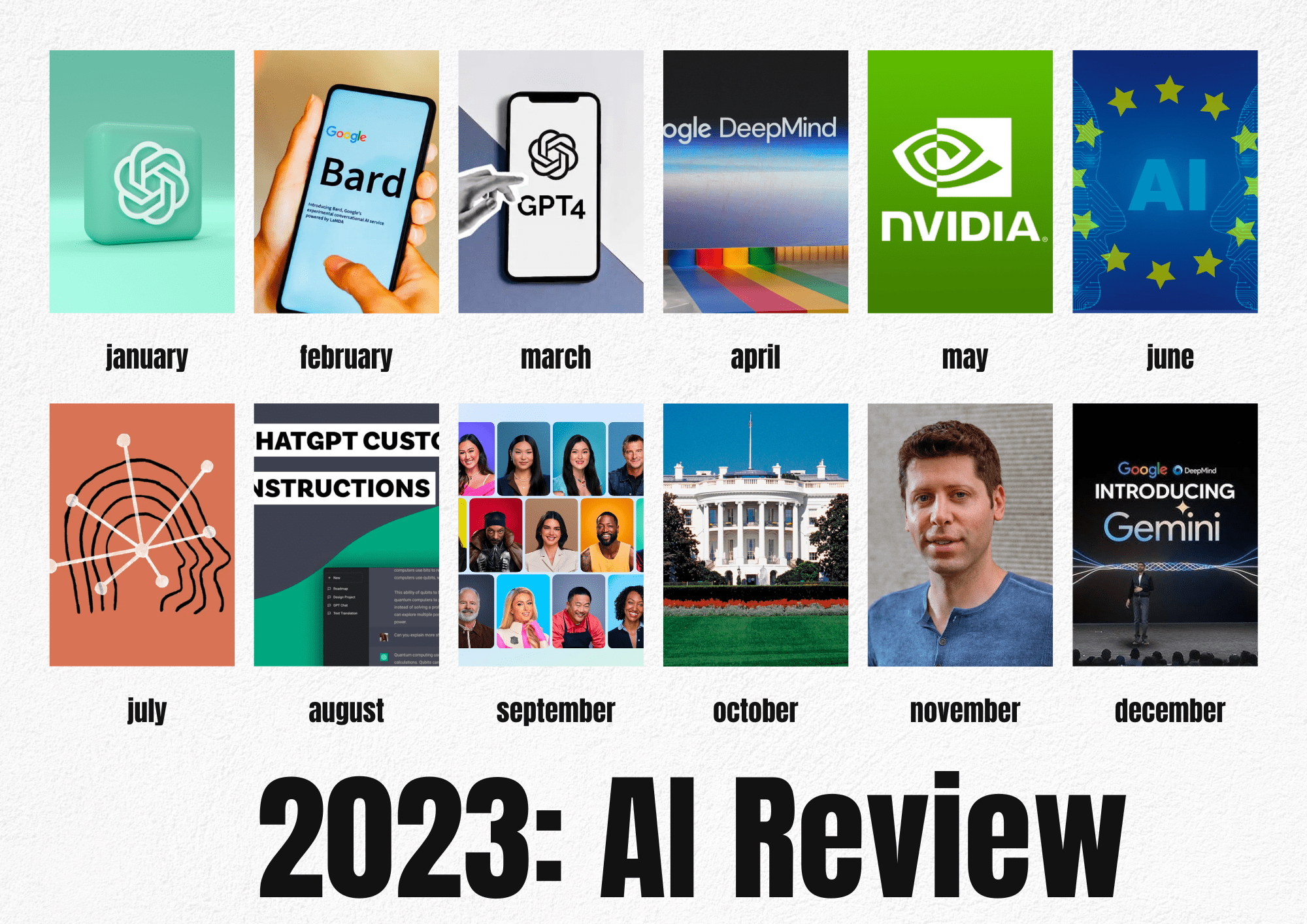
At the start of 2023, people were struggling to keep up with the tech world. One day this was getting released, the next day a competitor came out with something else, and then you heard about something new. It was a lot.
But the momentum continued for the rest of the year, with many companies making history!
2023 was definitely the year of artificial intelligence!
So let’s go through the months and recap what happened..
January
With ChatGPT coming to the market in November 2022, the talks continued at the start of the year 2023. With its continuing success, Microsoft swooped in and announced an investment of $10 billion into OpenAI.
February
With a lot of hype around OpenAIs ChatGPT, people were wondering if their competitors would come out of the woodwork and place themselves on the market. Google did exactly that with their debut BARD.
Days later, Microsoft also shook the market with its Bing chatbot, in which both Microsoft and OpenAIs CEO dived into the partnership between the two.
March
2 months in and it seems like a lot is happening already. Access to Bard was given to a limited number of people to kickstart the Google GenAI journey. With that being said, it initiated a domino effect with Adobe introducing Firefly and Canva introducing their virtual design assistant.
OpenAI also launched APIs for ChatGPT, as well as their text-to-speech model called Whisper. On the 14th of March, OpenAI released its most advanced model GPT-4.
April
A new month and more coming from Google with the announcement of Google DeepMind — a combination of Google Research and DeepMind.
We also saw Russia's Sberbank release ChatGPT rival GigaChat and HuggingFace also entering the market with the release of an AI chatbot to rival ChatGPT called HuggingChat.
May
Google wanted to remain competitive and felt the pressure and announced the Bard chatbot to the public. But it seemed like they added some fuel to the GenAI fire with Microsoft revealing its debut AI assistant for Windows 11.
With all this happening, you can only imagine how well NVIDIA are doing. Yes, their market capitalisation topped $1 trillion for the first time, holding down its status as the AI chip leader.
Speaking of chips, in this same month, we also experienced Elon Musk's new brain implant startup, called Neuralink, in which the company aims to create and implant AI-powered chips in people’s brains. This was approved by the FDA for human trials.
June
Apple’s Vision Pro, the AI-powered augmented reality headset was developed to take immersive experiences to the next level.
On the 14th of June, The European Parliament made some negotiations about the EU AI Act, with 499 votes in favor, 28 against, and 93 abstentions.
With all that has happened in the first 6 months of 2023 already, the world of AI seems to look promising. McKinsey predicted that GenAI has the potential to add up to $4.4 trillion in value to the global economy.
July
July kept the momentum going. Meta introduced Llama 2, an open-source Large Language Model (LLM) which was trained on a mix of publicly available data, and designed to drive applications such as OpenAI’s ChatGPT, Bing Chat, and other modern chatbots.
Anthropic also released Claude 2, which dethroned ChatGPT and has it shaking in its boots.
The safety around AI is becoming a popular topic as LLMs are dropping from left right and center and are becoming a part of our day-to-day lives.
Microsoft announced that it will charge customers $30 per month to use Microsoft 365 Copilot, which got other organizations thinking.
August
Google followed suit and said that it would also be charging $30 per month for users to make use of their GenAI tools in their Duet AI for Workspace. Seems like there's a lot of money to be made.
OpenAI introduced custom instructions to get the most out of ChatGPT. We were also introduced to Poe, a chatbot service that allows you to use state-of-the-art models such as Claude +, GPT-3.5-Turbo, and GPT-4.
September
A third of the year left and AI is already going crazy!
Companies plan to get everything they can and remain competitive in GenAI. Amazon announced a $4 billion investment in OpenAI competitor Anthropic. We also saw some cool but strange things for example the AI personalities featured on Metas apps such as Tom Brady and Kendall Jenner.
With a focus on content creation so far, OpenAI continues with its quest to visualize content with a Canva plugin for ChatGPT.
October
We experienced the Executive Order on the Safe, Secure, and Trustworthy Development and Use of Artificial Intelligence. This also was shaking up the AI world, with CEOs, leaders, and others having contradicting opinions about the implementation of AI systems into society.
November
Let’s start with chatbots. Elon Musk’s AI startup, xAI, unveiled the AI chatbot “Grok”, AWS with the release of Amazon Q, and Pika 1.0 from StabilityAI.
OpenAI also held its first developer event in November, where it delved into GPT-4 Turbo and the GPT Store.
But it went a bit mad after that with OpenAIs CEO Sam Altman getting fired by the board out of nowhere. He was immediately offered a job by Microsoft with OpenAI employees threatening to resign if Sam Altman did not come back and claim his position as CEO. So now he is back, with some new board members as well as a new "observer" role for Microsoft.
December
A lot of madness so far in the last 11 months right? We’re finally coming to the end of 2023.
And just before the year ends, Google came to shake the market again with their 3 variant family of large language models and ChatGPT's new rival: Gemini.
We already know that OpenAI is looking into GPT 5, 6, and 7. So let’s see what 2024 January has to bring.
Wrapping the Year up
Wow — what a year!
2023 has represented a significant leap in the world of AI, which goes beyond coding and algorithmic abilities. We are witnessing how our day-to-day lives can be improvised with AI systems such as chatbots and content creation for tasks such as marketing.
With this being said, we should all look forward to what 2024 has to bring with the integration of technology and humanity.
Nisha Arya is a Data Scientist and Freelance Technical Writer. She is particularly interested in providing Data Science career advice or tutorials and theory based knowledge around Data Science. She also wishes to explore the different ways Artificial Intelligence is/can benefit the longevity of human life. A keen learner, seeking to broaden her tech knowledge and writing skills, whilst helping guide others.
More On This Topic
2021: A Year Full of Amazing AI papers — A Review
Data Scientists, You’re Invited: Make 2022 a Year of Continuous Improvement
State of AI Report 2022: Be Prepared for Next Year
5 Highest-paid Languages to Learn This Year
5 Portfolio Projects for Final Year Data Science Students
The Best Data Science Resources, Bootcamp, and Courses to Learn…