Level 50 Data Scientist: Python Libraries to Know

Level 50 Data Scientist: Python Libraries to Know
Image by Author

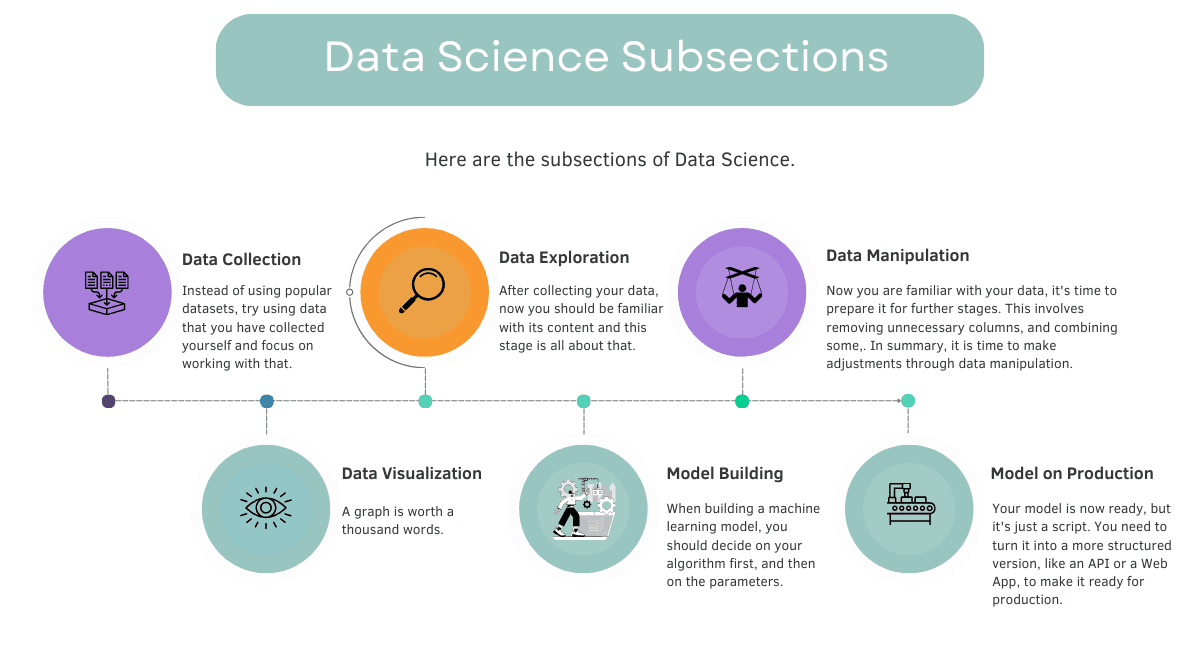
Data Science remains one of the hottest job titles in the 21st century. So, it's no wonder there's a lot of curiosity about it. But first, what is Data Science?

Data Science is a multidisciplinary field that includes different elements from various domains, such as Data Visualization, Model Building, and Data Manipulation.

In this article, we will look closer to these elements, and explore the libraries that will allow you to apply these elements, by using Python. Whether you're a pro or consider yourself a beginner, this article will surely expand your knowledge. Let’s get started!
Level 50 Data Scientist: Python Libraries to Know
Image by Author Step 1 : Data Collection

Data Collection, means the process of combining information from the web.

You might see different data projects, which includes synthetic datasets or datasets fromKaggle.

Even if this is good for beginners, if you want to land a competitive job, you should do more.

In python, there are a lot of options to do that, let’s look closer at 3 of them.

Scrapy

This is a web crawling framework for Python, ideal for large-scale data extraction.

It's more sophisticated than BeautifulSoup, allowing for more complex data collection.

A unique feature of Scrapy is its ability to handle asynchronous requests efficiently, making it faster for large-scale scraping tasks. If you are new, the next one is better fit for you.

BeautifulSoup

BeautifulSoup is used for parsing HTML and XML documents. It's simpler and more user-friendly than Scrapy, making it ideal for beginners or for simpler scraping tasks.

A distinctive aspect of BeautifulSoup is its flexibility in parsing even poorly formatted HTML.

Selenium

Selenium is used primarily for automating web browsers. It is perfect for scraping data from websites that require interaction, like filling out forms or including JavaScript-driven content.

Its novel feature is the ability to automate and interact with web pages as if a human were browsing, which allows data collection from dynamic web pages.

Step 2: Data Exploration

Now you have data, but you should explore it to see its features.

Scipy

Scipy is used for scientific and technical computing.

It's more focused on advanced computations compared to numpy, offering additional functionalities like optimization, integration, and interpolation.

A unique feature of Scipy is its extensive collection of submodules for different scientific computing tasks.

Numpy

It is one of the most important libraries in Python about Data Science.

Biggest part of its fame comes from its array object. While Scipy builds on Numpy, Numpy itself works alone too.

A distinguishing feature is its ability to perform efficient array computations, which actually is the reason why it is that much important in Data Science, however the next one is also too important.

Pandas

Pandas offers easy to use data structures like data frames, and data analysis tools that will best fit to manipulate data by using data frames.

A novel aspect of Pandas, which distinguishes it from other data manipulation tools, is DataFrames, which provides extensive capabilities for data manipulation and analysis.

Step 3 : Data Manipulation Level 50 Data Scientist: Python Libraries to Know
Image by Author

Data Manipulation is the process where you are shaping your data, to get ready for the next stages.

Pandas

Pandas offers data structures like DataFrame, which makes everything easier to work with. Because there are too many built-in functions defined in pandas, which will turn your 100 lines of code into 2 built-in functions.

It also has data visualization capabilities and data exploration functions, making it more all-purpose than other Python libraries.

Step 4: Data Visualization

Data Visualization enables you to tell the whole story on one page. Tto do that, in this section we will cover 3 of them.

Matplotlib

If you visualized your Data with Python, you know what matplotlib is. It is a Python library for creating a wide range of types of graphics, like static, interactive or even animated.

It is a more customizable data visualization library than others. You can control pretty much any element of a plot with it.

Seaborn

Seaborn is built on top of Matplotlib, and offers a different kind of view of the same graphs, like bar plot.

It can be simpler to use for creating complex visualizations, compared to Matplotlib, and it is fully integrated with Pandas DataFrames.

Plotly

Ploty is more interactive than others. You can even create a dashboard with it and also you can integrate your code with Plotly and see your graphs on the Plotly website.

If you want to know more, here are the Python Data Visualization Libraries.

Step 5 : Model Building

Model Building is the step, where you can finally see the results of your actions, to make predictions. To do that, we still have too many libraries.

Sci-kit Learn

Most famous Python library for machine learning is Sci-kit learn. It offers too simple, yet efficient functions to build your model in a couple of seconds. Of course, you can develop many of these functions by yourself, but do you want to write 100 lines of code instead of 1?

Its novel feature is the comprehensive collection of algorithms in a single package.

TensorFlow

TensorFlow, created by Google, is better suited for high-level models such as deep learning and offers high-level functions for building large-scale neural networks compared to Scikit-learn. Additionally, there are many free tools available online, also created by Google, which make learning TensorFlow easier.

Keras

Keras offers a high-level neural networks API, and it is capable of running on top of Tensorflow. It focuses more on enabling fast experimentation with deep neural networks than Tensorflow.

Step 6: Model on Production

Now you have your model, but it is just script. To make something more meaningful from it, you should turn your model into web application or api to make it ready for production.

Django

The most famous web framework allows you to develop your model in a structured way. It is more complicated than Flask and FastAPI, yet the reason behind it is that it has many built-in features, like an admin panel.

In Flask, for example, you should develop many things from scratch, but if you don’t know much about web frameworks, it's a good place to start.

Flask

Flask is a micro web framework for python, with it you can develop your own web app or api, easier. It is more flexible then Django and more suitable for smaller applications.

FastAPI

FastAPI is fast and easy to use, which made it more popular.

A unique feature of FastAPI is its automatic generation of documentation and its built-in validation using Python type hints.

If you want to know more, here are the top 18 Python libraries.

Bonus Step : Cloud Systems

At this stage, you have everything, but in your own environment. To share your model to the world and to test it even more, you should share them with people. To do that, your web application or api should be running on the server.

Heroku

A cloud platform as a service (PaaS) supporting several programming languages.

It's more user-friendly for beginners compared to AWS also offering simpler deployment processes for web applications. If you are a total beginner, it might be better for you, like Python anywhere.

PythonAnywhere

PythonAnyhwhere is an online development environment, also offers web hosting service, based on Python programming language, which can be understandable from its name.

It's more focused on Python-specific projects compared to other tools. If you chose Flask at step 6, you can upload your model to pythonanywhere, and it also has a free feature.

AWS (Amazon Web Services)

AWS has too many different options, for every feature it offers in the platform. If you plan to choose a database, even for it, there are too many options.

It is more complex and comprehensive then other tools, and well fit for large-scale operations.

Like if you chose django in the previous section, and take your time to create a large-scale web application, your next choice would be AWS.

Final Thoughts

In this article, we explored major Python libraries used in Data Science. When working on your Data Science projects, remember that there isn't just one ultimate method. I hope this article has introduced you to different tools.

Nate Rosidi is a data scientist and in product strategy. He's also an adjunct professor teaching analytics, and is the founder of StrataScratch, a platform helping data scientists prepare for their interviews with real interview questions from top companies. Connect with him on Twitter: StrataScratch or LinkedIn.

More On This Topic

  • KDnuggets News, April 13: Python Libraries Data Scientists Should…
  • Three R Libraries Every Data Scientist Should Know (Even if You Use Python)
  • Junior Data Scientist: The Next Level
  • Python Libraries Data Scientists Should Know in 2022
  • Advance your data science career to the next level
  • How a Level System can Help Forecast AI Costs

2024 will be the Year of Microsoft Copilot

Nearly 30 years later, the Windows keyboard will be upgraded with a Copilot button, besides powering the laptops.

Recently, Microsoft made Copilot available for iOS and Android devices, making it the biggest rival for 2024 and embedding AI assistance seamlessly into popular applications like Word, Excel, PowerPoint, Outlook, and Teams.

Microsoft Copilot has emerged as a clear winner, capturing the attention and enthusiasm of users and corporations alike. The year 2023 undoubtedly marked a period of growth and maturation for Microsoft Copilot, solidifying its role as a valuable and versatile AI companion in the workplace.

The debut of Microsoft 365 Copilot in March 2023 brought a wave of innovation aimed at enhancing workplace productivity. Fueling more with Microsoft’s strategic move in September 2023 to introduce Copilot as the comprehensive AI brand for its diverse capabilities marked a significant turning point.

There is no stopping, and 2024 is clearly the year of Microsoft Copilot as consumers and enterprise customers flock to use it in their daily lives, while it continues to combine various AI functionality under one umbrella.

2023 in Review

In 2023, Microsoft Copilot underwent a transformative journey, evolving from its initial release in sales-focused Dynamics 365 to becoming a pivotal tool across various domains. The year commenced with a dedicated focus on the user experience, introducing features like email reply suggestions and enhanced natural language search capabilities in Sales Copilot.

The enhanced functionality brings real-time intelligent assistance, contextual awareness, automation, and customisation options, empowering users to streamline tasks efficiently. Emphasising security and privacy, Copilot incorporates two-factor authentication, compliance boundaries, and stringent privacy protections.

November 2023 marked a pivotal moment when Microsoft 365 Copilot became generally available for enterprise customers. This move opened the floodgates for broader adoption across organisations. The expansion into new areas, particularly the integration with Microsoft Teams, brought Copilot’s capabilities into the heart of collaborative work environments.

From Copilot in Loop for content summarisation to Copilot in Viva Learning for personalised learning journeys, each addition contributes to the versatility and adaptability of this AI companion. The introduction of Microsoft Copilot Studio further streamlined the management of Copilot features across different applications

The announcement of Copilot Studio during Microsoft Ignite signalled a move towards a unified Copilot experience. The tool expanded its reach to Microsoft 365 in September, gaining enterprise-level availability and attracting notable clients such as Visa and BP.

Further innovations in October introduced Copilot into Teams channels, empowering collaboration through features like post summarization and action item extraction. As Copilot celebrated its first year in December, Microsoft showcased its success through business value studies and customer testimonials.

What’s next?

In Microsoft’s fiscal year 2023, the performance of Microsoft Viva, which encompasses Copilot, showcased robust growth and positive reception within organisations. The fiscal year 2023 showed a $211.9 billion revenue (7% increase), showcasing the company’s strength.

Viva’s monthly active users exceeded 35 million, indicating significant adoption and utilisation. While specific revenue breakdowns for Copilot within Viva weren’t disclosed, the Productivity and Business Processes segment, which includes Viva, experienced a substantial 12% year-over-year growth in revenue.

Microsoft executives, including CEO Satya Nadella, emphasised the creation of a new employee experience category with Viva, with Copilot standing out for its role in enhancing team collaboration and productivity. The fiscal year 2023 earnings calls underscored the success of Viva and Copilot in contributing to Microsoft’s thriving ecosystem.

Microsoft aims to continue expanding Copilot’s functionalities within Copilot Studio, refining AI models for increased personalisation, and extending integrations with an array of tools and platforms. Making it available to the users physically by adding it to the keyboard is a drastic drift that is making a controversial step into 2024.

The post 2024 will be the Year of Microsoft Copilot appeared first on Analytics India Magazine.

AI-powered search engine Perplexity AI, now valued at $520M, raises $70M

AI-powered search engine Perplexity AI, now valued at $520M, raises $70M Kyle Wiggers 9 hours

As search engine incumbents — namely Google — amp up their platforms with gen AI tech, startups are looking to reinvent AI-powered search from the ground up. It might seem like a Sisyphean task, going up against competitors with billions upon billions of users. But this new breed of search upstarts believes it can carve out a niche, however small, by delivering a superior experience.

One among the cohort, Perplexity AI, this morning announced that it raised $70 million in a funding round led by IVP with additional investments from NEA, Databricks Ventures, former Twitter VP Elad Gil, Shopify CEO Tobi Lutke, ex-GitHub CEO Nat Friedman and Vercel founder Guillermo Rauch. Other participants in the round included Nvidia and — notably — Jeff Bezos.

Sources familiar with the matter tell TechCrunch that the round values Perplexity at $520 million post-money. That’s chump change in the realm of gen AI startups. But, considering that Perplexity’s only been around since August 2022, it’s a nonetheless impressive climb.

Perplexity was founded by Aravind Srinivas, Denis Yarats, Johnny Ho and Andy Konwinski — engineers with backgrounds in AI, distributed systems, search engines and databases. Srinivas, Perplexity’s CEO, previously worked at OpenAI, where he researched language and gen AI models along the lines of Stable Diffusion and DALL-E 3.

Unlike traditional search engines, Perplexity offers a chatbot-like interface that allows users to ask questions in natural language (e.g. “Do we burn calories while sleeping?,” “What’s the least visited country?,” and so on). The platform’s AI responds with a summary containing source citations (mostly websites and articles), at which point users can ask follow-up questions to dive deeper into a particular subject.

Perplexity AI

Performing a search with Perplexity.

“With Perplexity, users can get instant … answers to any question with full sources and citations included,” Srinivas said. “Perplexity is for anyone and everyone who uses technology to search for information.”

Underpinning the Perplexity platform is an array of gen AI models developed in-house and by third parties. Subscribers to Perplexity’s Pro plan ($20 per month) can switch models — Google’s Gemini, Mistra 7Bl, Anthropic’s Claude 2.1 and OpenAI’s GPT-4 are in the rotation presently — and unlock features like image generation; unlimited use of Perplexity’s Copilot, which considers personal preferences during searches; and file uploads, which allows users to upload documents including images and have models analyze the docs to formulate answers about them (e.g. “Summarize pages 2 and 4”).

If the experience sounds comparable to Google’s Bard, Microsoft’s Copilot and ChatGPT, you’re not wrong. Even Perplexity’s chat-forward UI is reminiscent of today’s most popular gen AI tools.

Beyond the obvious competitors, the search engine startup You.com offers similar AI-powered summarizing and source-citing tools, powered optionally by GPT-4.

Srinivas makes the case that Perplexity offers more robust search filtering and discovery options than most, for example letting users limit searches to academic papers or browse trending search topics submitted by other users on the platform. I’m not convinced that they’re so differentiated that they couldn’t be replicated — or haven’t already been replicated for that matter. But Perspective has ambitions beyond search. It’s beginning to serve its own gen AI models, which leverage Perplexity’s search index and the public web for ostensibly improved performance, through an API available to Pro customers.

This reporter is skeptical about the longevity of gen AI search tools for a number of reasons, not least of which AI models are costly to run. At one point, OpenAI was spending approximately $700,000 per day to keep up with the demand for ChatGPT. Microsoft is reportedly losing an average of $20 per user per month on its AI code generator, meanwhile.

Sources familiar with the matter tell TechCrunch Perplexity’s annual recurring revenue is between $5 million and $10 million at the moment. That seems fairly healthy… until you factor in the millions of dollars it often costs to train gen AI models like Perplexity’s own.

Perplexity AI

Image Credits: Perplexity AI

Concerns around misuse and misinformation inevitably crop up around gen AI search tools like Perplexity, as well — as they well should. AI isn’t the best summarizer after all, sometimes missing key details, misconstruing and exaggerating language or otherwise inventing facts very authoritatively. And it’s prone to spewing bias and toxicity — as Perplexity’s own models recently demonstrated.

Yet another potential speed bump on Perplexity’s road to success is copyright. Gen AI models “learn” from examples to craft essays, code, emails, articles and more, and many vendors — including Perplexity, presumably — scrape the web for millions to billions of these examples to add to their training data sets. Vendors argue fair use doctrine provides a blanket protection for their web-scraping practices, but artists, authors and other copyright holders disagree — and have filed lawsuits seeking compensation.

As a tangentially related aside, while an increasing number of gen AI vendors offer policies protecting customers from IP claims against them, Perplexity does not. According to the company’s terms of service, customers agree to “hold harmless” Perplexity from claims, damages and liabilities arising from the use of its services — meaning Perplexity’s off the hook where it concerns legal fees.

Some plaintiffs, like The New York Times, have argued gen AI search experiences siphon off publishers’ content, readers and ad revenue through anticompetitive means. “Anticompetitive” or no, the tech is certainly impacting traffic. A model from The Atlantic found that if a search engine like Google were to integrate AI into search, it’d answer a user’s query 75% of the time without requiring a click-through to its website. (Some vendors, such as OpenAI, have inked deals with certain news publishers, but most — including Perplexity — haven’t.

Srinivas pitches this as a feature — not a bug.

“[With Perplexity, there’s] no need to click on different links, compare answers, or endlessly dig for information,” he said. “The era of sifting through SEO spam, sponsored links and multiple sources will be replaced by a more efficient model of knowledge acquisition and sharing, propelling society into a new era of accelerated learning and research.”

The many uncertainties around Perplexity’s business model — and gen AI and consumer search at large — don’t appear to be deterring its investors. To date, the startup, which claims to have ten million active monthly users, has raised over $100 million — much is which is being put toward expanding its 39-person team and building new product functionality, Srinivas says.

“Perplexity is intensely building a product capable of bringing the power of AI to billions,” Cack Wilhelm, a general partner at IVP, added via email. “Aravind possesses the unique ability to uphold a grand, long-term vision while shipping product relentlessly, requirements to tackle a problem as important and fundamental as search.”

China Open Sources TinyGPT-V, Outperforms Larger MLLMs

Researchers from China from Anhui Polytechnic University, Nanyang Technological University, and Lehigh University have unveiled TinyGPT-V. This AI model combines remarkable performance with reduced computational demands, marking a paradigm shift in the development of cost-effective and efficient MLLMs.

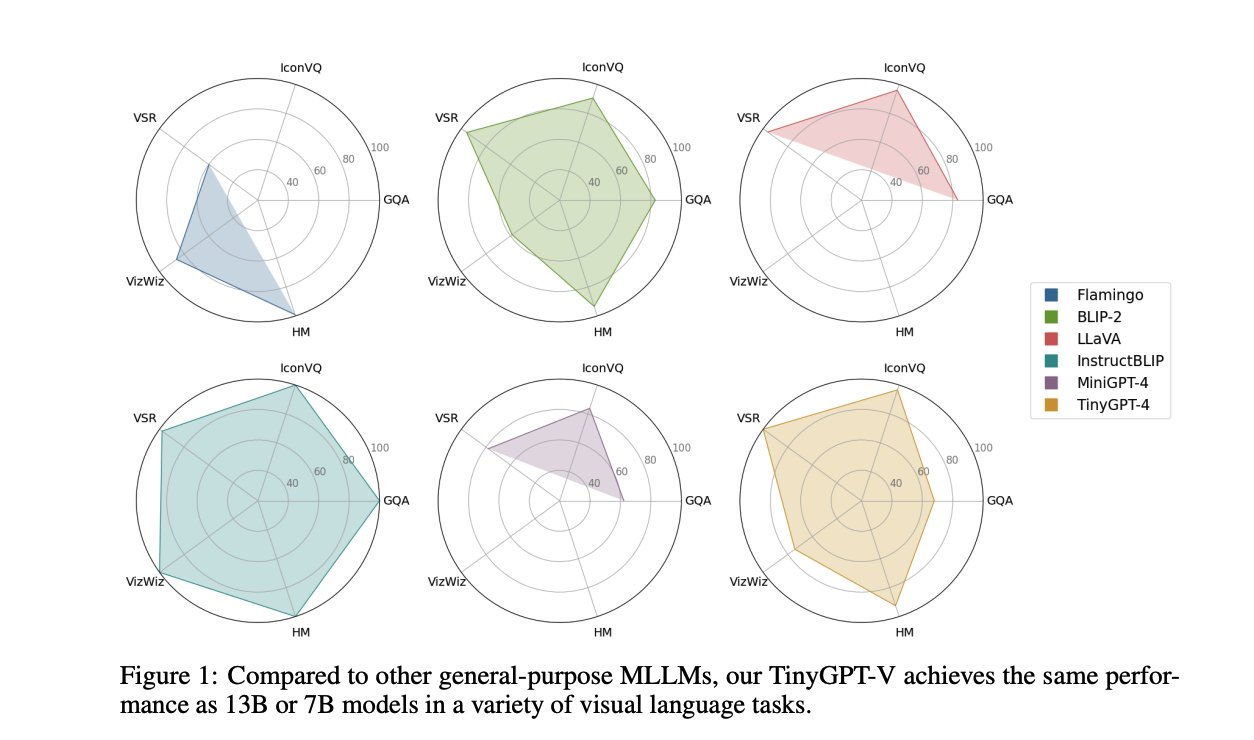
Compared to other MLLM such as Flamingo, MiniGPT-4, the model achieves better performance than 13 billion and 7 billion models. It is built on top of Microsoft’s Phi-2.

Check out the GitHub repository here.

TinyGPT-V distinguishes itself by requiring only a 24GB GPU for training and an 8GB GPU or CPU for inference, addressing the computational efficiency challenges faced by its predecessors.

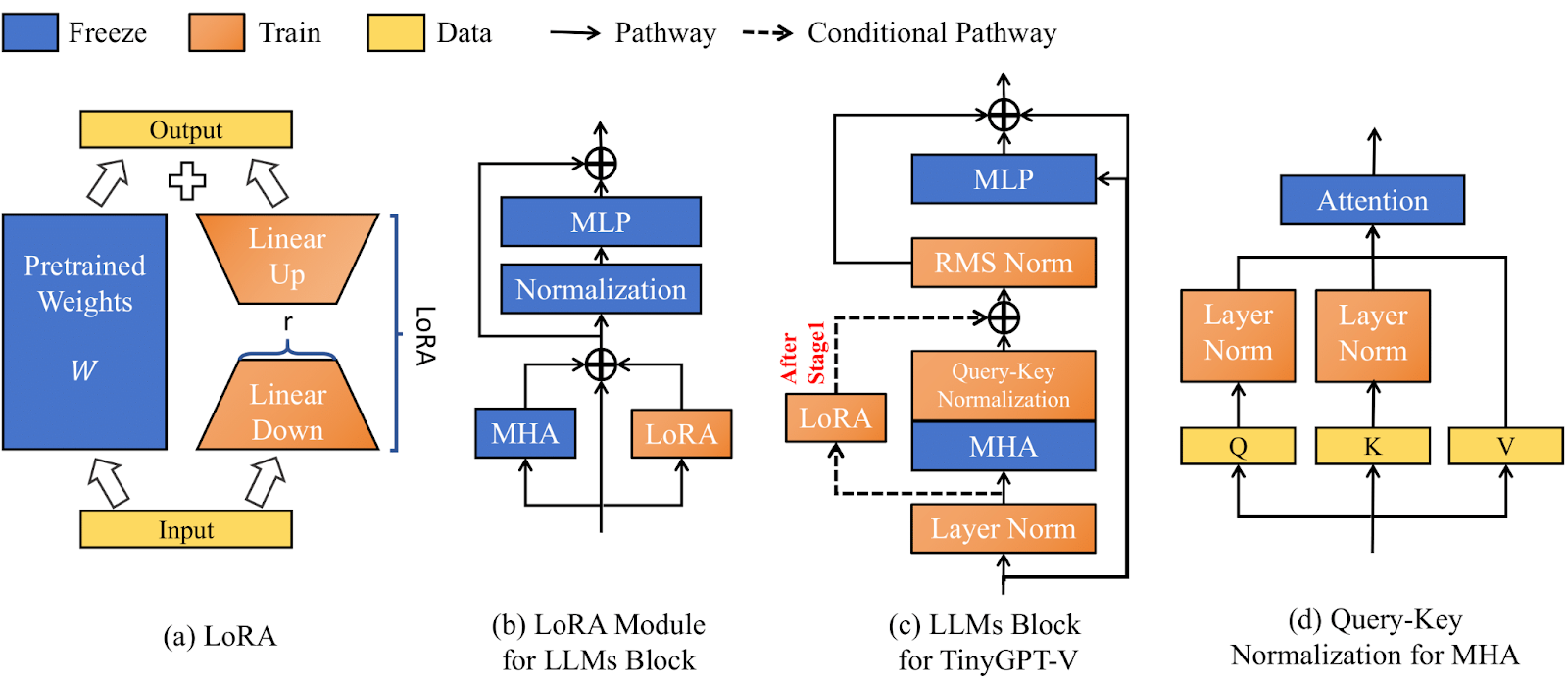
Leveraging the Phi-2 model as its language backbone and integrating pre-trained vision modules from BLIP-2 or CLIP, TinyGPT-V strikes a unique balance between high performance and minimized resource requirements.

The architecture of TinyGPT-V incorporates a distinctive quantisation process, allowing for seamless local deployment and inference tasks on devices with an 8GB capacity. This feature makes TinyGPT-V an ideal choice for real-world scenarios where deploying large-scale models is often impractical.

Linear projection layers embedded in the model facilitate the efficient integration of visual features into the language model, bridging the gap between image-based information and language comprehension.

Notable benchmarks attest to TinyGPT-V’s outstanding capabilities. In the Visual-Spatial Reasoning (VSR) zero-shot task, TinyGPT-V outshone models with significantly larger parameter counts, showcasing its prowess in handling complex multimodal tasks efficiently.

Benchmarks such as GQA, IconVQ, VizWiz, and the Hateful Memes dataset further underscore the model’s versatility and computational efficiency, making it a compelling option for a wide range of real-world applications.

The post China Open Sources TinyGPT-V, Outperforms Larger MLLMs appeared first on Analytics India Magazine.

Why Are Consulting Firms Building LLMs

Financial consulting companies should definitely know what is the cost of using generative AI. That is why they are building their own customised LLMs for chatbots and other purposes to make sense of documents and not solely rely on expensive offerings by others.

The latest joiner in the LLM development league is JPMorgan, a financial consulting firm which deals in investment banking, commercial banking and other financial services. The firm has introduced DocLLM, a generative language model designed for multimodal document understanding. It stands out as a lightweight extension to LLMs for analysing enterprise documents, spanning forms, invoices, reports, and contracts that carry intricate semantics at the intersection of textual and spatial modalities.

Generalised models suck

OpenAI’s ChatGPT Plus also allows users to scan and analyse documents. The feature is also available in ChatGPT Enterprise. But these models have been continuously touted for their privacy concerns, which makes enterprises and consulting companies, with all the financial data, scared to use them.

Moreover, GPT and other AI models have been experiencing hiccups when it comes to analysing documents. Most recently, the models were not able to analyse SEC filings, resulting in major backlash for the models.

The top-performing configuration AI model, specifically OpenAI’s GPT-4-Turbo, achieved a mere 79% accuracy when equipped with the capability to analyse almost an entire filing in conjunction with the posed question. Frequently, the models exhibited reluctance to respond or would generate inaccurate information—referred to as “hallucinating“—which did not align with the details found in SEC filings.

Anand Kannappan, co-founder of Patronus AI, a company which evaluates the security of AI models, expressed dissatisfaction with this level of performance, deeming it “absolutely unacceptable.” He emphasised the necessity for a significantly higher accuracy rate to make the technology truly effective in automated and production-ready applications.

These discoveries underscore the difficulties that AI models encounter as major corporations, particularly those in regulated sectors like finance and consulting, strive to integrate state-of-the-art technology into their operations, whether for customer service or research purposes.

Thus, developing own models

These inaccuracies and securities were one of the reasons why BloombergGPT was launched, specifically for finance. It has been helping people make sense of financial documents, reports, and invoices. This also highlights the need for open source models when it comes to dealing with financial information, where DocLLM definitely shines.

JPMorgan is making DocLLM open for other users as well. The two versions of DocLLM, one with 1 billion parameters is built on top of Falcon-1B architecture, and 7 billion parameter models are built on Llama2-7B. Being open source, the model provides safety and security to its users.

Similarly, KPMG had internally developed a system based on OpenAI models and called it KaiChat to aid its staff with exclusive data. PwC is set to invest $1 billion over three years to advance generative AI in its U.S. operations, collaborating with Microsoft and OpenAI to automate tasks in tax, audit, and consulting. EY leverages generative AI, integrating tax laws into an AI system for instant responses through a ChatGPT-like interface, particularly for tasks like payroll queries.

In August, McKinsey embraced the potential of LLMs with the launch of “Lilli,” designed to streamline and enhance the utilisation of the firm’s vast knowledge base. Wells Fargo also introduced Fargo in 2022, a virtual assistant powered by Google Cloud’s AI, for providing a personalised, convenient, and simple banking experience. In October last year, Deloitte launched DARTbot, an internal chatbot for enhancing efficiency of Deloitte’s 18,000 U.S. Audit & Assurance professionals.

But Can They Compete Against OpenAI?

But when OpenAI launched GPT-4, the much hyped BloombergGPT for the financial field slowly stopped gaining traction. Adi Polak said that models such as GPT-5 coming up soon can possibly also outperform JPMorgan’s DocLLM, as they would be better at specialised and generalised tasks combined.

“This could become the go-to model for document intelligence tasks, saving companies time and money. For example, insurance firms can automate claim assessments, while banks can speed loan processing,” said a user on X. To which Polak replied that it would require a lot of fine tuning.

Whenever OpenAI releases new features to ChatGPT, it gets blamed for affecting startups and others doing the same. When it introduced ‘Upload many types of documents’ this new ‘multimodal’ update, according to many, was expected to kill hundreds of startups. Some of the popular names include ChatPDF, AskYourPDF, and PDF.ai, and many more, which were basically wrappers of OpenAI’s models.

But for the time being, it is clear that consulting companies building their own LLMs for financial planning and decisions is better than relying on other offerings.

The post Why Are Consulting Firms Building LLMs appeared first on Analytics India Magazine.

Microsoft is making its biggest change to Windows keyboards in decades

Dell XPS 15 Display

In 2023, Microsoft established itself as a leader in the AI space with several major AI developments, including its GPT-powered AI chatbot assistant — Copilot. As the new year begins, Microsoft is redirecting its efforts towards the vision of an AI PC, starting with a significant change to Windows keyboards.

On Thursday, Microsoft announced the introduction of the Copilot key to Windows 11 PCs, the first significant change to the Windows PC keyboard in nearly three decades, according to the release.

Also: Can your Windows 10 PC be saved in 2025? Yes — for free. Here's how

"Nearly 30 years ago, we introduced the Windows key to the PC keyboard that enabled people all over the world to interact with Windows," said Yusuf Mehdi, Microsoft CVP & Consumer CMO. "We see this as another transformative moment in our journey with Windows where Copilot will be the entry point into the world of AI on the PC."

When pressed, the new Copilot key will open the Copilot in the Windows experience, making it easier for Windows 11 PC users to implement Copilot in their day-to-day workflows.

Copilot in Windows can help users perform a series of tasks on their PCs and beyond, including adjusting PC settings, organizing windows, summarizing text, generating images, and more, all from a single prompt.

Also: 5 ways ChatGPT can save you time in the new year

This implementation is only the first step in what Microsoft is calling "the year of the AI PC."

"In this new year, we will be ushering in a significant shift toward a more personal and intelligent computing future where AI will be seamlessly woven into Windows from the system to the silicon, to the hardware," said Mehdi.

Both leading to and at CES, you will begin to see the Copilot key appear on many of the new Windows 11 PCs from Microsoft's ecosystem partners and on its own upcoming Surface devices, according to Microsoft.

Artificial Intelligence

Keyboard Gets Changed After 30 Years Thanks to Microsoft Copilot 

Microsoft is set to introduce the Copilot key to Windows 11 PCs, a move hailed as the most significant change to the Windows PC keyboard in nearly three decades. The Copilot key joins the Windows keyboard as a core component of PC keyboard. When pressed, it will invoke Copilot in Windows, making it seamless to engage with Copilot in your day-to-day use.

“Nearly 30 years ago, we introduced the Windows key to the PC keyboard that enabled people all over the world to interact with Windows. We see this as another transformative moment in our journey with Windows where Copilot will be the entry point into the world of AI on the PC, ”said Yusuf Mehdi, executive vice president & consumer chief marketing officer.

The Copilot key is expected to debut on new Windows 11 PCs from ecosystem partners, including devices from AMD, Intel, and Qualcomm, with availability starting from late February through Spring. Surface devices featuring the Copilot key are also anticipated in the upcoming release.

Microsoft wants 2024 to be “the year of the AI PC and said the Copilot key will not only simplify people’s computing experience but also amplify it. The tech giant said that the collaboration with silicon partners such as AMD, Intel, and Qualcomm has played a crucial role in Microsoft’s efforts to introduce new system architectures that power AI experiences on Windows PCs. This collaborative approach involves leveraging GPU, CPU, NPU, and cloud technologies to drive innovation.

In the lead-up to and during CES, the Copilot key will be prominently featured on various Windows 11 PCs, showcasing Microsoft’s commitment to driving AI transformation and making it accessible to users.

The post Keyboard Gets Changed After 30 Years Thanks to Microsoft Copilot appeared first on Analytics India Magazine.

ChatGPT Helps Blind Developer Code

OpenAI President Greg Brockman recently asked a question on X “How has ChatGPT changed your life?” to which a user by the name Aaron Stormerr shared the profound impact ChatGPT has had on his academic journey as a blind Computer Science student.

Aaron candidly revealed the challenges he faced before discovering ChatGPT and how it has played a pivotal role in transforming his learning experience.“I was practically falling before ChatGPT because a few of my professors were visual learners and would regularly stress that we’d fail all their classes if we couldn’t see / draw what we were working with” shared Stormer.

I'm a blind Computer Science student. I was practically faling before ChatGPT because a few of my professors were visual learners and would regularly stress that we'd fail all their classes if we couldn't see / draw what we were working with. Despite knowing several amazing blind…

— Aaron Stormerr (@aaron_stormerr) January 3, 2024

Facing difficulties in a learning environment designed for visual learners, Aaron expressed his struggle in classes where professors emphasised visual comprehension and drawing components of coding projects. This approach created anxiety and hindered his coding progress, even though he knew several blind software developers who excelled in the field.

However, the introduction of ChatGPT proved to be a game-changer for Aaron. The novelty of working with this tool helped alleviate his anxiety and provided him with a valuable resource to overcome challenges in coding projects. The real breakthrough came when ChatGPT offered code-based examples, which enabled Aaron to better follow his professors’ instructions, even when visual elements were involved.

“ChatGPT also was able to provide code-based examples of what my professors were showing on the board so I could better follow along with their instructions. I don’t know where I’d be without it today,” wrote Stormerr.

Reflecting on his experience, Aaron acknowledged that without ChatGPT, he might not have been where he is today in his academic journey. The tool not only served as a practical coding assistant but also contributed significantly to boosting his confidence and overcoming hurdles faced by blind students in a visual-centric learning environment.

Josh Olin, entrepreneur and founder of WeGPT.ai, also recently posted on X about how GPT-4 enabled him to build web requests and applications using GPT-4, and in the process learn Python. In a span of seven months, from last April, Olin used GPT-4 to create the fundamental capability of fetching HTTP data from an API endpoint.

The post ChatGPT Helps Blind Developer Code appeared first on Analytics India Magazine.

India Holds Ground as Hyperloop Hype Declines

In 2013, when Elon Musk conceived the idea of Hyperloop, it sounded revolutionary and was destined to change how humans travel. Yet, more than 10 years later, the idea has faced significant challenges in transitioning from concept to widespread implementation.

Hyperloop One, one of the ambitious companies that aimed to propel humans in pods through high-speed tubes, potentially surpassing the speeds of bullet trains, is on the verge of shutting down.

The American company raised funds from Khosla Ventures, which has invested in OpenAI, and billionaire Richard Branson’s Virgin Group. Branson himself spoke highly about the technology and, in 2018, ensured that hyperloops were nearing reality.

Yet, in the following years, the company shifted its focus from passengers to freight, and Virgin ended its ties with the company. Now, according to a Bloomberg report, the company is trying to sell its remaining assets.

India was the perfect launch pad

Hyperloop gained significant attention, largely due to the advocacy and promotion of the idea by Elon Musk. Companies like Hyperloop One and Hyperloop Transportation Technologies (HTT) wanted to transform Musk’s travel pod concept into reality and India emerged as the ideal location for launching their projects.

This is because India was in need of a faster transportation system to keep up with its growing economic landscape. In 2019, the Maharashtra government approved Hyperloop One’s plans to develop the world’s first hyperloop system in the state. The project, a joint venture between the Maharashtra government and Hyperloop One, aimed to connect Pune to Mumbai and reduce the time taken to travel between the two cities from three hours to 25 minutes.

Previously, Hyperloop Transportation Technologies (HTT) also submitted a letter of intent to Indian Transport Minister Nitin Gadkari in 2017. Gadkari even offered a big chunk of land in Maharashtra to test the Hyperloop project. “I offered them the westerly bypass of Pune connected to the Express Highway. The idea is they can take an experiment between Mumbai and Pune as a pilot project,” the minister said back then.

Hyperloop dream in India is pretty much alive

Despite interest from Hyperloop One and HTT, no substantial progress materialised in India. However, the Hyperloop dream is not dead altogether. Quintrans Hyperloop, a Pune-based startup, is now building a working prototype that can carry cargo on a large scale before the end of this year.

The startup wants to build the first Hyperloop system in Asia and at a relatively low cost. According to Pranay Luniya, co-founder and CEO at Quintrans, their Hyperloop system would cost around INR 150-200 crore. In comparison, the Mumbai-Ahmedabad bullet train project involves an estimated overall cost of INR 1,10,000 crore.

“Quintrans started in 2021 to develop Hyperloop and Ultra High-Speed Mobility solutions for India. The founders started as a research unit in MIT Pune in 2018, representing the country at multiple international events, including the SpaceX Hyperloop POD competition and the European Hyperloop Week,” Luniya told AIM.

Lumiya and his team want to commercialise Hyperloop systems in India, starting from freight and then moving towards human passengers. So far, the company has raised more than USD 100,000 and is currently working to develop a USD 100 million pilot setup in Pune.

“This pilot will be the first of its kind in India and will be a full-scale setup that will showcase technologies like Vacuum, Levitation, and Propulsion. We intend to complete this by the end of this year and showcase it to the relevant authorities.”

Moreover, TuTr Hyperloop, which began a project at IIT Madras, is building Asia’s first hyperloop testing facility in Chennai. The team has partnered with ArcelorMittal and Tata Steel to develop a 400-metre vacuum tube to test levitating pods at up to 200 kilometres/hour.

Still a long way to go

While both Quintrans and the team at IIT Madras remain committed to solving India’s transportation problems with Hyperloop technology, both projects are in their research and prototyping phase.

A substantial timeframe is still needed before a viable outcome emerges. A notable criticism of the sector is the failure of many projects to progress from conceptualisation to actualisation. Nonetheless, despite enduring setbacks in the sector over the years, optimism persists.

“We still are positive to see a working commercial Hyperloop by the end of this decade. As we go ahead, we will see more validation of the technology and its application for both passenger and cargo Hyperloop,” Luniya added.

Interestingly, in 2022, Chinese media reported that a group of researchers had successfully carried out a systematic test of a Hyperloop system and aim to build a fully functional system by 2035.

Besides, despite Hyperloop One being on the verge of shutting down, HTT, one of its main competitors, has won a bid to develop a Hyperloop system in Northern Italy. A few more projects remain active in Europe as well.

The post India Holds Ground as Hyperloop Hype Declines appeared first on Analytics India Magazine.

When Tech Tools Turn into Weapons of War

Technology continues to seep deeper into areas where its use is not adequately regulated. With AI and robots in the picture, humanity stands in the new technologically-powered era of warfare. One can’t help but wonder how the brains building technologies feel about their work becoming the go-to-tools for world leaders engaging in endless geopolitical battles.

In a conversation with AIM, roboticist Lerrel Pinto explained the two ways of thinking about the subject. “There’s one which is a philosophical one, and there’s one which is more practical,” he said.

The technology being developed to be neutral in nature is being forced to take up arms. Several states across the globe have consciously exploited defence technology to promote broader economic prosperity. Countries, including the United States, China, the United Kingdom, India, Iran, Israel, South Korea, Russia and Turkey, have invested heavily in developing such lethal weapons in recent years.

A chorus of voices has been raised, especially given the speed at which these weapons are being developed. Experts have long called for regulations to prevent the governments from triggering a chain reaction of escalatory events.

Practically Speaking

Pinto pointed out that in the ongoing Ukraine-Russia war, drones are being used regularly to kill people. Countries that are advancing technologically can be traced back to Chinese breakthroughs. As the socialist economy continues to weaponise its tech that can wreak havoc, the US has felt threatened at certain times, leading it to put sanctions on China and personally make a greater number of investments in the US tech companies.

Since China’s hypersonic missile breakthrough, Russia has been testing its own versions of the technology and is simultaneously investing billions in the field. Putin’s state has been sourcing chips used in phones and computers to fuel its defence arsenal. But they are not the only ones. The recent case is of Israel announcing to invest a $3.2 billion grant to the chipmaker company Intel, amid the ongoing military action in Gaza.

“These drones are controlled by a human operator somewhere, but it’s still a robot. It has a basic level of AI and controllers on the drone to keep it stable. If I ask it to move left, it does. These types of algorithms are already out there at the same time,” said the Assistant Professor of Computer Science at NYU Courant.

He further mentioned that the regulations on using AI or robots in the military are lacking in many countries. But every country wants to have as advanced an army as possible to safeguard their interests. “If other countries are using robots to gain an advantage, you also have to create a robot military to nullify that advantage,” he added.

Pinto then pulls out the classic nuclear weapon analogy. “One uses nuclear weapons for war, and that forces all the developed countries to also have a similar weapon. It’s not that they would use it because then you’d have mutually assured destruction. It’s like if your opponent has an advantage, you also want to have that same advantage,” he explained.

He believes that eventually, many governments will have autonomous robots since they highly fund the research and find it very interesting. “That’s a practical thing”, he said. “It’s going to be used by one country, and others will be forced to use it even though they may have a different ethical or moral standard.”

Philosophically Thinking

A lot of researchers do not like their technology being used for violence, non-ethical or non-moral reasons, including Pinto. “In that sense, we make a conscious choice not to work with certain organisations that want to commercialise our technology in warfare,” he said.

“At the same time, all of our technology is open source, so someone else can figure out how to use it. But at least we are not actively speeding up that process,” the researcher noted. Alongside the group of researchers working on Computational Intelligence, Vision, and Robotics (CILVR), Pinto introduced Dobb-e, an open-source, general framework for robots to learn household manipulation.

From an AI standpoint, he doesn’t think the robots are there yet where they can be fully autonomous. They still need to have human operators at the backend, he highlighted. “If it enables a soldier to perform it is better than having a robotic mind of its own indiscriminately going into neighbouring villages and creating violence,” Pinto concluded.

The post When Tech Tools Turn into Weapons of War appeared first on Analytics India Magazine.