Why is Samsung Selling AI?

This is probably the first time a smartphone manufacturer is advertising their upcoming phone launch with ‘AI’ as the main theme. Samsung teased Galaxy AI, announcing their readiness to unveil the new series of Galaxy S24 phones during the Galaxy Unpacked event in San Jose that is scheduled for January 17th: terming it the ‘new era of mobile.’

The race towards bringing generative AI to phones has thus gained steam.

The True AI Phone?

Samsung’s flagship Galaxy series will look to push ahead of its phone competitors with its newest S24. As the name suggests, a number of AI-features is expected to be part of the series. A new feature called ‘AI Live Translate Call’ will act as a personal translator. The feature will allow audio and text translations in real-time, as a user speaks on call.

While Google Pixel has a ‘Live Translate’ feature, Samsung’s version is AI-powered. Interestingly, the absence of a live translation feature on iPhones is something that Google had mocked recently.

A couple of months ago, Samsung announced its generative AI model Samsung Gauss at the Samsung AI Forum 2023. Samsung Gauss consists of three tools: Samsung Gauss Language, Samsung Gauss Code and Samsung Gauss Image. The generative AI language model is aimed at boosting work productivity by assisting in tasks such as composing emails, summarising documents, code development and many other features to enhance consumer experience.

Google has their AI-enabled Google workspace suite and even new search generative experience that will probably be part of their flagship Pixel phones, Apple also have AI and generative AI capabilities integrated into its products, but doesn’t like to flaunt as much as its counterparts.

With the closed ecosystem that the company has built for itself, the chances of collaborating to utilise other big tech companies’ AI-powered features, are almost NIL. Read: When Apple meets OpenAI

Season of Sparkles

Of the interesting launch that Samsung has planned, the teaser video of Galaxy AI had the image of notable sparkles, something that is synonymous with another tech giant. Google’s AI chatbot Bard is also symbolised by sparkles. However, it is not surprising that Samsung has embraced the same.

Google Bard

Samsung Galaxy AI

At the ‘Made by Google’ event held at New York in October last year, the company unveiled AI features and their latest phone Pixel 8 and Pixel 8 Pro. The company also announced ‘Assistant with Bard,’ a personal assistant with generative AI features, which would be available first on Pixel phones, followed by Samsung Galaxy S24 series.

The partnership is peculiar as both the tech players directly compete with each other in the mobile segment. Giving exclusive access to their AI chatbot to their competitor might just be a win for both parties. Considering how Samsung’s AI assistant Bixby wasn’t note-worthy, the collaboration with Google will benefit its users. Plus, it seems like a viable combo to take on Apple who is also looking to bring generative AI on their iPhones and iPads by the end of 2024.

Unmatched Hardware

While Samsung did not reveal all details of the AI features it is looking to unveil, hardware updates are expected. Samsung, a traditional user of Qualcomm chips for US smartphones, it is likely that the Galaxy series will utilise Qualcomm’s Snapdragon Series 8 Gen 3. These are already powering Android phones such as Xiaomi 14, and allow generative AI applications to be directly run on these phones.

Interestingly, Samsung is also working towards building 2nm chips which can provide a 25% increase in power efficiency, and can also provide a boost of 12% in performance when compared to the second-generation 3nm chips that were released this year. However, Samsung will only start mass production of these 2nm chips in 2025. Probably hinting at Samsung’s reliance on in-house chips in the long-term future. Also, setting a promising roadmap that sets it apart from Apple.

The post Why is Samsung Selling AI? appeared first on Analytics India Magazine.

Data Science Hiring Process at Bosch

Bosch Global Software Technologies (BGSW), the technology arm of German multinational engineering Robert Bosch, commonly known as Bosch, is a leading global provider of technology and services, specialising in end-to-end engineering, IT, and Business Solutions. With a global presence and over 30,000 associates worldwide, BGSW supports organisations in building resilient supply chains and streamlining operations in the US, Europe, Japan, China, and the Asia Pacific region, BGSW is the first software development center of Bosch in Southeast Asia, boasting over 4,000 associates.

Key aspects of BGSW include its focus on designing, developing, and executing IoT ecosystems encompassing software, services, and sensors, catering to businesses transitioning from traditional to digital or enhancing their products and processes. It provides industry-specific solutions in automotive, industrial drives, plant automation, security systems, thermal systems, and professional audio and conferencing.

“We use Bosch Global’s legacy with a practical approach, leveraging advanced technologies like data science, data engineering, and cloud-based analytics in automotive, manufacturing, and healthcare,” said MSH Shankar Datta, director of data science and engineering, BGSW told AIM in an exclusive interaction last week.

The company is currently hiring a data science solution expert (AI/ML) in Bangalore with over 10 years of experience.

Inside Bosch’s Data Science Team

The company’s data-driven decision-making impacts global well-being and sustainability, contributing to innovations like autonomous mobility, AI-powered pharmaceutical R&D, and digital twins for manufacturing, supporting the ‘Make in India’ initiative.

BGSW addresses challenges through data science, implementing solutions like synthetic data generation and AI-driven imaging in manufacturing for quality inspection and navigation. In the automotive sector, particularly Advanced Driver Assistance Systems (ADAS), the company works towards hazard detection, lane maintenance, pedestrian safety, and more. In healthcare, contributions include enhanced diagnostics, disease detection, and digital pathology workflows.

It also offers generative AI capabilities in automating business and IT processes. The team leverages large language models for enterprise search, knowledge management, and transformative change across mobility, healthcare, and manufacturing.

Interview Process

The hiring process at BGSW evaluates candidates through resumes, technical assessments, and in-depth interviews, emphasising a ‘can-do-spirit,’ structured thinking, and proficiency in statistical modeling and NLP algorithms. The process, overseen by a dedicated team, includes profile screening, repository checks, assessments, verifications, and final onboarding, with many steps facilitated digitally using advanced AI tools. The final assessment focuses on leadership skills, project spearheading ability, and interpersonal communication clarity.

“For talent acquisition in analytics and data sciences, we use an advanced ATS product with AI-enabled screening and prioritised ranking,” Ranganathan Srinivasan, director and head, talent acquisition, BGSW, told AIM. LinkedIn insights and Google X-ray are also utilised to identify talent in niche areas like AI, ML, data architecture, and data science. Advanced software is employed to integrate resume information and telecommunications for digital reach-outs, reducing sourcing to interview time-lag.

Joining BGSW’s data science team promises a dynamic and collaborative environment for innovation and professional growth. The company encourages employees to work on cutting-edge assignments, fostering knowledge sharing and contributing to a collective pool of expertise.

“But candidates often struggle to balance technical skills with understanding the broader dimensions of their role. While technical skills are crucial, demonstrating a holistic problem-solving approach that connects theory and practice is equally important,” added Srinivasan.

Work Culture

BGSW’s work culture is based on collaboration, continuous learning, and a holistic approach to implementing data science. This culture, rooted in customer centricity and innovation, serves as a strong foundation for industry impact.

“At the heart of our success is the fusion of analytical prowess where the relentless pursuit of innovation and critical thinking is celebrated everyday.” Guruprasad S., vice president at BGSW told AIM.

BGSW has implemented several Diversity, Equity, and Inclusion (DEI) initiatives, promoting collaboration across functions. Integrating data science teams globally with business units reflects a tech-horizontal approach, facilitating cohesive operations. Guruprasad further added that the company’s commitment to continuous learning empowers data scientists to navigate evolving landscapes, reinforcing Bosch’s legacy as “Invented for Life.”

The post Data Science Hiring Process at Bosch appeared first on Analytics India Magazine.

OpenAI Offers Publishers a Mere $1 Million for News Licensing

OpenAI has reportedly offered some media firms minimal compensation ranging between $1 million and $5 million annually to license their news articles for training its extensive language models, presenting a potential challenge in striking deals, according to sources involved in negotiations with the company.

Simultaneously, Apple, vying to compete with OpenAI and Google in the generative artificial intelligence sector, is also engaging in negotiations with publishers. Apple is offering more substantial remuneration but seeks broader rights to use the content than what OpenAI is proposing.

In a reminiscent turn of events from past decades, tech giants like Facebook (now Meta Platforms) and Google previously acquired licenses to utilise news content for social media and search. Such deals have left publishers apprehensive due to the reduced importance placed on news by platforms like Facebook, diminishing payments that once significantly aided media businesses.

Recently, The New York Times Co. filed a lawsuit against OpenAI and its partner, Microsoft, for copyright infringement. The lawsuit comes after unsuccessful negotiations to ensure fair compensation for content usage, signalling a potential trend of legal action by publishers against AI developers.

OpenAI, however, expressed disappointment at the lawsuit, affirming its commitment to collaborating with content creators and owners for mutual benefit. The company remains hopeful for an amicable resolution, highlighting ongoing collaborations with various publishers.

Engaging with nearly a dozen publishers, OpenAI aims to strike deals akin to those with Axel Springer and the Associated Press. The terms of these deals, including Axel Springer’s agreement worth tens of millions over multiple years, remain undisclosed. Apple, on the other hand, is purportedly nearing multiyear deals worth at least $50 million with several news organisations.

While Google is developing its LLMs for consumers and enterprises, it lags behind OpenAI and Apple in negotiating licensing agreements with publishers. However, Google’s strong relationships with publishers, particularly through products like Google News, and bespoke agreements with entities like The New York Times, position it uniquely in this landscape.

The issue of copyright infringement in AI development isn’t exclusive to OpenAI; other LLM developers face similar challenges. The Times’ lawsuit against OpenAI is considered potentially more compelling due to verbatim examples filed as evidence.

As The New York Times has registered a vast number of articles with the U.S. Copyright Office, it could seek substantial damages exceeding $750 million in the event of a favourable ruling, given the extensive corpus of registered content.

The post OpenAI Offers Publishers a Mere $1 Million for News Licensing appeared first on Analytics India Magazine.

OpenAI’s GPT Store Set to Open Next Week After Delayed Rollout

OpenAI is finally gearing up to launch its long-awaited GPT Store, allowing users to sell and exchange custom AI agents based on the company’s extensive language models. The store, initially scheduled for November, faced delays due to the leadership shenanigans at the company but is now prepared for a forthcoming debut.

Addressing the GPT Builders community via email, OpenAI notified users about the imminent opening of the GPT Store. The correspondence emphasised the necessity of adhering to brand guidelines and encouraged creators to make their AI agents publicly accessible.

This initiative, first introduced at OpenAI’s developer’s conference, provides ChatGPT Plus and enterprise subscribers the ability to craft tailored versions of ChatGPT-style chatbots. These custom agents span various uses, from explaining Gen Z memes to assisting in negotiations. While OpenAI already offers its custom GPTs via the explore tab of ChatGPT Plus, the store will enable users to distribute and potentially monetise their versions.

However, specifics on compensating GPT creators based on their agents’ usage remain undisclosed by OpenAI. The store’s launch experienced delays amid organisational changes, including the departure and subsequent return of CEO Sam Altman. Initially set for November, then rescheduled for December, the GPT Store is now gearing up for its long-awaited release.

The post OpenAI’s GPT Store Set to Open Next Week After Delayed Rollout appeared first on Analytics India Magazine.

IIT Patna Releases Multimodal Hindi-English Medical Dataset

Researchers from IIT Patna have introduced MedSumm, a multimodal approach that amalgamates Hindi-English codemixed medical queries with visual aids, providing a more comprehensive perspective on a patient’s medical condition.

Click here to read the paper, also to be published on ECIR 2024.

The researchers announce their intention to make the dataset, code, and pre-trained models publicly accessible.

The primary contributions of this research encompass the introduction of the MMCQS task, the creation of the MMCQS dataset, and the proposal of the advanced MedSumm framework. The MMCQS dataset comprises 3015 multimodal medical queries in Hindi-English codemixed language, accompanied by golden summaries in English that seamlessly merge visual and textual data.

The proposed framework harnesses the capabilities of LLMs and Vision Language Models (VLMs) namely CLIP, to facilitate multimodal medical question summarisation. The researchers showcase the tangible value of integrating visual information from images, demonstrating its potential to not only improve healthcare decision-making but also deepen the understanding of patient queries.

Researchers of the paper are Akash Ghosh, Arkadeep Acharya, Prince Jha, Aniket Gaudgaul, Rajdeep Majumdar, Sriparna Saha, Raghav Jain from IIT Patna along with Setu Sinha and Shivani Agarwal from Indira Gandhi Insitute of Medical Sciences, and Aman Chadha from Amazon generative AI and Stanford University.

The researchers used Llama 2, Mistral 7B, Vicuna, FLAN-T5, and Zephyr-7B for the final summary generation.

Leveraging the HealthCareMagic Dataset derived from MedDialog data, comprising 226,395 samples, 523 duplicates were removed. Guided by medical doctors, co-authors of the paper, 18 medical symptoms challenging to convey through text were identified and categorised into four groups: ENT, EYE, LIMB, and SKIN.

This framework would help in enhancing doctor-patient interactions and medical decision-making by summarising medical questions posed by patients. Despite the increasing complexity and quantity of medical data, existing research has predominantly centred on text-based methods, sidelining the integration of visual cues.

Furthermore, the scope of prior works in medical question summarisation has been confined to the English language, this dataset expands it to Hindi. The strategic integration of visual information from images aims to enhance the creation of medically detailed summaries.

The post IIT Patna Releases Multimodal Hindi-English Medical Dataset appeared first on Analytics India Magazine.
CES 2024: 3 trends to watch to see what’s next in tech

ZDNET CES 2024 cover art

After 2023 gave us the most innovative year in tech in over a decade, the two trends that powered much of that innovation — AI and VR/AR — are poised to lead the way at CES 2024. And following a fall product launch season that was as intense as any we've ever seen in the tech ecosystem, CES 2024 is set to explode with a ton of announcements about real products that are coming in the months ahead.

In other words, you can expect to see a lot fewer of the CES experiments and flights-of-fancy of the past dominating the headlines this year, because there are so many interesting and useful new things to crowd them out.

ZDNET has already been pre-briefed on many of the best products that are coming, and we're looking forward to sharing our first impressions, original photos and videos, and buying advice. Our team will be on the ground at CES as well as covering it broadly from multiple time zones. We'll highlight the products we're most excited about, the trends that are taking shape from the show, and the latest innovations most likely to shape the future.

To put it all in context, here are the three themes that will make the biggest impact at this year's CES.

1. AI clouds everything

Any product that includes an algorithm, machine learning, or automation of any kind is going to be marketed as an AI-powered product at CES 2024. Make no mistake, there will be plenty of AI-washing, as companies vie with each other to ride the generative AI wave. ZDNET will help you cut through the AI marketing cacophony to learn the best AI innovations coming to products in 2024. Fortunately, there are a ton of potential benefits to look forward to — from products and features that will automatically translate audio and text from different languages to TV hardware that will improve upscaling of low-res content for today's amazing 4K and 8K displays to truly time-saving automations in the products you use every day.

2. VR, AR, and XR prep for a big year

The metaverse may have been dud, but mixed reality (MR) and extended reality (XR) are surging on a new wave of interest — thanks in large part to Apple's Vision Pro announcement, which has put the spotlight on the next generation of immersive digital experiences. You can get an excellent taste of these today in the Meta Quest 3, ZDNET's 2023 product of the year. And CES 2024 will feature new hardware and experiences that will push it to the next level. We're expecting announcements about headsets that will use Qualcomm's new XR2+ Gen2 VR chip, new sensors and software that will extend what today's headsets and experiences can do, and the latest updates on how all kinds of organizations — from health care to astronauts to law enforcement to architects to product designers — are now relying on VR and XR to do critical parts of their work every day. Of course, all of this is a prelude to the launch of the Apple Vision Pro, the arrival of the Samsung/Google XR headset, and a tidal wave of new experiences from developers who will take advantage of these immersive digital platforms.

3. 100-inch TVs lead a wave of innovation

TVs are back at the center of innovation at this year's show — and leaps forward in display technology are making an even bigger and broader impact across the tech industry. From OLED to Mini-LED to Laser TV (projectors), there's a new explosion of innovation and competition that's making content more exciting than ever to consume. Nothing says CES like 100-inch TVs, and we're going to see a lot of them at CES 2024. A new generation of 100-inch TVs is coming to market that won't break the bank or your back. We can't wait to show you the latest TVs and home entertainment products that are coming and we'll offer analysis and buying advice on which ones could transform and level up the way you experience content in 2024.

Stay tuned to ZDNET to cut through the fluff and find the stuff that's worth your attention at CES 2024.

Dell Reveals New XPS 13, 14 and 16 Laptops With Microsoft’s Copilot for Windows

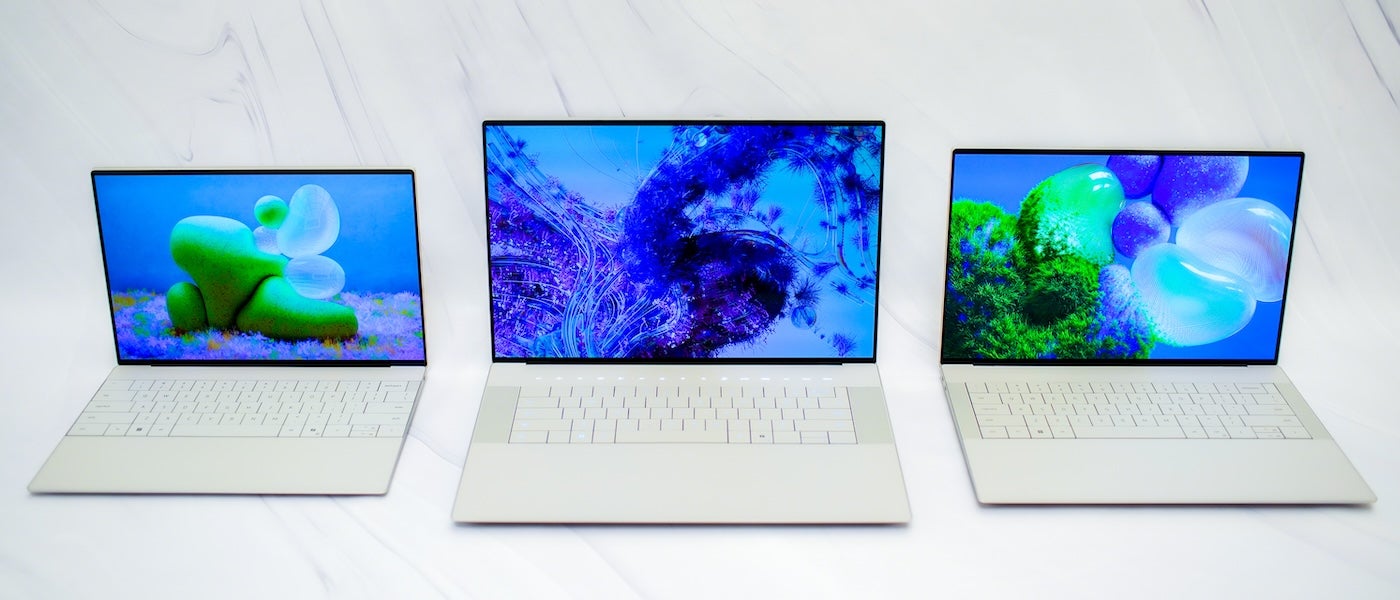
A picture of the new Dell XPS 13, 14 and 16 Laptops.

Dell showed the next versions of its XPS line of laptops on Thursday in advance of CES 2024, with new, larger sizes and AI integration. The new Dell XPS 13, 14 and 16 will come with Microsoft’s Windows Copilot keys for easy access to generative AI features.

Jump to:

  • Details about Dell’s three new XPS laptops
  • New laptop models feature AI acceleration engine
  • Competitors to Dell’s XPS laptop line

Details about Dell’s three new XPS laptops

Dell’s new models of XPS laptops are successors to last year’s XPS 13 Plus. The XPS 13 Plus has been renamed XPS 13, and larger XPS 14 and 16 models have been added to the line.

Like the XPS 13 Plus, these laptops’ designs focus on smoothness and touch-sensitive surfaces. The touch function row above the keyboard controls both media and function keys, while the touchpad blends into the rest of the body smoothly thanks to seamless glass. The screen uses Dell’s modern InfinityEdge panels and includes OLED touch options, variable refresh rates, high-resolution options and Dolby Vision.

SEE: Dell has been working on easily-accessible generative AI throughout the last year, including partnering with NVIDIA. (TechRepublic)

The XPS 13 starts at $1,299 in the U.S. and will be available soon, Dell said. It’s possible that soon means between February and the end of spring 2024, because that is when Microsoft said laptops with the Windows for Copilot button will be rolling out from various partners.

The Dell XPS 16 is the new high-powered entry in the XPS line of laptops. It runs Intel Core Ultra processors and NVIDIA GeForce RTX GPUs (up to the GeForce RTX 4050 GPU). The Dell XPS 16 is suitable for and officially valuated by NVIDIA for 3D rendering, video editing and live streaming, as is the Dell XPS 14 line. XPS 16 will start at $1,899 in the U.S. and will be available soon.

The Dell XPS 14 is 21% lighter than the XPS 16, according to Dell, but is still valuated for high-performance editing, gaming and streaming. Dell’s XPS 14 laptop will start at $1,699.

New laptop models feature AI acceleration engine

As most device makers are doing today, Dell is emphasizing that generative AI can run on its laptops – and on-device at that. Dell’s XPS laptop line features a built-in AI acceleration engine with a neural processing unit for tasks including photo editing. The new XPS line runs on Windows 11, which comes with the Copilot for Windows generative AI assistant.

Competitors to Dell’s XPS laptop line

Dell’s primary competitor to its XPS laptops is Apple’s MacBook Pro lineup, which shares some of the same sizes and the sleek look. HP, Lenovo, Microsoft and Acer offer similar products.

Editorial notes: We have reached out to Dell for comment. Also, TechRepublic is covering CES 2024 remotely.

Midjourney Plans to Introduce a Text-to-Video Model

In a significant evolution within the AI content creation landscape, Midjourney, a name synonymous with innovative image generation, is now setting its sights on the realm of video. This strategic shift marks a pivotal moment for the company, renowned for its impressive AI-driven image creation tool operated within a Discord server. Midjourney's expansion into video generation signals not just the growth of the company itself but also reflects a broader trend in the AI industry towards more dynamic and complex forms of content creation.

As the boundaries of AI's capabilities continue to expand, Midjourney's transition from still images to motion video represents a natural and ambitious progression. This move is poised to stir the competitive dynamics of the generative video industry, offering new possibilities and challenges in the creation of AI-generated content. For both creators and consumers in the digital landscape, Midjourney's venture into video generation could herald a new era of creative possibilities, reshaping how visual content is produced and consumed.

Training the Video Model: A Natural Progression

Midjourney's foray into the world of video generation begins with an ambitious plan to train its new video model, as announced by CEO David Holz. Set to commence in January, this training phase marks the first step in what is expected to be a few months' journey towards the release of a final product. This timeline reflects both the complexity involved in developing a reliable and sophisticated video generation model and Midjourney's commitment to maintaining its standards of quality and innovation.

This development builds upon the already mature image model that Midjourney has perfected, leveraging the knowledge and experience gained to venture into the more intricate field of video. As the company embarks on this new venture, the AI community and its users eagerly anticipate the enhancements and capabilities that the new model will bring. Midjourney's approach, known for emphasizing quality and user experience, suggests that its entry into video generation will be both a thoughtful and impactful addition to the generative AI space.

Navigating a Competitive Landscape

As Midjourney prepares to introduce its text-to-video model, it enters an already bustling and competitive generative video industry. This field is crowded with key players like Stability AI's Stable Video Diffusion, Meta's EMU, and emerging technologies such as Pika and Runway ML, each carving out their niche with unique offerings. Midjourney's entry, therefore, is not just a foray into new territory but a strategic move in a landscape brimming with innovation and rivalry.

What sets Midjourney apart in this competitive arena is its established reputation for quality and user-centric design, traits that have defined its success in image generation. Midjourney's focus on these aspects could offer a distinct advantage in the video generation market, where users seek not just technological prowess but also intuitive design and high-quality outputs. By building on its established strengths and applying them to video generation, Midjourney could provide a unique blend of artistic quality and AI sophistication, differentiating itself from competitors who may prioritize speed or raw capabilities.

Broader Impact on Creative Industries

The introduction of Midjourney's text-to-video model stands to have significant implications for the creative and media industries. The ability to generate high-quality video content through AI opens up a world of possibilities for creators, ranging from filmmakers and advertisers to individual artists and content creators. This technology could democratize video production, allowing those without extensive resources or technical skills to produce professional-grade videos, thereby leveling the playing field in content creation.

Moreover, the potential for AI-generated video to transform the media landscape extends beyond just content creation. It could redefine storytelling, enabling creators to bring complex visions to life with greater ease and flexibility. For industries reliant on visual narratives, such as advertising and entertainment, the impact could be profound, offering new ways to engage audiences and convey messages.

However, this advancement also brings challenges, particularly in terms of copyright considerations and the ethical use of AI in content production. As the technology evolves, so too will the need for guidelines and best practices to ensure responsible and respectful use of AI in creative endeavors.

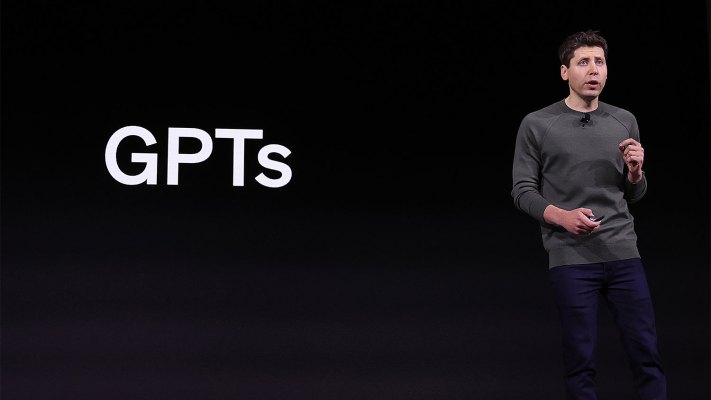
OpenAI’s app store for GPTs will launch next week

OpenAI’s app store for GPTs will launch next week Kyle Wiggers 9 hours

OpenAI plans to launch a store for GPTs, custom apps based on its text-generating AI models (e.g. GPT-4), sometime in the coming week.

In an email viewed by TechCrunch, OpenAI said that developers building GPTs will have to review the company’s updated usage policies and GPT brand guidelines to ensure that their GPTs are compliant before they’re eligible for listing in the store — aptly called the GPT Store. They’ll also have to verify their user profile and ensure that their GPTs are published as “public.”

The GPT Store was announced last year during OpenAI’s first annual developer conference, DevDay, but delayed in December — almost certainly due to the leadership shakeup that occurred in November, just after the initial announcement. (The short version of the story is, CEO Sam Altman was forced out by OpenAI’s board of directors and then — after investors and employees panicked — brought back on with a new board in place.)

GPTs don’t require coding experience and can be as simple or complex as a developer wishes. For example, a GPT can be trained on a cookbook collection so that it can answer questions about ingredients for a specific recipe. Or a GPT could ingest a company’s proprietary codebases so that developers can check their style or generate code in line with best practices.

GPT Store launching next week – OpenAI pic.twitter.com/I6mkZKtgZG

— Manish Singh (@refsrc) January 4, 2024

Developers can simply type the capabilities they want their GPT to offer in plain language and OpenAI’s GPT-building tool, GPT Builder, will attempt to make an AI-powered chatbot to perform those. Since shortly after DevDay, developers have been able to make and share GPTs with others via the ChatGPT website directly but not publicly list them.

Still unclear is whether the GPT Store will launch with a revenue-sharing scheme of any sort. As of November, Altman and CTO Mira Murati told my colleague Devin Coldewey that there wasn’t a firm plan for GPT monetization, and the email about the GPT Store’s coming launch makes no mention of what developers can expect on the payments front — if anything.

An OpenAI spokesperson told TechCrunch that more will be revealed next week.

As I wrote for TechCrunch’s semiregular AI newsletter a while back, OpenAI’s shift from AI model provider to platform has been an interesting one to be sure — but not exactly unanticipated. The startup telegraphed its ambitions in March with the launch of plug-ins for ChatGPT, its AI-powered chatbot, which brought third parties into OpenAI’s model ecosystem for the first time.

GPTs effectively democratize generative AI app creation — at least for apps that use OpenAI’s family of models. In fact, GPTs could kill consultancies whose business models revolve around building what are essentially GPTs for customers.

Is that a good thing? I’d argue not necessarily. But we’ll have to wait to see how it all plays out.

Intel Spins Off Enterprise Generative AI Deployment Firm Articul8

Intel and the global investment firm DigitalBridge Group have formed an independent generative AI software stack company, Articul8 AI, Inc. (Articul8); Intel announced the new company on Jan. 3. Articul8 will work with Intel and provide solutions for organizations that wish to build and deploy generative AI.

Articul8’s product and capabilities

Articul8’s product is “a turnkey GenAI software platform that delivers speed, security and cost-efficiency to help large enterprise customers operationalize and scale AI,” according to the press release. Specifically, Articul8 provides infrastructure, a managed data layer, large language models and APIs for generative AI. Some use cases might be:

  • Deploying generative AI for cybersecurity tasks such as threat detection.
  • Gaining insights into data and generating designs in engineering.
  • Using AI data in semiconductor manufacturing.
  • Enhancing telecommunications operations.
  • Identifying market trends and generating insights in finance.

SEE: Here’s what the EU’s AI Act establishes for the generative AI industry (TechRepublic)

Articul8’s software runs on Intel Xeon Scalable processors and Intel Gaudi accelerators, but it can work on other infrastructure as well. In service of providing flexibility for enterprise users, Articul8 can work with Intel, AWS, Google Cloud, Microsoft Azure and NVIDIA.

Articul8 is following in the footsteps of today’s enterprise AI trends by offering on-prem deployment and by making sure its AI capabilities keep company data, customer data, training and inference within an enterprise security perimeter. It is designed for organizations with high levels of security and specialized domain knowledge.

The origins of Articul8

Articul8 was spun out of Intel and uses IP and technology developed there. The CEO of Articul8 is Arun Subramaniyan, who formerly served as vice president and general manager in Intel’s Data Center and AI Group. The two companies will work hand-in-hand and collaborate while operating independently. Intel funded Articul8, as did DigitalBridge Ventures and other venture investors.

“With its deep AI and HPC domain knowledge and enterprise-grade GenAI deployments, Articul8 is well positioned to deliver tangible business outcomes for Intel and our broader ecosystem of customers and partners,” Intel CEO Pat Gelsinger wrote in the press release. “As Intel accelerates AI everywhere, we look forward to our continued collaboration with Articul8.”

The project that would become Articul8 has been incubating for two years at Intel and was used at Boston Consulting Group, Rich Lesser, global chair of Boston Consulting Group, said in a press release.

“Since then, we have deployed Articul8 products for multiple clients seeking production-ready platforms with rapid time to market,” said Lesser.

“We are excited about the significant opportunity ahead of Articul8, which is reinforced by this investment to accelerate its growth and innovation,” said Subramaniyan in an email to TechRepublic. “Articul8 has a significant opportunity ahead, and this transaction allows Intel to continue to participate in any Articul8 future value creation activities.”

Competitors to Articul8

Other companies working on providing full-stack generative AI development and deployment capabilities for enterprise include Intel, IBM, HPE, AWS, Dell, Databricks and Google.

As more and more enterprises seek use cases for generative AI, more gen AI providers are working on creating a full-stack service that offers enterprise-level security as opposed to the more commercial, publicly-trained models and use cases.