Meet the AI Expert Building Indic LLMs with IITs

Researchers from IIT Patna, alongside Stanford University, recently introduced MedSumm, a multimodal approach that amalgamates Hindi-English codemixed medical queries with visual aids, providing a more comprehensive perspective on a patient’s medical condition.

AIM got in touch with the researcher from Stanford University, Aman Chadha, who is currently working on building a medical large language model for India on top of Sarvam AI’s Open Hathi, and would be releasing the research paper soon.

Given the amount of Indic languages speakers all over the world, Chadha expressed his happiness that models like Bharat GPT, Sarvam AI and Kissan AI are coming up. “But there’s nothing on the healthcare or the medical side,” he added, saying that he has been tracking all the recent announcements. “We thought we’d plug that gap.”

Chadha currently leads the generative AI research team at AWS. The Einstein Visa holder completed his graduate studies in AI from Stanford University, Master from University of Wisconsin, and his Bachelors from University of Mumbai.

Later he worked with NVIDIA, Qualcomm on their AI Engine, with Apple on the M1 Chip and multimodal AI models, and Amazon on Alexa on speech recognition, Chadha is now also partnering with Indian premier institutes for driving India’s AI moment and is very passionate about building an LLM architecture for India.

First Indic medical LLM

Along with IIT Patna, Chadha aims to build India’s first medical LLM that supports Hindi and a bunch of other Indic languages. “Every company has its own medical LLM, which is focused on medical and healthcare,” he explained, adding that even though Google has its own MedPaLM, and others as well, none of them are focused on Indic languages.

Emphasising the importance of building Indic LLMs, even though MedSumm dataset was summarised using Llama 2, Mistral, Zephyr, Flan-T5, and Vicuna, the researchers are now focusing on utilising other models.

Chadha said that though the team is not building an LLM from scratch, they are using Open Hathi as the base LLM, and fine-tuning it on medical data in Indic languages. “But this makes it difficult for the model to be well versed with medical jargon, which is a big ordeal” he explained.

Thus, apart from this research, Chadha also collaborated for research papers such as ‘CLIPSyntel: CLIP and LLM Synergy for Multimodal Question Summarization in Healthcare’ which was presented at AAAI 2024 and ‘Counter Turing Test CT^2: AI-Generated Text Detection is Not as Easy as You May Think–Introducing AI Detectability Index’. which won the Outstanding Paper Award at EMNLP 2023 conference.

“If you’re trying to build anything along the lines of improving the condition, current status quo of patient diagnosis, which is not meant to replace the doctor but give the doctor some hunch based on the symptoms” this is something that Chadha is focused on.

Highlighting the shortage of computation, specially in India, Chadha said that the researchers from IIT Patna are trying to make these datasets and AI models in a very efficient way. “We don’t want researchers to go through a bottleneck because of compute or the amount of data,” he added.

Currently, a lot of research and these models are being trained on NVIDIA GPUs, which he says are still very difficult to get hands on. “The story would be very different if you were Meta, Google, Amazon, or Apple with access to tonnes of GPUs, but the problem then is that you get limited access to imagination,” he added. “I think constraints breed ideas.”

Indic all way the way

“We’re trying to have this model pick up on a lot of these terms as a first pass and then fine-tune on being able to answer questions and give coherent responses and logical responses and be helpful at the end of the day in a medical context,” Chadha explained.

Talking about Dr Setu Sinha from Indira Gandhi Institute of Medical Sciences who is the medical expert for the paper, he said that the researchers want to make sure that all the collected data is free of restrictions and covers all the policies. “We obviously want to focus on patient privacy and thus we collect only data that is anonymised,” he added, saying that the researchers are using an open source dataset.

Since most of the open source dataset is in English, the researchers are looking to adopt techniques that translate the information without losing the quality of the data, which he says is a major point to focus on. “It’s not just the lack of models, but also the lack of data. That is why we are also building a dataset,” he added about MedSumm.

“There is definitely not a shortage of talent in India. The only problem is data and compute,” added Chadha emphasising that he has spoken to top talents from IITs in the country. He highlights that it is important for the government to fund more such initiatives.

“It’s like you have a car but you don’t have the fuel so much,” Chadha added about the need for data. “The hope is that once we put something out, the bandwagon then begins. Folks put more stuff out and like I said, the dataset piece is very important because once you make that available, people start to utilise it in various different ways,” Chadha concluded talking about the importance of open source in the Indic LLM landscape.

The post Meet the AI Expert Building Indic LLMs with IITs appeared first on Analytics India Magazine.


Can Data Governance Address AI Fatigue?

Can Data Governance Address AI Fatigue?
Image by Author

Data Governance and AI fatigue sound like two different concepts, but there is an intrinsic connection between the two. To understand it better, let’s start with their definition.

Data Governance

It has been the core focus of the data industry for a long time.

Google puts it well – “Data governance is everything you do to ensure data is secure, private, accurate, available, and usable. It involves setting internal standards—data policies—that apply to how data is gathered, stored, processed, and disposed of.”

As this definition highlights, data governance is about managing data – precisely the engine driving AI models.

Now that the first signs of the link between data governance and AI have started to emerge, let’s relate it to AI fatigue. Though the name gives it away, highlighting the reasons leading to such fatigue ensures consistent use of this term throughout the post.

AI Fatigue

AI fatigue sets in due to the setbacks and challenges organizations, developers, or teams face, often leading to unsuccessful value realization or implementation of AI systems.

It mostly starts with unrealistic expectations of what AI is capable of. For sophisticated technologies such as AI, key stakeholders need to align with not just the capabilities and possibilities of AI but also its limitations and risks.

Talking about risks, ethics is often considered an afterthought that leads to scrapping non-compliant AI initiatives.

You must be wondering about the role of data governance in causing AI fatigue – the premise of this post.

That’s where we are heading next.

AI fatigue can broadly be categorized as pre-deployment and post-deployment. Let us first focus on pre-deployment first.

Pre-Deployment

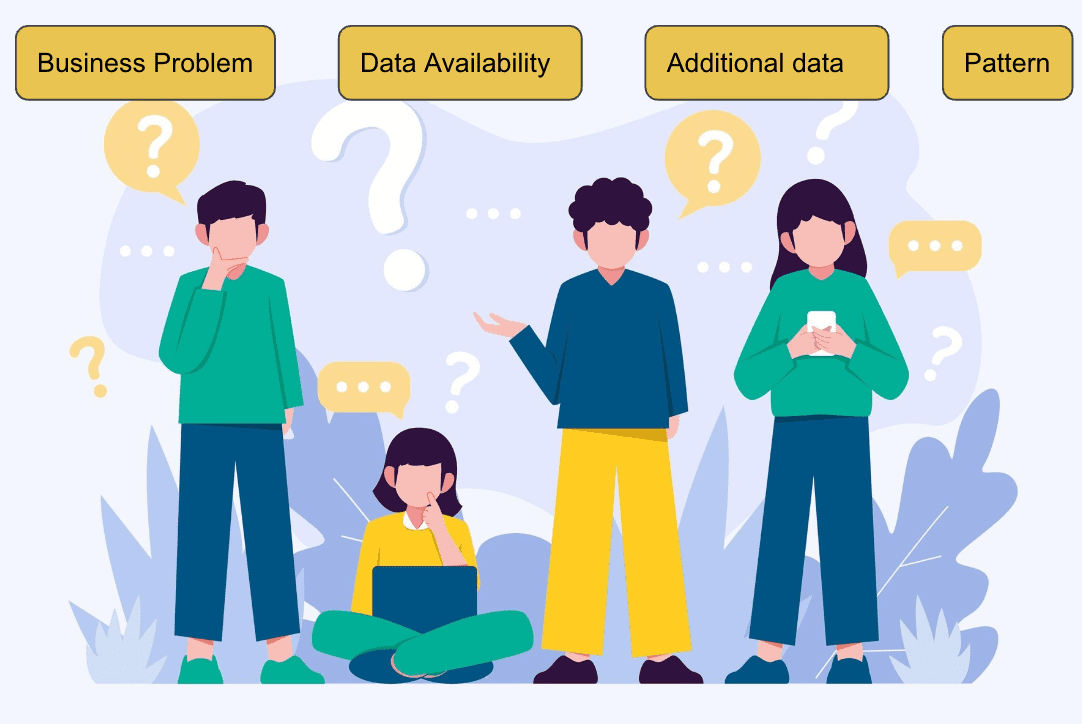
Various factors contribute to graduating a Proof of Concept (PoC) to deployment, such as:

  • What are we trying to solve?
  • Why does it make a compelling problem to prioritize now?
  • What data is available?
  • Is it ML-solvable in the first place?
  • Does data have a pattern?
  • Is the phenomenon repeatable?
  • What additional data would lift the model performance?

Can Data Governance Address AI Fatigue?
Image from Freepik

Once we have evaluated that the problem can be best solved using ML algorithms, the data science team performs an exploratory data analysis. Many underlying data patterns are uncovered at this stage, highlighting whether the given data is rich in the signal. It also helps create engineered features to speed up the learning process of the algorithm.

Next, the team builds the first baseline model, often, finding that it is not performing up to the acceptable level. A model whose output is as good as a coin flip adds no value. This is one of the first setbacks, aka lessons, while building ML models.

Organizations may move from one business problem to another, causing fatigue. Still, if the underlying data does not carry a rich signal, no AI algorithm can build upon it. The model must learn the statistical associations from the training data to generalize on unseen data.

Post-Deployment

Despite the trained model showing promising results on the validation set, in line with the qualifying business criteria, such as 70% precision, fatigue can still arise if the model fails to perform adequately in the production environment.

This type of AI fatigue is called the post-deployment phase.

Myriad reasons could lead to deteriorated performance, where poor data quality is the most common issue plaguing the model. It limits the model’s ability to accurately predict the target response in the absence of crucial attributes.

Consider when one of the essential features, which was only 10% missing in training data, now becomes null 50% of the time in the production data, leading to erroneous predictions. Such iterations and efforts to ensure consistently performing models build fatigue in the data scientists and business teams, thereby eroding confidence in the data pipelines and risking the investments made into the project.

Data Governance is Key!

Robust data governance measures are critical in tackling both types of AI fatigue. Given that the data is at the core of ML models, signal-rich, error-free, and high-quality data are a must for the success of an ML project. Addressing AI fatigue requires a strong focus on data governance. So, we must work rigorously to ensure the right data quality, laying the groundwork to build state-of-the-art models and deliver trustworthy business insights.

Data Quality

Data quality, the key to thriving data governance, is a critical success factor for machine learning algorithms. Organizations must invest in data quality, such as publishing reports to the data consumers. In data science projects, think of what happens when the bad quality data makes its way to the models, which can lead to poor performance.

Only during the error analysis would the teams get to identify the data quality concerns, which, when sent to be fixed upstream, end up causing fatigue among the teams.

Clearly, it is not just the effort expended, but a lot of time is lost until the right data starts to pipe in.

Hence, it is always advised to fix data issues at source to prevent such time-consuming iterations. Eventually, the published data quality reports allude to the data science team (or, for that matter, any other downstream users and data consumers) with an understanding of the acceptable quality of the incoming data.

Without data quality and governance measures, data scientists would get overburdened with data issues, contributing to unsuccessful models driving AI fatigue.

Closing Remarks

The post highlighted the two stages at which AI fatigue sets in and presented how data governance measures such as data quality reports can be an enabler to building trustworthy and robust models.

By establishing a solid foundation through data governance, organizations can build a roadmap to successful and seamless AI development and adoption, instilling enthusiasm.

To ensure the post gives a holistic overview of varied ways of addressing AI fatigue, I also emphasize the role of organizational culture, which, combined with other best practices like data governance, will enable and empower data science teams to build meaningful AI contributions sooner and faster.

Vidhi Chugh is an AI strategist and a digital transformation leader working at the intersection of product, sciences, and engineering to build scalable machine learning systems. She is an award-winning innovation leader, an author, and an international speaker. She is on a mission to democratize machine learning and break the jargon for everyone to be a part of this transformation.

More On This Topic

  • AI Governance: Trends in Regulation, Soft Governance, and Industry…
  • An AI-Based Framework Solution to Address Email Management Challenges
  • Tech visionaries to address accelerating machine learning, unifying…
  • How to Track the Location of an IP Address using Python
  • AIRSIDE LIVE Is Where Big Data, Data Security and Data Governance Converge
  • Data Governance and Observability, Explained

Top 6 Skill Assessment Platforms

Online assessment platforms are vital for hiring, offering an effective and standardised way to evaluate candidates’ skills, and eliminating internal biases. These tools allow employers to assess diverse competencies consistently, spanning technical skills to cognitive abilities. Utilising these platforms streamlines the hiring process and saves time. To simplify your recruitment, we’ve compiled a list of recommended platforms for your convenience.

Mettl

Founded in 2010, Mettl serves corporate clients by offering a variety of skill assessments for hiring, training, and development purposes. The platform covers the entire employee lifecycle, including pre-hiring screening, skills assessment, training programs, certification exams, and contests. Mettl’s proctoring technology employs facial and keystroke recognition to prevent cheating during assessments.

Mettl’s offerings extend to a comprehensive range of assessments with over 400 standardised tests, aptitude tests covering numerical reasoning, verbal ability, abstract reasoning, and decision-making.

MachineHack

If you are wondering how to streamline your hiring process with data-driven insights, and analysing performance metrics, MachineHack should be your go-to platform. With the Screen with Assessment tool, you can efficiently evaluate and identify high-quality candidates. You can customise assignments to assess job-specific skills, invite candidates to participate, and let MachineHack automate the review and ranking process while you get to spend more time interviewing top talents.

Moving beyond traditional resumes, MachineHack lets you assess developer skills with online coding tasks, providing a realistic preview of candidates’ capabilities. A vast AI/ML question bank to precisely test candidates in data science and engineering is also provided.

TalentLens

Pearson-owned TalentLens specialises in global skill assessments. Using psychometrics, the company assists organisations in evaluating candidates across various levels and roles. The company offers occupational psychometric assessments in critical thinking, motivations, interests, personality, and cognitive abilities.

TalentLens aims to provide reliable and unbiased assessment solutions, presenting a comprehensive view of candidates for corporate recruitment and lifelong development. Their assessments encompass role-specific, personality, cognitive, and critical thinking evaluations to aid informed decision-making in talent selection and development.

iMocha

iMocha is another online assessment platform designed for organisations to evaluate candidates’ skills during the hiring process as it offers a diverse library of pre-built skill assessments in areas like IT, finance, sales, and digital marketing. The platform enhances tests with features like an AI logic box, coding simulators, and AI-powered proctoring for a fair and efficient evaluation process.

It also integrates with Applicant Tracking Systems (ATS) and Learning Management Systems (LMS), supporting global reach and diverse languages. Companies widely adopt iMocha for various purposes, including pre-employment testing, skill gap analysis, training needs assessment, and internal employee evaluations.

CoCubes

CoCubes is a prominent assessment and hiring platform in India, primarily focusing on final-year engineering and MBA students. It serves as a link between colleges, companies, and candidates, offering an array of services for campus recruitment and student evaluations. The platform conducts various assessments, including aptitude, technical, coding, and communication skills tests, to gauge candidate capabilities. Additionally, it’s a popular tool among companies for identifying potential candidates in colleges.

The company also provides a ‘Pre-Assess’ service, allowing students to evaluate their skills before campus placements, aiding in identifying their strengths and weaknesses. With a broad network across India and integration with Aon Hewitt, a global professional services firm, CoCubes stands as a significant player in the field of campus placements and entry-level hiring.

Xobin

Xobin has more than 1,000 pre-made tests for various skills and industries, including IT, marketing, and finance. It stands out in tech recruitment with an array of coding and programming tests in multiple languages, enabling thorough skill evaluations. The platform’s customisable tests and workflow, along with API compatibility, allow for easy integration into different hiring systems.

A key feature is its AI-powered proctoring system, ensuring secure and reliable online assessments, important for remote hiring. The platform facilitates collaborative hiring by allowing multiple users to share resources and offers continuous customer support.

.

The post Top 6 Skill Assessment Platforms appeared first on Analytics India Magazine.
This is what AI will produce during the next decade and beyond

light trails into the horizon

It will soon be possible to program artificial intelligence (AI) to perform a wide variety of work that is initiated with just a one-sentence prompt. While this development will likely have a material impact on job roles quite quickly, there's a decent chance that all human tasks will become highly automatable by the year 2116, according to a survey of leading AI researchers.

While this reality might seem a long way off, it's important to note that the timeline for this prediction has been moved up by half a century from the original estimate of 2164, which was made just a year ago. Plus, there are developments rapidly emerging that are destined to reshape IT and business professionals' jobs within the next five to 10 years.

Also: Generative AI now requires developers to stretch cross-functionally

These are some of the takeaways from the survey of 2,778 AI experts, which identified a number of short-term and long-term capabilities that will be made possible through AI.

The survey's team of authors, led by Katja Grace and Harlan Stewart, both from the University of California at Berkeley, sought to measure the progress toward high-level machine intelligence, which is achieved when unaided machines can feasibly "accomplish every task better and more cheaply than human workers." In both 2022 and 2023, the survey's respondents gave a wide range of predictions for how soon such intelligence will be feasible. The aggregate 2023 forecast predicted a 50% chance of high-level machine intelligence by 2047, which was 13 years earlier than the 2060 date prediced in the 2022 survey.

Also: Implementing AI into software engineering? Here's everything you need to know

But let's move away from the long-range forecasts and focus on the kinds of things the survey suggests we can expect from AI during the next few years. A synopsis of the views of 2,000-plus AI researchers finds many capabilities could be just around the corner.

Within the next five to 10 years, AI systems will be fully capable of delivering the following results, often in response to one-sentence prompts. AI will even clean up the large language models (LLMs) that are feeding these capabilities:

  • Find and patch security flaws: "Given a one-sentence description of the task and no more input from humans, find and patch a security flaw in an open-source project with over 100,000 users."
  • Build payment processing website: "Given a set of specifications, build a website from scratch that can handle payment processing, including the frontend, backend, and secure payment integration, without more input from humans."
  • Offer phone banking services, including unique tasks, on par with human operators: "Provide phone banking services as well as human operators can. This includes many one-off tasks, such as helping to order a replacement bank card or clarifying how to use part of the bank website to a customer."
  • Write readable Python code for algorithms like quicksort from specs and examples: "Write concise, efficient, human-readable Python code to implement simple algorithms like quicksort. That is, the system should write code that sorts a list, rather than just being able to sort lists."
  • Finetune large language models: "Given a one-sentence description of the task, download and finetune an existing open-source LLM, without more input from humans. The finetune must improve the performance of the LLM on some predetermined benchmark metric."
  • Run machine-language study and write paper: "Given a one sentence description of a research question in machine learning, conduct a study that would inform the answer to that question and write a paper of a quality that could be accepted at a leading machine learning conference, without more input from humans."

The researchers suggest the drop in costs for computing will have the greatest effect on the development of AI. If AI progress continues at its current pace, "the chance of unaided machines outperforming humans in every possible task was estimated at 10% by 2027, and 50% by 2047," the survey's co-authors estimate: "The latter estimate is 13 years earlier than that reached in a similar survey we conducted only one year earlier [in 2022]."

Also: These are my 5 favorite AI tools for work

The study's authors also assimilated predictions pertaining to the "full automation of labor". They predict, "the chance of all human occupations becoming fully automatable was forecast to reach 10% by 2037, and 50% as late as 2116 — compared to 2164 in the 2022 survey."

Artificial Intelligence

ChatGPT Will Not Make Your Cars Smart

German automaker Volkswagen (VW) has announced that it will integrate AI celebrity ChatGPT in its vehicles at the ongoing electronics trade fair CES 2024. The AI chatbot will be available across VW’s lineup, including the automaker’s family of electric vehicles. The feature will come to Europe and the US is also being considered.

But VW is not the first company to do so. In June 2023, Mercedes-Benz added the controversial conversational bot to its MBUX infotainment system. Around 900,000 US owners of models that use MBUX could opt into a beta program, but it has been called a poor integration of generative AI due to a lack of usefulness.

Users have pointed out that they don’t see the point of saying “Hey Mercedes” when there are dedicated buttons for AC/radio right there. But the platform is yet to mature, given it’s only six months old.

General Motors (which has a struggling self-driving subsidiary named Cruise) said last March that it was working on a virtual personal assistant using AI models behind ChatGPT.

French luxury automaker DS also took great pride in being the first carmaker in Europe to integrate ChatGPT in the infotainment system. The tech is free for the first six months, starting October 19, 2023 (and for just 20,000 people as a pilot run). Future pricing plans have not been disclosed.

Tryst with Privacy

The worrisome factor with the integration of ChatGPT in cars is related to privacy. Even though Mercedes has been loud and clear about its concern over user data, it retains and uses your chats with the GPT. The company’s official blog stated, “The voice command data collected is stored in the Mercedes-Benz Intelligent Cloud, where it is anonymised and analysed.”

The statement further notes that Mercedes’ developers can sneak a peek at your conversations to develop the voice control better in future. These insights from the beta will be used to launch large language models in more markets and languages.

ChatGPT is the prime concern here. Since the piece of technology (which nobody asked for) was released, we have seen it get banned, leak personal information, and the most resisted technology in the history of Hollywood.

The human-mimicking technology is an ethical and data privacy nightmare. Moreover, combining it with cars is even worse, given that cars are the worst product category Mozilla Foundation has ever reviewed for privacy. The 25 car brands that failed the privacy review included VW, Mercedes-Benz, KIA and General Motors.

According to the research, these brands overreached in their policies around data collection and use; some even included caveats about obtaining highly invasive information, like users’ sexual history and genetic information. Generative AI paired with these existing privacy invasions doesn’t sound like the best choice.

Pre-ChatGPT Tech

Generative AI is fascinating, but its use in cars is still unclear. A car is a well-constrained environment—made for driving, listening to music, and getting where we need to go. For certain instances, voice interface is the easiest way to change a song or get directions.

ChatGPT can summarise and generate more existing content and write or plagiarise poetry. But how often do you do these things while driving or in the car? The core issue with the technology continues to exist given its lack of benefits, and indeed, no driver has asked for this AI feature.

More questions pop up, like if you sell your car, what happens to all your chats and interactions with the AI bot? Do you need a new “licence” for it? And what if a new owner wants to ask follow-up questions based on previous chats?

Kai Gruenitz, the Volkswagen brand’s board member for technical development, said, “I think what our customers are really looking for is seamless, intuitive usage of their car,” regarding the ChatGPT plugin.

The tech has appeared to be called ‘”revolutionary” at certain times since its release. Carmakers are excited about integrating the popular technology but a year ago, they were rushing into the metaverse at full speed. Before that it was achieving autonomy which has caused several severe accidents.

Putting the brakes on and navigating the tech landscape as per their user’s need would be a wiser choice for now.

The post ChatGPT Will Not Make Your Cars Smart appeared first on Analytics India Magazine.

This robot window cleaner from Ecovacs is what CES is all about

Winbot W2 robot window cleaner

Ecovacs may be known for its robot vacuums, but it's showcasing three standout different products at CES 2024, happening now in Las Vegas: the Winbot W2 Omni robot window cleaner, a wireless handheld stick vacuum for the Deebot X2 Omni, and a robot lawn mower.

Also: CES 2024: What's Next in Tech

"Our dedication to reshaping the smart home cleaning experience extends far beyond technological innovation," said David Qian, vice chairman of Ecovacs Group and CEO of Ecovacs Robotics. "Whether it's our floor and window cleaners, air purifiers, or lawn mowers, our evolving range of robotic solutions consistently strives to unburden homeowners, granting them precious time back for family, hobbies, and the myriad pleasures life has to offer."

Here's what to know about the new Ecovacs products described above:

CES 2024

Why Isomorphic Labs Partnered with Novartis and Eli Lilly 

Isomorphic Labs, a London-based AI drug discovery startup, spun out of Google’s DeepMind unit just over two years ago, recently announced key partnerships with two of the world’s largest pharmaceutical companies — Eli Lilly & Co. and Novartis AG.

The deals are said to have a combined value of close to $3 billion. Isomorphic Labs will partner with Lilly for small molecule therapeutics, receiving an upfront payment of $45 million and up to $1.7 billion in milestone payments, excluding royalties. Similarly, with Novartis, Isomorphic Labs gets a $37.5 million upfront payment, funding for select research costs, and up to $1.2 billion in milestone payments, along with royalties on net sales.

Founded in 2021 by Demis Hassabis, co-founder of DeepMind, Isomorphic Labs primarily focuses on small molecule therapeutics, which are easier to manufacture and deliver. The company utilises AlphaFold, an AI system developed by DeepMind to predict a protein’s 3D structure from its amino acid sequence.

Alphafold’s latest iteration, released in October 2023, unlocks new insights and significantly improves accuracy across multiple key biomolecule classes, including ligands (small molecules), proteins, nucleic acids (DNA and RNA), and those containing post-translational modifications (PTMs). Furthermore, it can generate predictions for nearly all molecules in the Protein Data Bank (PDB), often achieving atomic accuracy.

Why Eli Lilly and Novartis

Eli Lilly and Novartis both are actively engaged in research and development in the field of small molecule therapeutics. Small molecules are compounds with low molecular weight that can easily enter cells, making them suitable for drug development.

Eli Lilly had previously collaborated with Prism Biolab to develop and commercialise small molecules modulating targets selected by Lilly. This partnership leverages Prism’s PepMetics technology platform to explore oral protein-protein interaction (PPI) targets.

Lilly has made several moves in the last couple of years to develop small-drug molecules. The company was one of the investors in Alto Neuroscience’s $45m Series C financing round, which will support Alto’s clinical programme of four small-molecule CNS candidates to treat psychiatric disorders including depression and post-traumatic stress disorder.

Moreover, Eli Lilly recently acquired POINT, a radiopharmaceutical company with a pipeline of clinical and preclinical-stage radioligand therapies in development for the treatment of cancer. Radioligand therapy can enable the precise targeting of cancer by linking a radioisotope to a targeting molecule that delivers radiation directly to cancer cells, enabling significant anti-tumor efficacy while limiting the impact to healthy tissue.

Meanwhile, Novartis is also working on creating new small molecules to target cancer in areas that were once considered undruggable. Novartis has recently teamed up with the University of California Berkeley, to open a centre specifically focused on the part of the proteome that has historically been challenging to address with small molecules. The collaboration aims to identify protein binding pockets and establish starting points for developing new therapeutic approaches.

Generative AI and Drug Discovery

The collaboration between generative AI and pharmaceutical firms is set to lead the way in new drug discovery.

AstraZeneca has recently partnered with Absci, a startup specialising in generative AI antibody discovery technology, to expedite the discovery of novel cancer treatments.

At the same time, NVIDIA introduced NVIDIA BioNeMo, a generative AI platform that offers services to develop, customise, and deploy foundation models for drug discovery. Much like AlphaFold, BioNeMo features a growing collection of pre-trained biomolecular AI models for protein structure prediction, protein sequence generation, molecular optimization, generative chemistry, docking prediction and more.

Various companies are using NVIDIA BioNeMo for biology, chemistry, and genomics research. For example, Terray Therapeutics integrates BioNeMo cloud APIs into its multi-target structural binding model development.

Innophore and Insilico Medicine apply BioNeMo to computational drug discovery, with Innophore incorporating it into the Catalophore platform, and Insilico using it in their generative AI pipeline for early drug discovery.

Overall, the partnerships with Novartis and Eli Lilly offer Isomorphic Labs a potent combination of financial resources, industry expertise, and market validation. This will significantly accelerate their efforts in developing innovative small molecule therapeutics and ultimately bring their life-saving drugs to patients faster.

The post Why Isomorphic Labs Partnered with Novartis and Eli Lilly appeared first on Analytics India Magazine.

Get Producti AI Pro content generator for life for just $50

producti-stack-social

Get Producti AI Pro for life for just $50.

Content has been a powerful driver of visibility and ultimately revenue for businesses across virtually every industry since the rise of the internet. Those who have benefited from that content have long had to rely on skilled creatives and artists to create it for them, which takes time and money and yields a sometimes uncontrollable result.

To offer a time-saving alternative, this Producti AI Pro Plan lifetime subscription is on sale for just $50.

When you need customized content quickly, Producti AI is a great option. Unlike a human solution, this AI-driven platform is available to help create text and images around the clock. This lifetime subscription offers the user unlimited AI writing that can be positioned to capture attention and drive clicks, and the AI can tailor its writing to your voice.

This versatile business partner is suited to not only generate content for you in the blink of an eye but can also support administrative needs. For example, the subscription also features AI image generation, a built-in AI assistant that can schedule meetings and answer emails on your behalf, a transcription tool, coding features, and more.

Producti AI Pro is already improving the lives of professionals around the world.

Get this Producti AI Pro Plan lifetime subscription on sale for just $50.

Google Removes Third-Party Cookies Years after Safari, Mozilla and Edge

We are at that stage of the internet age where every click, swipe, and search leaves a trail, hence privacy has become a serious concern for the tech giants. Google, the search giant that shapes much of our online experience has decided to block third-party cookies on its Chrome browser.

Third-party cookies are used to track users around the web, building up a detailed profile of them that could include not only interests but also deeply personal information such as gender, sexuality, religion, and political affiliation — practically everything.

The update by Google will lay the groundwork for a broader third-party cookie phase out in the second half of 2024 (under a schedule that has been pushed back several times). As of now, the blockage will roll out for 1% of Google’s users which is 30 million, Anthony Chavez, leader of Google’s Privacy Sandbox project wrote in a blog post.

Google is not the first one to take this step, browsers such as Mozilla’s Firefox and Apple’s Safari block third-party cookies by default. Even’s Microsoft Edge offers the same with a “strict” privacy setting.

According to analytics firm StatCounter, Google’s Chrome accounts for 63% share of web usage. With its existing dominance, Google took its own sweet time to balance privacy without hurting its online ad business, the largest revenue contributor of the company.

With the Privacy Sandbox initiative the ad-driven ecosystem won’t cripple. However, this ambition of Google hasn’t escaped the eyes of regulators, who perceive this move as potentially augmenting Google’s already powerful influence.

If all goes well, Google will continue rolling out Tracking Protection to make the internet more private until it has disabled third-party cookies for all Chrome users by mid-2024. It’s a slow rollout to give advertisers, publishers, and ad-tech firms time to “test our readiness for a web without third-party cookies” as per Google.

The post Google Removes Third-Party Cookies Years after Safari, Mozilla and Edge appeared first on Analytics India Magazine.
This smart mirror uses AI to boost your confidence and mood

Baracoda Bmind

A new smart mirror that debuted at CES 2024 takes the fairytale phrase "Mirror, mirror, on the wall, who's the fairest of them all?" into reality. Baracoda's BMind smart mirror is powered by generative artificial intelligence (AI) and claims to to be able to determine your mood and, in turn, offer affirmations, visuals, and more to improve it.

Also: CES 2024: What's Next in Tech

The smart mirror, which has already been recognized with a 2024 CES Innovation Award in the smart home category, combines AI and natural language processing (NLP) to analyze the sentiment of whoever is looking into the mirror through expressions, gestures, and tones. It then adapts to your current mood and provides light therapy sessions, guided meditations, and self-affirmations, with the goal of improving your mood and better managing your stress.

The technology works through the CareOS platform, which allows third-party providers to connect their applications for display within a mirror's interface. It's built with specs like an omnidirectional microphone for voice detection, a 4K ultra-HD camera, and Face ID as a security measure to unlock the mirror.

ZDNET editor Sabrina Ortiz was able to try out the mirror in person at CES. The mirror asked how her day was, and, for testing purposes, she said it was going terribly. The mirror followed up by saying encouraging words, and switched the lights to a calming blue color while displaying an image of nature, and asked her to start a guided meditation session.

In addition, when someone in front of the mirror said they didn't feel pretty, the mirror gave them affirmations, Ortiz said.

Also: The best robots and AI innovations we've seen at CES 2024 so far

Aside from the mental health aspect, the BMind also has customized features like guided teeth brushing, skin analysis and coaching, bathroom water temperature monitoring, and more.

It's important to note that AI and mental health can be a tricky combination, in part because of the potential for bias in the underlying algorithms as well as privacy concerns. Baracoda notes that the CareOS platform stores health and personal data locally, and never shares it with any party without the user's explicit request and consent.

The BMind mirror will be available to purchase for between $500 and $1,000 at the end of 2024.

CES 2024