Fujitsu Data Science Interview and Hiring Process in 2024

Fujitsu data science hiring

Fujitsu, founded in 1935 and shaped by the aftermath of the 1923 Great Kanto Earthquake, has emerged as a global technology leader catering to services encompassing IT consulting, system integration, cloud computing, cybersecurity, and digital transformation solutions. The company also provides hardware products, including servers, storage, and client computing devices.

Over the years, Fujitsu has played a pivotal role in the evolution of computing. From pioneering successive FACOM computers in the 1950s to embracing international standardisation in the 1970s, the company has consistently expanded its global influence.

“Our current focus lies in key areas of computing, network, AI, data & security, and convergent technologies, with significant developments like Computing as a Service (CaaS), the Kozuchi AI Platform, and the 1FINITY Ultra Optical System,” Amit Kumar Shrivastava, Head of AI, Fujitsu Fellow & Distinguished Engineer, told AIM.

Last April, the company launched Fujitsu Kozuchi – Fujitsu’s AI platform to deliver access to a range of powerful AI and ML technologies. The platform includes tools like Fujitsu AutoML for automated machine learning model generation, Fujitsu AI Ethics for Fairness to test AI model fairness, and Fujitsu Wide Learning for simulating scientific discovery processes.

The aim is to accelerate the testing and deployment of AI solutions for specific business challenges, offering best-of-breed tools, open-source software access, and collaboration with partner companies.

In generative AI, the company has developed solutions spanning various sectors, from predicting protein structural changes in drug discovery to streamlining operations in finance and enhancing customer engagement in retail.

A collaboration with Tokyo Tech, Tohoku University, and RIKEN focuses on developing distributed training for LLMs to bolster Japan’s AI research capabilities. Additionally, Fujitsu has made efforts to tackle the issue of hallucination in conversational AI by launching technologies that protect systems from adversarial attacks. This ensures ongoing advancements in AI technology while prioritising safety and reliability.

Headquartered in Tokyo, the company’s tech strength is exemplified by the development of groundbreaking supercomputers, including K in 2011 and the remarkable Fugaku in 2020. Beyond technology, Fujitsu places a strong emphasis on sustainability and social responsibility, deeply rooted in our enduring values and Japanese heritage principles of Kaizen and Ikigai.

Inside Fujitsu’s Data Science Lab

The company is dedicated to leveraging AI technology for the creation of secure, diverse, and universally accessible solutions. With a global deployment exceeding 6,000 AI solutions, Fujitsu aims to integrate AI into daily life, with a team comprising experts from diverse backgrounds.

“We work closely with clients to turn AI proofs of concept into practical business applications, as demonstrated by our Kozuchi AI platform,” said Shrivastava, stating that the platform incorporates AI innovation Components and Core Engines, facilitating swift validation and implementation across diverse business scenarios.

Fujitsu’s contributions extend to cancer research acceleration, particularly in combating drug resistance, resulting in a significant reduction in timeframes. “Our Fujitsu AutoML and fairness technology exemplify our dedication to democratising AI. This technology is open-source and hosted on the Linux Foundation,” he added.

Emphasising transparency in AI, Fujitsu provides solutions like WideLearning and Deep Tensor, supporting explainable AI. As a founding member of AI4People, dedicated to AI ethics, the company aims to develop ethical AI, eliminating biases. To ensure safe and secure AI deployment, Fujitsu has established an AI Ethics and Governance Office.

In the space of diversity, the company developed tools such as LiveTalk for multilingual speech recognition and AI-equipped translation engines.

“As generative AI is a hot topic, let me tell you, we have multiple solutions addressing various sectors in the field. We developed technology to predict protein structural changes in drug discovery to reduce development time and costs. In finance, our AI streamlines development and system maintenance operations. Our AI modules generate avatars and customised content based on consumer behaviour data in retail, enhancing customer and business engagement,” said Shrivastava.

Interview Process

At Fujitsu India, the interview process for AI roles is methodically structured to identify and bring on board the most qualified candidates.

The process kicks off with their specialised recruitment team, well-versed in sourcing talent for niche areas like AI. They meticulously comprehend the project teams’ requirements, reaching out to candidates whose profiles align precisely with the projects’ specific scope and needs.

This initial screening is pivotal in considering only the most suitable candidates. Once shortlisted, candidates undergo a further evaluation by the project team, constituting a two-tier filtering process to ensure quality and relevance. Successful candidates at this stage become potential fits for their AI team.

Those who navigate the initial stages are invited for an interview, commencing with a challenging yet accessible 15-minute live programming assignment to assess practical problem-solving skills. Subsequently, candidates face a 45-minute to an hour technical interview featuring scenario-based questions probing their practical experience and understanding of AI.

The complexity of this round varies based on the role, incorporating diverse skills and multiple panellists for comprehensive evaluation.

“In the next round, a project manager, or sometimes I, take the interview for senior data science roles that we are hiring for, then assess the candidates who stand out in the technical interview. This stage of the interview process expands to include a broader range of skills, assessing the candidate’s technical knowledge in AI, business understanding, and interpersonal abilities,” said Shrivastava.

A holistic approach is taken to select technically proficient candidates who align with our organisational culture. Proficiency in an additional language, like Japanese, is considered an advantage.

Successful candidates progress to the final phase of HR discussions tailored to align the candidate’s career aspirations with Fujitsu India’s goals and values. This stage facilitates mutual understanding, ensuring a decision that benefits both parties.

Work Culture

In fostering a workplace that champions sustainability, innovation, and core values, Fujitsu’s work culture revolves around three pillars: aspiration, trust, and empathy.

The focus is on purpose-driven management, encouraging employees to align their personal goals with the broader mission of the organisation. Continuous learning is pivotal, transforming the team into dynamic digital transformation (DX) experts adept in digital technology, adaptive mindsets, and cultural agility.

“Our work-life shift initiative, consisting of smart working, borderless office, and culture change, is designed to boost autonomy, well-being, and work-life balance,” said Shrivastava. The company prioritises diversity, equity, and inclusion to create an environment where uniqueness is celebrated, and everyone is empowered to contribute fully for a truly inclusive culture.

Central to the company’s principles is environmental responsibility, guided by the Global Responsible Business framework. Addressing human rights and well-being issues, the commitment extends beyond the organisation, aiming for a significant social impact, long-term contributions to society, and ample opportunities for employee growth and development.

If you think you are fit for Fujitsu, check out its career page for open positions.

The post Fujitsu Data Science Interview and Hiring Process in 2024 appeared first on Analytics India Magazine.

Vision Pros Being Returned is Just Internet Murmur

Apple walked into the virtual and augmented reality world with the Vision Pro with a $3500 tag hanging on its offering. Two weeks later, a few reports of fans returning their spatial computing headset surfaced on the internet. However, the ground reality seems a bit different. Research found that “there doesn’t appear to be that much in the way of returns, and certainly not a cataclysmic flood”.

The news of returns emerged right at the end of Apple’s 14-day return policy window, so the dedicated customers might just want their cash back. The narrative that the return season is here began with Twitter sources and complaints about the headset. There are reasonable complaints by the returners — but to hold them up as a sign of mass returns isn’t right.

As pointed out by Bloomberg’s Mark Gurman, the reasons for returning products circle around a few lines. For instance, several said the headset was too heavy and uncomfortable. The lack of apps, video content, and productivity features was disappointing for others. Some users complained about the headset’s glare and narrow field of view.

In contrast, others said it made them feel “isolated from family and friends” due to its lack of meaningful shared experiences and the difficulties in letting other people use it. But the case is different for everyone. Plenty of users are happy with the gadget and do not plan on returning it (at least anytime soon), including Gurman, who wrote the entire newsletter using the headset.

A Promise Made

The iPhone maker announced Vision Pro in June last year during the annual WWDC conference. “It’s the first Apple product you look through and not at,” said Tim Cook, Apple’s CEO. The product was saved for the end and given the most screen time (40 minutes!) in the chief’s keynote. The device’s promise was to change how humans and machines work together, which has been kept.

Apple has always focused on strengthening its ecosystem through every product it designs, be it a watch or earpods. The Cupertino giant has done a commendable job at allowing users to connect their Macs to the Vision Pro, making them seamless for work.

Marketed as ‘extraordinary new experiences’, Apple promised that Vision Pro would bring “a new dimension to powerful personal computing by changing the way users interact with their favourite apps, capture and relive memories, enjoy stunning TV shows and movies, and connect with others in FaceTime”.

The first version is not extraordinary given the limited number of options available since Netflix and YouTube can only be accessed via web browser, and FaceTime needs to develop further.

As The Wall Street Journal noted in an episode of Tech Things with Joanna Stern, the feature that lets users create 3D avatars for FaceTiming is awful. The quality of the persona needs to change massively to match the quality of our usual video calls. And it will, since it is currently in beta.

Without disagreement, Apple’s headset is far better than the current alternatives being marketed quality-wise. The device has an ultra-high-resolution display system that packs 23 million pixels per eye and is overall impressive. However, the pricing factor is not inviting even compared to Apple’s other products. One of the reasons early Vision Pro users are returning their headsets is that they never intended to keep them.

Apple started working on Vision Pro a decade ago and has delivered a stunning product. The slight horrors persist, but let’s keep in mind this is the first version of the headset. As of now, the important point for Apple is not the return rate but producing a better and cheaper version. The future updates will hopefully meet the promised criteria and resolve issues as Apple meticulously takes note of the returns.

The post Vision Pros Being Returned is Just Internet Murmur appeared first on Analytics India Magazine.

Singapore looks to accelerate AI development with investment in compute and talent

Abstract representation of AI acceleration

Singapore is setting aside at least SG$1 billion ($741.97 million) to accelerate artificial intelligence (AI) development, including securing access to the necessary compute power and skillsets. The country also plans to upgrade its national broadband network and build a new cybersecurity command hub.

The investments aim to support the government's efforts to tap technology across key sectors and are part of its fiscal 2024 budget, running through to March next year.

Also: Watch out: Generative AI will level up cyberattacks

The SG$1 billion earmarked for AI will be invested over the next five years in compute, talent, and industry development, said Deputy Prime Minister Lawrence Wong in his budget speech.

"AI is not just about ChatGPT or large language models. It is a general-purpose technology, like electricity, the internal combustion engine, the computer, or the internet," Wong said.

"It has the potential to transform a wide range of industries, and to enhance productivity across many existing processes, from drug discovery, to organizing warehouses, or driving vehicles."

Also: How AI can improve cybersecurity by harnessing diversity

Wong said the investment will ensure Singapore can secure access to the advanced chips that are essential for AI. The money will also help to encourage global and local market players to establish AI development hubs in the country. These centers of excellence will drive industry collaboration and innovation, fueling value creation for the ecosystem, he said.

Additional resources will also be set aside to spur investments in upgrading Singapore's national broadband network, with the hope of enabling mass-market access to broadband speeds of up to 10 Gigabits per second (Gbps), which is ten times faster than the 1Gbps in most households in the country today.

This investment will help ensure Singpore's connectivity infrastructure can support emerging technologies, such as AI and immersive media, as they become more pervasive, Wong said. He added that the government hopes to achieve the 10Gbps target in the second half of this decade.

Also: Microsoft and OpenAI detect and disrupt nation-state cyber threats that use AI

Adoption of emerging technologies, including AI and quantum computing, will also change the shape of the threat landscape, where scams, ransomware, data breaches, and denial-of-service attacks are increasingly common, he noted.

The use of these emerging technologies means cyberattacks will increase in speed, scale, and sophistication. This threat also means Singapore will need to beef up its cyber defense, Wong said, adding that its defense force has already established a digital and intelligence unit.

Also: Don't tell your AI anything personal, Google warns in new Gemini privacy notice

Efforts are now underway to set up a new national cybersecurity command center to better coordinate the country's cyber-defense operations and to improve collaboration with industry and academia.

"This will improve our capabilities to monitor, detect, and coordinate our defenses against cyber threats," Wong said.

Artificial Intelligence

How Open Source Projects Make Money

Open source development has been the reason for the rapid growth of tech. Yann LeCun, the famous proponent of open source projects, takes every opportunity to elaborate on how vital open source development is.

The sustainability of open source projects, however, is dependent on the financial returns it sees over time. “There is a lot of unnecessary friction today to sponsor specific features, issues or milestones for open source projects,” said Birk Jernström, the founder of Polar.

The company, founded in 2022, is a platform that manages the subscriptions and payments for people who create and support open-source software. It also offers tools for working with data.

Many open source projects start with being freely available and eventually seek funding. Red Hat for example, known for its Linux distribution, monetised by selling subscriptions for technical support, updates, and training to businesses. This model helped fund continuous open-source development while providing enterprise-level services.

Alternatively, Blender, a 3D creation suite, supports its development through the Blender Development Fund, donations, and paid services like professional training and Blender Cloud subscriptions.

For smaller projects, platforms like Patreon or Open Collective let supporters donate monthly or per project. GitHub Sponsors allows direct donations to developers. These models rely on voluntary support, which may not match the actual effort needed for development.

However, Polar takes it a step further and allows funding for specific features, issues, or milestones. This drives the project in the direction that is valued by the customers. It motivates the developer who would know they’ll get paid for hitting clear goals.

Jernström clarified the difference from existing funding platforms, pointing out, “There is no one-size-fits-all solution to this and that’s what we want to build, one platform for multiple solutions.”

Polar is changing open-source funding

GitHub is keen on giving developers the options to choose how they want to monetise their work. In 2019, they launched GitHub sponsors, but as one user pointed out, it is nothing more than ‘coffee money’ between persons. Polar, according to Jernström, gives maintainers the option to be ‘entrepreneurs’.

There have been donations in the past with platforms like Open Collective, and Stack Aid, among others, allowing individuals and companies to pledge financial support directly towards specific issues or feature requests in open-source projects. Polar intends to go beyond this ‘coffee money’ funding and provide a steady stream of income.

Jernström explained, “Donations and sponsorships are great when they happen. Problem is, they rarely do. In order to drive meaningful (full-time work) capital to OSS initiatives, I believe it has to charge for add-on value and that such services and subscriptions are mutually beneficial.”

Polar facilitates the sale of add-on services, subscriptions, or premium features, and inturn maintainers can craft offerings that align with their project’s goals and community’s needs. The platform takes a 10% commission including the 5% charges for Stripe transactions.

“As an ecosystem, we should be focused on how we can get 10x, 100x and then 1000x funding. Five percent of nothing is nothing. That’s the real problem in OSS today. Let’s fix that first,” he said.

This could include anything from offering paid support, consulting, custom development work, access to premium features, or early access to new releases.

This is an upgrade from voluntary support to making it easy for backers to financially support the issues and features they care about. By handling the financial transactions, tax considerations, and potentially even compliance issues, Polar lets developers focus on working on the projects itself.

Ease and transparency

Transparency has always been very important to open source funding. For example, the open collective for example is designed around transparency, with all financial transactions visible to the public by default. Expenses, income, and budgets are tracked and displayed on the platform, and contributors can see how funds are used and allocated.

Polar goes the same route and has complete control over which issues or features they want to highlight for funding through the platform. This ensures that they can align any external funding with their project’s roadmap and priorities.

Maintainers can set goals for funding specific initiatives within their projects, providing clarity to potential backers about what their contributions will support.

Andreas Kling, a key contributor to the SerenityOS and Ladybird who uses Polar for funding, said, “We’ve been using Polar for funding GitHub issues for a couple of months now, and it always makes me super happy when I see someone collect a reward!”

SerenityOS is a Unix-like OS with a classic desktop interface and user-friendly design, supported by an active developer community. Ladybird is its companion lightweight web browser, offering fast and secure browsing seamlessly integrated with the OS.

Kling added, “I’m super happy to see Polar take on the task of becoming a Merchant of Record and abstracting away much of the complexity for all developers.”

By addressing these critical and often overlooked aspects of open-source project maintenance, Polar is setting a precedent for how platforms can support the sustainable development of open-source software.

The post How Open Source Projects Make Money appeared first on Analytics India Magazine.

From Goa to California: How Amey Dharwadker is Leading Meta’s Video Recommendations

Amey Dharwadekar from Meta

Hailing from a humble background in Goa, Amey Porobo Dharwadker was one of the first ML engineers in video recommendations at Meta. Dharwadker has been with the company for over nine years now, serving as the engineering leader at Meta’s Menlo Park office.

The NIT Tiruchirappalli alumni completed his master’s in electrical engineering from Columbia University in NYC with specialisation in computer vision and machine learning.

During his tenure, he authored several research papers on the same, including ‘PIE: Personalised Interest Exploration for Large-Scale Recommender Systems’ and ‘CAM2: Conformity-Aware Multi-Task Ranking Model for Large-Scale Recommender Systems’. The goal of these papers was to advocate for industry policies and mould the broader AI landscape with fairness and user-centric principles.

His papers were presented at the prestigious ACM web conference.

At present, his works include video personalisation but through responsible recommendations. “My work involves a deeper understanding of user preferences and satisfaction, tackling various biases inherent in ML-based ranking algorithms, and facilitating connections between users and high-quality, interest-relevant content,” Dharwadker told AIM.

Making Facebook Ads More Personalised with AI

Meta relies heavily on advertising, particularly from Facebook and Instagram, constituting a significant portion of its revenue. Analysts predict Meta’s advertising revenue to reach $123.7 billion in 2024, with a large chunk (55.8%) expected to be generated from Facebook ads.

In 2022, the company’s total revenue amounted to $116.61 billion, with advertising contributing approximately 98%.

Over the past decade, Dharwadker’s research areas at Meta have spanned the domains of video recommender systems and user personalisation modelling.

“I developed and deployed large-scale ranking models using deep neural modelling and multi-task learning. These models significantly contributed to the success of products like Facebook Videos, News Feed, and Ads,” Dharwadker told AIM.

However, with the inclusion of AI, the ad space has been changing as well. For example, AI-powered personalised ad targeting has revamped advertising effectiveness. In contrast to traditional methods that relied on demographics and basic online behaviour, AI-driven segmentation delves into extensive data, analysing behavioural, social media, demographic, and textual information.

AI algorithms identify hidden connections and create highly specific micro-segments, offering predictive insights into future user behaviour.

Even though Meta never disclosed if the company was using its Llama 2 family of open-source LLMs for personalisation and recommendation, Dharwadker opines that the burgeoning emergence of multimodal LLMs is instrumental in shaping the future of recommendations. He said that these models can mirror the way humans interact with information and generate content by integrating multiple modalities.

Dharwadker further said that by analysing content and understanding user preferences deeply, these algorithms provide more relevant recommendations, enhancing user satisfaction and engagement. Meta AI’s Reels, for example, assist in decision-making for places to visit, offer tutorial videos for learning new dance moves, and provides inspiration for various projects.

“Simultaneously, the rise of AI democratisation is shaping the landscape with advanced machine learning tools becoming more accessible, making AI user-friendly,” he added, emphasising that the convergence of real-world multimodal applications and AI democratisation holds promise for addressing societal challenges.

The future of generative AI in video recommendations holds promising opportunities for innovation and growth. “As algorithms evolve and data expands, we can anticipate advancements in content creation, enhanced recommendation accuracy, and improved user experiences,” he said.

Working at Meta

Meta is known to foster an inclusive and collaborative work culture. “The vibrant work culture, autonomy to make a positive impact on human lives and the opportunity to work alongside brilliant minds advancing cutting-edge technology were lucrative,” said Dharwadker.

He added that the engineering-centric environment fosters a sense of ownership, allowing for the development and application of innovative solutions to tackle real-world challenges. The culture at Meta values deep technical contributions.

Looking ahead, Dharwadker believes, “This year, we’ll see more examples of trustworthy and responsible AI systems seamlessly embedding intelligence into our everyday lives, making everything from healthcare to transportation to entertainment smarter, more efficient, and ultimately, more human-centric.”

The post From Goa to California: How Amey Dharwadker is Leading Meta’s Video Recommendations appeared first on Analytics India Magazine.

Zoho Expands on Rural Vision, Opens R&D Centre in Kottarakara

Following the setup of an R&D centre in the small town of Tenkasi in Tamil Nadu, leading B2B SaaS company, Zoho Corporation, inaugurated its new centre yesterday in the rural town of Kottarakkara in Kerala. The new R&D centre is located inside Kottarakkara Engineering College and was inaugurated by the chief minister of Kerala, Pinarayi Vijayan in the presence of founder and CEO of Zoho Corporation Sridhar Vembu, co-founder Tony Thomas, along with the finance and higher education minister of Kerala.

Source: X

Zoho Corp. partnered with the Kerala Startup Mission (KSUM) and Institute of Human Resources Development (IHRD) to set up the park that aims to leverage local talent by training them in cutting edge technologies. It is the State’s first campus industrial park and R&D centre in Kottarakara. The 3500 sq. ft. park is said to train over 5000 people over the next five years.

Rural Vision

With an aim to slowly move away from Tier 1 cities, Vembu has been actively working on his vision of bringing opportunities and development in rural areas– taking opportunities closer to where the talent is.

Discussing the works of setting up R&D Centres in small towns, last year,Vembu had spoken about Kottarakara, where he believed that over 50% of R&D centres could be set up. “I have to look at how to positively create jobs, moving skills and capabilities, and ensuring that we retain our talent, because there is a lot of pressure in rural areas for talent to migrate away,”

In an earlier exclusive interview with AIM, Vembu had also expressed his fondness for the sacred sweet offered in Kottarakara Ganapathi temple.

Unicorn company, Zoho, is the first bootstrapped company in the world to cross 100 million users. The company now serves over 700K businesses across 150 countries.

The post Zoho Expands on Rural Vision, Opens R&D Centre in Kottarakara appeared first on Analytics India Magazine.

Project Vaani to English Gyani, This IISc Professor is Going Places

Project Vaani to English Gyani, This IISc Professor is Going Places

Professor Prasanta Kumar Ghosh from IISc Bangalore has figured out a unique way to collect speech data in different languages and dialects. Travelling to 80 districts in the first phase, showing local people a picture, asking them to describe it and then recording it has given the Google funded Project Vaani around 16,000 hours of speech data.

The team has open sourced the project and is transcribing around 10% of the data manually. The aim is to collect 150,000 hours of speech data from 773 districts of India. “India is not one language and not even several dialects, it’s a corpus of data, which requires a lot of research,” said Ghosh, in an exclusive interview with AIM.

Apart from this, Ghosh and his research team are also working on Respine and Syspin, which are both projects related to text and speech models in Hindi, Bengali, Marathi, Telugu, Bhojpuri, Kannada, Magadhi, Chhattisgarhi, and Maithili.

Funded by Bill and Melinda Gates Foundation, Respin stands for Recognising Speech in Indian languages, which is an ASR project about converting speech to text. Currently, the project is focused on agriculture and finance and is available as open source.

Syspin on the other hand is a text-to-speech model, which synthesises speech in nine Indian languages – in one male and one female voice. “The mission is to cover every district of the country,” said Ghosh, highlighting the importance of covering every dialect of every single language.

AI should solve problems

Ghosh’s interest in Indian languages and AI was born out of his motivation to solve healthcare problems in the country. For several years, he has been working to solve Dysarthria, a neurological disorder similar to Parkinson’s where people lose their voice. He has been working in collaboration with NIMHANS in Bangalore.

“We record people with impairments and are building technology that can understand them. Maybe humans can’t, but AI would be able to,” said Ghosh. He said that while collecting the data, he realised that there is no corpus even to build things for healthy people. “And then the first thing that came to my mind was the idea to build a good foundational model for them.”

While doing that, Ghosh realised the importance of making it in Indic languages so that the technology is able to help people who live in different parts of our country but speak in different languages and dialects.

Apart from healthcare, Ghosh is also focused on using AI for education in India on his project called English Gyani. Funded by the Ministry of Science and Technology, it is also called the IMPRINT project. “We’re building tools to help young jobseekers learn spoken English and computer skills right from their homes,” said Ghosh.

Similar to Duolingo, Ghosh said that the whole application can be controlled through voice, something that his team is working on. Citing examples of people who pronounce the same words differently, he said that it is important to correct people with voice feedback for proper pronunciation and learning. “This will help people get better jobs as well,” he added.

Focus on responsible AI

“Since AI is almost everywhere now, I think it is important for Indian institutions and researchers to also focus on explainable and responsible AI,” said Ghosh. “It’s not a vertical or horizontal phenomenon anymore, it’s connecting everything,” he added.

He added that since most of the focus currently is on building models for healthcare, it becomes essential for researchers to focus on how they are collecting data and how these models operate safely. “It’s not just about building a model and making it work, we should also make sure that we are not introducing biases or unnecessarily depriving the model of important information,” said Ghosh.

Talking about the open source Indic language models, Ghosh said that it is essential to build them since there are a lot of problems that English models cannot solve. “If you go to a district in Rajasthan, none of them speak English or Hindi. But we want to solve their problems, that is what we are aiming to do with our projects,” Ghosh concluded.

The post Project Vaani to English Gyani, This IISc Professor is Going Places appeared first on Analytics India Magazine.

Apple’s Siri Cheat Sheet: How to Use Siri for Business

For many businesses, a big part of staying competitive means being able to utilize new technology to get more done in a shorter period of time. Voice-controlled assistants, such as Apple’s Siri, are innovations that can go a long way in helping companies do exactly this.

Siri is a digital tool available on many Apple devices. Using only voice-recognition, it allows users the ability to accomplish a wide range of daily tasks. Doing so can save time by reducing or eliminating the physical inputs that would otherwise be required. Continue reading through this guide to learn more about how to use Siri, what commands it can recognize, and how it can help with business communication workflows.

How can Siri be used in a business environment?

Siri is designed to save time and simplify daily tasks you might encounter. Some examples can include sending text messages, getting directions to navigate to a client site, adding reminders and doing web searches. Thanks to advancement in fields like machine learning, Siri allows you to do all of those things, and more, without any physical inputs from you. Used properly, Siri can enable you to streamline many of your daily activities, allowing you to increase your productivity.

Lookup contact information

If you need to find the contact information of someone on your phone, Siri can help you with that. Siri can pull up contact information for your stored contacts to include things like phone numbers, mailing addresses and email addresses.

Make phone calls

If your hands are full, Siri can help you place phone calls (Figure A). If contacts are stored in your phone, you can reference them by name. If the name isn’t stored in your phone, you can also instruct Siri to dial a specific phone number if you have it memorized.

Overhead shot of a person having a phone call.
Figure A: If you want to place a call to someone without looking up their name or number in your phone, just ask Siri for help. Image: Karolina Grabowska/Pexels

Read and reply to text messages

Siri has the ability to read text messages out loud for you, something that can be useful if your hands are full or you’re preoccupied with other tasks. Siri can also reply to and send text messages, which can be more convenient and faster than physically typing out the messages.

Set reminders and check your calendar

If you’re on the go or constantly dealing with multiple tasks, it can be easy to forget about meetings, deadlines, or tasks that you need to get done. Siri can set timers, add reminders, and place events on your calendar so that the likelihood of overlooking something is greatly reduced (Figure B). You can also ask Siri to check your calendar and give you a rundown of any upcoming events.

Close up shot of an iPhone display showing the Calendar app.
Figure B: Siri has the ability to check the calendar and provide notifications of any upcoming tasks or appointments. Image: Brett Jordan/Pexels

Get directions

If you’re on the go and need directions quickly, Siri can lend a helping hand. You can provide the name of a business, general description of the location, or the street address. Siri has the ability to open your preferred navigation app of choice, such as Google Maps or Apple Maps, to seamlessly display travel directions on your device (Figure C).

Person holding a black smartphone.
Figure C: Siri can be used to get travel directions without the need to physically search for the address or enter it in your phone. Image: cottonbro studio/Pexels

Take notes

If you don’t have a pen or paper handy to take notes, you can use Siri for voice dictation to help you remember any important items. If you have a lot of notes to take, this can also help save you time as Siri’s voice-to-text ability occurs instantly and is much faster than typing or writing notes.

Answer questions

Siri can help answer a wide range of questions, and it also has the ability to do web searches. This can be helpful for things like checking the weather, looking up the operating hours of a business or finding out where you parked your car.

What do I need in order to use Siri?

MacBook Pro beside a while iPad and iPhone.
Figure D: Siri is supported on a wide range of Apple devices such as iPhones, iPads, MacBooks and more. Image: Pixabay/Pexels

To use Siri, you’ll need a compatible Apple product (Figure D). Siri works across the Apple ecosystem and works best with the most recent software updates on the following devices:

  • iPhone
  • iPad
  • Mac
  • Apple Watch
  • AirPods
  • CarPlay
  • Apple TV
  • HomePod

ACADEMY: Get a great deal on this portable Apple Watch charger.

How do you use Siri?

To use Siri, you’ll need to let it know you want its help, and then voice your request. The exact methods to let Siri know you want its assistance can vary from one device to another, but there are two main ways you can do this.

By default, you can get Siri’s attention by holding the home button or action button on your Apple device. Depending on the Apple product, this could be a button on the front or side of the device. On a Mac, you also have the ability to set up a keyboard shortcut. However, if you’re looking for a hands-free experience, you can customize your Apple device to listen for a wakeup word, such as “Siri” or “Hey Siri.” If you set it up in this manner, your Apple device will always be listening for these wakeup words, allowing you to more easily and quickly get assistance.

Common commands Siri can recognize

There is a long list of commands Siri can recognize. For business purposes, however, we’ve listed some commands that would likely be used on a regular basis. Remember that in order to use Siri, you must first push the home button or speak the wakeup word “Siri” or “Hey Siri,” before saying these commands.

Users should also note that you don’t always have to use the exact phrases mentioned below. Due to improvements in artificial intelligence, Siri can understand different variations of the same request.

Action Voice command Examples
Find contact information on your phone What is [name]’s contact information? What is the phone number for Courts of McKinney?
Place a phone call Call [name or phone number] Call Mario
Send a text message Text [name or phone number] + [message] Text Andrew I’m running 10 minutes late
Check voicemail Do I have voicemails? Do I have new voicemails?
Read text messages out loud Read my messages Read my messages
Respond to text messages Reply + [your message] Reply, I’ll be there at 3:00
Set a timer Set a timer for [length of time] Set a timer for 15 minutes
Add a reminder Add a reminder at [time of day] to [your task or activity] Add a reminder that I need to call Bill at 3pm tomorrow
Get travel directions Navigate to [address or description of location] Navigate to Courts of McKinney tennis center
Take notes using voice to text Take notes for me + [your notes] Take notes for me: the warehouse inventory figures need to be sent to accounting
Do a web search, or lookup answers to questions [Your question or command]
  • Convert 5 gallons to liters
  • What’s the weather like in Dallas?
  • What time is it in New Zealand?
  • What is the address for [business name]?

SEE: For more ideas on how Siri can help your daily business tasks, check out our guide on Siri shortcuts for business professionals.

What are some limitations of Siri?

Siri has come a long way since its initial release in 2011; however, like most pieces of software, it’s not perfect and does have certain limitations. Below are some circumstances in which Siri may not work very well:

  • Background noise: Siri may not be able to recognize your voice if others are talking or you are in a noisy location.
  • Accents: Siri may struggle with understanding individuals with strong accents or incorrect pronunciations of words.
  • Unclear requests: If Siri’s not able to understand what it’s being asked to do, it can cause users to lose time by requiring them to either repeat the request or physically complete the task without Siri.
  • Broad questions: In the event it is asked too broad of a question, Siri may not provide the right answer or a specific enough answer, which can force users to do a search separately without the help of Siri.

What privacy or security risks should businesses consider when using Siri?

Smart assistants like Siri can be prone to vulnerabilities that may expose sensitive information about the user or business. Business contacts, emails, financial information, trade secrets and other confidential data are items that could be recorded as a routine part of using Siri in a business environment. Additionally, since many Siri-enabled devices are always listening for their wakeup words, the possibility of private conversations being recorded without a user’s knowledge should also be considered.

Business leaders and IT professionals should consider what steps can be taken to reduce the likelihood of this happening as well as lessening the impact of a potential data or security breach. The scope of this should include company-provided devices, as well as personal devices owned by employees.

What are the competitors to Siri?

If Siri is not supported on the devices used by your organization, several other companies develop voice-controlled assistants that you can consider as alternatives:

  • Amazon Alexa: This smart assistant was first introduced in the Amazon Echo speaker product and is able to work with many Amazon-branded products that also support voice recognition.
  • Google Assistant: Google Assistant is available on Android and iOS devices and integrates with the Google ecosystem of products.

Samsung Semiconductor India Research to Train Youth in Karnataka in AI and IoT

Samsung Semiconductor India Research (SSIR) has inaugurated its ‘Samsung Innovation Campus’ programme at the Visvesvaraya Technological University (VTU) to upskill youth in future tech domains such as AI and Internet of Things (IoT) and make them job-ready.

Under the programme, Samsung Semiconductor India Research (SSIR) will train and empower 1,100 undergraduate engineering students across the state of Karnataka.

Beyond technical competency development, students will be guided through the entire ideation process, problem-solving methodologies, and mentored by experts to solve identified problem statements while participating in the state-level hackathons. Notably, standout ideas with potential for Deep Tech products shall foster entrepreneurship among tomorrow’s innovators.

A Memorandum of Understanding (MoU) was signed by Dr. BE. Rangaswamy, Registrar of VTU in the presence of Dr. S Vidyashankar, honourable Vice Chancellor of VTU, and other dignitaries from SSIR. The pilot project between SSIR and VTU is an effort to equip students with knowledge and skills of cutting-edge technologies, contributing to the growth of the technology ecosystem in Karnataka.

“The objective of launching Samsung Innovation Campus is to empower young minds and foster innovative thinking in them. Our partnership with VTU is a stepping stone towards creating an innovation centre that brings out the potential of the youth. This collaboration will not only enhance the technical
capabilities of young students but will also make them industry-ready. We are optimistic that through the programme, SSIR will foster innovation and instil an entrepreneurial mindset amongst aspiring engineers,” said Balajee Sowrirajan, corporate EVP & MD, Samsung Semiconductor India Research.

SSIR is a part of the global network of Samsung Electronics Co., Ltd. for providing component solutions, featuring industry-leading technologies in the areas of System LSI, Memory and Foundry.

The post Samsung Semiconductor India Research to Train Youth in Karnataka in AI and IoT appeared first on Analytics India Magazine.

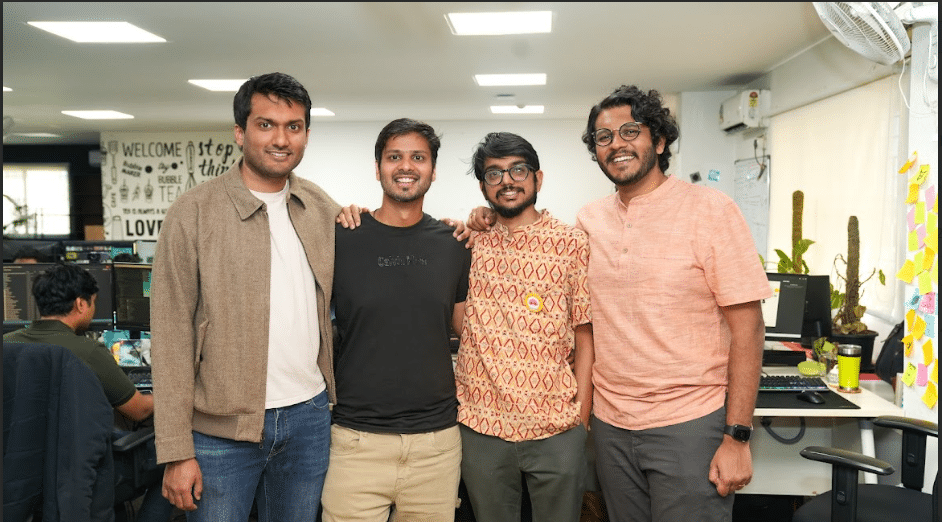
AutoVRse Secures $2 mn to Scale Enterprise VR Training 

AR/VR tech startup AutoVRse announced the successful closure of a USD2 million seed funding round. Leading the round was Lumikai, a gaming and interactive media-focused venture capital fund, indicating the increasing interest of the investment community in immersive technologies.

The funding will primarily be utilized to further enhance AutoVRse’s foundational enterprise product “an end-to-end modular technology stack and SAAS platform to integrate VR/AR into workflows of industries like manufacturing, construction, engineering, oil, and gas, automotive, replacing ineffective manual instruction and/or expensive simulation techniques for purposes ranging from safety training, sales, and collaborative remote work.”

Much of the funds will go toward expanding VRseBuilder, the company’s flagship enterprise product. VRseBuilder provides a VR-led, end-to-end solution stack to prevent 270 million annual accidents in heavy industries, costing industries $1.25 trillion globally. This one-stop, self-serve, modular, SAAS-style platform empowers large organizations to effortlessly create, deploy, and manage AR/VR training solutions and applications at scale, in real-time, across the world.

VRseBuilder’s primary goal is to help organizations adopt VR at scale, easily. It consists of 4 components, namely:

● Readymade VR Content Library: 400 safety and process training VR modules designed with a modular, VR-centric design philosophy
● VR-Native Learning Management System: Schedule sessions, assign modules, access performance reports, and observe evaluation metrics in real-time, offering unparalleled training flexibility
● Deployment Platform & Knowledge Repository: A secure web dashboard that helps IT and Security teams manage VR users, devices, and content by seamlessly integrating with LMS and SSO systems, allowing users to upload videos and PDFs and manage the organization’s VR knowledge repository
● Unity SDK + Infinity Workshop: Rapidly prototype VR apps with our no-code editor and a massive library of modular blocks (assets, templates, and fully finished VR training modules)

It will also enable AutoVRse to augment its team with top-tier talent, and spearhead expansion efforts in the US and expand its product suite. The company also plans to set up a B2B sales team in the US to drive qualified lead generation and facilitate market expansion.

This marks a significant milestone in AutoVRse’s journey, having already delivered cutting-edge VR solutions to multiple Fortune 500 companies andindustry leaders includingShell, Godrej, Bosch, Tata Motors, Ultratech Cements, Aditya Birla Group, and many others.

The post AutoVRse Secures $2 mn to Scale Enterprise VR Training appeared first on Analytics India Magazine.