Privacy Policy Changed? Tech Cos, Keep Me in the Loop

Big-tech companies have done a brilliant job of keeping their users on the edge of their seats at the privacy theatre. Every now and then, a company decides to update its policies – mostly privacy-related.

The names on the top of your mind – Google, Meta, or Zoom – have all at some point arbitrarily decided to shuffle their stance on data privacy, and generative AI has just added fuel to the fire.

These companies, running the tech caliphate, are in need of user data more than ever due to the nature of the data-hungry AI models they are developing. More the data, better the results (barring the trash, of course). Companies fanning the generative AI wave have been trying to attain huge amounts of data from every possible means.

Some have entered into official partnerships. OpenAI has signed deals with Axel Springer and Associated Press; Google has reportedly struck a deal with Reddit to use its content; and even Tumblr and WordPress are about to sell their data to OpenAI and Midjourney.

At the same time, the rest have plans to get their hands on data by tweaking their data policies.

Seven months ago, Google updated its privacy policy, hinting at mining public data from web sources to improve its AI models. The search giant was caught fixing how Chrome describes its Incognito mode.

The move was a response to a lawsuit that accused Google of illegally tracking browsing activity even in the Incognito mode, for which Google is now liable to pay $5 billion as a penalty.

Keep Users in the Loop

Having an epiphany to update the privacy policy is not new. The underlying problem is the lack of disclosure for their users. Firstly, the terms and conditions are already written in a wonky language, full of jargon. On top of that, the lack of transparency from the company’s end makes it worse.

Protecting your data on this vast digital infrastructure is difficult. Clearly these technology manufacturers have yet to make much effort to make it easy for the users to learn about the chameleon-like policies. Only after one meticulously does their homework can they determine what the tech business owners have on them.

Considering all the data about our lives is on our smartphones and in the cloud, digital privacy must be at the forefront for consumers and tech companies. Instead of walking a tightrope between theft and collection, the companies should be more transparent.

In 2020, many tech companies like Facebook, Google and smaller startups, overhauled their privacy policies when a sweeping new privacy law was passed in California. Among other changes, users were now given the opportunity to click a link on major companies’ sites that read “Do Not Sell My Personal Information”.

An occasional privacy policy is natural, but an update email from the company to notify about the change in privacy procedures is a must. The guide needs to be simple enough for laymen to understand why the update is required in the first place. It should also explain how it affects the users.

Do it For The Law

As the current generative AI landscape is still brewing hot with more and bigger investments taking place. High-tech corporations are seeing an upcoming slew of new regulations due to the rise of large language models and other AI models, which hold the potential to disrupt specific industries.

With industry insiders and experts from all other fields calling for regulation actively, ChatGPT and Co. are being prioritised globally from the EU to India. As companies have suddenly started updating their data collection policies again, new laws and regulations should be on the way.

Complying with the laws is the only way companies can save their tech from going haywire since self-regulation is difficult. Since the technology is being used by millions of people every day, it’s the companies’ responsibility to have a privacy-literate, trustworthy relationship with the users.

The post Privacy Policy Changed? Tech Cos, Keep Me in the Loop appeared first on Analytics India Magazine.

These pioneering companies are working together to develop models for AI

Multi-colored brain

Five telcos have inked a pact to build large language models (LLMs) customized to meet the needs of their industry as well as support multiple languages.

The efforts will be driven by a new joint venture to be established by the telcos, comprising South Korea's SK Telecom, Germany's Deutsche Telekom, Abu Dhabi's e& Group, Singapore's Singtel, and Japan's SoftBank. Collectively, the telcos have a global customer base of 1.3 billion across 50 markets, according to a joint statement released Monday.

Also: Want to work in AI? How to pivot your career in 5 steps

The new entity will be set up this year and develop LLMs designed specifically to enhance telcos' engagement with customers through digital assistants and chatbots. These artificial intelligence (AI) models will be optimized for languages used in the telco's domestic markets, including German, Japanese, Arabic, Korean, and English, as well as others, such as Bahasa Indonesia, so the models can be rolled out in Southeast Asia.

The joint venture will also focus on deploying AI applications to support the telcos' needs in their respective markets. Singtel Group's subscriber base totals 770 million in 21 markets, including Australia and Indonesia, while Deutsche Telekom has 250 million subscribers in 12 markets, including the US, and e& Group has 169 million subscribers in 16 markets, including the Middle East and Africa.

"Compared to general LLMs, telco-specific LLMs are more attuned to the telecommunications domain and better at understanding user intent," the companies said in their statement. "By making it easier for telcos to deploy high-quality generative AI models swiftly and efficiently, telco-specific LLMs are expected to help accelerate AI transformation of various telco business and services, including customer service."

The companies said these LLMs are being optimized and trained on telcos' customer service data, which will help finetune the model for telco-specific questions. The telcos said this process is essential because information relevant to the sector is rarely included in training models for general-purpose LLMs, pointing to tariff and contract models, and data on specific hardware, such as steps to reset routers.

Telco chatbots need this detailed information to better understand, summarize, and respond to subscribers' questions.

Also: If AI is the future of your business, should the CIO be in control?

"This targeted training ensures the LLM understands the unique language and needs of telecom operators, paving the way for enhanced, personalized, and efficient customer experiences," the carriers said.

"We as telcos need to develop tailored LLMs for the telco industry to make telco operations more efficient, which is a low-hanging fruit," SK Telecom CEO Ryu Young-sang said. "Our ultimate goal is to discover new business models by redefining relationships with customers."

Also: Is prompt engineer displacing data scientist as the 'sexiest job of the 21st century'?

Integrating telco-specific LLMs also will enable Deutsche Telekom's Frag Magenta chatbot to be "more human-centric", said Claudia Nemat, Deutsche Telekom's board member for technology and innovation. The generative AI-powered chatbot currently handles more than 100,000 customer service interactions each month.

"AI personalizes conversations between customers and chatbots, [and] our joint venture brings Europe and Asia closer together," Nemat added.

DataRobot is Open to Hosting IndicLLMs on its Platform 

datarobot

When DataRobot CEO Debanjan Saha visited India last week, he said India should begin creating its own foundational models, echoing a sentiment widely acknowledged across the country.

In an exclusive interaction with AIM, Saha affirmed that once India has good Indic large language models (LLMs), DataRobot is open to hosting them on its platform.

“We want to be a platform where people come for value and optionality. This approach is already evident in several countries where models require fine-tuning or where different linguistic contexts demand the use of distinct models,” Saha said.

Indeed, there exists a compelling need for India to forge its own foundational models, which possess a deep understanding of the nuances, intricacies, and rich diversity embedded within the tapestry of India’s myriad cultures and languages.

Players like Krutrim AI, Sarvam AI, Zoho, and Reliance Jio-backed BharatGPT initiative, are working on building foundational models for India from scratch.

Promise to Presence

The timing couldn’t have been better. During a prior conversation with AIM in 2022, which took place on the sidelines of the Global AI Summit in Riyadh, Saudi Arabia, Saha expressed a desire to expand in India.

Undoubtedly, India could be an important market for DataRobot because of its rapidly growing economy and the many companies and startups that exist in the country. Now, Saha, with his recent visit to the country, is working towards transforming his vision from two years ago into a tangible reality.

“That’s precisely why I’m here. We’ve had incredibly positive customer discussions in Mumbai, and I anticipate similar engagements here in Bengaluru. We genuinely believe this presents a significant opportunity, and, on a personal level, India holds special importance for me. The goal is to expand our footprint in India,” he said.

DataRobot is uniquely positioned to fuel this growth. Its mission is to empower organisations with AI that delivers real-world value, by making AI more accessible and eliminating complexities and siloes across the AI lifecycle through a unified platform approach.

Currently, DataRobot primarily focuses on four industries namely banking, insurance, manufacturing and healthcare. In India too, the startup will target clients in these industries.

Moreover, Saha, who joined the company as CEO in 2022, also revealed that DataRobot is expanding its headcount in India. While he refrained from sharing an exact number, he did stress on hiring for engineering and data science roles.

“We are hiring in a lot of areas and I do expect it to be kind of depending on how business does of course.”

While DataRobot has a big public sector portfolio in the US, the company is currently not directing its focus towards the public sector in India.

Invests in Generative AI

DataRobot aims to leverage the recent surge in generative AI by offering its customers a diverse range of LLMs, including Llama, GPT-4, Falcon, and more, through its platform.

According to Saha, the company is well funded, having raised $1.1 billion so far and is already investing heavily in two areas: generative AI and MLOps or AI production.

“While many companies provide individual components like vector databases, LLMs, or guardrails, the key lies in having a platform which efficiently manages the lifecycle of these components, enabling the creation of value-added solutions.”

“At DataRobot, our focus is on aiding organisations in building solutions and also guiding them through the governance process and observability stack. This ensures the seamless transition to running these solutions in production and managing them effectively in an enterprise setting,” Saha said.

When questioned about the prospect of DataRobot developing its own foundational models, Saha expressed that it’s a costly endeavour and they don’t see substantial value addition in pursuing it. He anticipates that, with time, most models will possess comparable capabilities.

Nevertheless, the differentiating factor lies in the proprietary data used for training these models and the adept management and monitoring practices implemented in real-world scenarios, ultimately contributing significant value to customers.

Fuels Predictive AI

Saha believes that the intersection of generative AI with predictive AI will be beneficial for enterprises. While predictive AI was the initial focus for enterprises before the surge in popularity of generative AI, it didn’t gain traction to the extent that generative AI did.

One reason predictive did not take off was these models were difficult to build and use, however, generative AI could change this, according to Saha.

“For instance, instead of delving into the intricacies of mathematics and science required for constructing a predictive model, if you can articulate your desired outcome using natural language, certain systems can autonomously generate the predictive model for you,” he said.

Explaining further, Saha said that even if you don’t always comprehend the inner workings of these models, a natural language interface provides an engaging means of interacting with a predictive model. This makes the adoption of predictive AI, according to him, more accessible and widespread.

“We collaborate with numerous customers for tasks like customer churn modelling. When businesses are concerned about predicting when and why customers might leave, they leverage the output from predictive models.

Subsequently, this data is fed into a generative pipeline, enabling the creation of highly personalised next-best offer strategies and other tailored communications for effective engagement.”

Loves Open Source

Among the LLMs leveraged by DataRobot’s customers on its platform, GPT-4 and Llama2 stand out the most popular. Falcon, another open-source model developed by UAE’s Technology Innovation Institute (TII), is also very popular.

Expressing his strong affinity for open source and open systems, Saha envisions a future where the distinction between closed and open source models diminishes significantly.

“I believe GPT-4 is still the best LLM to date, but smaller open-source also do well for certain specific use cases. Moreover, once the distinction diminishes drastically, “people are going to open source these models instead of attempting to extract further benefits from the investment made to reach this stage.”

The post DataRobot is Open to Hosting IndicLLMs on its Platform appeared first on Analytics India Magazine.

Meta To Release Llama 3 in July, Outperforms GPT-4 and Gemini

Meta to Launch Llama 3 Early Next Year

Meta is planning to release Llama 3 in July, reported The Information, citing sources familiar with the matter. The largest version of Llama 3 could surpass 140 billion parameters, exceeding its predecessor Llama 2.

Meta aspires for Llama 3 to match GPT-4’s capabilities, including the ability to respond to image-based questions. However, the decision on making Llama 3 multimodal—handling both texts and images—is pending, awaiting the fine-tuning process. In contrast, OpenAI has recently introduced their text to video generation model, Sora.

One of the key objectives for Meta is to enhance Llama 3’s responsiveness to challenging queries, marking a delicate balance between creating engaging products and mitigating the risk of inappropriate or inaccurate responses. Google, of late, has found itself entangled in a series of challenges, particularly with its AI model Gemini being labeled as excessively woke.

To achieve this, Meta plans to appoint an internal figure in the coming weeks to oversee tone and safety training, aiming to make the model’s output more nuanced. Meta’s generative AI group, distinct from its Fundamental AI Research team, is driving the development of Llama.

As per insiders at Meta, researchers are tweaking Llama 3 to make it more interactive when users pose tricky questions. The focus is on offering context rather than outright dismissing challenging queries. The upcoming model aims to better understand words with multiple meanings.

For instance, Llama 3 might understand that a question about how to kill a vehicle’s engine means asking how to shut it off rather than end its life.

Llama holds a crucial place in Meta’s AI strategy, aiming to enhance advertising tools and elevate social media app appeal. Meta chief Mark Zuckerberg highlighted key priorities for the year, emphasising the launch of Llama 3 and ongoing efforts to improve the Meta AI assistant during recent investor discussions.

The post Meta To Release Llama 3 in July, Outperforms GPT-4 and Gemini appeared first on Analytics India Magazine.

Snowflake Announces Sridhar Ramaswamy as its New Chief

Snowflake recently announced Sridhar Ramaswamy as the New Chief Executive Officer and member of the Board of Directors effective immediately. He will replace Frank Slootman, who decided to retire and step from the helm of the company.

Ramaswamy, who graduated from IIT Madras, joined Snowflake in May 2023 after selling his startup Neeva AI to the data cloud company. He held the position of Senior Vice President of AI at Snowflake.

“There is no better person than Sridhar to lead Snowflake into this next phase of growth and deliver on the opportunity ahead in AI and machine learning. He is a visionary technologist with a proven track record of running and scaling successful businesses. I have the utmost confidence in Sridhar and look forward to working with him as he assumes this new role,” Slootman said.

Back in 2021, Ramaswamy, along with Vivek Raghunathan set out to address the gap in the search engine space and launch an alternative product. In February 2023, Neeva AI launched its search engine powered by generative AI. The LLM-powered search engine challenged Google’s fundamentals and offered an ad-free and privacy-focused search experience.

However, just three months later, data cloud company Snowflake acquired Neeva AI for an undisclosed amount.

In an interaction with AIM last year, Ramaswamy stated that becoming the default search engine in Safari, as it turns out, is an incredibly convoluted endeavour. “In reality, there is no formal process; it all hinges on Cupertino’s (Apple’s) subjective judgement of one’s qualifications. There is no process and it’s pretty tough to create a sustainable business,” he said.

Before this, he also worked with Google for over 15 years and led its USD 115 billion advertising tech division.

The post Snowflake Announces Sridhar Ramaswamy as its New Chief appeared first on Analytics India Magazine.

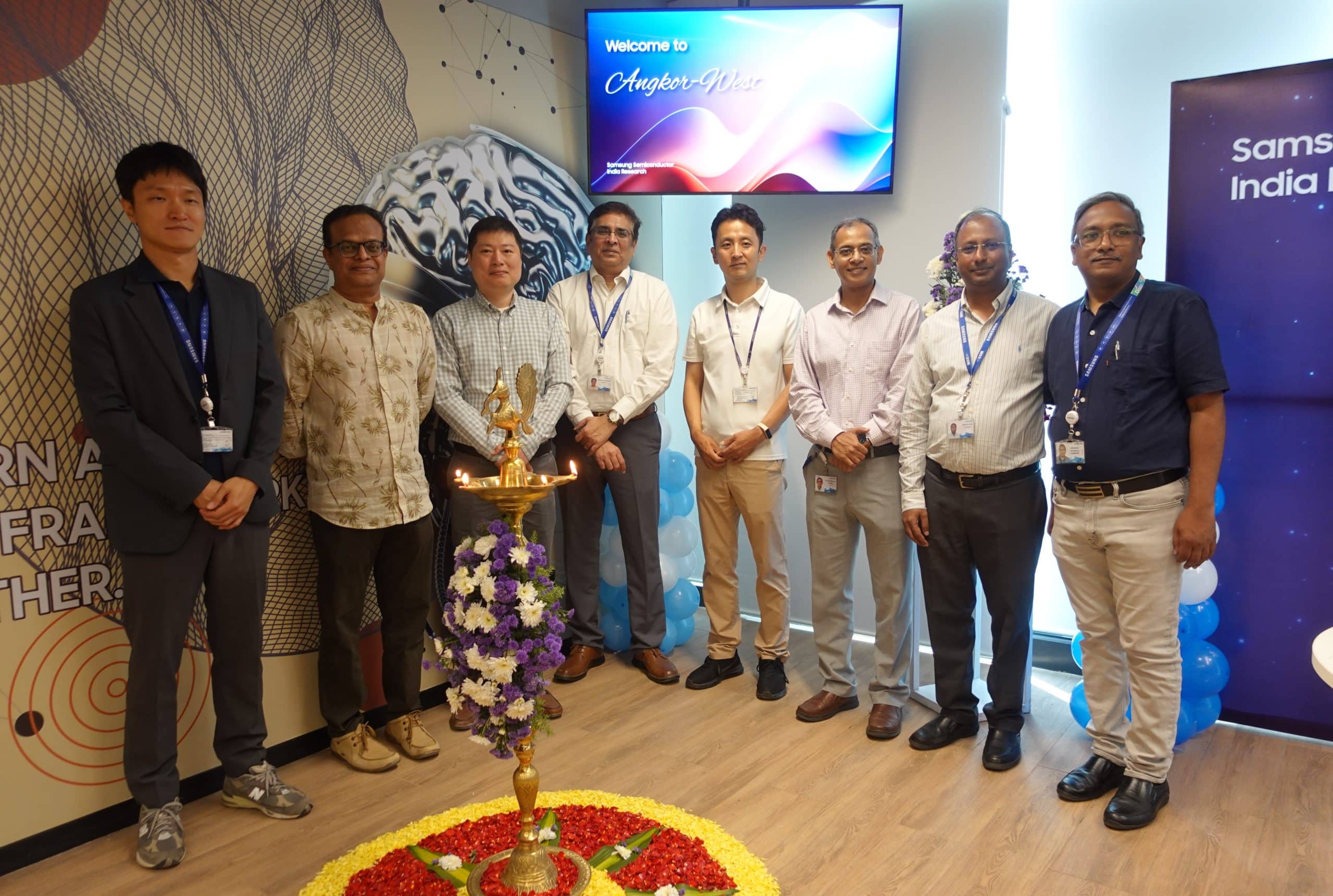
Samsung Semiconductor India Announces New R&D Facility in Bengaluru

Samsung Semiconductor India Research (SSIR) today announced the opening of its new R&D facility in Bengaluru.

This is SSIR’s second office in Bengaluru, with a capacity to accommodate close to sixteen hundred professionals. Located at Bagmane Capital Tech Park in Angkor-West, the facility spans 1, 60,000 square feet across four floors.

The new campus of Samsung Semiconductor India Research (SSIR) features a modern, open-plan layout across four floors, encouraging collaboration and agility. The design includes designated hot-desking areas for workforce flexibility.

“It is an exciting moment for us as the new facility in Bengaluru embodies our commitment to expanding our footprint in India and enabling a vibrant environment for our exceptional team members. This new hub reinforces SSIR’s standing as a crucial player in Samsung Semiconductor’s global innovation ecosystem as we open the doors to new opportunities”, said Balajee Sowrirajan, EVP & MD at Samsung Semiconductor India Research.

SSIR currently has a strength of over four thousand and five hundred (4500) employees and will add over seven hundred (700) people including fresh graduates as well as lateral hires across teams in India.

The post Samsung Semiconductor India Announces New R&D Facility in Bengaluru appeared first on Analytics India Magazine.

YouTube Create expands to more countries — here’s why you should try it

YouTube Create

TikTok popularized posting casual, short videos on the go, facilitated by an intuitive editing platform in the app. In Septemeber, YouTube unveiled a similar experience, YouTube Create, an in-app video editing platform, and its availability is now expanding further.

When YouTube Create launched, it was available in beta on Android phones in select markets. On Wednesday, YouTube launched YouTube Create in beta on Android across 13 more countries, spanning from Australia to Brazil. The feature remains entirely free to use.

Also: The best Android phones to buy

So what are the perks of using YouTube Create? Like on TikTok, creators can now record and edit clips right from their phones without having to leave the YouTube platform, eliminating the need to download a third-party application to complete edits, export the video, and then upload it on YouTube.

Despite being a mobile video editor, YouTube Create still provides advanced features, making it possible to produce high-quality videos comparable to those edited on a desktop. For example, it offers an "Audio Cleanup" feature that automatically removes distracting sounds, making the dialogue easier to listen to.

Another standout feature is its "Find Beats" feature which automatically makes cuts to your video to sync the visuals to the audio. This feature can be especially useful for smooth transitions between clips without manually making all the cuts to match the audio.

Also: How to download YouTube videos for free, plus two other ways

Additionally, it has traditional editing features such as the ability to record voiceovers, generate auto-captions, add stickers, filters, and effects, adjust color, brightness, and saturation, and even access thousands of royalty-free songs in YouTube Create's music library.

Even though it is currently only available on Android, YouTube does share that the app "may" be available on other devices in the future. Until then, iPhone users can enjoy a similar free experience in TikTok, Capcut, or InShot, to name a few.

Social Media

Data scientists: Still the sexiest job — if anyone would just listen to them

data-sceientists-gettyimages-1449172934

The role of data scientist — one who pulls stories and makes discoveries out of data — was famously declared the "sexiest job of the 21st century" in Harvard Business Review back in 2012. Just two years ago, the authors, Thomas H. Davenport and DJ Patil, updated their prognosis to observe that data scientists have become mainstream and absolutely vital to their businesses in the age of artificial intelligence and machine learning (ML).

The job role has evolved as well, partly for better, partly for worse. "It's become better institutionalized, the scope of the job has been redefined, the technology it relies on has made huge strides, and the importance of non-technical expertise, such as ethics and change management, has grown," Davenport and Patil observe.

Also: Business success and growth is dependent upon trust, data, and AI

At the same time, data scientists report that "they spend much of their time cleaning and wrangling data, and that is still the case despite a few advances in using AI itself for data management improvements."

Even more significantly, "many organizations don't have data-driven cultures and don't take advantage of the insights provided by data scientists," Davenport and Patil find. "Being hired and paid well doesn't mean that data scientists will be able to make a difference for their employers. As a result, many are frustrated, leading to high turnover."

People respect data scientists, but tend not to act on their recommendations or insights, a recent survey of 328 analytics professionals out of Rexer Analytics confirms. Only 22% of data scientists say their initiatives – models developed to enable a new process or capability – usually make it to deployment, observes survey co-author Eric Siegel, former professor at Columbia University and author of The AI Playbook, in a related post at KDNuggets. More than four in ten respondents, 43%, say that 80% or more of their new models fail to deploy.

Even tweaking existing models doesn't pass muster in many cases. "Across all kinds of ML projects – including refreshing models for existing deployments – only 32% say that their models usually deploy," Siegel adds.

What's the problem? Interaction between the business and data science teams — or lack thereof — seems to be at the heart of many problems. Only 34% of data scientists say the objectives of data science projects "are usually well-defined before they get started," the survey finds.

Plus, less than half, 49%, can claim that the managers and decision-makers in their organizations who must approve model deployment "are generally knowledgeable enough to make such decisions in a well-informed manner."

Also: Is prompt engineer displacing data scientist as the 'sexiest job of the 21st century'?

Overall, the top reasons cited for failure to deploy recommended machine-learning models consist of the following:

  1. Decision makers are unwilling to approve the change to existing operations.
  2. Lack of sufficient, proactive planning.
  3. Lack of understanding of the proper way to execute deployment.
  4. Problems with the availability of the data required for scoring the model.
  5. No assigned person to steward deployment.
  6. Staff unwilling or unable to work with model output effectively.
  7. Technical hurdles in calculating scores or implementing/integrating the model or its scores into existing systems.

The struggle to deploy stems from two main contributing factors, Seigel says: "Endemic under-planning and business stakeholders lacking concrete visibility. Many data professionals and business leaders haven't come to recognize that ML's intended operationalization must be planned in great detail and pursued aggressively from the inception of every ML project."

Business leaders or professionals need greater visibility "into precisely how ML will improve their operations and how much value the improvement is expected to deliver," he adds. "They need this to ultimately greenlight a model's deployment as well as to, before that, weigh in on the project's execution throughout the pre-deployment stages."

Significantly, the ML project's performance often isn't measured, he continues. Too often, the performance measurements are based on arcane technical metrics, versus business metrics, such as ROI.

Also: Want to be a data scientist? Do these 4 things, according to business leaders

Still, data scientist is a great job to have, and keeps getting better, the Rexer survey suggests. In the previous survey in 2020, 23% of corporate data scientists reported having high levels of job satisfaction — a percentage that almost doubled to 41% in this most recent survey. Only 5 percent express dissatisfaction, down from 12% in 2020.

The appetite for data science skills is still growing as well. Data scientists continue to be hard to find — 40% say they are concerned about shortages of talent within their enterprises. Half report their organizations have stepped up internal training to boost data science skills, while 39% are working with universities to promote interest in data science.

Artificial Intelligence

Lightricks announces AI-powered filmmaking studio to help creators visualize stories

Lightricks announces AI-powered filmmaking studio to help creators visualize stories Ivan Mehta 20 hours

Lightricks, the company that makes popular apps like Facetune and Videoleap, announced a new AI-powered filmmaking tool called LTX Studio today. The studio helps creators from the ideation phase to generate an AI-powered short clip to understand how a storyline would play out.

LTX Studio, which is currently inviting users to sign up for a waitlist, is a web-based tool. The company will make the tool available to everyone next month, and it doesn’t plan to charge for it at the moment.

How does the tool work?

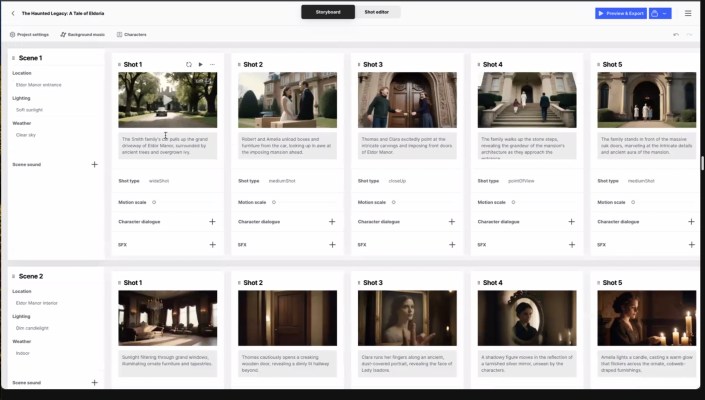
Creators can first type an idea they have and LTX Studio will create a script and a storyboard for them along with characters through a prompt.

Lightricks studio

Image Credits: Lightricks

The storyboard shows different scenes divided into many shots. Users can change the scenes by prompting, changing the style — such as anime or cinematic — modifying the weather settings, and altering the location. Typically, each shot is just a few seconds long with customizations such as camera angles, motion scale, special effects, and character dialogs.

There is also a shot editor, which lets you rename the shot and change the settings for the frame, motion scale, camera motion, duration, and sound.

Users can also add, remove, or modify characters for the whole concept through a separate characters tab. They can also import an image with a visible face to create a character for the storyline. Lightricks mentioned that maintaining character consistency throughout the story was one of the key features creators were looking for.

Once users are done with storyline tweaking and shot editing, they can preview the film and export the file as well to share with others for feedback.

Lightricks thinks that this product is suited for professionals like filmmakers, people involved in pre-production, and ad agencies. The company’s co-founder and CEO Zeev Farbman said that LTX studio will be helpful to quickly create conceptual stories or for filmmakers to evaluate different options of shooting a scene without pouring a lot of money into it.

Using AI in Lightricks products

Farbman noted that the company realized the opportunity around AI in 2022 and started thinking about what kind of next-gen products it could develop around it.

“We realized that there is going to be this paradigm shift with AI for all the tool makers. And we needed to figure out what our next-generation products would look like. While we had a bunch of popular products, we wanted to develop something from scratch,” Farbman told TechCrunch over a call.

The company said it had introduced AI-powered features to its Facetune and Videoleap products but wanted to also create a new product. That thought process led the startup to make LTX Studio.

The new tool uses a bunch of different AI models for different parts of the creation process, including the company’s own text-to-video model. However, not all things are AI powered. The company is using third-party asset providers for background music, as it believes that AI doesn’t produce quality background music yet.

A survey conducted by the company last year highlighted that 62% of users are already using some kind of generative AI–based products. That’s why Lightricks is also doubling down on AI-powered features just like other creative product companies like Adobe and Canva.

Lightricks is consolidating its products

The company has released many apps for photo and video editing over the years. But last year, it started to fold features of products like Beatleap for remixing videos, Motionleap for animating photos, and Filtertune for creating personality looks into its marquee products such as Facetune, Photoleap, and Videoleap. While some of the other individual apps still exist, the company is focusing on developing its hit products more.

Lightricks has discontinued certain products as well. In 2022, the company received backing from TikTok star Charli D’Amelio and family. At that time, it started an editorial site with the family called The247. Plus, it also launched a link-in-bio service called LinkInBio. The company has now discontinued both products.

The company has historically built consumer-focused apps, but it is now diversifying its offerings. Last year, Lightricks acquired Popular Pays, a platform that connects brands with creators. Plus, with the latest LTX studio launch, it is aiming to cater to more professionals.

Lightricks raised a massive Series D of $130 million in 2021 led by Insight Partners. But the company said it will change its direction from a consumer-only startup.

“Be it raising another round or going public, the story is going to build around AI not only for consumers but for professionals as well. For that, we need to launch our tools, show some traction, and then we are going to reach out to the market,” Farbman said.

The company had laid off 12% of its staff in 2022 but isn’t planning to make any cuts to its current workforce of 550 people.

You can make Microsoft Copilot your default Android assistant now

Copilot on Android

Interested in having an AI bot as your Android phone's assistant? A new feature lets you kick Google Assistant to the curb and do just that.

In the latest beta version of the Microsoft Copilot app, you now can set it as your default assistant, replacing the built-in Google version. X user Mishaal Rahman was the first to spot the new option.

Also: The best AI chatbots

If you want to make Copilot your default assistant, you'll need to first download the Copilot app and join the beta. To do that, go to the app's listing on the Play Store and tap "Join the beta." Once you're in the beta program, head to your phone's settings page, then apps, then default apps, then digital assistant. You'll see the option to make Copilot your first choice.

Copilot can then be launched by either swiping diagonally from any corner or long-pressing the power button.

It's worth pointing out that since Copilot is a third-party app, it doesn't have the full integration that a built-in assistant would. It doesn't have an auto-listening mode that allows you to open it with your voice like Google does, and it can't take screenshots. Instead of appearing over the screen in a bubble like a traditional assistant, summoning it fully opens the app.

Copilot can still handle most of its traditional AI duties, but it doesn't appear to be able to handle a lot of on-device jobs yet, like adding an event to a calendar or opening another app. Since that type of task is what most people use their assistant for in the first place, you have to imagine that Microsoft is working on adding that functionality.

Also: Microsoft Copilot vs. Copilot Pro: Is the subscription fee worth it?

So what's the advantage of choosing Copilot over what's already built-in?

Right now, it's mostly about potential. Google's Gemini AI is still in its fairly early stages and can be a little rough around the edges while Microsoft's AI is more refined. And given that Microsoft has already partnered with OpenAI several times, it seems feasible that Copilot could one day host ChatGPT.

Since nothing has even officially been announced, it makes sense that things aren't fully operational yet. But once the bugs are worked out and Copilot can fully integrate with your phone, it's easy to see how the AI side of things could be tempting to switch.

Artificial Intelligence