Generative AI Steals the Spotlight at Adobe Summit 2024

At the annual Adobe Summit 2024 in Las Vegas, the design powerhouse unveiled a suite of new features. Keeping customers at the heart of innovations, the company has introduced new solutions to revamp customer experience management (CXM) through generative AI and real-time insights. Let’s take a look at the major updates made at the conference.

Collaboration is the Key

Microsoft is partnering with the tech giant to integrate generative AI capabilities into Microsoft 365 applications for marketers. This collaboration aims to enhance collaboration, efficiency, and creativity by connecting Adobe Experience Cloud workflows and insights with Microsoft Copilot. Marketers can streamline workflows and relevant insights from Adobe and Dynamics 365 within tools like Outlook, Microsoft Teams, and Word. It includes features like strategic insights, contextual content creation, and in-context notifications.

Streamlining Content Supply Chain

Adobe has come up with Adobe GenStudio, a generative AI-driven platform enabling marketers to efficiently plan, create, manage, and measure on-brand content across Adobe Experience Cloud and Creative Cloud. Additionally, integrated with new Firefly Services and Custom Models, Adobe Firefly facilitates content production at scale tailored to individual brand requirements. These innovations address the growing demand for personalised and engaging content, offering streamlined workflows, accelerated production, and improved performance measurement throughout the content lifecycle.

Data-Driven Personalisation at Scale

The new Adobe Experience Platform AI Assistant offers a conversational interface for tasks like answering technical queries, automating processes, and generating journeys and audiences across Adobe Experience Cloud applications. Additionally, Federated Audience Composition enables teams to leverage data directly from enterprise warehouses for real-time use cases, minimising data duplication.

Furthermore, Real-Time Customer Data Platform Collaboration facilitates seamless collaboration between advertisers and publishers while prioritising customer privacy. These advancements underscore Adobe’s commitment to empowering brands to unify customer data, harness generative AI, and effectively deliver personalised experiences across channels.

Enterprise Content Creation

It has introduced Firefly Services and Custom Models to bolster enterprise content creation and production. These capabilities empower organisations to automate content generation, editing, and assembly while preserving quality and brand consistency.

With over 20 APIs, tools, and services provided by Firefly Services, creative teams can streamline tasks like resizing assets, merchandising, and localisation efforts. Custom Models enable enterprises to train AI models tailored to their brand, ensuring content alignment with organisational styles and objectives across various use cases, from campaigns to localisation.

Personalised Customer Journeys

Adobe unveiled new features to improve personalised customer journeys through real-time experimentation. Unified experimentation within Adobe Experience Platform (AEP) and Adobe Journey Optimiser (AJO) allows brands to optimise customer paths for maximum conversion and offer reuse across channels. AJO facilitates enhanced journey orchestration by connecting audience-centric campaigns with real-time customer signals, ensuring timely and personalised communications while avoiding mistimed interactions.

Furthermore, the introduction of AJO B2B Edition equips cross-functional teams with a unified view of buying groups in customer accounts, enabling engagement through AI-powered experiences.

The post Generative AI Steals the Spotlight at Adobe Summit 2024 appeared first on Analytics India Magazine.

5 Free Google Courses to Become a Software Engineer

5 Free Google Courses to Become a Software Engineer
Image by Author

There’s never been a more exciting time to break into tech. And there’s always a growing demand for skilled software engineers. So how do you land a software engineering job—even if you're taking the self-taught route—without a CS degree?

To help you get there, we’ve compiled this list of free courses and guides from Google. These resources will help you learn the following:

  • Foundations of programming
  • Programming with Python
  • Data structures and algorithms
  • Software engineering principles

And much more. So you can learn everything you need to know to land a software engineering job—for free.

1. Foundations of Programming

If you have no prior programming experience, you can start with the Foundations of Programming course.

In this course, you’ll learn basic programming concepts like:

  • Variables and operators
  • Control flow
  • Strings and arrays

This will give a high-level overview of what programming is all about so that you can build on these foundations by taking other courses.

Link: Foundations of Programming

2. Python

To break into software engineering you need to be proficient in at least one programming language. Python is easy to learn and you can dive right into working on projects. Besides, Python is really handy to use in coding interviews.

And Google's Python class will help you learn Python programming with a mix of lecture videos, text material, and coding exercises. Here’s an overview of what you’ll learn:

  • Python basics
  • Lists and strings
  • Sorting
  • Dictionaries and files
  • Regular expressions
  • Utilities (from Python standard library)

Link: Python

3. Data Structures and Algorithms

Once you learn how to code in a programming language, understanding how data structures and algorithms work is fundamental to problem solving. This is also super important for coding interviews.

The Data Structures & Algorithms collection will help you learn and practice the following:

  • Hashmaps
  • Linked list
  • Trees
  • Tries
  • Stacks and queues
  • Heaps
  • Graphs
  • Runtime analysis
  • Searching and sorting
  • Recursion and dynamic programming

Link: Data Structures & Algorithms

4. Interview Prep

The resources we’ve reviewed so far will help you learn programming, data structures and algorithms. On a fundamental level, these are all you should know to tackle coding and technical interviews in general.

But how do you prepare strategically for technical interviews? That's where the Interview Prep guide comes in handy.

The resources in the guide will help you understand how to:

  • Prepare for coding interviews
  • Communicate in technical interviews
  • Practice coding interview questions and mock interviews

Link: Interview Prep

5. Software Engineering Principles

As a software engineer, you should write clean and well-documented code that is easy to understand and maintain. So you should also be familiar with the principles to write maintainable and clean code.

The Software Engineering Principles course covers of following topics:

  • Testing and debugging
  • Working with open source tools
  • Design and documentation

Link: Software Engineering Principles

Wrapping Up

So if you want to launch your career as a software engineer, I hope you'll find these courses helpful in your learning journey. As you might have guessed, these courses are free, but they require diligent efforts, interest, and practice from your end to crack interviews and land a software engineering role. So keep grinding!

If you’re specifically looking for resources to help you with coding interview preparation, check out 5 Free University Courses to Ace Coding Interviews.

Bala Priya C is a developer and technical writer from India. She likes working at the intersection of math, programming, data science, and content creation. Her areas of interest and expertise include DevOps, data science, and natural language processing. She enjoys reading, writing, coding, and coffee! Currently, she's working on learning and sharing her knowledge with the developer community by authoring tutorials, how-to guides, opinion pieces, and more. Bala also creates engaging resource overviews and coding tutorials.

More On This Topic

  • 7 Free Google Courses to Become a Machine Learning Engineer
  • Software Developer vs Software Engineer
  • The Only Free Course You Need To Become a Professional Data Engineer
  • The Only Free Course You Need To Become a MLOps Engineer
  • Free Generative AI Courses by Google
  • 8 Free Google Courses to Land Top Paying Jobs

YC-backed SigmaOS browser turns to AI-powered features for monetization

YC-backed SigmaOS browser turns to AI-powered features for monetization Ivan Mehta 7 hours

Web browsers have realized they are one of the best ways for users to access the present set of AI tools, so they are working on being the first-choice containers for that. SigmaOS, a Y Combinator-backed company, is now banking on users’ desire to utilize AI tools and pay for them as the company is releasing new features like link preview summaries, pinch-to-summarize, and “look it up” browsing features.

Some of these features sound and work like rival browser Arc’s recent releases. But SigmaOS claims that its feature returns better quality results, which is a hard metric to quantify.

The company is releasing pinch-to-summarize on desktop, which works a bit like Arc’s new mobile feature. While the feature summarizer captures sections like information, ratings, reviews, prices, and photos from an Airbnb listing, it just gives a small paragraph of info for an article, which is not sufficient. Arc browser’s summarize function also had its own hiccups in terms of missing out on key information, but it worked consistently across formats.

pinch to summarize

Image Credits: SigmaOS

One of the company’s co-founders Mahyad Ghassemibouyaghchi said that SigmaOS will adapt to different page types in the coming months and will present summaries in various formats based on the web page.

SigmaOS’s marquee feature from this release is called “Look it up.” It browses the web for a given query and makes a summary page out of the information that it finds. This is similar to Arc’s “Browse for me” function, but on desktop. One key differentiator is that users can ask follow-up questions to explore more about the topic.

Look it up

Image Credits: SigmaOS

Besides that, the startup is also releasing link previews on hover and automatic renaming for locked (pinned) pages.

Going all out on AI

Last year, SigmaOS released some AI-powered features such as a contextual assistant called Airis, which can answer your questions about a webpage or the broader web.

At one point, the startup tried to monetize through team-based features. Now, the company is looking to monetize its AI features. It said that all users would get access to AI-powered features but for $20 per month users would get better rate limits for AI features. For $30 per month, they would get unlimited usage and the ability to choose between different models such as GPT-4, Perplexity and Claude 3 Haiku.

Separately, the company is now thinking big by aiming to release an AI-agent-like feature, which will let you use the browser in a hands-free mode. In a demo video, Ghassemibouyaghchi shows how users could clear emails or book an Airbnb by interacting with the browser with voice. This is a similar idea to the Rabbit r1 device, which aims to traverse an interface for you to complete a task.

The company is also aiming to build something called “repeatable flows,” which are automatic actions based on triggers like time. You can think of them as the If This Then That (IFTTT) of browsers, but that’s still in the concept stage.

Separately, SigmaOS’s competitor Arc, which recently raised $50 million in funding at a $550 million valuation, announced in January that it plans to build an AI agent that browses the web for you.

The Browser Company raises $50M at a $550M valuation

Ghassemibouyaghchi said that more than 100,000 users have been using their product. Until now, SigmaOS has raised $4 million from investors like LocalGlobe and Y Combinator. With this launch, the company aims to gain some traction and wants to prepare for its next raise.

Navigating the IoT Landscape: The Role of Data Mapping in IoT Ecosystems

1703855933777

The Internet of Things (IoT) has revolutionized how devices communicate and interact, generating massive amounts of data. As IoT ecosystems continue to expand, the need for efficient data management becomes paramount. In this comprehensive article, we delve into the significance of data mapping in IoT environments. We will Explore its challenges, strategies, and implications for leveraging the full potential of IoT data.

Understanding IoT data complexity

IoT ecosystems comprise various devices, sensors, and platforms, each generating data in multiple formats and protocols. This heterogeneity presents a significant challenge for data integration and analysis. Data mapping is crucial in harmonizing these disparate data streams, enabling seamless interoperability and insights extraction.

Challenges in IoT data mapping

One of the primary challenges in IoT data mapping is the sheer volume and velocity of data generated by interconnected devices. Traditional data mapping tools may struggle to keep pace with real-time data streams, leading to latency and scalability issues. Moreover, the dynamic nature of IoT environments. Where devices join, leave, or change configurations dynamically, adds another layer of complexity to data mapping.

Strategies for effective data mapping in IoT

To address these challenges, IoT practitioners employ several strategies for effective data mapping:

Schema-on-read approach

In traditional data mapping approaches. Organizations can align IoT data streams with standardized ontologies. This ensures consistent interpretation and integration of data across diverse IoT deployments. Redefined schema is often enforced upfront, dictating the structure and format of incoming data. However, a schema-on-read approach is more pragmatic in IoT environments characterized by heterogeneity and variability. With schema-on-read, data is ingested in its raw form, and the schema is applied dynamically during analysis or processing. This flexibility allows IoT systems to accommodate diverse data formats and evolving device configurations without requiring extensive schema modifications. Organizations can achieve greater agility and adaptability in handling IoT data streams by decoupling data ingestion from schema enforcement.

Semantic interoperability

Semantic data mapping techniques promote interoperability across disparate IoT devices and platforms. These mapping involves establishing standard semantics or meaning for data elements, regardless of their physical representation or syntax. Ontology-based mapping is one such technique that relies on formal ontologies to define relationships and constraints between data entities. Organizations can align IoT data streams with standardized ontologies. This ensures consistent interpretation and integration of data across diverse IoT deployments. Semantic interoperability facilitates advanced analytics, context-aware processing, and knowledge discovery, unlocking deeper insights from IoT data.

Edge computing and data preprocessing

Edge computing brings computation and data processing closer to the IoT devices. It reduces latency and bandwidth requirements associated with centralized processing architectures. In the context of data mapping, edge computing allows for lightweight data preprocessing tasks. These tasks can be carried out directly on the edge devices. This includes data normalization, filtering, aggregation, and lightweight mapping operations. By preprocessing data at the edge, organizations can cut down the amount of data sent to centralized servers. This helps ease network congestion and enhances the system’s overall responsiveness. Edge data preprocessing also enhances privacy and security by minimizing data exposure during transit.

Dynamic mapping techniques

In dynamic IoT environments, device configurations and data formats often change frequently. As a result, static data mapping approaches are often inadequate. Dynamic mapping techniques adapt to these changes in real time, automatically adjusting mappings based on contextual information or historical patterns. Machine learning can be used to find and learn patterns in IoT data streams. These algorithms can then infer mappings between data elements, devices, or systems, optimizing data transformation and integration processes. Organizations can maintain agility and responsiveness in evolving IoT landscapes by embracing dynamic mapping techniques.

Data governance and metadata management

Establishing strong governance practices and metadata management frameworks is essential for effective data mapping in IoT ecosystems. Clear policies and standards ensure data consistency, quality, and compliance across IoT deployments. Metadata provides valuable context and documentation for data mapping processes, including schema definitions, data lineage, and semantic annotations. Organizations can track data provenance, lineage, and usage by maintaining comprehensive metadata repositories, facilitating traceability and auditability. Data governance frameworks also enforce data security and privacy policies.

Implications and benefits of data mapping in IoT

Efficient data mapping in IoT ecosystems yields several benefits:

  • Interoperability and Integration: Data mapping facilitates seamless integration of heterogeneous IoT data sources, enabling comprehensive insights generation and decision-making.
  • Data Quality and Consistency: By standardizing data representations and semantics, data mapping enhances data quality and consistency across IoT deployments, reducing errors and inaccuracies.
  • Scalability and Performance: Optimized strategies improve scalability and performance in IoT applications, allowing organizations to handle growing data volumes and meet real-time processing requirements.

Future directions and emerging trends

Looking ahead, several emerging trends and technologies are poised to shape the future of data mapping in IoT ecosystems:

  • Graph-based mapping: Graph databases and mapping techniques are powerful in representing complex relationships and dependencies in IoT data, enabling more nuanced analysis and insights generation.
  • Federated data mapping: Federated data mapping approaches allow organizations to collaborate and share mapping knowledge and resources across IoT deployments, promoting interoperability and standardization.
  • Integration with edge AI: Integration of edge artificial intelligence (AI) capabilities with data mapping processes enables intelligent data preprocessing, anomaly detection, and decision-making at the edge, enhancing real-time responsiveness and autonomy in IoT deployments.

Conclusion

As the IoT landscape continues to evolve, effective data mapping emerges as a critical enabler for unlocking the full potential of IoT data. By addressing the challenges of data complexity, interoperability, and scalabilit. Organizations can harness the transformative power of IoT to drive innovation and create value across industries. Data mapping paves the way for a connected, intelligent, and data-driven future in the IoT ecosystem through dynamic techniques, semantic interoperability, and edge computing capabilities. By embracing these strategies and emerging trends. Organizations can confidently navigate the complexities of the IoT landscape, driving continued growth and innovation in the digital era.

GenAI Startups are as Good as Big Tech Desires

Last week we witnessed two major players in the AI startup ecosystem, Inflection AI and Stability AI, both sitting on millions of dollars of funding, lose their founders and core teams. One jumped to the bigger ship, while the other abandoned it.

It is probable that we will continue to witness similar occurrences, with AI startups finding themselves vulnerable to the dominance of major tech corporations.

Source: X

The Big Picture

The ambitious AI startup buzz is on the rise, but the craze might have lost some of its lustre.The generative AI market size is poised to grow from $44 billion in 2023 to $668 billion by 2030, and with the surge of generative AI startups, the exit strategy for these companies will become crucial.

The compute, manpower and resources required to run an AI model easily runs into millions, which can prove to be the biggest drawback for a generative AI startup. It thus becomes essential for the companies to raise gigantic fundings, and who better to support than the big tech companies.

The immense competition in the generative AI startup space only adds to the problem. The recent revenue figures of Cohere have proven how competing against OpenAI is no easy feat. “I feel like we are funding AI startups like there will be 10-20 winners per category,” said Jason Lemkin, SaaS founder and VC.

Big Tech Custodians

In the recent Inflection AI fiasco, two of its three founders, including Mustafa Suleyman, quit the company to join Microsoft to lead its AI function. Along with him, many employees from the startup moved to the tech giant. Interestingly, Microsoft agreed to pay Inflection $650 million while hiring its staff.

Ironically, Microsoft was one of the biggest investors of Inflection.

Microsoft, which we know as the biggest force to reckon with in the AI world backing a number of promising startups, looks like the ultimate winner. Furthermore, the partnership with OpenAI, Mistral and other startups only fortifies the capabilities of Microsoft Azure services.

A number of enterprises and SaaS players, including Zoho Corporation, are availing OpenAI services via Microsoft Azure.

It was recently rumoured that Satya Nadella told his board members that if OpenAI ‘disappears tomorrow’, they’ll have all the IP rights and capabilities. “We have the people, we have the compute, we have the data, and we have everything,” quoted a leaked document.

If the leaked document is true, the big tech company’s predatory vision to freely acquire its goose that lays the golden egg, will come to fruition – a big win for the big tech.

Similarly, the next hottest AI startup, Anthropic, has been shielded by the next best contender to Microsoft: Amazon. The big tech company has invested $4 billion in Anthropic and is aggressively marketing its AI models across platforms. It is even being offered to Amazon customers via Amazon Bedrock.

It is obvious then that the fate of the startup is in the safe hands of the big tech – a predictable outcome.

AI Researchers, Not Businessmen

Author and entrepreneur Carlos E Perez observed that the issue in AI startup companies is with their founders. “A huge issue with many recent AI startup companies is that their founders are predominantly academic researchers who have never built products. It’s likely that they have no interest in developing products, instead only seek scientific discovery,” said Perez.

Their interests are thus unaligned with that of the investors.

The thinking and growth-focus capabilities of academic researchers cannot be equated to those who have developed and grown companies. Even if they do start their venture, they can abandon it. “The researchers just got bored and decided that Microsoft would be more conducive to doing research in?” said Perez.

Source: X

AI Startups Remain Crucial

While it seems obvious at this point that the endgame for all GenAI startups lies with the big tech companies, their current role of innovation cannot be substituted by them.

“I think it’s going to be very hard for incumbents to respond with the same speed and bring the same kind of innovation to the market that founders can. Every part of the market is going to be disrupted and every incumbent is at risk, irrespective of how quickly they might have jumped on this first iteration of AI,” said Guru Chahal, partner at Lightspeed Ventures, at NVIDIA GTC 2024.

While the fate of these AI startups in the long run is riddled with uncertainty, until then, perhaps we can have a laugh at their expense.

Source: X

The post GenAI Startups are as Good as Big Tech Desires appeared first on Analytics India Magazine.

The Art of Effective Prompt Engineering with Free Courses and Certifications

The Art of Effective Prompt Engineering with Free Courses and Certifications
Image by Author

Large language models have become a part of our daily and professional lives. We use tools like ChatGPT to help us with daily tasks such as marketing strategy, data analysis, etc. However, when I am using these tools, there is always one question that pops into my mind:

‘Am I using it properly and if not, how do I?’

Prompt engineering.

As stated by McKinsey, Prompt engineering is the best practice for designing inputs for generative AI tools that aim to produce optimal outputs.

It is a skill that I believe that everybody making use of generative AI tools should have under their belt. Not only does it help produce optimal outputs for your day-to-day tasks, but you can also make a career out of it: AI Prompt Engineers are Making $300k/y.

With this being said, I have curated a list of free courses that can help you prompt generative AI tools to produce the output you want!

Try It: Prompt Engineering

Link: Try It: Prompt Engineering

Price: Free

Within a week, you will be able to ask ChatGPT specific questions in order to generate the output you want. But before you get to engineering effective AI prompts, it is important that you understand the key concepts of AI and also be able to explain them. With this under your belt, you will then be able to engineer effective AI prompts for your day-to-day tasks.

Introduction to Prompt Engineering

Link: Introduction to Prompt Engineering

Price: Free

Let’s say you understand the key concepts of AI, but you need knowledge of prompt engineering, what it is and how to use it. This 3-week course will help you unlock your full potential of generative AI tools such as ChatGPT. Made up of 3 modules, you will learn the best practices and techniques when it comes to writing effective prompts.

Prompt Engineering and Advanced ChatGPT

Link: Prompt Engineering and Advanced ChatGPT

Price: Free

Want to go a step further? Check out this advanced ChatGPT course which will teach you the advanced techniques that you can use in ChatGPT in a week. Not only will you learn how to prompt ChatGPT using advanced techniques, but you will also be able to apply it to multiple use cases, integrate it with other tools and develop applications.

Generative AI for Everyone

Link: Generative AI for Everyone

Price: Currently discounted at £173 for the whole programme

Maybe you want to dive even deeper and transform your career. You can do so with this professional certificate from IBM that is made up of 5 courses and will take you 4 months to complete if you commit 1 to 3 hours a week. The 5 courses consist of:

  • Introduction to Generative AI
  • Introduction to Prompt Engineering
  • Models and Platforms for Generative AI
  • Impact, Ethics, and Issues with Generative AI
  • Elevating Businesses and Careers with Generative AI

In these 5 courses, you will learn about the fundamental concepts, applications, and capabilities of generative AI tools. Your understanding will then help you apply powerful prompt engineering techniques to write effective prompts as well as be able to explore generative AI models such as foundation models and pre-trained models. You will also dive into the limitations and misuse of generative AI tools, ethical considerations and its transformative impact on businesses.

Wrapping it up

And just like that, you have been able to transform your day-to-day tasks and ensure that you are producing optimal results. It may feel like it's another thing to learn, however, once you have it under your belt — you will not regret it!

Nisha Arya is a data scientist, freelance technical writer, and an editor and community manager for KDnuggets. She is particularly interested in providing data science career advice or tutorials and theory-based knowledge around data science. Nisha covers a wide range of topics and wishes to explore the different ways artificial intelligence can benefit the longevity of human life. A keen learner, Nisha seeks to broaden her tech knowledge and writing skills, while helping guide others.

More On This Topic

  • The Art of Prompt Engineering: Decoding ChatGPT
  • Prompt Engineering 101: Mastering Effective LLM Communication
  • Mastering Generative AI and Prompt Engineering: A Free eBook
  • Popular Certifications to validate your data and analytics skills
  • The Rise and Fall of Prompt Engineering: Fad or Future?
  • 25 Free Courses to Master Data Science, Data Engineering, Machine…

0G Labs launches with whopping $35M pre-seed to build a modular AI blockchain

0G Labs launches with whopping $35M pre-seed to build a modular AI blockchain Jacquelyn Melinek 8 hours

As the crypto space heats back up, so has funding for new startups. 0G Labs, a web3 infrastructure firm,” has raised $35 million in a pre-seed round, the team exclusively told TechCrunch.

If $35 million sounds like a lot for a pre-seed round, it really is. “In order to build the basic technology, we wanted to raise $5 million, originally,” said 0G co-founder Michael Heinrich.

0G, sometimes called ZeroGravity, is creating a modular AI blockchain that aims to alleviate the pain points of on-chain AI applications in the web3 ecosystem, like speed and cost efficiency. Competitors include Celestia and EigenLayer, which are also focused on modularity.

Modularity allows developers to choose the components they will use to build a blockchain system or application. Like customizing orders in a restaurant, developers will be able to configure the components to best suit their needs.

“Our goal is we can now enable any blockchain to be as performant and inexpensive as a web2 application,” Heinrich said. “That’s the benefit of having this modularity approach.”

In contrast, Ethereum, for example, is a monolithic blockchain. This means there’s a data layer, consensus layer and functions done by only one blockchain. It can’t be pulled apart, making it hard to customize. And in order to have the centralized AI technologies that exist today involved, this core infrastructure needs to be built, Heinrich said.

When co-founders Heinrich, Ming Wu, Fan Long and Thomas Yao initially got together, they had conversations with other market players and found there was a “clear market signal that this aspect of data availability and data storage is really critical, not only to scale blockchain systems, but to make on-chain AI even a possibility,” Heinrich said. “There was infrastructure that’s missing, and we had a strong commitment to build that.”

Wu and Long were part of the founding team at a “hybrid blockchain,” Conflux Network; Yao was a founding partner at IMO Ventures; and Heinrich founded garten, formerly Oh My Green, which offers healthy food and wellbeing services for workplaces.

There’s a need for decentralized storage and “for it to be completely decentralized, for a lack of better words,” Heinrich said. And the data pipeline needs to be broad enough that many users can use it at a time. “So that’s what we enable: the scalability and storage of models so that we can then partner with others who do the execution layer.”

“The investor community realized this was a key unlock for the space so we got a number of term sheets very quickly,” Heinrich said. “Once we chose our lead as Hack VC, the floodgates opened up and we got 20x oversubscribed. We had over $100 million in interest and partnered with the investors who we thought could help us the most.”

Investors from over 40 crypto-native institutions also joined in, including Alliance, Animoca Brands, Delphi Digital, Stanford Builders Fund, Symbolic Capital and OKX Ventures, to name a few. 0G declined to disclose its valuation.

The large distributed cap table is in line with web3 values, Heinrich said. “It’s a community-driven ethos and effort, and that’s why we decided we should take in more capital as a result to have the right partners.”

The initial capital will be used to hire engineers and build up 0G’s market functionality, community and ecosystem.

And as of right now, 0G doesn’t have its own token, but “it is a web3 company,” Heinrich said, “so we will release a token in the future, but can’t say more at the moment.”

A focus on high throughput

The chain claims that it will be extremely fast and cheap compared to competitors.The goal is to focus on high security and throughput, which is the ability for the network to process a lot of transactions within a certain timeframe, on its chain. Its throughput will be 50 Gbps, compared to competitor rates of 1.5 MBps, he said.

On-chain AI and gaming requires a fast data pipeline. Without fast and efficient throughput, costs can add up. The current one is “not fast enough, so we built an ultra-high-performance data pipeline,” Heinrich said.

Over time, it wants to reach “infinite capacity,” similar to how Amazon’s web server lets developers spin up as many servers as they need, 0G wants to spin up as many consensus networks as possible. A consensus network brings all of a blockchain’s nodes together and in agreement on one data set.

Reaching new use cases

Once the chain is fully operational and on mainnet, which means it’s a functional, public blockchain, any Web2.0 application can be built on-chain, Heinrich said. The company plans to launch on mainnet by the third quarter of this year.

Heinrich sees the ideal initial ecosystem members and users as layer-2 blockchains like Polygon and Arbitrum, which focus on scaling the Ethereum ecosystem, as well as high-performance teams that are building decentralized applications that require high bandwidth and plan on bringing in hundreds of millions of users.

It also plans to enable new use cases and things that were not possible before like on-chain AI, on-chain gaming and high-frequency decentralized finance (DeFi). 0G claims that the gas costs, or fees, per transaction are “essentially negligible at this point.”

This will, in turn, allow for more AI applications to evolve and bigger issues to be addressed on-chain.

In the near term, it plans to capitalize on a lot of use cases and support “things that are difficult to solve” ranging from deepfake detection on the AI side to building decentralized models and helping high-performant use cases on the blockchain side.

“We want it to be a public good and serve humanity and it can take many different shapes or forms,” Heinrich said.

Finding Love Has Never Been Easier

If you thought Seema Aunty from ‘Indian Matchmaking’ was the ideal choice for sorting out your love life, think again. Online dating apps like Tinder, Bumble, and Hinge are increasingly becoming a popular choice, with AI and ML playing the modern-day matchmaker.

Besides, for those open to exploring other options, AI romantic partners are now a real bet, and the concept of dating and hooking up is undergoing a sea change. These are available on platforms such as Romantic AI, Talkie Soulful AI, Replika, Anima: AI Boyfriend, iGirl: AI Girlfriend, and CrushOn.AI.

“Digital addiction is spiralling out of control as people attempt to combat loneliness by falling in love with AI girlfriends,” said Gregory Jantz, a mental health expert who specialises in technology addiction, anxiety, and depression.

Further, he said the number of people who would rather be intimate with an AI object than a real human is alarmingly high. With generative AI taking centre stage in 2023, we have seen a burgeoning rise of apparent “romantic” AI chatbots, bringing Spike Jonze’s ‘Her’ to life.

Now, you can either have your romantic AI chatbots or use models like ChatGPT to craft romantic texts for your human partner. So, startups specialising in AI-generated messages for dating are also experiencing high demand. This has gone to the extent that a Russian man, who created a chatbot to interact with over 5,000 women on Tinder, is now engaged to one of them.

Even OpenAI’s GPT Store was flooded with numerous romantic bots breaching OpenAI’s guidelines. According to a recent report by Quartz, the search for ‘girlfriend’ yields numerous AI chatbots, such as ‘Your AI girlfriend, Tsu’, allowing users to customise virtual romantic partners.

Echoing similar thoughts is a research by Mozilla Firefox, which showed that the rise of romantic AI chatbots has caused major privacy issues. Out of 11 chatbots tested, 10 failed to meet basic security standards outlined by Mozilla, lacking features like strong passwords and proper handling of security flaws.

Despite their empathetic marketing, these chatbots sell the cure for loneliness. However, they prioritise data collection over user privacy. Moreover, they may share or sell personal data without clear user consent.

Even worse is when users blindly follow what the chatbots suggest, like in the case where a chatbot allegedly persuaded a man to take his own life. Similarly, the Replika AI chatbot reportedly encouraged a man to attempt an assassination on the Queen.

Dating Apps, Anyone?

Dating apps—the likes of Tinder, Bumble, and Hinge—traditionally reliant on basic proximity-based algorithms, have evolved with AI integration. They analyse user data to offer personalised matches. Machine learning algorithms decode user behaviour, fueling recommender systems that suggest compatible matches through collaborative and content-based filtering techniques.

NLP enables chatbots to understand and respond to natural language, while sentiment analysis assesses emotional tones in conversations. Facial recognition technology adds a layer of security by verifying identities and, controversially, claims to analyse compatibility based on facial features.

“The problem with these early matching systems is that they assumed users knew precisely what they desired in a partner. However, people’s stated preferences for an ideal mate do not always align with what they find attractive in person,” believes Professor Liesel Sharabi of Arizona State University.

So, when it comes to finding a partner, it’s no surprise that dating apps leverage your preferences, likes, and dislikes to recommend the most-suitable match.

In February, Bumble introduced a new AI tool, the Deception Detector, to tackle spam, scams, and fake profiles. It blocked 95% of such accounts during testing and reduced reports by 45%. This initiative follows the 2019 launch of the Private Detector, an AI feature that blurs explicit images, later made available as open-source code by Bumble.

“Our users are looking for authentic connections, and I believe AI also has exciting potential related to safety,” Bumble CEO Lidiane Jones told BBC recently. Similarly, in Bumble’s secondary app, Bumble For Friends, one can create AI-generated icebreaker suggestions to start conversations.

The app rose to fame because of its women-centric approach, differentiating it from the rest.

Meanwhile, Hinge, born in 2012 and “designed to be deleted”, focuses on long-term relationships. It employs the Gale-Shapley algorithm to suggest compatible matches. It prioritises safe, ethical, and responsible AI use, focusing on eliminating the casual dating culture created by Tinder and Pure Dating.

The Nobel prize-winning Gale-Shapley algorithm solves the problem of creating stable matches between two groups when both sides prefer some partners over others.

The platform uses AI to assist users in finding compatible matches without turning the dating experience into a game. Currently, AI enhances the app’s features, with future exploration into integrating generative AI. Recently, CEO Justin McLeod told BBC that AI is “really going to change the game” for dating apps.

The app’s recommendation algorithms suggest potential matches based on user preferences and past interactions. Additionally, AI helps identify and address potential risks such as scams and harassment to maintain a safe community environment—this is similar to Bumble’s approach.

While Hinge has not yet dived into generative AI, it plans to do so in the coming months.

Now, moving on to the OG player in the space—Tinder. Founded in 2012 to have fun and make dating casual, it employs VecTec, an ML algorithm paired with AI to tailor personalised recommendations. Swipes are mapped onto vectors representing user traits like hobbies and education, facilitating matches when commonalities are detected.

Another algorithm, Word2Vec, acts as Tinder’s linguist, analysing communication styles. By grouping similar swipes based on language, the system enhances match recommendations. ML aids in automatically screening offensive messages improving safety, yet challenges arise in discerning context and user sensitivities.

Additionally, Tinder’s ‘Smart Photos’ feature, driven by the Epsilon Greedy algorithm in reinforcement learning, optimises profile picture selection based on user responses, increasing match likelihood by 12%.

On the one hand, while we have romantic generative AI chatbots creating a ruckus while providing temporary relief, on the other hand, we have dating apps experimenting with AI and ML to find you meaningful matches. It would be interesting to see how the two spectrums evolve, especially when dating apps switch to generative AI.

The post Finding Love Has Never Been Easier appeared first on Analytics India Magazine.

Rakuten Releases Suite of RakutenAI-7B Models 

Tokyo-based tech giant Rakuten recently released RakutenAI-7B, a suite of LLMs in the Japanese language. This includes base, instruction, and chat models, which have been made freely available to the open-source community.

Check it out on Hugging Face.

The foundation model, RakutenAI-7B, is a 7 billion-parameter model trained on a vast corpus of English and Japanese text data. The researchers said the model was developed by continually training weights from Mistral AI, an open-source model by a French-based AI startup.

The researchers also extended the tokeniser vocabulary from 32,000 to 48,000 tokens to handle Japanese characters, which fares better than Mistral 7B-v0.1.

RakutenAI-7B outperformed other open Japanese language foundation models on the Japanese Language Model Evaluation Harness benchmarks, achieving an average score of 62.83.

Further, instruction tuning the foundation model resulted in performance gains. RakutenAI-7B-instruct achieved an average score of 68.74, leading by almost 2 points over Youri-7B-instruction, the second-best model on Hugging Face

“At Rakuten, we want to leverage the best tools to solve our customers’ problems,” said Ting Cai, Chief Data Officer of Rakuten Group. With RakutenAI-7B, we have reached an important performance milestone and are excited to share our learnings with the open-source community and accelerate the development of Japanese language LLMs.”

In addition to Rakuten’s AI models, NEC and Mitsui have made significant strides in AI. NEC has developed a 13-billion-parameter Japanese language model focusing on efficiency and high Japanese language proficiency. Mitsui, collaborating with NVIDIA, launched Tokyo-1, a supercomputer to accelerate drug discovery with AI models.

Both models are tailored for specific applications, with NEC’s model being a general-purpose LLM and Mitsui’s Tokyo-1 focusing on the pharmaceutical industry.

The post Rakuten Releases Suite of RakutenAI-7B Models appeared first on Analytics India Magazine.

What is a Database? Everything You Need to Know

Peter Sondergaard once said that information is the oil of the 21st century and analytics is the combustion engine. Nowadays, it is hard to disagree with him.

Like large-capacity tanks to store oils, you need databases to store information. Due to the increasing amount of information, databases have evolved too much since they were first made available.

In this article, we’ll explore databases by looking at the answers to fundamental questions. Then, we’ll discover current popular databases by splitting them into meaningful divisions. Buckle up, and let’s get started!

List of all databases

Let’s start with a general overview of the varied database landscape. In this section, we’ll overview the many databases accessible for different purposes and circumstances in five different categories:

  • Lightweight Databases
  • Enterprise-Level Relational Databases
  • NoSQL Databases
  • NewSQL and Distributed Databases
  • Specialized and Niche Databases

Let’s start with the lightweight databases.

Lightweight Databases What is a Database? Everything You Need to Know
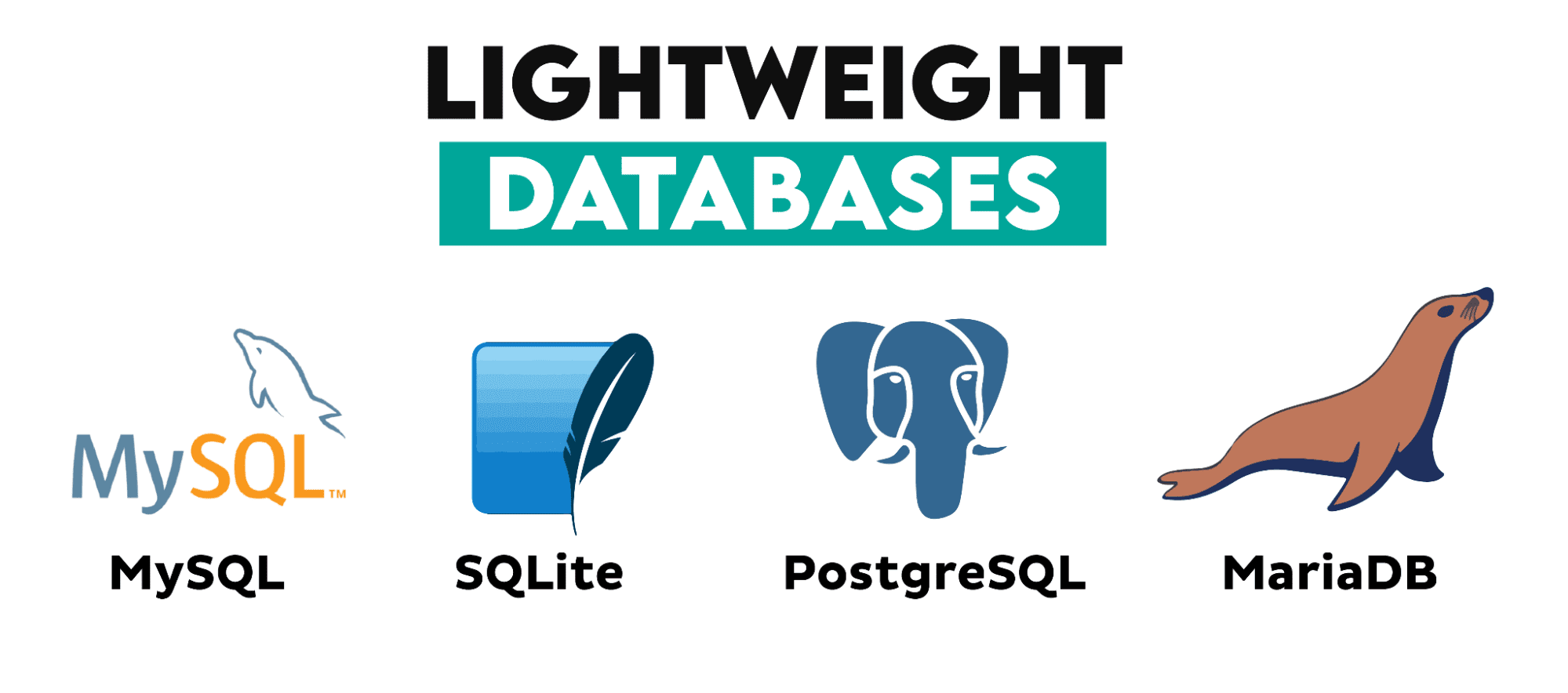
Image by Author

In this section, we’ll explore lightweight databases, vital elements for applications operating on a lesser scale.

They are known for their efficacy and simplicity. These databases are ideal for undertakings that do not require a heavy, sophisticated database system.

MySQL

MySQL is trendy, especially for websites. It's fast and has many helpful features. A big community supports it, so much help is available. However, making MySQL handle all that extra work can be challenging when your app gets big. It could be better for complicated data analysis.

SQLite

This simple and small database is excellent for small programs or apps. It's easy to move around because it's just a file. But, if many people use the app simultaneously, SQLite might need help keeping up. There are better choices for really big or complex apps.

PostgreSQL

PostgreSQL is free to use and has lots of nice features. It's great for dealing with complex data and doing tricky things with that data. But, if your app needs to write a lot of data all the time, PostgreSQL might slow down.

MariaDB

MariaDB improves MySQL performance and security. Since MariaDB has characteristics similar to MySQL, you can transition quickly if you know MySQL. However, it's somewhat less prevalent than MySQL.

Enterprise-Level Relational Databases What is a Database? Everything You Need to Know
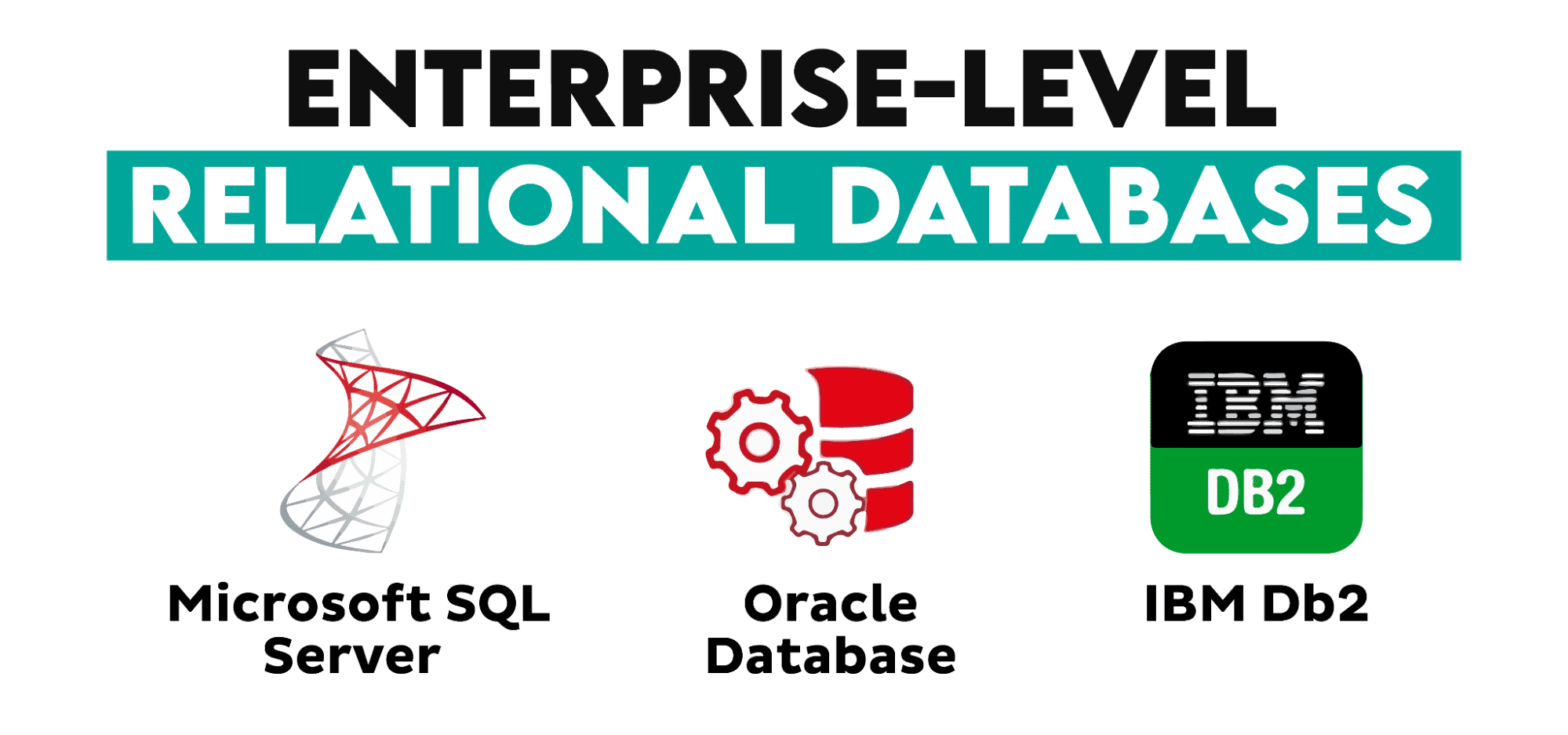
Image by Author

Enterprise-level relational databases are suitable for large and complicated applications. They offer enhanced security and extensive data management, which are business needs for enterprises.

Microsoft SQL Server

Microsoft SQL Server is a good choice if you build apps using other Microsoft products, like .NET. It's known for being remarkably safe and reliable. The downside is that it primarily works with Windows and can be expensive.

Oracle Database

Oracle is known for being very reliable and robust. It's a top pick for huge companies. It has advanced security and can handle lots of data well. But Oracle is pricey, has a lot of complex rules for using it, and needs to learn.

IBM Db2

IBM DB2 is made for big businesses. It's great for analyzing data and learning from it. It's reliable and can handle a lot of work. But it's tough to manage and usually best for big organizations or unique business needs.

NoSQL Databases What is a Database? Everything You Need to Know
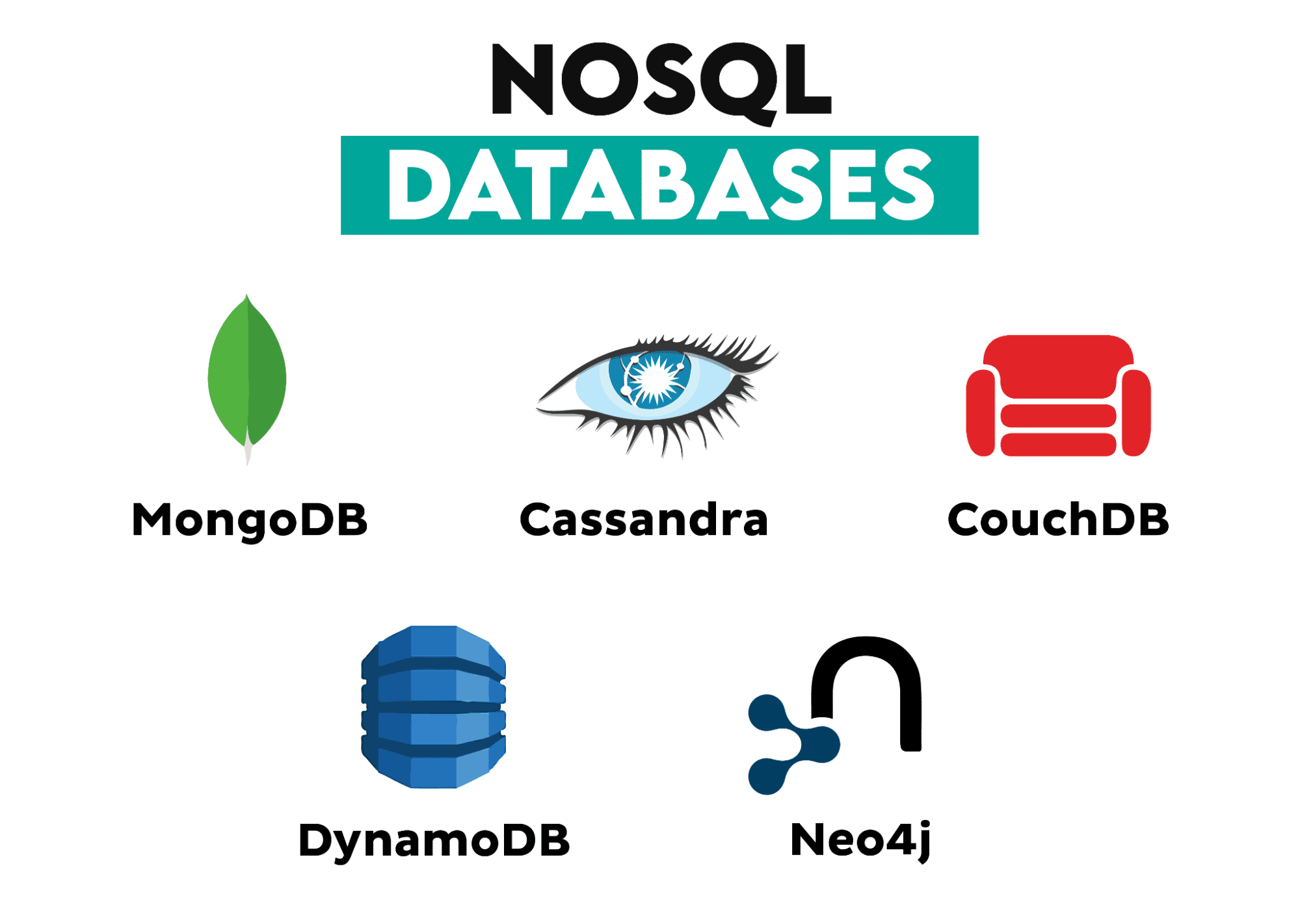
Image by Author

NoSQL databases offer flexibility and scalability. This sector covers databases for unstructured and semi-structured data that meet current, dynamic data needs.

MongoDB

This flexible database doesn't need a fixed structure, which is excellent for managing many different data types. It can grow to handle more work and has a powerful way to find data.

But, it could be better for tasks that need complex connections between data, as some traditional databases do.

Cassandra

Cassandra has been built to handle vast amounts of data over many computers. It's very scalable and reliable. But, planning how to store your data in Cassandra can be tricky, and it's harder to learn if you're used to traditional databases.

CouchDB

CouchDB is suitable for web apps needing a simple, scalable database that uses JSON, a popular data format. It has an excellent web interface and can copy data well between places. However, it might be better than others for very complex searches or vast amounts of data.??

DynamoDB

DynamoDB is a part of Amazon's cloud services. It's good at adjusting to changing workloads and can handle a lot of traffic. But, its options for searching and organizing data are limited. So, it can get expensive.

Neo4j

Neo4j is excellent for connected data, like social networks or recommendation systems. It's special because it can handle complex relationships between data well. But it's niche and can be hard to set up.

NewSQL and Distributed Databases What is a Database? Everything You Need to Know
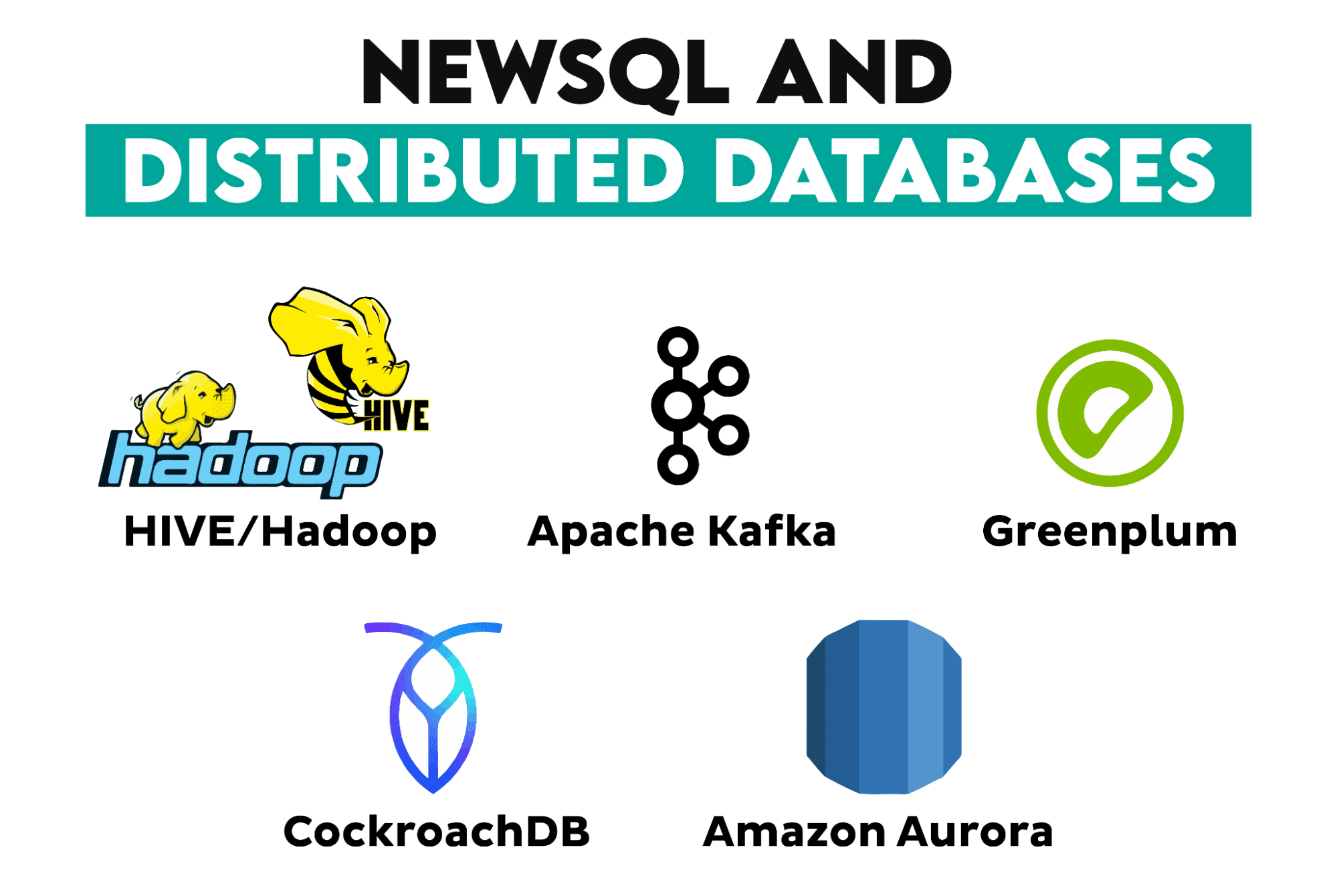
Image by Author

They combine the stability of conventional databases with the scalability of NoSQL systems; let’s start discovering them.

HIVE/Hadoop

Hive, part of the Hadoop ecosystem, is excellent for processing large datasets using simple queries. It's designed to handle big data and works well with complex data analysis. However, Hive can be slow with real-time questions and may not be the best choice for fast, interactive applications.

Apache Kafka

Apache Kafka is primarily a streaming platform that is excellent for processing and analyzing real-time data streams. It's highly scalable and reliable for managing large flows of data. However, Kafka is more of a data processing tool than a traditional database, so it's complex to set up and requires specific expertise to manage effectively.

Greenplum

Greenplum can handle big data analytics very well. It can grow to handle more data and works well with machine learning tools. However, setting it up and managing it can be complex, and it needs a lot of computer resources.

CockroachDB

It's strong and consistent, even across many computers. It can grow easily and handle transactions like traditional databases. However, its design is complex, and it might be too much for smaller applications.

Amazon Aurora

Amazon Aurora is Part of Amazon's cloud. It works fast and is compatible with MySQL and PostgreSQL. Designed for the cloud, it's reliable and can handle much work. However, it can be expensive with more use and is mostly only in Amazon's cloud.

Amazon Aurora is Part of Amazon's cloud. It works fast and is compatible with MySQL and PostgreSQL. Designed for the cloud, it's reliable and can handle much work. However, it can be expensive with more use and is mostly only in Amazon's cloud.

Specialized and Niche Databases What is a Database? Everything You Need to Know
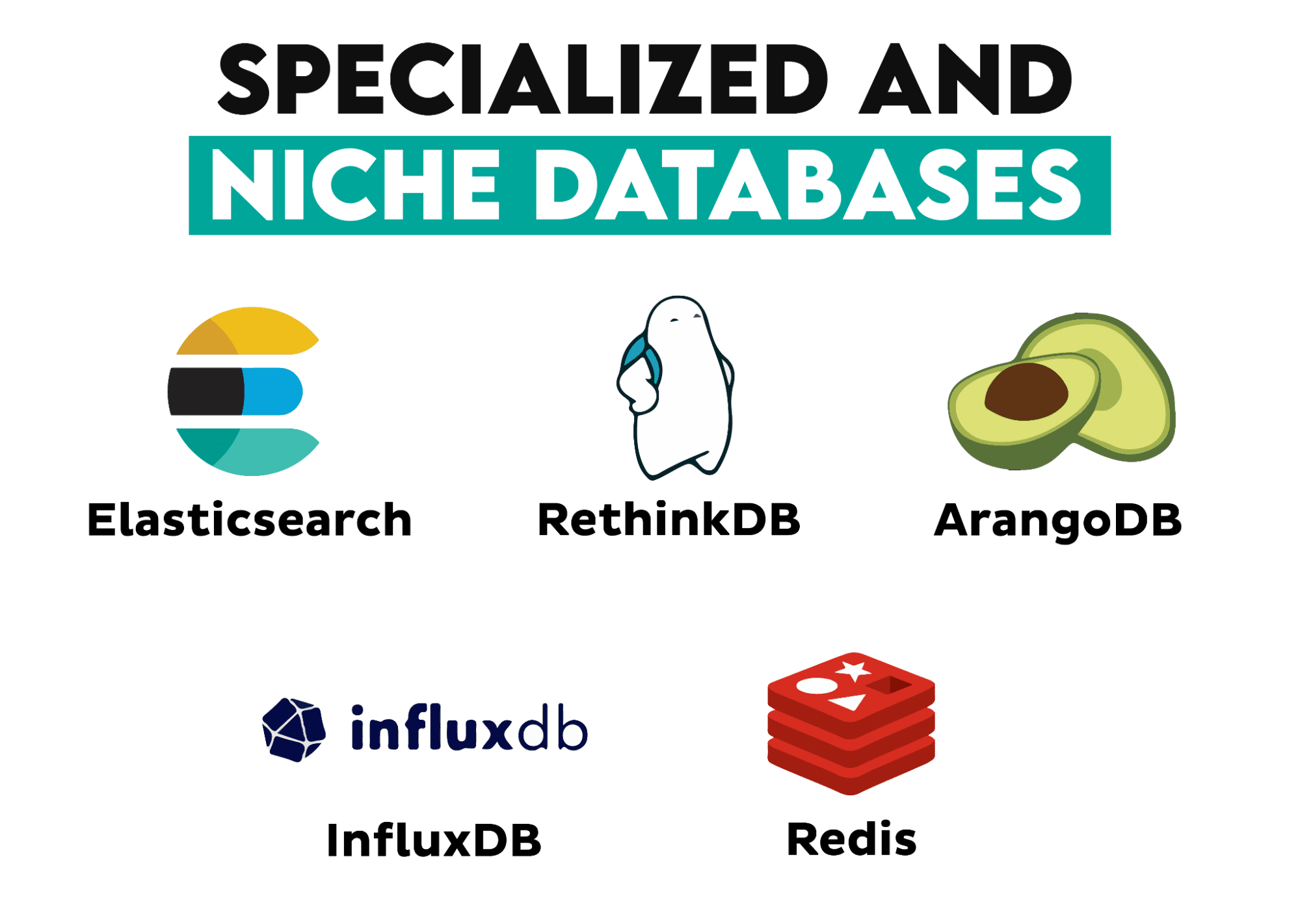
Image by Author

Finally, we explore specialized and niche databases. These databases are tailored to specific data types and offer features that regular databases may not. From real-time analytics to complicated data modeling, this section covers customized technologies.

Elasticsearch

Elasticsearch is great for searching through text and analytics. It can handle a lot of data and grows well. However, it can be hard to manage in big setups, and it isn't usually the central database.

RethinkDB

RethinkDB is designed for real-time web apps. It allows flexible data organization and easy updates. However, its development has slowed, so it's less advanced than others, and support may be limited.

ArangoDB

ArangoDB Supports different types of data, like documents and graphs, and works well for various needs. It performs well, but it could be more well-known, which could mean a harder learning process and less community help.

InfluxDB

InfluxDB is optimized for data that changes over time, like in IoT. It's great for real-time analysis and monitoring. However, it's specialized for time-based data, so it's not ideal for all database needs.

Redis

Redis is super fast because it stores data in memory, which makes it excellent for quick data access and real-time apps. However, the amount of data is limited to memory size, and ensuring data stays safe over time can be tricky.

If you want to discover interview questions about databases, check this one, Database Interview Questions.

Conclusion

We've just explored even the deep corners of database worlds by showcasing their strengths and weaknesses and splitting them into categories.

Zig Ziglar once said, "Repetition is the mother of learning." His words hold for this knowledge as well. So, if you want to solidify your understanding, remember to practice repetition.

Nate Rosidi is a data scientist and in product strategy. He's also an adjunct professor teaching analytics, and is the founder of StrataScratch, a platform helping data scientists prepare for their interviews with real interview questions from top companies. Nate writes on the latest trends in the career market, gives interview advice, shares data science projects, and covers everything SQL.

More On This Topic

  • KDnuggets News, April 13: Python Libraries Data Scientists Should…
  • Naïve Bayes Algorithm: Everything You Need to Know
  • Everything You Need to Know About Tensors

  • Everything You Need to Know About Data Lakehouses
  • Everything You Need to Know About MLOps: A KDnuggets Tech Brief
  • ChatGPT: Everything You Need to Know