
The central theme around enterprise AI in recent months has been about generating revenue from their AI investments and finally seeing tangible results. A viral study by MIT said that 95% of AI projects fail during deployment. However, Celonis believes its AI and Process Intelligence deliveries lie in the successful 5%.
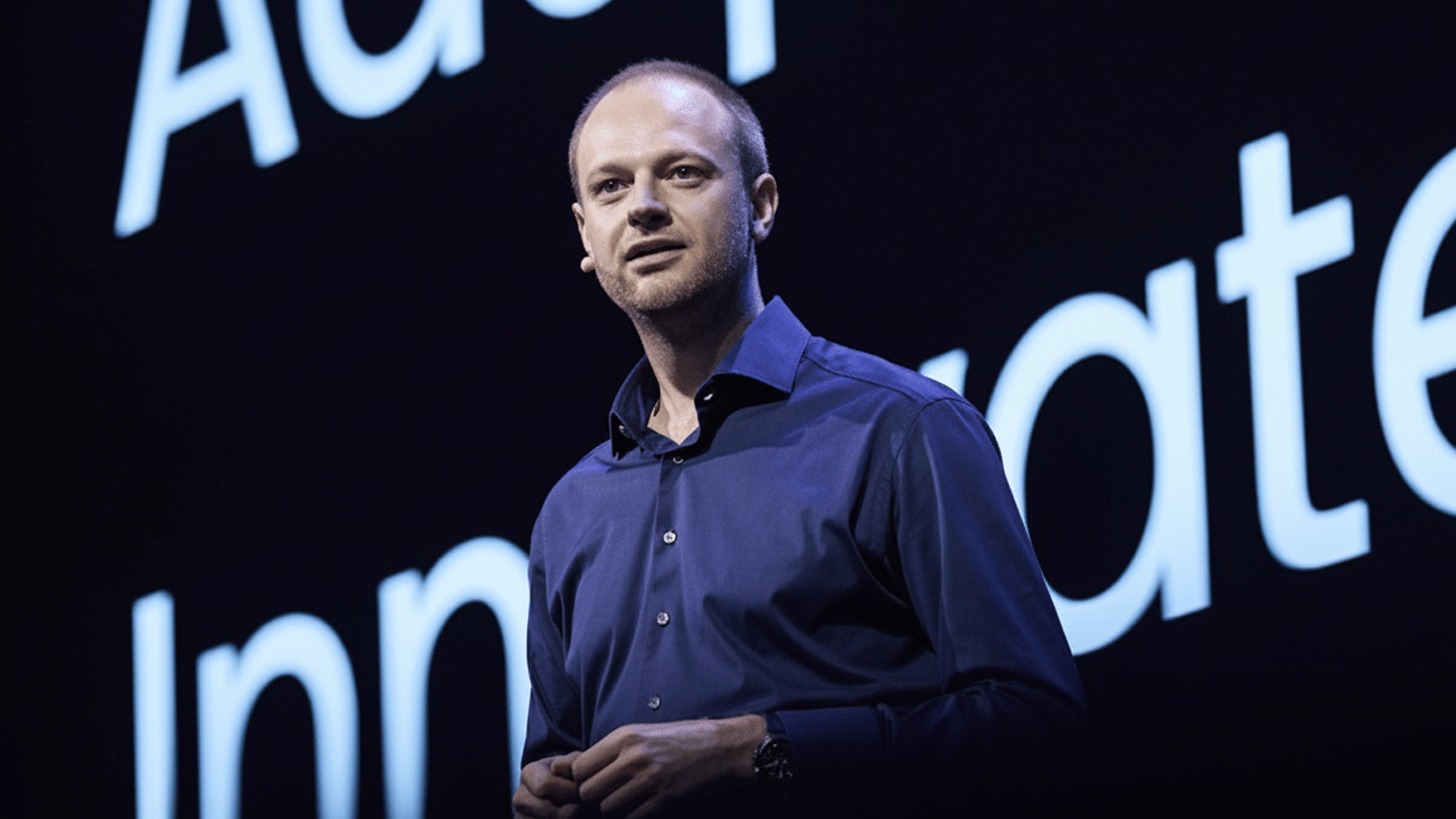
Celonis co-founder and co-CEO Alexander Rinke opened Celosphere 2025 in Munich with a direct message: AI isn’t working for most companies. “Only 11% of companies get any measurable benefit from their AI projects today. Isn’t that crazy?” he said, addressing a packed hall of customers and partners.
For Rinke, the problem isn’t the technology. It’s the lack of context. “To make enterprise AI work, it needs to understand how your business actually runs. That context isn’t on the internet,” he said. His argument was simple: AI without process intelligence is blind.
Rinke said the company is trying to fix what he calls the “missing layer” in the enterprise AI stack—process intelligence, a framework that allows companies to map, analyse and continuously improve how work really happens inside their systems.
Making AI Useful Again
Rinke drew a clear distinction between generative AI and what he refers to as “enterprise AI”. While tools like ChatGPT dominate headlines, Rinke said enterprise AI is about embedding intelligence into every business operation — from predictions to copilots and automated workflows.
Most companies, however, are deploying AI in silos, guided by “the loudest voice in the room” rather than data-driven insights. “AI projects are being deployed wherever someone’s excited, not where they actually move the needle,” he said.
To make it work, Rinke said, enterprise AI needs three things: contextual understanding of how a business runs, strategic deployment in the right places and seamless integration with existing systems. That, he said, is where process intelligence comes in.
Inside Process Intelligence
At the heart of Celonis’ pitch is its Process Intelligence Graph (PIG), which Rinke described as a “living digital twin” of enterprise operations. It’s designed to pull data from multiple systems and sources—not just ERP or CRM, but also emails, documents, even employee clicks and copy-pastes—to build a complete, real-time map of how processes actually function.
Traditional monitoring was built for systems that wait for instructions. Modern enterprises operate on multi-cloud, multi-system workflows with AI agents making decisions in real time.
Celosphere 2025 showcased several new launches aimed at embedding AI into operations, not just reporting on them. The Multimodal Digital Twin or PI Graph, combines ERP events, task logs, documents, emails and inter-company signals into a single living model of how work actually runs.
Object-centric process mining apps highlight failure points where processes intersect. The new Orchestration Engine coordinates people, systems and agents to meet business objectives rather than just sending alerts. Moreover, the Process Intelligence MCP Server feeds live operational context to AI agents so they act inside the business, not beside it.
The ecosystem powering these capabilities is expanding quickly. The Databricks partnership enables zero-copy, bidirectional data flow between the lake and the process twin, maintaining governance while closing the learn-operate loop. Bloomfilter’s Agent Miner monitors AI agents and humans in one graph and pushes context back into prompts for continuous improvement. The company also plans to further expand with Snowflake in the future.
Real-world results were also spotlighted. Mercedes-Benz improved on-time delivery and sped up decision-making with a real-time supply chain twin. Vinmar automated its $4 billion order-to-cash process, cutting manual handoffs and routing exceptions automatically. Overall, 120 Celonis customers have realised more than $10 million each, totalling $8.1 billion in measurable value.
“We free the process from the resistance of legacy systems,” Rinke said. “Our platform can query billions of records at speed, and then enrich that data with your own rules and models to mirror the reality of your business.”
Uniper CIO Hans Pezold said the joint solution with Microsoft and Celonis “is our foundation for AI success.” Microsoft’s Charles Lamanna called it “redefining what’s possible for enterprise operations.”
Once built, the graph serves as the foundation for analysis, design and execution of AI-driven processes. Rinke said it gives AI “the context it needs”, helping companies identify where automation makes sense, prevent issues before they occur and synchronise humans, agents and systems toward measurable outcomes.
“There is no AI without PI,” he said. “With Celonis, your AI finally knows how your business runs.”
Rinke stressed that no single company can make enterprise AI work alone. Celonis’ open platform, he said, is designed to be built upon by customers, service firms and technology providers.
Celonis named hundreds of global partners like Genpact, Wipro, IBM, Microsoft, TCS and Infosys, along with smaller independent developers such as Lumosurge and Arrogio, as part of a growing ecosystem building “composable AI solutions” on top of Celonis. “Good things grow from open ecosystems,” Rinke said. “You should be able to modernise your business on your own terms.”
India at the Centre of the Future
While Rinke spoke about the technology, Celonis president Carsten Thoma focused on geography, and one country in particular. “India is no longer just about shared services. Decision-making is happening there,” Thoma said at the press briefing.
Celonis plans to triple its India workforce to 1,500 by 2027, making the country one-third of its global team. The company currently has about 300 employees in India.
“When I left SAP in 2018, India had only two companies in the Global 2000. Today, it’s 65,” Thoma said. “That kind of growth is fascinating to watch.”
He said India’s global capability centres (GCCs) are now full-fledged innovation hubs where many global technology and process decisions are made. “A huge percentage of our power users work in India and in GCCs,” he said.
Thoma also pointed to demographics. “India has 680 million people under 25, compared with 240 million across North America and Europe combined. There’s absolutely no version of this world where India isn’t crucial,” he said. Celonis has adopted the internal slogan #IndiaIsOurFuture.
The Bigger Picture
Celonis’ narrative has evolved from process mining to what it now calls “process intelligence.” It’s no longer just about identifying inefficiencies in workflows but about giving AI systems a foundation to act intelligently.
Rinke said the industry has spent years discussing AI’s promise but not seeing much return. “The ROI just isn’t there yet,” he said. “Because AI doesn’t understand how your business actually works. We fix that.”
As Rinke closed his keynote, he circled back to the frustration many executives feel about AI hype. “AI projects are at the top of every boardroom list,” he said. “They’re also the one thing you’ll get budget for this year. But most of them don’t work.”
The post 9 Out of 10 AI Projects Fail, Celonis Says It Knows Why appeared first on Analytics India Magazine.